INTERNACIONAL
Spain high-speed train crash kills at least 10

NEWYou can now listen to Fox News articles!
A high-speed train slammed into the rear of another train that had stopped, derailing two cars and killing at least 10 people on Wednesday in central Spain, authorities said.
Esther Padilla, spokeswoman for the Castilla La Mancha region, said authorities can confirm 10 deaths, but added «that number will surely rise.»
It was the second major train accident in Spain this year.
Spain’s rail system operator ADIF said the crash occurred Wednesday morning in the province of Toledo. Rail service was suspended between Madrid, Ciudad Real and Andalusia.
CRASH INVOLVING SPEEDING TRAIN, MINIBUS IN BELGIUM LEAVES 4 DEAD INCLUDING 2 CHILDREN
Padilla told state broadcaster TVE that the accident was between two high-speed trains carrying hundreds of passengers and heading in the same direction from the capital Madrid to Seville in southwestern Spain. One ran into the tail of the other that had stopped, knocking two of its cars off the track. She said the cause of the crash was not known.
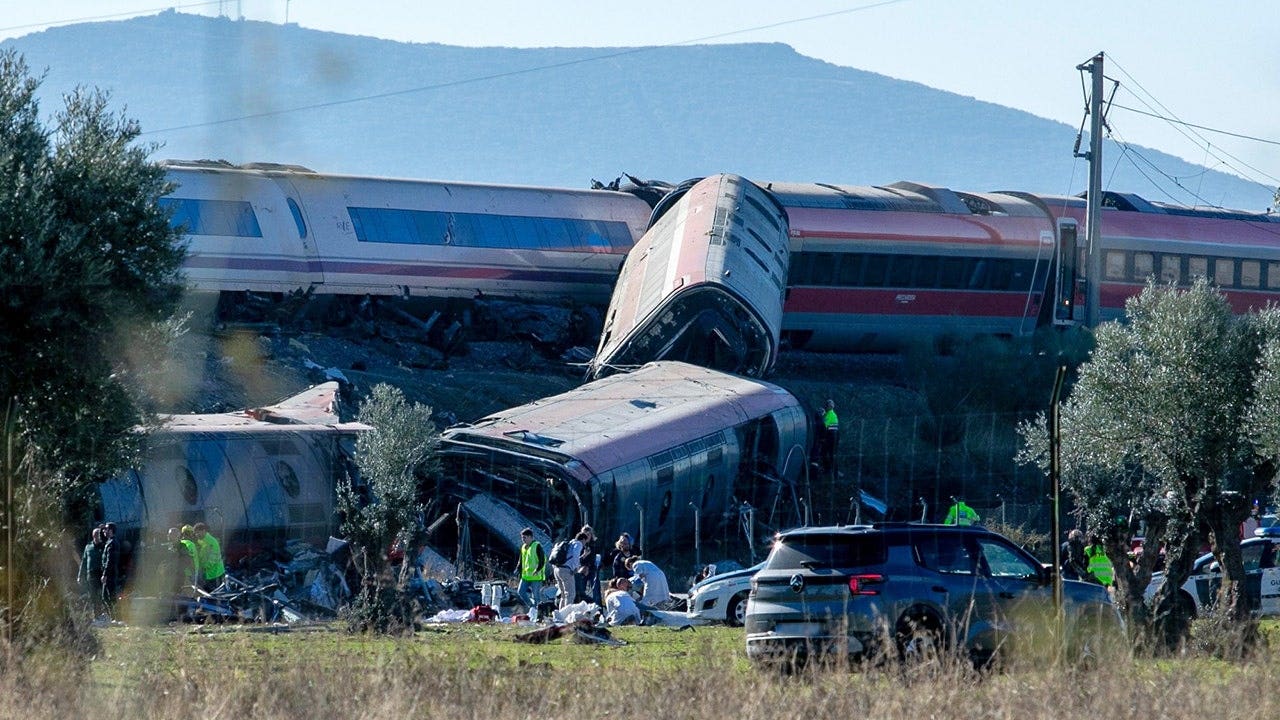
Emergency services attend to victims at the scene of a collision between two trains in Urda, Spain, on Wednesday, Oct. 28, 2026. (Juanma Jiménez/Europa Press via AP)
The crash, which occurred in a flat stretch surrounded by fields in between the towns of Urda and Los Yébenes, left one car shredded into bits of metal and other material, scattering debris down a gravel slope.
Spanish Health Minister Mónica García told TVE that emergency workers were focusing on rescuing survivors and bodies from the two most damaged train cars. She said that the injured are being sent to different hospitals in the area.
«It was a high-speed impact, so we are expecting this to be a tragedy,» García said.
BYSTANDER VIDEO CAPTURES NORFOLK SOUTHERN TRAIN T-BONING SEPTIC TRUCK AT VIRGINIA RAILROAD CROSSING
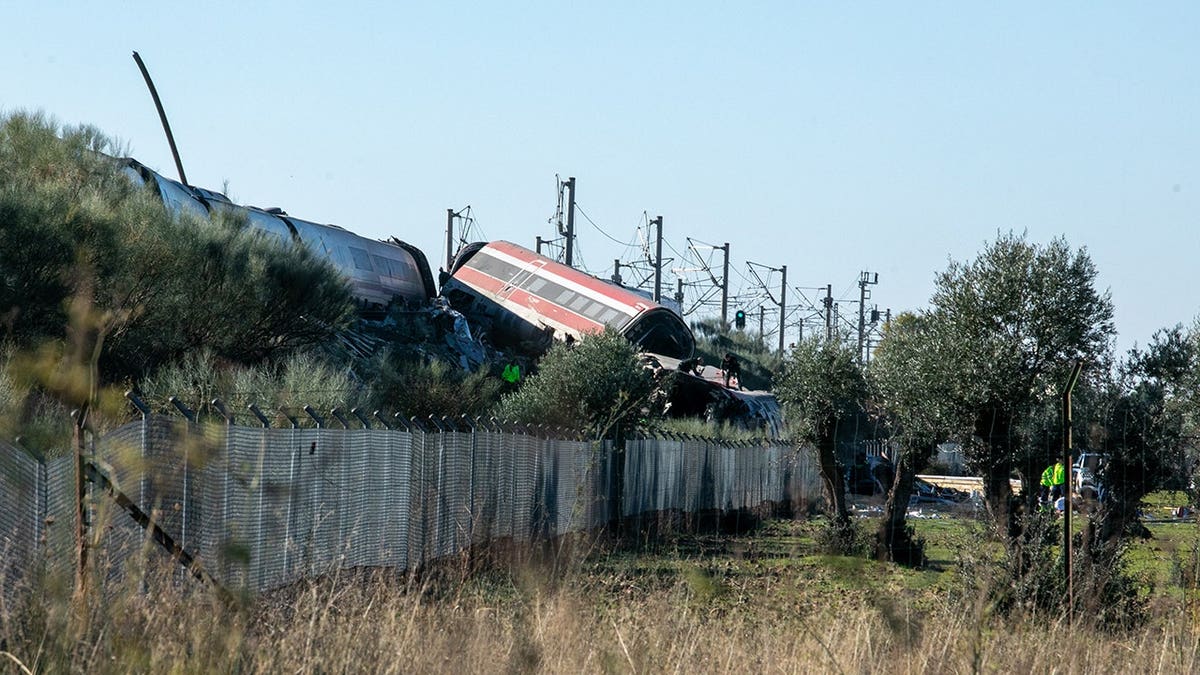
The scene of a collision between two trains in Urda, Spain, on Wednesday, Oct. 28, 2026. (Juanma Jimenez/Europa Press via AP)
The accident involved a train from Spain’s state-owned RENFE company and the private rail company IRYO. It appeared the RENFE train rammed the IRYO train, Spanish media reported. Trains from those two companies were also involved in a deadly crash in January.
Padilla said that 397 passengers were in the RENFE train and 147 passengers in the IRYO train.
IRYO, an Italian-owned company, said in a statement that it has «activated its security protocols and is closely working with authorities.»
The mayor of the nearby town of Urda, Manuel Galán, told Spanish state broadcaster TVE that civil protection authorities had asked his town hall to prepare a sports pavilion to attend to injured passengers.
A military emergency brigade was deployed to help emergency services, firefighters and police to the crash site.

Passengers wait at Santa Justa station in Seville, Andalusia, Spain, following a train accident near Urda, Toledo, on Oct. 28, 2026. The collision between a Renfe AVE train and an Iryo train suspended services on the Madrid-Andalusia high-speed line, causing two carriages of the Iryo train to derail. (Europa Press via Getty Images)
Spanish Prime Minister Pedro Sánchez cancelled his agenda to focus on the crash. He wrote on X that he was «dismayed by the serious train accident in Toledo.»
«Emergency services are working on site to attend to the affected passengers,» wrote Sánchez, who faces a national election next month. «All my thoughts are with the victims and their families.»
The regional president of Castilla La Mancha, Emiliano García-Page, wrote on X that he was on his way to the crash site.
In January, 45 people died in southern Spain when a train jumped the track and hit an oncoming train. The crash was the deadliest in Spain since a 2013 crash that killed 80 people. The January incident shook the confidence the European country has in its extensive high-speed rail network.
spain, disasters, transportation, europe, world












INTERNACIONAL
Precios disparatados en Uruguay para alojarse el fin de semana de la final de la Libertadores

“¿Confirman que así estamos todos buscando alojamiento en Montevideo?”, posteó en la red social X Estudiantes de la Plata, después de eliminar a Flamengo por la Copa Libertadores y clasificarse a la final del 28 de noviembre contra Palmeiras en Montevideo. En la imagen aparece el futbolista Tomás Palacio, sentado en el suelo, con el celular en la mano.
Esa tarea, la de buscar alojamiento en Montevideo, se ha vuelto complicada en las últimas semanas. Es que, conseguir un lugar en un hotel o un departamento es una tarea difícil, al menos para aquellos que no estén dispuestos a pagar un precio desorbitante.
Todos los relevamientos muestran una disponibilidad muy limitada en las distintas plataformas para las zonas próximas al estadio. “Estamos frente a un acontecimiento que está generando una presión muy importante sobre el mercado de alojamiento temporal en Montevideo”, reconoció, en diálogo con El Observador, el presidente de la Cámara Inmobiliaria del Uruguay, Matías Medina.

Los alojamientos muestran valores extraordinariamente elevados.
Los precios para dos personas oscilan entre los USD 1.200 y los USD 2.700, al tiempo que para cuatro personas pueden valer más de USD 5.000, según el relevamiento de este medio.
El interés está centrado en apartamentos particulares para dos, cuatro y seis personas, así como en hoteles y otros establecimientos turísticos. Las zonas más demandadas son los barrios cercanos al Estadio Centenario, donde se jugará la final: Parque Batlle, La Blanqueada, Tres Cruces y Cordón.
Esta gremial empresarial aconseja formalizar las condiciones de alquiler por escrito, establecer claramente el precio total, las fechas de ingreso y salida, la cantidad de ocupantes y las condiciones de cancelación. También sugieren documentar el estado del inmueble, comprobar que las instalaciones estén en condiciones adecuadas y verificar que la cobertura del seguro contemple este uso.

El sector hotelero de Piriápolis, Maldonado y Canelones también da cuenta de reservas vinculadas a la final y de consultas de visitantes que buscan alternativas por fuera de Montevideo.
El presidente de la Asociación de Hoteles del Uruguay, Francisco Rodríguez, declaró al diario deportivo Ovación que en junio ya se registraba una alta ocupación para estas fechas. “A nivel de los organizadores de estos eventos, ya tienen hoteles prácticamente todos ocupados y bloqueados desde entonces”, declaró.
Las reservas generales en la zona metropolitana y el este de Montevideo llegan al 90% y alcanzan niveles casi totales en todos los establecimientos de mayor categoría. “En estos momentos las reservas superan el 90% en Montevideo y en el este. Los hoteles más importantes están prácticamente arriba del 95% y el 100%”, destacó.

Las tarifas de los hoteles también se han incrementado por la alta demanda.
“En la oferta formal hay propuestas que pueden llegar a ser 10 veces más caras respecto a lo normal. Y en los alojamientos por fuera del sistema, que no están regularizados, seguramente estén 40 o 50 veces más”, declaró este empresario.
Luego, el representante de los hoteles también pasó un aviso a quienes viajen: “Lo que pedimos es que hagan contrataciones en lugares seguros, ojalá a través de agencias o confirmando directo con el lugar para no llevarse una ingrata sorpresa. Pensamos que vamos a tener 70.000 personas adentro del estadio y no menos de 20.000 dando vueltas, entre los que no consiguen entrada, los que vienen a acompañar, a festejar o a estar en el fan fest”.
En Punta del Este, en tanto, se registró una baja en las reservas tras la eliminación de Flamengo, pero el sector hotelero mantiene un nivel alto de ocupación por varios eventos internacionales que están previstos por esas fechas, consignó Ovación.

La final de la edición 2026 se disputará a partido único en el Estadio Centenario, escenario emblema del fútbol sudamericano con capacidad para más de 60.000 espectadores. La Confederación Sudamericana de Fútbol (Conmebol) confirmó la sede meses atrás, en el marco de la organización de un evento que reunirá a las hinchadas de ambos finalistas en la capital uruguaya.
estadio centenario,estadios,exterior,instalaciones deportivas,paisaje urbano,urbanismo,vista general
INTERNACIONAL
La sequía dejó sin agua y cultivos a comunidades de Ahuachapán en El Salvador: así lograron reducir su impacto

En el caserío El Sacio, en el distrito de Guaymango, ubicado en el municipio de Ahuachapán Sur, la jornada comienza con la búsqueda de agua. Las familias de la zona dependen de ríos y pequeños pozos improvisados para lavar, cocinar y atender las tareas domésticas. La escasez que dejó la falta de lluvias también golpeó sus cultivos, principal fuente de alimentos para los hogares rurales.
Milagro Reyes, habitante de El Sacio, explica que la agricultura en la comunidad tiene un objetivo de subsistencia. “Aquí en el caserío vivimos de la agricultura, no cultivamos y sacamos para vender, no, es nada más para mantenernos”, relató en un video difundido por el Fondo de las Naciones Unidas para la Infancia (Unicef).
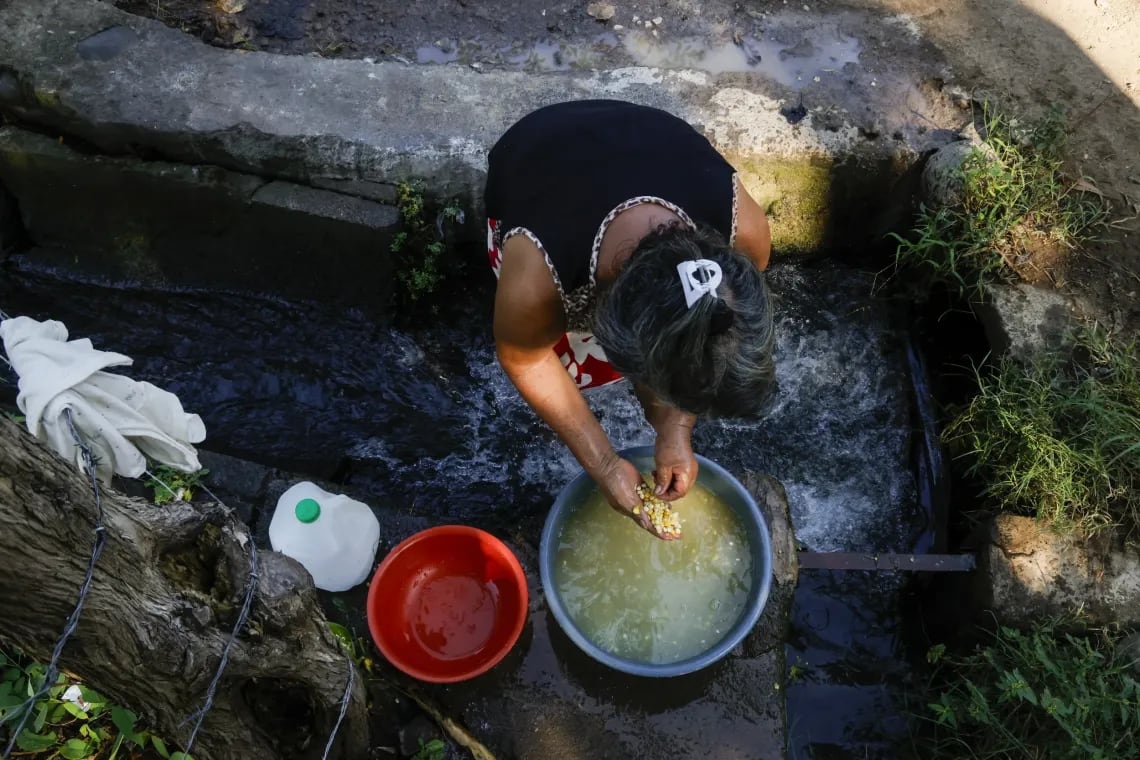
La recolección de agua ocupa una parte central de la rutina diaria. “A principio del día es lo que tenemos que hacer: venir primeramente por el agua para empezar el día”, contó Reyes. El líquido que recogen del río se utiliza para lavar utensilios y maíz. Cuando el caudal disminuye, los vecinos hacen pozos cubiertos con nailon para conservar una pequeña reserva.
La situación se repite en otros sectores rurales de Ahuachapán, en el occidente salvadoreño, donde la falta de precipitaciones afectó las siembras de maíz y las fuentes de abastecimiento. Para muchas familias, una cosecha perdida implica menos alimentos disponibles en el hogar y deudas contraídas para sostener la producción.
Yesenia Martínez, agricultora de Guaymango, relató que su familia sembró maíz y adquirió un préstamo para abonar la milpa, pero las lluvias no llegaron. “Se sembraron las milpas y la lluvia no cayó. Hicimos un préstamo para poder abonar la milpa y, por lo que se mira, no funcionó”, explicó.
La mujer señaló que la escasez de maíz ya se siente en la alimentación cotidiana. “Voy a ir a la milpa, porque sinceramente maíz no hay en la casa para comer”, afirmó.
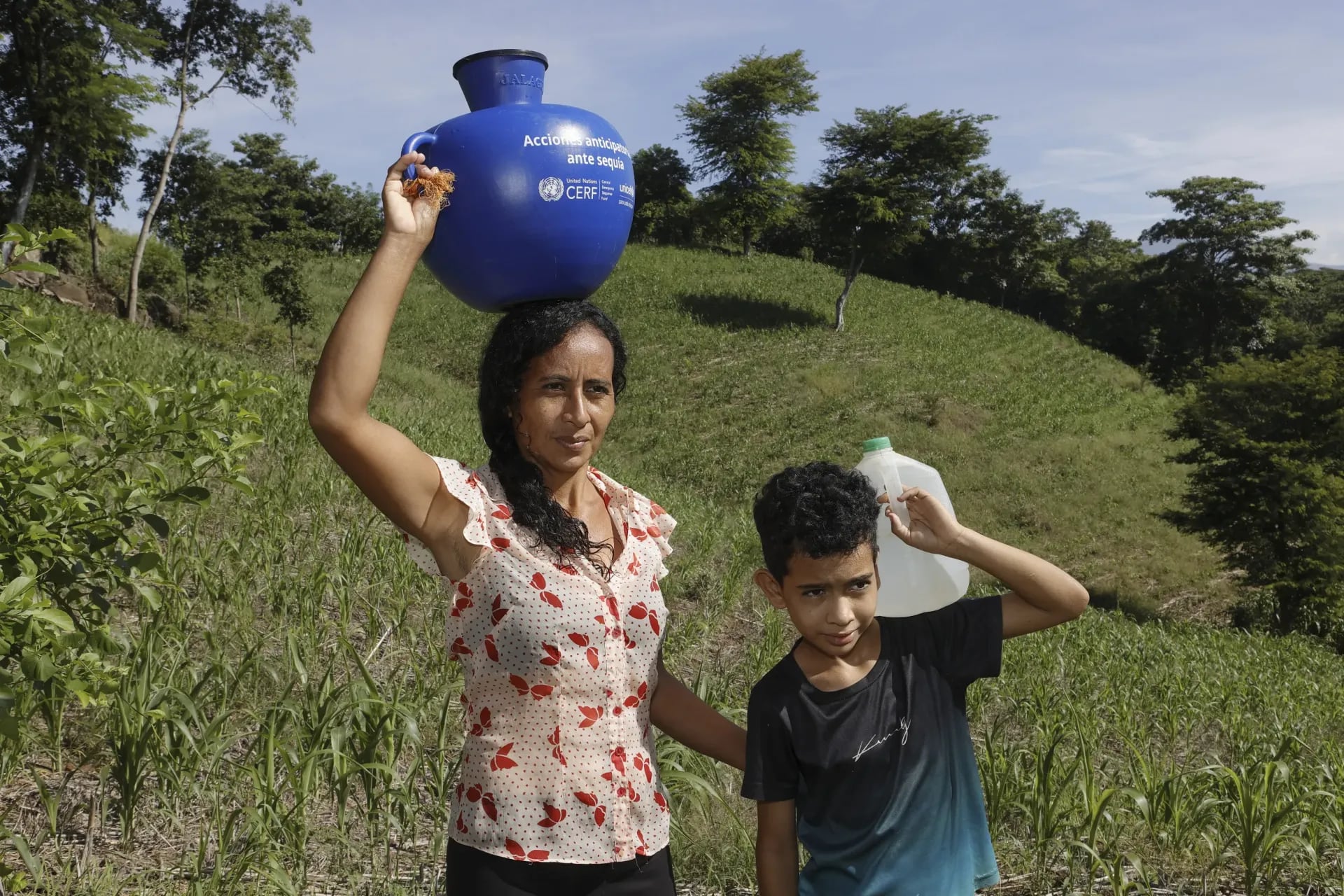
Unicef y PROVIDA desplegaron acciones ante el impacto de la sequía
Unicef El Salvador y su socio implementador, PROVIDA, desarrollaron entre marzo y septiembre de 2026 el proyecto Acciones Anticipatorias ante la Sequía. La iniciativa abarcó los distritos de Guaymango, Jujutla, San Francisco Menéndez y Tacuba, todos en Ahuachapán.
El programa contó con financiamiento del Fondo Central para la Acción en Casos de Emergencia (CERF, por sus siglas en inglés) y tuvo como objetivo reducir los efectos previstos de la sequía sobre las comunidades ubicadas en el corredor seco.
“Estas comunidades están teniendo un grave impacto debido a la sequía”, sostuvo Jhon Tovar, consultor de Agua, Saneamiento e Higiene de Unicef en El Salvador. Según explicó, la falta de agua compromete la seguridad y la salud de las personas, ya que el acceso al recurso se vuelve cada vez más difícil.
Las acciones incluyeron intervenciones familiares y comunitarias vinculadas al agua, la higiene y la nutrición. De acuerdo con los datos de Unicef, el proyecto benefició a más de 8,500 personas en los cuatro distritos incluidos.

Puntos de agua segura para 184 familias
Una de las medidas consistió en la creación de puntos seguros de agua para hogares que antes carecían de una fuente de abastecimiento adecuada. Karen Ramírez, coordinadora de la intervención de acciones anticipatorias, indicó que esos espacios atenderán a 184 familias.
Ramírez recordó que el problema se mide en trayectos y tiempo de trabajo, además de las cifras de población alcanzada. Algunas mujeres caminan hasta dos horas para obtener un cántaro de agua equivalente a 20 botellas, mientras que la falta de agua segura afecta las condiciones de salud de niños y niñas.
“Ahora no solo han mejorado su acceso a agua, sino también la calidad de agua que toman”, explicó Ramírez. La intervención contempló la entrega de filtros y kits de limpieza, además de la instalación de tanques para almacenar el recurso.
Para Reyes, el filtro cambió la forma en que su familia consume el agua. “Antes no lo hacíamos, filtrarla. Ahora nos la tomamos con más seguridad, porque sabemos que ya va filtrada”, contó.

José Reyes, habitante de El Sacio, afirmó que el proyecto tiene una repercusión directa en la comunidad. “Ha sido un proyecto que se ve pequeño, pero para nosotros es grande”, expresó.
corresponsal:Desde San Salvador, El Salvador
INTERNACIONAL
China encroaches dangerously close to US land as a single ship breakdown exposes major vulnerability
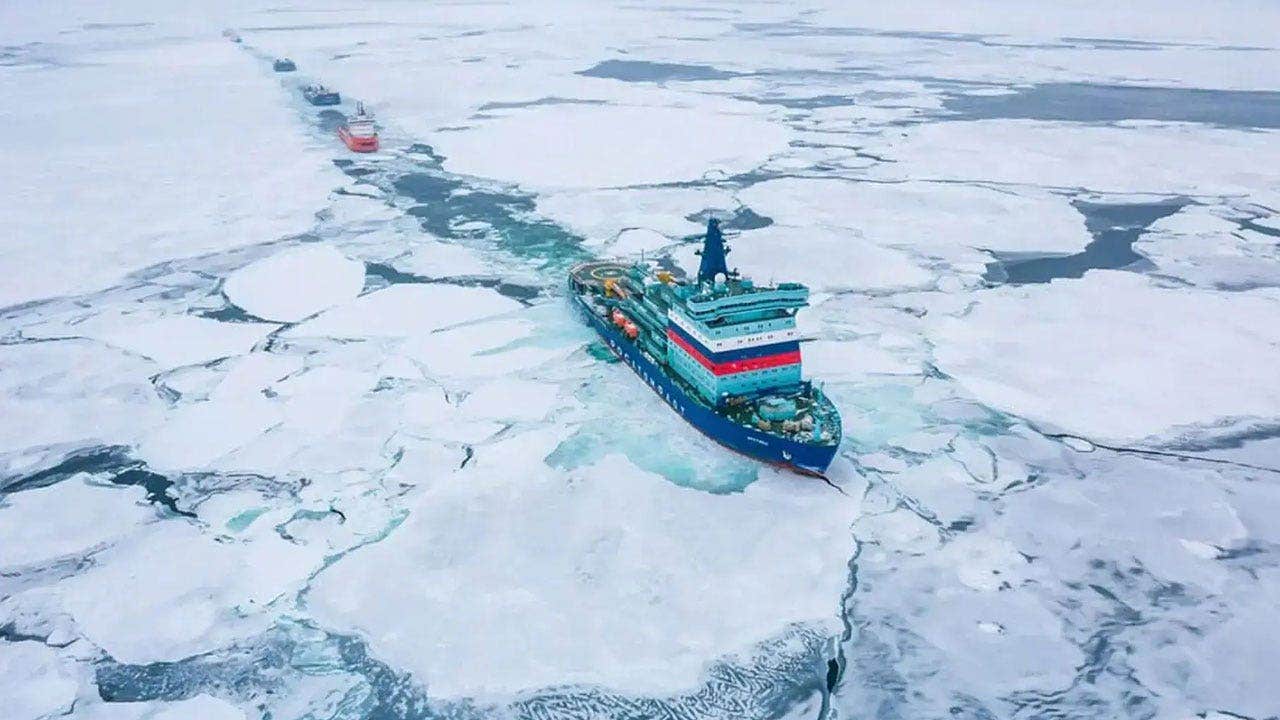
America’s ability to maintain a presence in the Arctic remains thin enough that a single mechanical failure cut the Coast Guard’s icebreaking capability in the region in half this summer.
And the breakdown comes as Chinese vessels are expanding their activity around Alaska.
Rear Adm. Bob Little, commander of the Coast Guard’s Arctic District, told Digital the failure of Coast Guard Cutter Healy left him with just one of two icebreakers that had been slated to operate in the ice. Meanwhile four Chinese research vessels were operating in the region.
«Healy’s unexpected mechanical failure cut in half my capability to operate up in the ice,» Little said.
ARCTIC POWER PLAY GIVES TOP US ADVERSARY NEW OPENING WITH RUSSIA AS US STAKES GROW
The shortfall comes as the U.S. faces a growing need to maintain a presence in waters that can take days to reach. Chinese research vessels are gaining experience in the Arctic and collecting data that can also have military applications, including for submarine operations, while Russia’s much larger icebreaker fleet gives Moscow greater ability to move ships and supplies through the region.
The Coast Guard is now racing to add ships, aircraft and surveillance capabilities as shrinking sea ice opens more of the Arctic to navigation. But its next generation of icebreakers is still years away.
«I can’t get those icebreakers soon enough, given the operational environment,» Little said.
Little said nearly $25 billion in recent funding will support 11 new Arctic Security Cutters, with the first expected to arrive in the region as early as 2028.
The buildup comes as the Coast Guard’s operating area is effectively growing. Declining sea ice is opening more navigable water around Alaska, bringing more commercial and military activity into areas that were once harder to reach.
«As that new operational area becomes accessible, we see an increase in human activity for economic development, for military advancement,» Little said. «And that activity is creating a need for additional Coast Guard mission.»
China has become an increasingly regular presence in those waters. Little said Chinese research activity has grown from as few as one vessel appearing episodically in the Arctic to five last year, while four operated there this year.
Those vessels are not necessarily violating international rules. The Coast Guard Cutter Munro recently returned from a 112-day Arctic patrol that included monitoring Chinese research ships, and Little said the Coast Guard did not observe activity on the surface that fell outside customary law or international norms.
RUSSIA PULLED BACK FROM THE ARCTIC, FOR NOW. NATO MUST ACT BEFORE THOSE TROOPS RETURN
The concern, he said, is what China can learn simply by operating there.
«Any research vessel that operates in the Arctic has the ability to conduct both scientific research,» Little said. «It could be economic research that could be for future exploitation of critical minerals and scarce resources.»
«And then all of that research helps aid in military activity if you’re trying to identify seabed floors and navigate subsurface assets,» he added.
Troy Bouffard, director of the Center for Arctic Security and Resilience at the University of Alaska Fairbanks, said China’s research activity gives Beijing experience operating in an environment where it has historically had little.
«They’re pretty desperate to gain operational experience and knowledge in terms of their growing military capabilities,» Bouffard told Digital.
The research vessels collect legitimate scientific data, he said, but that information can have other applications, «especially when it comes to submarine warfare planning.»
For the U.S., Bouffard said the challenge is about more than the number of icebreakers. Unlike the North Atlantic, where the U.S. and its allies have decades of infrastructure and experience, the North Pacific side of the Arctic has far less infrastructure to support a sustained presence.
«If we can’t have presence, surface presence in an area, it’s very difficult to manage issues that may escalate,» Bouffard said.
The distances compound the problem. Getting a ship from Kodiak, Anchorage or Seattle into the Bering Sea can take several days, Bouffard said.
Russia already holds a substantial advantage in its ability to maintain access through its much larger icebreaker fleet.
«Advantage certainly falls in their favor,» Little said.
Russia’s fleet allows it to maintain access, sea lanes and logistical routes for commercial and military purposes, he said.
«Certainly, as we look at the military advantage, there is a need for the United States to keep up and to ensure that we have ice presence and ice capability,» Little said.
The Coast Guard is also watching cooperation between Moscow and Beijing. Little said the service has observed joint Russian-Chinese military surface groups, cooperation between their coast guard forces and Chinese research vessels collaborating with Russia and «likely sharing information.»
«Either of them alone are worth paying attention to,» Little said. «But anytime they’re working together, we’re watching closely to see if they pose any threat to homeland security or a military risk to the United States.»
china, coast guard, politics, geopolitics, national security, russia, alaska, homeland security

Flávio Bolsonaro salió de la Argentina rumbo a EE.UU. y crecen las sospechas sobre la ayuda del Gobierno – Nexofin

Precios disparatados en Uruguay para alojarse el fin de semana de la final de la Libertadores

La Cámara de Casación define si Mario Firmenich debe responder por un atentado de 1976

Polémica con Kylian Mbappé: el Real Madrid también pidió disculpas, pero China se mantiene inflexible y no volverá a transmitir LaLiga

La artista callejera que emocionó a Marcelo Tinelli con su historia de vida: “Luchen por su sueño”

Donald Trump exhibió un petrolero en Texas con el primer crudo procedente de Venezuela

CFK, Axel Kicillof, Sergio Massa y otros referentes del PJ celebraron el triunfo electoral de Lula da Silva

Medios brasileños afirman que Flávio Bolsonaro escapó del país y está en vuelo a Estados Unidos

El gobierno de Milei apuesta al triunfo de Bolsonaro y el peronismo, a la “resurrección” de Lula da Silva

Julián Álvarez le dio el triunfo al Atlético Madrid y terminó con otra extensa racha negativa: el gesto de los fanáticos

 POLITICA3 días ago
CFK, Axel Kicillof, Sergio Massa y otros referentes del PJ celebraron el triunfo electoral de Lula da Silva
- INTERNACIONAL20 horas ago
Medios brasileños afirman que Flávio Bolsonaro escapó del país y está en vuelo a Estados Unidos
- SOCIEDAD3 días ago
Edgerunners 2 ha vuelto a poner a David Martinez en el centro de la conversación. Su showrunner tiene algo que aclarar sobre su destino