INTERNACIONAL
‘Puntos de Vista’ reúne ternura, ironía y crítica en cuentos narrados por gatos, libros y una inteligencia artificial

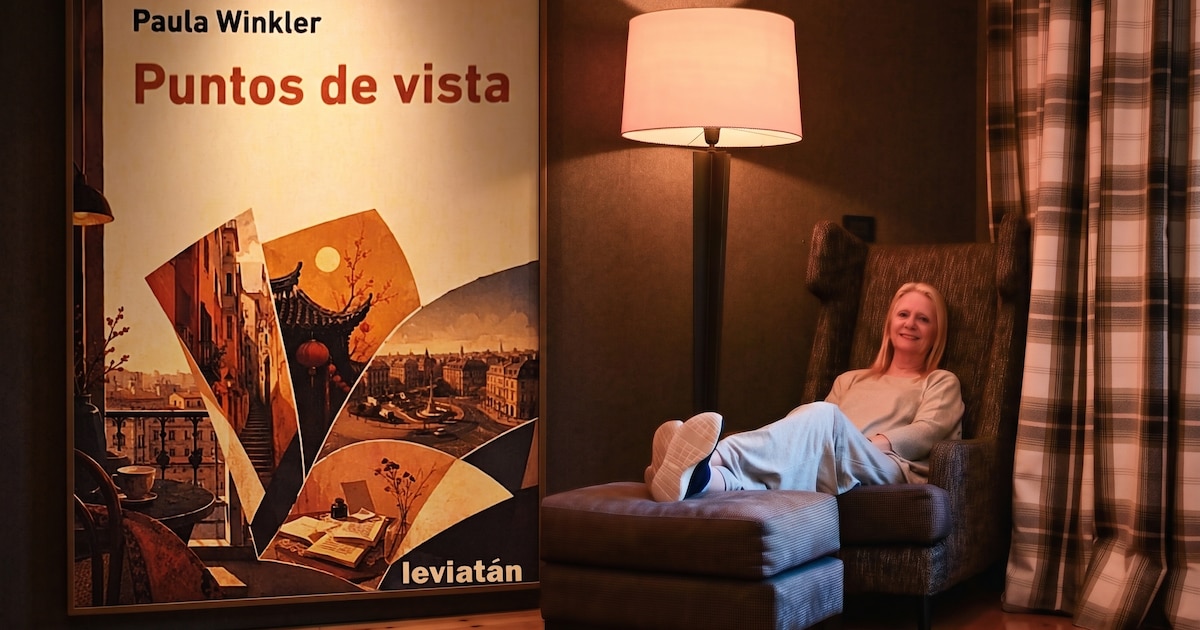
Nos suelen preguntar los lectores, avezados o no, por el modo en que se construyen nuestros textos. La cocina literaria… En 1999, en Los muros -mi primer libro de cuentos- , incluí un relato titulado “Etcétera” en el que una receta de cocina inventada y realizable dialogaba consigo misma y con los avatares vitales de la narradora, en busca de libertades. Entonces podía decirse que yo (no hay que confundir autor con narradora ni narratario) buscaba invertir el sentido clásico y conservador atribuido en la época a la mujer, en esencia ama de casa perfecta según un punto de vista meramente reproductivo, aun tratándose de profesionales o trabajadoras…
En 2026 en Puntos de Vista, una receta en lugar de relato, presta la función de epígrafe para la historia con un dejo de ironía anticipatorio. La protagonista espera con sus hijos a un marido que se retrasa en un vuelo para celebrar después, en familia, la Nochebuena. Como en 1999, las recetas escapan de su mera significación doméstica aunque conservan instrucciones culinarias realizables. Generosidad no compartida con las circunstancias que sufre la protagonista que prepara el plato en tanto, en efecto, “Vitello Tonnato”, que forma parte de mi último libro que publica Leviatán, contiene en sus inicios una receta que incluye sarcasmos y si bien alude a la forma en que yo misma cocino esta comida, sobre todo consumida en tiempos navideños, no será apreciada en la Nochebuena del cuento, de pocos aires celebratorios.
El libro, sin embargo, no ofrece miradas solo femeninas. Hay varones protagonistas que opinan rabiosos e ironizan; cosas, libros, animales.
Yendo a la cocina literaria me gustaría advertir que no hay en los inicios de Puntos de vista, ni en ninguno de mis textos, un orden creativo estratégico y anticipatorio. Esto es: no diseño el texto sino que este se me aparece y se escribe casi al correr del teclado, si bien es cierto que de inmediato intento controlar cómo y hacia dónde va la historia y cuidar de los personajes. Puntos de Vista reúne cuentos, relatos, viñetas y un poema, y debí ceñirme a mi primigenia idea al concebirlo: demostrar que la libertad creadora posee como único límite la coherencia, cierta belleza, una suerte de moral intrínseca. No hay literatura sin microclimas aun cuando se describan realidades y hablen personajes a su configurado entender. A menudo, uno de esos personajes nos tira a los escritores de las narices, nos elige.
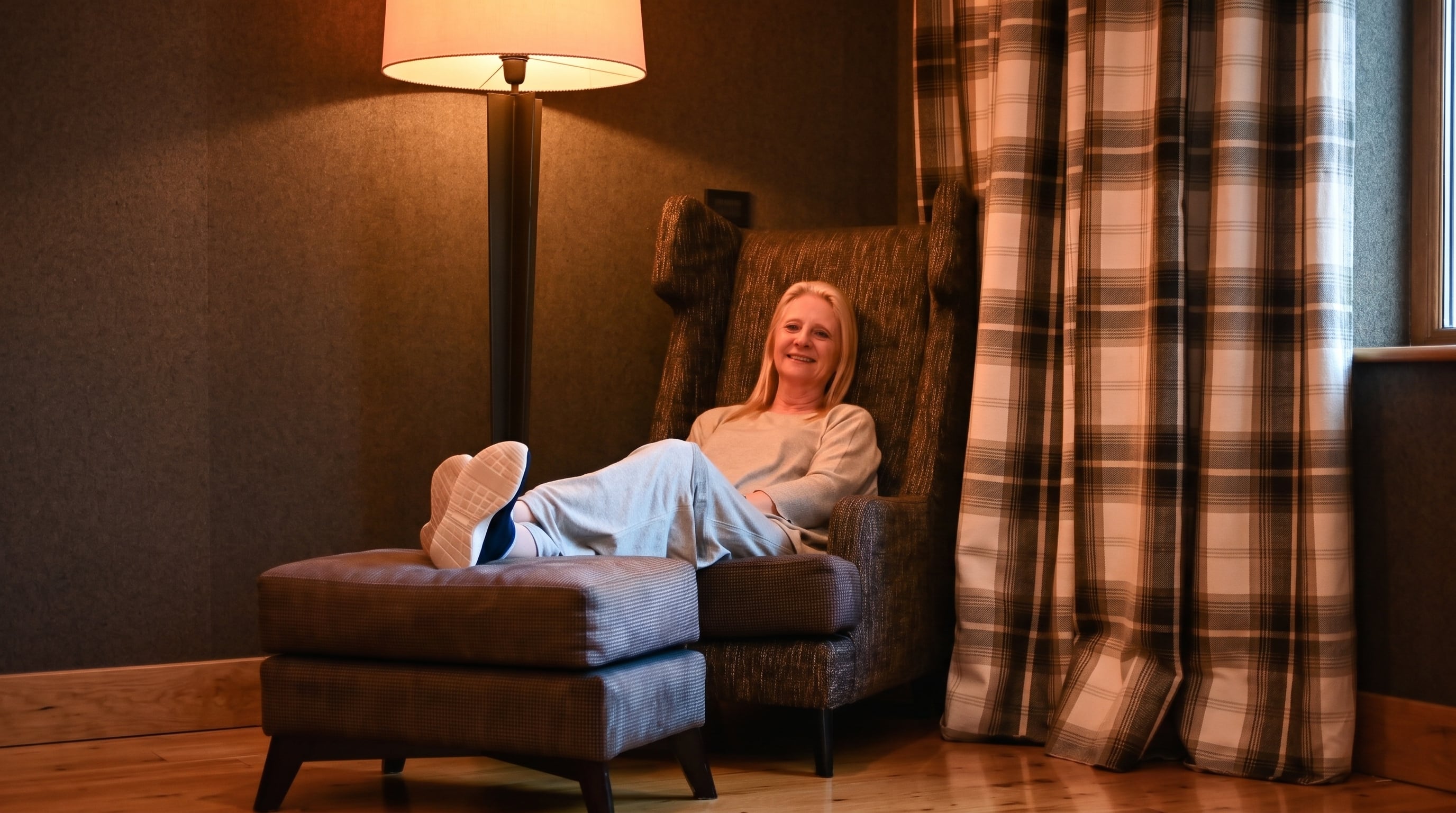
Para ejemplificar, en “La Señora Prentiss y el ratón Pérez”, me inspiré en el gato Beppo de Jorge Luis Borges y en esas personas que tratan a los seres sintientes no humanos como mascotas, sin tener en cuenta su autonomía, personificándolos, humanizándolos. Luego, recordé a Prentiss, personaje de una de mis novelas –“El marido americano” – y recurrí al legendario ratón Pérez como contrapunto. “La rotonda de Paratombú” es, en Santiago y en las Termas de Río Hondo, el refugio de perros callejeros atraídos por las luces del turismo y de la capital de provincia pero librados a su suerte. “Sueños” es contado por un joven cuya precaria vida no le impide imaginar, imaginación que abunda en poetas, novelistas y narradores, y que si bien no modifica la existencia, la repara, la acaricia… “Puntos de vista” alude a los estragos subjetivos de la Alemania de la Segunda Guerra y de la postguerra y “Sobriedad sonora” pone en el tapete la mirada escéptica sobre el mundo, que a veces me habita. Asimismo, en “Ora (lege) et labora”, un burócrata devela su presunta “creatividad”, al mismo tiempo el hecho de que, a menudo, la pirámide concebida para ofrecer supuestos servicios al ciudadano de a pie ralentiza sus objetivos declarados en apariencia, pero incumplidos en lo real atento a desplazamientos egoístas personales, volviendo a esas administraciones auténticos obstáculos kafkianos.
La construcción de un texto con unidad temática no fue fácil porque se reúnen aquí distintas opiniones y argumentos. Hay ironía, crítica, pero también ternura, amorosidad y esperanza. Sin embargo, la confección de narradores singulares, como un gato, libros que dialogan entre sí para sobrevivir en una biblioteca próxima a ser renovada por su dueño debido a una mudanza, mujeres de vida banal y un narrador omnisciente que discute con la IA y la desafía, tales narradores seleccionados, vierten aquello que buceo en el proceso humano mismo de significación: atribuimos sentido a significantes metaforizados por otros, damos por sentado el significado de situaciones que no deberían naturalizarse y sí, repensarse; repetimos discursos, nos deslumbramos de lo ajeno sin pensar, alardeando de lo propio.
Decía William James, el hermano del novelista, que hay gente que cree que piensa cuando solo ahonda en sus prejuicios. Prejuzgar constituye un alerta válido si es indicial: veo fuego, prejuzgo que hay peligro y, en consecuencia, llamo a los bomberos, aviso a los demás y huimos del lugar. En el orden de las ideas y del pensamiento, habría que tener cuidado de que gatos no pasen por liebres. Este libro no trata de añoradas liebres ni pícaros gatos y carece de mensaje. Los lectores sacarán sus conclusiones, en tanto aquí hay modos de ver desplazados en situaciones, cosas, en animales, a los que les atribuyo algún misterio. Mi escritura se va haciendo, siempre desnuda, entre puentes. Digo “desnuda” porque los textos nacen y se desenvuelven con la intervención lógica del autor pero se independizan no bien impresos: pertenecen a los lectores que los eligen o bien, los textos a ellos.
La lectora exigente que hay en mí cuando reviso me obliga a corregir y cambiar los muchos borradores que requiere cada escrito. Trabajan mi cuerpo, mis emociones, mi cerebro y el subconsciente. Como decía Roberto Bolaño, “tener el valor, sabiendo previamente que vas a ser derrotado y salir a pelear, eso es la literatura”, y esta, precisamente, es mi sensación (y son mis fantasmas) cuando termino un texto y lo doy a conocer.
Ustedes dirán…
Paula Winkler,Puntos de vista,Editorial Leviatán,libro,portada










President Donald Trump will participate in the annual Turkey Pardon on Tuesday, and the West Virginia turkey farmer responsible for raising this year’s two birds helps walk Digital through the process from hatch to White House ahead of the light-hearted event.
«We spent a little bit more one-on-one time with each of these birds to get them trained to loud noises, a lot of people present, flashing lights — just being handled — so when they get to the president, hopefully they’ll act like they have some sense,» Scott Rightsell told Digital about raising the birds for Tuesday’s National Thanksgiving Turkey Pardon.
Rightsell, who owns and operates Deans Gap Farm in rural Fort Seybert, West Virginia, with his wife Becky, found out during the summer that he would raise the turkeys for the ceremony. He received the young turkeys, called poults, in July — shortly after the celebration for America 250.
The turkeys were named Freedom and Feathers through a White House public opinion poll, beating out the options for Commander and Chief or Honey and Ham.
TRUMP’S THANKSGIVING TURKEYS ARRIVE AT LUXURY DC HOTEL AS AMERICANS VOTE ON THEIR NAMES
«We’ve had them from the middle of the July until now,» said Rightsell. «The turkeys weigh probably 40 to 45 pounds right now.»
He added that besides the aforementioned training, the birds receive the same treatment as all the others that he raises on the farm, which he and his wife founded in 2015.
«Being on national TV, that’s a big deal,» Rightsell said when asked what he was looking forward to most about his trip to the nation’s capital this week.
«I mean That’s probably what we’re looking forward to the most is being on national TV, actually meeting the president, which everybody does not get to do that. And getting to converse with him and the first lady, that’s gonna be a real treat for us.»
The National Thanksgiving Turkey Pardon has been a tradition for 79 years, recurring annually since President Harry Truman occupied the White House, according to Christy Puffenbarger.
Puffenbarger is this year’s National Turkey Federation chairwoman, a position that rotates annually. She’s the first woman to hold the role.
Typically, the pardon event is held in the Rose Garden. However, Trump will host the pardoning on the new South Lawn helipad Tuesday afternoon. A White House spokesperson tells Digital that Trump will deliver remarks about «how well our nation is doing» ahead of the holiday.
First lady Melania Trump, Vice President JD Vance and a litany of Cabinet secretaries, including Treasury Secretary Scott Bessent, Secretary of War Pete Hegseth, Secretary of Agriculture Brooke Rollins, Transportation Secretary Sean Duffy and Education Secretary Linda McMahon. Attorney General Todd Blanche will also attend. So will new White House chief of staff Stephen Miller.
Both turkeys receive a pardon, but which turkey participates in the pardoning ceremony depends on the American people, who vote for their preferred bird on the White House’s website. Voters are still deciding Tuesday morning which fleshy fowl will be pardoned later today.
INSIDE THE THANKSGIVING TURKEY HOTLINE THAT’S BEEN SAVING HOLIDAY DINNERS FOR 45 YEARS
Neither bird will end up on anyone’s Thanksgiving dinner table. The turkey that doesn’t receive a pardon remains behind the scenes at the White House, «for moral support,» as Puffenbarger put it. If the chosen bird gets stage fright or cannot carry out the ceremonial duties, the second bird is on standby.
«What I’m really looking forward to, obviously, like Scott and Becky, is meeting the president and his wife and representing this industry, and really [I] would like to thank the president for continuing this tradition,» Puffenbarger told Digital. «Because I do think it is a very nice event. It showcases not only our industry, but the tradition of turkey at Thanksgiving.»
Puffenbarger says the industry as a whole will provide 30 million pounds of turkey to Americans enjoying the Thanksgiving holiday this year.
«And to be able to showcase it at a positive, fun event like that … it’ll be quite an honor for myself and my family,» she said.
After spending their first few months of life like any normal turkey, the royal treatment for Feathers and Freedom began on Thursday.
They left for Washington, D.C., after a star-studded send-off from a local elementary school in Brandywine, West Virginia, where Becky Rightsell is also a teacher.
Secretary Rollins attended the sendoff, as did West Virginia Governor Patrick Morrisey.
«It’s so humbling for West Virginia to be named to have two of the turkeys that get pardoned. This is history in the making, only the second time that’s happened,» Morrisey told WDTV during the ceremony.
BROOKE ROLLINS, MONICA CROWLEY: AMERICA’S FAMILY FARMS HAVE KEPT US STRONG FOR 250 YEARS
Sunday night, the birds arrived at the five-star Willard InterContinental Hotel in Washington, D.C., where they received «presidential treatment,» according to the Department of Agriculture (USDA), which posted photos of the turkeys sitting on the beds in a hotel room.
A red carpet was rolled out as they strolled through the lobby of the hotel to much fanfare. Once in the room, the birds were greeted by a layer of crunchy fall leaves lining the floor.
But the fun doesn’t end after Tuesday’s pardoning. Instead, the turkeys will be whisked away for their next adventure.
«Immediately afterwards, another cool thing, these birds will get on an airplane and fly to beautiful College Station, Texas, where they will retire to live out the rest of their lives at Texas A&M University,» Puffenbarger explained.
Friday night, Texas A&M’s football team is scheduled to host rival Texas, the fifth-ranked college football team in the country.
Feathers and Freedom will be the guests of honor at the game.
«I don’t know how much they know about football, but I feel sure they will have a good time,» Puffenbarger said.
«And then Texas A&M … their poultry science department, will take care of the birds. They built quite a beautiful facility for them to spend their days in.»
white house, thanksgiving occasions lifestyle, politics, donald trump, west virginia, birds

.responsive {
width: 100%;
height: auto;
}
El ataque del domingo contra una corbeta rusa en el puerto de Bengasi, que Ucrania reivindicó el lunes, sacudió a Libia, un país a pocos cientos de kilómetros de Europa. El país está dividido en dos autoridades rivales: la del este, con sede en Bengasi, alberga presencia militar rusa, y la del oeste, con sede en Trípoli, habría permitido operar a personal ucraniano. Con un bando que aloja a Rusia y otro al que se acusa de abrir la puerta a Ucrania, y con Moscú en busca de un punto de apoyo en el Mediterráneo tras perder influencia en Siria, el país quedó convertido en un nuevo frente de la guerra.
El ataque se produjo el domingo 22, cuando la corbeta Merkury fue alcanzada en la base naval de Bengasi. Imágenes satelitales y de investigadores de fuentes abiertas parecen confirmar su hundimiento.
Zelensky, que presentó la operación como “ejemplar”, dijo que se usaron siete drones navales de fabricación ucraniana y que también fue destruido un helicóptero que la nave llevaba a bordo. El SBU, el servicio de seguridad ucraniano, afirmó además que fue atacado el carguero MV Angara, sancionado y al que la corbeta escoltaba. Reuters, citando fuentes médicas locales, informó de diez heridos, entre rusos y libios, y Al Jazeera, de un muerto.
Un país con dos gobiernos

Libia vive en un orden dual desde la caída de Muamar Gadafi en 2011. En Trípoli, en el oeste, gobierna el Gobierno de Unidad Nacional de Abdulhamid Dbeibah, reconocido por la ONU. Turquía mantiene allí presencia militar.
En el este y gran parte del sur, la autoridad real la ejerce el mariscal Khalifa Haftar, jefe del Ejército Nacional Libio, junto con una administración con sede en Bengasi que dirige el primer ministro Osama Hammad. Las elecciones previstas para 2021 nunca se celebraron.
Un Consejo Presidencial de tres miembros figura como jefe de Estado, pero el este no lo reconoce como máxima autoridad militar. Libia contesa (Libia en disputa), un extenso estudio italiano elaborado con aporte del Ministerio de Exteriores de Italia, antigua potencia colonial y uno de los países que más de cerca siguen a Libia, describe un “sistema postestatal” en el que las milicias y las redes militares familiares, y no los ministerios, concentran el poder real.
En el este, el ejército de Haftar es una estructura dinástica que dirige su hijo Saddam. Uno de los autores define el arreglo entre Dbeibah y Haftar como una “estabilidad tóxica”, un reparto del poder y de las rentas más que una vía hacia la unificación.
La alianza del este con Moscú
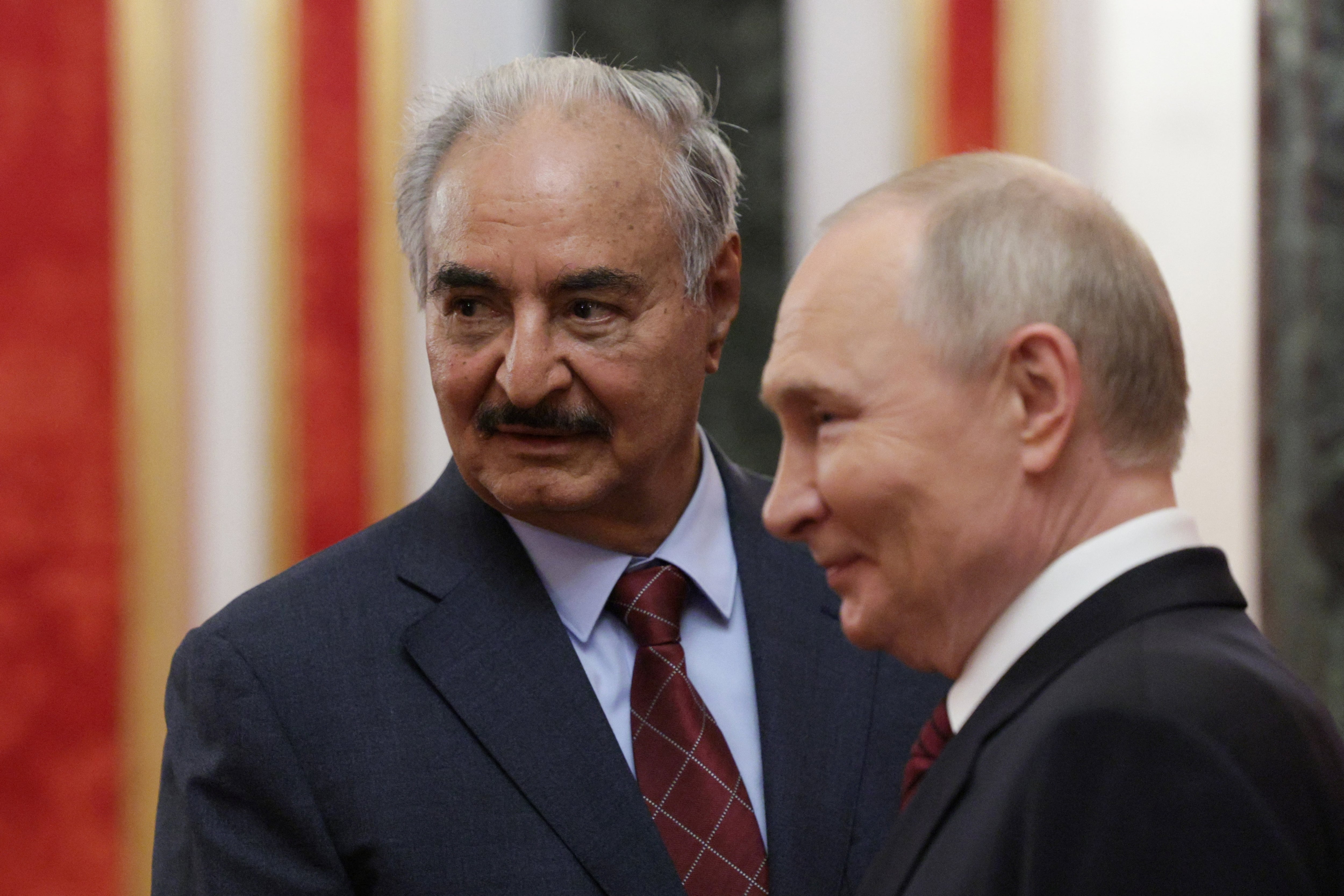
El vínculo de Haftar con Rusia es antiguo. Un acuerdo de cooperación militar firmado en 2017 y renovado en mayo de 2025 incluye entrenamiento y entrega de equipo. Según un análisis de Tearline, un proyecto de la agencia geoespacial de Estados Unidos (NGA), el Africa Corps ruso tiene presencia en al menos seis bases aéreas libias, entre ellas Al Yufra y Brak al Shati, con ampliaciones de infraestructura desde 2024.
Tras la caída de Bashar al Assad en Siria, en diciembre de 2024, que puso en duda el acceso ruso a la base de Tartús, Moscú empezó a mover equipo militar hacia el este de Libia: según un análisis de datos de vuelo de CNN, hubo más de un vuelo diario entre la base siria de Hmeimim y la de Al Jadim, cerca de Bengasi, desde mediados de ese mes. Casi dos años después, en septiembre de 2026, atracaron en Tobruk, el puerto del este, convoyes rusos con vehículos blindados, y el 10 de septiembre una aeronave de la Fuerza Aérea italiana vigiló uno de ellos en el Mediterráneo central. Para el Istituto Analisi Relazioni Internazionali (IARI), un centro de análisis con sede en Sicilia, Libia ofrece a Moscú un punto de acceso en el Mediterráneo y un centro logístico hacia el Sahel, aunque sin las capacidades que tuvo Tartús.
La Merkury, de unos 105 metros, escoltaba convoyes rusos y llevaba varios días en Bengasi. Para Nicolò Murgia, investigador del Istituto Affari Internazionali (IAI), un centro de estudios con sede en Roma, el ataque tiene dos rasgos novedosos: el blanco era un buque de guerra lejos del frente y Zelensky lo reivindicó públicamente. Murgia considera posible, aunque poco probable, que el conflicto se amplíe en el corto plazo.
En cualquier caso, los analistas observan que la pérdida de la corbeta debilita las capacidades navales rusas y el Mediterráneo se ha convertido en un teatro de guerra externo.
El oeste y la presencia ucraniana
El este acusa al oeste de haber permitido el lanzamiento de los drones. Funcionarios militares libios dijeron a AP que salieron de una base en el oeste del país, mientras que Zelensky no precisó el punto de lanzamiento.
Funcionarios libios habían dicho a AP en abril que personal ucraniano, en su mayoría expertos en drones, opera en el oeste bajo un acuerdo secreto con Dbeibah. Una investigación de la radio francesa RFI de abril, basada en dos fuentes libias anónimas, habló de más de 200 militares y expertos ucranianos en el oeste, en la academia aérea de Misrata y en Zawiya, cerca del complejo energético de Mellitah. CNN informó en septiembre, citando a un funcionario de inteligencia militar ucraniano y a un operador de drones navales, que operadores ucranianos en el noroeste de Libia usaban la base de Misrata para atacar petroleros de la llamada flota fantasma rusa. El Ministerio de Defensa libio lo negó “categóricamente” y dijo que no existe acuerdo alguno que permita usar esa base para ataques fuera del país. Kiev no comentó.
Las reacciones

Tras el ataque, el Ministerio de Exteriores de Trípoli condenó “categóricamente” cualquier operación militar extranjera en territorio libio o en sus aguas y pidió a Kiev información oficial sobre “la naturaleza y el alcance” de la acción. El este condenó una violación de su soberanía, pidió a la ONU investigar si hubo personal ucraniano en Misrata, Zawiya y otros puntos del oeste, y anunció una investigación propia junto con Rusia.
La misión de la ONU en Libia expresó “seria preocupación”, pidió una investigación “inmediata, independiente y transparente” y advirtió de que Libia “no puede permitirse ni debe convertirse en un campo de batalla de conflictos extranjeros”.
El embajador ruso, Aydar Aganin, culpó a Ucrania y dijo que el ataque no quedará sin respuesta. El canciller italiano, Antonio Tajani, dijo que “es preocupante que la guerra entre Rusia y Ucrania pueda continuar a pocos cientos de kilómetros de Italia” y que desestabilizar Libia “sería realmente peligroso”.
Italia gobernó Libia como colonia entre 1911 y 1943 y sigue siendo uno de sus principales socios por la energía y la migración.
Europa, sin una postura común
Libia importa a la UE por su cercanía y por la migración: desde el este del país hasta la isla griega de Creta hay unos 330 kilómetros y Libia es el principal punto de partida de la ruta del Mediterráneo central, que sumó unas 14.300 llegadas en el primer semestre de 2026, según Frontex.
Aun así, no hubo reacción pública de la UE hasta el momento y el contexto ofrece pistas para explicar ese silencio. El estudio Libia contesa describe a la Unión como un actor con “notables dificultades” para convertir su interés en Libia en una política unitaria, por las divergencias entre sus Estados miembros. Esas diferencias condicionaron también a Irini, la misión naval europea creada en 2020 para hacer cumplir el embargo de armas de la ONU a Libia, que el 9 de octubre fue renovada hasta marzo de 2029 y ahora incluye vigilar la actividad marítima rusa.
Mientras tanto, la iniciativa política más activa viene de Washington: el asesor de Donald Trump, Massad Boulos, propone mantener a Dbeibah como primer ministro y que Saddam Haftar presida el Consejo Presidencial a cambio de inversiones petroleras. Ese plan no está cerrado.
En ese contexto, condenar o avalar el ataque pondría a los europeos en una situación incómoda con ambas partes libias.
Europe
INTERNACIONAL
Trump accused of ‘socialism, communism’ after helping scandal-plagued Nvidia CEO reclaim top job

FIRST ON FOX: Republicans blasted Democrats on the campaign trail for pushing a socialist and communist agenda, but President Donald Trump’s involvement in getting Jensen Huang’s old job back has some lawmakers claiming hypocrisy.
«This is as close to socialism, communism as I’ve ever seen,» Sen. Ruben Gallego, D-Ariz., told Digital.
«I mean, it’s essentially state planning of private economies, and it’s a whole new level of hypocrisy,» he continued. «But the Republican Party definition of socialism is any government program, or government power, as long as the president doesn’t like it or use it.»
Nvidia’s board reinstated Huang Tuesday morning after allegations that the tech executive had a handful of affairs, notably with an alleged Chinese spy, placing him back at the top of the chip juggernaut after two weeks out of the gig.
TRUMP ‘DIRECTLY AND INDIRECTLY’ INTERVENED TO GET NVIDIA’S CEO REINSTATED, POTUS SAYS
The company’s chips power myriad technologies that the Trump administration has pinned as critical to national security, including data centers and artificial intelligence, which lawmakers fear would be disastrous to fall into the hands of the Chinese government.
Sen. Rick Scott, R-Fla., who has been hawkish on China’s access to Nvidia’s chips, told Digital that the company’s board was «free to vote however they want, but the federal government owes the American people answers about what actually happened.»
«This looks terrible on its face, and it drives home the need for Congress to be informed on the full impact of Jensen Huang’s actions on our national security and economy,» Scott said. «Congress needs to be fully briefed on this as soon as possible, so we can take appropriate action if need be.»
TRUMP OFFICIALS TOLD ‘NOT TO STAB EACH OTHER’ AMID DEMANDS NVIDIA DISPUTE BE PUT UNDER OATH IN CONGRESS
The company’s stock spiraled and lawmakers on both sides of the aisle raised national security concerns about China’s access to Nvidia’s chips. They have since pushed for stricter export control legislation and demanded that Huang and Commerce Secretary Howard Lutnick testify on the Hill.
Trump, in an appearance on CNBC shortly after the board’s announcement, said he didn’t believe Huang would have been reinstated without him as he lauded the stock market’s upward trend.
«The answer is no,» Trump said. «I believe my intervention was very important.»
The Trump administration has not been shy about turning the government into a pipeline to the corporate world. The Cato Institute found in a report released in October that the administration has equity stakes in about 40 companies — though Nvidia is notably not on the list.
TWO TOP TRUMP CABINET OFFICIALS GO TO WAR OVER CHINA SPY SCANDAL AMID EXPLOSIVE ACCUSATIONS: REPORT
And Trump’s intervention did not stop Senate Banking Committee Chair Tim Scott, R-S.C., from plowing ahead with a scheduled hearing with Huang. He announced that the embattled, newly reinstated CEO would appear before the panel on Dec. 3.
Gallego, a member of the Senate Banking Committee, told Digital in a brief interview that «it really frightens me about what’s happened with our national security,» and questioned whether Trump had engaged «in stock market manipulation before making these announcements.»
«All these things, you know, are really now up in the air,» he said. «And at the core, the question is, what’s going to happen to our national security?»
And Sen. Chris Van Hollen, D-Md., who has made AI safeguards a center of his challenge against Senate Minority Leader Chuck Schumer, D-N.Y., told Digital that Huang was «at the center of this political corruption and political rot, and he seems to have been given a free hand by President Trump when it comes to formulating the Trump administration’s AI and chips policy.»
The lawmaker is also a member of the Banking Committee, and said he was keenly interested in Huang’s «efforts to increase and accelerate the export of high-end chips to China, how he’s been accomplishing that, how he’s been getting his way with the administration.»
«And then obviously, the concern is that it is undermining our national security interests. After all, high-end chips can be used by the military in China,» Van Hollen said. «And it’s completely it’s just completely hypocritical for the Trump administration, on the one hand, to say the reason we have to take off all the brakes on AI development here at home is because China will leap ahead, if we don’t, when in fact, it’s the Trump administration that’s helping China leap ahead.»
Senate Republicans are equally uneasy about the national security implications of the move, despite Trump assuring in a post on Truth Social that «the United States Government has no reason to believe that Jensen’s return to Nvidia poses any risk to National Security.»
«No national security risk? Based on what,» Sen. John Cornyn, R-Texas, said on X.
Sen. Katie Britt, R-Ala., a member of the Senate Banking Committee, also told Digital that it was Nvidia’s right to reinstate Huang, but that the CEO needed to answer for what happened.
«Jensen Huang’s actions raised national security concerns, and he must answer for them,» Britt said. «The Commerce Department also has a responsibility to explain the role it played in allowing for potentially serious threats to our national security.»
«I look forward to having both Jensen Huang and Secretary Lutnick in front of the United States Senate Banking Committee, where my colleagues and I can ask questions and conduct necessary oversight,» she continued.
The White House did not respond to Digital’s request for comment.
politics, donald trump, congress, senate, national security

Más polémica con Neymar: le niega el saludo a Braithwaite y estalla contra el árbitro

El regreso de Huang trae un respiro al sector de la IA, pero persisten dudas

Turkey farmer dishes on preparing birds for Trump’s Thanksgiving presidential pardon

El Gobierno posterga las diferencias internas, evita confrontar con Bullrich y apuesta a ordenar la tropa

Sorpresa en las elecciones de Independiente: cinco candidatos presentaron sus listas y marcarán un hito en la historia del club

Edith Hermida defendió su plato y enfrentó al jurado de MasterChef Celebrity: “Mis hijas se criaron comiendo esto”

Javier Milei destacó el desembarco de Tesla en el país y aseguró: “Esto también es devolverle la libertad a los argentinos”

Financial Times duda de la economía argentina: riesgo país, financiamiento e imagen Milei

Agustín “Rada” Aristarán se despide de Chanta: “Con esta obra dejé de ser un impostor”

NYC college put on notice after Jewish campus group shunned by student government: ‘rude awakening’

 ECONOMIA1 día ago
Financial Times duda de la economía argentina: riesgo país, financiamiento e imagen Milei
- CHIMENTOS2 días ago
Agustín “Rada” Aristarán se despide de Chanta: “Con esta obra dejé de ser un impostor”
- INTERNACIONAL2 días ago
NYC college put on notice after Jewish campus group shunned by student government: ‘rude awakening’