INTERNACIONAL
Pete Hegseth impeachment effort dies in the House as absent Democrats couldn’t beat the traffic

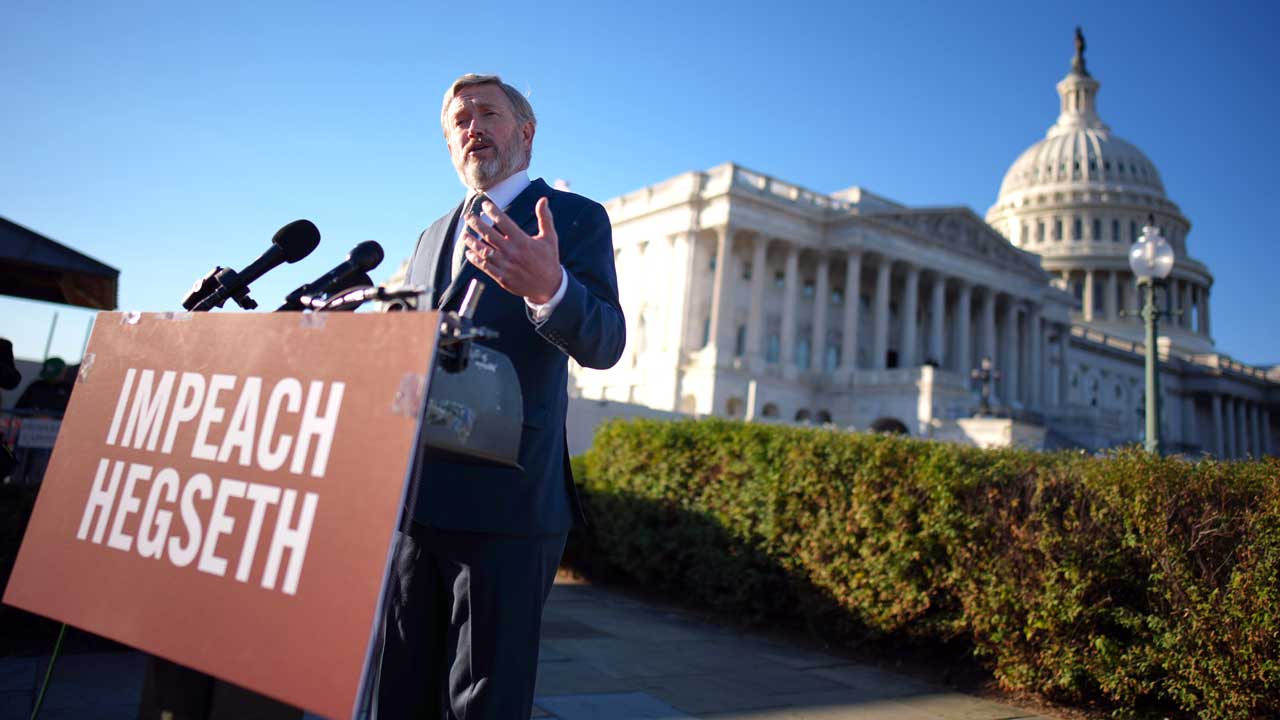
Most of America bemoans political gridlock in the nation’s capital. DC area commuters deplore the city’s transit gridlock.
But Pentagon chief Pete Hegseth may now be a fan of DC’s legendary traffic snarls. It appears that crosstown traffic may have prevented him from becoming only the third Cabinet secretary ever impeached by the House of Representatives.
The House voted 211-204 this week to divert an effort by Rep. Thomas Massie (R-Ky.) to impeach Hegseth.
House Republicans moved to block a straight, up-or-down vote on impeachment.
Instead, Republicans forced a vote on sending the articles to the Judiciary Committee.
That’s where they’d go to die. If the House failed to sidetrack the articles, Members would have then voted on actual impeachment.
If a simple majority voted to impeach, Hegseth would join 19th century Secretary of War William Belknap and former Homeland Security Secretary Alejandro Mayorkas as the only Cabinet Members impeached by the House.
But DC’s streetside congestion altered the parliamentary traffic on the House floor.
All Democrats said they were intent on impeaching Hegseth.
But Republicans faced an attendance problem.
Seven of their Members were missing. The vote on sending the impeachment articles to committee was tight. The tally read 204-204 at one point.
By rule, tie votes fail. That would have compelled a vote on actual impeachment. But a few more Republicans trickled in. The absent Democrats never did. Rep. Dan Newhouse (R-Wash.) presided over the vote.
He gaveled it closed at 211 yeas to send the articles to the committee and 204 votes against.
That was it. The Hegseth impeachment quest was dead. Eleven Democrats missed the roll call.
It’s about the math.
Flip four votes and Hegseth would have been impeached, 208-207.
HEGSETH IMPEACHMENT VOTE LOOMS AS HOUSE REPUBLICANS PRIVATELY WARN IT COULD PASS
And, had all 11 truant Democrats made it to the U.S. Capitol and voted, it’s likely the House would have impeached Hegseth 215-211. Even eight Democrats would have made it 212-211.
However, thanks to the Democrats’ attendance issue, Republicans were able to tap the brakes on the impeachment interstate.
The failure to impeach Hegseth is now fueling road rage in the Democratic Party.
«Shame on them for not showing up,» said Rep.-elect Richard Ojeda (D-N.C.).
«I don’t make excuses for colleagues who don’t show up on such an important vote,» said Rep. Stephen Lynch (D-Mass.).
Democrats can’t beat Republicans if they can’t beat the traffic.
Rep. Melanie Stansbury (D-N.M.) is one of the most outspoken Democrats when it comes to her disdain for Hegseth.
But Stansbury grew defensive when questioned by colleague Bill Melugin about missing the vote.
«I was trapped right there at that street corner because there was a police motorcade moving busses off of the campus. And I physically was trapped right at that corner in my vehicle, in traffic because the police had shut down traffic,» said Stansbury.
«Why not come here sooner, though?» followed up Melugin.
HEGSETH COULD FACE NEW IMPEACHMENT PUSH OVER UKRAINE AID, LAWMAKERS WARN
«I did and I was trapped in my vehicle because of a police motorcade,» said Stansbury.
Maybe. Maybe not.
The Constitution’s «Speech or Debate» clause exempts lawmakers from police interference when «going to and from» the Capitol for «their attendance at the Session of their Respective Houses.» It’s kind of like diplomatic immunity.
A few years ago, Rep. Don Beyer (D-Va.) was supposed to preside over a brief House session in the middle of a recess. Traffic heading into DC from Northern Virginia was stopped because of an incident. Beyer was the only Member scheduled to be present in the House chamber that day. So Beyer identified himself to a police officer who proceeded to let him through.
Over the years, other lawmakers have asserted the Speech or Debate clause as a reason to bypass unrelated police activity and get to Capitol Hill.
Reps. Jonathan Jackson (D-Ill.) and Laura Gillen (D-N.Y.) also said they were stuck in traffic. However, Rep. Lou Correa (D-Calif.) was out for a medical procedure. Rep. Steve Horsford (D-Nev.) missed the vote because of a personal emergency. Former House Speaker Nancy Pelosi (D-Calif.) was in the Golden State.
DC’s traffic interfered with parliamentary traffic again on Thursday morning.
The House took an early Thursday morning vote related to a veterans bill.
The House adopted the motion, 271-135. But the House gaveled down the vote with 26 Members absent. The reason? Some Members were again stymied from making it to the Capitol.
Emergency room physician Matt Lambert killed one person at a gym, shot six people and engaged in a standoff with cops before turning the gun on himself. Initially reported as an «active shooter» incident, District of Columbia police locked down major parts of the city, stalling traffic.
And that’s why some lawmakers missed Thursday’s roll call. They were marooned in traffic.
Shifting gears, Rep. Eric Sorensen (D-Ill.) in fact made that procedural vote on the floor. When the vote began, a gentle breeze blew across the Capitol plaza. Then a mist enveloped the Capitol.
Later, a few heavier drops. Then the sun broke through the clouds. But reverted to overcast. It was a dank morning in Washington.
«I want to know what the weather is,» yours truly shouted at Sorensen as he skipped down the House steps toward a group of reporters waiting below.
Sorensen is a meteorologist who worked for decades at TV stations in Texas and Illinois before coming to Washington in 2023.
Sorensen pivoted immediately into weatherman mode.
«We’ve got increasing showers guys. Much cooler temperatures for the weekend,» said Sorensen, replicating the precise forecast for Washington, DC over the next few days.
The meteorologist-turned-lawmaker gestured to his right as though looking at a phantom map of the Midwest, projected against a green screen in a TV studio.
«As God is my witness, I cannot talk about the weather without moving my hands,» said Sorensen. «I talk about high pressure. It’s high pressure right here in the midsection of the country. And it’s moving in our direction for the next week.»
After the election, the political weather forecast would seem good for Democrats right now. Supposedly balmy days and comfortable nights. A political «high», if you will.
«So is there a high-pressure system moving here for the Democratic Caucus?» yours truly asked.
«No. It’s low pressure, man. It’s low pressure going into the next Congress. We’ve just got to keep everybody together,» he replied.
But is a high-pressure system really in the long-range forecast for Democrats? Or will a political «low» bring storms and atmospheric volatility — especially if progressive and centrist Democrats tangle with one another?
«I thought high pressure was a good thing,» said your trusty reporter. «No subtropical systems coming in. No clipper system.»
«As a meteorologist, I’m not in production. I’m in promotion,» said Sorensen of potential Democratic storm systems which might emerge on the horizon. «With a complicated issue like the weather, I was able to help connect with people every day for 22 years. But here, this is the most complicated mechanism in the United States. We’ve got to get better at communicating what we do for the people.»
DC traffic has already stymied Democrats over the past few days. Tornadic political storm systems may brew inside the Democratic Caucus. And that’s to say nothing about transportation and just getting people to the Hill.
Traffic and weather. And if the internal Democratic fisticuffs turn ugly, well, may show that on sports. Right along with the hockey fights.
politics, pete hegseth, house of representatives politics, congress, washington dc












DENVER — A mile above much of the country, and leagues away from Washington, D.C., Senate Minority Leader Chuck Schumer, D-N.Y., is facing a progressive rebellion that threatens his grip on power.
The challenge is being led by Sen. Chris Van Hollen, D-Md., who has served under Schumer since 2017. And he is willing to go further than Schumer ever has on one issue: terminating the filibuster.
Years ago, Schumer tried and failed to narrowly change the Senate’s rule to pass a sweeping voting rights package. Republicans have toyed with it over the last two years, but never pulled the trigger.
SCHUMER’S FORMER ALLY MOUNTS LEADERSHIP CHALLENGE AS DEMOCRATS FACE RARE INTERNAL POWER STRUGGLE
Van Hollen said, «We need democracy in the United States Senate, and that means allowing, ultimately, a majority of senators to answer the call of the American people.
«So, that means 51 votes. So, my personal view has been all along that the filibuster is an anti-democratic … provision. It’s not in our Constitution,» Van Hollen added.
«It was put in there by senators to enhance their power over the power of the people.»
Van Hollen announced his challenge against Schumer, who has led Senate Democrats for nearly a decade, Thursday night after a listening campaign with Senate Democrats. It presents a rare opportunity for Senate Democrats since there hasn’t been a contested Democratic leadership election since 1994.
Just a week earlier, Van Hollen was mulling higher office, but now he’s giving up a potential bid for the White House in 2028 to do one thing: beat Schumer and grapple with President Donald Trump.
«I’m no longer pursuing that,» Van Hollen told reporters at the What’s Next conference in Denver, where Democratic leaders, strategists and activists gathered to debate the party’s direction after its midterm wins.
Van Hollen framed his challenge to Schumer as a response to voters’ calls for change after Democrats’ sweeping wins and President Donald Trump’s policies.
«I did discuss this with Senator Schumer,» Van Hollen told Digital. «We understand that this will be a competition. I think it’s important to give Senate Democrats a choice.»
DEMS ADMIT UNCOMFORTABLE ELECTION SWEEP TRUTH AS PARTY DESCEND ON DENVER TO SHAPE 2028 WITHOUT A FRONTRUNNER
Voters «chose change,» he said, adding that the Democratic caucus needs «new ideas» and «a different way of governing.»
Van Hollen has also criticized Schumer for limiting votes on legislation popular with Democrats, including a bill to boost unions. He said the incoming majority should pass the bills candidates campaigned on and challenge Trump to respond.
«We shouldn’t wait to hear what President Trump may or may not do,» Van Hollen said. «We should answer the call of the American people.»
Toppling Schumer will be an uphill climb. As the incumbent leader, he has an established network of support and can offer colleagues leadership posts.
Either candidate will need 28 votes in the secret ballot contest expected in early December or 29 if Democrats win Alaska, where ballots are still being counted in the Senate race between Democratic nominee Mary Peltola and incumbent Republican Sen. Dan Sullivan.
THE MISTAKE NEWLY ELECTED DEMS ADMIT THEY CAN’T AFFORD TO MAKE WITH TRUMP AFTER SWEEPING 2026 WINS
Some What’s Next attendees said Van Hollen could deliver the Senate leadership shake-up they want.
«We definitely want change. We don’t want to go back to the way things have been. This is a turning point for our country,» Jenny, a Denver resident, said, adding it was time for Schumer to go.
«This is the time for us to really, really go after what is right for everyone, not the status quo.»
Ara, also of Denver, was optimistic about Van Hollen’s chances, saying she believes he already has significant support.
«I think there’s a really good chance,» Ara told Digital. «I think there were a lot of people that were already willing to support him. So I feel very good about this,» she added.
Zoe said Van Hollen’s willingness to stand up for his constituents is the kind of fight young people want from their representatives.
«He goes out there, and he puts his body on the line for his constituents. And I think that’s what we’re looking for, the kind of fight we’re looking for from our representatives as young people,» Zoe told Digital.
politics, chuck schumer, senate, midterm elections, democrats elections
INTERNACIONAL
Editorial Piedrasanta abre la sexta edición de Cuéntame tu Cuento para publicar historias de niños guatemaltecos
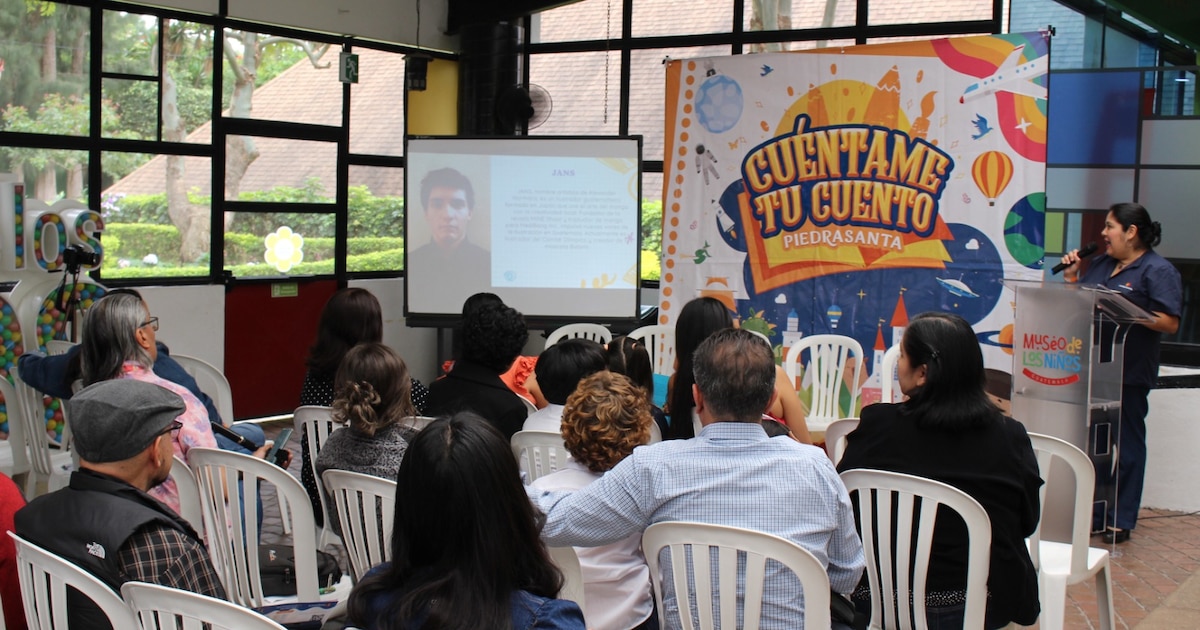
Editorial Piedrasanta abrió este jueves las inscripciones para la sexta edición de Cuéntame tu Cuento, un programa que permitirá a niños y adolescentes de Guatemala publicar un libro impreso, firmar un contrato de autor y recibir regalías por las ventas de sus obras. La convocatoria de 2027 incorpora recursos digitales interactivos y un taller de cómic orientado al manga.
La iniciativa ya reunió a más de 2.500 autores de entre cinco y 17 años. Durante la quinta edición, 316 niños y adolescentes recibieron sus libros en julio, en el marco de FILGUA 2026, tras participar desde Guatemala, El Salvador, Costa Rica, Estados Unidos y Alemania.
La presentación de la nueva convocatoria se realizó a las 9:00 en el Museo de los Niños de la Ciudad de Guatemala, con la presencia de familias y jóvenes que atravesaron el proceso editorial. El programa ofrece orientación para escribir, charlas para familiares, revisión ortotipográfica, diseño y publicación, con el objetivo de conservar la voz de cada autor.
Wendy Sinay, coordinadora de Cuéntame tu Cuento, explicó que la propuesta suma herramientas acordes con la relación de los niños con la tecnología: “Nos hemos modernizado para responder a las nuevas formas en que los niños aprenden y se relacionan con la tecnología. Queremos ofrecerles herramientas que hagan más accesible y dinámico el proceso de escribir, sin perder el acompañamiento y la calidad editorial que caracterizan al programa”.
Contenidos digitales para construir una historia
Los participantes tendrán acceso desde febrero de 2027 a “Pregúntale a tu editor”, un espacio audiovisual con actividades sobre las partes de un cuento, la elección de un tema, la creación de personajes, los diálogos, los escenarios, el conflicto y el desenlace.
La propuesta también incluirá recursos para padres y educadores, con recomendaciones sobre las prácticas que pueden favorecer la autonomía de los niños durante la creación de una obra y aquellas que pueden limitarla.
Cuéntame tu Cuento admite cuentos, leyendas y cómics desde hace dos años. Para la próxima edición, la editorial buscará fortalecer la modalidad manga mediante “Escribe e ilustra tu propio cómic”, un taller en el que los jóvenes podrán combinar texto e imágenes para desarrollar sus relatos.
El taller estará a cargo de JANS, el nombre artístico del ilustrador guatemalteco Alexander Normans, quien se formó en Japón en Seian University of Arts and Design y Kyoto Computer Gakuin. Allí recibió un premio a la excelencia en Arte y Diseño.
Normans tradujo al español obras como World Trigger, Marriage Toxin y Adiós, Eri, de Tatsuki Fujimoto, para MediBang Inc. También fundó, edita y escribe la revista guatemalteca MINE Shoot, y trabaja como ilustrador para el Comité Olímpico de Guatemala, donde creó a Balami, su mascota.

El contrato editorial y la entrega de las obras
La inscripción tiene un valor de Q375 e incluye un código de autor, el formulario de registro, talleres virtuales, cursos en línea y conferencias dirigidas a padres y educadores. El paquete contempla la edición, el diseño y la impresión de 11 ejemplares de cada obra.
Los libros no podrán superar las 16 páginas. Sus autores recibirán derechos sobre las ventas que generen las publicaciones y formalizarán sus contratos editoriales en abril de 2027.
El proceso comenzó el 12 de noviembre con una conferencia introductoria virtual para los inscriptos. La fecha límite para entregar las obras terminadas será el 30 de abril de 2027.
La convocatoria se divide en cuatro grupos de edad: de cinco a siete años, de ocho a diez, de 11 a 13 y de 14 a 17. En anteriores ediciones hubo relatos escritos en español, alemán e inglés sobre amistad, animales, superación y vínculos familiares.
Entre los participantes de ediciones anteriores figuran Ian Sebastián Bonilla Rodríguez, autor de Ian y el Japón escalofriante; Sara Flores Chávez, autora de Un viaje a las estrellas; y José Xavier Rosas Hernández, autor de Un viaje al borde del universo. Durante la quinta edición también participaron 18 estudiantes becados y una niña que acumulaba cinco libros publicados dentro del programa.
Las obras podrán enviarse al correo CTC@piedrasanta.com o entregarse en las oficinas de Editorial Piedrasanta, en la 5.ª calle 7-55, zona 1 de la capital guatemalteca. La sexta edición concluirá en julio de 2027, durante FILGUA, con la presentación pública de los nuevos libros.
Museo de los Niños Guatemala,Editorial Piedrasanta,Cuéntame tu cuento,banner,presentación
INTERNACIONAL
El Departamento del Tesoro de Estados Unidos designa como terroristas a Los Mendoza, Los Lorenzana y Los Huistas por sus nexos con cárteles mexicanos
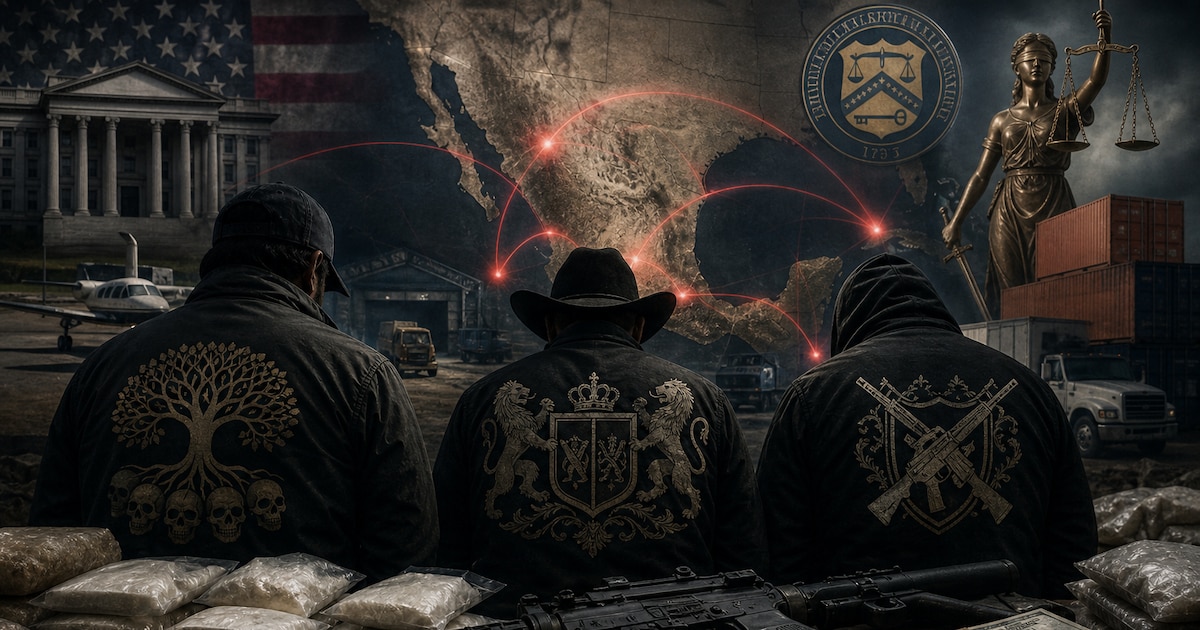
El Departamento del Tesoro de Estados Unidos sancionó a Los Mendoza y Los Huistas, dos organizaciones narcotraficantes de Guatemala, por su apoyo al Cártel de Sinaloa y al Cártel de Jalisco Nueva Generación (CJNG), mientras el Departamento de Estado calificó a Los Lorenzanas como organización terrorista extranjera. Las medidas bloquean los bienes de los tres grupos bajo jurisdicción estadounidense y alcanzan a entidades que les pertenezcan en al menos un 50%.
Las sanciones sitúan a las estructuras guatemaltecas dentro de la estrategia estadounidense contra las redes que trasladan narcóticos desde Sudamérica hacia México y, desde allí, a Estados Unidos. También exponen a instituciones financieras extranjeras a sanciones secundarias si facilitan, a sabiendas, operaciones relevantes en nombre de los grupos designados.
El secretario del Tesoro, Scott Bessent, sostuvo que la decisión “expone los vínculos entre organizaciones criminales guatemaltecas con influencia política y organizaciones terroristas extranjeras mexicanas que facilitan el flujo de narcóticos letales hacia Estados Unidos”. Añadió que el organismo continuará actuando contra las redes que permiten al Cártel de Sinaloa y al CJNG transportar drogas a través de las fronteras estadounidenses.

Los Lorenzanas, bajo la designación de organización terrorista extranjera
El Departamento de Estado incorporó a Los Lorenzanas a la lista de organizaciones terroristas extranjeras y también los clasificó como terroristas globales especialmente designados, en virtud de la Orden Ejecutiva 13224, modificada posteriormente. La designación se aplicó bajo la sección 219 de la Ley de Inmigración y Nacionalidad.
El secretario de Estado, Marco Rubio, afirmó que los tres grupos guatemaltecos mantienen “vínculos profundos con los cárteles mexicanos, que ayudan a mover y exportar drogas ilícitas para financiar el terrorismo y la actividad criminal”. Sobre Los Lorenzanas, a los que describió como uno de los clanes narcotraficantes más poderosos de Guatemala, dijo que son responsables de “numerosos actos de violencia contra civiles, funcionarios de gobierno y fuerzas militares en Guatemala”.
El Cártel de Sinaloa y el CJNG habían sido incorporados a las categorías de organización terrorista extranjera y terrorista global especialmente designado el 20 de febrero de 2025. Ambos ya figuraban como importantes narcotraficantes extranjeros: el primero desde 2009 y el segundo desde 2015.
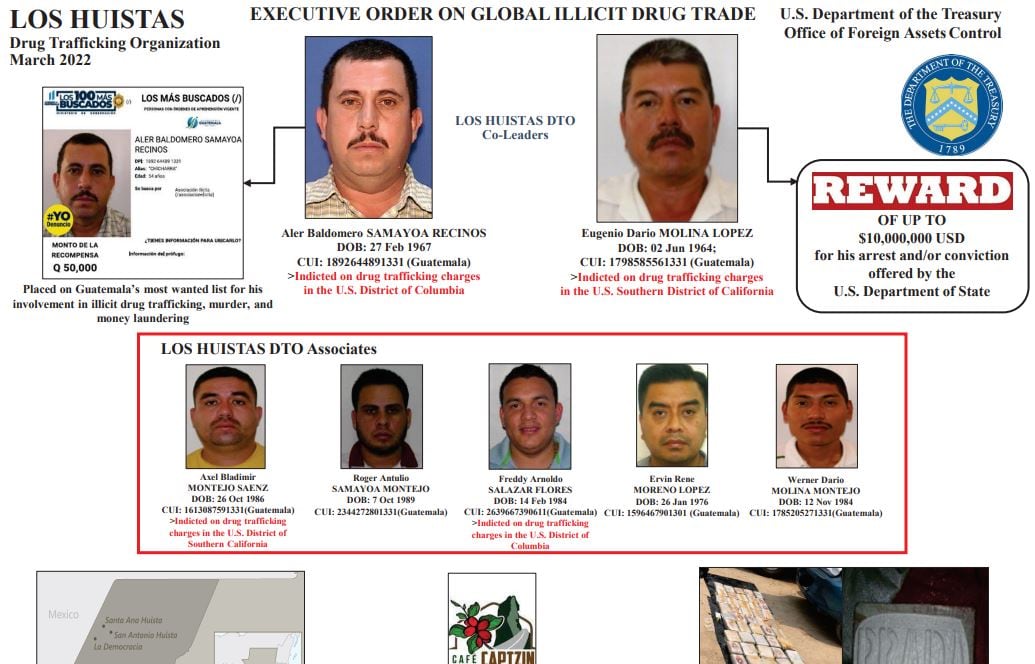
Los Mendoza y Los Huistas, redes familiares con control territorial
La Oficina de Control de Activos Extranjeros (OFAC), dependiente del Departamento del Tesoro, sancionó a Los Mendoza y a Los Huistas bajo la Orden Ejecutiva 14059, dirigida contra la proliferación internacional de drogas ilícitas, y la Orden Ejecutiva 13224. La primera de esas organizaciones se fundó en la década de 1980 y figura entre las más antiguas y poderosas del país.
Los Mendoza operan como intermediarios de transporte y logística para el Cártel de Sinaloa. Según el Departamento del Tesoro, facilitan el acceso a cruces fronterizos, pistas de aterrizaje clandestinas, almacenes y redes de protección local en los departamentos guatemaltecos de San Marcos, Huehuetenango y Petén.
La estructura también participa en asesinatos por encargo y lavado de dinero. Sus intereses económicos incluyen tierras obtenidas mediante expropiaciones, ganadería, negocios agrícolas e inversiones inmobiliarias en Petén, Izabal y la frontera con México.
Los Huistas están activos desde la década de 1990 y ya habían sido sancionados por la OFAC el 18 de marzo de 2022, también bajo la Orden Ejecutiva 14059. El Tesoro los definió como “un eslabón crucial en la cadena de suministro del narcotráfico desde Sudamérica, pasando por México, hasta llegar a Estados Unidos”.
Los vínculos sostenidos de esta organización con empresarios locales, agentes encargados de hacer cumplir la ley y políticos le permitieron dominar actividades del crimen organizado en zonas del noroeste de Guatemala y evadir la vigilancia de las autoridades. La red opera en un área próxima a corredores utilizados para el traslado de drogas.
Corredores entre Honduras, México y Estados Unidos
Los Mendoza y Los Huistas controlan rutas estratégicas en las fronteras guatemaltecas con Honduras y México. Esos corredores los convirtieron en socios logísticos del Cártel de Sinaloa y del CJNG para la recepción, el almacenamiento y el transporte transfronterizo de narcóticos.
Las organizaciones mexicanas recurren a los grupos locales para movilizar cargamentos desde Guatemala hacia México. Desde territorio mexicano, las drogas son distribuidas a Estados Unidos y a otros mercados internacionales.
Todos los bienes e intereses patrimoniales de Los Mendoza, Los Huistas y Los Lorenzanas que se encuentren en Estados Unidos o bajo control de ciudadanos estadounidenses quedaron bloqueados y deben ser notificados a la OFAC. La restricción se extiende a empresas propiedad, directa o indirecta, de una o varias personas sancionadas.
Las personas estadounidenses tienen prohibido realizar transacciones que involucren bienes de las organizaciones, salvo autorización específica de la OFAC. Las entidades financieras extranjeras que procesen deliberadamente operaciones relevantes para los grupos pueden enfrentar restricciones sobre sus cuentas corresponsales en Estados Unidos.
La Red de Control de Delitos Financieros, conocida como FinCEN, puede otorgar recompensas a quienes aporten información sobre incumplimientos de estas sanciones cuando los datos deriven en multas superiores a USD 1 millón.
fotomontaje,retrato,composición fotográfica

La determinación que tomó el club de rugby cordobés con el entrenador detenido por atacar a un hombre en una pizzería

Quién es quién: Lázaro Báez, el caso de lavado y las sospechas de narcotráfico

Schumer’s leadership rival reveals major Senate rule change he’d pursue if elected

El rival de Dungeons & Dragons se zambullirá en el terror. Los ‘dados de augurio’ de 13 Omens llegarán al mundo de Pathfinder de una forma inédita

Los negocios de “El Tío” Lázaro Báez y la conexión narco: dólares, una financiera y otra investigación por lavado

Wanda Nara habló del escándaloso video con la China Suárez y contó la mentira que desató sus insultos: «Eso me generó un ataque»

La queja de Yanina Latorre tras asistir al VIP de la misa del papa León XIV: “Estuve al rayo del sol haciendo nada y…”

PILIPOM: UNA NUEVA HERRAMIENTA EDUCATIVA PARA QUE LOS MÁS CHICOS APRENDAN JUGANDO

Papa León XIV en la Argentina, EN VIVO: la misa en Luján y la despedida en Ezeiza hoy, minuto a minuto

El juego de la butaca: Haas volvería a cambiar de piloto para el cierre del año en la Fórmula 1 tras el escándalo con Ocon

 SOCIEDAD3 días ago
PILIPOM: UNA NUEVA HERRAMIENTA EDUCATIVA PARA QUE LOS MÁS CHICOS APRENDAN JUGANDO
- SOCIEDAD2 días ago
Papa León XIV en la Argentina, EN VIVO: la misa en Luján y la despedida en Ezeiza hoy, minuto a minuto
- DEPORTE2 días ago
El juego de la butaca: Haas volvería a cambiar de piloto para el cierre del año en la Fórmula 1 tras el escándalo con Ocon