INTERNACIONAL
El Departamento del Tesoro de Estados Unidos designa como terroristas a Los Mendoza, Los Lorenzana y Los Huistas por sus nexos con cárteles mexicanos

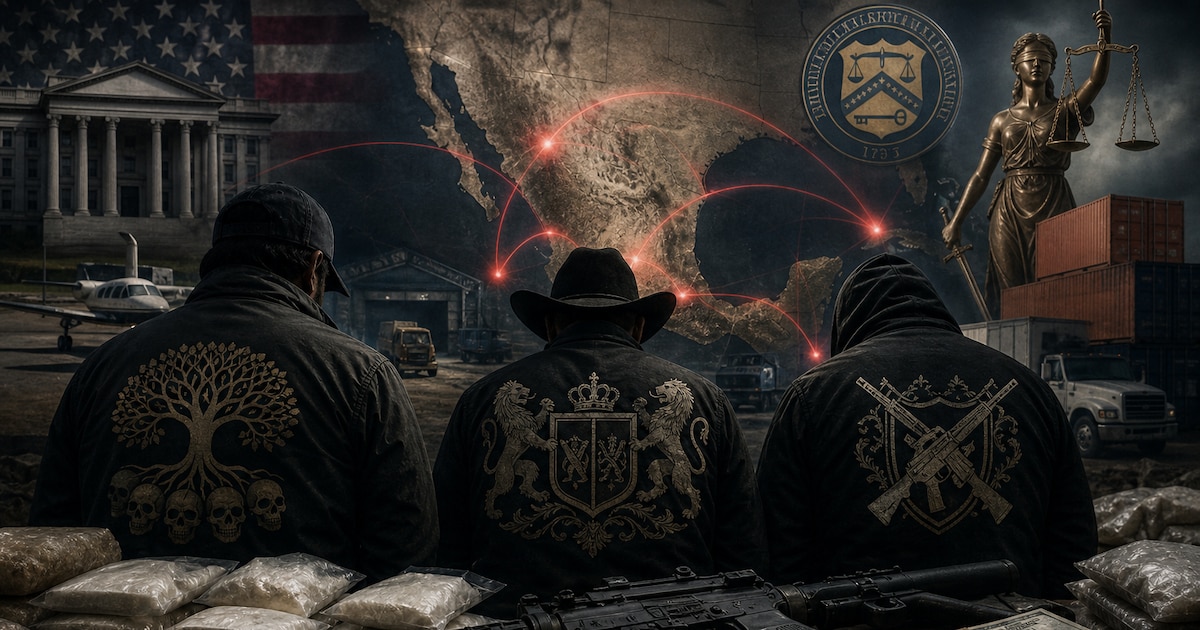
El Departamento del Tesoro de Estados Unidos sancionó a Los Mendoza y Los Huistas, dos organizaciones narcotraficantes de Guatemala, por su apoyo al Cártel de Sinaloa y al Cártel de Jalisco Nueva Generación (CJNG), mientras el Departamento de Estado calificó a Los Lorenzanas como organización terrorista extranjera. Las medidas bloquean los bienes de los tres grupos bajo jurisdicción estadounidense y alcanzan a entidades que les pertenezcan en al menos un 50%.
Las sanciones sitúan a las estructuras guatemaltecas dentro de la estrategia estadounidense contra las redes que trasladan narcóticos desde Sudamérica hacia México y, desde allí, a Estados Unidos. También exponen a instituciones financieras extranjeras a sanciones secundarias si facilitan, a sabiendas, operaciones relevantes en nombre de los grupos designados.
El secretario del Tesoro, Scott Bessent, sostuvo que la decisión “expone los vínculos entre organizaciones criminales guatemaltecas con influencia política y organizaciones terroristas extranjeras mexicanas que facilitan el flujo de narcóticos letales hacia Estados Unidos”. Añadió que el organismo continuará actuando contra las redes que permiten al Cártel de Sinaloa y al CJNG transportar drogas a través de las fronteras estadounidenses.
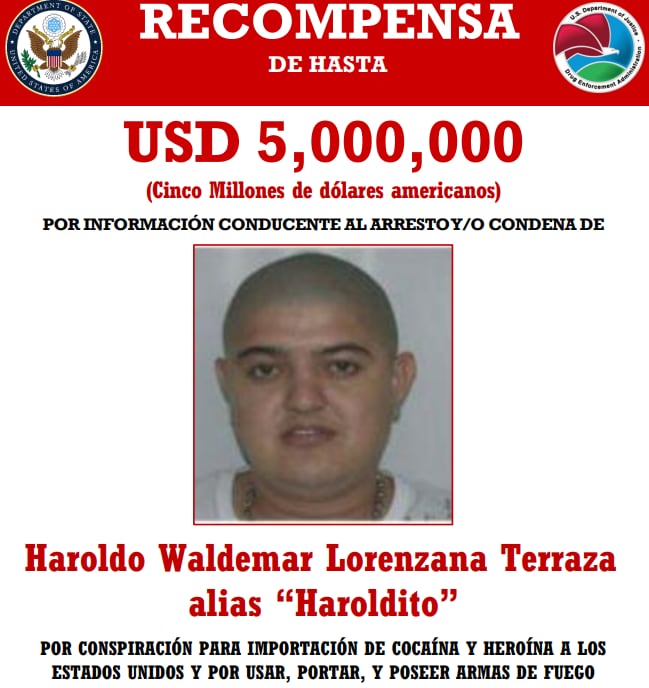
Los Lorenzanas, bajo la designación de organización terrorista extranjera
El Departamento de Estado incorporó a Los Lorenzanas a la lista de organizaciones terroristas extranjeras y también los clasificó como terroristas globales especialmente designados, en virtud de la Orden Ejecutiva 13224, modificada posteriormente. La designación se aplicó bajo la sección 219 de la Ley de Inmigración y Nacionalidad.
El secretario de Estado, Marco Rubio, afirmó que los tres grupos guatemaltecos mantienen “vínculos profundos con los cárteles mexicanos, que ayudan a mover y exportar drogas ilícitas para financiar el terrorismo y la actividad criminal”. Sobre Los Lorenzanas, a los que describió como uno de los clanes narcotraficantes más poderosos de Guatemala, dijo que son responsables de “numerosos actos de violencia contra civiles, funcionarios de gobierno y fuerzas militares en Guatemala”.
El Cártel de Sinaloa y el CJNG habían sido incorporados a las categorías de organización terrorista extranjera y terrorista global especialmente designado el 20 de febrero de 2025. Ambos ya figuraban como importantes narcotraficantes extranjeros: el primero desde 2009 y el segundo desde 2015.
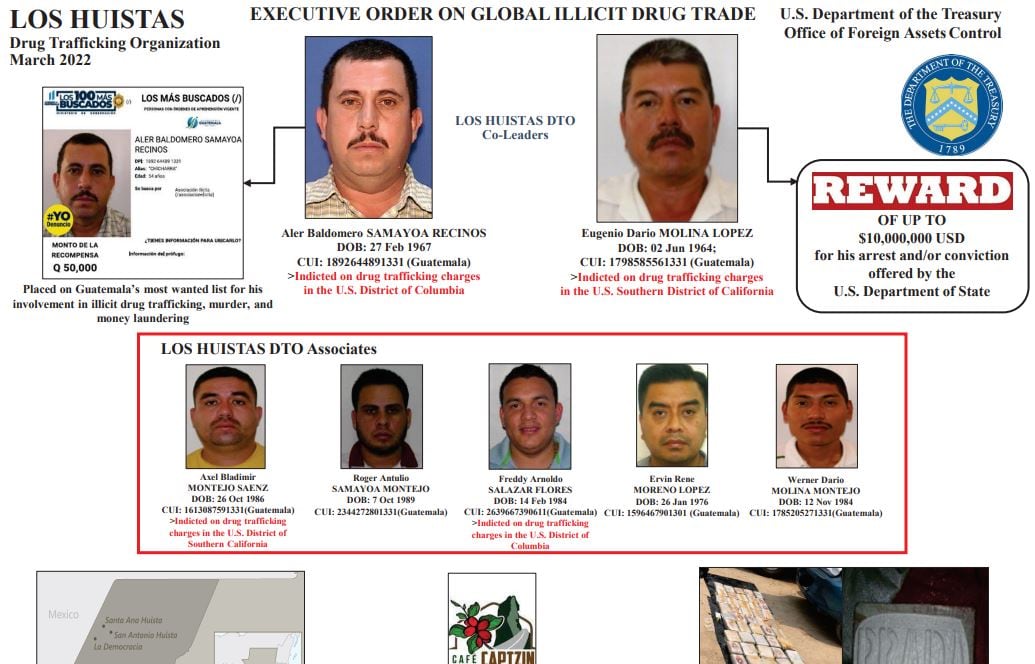
Los Mendoza y Los Huistas, redes familiares con control territorial
La Oficina de Control de Activos Extranjeros (OFAC), dependiente del Departamento del Tesoro, sancionó a Los Mendoza y a Los Huistas bajo la Orden Ejecutiva 14059, dirigida contra la proliferación internacional de drogas ilícitas, y la Orden Ejecutiva 13224. La primera de esas organizaciones se fundó en la década de 1980 y figura entre las más antiguas y poderosas del país.
Los Mendoza operan como intermediarios de transporte y logística para el Cártel de Sinaloa. Según el Departamento del Tesoro, facilitan el acceso a cruces fronterizos, pistas de aterrizaje clandestinas, almacenes y redes de protección local en los departamentos guatemaltecos de San Marcos, Huehuetenango y Petén.
La estructura también participa en asesinatos por encargo y lavado de dinero. Sus intereses económicos incluyen tierras obtenidas mediante expropiaciones, ganadería, negocios agrícolas e inversiones inmobiliarias en Petén, Izabal y la frontera con México.
Los Huistas están activos desde la década de 1990 y ya habían sido sancionados por la OFAC el 18 de marzo de 2022, también bajo la Orden Ejecutiva 14059. El Tesoro los definió como “un eslabón crucial en la cadena de suministro del narcotráfico desde Sudamérica, pasando por México, hasta llegar a Estados Unidos”.
Los vínculos sostenidos de esta organización con empresarios locales, agentes encargados de hacer cumplir la ley y políticos le permitieron dominar actividades del crimen organizado en zonas del noroeste de Guatemala y evadir la vigilancia de las autoridades. La red opera en un área próxima a corredores utilizados para el traslado de drogas.
Corredores entre Honduras, México y Estados Unidos
Los Mendoza y Los Huistas controlan rutas estratégicas en las fronteras guatemaltecas con Honduras y México. Esos corredores los convirtieron en socios logísticos del Cártel de Sinaloa y del CJNG para la recepción, el almacenamiento y el transporte transfronterizo de narcóticos.
Las organizaciones mexicanas recurren a los grupos locales para movilizar cargamentos desde Guatemala hacia México. Desde territorio mexicano, las drogas son distribuidas a Estados Unidos y a otros mercados internacionales.
Todos los bienes e intereses patrimoniales de Los Mendoza, Los Huistas y Los Lorenzanas que se encuentren en Estados Unidos o bajo control de ciudadanos estadounidenses quedaron bloqueados y deben ser notificados a la OFAC. La restricción se extiende a empresas propiedad, directa o indirecta, de una o varias personas sancionadas.
Las personas estadounidenses tienen prohibido realizar transacciones que involucren bienes de las organizaciones, salvo autorización específica de la OFAC. Las entidades financieras extranjeras que procesen deliberadamente operaciones relevantes para los grupos pueden enfrentar restricciones sobre sus cuentas corresponsales en Estados Unidos.
La Red de Control de Delitos Financieros, conocida como FinCEN, puede otorgar recompensas a quienes aporten información sobre incumplimientos de estas sanciones cuando los datos deriven en multas superiores a USD 1 millón.
fotomontaje,retrato,composición fotográfica








INTERNACIONAL
Pete Hegseth impeachment effort dies in the House as absent Democrats couldn’t beat the traffic
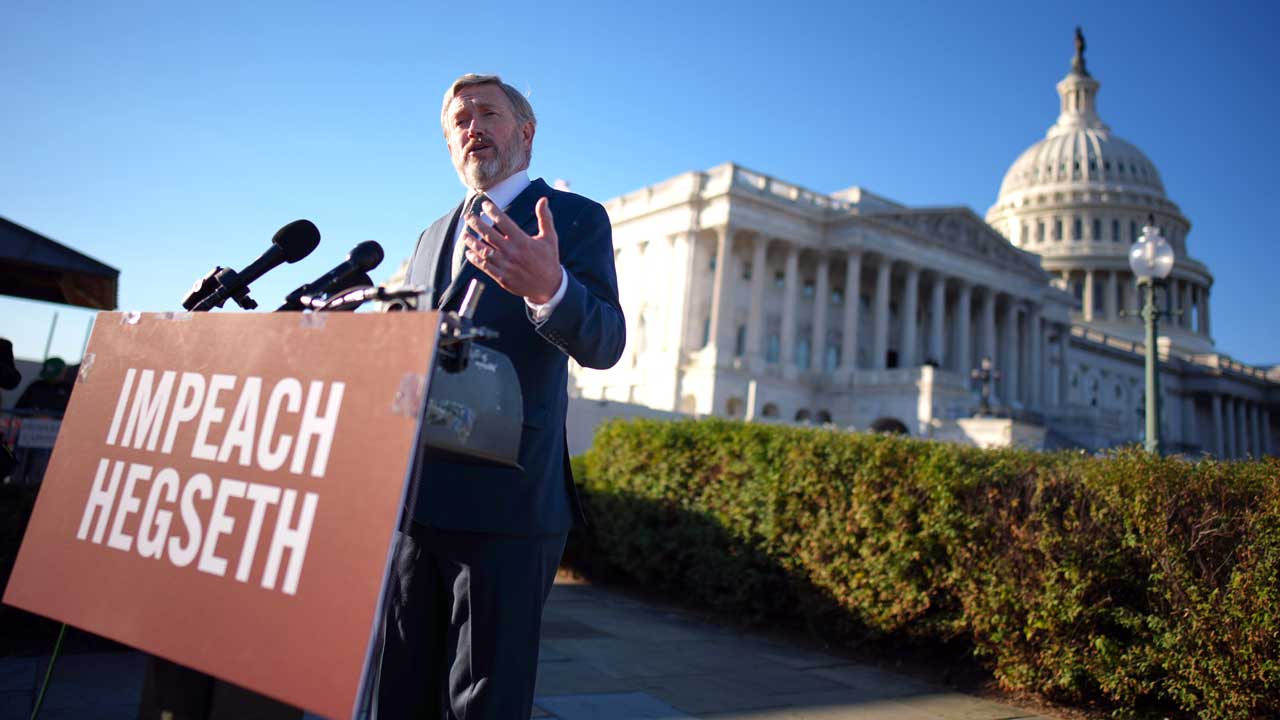
Most of America bemoans political gridlock in the nation’s capital. DC area commuters deplore the city’s transit gridlock.
But Pentagon chief Pete Hegseth may now be a fan of DC’s legendary traffic snarls. It appears that crosstown traffic may have prevented him from becoming only the third Cabinet secretary ever impeached by the House of Representatives.
The House voted 211-204 this week to divert an effort by Rep. Thomas Massie (R-Ky.) to impeach Hegseth.
House Republicans moved to block a straight, up-or-down vote on impeachment.
Instead, Republicans forced a vote on sending the articles to the Judiciary Committee.
That’s where they’d go to die. If the House failed to sidetrack the articles, Members would have then voted on actual impeachment.
If a simple majority voted to impeach, Hegseth would join 19th century Secretary of War William Belknap and former Homeland Security Secretary Alejandro Mayorkas as the only Cabinet Members impeached by the House.
But DC’s streetside congestion altered the parliamentary traffic on the House floor.
All Democrats said they were intent on impeaching Hegseth.
But Republicans faced an attendance problem.
Seven of their Members were missing. The vote on sending the impeachment articles to committee was tight. The tally read 204-204 at one point.
By rule, tie votes fail. That would have compelled a vote on actual impeachment. But a few more Republicans trickled in. The absent Democrats never did. Rep. Dan Newhouse (R-Wash.) presided over the vote.
He gaveled it closed at 211 yeas to send the articles to the committee and 204 votes against.
That was it. The Hegseth impeachment quest was dead. Eleven Democrats missed the roll call.
It’s about the math.
Flip four votes and Hegseth would have been impeached, 208-207.
HEGSETH IMPEACHMENT VOTE LOOMS AS HOUSE REPUBLICANS PRIVATELY WARN IT COULD PASS
And, had all 11 truant Democrats made it to the U.S. Capitol and voted, it’s likely the House would have impeached Hegseth 215-211. Even eight Democrats would have made it 212-211.
However, thanks to the Democrats’ attendance issue, Republicans were able to tap the brakes on the impeachment interstate.
The failure to impeach Hegseth is now fueling road rage in the Democratic Party.
«Shame on them for not showing up,» said Rep.-elect Richard Ojeda (D-N.C.).
«I don’t make excuses for colleagues who don’t show up on such an important vote,» said Rep. Stephen Lynch (D-Mass.).
Democrats can’t beat Republicans if they can’t beat the traffic.
Rep. Melanie Stansbury (D-N.M.) is one of the most outspoken Democrats when it comes to her disdain for Hegseth.
But Stansbury grew defensive when questioned by colleague Bill Melugin about missing the vote.
«I was trapped right there at that street corner because there was a police motorcade moving busses off of the campus. And I physically was trapped right at that corner in my vehicle, in traffic because the police had shut down traffic,» said Stansbury.
«Why not come here sooner, though?» followed up Melugin.
HEGSETH COULD FACE NEW IMPEACHMENT PUSH OVER UKRAINE AID, LAWMAKERS WARN
«I did and I was trapped in my vehicle because of a police motorcade,» said Stansbury.
Maybe. Maybe not.
The Constitution’s «Speech or Debate» clause exempts lawmakers from police interference when «going to and from» the Capitol for «their attendance at the Session of their Respective Houses.» It’s kind of like diplomatic immunity.
A few years ago, Rep. Don Beyer (D-Va.) was supposed to preside over a brief House session in the middle of a recess. Traffic heading into DC from Northern Virginia was stopped because of an incident. Beyer was the only Member scheduled to be present in the House chamber that day. So Beyer identified himself to a police officer who proceeded to let him through.
Over the years, other lawmakers have asserted the Speech or Debate clause as a reason to bypass unrelated police activity and get to Capitol Hill.
Reps. Jonathan Jackson (D-Ill.) and Laura Gillen (D-N.Y.) also said they were stuck in traffic. However, Rep. Lou Correa (D-Calif.) was out for a medical procedure. Rep. Steve Horsford (D-Nev.) missed the vote because of a personal emergency. Former House Speaker Nancy Pelosi (D-Calif.) was in the Golden State.
DC’s traffic interfered with parliamentary traffic again on Thursday morning.
The House took an early Thursday morning vote related to a veterans bill.
The House adopted the motion, 271-135. But the House gaveled down the vote with 26 Members absent. The reason? Some Members were again stymied from making it to the Capitol.
Emergency room physician Matt Lambert killed one person at a gym, shot six people and engaged in a standoff with cops before turning the gun on himself. Initially reported as an «active shooter» incident, District of Columbia police locked down major parts of the city, stalling traffic.
And that’s why some lawmakers missed Thursday’s roll call. They were marooned in traffic.
Shifting gears, Rep. Eric Sorensen (D-Ill.) in fact made that procedural vote on the floor. When the vote began, a gentle breeze blew across the Capitol plaza. Then a mist enveloped the Capitol.
Later, a few heavier drops. Then the sun broke through the clouds. But reverted to overcast. It was a dank morning in Washington.
«I want to know what the weather is,» yours truly shouted at Sorensen as he skipped down the House steps toward a group of reporters waiting below.
Sorensen is a meteorologist who worked for decades at TV stations in Texas and Illinois before coming to Washington in 2023.
Sorensen pivoted immediately into weatherman mode.
«We’ve got increasing showers guys. Much cooler temperatures for the weekend,» said Sorensen, replicating the precise forecast for Washington, DC over the next few days.
The meteorologist-turned-lawmaker gestured to his right as though looking at a phantom map of the Midwest, projected against a green screen in a TV studio.
«As God is my witness, I cannot talk about the weather without moving my hands,» said Sorensen. «I talk about high pressure. It’s high pressure right here in the midsection of the country. And it’s moving in our direction for the next week.»
After the election, the political weather forecast would seem good for Democrats right now. Supposedly balmy days and comfortable nights. A political «high», if you will.
«So is there a high-pressure system moving here for the Democratic Caucus?» yours truly asked.
«No. It’s low pressure, man. It’s low pressure going into the next Congress. We’ve just got to keep everybody together,» he replied.
But is a high-pressure system really in the long-range forecast for Democrats? Or will a political «low» bring storms and atmospheric volatility — especially if progressive and centrist Democrats tangle with one another?
«I thought high pressure was a good thing,» said your trusty reporter. «No subtropical systems coming in. No clipper system.»
«As a meteorologist, I’m not in production. I’m in promotion,» said Sorensen of potential Democratic storm systems which might emerge on the horizon. «With a complicated issue like the weather, I was able to help connect with people every day for 22 years. But here, this is the most complicated mechanism in the United States. We’ve got to get better at communicating what we do for the people.»
DC traffic has already stymied Democrats over the past few days. Tornadic political storm systems may brew inside the Democratic Caucus. And that’s to say nothing about transportation and just getting people to the Hill.
Traffic and weather. And if the internal Democratic fisticuffs turn ugly, well, may show that on sports. Right along with the hockey fights.
politics, pete hegseth, house of representatives politics, congress, washington dc
INTERNACIONAL
El secreto de un naufragio de 1683: un zapato exclusivo y anillos usados en el comercio de esclavos
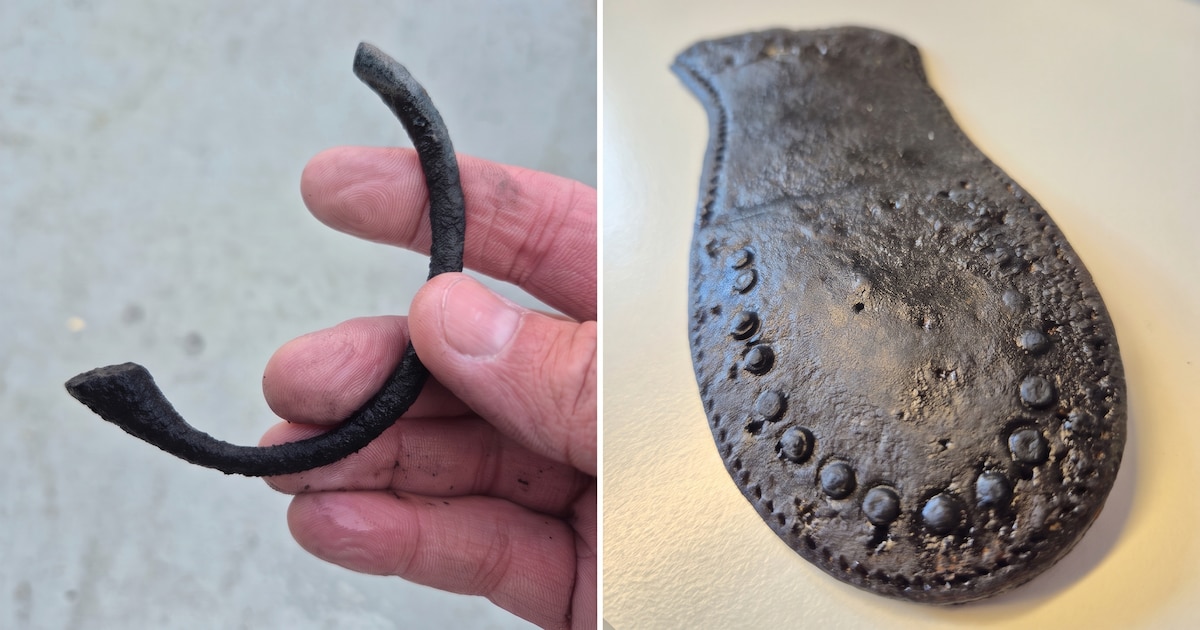
A casi 350 años de un motín que dejó muertos, condenados y una embarcación a la deriva, arqueólogos hallaron un zapato de hombre de manufactura excepcional y dos anillos metálicos ligados a la trata transatlántica de personas esclavizadas en los restos del Havmanden, un barco danés naufragado frente a la costa de Gotemburgo, en Suecia.
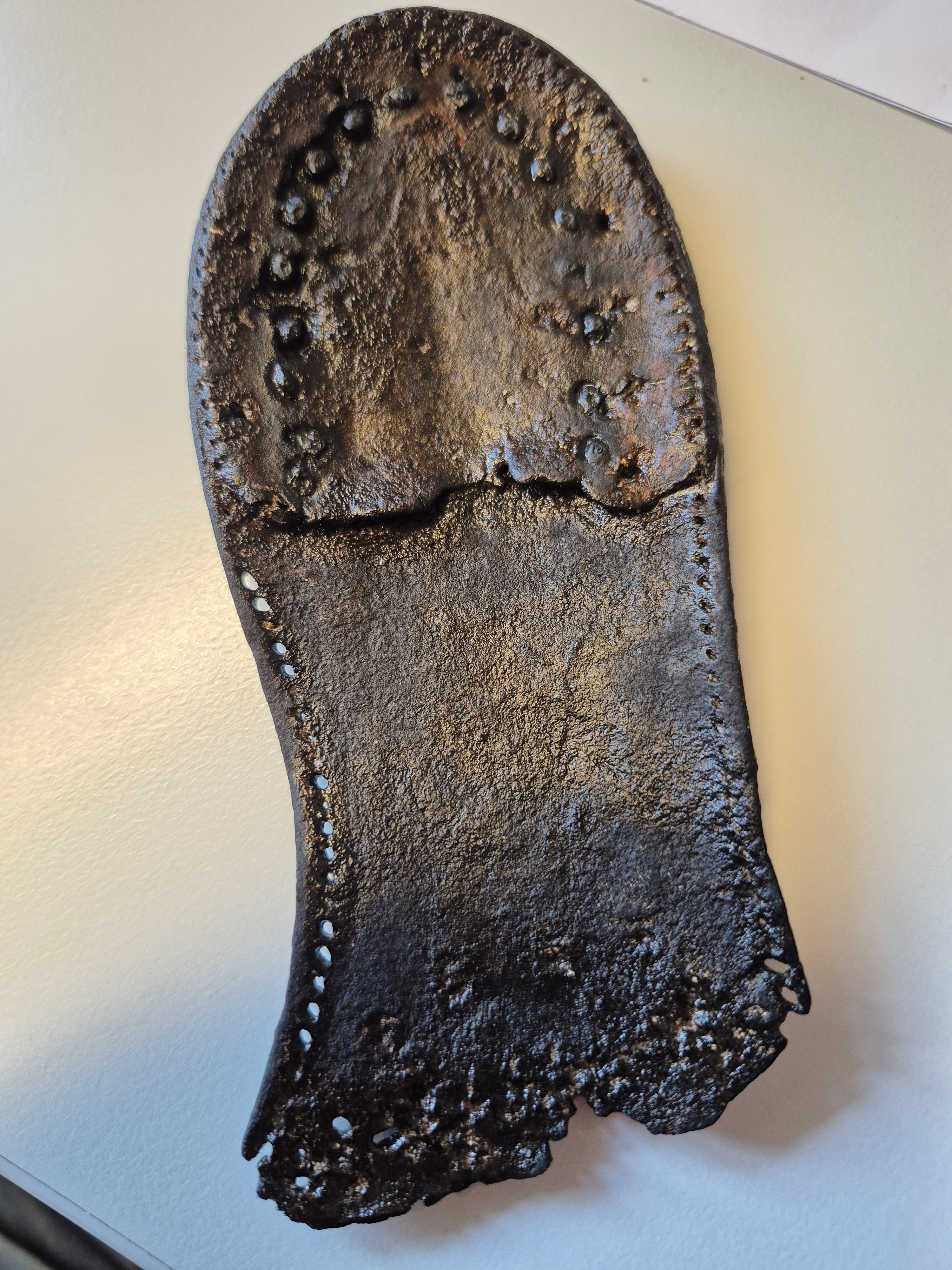
El descubrimiento devuelve al primer plano una travesía de 1683 marcada por la violencia, la expansión colonial europea y el comercio de seres humanos. Del calzado apenas subsiste la mitad trasera de la suela, pero sus detalles alcanzaron para abrir una hipótesis: pudo haber pertenecido a Jørgen Iversen Dyppel, primer gobernador danés de la isla caribeña de Santo Tomás, quien murió arrojado al mar durante la rebelión.
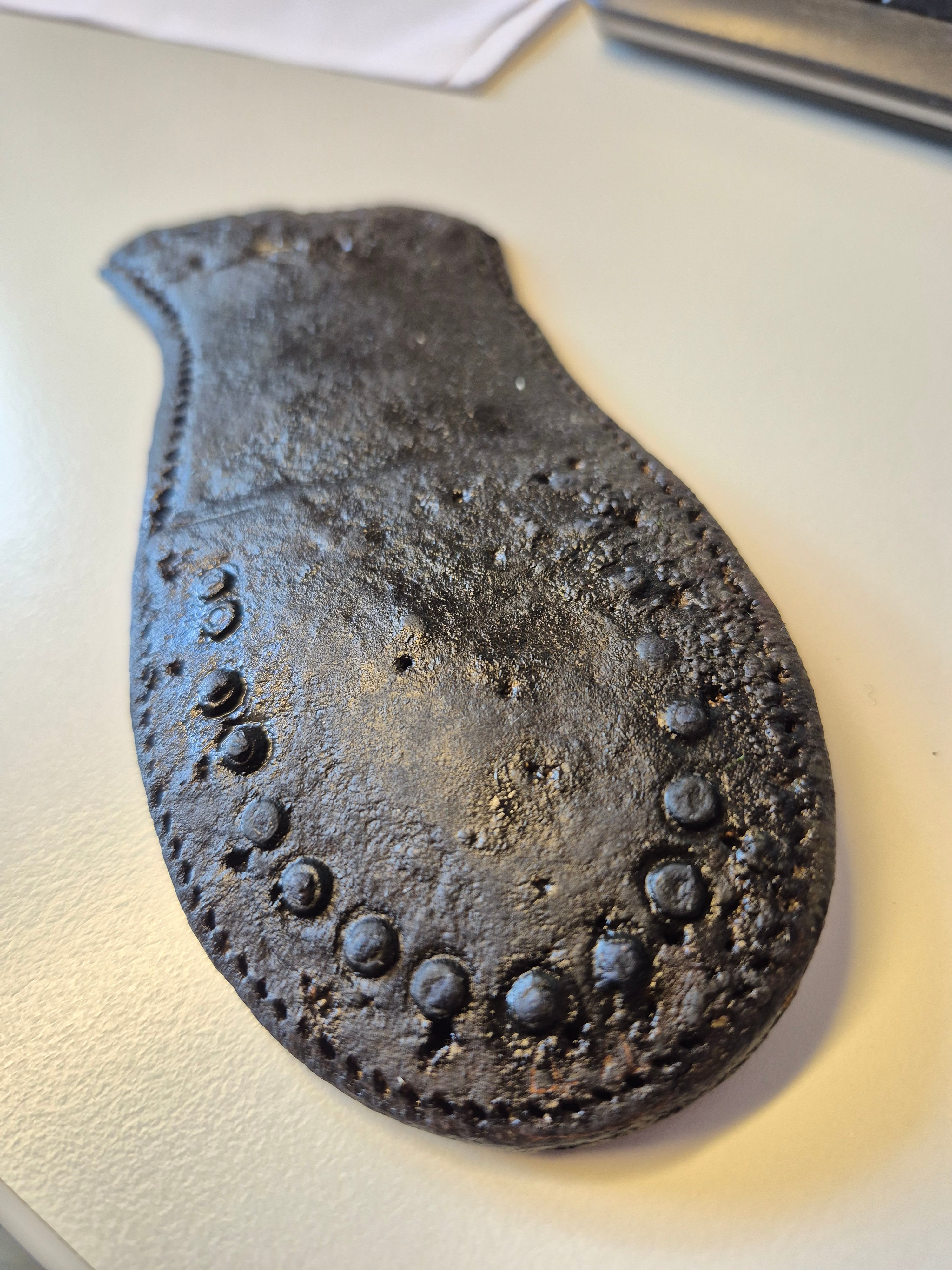
La posibilidad no está confirmada. Los investigadores advierten que había otros hombres de posición elevada a bordo. Aun así, la calidad de la pieza permite asomarse a una diferencia social que viajaba incluso en medio del hambre, el castigo y la incertidumbre de alta mar.
El Havmanden llevaba convictos a una colonia danesa en el Caribe
El Havmanden había partido de Copenhague con destino a Santo Tomás, entonces una colonia de Dinamarca en el Caribe. En la nave viajaban convictos y trabajadores bajo contrato que debían ser enviados a la isla para trabajar bajo la órbita de la Compañía Danesa de las Indias Occidentales.
El viaje tenía, además, una segunda etapa proyectada: después de llegar al Caribe, el buque debía navegar hacia la costa occidental de África para comprar personas esclavizadas. Esa ruta integraba el sistema colonial que conectaba puertos europeos, territorios africanos y plantaciones americanas, con enormes ganancias para comerciantes y Estados, y un costo humano devastador.
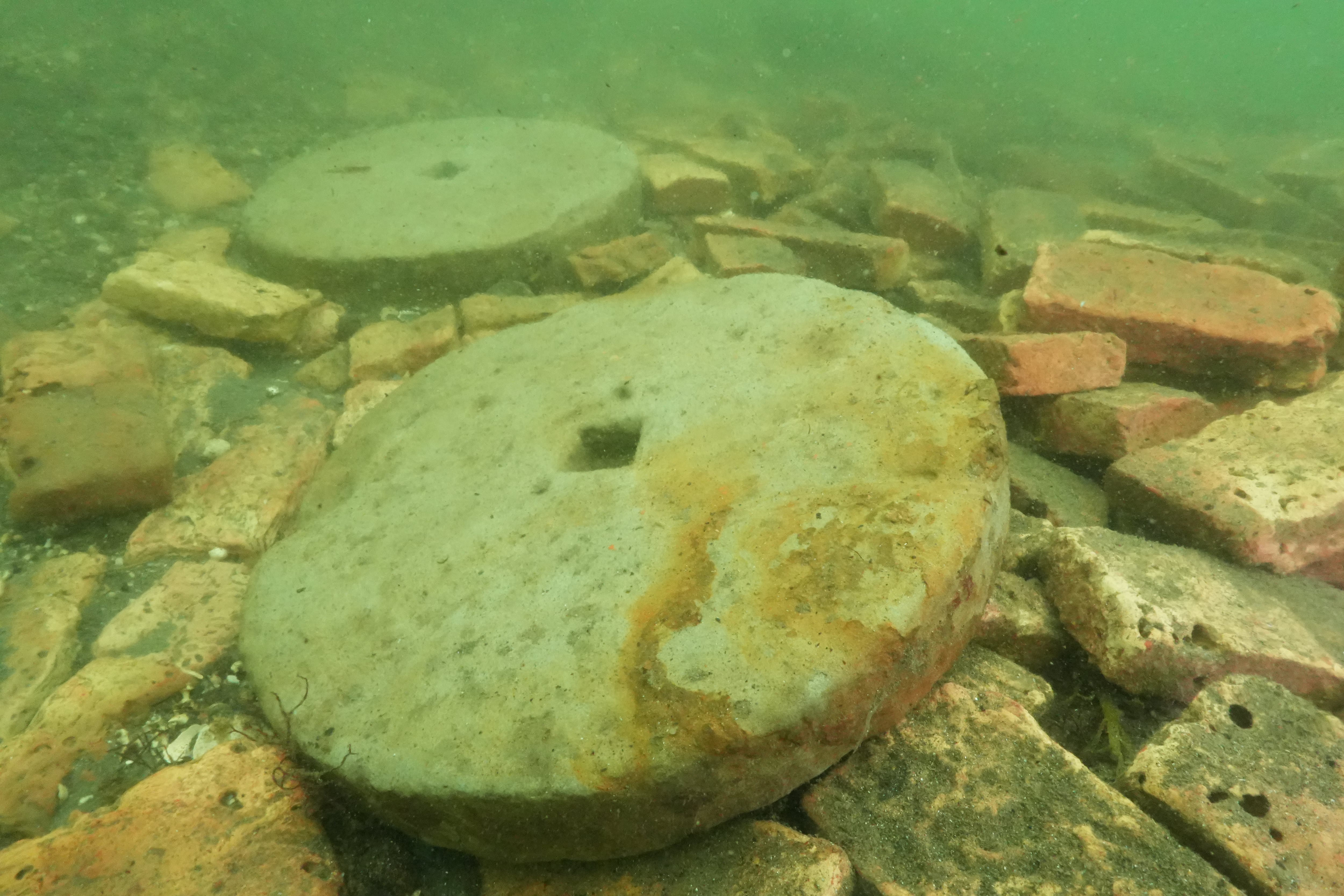
La travesía, sin embargo, se descompuso antes de alcanzar el Atlántico medio. La falta de comida y agua elevó la tensión a bordo. Según el relato histórico recogido por el Museo Nacional de Dinamarca, un grupo de tripulantes y convictos tomó el control de la fragata cerca de las Azores y decidió cambiar el rumbo para regresar hacia Copenhague.
La rebelión dejó una secuencia de violencia. Los amotinados dispararon contra el capitán y arrojaron por la borda a varios oficiales. Entre ellos estaba Dyppel, quien viajaba para retomar su puesto como gobernador de Santo Tomás. Murió en el canal de la Mancha, mientras que el barco terminó encallado y naufragó cerca del archipiélago sueco, al este de Gotemburgo.
Los responsables del motín fueron llevados a juicio cuando lograron llegar a Copenhague y recibieron condenas a muerte. El episodio es considerado uno de los motines más violentos de la historia marítima danesa.
La suela hallada apunta a un dueño de la élite
Durante una serie de inmersiones realizadas en 2026, arqueólogos marítimos del centro NJORD del Museo Nacional de Dinamarca, junto con especialistas del Bohusläns Museum de Suecia, inspeccionaron el pecio del Havmanden. Allí apareció el fragmento de una suela de cuero que, en apariencia, podía pasar por un objeto menor entre los restos de un naufragio.
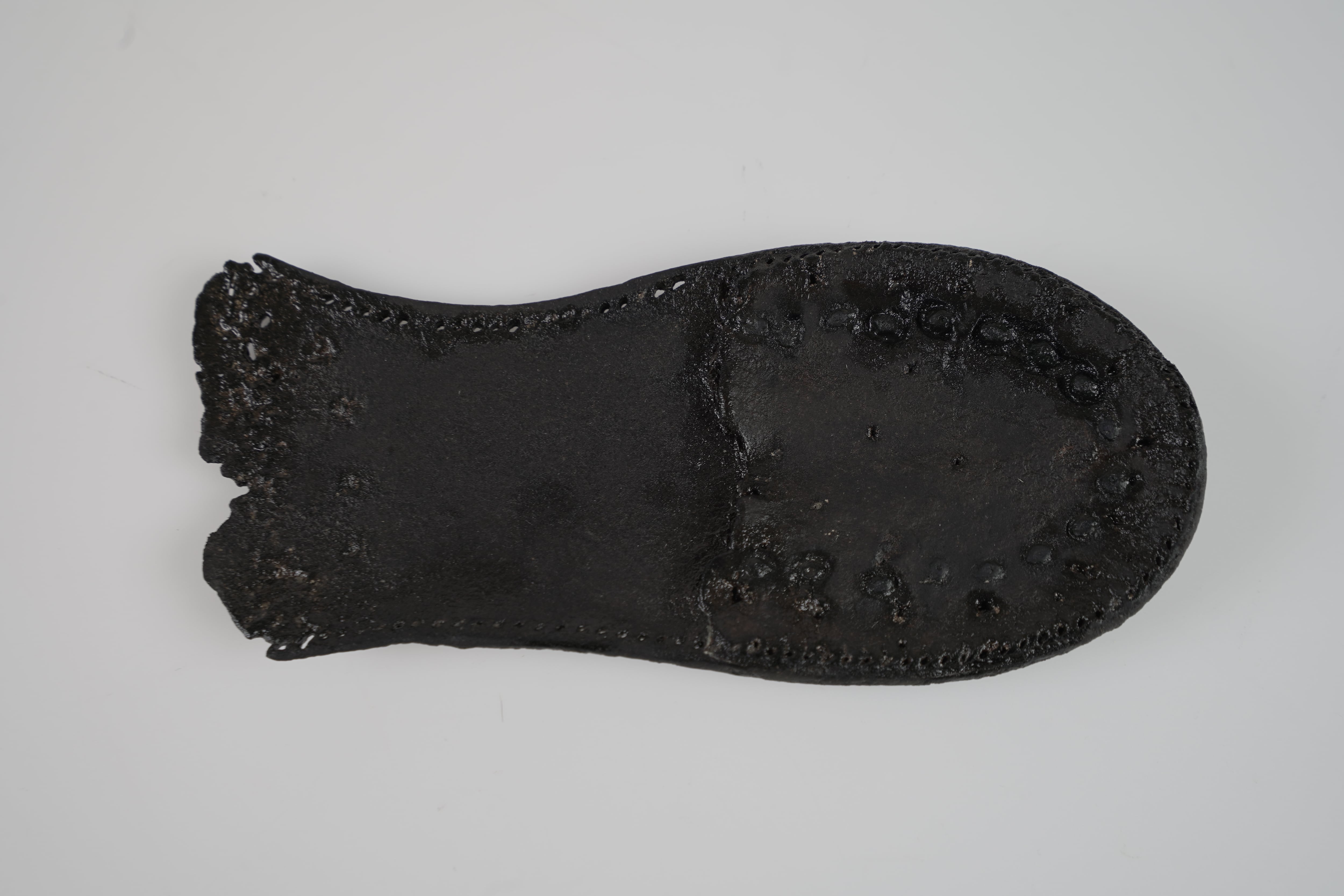
El examen posterior cambió esa impresión. La directora de los Museos de Rudersdal y especialista en calzado histórico, Vivi Lena Andersen, destacó que los pequeños orificios ubicados a lo largo del borde de la suela son muy parejos y están dispuestos con precisión. Ese trabajo requería herramientas finas y la mano de un zapatero altamente capacitado.
El cuero, además, es de calidad superior. Para Andersen, se trataba de “un zapato caro y exclusivo que solo la élite podía permitirse comprar”, de acuerdo con el comunicado difundido por el museo danés.
Esa conclusión instaló la pregunta sobre el propietario. Dyppel era uno de los pasajeros que encajaba en ese perfil social. Sin embargo, la identificación no puede darse por segura: el objeto fue encontrado en un naufragio que sufrió saqueos y alteraciones durante siglos, y otros pasajeros de alto rango podrían haber llevado un calzado similar.
Andreas Kallmeyer Bloch, arqueólogo marítimo del Museo Nacional de Dinamarca, señaló que el hallazgo ofrece una vía concreta para abordar un proceso histórico de enorme escala. El fragmento de cuero conecta la trayectoria personal de un funcionario colonial con la creación de las colonias danesas en el Caribe y con la participación del país en la trata de esclavos.
Dos anillos exponen el propósito comercial del viaje
El zapato no fue el único objeto que llamó la atención de los arqueólogos. Los buzos recuperaron también dos manillas, anillos de metal que los comerciantes europeos usaban como medio de pago en partes de África occidental durante la trata transatlántica.
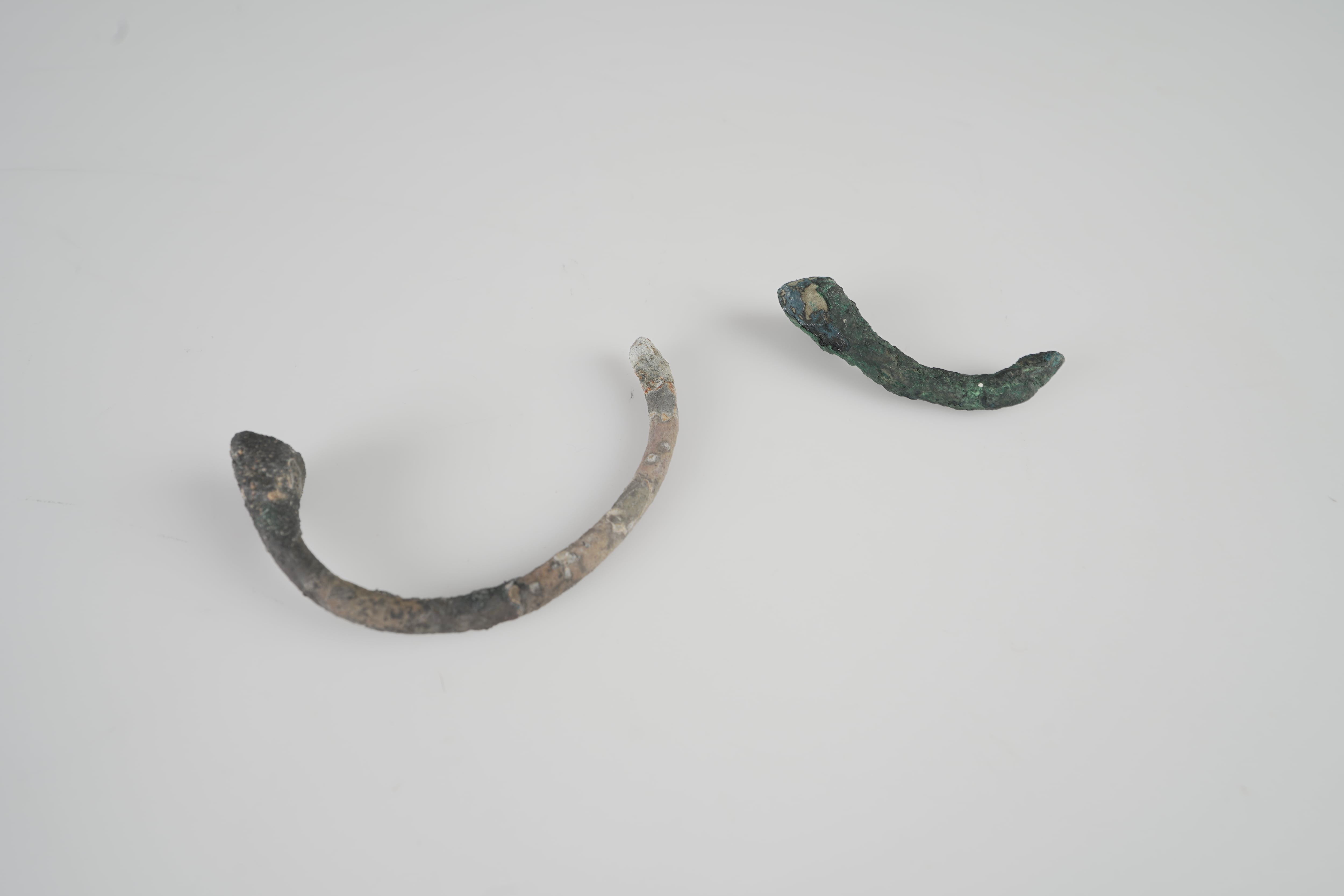
Fabricadas en cobre, latón o hierro, las manillas circularon especialmente en zonas de la actual Nigeria. Comerciantes europeos las intercambiaban por personas capturadas y reducidas a la esclavitud. Su aparición en un pecio escandinavo es poco habitual y refuerza el vínculo del Havmanden con ese circuito comercial.
Los objetos hallados no prueban que el barco hubiera llegado a comprar esclavos: su viaje se interrumpió antes de completar el itinerario previsto. Pero sí muestran que la embarcación estaba preparada para participar de esa operación. El proyecto colonial danés en el Caribe dependía de una red que incluía el traslado forzado de africanos, además del envío de convictos y trabajadores europeos a las islas.
En el comunicado del museo, Bloch sostuvo que las manillas “subrayan la conexión con la trata de esclavos”, una actividad central para las posesiones danesas en las Indias Occidentales y en la costa africana.

Dinamarca mantuvo su participación en el comercio transatlántico de esclavos durante más de un siglo después del naufragio del Havmanden. El rey Cristián VII prohibió ese comercio en 1792, aunque la esclavitud continuó en las Indias Occidentales danesas hasta 1848, cuando una rebelión de personas esclavizadas desembocó en su liberación.
El pecio también entrega pistas sobre la construcción del barco
La campaña arqueológica incluyó análisis dendrocronológicos, una técnica que permite fechar la madera mediante el estudio de los anillos de crecimiento de los árboles. Los resultados indican que los árboles usados para construir el buque fueron talados alrededor de 1664 o poco después.
Los especialistas también determinaron que la madera procedía de una zona situada entre el norte de Alemania y el sur de Jutlandia. El dato ayuda a reconstruir el origen material de una nave que, menos de dos décadas después de su construcción, quedó atrapada en una historia de motín, explotación colonial y naufragio.
Para preservar lo que aún permanece en el fondo marino, los arqueólogos cubrieron parte de los restos con geotextil. El material busca reducir la erosión y proteger las huellas que todavía quedan bajo el agua, donde una suela de cuero y dos aros de metal conservaron, durante siglos, la memoria de un viaje que nunca llegó a destino.
Fotos: Museo Nacional de Dinamarca
caucho,cuero,carbonización,combustión

FIRST ON FOX: Secretary of State Marco Rubio is taking aim at «soulless global bureaucrats» using «rules-based order» arguments to undermine U.S. foreign policy in a speech Friday, warning that the «spirit of Marx» outlived the Soviet Union.
U.S. leaders of both parties defended the «rules-based international order,» the network of postwar institutions America built. Rubio is set to argue the system has been turned against the country that built it, the same case he made at his January 2025 confirmation hearing, when he called the postwar order «a weapon being used against us.»
In a preview of Rubio’s speech obtained by Digital, he outlines how Marxism still has a strong presence in Western society, a view which is relevant amid the rise of communist and Marxist beliefs that have driven protests against the administration and Western beliefs. The remarks are subject to change during his speech.
«For this global elite, ‘international law’ is not a neutral body of rules,» Rubio is expected to say. «It’s an instrument to advance their interests under the pretense of universal principles. They’re staunch defenders of democracy, until a particular election challenges their interests.»
RUBIO PUTS ENTIRE WORLD ON NOTICE AGAINST RISE OF ‘POISONOUS’ FAR-LEFT TERROR ‘MASKED AS EQUALITY’
«Even as we defeated the institution of Soviet communism, we did not triumph over the spirit of Marx,» Rubio’s expected remarks read. «It lives on, in these new forms and doctrines, which would subordinate the national will to the menial consensus of the world. Marxism, in its traditional expression, sought to abolish the distinctions between men; the radicals of our time seek to abolish the distinctions between nations themselves.»
Rubio is expected to address the Federalist Society at the National Lawyers Convention on Friday, when he will go after the International Criminal Court and other global bodies he says are using the law as a political weapon, not to deliver justice. The secretary of state argues that they’re trying to tie America’s hands and let unelected judges and bureaucrats overseas override decisions that belong to the American people, according to a State Department source.
RUBIO’S CALL TO COMBAT GLOBAL FUNDERS OF FAR-LEFT TERRORISM COULD PUT SINGHAM IN CROSSHAIRS
The secretary of state is expected to defend the administration’s sanctions on the ICC, which he calls «an unelected world tribunal.» If it tries to enforce its «paper decrees» against Americans, he plans to say, the U.S. answer will echo the Roman general Pompey: «Stop quoting laws to men with swords.»
He also will push back on those who say Americans live on «stolen land,» arguing that critics who stand behind this belief deny the nation’s right to exist, and cast the U.S. as «a nation of irrepressible ambition,» according to the excerpts.
REAGAN-ERA OFFICIAL WARNS ‘RED-GREEN ALLIANCE’ HAS SHARED GOAL OF ‘DESTROYING’ AMERICA
Last week, Sen.-elect Abdul El-Sayed invoked «self-determination» and developed an argument about America’s role in the international system created after World War II, calling it a «chief violator» of international law.
«The beauty of this country is our ideals,» El-Sayed said.
«We led the effort in this country to build a rules-based international order,» he continued. «We built the United Nations and the World Health Organization and the International Court of Justice and the International Criminal Court, so that we could uphold the ideals of democracy. We did that. And then we proceeded to be the chief violator of exactly those same ideals. To call our country to those ideals became an open question, how could you?»
LAWMAKERS RAISE ALARM OVER NEVILLE ROY SINGHAM’S $278M NETWORK SPREADING CCP PROPAGANDA IN THE U.S.
El-Sayed’s words echoed language used late last year by Neville Roy Singham, whose financial network has supported CodePink and other left-wing organizations.
After his wedding to Evans in 2017 and the sale of ThoughtWorks, the technology company he founded, Singham directed $285 million to nonprofits and media organizations, according to a Digital investigation. The People’s Forum received $22.4 million from Singham, while CodePink received $1.33 million. BreakThrough BT Media Inc., which operates BreakThrough News, received $1.098 million, according to tax filings. Singham and his wife, CodePink co-founder Jodie Evans, live in Shanghai, China.
In a speech exactly one year ago, on Nov. 13, 2025, to the «Global South Academic Forum» at the Golden Tulip Hotel in Shanghai, Singham argued that the existing «international rules-based order» was built on a false narrative of World War II and called for a «new world order» based on multilateralism advanced by Chinese President Xi Jinping and the Communist Party of China.
JIM BANKS, GOP LAWMAKERS RALLY BEHIND DOJ PROBE INTO ALLEGED CCP-LINKED FUNDING NETWORK
«The international rules-based order was created by another lie,» Singham said.
«If we want to therefore have a new world order that is based on the multilateralism that President Xi and CPC and China have proposed, we have to undo the ideological damage that has been done by the narrative of World War II,» Singham had said.
RUBIO SANCTIONS CUBAN GROUPS WITH TIES TO US NONPROFIT NETWORK FUNDED BY COMMUNIST DONOR NEVILLE ROY SINGHAM
This hostility to the U.S. has infused itself in the anti-American work of far-left organizations.
At the People’s Forum, Tricontinental and other groups funded by Singham, the programming includes Cuba solidarity campaigns, Venezuela advocacy, anti-Iran sanctions initiatives, opposition to NATO expansion and educational events on China, all framed within a broader narrative of «resistance» to U.S. influence.
Event flyers and social media posts repeatedly highlight Cuba, promoting teach-ins, cultural programming and delegations opposing U.S. policy.
That narrative aligns with Singham’s rejection of the Western system.
Digital investigations have found that the «spirit of Marx» has storefronts, syllabi, fundraising apparatus in America’s nonprofit world and a critical role as the conduit for sending foot soldiers into America’s streets for protests to defend communist regimes across the world and promulgate anti-American propaganda.
US BASES, ICE FACILITIES TARGETED IN CUBA-LINKED 24-HOUR ACTIVIST MOBILIZATION PLAN
At the People’s Forum in Manhattan, its 1804 Books bookstore and press describes itself as a source of «socialist literature and revolutionary theory,» selling books by Marx, including a coloring book for children. investigation traced $22.44 million to the People’s Forum and $16.76 million to Tricontinental through Neville Roy Singham’s funding network.
The bookstore’s catalog offers a reading list for that worldview: Marx’s Critique of the Gotha Program, his Critique of Political Economy and The German Ideology, written with philosopher Friedrich Engels.
Within the Singham network, Tricontinental places Marxism in its institutional purpose. Its statement of mission and work identifies «national liberation Marxism» as its anchoring tradition and invokes Marx’s argument that philosophy should change the world.
Across the wider nonprofit landscape, other organizations carry Marx in their names or expressly embrace his ideas. The «Marxist Education Project» says it operates through the tax-exempt Movement Education Project Group Inc. and embraces Marxism as its framework. The People’s Forum once hosted its Capital, Volume II study group.
The «People Before Profits Education Fund,» also known as the Chelsea Fund for Education, solicits support for «Marxist education» and lists the «Little Red Schoolhouse,» a national Marxist school training young activists, among its projects. The «Marxists Internet Archive» describes itself as a nonprofit public library preserving Marxist writings.
marco rubio, politics, foreign policy, state department, international law, global government, china, socialism, rise of socialism

Hotesur-Los Sauces: el tribunal acelera las audiencias y habilita un nuevo día para el desarrollo del juicio

“El dueño de la historia soy yo”: los audios que complican a Lázaro Báez y revelan sus órdenes a un presunto narco desde la cárcel

El Gobierno oficializó en el RIGI dos proyectos de gas de TGS por más de u$s3.200 millones

Polémica: del sueño por España al sueño por el País Vasco

En medio del escándalo familiar, Andrés Nara tomó una tajante decisión

Karina Milei abrió una nueva cuenta en redes, cambió su foto de perfil y en la Casa Rosada trabajan en una estrategia para potenciar su imagen

La queja de Yanina Latorre tras asistir al VIP de la misa del papa León XIV: “Estuve al rayo del sol haciendo nada y…”

PILIPOM: UNA NUEVA HERRAMIENTA EDUCATIVA PARA QUE LOS MÁS CHICOS APRENDAN JUGANDO

Papa León XIV en la Argentina, EN VIVO: la misa en Luján y la despedida en Ezeiza hoy, minuto a minuto

El juego de la butaca: Haas volvería a cambiar de piloto para el cierre del año en la Fórmula 1 tras el escándalo con Ocon

 SOCIEDAD3 días ago
PILIPOM: UNA NUEVA HERRAMIENTA EDUCATIVA PARA QUE LOS MÁS CHICOS APRENDAN JUGANDO
- SOCIEDAD2 días ago
Papa León XIV en la Argentina, EN VIVO: la misa en Luján y la despedida en Ezeiza hoy, minuto a minuto
- DEPORTE2 días ago
El juego de la butaca: Haas volvería a cambiar de piloto para el cierre del año en la Fórmula 1 tras el escándalo con Ocon