INTERNACIONAL
Rubio takes aim at ‘soulless global bureaucrats’ pushing Marxism to undermine America


FIRST ON FOX: Secretary of State Marco Rubio is taking aim at «soulless global bureaucrats» using «rules-based order» arguments to undermine U.S. foreign policy in a speech Friday, warning that the «spirit of Marx» outlived the Soviet Union.
U.S. leaders of both parties defended the «rules-based international order,» the network of postwar institutions America built. Rubio is set to argue the system has been turned against the country that built it, the same case he made at his January 2025 confirmation hearing, when he called the postwar order «a weapon being used against us.»
In a preview of Rubio’s speech obtained by Digital, he outlines how Marxism still has a strong presence in Western society, a view which is relevant amid the rise of communist and Marxist beliefs that have driven protests against the administration and Western beliefs. The remarks are subject to change during his speech.
«For this global elite, ‘international law’ is not a neutral body of rules,» Rubio is expected to say. «It’s an instrument to advance their interests under the pretense of universal principles. They’re staunch defenders of democracy, until a particular election challenges their interests.»
RUBIO PUTS ENTIRE WORLD ON NOTICE AGAINST RISE OF ‘POISONOUS’ FAR-LEFT TERROR ‘MASKED AS EQUALITY’
«Even as we defeated the institution of Soviet communism, we did not triumph over the spirit of Marx,» Rubio’s expected remarks read. «It lives on, in these new forms and doctrines, which would subordinate the national will to the menial consensus of the world. Marxism, in its traditional expression, sought to abolish the distinctions between men; the radicals of our time seek to abolish the distinctions between nations themselves.»
Rubio is expected to address the Federalist Society at the National Lawyers Convention on Friday, when he will go after the International Criminal Court and other global bodies he says are using the law as a political weapon, not to deliver justice. The secretary of state argues that they’re trying to tie America’s hands and let unelected judges and bureaucrats overseas override decisions that belong to the American people, according to a State Department source.
RUBIO’S CALL TO COMBAT GLOBAL FUNDERS OF FAR-LEFT TERRORISM COULD PUT SINGHAM IN CROSSHAIRS
The secretary of state is expected to defend the administration’s sanctions on the ICC, which he calls «an unelected world tribunal.» If it tries to enforce its «paper decrees» against Americans, he plans to say, the U.S. answer will echo the Roman general Pompey: «Stop quoting laws to men with swords.»
He also will push back on those who say Americans live on «stolen land,» arguing that critics who stand behind this belief deny the nation’s right to exist, and cast the U.S. as «a nation of irrepressible ambition,» according to the excerpts.
REAGAN-ERA OFFICIAL WARNS ‘RED-GREEN ALLIANCE’ HAS SHARED GOAL OF ‘DESTROYING’ AMERICA
Last week, Sen.-elect Abdul El-Sayed invoked «self-determination» and developed an argument about America’s role in the international system created after World War II, calling it a «chief violator» of international law.
«The beauty of this country is our ideals,» El-Sayed said.
«We led the effort in this country to build a rules-based international order,» he continued. «We built the United Nations and the World Health Organization and the International Court of Justice and the International Criminal Court, so that we could uphold the ideals of democracy. We did that. And then we proceeded to be the chief violator of exactly those same ideals. To call our country to those ideals became an open question, how could you?»
LAWMAKERS RAISE ALARM OVER NEVILLE ROY SINGHAM’S $278M NETWORK SPREADING CCP PROPAGANDA IN THE U.S.
El-Sayed’s words echoed language used late last year by Neville Roy Singham, whose financial network has supported CodePink and other left-wing organizations.
After his wedding to Evans in 2017 and the sale of ThoughtWorks, the technology company he founded, Singham directed $285 million to nonprofits and media organizations, according to a Digital investigation. The People’s Forum received $22.4 million from Singham, while CodePink received $1.33 million. BreakThrough BT Media Inc., which operates BreakThrough News, received $1.098 million, according to tax filings. Singham and his wife, CodePink co-founder Jodie Evans, live in Shanghai, China.
In a speech exactly one year ago, on Nov. 13, 2025, to the «Global South Academic Forum» at the Golden Tulip Hotel in Shanghai, Singham argued that the existing «international rules-based order» was built on a false narrative of World War II and called for a «new world order» based on multilateralism advanced by Chinese President Xi Jinping and the Communist Party of China.
JIM BANKS, GOP LAWMAKERS RALLY BEHIND DOJ PROBE INTO ALLEGED CCP-LINKED FUNDING NETWORK
«The international rules-based order was created by another lie,» Singham said.
«If we want to therefore have a new world order that is based on the multilateralism that President Xi and CPC and China have proposed, we have to undo the ideological damage that has been done by the narrative of World War II,» Singham had said.
RUBIO SANCTIONS CUBAN GROUPS WITH TIES TO US NONPROFIT NETWORK FUNDED BY COMMUNIST DONOR NEVILLE ROY SINGHAM
This hostility to the U.S. has infused itself in the anti-American work of far-left organizations.
At the People’s Forum, Tricontinental and other groups funded by Singham, the programming includes Cuba solidarity campaigns, Venezuela advocacy, anti-Iran sanctions initiatives, opposition to NATO expansion and educational events on China, all framed within a broader narrative of «resistance» to U.S. influence.
Event flyers and social media posts repeatedly highlight Cuba, promoting teach-ins, cultural programming and delegations opposing U.S. policy.
That narrative aligns with Singham’s rejection of the Western system.
Digital investigations have found that the «spirit of Marx» has storefronts, syllabi, fundraising apparatus in America’s nonprofit world and a critical role as the conduit for sending foot soldiers into America’s streets for protests to defend communist regimes across the world and promulgate anti-American propaganda.
US BASES, ICE FACILITIES TARGETED IN CUBA-LINKED 24-HOUR ACTIVIST MOBILIZATION PLAN
At the People’s Forum in Manhattan, its 1804 Books bookstore and press describes itself as a source of «socialist literature and revolutionary theory,» selling books by Marx, including a coloring book for children. investigation traced $22.44 million to the People’s Forum and $16.76 million to Tricontinental through Neville Roy Singham’s funding network.
The bookstore’s catalog offers a reading list for that worldview: Marx’s Critique of the Gotha Program, his Critique of Political Economy and The German Ideology, written with philosopher Friedrich Engels.
Within the Singham network, Tricontinental places Marxism in its institutional purpose. Its statement of mission and work identifies «national liberation Marxism» as its anchoring tradition and invokes Marx’s argument that philosophy should change the world.
Across the wider nonprofit landscape, other organizations carry Marx in their names or expressly embrace his ideas. The «Marxist Education Project» says it operates through the tax-exempt Movement Education Project Group Inc. and embraces Marxism as its framework. The People’s Forum once hosted its Capital, Volume II study group.
The «People Before Profits Education Fund,» also known as the Chelsea Fund for Education, solicits support for «Marxist education» and lists the «Little Red Schoolhouse,» a national Marxist school training young activists, among its projects. The «Marxists Internet Archive» describes itself as a nonprofit public library preserving Marxist writings.
marco rubio, politics, foreign policy, state department, international law, global government, china, socialism, rise of socialism













INTERNACIONAL
El secreto de un naufragio de 1683: un zapato exclusivo y anillos usados en el comercio de esclavos
A casi 350 años de un motín que dejó muertos, condenados y una embarcación a la deriva, arqueólogos hallaron un zapato de hombre de manufactura excepcional y dos anillos metálicos ligados a la trata transatlántica de personas esclavizadas en los restos del Havmanden, un barco danés naufragado frente a la costa de Gotemburgo, en Suecia.
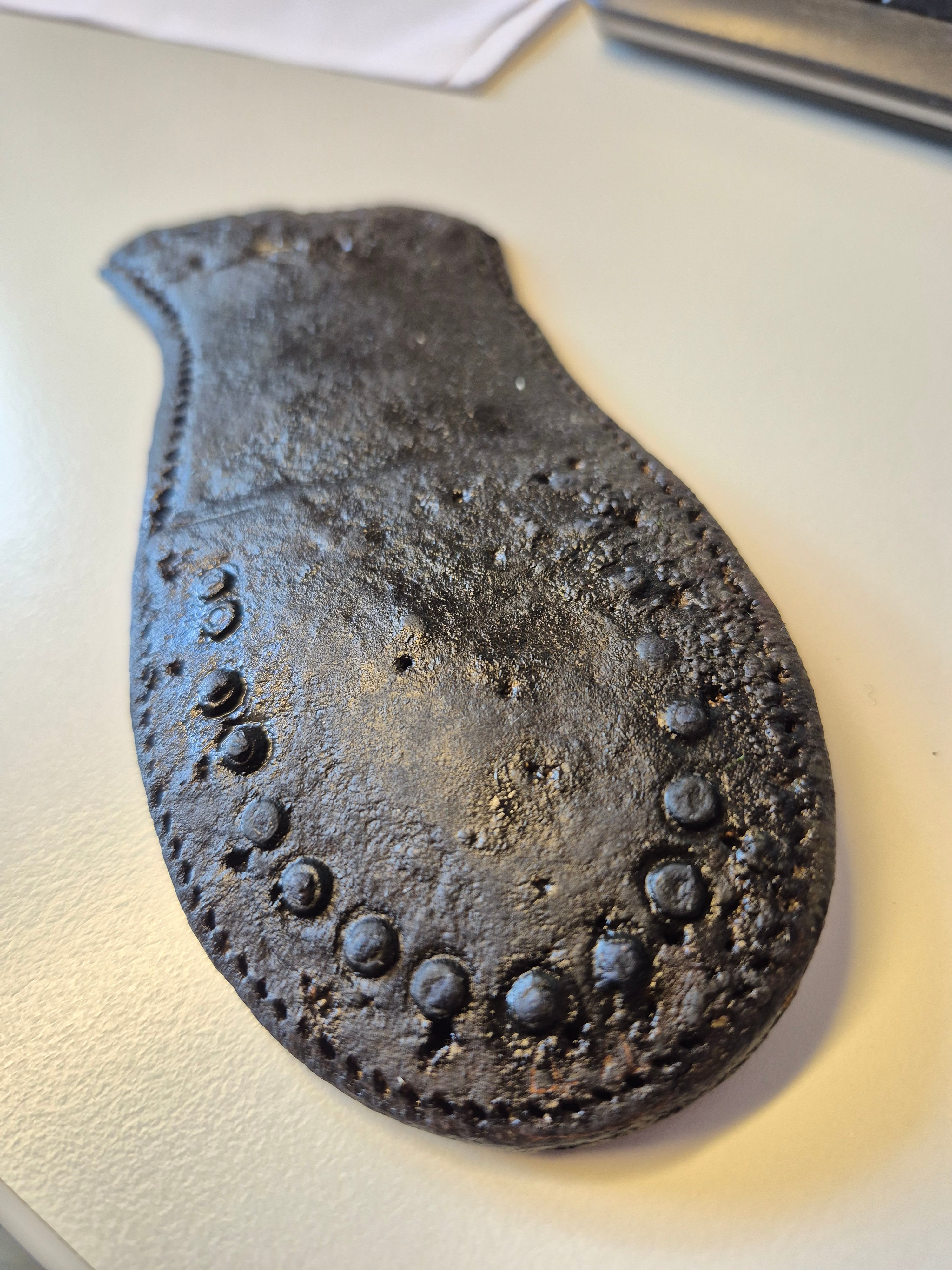
El descubrimiento devuelve al primer plano una travesía de 1683 marcada por la violencia, la expansión colonial europea y el comercio de seres humanos. Del calzado apenas subsiste la mitad trasera de la suela, pero sus detalles alcanzaron para abrir una hipótesis: pudo haber pertenecido a Jørgen Iversen Dyppel, primer gobernador danés de la isla caribeña de Santo Tomás, quien murió arrojado al mar durante la rebelión.
La posibilidad no está confirmada. Los investigadores advierten que había otros hombres de posición elevada a bordo. Aun así, la calidad de la pieza permite asomarse a una diferencia social que viajaba incluso en medio del hambre, el castigo y la incertidumbre de alta mar.
El Havmanden llevaba convictos a una colonia danesa en el Caribe
El Havmanden había partido de Copenhague con destino a Santo Tomás, entonces una colonia de Dinamarca en el Caribe. En la nave viajaban convictos y trabajadores bajo contrato que debían ser enviados a la isla para trabajar bajo la órbita de la Compañía Danesa de las Indias Occidentales.
El viaje tenía, además, una segunda etapa proyectada: después de llegar al Caribe, el buque debía navegar hacia la costa occidental de África para comprar personas esclavizadas. Esa ruta integraba el sistema colonial que conectaba puertos europeos, territorios africanos y plantaciones americanas, con enormes ganancias para comerciantes y Estados, y un costo humano devastador.
La travesía, sin embargo, se descompuso antes de alcanzar el Atlántico medio. La falta de comida y agua elevó la tensión a bordo. Según el relato histórico recogido por el Museo Nacional de Dinamarca, un grupo de tripulantes y convictos tomó el control de la fragata cerca de las Azores y decidió cambiar el rumbo para regresar hacia Copenhague.
La rebelión dejó una secuencia de violencia. Los amotinados dispararon contra el capitán y arrojaron por la borda a varios oficiales. Entre ellos estaba Dyppel, quien viajaba para retomar su puesto como gobernador de Santo Tomás. Murió en el canal de la Mancha, mientras que el barco terminó encallado y naufragó cerca del archipiélago sueco, al este de Gotemburgo.
Los responsables del motín fueron llevados a juicio cuando lograron llegar a Copenhague y recibieron condenas a muerte. El episodio es considerado uno de los motines más violentos de la historia marítima danesa.
La suela hallada apunta a un dueño de la élite
Durante una serie de inmersiones realizadas en 2026, arqueólogos marítimos del centro NJORD del Museo Nacional de Dinamarca, junto con especialistas del Bohusläns Museum de Suecia, inspeccionaron el pecio del Havmanden. Allí apareció el fragmento de una suela de cuero que, en apariencia, podía pasar por un objeto menor entre los restos de un naufragio.
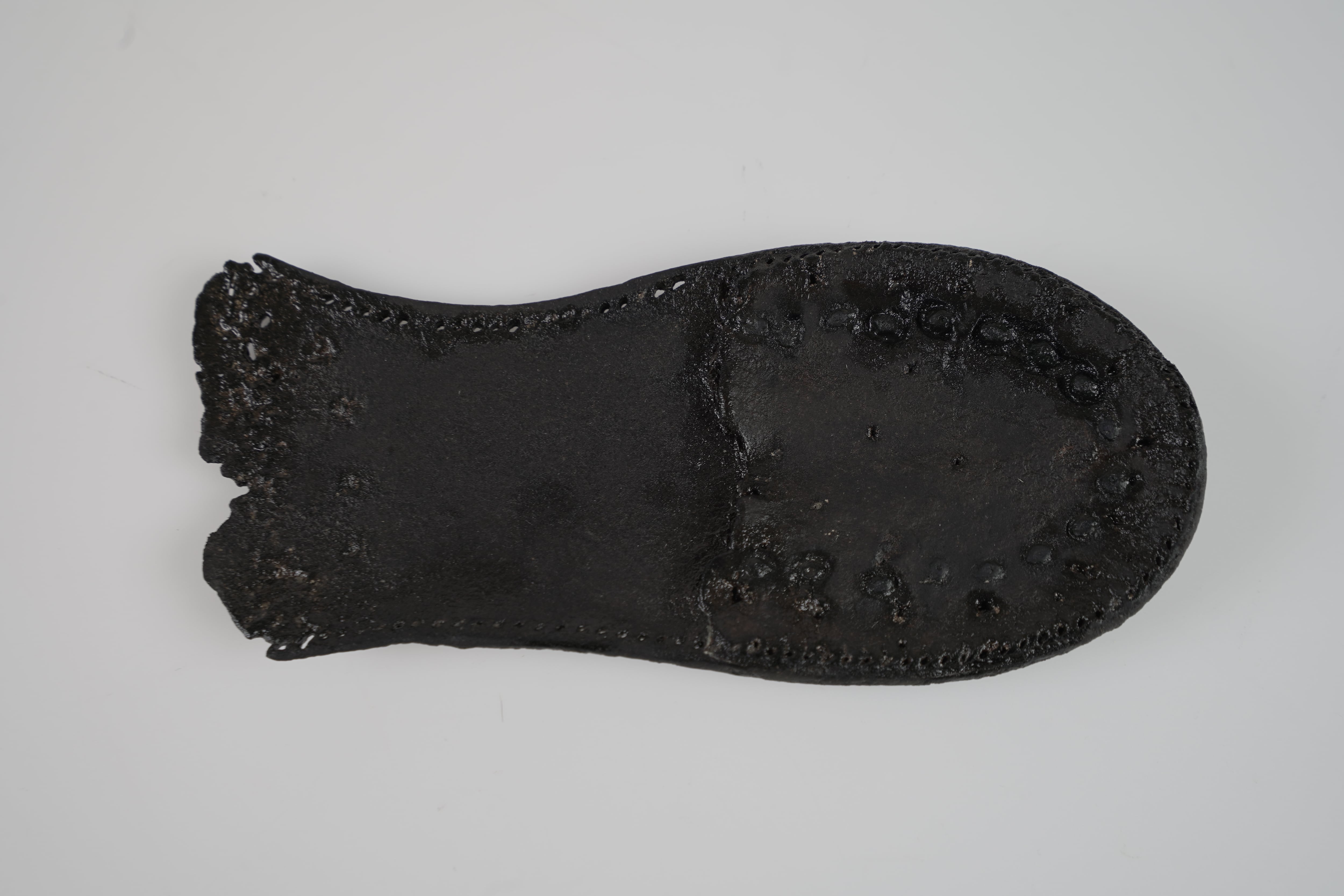
El examen posterior cambió esa impresión. La directora de los Museos de Rudersdal y especialista en calzado histórico, Vivi Lena Andersen, destacó que los pequeños orificios ubicados a lo largo del borde de la suela son muy parejos y están dispuestos con precisión. Ese trabajo requería herramientas finas y la mano de un zapatero altamente capacitado.
El cuero, además, es de calidad superior. Para Andersen, se trataba de “un zapato caro y exclusivo que solo la élite podía permitirse comprar”, de acuerdo con el comunicado difundido por el museo danés.
Esa conclusión instaló la pregunta sobre el propietario. Dyppel era uno de los pasajeros que encajaba en ese perfil social. Sin embargo, la identificación no puede darse por segura: el objeto fue encontrado en un naufragio que sufrió saqueos y alteraciones durante siglos, y otros pasajeros de alto rango podrían haber llevado un calzado similar.
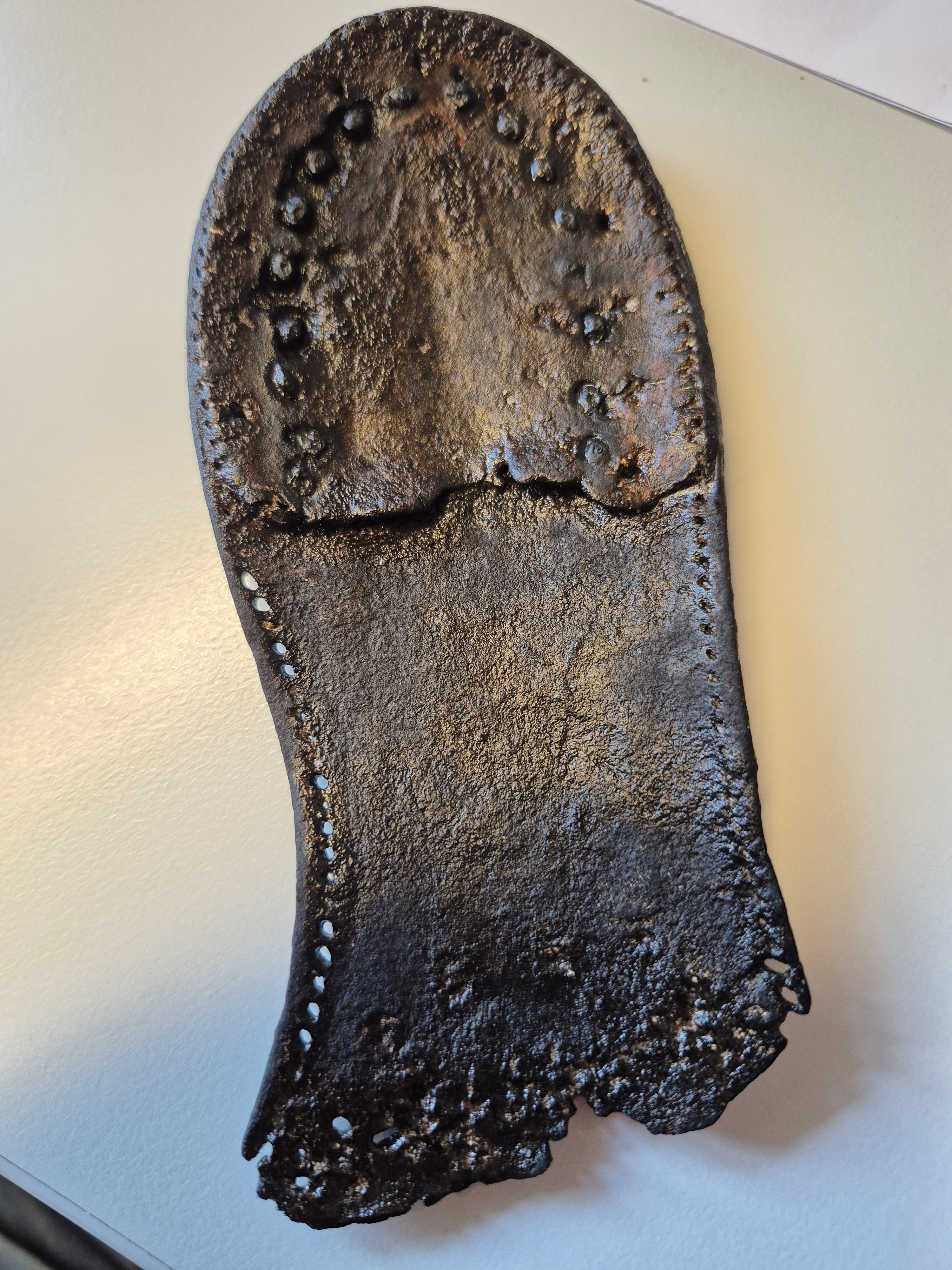
Andreas Kallmeyer Bloch, arqueólogo marítimo del Museo Nacional de Dinamarca, señaló que el hallazgo ofrece una vía concreta para abordar un proceso histórico de enorme escala. El fragmento de cuero conecta la trayectoria personal de un funcionario colonial con la creación de las colonias danesas en el Caribe y con la participación del país en la trata de esclavos.
Dos anillos exponen el propósito comercial del viaje
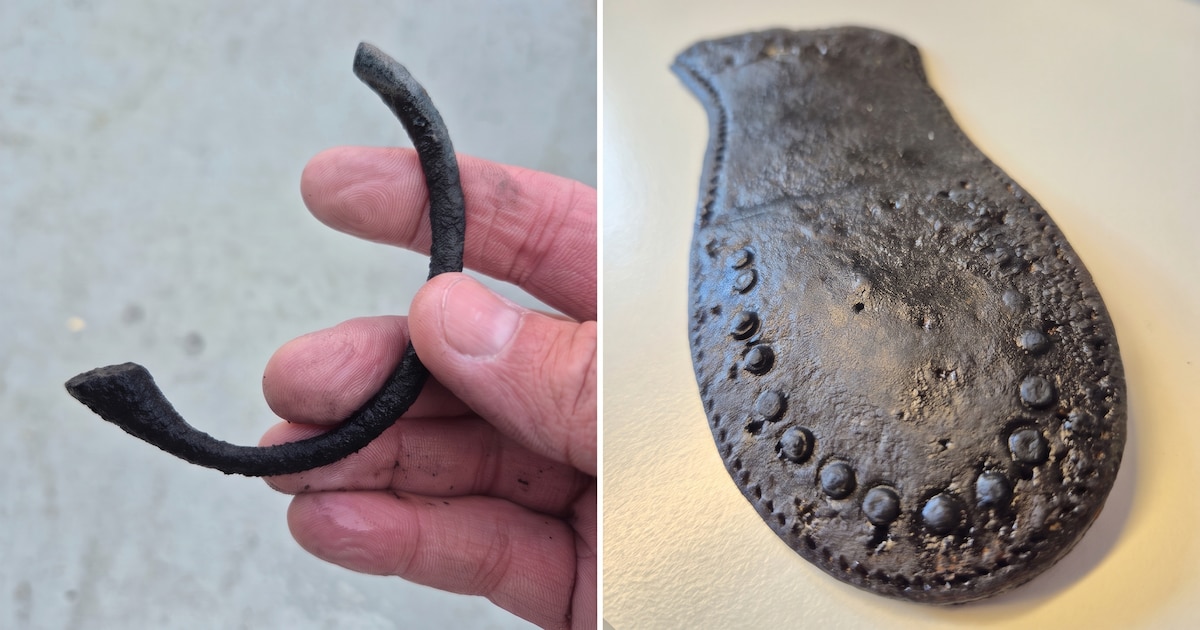
El zapato no fue el único objeto que llamó la atención de los arqueólogos. Los buzos recuperaron también dos manillas, anillos de metal que los comerciantes europeos usaban como medio de pago en partes de África occidental durante la trata transatlántica.
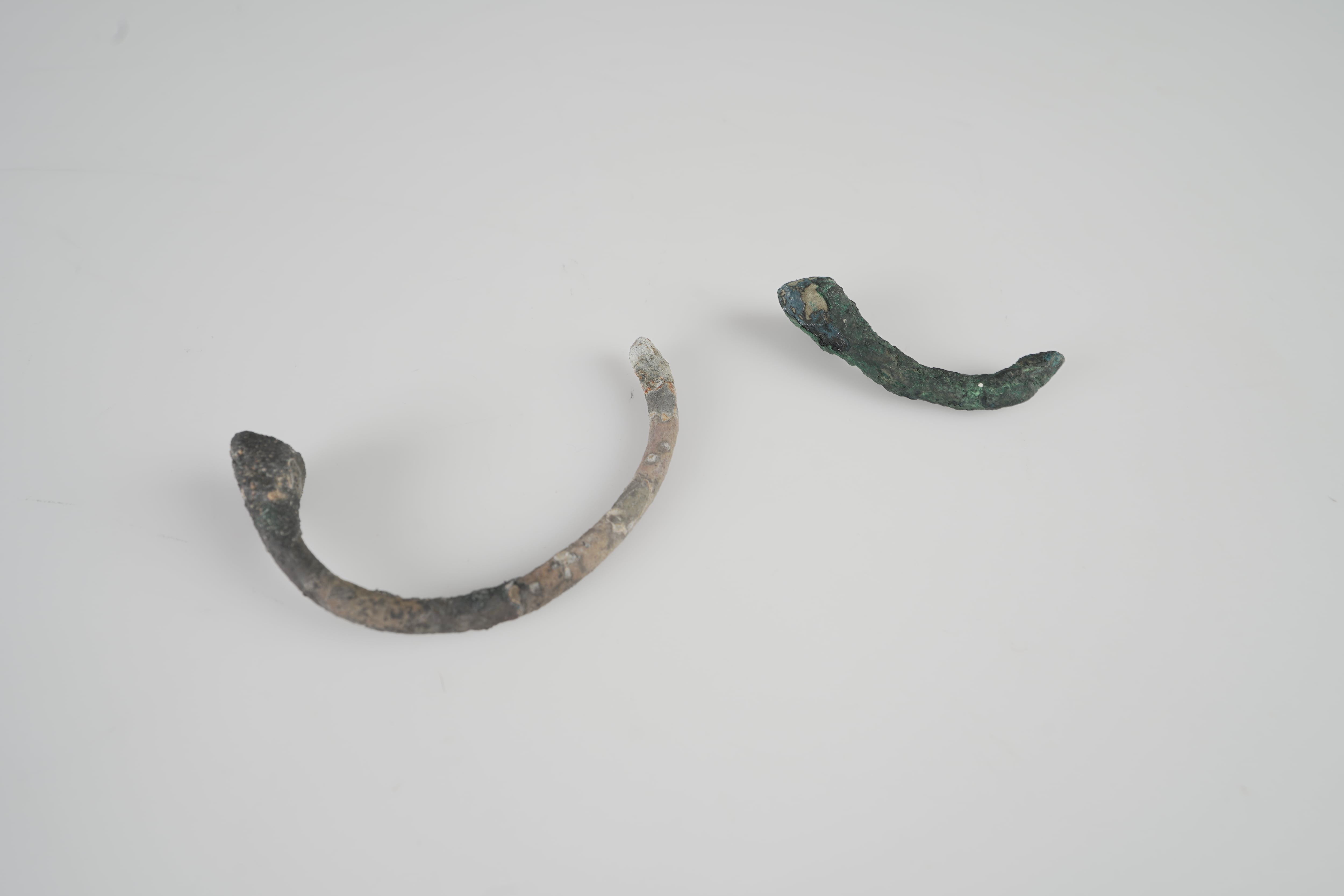
Fabricadas en cobre, latón o hierro, las manillas circularon especialmente en zonas de la actual Nigeria. Comerciantes europeos las intercambiaban por personas capturadas y reducidas a la esclavitud. Su aparición en un pecio escandinavo es poco habitual y refuerza el vínculo del Havmanden con ese circuito comercial.
Los objetos hallados no prueban que el barco hubiera llegado a comprar esclavos: su viaje se interrumpió antes de completar el itinerario previsto. Pero sí muestran que la embarcación estaba preparada para participar de esa operación. El proyecto colonial danés en el Caribe dependía de una red que incluía el traslado forzado de africanos, además del envío de convictos y trabajadores europeos a las islas.
En el comunicado del museo, Bloch sostuvo que las manillas “subrayan la conexión con la trata de esclavos”, una actividad central para las posesiones danesas en las Indias Occidentales y en la costa africana.

Dinamarca mantuvo su participación en el comercio transatlántico de esclavos durante más de un siglo después del naufragio del Havmanden. El rey Cristián VII prohibió ese comercio en 1792, aunque la esclavitud continuó en las Indias Occidentales danesas hasta 1848, cuando una rebelión de personas esclavizadas desembocó en su liberación.
El pecio también entrega pistas sobre la construcción del barco
La campaña arqueológica incluyó análisis dendrocronológicos, una técnica que permite fechar la madera mediante el estudio de los anillos de crecimiento de los árboles. Los resultados indican que los árboles usados para construir el buque fueron talados alrededor de 1664 o poco después.
Los especialistas también determinaron que la madera procedía de una zona situada entre el norte de Alemania y el sur de Jutlandia. El dato ayuda a reconstruir el origen material de una nave que, menos de dos décadas después de su construcción, quedó atrapada en una historia de motín, explotación colonial y naufragio.
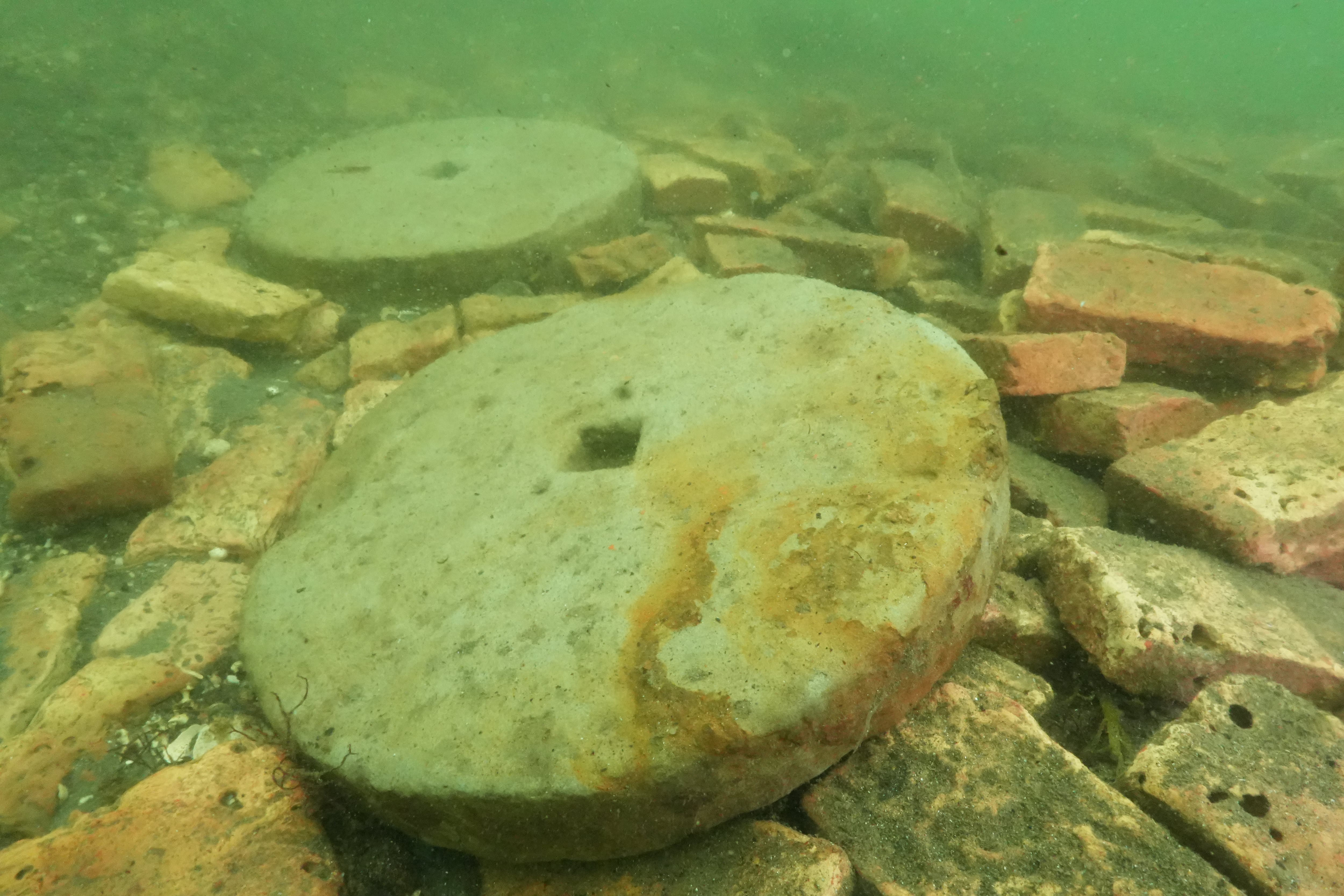
Para preservar lo que aún permanece en el fondo marino, los arqueólogos cubrieron parte de los restos con geotextil. El material busca reducir la erosión y proteger las huellas que todavía quedan bajo el agua, donde una suela de cuero y dos aros de metal conservaron, durante siglos, la memoria de un viaje que nunca llegó a destino.
Fotos: Museo Nacional de Dinamarca
caucho,cuero,carbonización,combustión
INTERNACIONAL
Encuentran una obra original de Georgia O’Keeffe oculta 40 años, valuada entre USD 3 millones y USD 5 millones

Una mujer encontró una pintura de Georgia O’Keeffe que había permanecido perdida durante alrededor de 40 años. El hallazgo ocurrió en el departamento de su tía, una exfuncionaria del Servicio Exterior que vivía en el East Village de Nueva York y que había mantenido la obra fuera de la vista de familiares y visitantes durante décadas.
La sobrina, identificada como Betsy, revisaba las pertenencias mientras la familia preparaba su ingreso a cuidados paliativos. El cuadro estaba dentro de su caja original, en un armario del pasillo y oculto detrás de una hilera de abrigos de piel. Aunque la anciana había mencionado en 2022 que guardaba una obra de O’Keeffe en ese lugar, Betsy no logró verla hasta semanas antes de la muerte de su tía, a los 98 años.

Van a subastar la obra de Georgia O’Keeffe que permaneció oculta 40 años
Tras el hallazgo, la familia de la propietaria decidió poner a la venta Near Abiquiu, New Mexico I, la obra de Georgia O’Keeffe que había permanecido guardada desde mediados de la década de 1980. La pintura será uno de los lotes de la venta nocturna de arte del siglo XX de Christie’s, en Nueva York. La casa de subastas fijó una estimación de entre USD 3 millones y USD 5 millones para la obra. Según informó CBS News, la pieza se exhibirá de forma gratuita en la sede de la casa de subasta, en el Rockefeller Center de Manhattan, antes de que se realice la venta.

La pintura fue realizada en 1930, un año después del primer viaje de O’Keeffe a Nuevo México. Representa un paisaje de tonos terrosos y formas onduladas, asociado con el Pico Lobo, en las cercanías de Abiquiú. Christie’s la considera la primera de una serie de tres obras sobre ese mismo sitio: otra pertenece al Museo Metropolitano de Arte de Nueva York y la tercera integra una colección privada. La pieza mide 25 por 60 centímetros y anticipa los paisajes y abstracciones que la artista desarrolló durante las décadas posteriores en el sudoeste de Estados Unidos. O’Keeffe vivió sus últimos 40 años en ese estado, donde consolidó una parte central de su producción artística.
Antes de su recuperación, la obra solo constaba en una fotografía tomada en 1931 por Alfred Stieglitz, fotógrafo y esposo de la artista. El cuadro figuraba como “sin localizar” en el catálogo razonado de O’Keeffe, de acuerdo con la directora internacional de Arte Estadounidense de Christie’s, Tylee Abbott.
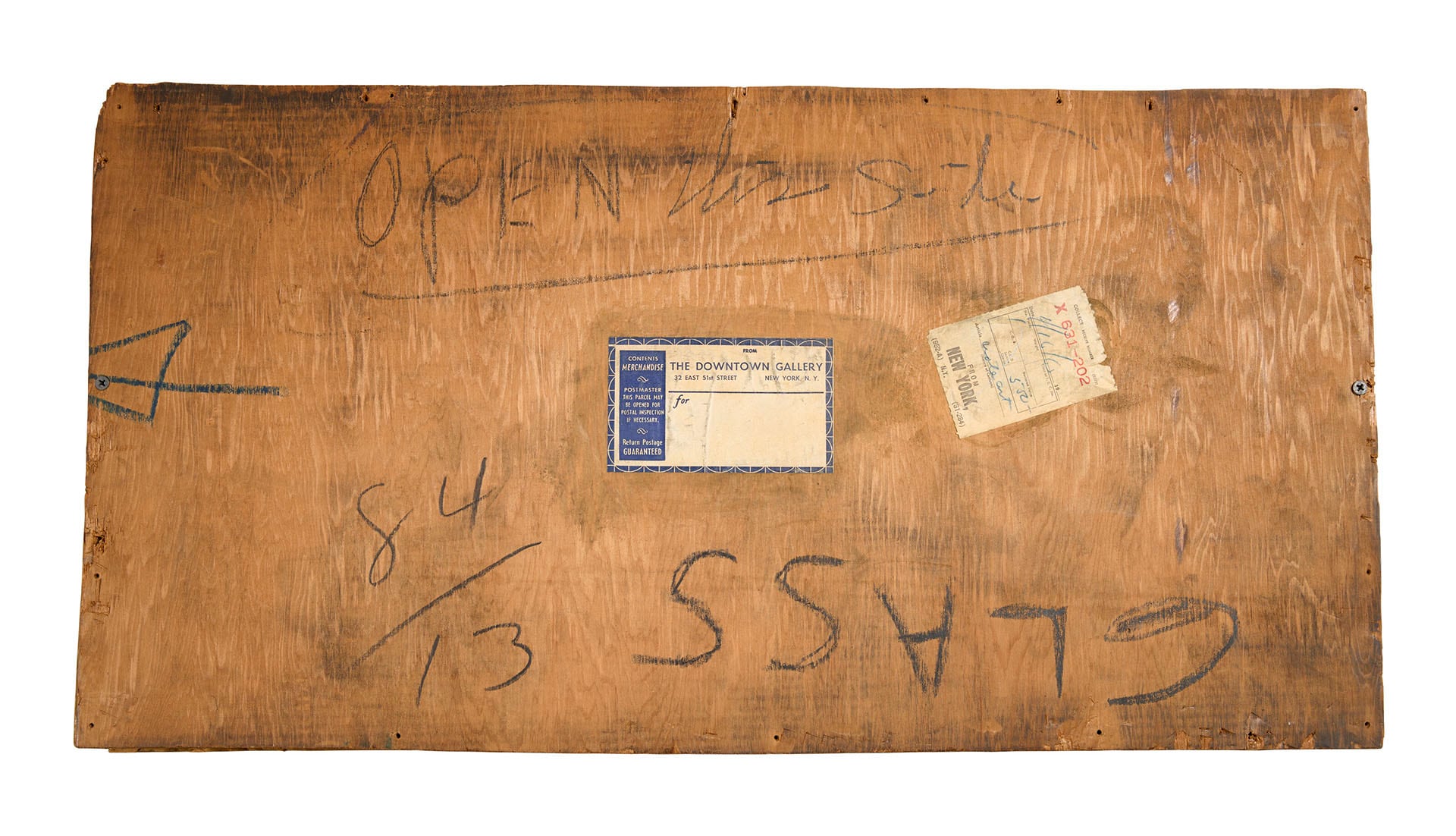
La identificación se apoyó en el análisis de la pintura, la comparación de sus pinceladas con otras obras de la artista, la fotografía histórica y documentación de la compra original. La madre de la dueña había adquirido la pieza el 15 de abril de 1963 en The Downtown Gallery de Manhattan, que representaba a O’Keeffe, por USD 3.800.

Abbott dijo a CBS News que la obra refleja el impacto que tuvo Nuevo México sobre la pintora desde sus primeras visitas. “Representa el punto de partida de su inspiración en aquel entonces”, afirmó la especialista sobre un paisaje que la artista retomaría de distintas formas a lo largo de su carrera.
Betsy, la sobrina que encontró el cuadro, contó al New York Post que la familia destinará una parte del dinero a una institución educativa y repartirá el resto entre los herederos. “Una vez que empezamos a explorar el valor de la pieza, me di cuenta de que vale más que mi casa”, dijo.
La obra se mantuvo guardada en buen estado
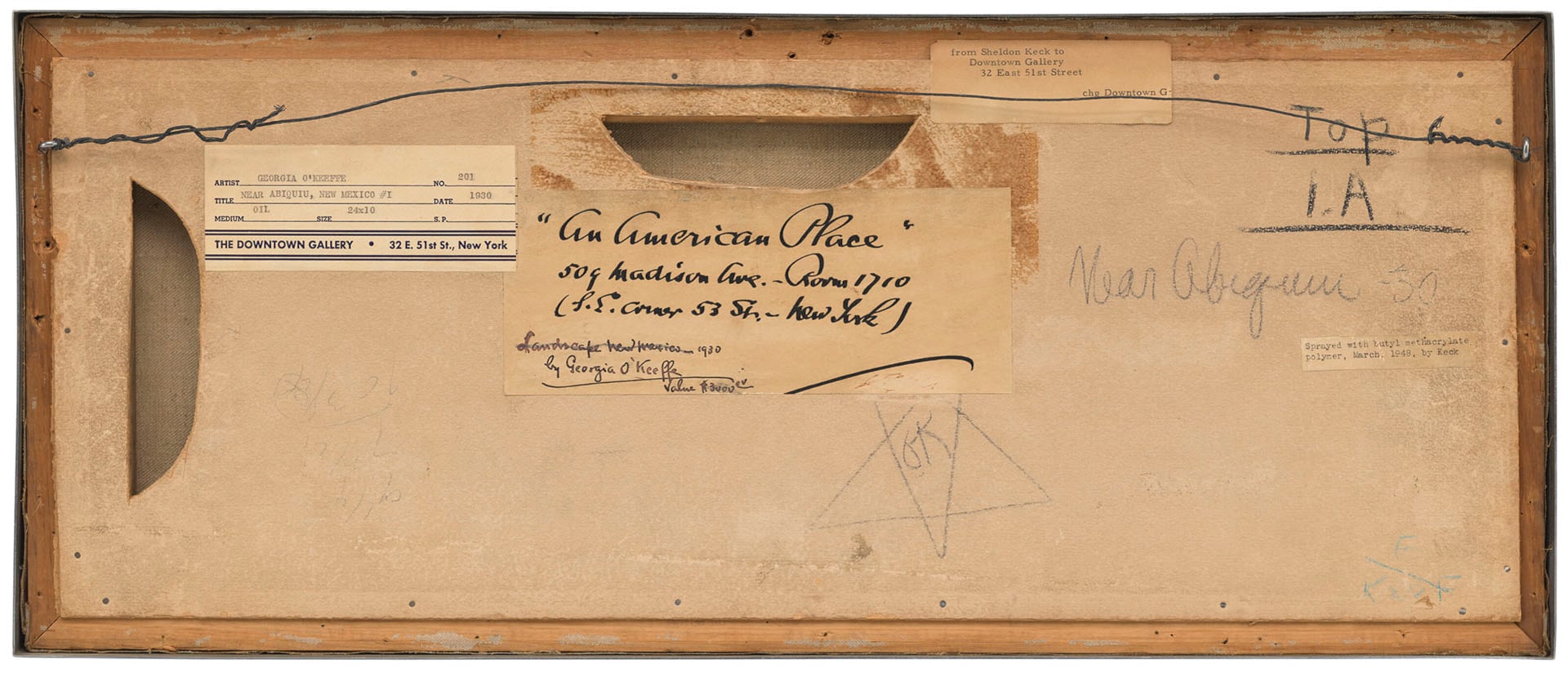
La pintura recuperada lleva en el reverso la firma característica de Georgia O’Keeffe, identificada por sus trazos en forma de estrella. Según contó Betsy a New York Post, en la parte posterior también había inscripciones asociadas a Alfred Stieglitz, esposo de la artista y uno de los principales fotógrafos de Estados Unidos en el siglo XX.
La caja que acompañaba la obra conservaba una etiqueta de The Downtown Gallery, el espacio neoyorquino que representó a O’Keeffe. Ese elemento permitió reconstruir parte de la procedencia de la pieza y vincularla con el circuito comercial en el que se movía la artista.
Christie’s destacó que la obra se mantuvo en buen estado de conservación. Tylee Abbott, directora internacional de Arte Estadounidense de la casa, señaló que el redescubrimiento resultó relevante por tratarse de una pieza “exquisitamente ejecutada y bien conservada”.
INTERNACIONAL
Trump’s spy chiefs put Republican leaders on the clock over ‘huge priority’ as power shift looms over Congress

EXCLUSIVE: President Donald Trump’s top administration intelligence officials penned a letter to congressional leaders urging them to reauthorize the Foreign Intelligence Surveillance Act (FISA).
An administration official told Digital the intel measure is at top of mind for the White House to get passed in the still-Republican-controlled Congress before Democrats take a majority on Capitol Hill in January.
«This is going to be a huge priority and push by the administration, by the White House for the lame duck Congress, because this really needs to get done,» the administration source said. «Otherwise, we’re kind of in trouble from a national security standpoint.»
They stressed that the White House is «fully on board» with the push by the intelligence agencies’ leaders asking Congress to reauthorize the law, including the controversial Section 702.
CONGRESS RETURNS TO BRUTAL LAME-DUCK STRETCH WITH SHUTDOWN DEADLINE, LEADERSHIP RACES: ‘CLOSET IS FULL OF S—’
The letter, signed by Attorney General Todd Blanche, Director of National Intelligence Jay Clayton and CIA Director John Ratcliffe, set a deadline for Dec. 9, 2026, less than a month before the new Congress will be sworn into office.
Clayton and Ratcliffe briefed the Gang of 8 — members of Congress who are legally apprised of classified national security matters and covert operations by the executive branch — earlier this week about the status of FISA.
TRUMP NOMINATES JAY CLAYTON, FORMER SEC CHAIRMAN, CURRENT US ATTORNEY, AS INTELLIGENCE DIRECTOR
«Any delays beyond this date will risk this critical authority lapsing, putting the lives of both Americans in the homeland and our troops stationed abroad at risk in the heightened threat environment briefed to the Gang of 8 earlier this week,» the letter says.
It is addressed to Senate Majority Leader John Thune, R-S.D., House Speaker Mike Johnson, R-La., Senate Minority Leader Chuck Schumer, D-N.Y. and House Minority Leader Hakeem Jeffries, D-N.Y.
SENATE TEMPORARILY EXTENDS NATION’S CONTROVERSIAL SPYING POWERS AFTER HOUSE FUMBLES
«As you know, Section 702 is the single most indispensable tool we have to keep our homeland and the American people safe,» the letter says. «It enables our Intelligence Community to detect and disrupt terrorist plots, cyber intrusions, and weapons proliferation. No other authority can replace it.»
FISA’s Section 702 has a controversial history. Privacy activists and constitutional scholars have long argued that Section 702 is akin to warrantless surveillance. Under Section 702, intelligence agencies can clandestinely collect the communications of Americans if they are speaking to foreigners who are targets of investigations.
The Office of the Director of National Intelligence (ODNI) credits Section 702 for thwarting terrorist activities, including a mass casualty terror attack at a Taylor Swift concert in Vienna, Austria, in 2024, and says that 63% of the articles in the Trump’s daily brief contained FISA Section 702 information reported by the National Security Agency in 2025.
JOHNSON FACES GOP REVOLT OVER WARRANTLESS SURVEILLANCE POWERS AHEAD OF KEY VOTE
The letter explains that the statutory authority of Section 702 has lapsed, and that collection of such materials will expire on March 16 if FISA is not reauthorized.
It goes on to say that the Dec. 9 congressional deadline to begin the renewal process will allow the intelligence agencies the necessary amount of time to complete the steps for continued Section 702 collection before the March expiration date.
LAWMAKERS SCRAMBLE AFTER TRUMP DERAILS BID TO REVIVE KEY COUNTERTERRORISM TOOL DAYS AFTER FBI THWARTS UFC PLOT
«To prevent a gap in critical intelligence and avoid putting our nation at risk, the government must start the 2027 renewal process by then,» the letter states.
«If collection stops, we cannot simply turn 702 back on. The Administration looks forward to briefing Congress again in the coming days on the irreplaceable intelligence enabled by Section 702 and the dire risks to our nation if it is allowed to expire.»
ODNI, the Department of Justice and the White House did not return Digital’s requests for comment.
politics, national security, congress, white house, cia, justice department, senate

Wall Street anticipa balances flojos para bancos argentinos y recomienda una sola acción

Lemoine sorprendió con su fórmula presidencial ideal: Milei-Bullrich

La lista de convocados de Boca Juniors para la semifinales de la Copa Argentina ante Banfield

Bloqueos sindicales: tras la absolución de 7 imputados, otra jueza de San Nicolás condenó a un dirigente de Camioneros

“Fueron minutos de auténtico terror”: estremecedor relato del violento robo que sufrió el arquero argentino Matías Dituro en España

Los audios que complican a Lázaro Báez y revelan cómo operaba desde la cárcel para manejar sus propiedades

La queja de Yanina Latorre tras asistir al VIP de la misa del papa León XIV: “Estuve al rayo del sol haciendo nada y…”

PILIPOM: UNA NUEVA HERRAMIENTA EDUCATIVA PARA QUE LOS MÁS CHICOS APRENDAN JUGANDO

Papa León XIV en la Argentina, EN VIVO: la misa en Luján y la despedida en Ezeiza hoy, minuto a minuto

El juego de la butaca: Haas volvería a cambiar de piloto para el cierre del año en la Fórmula 1 tras el escándalo con Ocon

 SOCIEDAD3 días ago
PILIPOM: UNA NUEVA HERRAMIENTA EDUCATIVA PARA QUE LOS MÁS CHICOS APRENDAN JUGANDO
- SOCIEDAD2 días ago
Papa León XIV en la Argentina, EN VIVO: la misa en Luján y la despedida en Ezeiza hoy, minuto a minuto
- DEPORTE2 días ago
El juego de la butaca: Haas volvería a cambiar de piloto para el cierre del año en la Fórmula 1 tras el escándalo con Ocon