INTERNACIONAL
Colombia: miles de personas marcharon en el primer paro nacional contra el gobierno de Abelardo de la Espriella


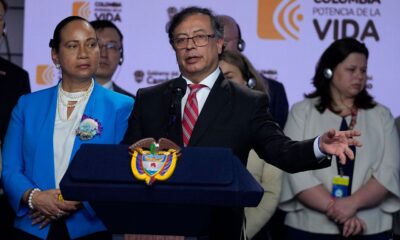
Miles de personas se movilizaron este jueves en las principales ciudades de Colombia para rechazar las políticas del presidente Abelardo de la Espriella y, en particular, el proyecto de Ley de Rescate Económico que se debate en el Congreso.
La protesta, convocada por sindicatos, organizaciones sociales y sectores de la oposición, estuvo marcada por las críticas a una reforma tributaria que busca aumentar la recaudación estatal y que, según sus detractores, afectará principalmente a la clase media.
El primer paro nacional contra el gobierno de De la Espriella comenzó alrededor de las 10:30 (15:30 GMT) en Bogotá, con concentraciones en distintos puntos de la capital, entre ellos la carrera séptima, una de las principales arterias de la ciudad. Los manifestantes marcharon con banderas colombianas, pancartas y equipos de sonido instalados en vehículos.
La movilización también se replicó en Medellín, Cali, Barranquilla y Bucaramanga, donde se registró un fuerte despliegue de la Unidad Nacional Antidisturbios (UNADI) de la Policía.
El operativo se desarrolló en el marco de un decreto firmado por el mandatario en octubre, que regula las protestas sociales y flexibiliza el uso de la fuerza por parte de las autoridades, una medida cuestionada por organizaciones de derechos humanos.
Espriella












INTERNACIONAL
Iran-backed Houthi ‘terrorist attack’ hits Riyadh’s tallest skyscraper and HQ of Saudi Public Investment Fund

NEWYou can now listen to Fox News articles!
A «terrorist attack» by the Iran-backed Houthis damaged multiple floors at the tallest skyscraper in Riyadh, Saudi Arabia, which houses the headquarters of the Saudi Public Investment Fund on Thursday, authorities and reports said.
Entrances leading into the King Abdullah Financial District were closed and people were being evacuated from the area following the strike by a suspected Houthi missile, according to Reuters.
The news agency reported that the attack on the Public Investment Fund Tower, which is 80 stories tall, destroyed windows across up to eight floors of the building and bent portions of its metal facade.
«One of the towers of the Financial Center in Riyadh was targeted in a terrorist attack by the terrorist Houthi militia, causing material damage but no injuries — praise be to God,» the General Directorate of Saudi Civil Defense wrote on X as it shared a photo of the damage.
HOUTHIS KILL 14 AT SAUDI AIRPORT AS EXPERT WARNS OF ‘RAPID TARGETS’ AMID MIDDLE EAST WAR
The Public Investment Fund Tower in Riyadh, Saudi Arabia, is the tallest skyscraper in the city. The building was seen damaged on Thursday, Nov. 19, 2026, following what officials called a «terrorist attack» by the Iran-backed Houthis. (General Directorate of Saudi Civil Defense)
The incident unfolded after the Houthis attacked a building belonging to Saudi state-owned oil company Aramco, in the same area on Nov. 8, Reuters reported.
Saudi-led coalition spokesman Col. Turki Al-Malki said Thursday that Saudi air defenses «intercepted and destroyed 4 ballistic missiles launched by the Houthi terrorist militia toward the southern region.»
He also said the coalition went on offense in Yemen, destroying a ballistic missile launch platform in Dhamar that was used by the Houthis «in an attempt to attack Riydah today.»
HOUTHIS EMERGE AS GLOBAL THREAT BEYOND IRAN CONTROL AMID SAUDI STRIKES, FORMER ENVOY WARNS

The KAFD World Trade Center, Riyadh Bank skyscraper office building, Public Investment Fund tower and Saudi National Bank headquarters stand beyond the King Abdullah Financial District Conference Center in Riyadh, Saudi Arabia, on Tuesday, Dec. 6, 2022. (Bloomberg via Getty Images)
The Houthis have been escalating attacks on Saudi Arabia during the U.S.-Iran war.
The U.S. Embassy and Consulates in Saudi Arabia warned Americans earlier this week that they «should exercise heightened vigilance due to the increased threat of armed attacks by Iranian-supported Houthis and Iranian efforts to target U.S. government officials and facilities in the region.
«Iranian-supported Houthis have engaged in hostilities against Saudi Arabia, including attacks on civilian airports and other critical infrastructure resulting in civilian casualties and severe travel disruptions,» it added. «These hostilities have the potential to escalate rapidly beyond that immediate area.»
saudi arabia, iran, middle east, world
La deuda del gobierno central de Costa Rica podría mantenerse por encima del 60% del PIB durante los próximos años, de acuerdo con las proyecciones de Fitch Ratings. La agencia estimó un nivel de 60.5% para 2026 y de 61.8% para 2027, en un escenario de menor superávit primario y límites para ampliar los ingresos.
Fitch Ratings elevó la calificación de riesgo emisor de largo plazo de Costa Rica de “BB” a “BB+” y mantuvo una perspectiva estable. La agencia también mejoró la calificación crediticia del país de “BBB-” a “BBB”.
La decisión se apoyó en el crecimiento de la economía, la mejora de la posición externa, el aumento de las reservas internacionales y el acceso al mercado interno. La evaluación también señaló factores que continúan condicionando el perfil financiero, como la carga de intereses, la evolución de la deuda y las restricciones al financiamiento externo.
Costa Rica recibió una mejora en su calificación porque Fitch considera que el país mantiene una economía con capacidad de crecimiento, una posición externa respaldada por inversión extranjera directa y una mayor disponibilidad de reservas internacionales.
La perspectiva estable indica que la agencia espera continuidad en esas condiciones, aunque prevé que la deuda y las restricciones para emitir en el exterior seguirán presentes.
La economía mantendría un crecimiento cercano al 3%
La agencia prevé que el producto interno bruto real crezca 3.2% en 2026, luego de una expansión de 4.6% en 2025. Para 2027, la proyección se ubica en 3.3%.
Fitch atribuyó la moderación esperada a la normalización de la actividad exportadora. Parte de la actividad se habría adelantado durante 2025 ante la previsión de aranceles de Estados Unidos.
El Índice Mensual de Actividad Económica registró una variación de 2.7% hasta septiembre de 2026. En todo 2025, el indicador había alcanzado 4.8%.
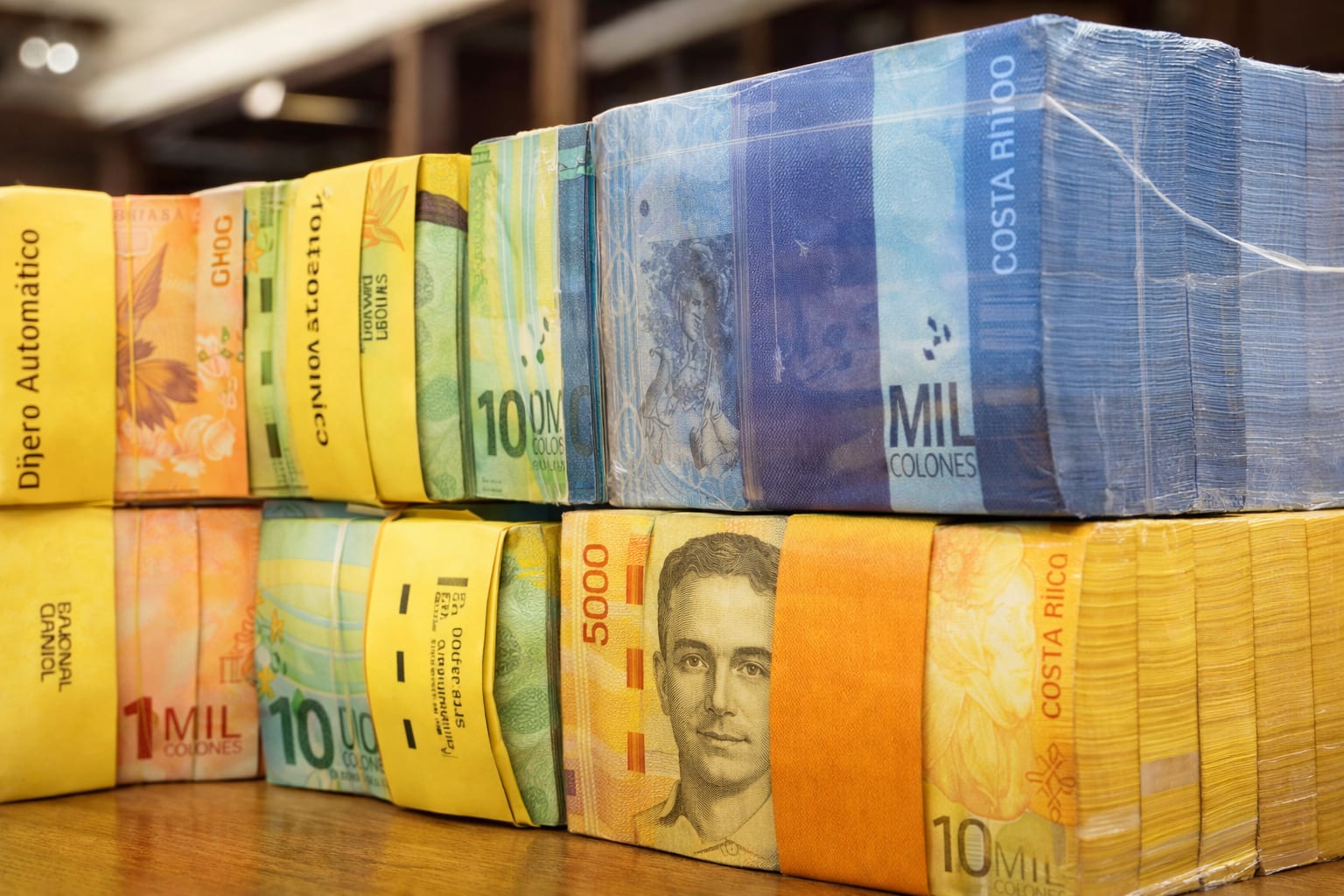
La actividad fuera de las zonas francas se aceleró hasta cerca de 3.3%, según la agencia. Ese comportamiento forma parte de los elementos que respaldan su previsión de una expansión estable en el próximo año.
La inversión extranjera sostiene la posición externa
La posición externa continúa como uno de los factores favorables para la solvencia del país, según Fitch Ratings. Los déficits de cuenta corriente se mantienen en niveles bajos y las entradas de inversión extranjera directa permiten financiarlos.
La agencia proyectó que el déficit por cuenta corriente será equivalente al 1.6% del PIB en 2026. Las entradas netas de inversión extranjera directa llegarían a 7% del PIB.
El crecimiento de las exportaciones se desaceleró a 4.4% interanual hasta septiembre. Las ventas de dispositivos médicos se mantuvieron prácticamente estables, en un contexto de menor competitividad asociada a los aranceles estadounidenses.
Las reservas internacionales superaron USD 20,400 millones a mediados de noviembre de 2026. Ese nivel representaba una cobertura aproximada de 5.1 meses y se situaba en línea con la mediana de los países calificados en la categoría “BB”.
La posición soberana de deuda externa neta se volvió positiva en 2024. Fitch espera que siga aumentando durante su horizonte de proyección y que supere en 2028 la mediana de 2.3% del PIB para la misma categoría de calificación.
Los ingresos fiscales limitan la consolidación
El crecimiento de los ingresos del gobierno central fue de 0.1% interanual hasta septiembre de 2026. Fitch vinculó ese resultado con la deflación persistente, algunas reducciones de impuestos y una mayor actividad en sectores de baja tributación.
El límite de gasto permitió mantener la disciplina fiscal, de acuerdo con el análisis. La agencia observó que las medidas de administración tributaria podrían impulsar la recaudación, aunque sus resultados todavía son inciertos.
Fitch proyectó que el superávit primario del gobierno central baje de 0.9% del PIB en 2025 a 0.3% en 2026. Para 2027, espera una recuperación a 0.6% del PIB.
El déficit general podría ampliarse hasta 3.9% del PIB este año y reducirse a 3.6% durante el próximo. A nivel del gobierno general, la deuda llegaría a 55.4% del PIB en 2026 y aumentaría de forma gradual.
La agencia indicó que la estructura fiscal presenta una dificultad adicional por la elevada relación entre los pagos de intereses y los ingresos del gobierno central. Ese aspecto fue uno de los motivos de los ajustes cualitativos aplicados a su modelo de calificación.
El mercado interno sigue siendo la principal fuente de financiamiento
La financiación del Estado depende en gran medida del mercado local, que ofrece recursos estables y costos de endeudamiento similares a los disponibles en el exterior. La falta de autorización para emitir deuda internacional continúa como una limitación.
Las autoridades promueven una iniciativa para permitir emisiones externas anuales de hasta USD 1,500 millones dentro de un programa plurianual. La medida busca ampliar las opciones de financiamiento soberano.
En los últimos años, Costa Rica emitió bonos de depósito globales denominados en euros dentro del mercado local. Los instrumentos fueron adquiridos por inversores extranjeros y evitaron la necesidad de autorización legislativa, aunque implicaron un mayor costo.
La inflación también incidió en el escenario económico. El indicador general fue negativo desde mayo de 2025 hasta agosto de 2026 y volvió a terreno positivo en septiembre, con 0.3%, antes de subir a 0.6% en octubre.
La baja inflación afectó el crecimiento nominal y la recaudación. Al mismo tiempo, la evolución de los precios permitió que el banco central redujera su tasa de política monetaria de 3.25% a 3.0% hacia finales de 2025.
La agenda legislativa mantiene obstáculos para algunas reformas
La presidenta Laura Fernández asumió el cargo con el partido oficialista al frente de 31 de los 57 escaños de la Asamblea Legislativa. Pese a esa mayoría, Fitch señaló que el gobierno enfrenta dificultades para avanzar con parte de su programa.
Los problemas relacionados con el presupuesto de 2027, la autorización de endeudamiento externo y el retiro de un proyecto sobre electricidad reflejan las limitaciones para la formulación de políticas. La agencia consideró que persiste un historial de estancamiento institucional.
Fitch Ratings prevé que continúe el marco de política macroeconómica. También espera avances en medidas administrativas de recaudación que requieran mayoría simple en el Congreso.

La agencia destacó que Costa Rica se sitúa en el percentil 75 del Índice Mundial de Gobernanza del Banco Mundial. La evaluación consideró favorables la estabilidad de las transiciones políticas, la capacidad institucional, el estado de derecho y los indicadores de corrupción.
Una rebaja de la calificación podría producirse ante un deterioro fiscal que acelere el aumento de la deuda o frente a una pérdida relevante de dinamismo económico. Una futura mejora dependería de avances en reformas, una trayectoria descendente de la deuda y un crecimiento más sólido y extendido.
colon,colones,Costa Rica,dinero,billetes,efectivo,economía,finanzas,moneda,divisa

A former Southern Poverty Law Center official who led its hate-group tracking work told FBI agents he tried to make the watchdog’s controversial «Hate Map» more ideologically balanced, while saying Christians and conservatives were the first staffers pushed out in what he called a «long-term coup» at the organization after he left in 2013.
The former director said he pushed for a more evenhanded SPLC, arguing that its «Hate Map» — which lists conservative groups alongside Ku Klux Klan chapters — should also include left-wing extremists, including violent animal-rights and extremist environmental groups. However, the former director said the effort met resistance and that, as liberal leaders reshaped the organization, most of his 17-person team was replaced.
«There was some kind of coup, long-term coup going on there between some, what I would — what I heard were some pretty liberal people, extreme people that had other ideas about what we were doing,» the unnamed former director told agents, as first reported by The Daily Signal’s Tyler O’Neil, who has been covering the SPLC’s legal troubles.
DOJ EXPANDS INDICTMENT AGAINST SPLC, ALLEGING $4M SECRETLY FUNNELED TO KKK AND EXTREMIST GROUPS
The former director’s comments appeared in an FBI interview transcript filed as an exhibit to Dr. Heidi Beirich’s Nov. 2 court filing. Beirich, a former SPLC official charged alongside the organization in a federal case alleging a scheme to mislead donors and banks about donations used to pay informants associated with violent extremist groups, pointed to multiple FBI interviews with an unnamed former SPLC director, identified in the filing as «Individual-1.»
In a January interview, Individual-1 told investigators he ran the SPLC’s field-source program, set up accounts used to pay sources and directed payments, according to Beirich’s filing. During a March 23 follow-up interview with Individual-1, FBI Special Agents David McDaniel and Parker Still framed the conversation around the program having «gone off the rails» under Beirich and told the former director they were not there to discuss the bank activity, noting he had «obviously nothing to do with all that,» before questioning him about the SPLC’s alleged targeting of conservative organizations and Beirich’s role, according to the transcript.
EXCLUSIVE: SPLC’S ‘FAR-LEFT,’ ‘ANTI-RACISM’ CURRICULUM FOUND IN CLASSROOMS AS EARLY AS KINDERGARTEN: ‘WATCHDOG’
Individual-1 responded that, as his «gut impression,» he believed her actions were political and accused some liberals at the center of having «a good degree of hatred» for conservatism, according to the March 23 transcript.
Individual-1 also alleged a shift in power at the SPLC. After he left in 2013, he said, people were appointed to the SPLC’s board as «figureheads» and eventually gained enough voting power to take over the center. He said only one or two data-entry members of his roughly 17-person team remained, with the others replaced by staff he believed shared the new leadership’s politics.
«That’s who they ran off first were the Christians and conservatives,» the unnamed former director told agents when asked why Beirich took the actions she did after his departure. «Then they — then the rest they just replaced with people they liked, you know, that agreed with them politically.»
HOW MUTINY AT SOUTHERN POVERTY LAW CENTER TRIGGERED LEADERSHIP COLLAPSE
In separate comments about the SPLC’s controversial «Hate Map,» Individual-1 said he persuaded SPLC staff, despite internal resistance, to list Black separatist groups, which he considered comparable to White racist groups, on the map. However, he said he unsuccessfully pushed the SPLC to include violent animal-rights and environmental extremist groups and described his team’s approach during his tenure as director as «very nonpartisan» and «middle of the road.»
«We were very nonpartisan, or at least when I was running things, when I was director, we stayed right in the middle of the road,» he said.
In a June follow-up, the unnamed former director also criticized the SPLC’s «Hate Map» for listing local chapters separately, saying it made the map’s totals of the extremist groups it chose to identify look larger.
WATCH: SPLC CHIEF DOUBLES DOWN ON PLACING CHARLIE KIRK’S TURNING POINT USA ON ‘HATE MAP’
While the unnamed former director was not charged in the SPLC case, Beirich was. Her lawyers say the interviews with the unnamed director warrant discovery into whether she was singled out because of her perceived role in the SPLC’s political speech, arguing that investigators’ questions about the SPLC’s treatment of conservative groups — and her alleged role in that work — could show the prosecution was motivated by hostility to the center’s political speech.
«Individual-1’s statements confirm my longstanding criticism of the Southern Poverty Law Center, that it exaggerates ‘hate’ by inflating the chapters on its ‘hate map’ and that it systematically demonizes conservatives and Christians while turning a blind eye to extremism on the Left,» O’Neil, the author of «Making Hate Pay: The Corruption of the Southern Poverty Law Center,» told Digital. «Now, we have the former director of the Intelligence Project saying the SPLC appears to have pushed out Christians and conservatives, while rejecting his suggestion to include environmentalist agitators on the map.»
SIGN UP TO GET THE POLITICS NEWSLETTER
Digital reached out to the SPLC and attorneys for Heidi Beirich for comment but did not receive a response in time for publication.
federal courts, politics, fbi, hate crime, investigations

Iran-backed Houthi ‘terrorist attack’ hits Riyadh’s tallest skyscraper and HQ of Saudi Public Investment Fund

Axel Kicillof, en modo campaña: “Cuatro años más de Milei serían una calamidad”

Un diputado nacional renunció al bloque oficialista tras denunciar un acuerdo de LLA con el PJ en Tucumán

Arthur Melo vuelve a brillar en Brasil con el Santos

Colombia: miles de personas marcharon en el primer paro nacional contra el gobierno de Abelardo de la Espriella

Las exportaciones anotaron un nuevo récord y el superávit comercial fue de casi u$s3.400 M

Milei dijo que el riesgo país sube por el miedo a "Orcolandia" y afirmó: "Los argentinos no van a votar hacia el pasado"

Encontraron muerto a un trabajador en el Observatorio de La Plata

Se agudiza la suba de tasas y se complica la economía mundial

Feroz escándalo con Wanda Nara en su interminable pelea con la China Suárez: «Ya saben cómo se hizo famosa, te desnudabas en…»

 POLITICA3 días ago
Milei dijo que el riesgo país sube por el miedo a "Orcolandia" y afirmó: "Los argentinos no van a votar hacia el pasado"
- INTERNACIONAL3 días ago
Caída de sistemas, fallas y sospechas: qué hay detrás de la suspensión del tráfico aéreo y los problemas en los bancos de EE.UU.
- POLITICA15 horas ago
Javier Milei y sus medidas, en vivo: “Hoy discutimos si crecemos un punto más o menos”, dijo el Presidente