
INTERNACIONAL
Mamdani’s plan to dismantle NYPD’s riot unit ripped as ‘smoke and mirrors’ by former force leaders

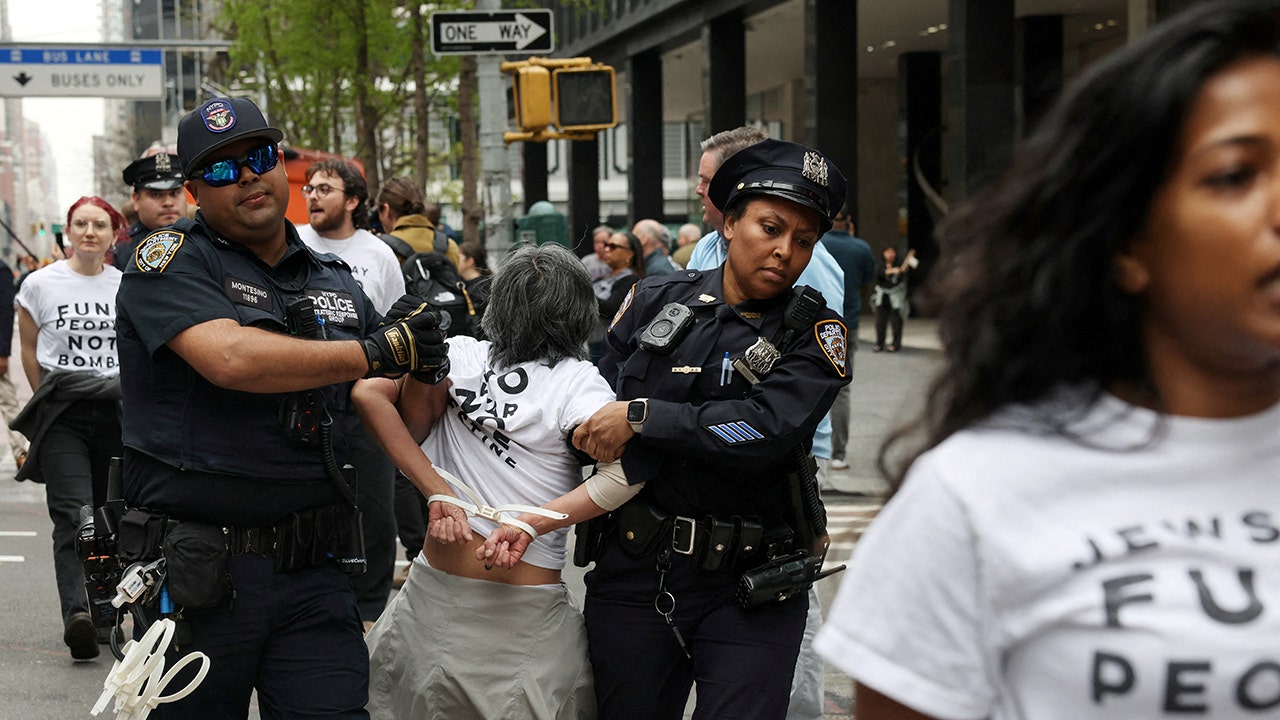
New York City Mayor Zohran Mamdani’s plan to gut the city’s tactical police unit is not what is seems, two former high-ranking NYPD officials tell Digital.
They argue the stunt is a political sleight of hand in which specialized officers responsible for handling violent protests will be rebranded under a different name despite the socialist mayor’s promise to disband it completely.
«The problem is … day-to-day New Yorkers don’t understand all this gas lighting,» former NYPD Chief John Chell told Digital. «And they feel the angst of it.
«But at the end of all that, this is nothing more than smoke and mirrors.»
EXCLUSIVE: RETIRED POLICE SERGEANT ISSUES WARNING OVER MAMDANI’S NYPD SHAKE-UP AHEAD OF THANKSGIVING PARADE
The move to dissolve the Strategic Response Group (SRG) and replace it with a «first-of-its-kind» civilian dialogue team fulfills one of Mamdani’s campaign promises as noted in the first sentence of his news release on the move.
But Chell and retired NYPD Inspector Paul Mauro are questioning whether it’s all a facade to please the mayor’s left-wing base and is a restructuring rather than a disbandment. They say the unit will likely be rebuilt under a new name to continue dealing with mass protests, major crimes and counterterrorism.
«The con here is that the SRG is simply being rebranded into an unknown name right now,» Chell said.
«First of all, Mamdani did add … that there will be uniformed police standing by to take more forceful enforcement if necessary,» Mauro said. «So, what really changed? Well, he changed the name of that unit, and he inserted this civilian unit between those uniformed cops and the protesters.»
The newly proposed civilian-led Community Dialogue and De-escalation Division (CDDD) is meant to work as a buffer between protesters and the on-duty police who will remain present at large demonstrations.
«Socialism and public safety do not go hand in hand,» Chell insisted.
Mamdani’s office did not respond to request for comment on the criticism of his plan.
NY COP CALLS FOR POLICE PROTECTIONS AFTER PROTESTER HE ARRESTED SHOWED UP TO HIS HOUSE, HARASSED HIS FAMILY
Both former NYPD officials warned that relying on civilians to mediate rowdy crowds could delay police intervention if a peaceful protest turns into a violent riot. This, he said, could leave officers responding to an escalating situation rather than preventing it in the first place.
«Once a cop, wherever they’re assigned, becomes reactive versus proactive, public safety suffers,» Chell said. «And [when cops] become reactive, they tend to hold back, and that can get them hurt. And it can get civilians hurt.»
«That is one of the risks inherent in this thing,» Mauro added. «That you deploy the civilians, they’re trying to talk … and by the time the civilians turn around and say, ‘Police, we need help,’ it may be too late.»
SRG receives information from the NYPD’s Intelligence and Counterterrorism Bureau to be kept aware of known or potentially dangerous demonstrations that will require specialized training to de-escalate.
The SRG unit is trained to handle crowds that have turned violent, beginning with verbal de-escalation. The physical training teaches officers how to get a noncomplying individual into police vans. A common tactic used by the SRG is bicycle crowd management, whereby officers can line up their bikes to build a barricade in crowds, using those formations for crowd control.
«The purpose of the SRG was to make sure that you had highly trained officers who could diffuse, spin down, but then control if need be, protests that were getting out of hand,» Mauro said. «That’s why they were only deployed in about 6% of the instances.»
MAMDANI CLASHES WITH DEMOCRATIC SOCIALISTS’ PUSH TO ABOLISH POLICE AND PRISONS
During a budget hearing earlier this year, it was noted the SRG did not often deal with peaceful protests and was mostly only deployed for protests that turned violent. In 2025, NYPD reportedly facilitated 4,255 protests and the SRG was available for roughly 6% of them.
Critics of the SRG, including the ACLU’s New York affiliate, say the unit is inherently violent due to its counterterrorism specialization that they claim «suppress protesters» and disregards «focus on First Amendment protections.»
The training manual, reviewed by Digital, distinguishes between «peaceful/compliant» crowds and those deemed «violent/non-compliant.» It also identifies three categories of protesters: «everyday citizen,» «professional» and «anarchist.»
The first identifier under the «everyday citizen» protester immediately acknowledges they are honoring their First Amendment right to organize.
FLORIDA EYES POACHING NYPD OFFICERS AFTER MAMDANI DISMANTLES ELITE UNIT
Despite the dismantling of the SRG, Mamdani’s plan would still likely require police officers be present at larger demonstrations. The new civilian-led group, however, would be there to attempt to de-escalate the protesters if it should show signs of turning violent.
Mamdani has not yet said when the civilian-led team will be established or take the streets. He also announced the creation of the First Amendment Support Team (FAST), a 30-officer NYPD unit that will help de-escalate crowds while the CDDD is being developed.
Chell, who has announced he will be running for mayor of New York City in 2029 when Mamdani would likely be seeking a second term, said he doubts the new team will take form until at least 2028, if ever.
«What’s scary about all this, the mentality of how the mayor and his staff and his socialist friends want to run this city,» Chell said.
«If they get everything they want, we’re gonna be a Third World city, and I don’t know if we can ever get it back.»
zohran mamdani, politics, blue city crime, police and law enforcement, cops, socialism, new york city









INTERNACIONAL
Tiene 46 años, dejó la ciudad y construyó sus propios ladrillos de barro: transformó un terreno baldío en un oasis natural
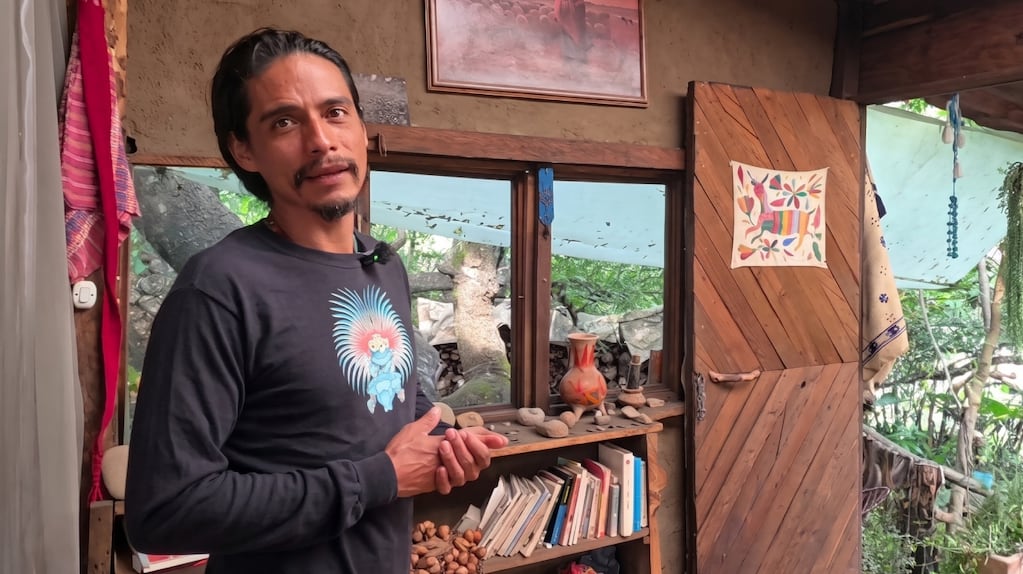
Isra, de 46 años, dejó la ciudad y construyó sus propios ladrillos de barro para transformar un terreno baldío en un oasis natural en Amatlán, México. Después de vivir durante 16 años en una zona boscosa, decidió mudarse a un lugar más cálido y cercano a la vida de pueblo. Allí levantó su casa con sus propias manos, reutilizó madera y diseñó un jardín con plantas, flores y una biopiscina.
En Amatlán, una localidad del estado de Morelos, el hombre convirtió un pequeño terreno que estaba prácticamente vacío en un espacio verde. Cuando llegó hace seis años, encontró algunos ciruelos que lo enamoraron del lugar, pero tuvo que pensar cómo aprovechar el resto de la parcela. Con tierra de la zona, madera recuperada y mucho trabajo artesanal, fue construyendo su vivienda y sumando distintos espacios para disfrutar de la naturaleza.
TNS
INTERNACIONAL
Jeffries calling Jerusalem NYC’s ‘sixth borough’ resurfaces as progressives swing against Israel
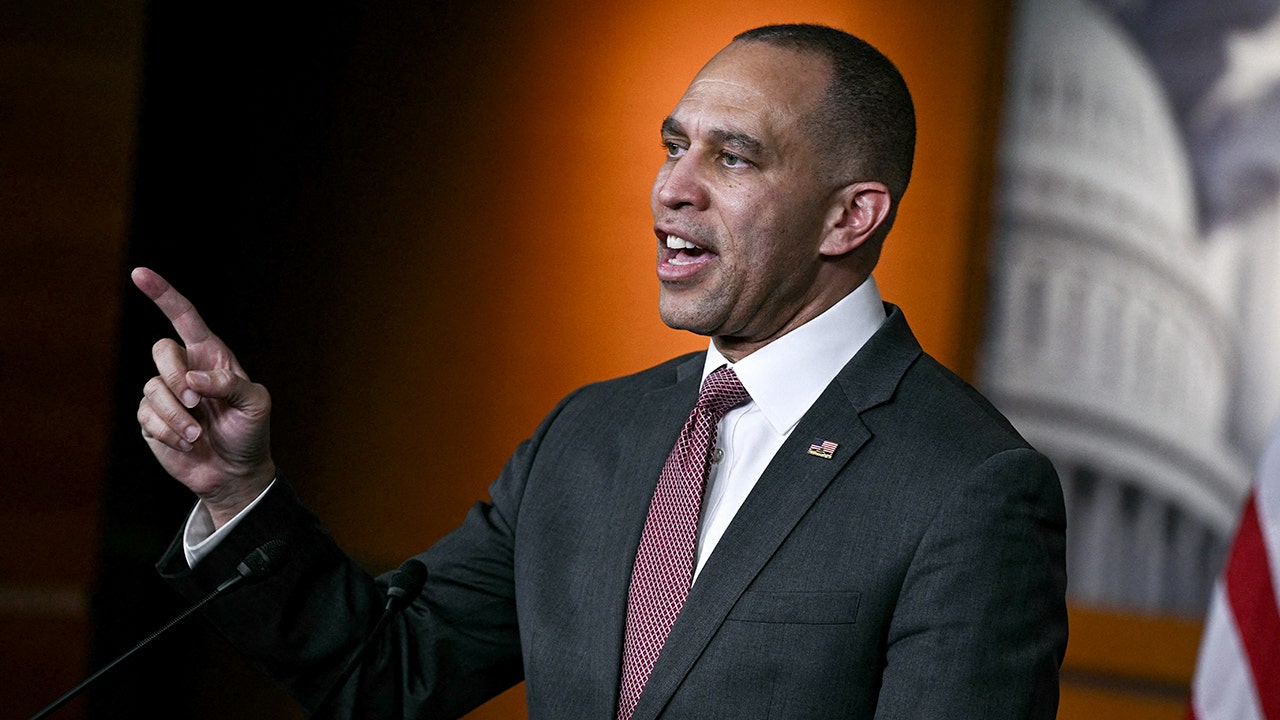
Hakeem Jeffries once called his deep ties to Jerusalem an extension of his representation of New York City as he touted his support for Israel and the Jewish community.
But those comments from 2020, recently resurfaced and going viral, may come back to bite the Democratic House leader as the progressive wing of the party — and even some establishment members — continue to further break with the U.S. maintaining support for the Jewish state.
«Someone said to me, ‘Hakeem, you’re going to Israel a 5th time?’» Jeffries recalled in an interview with the American Israel Public Affairs Committee (AIPAC) more than six years ago.
«I said, ‘listen, I’m from New York City’ — and back home in New York City, we consider Jerusalem to be the 6th Borough. And so, I’m just trying to catch up with my constituents.»
The comments resurfaced just after he won his party’s nomination to be speaker of the House in the next Congress.
JEFFRIES SURVIVES DEM VOTE TO SECURE SPEAKER POSITION AS PROGRESSIVE RESISTANCE CLOUDS HIS CHANCES
The remarks from 2020 contrast starkly with a growing faction of the Democratic Party that has condemned AIPAC and the political favor Israel has historically enjoyed among lawmakers. The clip also raises questions over how far Jeffries will go to placate calls for a more critical review of U.S.-Israel relations in light of his previous support for the Jewish state.
Jeffries won the secret-ballot vote to remain leader of the House’s Democratic Caucus with just 11 in the caucus voting against his leadership and 251 voting in favor. The result secured his nomination ahead of the full House floor vote in January, where he will need a simple majority of the chamber’s 435 members to become speaker.
During his AIPAC speech, Jeffries noted that some of his support stemmed from the uniquely challenging geopolitical environment around Israel.
«I think when you’re on the ground, for me it’s always been clear that Israel lives in an incredibly tough neighborhood,» Jeffries said.
«When you think about the dangerous situation in the Sinai to the south, Hamas in Gaza, Hezbollah to the north, Syria and chaos to the east, Iraq still a mess, Iran with nuclear ambitions and a tremendously bad actor — I grew up in Brooklyn in the late 80s and early 90s, I know from tough neighborhoods that Israel lives in a tough neighborhood,» Jeffries said.
HOUSE DEMOCRATS FRACTURE BADLY OVER MASSIE AMENDMENT TO CUT $3.3B IN U.S. AID TO ISRAEL
The stance clashes forcefully with at least eight members set to be a part of the 120th Congress with ties to the Democratic Socialists of America (DSA). The group aims to «end all military and economic aid to Israel [and] prosecute U.S. and Israeli leaders responsible for the genocide in Gaza.»
Two other members outside of the group, Democratic Reps.-elect Brad Lander and Scott Wiener have similarly called for a full embargo of Israel.
Jeffries’ own tone on Israel has changed over the years since the beginning of its war with Hamas in Gaza in October 2023, citing alarm at Israel’s civilian casualties.
In July, Jeffries argued in a letter to his colleagues that «a meaningful change in direction is needed.»
«Israel has an advanced economy and is capable of paying for its own sophisticated weapons, as the Prime Minister recently acknowledged,» Jeffries wrote.
«Accordingly, any future security arrangement between our two countries should be structured consistently with defense agreements that exist with our other Western allies and strictly adhere to our human rights laws and values,» Jeffries wrote.
FETTERMAN WARNS THERE IS NO LONGER ‘COMMON GROUND’ WITH FAR-LEFT DEMOCRATS OVER ISRAEL
Even so, Jeffries has steered clear of calling the conflict a genocide — a growing characterization from within the progressive wing — and has rejected a blanket discontinuation of U.S. aid to Israel.
In his letter, Jeffries also condemned efforts by Rep. Thomas Massie, R-Ky., to cut off all forms of assistance, advocating for a $3.3 billion military aid package to Israel included in the U.S. 2027 State Department appropriations bill.
«America’s commitment to Israel’s right to exist as a Jewish and democratic state and homeland for the Jewish people must remain ironclad,» Jeffries said in his letter.
politics, house of representatives, congress, israel, hamas, anti semitism
INTERNACIONAL
Tehran threatens to ‘break legs’ as ‘Trump corridor’ prepares to launch on Iran’s border
NEWYou can now listen to Fox News articles!
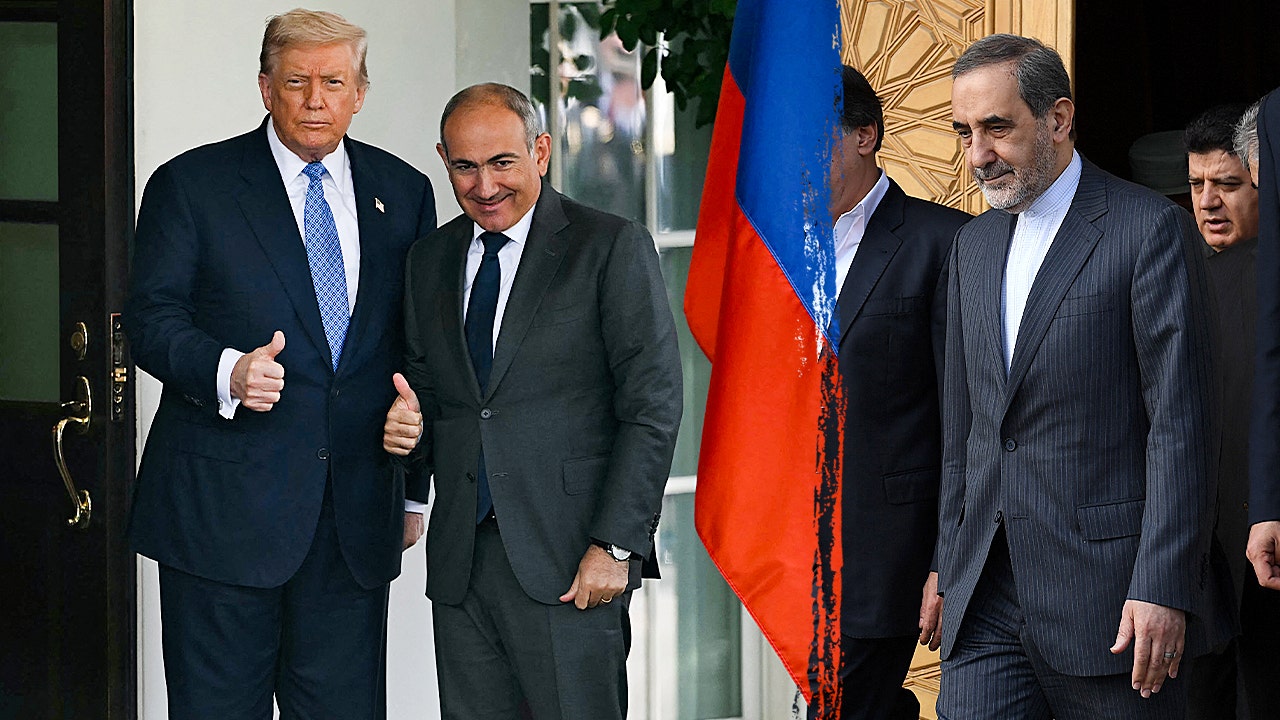
Armenia is set to launch a U.S.-backed transportation and energy project along Iran’s northern border Monday, despite warnings from a senior Iranian official that Tehran would «break their legs» if President Donald Trump and his allies crossed the Islamic Republic’s «red line.»
Armenian Prime Minister Nikol Pashinyan confirmed that the Trump Route for International Peace and Prosperity (TRIPP) project would launch Monday, advancing the plan to connect mainland Azerbaijan with its Nakhchivan exclave through southern Armenia and establish energy links with Turkey and Azerbaijan, Turkish media reported, citing Interfax.
The project, a centerpiece of a U.S.-brokered peace initiative between Armenia and Azerbaijan, would also expand American economic involvement in the South Caucasus, where Iran has warned against any development it believes could threaten its security or regional influence.
TRUMP’S FIRST IRAN WAR ESCALATION POST-MIDTERM LOSSES SEEKS TO CHOKE OFF TEHRAN’S TRADE
US President Donald Trump (C), Azerbaijani President Ilham Aliyev (L) and Armenian Prime Minister Nikol Pashinyan display the agreement they signed in the State Dining Room of the White House in Washington, DC on Aug. 8, 2025. US President Donald Trump said Friday that Armenia and Azerbaijan were committed to a permanent peace as he hosted a White House summit with the leaders of the two South Caucasus nations, which have fought for decades. (Photo by Andrew Caballero-Reynolds/AFP via Getty Images)
The corridor has also gained strategic significance amid the U.S.-Israeli war with Iran, as Tehran seeks to secure its northern trade routes and limit the U.S. security presence near its borders while Washington maintains its naval blockade and Task Force Iron Gate focuses on Iran’s borders.
Speaking at the DigiTec 2026 technology conference in Yerevan, Pashinyan said the new TRIPP initiative, also known as the «Trump Corridor,» would strengthen Armenia’s regional energy connections, according to Interfax.
«Tomorrow we will officially announce the launch of the TRIPP program, and energy and electricity transit will be an important component of it,» Pashinyan said during a public discussion on artificial intelligence.
«We will now connect our network to the electricity grids of Türkiye and Azerbaijan,» he added.
The announcement followed a warning from Ali Akbar Velayati, a senior foreign policy adviser to Iranian Supreme Leader Mojtaba Khamenei, who accused Armenia of disregarding Tehran’s security concerns over the proposed route.
«I told the Armenian ambassador the final word, clearly, that if Trump and his allies want to cross this Iranian red line, we will break their legs,» Velayati wrote in a Nov. 5 article published by the Iranian newspaper Ettelaat, according to Iran’s Tasnim News Agency.
TRUMP RETALIATES AFTER IRAN ATTACK AS EXPERT WARNS REGIME IS GROWING MORE DANGEROUS

A view from Armenia’s southern border reveals the Arax River, with Iran visible across the water on May 2025. This crossing is a vital lifeline for Armenia, facilitating essential trade and energy flows, especially as tensions rise over the proposed Zangezur Corridor. Iran strongly opposes the corridor, fearing it would sever its direct land access to Armenia and diminish its role as a regional transit hub. The corridor, intended to connect Azerbaijan to its Nakhchivan exclave through Armenian territory, has become a flashpoint in regional geopolitics. (Anthony Pizzoferrato/Middle East Images/AFP via Getty Images)
Velayati also warned that Iran would defend its security interests in the South Caucasus regardless of Russia’s involvement, pointing to Tehran’s longstanding opposition to the proposed route.
The roughly 26-mile corridor would run through Armenia’s southern Syunik province, near the Iranian border, connecting mainland Azerbaijan to Nakhchivan and providing an onward link to Turkey, a NATO member.
The route would include railways, roads, electricity transmission lines and fiber-optic cables, creating trade connections between Central Asia and Europe.
Iran has long opposed proposals for what Azerbaijan calls the «Zangezur Corridor,» particularly arrangements that Tehran fears could weaken Armenia’s control over the territory, disrupt Iran’s access to Armenia or expand the presence of outside powers near its borders.
In August 2025, Velayati had already warned that the corridor could become a «graveyard» for what he called Trump’s mercenaries, according to Al Jazeera.
«Such a corridor will turn into a graveyard of the mercenaries of Donald Trump, not a route owned by the U.S. president,» Velayati said, according to the outlet.
Velayati also argued that Iran would act to protect the South Caucasus regardless of Moscow’s position, while expressing his belief that Russia opposed the corridor on strategic grounds.
NO RETREAT AT HORMUZ — IRAN MUST NOT CONTROL THE WORLD’S ENERGY LIFELINE

Ali Akbar Velayati, a senior foreign policy adviser to Iranian Supreme Leader Mojtaba Khamenei, accused Armenia of disregarding Tehran’s security concerns over the proposed route. (Photo by Rouzbeh Fouladi/NurPhoto via Getty Images)
During a December 2025 meeting with Armenia’s ambassador to Tehran, Grigor Hakobyan, Velayati again raised concerns about the proposed route, according to Iran International.
The project emerged from a U.S.-brokered diplomatic initiative aimed at ending decades of conflict between Armenia and Azerbaijan over Nagorno-Karabakh, an internationally recognized part of Azerbaijan that was controlled for years by ethnic Armenian separatists before Azerbaijani forces retook the territory in 2023.
Trump had hosted Pashinyan and Azerbaijani President Ilham Aliyev at the White House in 2025, where the two leaders signed a joint declaration intended to advance peace, normalize relations and reopen regional transportation links.
The declaration established the basis for the TRIPP initiative, giving Washington a central role in developing infrastructure.
Under the implementation framework announced by Secretary of State Marco Rubio and Armenian Foreign Minister Ararat Mirzoyan in January, the TRIPP Development Company would oversee development of the infrastructure.
TRUMP MEETS KEY IRAN WAR MEDIATOR AS UAE REVEALS MAJOR OIL EXPORT SURGE DESPITE CONFLICT

Armenian Prime Minister Nikol Pashinyan confirmed that the Trump Route for International Peace and Prosperity (TRIPP) project would officially launch Nov. 23. (Photo by ANDREW CABALLERO-REYNOLDS/AFP via Getty Images)
The framework calls for a U.S.-controlled entity to hold a 74% ownership stake in the company, with Armenia retaining 26%.
The company would receive development rights for an initial 49-year period, with an option for a further 50-year extension. Under the proposed extension, Armenia’s ownership stake would increase to 49%.
Armenian authorities would retain jurisdiction over the territory, including responsibility for customs, immigration, law enforcement and border security.
The framework also provides for private operators to help facilitate trade and transit, while final customs and security decisions would remain with Armenian authorities.
On Oct. 28, Armenia’s parliament ratified the agreement by a vote of 63-32. Armenian President Vahagn Khachaturyan signed the ratification law Nov. 12.
The United States, Armenia and Azerbaijan also announced the launch of trilateral technical planning groups in November to advance the initiative.
world, iran, war with iran, foreign affairs, middle east foreign policy, donald trump, turkey, geopolitics

Polémica en la UBA: la Facultad de Ciencias Sociales homenajeará al exlíder del ERP Mario Roberto Santucho – Nexofin

Los jugadores de PC tienen ganas de GTA 6: la mayoría de juegos de la saga Grand Theft Auto en Steam han batido un récord de jugadores simultáneos

Toque de pivot y centro venenoso: Las dos asistencias de Julián Álvarez en el triunfo del Atlético de Madrid ante el Getafe

Tiene 46 años, dejó la ciudad y construyó sus propios ladrillos de barro: transformó un terreno baldío en un oasis natural

¿Qué pasó con la Suruga Bank y por qué Boca Juniors no la jugará pese a ser campeón de la Copa Sudamericana?

Los jueces y fiscales de Comodoro Py esperan la cuarta postergación del sistema acusatorio

Javier Milei y sus medidas, en vivo: “Hoy discutimos si crecemos un punto más o menos”, dijo el Presidente

Javier Milei destacó el desembarco de Tesla en el país y aseguró: “Esto también es devolverle la libertad a los argentinos”

El brote de ébola está fuera de control en la República Democrática del Congo y crece el temor a una epidemia continental

Jeffries survives Dem vote to secure speaker position as progressive resistance clouds his chances

 POLITICA2 días ago
Javier Milei destacó el desembarco de Tesla en el país y aseguró: “Esto también es devolverle la libertad a los argentinos”
- CHIMENTOS11 horas ago
Agustín “Rada” Aristarán se despide de Chanta: “Con esta obra dejé de ser un impostor”
- INTERNACIONAL11 horas ago
NYC college put on notice after Jewish campus group shunned by student government: ‘rude awakening’


