
INTERNACIONAL
As Hezbollah rejects truce, families on Israel’s northern border describe life under fire

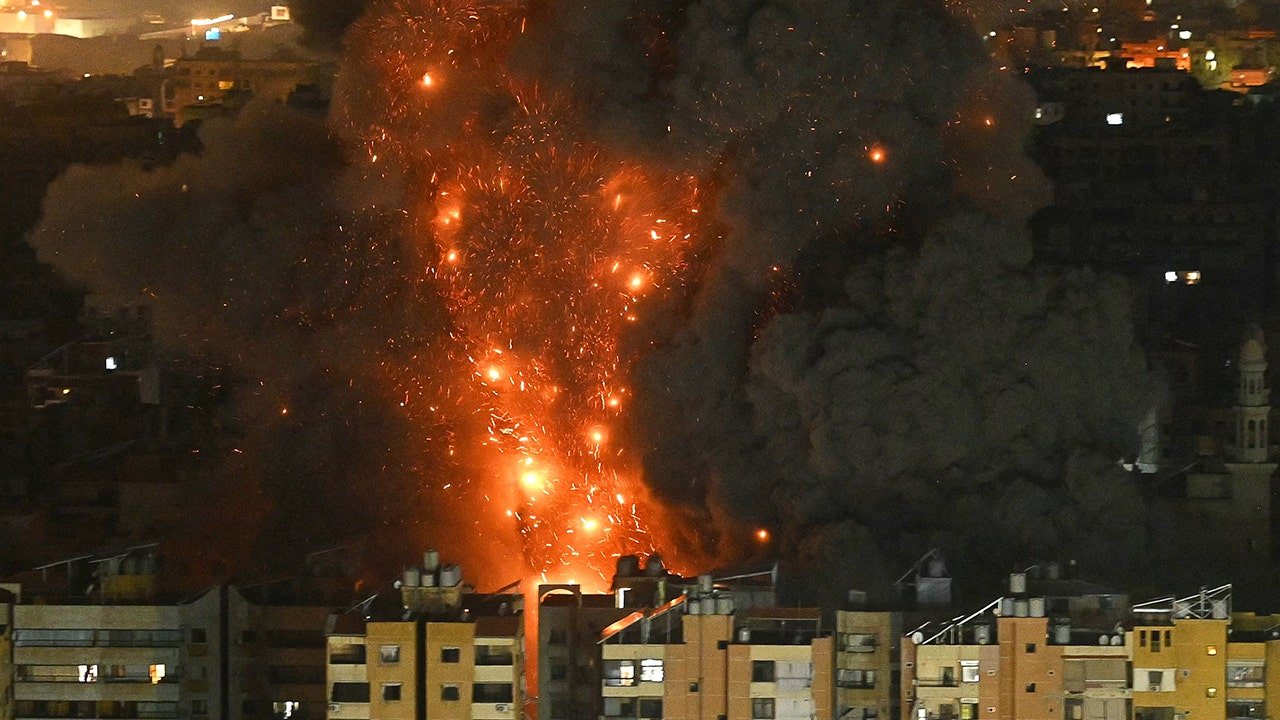
NEWYou can now listen to Fox News articles!
Two days after another ceasefire was announced between Israel and U.S. terrorist designated group Hezbollah, Yulia Bar-Dan was standing outside her temporary home in Kibbutz Manara in northern Israel when the familiar sound of an interceptor echoed overhead.
«There will probably be another siren soon,» she told Fox News Digital.
Minutes later, an alert appeared on her phone warning residents in northern Israel to take shelter.
For Bar-Dan, the scene captured the reality of life on Israel’s northern border nearly two years after Hezbollah joined the war against Israel on Oct. 8, 2023.
After Hezbollah entered the recent war in support of Iran, Washington launched a diplomatic effort aimed at turning the ceasefire into a broader arrangement for Lebanon.
ISRAEL OPENS FIRE IN LEBANON AT ‘SUSPECTS’ ALLEGEDLY VIOLATING TRUCE, WHICH HAS ENTERED ITS SECOND DAY
Multiple rounds of talks between Israeli and Lebanese officials have taken place in Washington, and President Donald Trump repeatedly has announced ceasefire understandings aimed at restoring calm along the border. Residents of communities like Manara, Israel, say the rockets, drones and uncertainty never really stopped.
An Israeli soldier stands near military vehicles on the second day of the ceasefire between Israel and Hezbollah near the Israel-Lebanon border on Nov. 28. (Stoyan Nenov/Reuters)
«A ceasefire is supposed to be on both sides,» she said. «Not that Hezbollah keeps shooting at us and we just keep absorbing it.»
When Fox News Digital first spoke to Bar-Dan in December 2024 during the war, she and her husband had fled Manara, Israel, with their three children and were living out of a single hotel room, unsure whether they would ever return home.
Today, roughly 200 of the kibbutz’s 280 residents have returned, Bar-Dan said. But many, including Bar-Dan’s family, still cannot live in their original homes because of war damage.
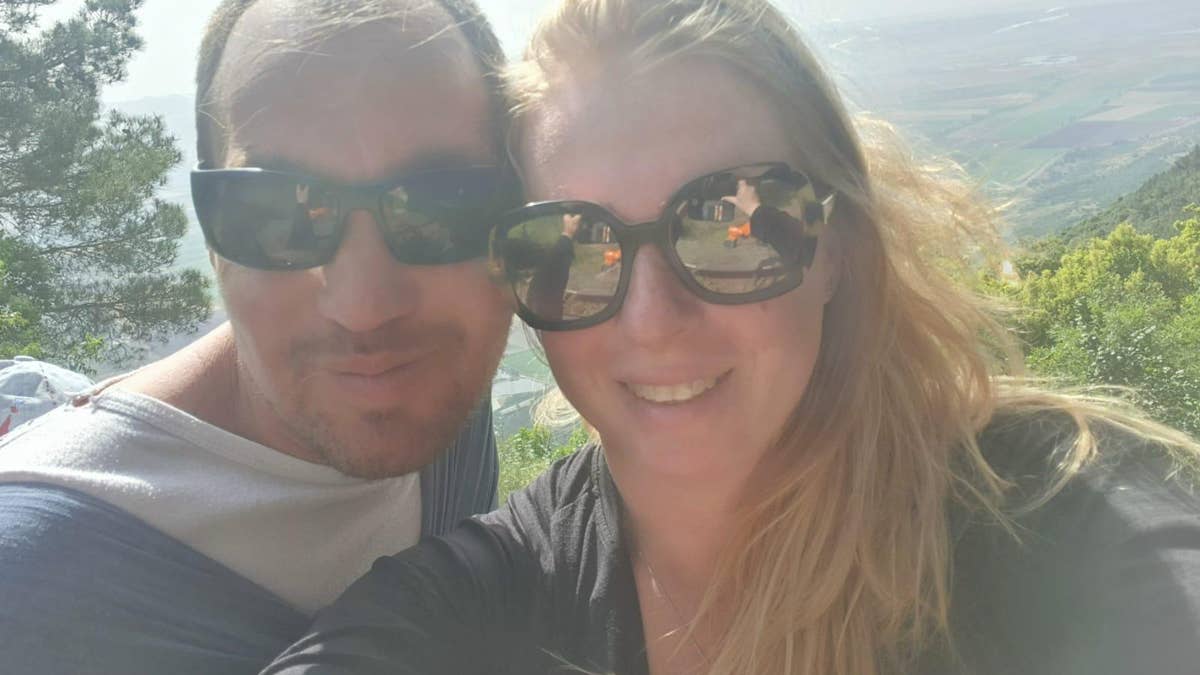
Yulia Bar-Dan and her husband are pictured during quieter times at Kibbutz Manara, Israel. (Yulia Bar-Dan)
Despite repeated ceasefire announcements, residents say normal life remains elusive.
«There hasn’t really been a routine or a quiet day since February,» she said.
Schools officially reopened in early June, but Bar-Dan decided not to send her children.
«They take the bus to school,» she said. «What if there’s a siren on the way? I can’t take that chance.»
ISRAEL DESTROYS HEZBOLLAH’S ‘LARGEST PRECISION-GUIDED MISSILES MANUFACTURING SITE’ AS GROUP VOWS TO ‘FIGHT’
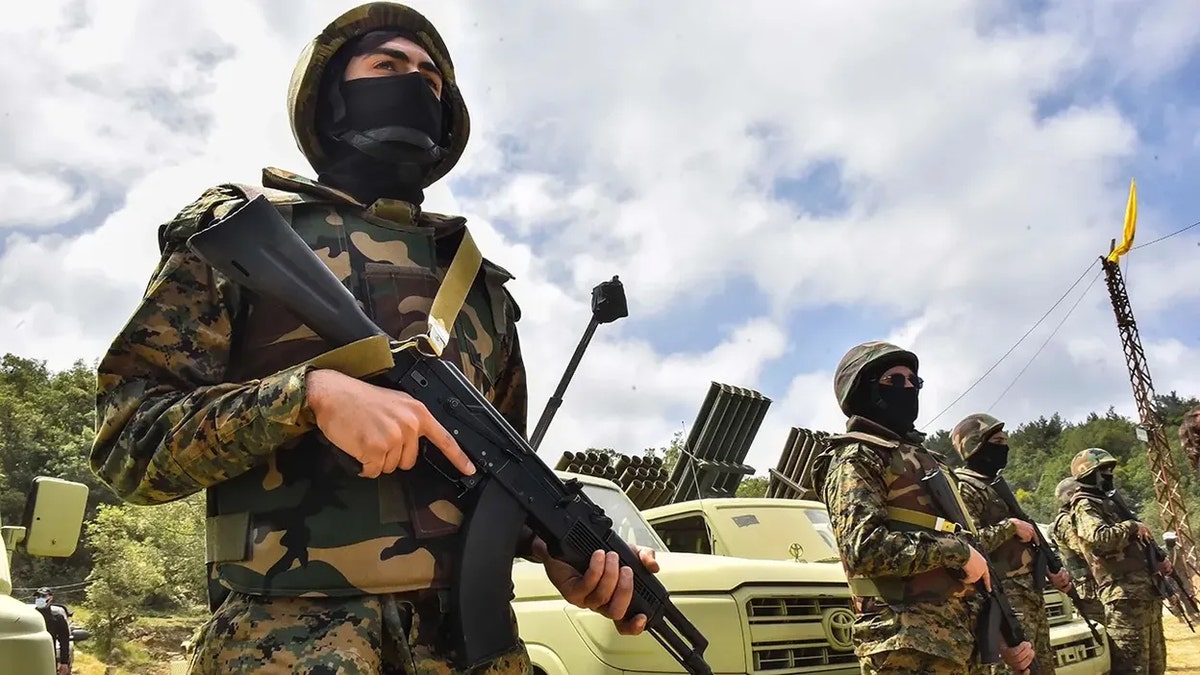
Hezbollah terrorists holding rifles are shown in this image. (Fadel Itani/NurPhoto via Getty Images)
Her frustration is not directed at Hezbollah alone.
Like many residents interviewed by Fox News Digital, Bar-Dan says there is a growing disconnect between the reality experienced on the border and the reality described by politicians.
«It doesn’t really matter where the decisions are being made,» she said. «The decisions just need to match reality. Right now there is a decision, but the reality is completely different.»
A year and a half after most of Manara’s residents were evacuated amid fears of a Hezbollah invasion, community leader Yochai Wolfin says residents have developed their own name for the current situation.
«We call it ‘the ceasefire war,’» he said.
The phrase has become common in the community.
First came a year and a half of evacuation. Then came the return home. Then came what Wolfin describes as three months of «fire within a ceasefire.»
The uncertainty has become part of daily life.
Children study inside shelters. Parts of the kibbutz still lack protected rooms. Construction projects remain unfinished because contractors are reluctant to work so close to the border.
He said many residents increasingly feel that the decisions determining their future are being made far from the communities that bear the consequences.
ISRAEL WARNS IT WILL GO AFTER LEBANON DIRECTLY IF CEASE-FIRE WITH HEZBOLLAH COLLAPSES
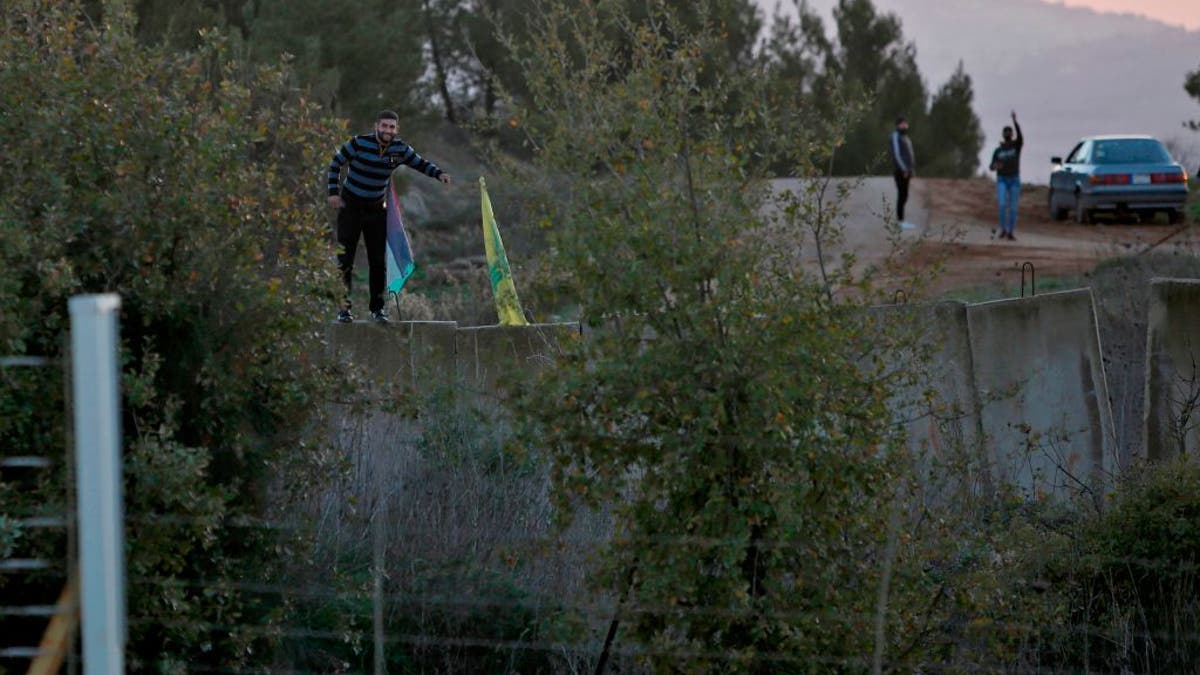
A Lebanese man holds a Hezbollah flag near the border with Israel in the southern Lebanese village of Hula on Dec. 20, 2020. (Jalaa Marey/AFP)
«Who knows what tomorrow will bring?» Wolfin said. «We know who is calling the shots. We saw it a few days ago when Trump announced another ceasefire. But for us, the reality on the ground hasn’t changed.»
The comments come as Hezbollah Secretary-General Naim Qassem warned Thursday that northern Israel would remain unsafe as long as Israeli strikes continue in Lebanon, according to Reuters.
In a written statement broadcast on June 4, 2026, Qassem condemned the Washington-mediated framework as «absurd, humiliating, and insulting,» calling it a roadmap for surrender.
For residents of Israel’s northern border communities, the statements reinforced what many say they have been experiencing for months: a ceasefire that exists on paper but not in daily life.
Naor Shamia, who heads Manara’s emergency response team, says residents increasingly worry that temporary emergency measures are becoming permanent.
«The fear isn’t today,» he said. «The fear is that this becomes years. We are in a deadlock.»
Across the border region, similar concerns are heard.
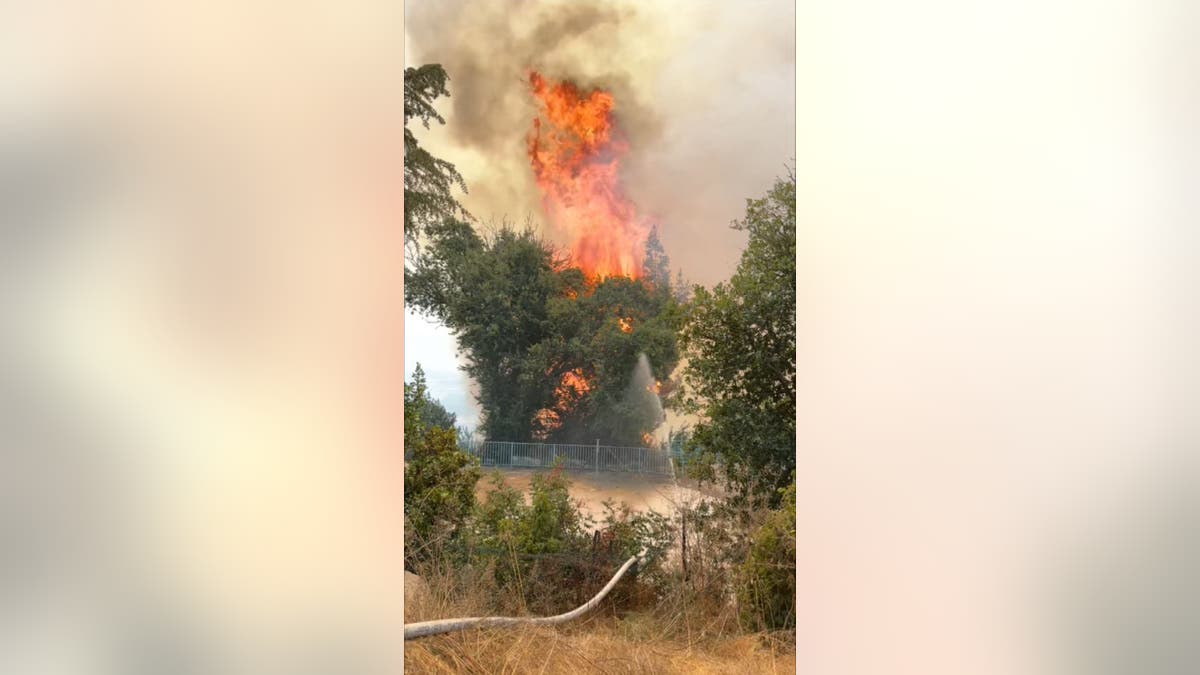
Fire burns at Kibbutz Manara following another attack. (Kibbutz Manara)
In the community of Adamit, resident Yael Cohen-Arazi described the contrast between the beauty surrounding her and the reality of living under constant threat.
«Every morning I wake up and think I’m living in paradise,» she said in footage provided to Fox News Digital by the Israeli news agency TPS-IL. «Then there are the explosions that shake my soul.»
Her children, she said, have spent so much of their lives under fire that they no longer know what normal looks like.
«I tell them there are children who don’t live like this,» she said.
Back in Manara, Israel, another alert interrupted the afternoon.
Bar-Dan says she is not angry anymore. Mostly, she is tired and sad.
«I feel bad for the soldiers,» she said. «Every day there is another casualty, and there is still no solution.»
Yet she insists she is staying.
CLICK HERE TO DOWNLOAD THE FOX NEWS APP
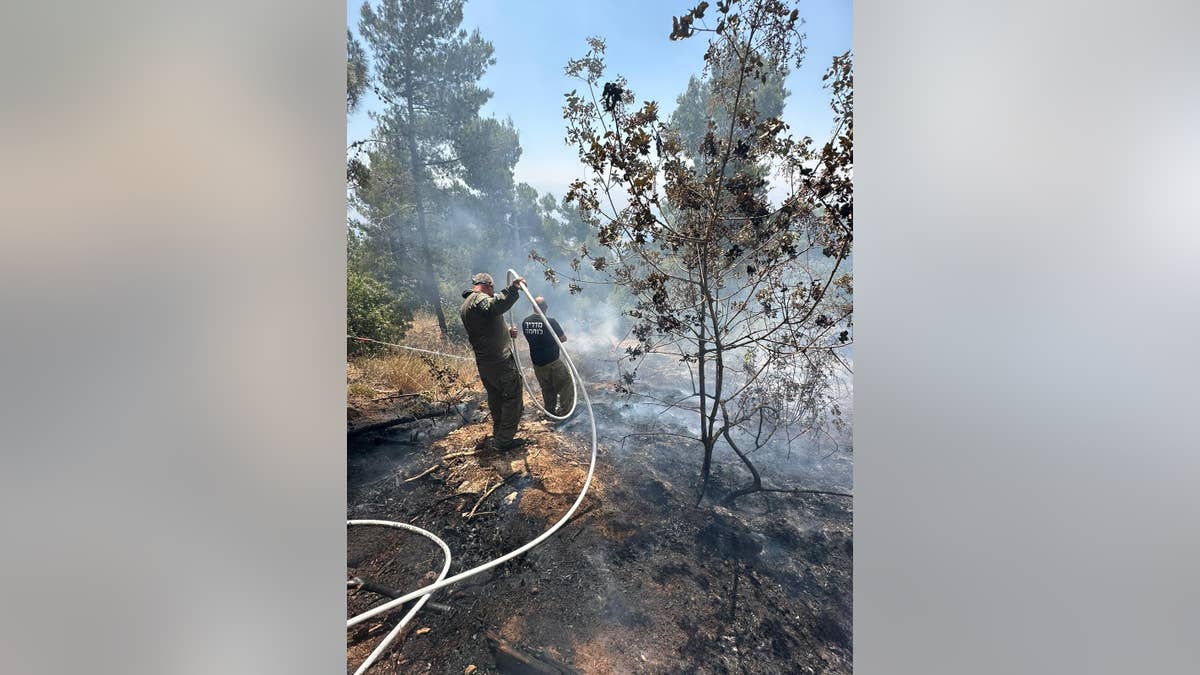
Members of the Kibbutz Manara rapid response unit respond to Hezbollah rocket attacks on Kibbutz Manara. (Kibbutz Manara)
«This is our home,» she said. «Someone has to live on the borders of this country.»
Then another explosion sounded in the distance.
israel, bombings, war with iran, conflicts, lebanon









INTERNACIONAL
READ THE DOCUMENTS: Secret ‘Oxferd Comma’ probe cast Trump as potential Russian asset after Comey firing
NEWYou can now listen to Fox News articles!
The White House released a trove of documents showing that the FBI opened a 2017 investigation into whether President Donald Trump was acting on behalf of or under the influence of Russia when he fired FBI Director James Comey.
The investigation, codenamed «Oxferd Comma,» opened after Trump fired Comey in May 2017, according to the White House’s release.
Investigators sought to determine whether Trump was «directed by, controlled by, and/or coordinated activities with, the Russian Federation in a manner constituting a threat to the national security of the United States and/or a violation of federal criminal statutes,» according to an FBI memo dated May 16, 2017. The memo also said investigators would examine whether Trump or others had obstructed or conspired to obstruct an associated FBI investigation.
TRUMP ALLY DIGENOVA TAPPED TO LEAD DOJ PROBE INTO BRENNAN OVER RUSSIA PROBE ORIGINS
US President Donald Trump speaks during a Cabinet meeting at Camp David in Maryland, on July 31, 2026. (Photo by Aaron Schwartz / AFP via Getty Images) (Aaron Schwartz / AFP Getty Images)
The opening memo cited information developed during Crossfire Hurricane, the FBI’s counterintelligence investigation into whether individuals associated with Trump’s 2016 campaign were coordinating with the Russian government to interfere in the 2016 election.
READ THE DOCUMENTS:
It also identified later events and information, including Trump’s interactions with Comey, the administration’s shifting explanations for Comey’s firing, Trump campaign discussions concerning the Republican platform’s language on Ukraine aid and Trump’s business ties and real estate interests involving Russia.
SECRET FBI PROBE CAST TRUMP AS POSSIBLE RUSSIAN ASSET AFTER COMEY FIRING, MEMOS SHOW
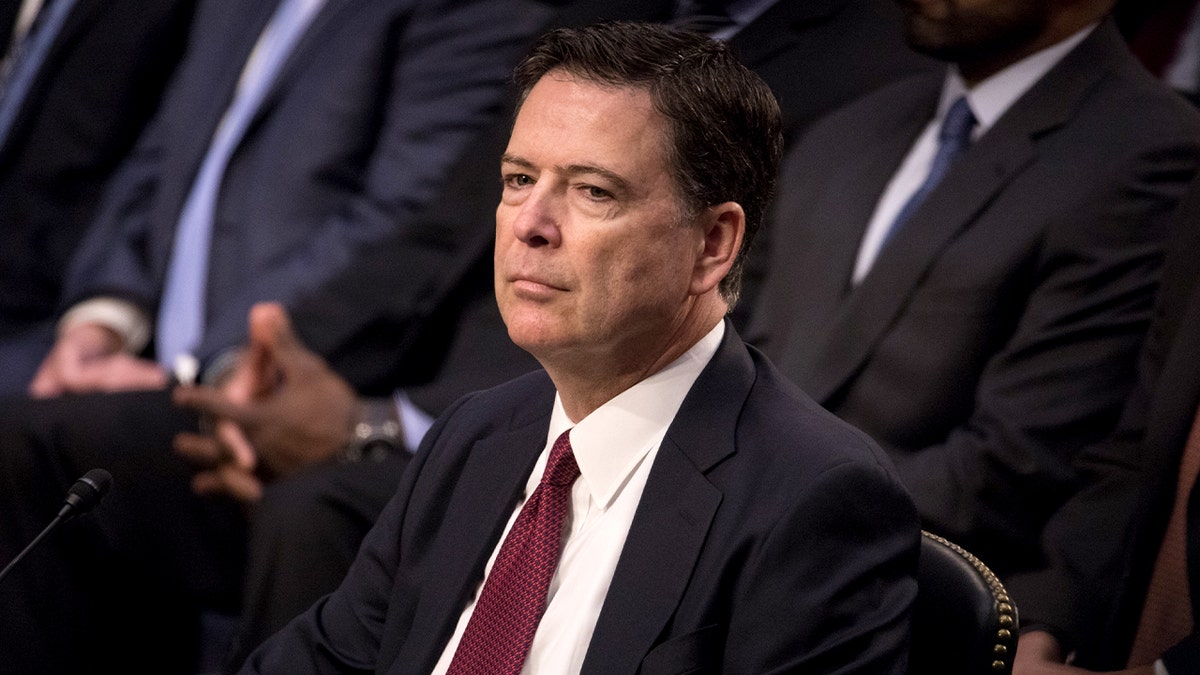
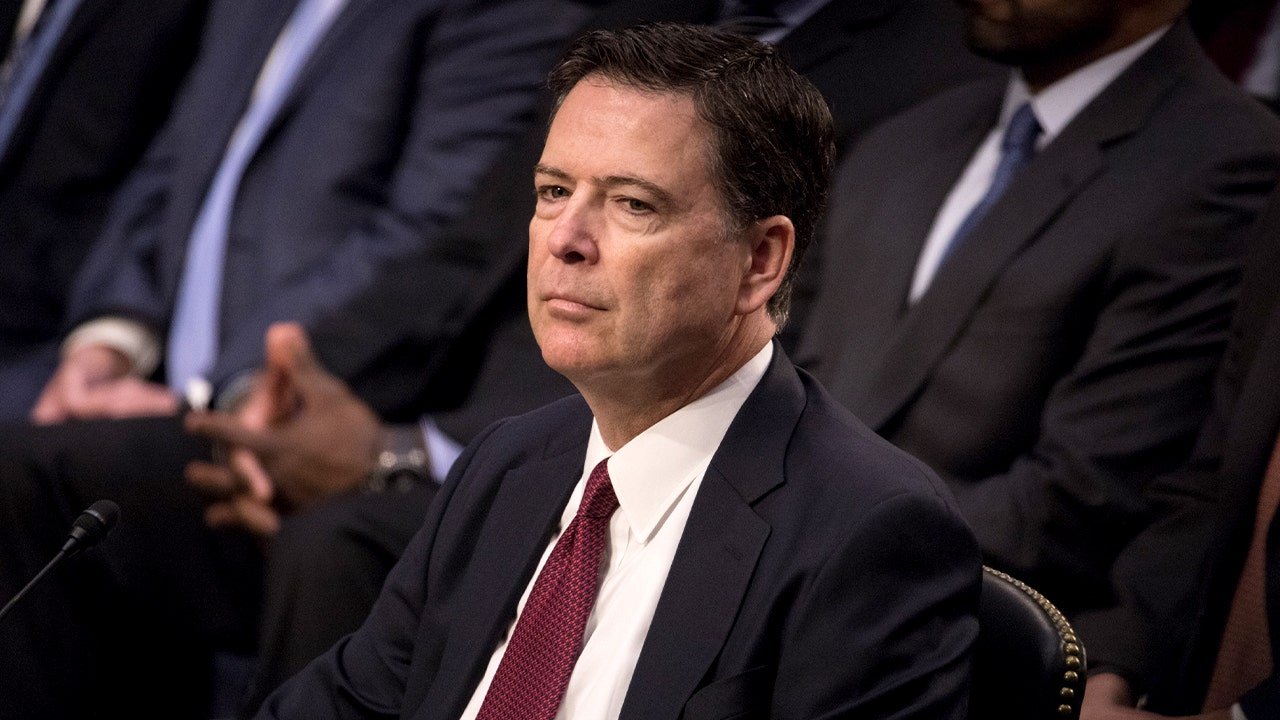
Former FBI Director James Comey testifies before the Senate Intelligence Committee about his interactions with President Donald Trump and the Russia investigation on June 8, 2017, in Washington, D.C. (Cheriss May/NurPhoto via Getty Images)
Trump initially cited Comey’s handling of the FBI investigation into Hillary Clinton’s use of a private email server while she was secretary of state as the reason for his ouster, though he later said the Russia investigation was also on his mind when he made the decision.
The FBI memo said the circumstances surrounding Comey’s dismissal could support an inference that the bureau’s counterintelligence investigation was a factor in Trump’s decision to fire Comey.
READ THE DOCUMENTS:
However, the decision to open the investigation did not mean those suspicions had been substantiated.
Special counsel Robert Mueller, appointed in 2017 to investigate Russian election interference, reported in 2019 that his team did not establish coordination between the Trump campaign and Russia and did not make a prosecutorial decision on obstruction. Attorney General William Barr appointed John Durham to review the origins and handling of the FBI’s Russia investigation in 2019. Durham’s 2023 report concluded that the FBI opened the full Crossfire Hurricane investigation without sufficient evidentiary support and did not apply the same rigor it had used in other sensitive investigations.
READ THE DOCUMENTS:
A separate 2019 Justice Department inspector general review found the FBI had enough information under its rules to open Crossfire Hurricane, though it later identified serious errors and omissions in surveillance applications involving former Trump campaign adviser Carter Page.
A review of the White House’s original release shows the code name rendered as «Oxferd Comma,» with the letter «o.» Former acting Assistant Attorney General Jeff Clark, who served in Trump’s first administration, said a document expert he consulted concluded the «o» in «Comma» found within the FBI documents was a zero. Clark speculated the unusual spelling was intended to make the records harder to find through FOIA searches.
The documents were published by the White House Wednesday, which said they had been declassified and released through its Government Transparency Task Force.
white house, james comey, donald trump, justice department, national security, william barr, fbi
INTERNACIONAL
Más de 28 mil mujeres solicitaron medidas de protección por violencia doméstica en Costa Rica en solo seis meses

La Universidad Estatal a Distancia (UNED) destacó la magnitud de la violencia que enfrentan las mujeres en Costa Rica, luego de revelar que 28,104 mujeres solicitaron medidas de protección por violencia doméstica entre enero y junio de 2026, una cifra superior a la registrada en el mismo período del año anterior y que, a juicio de especialistas de la institución, confirma la necesidad de fortalecer las políticas públicas basadas en evidencia científica.
El pronunciamiento de la academia se produce en medio del debate generado por la posición que asumió la representación de Costa Rica ante el Consejo de Derechos Humanos de las Naciones Unidas (ONU), donde rechazó el uso de conceptos como “violencia reproductiva”, “masculinidad patriarcal” e “interseccionalidad”, al considerar que esos términos no deberían formar parte del lenguaje oficial.
Para las investigadoras de la UNED, prescindir de esas categorías implica desconocer herramientas ampliamente utilizadas por la comunidad científica para comprender las causas estructurales de la violencia contra las mujeres y diseñar respuestas institucionales más efectivas.
De acuerdo con cifras del Poder Judicial, durante el primer semestre de 2026 se contabilizaron 28,104 solicitudes de medidas de protección por violencia doméstica, lo que representa 384 casos más que en el mismo período de 2025. Para la universidad, estos datos evidencian que miles de mujeres continúan requiriendo la intervención del Estado para resguardar su vida, su integridad física y su seguridad.
La preocupación no se limita a la violencia doméstica. Según datos del Ministerio Público, durante el primer trimestre de 2025 se registraron 3,260 víctimas de violencia sexual, siendo las niñas y adolescentes entre los 10 y los 19 años el grupo más afectado por este tipo de delitos.

Las cifras también reflejan la persistencia de la forma más extrema de violencia contra las mujeres. Entre 2025 y el 10 de junio de 2026, las autoridades contabilizaron 45 femicidios oficialmente clasificados, de los cuales 36 ocurrieron durante 2025 y nueve en lo transcurrido de 2026. Además, para esa fecha permanecían bajo análisis 13 de las 22 muertes violentas de mujeres registradas en el año, expedientes que eventualmente podrían reclasificarse como femicidios conforme avancen las investigaciones.
La investigadora y docente de la Carrera de Ciencias Policiales de la UNED, Ana Rita Argüello Miranda, sostuvo que “negar estos conceptos no modifica la realidad”, al señalar que la violencia contra las mujeres se encuentra ampliamente documentada tanto por la investigación científica como por las estadísticas oficiales.
“La violencia contra las mujeres está ampliamente documentada por la evidencia científica y por las estadísticas nacionales. Conceptos como interseccionalidad, violencia reproductiva o masculinidades permiten comprender los factores que incrementan el riesgo y orientar mejores estrategias de prevención, atención y sanción”, afirmó Argüello, quien añadió que prescindir de estas categorías limita la capacidad de las instituciones para responder de manera integral a un fenómeno complejo.
La especialista recordó que estos conceptos forman parte del desarrollo académico de disciplinas como la criminología, la sociología, la psicología, la ciencia política y los estudios de género, además de ser utilizados por organismos internacionales y centros de investigación para analizar las causas estructurales de la violencia y fortalecer el diseño de políticas públicas.
En la misma línea, la coordinadora de la Carrera de Ciencias Policiales de la UNED, Karen Jiménez Morales, señaló que el Estado tiene la obligación de identificar los problemas que afectan a la población a partir de la evidencia disponible.
“El Estado tiene el deber de identificar los problemas que aquejan a la población, sustentándose en la evidencia disponible, la cual es contundente respecto a la gravedad de la violencia de género en Costa Rica”, manifestó.
Asimismo, sostuvo que “negar esta realidad, así como rechazar el fortalecimiento de las herramientas de la normativa internacional por razones conceptuales, limita significativamente las capacidades institucionales de acción”, pues reduce la posibilidad de implementar respuestas eficaces frente a una problemática que continúa afectando a miles de mujeres.

Por su parte, la encargada del Instituto de Estudios de Género de la UNED, Zarelly Sibaja Trejos, enfatizó que el lenguaje técnico desarrollado por la investigación científica no responde a posiciones ideológicas, sino a instrumentos que permiten identificar desigualdades y orientar políticas públicas.
“Nombrar las distintas manifestaciones de la violencia no crea el problema; permite reconocerlo, medirlo y comprenderlo para enfrentarlo. Cuando la investigación identifica patrones y desigualdades estructurales, ofrece insumos para proteger mejor a las mujeres y las niñas”, indicó.
La académica agregó que invisibilizar estos conceptos no elimina la violencia, sino que dificulta su comprensión y limita la capacidad del Estado para construir políticas públicas acordes con las necesidades reales de la población.
Las especialistas coincidieron en que la evidencia disponible exige fortalecer, y no debilitar, las herramientas conceptuales utilizadas para analizar la violencia contra las mujeres desde un enfoque científico, interdisciplinario y basado en los derechos humanos. También insistieron en que el debate público debe sustentarse en información verificable y datos oficiales, con el propósito de desarrollar respuestas institucionales más eficaces para prevenir, atender, sancionar y reparar la violencia contra las mujeres y las niñas.
violencia doméstica,llamada de emergencia,teléfono,mujer,911
NEWYou can now listen to Fox News articles!
Acting Attorney General Todd Blanche just lost the last little bit of cushion he had left to survive confirmation.
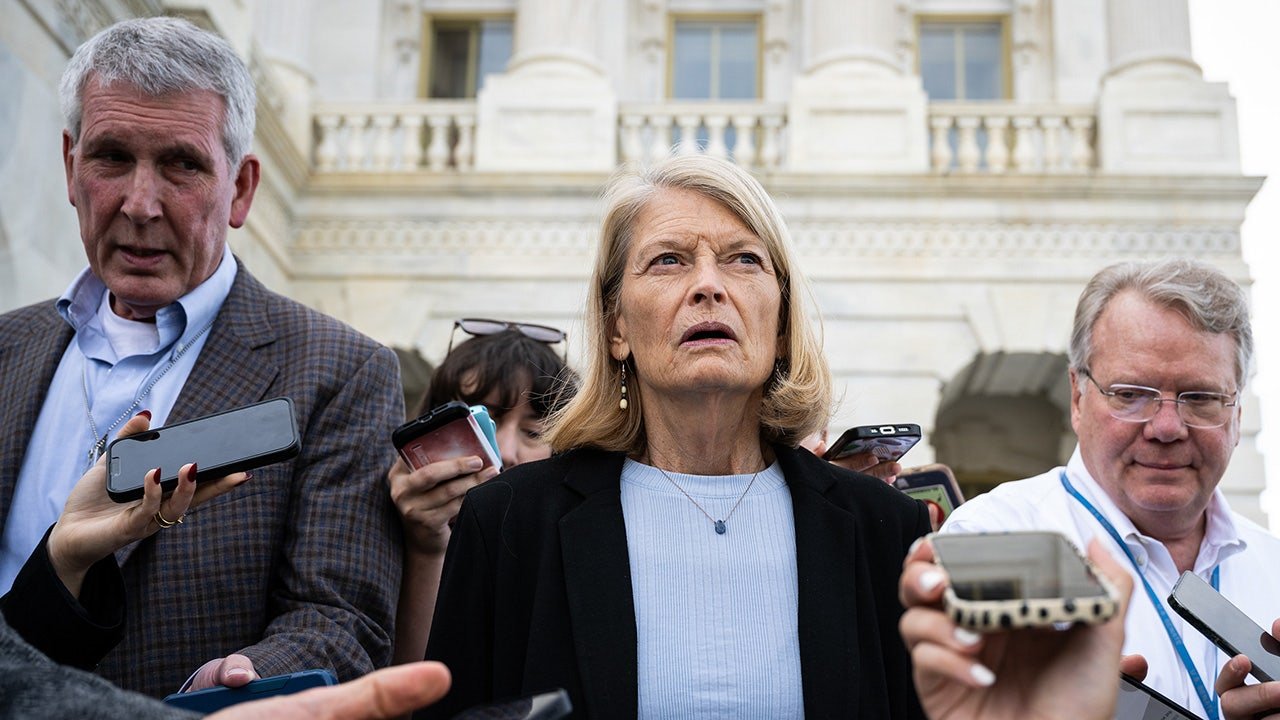
Sen. Lisa Murkowski, R-Alaska, announced that she would not support Blanche’s nomination to be the nation’s top prosecutor and law enforcement official, dealing another blow to his rocky confirmation process.
Her defection, despite a heavy lobbying effort by Blanche that saw him make the trek to Alaska, means that Senate Republican leadership can’t afford to lose anymore votes to get him across the finish line, given that Sen. Mitch McConnell, R-Ky., though now back home, has still not returned to the Senate.
COLLINS DROPS THE HAMMER ON TRUMP’S PICK TO LEAD DOJ, JEOPARDIZING PATH TO CONFIRMATION
Senator Lisa Murkowski, a Republican from Alaska, speaks to members of the media following a vote outside the US Capitol in Washington, DC, on Friday, Oct. 3, 2025. (Graeme Sloan/Getty Images)
Murkowski acknowledged Blanche’s visit to Alaska and heavy lobbying effort throughout the last few weeks, but it’s his connection to President Donald Trump’s nearly $2 billion anti-weaponization fund, and broader concerns of a weaponized Justice Department, that proved the nail in the coffin for her.
«The politicization — even weaponization — of the Department did not start with this administration but has accelerated during it,» Murkowski said in a statement. «I take issue with the handling of the release of the Epstein files; the sweeping immunity protections granted to the President, his family, and their businesses; the statements that have been made to anti-abortion groups; and the repeated targeting of individuals ranging from former administration staff to sitting U.S. Senators.»
«I am also keenly aware that the Department’s nearly $2-billion dollar slush fund—which likely would have rewarded January 6 protesters—is only off the table because this nomination is pending and the Senate has leverage,» she continued. «Once we vote, that will end, and there is no telling what the future holds.»
TRUMP’S AG PICK SURVIVES — FOR NOW — AS REPUBLICANS QUESTION IF WHITE HOUSE DEAL WILL HOLD
To Murkowski’s latter issue, several lawmakers in both sides of the aisle acknowledge that though Blanche and the Department of Justice (DOJ) agreed to permanently rescind the fund in writing to Sens. Thom Tillis, R-N.C., and John Cornyn, R-Texas, there’s nothing stopping Trump from reviving it.
And he’s on several occasions made clear he wants to see it come back.
Before making her decision, Trump already took a snipe at her during an interview with Punch Bowl News published Friday morning.
TRUMP THREATENS TO YANK HIS OWN AG NOMINEE AS GOP REVOLT GROWS
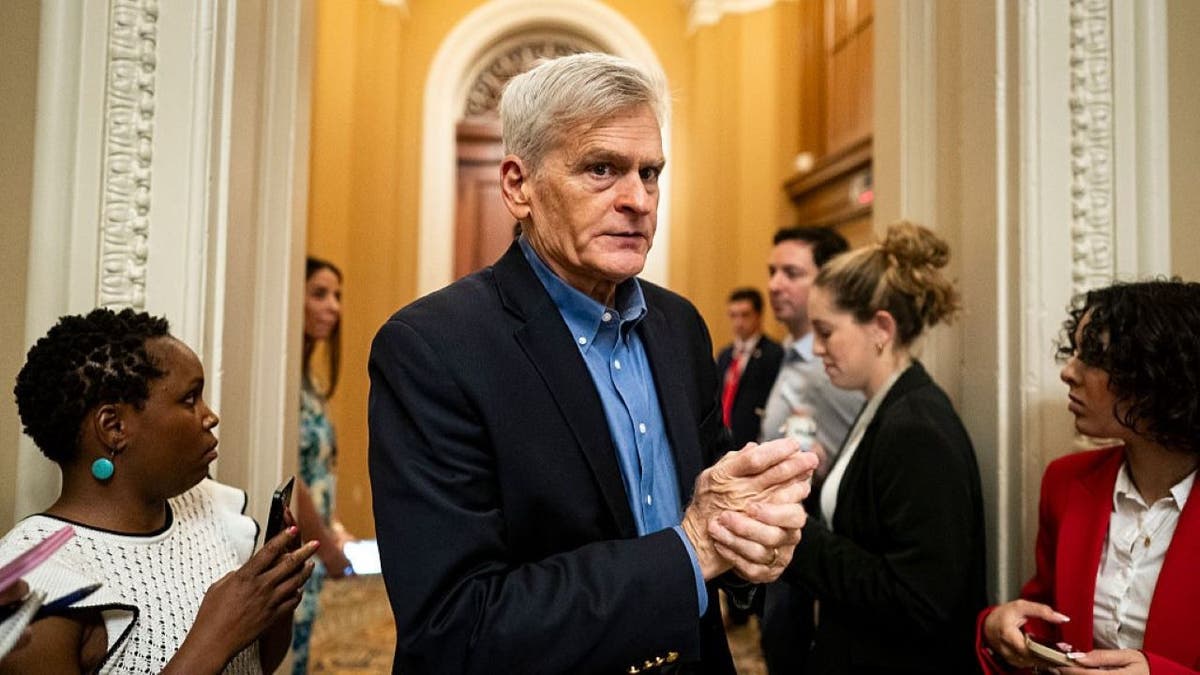
U.S. Sen. Bill Cassidy (R-LA) arrives for a meeting with Senate Republicans in the U.S. Capitol on June 28, 2025 in Washington, DC. Senate Republicans overnight released a new version of the «One, Big, Beautiful Bill,» as they approach U.S. President Donald Trump’s July 4 deadline. (Photo by Al Drago/Getty Images)
«I’m against Murkowski,» Trump said. «I do more for Alaska than any president in history. No president’s done for Alaska what I’ve done. She’s not good.»
Meanwhile, it’s unclear whether the Senate will actually vote on Blanche on Friday, which could be the upper chamber’s grand finale of the summer before it exits Washington, D.C., for the remainder of August.
And there’s still one more Republican that hasn’t weighed in on how they’ll vote: Sen. Bill Cassidy, R-La.
If he defects, and McConnell is still gone, it will be a 50-50 vote. That means Vice President JD Vance would need to break the tie. But for now, only Murkowski and Sen. Susan Collins, R-Maine, are publicly opposing Blanche’s confirmation.
«The country needs an Attorney General who will check the worst impulses of this administration,» Murkowski said. «I hope Mr. Blanche is able to achieve that, if confirmed, but I simply do not have confidence that will be the case.»
politics, todd blanche, attorney general, mitch mcconnell, senate elections

Cuentas remuneradas: cuáles son las billeteras y bancos que más rendimiento ofrecen a sus clientes

La fuertísima noticia sobre Mauro Icardi que cambia su futuro con la China Suárez y plantea un nuevo drama con sus hijas con Wanda Nara: “Buscan casa en…”

Las revelaciones de Domenico Giani, el hombre que cuidó a tres papas: “Francisco era el más difícil de custodiar”

READ THE DOCUMENTS: Secret ‘Oxferd Comma’ probe cast Trump as potential Russian asset after Comey firing

La vuelta de Joaquín Correa a Estudiantes de la Plata

Del furor al ajuste: cómo cambió el negocio de la cerveza artesanal en Argentina

Javier Milei cruzó a Victoria Villarruel y elevó la tensión: “Es una opositora, replica los argumentos kirchneristas”

Dólar hoy en vivo: a cuánto se negocian todas las cotizaciones minuto a minuto este miércoles 5 de agosto

La oposición cuestionó a Benegas Lynch por su empresa para vender campos a extranjeros y el senador libertario se defendió

Brasil retira a su embajador en la Argentina: qué consecuencias tiene la medida diplomática
-
 ECONOMIA2 días ago
Dólar hoy en vivo: a cuánto se negocian todas las cotizaciones minuto a minuto este miércoles 5 de agosto
-
 POLITICA17 horas ago
La oposición cuestionó a Benegas Lynch por su empresa para vender campos a extranjeros y el senador libertario se defendió
-
 POLITICA2 días ago
Brasil retira a su embajador en la Argentina: qué consecuencias tiene la medida diplomática