INTERNACIONAL
China ‘throwing gasoline on the fire’ in AI data centers race, say lawmakers


FIRST ON FOX: As President Donald Trump prepares to meet with Chinese leader Xi Jinping about the future of artificial intelligence, two top House Republicans are warning that the Chinese Communist Party is «throwing gasoline on the fire» by undermining America’s effort to build out AI infrastructure.
In a new letter disclosed to Digital, House Ways and Means Committee Chairman Jason Smith, R-Mo., and House Select Committee on the Chinese Communist Party Chairman John Moolenaar, R-Mich., asked Treasury Secretary Scott Bessent and IRS Chief Executive Officer Frank Bisignano to determine whether money has been funneled from overseas through America’s charitable system to block the data centers needed for the U.S. to compete with China.
Specifically, they raised questions about hundreds of millions of dollars that American-born communist tech tycoon Neville Roy Singham pumped into nonprofits and organizations that are now among the leading organizations fighting data center development throughout the country. Recipients of Singham’s largesse include the Party for Socialism and Liberation and the ANSWER Coalition, both self-described pro-China communist groups. Earlier this month, activists from both groups carried signs in a Chapel Hill, N.C., protest, merging anti-Trump sentiments with support for communist Cuba and opposition to data centers and AI development, including the message, «SHUT IT DOWN!»
«Under no circumstances can we allow an adversary, and our most serious competitor in AI infrastructure, to weaponize our own tax code and harm an emerging American industry,» the lawmakers wrote in the letter, sent on Tuesday.
FROM AUSTIN TO NEW YORK, PRO-CHINA NETWORK FUELS WEEK OF ANTI-US PROTESTS AS XI MEETS TRUMP
The lawmakers allege that influence operations linked to China are exploiting tax-exempt organizations, nonprofit networks and social media campaigns to fuel opposition to the data centers needed to power America’s AI industry.
The lawmakers urged the agencies to investigate whether tax-exempt organizations connected to the network have operated for the «private or political benefit of foreign-aligned interests» and whether donor-advised funds and intermediary entities were used to «launder the origin of foreign-directed money into American advocacy.»
A Digital investigation found that Singham funneled $285 million since 2017 to six U.S. nonprofits, including his wife Jodie Evan’s group, CodePink, through two shell corporations and a donor-advised philanthropy fund run by Goldman Sachs, which said it closed the Singham account in 2024.
The nonprofits have functioned with tax-deductible status while actively involved in promoting communist regimes such as China, coordinating street protests and fomenting anti-American rage. They have denied being part of any foreign influence operation, and Singham hasn’t responded to requests for comment.
Smith said China is helping fuel opposition to American artificial intelligence infrastructure by giving a base to Singham as he funds U.S. nonprofit groups involved in anti-data-center protests.
«This is the Chinese helping throw the gasoline on the fire,» Smith told Digital. «The American people need to know that this is not just an organic movement.»
Smith said Americans have legitimate concerns about data centers, including their effect on electricity costs and water usage. But he said foreign-backed organizations shouldn’t be allowed to exploit those concerns to slow U.S. technological development.
Smith said that «the Chinese want to stall and slow down the advancement of AI in the United States because they want to win the AI war.»
«Tax exempt is a privilege. It is not a right,» Smith said. «We need to make sure that we’re not subsidizing tax dollars to help create hostility and unrest in our country.»
Smith also called for greater transparency regarding the flow of money among organizations connected to Singham. He added that the broader issue extends beyond the tax code and could include questions about compliance with the Foreign Agents Registration Act violations. «Transparency is the biggest thing,» he said.
PROBE INTO ‘SUBVERSIVE’ ANTI-AI SINGHAM NETWORK IS ‘ENORMOUS,’ FORMER TREASURY ADVISOR SAYS
Moolenaar said organizations presenting themselves as grassroots opposition groups are actually advancing the Chinese Communist Party’s agenda in the U.S. «Groups that portray themselves as grassroots are really more astroturf — very fake — being funded by entities that are working in partnership with the Chinese Communist Party,» Moolenaar told Digital.
«The concern is that they are manipulating the messaging and opposition to different American investments, whether it’s data centers or other technological advances, trying to turn the American people against these technologies so that China would be able to have dominance in this area,» he said.
Moolenaar pointed to the use of grassroots organizations, community groups, propaganda and online bots.
«We don’t want foreign entities of concern — countries that may be opposed to American interests — using our system against the American people and trying to manipulate them,» Moolenaar said.
He said the lawmakers are seeking greater transparency into the organizations’ funding and tax-exempt status, including whether their political activity violates federal rules.
«When you see them actively speaking out against American interests and realize that groups like CodePink are aggressively funded by this network, that raises serious concerns,» Moolenaar said.
The chairman said China’s influence efforts exploit the openness of American society.
«The Chinese Communist Party always has the goal of dividing Americans, manipulating and getting their propaganda out,» he said. «They don’t have the freedoms that we enjoy, and they try to exploit our freedoms and use that against us.»
China remains both a major trading partner and a strategic competitor, Moolenaar said, but the United States must avoid becoming dependent on Beijing.
«They are a serious adversary,» he said. «They are a trading partner, which is true, and we need to have a relationship with them,» Moolenaar said. «But at the same time, we do not want to be manipulated, we do not want to become more dependent, and we certainly do not want to be under their thumb.»
POWER COUPLE OF CHAOS: HOW A TYCOON AND ACTIVIST BUILT A ‘REVOLUTIONARY BASE’ AT THE HOUSE OF SINGHAM
The lawmakers noted that a bicameral group of congressional committees, including the Ways and Means Committee, the House Select Committee on the CCP and the Senate Intelligence Committee, has been examining how influence operations linked to the CCP allegedly exploit America’s tax-exempt sector to «sow discord and undermine our democracy.»
«The CCP consistently identifies political issues under public debate in our country and seeks to corrupt those debates,» Smith and Moolenaar wrote in their letter. The CCP, they added, seeks to «heighten divisions between Americans and to degrade our civic processes.»
The lawmakers specifically pointed to opposition campaigns targeting the construction of data centers, which are critical to the nation’s AI infrastructure.
A June report from OpenAI identified two clusters of ChatGPT accounts likely originating in China that were used in covert influence operations targeting U.S. debates over AI and technology policy. One campaign, dubbed «Data Center Bandwagon,» generated social media comments and images claiming that data-center construction was raising electricity prices for average families. OpenAI said it found no evidence that the operation achieved meaningful breakout beyond its own activity, but said it demonstrated how foreign operators can exploit existing local concerns to amplify distrust.
CHINESE BOT FARM CAUGHT RED-HANDED TRYING TO INFLUENCE HEATED AI DATA CENTER DEBATE
The lawmakers also cited a report from the Bitcoin Policy Institute that identified 21 campaigns against data centers led by the Party for Socialism and Liberation across 14 states. The report said those campaigns contributed to 10 data-center moratoria, a permanent data-center ban and four rejected or scrapped projects, representing nearly $23.68 billion in proposed investment.
The Party for Socialism and LIberation and the ANSWER Coalition are supported by the Singham network, and a Digital investigation has traced links between prominent activism against data centers by the Party for Socialism and Liberation, the ANSWER Coalition and other organizations in the Singham network, including BreakThrough News, the People’s Forum, Tricontinental: Institute for Social Research and CodePink.
«Our tax code should not be used as a shield for foreign money waging a disinformation war on American AI infrastructure,» Smith and Moolenaar wrote. «This is yet another shocking and dangerous example of how malign foreign actors are funneling dollars into the United States to further CCP interests.»
LAWMAKERS SAY THEY ARE STANDING AT THE GATES AGAINST ‘TROJAN HORSES’ PROMOTING MALIGN FOREIGN INTERESTS
The lawmakers asked Treasury and the IRS to determine whether tax-exempt organizations supporting the network have violated the requirements of their status.
Their request includes examining whether organizations operating under Section 501(c)(3) have acted for the «private or political benefit of foreign-aligned interests,» rather than for genuine charitable purposes. They also asked whether donor-advised funds and intermediary entities were used to «launder the origin of foreign-directed money into American advocacy.»
The letter follows earlier oversight by the Ways and Means Committee and the House Select Committee on the CCP into the tax-exempt sector and organizations allegedly connected to Singham’s network.
The lawmakers emphasized that opposition to data centers is a legitimate subject for public debate but said Americans should know whether foreign adversaries are attempting to influence those debates through nonprofit organizations, social media campaigns or covert funding channels.
«The American people deserve to know which actors adversarial to the United States are trying to undermine these decision-making processes,» they wrote.
Digital’s Jesse Watson contributed to this report.
politics, china, artificial intelligence, house of representatives politics, tech, us protests










INTERNACIONAL
‘Big difference’: Dem’s last-minute endorsement gives GOP new hope in crucial Senate battle

OAKLAND COUNTY, MICHIGAN — Michigan’s Republican ticket had a clear message for voters preparing to vote in the midterm elections: Their path to victory relies on winning over voters who typically don’t align themselves with the GOP.
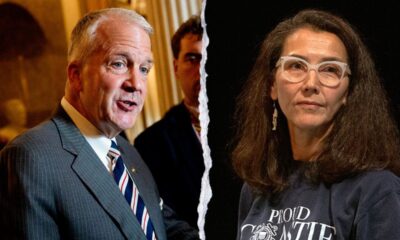
That prospect appeared to be buoyed by Democratic Rep. Haley Stevens’ 11th-hour endorsement of Republican Senate candidate Mike Rogers over her primary rival, Abdul El-Sayed. Early Monday afternoon, Republican operatives in Michigan blasted out a press release advertising an event just hours later intended to tout Stevens’ endorsement and its purported impact on Black and Jewish voters.
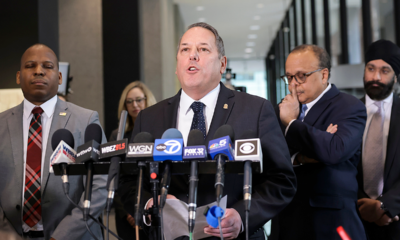
In front of a throng of press at the Michigan GOP’s headquarters, six community leaders representing African Americans and Jews criticized what they saw as El-Sayed’s excesses and lauded Stevens’ endorsement of Rogers. Broadly, they argued that El-Sayed had insufficiently distanced himself from some of his radical associations, that Stevens’ endorsement had real significance for the race and that they were seeing an unprecedented groundswell of support for Republicans among their peers.
MIKE ROGERS DISHES ON HOW SHOCK HALEY STEVENS ENDORSEMENT UNFOLDED HOURS BEFORE ELECTION DAY
In addition to the community leaders, close to two dozen others — many of whom were Black or Jewish — attended the event as well. While some political observers have cast doubt on the impact of Stevens’ endorsement and the degree to which African Americans and Jews are defecting from the Democratic Party, members of those communities told Digital the shift is happening.
«I believe it’s going to make a big difference that she came out,» Michelle Nard, an African American former Democrat running for state Senate, told Digital. «She had a big following. She’s a great congresswoman, a great state representative for the United States.»
BLACK VOTERS RIP DEMS OVER TAKING THEM FOR GRANTED IN EL-SAYED’S BACKYARD: ‘HUSH US UP’
Nard recounted how she had recently spoken to a Black woman who highlighted that her community makes a big deal of going to the polls on Election Day, a point she used to stress that Haley’s endorsement, though late in the cycle, could still influence last-second voters.
«You have strong Haley Stevens supporters in our community that will support her to the end, and then you have some that feel betrayed,» Marcus Bowman, a metro Detroit school board trustee, told Digital.
Bowman, who says he knows Stevens personally, said: «True supporters of Haley Stevens, they know her as a person and they know what she represents. I think they will follow her and respect her for her decision based off some of the radical things we’ve heard about Abdul El-Sayed.»
While those who spoke were handpicked for a Republican news conference, there is some data to back up Black voter defection. Between August and September, El-Sayed’s support among African Americans held steady at around 75%, well below the party’s typical benchmark.
POLL: MICHIGAN VOTERS SPLIT BETWEEN EL-SAYED AND ROGERS
The Arab American community in the Detroit metropolitan area has historically been at odds with African Americans in the areas across a number of issues, a theme that has come up occasionally during El-Sayed’s campaign.
While comparable polls have not found similar trends among Jewish voters, who are a much smaller part of Michigan’s electorate, a number of high-profile members of the communities, including top donors, have flocked to the Rogers camp.
«Haley, what she did was give a lot of Jews permission, hardcore left-wing Democrats, permission to now say, you know what, if Haley can endorse him, I can vote for him,» Aaron Tobin, a conservative Jewish community leader, told Digital in reference to Mike Rogers. «Now I think she’s broken that wall down, and now they can see that a hardcore Democrat — and she was very successful and very popular in Michigan — if she said Mike Rogers is good enough for her, I think a lot of Jews are going to say, ‘I’m going to vote for him because Abdul just says the worst things.’»
Ezra, another Jewish voter, told Digital that he believes Jews have increasingly been abandoned by the Democratic Party and, even if Stevens’ endorsement doesn’t move the needle, he’s grateful that she took a stand.
«The [March 12] terrorist attack in [a] West Bloomfield [synagogue], I believe was the starting point of the Detroit Jewish community being afraid and that fear was not alleviated over the next [six months]. That fear has not been alleviated by Abdul El-Sayed in any sort of way, which is why I think you’re seeing this,» he said. «We’re waiting for something and it’s not coming. And so that’s why I think you’re seeing so many in the Jewish community moving for Mike Rogers because they’re like, you know what, that guy’s going to keep my family safe. The other guy’s not.»
MAMDANI, HASAN PIKER AMONG RADICAL LEFT-WING VOICES ERUPTING OVER HALEY STEVENS’ ENDORSEMENT SWITCH
«I think in some ways, it’s, it’s more brave because it’s at the last minute. In some ways, you know what, who knows, even if it, if it’s 100 votes or 1000 votes, then it makes a difference,» he added.
These alleged breakthroughs with traditionally Democratic constituencies took center stage at Rogers’ closing rally on Monday night. At one point, the campaign invited six Black and Jewish voters, most of them former Democrats, to take the stage where they explained why they believed El-Sayed to be too extreme for their support. Rogers himself praised the group during his final campaign speech, invoked the need for unity and thanked Stevens at length for her endorsement.
Conservatives at the rally were clearly grateful to Stevens for her endorsement, with nearly every mention of her name being met with cheers or chants of her name. Republicans are even optimistic that Stevens’ endorsement could trickle down to their down-ballot races.
MICHIGAN DEM CLAIMS STEVENS SHOT DOWN ROGERS ENDORSEMENT RUMOR HOURS BEFORE TURNING ON EL-SAYED
«I was on the ground last week in Michigan and Ohio, and the momentum in Michigan is real. It was real before Haley Stevens endorsed Mike Rogers, even more real now,» Adam Piper, executive director of the Republican Attorneys General Association, told Digital.
Piper said he «absolutely» believes Stevens’ endorsement will move the needle for Michigan Republican attorney general nominee Doug Lloyd.
«You know, around the Detroit area, Grosse Pointe, Detroit, elsewhere, I saw homemade yard signs in the yards of Black churches that said African Americans and Jews stand together. And that was powerful.»
Lloyd said he is optimistic that Stevens’ endorsement of Rogers could give him a boost.
«Well, I saw something today in the news that basically said 50% of the available voters have voted through absentee and early voting. We still have one day left. And as we’ve said, you know, the race isn’t done until 8 o’clock tomorrow night when the polls close,» he said. «So, if this made a difference for someone who had been sitting on the sideline and they decided they were going to get out and vote because of it, I’m excited for that.»
Democrats have argued Stevens’ endorsement could strengthen, rather than weaken, El-Sayed’s support. Michigan Democratic Party Chair Curtis Hertel said he expected the episode to galvanize Democrats, while El-Sayed’s campaign reported raising $2.4 million Sunday, its largest fundraising day of the campaign.
While cutting into the Democratic Party’s margins by successfully pulling away Black and Jewish voters could prove valuable to the GOP, a reversion among Arab voters — who swung toward Republicans in 2024 but strongly favor El-Sayed — could erase such gains. Fox News’ final power ranking rated Michigan’s Senate race as a toss-up, meaning that, as voters head to the polls, neither party holds a clear edge.
politics, abdul el sayed, michigan, midterm elections, senate elections
INTERNACIONAL
Ukraine’s Zelenskyy on defying US in attacking Russian oil: ‘Our response must be painful’

NEWYou can now listen to Fox News articles!
KYIV, Ukraine — Ukrainian President Volodymyr Zelenskyy is defying calls from the Trump administration for his armed forces to stop attacking Russian oil refineries, telling Fox News: «Our response must be painful.»
In an interview in Kyiv, Zelenskyy acknowledged holding discussions with the Trump administration about targeting oil facilities, attacks President Donald Trump has pinned as being partly to blame for high gas prices in the U.S.
«We had different conversations — different, and several — with President Trump and with his team about attacks on refineries,» Zelenskyy said.
«We said that if you want us not to attack Russia’s refineries, they have not to attack our energy system.»
TRUMP TELLS ZELENSKYY TO STOP DOING ‘ONE THING’ DURING ATTACKS ON RUSSIA
During an interview with Fox News, Ukrainian President Volodymyr Zelenskyy urged President Donald Trump to pursue an energy cease-fire with Russia as Washington pressures Kyiv to halt attacks on Russian oil refineries. (Fox News)
Ukraine has reported near-daily Russian strikes on energy infrastructure, triggering power outages just as temperatures dip ahead of winter.
«That’s why we have to respond. But our response has to be painful for Russian military people,» Zelenskyy said. «If we will not respond on energy, they will continue.»
U.S.-Ukraine relations took a further hit in October when Trump struck a deal to import millions of tons of Russian diesel to the United States.
ZELENSKYY ACCUSES PUTIN OF DEFYING TRUMP’S CEASEFIRE PUSH, SENDS POINTED MESSAGE TO WHITE HOUSE

Zelenskyy warned President Donald Trump against helping Russia while praising first lady Melania Trump’s role in securing a humanitarian evacuation from Russian-controlled territory. (Fox News)
Zelenskyy suggested Ukraine might be encouraged to hold off on further attacks on Russian oil facilities if the United States were to deliver more U.S.-made Patriot missile interceptors to protect Ukrainian skies. Pressed by Fox News on whether that might be seen as an attempt to leverage Trump, Zelenskyy said: «I don’t have any concerns when I share the truth between partners.»
«Our countries are huge partners. American society (is a) huge supporter.»
«And that’s why I have to share with (the) president the truth, the real situation: that America can’t help Russia. (The) president can’t help Putin.»
US WILL MEDIATE UPCOMING UKRAINE-RUSSIA TALKS IN ABU DHABI, WITKOFF SAYS

Ukrainian President Volodymyr Zelenskyy told Fox News that Ukraine will continue targeting Russian oil refineries despite objections from the Trump administration. (Pier Marco Tacca; Chip Somodevilla/Getty Images)
Ahead of planned peace talks in the United Arab Emirates, Zelenskyy urged Trump to launch another push for a targeted ceasefire where both Russia and Ukraine refrain from attacks on energy facilities.
«If the American president thinks that this war has influence on the prices,» Zelenskyy said, «he can ask, energy ceasefire, during (the) Abu Dhabi trilateral meeting: energy ceasefire.»
Zelenskyy spoke with Fox News hours before starved and exhausted residents left the Russian-controlled town of Oleshky and crossed into Ukraine under a humanitarian truce brokered by first lady Melania Trump, the first of its kind in more than four years of war.
Zelenskyy welcomed the first lady’s initiative, calling the evacuations «a huge result,» and adding: «I don’t know how many such steps will be available for us, but if the First Lady can do it … it’s very helpful. I’m very thankful to her.»
ukraine, volodymyr zelenskyy, russia, donald trump, geopolitics, foreign policy
INTERNACIONAL
Docentes nicaragüenses reportan descuentos en sus salarios bajo el concepto de “aporte”

Las docentes del sistema público nicaragüense reportan descuentos en sus salarios bajo el concepto de “aporte”, una retención que, según testimonios recogidos por Diario La Prensa y La Sala, Mujeres en la Redacción, comenzó a aplicarse desde junio de 2026 a trabajadores estatales.
Las maestras consultadas describieron que el descuento se suma a otras retenciones legales y sindicales, así como a gastos en materiales escolares, transporte, conectividad e impresiones que deben afrontar para cumplir con sus tareas laborales.
Los testimonios publicados indican que los descuentos identificados como “aporte” oscilan según el salario de cada docente. Una profesora de Managua, identificada como Ana para proteger su identidad, afirmó que en su colilla de pago apareció una deducción de 2%, sin una explicación detallada sobre su destino.
Las boletas de pago registran descuentos bajo el concepto de “aporte”
Ana relató que conoció por noticias la posibilidad de que se aplicaran retenciones a empleados públicos en favor del Frente Sandinista de Liberación Nacional (FSLN). Tras consultar a la dirección de su escuela, esperó una reunión que, según contó, no llegó a realizarse.
Al revisar su pago, encontró un apartado denominado “aporte”. De acuerdo con su testimonio, durante cinco meses le descontaron 260 córdobas (USD 7.02) mensuales, un total de 1,300 córdobas (USD 35.10).
“Entre más ganás, más te quitan”, dijo la profesora a Diario La Prensa y La Sala, Mujeres en la Redacción.
El diario informó que tuvo acceso a boletas de pago de docentes de distintos departamentos. En esos documentos se registraban deducciones de 2% y 5%, mientras que otros entrevistados mencionaron descuentos de mayor proporción.
El reportaje señala que estas retenciones no fueron consultadas con los trabajadores entrevistados. También cita el artículo 9 del Convenio 95 de la Organización Internacional del Trabajo (OIT), que establece restricciones a los descuentos salariales vinculados con la conservación de un empleo.

Los ingresos docentes se reducen por varias retenciones y gastos
El salario mensual del sector magisterial ronda entre 8,500 córdobas (USD 229.50) y 10,000 córdobas (USD 270), según la información publicada. Las docentes de primaria y de aulas multigrado se ubican en los niveles de remuneración más bajos, mientras que el personal de secundaria suele recibir montos superiores.
Además del “aporte”, las maestras mencionaron descuentos por seguridad social, sindicato e Impuesto sobre la Renta cuando corresponde. La cuota destinada a la Asociación Nacional de Educadores de Nicaragua (Anden) es de unos 120 córdobas (USD 3.24), de acuerdo con la nota.
Las cotizaciones al Instituto Nicaragüense de Seguridad Social representan 7% del salario. El impuesto se aplica a quienes superan los 10,000 córdobas (USD 270), según el reportaje, que estima que el conjunto de las retenciones puede superar los 2,000 córdobas (USD 54) mensuales.
Hasta julio de 2026, el costo de la canasta básica era de 21,474.94 córdobas (USD 579.82), según datos del Instituto Nacional de Información de Desarrollo citados por Diario La Prensa. Esa referencia supera los ingresos mensuales mencionados por las docentes.
Las maestras de primaria describen una carga mayor de trabajo y gastos
Verónica, una docente de secundaria de Managua con 12 años de experiencia, sostuvo que las maestras de primaria ganan menos y deben destinar más dinero a materiales y documentos para las clases.
La profesora explicó que el Ministerio de Educación (Mined) entrega algunos insumos, como cartulinas y marcadores, pero que los recursos resultan insuficientes para las actividades requeridas en los centros educativos.
“Las de primaria gastan más que nosotros”, expresó Verónica ante el diario. Indicó que ese grupo debe impartir todas las materias y elaborar documentos para las supervisiones.
La diferencia salarial también se vincula con la formación académica. El texto señala que las docentes de secundaria tienen licenciatura en Educación, mientras que muchas maestras de primaria cuentan con estudios técnicos realizados en una Escuela Normal.
Verónica relató el caso de una compañera que debía llevar a su hija al trabajo en algunas ocasiones porque no podía afrontar un servicio de cuidado infantil. Según su versión, las dificultades económicas se agravaban por los gastos asociados a la actividad docente.

Los testimonios relacionan las deducciones con menos alimentos y transporte
El profesor Gabriel Putoy, integrante de la Unidad Sindical Magisterial (USM) y ex preso político que vive fuera de Nicaragua, dijo que ha documentado descuentos de entre 200 córdobas (USD 5.40) y 470 córdobas (USD 12.69) para algunos docentes.
Putoy señaló que esas cantidades tienen consecuencias en presupuestos familiares con ingresos limitados. “Cada peso que te quitan cuenta”, afirmó ante la publicación.
El docente comparó los montos descontados con el costo de alimentos, útiles escolares y transporte. Según sus cálculos, una retención puede equivaler a tortillas, huevos, panes o marcadores que dejan de comprarse durante el mes.
Verónica afirmó que recibe 12,500 córdobas (USD 337.50) brutos, aunque su ingreso neto queda apenas por encima de los 10,000 córdobas (USD 270) después de las deducciones. También explicó que debe pagar impresiones de materiales vinculados con contenidos que no aparecen en los libros de texto.
El Banco Central de Nicaragua registraba 47,215 trabajadores en el sistema educativo público, según los datos citados en la investigación. A partir de esa cifra, el reportaje proyectó una recaudación anual superior a USD 3 millones si se aplicara el descuento mínimo mencionado sobre un salario promedio de 10,821 córdobas (USD 292.17).
La docencia es un sector integrado mayoritariamente por mujeres
Rosario Murillo afirmó en junio de 2023 que las mujeres representaban 78% de los 60,000 docentes registrados entonces en el país. El reportaje precisa que no existen datos oficiales más recientes con desglose por género.
La socióloga y feminista María Teresa Blandón dijo a Diario La Prensa que el magisterio ha estado compuesto históricamente, en su mayoría, por mujeres. Añadió que muchas docentes son jefas de hogar o aportan la mayor parte de los ingresos familiares.
“Esa cotización obligada va a afectar” a un porcentaje alto de maestras, sostuvo Blandón. La especialista indicó que algunas trabajadoras necesitan realizar labores adicionales por cuenta propia para cubrir gastos básicos.
La socióloga planteó que una reducción salarial afecta no solo a las docentes, sino también a las personas que dependen de ellas. Según explicó, los ingresos de mujeres con empleo estable suelen destinarse principalmente a las necesidades de sus hogares.

Las docentes también informan gastos en teléfonos, internet y materiales
Karen, una profesora de Granada, explicó que no tiene computadora propia y debe acudir a un cibercafé para preparar pruebas y otros documentos. Además, afirmó que paga marcadores y otros recursos para el aula.
La docente señaló que en su colegio hay computadoras, aunque dijo que con frecuencia están ocupadas. Por motivos de salud, trabaja únicamente en el turno de la mañana y no puede tomar otra plaza por la tarde.
Ana indicó que compró un teléfono inteligente por 7,000 córdobas (USD 189) para participar en grupos de WhatsApp, recibir orientaciones y enviar fotografías de actividades. También afirmó que destina 400 córdobas (USD 10.80) mensuales al acceso a internet.
Las fuentes consultadas relataron que deben asistir a actividades fuera de las aulas, incluidas marchas, jornadas de limpieza, fumigación, censos y acciones vinculadas con la matrícula escolar. Putoy afirmó que estas tareas en ocasiones se realizan fuera de la jornada laboral o durante fines de semana.
Ana señaló que la asistencia a esas actividades forma parte de la evaluación laboral. Según su testimonio, las direcciones escolares solicitan fotografías como prueba de participación.
Organizaciones y especialistas advierten sobre el impacto laboral
El Colectivo de Derechos Humanos Nicaragua Nunca Más informó que ha recibido denuncias de ex trabajadores estatales relacionadas con descuentos salariales. Arlen Pérez, defensora de la organización, afirmó que algunas personas temen reclamar por posibles consecuencias laborales.
Pérez sostuvo que las denuncias también incluyen presiones políticas dentro de las escuelas. Según su declaración, algunos docentes informaron que deben transmitir contenidos favorables al Gobierno para evitar dificultades en sus puestos.

La investigadora estadounidense Pauline Martin, exdirectora de la maestría en Política y Evaluación Educativa de la Universidad Centroamericana, calificó como inusual el escenario descrito por las fuentes consultadas.
Martin consideró que las deducciones y el control sobre las tareas docentes pueden afectar la motivación profesional. También señaló que los sistemas educativos centralizados dejan poco margen para la autonomía y la innovación en las aulas.
Los testimonios reunidos por la investigación coinciden en que la combinación de descuentos, gastos laborales y actividades adicionales reduce el ingreso disponible de las docentes. Para las trabajadoras consultadas, el efecto se refleja en la alimentación, el transporte y la compra de materiales necesarios para enseñar.
Nicaragua,educación,aula,escuela,secundaria,pupitres

Fecha 16 del Torneo Clausura de la LPF: programación y tabla de posiciones

Romina Richi sorprendió a Mario Pergolini con su talento para el taekwondo: “Creí que iba a hacer un papelón”

La Iglesia y la oposición presionan para salvar la ley que prohíbe la publicidad de apuestas online

Delcy Rodríguez recibió al ministro de Economía de Portugal y 37 entidades de distintos sectores del país europeo

El Gobierno negó tensiones con la Iglesia y aseguró que León XIV “no dará mensajes políticos” durante su visita

‘Big difference’: Dem’s last-minute endorsement gives GOP new hope in crucial Senate battle

Qué pasó con el Refugio de Eli y por qué hizo enfurecer a Santi Maratea: «Fue un desastre, él nunca más le contestó y le prohibió…»

El secretario de Culto dijo que Milei recibirá al Papa en el aeropuerto y habló de una cadena nacional

El “efecto Lula” sigue pegando en Argentina: los bonos sintieron el impacto, pero el tipo de cambio aguantó

Estrella de Star Trek, Patrick Stewart confesó que fichó por la saga de ciencia ficción por una razón

 CHIMENTOS1 día ago
Qué pasó con el Refugio de Eli y por qué hizo enfurecer a Santi Maratea: «Fue un desastre, él nunca más le contestó y le prohibió…»
- ECONOMIA3 días ago
El “efecto Lula” sigue pegando en Argentina: los bonos sintieron el impacto, pero el tipo de cambio aguantó
- POLITICA2 días ago
Agustín Caulo: “El Gobierno sigue trabajando para que no se politice la visita de León XIV a la Argentina”