INTERNACIONAL
Christian leaders hold emergency summit in Jerusalem to confront global rise in antisemitism

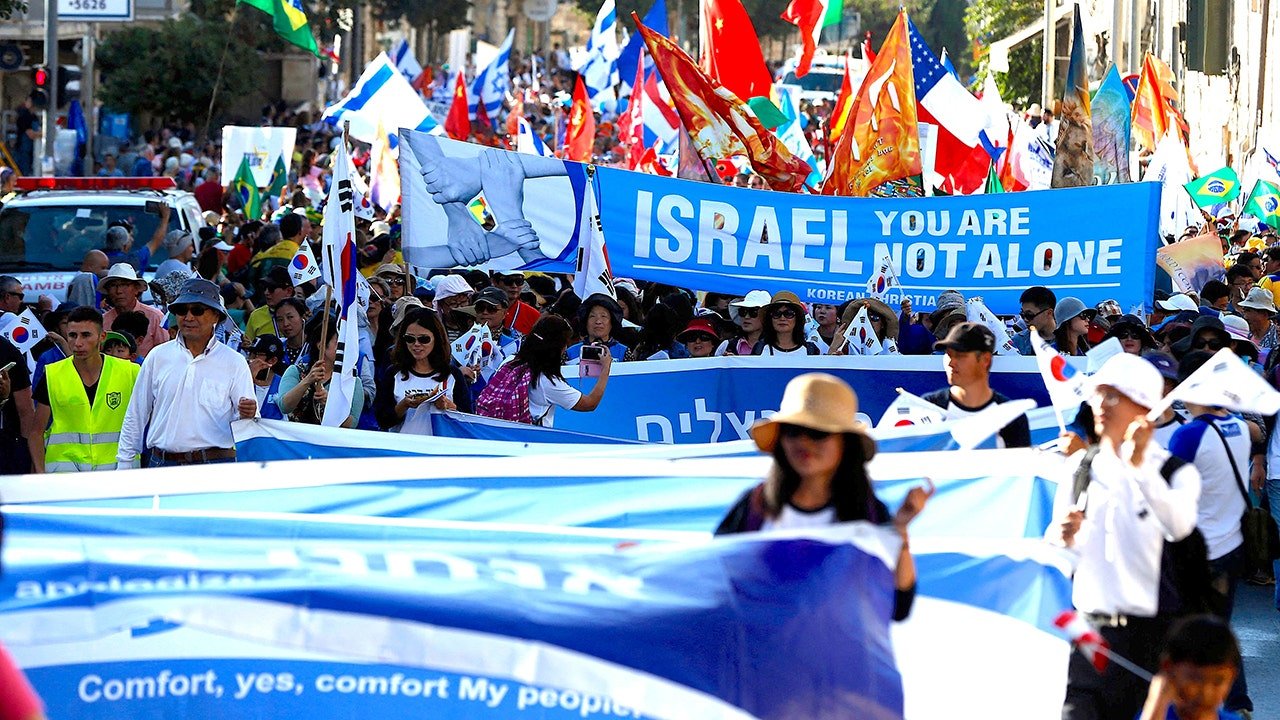
NEWYou can now listen to Fox News articles!
JERUSALEM: The International Christian Embassy Jerusalem (ICEJ) convened an emergency summit this week amid growing concern over the global rise in antisemitism following the Hamas-led Oct. 7, 2023.
The three-day conference in the Israeli capital comes at a time when social media influencers are consistently pushing antisemitic hate to their millions of followers.
«Attacking the Jews means attacking the very roots of one’s own faith. It means fighting against the people who gave us the Bible. Jesus was Jewish,» ICEJ President Dr. Jürgen Bühler told Fox News Digital.
CANADA’S CARNEY PLEDGES ACTION ON ANTISEMITISM AMID BACKLASH OVER NEW ANTI-HATE COUNCIL MEMBERS
Christian leaders attend the ICEJ’s emergency summit on antisemitism on Wednesday, June 10th, 2026 at the Vert hotel in Jerusalem, Israel. (Amelie Botbol for Fox News Digital)
«If you don’t fight antisemitism, you are sawing off the branch you sit on. For the church to survive, we need to connect to our roots, fighting antisemitism needs to be at the forefront of every pastor and every leader around the world,» he added.
One of the central themes of the conference is Replacement Theology, a doctrine that holds the Church has replaced the Jewish people in God’s plan.
«The Bible is full of God’s eternal plan which includes the Jewish people. Paul’s statement in Romans 11 that ‘the gifts and the calling of God are irrevocable’ relates to Israel. This is a doctrine that goes contrary to what the New and Old Testament are teaching and that’s why we need to have this conference,» Bühler said.
«One cannot deny the Jewishness of the Bible. The most frequent word in the Bible is the name of God and the second most used name is Israel. Jesus was born in Bethlehem, he died in Jerusalem, resurrected in Jerusalem, rose to heaven from Jerusalem and he is coming back to Jerusalem. If you read the Bible it is so easy to see the connection to Israel,» he added.
HUCKABEE CONDEMNS EFFORTS TO ERASE JEWISH HISTORY TO THE HOLY LAND AS ‘ABSURD’
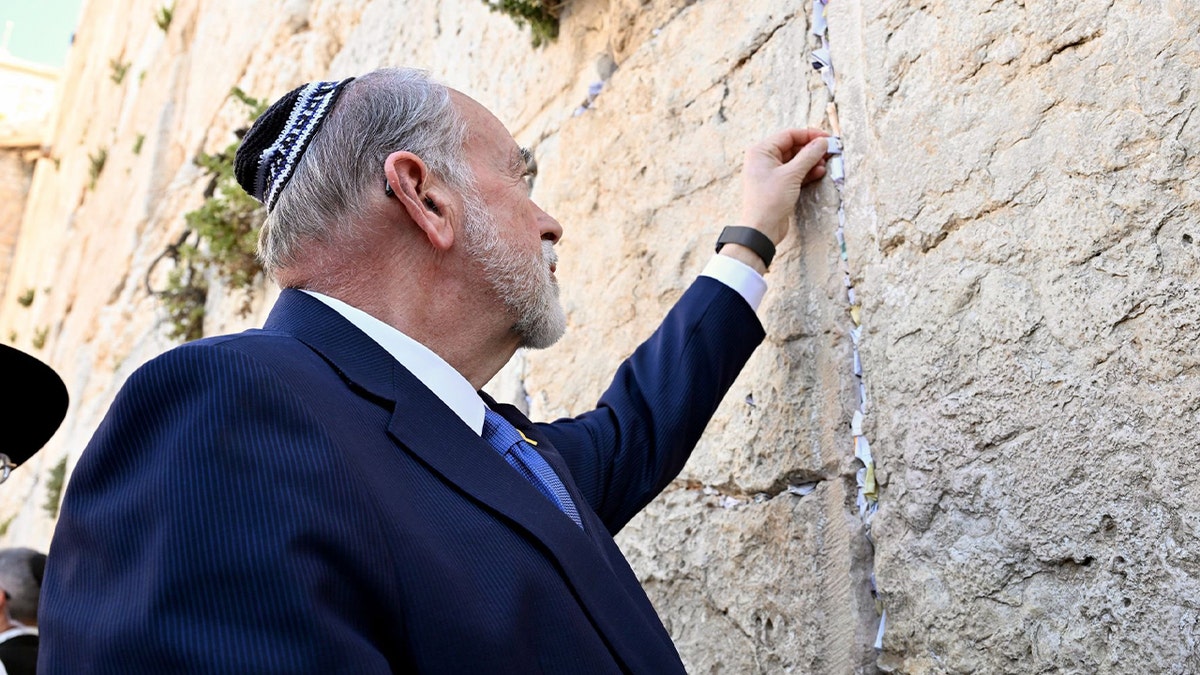
U.S. Ambassador to Israel Mike Huckabee places a note in the Western Wall as Holy Week and Passover come to a close. (@USAmbIsrael/X)
Israel’s newly appointed Special Envoy to the Christian world, George Deek, addressed the meeting on Wednesday, while Foreign Minister Gideon Sa’ar and U.S. Ambassador to Israel Mike Huckabee are scheduled to attend the summit’s closing event on Thursday at the foreign ministry as keynote speakers.
In a recorded message broadcast at the summit, Israeli President Isaac Herzog thanked Christian leaders for mobilizing against antisemitism.
«We are witnessing a very disturbing surge of antisemitism all over the world. This is a major challenge for humanity. This is the age-old, perhaps the oldest plague in humanity, and we have to stand up together — thought leaders and religious leaders — and say, ‘No more,’ and teach people about the sources of this evil and how to counter antisemitism,» Herzog said.
«I believe that countering antisemitism requires a combination of three major elements: law enforcement, adjudication and education,» he said.
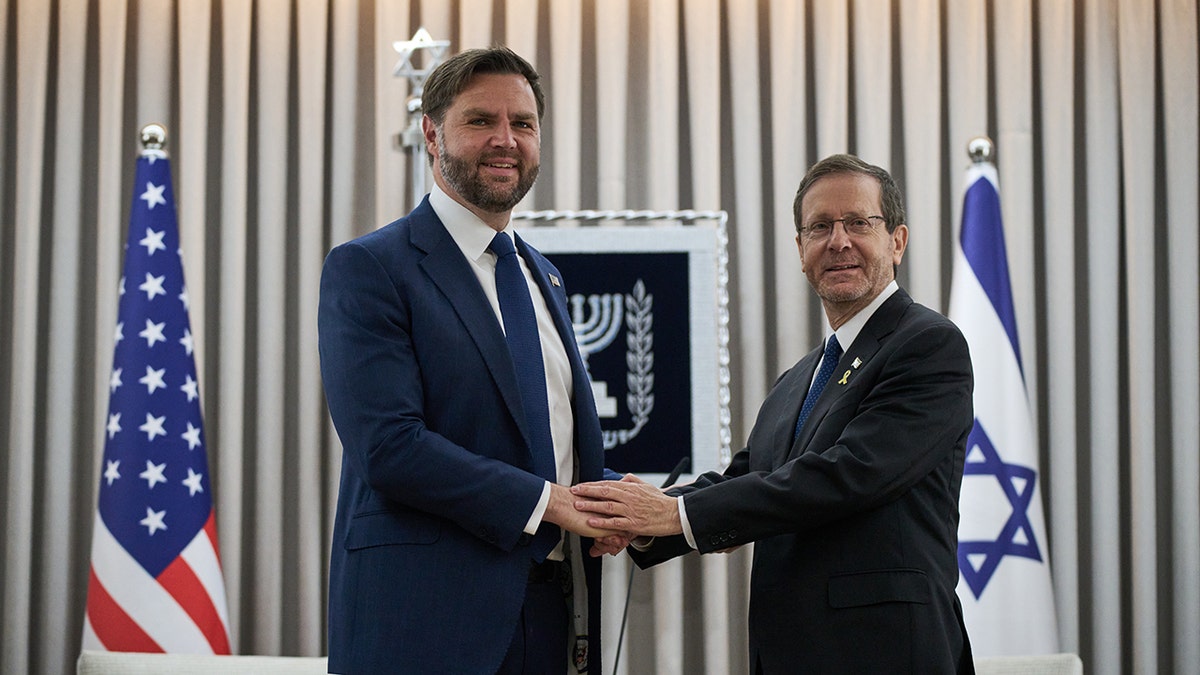
Vice President JD Vance, left, and Israeli President Isaac Herzog shake hands during a meeting at the presidential residence, in Jerusalem, on Wednesday, Oct. 22, 2025. (Leo Correa/AP)
«You, dear leaders, have a huge capability of fighting back, and I bless you. Truly, I bless you as the president of Israel for coming here and fighting back, for coming here and discussing how to fight back,» Herzog concluded.
Dr. Andrew J. Nolte, who launched Regent University’s Israel Institute in 2024, said students often repeat antisemitic claims, including the accusation that Jews killed Jesus.
«The answer from a Christian theological perspective is that we all killed Jesus, he died for our sins. There is a theological understanding of the guilt we bear for Jesus’s blood,» Nolte told Fox News Digital.
ISRAEL LOOKING FOR ‘SOLUTIONS’ TO OPEN CHRISTIAN SITES AFTER BARRING CHURCH LEADER ON PALM SUNDAY DUE TO WAR
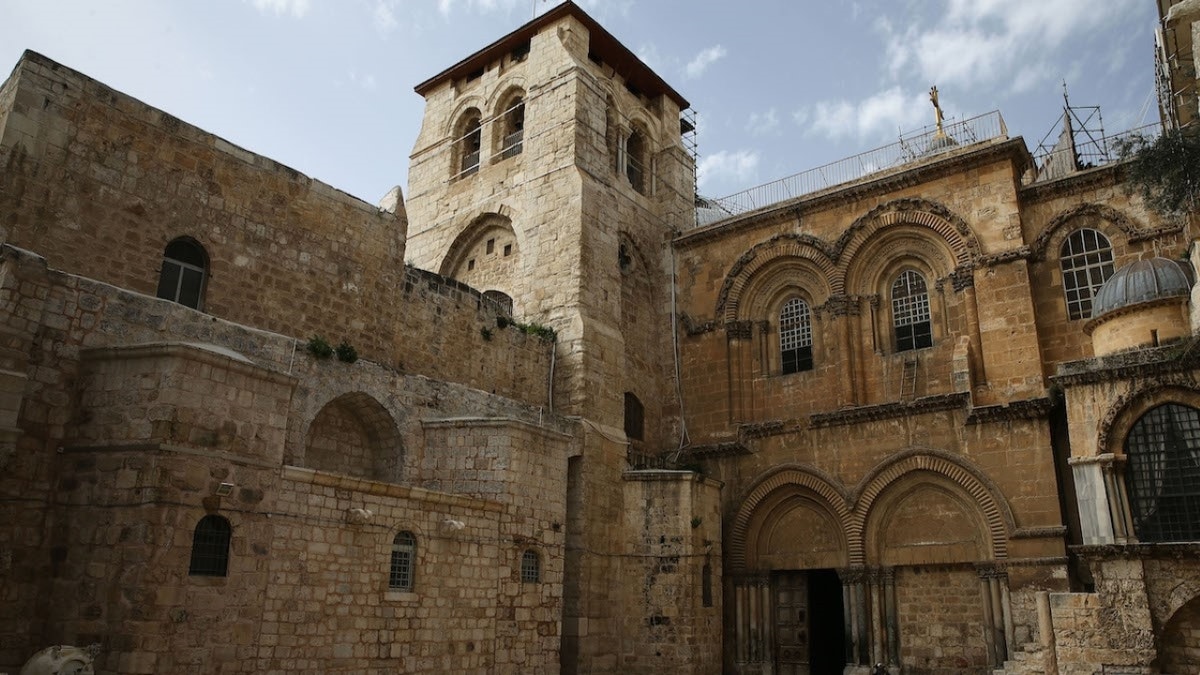
The Church of the Holy Sepulchre dates back to the fourth century. (Archivio Università di Roma Sapienza)
While Israel has faced recent criticism over treatment of Christians – mostly at the hands of a few extremists – the country is seen as a beacon of freedom of religion in the Middle East.
As of December 2025, Israel’s Christian population stood at approximately 184,200 people, representing 1.9% of the country’s total population. The community grew by 0.7% over the previous year.
Arab Christians account for 78.7% of Israel’s Christian population and comprise 6.8% of the country’s overall Arab population.
Most Arab Christians reside in northern Israel. Among non-Arab Christians, 42% live in the Tel Aviv and Central districts, compared to 33.9% in the Northern and Haifa districts.
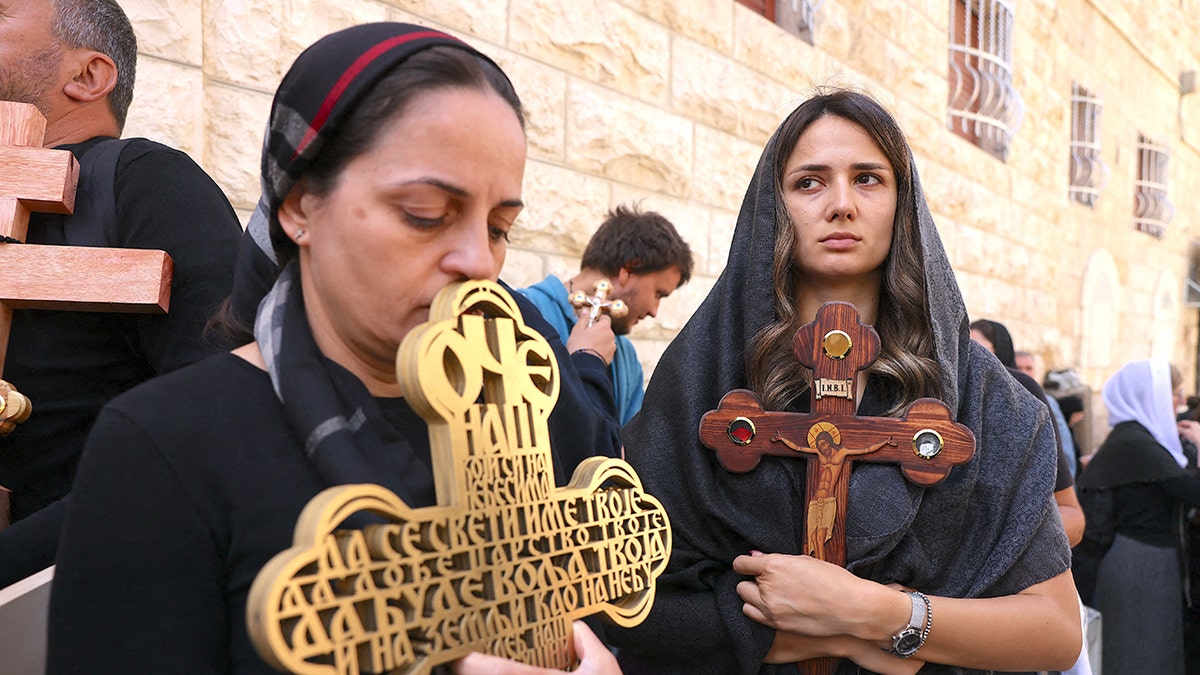
Christian pilgrims carrying wooden crosses walk through Jerusalem’s Old City towards the Holy Sepulcre church during the Orthodox Good Friday procession on May 3, 2024. (Photo by AHMAD GHARABLI/AFP via Getty Images)
Nolte said that Christians in Israel hold prominent positions, noting that the provost of the University of Haifa is a Maronite Christian and that Christian communities in the country report relatively high income levels. He also said that, in most cases involving civil rights and religious freedom brought by Christians in Israel, the outcomes have been decided in their favor.
«If you are comparing Israel to any Muslim country in the Middle East, the status of Christians is much higher. As a Christian, you are better off here than anywhere else in the region,» he added.
CHRISTOPHER RUFO: THE POLITICAL RIGHT AND THE ANTISEMITIC INFLUENCER PROBLEM
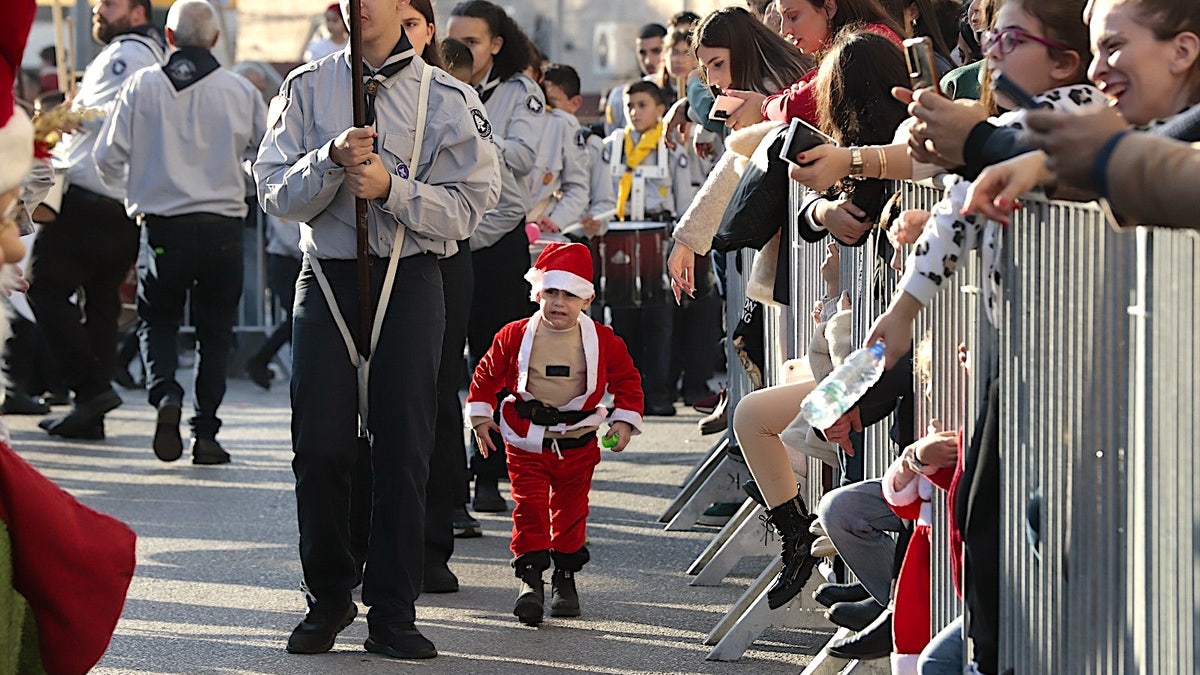
Israeli Christians in Nazareth hold a Christmas parade on Dec. 24, 2025. (Eitan Elhadez-Barak/TPS-IL)
Christopher Kuehl, founder of Present Witness and co-host of the One New Man podcast, emphasized that biblical illiteracy among younger generations is fueling confusion about Israel.
He opened his remarks at the conference by citing a recent U.S. study on Gen Z’s alignment with biblical teachings and how closely their worldview corresponds with scripture, noting that only about 5% demonstrated strong adherence.
«Israel gets thrown into that ignorance, that biblical ignorance. Social media is what teaches children and Gen Z; they spend eight hours a day on it and go to church once a week for 20 minutes. How does one create a message in 20 minutes that will overcome spending eight hours on social media every day?» Kuehl told Fox News Digital.
FAITH UNDER FIRE: NETANYAHU CALLS OUT EFFORTS TO DIVIDE CHRISTIANS AND ISRAEL IN US
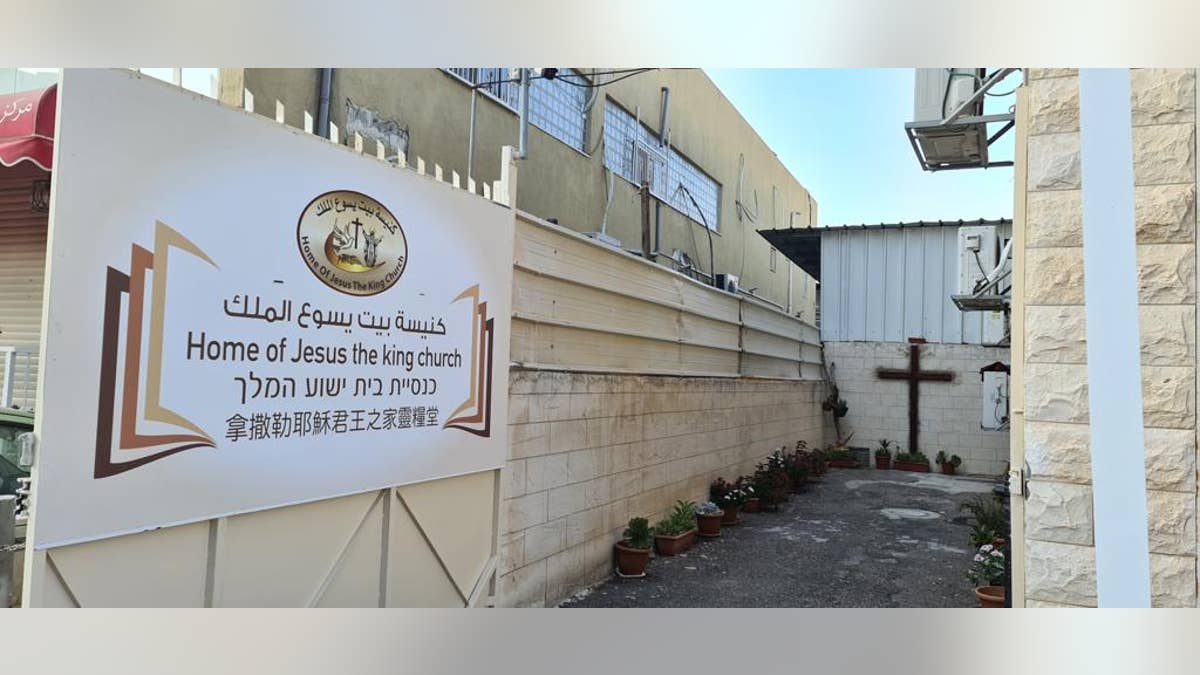
One Israeli pastor says one of the biggest challenges facing Israel’s Christian community is a low birth rate. Jesus King Church in Nazareth, Israel. (Photo: Pastor Saleem Shalash)
Pastor Matthew Earls joined the summit as part of Eagles’ Wings Ministries’ Israel Christian Nexus program, which focuses on young Christian leaders and gives them the opportunity to experience Israel early in their careers and build a well-rounded perspective.
«We want to teach biblical truth so that the church does not look completely different in the next generation,» Earls told Fox News Digital. «The greater mission is one of solidarity with the people of Israel, and of equipping people with talking points in the hope that dialogue can take place and lead to greater understanding, or at least mutual respect for one another’s positions,» he said.
Sacha Roytman, CEO of the Combat Antisemitism Movement, told Fox News Digital that Christians and Jews face many of the same challenges in defending their faith, history, and future, adding that those who reject Jews and Zionism also reject the Christian worldview because the two are aligned.
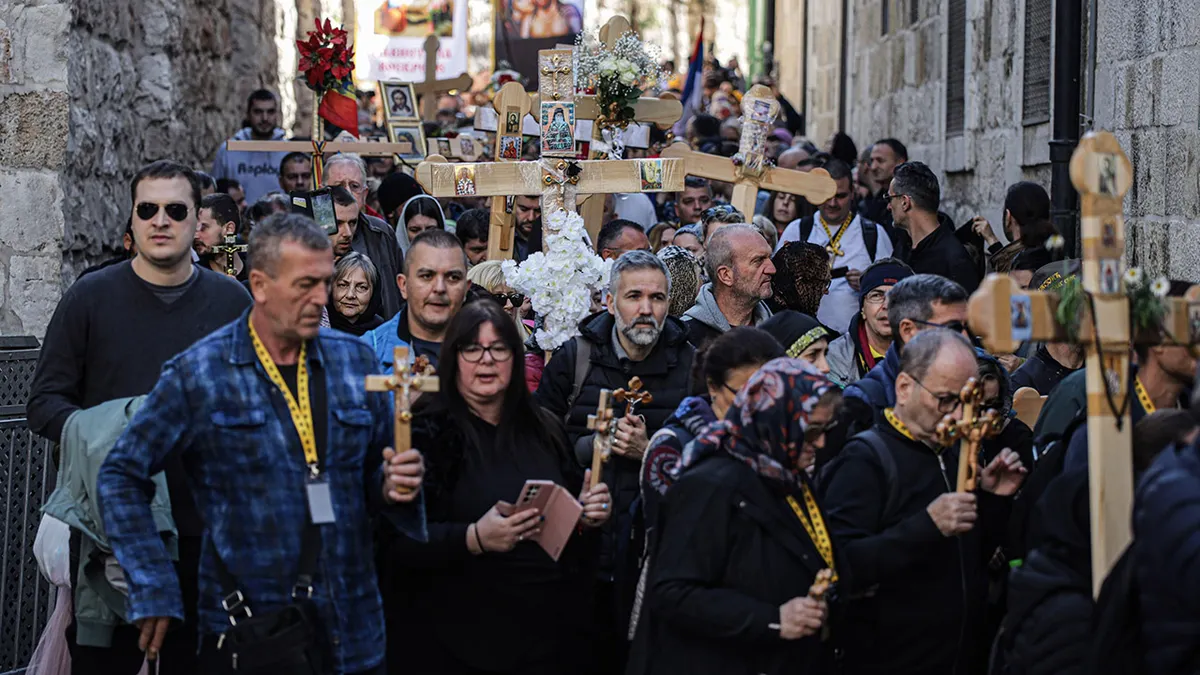
Orthodox Christians carry wooden crosses along the Via Dolorosa (Way of Suffering) in the Old City of Jerusalem during the Orthodox Good Friday procession before Holy Saturday. (Saeed Qaq/SOPA Images/LightRocket via Getty Images)
«I’m here to share this message with Christian leaders who go back to their communities empowered with more knowledge, more energy, and different tools to fight this battle,» Roytman said.
CLICK HERE TO DOWNLOAD THE FOX NEWS APP
As part of its research, CAM has examined how social media algorithms amplify antisemitic content and conspiracy theories. «We discovered that the algorithms are trained to deliver engaging content that upsets people and keeps them hooked. Often, it is anti-establishment content and conspiracy theories that fuel antisemitism,» Roytman said.
More than 200 theologians, pastors and ministry leaders from over 30 countries are attending in person, alongside approximately 3,000 online participants.
anti semitism, christianity religion, gen z, israel









NEWYou can now listen to Fox News articles!
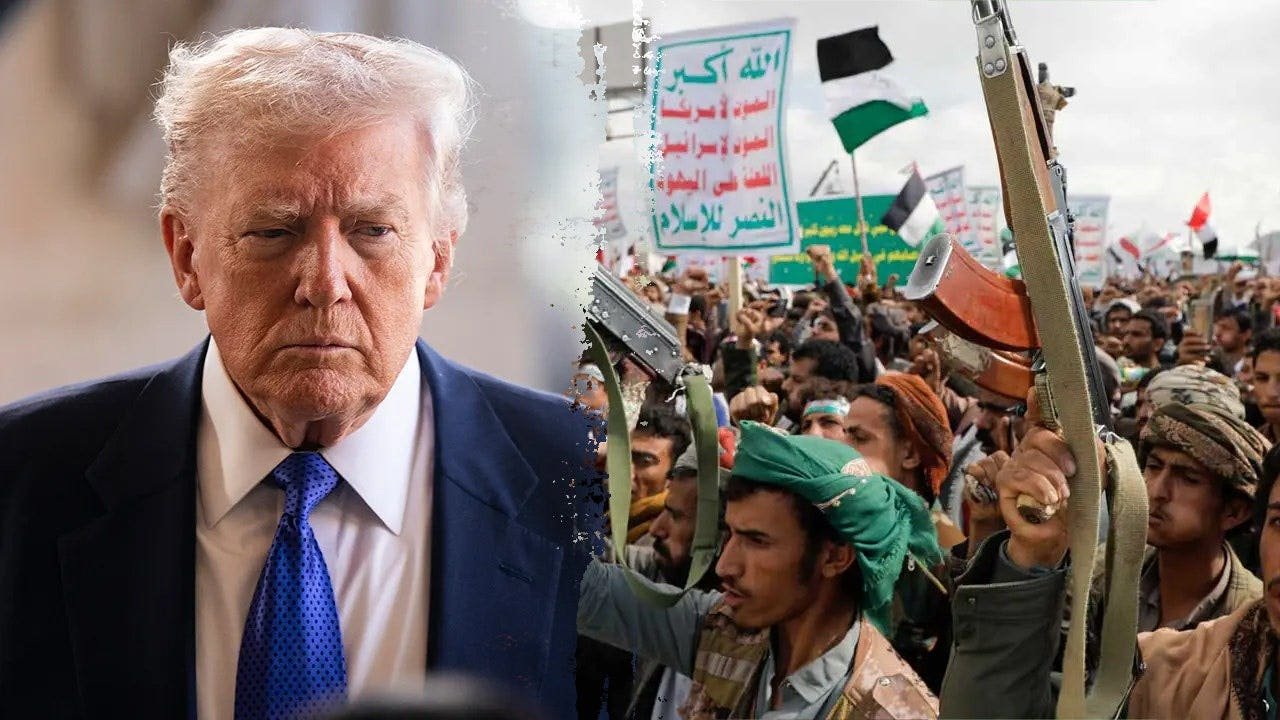
President Donald Trump said Tuesday the U.S. would «take care of things» if Yemen’s Iran-backed Houthis follow through on threats to impose a naval blockade against Saudi Arabia, as his administration reportedly backed Riyadh’s renewed military campaign against the group.
His comments came after the Houthis announced a naval blockade against Saudi Arabia Monday, only days after Saudi forces struck Sanaa International Airport and after Iran reportedly instructed the group to prepare to close the Bab el-Mandeb Strait if the U.S. attacks Iranian power infrastructure.
TRUMP THREATENS TO EXPAND STRIKES ON IRAN, SAYS POWER PLANTS ARE NEXT TO GO: ‘HIT THEM HARD’
«So far, it hasn’t happened, might happen, but we take care of things,» Trump said in the Oval Office. «If something like that happens, we take care of it.»
President Donald Trump announced «major combat operations» in Iran, marking a significant escalation in tensions between Washington and Tehran. (Al Drago/Getty Images)
Saudi forces targeted Sanaa International Airport on Monday after an Iranian Mahan Air flight carrying Houthi officials back from Iran was forced to divert, according to Axios. A U.S. official told the outlet the aircraft was believed to be carrying weapons, missile components and Iranian military personnel intended for the Houthis.
Trump’s warning comes as the administration has expanded military operations against Iran while the Houthis threaten to disrupt shipping in the Red Sea. The developments have fueled concerns that Washington could become increasingly involved in efforts to secure one of the world’s most important maritime trade corridors while simultaneously confronting Tehran in the Persian Gulf.
The prospect of simultaneous disruption at the Strait of Hormuz and the Bab el-Mandeb has become one of the biggest concerns for global shipping markets: together, the routes normally carry roughly one-third of global seaborne oil trade and serve as critical arteries for energy shipments between the Middle East, Europe and Asia, according to U.S. Energy Information Administration data.
The Houthis already have shown they can disrupt one of the world’s busiest shipping corridors. Since late 2023, the group has carried out more than 190 attacks on commercial shipping, forcing major carriers to abandon the Red Sea route in favor of the far longer trip around Africa.
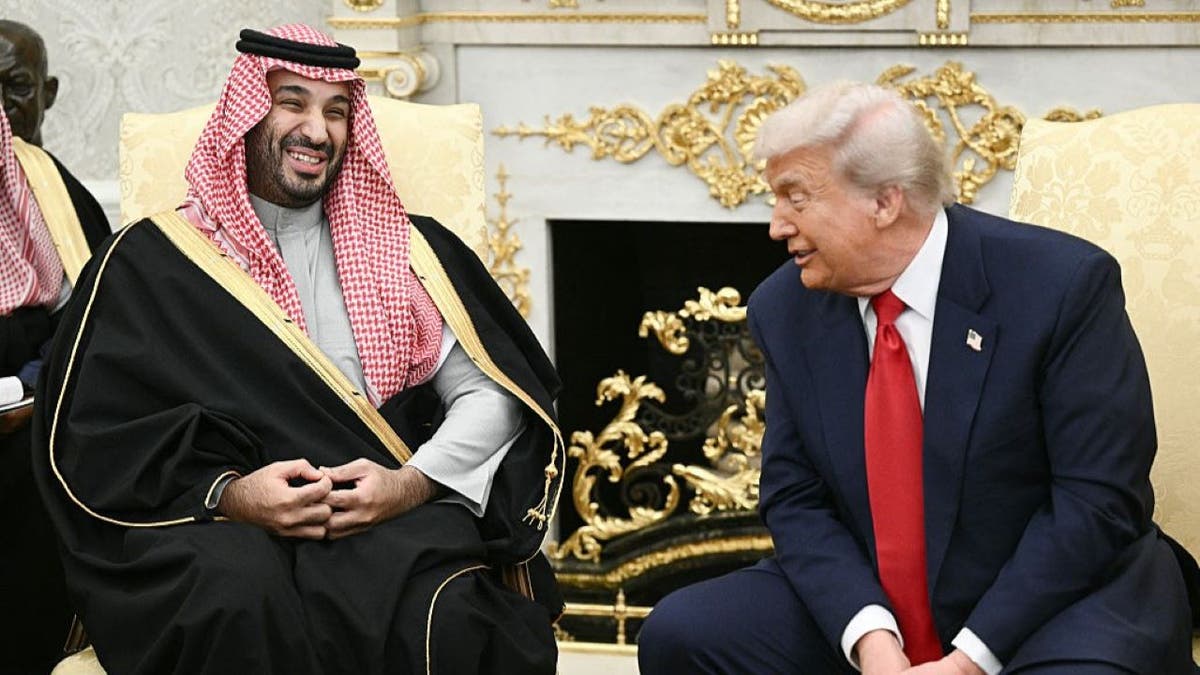
US President Donald Trump meets with Crown Prince and Prime Minister of the Kingdom of Saudi Arabia Mohammed bin Salman in the Oval Office of the White House in Washington, DC on November 18, 2025. Saudi Crown Prince Mohammed bin Salman arrived at the White House to fanfare and a jet flyover Tuesday, in his first visit to the United States since the 2018 murder of journalist Jamal Khashoggi. (Brendan Smialowski/AFP via Getty Images)
Saudi Crown Prince Mohammed bin Salman sought Trump’s approval before launching the latest strikes against the Houthis — and that approval was granted, according to the Axios report.
The White House could not be reached for comment. The Pentagon and U.S. Central Command declined to comment.
For years, the Houthis have evolved into one of Iran’s most effective regional partners, allowing Iran to pressure global commerce while avoiding a direct military confrontation with the United States or its allies. The group has repeatedly launched missiles and drones at commercial vessels transiting the Red Sea, disrupting international shipping and forcing vessels to reroute around southern Africa.
IRAN-BACKED TERROR PROXY HOUTHIS THREATEN FRESH ATTACKS AFTER YEMEN AIRPORT STRIKE
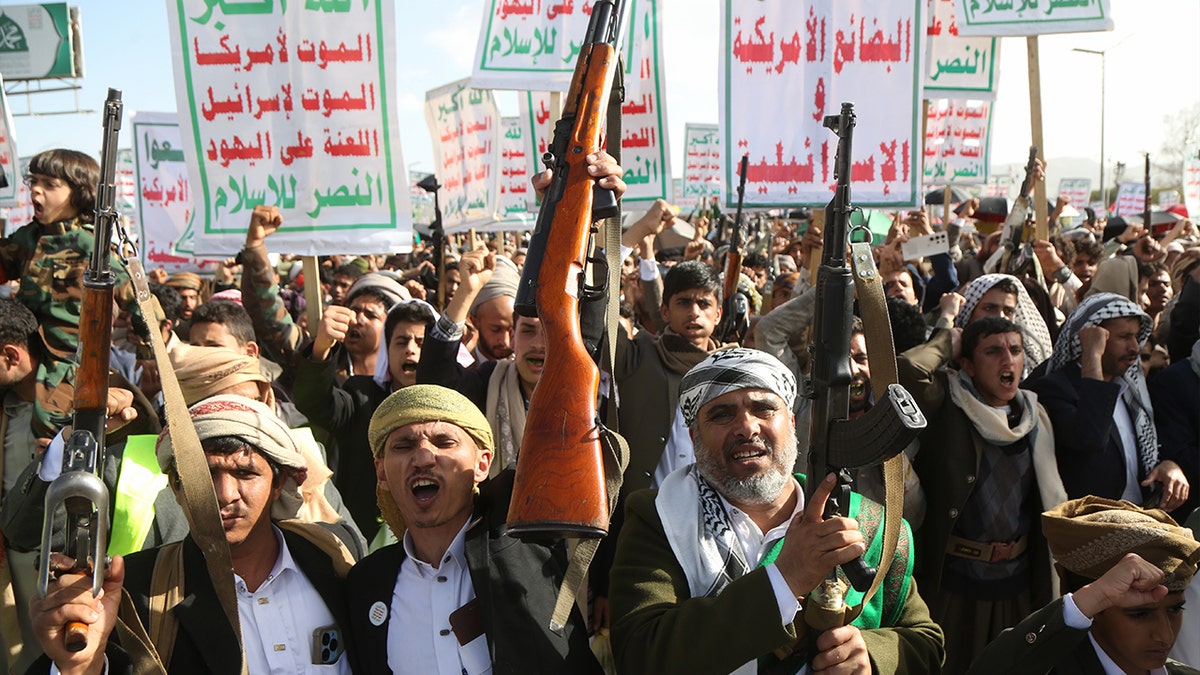
Yemen’s Iran-backed armed Houthi group has warned they will move to shutter the Bab Al-Mandeb Strait through missile-drone attacks if Gulf nations join the US-Israel war on Iran. (Mohammed Hamoud/Getty Images)
Although direct fighting between Saudi Arabia and the Houthis largely subsided following a U.N.-brokered truce in 2022, the group continued expanding its missile, drone and maritime capabilities with Iranian support. This week’s exchange of Saudi airstrikes and Houthi missile attacks marked the most significant cross-border escalation between the two sides in roughly four years.
Bridget Toomey, a research analyst at the Foundation for Defense of Democracies, said the latest escalation was driven by Saudi concerns that Iran and the Houthis were attempting to establish a dangerous new status quo by opening a direct air link between Tehran and Houthi-controlled Sanaa.
She said such flights would create an easier route for Iran to move weapons, drones and Islamic Revolutionary Guard Corps advisers into Yemen, posing a threat not only to Saudi Arabia but also to broader U.S. and international security interests.
TRUMP WON’T RULE OUT KHARG ISLAND TAKEOVER: WHAT A US ASSAULT COULD LOOK LIKE
«A direct air connection between Tehran and Sanaa would be a serious threat, not just to the international community, but also to Saudi Arabia,» Toomey told Fox News Digital.
Rather than signaling a return to the yearslong Saudi-led intervention in Yemen, Toomey described Riyadh’s response as «a measured escalation» intended to demonstrate it would not allow such an air bridge to become normalized.
That objective appeared to shape one of Saudi Arabia’s most consequential strikes this week.
The Bab el-Mandeb Strait, which connects the Red Sea with the Gulf of Aden, is one of the world’s busiest maritime choke points. Nearly 15% of global seaborne trade passes through the corridor each year, making it a critical route for commercial shipping and energy supplies moving between Asia and Europe.
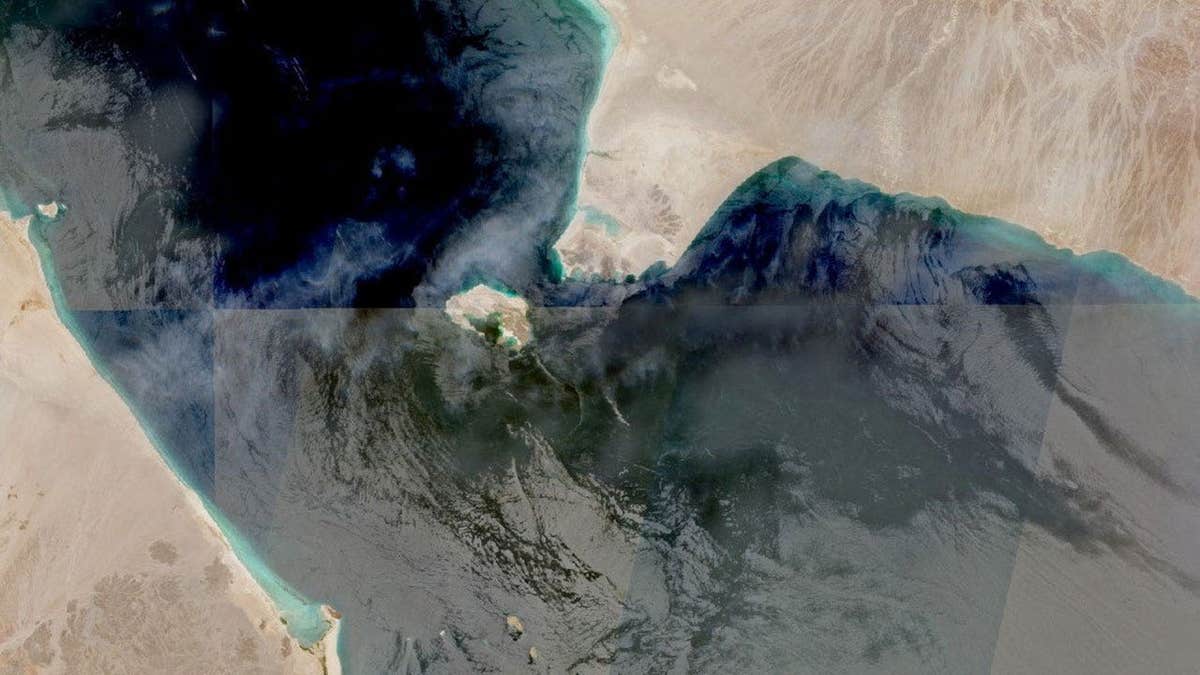
A satellite imagery shows Bab el Mandeb Strait, a key shipping waterway and the gateway to the Red Sea, as Iran threatens using Yemen’s Houthi allies to shut the Bab el-Mandeb gateway to the Red Sea, in this handout picture dated July 12, 2026. (Nasa Worldview/Handout via Reuters)
The latest threat comes as commercial shipping through the Strait of Hormuz has also faced disruption amid escalating tensions between the United States and Iran. While the two waterways are separated by hundreds of miles, together they form the principal maritime corridor linking the Persian Gulf with Europe. Serious disruption to both would place additional pressure on global energy exports, increase shipping costs and deepen supply chain disruptions.
Toomey said the Houthis occupy a unique position within Iran’s regional network because of where they are located.
«They’re crucial to Iran’s broader ability to expand the conflict,» she said. «Iraqi militias or Hezbollah don’t sit on a maritime choke point.»
Still, she cautioned against viewing the Houthis simply as an extension of Tehran, noting that Iran’s command and control over the group has historically been less direct than its relationships with some of its other proxy organizations.
Gregg Roman, executive director of the Middle East Forum, said Trump’s backing of the Saudi operation and his latest warning to the Houthis point to an administration willing to support regional allies while confronting Iranian-backed groups that threaten maritime commerce.
«The Iranians are trying to project power. The president is supportive of any effort to limit that projection,» Roman told Fox News Digital.
Roman said the airport strike reinforced Saudi Arabia’s long-running effort to prevent Iran from establishing a direct supply corridor into Houthi-controlled Yemen.
CLICK HERE TO DOWNLOAD THE FOX NEWS APP
«We’re certainly not going to allow you to have any shipments to reinforce the Houthis,» he said.
If the campaign continues with Washington’s backing, it would place one of Iran’s most strategically valuable regional partners under renewed military pressure while increasing the cost of Tehran’s broader effort to project power across the Middle East.
saudi arabia, donald trump, war with iran, geopolitics, middle east foreign policy
NEWYou can now listen to Fox News articles!
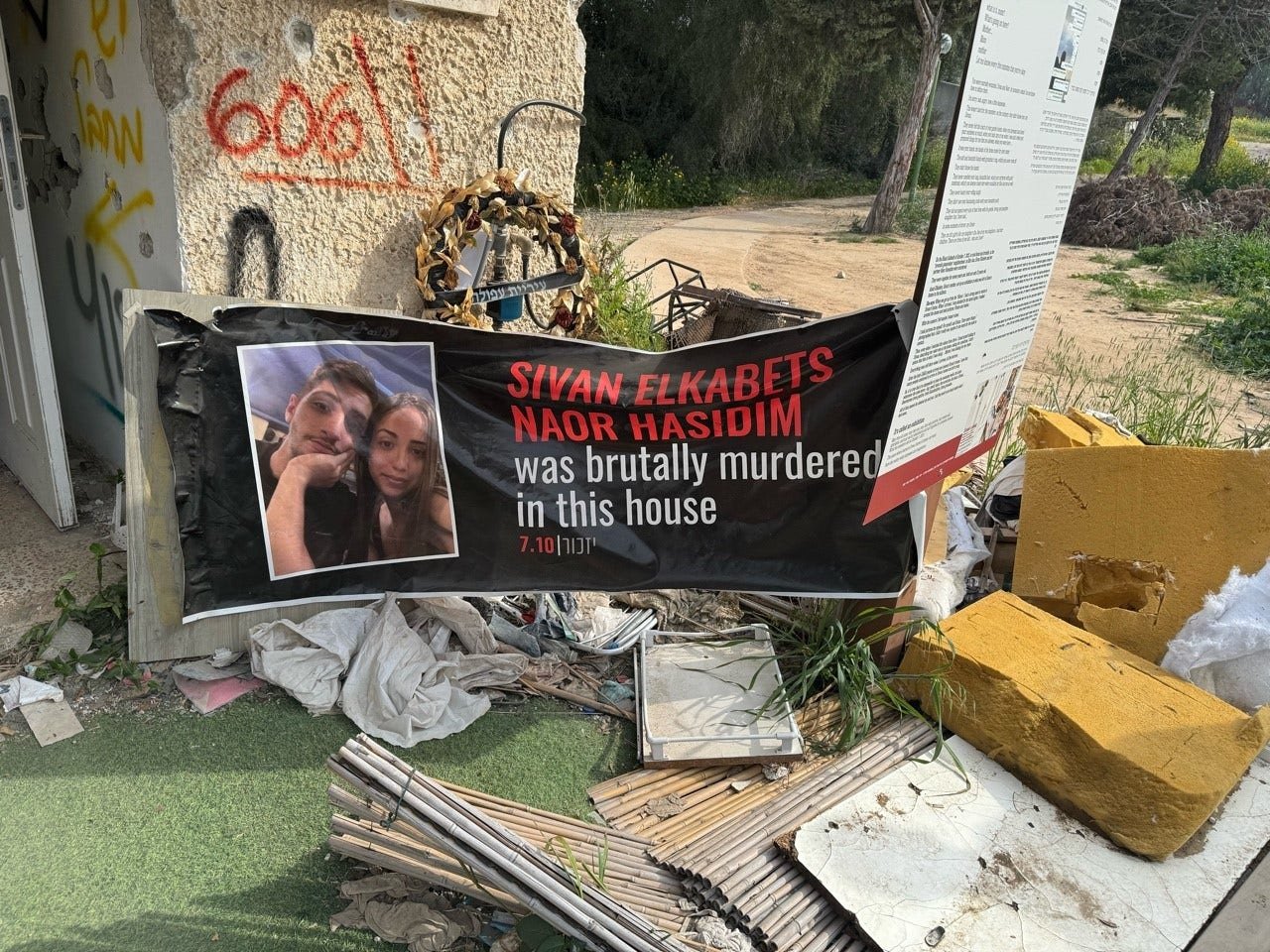
The «Return to October» exhibition offers an immersive reconstruction of the Hamas-led Oct. 7, 2023, massacre, combining video with declassified Israel Defense Forces intelligence and planning materials recovered in the Gaza Strip that reveal how the Palestinian terrorist group planned and carried out its cross-border assault.
The 600-square-meter exhibition, assembled by the Israel Intelligence Heritage & Commemoration Center (IICC), a nonprofit dedicated to commemorating fallen members of Israel’s intelligence community.
The exhibition features vehicles used in the attack, a film on the abduction of Israeli hostages, a mock Hamas tunnel, and excerpts from the Israel Defense Forces’ 47-minute compilation of raw footage from the assault.
INSIDE ISRAEL’S MISSION TO TRAIN CIVILIANS TO STOP THE NEXT OCT 7-LIKE TERROR ATTACK
A Hamas kidnapping kit from the Oct. 7 attack containing handcuffs, electric shock devices and syringes intended to inject hostages who resisted was displayed at the ‘Return to October’ exhibition in Israel. (Amelie Botbol for Fox News Digital)
«The main conclusion of this exhibition is that Hamas prepared this terror invasion over a long period in a highly organized and professional manner. It gathered extensive intelligence over many years, and visitors can see examples of that intelligence-gathering effort throughout the exhibition,» Yossi Kuperwasser, head of the Institute for the Research of the Methodology of Intelligence at the Israel Intelligence Heritage & Commemoration Center, told Fox News Digital.
Kuperwasser said the exhibition’s most significant feature is its collection of documents seized by the IDF in Gaza that Hamas sought to keep hidden. Among them are materials indicating that Hezbollah chose not to fully join the Oct. 7 attack out of concern that Israel would respond with a major offensive. The documents also shed light on the relationship between Hamas and Iran, including the extent of Tehran’s involvement.
«The most important lesson is that Israel’s enemies are constantly planning large-scale terrorist attacks. They seek to wipe us off the map, and if you become complacent and assume they are not preparing such attacks, you are mistaken,» he said.
ISRAEL’S MILITARY ELIMINATES HAMAS TERRORIST WHO HELPED ABDUCT AMERICAN-ISRAELI HOSTAGE, 3 OTHERS
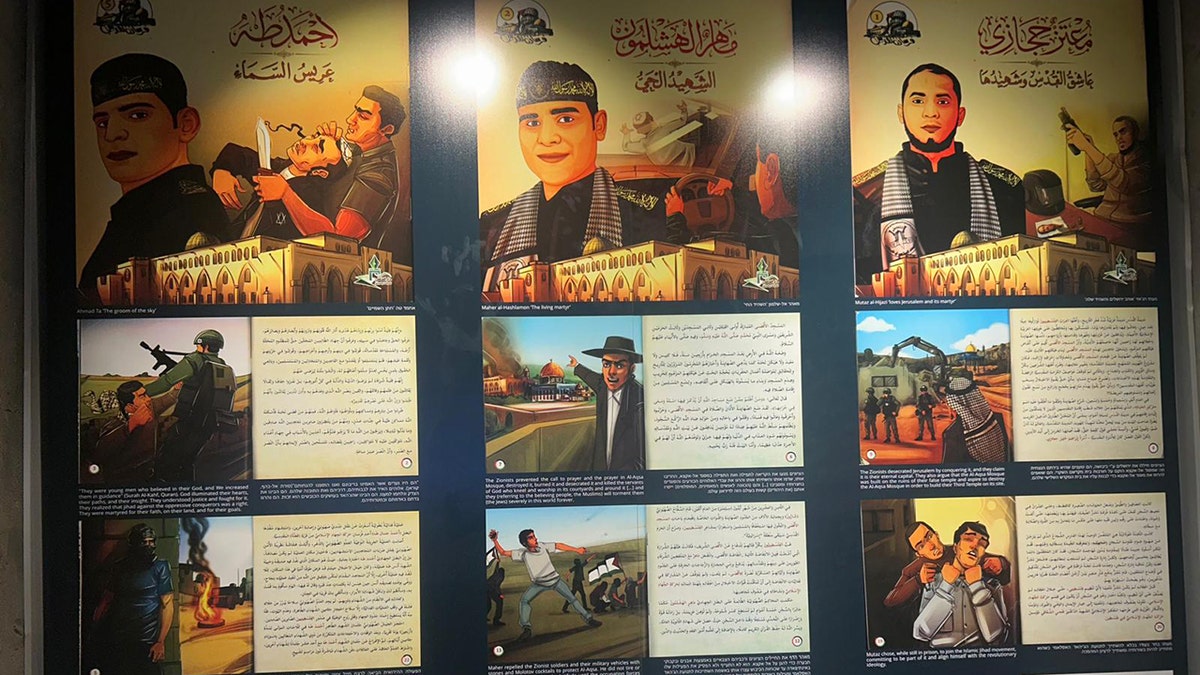
Anti-Israel and antisemitic Hamas incitement material was displayed at the ‘Return to October’ exhibition in Israel. (Amelie Botbol for Fox News Digital)
The exhibition’s first room features a map marking 114 points where terrorists breached the border into Israel on Oct. 7. Red circles identify the communities that were attacked, while a dotted red line traces where the attackers were ultimately stopped. According to the exhibition, about 4,300 Hamas, Palestinian Islamic Jihad and other terrorist operatives entered Israel at the start of the assault, followed by another 1,500 to 1,700 Gazans described as «uninvolved civilians.»
Displayed in the room are Egyptian, North Korean, Russian, Chinese and Iranian-made weapons, alongside arms supplied to Hamas by Hezbollah.
The tour guide Eyal, whose last name could not be disclosed, displayed a kidnapping kit containing handcuffs, electric shock devices and syringes intended to sedate hostages, alongside what he described as a «spiritual kit» containing a miniature Quran and a fatwa, or religious ruling, calling for the killing of Israelis.
TRUMP ADMINISTRATION PROBES UNRWA OVER ALLEGED EMPLOYMENT OF 1,500 TERRORISTS

Personal belongings recovered from Israeli homes burned by Hamas terrorists during the Oct. 7, 2023, attack are displayed at the ‘Return to October’ exhibition in Israel. (Amelie Botbol for Fox News Digital)
Another display features military gear belonging to former Hamas leader Yahya Sinwar, as well as a handwritten document recovered by the IDF from the European Hospital in Gaza.
«Here, he instructs Hamas terrorists to attack the Zionists, burn villages, kill and kidnap people, humiliate soldiers, and document everything using GoPro cameras for social media,» Eyal said.
The document also states that Sinwar hoped Iran, the Houthis, Hezbollah, Arabs in Judea and Samaria, and Arab citizens of Israel would join the assault.
Also on display are aerial photographs that Hamas used to map Kibbutz Be’eri, identifying individual homes, the armory and the security chief’s residence; an operational plan dated Oct. 6 that was shared only with Hamas commanders to prevent leaks; and a booklet translating Arabic phrases into Hebrew.
The exhibition also highlights Hamas education and incitement. Shelves display books recovered from Gaza, including copies of Mein Kampf found in schools, while photographs show children posing with weapons after attending Hamas summer camps.
«It begins in childhood,» Eyal told Fox News Digital.
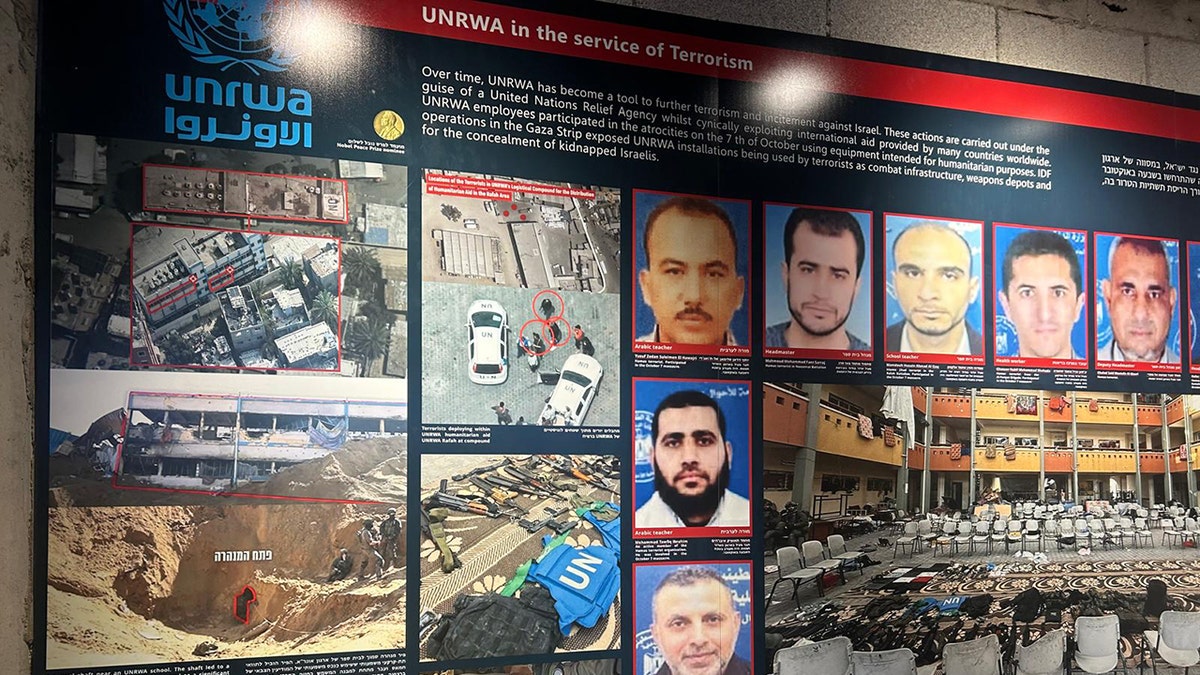
Displays featuring what organizers say are UNRWA facilities and personnel involved in terrorist activities were shown at the ‘Return to October’ exhibition in Israel. (Amelie Botbol for Fox News Digital)
Another room focuses on Hamas’s exploitation of journalists and UNRWA for terrorist purposes, featuring displays that organizers say show 60% of reporters killed in Gaza were Hamas members or affiliated with the organization, a photograph of a UNRWA school allegedly used as a combat headquarters, and a map of Israel labeling towns and cities with Arabic names.
A garage-like room displays a white Toyota pickup truck and motorcycles used in the terror assault.
«We found that 153 pickup trucks and 350 motorcycles entered Israel that day. Many of these Toyotas were imported into Gaza through Ashdod Port in Israel,» Eyal said.
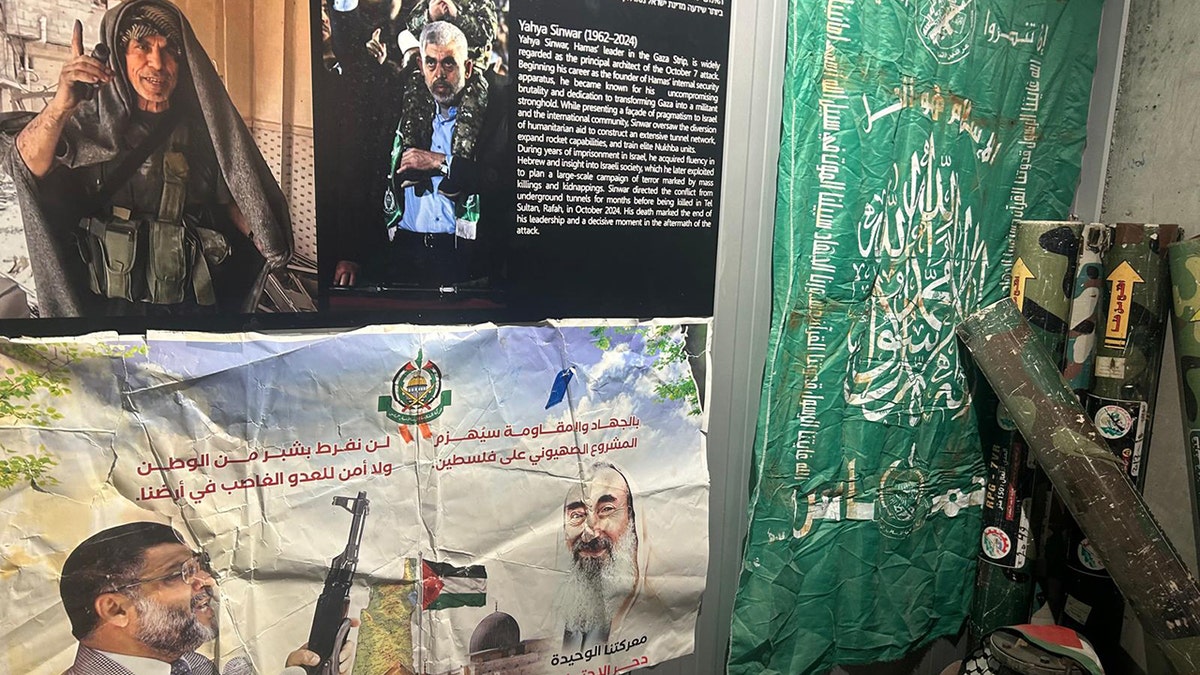
Military equipment displayed at the exhibition that organizers say belonged to former Hamas leader Yahya Sinwar was shown at the ‘Return to October’ exhibition in Israel. (Amelie Botbol for Fox News Digital.)
Another room shows excerpts from the IDF’s 47-minute compilation of raw footage from the attacks. Many journalists chose not to watch because of the graphic content, while some who remained in the room left in tears.
Toward the end, a corridor displays the names and photographs, in alphabetical order, of the 1,224 people killed during the attacks, including soldiers, police officers, civilians, Jews, Arabs, Christians, and Druze.
CLICK HERE TO DOWNLOAD THE FOX NEWS APP
«When we fail in our mission, this is the situation we arrive at,» Eyal said.
The final room features footage of Israeli hostages reuniting with their families and concludes with an optimistic painting depicting a flourishing southern Israel.
anti semitism, iran, war with iran, terrorism, israel

El cese del máximo general de Ucrania marca el fin de una era

Con nuevos dueños, La Suipachense reactivó empleos, relanza productos y apunta a exportar

Cuti Romero, con un pie afuera del Tottenham mientras dos gigantes de Europa lo tienen en la mira

El Gobierno traspasa a Santa Fe el manejo de una ruta nacional estratégica

Trump warns Houthis after shipping blockade threat: ‘We take care of things’

Tensión en el Puente Pueyrredón: manifestantes quemaron neumáticos y estan frente a frente con la policía

Sin la Copa y sin Messi en el avión, vuelve Tapia y deberá enfrentar tres frentes de tormenta tras la pausa del Mundial

Le ganan a la inflación: los senadores pasarán a cobrar $12 millones brutos a partir de agosto

Escándalo Mundial: Las presiones secretas, la amenaza de la FIFA por Malvinas y la verdad detrás del partido contra España

Samuel L. Jackson llamó a Argentina “el país más racista del mundo”: la contundente respuesta que le dejó Bárbara Lombardo

 POLITICA2 días ago
Sin la Copa y sin Messi en el avión, vuelve Tapia y deberá enfrentar tres frentes de tormenta tras la pausa del Mundial
- POLITICA2 días ago
Le ganan a la inflación: los senadores pasarán a cobrar $12 millones brutos a partir de agosto
- DEPORTE12 horas ago
Escándalo Mundial: Las presiones secretas, la amenaza de la FIFA por Malvinas y la verdad detrás del partido contra España