
INTERNACIONAL
Clinton judge orders DOJ to unseal the Epstein files it has been keeping hidden

NEWYou can now listen to Fox News articles!
A federal judge has ordered the Justice Department to release more unredacted Jeffrey Epstein records or justify keeping them sealed by July 2, with redacted versions of the files including sensitive interview notes documenting a minor’s uncorroborated sexual assault allegations against President Donald Trump.
U.S. District Judge Emmet Sullivan, a Clinton-appointed judge, issued the order after granting a preliminary injunction sought by independent journalist Katie Phang, who sued Acting Attorney General Todd Blanche in April. She alleged that the Justice Department failed to comply with the Epstein Files Transparency Act that was signed last year when she requested several documents. The law requires the government to make Epstein-related investigative records public while allowing limited redactions to protect victims and other legally protected information.
More than half of the six million files have been made publicly available, with the remaining files withheld because of legal privilege protections or because they are duplicates, according to the Justice Department. But the department has faced growing criticism over the scope of its redactions, with critics arguing it has concealed information that should be public under the law.
EPSTEIN FALLOUT GROWS AS DOJ WATCHDOG DIGS DEEPER INTO HANDLING OF THE CASE
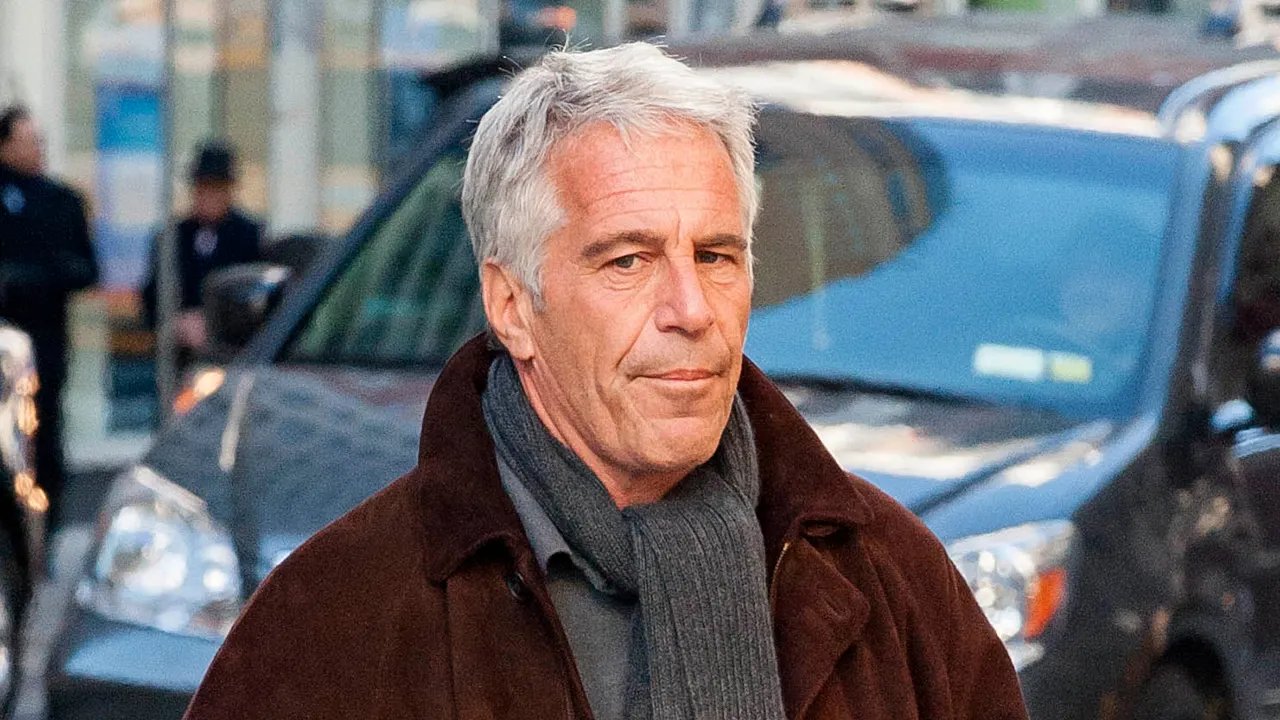
Jeffrey Epstein walks outdoors in New York City on Feb. 23, 2011. He is the subject of a bipartisan House Oversight Committee investigation. (David McGlynn)
In a 48-page memorandum, Sullivan ordered the Justice Department to either disclose less-redacted versions of several key Epstein records or justify the redactions. The documents covered by the order include eight emails with hidden senders or recipients; a 2007 draft federal indictment — with the names of potential co-conspirators redacted — that was never filed; and a 2019 email referencing alleged co-conspirators whose identities were obscured.
Among the redacted records is an email — with the recipient’s identity concealed — in which Epstein wrote that he «loved» a torture video he watched. During the litigation, Blanche suggested the recipient was wealthy Middle Eastern businessman Sultan Ahmed bin Sulayem.
The order also covers FBI records summarizing 2019 interviews with a woman who made allegations involving President Donald Trump. In the FBI’s interview summary, the woman alleged she met Epstein when she was 14 or 15 years old and that he later introduced her to Trump, whom she accused of sexually assaulting her in explicit detail. Those claims are uncorroborated, and the president has denied the allegations. Trump was friends with the late financier in the 1990s and early 2000s but cut ties after a falling-out in the mid-2000s.
The Justice Department is also required to issue a complete log of every redaction made in records released under the Epstein Files Transparency Act.
DOJ PUBLISHES TROVE OF EPSTEIN FILES, SAYS MORE TO COME AFTER FRIDAY DEADLINE
The Justice Department had argued the lawsuit should be dismissed because Phang could have sought the records through the Freedom of Information Act. Sullivan rejected that argument, concluding that FOIA did not provide Phang an «adequate remedy.»
Phang’s lawyers said the department’s previous denial of related FOIA requests showed that FOIA was not an adequate way to obtain the records.
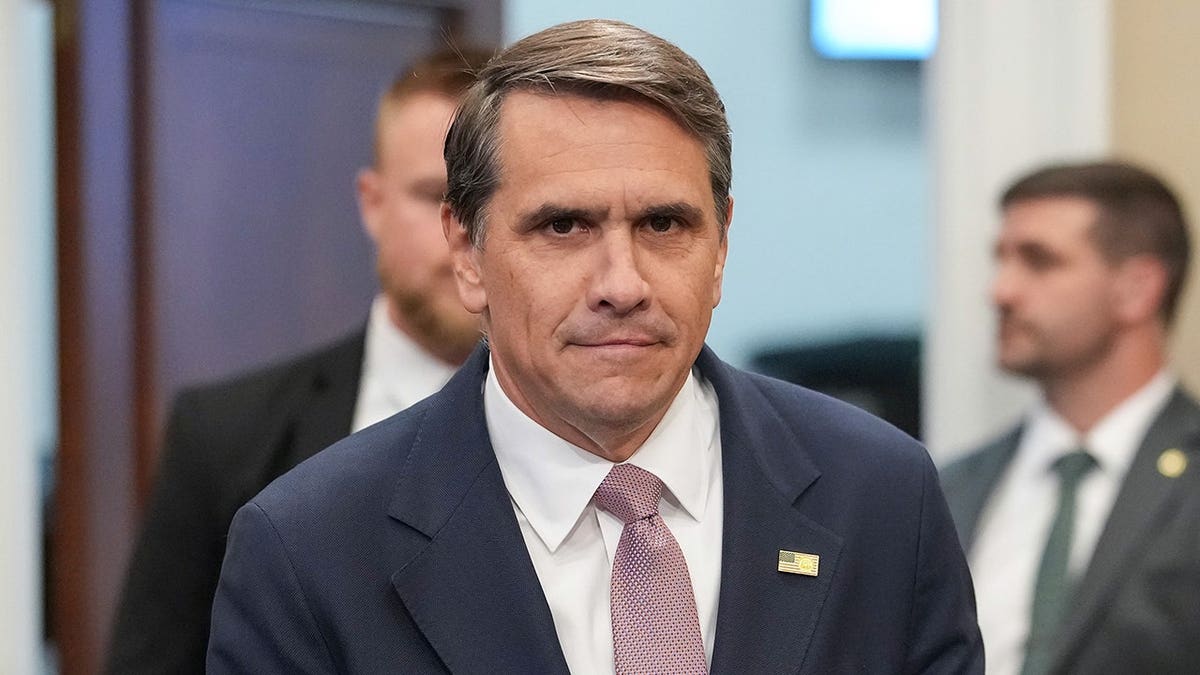
Acting U.S. Attorney General Todd Blanche. (Andrew Harnik/Getty Images)
«I have standing to be able to get Todd Blanche to comply with Judge Sullivan’s order, which is now telling him that on or before July 2, he either has to put up or shut up,» Phang said during an appearance on the MeidasTouch network. «He either has to bring forth unredacted files or show cause as to why he should not or cannot do so.»
The ruling also noted that the department itself had previously acknowledged the Epstein Files Transparency Act required broader disclosure than would ordinarily occur through FOIA, including limiting certain exemptions typically available under federal public records law.
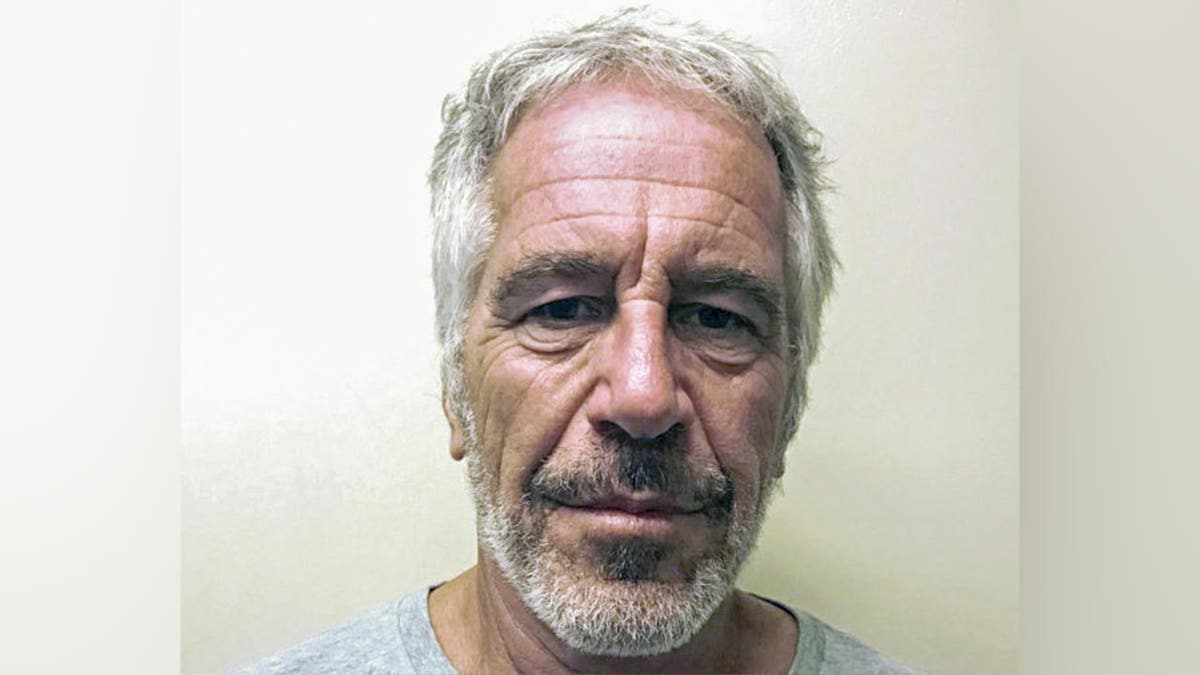
Jeffrey Epstein’s mugshot was taken in New York in 2019 after federal authorities filed trafficking charges against him. (Kypros/Getty Images)
CLICK HERE TO DOWNLOAD THE FOX NEWS APP
Sullivan has become a prominent figure in cases involving Trump and his allies. He oversaw former National Security Advisor Michael Flynn’s criminal case and challenged the Trump Justice Department’s effort to drop the charges after Flynn pleaded guilty. Sullivan also presided over the Jan. 6 Capitol riot cases.
Fox News Digital reached out to the Justice Department and the White House for comment.
jeffrey epstein, attorney general, fbi, federal judges, justice department, politics









INTERNACIONAL
El Salvador recibe de la ONU equipo para detectar documentos fraudulentos en controles fronterizos

El Salvador incorporó un nuevo dispositivo de verificación documental entregado por la Oficina de las Naciones Unidas contra la Droga y el Delito (UNODC) para reforzar los mecanismos nacionales de identificación de documentos de viaje e identidad fraudulentos. La entrega se realizó en el marco de un proyecto de cooperación internacional, informó el Ministerio de Relaciones Exteriores este viernes.
La ceremonia oficial tuvo lugar en Viena, Austria, y fue organizada por el Laboratorio y Servicios Científicos (LSS) de la UNODC como parte del proyecto “Fortalecimiento de las capacidades para la investigación de la escena del crimen y el examen de documentos de seguridad en América Latina y el Caribe”, financiado por el Gobierno de Canadá. El evento reunió a especialistas en análisis documental y gestión fronteriza de 16 países de América Latina y el Caribe.
De entre los participantes hay otros países centroamericanos: Guatemala, Costa Ria, Honduras, Panamá y República Dominicana. Cada uno de los países participantes recibió un equipo de verificación documental para mejorar la detección y el reconocimiento de documentos fraudulentos en los puntos de control fronterizo y en otras instancias de verificación de identidad, según el Ministerio de Relaciones Exteriores.
“El objetivo del evento fue fortalecer las capacidades nacionales para la detección y el examen de documentos de viaje e identidad fraudulentos, mediante una capacitación especializada en técnicas avanzadas de verificación documental y el uso operativo de dispositivos de verificación de nivel intermedio”, expone la Cancillería salvadoreña.

Durante el evento, se ofreció una capacitación especializada en técnicas avanzadas de verificación documental, enfocada en el uso operativo de dispositivos de nivel intermedio. Representantes de la Policía Nacional Civil (PNC) de El Salvador participaron en el entrenamiento técnico impartido por la UNODC en Viena, donde completaron el proceso de formación y recibieron el equipo correspondiente.
En abril de 2026, La Dirección General de Migración y Extranjería (DGME) informó que en aras del fortalecimiento de la infraestructura limítrofe, El Salvador amplió sus opciones de control migratorio con la apertura de un nuevo punto fronterizo en el cantón El Coco, situado en el distrito de Chalchuapa, departamento de Santa Ana.
Desde el viernes 13 de marzo de 2026, quedó establecido este punto de control que conecta de manera directa con el municipio de Jerez, en el departamento de Jutiapa, Guatemala, lo que permite el tránsito debidamente regulado de personas entre ambas naciones hermanas.

Además, el país lleva dos años desde que la DGME, junto con el respaldo del gobierno de los Estados Unidos, inauguró el Centro Nacional de Análisis de Pasajeros (CENAP). Esta unidad especializada en inteligencia migratoria y perfilamiento de pasajeros facilitó el ingreso seguro al país en vuelos internacionales a través de una sede operativa conjunta.
El CENAP nació como una iniciativa conjunta entre la Dirección de Migración y la Oficina de Aduanas y Protección Fronteriza de Estados Unidos (CBP) para agilizar el ingreso al territorio de forma segura mediante herramientas tecnológicas sofisticadas y equipos de alto nivel.
Esto permitió perfilar y rastrear información de ciudadanos nacionales y extranjeros con destino a El Salvador, examinar ciclos migratorios de perfiles sospechosos, detectar posibles amenazas a la seguridad nacional, identificar personas de riesgo, combatir redes criminales de tráfico de personas, gestionar alertas internacionales y recopilar estadísticas, entre otras acciones.
corresponsal:Desde San Salvador, El Salvador
INTERNACIONAL
Trump’s White House ballroom foes face ‘very tough argument’ at Supreme Court, legal experts say
NEWYou can now listen to Fox News articles!
President Donald Trump could win the legal fight over his planned White House ballroom, say two legal experts who believe the U.S. the Supreme Court could end the case without weighing in on the underlying constitutional issue.
In a lengthy social media post Friday, Trump vowed to take the fight over his White House ballroom to the Supreme Court after the D.C. Circuit upheld a lower court order blocking above-ground construction. In a 2-1 decision, the appeals court ruled that the project cannot move forward without Congressional approval.
Trump pointed to the dissent written by Judge Neomi Rao, appointed by Trump in his first term, as grounds for appealing the decision to Supreme Court. Rao argued that the plantiffs, the National Trust for Historic Preservation, lack legal standing in the case.
The National Trust for Historic Preservation built its case for legal standing around Alison Hoagland, a member who lives near the White House and regularly visits President’s Park. Hoagland said she visits the area about once a month and argued that the proposed ballroom’s size and design would diminish her enjoyment of the area by overshadowing the White House and weakening its aesthetic.
TRUMP SAYS WHITE HOUSE BALLROOM RULING JEOPARDIZES LIVES OF FUTURE PRESIDENTS, VOWS SUPREME COURT APPEAL
President Donald Trump has overseen ongoing construction of the underground military fortress that is going to be below the $400 million privately funded East Wing ballroom. (Chip Somodevilla/Getty Images)
But according to Rao, the National Trust did not establish the kind of injury necessary to invoke the courts’ authority to block the project.
«The district court elevated the aesthetic displeasure of a single passerby over the government’s security interests in the ballroom and the security risks of leaving an open construction site at the President’s home and office,» Rao wrote.
Former Justice Department attorney Abhishek Kambli agreed, telling Fox News Digital the National Trust could face a particularly difficult hurdle on standing at the Supreme Court. He noted that, while Congress created the National Trust, the group still must show that its lawsuit is germaine to its interests.
«While they do have ownership of some properties, the President’s Park, where the White House East Ballroom is, is not one of them,» Kambli said. «And I think that’s going to be a very tough argument to sustain, especially with the Supreme Court, that’s more likely to agree with Rao than they are the [circuit court] majority, given the makeup of the Supreme Court, and the fact that the Supreme Court is very strict on standing.»
OBAMA JUDGE RULES ON EFFORT TO BLOCK AMERICA 250 EVENTS AT WH AND LINCOLN MEMORIAL
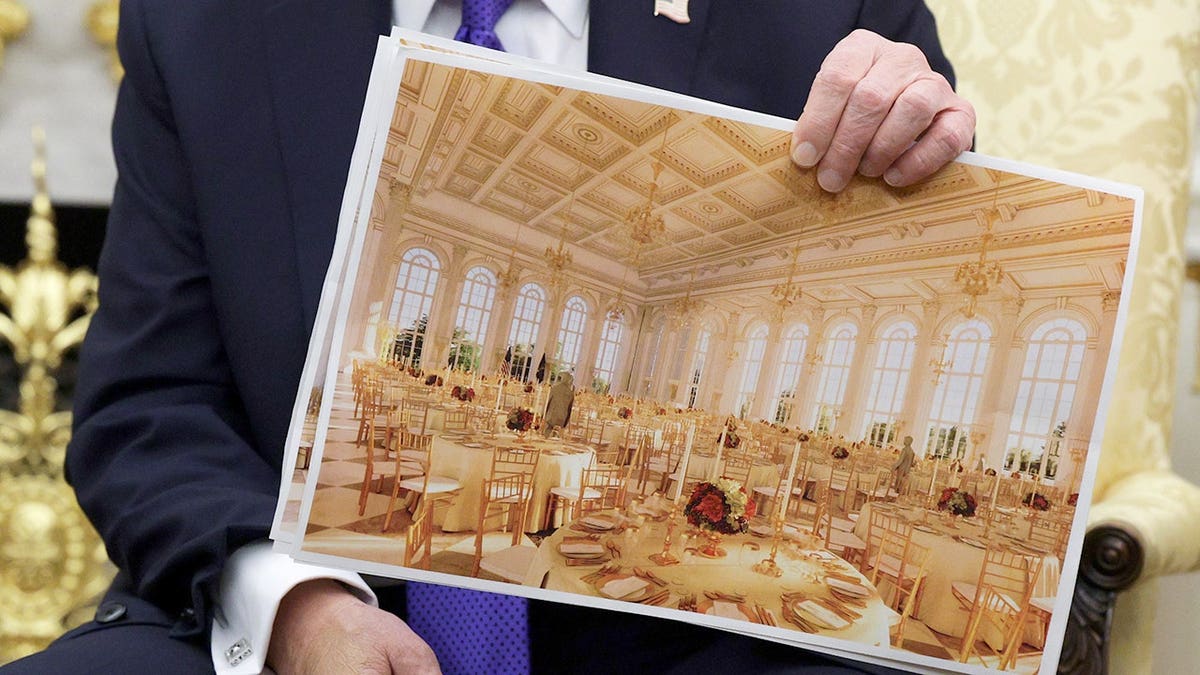
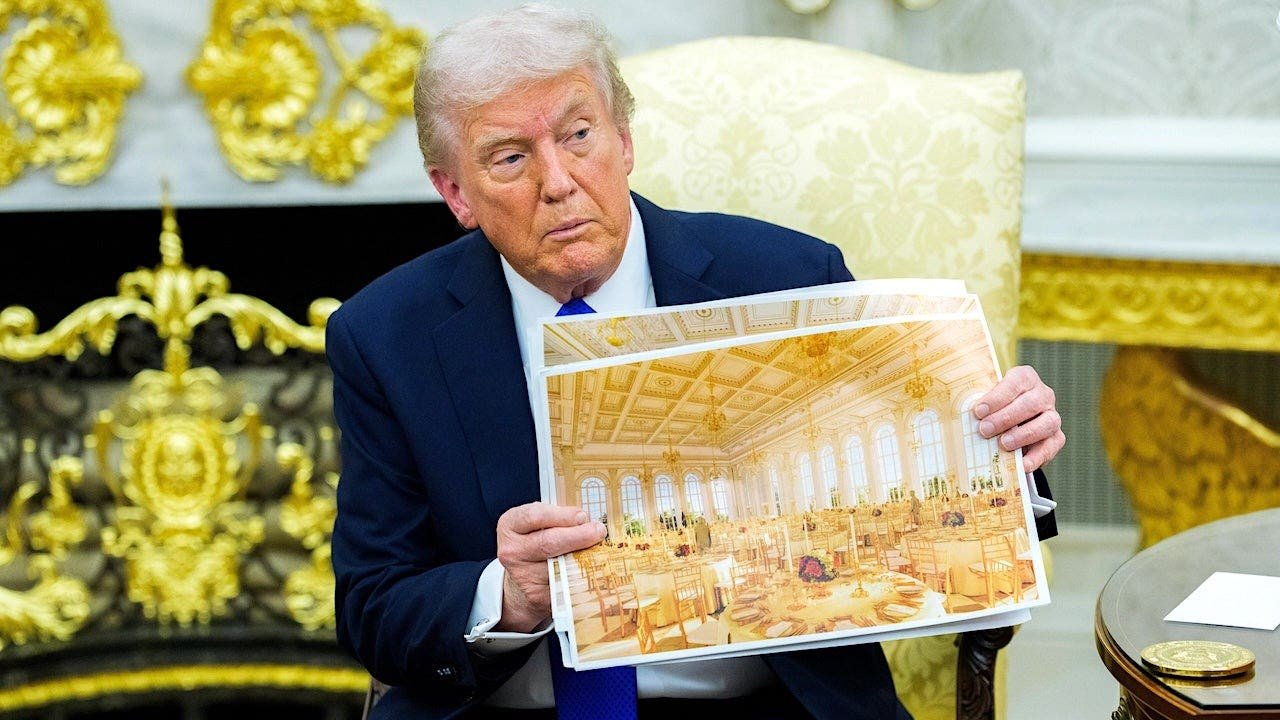
President Donald Trump displays a rendering of his proposed $250 million White House ballroom as he meets with NATO Secretary General Mark Rutte in the Oval Office of the White House in Washington, D.C., on Oct. 22, 2025. (Alex Wong/Getty Images)
Kambli also suggested that the National Trust faces a strong hurdle in proving it has standing based on aesthetic injury because it would have to prove it actually uses the space where the ballroom is being built
.
.
.
«Normally, aesthetic standing requires that you intend to use it,» Kambli said. «So, for instance, if you’re planning to be visiting the East Ballroom — and even this is kind of a stretch — that’s one thing, but if you’re someone on the outside that just passes it by, that’s a little tougher.»
A similar standing issue surfaced earlier in July when U.S. District Judge Amit Mehta, an Obama-appointed judge, rejected a lawsuit seeking to block the America 250 UFC event at the White House. He ruled that the plaintiffs had not met the standard of aesthetic harm to establish standing.
Hans von Spakovsky, a senior legal fellow at Advancing American Freedom, said he expects Trump to prevail on appeal as well, based on the standing issue.
«Under Supreme Court precedent, you cannot bring a claim, you cannot bring a lawsuit, until and unless you can demonstrate a concrete, actual injury,» Spakovsky told Fox News Digital. «The idea that a passerby, who claims she will be aesthetically injured because of what she sees at the White House, has an actual injury is absurd, and obviously, and clearly defies that precedent.»
If the Supreme Court takes the case, it could resolve it without deciding whether the administration had the legal authority to build the ballroom in the first place.
TRUMP WARNS JUDGE AGAINST SACRIFICING NATIONAL SECURITY BY BLOCKING WHITE HOUSE BALLROOM, DRONE BASE
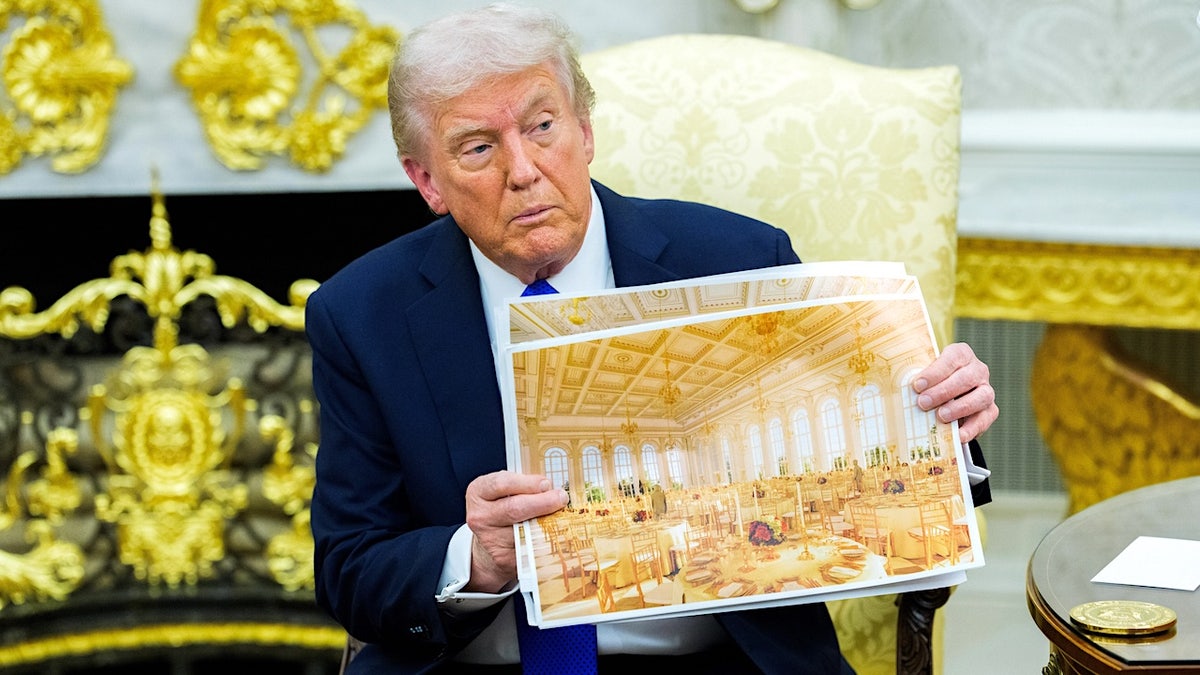
President Donald Trump holds design for a proposed White House ballroom while speaking to reporters. (Aaron Schwartz/CNP/Bloomberg)
«The Supreme Court won’t rule on the substantive issue if it can dismiss the case based on a lack of standing by the plaintiffs,» von Spakovsky said. «I also don’t know of anyone else who could establish standing to bring a lawsuit. Perhaps Congress could collectively, but the chances of that happening are very slim given the partisan divides in both the House and Senate.»
The National Trust argued in its lawsuit that federal law requires Congress to approve new construction on federal property in Washington, D.C., while the administration says existing law already gives the president authority to make alterations and improvements to federal property, including the White House.
Abhishek agreed with Rao’s reasoning that the terms «alteration» and «improvement» should be understood in their ordinary real-property sense.
«For instance, if I have an extension to my house, it doesn’t become a new house,» Abhishek said. «It’s the same house, but that’s an improvement done on the house. Or if I tear down some walls and then just create an open living space in my like between my living room and my kitchen, that’s also not a new house at that point.
«It’s the same house, but there was an alteration or an improvement done, so if you’re using real property terms, then it’s pretty clear how how the statutory authority would make sense,» Abhishek continued.
white house, judiciary, supreme court, donald trump, federal courts, law, politics
INTERNACIONAL
Un atentado con explosivos destruye un peaje en Colombia en el primer día del gobierno de Abelardo De la Espriella y tras el anuncio de mano dura



La China Suárez mostró el gesto que Mauro Icardi tuvo con Rufina Cabré

Diputados: el oficialismo buscará debatir las reformas del Banco Central y la Ley de Inocencia Fiscal antes de fin de mes

Detuvieron en un boliche a un policía, un cadete y otros tres sospechosos por el crimen en una distribuidora de La Matanza

El Salvador recibe de la ONU equipo para detectar documentos fraudulentos en controles fronterizos

Insólito video: una pelota se fue a la ruta en el fútbol uruguayo y ¡provocó un choque!

El Financial Times destacó la finca en Mendoza en la que CEOs de empresas tecnológicas planean enfrentar un posible “apocalipsis”

La oposición cuestionó a Benegas Lynch por su empresa para vender campos a extranjeros y el senador libertario se defendió

Dólar hoy en vivo: a cuánto se negocian todas las cotizaciones minuto a minuto este miércoles 5 de agosto

Brasil retira a su embajador en la Argentina: qué consecuencias tiene la medida diplomática

Las centrales obreras y los movimientos sociales anunciaron dos días de conflicto callejero
-
 POLITICA2 días ago
La oposición cuestionó a Benegas Lynch por su empresa para vender campos a extranjeros y el senador libertario se defendió
-
 DEPORTE6 horas ago
Murió Jorge Messi, en vivo: la resolución de la AFA para los partidos de todas las categorías del fútbol argentino
-
 POLITICA3 días ago
Javier Milei se reunirá con Daniel Noboa en Ecuador y con Abelardo de la Espriella en Colombia