INTERNACIONAL
Democrats face ‘do-or-die’ split with key voting bloc in razor-close Senate race

NEWYou can now listen to Fox News articles!
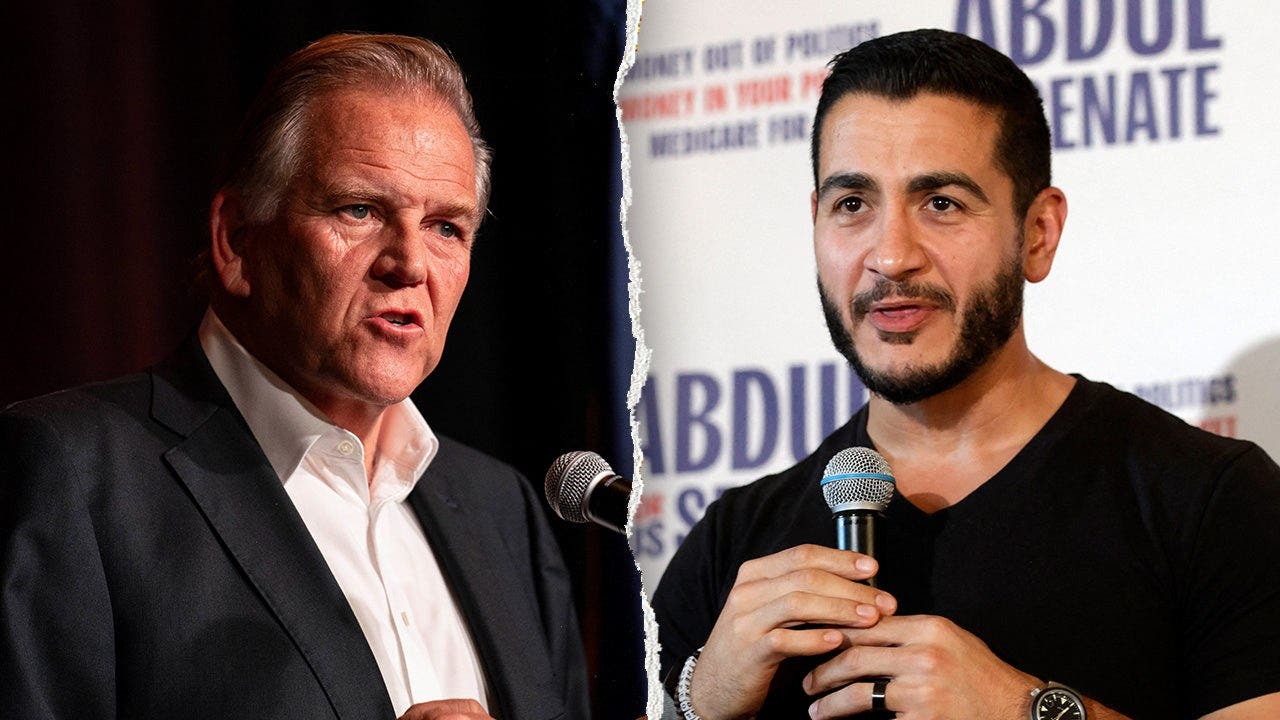
DETROIT — After falling just 20,000 votes shy of winning the U.S. Senate election in battleground Michigan two years ago, Republican Mike Rogers is urging Democrats, including Jewish voters, to cross party lines and vote for him as he makes a second straight Senate bid.
After a combustible and divisive Democratic Senate primary in which Abdul El-Sayed narrowly edged more moderate Rep. Haley Stevens for the nomination, Rogers is heavily courting Democrats disaffected with their left-wing nominee as he works to flip a must-hold seat for the Democrats in the midterm elections.
A key part of Rogers’ pitch is directed toward Jewish Democrats, who are uneasy with El–Sayed’s vocal criticism of Israel’s war against Hamas in Gaza and who are outraged by El-Sayed’s association with controversial online streamer Hasan Piker, who has repeatedly railed against Israel to his massive online audience.
«I usually vote Democrat, but I’m going to be voting for Mike Rogers,» Rabbi Asher Lopatin said as he stood next to Rogers this week as the former congressman and former FBI agent unveiled his Democrats for Mike coalition at a campaign event on Detroit’s west side.
DEMOCRATS ‘WHO NEVER VOTED REPUBLICAN’ BACKING THIS GOP SENATE NOMINEE
Former Rep. Mike Rogers, the Republican Senate nominee in Michigan, announces support from Democrats as he launches a Dems for Mike coalition, Aug. 20, 2026, in Detroit. (Paul Steinhauser/Fox News)
A former Wayne County Health Department director, El-Sayed, if elected in November, would make history as the nation’s first Muslim senator. The epidemiologist who unsuccessfully ran for governor as an insurgent candidate in 2018 has made support for Medicare-for-all a major component of his campaign and has also called for abolishing Immigration and Customs Enforcement (ICE).
But it’s El-Sayed’s stance and comments on Israel that have offended some Jewish people in Michigan, a state that also has a large Arab and Muslim population.
El-Sayed used the word «bloodthirsty» to characterize Israel’s military moves in Gaza in an MS NOW interview this month and accused Israeli leadership of genocide against Palestinians. He has argued against unconditional U.S. military aid to Israel, as have other progressive politicians. And El-Sayed has repeatedly declined to directly answer whether Israel has the right to exist.
But El-Sayed has also stated that he stands «in solidarity with my Jewish sisters and brothers» to «condemn antisemitism.»
Lopatin, a rabbi in suburban Detroit who has made trips to the Middle East in search of peace between Israel and its Arab neighbors, argued that El-Sayed «has shown contempt for the Jewish community and, frankly, for American values by making Hasan Piker, a vicious antisemite and racist, his campaign surrogate and somebody he buddies up with.»
Piker, who endorsed El-Sayed in the nomination battle, appeared at some of the candidate’s campaign events, including the primary night party in Detroit. Piker, who has repeatedly stood by his comments critical of Israel, was also with El-Sayed at a party in Detroit on the eve of the primary.
DEMOCRACY ’26: STAY UP TO DATE WITH THE FOX NEWS ELECTION HUB
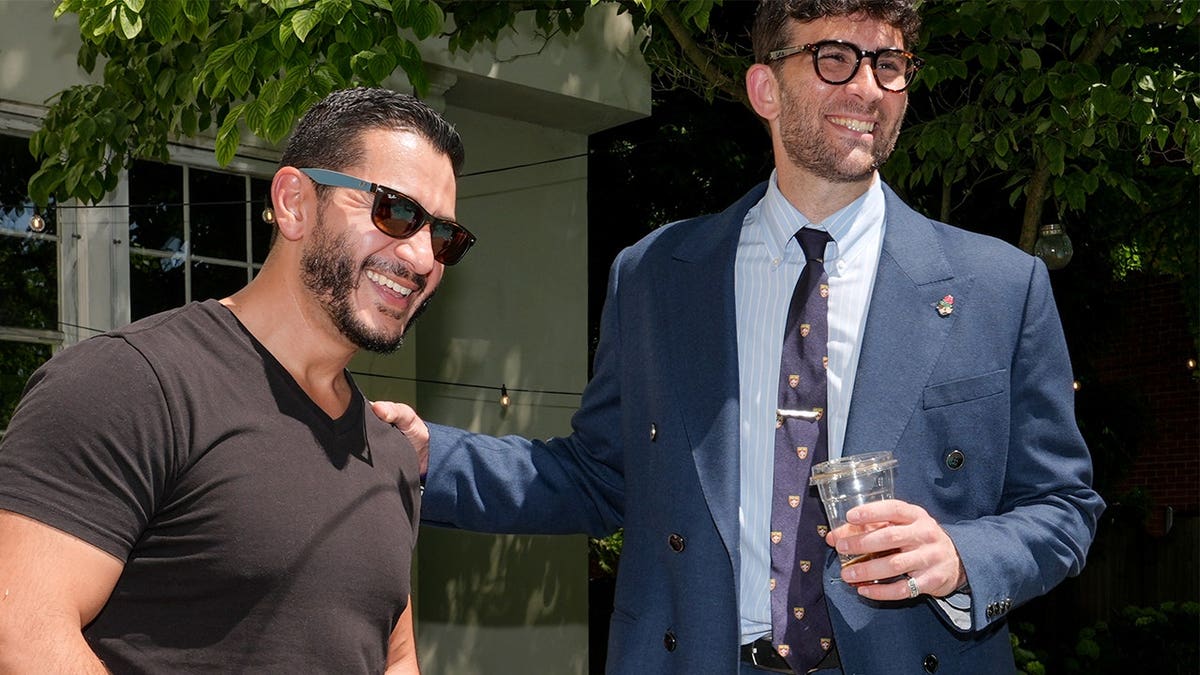
Abdul El-Sayed, a progressive candidate in the Democratic primary for U.S. Senate in Michigan, talks poolside with streamer Hasan Piker at a party for content creators supporting his campaign Aug. 3, 2026, in Detroit. (Julia Demaree Nikhinson/AP Photo)
«I do have a lot of issues with a lot of policies of the Trump administration,» Lopatin told Fox News Digital. «But it’s more important to make a statement that we cannot let someone like Abdul El-Sayed get into the Senate.»
Lopatin said Jewish voters who «normally vote Democrat are going to vote for Mike Rogers, and I’m hearing that. And there’s a growing movement like that. And I think the more they meet him … the more they’re going to feel comfortable voting for a Republican, sometimes for the first time in their lives.»
Stacy, a Jewish voter from suburban Detroit who asked that only her first name be used, told Fox News Digital she’s also going to vote for Rogers.
«The Democratic Party is going way too far to the left for us moderates,» Stacy, who backed Stevens in the Senate primary, emphasized.
Asked specifically about her party’s nominee, Stacy said, «Abdul El-Sayed has been campaigning by putting a target on all Jews’ backs.»
CHECK OUT THE LATEST FOX NEWS POLL IN MICHIGAN’S BLOCKBUSTER SENATE RACE
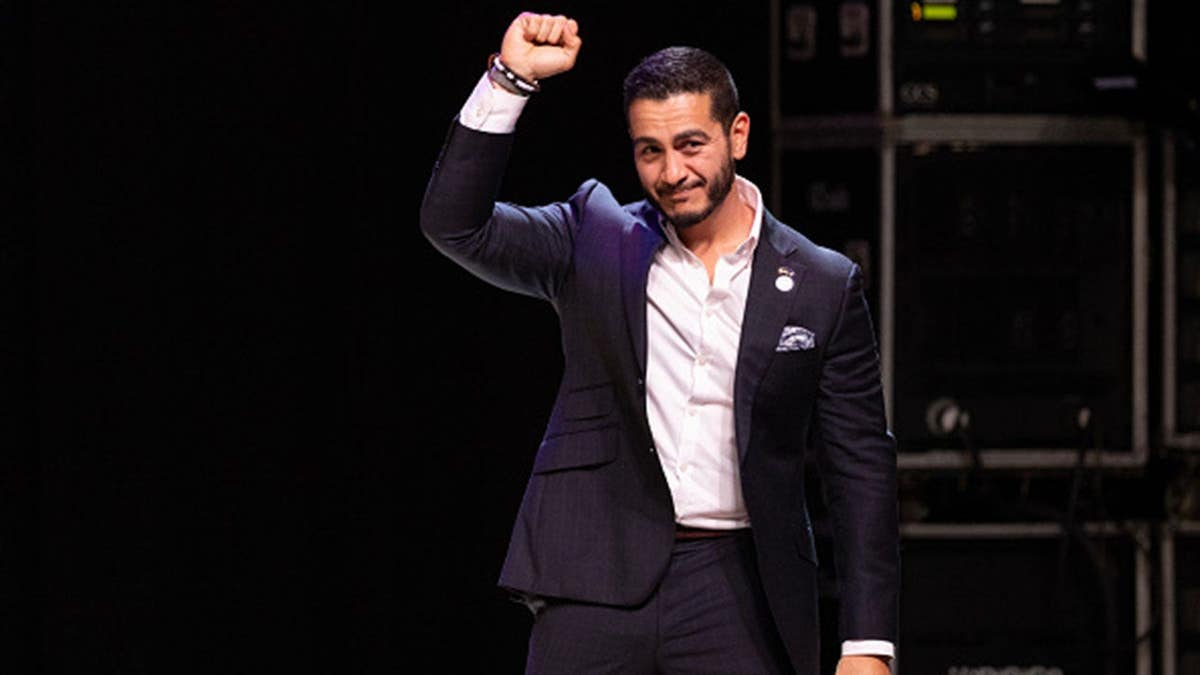
Democratic Senate candidate Abdul El-Sayed speaks to supporters at an election night rally at the Majestic Theatre in Detroit Aug. 4, 2026. (Getty Images)
Some Jewish leaders in Michigan are circulating an open letter urging Jewish Democrats and independents in the Great Lakes battleground state to sign their names in support of Rogers. The news was first reported this week by the Jewish Insider and confirmed by Fox News Digital.
«This is sort of a do-or-die moment,» a person involved with the letter who asked to remain anonymous to speak more freely told Fox News Digital. «There are many lifelong Democrats who are feeling homeless. … It’s not just a leftward drift but has turned into an anti-Jewish drift as well.»
But Joan Lowenstein, endorsement chair of the Michigan Democratic Jewish Caucus, doesn’t condone the letter and told Fox News Digital her group is keeping its distance.
«We are a part of the Michigan Democratic Party, and are not going to advocate that anyone vote for a Republican,» she said.
But Lowenstein, who also sits on the Michigan Democratic Party Central Committee, said those behind the letter «are passionate about this and feel it’s an existential issue, and I think that represents a lot of people. And, so, they have to do what they have to do.
«It’s sort of 50/50. Half the people I talk to say, ‘I could never vote for Abdul El-Sayed because of things he’s said about Israel and, consequentially, the Jewish community. And the other 50% say ‘it is so important for Jews as Americans to have an Democratic Senate that I could never vote for Mike Rogers.’»
Rogers and El-Sayed are running to succeed retiring Democratic Sen. Gary Peters. The race is among a dozen that will determine if the Democrats win back the Senate majority from the GOP.
Rogers, in an interview with Fox News Digital, reiterated that he’s not asking Democratic voters to become Republicans. And he highlighted concerns he’s heard from Democratic Jewish voters in Michigan.
WHAT THE LATEST FOX NEWS POWER RANKINGS IN THE MIDTERM RACES SHOW
«I’ve talked to two young women who were at University of Michigan who were afraid to walk to class. They couldn’t display their Star of David. To say that they’re afraid is probably an understatement,» he said.
Rogers said «the violent rhetoric … is going to make a difference» in the general election.
Republicans see an opportunity.
«There are a significant number of Jewish voters who are staunch Democrats that cannot support El Sayed and who may cross over and vote for Rogers. There are about 70,000 Jewish voters. If a majority flip to Rogers, that has the potential to cause a roughly 100,000 vote swing. Rogers lost to Slotkin by under 20,000 votes,» Michael Schostak, the Bloomfield Township treasurer who is running for University of Michigan Regent, told Fox News Digital.
Schostak, a longtime Republican and donor, said «the pitch to these voters is not to abandon their Democrat leanings, but that, in this race at this time, voting for Rogers is a vote for self-preservation. Allowing El-Sayed to have a voice on the national level would only give more volume to the voices of antisemitism and the far-left progressives.»
SIGN UP TO GET THE POLITICS NEWSLETTER
El-Sayed, after winning the Senate nomination, emphasized, «I stand in solidarity with my Jewish sisters and brothers, and we can condemn antisemitism. And, at the same time, we can be talking about how we bring people together, and we can be talking about everybody’s pain.
«My commitment to Jewish safety is the same as my commitment to the safety of my own kids. We have a responsibility to take on antisemitism in all of its forms, wherever we see it.»
El-Sayed Communications Director Roxie Richner told Fox News Digital, «Abdul has always stressed the importance of differentiating between criticizing the state of Israel and antisemitism.»
She said El-Sayed «remains in regular dialogue with Jewish leaders across the state while building the broadest possible coalition to defeat Rogers, restore Democratic control of the U.S. Senate and throw sand in the gears of Trump’s agenda.»
Roslyn Schindler, an 80-year-old retired college professor who has called the Detroit area home for more than five decades, said she is a strong supporter of El-Sayed and pushed back on the sentiment that his rhetoric and beliefs hold antisemitic undertones.
«I’ve talked to him at length, you know. I’ve met him personally. He attended — he attend — he has attended a service at my synagogue. He attended the Seder on April 2 as well. And there is no doubt in my mind that he is not antisemitic,» Schindler, whose parents were both Holocaust survivors, told Fox News Digital.
Schindler noted «that many people in the community, in the Jewish community, think he is.»
«I don’t believe that’s true,» she reiterated.
abdul el sayed, michigan, israel, midterm elections, senate elections, democrats elections, anti semitism









INTERNACIONAL
“El Mercosur es una prioridad”: el embajador de Indonesia aseguró que su país está dispuesto a avanzar en un acuerdo comercial
El mundo se encuentra frente a un proceso de transición del orden global existente hacia uno nuevo en donde los regionalismos y las vinculaciones entre países que históricamente no fueron socios cercanos se vuelven pilares fundamentales para el desarrollo, seguridad y crecimiento de las naciones.
En este contexto, el Mercosur ha ido explorando en los últimos años la posibilidad de alcanzar distintos acuerdos comerciales con bloques y regiones, aunque pocos avanzaron a un ritmo acelerado. Indonesia, en particular, y la Asociación de Naciones del Sudeste Asiático (ASEAN), en general, emergen como socios seductores por la complementariedad económica y la predisposición a negociar beneficios recíprocos.
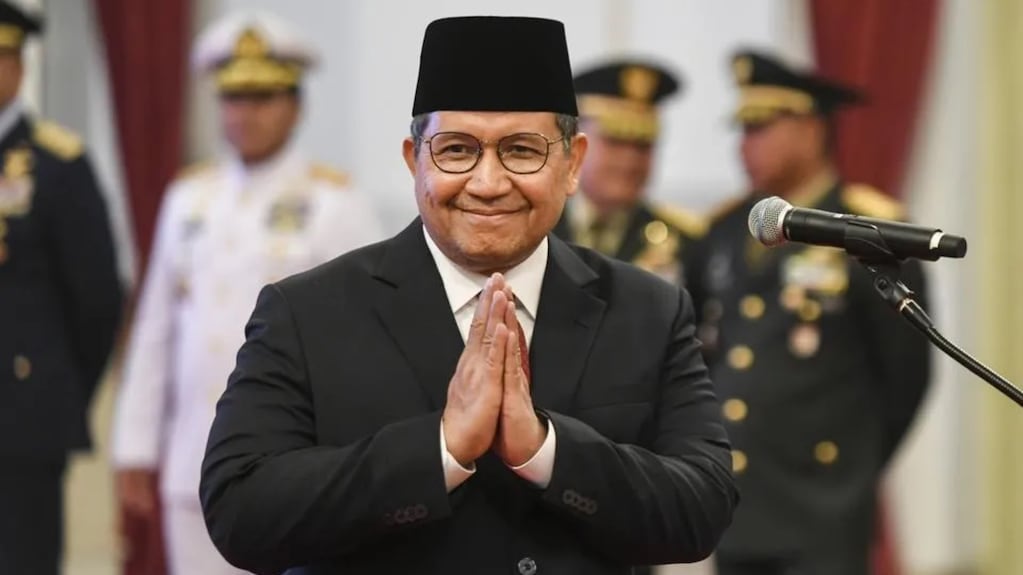
En una entrevista con TN, el embajador de Indonesia acreditado en la Argentina, Sulaiman Syarif, explicó el peso de su país en la región, las oportunidades que se abrirían en caso de avanzar en negociaciones bilaterales y las trabas que se deben superar para alcanzar los objetivos.
– ¿Qué importancia tiene el ASEAN como bloque en el actual y turbulento contexto global?
– La importancia del ASEAN se sustenta en dos pilares que se refuerzan mutuamente: la resiliencia económica y la centralidad geopolítica. Es un mercado de aproximadamente 690 millones de personas, con un PIB combinado de más de USD 4,2 billones, que crece más rápido que muchas de las principales economías avanzadas y atrae cientos de miles de millones en inversión extranjera. Su geografía añade otra dimensión de peso estratégico: el estrecho de Malaca, que se extiende entre Indonesia, Malasia y Singapur, concentra alrededor del 40% del comercio mundial, lo que convierte a la región en un punto de paso crítico del que depende la economía mundial.
– Aún con algunas diferencias, ASEAN construyó una imagen de un bloque unido y fuerte…
– Efectivamente, el ASEAN ha construido durante décadas una capacidad de convocatoria a través de la “centralidad del ASEAN”, al albergar los principales foros multilaterales de la región y reunir a las grandes potencias en la mesa de diálogo. La ASEAN demuestra lo que un bloque puede lograr al combinar escala económica con unidad diplomática. Esto puede ser un punto de referencia útil para el Mercosur y Argentina, donde actuar como bloque, junto con los vínculos bilaterales, puede generar un verdadero poder de negociación en un orden global fragmentado.
– ¿Qué papel desempeña el regionalismo en el mundo actual? ¿Cuáles son los beneficios para el ASEAN de actuar como bloque?
– El regionalismo brinda a las potencias pequeñas y medianas una capacidad de influencia colectiva, tanto económica como diplomática, que puede resultar más difícil de alcanzar de manera individual. Para el ASEAN, esto se manifiesta como un “multialineamiento estratégico”: profundizar simultáneamente los vínculos comerciales y de inversión con China, Estados Unidos, la Unión Europea y socios más recientes, como los Estados del Golfo, en lugar de elegir un bando. La experiencia de el ASEAN sugiere que los beneficios del regionalismo se potencian cuando un bloque negocia colectivamente: reducciones arancelarias, mayores flujos de inversión y un lugar en la mesa de foros a los que a los países individualmente podría resultarles difícil acceder por sí solos. Esto también representa una oportunidad para Argentina y el Mercosur: una relación más profunda entre bloques con la ASEAN podría abrir aún más posibilidades de diversificación del comercio y la inversión.
– ¿Quiénes son los principales socios comerciales de Indonesia y ASEAN?
– A nivel mundial, los principales socios comerciales del ASEAN son China, Estados Unidos y Japón, mientras que los de Indonesia son China, Estados Unidos y Singapur. Dentro de América del Sur, Argentina se destaca claramente: es el tercer socio comercial más importante de la región tanto para el ASEAN como para Indonesia, detrás únicamente de Brasil y México. El comercio de el ASEAN con Argentina totalizó USD 6,5 mil millones en 2025, mientras que el comercio de Indonesia con Argentina alcanzó casi USD 1,7 mil millones.
– Y, ¿desde la perspectiva de la Argentina?
– Bueno, la relación también es significativa desde la perspectiva de Argentina. En el primer semestre de 2026, Argentina exportó USD 3,9 mil millones al ASEAN como bloque, más de lo que exportó a Estados Unidos (USD 3,0 mil millones) o a la Unión Europea (USD 2,7 mil millones) en el mismo período. Esto convierte a Argentina en un socio importante y bien establecido para Indonesia en América del Sur, y a la ASEAN en un mercado cada vez más importante para Argentina.
– Se ha mencionado que Argentina y el Mercosur tienen economías complementarias a las de la ASEAN. ¿Por qué es así?
– Los perfiles comerciales del ASEAN y el Mercosur se complementan bien. En gran medida, cada parte suministra lo que la otra necesita, en lugar de competir en las mismas categorías de productos. La base manufacturera del ASEAN (automóviles, motores, maquinaria, calzado) complementa la fortaleza agrícola del Mercosur (harina de soja, maíz, trigo, cueros), lo que favorece una relación comercial estable. Este patrón brinda a ambas regiones una base sólida y, con una cooperación específica, existe margen para que la relación siga creciendo.
– ¿Cuáles son los principales sectores en los que existe potencial para aumentar la cooperación comercial?
– Se destacan algunas áreas. En seguridad alimentaria y agronegocios, los granos del Mercosur podrían respaldar los sectores ganadero y de procesamiento de alimentos del ASEAN. En minerales críticos y energía, el litio y el cobre del Mercosur podrían vincularse con las crecientes industrias de vehículos eléctricos y electrónica del ASEAN. En el sector automotor y de maquinaria, existe potencial para empresas conjuntas o ensamblaje local. Las energías renovables y la tecnología para la transición verde constituyen otra área que vale la pena explorar. Estos sectores se apoyan en el patrón de complementariedad ya existente y podrían ser puntos razonables para aumentar la cooperación comercial.
– ¿Cuáles son los principales obstáculos para ampliar el comercio bilateral? Por ejemplo, políticas económicas, dificultades para negociar con el Mercosur, requisitos de visa, entre otros.
– El principal obstáculo son los aranceles: los productos indonesios enfrentan aranceles más altos al ingresar a Argentina que los productos de los socios del Mercosur, razón por la cual un CEPA/TLC entre Indonesia y el Mercosur es ahora una prioridad en negociación. Los procedimientos de visa para los viajeros de negocios también generan cierta fricción, junto con la limitada conectividad directa y la distancia entre ambos países.
– ¿Se está planificando alguna visita de alto nivel de Indonesia a Argentina?
– Sí. Indonesia suele registrar entre cinco y seis visitas de delegaciones del gobierno central a Argentina cada año, tanto del Parlamento de Indonesia como de diversos ministerios y organismos, y 2026 no es una excepción dado que se trata de un año de aniversario significativo. Más adelante este año, también estamos trabajando para volver a convocar el foro de consultas bilaterales y los mecanismos de la Comisión Conjunta con Argentina.
– ¿Qué puede decirnos sobre los vínculos culturales y turísticos entre Indonesia y Argentina?
– El turismo ha sido, efectivamente, un verdadero punto destacado: las llegadas de visitantes argentinos a Indonesia superaron las 13.000 el año pasado, continuando una tendencia ascendente de los últimos tres años. El flujo en la dirección opuesta es menor, pero también está creciendo, con entre 2.000 y 3.000 turistas indonesios que visitaron Argentina durante los últimos tres años, atraídos especialmente por las Cataratas del Iguazú, la cultura del fútbol en torno a clubes como Boca y River, y la Patagonia. En el ámbito cultural, los vínculos son más profundos de lo que indican las cifras por sí solas: Indonesia ofrece becas a estudiantes argentinos, entre ellas Darmasiswa para estudios de idioma y cultura y KNB para estudios de grado en Indonesia; apoya conjuntos de gamelán y dicta clases de gamelán a músicos argentinos locales en Buenos Aires; y organiza regularmente presentaciones culturales, proyecciones de películas e intercambios académicos, todo lo cual alimenta un creciente interés mutuo y, a su vez, el turismo.
– Con frecuencia se dice que esta es la era del Sur Global y de las potencias medias. ¿Está de acuerdo? ¿Por qué?
– Sí, hasta cierto punto. El crecimiento económico se concentra cada vez más fuera de las potencias tradicionales, y países como Indonesia y Argentina están adoptando políticas exteriores más independientes y basadas en sus intereses, en lugar de alinearse plenamente con un único bloque de poder, lo que les otorga más influencia que antes. Dicho esto, las potencias medias siguen operando en gran medida dentro de un sistema global configurado por un puñado de grandes potencias, por lo que quizá sea más preciso describir esta como una era en la que las potencias medias y el Sur Global tienen más capacidad de influencia y voz que antes, en lugar de una en la que hayan desplazado por completo a los centros tradicionales de poder.
indonesia, MERCOSUR
Trump issues warning to Europe over immigration
‘Saturday in America’ host Kayleigh McEnany discusses President Donald Trump’s visit to Ireland, warnings to Europe over its immigration policies and more on ‘Fox & Friends Weekend.’
NEWYou can now listen to Fox News articles!
Swedes head to the polls Sunday as Prime Minister Ulf Kristersson’s center-right party is slightly behind the center-left Social Democratic Party led by Sweden’s former Prime Minister Magdalena Andersson, with the election dominated by fears of mass migration, crime and the economy.
«Years of gang violence, Islamist extremism, persistent unemployment and pressure on public services have intensified the debate over whether integration has kept pace with immigration,» foreign policy expert and author Daniel Schatz, told Fox News Digital.
DENMARK’S LEFT-WING PM WARNS: ‘BIG ENEMY HAS STARTED TO GROW FROM WITHIN’ AS EUROPE FACES MIGRANT RECKONING
Sweden Democrats party leader Jimmie Akesson addresses an election campaign event at Sjodalsparken in Huddinge, near Stockholm, on Aug. 18, 2026, as part of his party’s national campaign tour ahead of Sweden’s upcoming general election in September. (Jonathan Nackstrand/AFP via GettyImages)
Following on from Germany’s AfD victory in a state election last week, Sweden’s hard-right Sweden Democrats are in a position to enter government if Kristersson’s party wins again. The Associated Press reported that the anti-immigration party has shifted toward the political mainstream and is likely to get cabinet posts. It has so far supported the Kristersson government from the outside.
The Associated Press reported that the Sweden Democrats were founded by activists in far-right-wing extremist groups, including neo-Nazis. But since then, under its leader, Jimmie Åkesson, it toned down that rhetoric and kicked out racist members. Åkesson, who has led them since 2005, is said to be responsible for the success of a once marginal party.
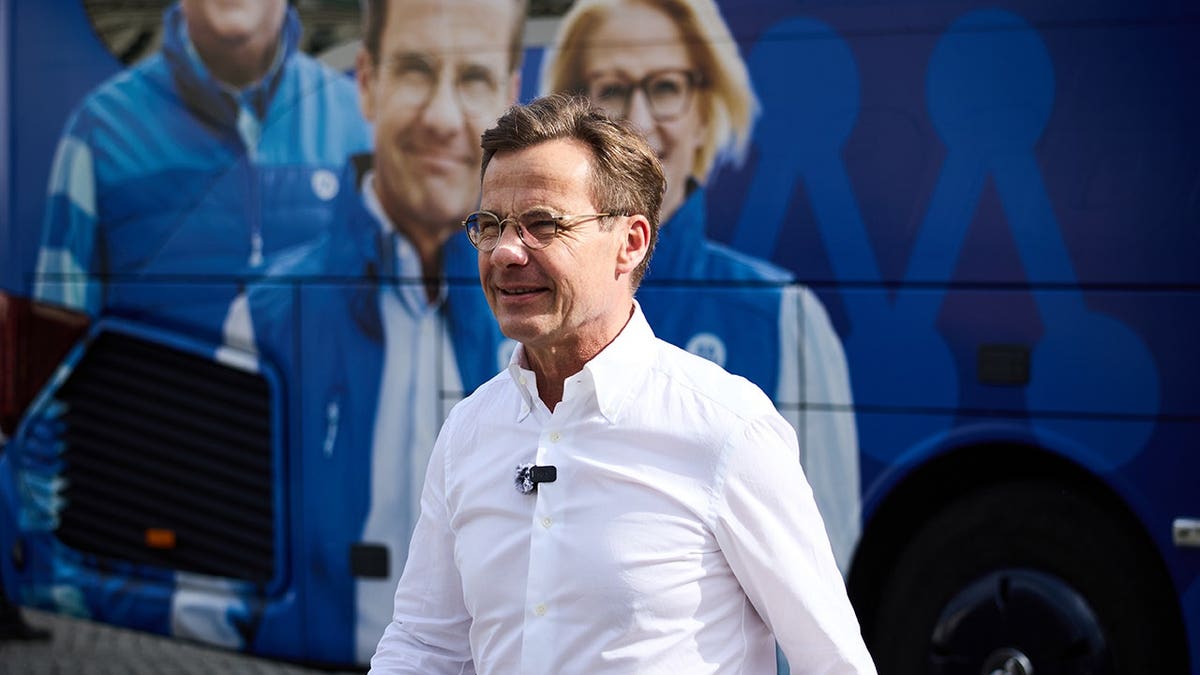
Prime Minister Ulf Kristersson trails in polls as Sweden holds its general election on Sept. 13 to elect members of its parliament, the Riksdag. (Kristian Tuxen Ladegaard Berg/NurPhoto)
Sweden, once a model of the Western social welfare state, has been under economic strain as governments from both the left and the right were forced to restructure their welfare system.
While social benefits continue to be extensive, Sweden’s welfare state has changed amid rising crime rates, but the expectations for public benefits remain.
«Sweden went from being described as a ‘humanitarian superpower’ to a «humanitarian basket case.’ Discontent with migration policies extends to both foreign-born and native-born residents. Shootings have declined sharply, but fewer shootings do not mean the integration problems are solved,» Schatz, who is Swedish, added.
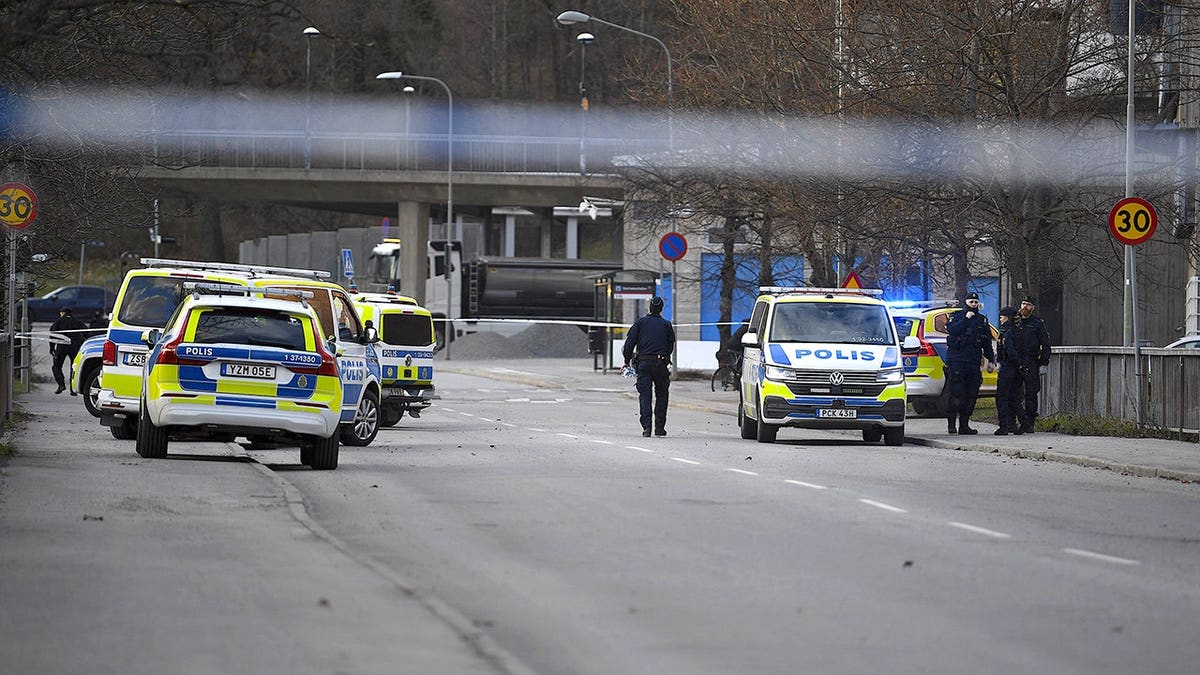
Gang violence has rocked parts of Sweden over the last few years. (Oscar Olsson/TT NEWS AGENCY/AFP via Getty Images)
Prime Minister Kristersson’s government took power in 2022, as the nation was experiencing a dramatic rise in gun-related violence, with the country witnessing 391 shootings resulting in 62 deaths, according to The Swedish National Council for Crime Prevention, a government agency under the Ministry of Justice.
SWEDEN JAMS SUSPECTED RUSSIAN DRONE NEAR FRENCH CARRIER AS NATO WAR FEARS RISE
The homicide rate in Sweden has been on the rise since 2013, when gun homicides contributed to a general increase in Sweden’s total homicide rate.
The Swedish National Council for Crime Prevention notes that Sweden’s homicide rate ranks very high compared with other European countries, at approximately four deaths per million inhabitants per year.
The average for Europe is approximately 1.6 deaths per million inhabitants.
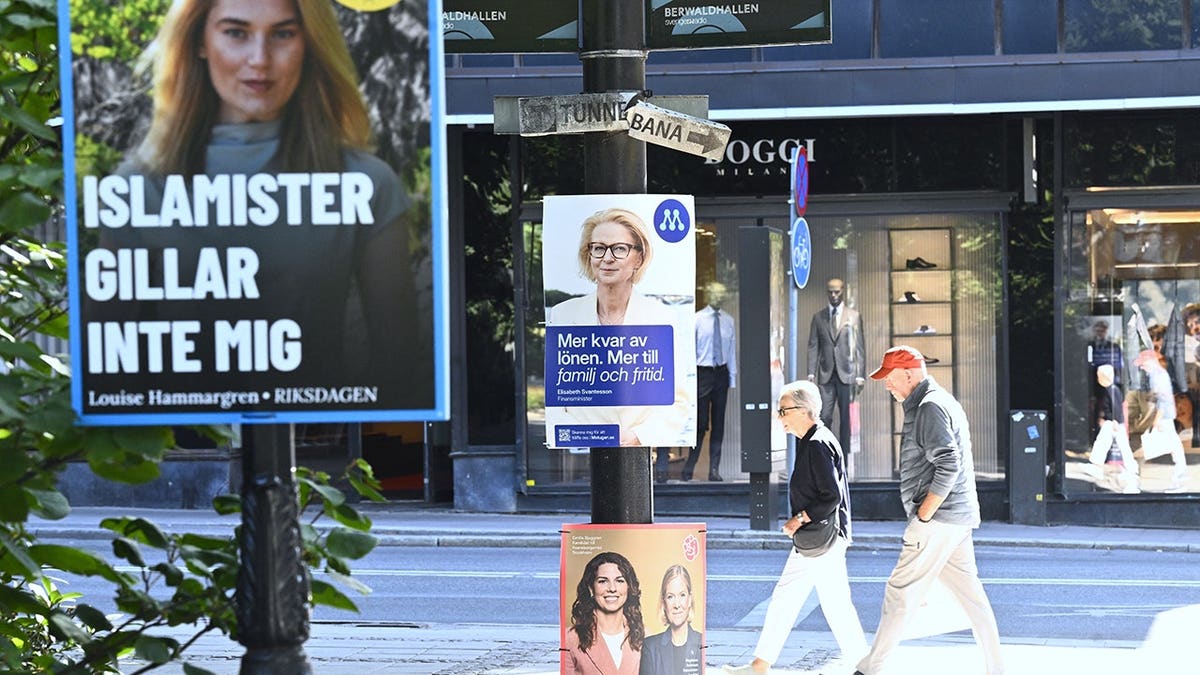
Swedes go to the polls on Sunday in a closely watched election race. (Fredrik Sandberg / TT News Agency / AFP via Getty Images) / Sweden OUT)
The issue of immigration is another major issue that dovetails with voters’ concerns over crime and gun violence. Like much of Europe, Sweden experienced a wave of immigration in 2015 coming from those fleeing the Syrian civil war as well as the wars in Iraq and Afghanistan.
Sweden took in over 160,000 asylum seekers in 2015, or 12% of all those who sought protection in the EU, according to Sweden’s Migration Agency.
«After the 2015 influx of asylum seekers from Syria and other war-torn countries strained its reception system, Sweden began tightening its borders. The current government has taken that shift much further,» Schatz said.
ANTI-MIGRANT AFD SEEKS TO BREAK GERMANY’S POLITICAL ‘FIREWALL’ IN HISTORIC STATE ELECTION
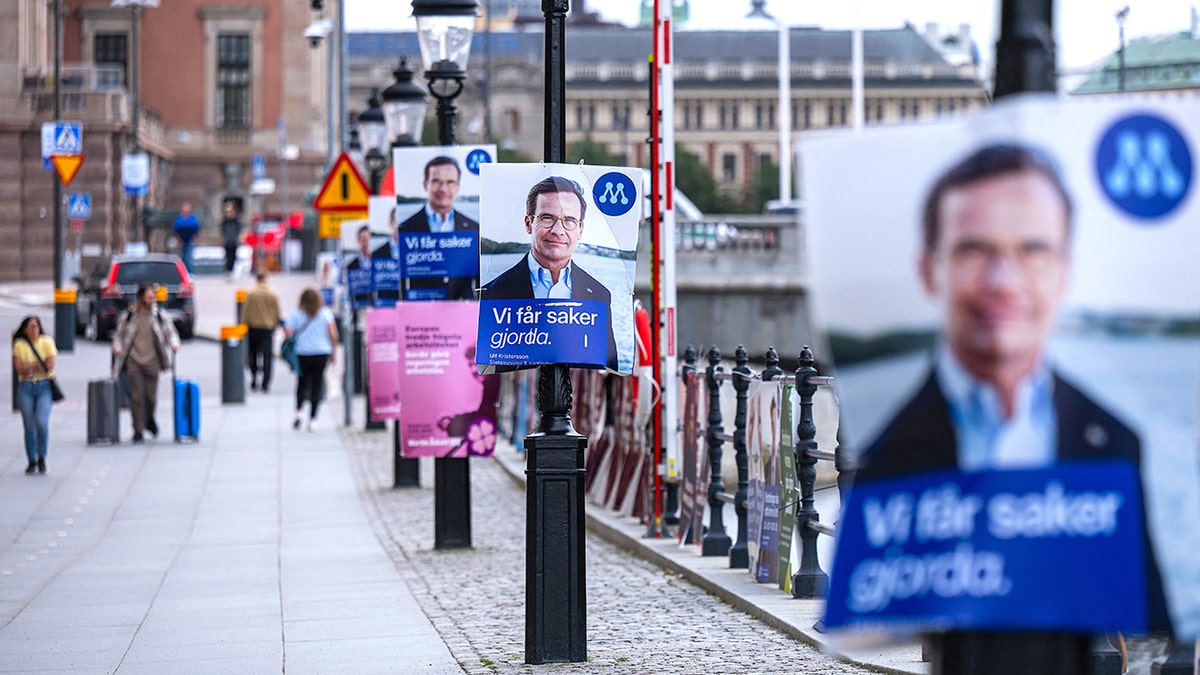
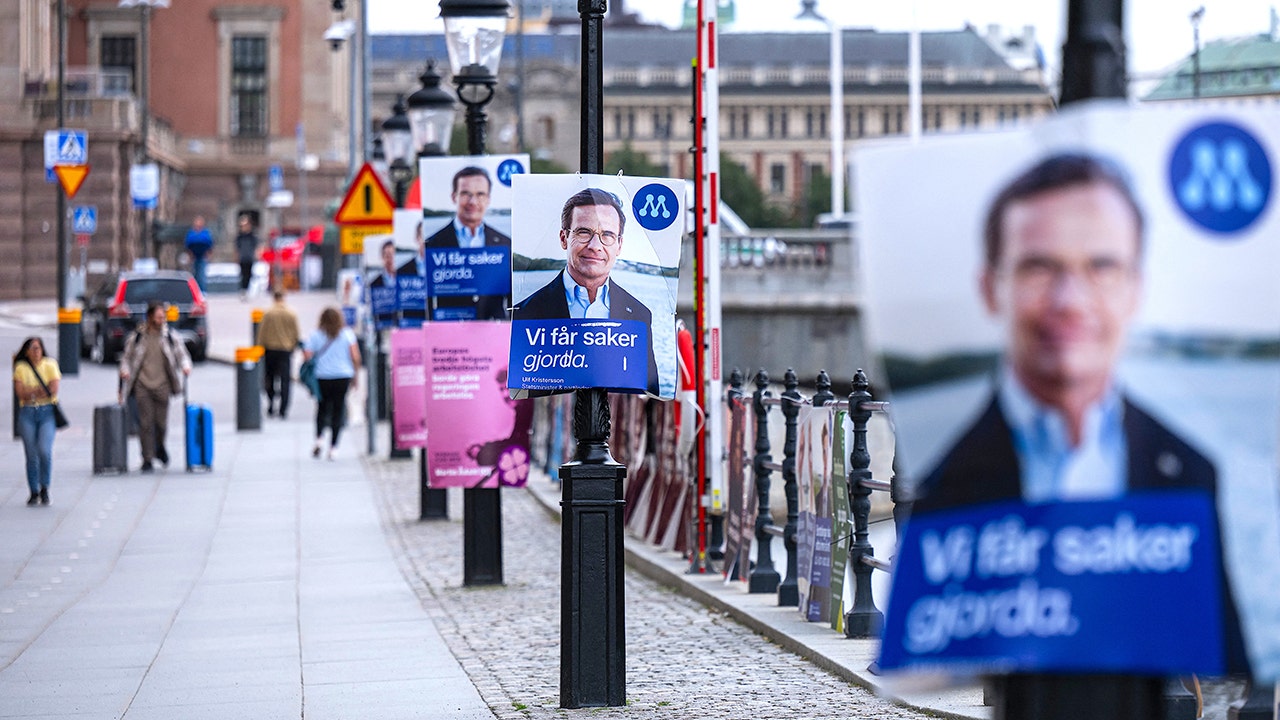
Election campaign posters featuring Swedish Prime Minister and Moderate Party leader Ulf Kristersson are displayed in central Stockholm, Sweden, on Sept. 7, 2026. (Jonathan NACKSTRAND / AFP via Getty Images)
Prime Minister Kristersson’s parliamentary ally, the right-wing Sweden Democrats, filled the void in the anti-immigration position in parliament.
Nicholas Aylott, professor of political science at Södertörn University in Stockholm, told Fox News Digital that the link between the increase in immigration and the rise in crime changed Swedish politics.
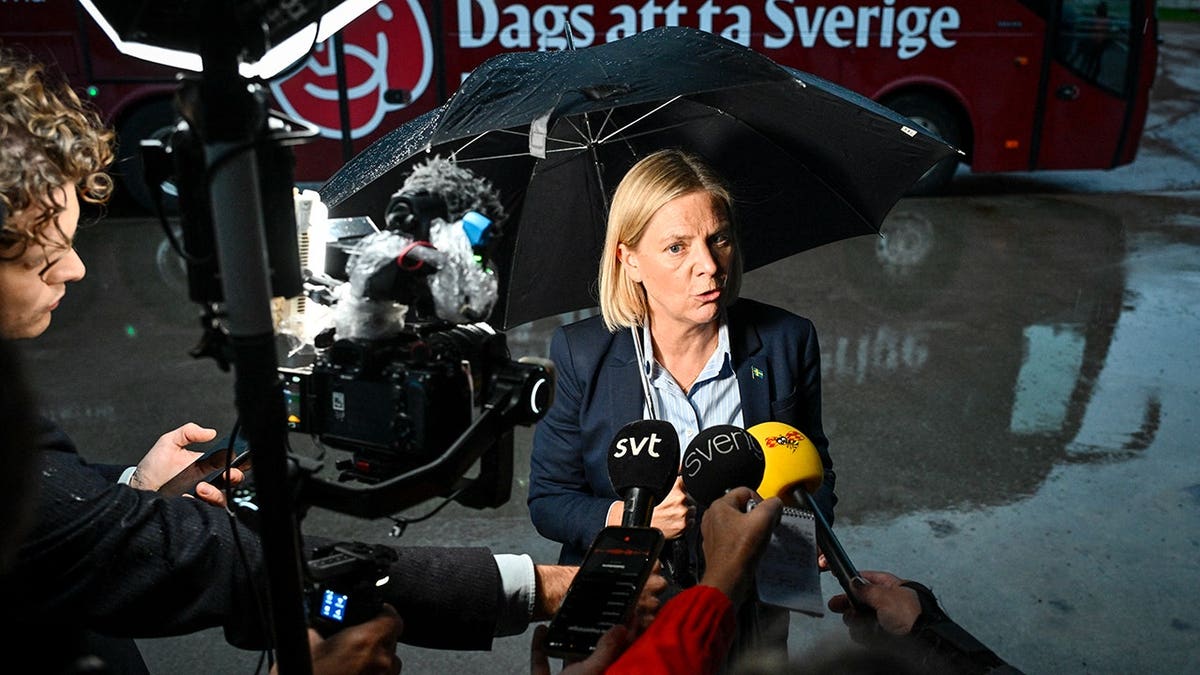
Magdalena Andersson of the Social Democrats leads the polls against the incumbent Prime Minister, Ulf Kristersson. (Anders Wiklund/various sources / AFP via Getty Images) / Sweden OUT)
«Migration and law-and-order became much higher electoral priorities,» Aylott said.
«The Sweden Democrats based their pitch on them. The other parties, rather belatedly, adapted their positions. The Sweden Democrats had at first been completely ostracized by the other parties, but they were gradually accepted as a legitimate partner by three of the other parties of the right between 2018 and 2022,» he said.
As the anti-immigration backlash rose and the Sweden Democrats were more included in the policymaking process, Sweden cracked down on immigration and made it harder to seek asylum.
While asylum claims dropped and gun violence was dramatically reduced as well, with only 158 shootings and 44 fatalities to date, the government still might suffer a defeat at the hands of Andersson’s center-left coalition.
The Associated Press contributed to this report.
sweden, politics, refugees, social policy

NEWYou can now listen to Fox News articles!
DALLAS — President Donald Trump is getting a much warmer reception from his fellow Republicans during this election cycle than his predecessor did from Democrats this time two years ago.
Conventional political wisdom dictates that the party in power will suffer losses in Congress during a midterm election year. Americans who oppose the president’s party are typically more motivated to vote than people who support their agenda.
But the GOP is banking on the opposite effect. The first-ever GOP midterm convention featured back-to-back keynote addresses from the commander-in-chief, as well as speeches from his Cabinet officials, allies and members of Congress.
«I’m asking you to pretend that I’m on the ballot,» Trump told his audience on Wednesday. Republican incumbents and candidates running in battleground districts this November also took the stage, and all speakers projected confidence despite Trump’s own low approval numbers.
DEMOCRATS TARGETING 12 ADDITIONAL RED DISTRICTS IN MIDTERMS PUSH TO RETAKE HOUSE
President Donald Trump speaks during the Republican convention at American Airlines Center on Sept. 9, 2026, in Dallas. (The Dallas Morning News via Getty Images)
«We ran together in 2024 on a ticket with President Trump, [Sen. Dave McCormick, R-Pa.] and myself — voters elected all of us to deliver real change and results, and we’ve actually been able to do that with securing the border and delivering historic tax relief,» Rep. Ryan Mackenzie, R-Pa., told Fox News Digital on the sidelines of the convention.
«Now what we’re seeing is in a midterm, we are actually going to defy the historic trends. Why is that? Because the Democrats are so far left they are totally out of touch.»
Republicans believe their warnings of Democrats’ socialist insurgency will help them keep their majorities in the House and Senate this year, along with touting Trump’s signature tax cuts in the One Big, Beautiful Bill Act.
HOW ONE NYC SUBURB COULD DECIDE WHICH PARTY CONTROLS THE HOUSE
Mackenzie is one of Democrats’ top targets in the election cycle, along with Rep. Mike Lawler, R-N.Y., in the suburbs outside New York City.
«He’s the President of the United States, and whether it was Joe Biden or Donald Trump, I’ve always shown up,» Lawler told Fox News Digital. «You have to be able to engage with the president, and, you know, frankly, this is where I think the Democrats have made a very big mistake. They could get a lot more in terms of what it is that they want if they would actually engage constructively.»
Lawler, Mackenzie and Rep. Rob Bresnahan, R-Pa., are the three vulnerable incumbents who took the stage during the convention last week.
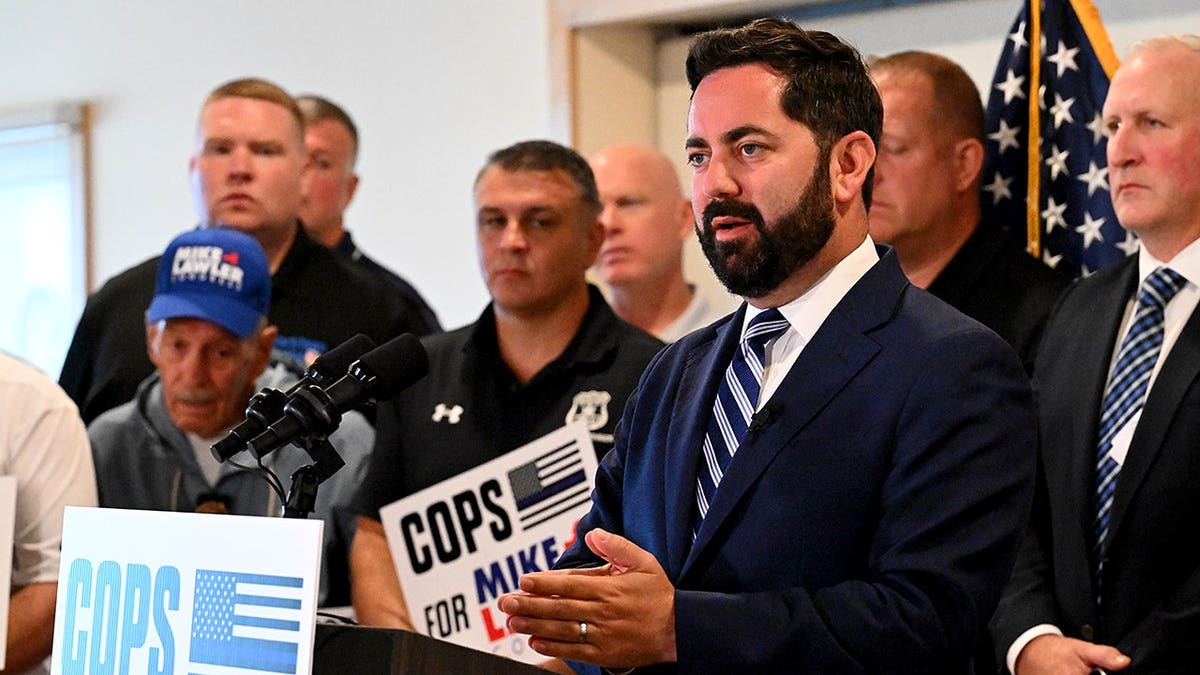
Rep. Mike Lawler, R-N.Y., speaks with local law enforcement about the rise of antisemitism in New York City during a campaign endorsement event at Haverstraw Elks Lodge No. 877 in Haverstraw, New York. (Kyle Mazza/CNP)
TRUMP HITS KEY BATTLEGROUNDS TO SELL TAX CUTS, BOOST GOP AHEAD OF MIDTERMS
Lawler, for his part, introduced two residents from his district whose daughter was killed by an illegal immigrant in Chicago — a poignant symbol of what Republicans say could happen more often if Democrats win.
Trump has also campaigned in each of their districts in recent months as he crisscrosses the country in a bid to keep control of Congress for the latter half of his final term.
But it was not just vulnerable incumbents who appeared in Dallas alongside Trump. The two-day affair also brought candidates from across the country, even those running in tight races.
GOP FACES BRUTAL MIDTERM HEADWINDS AS REPUBLICANS PAINT ELECTION AS ‘COMPETITION WITH COMMUNISM’
«When people say that folks are running away from President Trump, I’ll tell you I’m certainly not doing that. And let me tell you why: because he has made promises to South Texas, and he has kept them, especially when we look at border security,» candidate Eric Flores told Fox News Digital.
JOHNSON DOWNPLAYS GOP’S MIDTERM WOES AS DEMOCRATS EYE HOUSE TAKEOVER: ‘I AM VERY BULLISH’
«My opponent, who said, you know, that the sleepy Joe Biden administration and the no-show border czar, Kamala Harris, were on the right track. Let me tell you firsthand, I was on Operation Guardian support, was a federal prosecutor on the border. It was a humanitarian crisis. President Trump, on day one, secured our border.»
Flores is running in a South Texas district currently represented by Rep. Vicente Gonzalez, D-Texas.
Time will tell if the strategy pays off, but Democrats are already seizing on it in hopes that associating with Trump will sink GOP candidates like it did in 2018.
TRUMP’S APPROVAL RATING PLUMMETS TO NEW LOW AHEAD OF CRITICAL MIDTERMS: ‘MORE WORK TO DO’
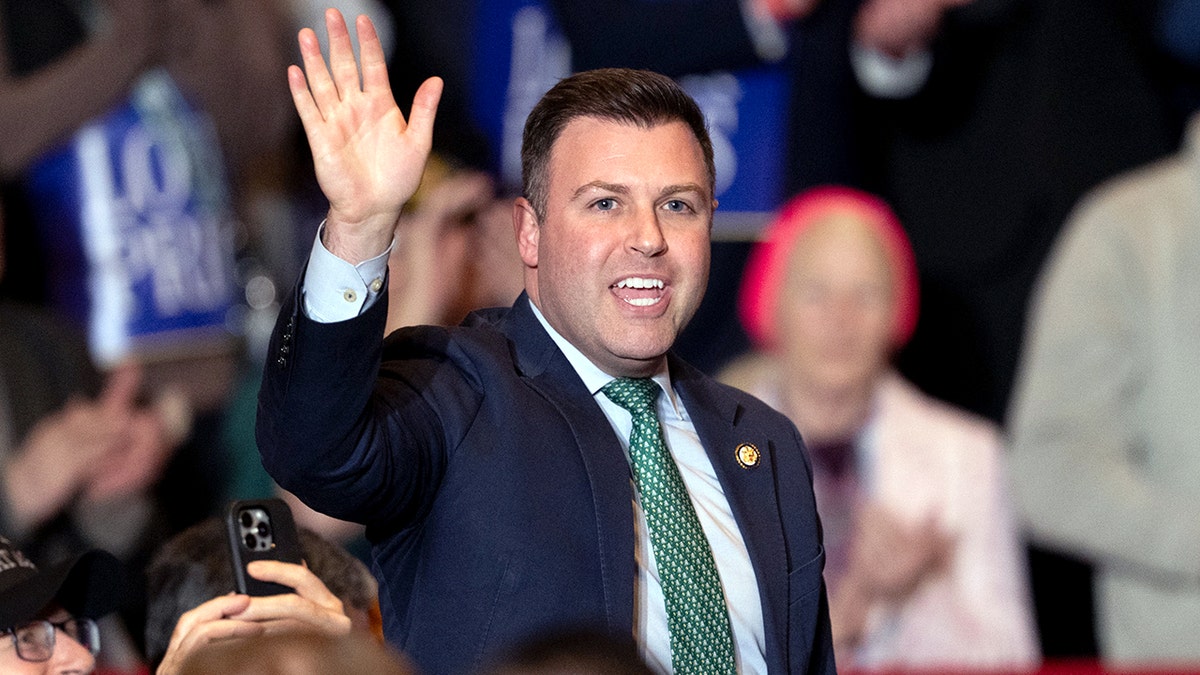
Rep. Ryan Mackenzie, R-Pa., during an event on inflation at Mount Airy Casino Resort in Mount Pocono, Pa., on Dec. 9, 2025. (Adam Gray/Bloomberg via Getty Images)
«Ryan Mackenzie, Rob Bresnahan and Scott Perry made their priorities clear tonight: they care more about Donald Trump’s cost-raising agenda than what’s best for the people of Pennsylvania,» Pennsylvania Democratic Party Chair Eugene DePasquale said in a statement.
«After jetting all the way to Texas to champion an agenda of higher gas prices, cost-raising tariffs, and healthcare cuts, Mackenzie, Bresnahan, Perry and the entire PA GOP have proven that they’ll put Trump ahead of our Commonwealth every single time — and Pennsylvanians are ready to send them packing this November.»
Fox News Digital did not see Rep. Scott Perry, R-Pa., who is also expected to run a close race, at the convention, but reached out to his campaign for comment.
republicans elections, politics, donald trump, midterm elections, republican convention, battleground voters

La reacción de una estrella del fútbol portugués cuando los aficionados se burlaron de su compañero fallecido: “Dios los está viendo”

Trump habló de una posible guerra por Malvinas y dijo que podría intervenir para resolverla

Milei y dos eventos de la “batalla cultural” en Estados Unidos, con el reclamo por Malvinas de fondo

Tras su gran clasificación, Franco Colapinto largará 9° el Gran Premio de España de Fórmula 1: hora, TV y todo lo que hay que saber

Del glam-punk al mito argentino: cómo reinventó Julio Panno a la emoción sobre el escenario

La carrera por la gobernación bonaerense suma nombres en los principales espacios políticos

El día que Owen Wilson se emocionó por el abrazo que le dio Lionel Messi tras un partido

Berni se diferenció de Kicillof en la aplicación de la baja de la edad de imputabilidad

Cuánto cuesta comprar una pick up en la Argentina y cuáles son los modelos más baratos en septiembre

La desafiante aventura de Carolina Baldini en moto por Europa: desde Edinburgo a Liverpool en dos ruedas

 ECONOMIA3 días ago
Así es la primera pickup compacta nacional: diseño, cuándo empezará a venderse y el novedoso sistema híbrido que tendrá
- DEPORTE3 días ago
Alarmante frase de Pierre Gasly antes del estreno del circuito de Fórmula 1 en Madrid
- POLITICA2 días ago
“¿Dónde está Kicillof?”: Patricia Bullrich cruzó al gobernador por la inseguridad en la Provincia