INTERNACIONAL
Dinamarca celebra una gran fiesta el 4 de julio. Este año, EE.UU. no está invitado



NEWYou can now listen to Fox News articles!
President Donald Trump predicted in recent days that additional countries would soon join the Abraham Accords, renewing debate over whether Israel is becoming increasingly isolated or continuing to expand its most important strategic relationships.
«The Abraham Accords have been, I think, a tremendous success,» Trump said during a Tuesday Oval Office meeting with Lebanese President Joseph Aoun. «I think you’re going to see a lot of countries joining pretty soon.»
Trump’s prediction underscores a central debate about Israel’s global position: Public support for the country has fallen sharply in the United States and across much of the world, yet Israel continues to build or preserve diplomatic, military, energy and technology relationships with foreign governments.
TRUMP CALLS ON ARAB NATIONS TO SIGN ABRAHAM ACCORDS
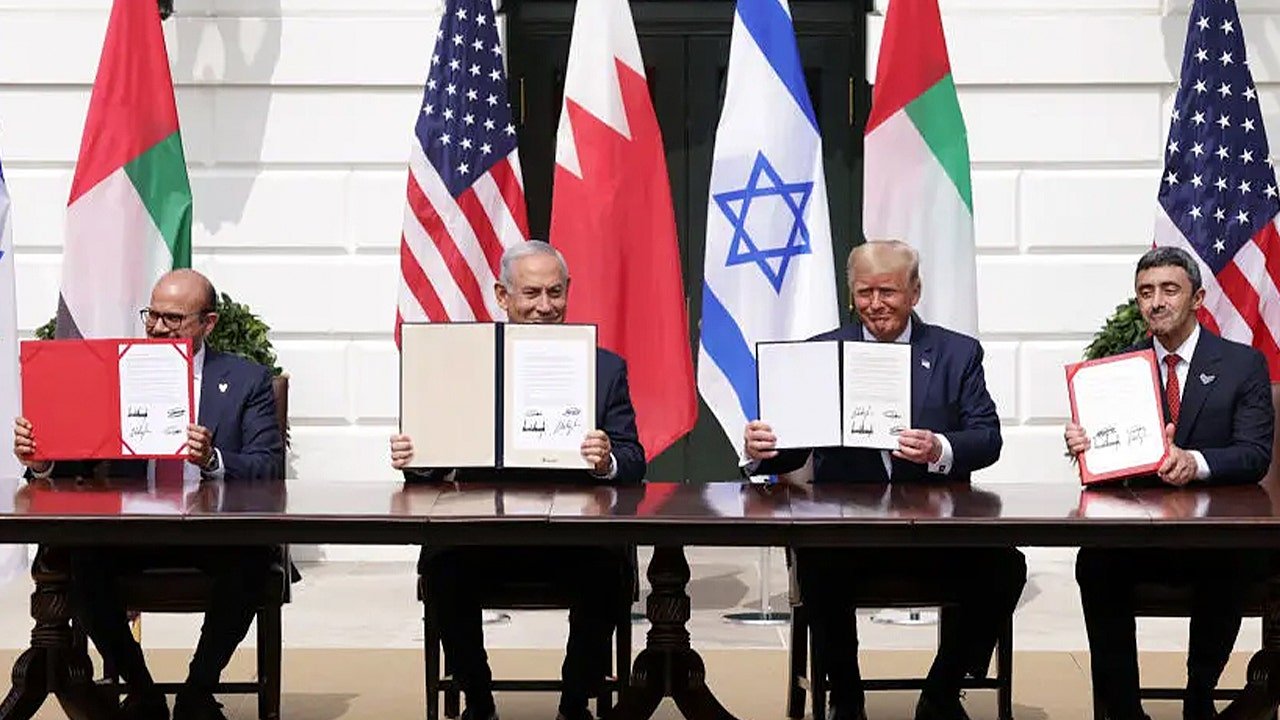
President Donald Trump predicted in recent days that additional countries would soon join the Abraham Accords. (Alex Wong/Getty Images)
The Abraham Accords, brokered by the Trump administration in 2020, normalized relations between Israel and the United Arab Emirates, Bahrain, Morocco and Sunday. Trump has made expanding the agreements a central goal of his Middle East strategy.
The dispute depends partly on how isolation is measured. Critics point to worsening public opinion, pressure at international institutions and growing opposition among Democrats and younger voters. Israeli officials and conservative foreign-policy experts argue that government-to-government cooperation remains strong and, in some regions, is expanding.
Trump reinforced that strategy Thursday by saying a U.S. civilian nuclear agreement with Saudi Arabia would depend on the kingdom joining the Abraham Accords. The statement showed the administration attempting to use one of Washington’s most valuable offers to Riyadh to secure normalization with Israel, but it did not demonstrate that Saudi Arabia had agreed to do so.
Israeli Ambassador to the United Nations Danny Danon rejected the contention that Israel had become isolated.
«The claim that Israel is an isolated country is simply not true,» Danon told Fox News Digital. «While the campaign to dismantle the Hamas terrorist organization has drawn international criticism, Israel’s relationships with other countries have not weakened. They have evolved.»
Former White House national security official Richard Goldberg similarly argued that Israel retains strong support among conservatives and that its electoral gains are translating into closer government relations.
«Polling in the United States shows massive support among conservatives and Republicans, including self-described MAGA, for Israel still,» Goldberg told Fox News Digital. «And that’s reflected around the world, particularly among conservative candidates and parties that win elected office right now.»
Goldberg pointed to political changes in Latin America, expanding partnerships in the Eastern Mediterranean and Israel’s continuing defense and technology relationships as evidence that public criticism has not translated into comprehensive strategic isolation.
The dispute comes amid polling that shows Israel retaining deep support among Republicans while losing ground across the broader American electorate and much of the world.
POTENTIAL 2028 DEM CONTENDER UNLOADS ON NETANYAHU, ADMITS US-ISRAEL TIES AT ‘CROSSROADS’

Anti-Israel protests in Istanbul. (Bulent Kilic/AFP via Getty Images)
Eighty percent of self-identified MAGA Republicans said Israel’s security matters to U.S. security and prosperity, a Reagan Institute survey released in June found, while 73% supported sending Israel U.S. weapons. Among MAGA Republicans under 30, 63% said Israel’s security matters to the United States and 60% supported sending weapons.
The same survey found that broader support was narrowing. Sixty-five percent of Americans said Israel’s security matters to U.S. security and prosperity, down six percentage points from a year earlier.
The figure fell nine points among Democrats to 57%, compared with 75% of Republicans and 80% of MAGA Republicans.
A Pew Research Center survey published in June found that a median of 67% of adults across 36 countries viewed Israel unfavorably, while 25% viewed it favorably. The findings came from Pew’s Spring 2026 Global Attitudes Survey.
In the United States, 60% of adults viewed Israel unfavorably, up from 53% in 2025 and 42% in 2022, according to a separate Pew survey conducted March 23 to March 29. Eighty percent of Democrats and Democratic-leaning independents held an unfavorable view, while negative assessments were also widespread among adults under 50.
Israel no longer held a statistically significant advantage over the Palestinians in Americans’ sympathies, Gallup reported in February. Forty-one percent said they sympathized more with the Palestinians and 36% with the Israelis, although Gallup said the five-point difference was not statistically significant.
In 2023, 54% sympathized more with Israelis and 31% with Palestinians.
Former Chicago Mayor Rahm Emanuel highlighted that erosion during a July 8 speech at Tel Aviv University.
«Support for Israel around the world is declining,» Emanuel said, «The only diplomatic achievement Israel has secured in the past three years is Somaliland.»
THE US-ISRAEL STRATEGIC ALLIANCE – PARTNERSHIP, NOT CHARITY
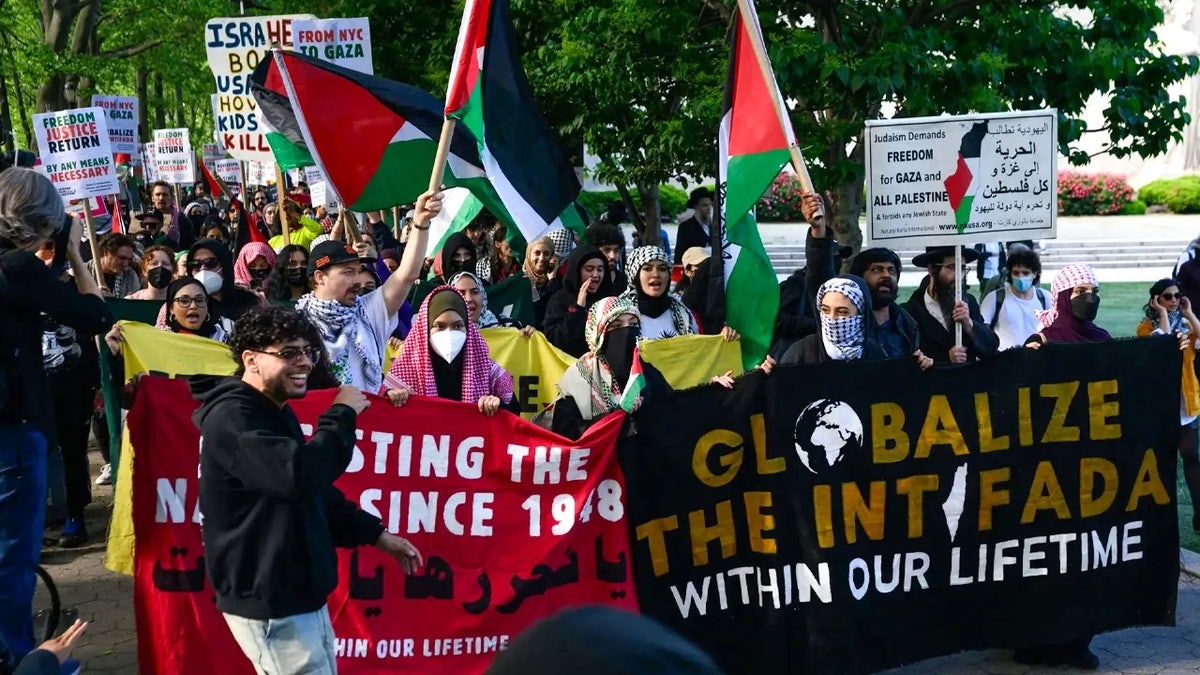
Anti-Israel activists hold banners that include, «globalize the intifada» during a protest commemorating Nakba Day May 15, 2025, in the Brooklyn, New York. (Alexi Rosenfeld/Getty Images)
Emanuel’s conclusion focuses on Israel’s declining public legitimacy and its strained position in traditional diplomatic institutions. Goldberg and Danon argue that it overlooks expanding government-to-government relationships built around defense, intelligence, energy, technology and trade.
Goldberg pointed in particular to Latin America, where he said newly elected conservative governments have made closer ties with Israel an early priority.
«Every time a government in South America right now flips from left wing to right wing, one of the first things they do is reestablish better relations with Israel, withdraw recognition of a Palestinian state and see what else they can do to make Israel a strategic partner,» Goldberg said.
He cited Argentina under President Javier Milei and the proposed «Isaac Accords,» along with political changes in Chile, Colombia and Bolivia, as evidence of a broader realignment.
Goldberg also argued that Israel remains central to emerging partnerships involving energy, defense, intelligence and critical infrastructure.
«If you’re in the Eastern Mediterranean and you’re Greece and you are Cyprus, you’re thinking about how do we work with Israel to make the Eastern Mediterranean partnership even stronger,» he said. «If you’re Armenia and Azerbaijan in a tough neighborhood between Turkey and Iran, you’re talking to Israel, you’re getting closer to Israel.»
Israel, Greece and Cyprus reaffirmed their strategic partnership during a trilateral summit in December 2025, agreeing to expand cooperation in energy, security, emergency preparedness and regional connectivity.
Danon said the diplomatic shift is visible even inside the United Nations, an institution where Israel routinely faces critical resolutions and public condemnation.
«We see this every day in the corridors of the United Nations,» he said. «While many South American countries were once highly critical of Israel in recent years, we are now cooperating with many of them. These discussions are happening in public and behind the scenes.»
«As Israel’s official representative to the United Nations, I regularly meet with ambassadors from around the world, including from Arab countries, to quietly advance initiatives where we share common interests,» Danon said.
Danon went further than Goldberg in assessing Israel’s position since the Oct. 7, 2023, Hamas terrorist attacks and the subsequent war.
«Compared to the period before October 7th, Israel is in a far stronger geostrategic position,» Danon said. «That is reflected not only in regional developments but also in the country’s diplomatic relationships around the world.»
The competing evidence suggests that much of the disagreement depends on how isolation is defined.
Israel may be losing public support and influence in traditional international institutions while simultaneously preserving or expanding government-to-government cooperation in defense, technology, intelligence, energy and agriculture.
MAMDANI GOES BACK ON CAMPAIGN PROMISE, SAYS NYC CAN’T ARREST NETANYAHU

European Union Council President, Charles Michel (center), Serbian President Aleksandar Vucic (right) and Israeli Prime Minister Benjamin Netanyahu (left) meet in January 2020 in West Jerusalem. (PhKobi Gideon / GPO / Handout/Anadolu Agency via Getty Images)
Goldberg acknowledged that relationships driven by conservative political victories could become vulnerable when governments change.
But he argued that Israel is increasingly building relationships around durable national interests rather than political ideology alone.
The central risk for Israel is that today’s collapse in public opinion could eventually reshape tomorrow’s government policies. Conservative governments may currently protect and expand strategic ties, but younger voters and left-wing parties could alter those relationships after future elections.
Israel is scheduled to hold national elections Oct. 27, the country’s first since the Oct. 7, 2023, attacks.
Goldberg argued that a change in Israel’s government would provide a test of whether international opposition is directed primarily at Prime Minister Benjamin Netanyahu or at Israel itself.
«If there is somebody else who becomes prime minister next, we will have to evaluate,» Goldberg said. «Those very loud detractors of Israel who right now use Netanyahu as their symbol for bashing and say it’s not about Israel, it’s about Netanyahu, they’ll be put to the test very quickly.»
He noted that the boycott movement and anti-Israel campus organizations remained active during the previous government led by Naftali Bennett and Yair Lapid, when Netanyahu was not prime minister.
CLICK HERE TO DOWNLOAD THE FOX NEWS APP

President Donald Trump predicted in recent days that additional countries would soon join the Abraham Accords, renewing debate over whether Israel is becoming increasingly isolated or continuing to expand its most important strategic relationships.
«Is their hatred and venom really just about Bibi Netanyahu, or is it fundamentally about a Jewish state that they don’t like existing?» Goldberg asked.
For now, both realities appear to be unfolding at once: Israel remains a sought-after military, intelligence and technology partner for a growing group of governments, while its support among the global public has fallen to levels that could eventually threaten those relationships.
israel, middle east, politics, foreign affairs, world, saudi arabia

NEWYou can now listen to Fox News articles!
The Trump administration is moving to deport an unnamed illegal immigrant suspected of terrorism through the long-dormant Alien Terrorist Removal Court (ATRC), which has never heard a single case.
The Justice Department filed its first-ever application for a removal order with the court on July 15, marking the first attempt in the court’s nearly 30-year history to invoke a little-known law allowing the government to deport noncitizens suspected of terrorism through a specialized judicial process that relies on sealed classified evidence. If successful, the administration could revive what legal scholars have called a «zombie» court as a powerful new tool for removing suspected terrorists.
«This Department of Justice will use every tool available to bring alien terrorists to justice and remove them from the United States, including by use of this court established by Congress in 1996,» a Justice Department spokesperson said in a statement to Fox News Digital.
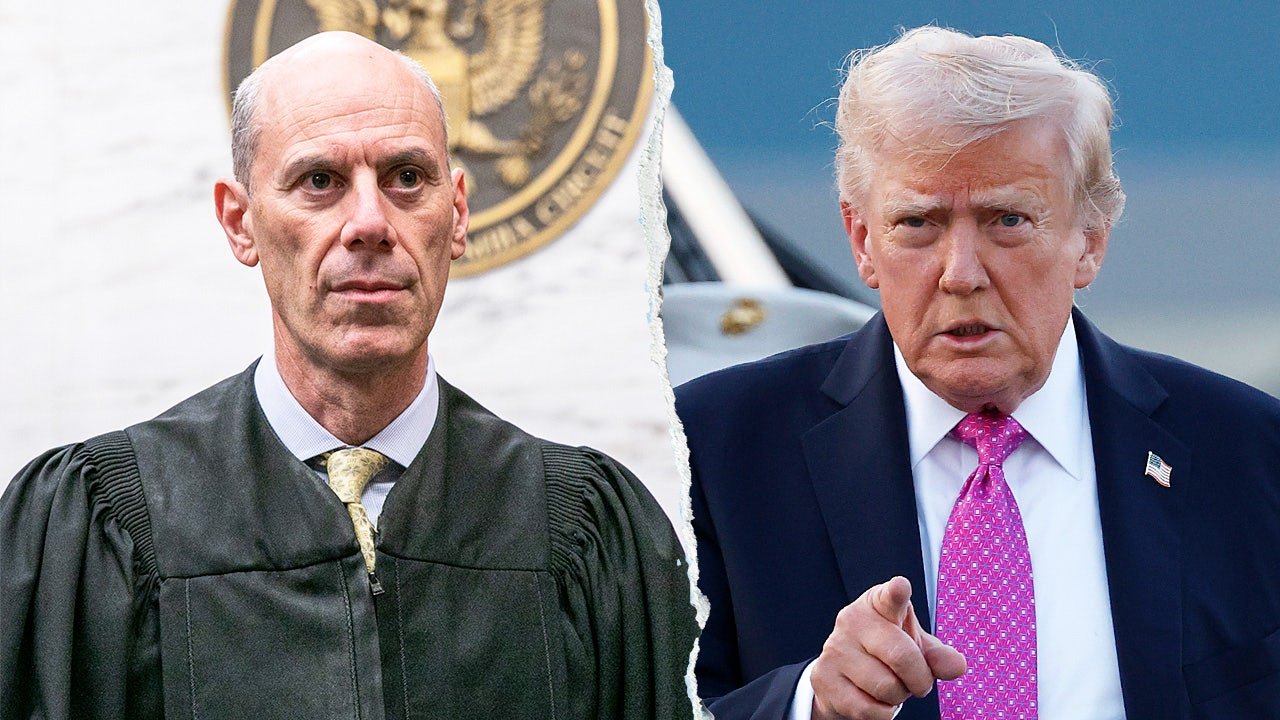
The move also comes months after Chief U.S. District Judge James Boasberg in Washington, D.C., pointed to the long-dormant Alien Terrorist Removal Court as an alternative for handling terrorism-related deportation cases while questioning the Trump administration’s use of the Alien Enemies Act.
EXCLUSIVE: NEW YORK WOMAN WHO WISHED ‘EVERY DAY WERE OCT. 7’ CHARGED WITH FUNDING PALESTINIAN TERROR GROUP
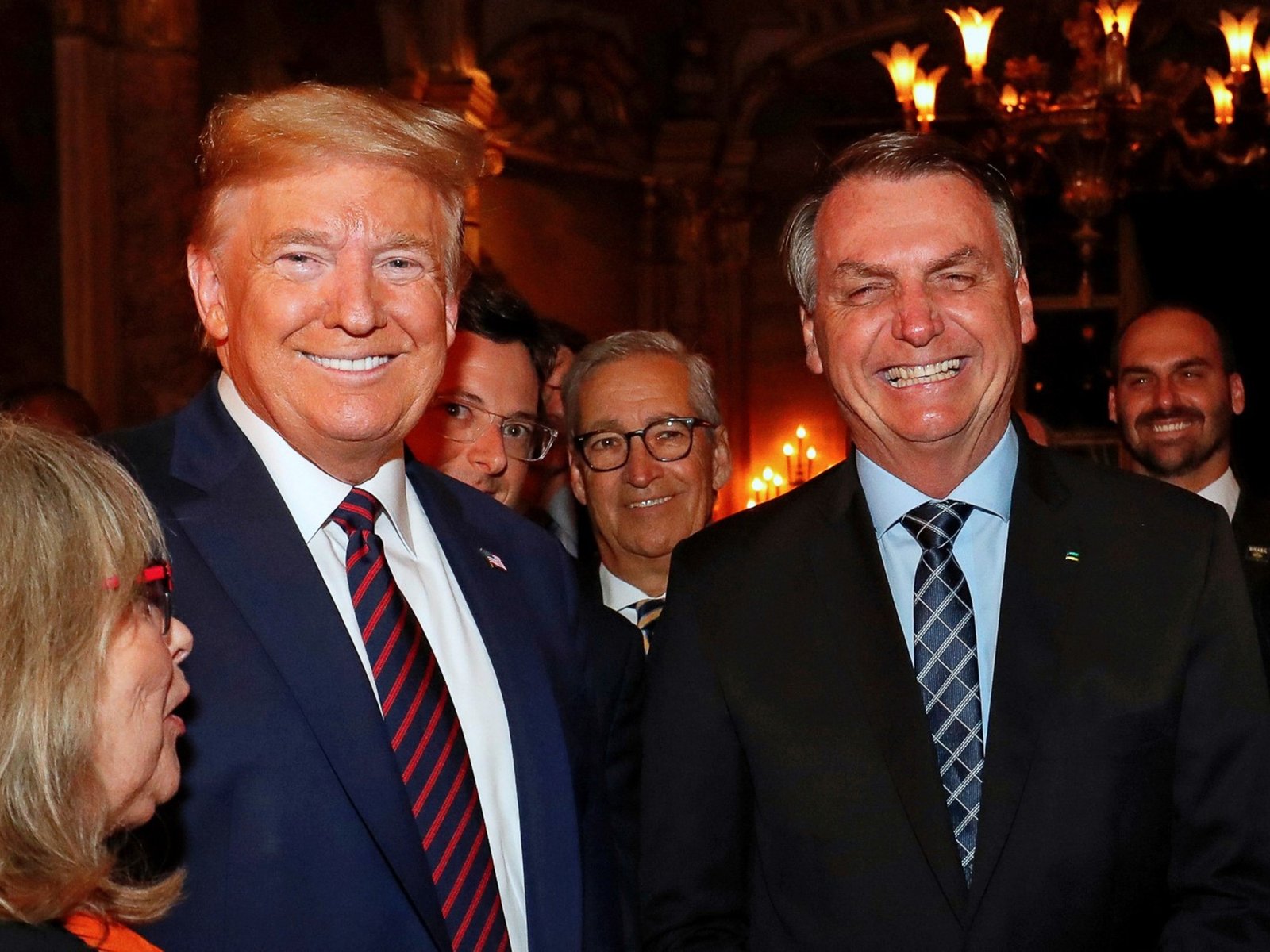
In this April 5, 2019 photo, President Donald Trump participates in a roundtable on immigration and border security at the U.S. Border Patrol Calexico Station in Calexico, Calif. Trump said Friday he is considering sending «Illegal Immigrants» to Democratic strongholds to punish them for inaction— just hours after White House and Homeland Security officials insisted the idea was dead on arrival. (AP Photo/Jacquelyn Martin)
«In fact, Congress has an answer for us, doesn’t it? Because they created the Alien Terrorist Removal Court,» Boasberg said during a March hearing. «So if there’s a national security concern with having these hearings, whether via habeas or otherwise, you can always go to the ATRC, which would be a first, but that’s what it’s there for, right?»
Boasberg made the comments while presiding over litigation challenging the administration’s use of the Alien Enemies Act to deport alleged members of the Venezuelan gang Tren de Aragua. He temporarily blocked the administration from using the wartime law for those removals while the courts determine whether Trump’s use of the statute is lawful. Boasberg also ordered deportation flights already in the air to return, setting off a high-profile legal battle between the administration and the judiciary.
Hans von Spakovsky, a senior legal fellow at Advancing American Freedom, told Fox News Digital that it was about time the Justice Department took advantage of this special court.
«I think it is a sign of negligence, frankly, of prior presidents that they did not use this special court, this special procedure that was specifically set up by Congress, so that they could quickly get aliens — aliens who were either terrorists or supported terrorist activities — out of the U.S.» von Spakovsky said.
BIDEN JUDGE OVERRULED ON KEY TRUMP IMMIGRATION POLICY
The one-page sealed application contained virtually no information, leaving out the person’s identity, the alleged conduct, and the specific section of the anti-terrorism law the Justice Department cited.
After hearing arguments from Justice Department officials, ATRC Chief Judge Joan N. Erickson, appointed by President George W. Bush, requested additional information before proceedings could continue.
«The Court had questions about the nexus that the government alleges between the actions of the respondent and the specific sections and subsections it invokes with respect to those actions,» Erickson wrote.
«The answers persuaded the Court that the Government could benefit from the opportunity for more thoughtful consideration,» Erickson continued.
Erickson gave the Justice Department until Wednesday to respond with additional documentation.
Congress created the ATRC through the Antiterrorism and Effective Death Penalty Act, signed into law by President Bill Clinton in 1996.
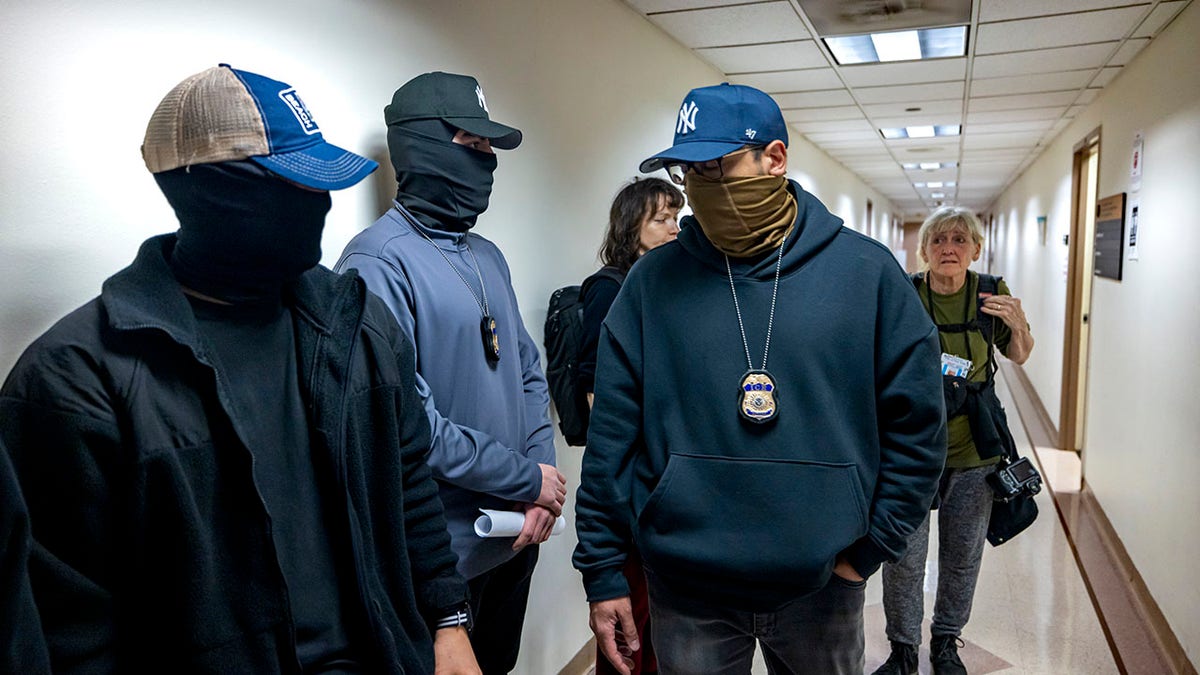
Federal agents patrol the halls of immigration court at the Jacob K. Javitz Federal Building. According to White House Border Czar Tom Homan, Immigration and Customs Enforcement (ICE) will increase its operations in New York City due to its status as a sanctuary city. (Photo by Michael Nigro/Pacific Press/LightRocket via Getty Images) (Getty Images)
«From now on we can quickly expel foreigners who dare to come to America and support terrorist activities,» Clinton said at the bill’s signing.
The court is made up of five federal district judges who serve five-year terms. It handles terrorism-related deportation cases where the government says its evidence cannot be made public because it would threaten national security. In those cases, the government provides the respondent with an unclassified summary instead of the classified evidence itself.
DC APPEALS COURT ORDERS JUDGE BOASBERG TO HALT TRUMP CONTEMPT PROBE OVER DEPORTATION FLIGHTS
At the time of the law’s passage, then Sen. Joe Biden, D-Del., blasted the law.
«You and me, Judge—me, the prosecutor; you, the judge—let’s deport him in a secret hearing, using secret evidence,» Biden said. «We know you did it, and we can’t tell you how we know. Now I think that is about as un-American as it gets.»
According to the 9/11 Commission staff report, DOJ attorneys considered 50 cases by 1998 and another 50 over the next two years, but every one was rejected. Some terrorism-related cases moved forward through the regular immigration court system instead.
SIGN UP TO GET THE POLITICS NEWSLETTER
The Justice Department’s case before the ATRC comes as the Trump administration has repeatedly faced resistance from federal judges, who have blocked, delayed or narrowed key parts of its immigration enforcement agenda.
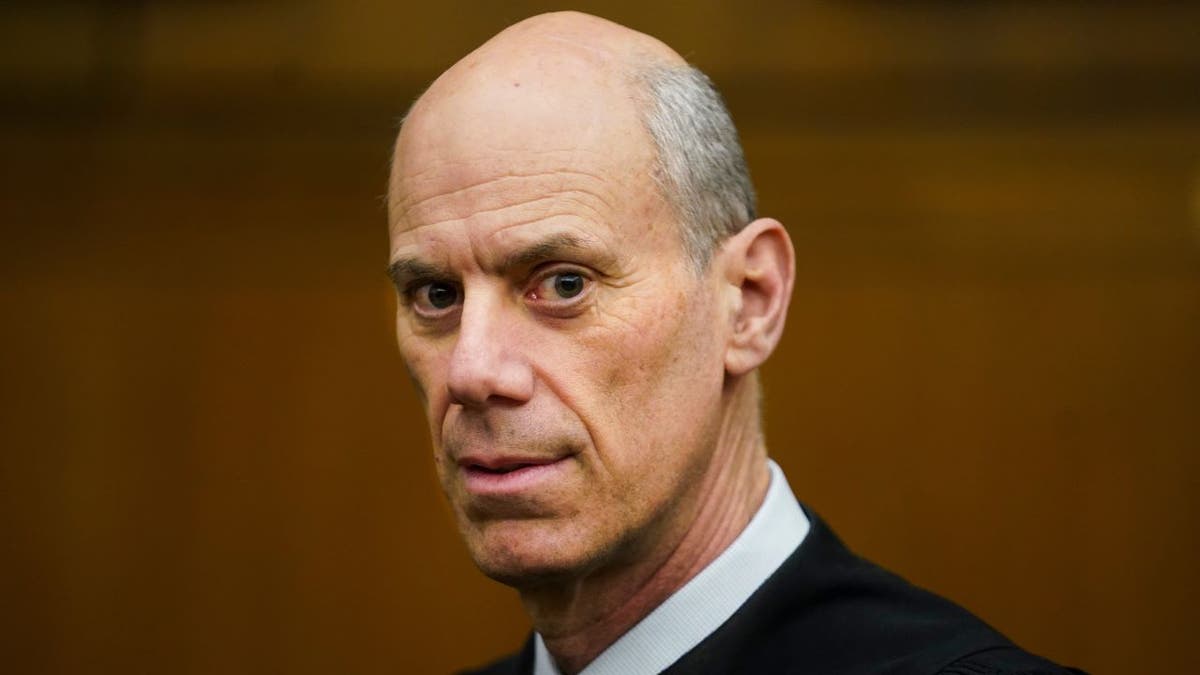
Courts rejected a misconduct accusation against Judge James Boasberg. (Associated Press)
CLICK HERE TO DOWNLOAD THE FOX NEWS APP
Von Spakovsky said the Justice Department’s use of the ATRC could not only streamline terrorism-related deportation cases but also reduce interference from what he described as «rogue» liberal judges.
«I think this court is a much stronger tool the Justice Department can use, and it’s going to make it much tougher for what I consider to be rogue judges to interfere with, and hopefully prevent, the removal of immigrants,» von Spakovsky said.
national security, deportation, terrorism, justice department, federal courts

Qué se debe hacer al frenar en un semáforo con un auto automático: ¿conviene pasar a Neutro?

Alerta por las rutas: el peligroso deterioro que aparece como factor clave en la negociación con los gobernadores

Is Israel really isolated? Polls and diplomacy point in opposite directions

Jürgen Klopp asumió como entrenador de Alemania luego de otro traspié en el Mundial y anunció cambios en la selección

El Gobierno designó a Fernando Subirats como nuevo subsecretario de Comunicación y Medios Públicos

Un pueblo argentino regala oro a los turistas que lo visiten en vacaciones de invierno

Escándalo Mundial: Las presiones secretas, la amenaza de la FIFA por Malvinas y la verdad detrás del partido contra España

Sin la Copa y sin Messi en el avión, vuelve Tapia y deberá enfrentar tres frentes de tormenta tras la pausa del Mundial

Samuel L. Jackson llamó a Argentina “el país más racista del mundo”: la contundente respuesta que le dejó Bárbara Lombardo

Le ganan a la inflación: los senadores pasarán a cobrar $12 millones brutos a partir de agosto

 DEPORTE2 días ago
Escándalo Mundial: Las presiones secretas, la amenaza de la FIFA por Malvinas y la verdad detrás del partido contra España
- POLITICA1 día ago
Jorge Berredo, general retirado de las FFAA, asumió como Secretario de Seguridad en San Isidro
- POLITICA1 día ago
Sin la anestesia mundialista, aflora la crisis del conurbano y Milei necesita reconectar con lo popular