
INTERNACIONAL
Donald Trump sigue gozando de «excelente» salud pero debe bajar de peso, dice su médico

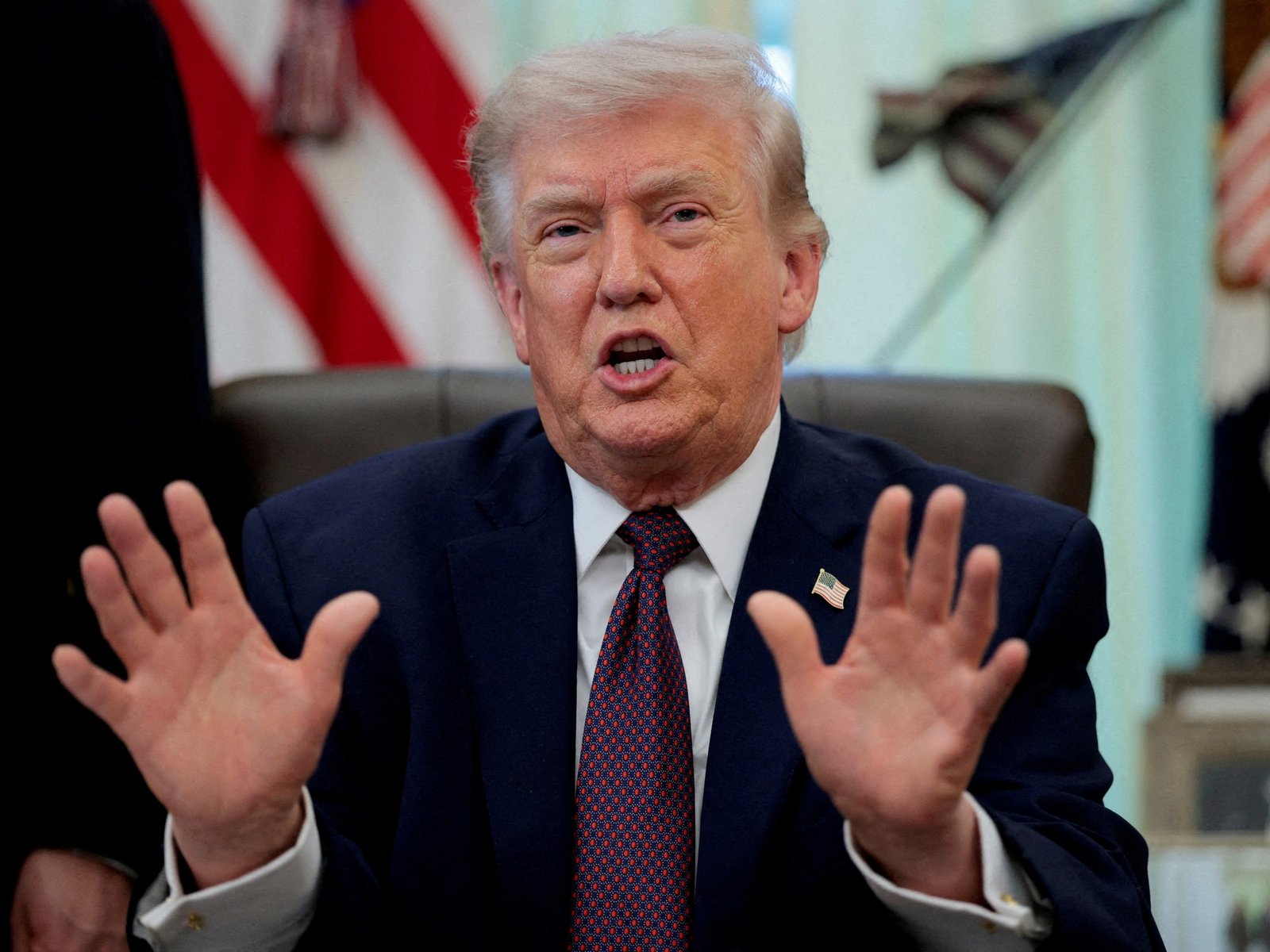
Donald Trump sigue gozando de una salud «excelente», pero debe bajar de peso y hacer más ejercicio, según el último chequeo médico anual del mandatario estadounidense, realizado pocas semanas antes de que cumpla 80 años.
Trump, el presidente de mayor edad al asumir el cargo, ha alardeado en repetidas ocasiones de su vigor mental y físico en comparación con su predecesor demócrata, Joe Biden, quien dejó la Casa Blanca con 82 años.
«El presidente Trump se mantiene en excelente condición de salud, demostrando una sólida función cardíaca, pulmonar, neurológica y física en general», declaró el médico presidencial, el capitán de la Marina Sean Barbabella, quien lo consideró «plenamente apto para desempeñar todas las funciones de comandante en jefe y jefe de Estado».
El informe de tres páginas publicado el viernes por la noche da cuenta del examen médico y de las pruebas diagnósticas realizadas el martes a Trump en el hospital militar Walter Reed, cerca de Washington.
Según Barbabella, la edad cardíaca de Trump es «de unos 14 años menos que su edad cronológica» de 79, y el presidente obtuvo un «30 sobre 30» en la evaluación cognitiva.
Trump, que cumplirá 80 años el 14 de junio, mide 1,91 metros y pesa 108 kg, frente a los 101,6 kg de su chequeo de salud de abril de 2025.
«Se proporcionaron consejos preventivos, incluida la recomendación de modificar la alimentación, la toma de aspirina en dosis bajas, un aumento de la actividad física y la continuación de la pérdida de peso», indica el texto.
Trump, que cumplirá 80 años el 14 de junio, toma tres medicamentos, dos de ellos destinados a controlar su nivel de colesterol y el tercero, aspirina, para prevenir enfermedades cardiacas.
«President Trump remains in excellent health… Cognitive and physical performance are excellent. He is fully fit to carry out all duties of the Commander-in-Chief and Head of State.»
– CAPT SEAN P. BARBABELLA. DO, MC, USN
PHYSICIAN TO THE PRESIDENT pic.twitter.com/pVYddwQIxT— The White House (@WhiteHouse) May 30, 2026
El informe menciona también «una cicatriz en la oreja derecha correspondiente a una herida de bala anterior», secuela del intento de asesinato de Trump, entonces candidato a la presidencia, durante un mitin electoral en Pensilvania en 2024.
El examen del martes es el tercero desde la investidura de Trump el 20 de enero de 2025, lo que supone un ritmo semestral de revisiones médicas hasta ahora, en lugar de la frecuencia anual habitual.
«Todo salió PERFECTAMENTE bien», escribió Trump tras estos exámenes.
Desde su regreso al poder en enero de 2025, el dirigente estadounidense presenta en la mano derecha un hematoma persistente, cubierto de maquillaje, que el informe hecho público el viernes atribuye «a los frecuentes apretones de manos» que se suman «a la toma de aspirina con fines de prevención cardiovascular».
En algunos actos oficiales, también se ha visto al presidente aparentemente cerrar los ojos durante varios segundos, aunque ha negado en repetidas ocasiones haberse quedado dormido.
La Casa Blanca también reveló que Trump sufre de insuficiencia venosa crónica, una afección extendida y benigna que provoca hinchazón e incluso calambres.
El presidente ha reducido sus desplazamientos dentro de Estados Unidos en comparación con su primer mandato (2017-2021), pero mantiene un ritmo bastante intenso de viajes al extranjero y responde con frecuencia a la prensa.
Durante su primer mandato, fue acusado de falta de transparencia sobre su salud, en particular cuando fue hospitalizado tras contraer covid en octubre de 2020.
El estado de salud del presidente estadounidense no suscita en la opinión pública interrogantes tan insistentes como los que provocaba el de Biden al final de su mandato, cuando el demócrata solía sufrir caídas o confusiones.
Pero muchos estadounidenses albergan dudas sobre las facultades de Trump.
En una reciente encuesta de Washington Post/ABC News/Ipsos, el 59% de los consultados considera que el mandatario republicano no tiene la capacidad mental para dirigir el país y el 55% que no goza de la salud física necesaria.
El presidente estadounidense asegura estar en plena forma. «Me siento como hace cincuenta años. Es una locura», declaró el 12 de mayo.

INTERNACIONAL
«¿Has visto a mi hijo?», la pregunta que se repite entre las familias marroquíes en medio de la crisis migratoria en Ceuta



INTERNACIONAL
US companies win billions in African data center deals in direct competition with China
NEWYou can now listen to Fox News articles!
JOHANNESBURG: The U.S. is beating China in a high-tech trade war over data centers in a fierce battle being waged across Africa.
Major new deals have been engineered in a public-private partnership between the Trump administration and U.S. companies in Africa, while States across the U.S. clamp down on the centers over their massive reliance on electricity.
The administration’s Bureau of African Affairs has reported it has worked on 37 commercial transactions that have closed since the beginning of President Donald Trump’s second term — representing $25.67 billion in total value, with more still being reported.
RESOURCE-RICH NATION PRAISES US TIES AMID WASHINGTON-BEIJING CRITICAL MINERALS RACE
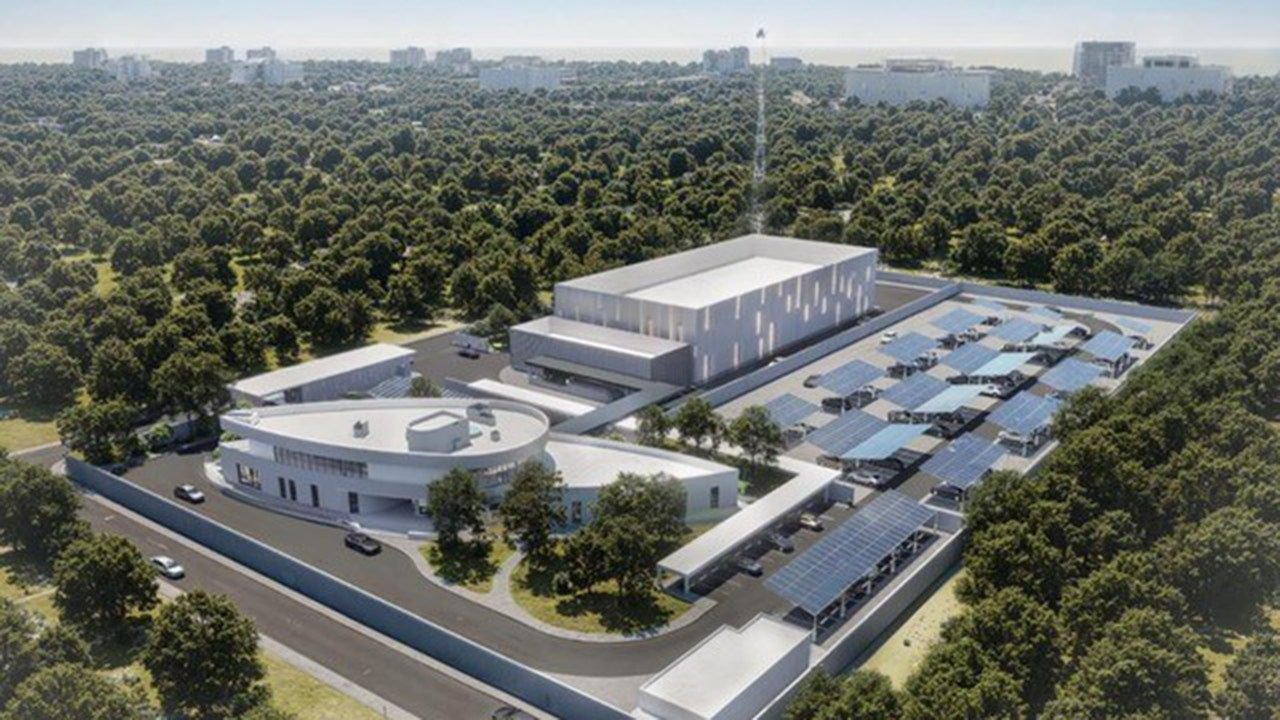
A rendering of BESS battery storage facilities, to be constructed in Lesotho by U.S. company Convalt Energy, as part of a $6.2 billion deal with the government of Lesotho facilitated with the assistance of the U.S. government. (Convalt Energy)
Data centers are at the heart of today’s global economy — fueling the massive demand for AI and hosting everything from video streaming to housing cloud networks.
In Lesotho, with U.S. help, an American company has won a $6.2 billion deal for a data center and hydropower plant. It is the largest transaction in this Southern African country’s history.
In Gabon, the U.S. Embassy helped win $600 million in business for American companies in 2025. And this year, the embassy in this central African country has assisted in securing a $100 million contract to supply two data centers and a gas-to-power plant, in the face of strong competition from China.
Assistant Secretary of State for African Affairs Frank Garcia told Fox News Digital, «Under President Trump’s leadership, the United States is assisting U.S. companies to find new markets and flourish in Africa.»
The main strategic competitor in Africa is China. While American goods traded with Africa last year were valued at $83.4 billion by the Office of the United States Trade Representative, Beijing’s General Administration of Customs claimed bilateral trade between China and Africa reached $348 billion for the same period.
But Garcia called out China for giving African countries a raw deal, saying «there are others (notably China) that trap, coerce and undermine. The choice to me is clear — partner with the United States for prosperity.»
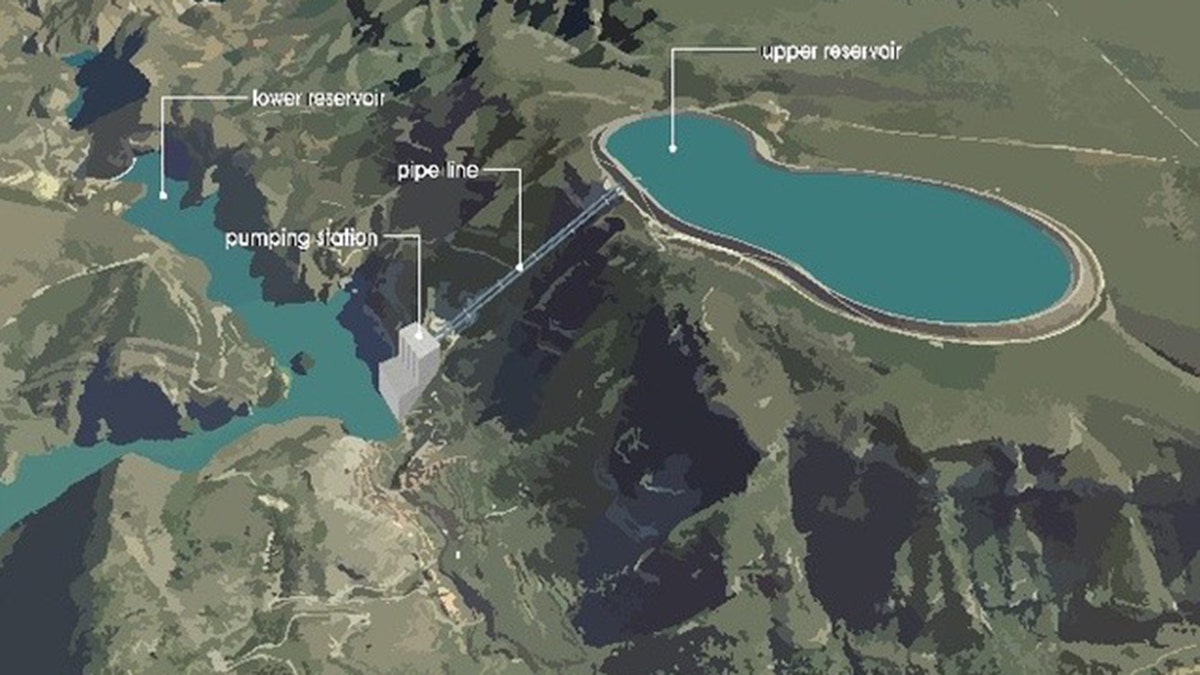
Rendering of the Kobong, Lesotho Pumped Hydro project, which is to be constructed in Lesotho by U.S. company Convalt Energy, as part of a $6.2 billion deal with the government of Lesotho facilitated with the assistance of the U.S. government. (Convalt Energy)
To drive this initiative, the State Department, through the Bureau of African Affairs, launched the Commercial Diplomacy Strategy in early 2025, with Garcia telling Fox News Digital the U.S. «is working worldwide to advance a level playing field for U.S. companies and address disparities in trade practices.»
The playing fields in Lesotho are not level: Geographically because this is a mountain kingdom. Financially because China is historically deeply entrenched in life there. Beijing has dropped all tariffs on Lesotho’s exports. Payments between the two countries have been simplified, with Lesothans able to bank directly with the State-owned Industrial and Commercial Bank of China.
Beijing has canceled debt on major projects in Lesotho, and among other major projects is building a new fire station, a solar power plant and even completed a police fingerprint examination laboratory.
CHINA IS BUILDING AN AI WAR MACHINE. WASHINGTON MUST WAKE UP BEFORE IT’S TOO LATE
This makes it all the more remarkable that, with the administration’s help, primarily through the local embassy, U.S. company Convalt Energy has secured a $6.2 billion agreement with the government of Lesotho.
Garcia told Fox News Digital that the «project includes a 1,200MW pumped-storage hydropower facility and a 900MW AI data center, increasing Lesotho’s electricity generation capacity by approximately 1,600% and transforming the country into a net exporter of electricity. The project is expected to generate approximately $2 billion in U.S. energy equipment exports.»
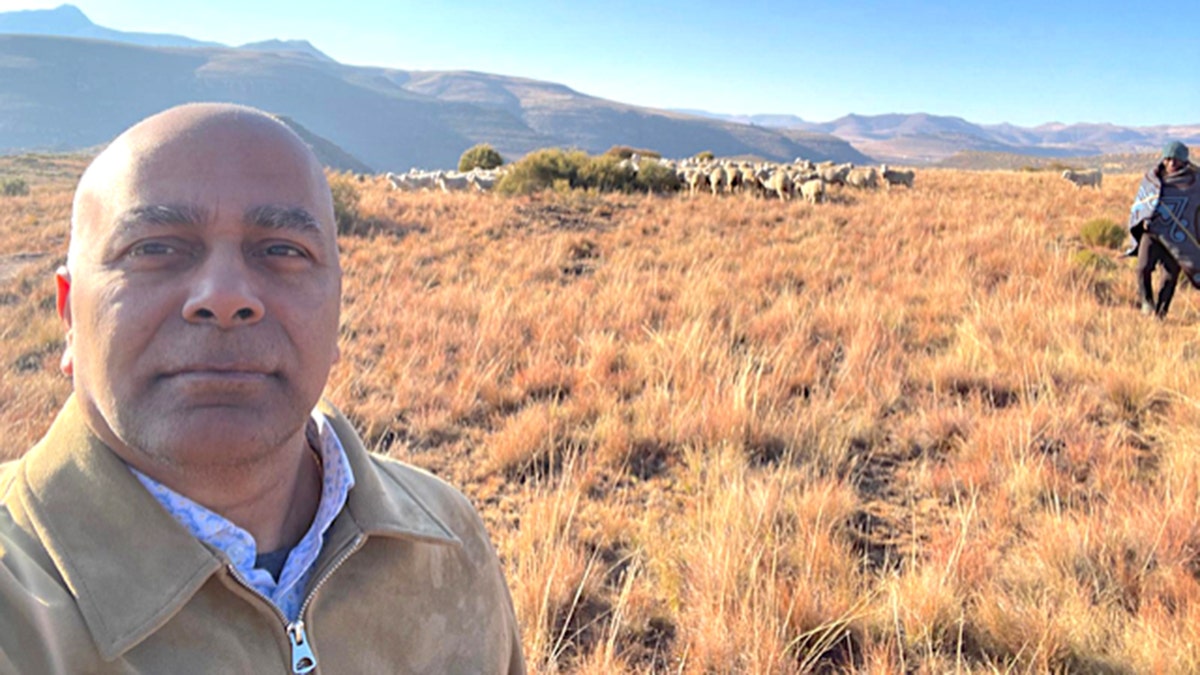
Convalt Energy’s president and CEO, Hari Achuthan, in Lesotho at the site of where the new data center and pumping station will stand. July 29, 2026. (Convalt Energy)
Convalt Energy’s president and CEO, Hari Achuthan, told Fox News Digital how U.S. companies such as his are beating China on their traditional turf: «American companies can compete successfully by innovating faster, integrating hardware and software, and remaining intensely focused on the needs of the end customer.»
A new data center, Achuthan believes, is not only at the heart of the project, but is essential for any country’s growth. «The next major cycle of economic growth will increasingly be driven by artificial intelligence, digital infrastructure and the energy systems required to support them. AI cannot scale without physical infrastructure. Every data center requires reliable power, water, fiber connectivity, land, cooling systems and resilient transmission infrastructure.»
«The Trump administration’s emphasis on trade and private-sector investment, rather than relying primarily on grant funding, is closely aligned with our approach in Africa,» Achuthan continued. «In Lesotho, we are pursuing a commercially sustainable infrastructure platform built around long-term investment, bilateral trade with a durable, sustainable operating business.»
«At the same time,» Achuthan added, «the project can create meaningful economic benefits in the United States. Convalt’s U.S. manufacturing facilities are being developed to serve domestic customers as well as international markets, particularly Africa, where demand for power, manufacturing capacity and digital infrastructure is growing rapidly.»
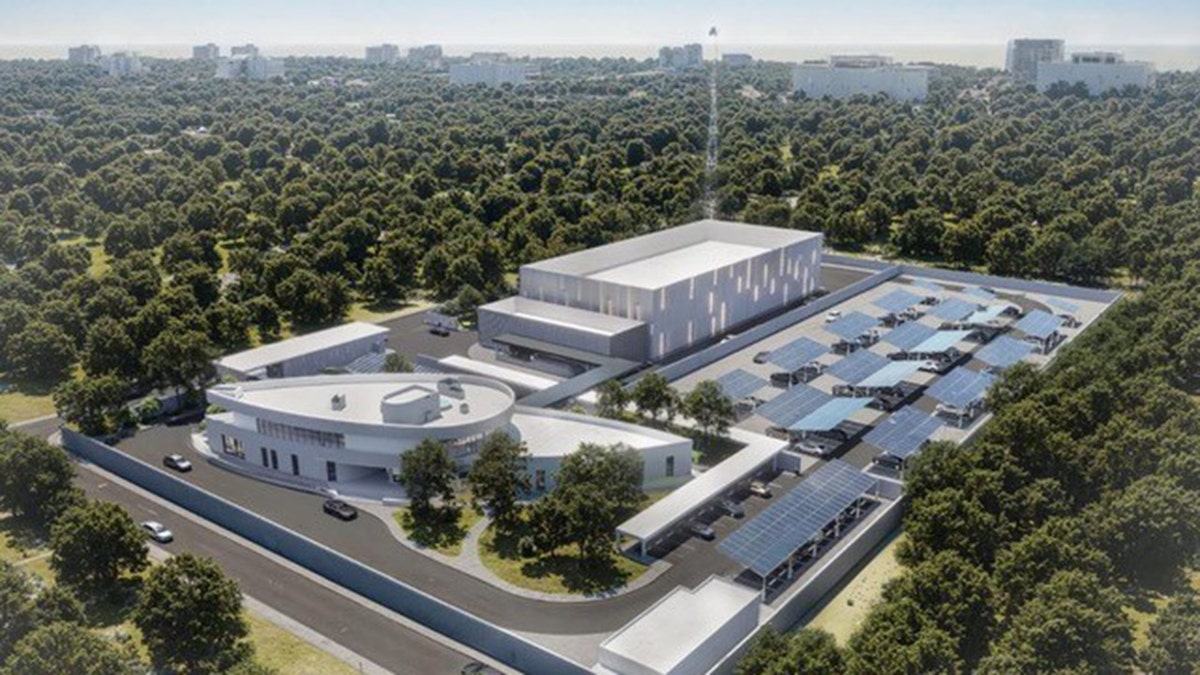
Rendering of U.S. company Cybastion’s projected data center in the Ivory Coast, West Africa. The U.S. Embassy in Abidjan helped facilitate a $170 million contract with the government of the Ivory Coast that includes the provision of the data center. (Cybastion)
The construction of two data centers is part of the $100 million deal Assistant Secretary Garcia says administration officials have helped American company Cybastion secure. Garcia added, «Notably, the U.S. company prevailed over Huawei (a Chinese company) in a direct competition for the project.»
Cybastion CEO Dr. Thierry Wandji believes U.S. companies can and are now coming to the fore. Earlier this month, the U.S. Embassy in the Ivory Coast confirmed an even larger deal for Cybastion. The $170 million contract will bring a data center, government digitalization platform and a cutting-edge border surveillance system to this West African country.
Wandji told Fox News Digital, «We believe we are the better option compared to other global competitors. Cybastion brings a unique understanding of the African context and local business environments.»
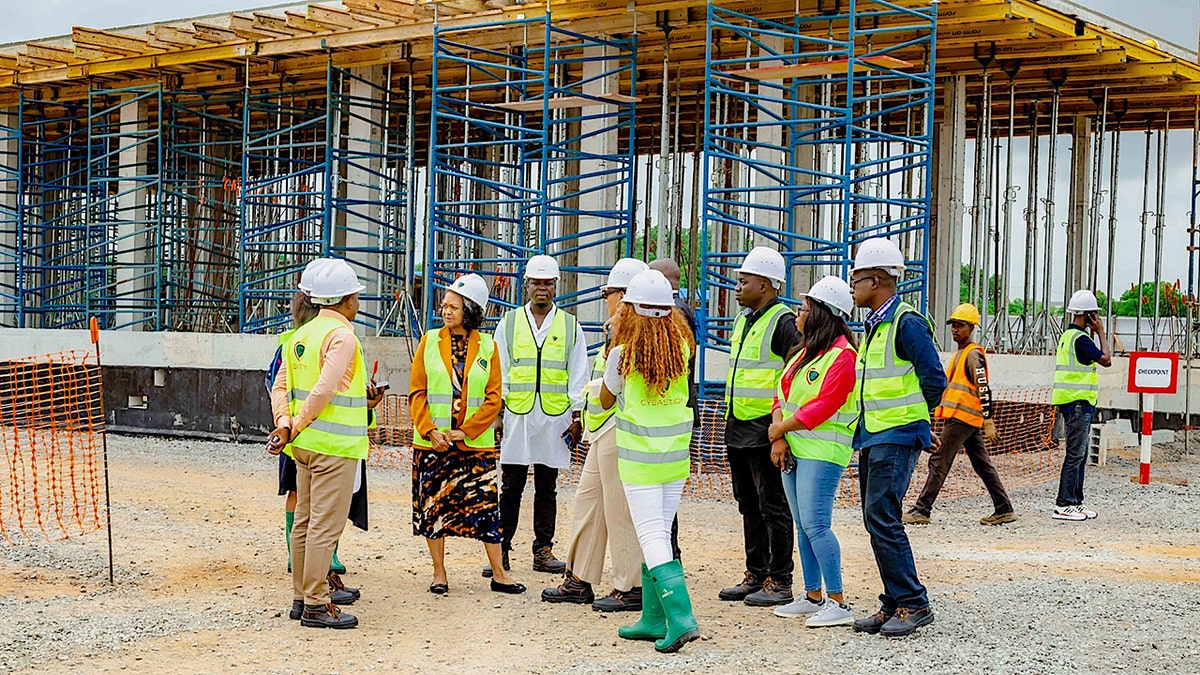
A recent site visit to the construction zone for a new data center in the Ivory Coast, which is part of a $170 million contract facilitated by the U.S. Embassy for development by the U.S. company Cybastion. (Clement Djakey for Cybastion)
«Africa has some of the world’s fastest-growing economies,» Wandji continued. «Across the continent, countries are prioritizing sovereign data centers, modernizing their government services through digitalization, and digital workforce development as part of their national development plans.
«The U.S. tech sector offers global competitiveness unparalleled to any country in the world,» Wandji added. «We deliver innovation, transparency and accountability in our business offerings, while creating new markets for U.S. companies.»
Convalt’s Achuthan told Fox News Digital what’s working for U.S. business in Africa, «American companies must clearly communicate the value of quality, transparency, safety, responsible business practices and long-term community partnership. Competing solely on price is not enough going forward. Companies from the United States should compete on performance, reliability, innovation, institutional trust and the ability to create sustainable local economic benefits.»
africa, trade, state department, china, national security
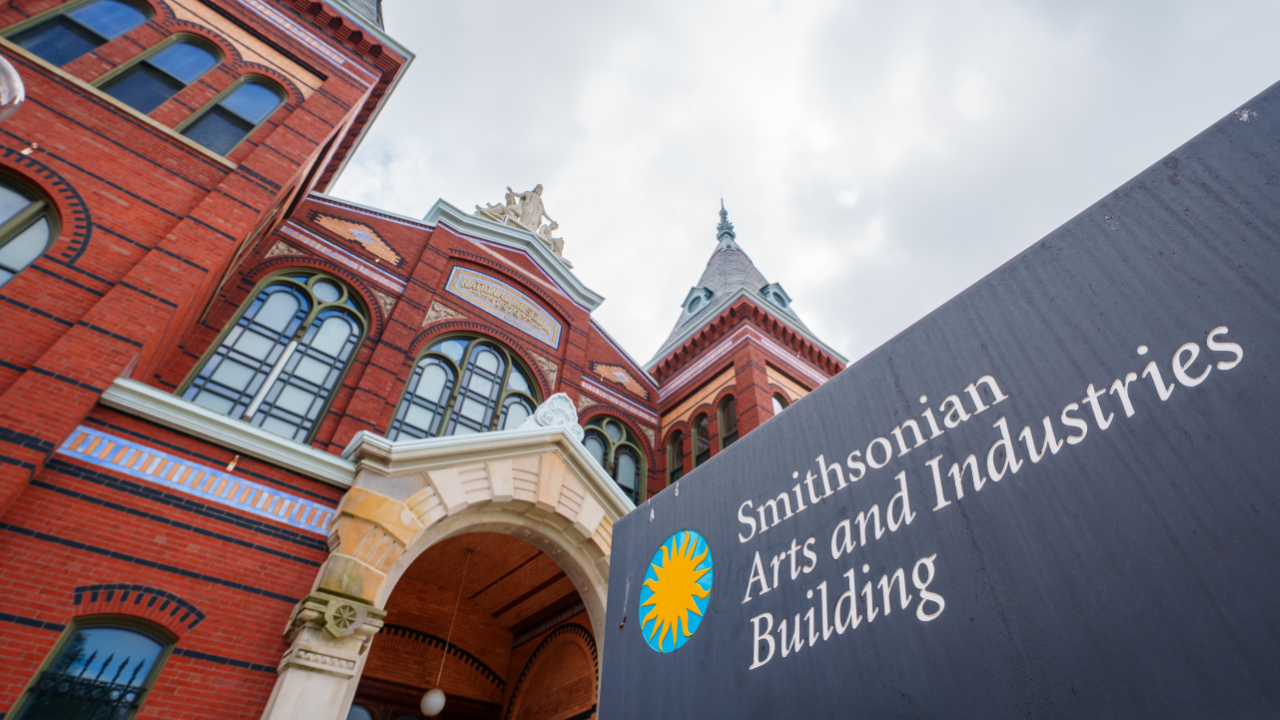
Trump orders warning signs outside Smithsonian over ‘woke’ exhibits
President Donald Trump orders warning signs outside the Smithsonian, alleging politicized exhibits that emphasize activism over history. The institution faces scrutiny for promoting racial reparations and for a 2020 infographic criticizing ‘white culture.’ A congressional hearing further ignited debate over the museum’s ‘woke’ displays and their historical accuracy, highlighting the growing tension.
NEWYou can now listen to Fox News articles!
President Donald Trump’s effort to remake the Smithsonian is reaching the institution’s bottom line, with the administration proposing its smallest budget request in years while pushing to eliminate what it calls «woke» ideology from federally funded museums and programs.
A Fox News Digital analysis of Smithsonian budget requests found the institution submitted steadily larger funding requests during the Biden administration, with annual requests rising from $1.11 billion in fiscal year 2021 to a record $1.24 billion in fiscal year 2024.
The fiscal year 2025 request also exceeded $1 billion before the Trump administration proposed reducing the institution’s request below that threshold in its fiscal year 2026 and 2027 budgets—the first time since fiscal year 2020 that the Smithsonian’s annual request has fallen below $1 billion.
The proposed funding reduction comes as the White House expands one of its most ambitious efforts to reshape a federally funded cultural institution, arguing the Smithsonian has promoted ideological narratives at odds with its mission and directing it to change its exhibits, programming, leadership and spending priorities.
FORMER DEMOCRATIC STAFFERS, DEI LEADERS SHAPE SMITHSONIAN LEADERSHIP AMID POLITICAL FIRESTORM
President Donald Trump launched a sweeping White House review of the Smithsonian, arguing the institution had promoted «divisive» ideological narratives. (Maxine Wallace/The Washington Post/Getty Images)
The White House’s effort to root out what it calls «woke» ideology at the Smithsonian has grown into one of the most extensive reviews of the institution in decades.
Over the past 16 months, the administration has examined museum exhibits, educational programming, internal records and leadership statements, issued multiple document requests, interviewed curators and conducted on-site museum walkthroughs.
That review culminated in a 162-page White House report recommending sweeping reforms and a new round of executive actions aimed at implementing those recommendations.
The administration has ordered the Smithsonian to promote what it describes as a more accurate portrayal of American history while scrutinizing exhibits, programming and leadership across the museum complex.
INSIDE THE BEHEMOTH SMITHSONIAN MUSEUM NETWORK DRAWING FIRE FROM THE TRUMP ADMINISTRATION
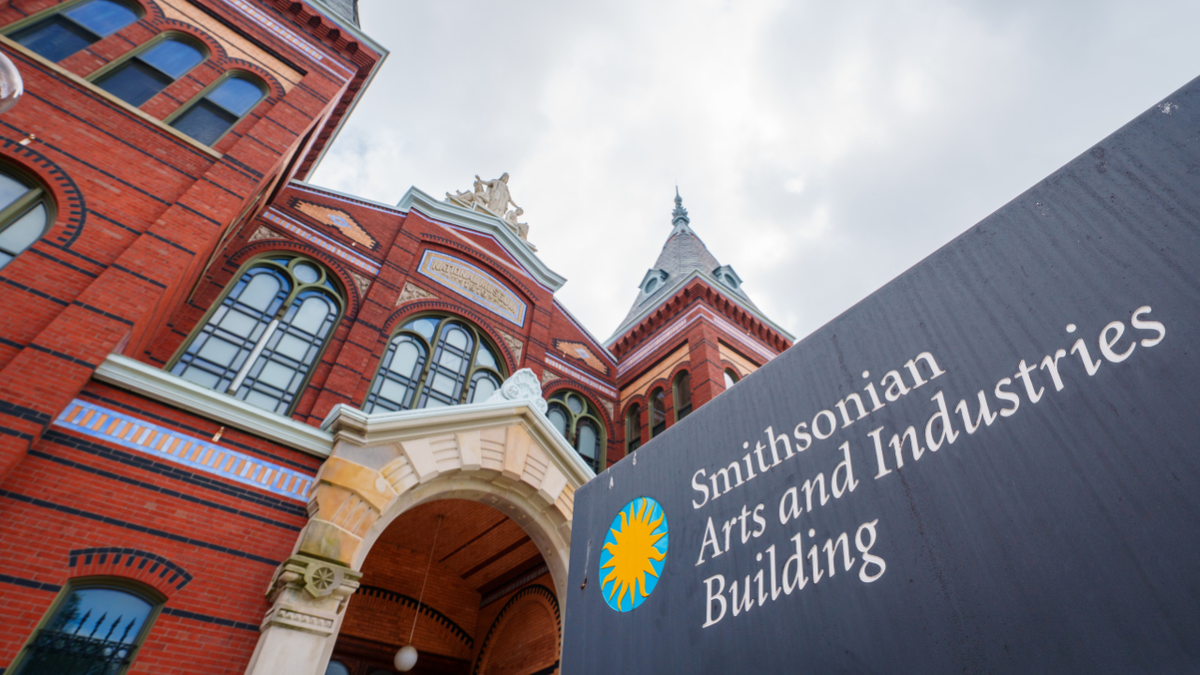
The Smithsonian, the nation’s largest museum and research complex, is at the center of a White House campaign to overhaul its presentation of American history. (J. David Ake/Getty Images)
The Smithsonian oversees 21 museums, the National Zoo and nearly 157 million objects and specimens while receiving more than $1 billion annually in federal funding, in addition to private donations and other trust revenue.
The taxpayer-supported institution has become the latest battleground in a broader national debate over patriotism, historical interpretation and the role of federally funded cultural institutions in shaping how Americans understand the nation’s past.
TRUMP ORDERS SIGNS OUTSIDE SMITHSONIAN MUSEUM AMID ROW OVER ITS DEPICTION OF AMERICAN HISTORY
Whether Congress adopts the administration’s proposed funding levels remains to be seen.
But alongside executive orders, museum reviews and a sweeping White House report, the budget proposal signals that the administration intends to use both policy and federal funding to reshape one of the nation’s largest cultural institutions.
The Smithsonian Institute did not immediately respond to Fox New Digital’s request for comment.
smithsonian, white house, donald trump, woke, politics

Fopea condenó el hackeo que sufrió el periodista Daniel Santa Cruz en su cuenta de X

Un muerto y tres heridos al chocar un colectivo de turismo y un auto en Mendoza

Por primera vez en el siglo XXI, hay un desacople entre la evolución del PBI y del consumo: causas y expectativas

Los criterios del Gobierno para elegir al candidato a vicepresidente tras la ruptura con Villarruel

Diputados de Misiones se rebelan contra Carlos Rovira: denuncian que los hacía firmar la renuncia antes de asumir

«¿Has visto a mi hijo?», la pregunta que se repite entre las familias marroquíes en medio de la crisis migratoria en Ceuta

Trump admin invokes 30-year dormant terror court as it seeks to deport Afghan woman tied to Election Day plot

“Vamos a acelerar con todo”: el objetivo del Gobierno por las reformas y la agenda electoral de cara al 2027

“Casta”, “parásito” y “sea democrático”: fuerte respuesta de Victoria Villarruel a Diego Santilli

Dem senator swipes credit for bill he opposed amid heated reelection bid: ‘Disturbing pattern’
-
 POLITICA10 horas ago
“Vamos a acelerar con todo”: el objetivo del Gobierno por las reformas y la agenda electoral de cara al 2027
-
 POLITICA2 días ago
“Casta”, “parásito” y “sea democrático”: fuerte respuesta de Victoria Villarruel a Diego Santilli
-

 CHIMENTOS8 horas ago
¡Chau Luck Ra! La salida de soltera de La Joaqui, muy bien acompañada, a días de su separación