INTERNACIONAL
El jefe militar de Pakistán viaja a Irán en medio de la tensión por el futuro del estrecho de Ormuz


El jefe del Ejército de Pakistán tenía previsto llegar a Irán el jueves, según informaron los medios iraníes, con Islamabad actuando como mediador mientras la República Islámica examina una nueva propuesta de Estados Unidos para poner fin a la guerra en Oriente Medio.
La esperada visita del mariscal de campo Asim Munir, una figura influyente con un papel cada vez más importante en las relaciones exteriores de Pakistán, se produce un día después de que el presidente de Estados Unidos, Donald Trump, advirtiera de que las negociaciones para poner fin a la guerra se encontraban en la “frontera” entre un acuerdo y la reanudación de los ataques.
Un alto el fuego el 8 de abril detuvo la guerra iniciada semanas antes por Estados Unidos e Israel, pero los esfuerzos de negociación no han logrado hasta ahora un acuerdo de paz duradero.
Una guerra de palabras ha sustituido al conflicto abierto, pero el estancamiento sigue pesando sobre la economía mundial, dejando a todos, desde inversores hasta agricultores, en un doloroso estado de incertidumbre.
El jueves, la agencia de noticias iraní ISNA informó que la visita de Munir tenía como objetivo continuar las “conversaciones y consultas” con las autoridades iraníes, sin dar más detalles. Otros medios iraníes difundieron la misma noticia.
Pakistán fue sede en abril de las únicas negociaciones directas entre funcionarios estadounidenses e iraníes que se han celebrado desde el 28 de febrero, el día en que comenzó la guerra.
Munir estuvo en el centro de la acción durante esa ronda de conversaciones, saludando a ambas delegaciones a su llegada y mostrando una notable cordialidad con el vicepresidente de EEUU, JD Vance.

Pero las conversaciones finalmente fracasaron, y Irán acusó a EEUU de hacer “demandas excesivas”.
Desde entonces, ambas partes se han enviado múltiples propuestas, con la amenaza de una nueva guerra acechando todo el tiempo.
“Estamos justo en el límite, créanme”, dijo Trump a los periodistas el miércoles. “Si no obtenemos las respuestas correctas, todo se precipitará muy rápidamente. Todos estamos listos para actuar”.
Afirmó que un acuerdo podría llegar “muy pronto” o “en unos días”, pero advirtió que Teherán tendría que dar “respuestas 100 % satisfactorias”.

El principal negociador de Teherán, Mohammad Bagher Ghalibaf, acusó el miércoles a Washington de intentar reavivar la guerra y advirtió de una “respuesta contundente” si Irán fuera atacado.
“Los movimientos del enemigo, tanto abiertos como clandestinos, demuestran que, a pesar de la presión económica y política, no ha abandonado sus objetivos militares y está tratando de iniciar una nueva guerra”, afirmó Ghalibaf.
El portavoz del Ministerio de Relaciones Exteriores de Irán, Esmaeil Baqaei, dijo que la República Islámica estaba examinando los puntos recibidos de Washington, al tiempo que reiteró las demandas de Teherán de que se liberen sus activos congelados en el extranjero y se ponga fin al bloqueo naval de Estados Unidos.
Trump se encuentra bajo presión política en su país debido al aumento de los costos de la energía.
El alto el fuego detuvo los combates, pero no ha reabierto el estrecho de Ormuz, la vía marítima vital que normalmente transporta alrededor de una quinta parte del petróleo y el gas natural licuado del mundo.
El futuro de Ormuz sigue siendo un punto clave de fricción en las negociaciones, y crece el temor de que la economía mundial sufra más a medida que se agoten las reservas de petróleo de antes de la guerra.
Irán impuso el bloqueo de Ormuz como parte de su represalia en la guerra, permitiendo el paso de solo unos pocos barcos en las últimas semanas e introduciendo un sistema de peaje.
El nuevo organismo iraní encargado de supervisar Ormuz afirmó que su área de control se extiende hasta las aguas de los Emiratos, lo que provocó una dura reprimenda por parte de Abu Dhabi.
Las relaciones entre Irán y los Emiratos Árabes Unidos se han visto gravemente afectadas desde el inicio de la guerra, después de que Teherán lanzara ataques con misiles y drones contra países del Golfo en respuesta a los ataques de Estados Unidos e Israel.
Ormuz transporta alrededor de un tercio de los envíos mundiales de fertilizantes, lo que genera preocupación por un aumento de los precios de los alimentos y la escasez si el cierre se prolonga.
La Organización de las Naciones Unidas para la Alimentación y la Agricultura (FAO) afirmó que el cierre podría desencadenar “una grave crisis mundial de los precios de los alimentos” y una “crisis agroalimentaria sistémica”.
(Con información de AFP)
International,Relations,Diplomacy / Foreign Policy,Middle East









NEWYou can now listen to Fox News articles!
FIRST ON FOX: Lawmakers are calling on acting Attorney General Todd Blanche to investigate alleged foreign influence in the nationwide campaign to block construction of data centers.
A letter penned by Rep. Lance Gooden, R-Texas, and signed by multiple GOP lawmakers claims foreign-linked organizations and advocacy networks are trying to block the centers to give Chinq a leg up in the artificial intelligence (AI) race.
«We believe that the Chinese and also the Russians are colluding and working to make sure that the United States of America is not the leader when it comes to AI policy and development,» Gooden told Fox News Digital in an interview. «They are so sophisticated with respect to disinformation and manipulating our processes here in the United States against us.»
MARXIST ORGANIZER LEADS CAMPAIGN AGAINST VIRGINIA AI DATA CENTER AS FOREIGN INFLUENCE CONCERNS MOUNT
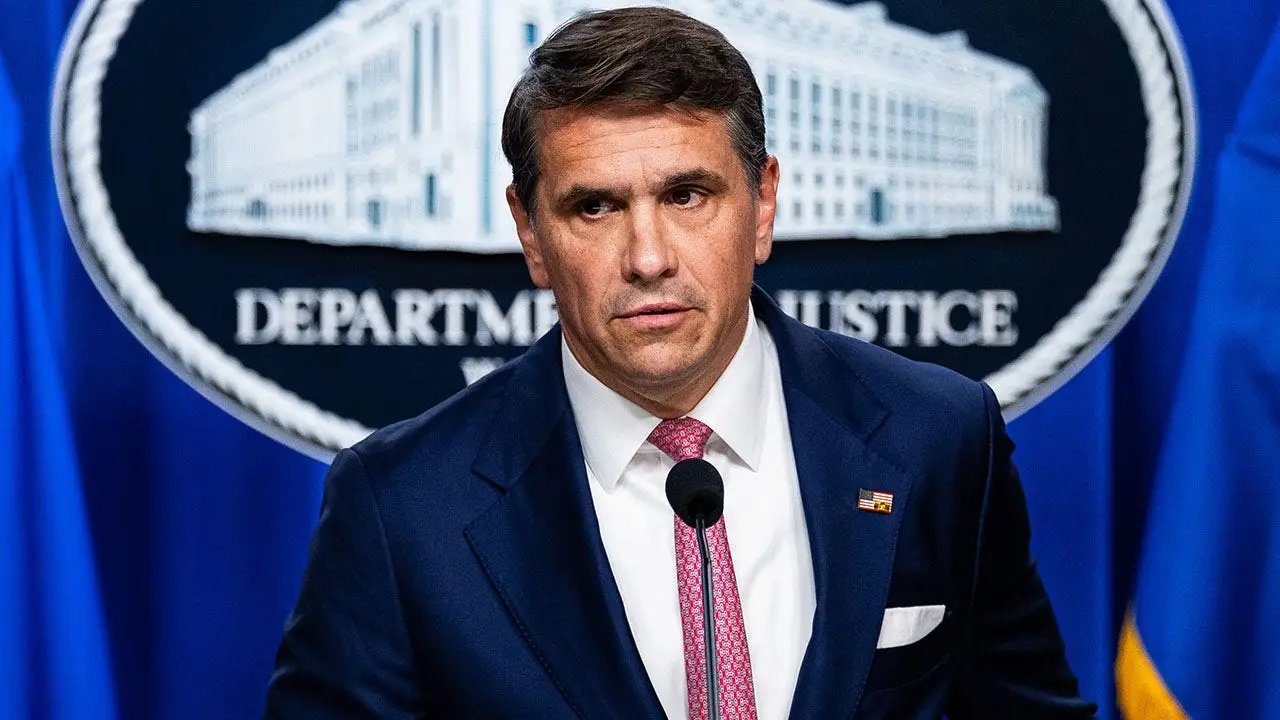
Acting U.S. Attorney General Todd Blanche speaks during a news conference at the Department of Justice in Washington, D.C. The Justice Department discussed recent developments in its investigation of the Tren de Aragua gang after the U.S. killed the leader of the Tren de Aragua drug cartel, Nio Guerrero, in a strike carried out with Venezuela’s assistance last month. (Graeme Sloan/Bloomberg via Getty Images)
«We know historically, that they have funded [nongovernmental organizations] and nonprofits that don’t disclose donations,» Gooden added. «And then, they use these foreign funds against us and against our policy in a way that benefits them.»
As AI demand accelerates, data centers have become essential to providing the computing power, electricity and infrastructure needed to process information and store massive amounts of data. However, proposed facilities often have faced opposition from critics who say they drive up utility costs and threaten the environment.
This past January, a self-described «organizer» for the Party for Socialism and Liberation (PSL), Jack Tensley, testified before the Frederick County Planning Commission in Maryland against the construction of a data center in Virginia.
TOP ENERGY GROUP WARNS WEALTHY FOREIGNERS ARE POTENTIALLY BANKROLLING ANTI-DATA CENTER CAMPAIGNS ACROSS US
«My really big fear here is the security risk. We have infrastructure attacks and failures, cyberattacks that happen — I want to know if this puts a target on the back of Frederick County,» Tensley said. «I see a lot of risk here.»
Tensley did not respond to Fox News Digital’s request for comment.
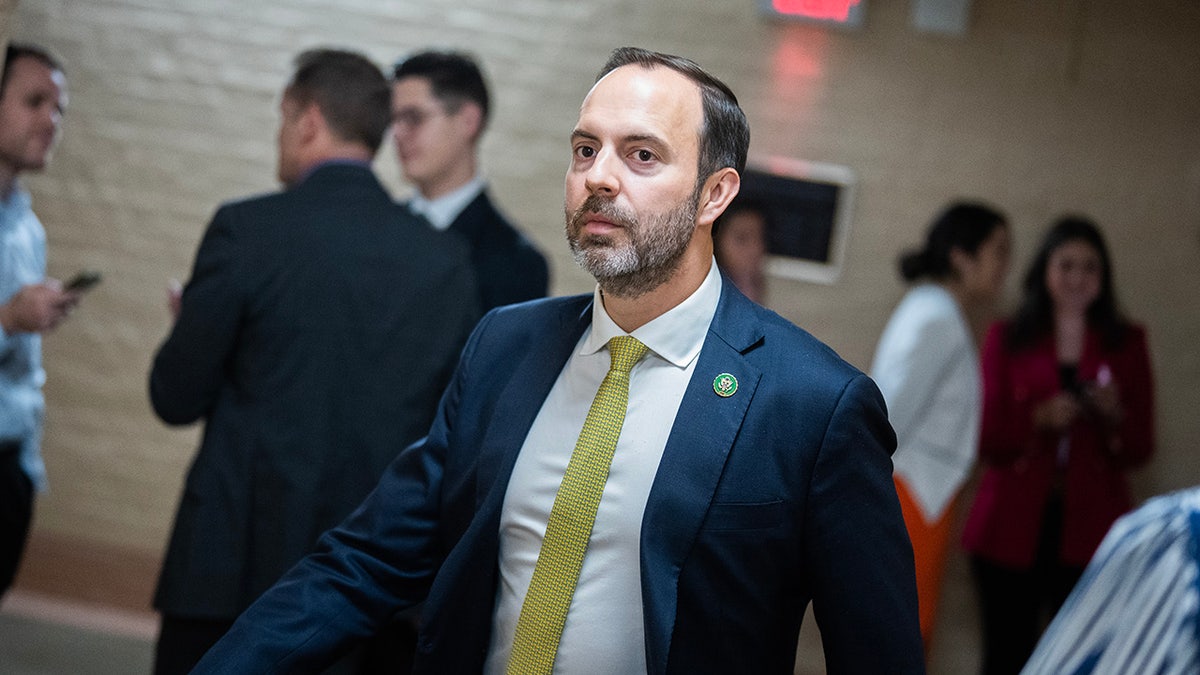
UNITED STATES – SEPTEMBER 27: Rep. Lance Gooden, R-Texas, leaves a meeting of the House Republican Conference in the U.S. Capitol on Wednesday, September 27, 2023. (Tom Williams/CQ-Roll Call, Inc via Getty Images)
In a social media post from Party for Socialism and Liberation Boston, the organization openly opposed data centers, saying the control of AI and data centers is in the hands of billionaires.
HOUSE PANEL SUBPOENAS 3 LEFT-WING GROUPS IN PROBE OF $39M TIED TO MARXIST TYCOON NEVILLE SINGHAM
«Workers are rising up across the country in a growing movement against the tech billionaires – from fights against data centers in hundreds of cities, to labor organizing at the world’s biggest tech corporations,» the post read.
Neville Roy Singham, a 72-year-old American who sold his tech company for $785 million in 2017 and now lives in Shanghai, is known to fund pro-Chinese Communist Party groups that operate in the U.S. He has funneled $278 million into the broad network of nonprofits since 2017, according to a Fox News Digital investigation.
Singham now faces a grand jury investigation over his financial activity in the Southern District of New York, a probe that Blanche authorized. Fox News Digital has reached out to Singham, who has not been charged with any crime to date, repeatedly for several months but has not received any responses.
The letter to Blanche cited reports from both the Bitcoin Policy Institute and OpenAI, both of which outlined the alleged role of foreign influence on campaigns against data center production.
OpenAI said that «two clusters of ChatGPT accounts likely originating from China» were «banned after they used our models in support of apparent covert influence operations that promoted narratives in an attempt to manipulate a legitimate debate about American AI and wider tech policies.»
The Bitcoin Policy Institute found that PSL has organized anti-data center campaigns in at least 14 states, opposing roughly $23.6 billion in AI investments.

As data centers expand across the country, communities are weighing new job opportunities against concerns over power, water and local impact. (Meta)
CLICK HERE TO DOWNLOAD THE FOX NEWS APP
«Recent reports have also identified involvement of China-based tycoon Neville Roy Singham and his network of Marxist, communist, and socialist nonprofit organizations in influencing American AI discourse,» the letter to Blanche read. «A BPI report from last month also uncovered specific instances of a nationwide influence campaign to undermine the American AI supply chain being led by the Party for Socialism and Liberation (PSL), an unincorporated political party that acts as ‘the political arm of the Singham network’ with ties to socialist governments like Cuba and Venezuela.»
Fox News Digital asked the Justice Department if it was planning to respond to lawmakers or open an investigation but did not receive a response.
technology, big tech backlash, congress, tech, politics
INTERNACIONAL
Todo lo que hay que saber sobre ciclosporiasis, la infección intestinal vinculada a la lechuga contaminada
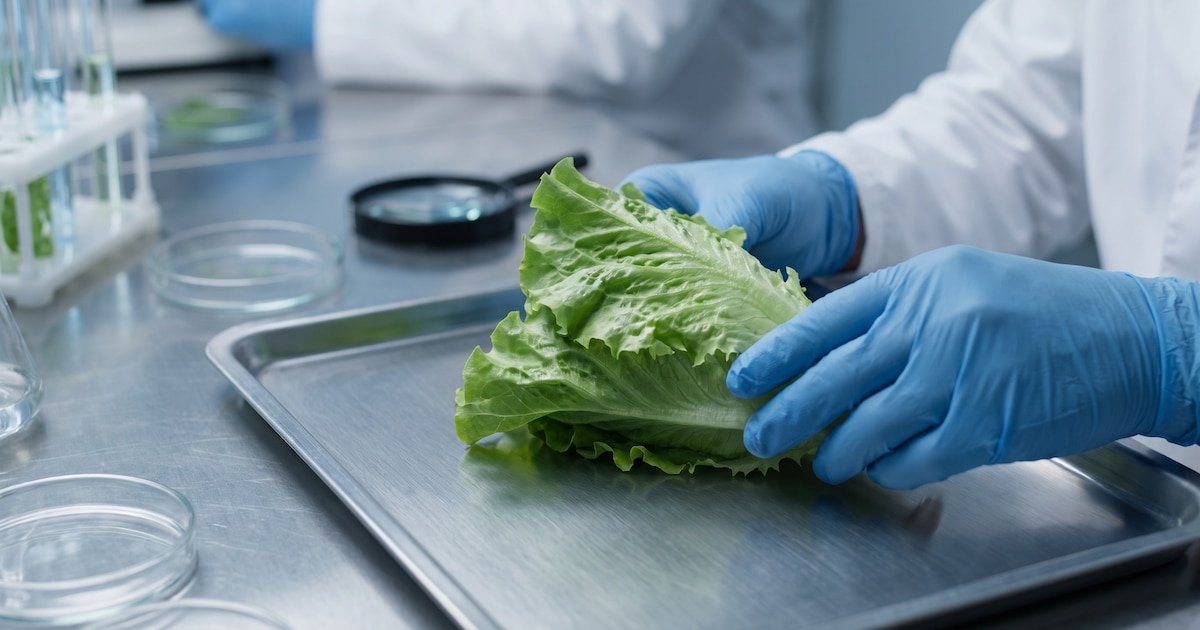
El brote de ciclosporiasis por lechuga en Estados Unidos ya dejó más de 4.100 casos confirmados y 308 hospitalizaciones, según datos de los Centros para el Control y la Prevención de Enfermedades de Estados Unidos (CDC). Parte de la pesquisa vincula los contagios con lechuga iceberg retirada del mercado, mientras las autoridades mantienen abierta la investigación.
La ciclosporiasis es una enfermedad intestinal causada por el parásito Cyclospora cayetanensis. En este brote en Estados Unidos, los consumidores deben evitar los productos retirados del mercado, vigilar síntomas como diarrea y consultar a un profesional de salud si creen que hubo exposición a las verduras crudas.
Según detalló The New York Times, los casos confirmados se distribuyen en 41 estados y algunos están asociados ala lechuga iceberg servida en locales de Taco Bell. Los datos de la Administración de Alimentos y Medicamentos de Estados Unidos (FDA) muestran que muchos casos se concentran en una región de cinco estados del Medio Oeste. El retiro voluntario alcanzó lechuga distribuida a 27 estados.
“Se han notificado infecciones por Cyclospora en al menos 41 estados este año, pero los investigadores aún trabajan para determinar cuántas forman parte del brote en nueve estados vinculado a la lechuga iceberg rallada suministrada por Taylor Farms y servida en restaurantes Taco Bell, y cuántas representan grupos separados o enfermedades no relacionadas. Las investigaciones incluyen la comparación de los historiales alimentarios de los pacientes, los resultados de laboratorio y los registros de la cadena de suministro”, informó hoy The Washigton Post.
Hasta la semana pasada, los CDC habían registrado más de 11.500 casos sospechosos de ciclosporiasis autóctona en lo que va de la temporada: 4.173 estaban confirmados y otros 7.400 seguían en evaluación, con pruebas y análisis de laboratorio adicionales para establecer si la infección se contrajo en los Estados Unidos.

Los CDC definen la ciclosporiasis como una enfermedad intestinal causada por el parásito microscópico Cyclospora cayetanensis. Las personas pueden contraerla al consumir alimentos o agua que contengan el parásito.
La propagación ocurre por contaminación fecal humana. En Estados Unidos, los brotes se han vinculado a frutas y verduras frescas.
La transmisión directa entre personas es poco probable porque el parásito necesita entre una y dos semanas en el ambiente para volverse infeccioso.
Eduardo Gutierrez-Rodriguez, profesor asociado de seguridad de productos frescos en la Universidad Estatal de Colorado, advirtió que ese lapso dificulta reconstruir qué alimento originó el contagio solo a partir del recuerdo del paciente.

La infección afecta el intestino delgado y suele causar diarrea muy líquida, además de cólicos estomacales y otras molestias intestinales, según los CDC. El periodo de incubación suele ser de alrededor de una semana, aunque puede ir de dos días a dos semanas o más, de acuerdo con el CDC.
Los síntomas principales de la ciclosporiasis incluyen diarrea acuosa, fatiga y pérdida de apetito. También enumeraron calambres, hinchazón, aumento de gases, náuseas, pérdida de peso y fatiga.
En una guía para pacientes, la Facultad de Medicina de la Universidad de Chicago explicó que en el intestino delgado hay estructuras llamadas vellosidades que absorben agua y nutrientes, y que si un agente las daña el cuerpo no puede absorber esos componentes de forma adecuada, lo que puede derivar en heces sueltas y acuosas. En el documento, los médicos David Zhang y Joseph Newberg explican que un brote reciente del parásito Cyclospora puede provocar diarrea particularmente intensa.
Los síntomas pueden parecerse a los de otras enfermedades bacterianas, virales, parasitarias o asociadas a toxinas. En muchos casos, los pacientes pueden mejorar y luego muestran una reaparición de síntomas, ya que sin tratamiento la enfermedad puede durar varias semanas o más.

El diagnóstico requiere pruebas específicas en muestras de heces, según el CDC. Esa agencia precisa que a veces hacen falta varias muestras en distintos días porque el parásito Cyclospora puede ser difícil de detectar en análisis rutinarios.
Los CDC señalan como tratamiento los antibióticos trimetoprim con sulfametoxazol. También se aconseja consultar a un profesional de salud si aparecen síntomas tras una posible exposición.
“Con el tiempo, la mayoría de las personas con el sistema inmunitario saludable se recuperan de la ciclosporosis sin tratamiento”, indicaron las autoridades sanitarias de EEUU.
Los especialistas de la Universidad de Chicago apuntaron que, si la persona está sana y puede tolerar líquidos y electrolitos, puede ser conveniente permitir que el cuerpo elimine la causa de manera natural, con hidratación.
Aunque recomiendan consultar con el médico si la diarrea dura más de dos o tres días o si hay más de seis deposiciones por día. Las personas inmunocomprometidas y quienes tienen problemas renales enfrentan un mayor riesgo de complicaciones.
Una revisión publicada en la revista científica Foods señaló que Cyclospora cayetanensis es un protozoo emergente asociado a cuadros de gastroenteritis en distintos países. El trabajo indicó que, en las últimas dos décadas, los brotes de ciclosporiasis se vincularon de manera reiterada con el consumo de frutas y verduras frescas que suelen comerse crudas y son difíciles de limpiar, entre ellas frambuesas, albahaca, cilantro y lechuga.
Durante el brote, especialistas en seguridad alimentaria consultados por la revista Time advirtieron que el parásito Cyclospora puede contaminar diversos productos y vegetales frescos.
En ese contexto, expertos citados por Time coincidieron en que no es necesario dejar de consumir todas las verduras crudas: la estrategia es enfocarse en los productos retirados del mercado o vinculados a la investigación.
Donald Schaffner, profesor de microbiología de alimentos en Rutgers University, dijo: “Comí una ensalada anoche y la noche anterior, y voy a comer una ensalada esta noche, y explicó que se concentra en lo que fue retirado o identificado por las autoridades, en lugar de descartar una categoría completa de alimentos.
En la misma publicación, Barbara Kowalcyk, directora del Instituto de Seguridad Alimentaria y Seguridad Nutricional de la Universidad George Washington, sostuvo que evitar toda la lechuga no es la respuesta y recomendó que cada persona evalúe su nivel de riesgo, con especial atención para niños pequeños, embarazadas, adultos mayores y quienes tienen el sistema inmunitario debilitado.

Las recomendaciones inmediatas pasan por revisar la información oficial sobre retiros del mercado y no consumir los productos alcanzados por esas alertas, según los CDC. El doctor Gutierrez-Rodriguez pidió tomar el brote en serio y prestar atención a la aparición de síntomas.
Los CDC recomendaron tomar medidas para reducir el riesgo de enfermarse por Cyclospora: lavarse las manos y lavar bien todas las frutas y verduras con agua corriente antes de comerlas, cortarlas o cocinarlas.
La agencia también indicó que la cocción puede eliminar el parásito y advirtió que, como lavar los alimentos no garantiza la eliminación de Cyclospora, se deben cocinar los vegetales a una temperatura de al menos 158 °F (70 °C). Además, recomiendan a quienes vivan en los estados donde ocurre el brote, mantenerse informado sobre los alimentos retirados del mercado.
Los CDC indicaron que, si una persona compró lechuga retirada del mercado, debe desecharla o devolverla a la tienda, y que si desconoce el origen de la lechuga debe preguntar en el restaurante. También recomendaron lavar los artículos y superficies que pudieron haber estado en contacto con el producto retirado con agua caliente y jabón o en el lavavajillas.
El brote golpeó el consumo y la confianza de los compradores en Estados Unidos, donde las ventas de lechuga en la cadena Stew Leonard’s bajaron entre 10% y 11%, y las visitas a restaurantes centrados en ensaladas cayeron.
Taco Bell fue una de las cadenas más afectadas, con una caída cercana al 19% en visitas respecto del promedio del año, de acuerdo con datos citados por The New York Times. Ese medio también señaló que las acciones de Sweetgreen, Chipotle y Cava cayeron hasta 24% desde mediados de julio.
La reacción alcanzó a restaurantes pequeños, que retiraron temporalmente la lechuga o cambiaron ensaladas por vegetales cocidos. También creció la desconfianza por avisos de retiro que usaban códigos difíciles de interpretar para consumidores y comercios.
inspección sanitaria,laboratorio alimentario,lechuga,guantes,seguridad alimentaria,análisis de alimentos
NEWYou can now listen to Fox News articles!
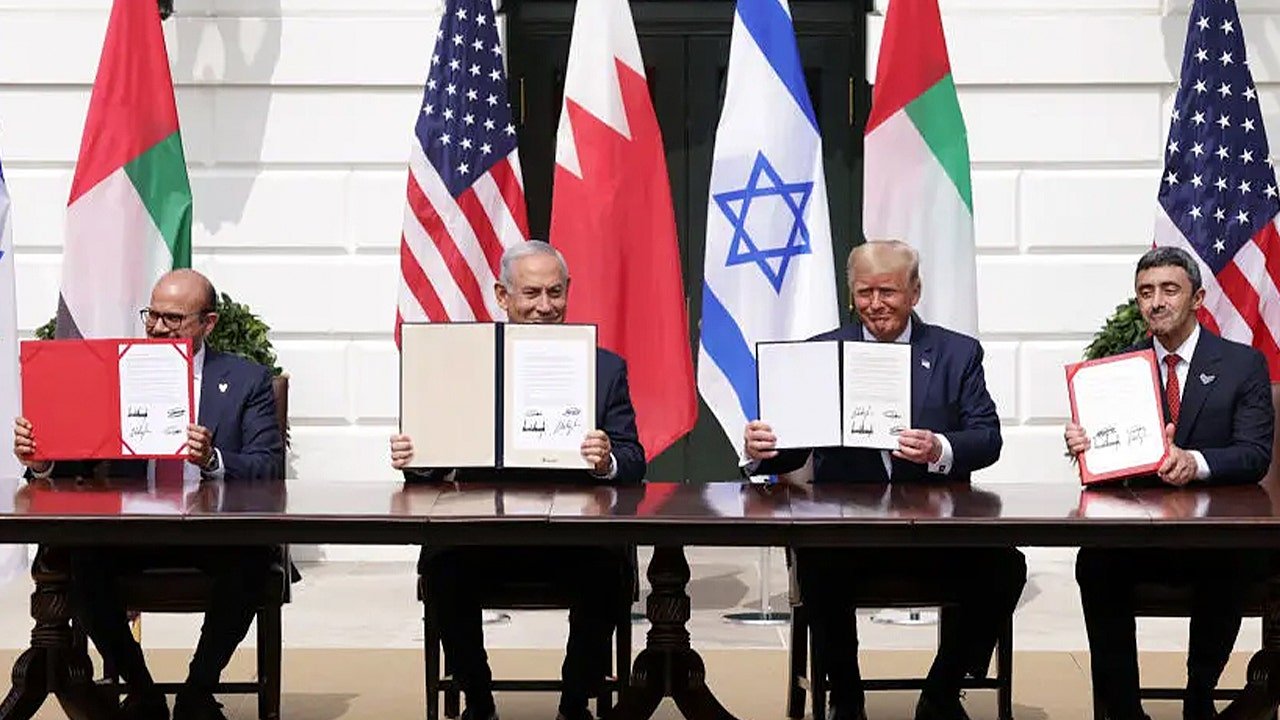
President Donald Trump predicted in recent days that additional countries would soon join the Abraham Accords, renewing debate over whether Israel is becoming increasingly isolated or continuing to expand its most important strategic relationships.
«The Abraham Accords have been, I think, a tremendous success,» Trump said during a Tuesday Oval Office meeting with Lebanese President Joseph Aoun. «I think you’re going to see a lot of countries joining pretty soon.»
Trump’s prediction underscores a central debate about Israel’s global position: Public support for the country has fallen sharply in the United States and across much of the world, yet Israel continues to build or preserve diplomatic, military, energy and technology relationships with foreign governments.
TRUMP CALLS ON ARAB NATIONS TO SIGN ABRAHAM ACCORDS
President Donald Trump predicted in recent days that additional countries would soon join the Abraham Accords. (Alex Wong/Getty Images)
The Abraham Accords, brokered by the Trump administration in 2020, normalized relations between Israel and the United Arab Emirates, Bahrain, Morocco and Sunday. Trump has made expanding the agreements a central goal of his Middle East strategy.
The dispute depends partly on how isolation is measured. Critics point to worsening public opinion, pressure at international institutions and growing opposition among Democrats and younger voters. Israeli officials and conservative foreign-policy experts argue that government-to-government cooperation remains strong and, in some regions, is expanding.
Trump reinforced that strategy Thursday by saying a U.S. civilian nuclear agreement with Saudi Arabia would depend on the kingdom joining the Abraham Accords. The statement showed the administration attempting to use one of Washington’s most valuable offers to Riyadh to secure normalization with Israel, but it did not demonstrate that Saudi Arabia had agreed to do so.
Israeli Ambassador to the United Nations Danny Danon rejected the contention that Israel had become isolated.
«The claim that Israel is an isolated country is simply not true,» Danon told Fox News Digital. «While the campaign to dismantle the Hamas terrorist organization has drawn international criticism, Israel’s relationships with other countries have not weakened. They have evolved.»
Former White House national security official Richard Goldberg similarly argued that Israel retains strong support among conservatives and that its electoral gains are translating into closer government relations.
«Polling in the United States shows massive support among conservatives and Republicans, including self-described MAGA, for Israel still,» Goldberg told Fox News Digital. «And that’s reflected around the world, particularly among conservative candidates and parties that win elected office right now.»
Goldberg pointed to political changes in Latin America, expanding partnerships in the Eastern Mediterranean and Israel’s continuing defense and technology relationships as evidence that public criticism has not translated into comprehensive strategic isolation.
The dispute comes amid polling that shows Israel retaining deep support among Republicans while losing ground across the broader American electorate and much of the world.
POTENTIAL 2028 DEM CONTENDER UNLOADS ON NETANYAHU, ADMITS US-ISRAEL TIES AT ‘CROSSROADS’
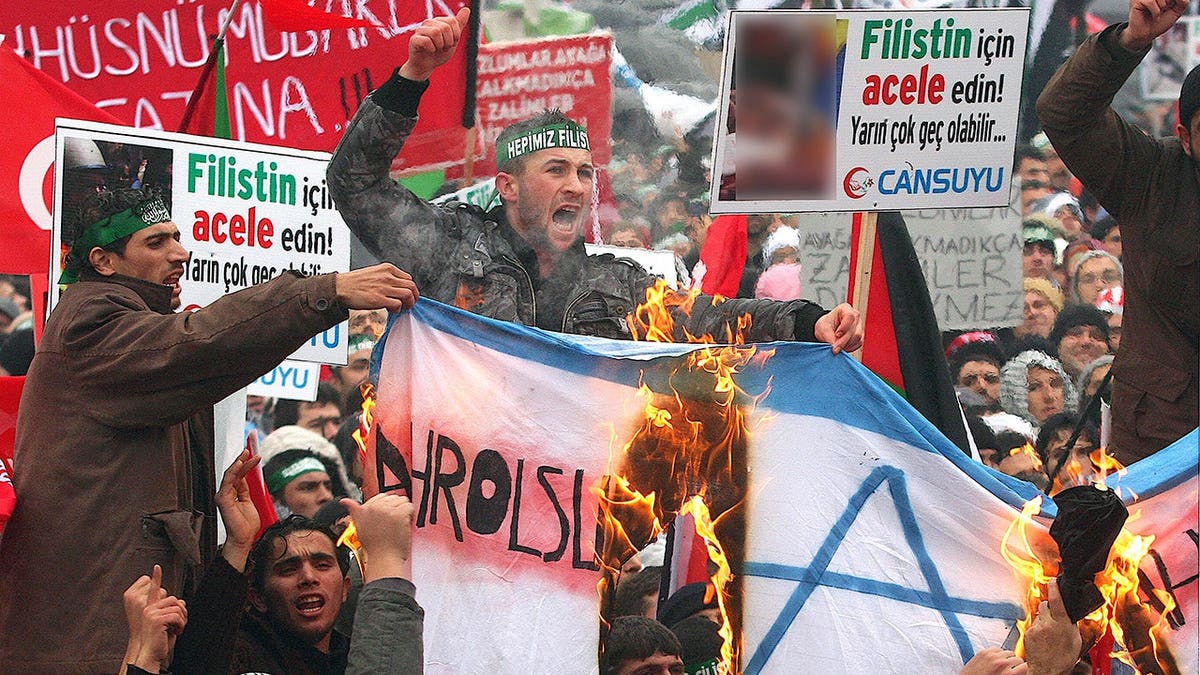
Anti-Israel protests in Istanbul. (Bulent Kilic/AFP via Getty Images)
Eighty percent of self-identified MAGA Republicans said Israel’s security matters to U.S. security and prosperity, a Reagan Institute survey released in June found, while 73% supported sending Israel U.S. weapons. Among MAGA Republicans under 30, 63% said Israel’s security matters to the United States and 60% supported sending weapons.
The same survey found that broader support was narrowing. Sixty-five percent of Americans said Israel’s security matters to U.S. security and prosperity, down six percentage points from a year earlier.
The figure fell nine points among Democrats to 57%, compared with 75% of Republicans and 80% of MAGA Republicans.
A Pew Research Center survey published in June found that a median of 67% of adults across 36 countries viewed Israel unfavorably, while 25% viewed it favorably. The findings came from Pew’s Spring 2026 Global Attitudes Survey.
In the United States, 60% of adults viewed Israel unfavorably, up from 53% in 2025 and 42% in 2022, according to a separate Pew survey conducted March 23 to March 29. Eighty percent of Democrats and Democratic-leaning independents held an unfavorable view, while negative assessments were also widespread among adults under 50.
Israel no longer held a statistically significant advantage over the Palestinians in Americans’ sympathies, Gallup reported in February. Forty-one percent said they sympathized more with the Palestinians and 36% with the Israelis, although Gallup said the five-point difference was not statistically significant.
In 2023, 54% sympathized more with Israelis and 31% with Palestinians.
Former Chicago Mayor Rahm Emanuel highlighted that erosion during a July 8 speech at Tel Aviv University.
«Support for Israel around the world is declining,» Emanuel said, «The only diplomatic achievement Israel has secured in the past three years is Somaliland.»
THE US-ISRAEL STRATEGIC ALLIANCE – PARTNERSHIP, NOT CHARITY
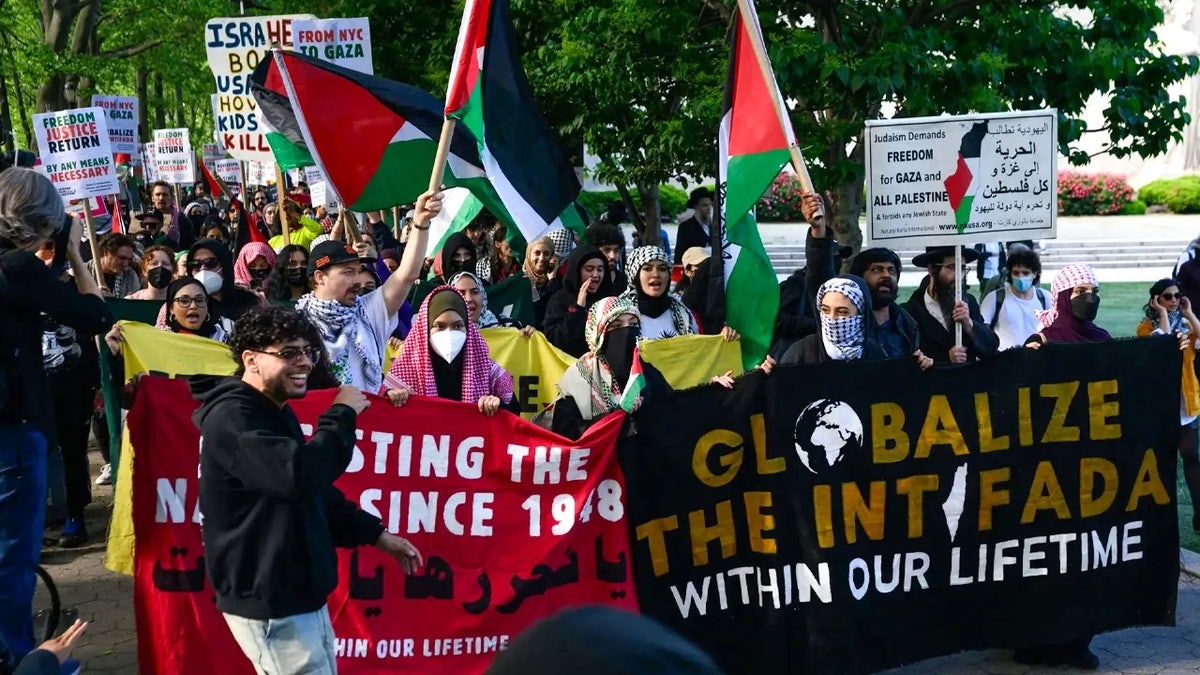
Anti-Israel activists hold banners that include, «globalize the intifada» during a protest commemorating Nakba Day May 15, 2025, in the Brooklyn, New York. (Alexi Rosenfeld/Getty Images)
Emanuel’s conclusion focuses on Israel’s declining public legitimacy and its strained position in traditional diplomatic institutions. Goldberg and Danon argue that it overlooks expanding government-to-government relationships built around defense, intelligence, energy, technology and trade.
Goldberg pointed in particular to Latin America, where he said newly elected conservative governments have made closer ties with Israel an early priority.
«Every time a government in South America right now flips from left wing to right wing, one of the first things they do is reestablish better relations with Israel, withdraw recognition of a Palestinian state and see what else they can do to make Israel a strategic partner,» Goldberg said.
He cited Argentina under President Javier Milei and the proposed «Isaac Accords,» along with political changes in Chile, Colombia and Bolivia, as evidence of a broader realignment.
Goldberg also argued that Israel remains central to emerging partnerships involving energy, defense, intelligence and critical infrastructure.
«If you’re in the Eastern Mediterranean and you’re Greece and you are Cyprus, you’re thinking about how do we work with Israel to make the Eastern Mediterranean partnership even stronger,» he said. «If you’re Armenia and Azerbaijan in a tough neighborhood between Turkey and Iran, you’re talking to Israel, you’re getting closer to Israel.»
Israel, Greece and Cyprus reaffirmed their strategic partnership during a trilateral summit in December 2025, agreeing to expand cooperation in energy, security, emergency preparedness and regional connectivity.
Danon said the diplomatic shift is visible even inside the United Nations, an institution where Israel routinely faces critical resolutions and public condemnation.
«We see this every day in the corridors of the United Nations,» he said. «While many South American countries were once highly critical of Israel in recent years, we are now cooperating with many of them. These discussions are happening in public and behind the scenes.»
«As Israel’s official representative to the United Nations, I regularly meet with ambassadors from around the world, including from Arab countries, to quietly advance initiatives where we share common interests,» Danon said.
Danon went further than Goldberg in assessing Israel’s position since the Oct. 7, 2023, Hamas terrorist attacks and the subsequent war.
«Compared to the period before October 7th, Israel is in a far stronger geostrategic position,» Danon said. «That is reflected not only in regional developments but also in the country’s diplomatic relationships around the world.»
The competing evidence suggests that much of the disagreement depends on how isolation is defined.
Israel may be losing public support and influence in traditional international institutions while simultaneously preserving or expanding government-to-government cooperation in defense, technology, intelligence, energy and agriculture.
MAMDANI GOES BACK ON CAMPAIGN PROMISE, SAYS NYC CAN’T ARREST NETANYAHU

European Union Council President, Charles Michel (center), Serbian President Aleksandar Vucic (right) and Israeli Prime Minister Benjamin Netanyahu (left) meet in January 2020 in West Jerusalem. (PhKobi Gideon / GPO / Handout/Anadolu Agency via Getty Images)
Goldberg acknowledged that relationships driven by conservative political victories could become vulnerable when governments change.
But he argued that Israel is increasingly building relationships around durable national interests rather than political ideology alone.
The central risk for Israel is that today’s collapse in public opinion could eventually reshape tomorrow’s government policies. Conservative governments may currently protect and expand strategic ties, but younger voters and left-wing parties could alter those relationships after future elections.
Israel is scheduled to hold national elections Oct. 27, the country’s first since the Oct. 7, 2023, attacks.
Goldberg argued that a change in Israel’s government would provide a test of whether international opposition is directed primarily at Prime Minister Benjamin Netanyahu or at Israel itself.
«If there is somebody else who becomes prime minister next, we will have to evaluate,» Goldberg said. «Those very loud detractors of Israel who right now use Netanyahu as their symbol for bashing and say it’s not about Israel, it’s about Netanyahu, they’ll be put to the test very quickly.»
He noted that the boycott movement and anti-Israel campus organizations remained active during the previous government led by Naftali Bennett and Yair Lapid, when Netanyahu was not prime minister.
CLICK HERE TO DOWNLOAD THE FOX NEWS APP

President Donald Trump predicted in recent days that additional countries would soon join the Abraham Accords, renewing debate over whether Israel is becoming increasingly isolated or continuing to expand its most important strategic relationships.
«Is their hatred and venom really just about Bibi Netanyahu, or is it fundamentally about a Jewish state that they don’t like existing?» Goldberg asked.
For now, both realities appear to be unfolding at once: Israel remains a sought-after military, intelligence and technology partner for a growing group of governments, while its support among the global public has fallen to levels that could eventually threaten those relationships.
israel, middle east, politics, foreign affairs, world, saudi arabia

Designaron a Fernando Subirats como subsecretario de Comunicación y Medios Públicos para profundizar la reorganización del área

Anamá Ferreira cuestionó el curso de Wanda Nara: “Que tenga cuidado de no engañar a la gente”

Habilitan cuentas sueldo en dólares para que las empresas puedan pagar salarios en moneda extranjera

¿Dónde ver en VIVO y ONLINE el Belgrano vs Rosario Central por el Torneo Clausura 2026?

El vocero de Milei dijo que “es una posibilidad” que el dólar llegue a $1800 en los próximos meses

Insólita condena a un asesino: mató a golpes a un hombre y le dieron 3 años y medio de prisión

Escándalo Mundial: Las presiones secretas, la amenaza de la FIFA por Malvinas y la verdad detrás del partido contra España

Samuel L. Jackson llamó a Argentina “el país más racista del mundo”: la contundente respuesta que le dejó Bárbara Lombardo

Le ganan a la inflación: los senadores pasarán a cobrar $12 millones brutos a partir de agosto

Jorge Berredo, general retirado de las FFAA, asumió como Secretario de Seguridad en San Isidro

 DEPORTE2 días ago
Escándalo Mundial: Las presiones secretas, la amenaza de la FIFA por Malvinas y la verdad detrás del partido contra España
- POLITICA1 día ago
Jorge Berredo, general retirado de las FFAA, asumió como Secretario de Seguridad en San Isidro
- POLITICA1 día ago
Sin la anestesia mundialista, aflora la crisis del conurbano y Milei necesita reconectar con lo popular