INTERNACIONAL
El Ministerio de Agricultura, Ganadería y Alimentación de Guatemala pone en vigor una vigilancia de residuos en la leche cruda

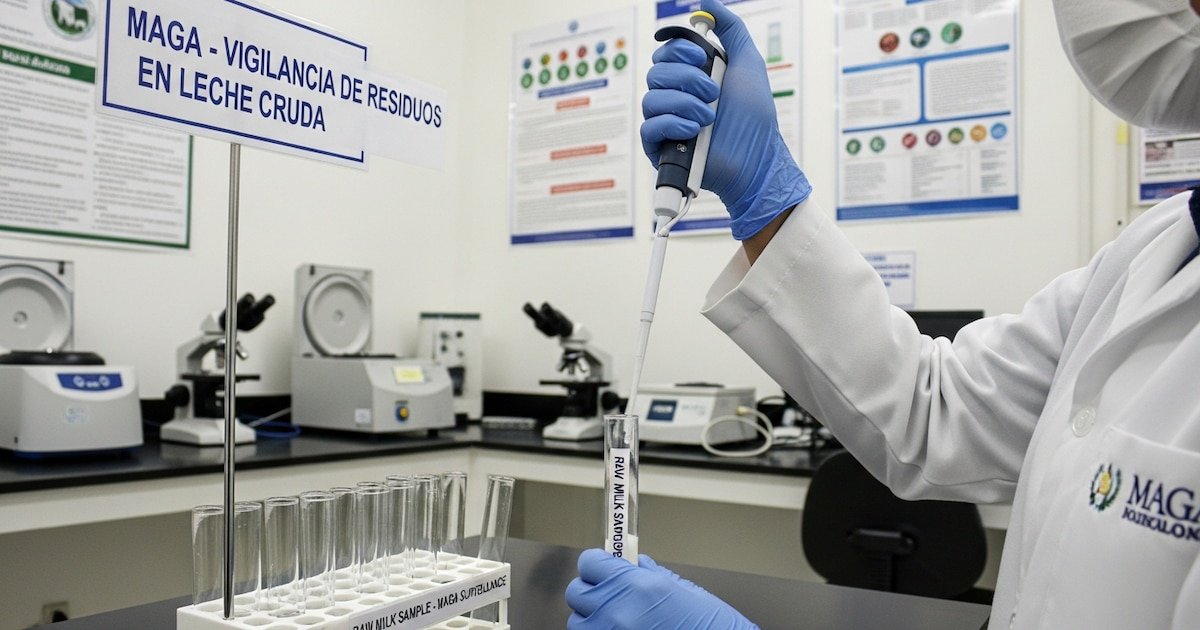
El MAGA de Guatemala puso en vigor el Acuerdo 107-2026, que obliga a salas de ordeño y centros de acopio de leche cruda con licencia sanitaria a someterse a vigilancia de residuos y contaminantes bajo un enfoque de riesgo, una medida que toma como referencia los límites del Codex Alimentarius y prevé sanciones cuando haya riesgos para la inocuidad de los alimentos o la salud pública.
La norma deroga el Acuerdo Ministerial No. 22-2026, emitido el 10 de febrero de este año, porque requería ajustes en sus términos para facilitar su verificación e implementación.
El nuevo acuerdo fue firmado el 1 de julio de 2026 por la ministra María Fernanda Rivera Dávila y entró en vigencia al día siguiente de su publicación en el Diario de Centro América, el 7 de julio de 2026.
La disposición alcanza a propietarios, administradores y responsables de salas de ordeño y centros de acopio de leche cruda con Licencia Sanitaria de Funcionamiento.
Todos deberán permitir el acceso del personal técnico encargado de los procedimientos de control sanitario y del muestreo de residuos de medicamentos veterinarios, plaguicidas y otros contaminantes.

La toma de muestras recaerá en el personal técnico del Departamento de Productos de Origen Animal e Hidrobiológicos, que pertenece a la Dirección de Inocuidad del Viceministerio de Sanidad Agropecuaria y Regulaciones. Los análisis se realizarán en el laboratorio de esa Dirección o en cualquier laboratorio con reconocimiento oficial.
El mismo departamento será el responsable de recibir los informes de resultados de laboratorio, registrarlos y analizarlos. Esa función concentra en una sola dependencia la gestión de datos del sistema de vigilancia.
La regla central del acuerdo fija que los límites máximos de residuos en leche cruda se determinarán con base en los valores oficiales del Codex Alimentarius, el sistema internacional de normas alimentarias de la Organización de las Naciones Unidas para la Alimentación y la Agricultura. La norma también admite la aplicación de otras disposiciones que resulten pertinentes.
Si un análisis supera esos límites, la Dirección de Inocuidad deberá notificar al propietario del establecimiento. Después tendrá que solicitar un plan de acción correctiva y ordenar nuevos muestreos para verificar su cumplimiento.
Cuando haya resultados por encima de los valores permitidos, el costo de los muestreos adicionales correrá por cuenta del responsable del establecimiento. Esa obligación económica se activa como parte del seguimiento correctivo exigido por la autoridad sanitaria.
El acuerdo también establece que el incumplimiento expone a las salas de ordeño y centros de acopio a las sanciones previstas en el Libro III del Código de Salud, Decreto Número 90-97 del Congreso de la República de Guatemala. Esas medidas se aplican cuando las infracciones afecten la inocuidad de los alimentos o representen un riesgo para la salud pública.
La base jurídica de la disposición incluye la Constitución Política de la República de Guatemala, que impone al Estado el deber de controlar la calidad de los productos alimenticios, farmacéuticos, químicos y de todos aquellos que puedan afectar la salud y el bienestar de los habitantes. La normativa también se apoya en la Ley del Organismo Ejecutivo y en el Reglamento Orgánico Interno del MAGA, contenido en el Acuerdo Gubernativo No. 338-2010.
La ministra María Fernanda Rivera Dávila propone un giro a políticas regenerativas
En paralelo, la ministra María Fernanda Rivera Dávila participó en la inauguración del XIII Congreso Forestal Nacional COFONA 2026, un encuentro que reúne a especialistas, instituciones, academia y el sector forestal de todo el país para intercambiar conocimientos y fortalecer el manejo sostenible de los bosques.
En su intervención, Rivera planteó un cambio de enfoque en las políticas del ministerio hacia la agricultura y ganadería regenerativas, y destacó el aporte del programa Suelos y Agua para el Futuro. “En el ministerio estamos haciendo un cambio hacia la agricultura y ganadería regenerativas versus la sostenibilidad. Ya no basta solo detener el daño, debemos revertirlo”, indicó.
El congreso aborda cuatro ejes: manejo y conservación de los bosques, innovación y tecnología aplicada al sector forestal, cambio climático y sus impactos, y los retos que enfrenta Guatemala para mejorar la gestión de sus recursos naturales. La ministra afirmó que el objetivo es seguir fortaleciendo alianzas con el sector forestal para impulsar un desarrollo rural sostenible que integre producción, conservación y bienestar comunitario.
Maga,Guatemala,leche cruda,residuos,laboratorio,control de calidad









INTERNACIONAL
China, Russia, Iran and North Korea form ‘axis of aggressors’ that could overwhelm US, book warns
NEWYou can now listen to Fox News articles!
China, Russia, Iran and North Korea are acting as a strategically aligned bloc even without a formal mutual-defense treaty, according to a new Foundation for Defense of Democracies book warning that their cooperation could leave the United States confronting multiple crises simultaneously.
The book, «Axis of Aggressors: Countering the Cooperation of China, Russia, Iran and North Korea,» examines how the four authoritarian governments support one another across military, economic, cyber and technology domains.
Its authors acknowledge that the grouping is not a NATO-style alliance. It has no unified command, comprehensive defense commitment or complete trust among its members. But they argue that its practical effects are already visible in active conflicts.
TRUMP TO CONFRONT XI AT HIGH-STAKES SUMMIT OVER CHINA BACKING FOR IRAN, RUSSIA
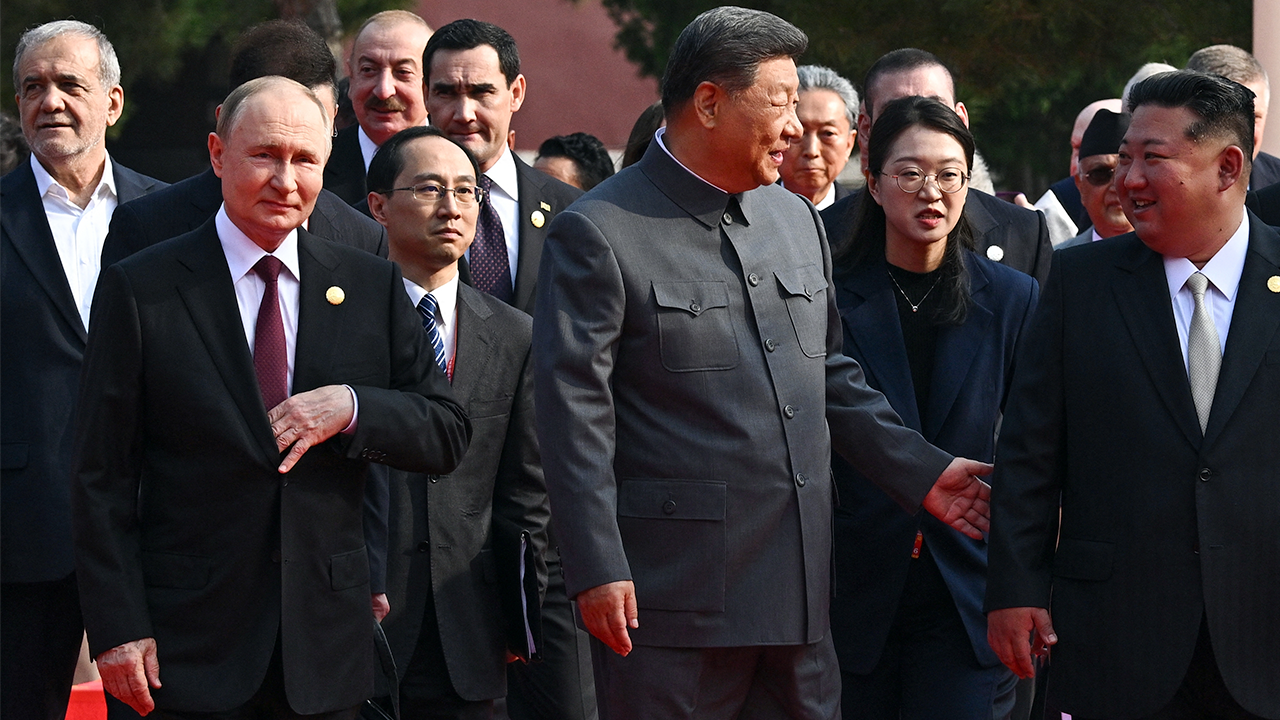
In this pool photograph distributed by the Russian state agency Sputnik, Russiain President Vladimir Putin, Chinese President Xi Jinping and North Korean leader Kim Jong Un walk before a military parade marking the 80th anniversary of victory over Japan and the end of World War II in Beijing’s Tiananmen Square on Sept. 3, 2025. Iranian President Masoud Pezeshkian is seen at left in the background. (Sergey Bobylev / POOL / AFP via Getty Images)
«I just got back from a couple of weeks in Ukraine, and when I’m sitting in Ukraine, it’s really obvious to me that Ukraine is fighting Russia, North Korea, Iran and China,» retired Rear Adm. Mark Montgomery, one of the book’s three authors, told Fox News Digital.
Montgomery pointed to North Korean ammunition and troops, Iranian drones and production expertise, and Chinese economic and technological support for Moscow.
«China is backstopping the whole thing, providing the economic backstop to Russia’s economy so they can survive this four-year catastrophic event for Russia,» Montgomery said. «They’re providing microelectronics that we see in ballistic, cruise and hypersonic missiles.»
The book’s researchers documented 616 instances of security cooperation among the four governments from Jan. 1, 2019, through Dec. 31, 2025, including arms transfers, weapons development, military exercises, intelligence sharing and military exchanges.
A ‘simultaneity problem’ for the U.S.
The central danger, Montgomery said, is what the book calls the «simultaneity problem.»
«We don’t get to handle these with a singularity anymore. We have to handle this with a simultaneity,» he said. «And I don’t think we can handle two problems at once, much less three or four.»
During a potential confrontation between China and Taiwan, Montgomery said, North Korea could threaten South Korea or conduct limited attacks intended to pin down U.S. forces. A conflict involving Russia and NATO’s Baltic members could be accompanied by Iranian terrorism or other hostile activity.
THREE KEY REASONS WHY AMERICA CANNOT AFFORD TO LOSE TAIWAN TO COMMUNIST CHINA
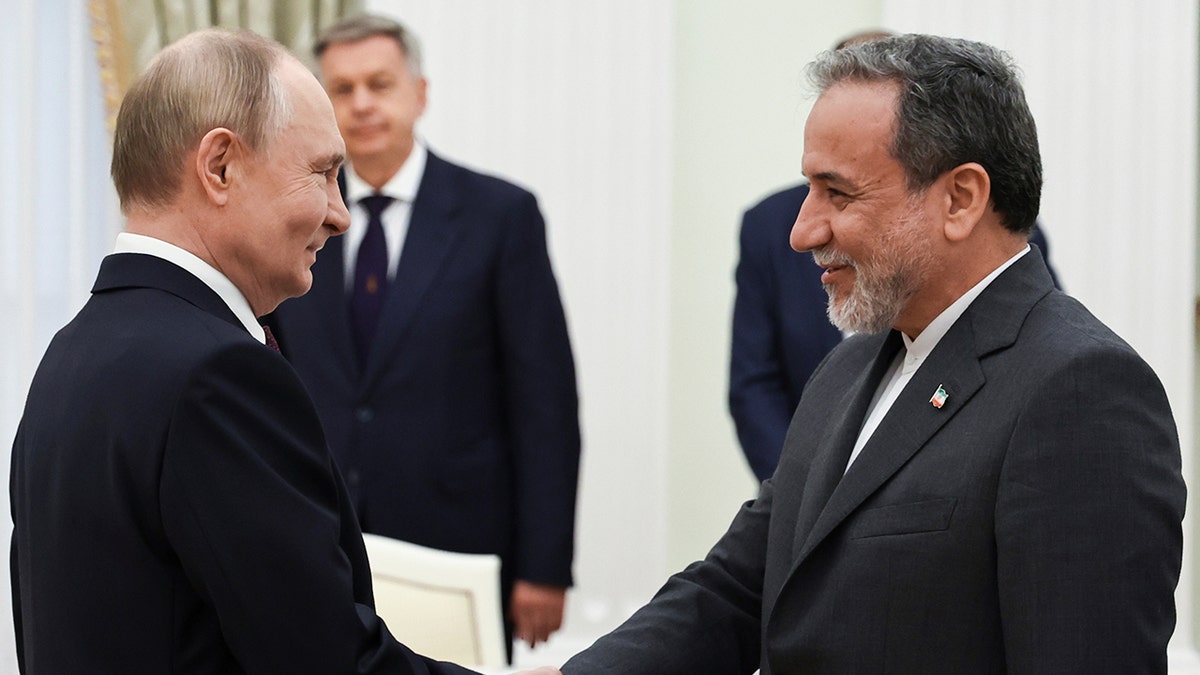
Russian President Vladimir Putin, left, greets Iranian Foreign Minister Abbas Araghchi prior to their talks at the Kremlin in Moscow, Russia, Monday, June 23, 2025. (Alexander Kazakov, Sputnik, Kremlin Pool Photo via AP)
The book identifies China-Russia military cooperation as the axis’s most consequential bilateral relationship. Chinese dual-use products have helped sustain Russia’s defense industrial base, while Moscow is transferring technology and battlefield lessons that could assist China in a Pacific conflict.
North Korea has supplied Russia with millions of artillery rounds, ballistic missiles and troops, while Moscow has assisted Pyongyang’s missile, space, drone and nuclear programs, according to the book.
Iran has provided Russia with drones and production knowledge. The book warns that Russian and Chinese assistance could also help Tehran rebuild military capabilities damaged during its conflicts with Israel and the United States.
«The longer they can entangle the United States, whether it was in Ukraine or in Iran, China and Russia are the primary beneficiaries,» Montgomery said.
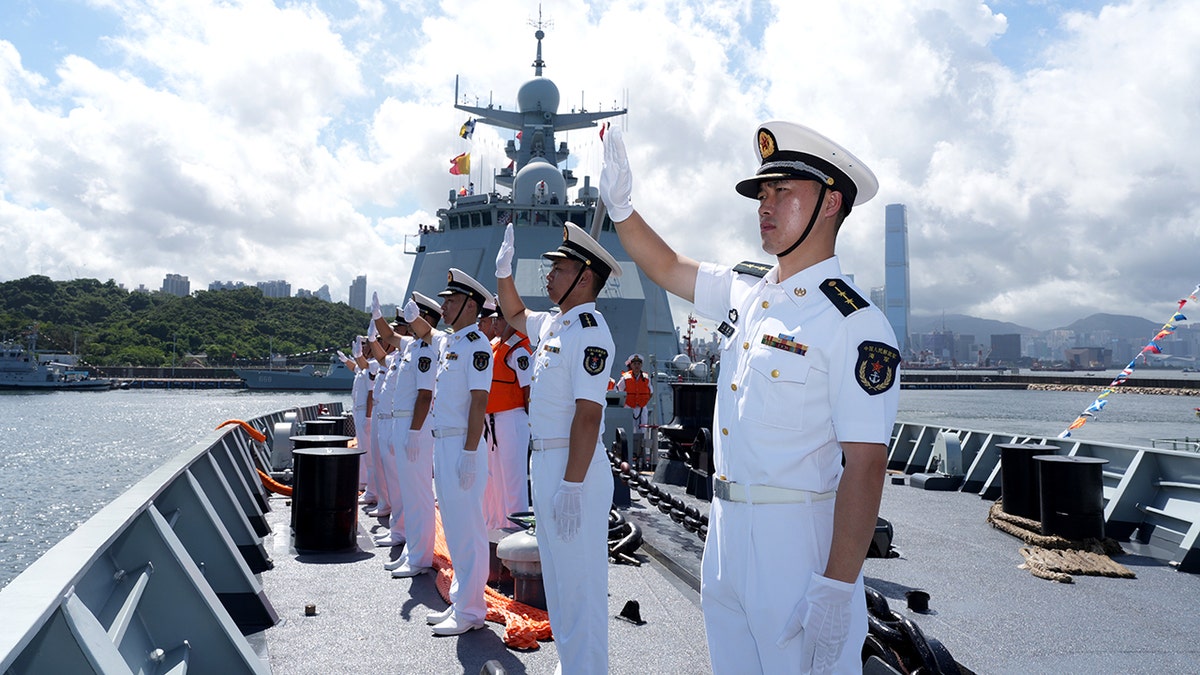
Officers and soldiers aboard the Chinese People’s Liberation Army PLA Navy’s guided-missile destroyer Nanning wave as the ship enters the waters of the Hong Kong Special Administrative Region in south China, July 2, 2026. (Ji Peng/Xinhua via Getty Images)
China bankrolls the axis
Economic ties underpin the military cooperation, according to co-author Elaine Dezenski, who described the four-country economy as a «fractured alignment.»
«These four players are bound together more by necessity than they are by a specific trust or shared strategy among them,» Dezenski told Fox News Digital. «China needs energy. Russia and Iran need buyers for their oil and gas. And North Korea needs any lifeline that it can get.»
China purchases discounted Russian and Iranian energy while providing goods, technology and access to its domestic market.
The relationships remain unequal. Russia and Iran compete to sell similar products, while China can seek other suppliers. But Dezenski said those divisions should not obscure the benefits the cooperation provides.
«The economics of this very much underpin the foundations for the military engagement that we see,» she said.
The book says China purchases as much as 95% of Iran’s oil exports. Some sanctioned oil is routed through third countries, relabeled or processed by independent Chinese refineries known as «teapots.»
«The export juggernaut that is China today is fueled by sanctioned oil and gas,» Dezenski said.
TRUMP MAY CLAIM HE WON THE FIGHT WITH IRAN, BUT THERE’S A BIGGER WAR ALREADY UNDERWAY
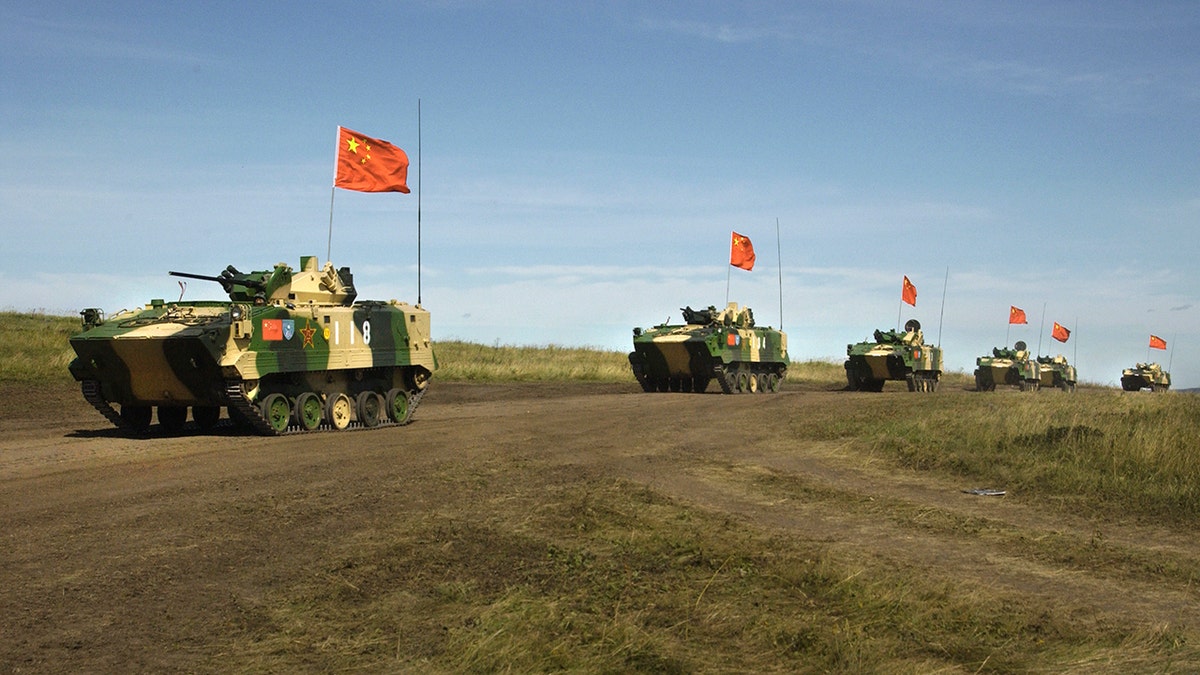
In this Aug. 13, 2007, file photo, a convoy of Chinese APCs rolls by during a rehearsal for a massive joint military exercise by the two former Cold War rivals, the first on Russia’s territory in the Chelyabinsk region in Russia’s Ural Mountains. Chinese and Russian military forces are engaged in joint exercises through Friday, Aug. 13, 2021, in northwestern China as ties grow between the two autocratic states amid uncertainty over instability in Afghanistan. (AP Photo, File)
New payment networks challenge U.S. leverage
Dezenski also warned that China, Russia and Iran are developing payment systems outside traditional Western banking infrastructure. More trade is being settled in yuan through China’s Cross-Border Interbank Payment System, or CIPS, potentially reducing Washington’s ability to enforce sanctions through the dollar system.
«We need to really think about that sooner rather than later, before this alternative payment system becomes too big to tackle,» Dezenski said.
Cyber ties blur the state-criminal line
Montgomery said the line between criminal hackers and government operatives is often deliberately blurred in all four countries.
«These regimes routinely outsource work to criminal groups to keep their own hands clean, and those groups are increasingly networking with each other,» he said.
The book cites ties involving Iranian cybercriminals and Russian ransomware groups, Chinese actors on Russian dark-web forums, and Russian and North Korean state-backed hackers using shared operational infrastructure.
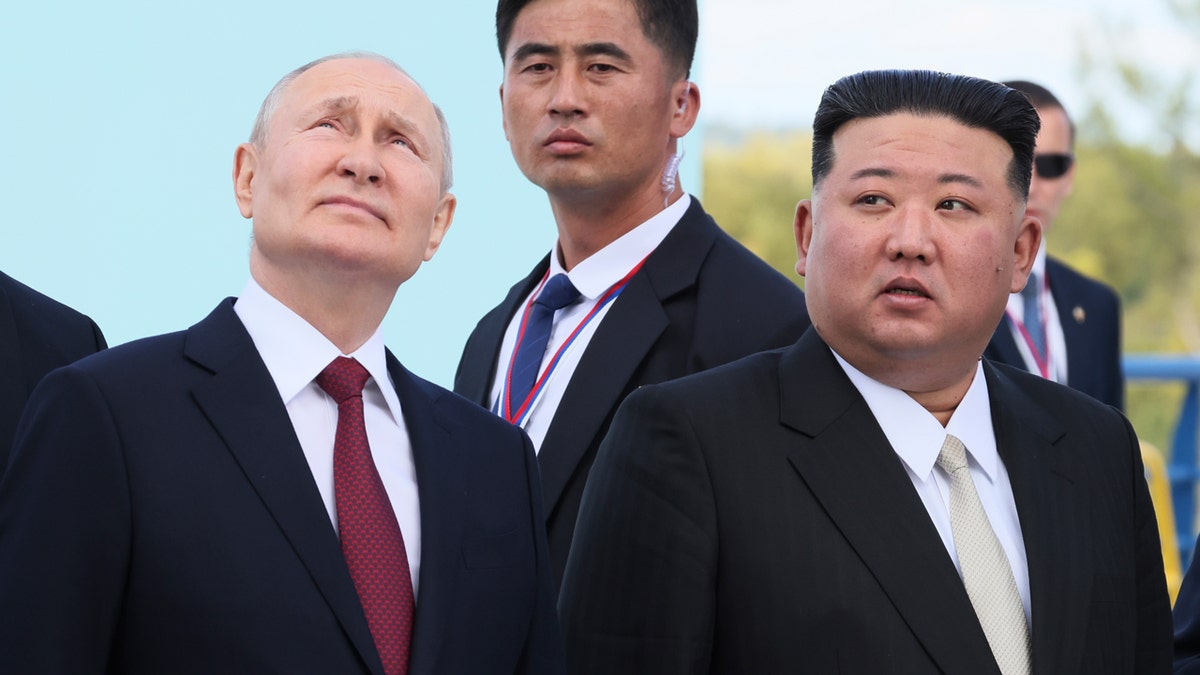
Russian President Vladimir Putin, left, and North Korean leader Kim Jong Un, right, examine a launch pad of Soyuz rockets during their meeting at the Vostochny cosmodrome outside the city of Tsiolkovsky, about 125 miles from the city of Blagoveshchensk in the far eastern Amur region of Russia, on Sept. 13, 2023. North Korean leader Kim hailed the country’s relationship with Russia on June 12, 2024, as reports suggest that Russian President Putin will soon visit the isolated country for his third meeting with Kim. (Mikhail Metzel, Sputnik, Kremlin Pool Photo via AP, File)
Outside experts see an integrated threat
Carrie Filipetti, executive director of the Vandenberg Coalition and a former State Department official during the first Trump administration, said drone warfare demonstrates how assistance moves among the countries.
«Chinese components are used to create Iranian drones, which are then deployed by the Russians against Ukrainian civilians,» Filipetti told Fox News Digital.
She said the relationship has also endangered American troops, pointing to the January 2024 Tower 22 attack in Jordan, which killed three U.S. Army Reserve soldiers and wounded more than 40 service members.
«The military and ideological relationship between Russia and Iran is not just a theoretical threat to the United States — American service members have been killed as a result of it,» Filipetti said.
Filipetti said the attack used an Iranian drone and Russian tactics developed during the war in Ukraine. «These adversaries don’t agree on everything, but they do on one thing: to reorient the world away from America and the West,» she said. «Our service members and citizens will continue to suffer until we treat the threat as the united threat it is.»
Retired Air Force Lt. Gen. Richard Newton said the danger stems not only from military modernization in each country, but from the degree to which the four governments are increasingly coordinating.
«I couldn’t agree more with the underlying findings the authors present regarding the rapid military modernization unfolding across multiple domains — air, sea, land, space and cyber — emanating from China, Russia, Iran and North Korea,» Newton told Fox News Digital.
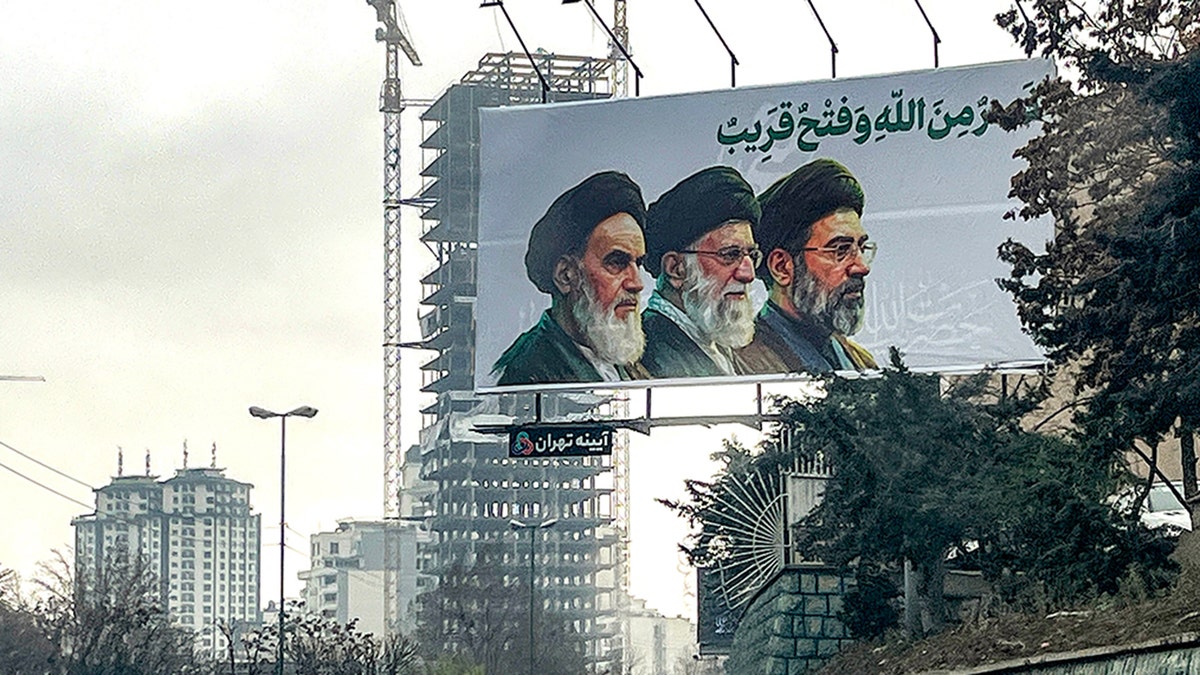
A billboard depicting Iran’s supreme leaders since 1979: (L to R) Ayatollahs Ruhollah Khomeini (until 1989), Ali Khamenei (until 2026), and Mojtaba Khamenei (incumbent) is displayed above a highway in Tehran on March 10, 2026. Iran marked the appointment of Ayatollah Mojtaba Khamenei to replace his father as its supreme leader on March 9, 2026. (AFP/Via Getty Images)
«These nation-states represent extraordinary adversarial challenges for the United States. That’s concerning enough,» he said. «But a major challenge President Trump is facing in his second administration is the level and degree of integration, synchronization and coordination among these four adversaries, who are more unified today than ever in their collective pursuits to threaten U.S. national security interests.»
Newton said the changing character of warfare, demonstrated by more than four years of fighting between Russia and Ukraine and the current U.S.-Iran conflict, has compounded the threat.
«Couple that with the changing nature of warfare we’ve been witnessing,» he said, «and the task to defend our nation is now much more complex and daunting.»
Retired Air Force Gen. Philip Breedlove, who served as NATO supreme allied commander and commander of U.S. European Command from 2013 to 2016, argued that Washington’s language understates the severity of the confrontation.
«We often say that we are in ‘strategic competition’ with China and Russia. They are at war with us,» Breedlove told Fox News Digital.
Breedlove said China, Russia, Iran and North Korea «are not partners looking for cooperation with the U.S.,» but governments seeking to «diminish and defeat» American power.
«The enemy gets a vote,» Breedlove said. «Our enemies are voting by their support to Russia and Iran.»
He added that assistance from the other countries has become increasingly important to Moscow as it struggles to sustain its war.
«Aid is critical to Russia,» Breedlove said. «Russia is failing and becoming ever more dependent on its allies.»
The authors recommend stronger coordination with allies, expanded defense production, greater protection of U.S. critical infrastructure and more aggressive sanctions enforcement.
CLICK HERE TO DOWNLOAD THE FOX NEWS APP

The war in Iran has pushed China and Russia closer together. (Sergei Guneev/Reuters)
Dezenski called for targeting the full network supporting sanctioned Russian and Iranian oil, including refineries, ports, insurers and financiers, rather than focusing primarily on individual vessels.
«We need to treat this axis as a threat, as a combined threat,» Montgomery said, «that will confront us in every one of our crisis areas.»
national security, china, foreign affairs, russia, war with iran, north korea
NEWYou can now listen to Fox News articles!
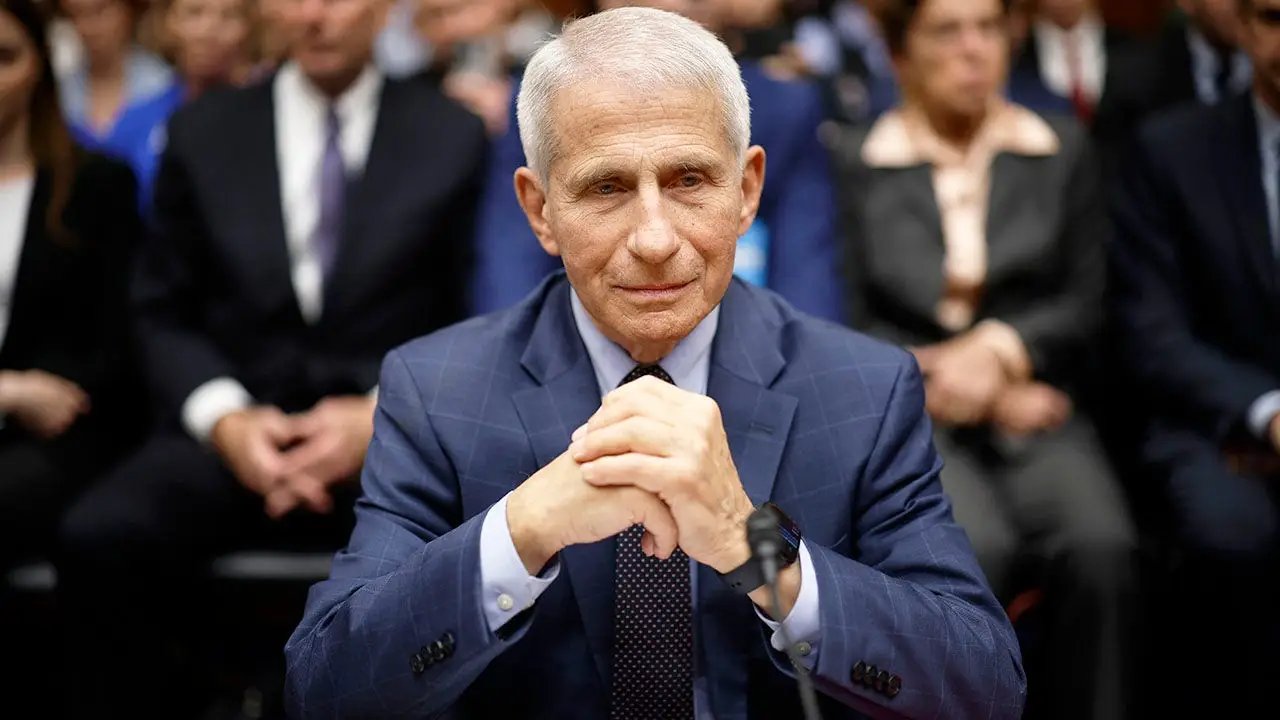
Dr. Anthony Fauci ran point as the COVID-19 explainer-in-chief under two different administrations, steering policy and messaging on the virus that rattled the country and world for years.
But there is one thing in all of his media appearances, profiles, interviews and congressional hearings that Sen. Rand Paul, R-Ky., contended Fauci never said: that he was sorry.
«I mean, I’d like to hear him say he’s sorry,» Paul said. «Can he say he is sorry for funding — the research was dangerous research in China? Almost everybody agrees with that.»
EXCLUSIVE: BIDEN PARDON WON’T SHIELD FAUCI IF HE LIES TO CONGRESS, COMER SAYS
Dr. Anthony Fauci, former Director of the National Institute of Allergy and Infectious Diseases, arrives to testify before the House Oversight and Accountability Committee Select Subcommittee on the Coronavirus Pandemic at the Rayburn House Office Building on June 3, 2024, in Washington, D.C. (Getty Images)
«Now he says, ‘Oh, well, it didn’t meet this definition or this definition, it was dangerous research,» he continued. «It was a judgment error. It was a profound judgment error.»
Paul and Fauci are set to square off Wednesday morning in the Homeland Security and Governmental Affairs Committee, the panel that Paul leads, in a clash that has been years in the making.
In the lead up to Wednesday’s hearing, Paul unveiled over 1,000 pages of Fauci’s diary, providing his own color commentary online about Fauci’s motivations leading up to and during the pandemic.
WATCH: RAND PAUL SAYS FAUCI LOBBIED FOR $1M PRIZE WHILE LEADING COVID RESPONSE
The lawmaker has had his sights set on Fauci since the beginning of the COVID-19 pandemic and accused him of funding research in China that led to the eventual outbreak of the virus.
And though Fauci has been out of the public spotlight since 2022, when he stepped down from his role as director of the National Institute of Allergy and Infectious Diseases at the National Institutes of Health (NIH), the two will finally get the chance to square up and settle the feud.
«I think he actually could do better in the hearing if he’d come forward and apologize for funding this research,» Paul said. «No one’s ever heard an apology from him. All they hear is sort of the idea that he never did anything wrong and that there’s nothing wrong with that.»
HARVARD TOPS NATION IN FOREIGN CASH HAUL AS COTTON DEMANDS PROBE INTO CHINA FUNDING
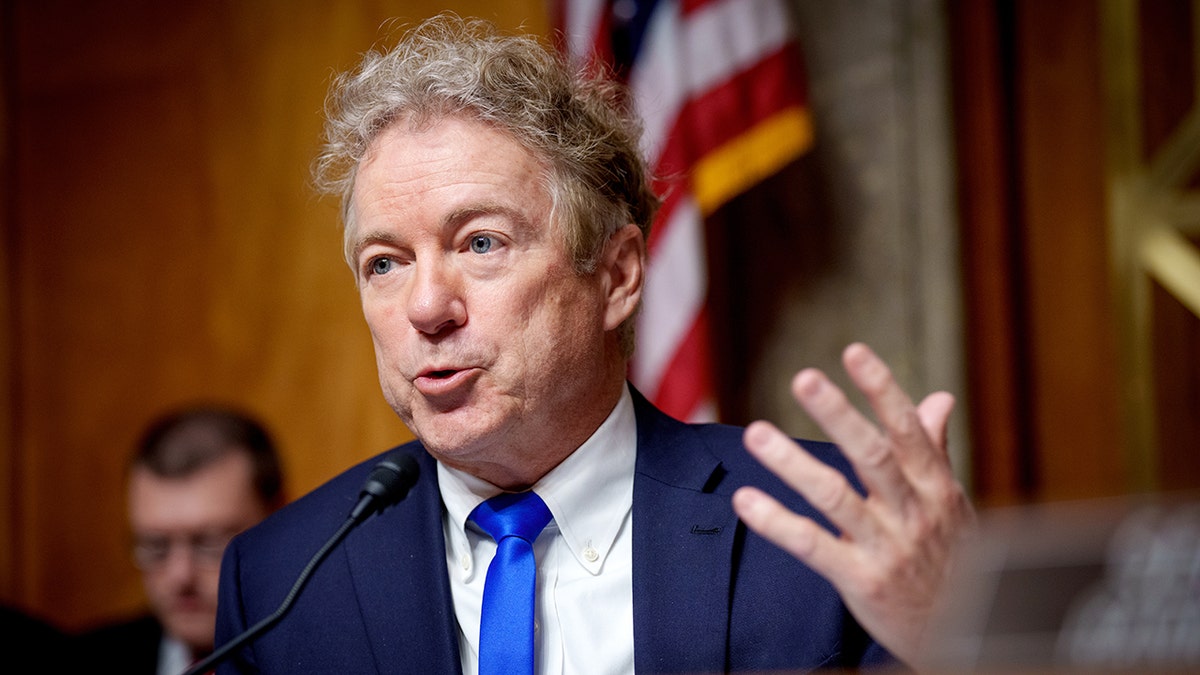
Sen. Rand Paul, R-Ky., leads the Homeland Security and Governmental Affairs Committee. (Andrew Harnik/Getty Images)
Paul has said that the former chief medical advisor to the president deserves to be in prison for his alleged role in funding gain-of-function research, and warned that his pardon from former President Joe Biden wouldn’t hold up.
Notably, Fauci’s former top advisor at the National Institute of Allergy and Infectious Diseases, Dr. David Morens, was indicted by the Justice Department earlier this year on charges of allegedly conspiring to evade public records laws, hide communications regarding the origins of COVID-19, and destroy federal records.
Gain-of-function research, or work that enhances a virus’s transmissibility or lethality, and Fauci’s alleged role in funding that type of research through his position at the Wuhan Institute of Virology in China has been Paul’s focal point for years in his crusade against the former COVID-19 czar.
And he argued that the issue of researching the spread of a virus, or its killing potential, predates the pandemic.
CLICK HERE TO DOWNLOAD THE FOX NEWS APP
Paul charged that in 2010, research conducted by Ron Fouchier, a Dutch virologist, produced a version of H5N1, commonly known as bird flu, that was transmissible «through the air between mammals.»
«And half the scientific community said, ‘Oh my God, this could be the end of the world. We’re doing this s—,’» Paul said.
«And Fauci was on the other side, and he said at the time in a Washington Post op-ed that even if a pandemic should occur from a scientist being bitten or somehow infected, the knowledge is worth the risk,» he continued. «That needs to be debated by the country. Is the knowledge of creating viruses that could kill the world worth the risks? And I don’t think it is.»
politics, rand paul, anthony fauci, senate elections, china
INTERNACIONAL
Jacques Derrida, filósofo franco- argelino: “La democracia es el único sistema en el que se tiene el derecho a criticarlo todo públicamente, incluida la idea de democracia”
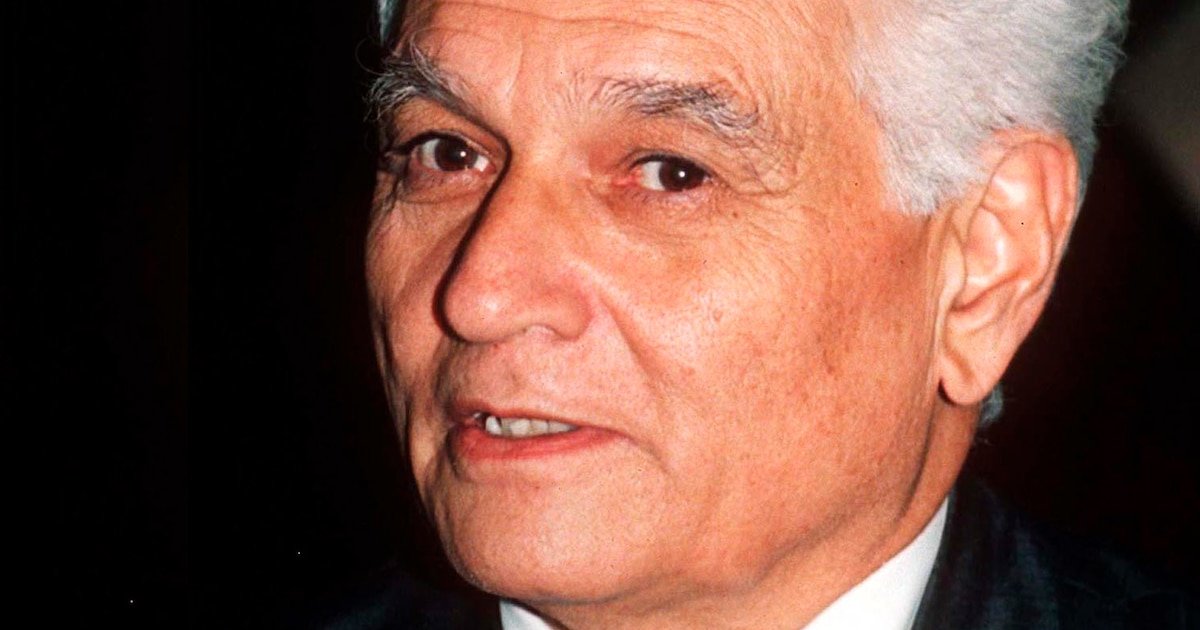
¿Puede un sistema político albergar en su propio seno las herramientas para su propia destrucción? La respuesta que el pensamiento del siglo XXI arroja sobre esta mesa es afirmativa, compleja y perturbadora. En el año 2003, Jacques Derrida escribió: “La democracia es el único sistema, el único paradigma constitucional en el que, en principio, se tiene o se arroga uno el derecho a criticarlo todo públicamente, incluida la idea de democracia, su concepto, su historia y su nombre”.
Desgastado por la enfermedad pero con una lucidez que arañaba el hueso de la época, dejó escrita una de las definiciones más punzantes sobre la libertad moderna. Pero esta frase no es una mera defensa de la libertad de expresión. Es la radiografía de un abismo ético y político que nos interpela de manera directa en un presente global dominado por la polarización, los discursos extremos y las crisis de representatividad. Es una contradicción que puede ser leída como obstáculo o potencia.
Para dimensionar el peso de este axioma, es obligatorio retroceder a los primeros años del nuevo milenio. El mundo occidental procesaba el trauma de la caída de las Torres Gemelas y asistía a la invasión de Irak. Los gobiernos democráticos, liderados por figuras como George W. Bush, comenzaban a recortar libertades civiles internas y a justificar la violencia exterior en nombre de la defensa de los valores de la libertad. En esa bisagra histórica Jacques Derrida dictaba seminarios y conferencias.

Esas clases darían vida a su célebre libro Canallas: Dos ensayos sobre la razón, publicado originalmente en francés bajo el título Voyous. El pensador observaba cómo los estados que se autoproclamaban campeones de la democracia actuaban de manera totalitaria contra otros pueblos, convirtiéndose ellos mismos en “estados canallas” (rogue states). Su análisis no buscaba destruir la democracia, sino deconstruirla: desnudar sus ficciones jurídicas para entender cómo opera en la realidad.
Canallas: Dos ensayos sobre la razón se ubica en la cúspide de lo que la academia denomina el “giro político y ético” de Derrida. Aunque el filósofo ya había dinamitado la historia del pensamiento occidental en 1967 con De la gramatología y La escritura y la diferencia, en esta obra tardía decide aplicar sus herramientas lingüísticas a los problemas carnales del poder, la soberanía y el derecho internacional. En Canallas introduce un concepto clave para entender nuestro presente: la “autoinmunidad”.
Tomando una metáfora de la biología, explica que la democracia —el concepto de participación política pero también el sistema de representación— es un organismo que, en su afán por protegerse de las amenazas externas (como el terrorismo o el autoritarismo), genera anticuerpos tan violentos que terminan atacando y destruyendo a sus propias células sanas (las libertades civiles). Allí demuestra que la exclusión y la represión suelen habitar secretamente en el corazón de las constituciones libres.

¿Cuánto de la idea de esta frase resume el pensamiento de su autor? Prácticamente todo su andamiaje filosófico. La deconstrucción, el método que hizo famoso a Derrida, consiste precisamente en demostrar que las grandes verdades e instituciones de Occidente no son puras ni monolíticas, sino que están construidas sobre contradicciones internas. Al afirmar que la democracia permite criticar a la democracia misma, señala que este sistema es el único que tolera su propia contradicción.
No exige una fe ciega como una teocracia, ni una obediencia muda como una dictadura. Sin embargo, esta virtud es también su mayor debilidad. Al dar libertad absoluta, la democracia abre la compuerta para que discursos antidemocráticos utilicen las herramientas de la ley —el voto, las elecciones, las plazas públicas— para llegar al poder y abolir el sistema desde adentro. Es un orden político que lleva el riesgo del suicidio inscripto en su propio código genético. Su obstáculo y su potencia.
Por eso, para Derrida, la democracia nunca es un estado de cosas acabado ni un trofeo ganado. Él prefería hablar de “la democracia por venir” (la démocratie à venir). No como una utopía inalcanzable, sino como una promesa urgente que nos obliga a ensanchar los márgenes de la justicia en el día a día. En un escenario contemporáneo donde las herramientas democráticas de comunicación digital son utilizadas para propagar la desinformación y horadar las instituciones, la tesis de Derrida cobra una vigencia feroz.
La frase de hoy nos recuerda que la salud de una sociedad libre no se mide por la ausencia de debates o por la clausura del disenso, sino por su capacidad de resistir la autocrítica más feroz sin caer en la tentación totalitaria. El pensamiento de Jacques Derrida, fallecido en 2004, sobrevive en estas páginas como un recordatorio indispensable: la democracia es frágil, peligrosa y perfectible; pero es el único espacio donde el pensamiento aún conserva el derecho a cuestionar su propio horizonte.

Jacques Derrida (nacido bajo el nombre de Jackie Derrida en 1930 en El Biar, Argelia, y fallecido en París en 2004) fue uno de los filósofos más revolucionarios, debatidos y leídos de la segunda mitad del siglo XX. De origen judío sefardí, su infancia estuvo marcada por los traumas de la Segunda Guerra Mundial y el régimen de Vichy, que lo expulsó del liceo argelino debido a las leyes antisemitas de la época, una experiencia de exclusión que sellaría su sensibilidad hacia las minorías y los márgenes del discurso.
Tras mudarse a Francia, se formó en la prestigiosa Escuela Normal Superior de París bajo la tutela de figuras como Louis Althusser y entabló un fructífero diálogo crítico con contemporáneos como Michel Foucault. Su irrupción en el panorama intelectual internacional se consolidó a finales de la década de 1960, dando origen a la corriente conocida internacionalmente como el “posestructuralismo” y convirtiéndose en un ícono académico indiscutido en las universidades de los Estados Unidos.
Entre sus obras capitales destacan De la gramatología (1967), La voz y el fenómeno (1967), Espectros de Marx (1993), La hospitalidad (1997) y Canallas: Dos ensayos sobre la razón (2003). Su figura, que inspiró el aclamado filme documental Derrida (2002) dirigido por Kirby Dick y Amy Ziering, sigue siendo un faro ineludible y polémico para el arte, el derecho y la teoría política contemporánea, legando una ética que prohíbe la complacencia intelectual y nos obliga a responsabilizarnos por la voz del otro.
Jacques Derrida,Canallas,ensayo,razón,filosofía,Editorial Trotta

Barcola quiere volar a Liverpool

China, Russia, Iran and North Korea form ‘axis of aggressors’ that could overwhelm US, book warns

Creció la oferta de frutas importadas en las verdulerías: cuáles son las que más llegan y por qué

Quirno se refirió a la tensión con Brasil y dio detalles de la visita de la titular del FMI

El deslumbrante cambio de look de Guillermina Valdes: “Como la vida misma”

El Gobierno ratificó sus diferencias ideológicas con Lula da Silva, pero negó que la tensión escale al plano diplomático

Crisis entre Milei y Lula: la trama política, personal y geopolítica detrás del mayor choque diplomático entre Argentina y Brasil

Cuentapropismo emocional en lo profundo del conurbano

Joaquín Furriel contó cómo fue ver la final del Mundial con su novia española: “Una situación incómoda”

San Isidro: la ballena que quedó varada en un banco de arena murió pese al operativo de rescate

 POLITICA2 días ago
Crisis entre Milei y Lula: la trama política, personal y geopolítica detrás del mayor choque diplomático entre Argentina y Brasil
- SOCIEDAD3 días ago
San Isidro: la ballena que quedó varada en un banco de arena murió pese al operativo de rescate
- POLITICA3 días ago
Milei cruzó al aire a De Mendiguren, exministro de Duhalde: “Vos, sí, ladrón”