INTERNACIONAL
Elecciones en Estados Unidos: el voto latino se alejó de Trump y fue clave para el triunfo de los demócratas

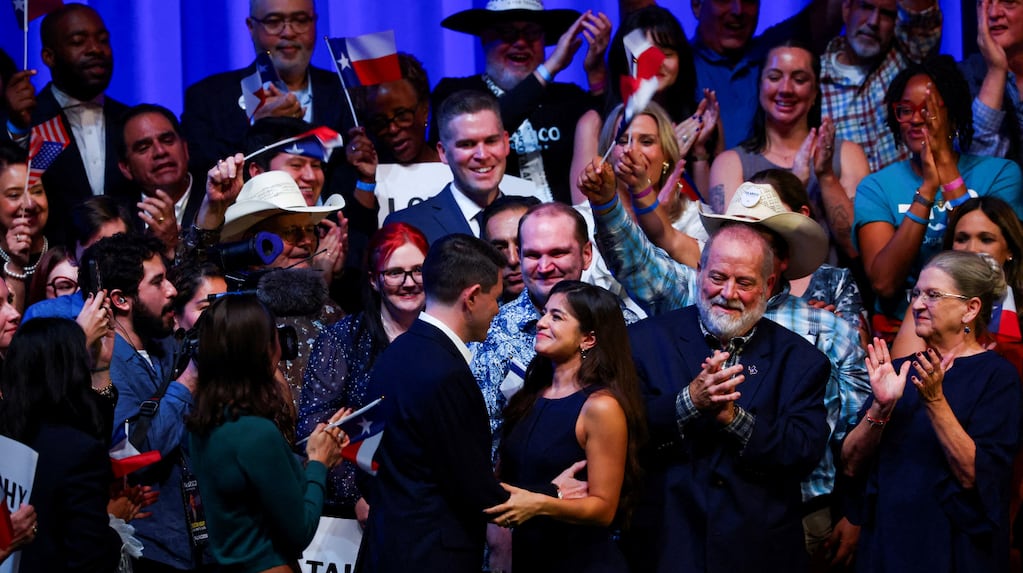
Los demócratas recuperaron este martes el apoyo de los votantes latinos en las elecciones legislativas de Estados Unidos y consiguieron victorias en territorios que habían respaldado a Donald Trump en 2024. El cambio se reflejó especialmente en Texas, Nuevo México y Colorado, y contribuyó al avance de la oposición, que logró recuperar el control de ambas cámaras del Congreso.
Según una encuesta a pie de urna de NBC News, el 60% de los votantes latinos respaldó a candidatos demócratas a la Cámara de Representantes, frente al 51% que había votado por Kamala Harris en las elecciones presidenciales de 2024.
En paralelo, el apoyo republicano entre los hispanos cayó del 46% al 35% en ese mismo período. Los datos muestran un cambio significativo en el comportamiento electoral de una comunidad que había sido fundamental para el triunfo de Trump hace dos años.
El respaldo demócrata volvió así a los niveles registrados en las legislativas de 2022, aunque quedó por debajo del 69% alcanzado en las elecciones de mitad de mandato de 2018.
El voto latino fue decisivo para las victorias demócratas en Texas, Nuevo México y Colorado
Uno de los resultados más importantes se produjo en Texas, donde el demócrata James Talarico ganó una banca en el Senado y consiguió imponerse en condados que habían votado mayoritariamente por Trump.
En Bastrop y Bell, el actual presidente había ganado las elecciones de 2024 por 18,4 y 16,2 puntos porcentuales, respectivamente. Sin embargo, ambos territorios favorecieron esta vez al candidato opositor.
Talarico también amplió la ventaja demócrata en Bexar, un condado con cerca del 60% de población hispana donde Harris ya había derrotado a Trump en las presidenciales.
Otro resultado destacado se registró en el distrito 15 de Texas, donde el demócrata Bobby Pulido compitió contra la republicana Monica De La Cruz. Trump había ganado ese distrito por aproximadamente 18 puntos en 2024, pero Pulido logró revertir la tendencia en territorios importantes.
En Hidalgo, donde el mandatario se había impuesto por apenas 2,9 puntos, Pulido consiguió una ventaja de 49,1 puntos sobre su rival. En Brooks, donde Harris había ganado por 9,6 puntos, el candidato demócrata amplió la diferencia a 45,6 puntos.
El cambio también se reflejó en otros estados:
- Nuevo México: el demócrata Gabriel Vasquez consiguió la reelección en el segundo distrito, una zona con importante presencia hispana donde Trump había ganado por 1,8 puntos en 2024.
- Colorado: Manny Rutinel recuperó para los demócratas el octavo distrito, de mayoría hispana, después de derrotar al republicano Gabe Evans. Trump también se había impuesto allí por 1,8 puntos en las últimas presidenciales.
Los resultados muestran que la oposición consiguió recuperar competitividad en territorios donde los republicanos habían avanzado durante las elecciones presidenciales de 2024.
Qué pasó en Florida, donde los republicanos resistieron el avance demócrata
Florida fue una de las principales excepciones a la tendencia nacional. Aunque los republicanos lograron conservar posiciones importantes, varias de sus victorias fueron ajustadas y los demócratas consiguieron avances en zonas con una población hispana significativa.
En ese estado, donde Trump había obtenido el 56% de los votos en 2024, los demócratas conquistaron tres distritos clave cuyos límites habían sido modificados anticipadamente por iniciativa republicana.
En la elección para el Senado, la candidata Angie Nixon, vinculada a los Socialistas Democráticos de América, recibió el apoyo del 56% de los votantes latinos, según NBC News.
Ese respaldo le permitió quedar a menos de tres puntos porcentuales de la ganadora, la republicana Ashley Moody.
También se registraron cambios en Miami-Dade, el condado más poblado de Florida. Según Juan Machado, director de análisis de Equis Research, los demócratas recuperaron en los precintos de mayoría latina niveles de apoyo similares a los de 2020.
El dato adquiere relevancia porque, en 2024, Trump se había convertido en el primer candidato presidencial republicano en ganar en Miami-Dade desde 1988.
latino











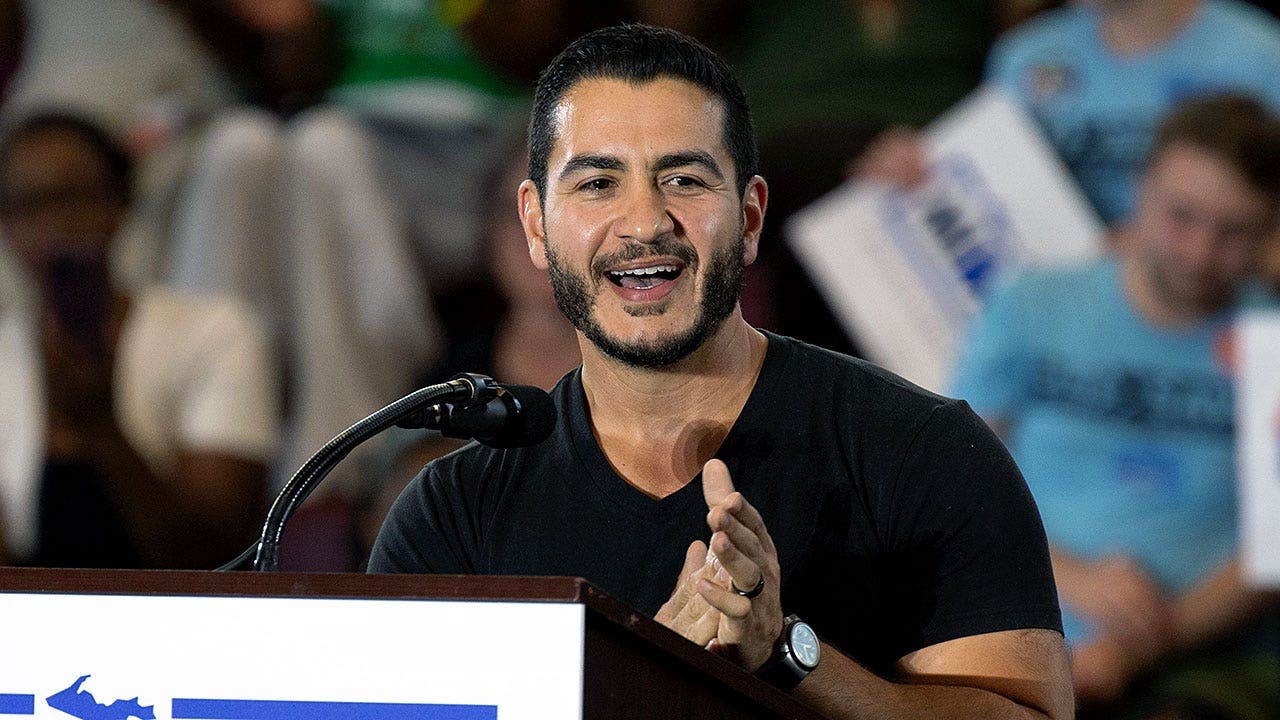
Michigan is staying blue as Republicans’ hopes of flipping the state and gaining some breathing room in their thin majority were crushed.
Abdul El-Sayed, who became the veritable face of this midterm cycle acting as the GOP’s boogeyman for Democratic policies across the country, is projected to topple former Rep. Mike Rogers in what was one of the most-watched contests of the election.
In his victory speech, El-Sayed thanked AIPAC, which spent roughly $42 million running a campaign against him, for allowing him the opportunity to beat the American-Isreali interest PAC twice. El-Sayed celebrated his victory by invoking the Arabic phrase «alhamdulillah» which means «praise be to God.»
The progressive candidate also issued a warning shot to his defeated opponent Rogers.
«Enjoy your retirement,» El-Sayed said of the Republican candidate. «You chose hate, and Michigan chose hope. May we never have to see the likes of you in this state again.»
Meanwhile, close to around 1 a.m. on Wednesday morning, Rogers called on his supporters to go home, sharing that it was going to be a «long night.» Organizers shared with the Detroit News that the hotel needed them out by that time.
ROGERS WARNS MICHIGAN VOTERS AGAINST EL-SAYED’S ‘EXTREME’ AGENDA AHEAD OF ELECTION
Throughout the campaign, El-Sayed outran alleged ties to the Muslim Brotherhood, concerns about his rhetoric over Israel and Jewish voters in Michigan and criticism from fellow Democrats for his ties to controversial political streamer Hasan Piker.
Rogers failed to outrun the political headwinds that have buffeted Republicans this cycle, including affordability issues, President Donald Trump’s trade war with Canada launched in the thick of the midterms, and the Iran war, despite his attempts to distance himself and the administration from the latter issues.
El-Sayed’s victory serves as a major blow to the GOP’s push against the progressive lean in Democratic politics, where for much of the cycle after his shock win over Rep. Haley Stevens, D-Mich., Republicans painted him as the face of socialism and communism in their messaging.
He will also be the first Muslim U.S. senator in history. His faith has been used as a line of attack by Republicans, including President Donald Trump, who last month during a rally in Michigan accused El-Sayed of being a «jihadist» that would «have to go through a metal detector before he’s allowed to go into the Senate.»
DEMS’ LEFTWARD LURCH GETS LEGS AS EL-SAYED’S MICHIGAN SENATE VICTORY SPARKS PARTY DEBATE
«If Abdul and the Democrats win, they will open the floodgates and invite hordes of jihadis to our shores, creating a nightmare of violence and terror until you cannot even have a Christmas,» Trump said.
Rogers similarly dipped into the same style of rhetoric, arguing to a crowd in Bad Axe, Mich., just days before the election that «This is not someone we can let into the United States Senate.»
«If you don’t know Iran is our enemy, and you can’t condemn a Hezbollah-inspired attack, you have no business being in the United States Senate,» Rogers said.
While Rogers and Republicans have run a national campaign against El-Sayed, the insurgent progressive has taken his own jabs at Trump, but largely ran a campaign focused on affordability issues in Michigan.
EL-SAYED, ROGERS CLASH OVER MUSLIM BROTHERHOOD, TRUMP AND GUNS: 5 FIERY DEBATE MOMENTS
«They want to point to me and my name and my faith as if somehow that’s the problem, but none of those things are what’s raising your gas prices or making a new home unaffordable,» El-Sayed told reporters last month.
The race attracted big names in both parties to stump for their respective candidates, with Trump, Vice President JD Vance, Sen. Ted Cruz, R-Texas, and others making the pilgrimage to Michigan for Rogers.
And Democratic heavyweights like former President Barack Obama, Rep. Alexandria Ocasio-Cortez, D-N.Y., and Sen. Bernie Sanders, I-Vt., did the same for El-Sayed.
But El-Sayed’s win does not mean he will jump on board with the Democratic old guard in Washington, D.C. Like other progressives running for the Senate, he’s been publicly critical of Senate Minority Leader Chuck Schumer, D-N.Y., and would prefer Sen. Chris Van Hollen, D-Md., to lead Democrats in the Senate.
politics, midterm elections, abdul el sayed, michigan, senate
US to stop billions in aid to Israel by year’s end
Fox News senior White House correspondent Jacqui Heinrich joins ‘America Reports’ to report on President Donald Trump’s announcement that the U.S. will halt aid to Israel at the end of the year and his closing push as midterm voting gets underway.
NEWYou can now listen to Fox News articles!
TEL AVIV, Israel: Prime Minister Benjamin Netanyahu’s hold on power in Israel will be tested Wednesday as President Isaac Herzog begins consultations with leaders of all parties elected to the 26th Knesset before deciding which lawmaker to task with forming the next government.
The final vote count, published last Friday by Israel’s Central Elections Committee, gave Netanyahu’s bloc 53 seats in the 120-member Knesset, compared with 48 for the opposition alliance led by Gadi Eisenkot — 61 seats are needed to form a government.
On Monday, Netanyahu posted to X that «the public in Israel does not want a government that depends on Ra’am and the Joint List—parties that support terrorism and reject the existence of the Jewish state.»
NETANYAHU DEFIES EXIT POLLS AS VOTE SHIFTS IN HIS FAVOR, BUT MAJORITY REMAINS ELUSIVE
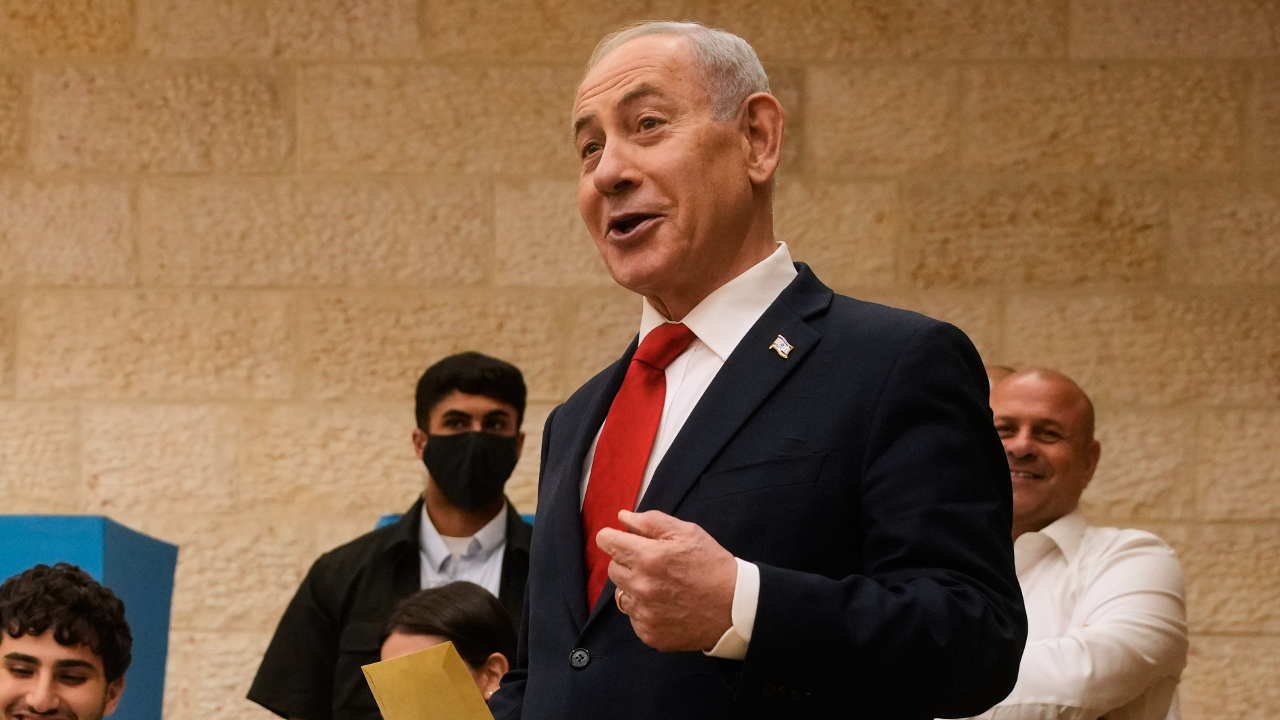
Israeli Prime Minister Benjamin Netanyahu speaks to the audience at a conference in Jerusalem, Sunday, July 27, 2025. (AP Photo/Ohad Zwigenberg)
«A clear majority in the Jewish public chose the Likud as the largest party and me, as prime minister, to lead the next government. We aspire to form a broad government with our partners and with any party that wishes to do so and does not support terrorism. I am open to holding discussions on the matter,» he added.
The two predominantly Arab parties he pointed his criticism at are the Joint List and Ra’am who secured a historic combined total of 19 seats, potentially positioning them as kingmakers in the government formation process.
A Joint List source told Fox News Digital that the alliance is likely to endorse Eisenkot to be the first lawmaker tasked with forming a government. If both predominantly Arab parties were to back him, he would receive recommendations from parties representing more than the 61 seats needed.
The lawmaker tasked with forming a government will have 28 days to do so, with the president authorized to grant an extension of up to 14 additional days.

Israeli President Isaac Herzog during an interview with Fox News Digital in Jerusalem, Israel. (Yoav Dudkevitch/TPS-IL for Fox News Digital)
Consultations will be held in ascending order of seat count, beginning with Religious Zionism-Zehut and Shas, which each won six seats, followed by Yisrael Beiteinu, which secured seven.
On Thursday, Herzog will meet with the leaders of United Torah Judaism and Otzma Yehudit, which each won seven seats, followed by The Democrats and Ra’am, which each won eight, the Joint List (11), BeYachad (12), Yashar (21) and Likud (27).
Defense and government affairs commentator Amir Oren told Fox News Digital that while Herzog is formally free to choose whom to task with forming a government, he would be inclined to select the candidate whose nomination is backed by parties representing a majority of Knesset seats.
FORMER ISRAELI PM EMERGES AS WILD CARD IN HIGH-STAKES ELECTION WITH MIDDLE EAST’S FUTURE AT STAKE
«He must then task Eisenkot with forming the next government. That does not mean Eisenkot will succeed. If he fails, he will have to return the mandate to the president,» Oren said.
Eisenkot may, in fact, struggle to assemble a 61-seat governing coalition, given competing interests within the opposition bloc. BeYachad leader Naftali Bennett and Yisrael Beiteinu chief Avigdor Liberman are unlikely to agree to serve in a government reliant on the Joint List, given the latter’s pro-Palestinian positions and opposition to Zionism.
It is theoretically possible, however, that the opposition bloc could agree to form a minority government with the Arab parties providing support from outside the coalition.
While Israel has no precedent for forming a minority government immediately following an election, such arrangements have occurred during a Knesset term. Most recently, during Netanyahu’s current term, one of the ultra-Orthodox parties withdrew from the coalition over a dispute related to military conscription but continued to support the government from outside.
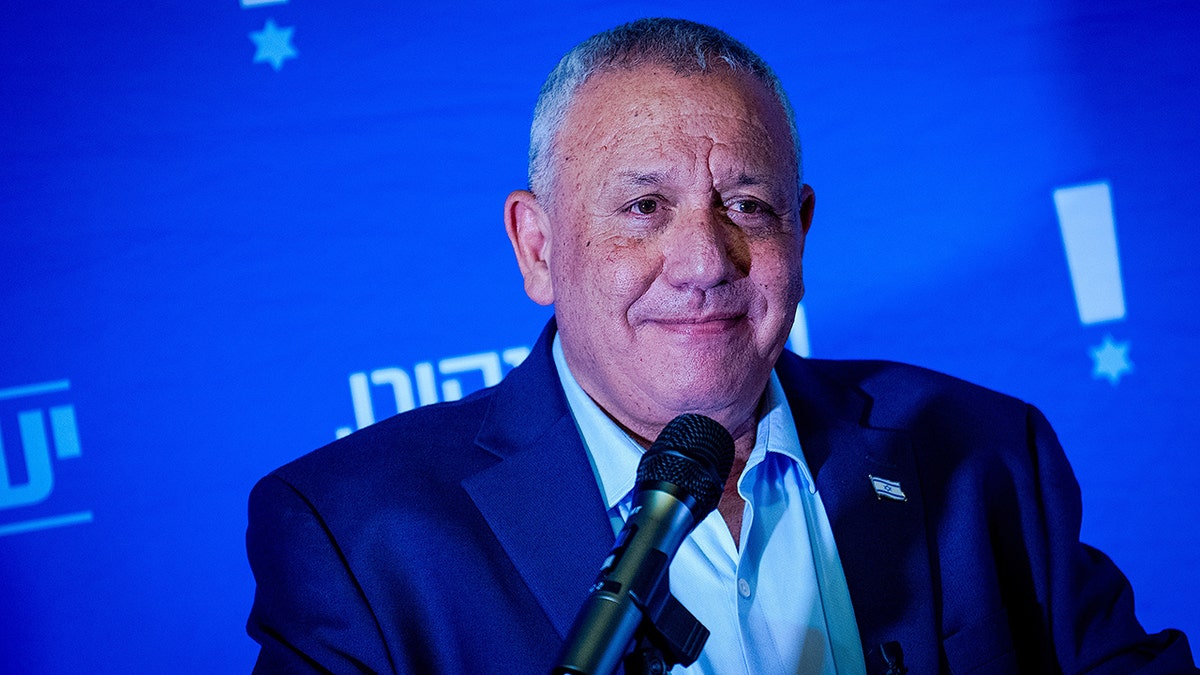
Yashar party leader Gadi Eisenkot attends the Jerusalem Residents Conference on Aug. 12, 2026 in Jerusalem. Gadi Eisenkot, a retired chief of the Israel Defense Forces and current leader of the Yashar party, has emerged as the foremost challenger to Benjamin Netanyahu ahead of October’s general election. (Erik Marmor/Getty Images)
Religious Zionism-Zehut, Otzma Yehudit and Shas each confirmed to Fox News Digital on Tuesday night that they would recommend Netanyahu to Herzog during consultations on forming a government.
Dan Diker, president of the Jerusalem Center for Security and Foreign Affairs, told Fox News Digital that Bennett and Liberman’s recent endorsement of Eisenkot suggests they are moving away from the prospect of a national unity government.
«I think it would behoove Netanyahu, Eisenkot, former Prime Minister Bennett and former Defense Minister Liberman to find a way to work together now, given the imminent clash between the apocalyptic death cult known as the Iranian regime, Israel and, by extension, the rest of the Western world,» he said.
Complicating matters for Netanyahu, the 26th Knesset is scheduled to be sworn in on Nov. 10. Its newly elected members are expected to begin forming committees and advancing legislation, while the current prime minister and ministers remain in office and continue carrying out their duties under the oversight of the new parliament, ensuring continuity of government.
WHO IS ITAMAR BEN-GVIR, THE ISRAELI FIREBRAND RISING WITH THE POPULIST RIGHT ACROSS THE GLOBE?
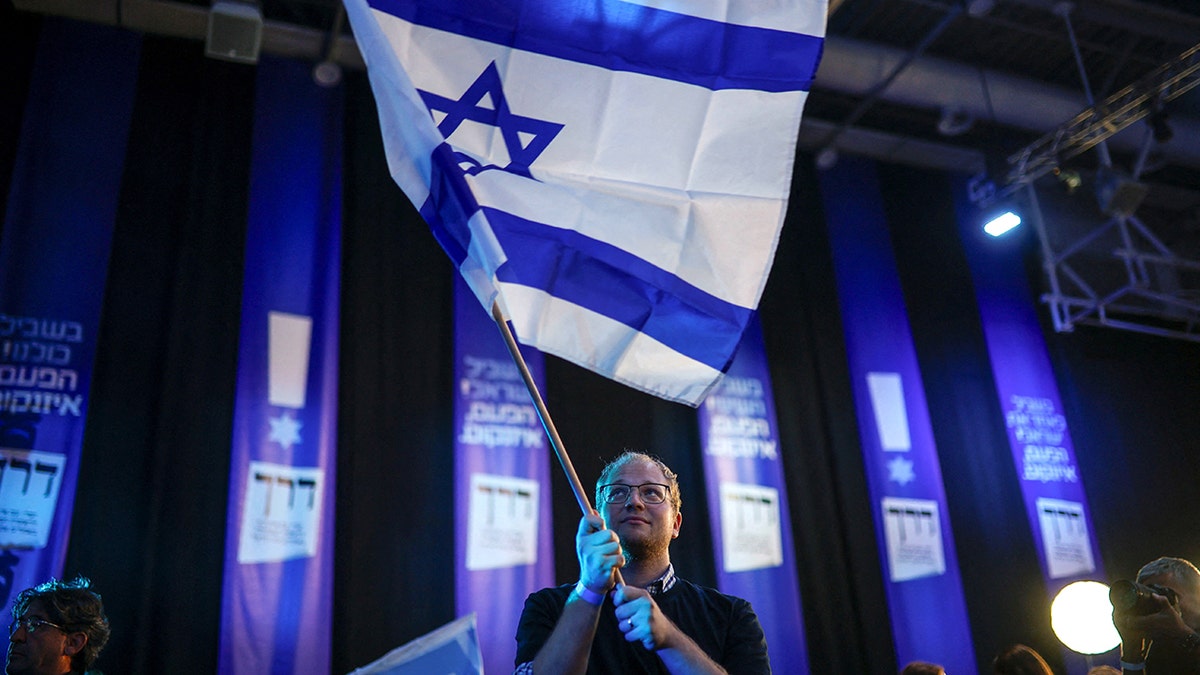
A supporter of former military chief Gadi Eisenkot, leader of the Yashar party, reacts to the exit poll at his party headquarters, on the evening of Israel’s national election, in Tel Aviv, Israel October 27, 2026. REUTERS/Shir Torem (Shir Torem/Reuters)
«They are doing everything they can to push Netanyahu out of office, and we are seeing that now with discussions about replacing the Knesset speaker. They can then begin trying to advance legislation in a Knesset with 19 seats held by Arab parties that would be very uncomfortable for Netanyahu,» Diker said.
Oren highlighted another potential challenge, suggesting that the caretaker government’s ability to launch military operations could face political constraints, potentially complicating any resumption of hostilities with Iran, even if U.S. President Donald Trump were to initiate such action.
Former Knesset member Dov Lipman told Fox News Digital that Eisenkot appears likely to be the first lawmaker tasked with forming a government, but suggested that most Israelis favor a national unity government built around Likud, Yashar and BeYachad, with one or more smaller parties also joining.
«As a first step, Eisenkot may approach Likud and ask it to join a government under his leadership, which Likud will reject. Eisenkot will then have to make a decision, as Liberman is unlikely to agree to serve in a government alongside Arab parties,» Lipman said.
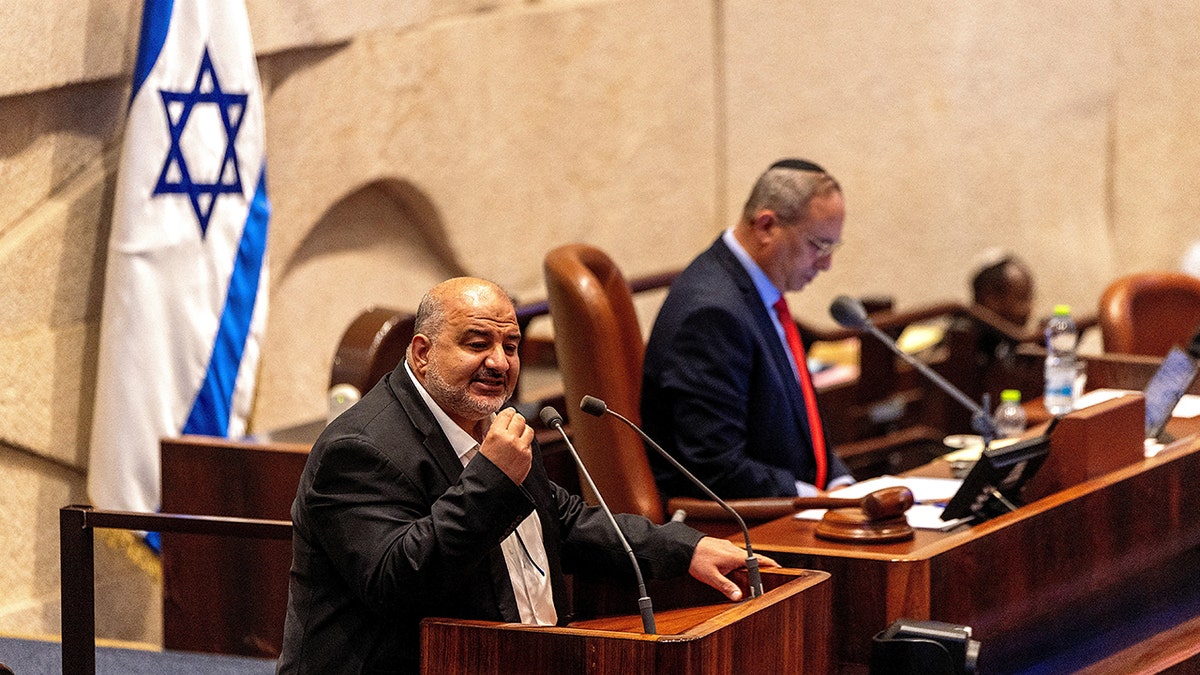
Mansour Abbas, leader of the Ra’am party, speaks at the plenum at the Knesset, Israel’s parliament, in Jerusalem, July 13, 2026 (Ronen Zvulun/Reuters)
«Eisenkot will likely fail to form a government, after which the mandate will pass to Netanyahu, who will also likely fail.»
That would trigger a 21-day period during which any Knesset member could attempt to form a government with the backing of at least 61 lawmakers. If the process reaches that stage, Eisenkot might agree to serve under Netanyahu for two years to avoid sending the country to another election, Lipman said.
Prof. Gideon Rahat, a senior fellow at the Israel Democracy Institute, told Fox News Digital that Netanyahu would need to make concessions to persuade opposition leaders that he would honor his commitments, given their experience with the 2020 power-sharing agreement with then-Blue and White party leader Benny Gantz.
NETANYAHU REVEALS HE WANTS AMERICAN FINANCIAL SUPPORT FOR ISRAEL TO ‘DRAW DOWN TO ZERO’
Under the agreement, Netanyahu was to serve as prime minister for the first 18 months, with Gantz serving as alternate prime minister and defense minister before taking over as premier on Nov. 17, 2021. However, the arrangement unraveled after the government failed to pass a state budget by the December 2020 deadline, triggering the Knesset’s automatic dissolution and new elections. Gantz never assumed the premiership.
Rahat pointed to Israel’s 1984-1988 national unity government as a precedent, saying a similar arrangement could work.
«At the time, Israel was still embroiled in the Lebanon War, with IDF forces deployed in the country, while the economy was facing a severe crisis, with annual inflation exceeding 400%. Against that backdrop, Likud and Labor formed a national unity government under a rotation agreement, with Shimon Peres serving as prime minister for the first two years, followed by Yitzhak Shamir for the next two,» he said.
While large parts of the public would likely support it, Rahat said, there are still issues that may create tension.
«They will have to freeze the judicial overhaul launched by Netanyahu’s government, find a way to investigate Oct. 7, as demanded by opposition parties and agree on a mechanism for Netanyahu to leave office when the time comes. But when it comes to major issues of security and the economy, unity governments can be quite effective,» Rahat said.
«Once they resolve the major challenges, however, they start fighting among themselves and the magic is over.»
benjamin netanyahu, israel, middle east, world elections
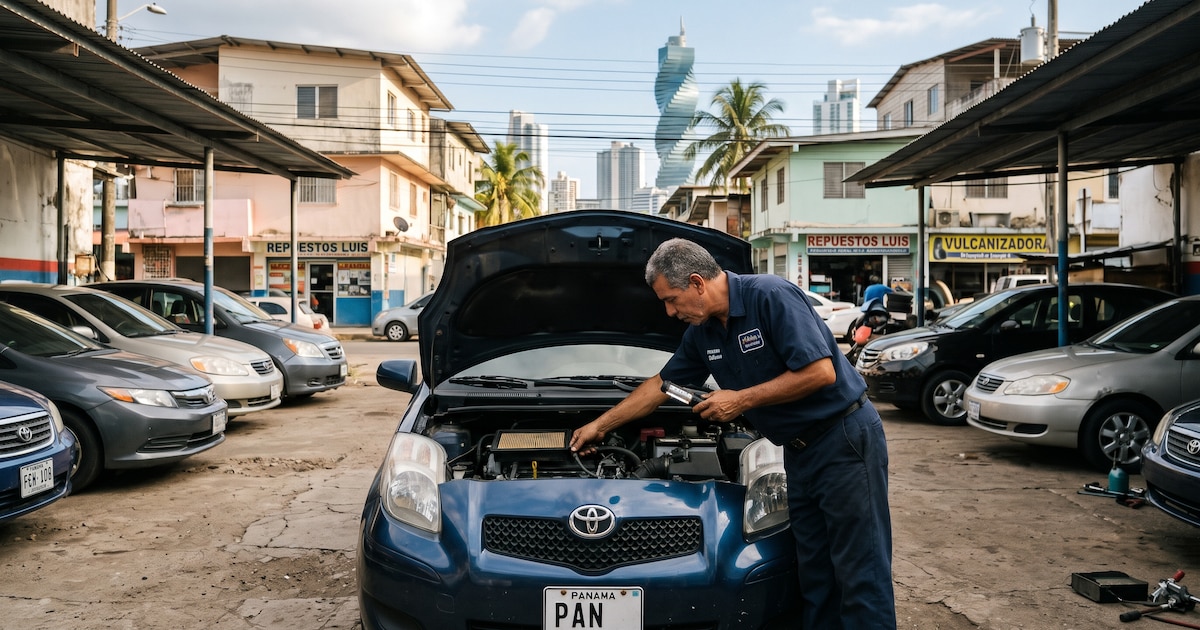
El incumplimiento de garantías se convirtió en el principal dolor de cabeza para quienes compran un auto en Panamá.
Entre enero y septiembre de 2026, esta causa concentró 260 de las 378 quejas registradas por vehículos nuevos y usados, según datos de la Autoridad de Protección al Consumidor y Defensa de la Competencia (Acodeco).
La cuantía reclamada por este motivo llegó a USD 5.801.216,38.
El organismo recibió las denuncias a través de sus departamentos de Conciliación y Vehículo a Motor.
Todas se vinculan con posibles incumplimientos en la compra de automóviles y en los servicios que rodean esa transacción.
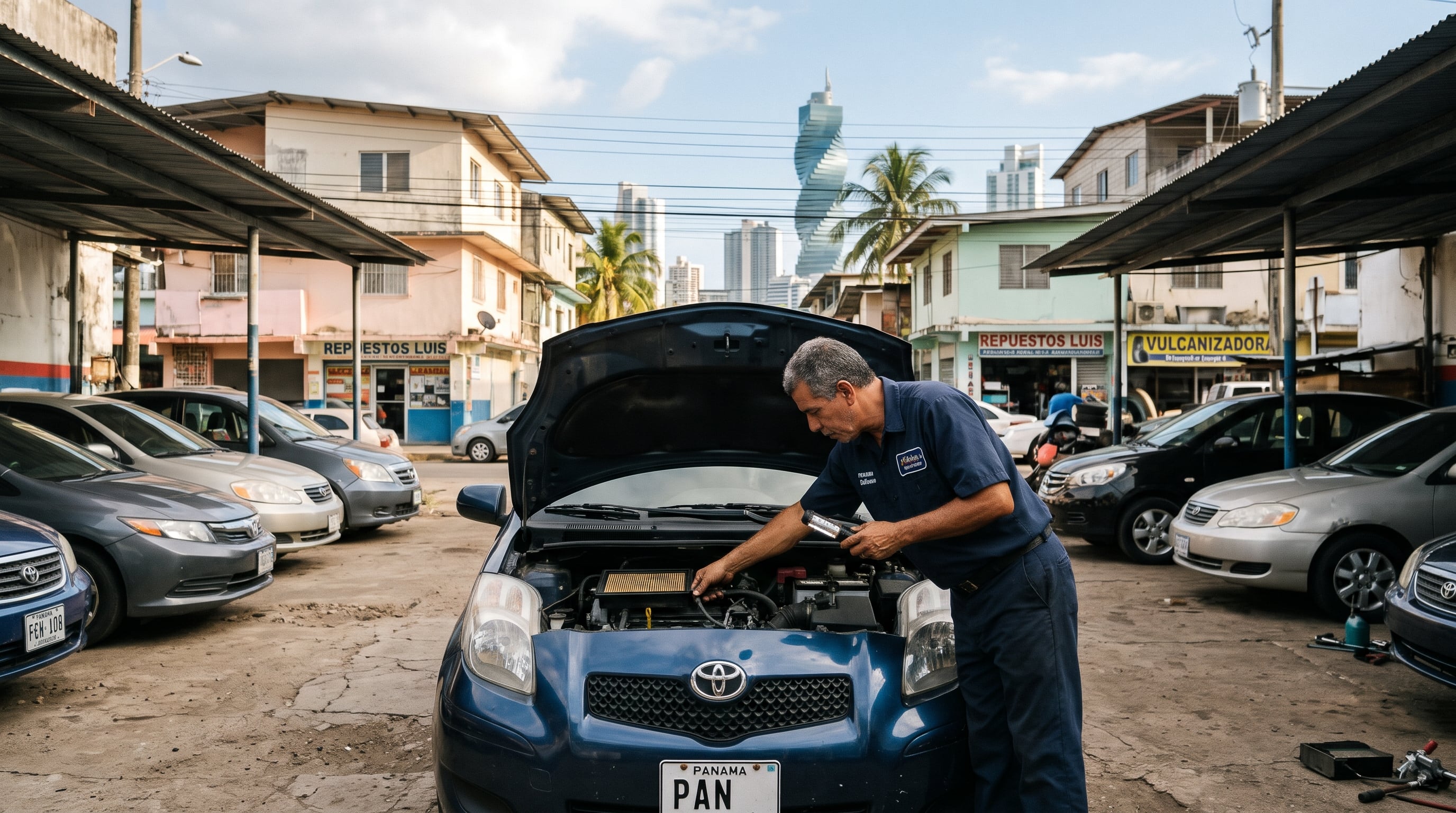
De las 378 quejas totales, 254 correspondieron a vehículos nuevos, por un monto de USD 6.689.738,21.
Las 124 reclamaciones restantes se originaron en la compra de autos usados, con una cuantía de USD 1.010.170,83.
El motivo más frecuente, tanto en vehículos nuevos como usados, es el incumplimiento de garantías.
En los autos nuevos representa el 74,4% de los casos del segmento; en los usados, el 57,3%. La falta de información y los vicios ocultos completan el resto de las denuncias más comunes.
En el segmento de vehículos nuevos, el incumplimiento de garantías sumó 189 quejas por USD 5.190.120,01. Esa cifra equivale a más de las tres cuartas partes del total reclamado en esta categoría.

La falta de información aparece en segundo lugar, con 21 quejas por USD 378.733,83. Los vicios ocultos generaron 20 reclamos adicionales, por USD 569.072,14.
El resto de las denuncias en autos nuevos se reparte entre siete casos de incumplimiento de servicio, seis por cláusulas abusivas y tres por devolución de dinero.
En los vehículos usados, 71 quejas apuntaron al incumplimiento de garantías, por un monto de USD 611.096,37. La falta de información fue el segundo motivo más repetido, con 29 casos por USD 149.907,03.
Las cláusulas abusivas sumaron nueve denuncias por USD 126.683,43. El incumplimiento de contrato y los vicios ocultos cerraron la lista, con seis reclamaciones cada uno.
La diferencia en los montos entre ambas categorías responde al valor de los bienes involucrados. Aunque los autos usados generan menos dinero en disputa, la proporción de quejas por garantías resulta igual de alta que en los vehículos nuevos.

Entre los agentes económicos vinculados a autos nuevos, el Grupo Sílaba lideró el registro con 27 quejas. Le siguieron Ricardo Pérez, S.A., con 20 casos, y Petroautos, S.A., con 19.
Grupo Q Investments, S.A. sumó 17 denuncias y Automotora Autostar, S.A. acumuló 16. Bay Motors, S.A. registró 14 quejas, mientras que Distribuidora Automotriz Fortune, S.A. contabilizó 13.
Grupo Auto Comercial, S.A. llegó a 12 reclamaciones. Panamotor y Petromotors, S.A. cerraron esta lista con 11 quejas cada uno.
En el segmento de usados, Autos Platinum encabezó el conteo con 17 denuncias. Sandi Autos sumó nueve y Level Up 360, S.A. registró seis.
Un grupo de empresas acumuló tres quejas cada una: Autodolarpty, Autos Gold, Autos Prity 507, S.A., Cirelli Cars, Compra y Ventas de Autos María, Distribuidora de Motores, S.A., Distribuidora de Motores, S.A. / Fat Car, JB Motores Inc., Proveedor Automotriz, S.A. y RB Car Pty.

Acodeco aclaró que la cantidad de denuncias por empresa solo permite identificar dónde se concentran los reclamos presentados ante la institución. El organismo subrayó que estas cifras no implican, por sí mismas, que exista una infracción comprobada.
La entidad recomienda a los consumidores revisar con detalle el contrato antes de adquirir un vehículo nuevo o usado. También sugiere verificar las condiciones de la garantía y solicitar información clara sobre el estado del automóvil.
La institución insiste en conservar las facturas, los comprobantes de pago y el resto de los documentos de la transacción. Ese respaldo resulta clave si luego surge algún conflicto con el vendedor.
En el caso de los autos usados, el organismo remarca la importancia de pedir información sobre las condiciones en que se entrega el vehículo. Recomienda además dejar constancia por escrito de los compromisos que asuma el vendedor.
Cuando un proveedor no cumple lo pactado o el comprador detecta una posible vulneración de sus derechos, puede acudir a Acodeco con la documentación que sustente su caso. La entidad cuenta con mecanismos de atención y conciliación para buscar una solución entre las partes, según el procedimiento que corresponda a cada situación.
Panamá,concesionario de automóviles,vehículos usados,mercado automotriz

Paliza histórica para Trump: ¿Y ahora?

Rescataron 29 aves silvestres que se encontraban en cautiverio en Catamarca

Abdul El-Sayed delivers major blow to GOP in Michigan after bruising Senate race

“Inolvidable”: la emoción de Kimi Antonelli al subirse a un Lotus de Fórmula 1 de Ayrton Senna

Netanyahu faces coalition showdown as rivals maneuver to form Israel’s next government

Sebastián Graviotto contó la actitud que el psicólogo de su hijo le recriminó: “Me largaba a llorar”

Qué pasó con el Refugio de Eli y por qué hizo enfurecer a Santi Maratea: «Fue un desastre, él nunca más le contestó y le prohibió…»

El “efecto Lula” sigue pegando en Argentina: los bonos sintieron el impacto, pero el tipo de cambio aguantó

Agustín Caulo: “El Gobierno sigue trabajando para que no se politice la visita de León XIV a la Argentina”

Benjamín Amadeo revivió el peor momento que pasó después de separarse de Lali Espósito: «Me sentí expuesto»

 CHIMENTOS2 días ago
Qué pasó con el Refugio de Eli y por qué hizo enfurecer a Santi Maratea: «Fue un desastre, él nunca más le contestó y le prohibió…»
- POLITICA3 días ago
Agustín Caulo: “El Gobierno sigue trabajando para que no se politice la visita de León XIV a la Argentina”
- CHIMENTOS3 días ago
Benjamín Amadeo revivió el peor momento que pasó después de separarse de Lali Espósito: «Me sentí expuesto»