INTERNACIONAL
Europa vivió el junio más caluroso de su historia y los termómetros vuelven a trepar: Francia se derrite y crece la polémica por el aire acondicionado





NEWYou can now listen to Fox News articles!
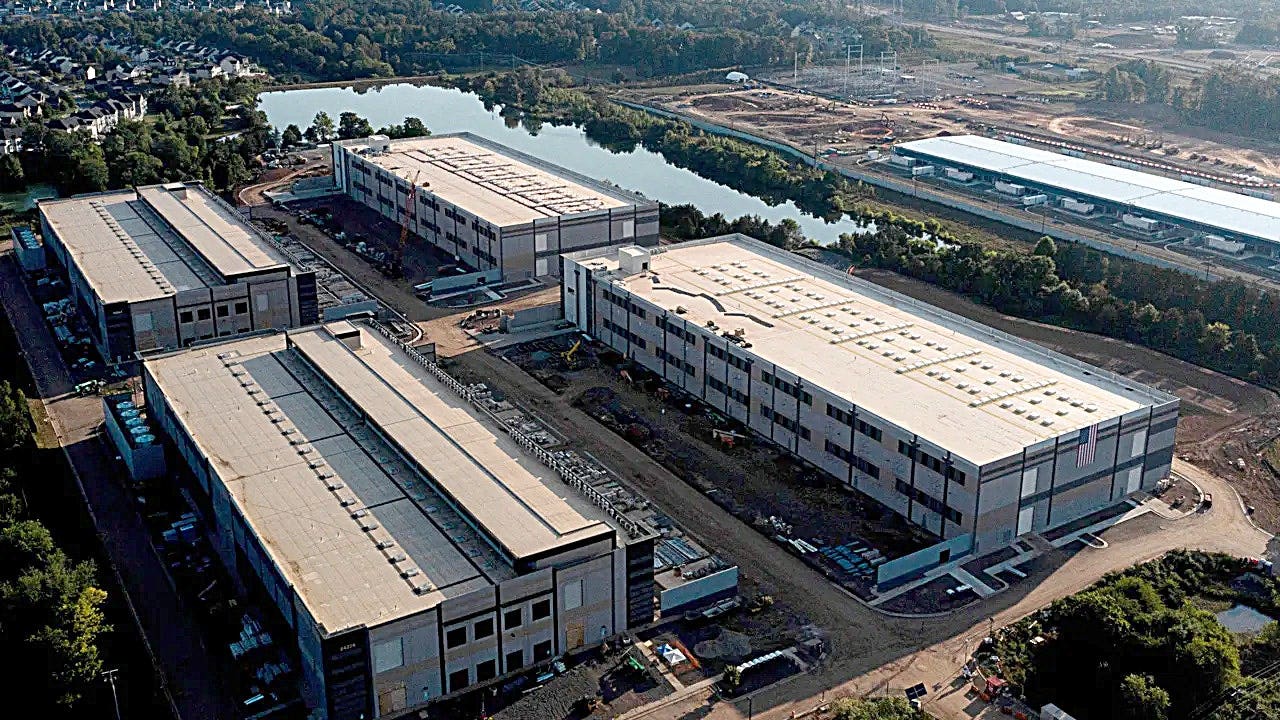
As opposition to artificial intelligence data centers spreads across rural America, one group is proposing «data center dividends» to counter the backlash by allowing residents to share directly in the wealth generated by the technology hubs.
A new report from the Bitcoin Policy Institute, a think tank based in Washington, D.C., proposes that data center dividends are a model that would return part of the property tax revenue generated by AI data centers directly to households living in the communities that host the data centers, potentially providing annual payments of between about $4,500 and $8,900 per household without creating new taxes or increasing costs for developers.
«Every American deserves to benefit from the AI boom,» Sam Lyman, head of research at the nonprofit, told Fox News Digital. «It can’t just be the developers in Silicon Valley who are becoming wealthy from this revolution. It needs to be the Americans who are building the county infrastructure that makes these data centers possible in the first place.»
The proposal comes as opposition to data centers intensifies nationwide, fomented over the past year by a network of socialists and communist nonprofits funded by a tech tycoon, Neville Roy Singham, living in Shanghai, supporting the Chinese Communist Party and a «new world order» promulgated by Chinese leader Xi Jinping. The opposition has widened to conservatives and centrists, with the report noting that Americans are now more likely to oppose a data center in their community than a nuclear power plant.
In a poll earlier this year, Gallup found that 71% of Americans oppose construction of an AI data center in their area, while only 53% oppose a nearby nuclear plant. The report says local data center moratoriums have exploded from six in 2024 to 59 last year and 294 last month.
Over the past year, groups in the Singham network – including the Party for Socialism and Liberation, the People’s Forum, CodePink and BreakThrough News – have opposed data centers and also Flock surveillance cameras with aggressive media campaigns, elevating China as a technological powerhouse and denigrating any developments by U.S. technology companies.
«These influence actions are cognitive warfare. Foreign actors don’t need Americans to become pro-China,» Rob Joyce, former director of cybersecurity at the National Security Agency, recently told Fox News Digital. «They need Americans to argue for the outcomes Beijing wants. And a free society that can’t build the power and govern the advanced technology is going to wind up renting it from the adversary, read the PRC, that doesn’t share its own values. And that scares me as an American.»
Sen Bernie Sanders and Rep. Alexandria Ocasio-Cortez hold a press conference to announce the Artificial Intelligence Data Center Moratorium Act at the U.S. Capitol on March 25, 2026, in Washington, D.C. (Tasos Katopodis/Getty Images)
Lyman said the political problem is that many Americans believe technology companies are reaping the benefits of the AI boom while local communities bear the costs. The propaganda campaigns by the pro-China groups are promoting that message by describing tech executives as «oligarchs» and «imperialists.» One constant message in the campaigns is «People Over Profits.»
«I really think that data center dividends will reverse the momentum in the data center debate, because suddenly every American who lives in these counties where data centers might be built recognizes that he or she can have a material stake in the AI economy,» said Lyman, a former senior advisor and speechwriter for Treasury Secretary Scott Bessent.
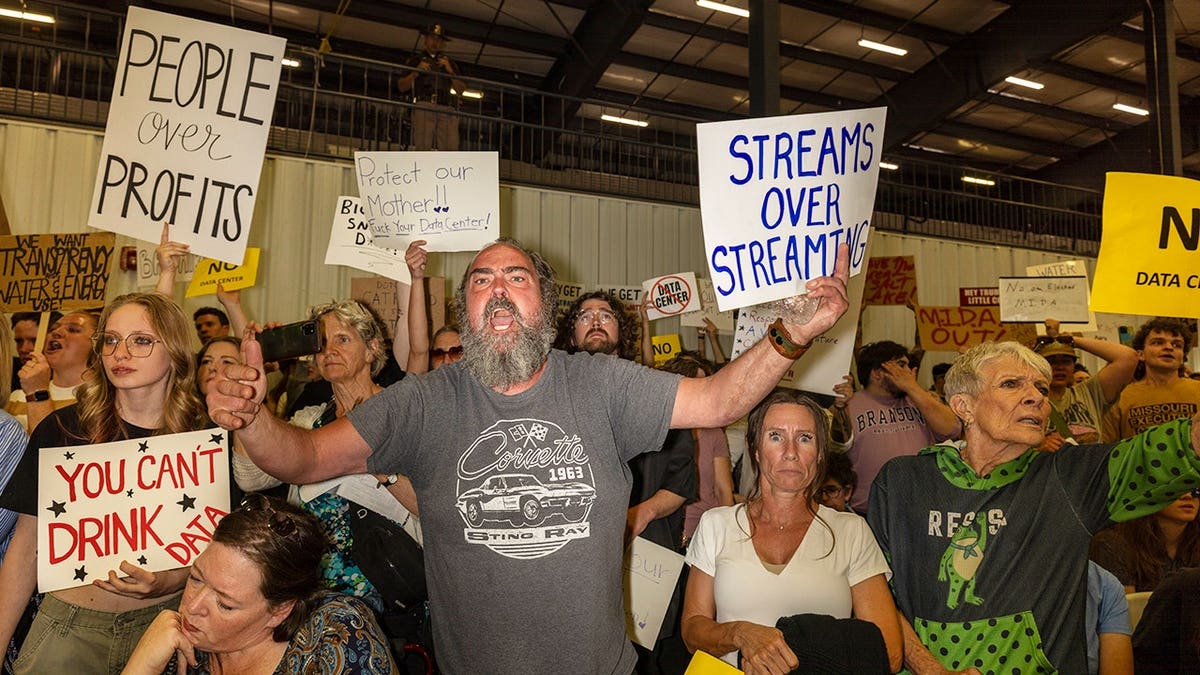
Protesters react as the Box Elder County Commission approves a large AI data center project in Tremonton, Utah, on May 4, 2026. Activists opposed the 40,000-acre development over concerns about water use, energy demand and environmental impact. (Natalie Behring/Getty Images)
Polling cited in the report found that 73% of Americans believe the costs of data center construction outweigh the benefits, while voters overwhelmingly believe AI will primarily enrich executives and business owners rather than workers.
Rather than creating a new tax, the proposal would redirect a portion of property tax revenue that counties already collect from data centers. «Data center dividends can ensure that rural Americans rise in the age of AI alongside the engineers developing this technology,» the report notes.
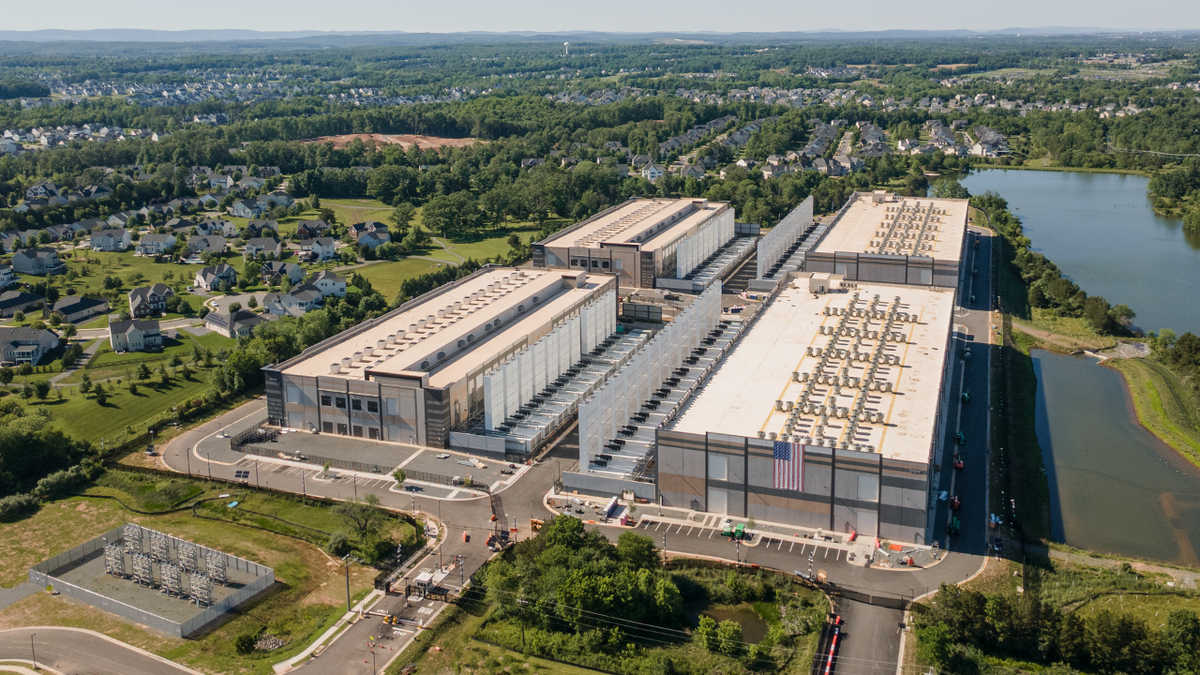
An Amazon Web Services data center in Aldie, Virginia, on May 31, 2026. (Lexi Critchett/Bloomberg via Getty Images)
Under the model, counties would first continue funding schools, roads, police and other essential services. After those obligations are met, local communities would return a portion of remaining revenue directly to residents through annual checks, direct deposits, tax credits, utility bill credits or permanent investment funds. The report emphasizes that the dividends would be financed entirely from existing tax revenue, meaning developers wouldn’t pay any additional taxes.
The report estimates that a single one-gigawatt AI data center could generate enough tax revenue to provide households in a typical rural county between $4,500 and $8,900 annually in a «data center dividend,» depending on how much revenue local governments dedicate to dividends after paying for public services.
The estimate is based on tax collections from Loudoun County, Va., one of the nation’s largest data center hubs. Loudoun collected about $685 million in personal property taxes on data center computer equipment in fiscal year 2024. Dividing those collections by the county’s data center electrical load produced an estimate of roughly $165 million in annual property tax revenue per gigawatt of AI infrastructure, researchers estimated.
The report cites new policies in West Feliciana Parish, La., where policymakers are attempting to spread new-found wealth. The parish expects a Hut 8 AI campus to generate about $90 million annually, more than tripling its current budget, according to estimates. Earlier this year, Louisiana lawmakers passed Act 434, allowing local officials to provide property tax credits funded by the new revenue, although lawmakers removed an earlier proposal that would have authorized direct cash payments.
If the cash provision had remained, the report estimates households could have received about $5,600 annually if one-quarter of the revenue were distributed, or $11,200 annually if half the revenue were shared with residents after funding government services.
In another example, Alaska has a «Permanent Fund,» or state-owned investment account that collects part of Alaska’s revenues from oil produced on state land, invests it in stocks, bonds and real estate, and disburses part of the returns to residents as an annual dividend.
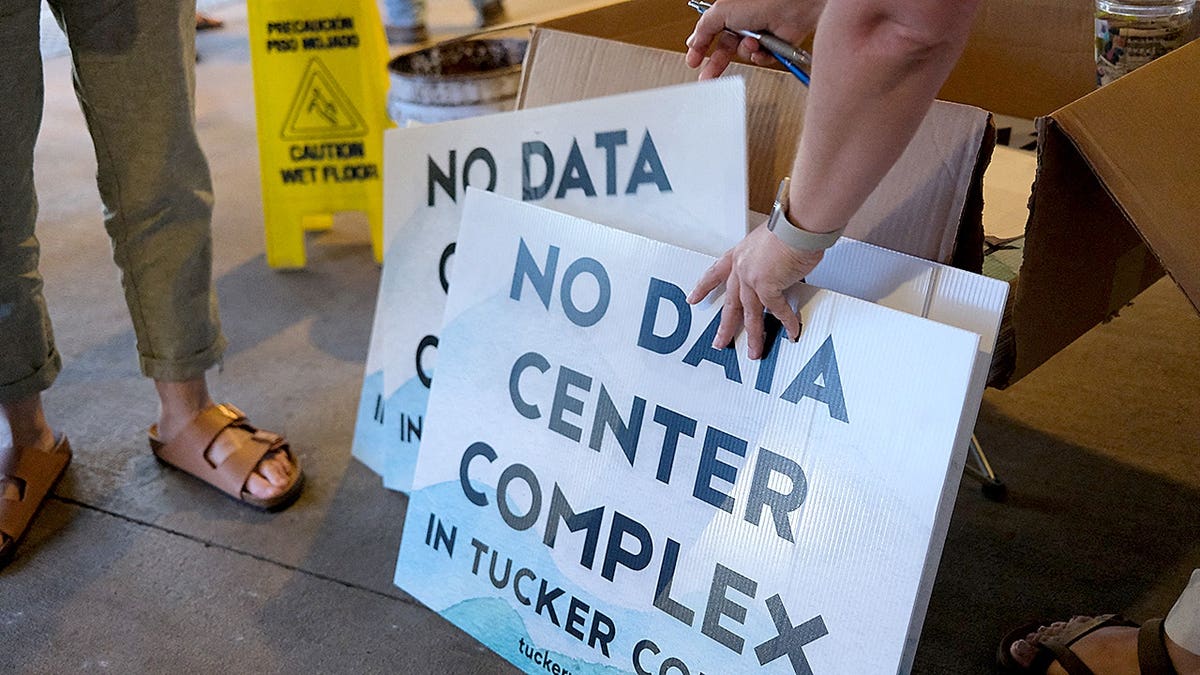
Volunteers hand out yard signs against a data center complex in Canaan Valley on June 30, 2025, after a public meeting organized by the state Department of Environmental Protection regarding an air quality permit application for a gas-fired power plant near Davis, W.Va. (Ulysse Bellier/AFP via Getty Images)
The report outlines several options communities could adopt.
- Cash payments. Residents could receive annual dividend checks or direct deposits similar to the payments from Alaska’s «Permanent Fund.»
- Property tax credits. Local governments could reduce residents’ property tax bills using data center revenue, similar to Louisiana’s approach.
- Utility bill credits. Counties could apply the money directly to electricity bills, benefiting both homeowners and renters while addressing concerns that data centers increase electricity costs. The report notes that a $4,500 dividend would cover the average American household’s electric bill for more than two years.
- Education funds. Communities could place the money into scholarship endowments guaranteeing college tuition for local graduates.
- Permanent investment funds. Counties could invest the tax revenue and distribute only investment earnings, creating an enduring source of local wealth similar to Alaska’s Permanent Fund even if the data center eventually closes.
Lyman argues that direct payments create stronger public support than simply lowering taxes or expanding government spending because residents would see the benefit. «I think a lot that opposition is born from the fact that many Americans feel left out of the AI boom. They feel like this economic revolution is taking place without them,» said Lyman, noting, «What data center dividends do… is they give every American in rural America a share in the material prosperity that is taking place with artificial intelligence.»
The report notes that rural counties possess two scarce assets essential for AI development – land and abundant power – and argues those communities should share directly in the economic gains generated by the AI buildout.
politics, artificial intelligence, technologies, taxes
INTERNACIONAL
El mar de Ecuador está hasta 4,1 grados más caliente y el nivel del océano sigue elevado

Ecuador enfrenta una combinación de señales oceánicas que ha colocado al fenómeno de El Niño en una fase decisiva. La temperatura del mar en la región Niño 1+2, ubicada frente a las costas de Ecuador y Perú, registra anomalías de hasta 4,1 grados Celsius por encima de los valores normales, mientras el nivel medio del océano en varias estaciones del país permanece decenas de centímetros por encima de su promedio.
El calentamiento no es un dato aislado. El Comité Nacional para el Estudio Regional del Fenómeno El Niño (ERFEN) mantiene al país bajo el estado de El Niño Activo, aunque sus boletines técnicos advierten que el fenómeno todavía se encuentra en una fase de desarrollo y que su evolución dependerá de lo que ocurra durante las próximas semanas. El boletín más reciente disponible, publicado el 4 de septiembre, mantiene esa caracterización.
La principal señal está en el Pacífico oriental. En la región Niño 1+2, una de las áreas oceánicas más relevantes para Ecuador por su cercanía con la costa continental, las anomalías térmicas han llegado a 4,1 grados. Las temperaturas del agua se han ubicado entre 26 y 28 grados Celsius, según información difundida por organismos vinculados al monitoreo del ERFEN.
Pero el calentamiento de la superficie es solo una parte del fenómeno. Las expediciones científicas realizadas frente a Ecuador durante este año encontraron que las aguas cálidas han penetrado a profundidades inusuales. El crucero oceanográfico del buque BAE Orión detectó en junio una anomalía cercana a los 2 grados Celsius en una columna de agua que se extendía hasta unos 100 metros de profundidad, cuando en condiciones normales el calentamiento superficial suele concentrarse mucho más cerca de la superficie.
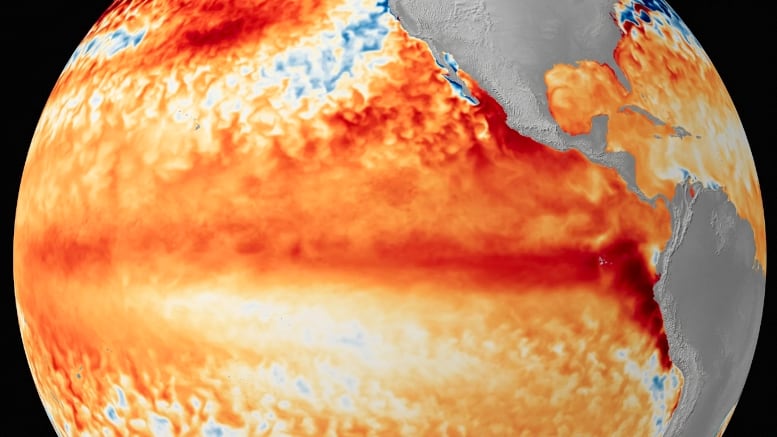
Esa alteración modifica la estructura del océano y afecta procesos fundamentales para la productividad marina. El calentamiento y el hundimiento de la termoclina reducen el ascenso de aguas frías y ricas en nutrientes hacia la superficie, un fenómeno que puede repercutir en la distribución de especies y en la actividad pesquera.
A este escenario se suma otra variable: el aumento del nivel del mar. A finales de agosto, las mediciones de estaciones del Instituto Oceanográfico y Antártico de la Armada registraban incrementos de hasta 40 centímetros en puntos de la costa y Galápagos. El aumento está relacionado con la expansión térmica del agua y la acumulación de masas cálidas en el Pacífico.
La elevación del océano puede adquirir especial importancia cuando coincide con oleajes y aguajes. En las zonas costeras, un nivel del mar más alto reduce el margen disponible para el drenaje natural y puede aumentar la vulnerabilidad de sectores bajos frente a inundaciones costeras.
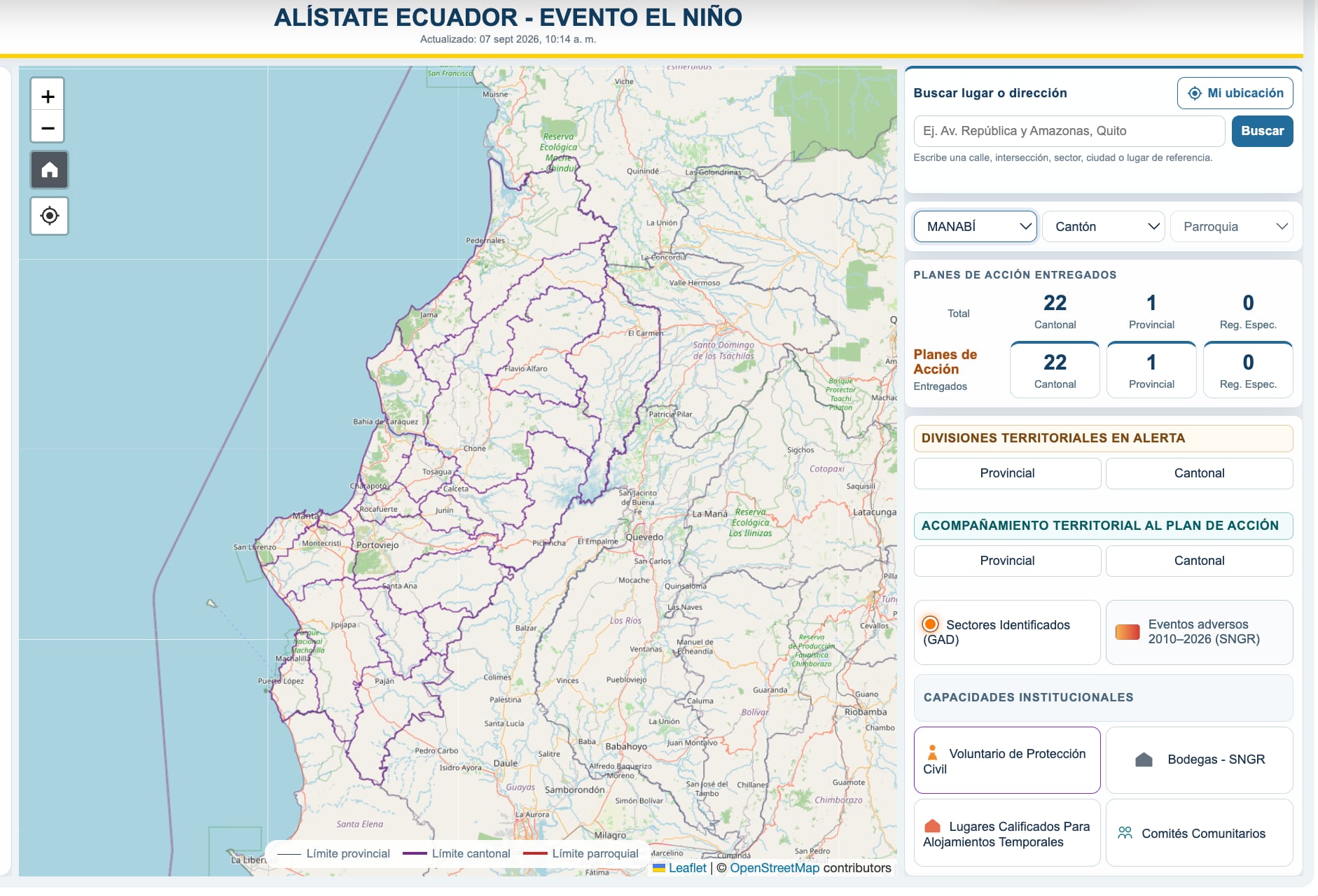
Sin embargo, los especialistas han insistido en una diferencia fundamental: un océano excepcionalmente cálido no significa automáticamente que Ecuador experimentará lluvias extremas. Para que los efectos atmosféricos asociados a El Niño se consoliden plenamente debe producirse un acoplamiento entre las condiciones del océano y la atmósfera.
Esa distinción es ahora uno de los puntos centrales del monitoreo científico. El Inocar había advertido durante los últimos meses que la evolución entre septiembre y los meses posteriores sería clave para determinar cómo responderá la atmósfera al calentamiento registrado en el Pacífico.
Las proyecciones del ERFEN apuntan a que el mayor impacto potencial del fenómeno en Ecuador podría concentrarse entre noviembre de 2026 y marzo de 2027, coincidiendo con la temporada lluviosa. Los escenarios técnicos contemplan un evento que podría alcanzar una intensidad fuerte o muy fuerte desde el punto de vista oceánico, aunque esa clasificación no determina por sí sola la magnitud de las inundaciones, las lluvias o el incremento de los caudales que podrían producirse en el país.
La diferencia es relevante porque Ecuador ya conoce las consecuencias de episodios extremos asociados a El Niño, pero los científicos evitan establecer comparaciones automáticas con eventos históricos como el de 1997 y 1998 únicamente a partir de la temperatura actual del océano.
coronavirus,covid-19

NEWYou can now listen to Fox News articles!
Former U.S. Ambassador to Canada David L. Cohen is blaming the Trump administration’s hardline trade pressure for pushing Ottawa into engaging with China.
«I think Canada has tentatively tried to play some footsie with China that the Trump administration may not be happy with,» Cohen, who served as former President Joe Biden’s ambassador to Canada from 2021 to 2025, said in an interview with Fox News Digital.
«There is a discomfort with that,» Cohen says, while arguing that it is ultimately Canada’s reflex to sentiment against President Donald Trump – particularly his hardline trade policies and rhetoric about the neighbor to the north being a «51st state.»
VANCE SAYS CANADA FRIENDLIER TO CHINA ON TRADE THAN TO US: ‘INSANITY’
David Cohen, U.S. ambassador to Canada, left, and Kirsten Hillman, Canada’s ambassador to the U.S., speak during the U.S.-Canada Summit in Toronto, Ontario, Canada, on Tuesday, April 4, 2023. (Cole Burston/Bloomberg via Getty Images)
«One of downsides of the aggressive Trump administration treatment of Canada and many other allies and partners is that the irony is that those policies are pushing those countries to at least consider broader and larger deals with China, which of course is wholly inconsistent with a major thrust of President Trump’s international trade policy,» Cohen continued. «So, how that shakes out, it’s all a matter of degree and balance.
«But I think there’s no doubt that the aggressiveness of the Trump administration positions has caused many countries to at least reevaluate whether there are additional deals that can be made with China.»
The comments come as U.S.-Canada trade tensions spiral after negotiations collapsed last month. Canadian Prime Minister Mark Carney last night accused Washington of seeking dependence rather than partnership.
«The most fundamental issue is that the cumulative U.S. demands revealed that they wanted us to become even more reliant on them, not less,» Carney said Tuesday. «In too many areas, they wanted dependency, not a true economic partnership.»
TRUMP TAUNTS CANADA ON RENAMING LAKE ONTARIO THE ‘LAKE AMERICA’ AMID RISING BORDER TRADE RIFT
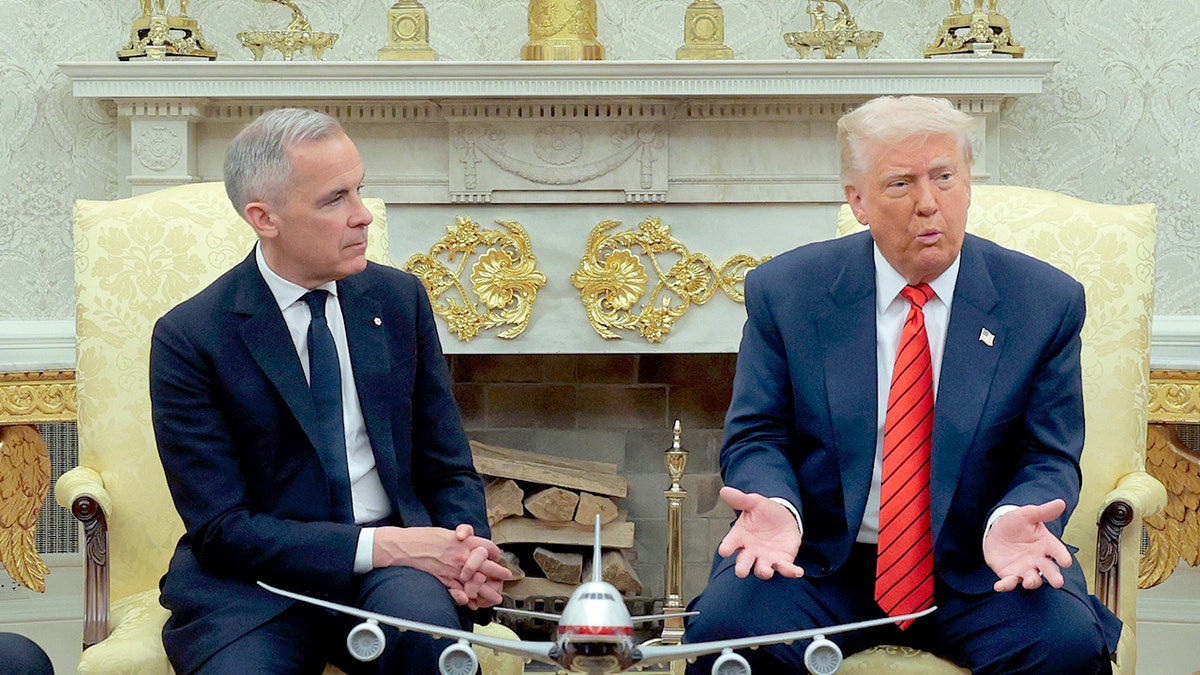
Canadian Prime Minister Mark Carney might be gaining political cachet in his country over standing up to President Donald Trump, but it is ultimately making tough trade talks more difficult, if not leading Canada into China’s hands, according to former Biden administration U.S. Ambassador to Canada David L. Cohen. (Anna Moneymaker/Getty Images)
Notably, the fallout comes just weeks before Chinese dictator Xi Jinping makes an historic trip to the White House to talk trade – something that never happened during the Biden administration despite Biden’s onetime quip before the COVID-19 pandemic that «China’s not bad folks.»
Vice President JD Vance, speaking in Maine last month, accused Canada of giving Chinese goods better treatment than products from American northern border states.
«They treat Chinese goods more fairly than they do the goods that come from the people of Maine: It’s insanity,» Vance said. «And what we’ve said to Canada is stop it.»
Cohen, however, was careful not to cast Canada as blameless in the trade feud. He admitted U.S. dairy farmers have legitimate complaints about Canada’s tariff-rate quota system, saying the issue has frustrated administrations of both parties for years.
WHITE HOUSE EXPOSES ‘TRANSSHIPMENT SCAM’ COSTING US UP TO $26B, POINTS FINGER AT CHINA
«This is one of the totally legitimate trade issues that exists between the United States and Canada,» Cohen said. «There is contention there that is hurting American dairy farmers. Yes, I will be honest and clear about that.»
«That tension existed under Joe Biden. Was he able to solve that problem? No,» he added. «It was something that was discussed and discussed more than once. We just never got there.»
Cohen, supportive of Trump’s «substance» on trade talks but not the «style,» did credit Trump for replacing NAFTA with the United States-Mexico-Canada Agreement, calling USMCA a «terrific deal» that improved continental trade.
TRUMP TRADE CHIEF WARNS CANADA WALKED AWAY FROM ‘THE BEST DEAL’ TO TRIGGER 50% U.S. TARIFFS
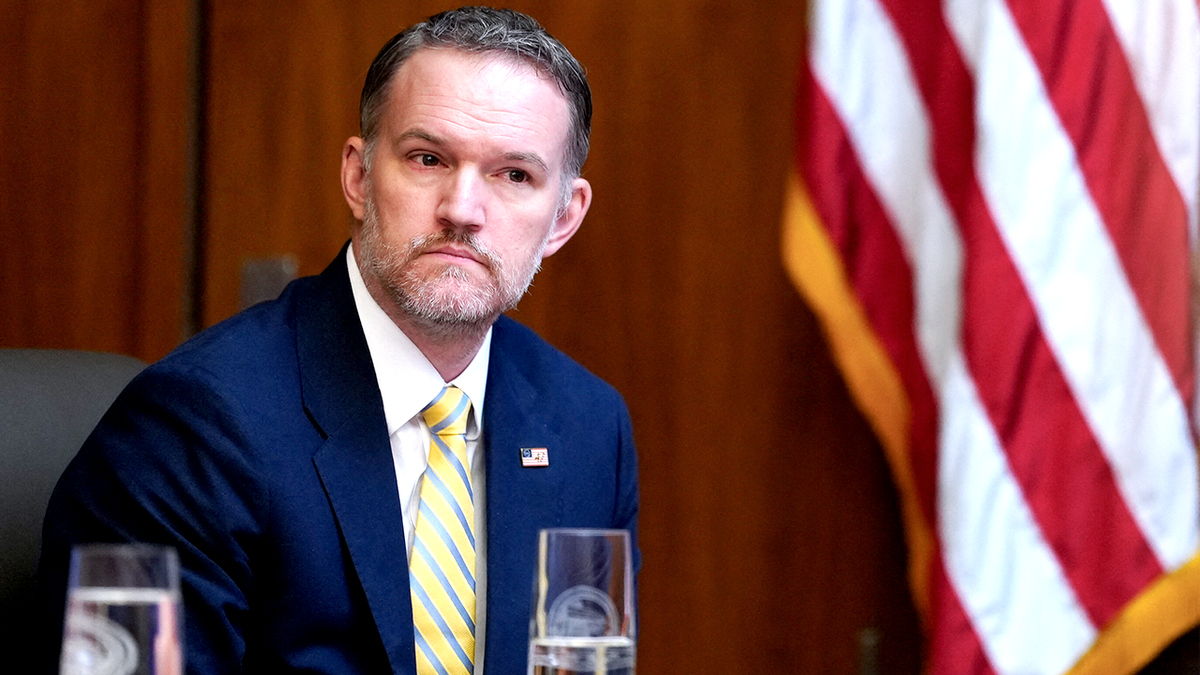
U.S. Trade Representative Jamieson Greer has the respect for being a skilled «negotiator» from former President Joe Biden’s U.S. Ambassador to Canada David L. Cohen. (Aaron Schwartz/AFP via Getty Images)
«I gave President Trump a lot of credit for that because it was a much better deal than NAFTA,» Cohen said. «I think he deserves credit for that.»
«I do push back at times on some of the rhetoric that President Trump has chosen to use, not necessarily the substance, but maybe the style that he sometimes uses to pursue his substance,» he added.
«There are such fundamental differences on the substance of President Trump’s trade policy that I think the treatment of President Trump is different than the treatment of President Biden,» Cohen observed. «But when professional negotiators were in the room, they seemed to have been making a lot of progress.»
Cohen believes the two sides need to return to professional negotiators, arguing that U.S. Trade Representative Jamieson Greer and Canadian officials had shown they could discuss difficult issues before the talks broke down.
TRUMP MUST CLOSE THE BACK DOOR CHINA USES TO EXPLOIT NORTH AMERICAN TRADE
«I have an enormous amount of respect for U.S. Trade Representative Greer,» Cohen said. «He is the ultimate professional trade negotiator, which is why he’s in that job. He didn’t get there by accident. President Trump put him in that job.»
By contrast, Cohen said Commerce Secretary Howard Lutnick – who was on the call that Friday night in August when talks broke down at the 11th hour – needs to stay in his lane.
«Secretary of Commerce Lutnick, with all due respect, is not a professional negotiator,» Cohen said. «That’s not the Commerce secretary’s job. It’s USTR’s job to negotiate trade deals with other countries.»
Lutnick has suggested in interviews about the infamous breakdown in talks that Canadians’ politics are at play in keeping Carney from cutting a deal with Trump, a man the provincial leaders and Canadian public have long been disenchanted with.
TRUMP TRADE CHIEF REVEALS WHAT PRECEDED CANADA WALKING AWAY FROM ‘BEST DEAL IN THE WORLD’
«Friday at 4 o’clock, the Canadians call: They start adding crazy ideas to the mix,» Lutnick said recently. «So, I said to one of the ministers, ‘Are you actually trying to blow this up?’ And his answer to me was, ‘I’m not allowed to say that.’ And they blew it up for political reasons only.»
Cohen said of Lutnick’s account that «until proven otherwise, I take every senior government official at his word, period,» and that he has «no way of knowing whether that is true or not.»
But, he admitted, Carney taking the nearly finished trade deal back to the provinces did not go over well – particularly amid his rising popularity among Canadians for being an anti-Trump force – because «the premiers of the provinces have more sway in federal policy than most governors do in federal policy.»
CANADIAN PM TELLS TRUMP TO ‘STOP TRYING TO BE TOUGH’ IN TRADE FIGHT
Commerce Secretary Howard Lutnick is not in the position as a «negotiator,» according to former Biden administration U.S. Ambassador to Canada David L. Cohen. (J. Scott Applewhite/AP Photo)
«It appears that Canada made the decision that the deal that was being offered was not a deal that they could accept,» Cohen said. «He may have made a judgment that although he and his team had pushed this deal as far as they could, and that it was, in his eyes, as good a deal as he was going to get at that point, that he could not sell that politically in Canada.»
«That’s not the same as saying that he was walking away for political reasons,» Cohen added. «It’s just the nature of a big, complex negotiation.»
TRUMP’S CANADA TARIFF FIGHT REACHES CRITICAL POINT AS HOUSE GOP SUMMONS TRADE CHIEF

Vice President Kamala Harris swears in David L. Cohen as the new U.S. ambassador to Canada at the White House in Washington, D.C., as his wife, Rhonda Cohen, holds the Bible, on Nov. 30, 2021. (AFP via Getty Images)
Ultimately, Cohen said the breakdown between the closest allies and trade partners in the world will be a story long told.
«There are going to be books written about what caused the negotiations to fall apart,» he said. «But independent of all the dialogue about that: There is no dispute that these professional negotiators were able to have a civil relationship and talk about really different difficult substantive issues out of the eyes and the ears of the press and with full respect for each other and for the countries. That’s my vision for the way in which trade negotiations should occur and they did occur – and it was a two-way street.»
Eventually, after the trade-war barbs and tariffs fly and the dust settles, the «professional negotiators» will get things done, Cohen predicted.
«You can’t make a deal if you’re not talking to each other,» Cohen said. «Of that, I am 100% certain.»
canada, donald trump, trade, mark carney, politics, foreign policy, xi jinping, protectionism, china

“Se les ve el serrucho”: Kicillof sugirió que Milei quiere eliminar las PASO por miedo a que lo desafíe “un Milei de buenos modales”

Ella tiene 44, fue una súper estrella del pop, cambió de vida y se enamoró de un facherísimo DJ turco 19 años menor: “El espíritu no entiende de…”

Por falta de votos, el oficialismo levantó Labor Parlamentaria y no habrá sesión mañana en el Senado

Fuerte cuestionamiento de una estrella de la selección brasileña a Carlo Ancelotti: “Acá las cosas no funcionan así”

Virginia Gallardo se quebró al hablar sobre la muerte de Chiche Gelblung en plena sesión de Diputados

Poner una hoja de laurel en un vaso con agua cerca de la ventana: por qué lo recomiendan y para qué sirve

1000 días de Milei: los logros, las crisis que lo marcaron y los déficits de su gestión

Martín Menem dijo que Milei será el primer no peronista en ser reelecto y llamó a invertir más

Multas millonarias, arrestos y trabajo comunitario: cómo se prepara una provincia para enfrentar el Súper Niño

Franco Colapinto largará en el puesto 7 con su Alpine el Gran Premio de Italia de la Fórmula 1: hora, TV y todo lo que hay que saber

 SOCIEDAD2 días ago
Femicidio brutal en Merlo: un jubilado de 64 discutió con su esposa y la asesinó a puñaladas
- POLITICA2 días ago
El gobierno de Kicillof retendrá un 2% en los premios de las apuestas online
- DEPORTE2 días ago
El rotundo cambio de Julián Álvarez en una foto presentación del Atlético de Madrid tras quedarse en el club