INTERNACIONAL
EXCLUSIVE: Russian document reveals sweeping Iran plan spanning nuclear, finance and aviation

NEWYou can now listen to Fox News articles!
EXCLUSIVE: A nonpublic Russian government document obtained and reviewed by Fox News Digital reveals how Moscow sought to deepen its relationship with Iran far beyond conventional trade — laying out plans for alternative financial channels, nuclear cooperation, Iranian production of Russian aircraft components, major energy projects and new transportation routes stretching toward the Persian Gulf.
The 44-page Russian-language document, titled «Plan for Cooperation Between the Russian Federation and the Islamic Republic of Iran for 2024-2026,» is marked «For official use» and was approved on the Russian side on Sept. 2, 2024. It assigns ministries, agencies and state companies responsibility for projects and sets deadlines extending through the end of 2026.
PUTIN AND IRAN ‘NEED EACH OTHER DESPERATELY,’ EXPERT SAYS, AS RUSSIA VOICES SUPPORT FOR REGIME
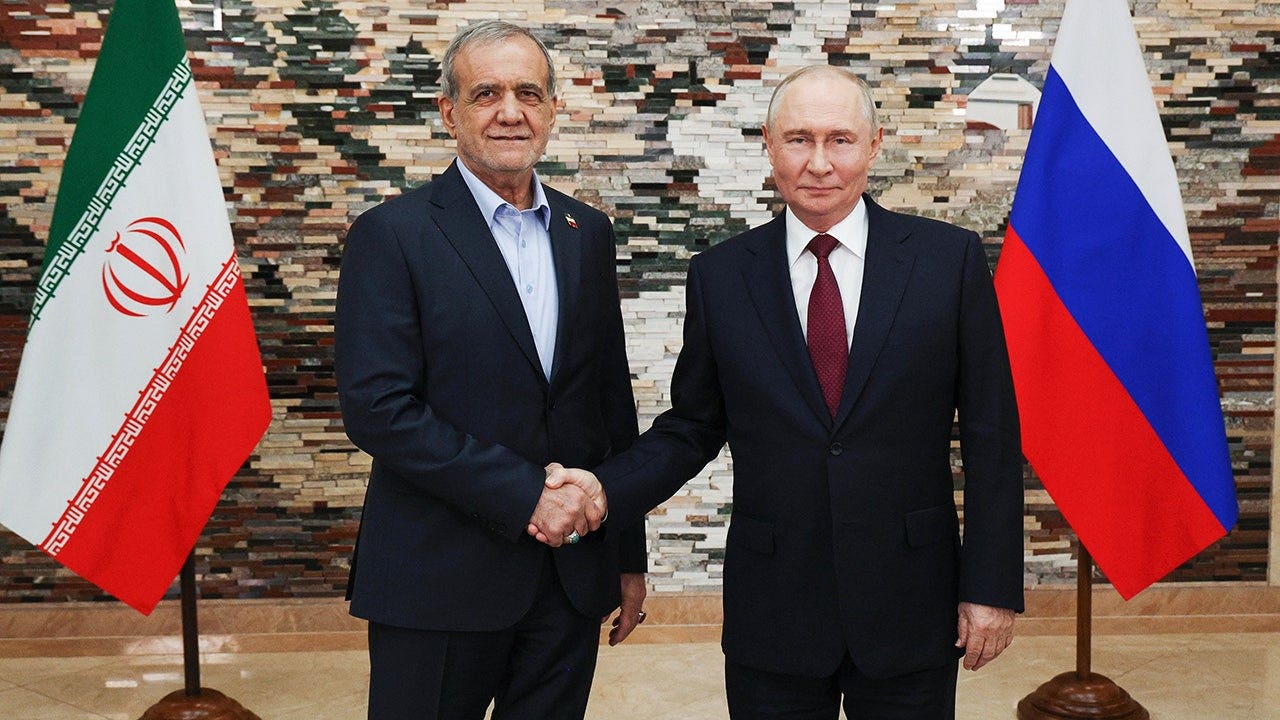
Russian President Vladimir Putin and Iranian President Masoud Pezeshkian talk during their meeting on the sidelines of the Shanghai Cooperation Organization in Bishkek, Kyrgyzstan, on Sept. 1, 2026. (Kristina Solovyova/Pool Sputnik Kremlin via AP)
The document predates the current war involving Iran and the United States by well over a year, meaning it does not establish which projects remain active or how the conflict may have altered Moscow’s plans.
But an independent review of the Russian-language document, along with subsequent public reporting, shows that a number of initiatives described in the roadmap later advanced or materialized.
Keti Korkiya, a research analyst with the Foundation for Defense of Democracies’ Russia program, reviewed the document for Fox News Digital and said its significance lies less in any single project than in the architecture Moscow was trying to build around the relationship.
«The roadmap is not revelatory: people paying close attention to the relationship between Russia and Iran will see many collaborations between the two countries that have been public for years,» Korkiya said in written analysis provided to Fox News Digital.
WHY TRUMP IS DOWNPLAYING REPORTS RUSSIA AND CHINA ARE HELPING IRAN
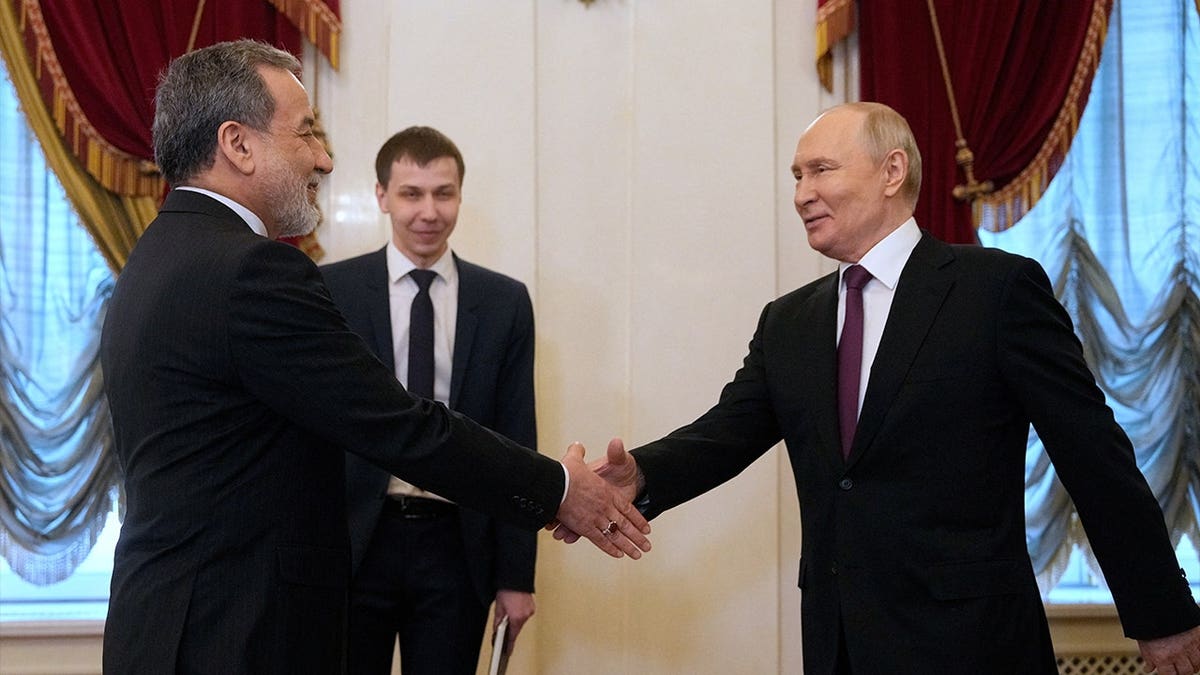
President Vladimir Putin shakes hands with Iranian Foreign Minister Abbas Araqchi during a meeting at the Boris Yeltsin Presidential Library in St. Petersburg, Russia, April 27, 2026. (Dmitri Lovetsky/Pool via Reuters)
«What is more revealing is the architecture of the relationship Moscow is trying to build,» she said, pointing to financial mechanisms, transportation routes, energy investment and aviation cooperation as different ways of reducing vulnerabilities created by sanctions and Western economic pressure.
«These are nonpublic high-level documents that illustrate the comprehensive cooperation between Russia and Iran,» a European intelligence source who reviewed the material told Fox News Digital.
«It is also strategic, sensitive and highly politicized, focusing on areas like nuclear programs, energy trade and financial transactions that aim to evade the U.S. sanctions,» the source said.
A U.S. official, responding on background to questions from Fox News Digital about the financial provisions, said U.S. sanctions have «severely isolated Russia and Iran from the international financial system,» adding that efforts by the two countries to develop alternative financial channels and other sanctions-evasion schemes were therefore «not surprising.»
The official said Washington closely tracks attempts by sanctioned jurisdictions to develop alternative cross-border payment mechanisms and would seek to disrupt those that facilitate sanctions evasion or illicit finance.
The Russian document itself does not use the phrase «sanctions evasion.» Instead, it repeatedly calls for increased use of national currencies, independent financial channels and measures to counter what Moscow describes as «unilateral restrictive measures.»
TRUMP THREATENS ‘UNPRECEDENTED’ ECONOMIC CONSEQUENCES FOR ANY NATION AIDING IRAN
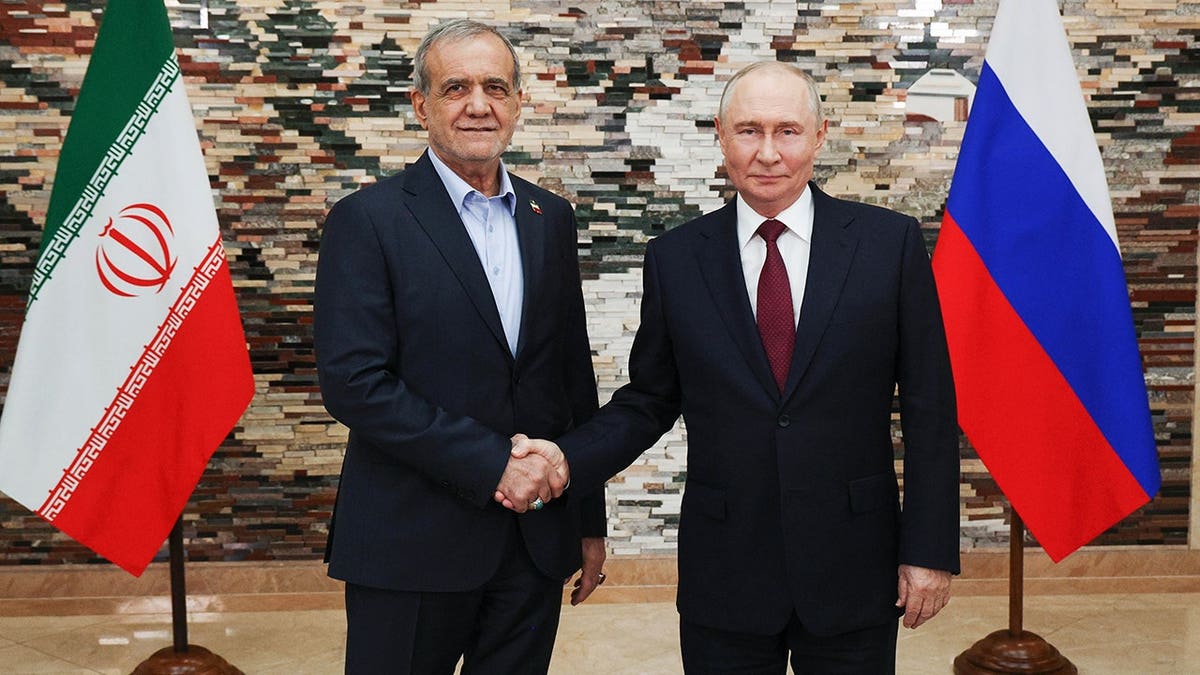
Russian President Vladimir Putin and Iranian President Masoud Pezeshkian pose for a photo during their meeting at the Shanghai Cooperation Organization summit in Bishkek, Kyrgyzstan, on Sept. 1, 2026. (Vyacheslav Prokofyev/Pool Sputnik Kremlin via AP)
BUILDING FINANCIAL CHANNELS OUTSIDE WESTERN SYSTEMS
Some of the clearest provisions concern how Russia and Iran intended to move money.
The plan set a target of increasing the share of bilateral trade conducted in national currencies from 68% in 2024 to 71% by 2026, while also seeking to expand correspondent accounts denominated in national currencies.
More ambitiously, the roadmap calls for the Bank of Russia and the Central Bank of Iran to develop the use of central bank digital currencies for cross-border settlements.
Another provision calls for «ensuring the use of independent systems for transmitting financial messages,» including connecting financial institutions to independent channels for exchanging financial information.
The document does not identify which messaging system would be used or explicitly state that the goal was to bypass SWIFT or U.S. financial controls.
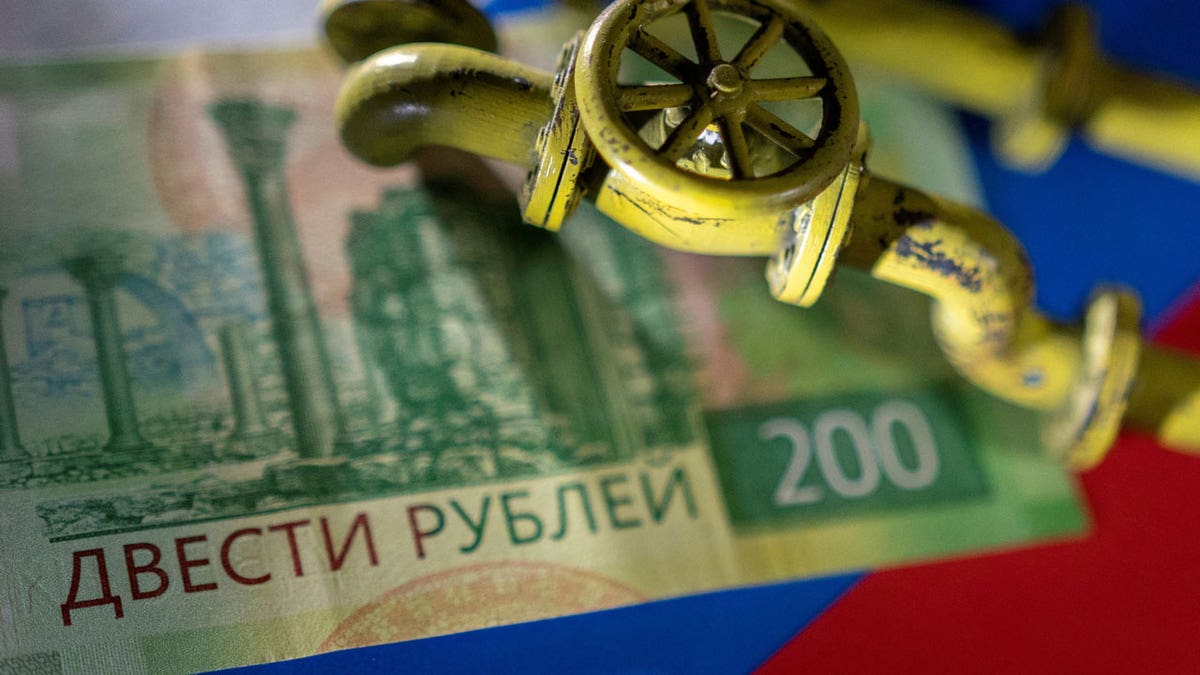
Strategic moves by Russia to address its budget deficit may inadvertently devalue the ruble, analysts warn. (Reuters/Dado Ruvic/Illustration/File Photo)
But some of that financial integration later became public.
In February 2025, Russian Deputy Prime Minister Alexei Overchuk said Russia and Iran had «practically completely» shifted bilateral settlements into national currencies using their own systems for transmitting financial and banking messages. Interfax, a Russian news agency, reported that the effort was part of a broader push toward independent payment infrastructure between the two countries.
Iran’s ambassador to Russia also said in February 2025 that Tehran and Moscow no longer needed SWIFT for bilateral banking relations and were using their own confidential bank-messaging systems. He said the initial phase of linking Iran’s Shetab payment network with Russia’s Mir system had begun the previous year.
Korkiya said the significance of those measures is cumulative.
IRAN REGIME USES FORMER SOVIET REPUBLIC TO DODGE SANCTIONS, FUND WAR MACHINE: REPORT
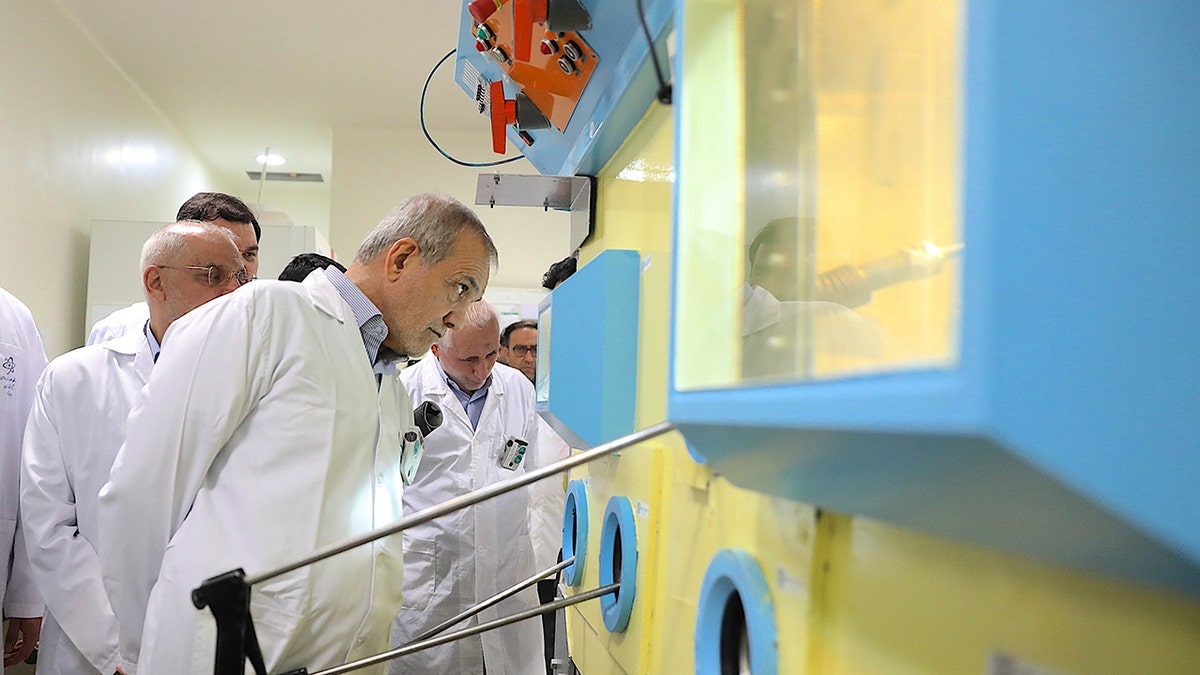
Iranian President Masoud Pezeshkian visits nuclear facilities in Tehran on Nov. 1, 2025. (Iranian Presidency/Handout/Anadolu via Getty Images)
«Individually, none of these initiatives is transformative,» she wrote. «Collectively, however, they amount to an attempt to remove single points of vulnerability and build redundancy into the Russia-Iran economic relationship.»
The financial effort is paired with a political one.
The roadmap calls for Russia and Iran to coordinate through BRICS and other international institutions against «unilateral trade restrictions,» while another provision proposes studying ways to counter «unilateral restrictive measures» and their impact on global markets.
Korkiya said that goes beyond simply finding workarounds.
«Especially interesting is that the roadmap also goes beyond practical sanctions workarounds and includes an effort to build an intellectual and diplomatic campaign against sanctions themselves,» she wrote, citing plans for expert communities, discussion platforms and an international forum focused on unilateral restrictions.
A U.S. official told Fox News Digital that financial institutions and intermediaries enabling sanctions evasion expose themselves to «significant sanctions risks,» adding that Washington would continue working with partners to «identify, expose and disrupt these networks wherever they emerge.»
The official also pushed back on the idea that alternative Russia-Iran systems could displace Western financial infrastructure.
«Russia and Iran can try to build alternative financial channels, but they cannot replicate the reach, liquidity or trust of the U.S. dollar and the international financial system,» the official said. «Their efforts will not weaken the effectiveness of U.S. sanctions.»
CHINA, RUSSIA, IRAN AND NORTH KOREA FORM ‘AXIS OF AGGRESSORS’ THAT COULD OVERWHELM US, BOOK WARNS

A person walks past a sign at a currency exchange, as the value of the Iranian rial drops, in Tehran, Dec. 30, 2025. (Majid Asgaripour/West Asia News Agency via Reuters)
ROSATOM AND IRAN’S NUCLEAR SECTOR
The financial architecture sits alongside another strategically sensitive pillar of the relationship: civilian nuclear energy.
The plan assigns Russia’s state nuclear corporation Rosatom continued responsibility at Iran’s Bushehr nuclear power plant, including fuel and maintenance support for Unit 1 and continuing construction work associated with Units 2 and 3.
The cooperation did not remain solely on paper.
On Sept. 2, 2026, Rosatom said Russian specialists had begun returning to Bushehr, that Unit 1 was preparing for scheduled maintenance and partial fuel replacement, and that nuclear fuel had already been delivered to the site. Rosatom also said work was continuing on the plant and that additional Russian specialists were expected to arrive.
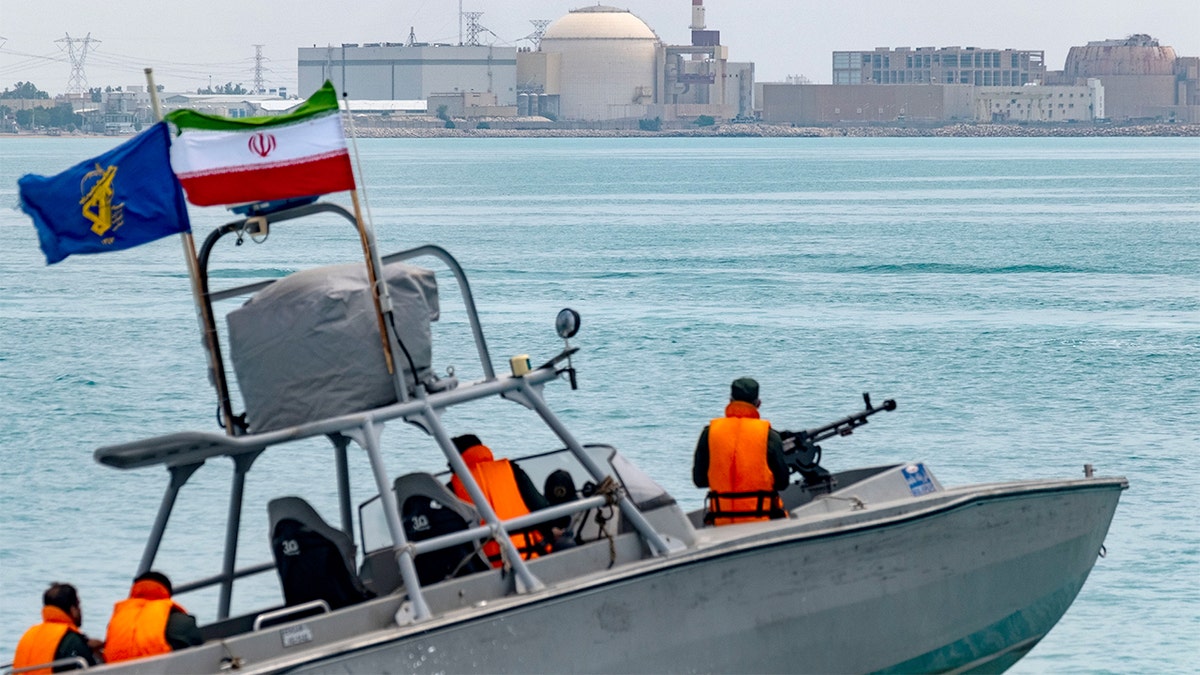
An Islamic Revolutionary Guard Corps speedboat during a parade marking Persian Gulf National Day near the Bushehr nuclear power plant in Iran on April 29, 2024. (Morteza Nikoubazl/NurPhoto via Getty Images)
Korkiya noted that the Bushehr Units 2 and 3 project predates the 2024 roadmap, meaning the document did not originate that cooperation but rather incorporated an existing strategic project into the broader Russia-Iran framework.
«Such strategies and protocols confirm that Russia and Iran are closely aligned countries, and Russia almost certainly continues and aims to increase its current cooperation with Iran also in 2026,» the European intelligence source said.
Fox News Digital sought comment from Rosatom on the document and the current status of its work in Iran.
ENERGY PROJECTS — WITH SOME FINANCING KEPT CONFIDENTIAL
The roadmap also identifies specific Iranian oil and gas fields where Moscow sought a role.
It names Shadegan, Kish and North Pars, assigning Russia’s Energy Ministry and unspecified «interested Russian companies» responsibility for advancing the projects.
Those companies are not named in the roadmap. For several projects, the financing column is marked «Confidential.»
There is evidence that at least one of the named projects advanced.
Interfax reported on Feb. 13, 2026, that Russian state-owned ZN-Vostok was developing Iran’s Shadegan oil field, while Iranian officials said Tehran hoped to expand Russian investment across additional oil and gas projects.
The roadmap sets milestones for Shadegan through the end of 2025, while work involving Kish and North Pars runs into 2026 and includes legal, commercial and project-analysis work.
That pattern appears repeatedly through the document: ministries, deadlines and strategic objectives are spelled out, while some of the participating companies or financing arrangements remain undisclosed.
BESSENT WARNS IRAN’S OUTSIDE BACKERS TO ‘STAY AWAY’ AS TRUMP SEEKS TO ‘ASPHYXIATE’ TEHRAN’S ECONOMY
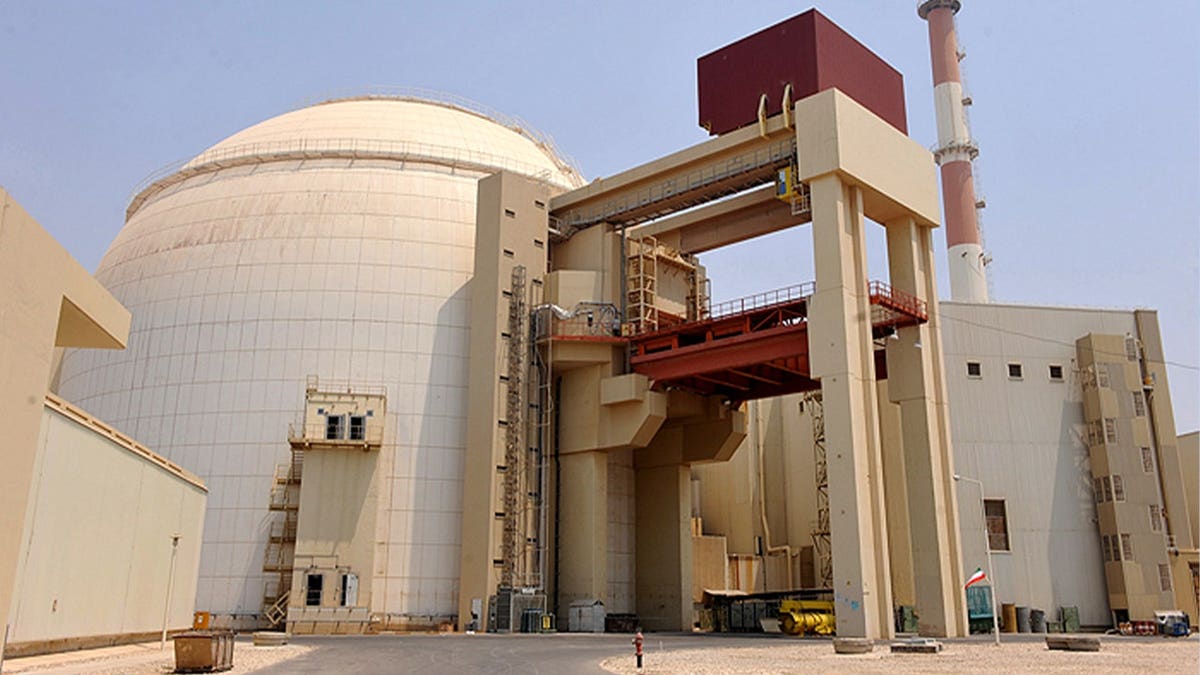
This handout image supplied by the Iran International Photo Agency (IPA) shows the reactor building at the Russian-built Bushehr nuclear power plant on Aug. 21, 2010, in southern Iran. (IIPA via Getty Images)
RUSSIAN AIRCRAFT PARTS — MADE IN IRAN?
One of the more unusual provisions goes beyond ordinary trade.
The roadmap calls for Russia to help establish production in Iran of individual parts and assemblies for Russian aircraft.
Russian authorities were instructed to determine which aircraft parts could be repaired or manufactured in Iran, identify Iranian companies capable of producing them, certify selected sites through Russia’s aviation regulator Rosaviatsiya and conclude a localization agreement.
The roadmap set a March 31, 2026, deadline for an agreement on localized production and a Dec. 31, 2026, target for launching prototype production.
Public evidence does show that aviation cooperation advanced in the related area of aircraft maintenance.
In February 2025, Rosaviatsiya’s chief said three Iranian companies had been approved to perform maintenance and airworthiness work on Russian-operated aircraft after an Aeroflot Airbus A330 underwent maintenance in Tehran.
The Russian government also publicly discussed deeper aviation-industrial cooperation with Iran that month, including aircraft manufacturing and joint work on jet engines for passenger aircraft.
But Fox News Digital has not independently verified that the more ambitious provision in the roadmap — manufacturing Russian aircraft components inside Iran — was implemented.
A TRADE ROUTE SOUTH
The document also lays out an effort to strengthen the physical transportation network linking Russia and Iran.
It calls for work on a proposed railway built to Russia’s 1,520-millimeter track gauge, stretching from Iran’s border with Azerbaijan toward Iranian ports on the Persian Gulf.
The proposal remained in the planning and negotiation stage in the roadmap.
Separately, Moscow sought to advance the Rasht-Astara railway, a roughly 162-kilometer missing link in the International North-South Transport Corridor.
That project subsequently moved beyond the purely conceptual stage.
Russia and Iran formally launched engineering surveys for the railway in May 2025, according to Russia’s Transport Ministry.
Korkiya said the project had still not reached full construction by late summer 2026, with Russian and Iranian officials continuing to work on the implementation and construction arrangements. She also identified another provision: Iranian investment in port infrastructure in Astrakhan, Russia.
The roadmap calls for a terminal there using Iranian investment, along with warehouses, a logistics park and grain and vegetable-oil facilities. Korkiya found that an Iranian-owned company later operated a terminal in Astrakhan with a railway spur and was building grain and vegetable-oil storage facilities that closely tracked the roadmap’s description, although the document does not identify that company by name and the match cannot be definitively established.
Taken together, the transport provisions point to an effort to build physical trade routes that are less dependent on traditional European corridors.
MEDIA, TECHNOLOGY AND «INFORMATION SECURITY»
The roadmap reaches well beyond finance and heavy industry.
It calls for content exchange, journalist training and joint media production, including at least two joint projects and ‘professional training’ for Iranian journalists.
It also calls for Russian technology companies to secure at least two contracts in Iran involving information and communications technology, including «information security,» telecommunications and the video-game industry.
US ECONOMIC CHOKEHOLD ON IRAN REACHES PEAK LEVERAGE AS COLLAPSE RISKS EMERGE
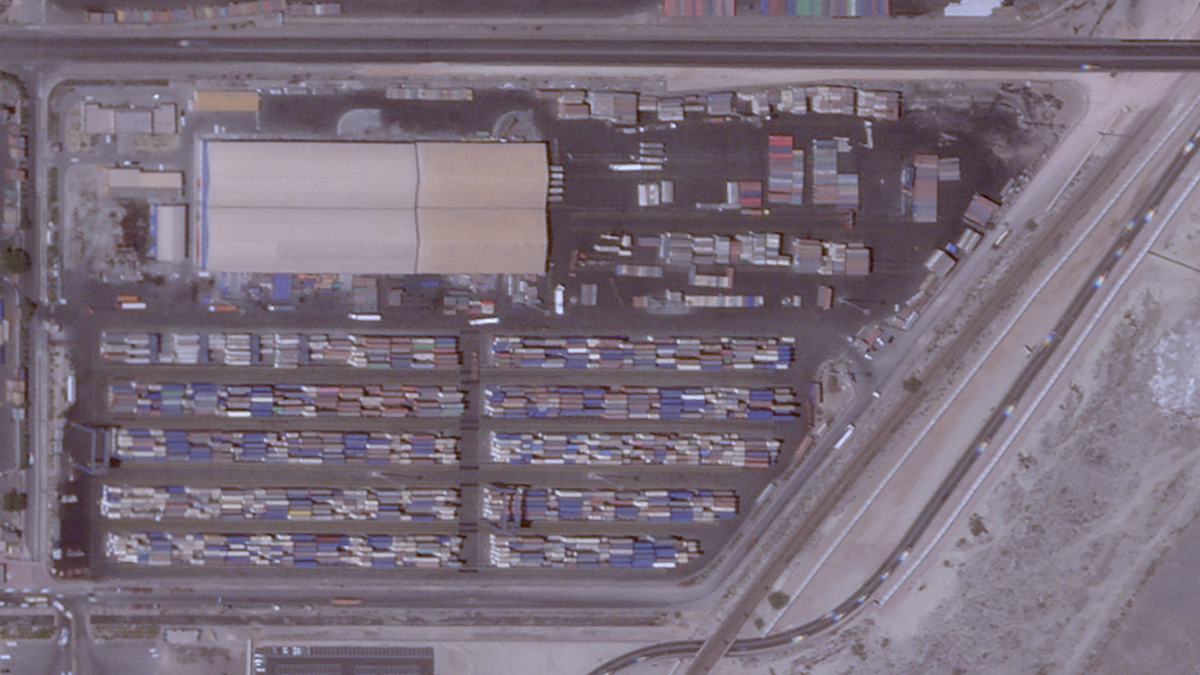
A satellite image shows Shahid Rajaee port in Bandar Abbas, Iran, April 9, 2025. (Planet Labs PBC/Handout via Reuters)
A PUTIN FAMILY CONNECTION AT THE TOP
The official overseeing the Russian side of the relationship also has a direct connection to President Vladimir Putin’s extended family.
Russian Energy Minister Sergei Tsivilev chairs the Russian side of the Permanent Russian-Iranian Commission on Trade and Economic Cooperation.
Tsivilev is married to Anna Tsivileva, a Russian deputy defense minister and the daughter of Putin’s late cousin, Reuters reported when Putin appointed her to the Defense Ministry in June 2024.
The European intelligence source argued that the connection reflects the political importance Moscow attaches to Iran.
«It should be emphasized that on Russia’s part, the economic cooperation with Iran is coordinated and managed by a representative of Vladimir Putin’s extended family,» the source said.
«This indicates that the Iranian matter is not just one of many bureaucratic issues in the agenda of the Russian government. But it holds significant value for the interest of the Vladimir Putin regime.»
«What is also notable is the degree of state coordination and institutionalization behind this effort,» she said, pointing to the involvement of central banks, ministries, regulators and state companies, as well as formal deadlines and confidential financing in some projects.
«That suggests Moscow is trying to turn what could otherwise remain a politically convenient partnership into something more durable and bureaucratically embedded,» Korkiya said.
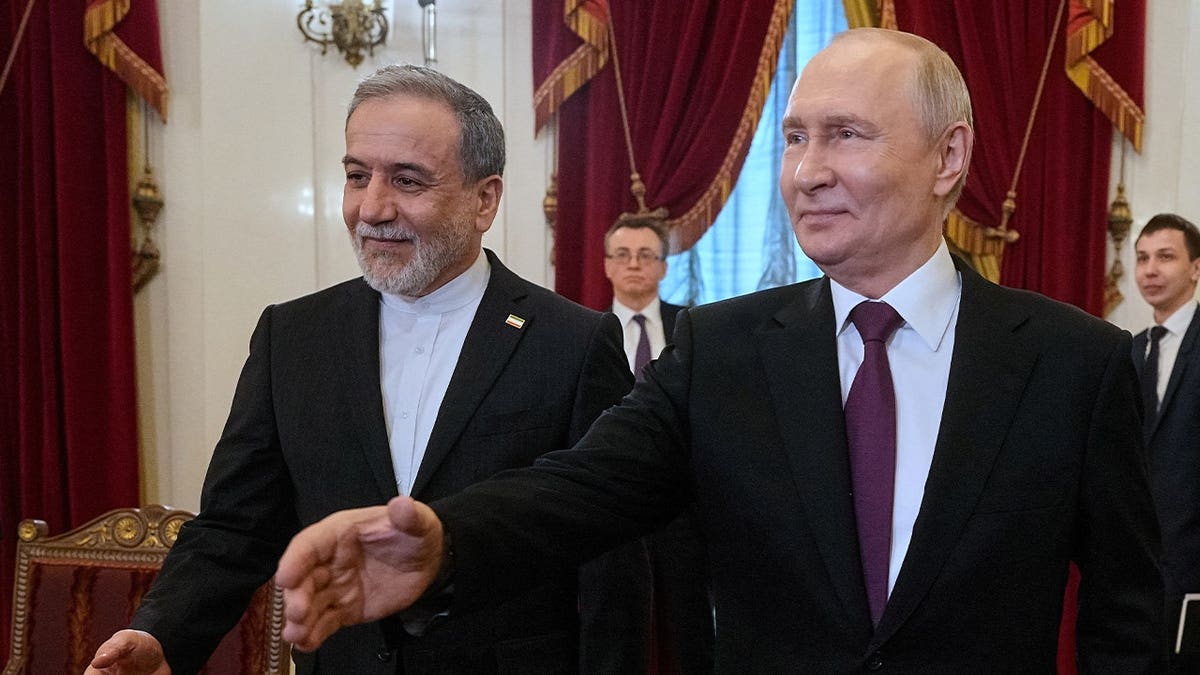
President Vladimir Putin and Iranian Foreign Minister Abbas Araqchi attend a meeting at the Boris Yeltsin Presidential Library in St. Petersburg, Russia, April 27, 2026. (Dmitri Lovetsky/Pool via Reuters)
Russian and Iranian officials did not respond to multiple requests for comment from Fox News Digital. Fox News Digital also sought comment from Rosatom and from Russian officials responsible for Moscow’s participation in BRICS.
war with iran, russia, iran, foreign policy, vladimir putin








INTERNACIONAL
El grupo Gaviota mantiene inactivas casi nueve de cada diez habitaciones que declara poseer en Cuba
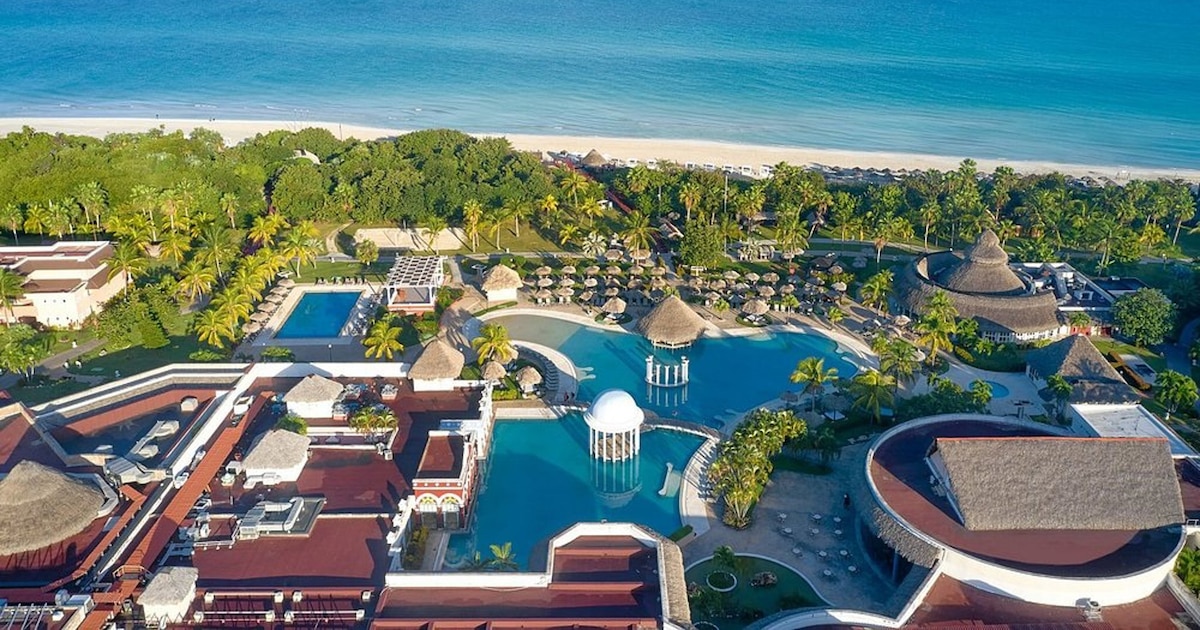
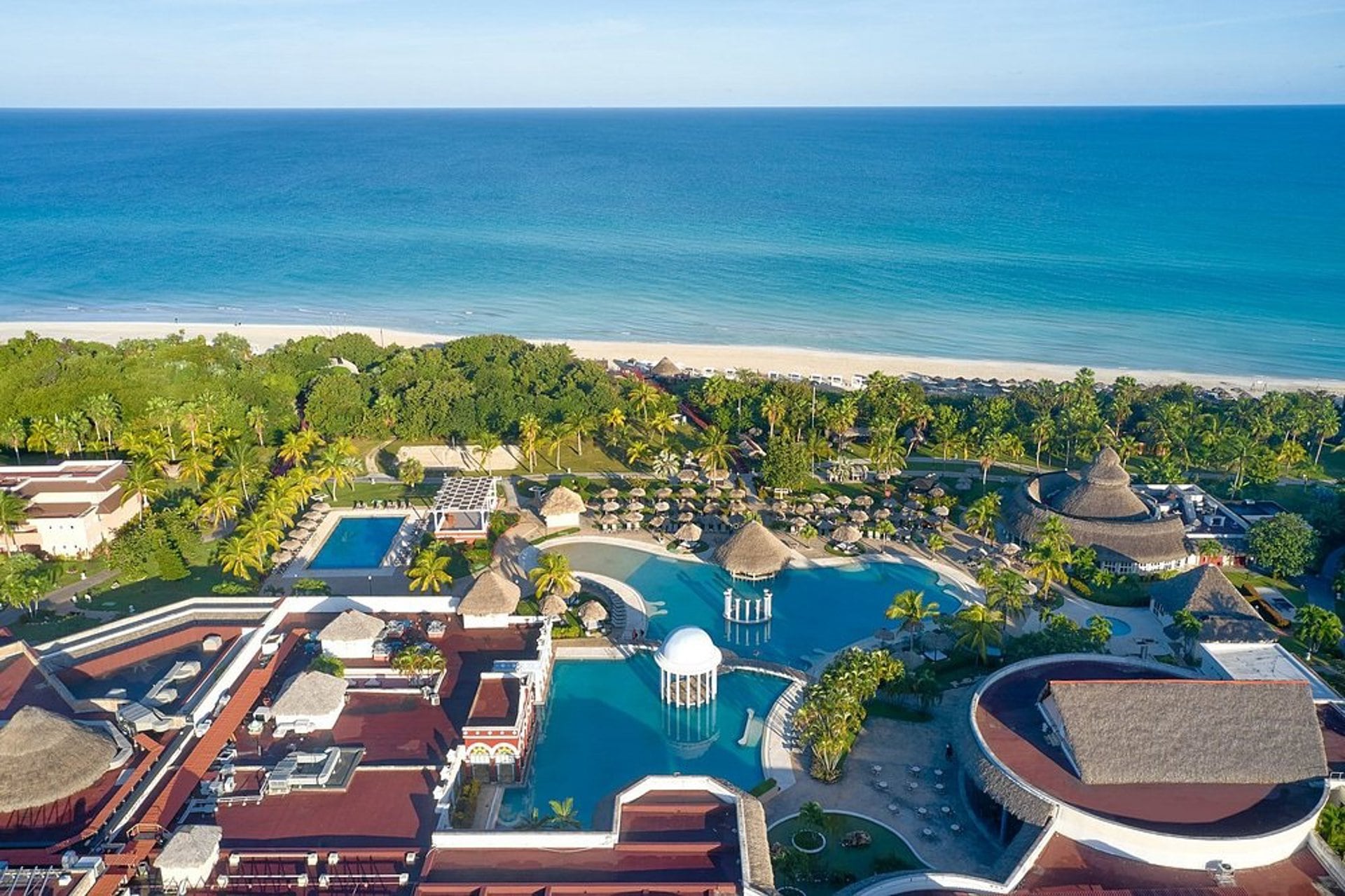
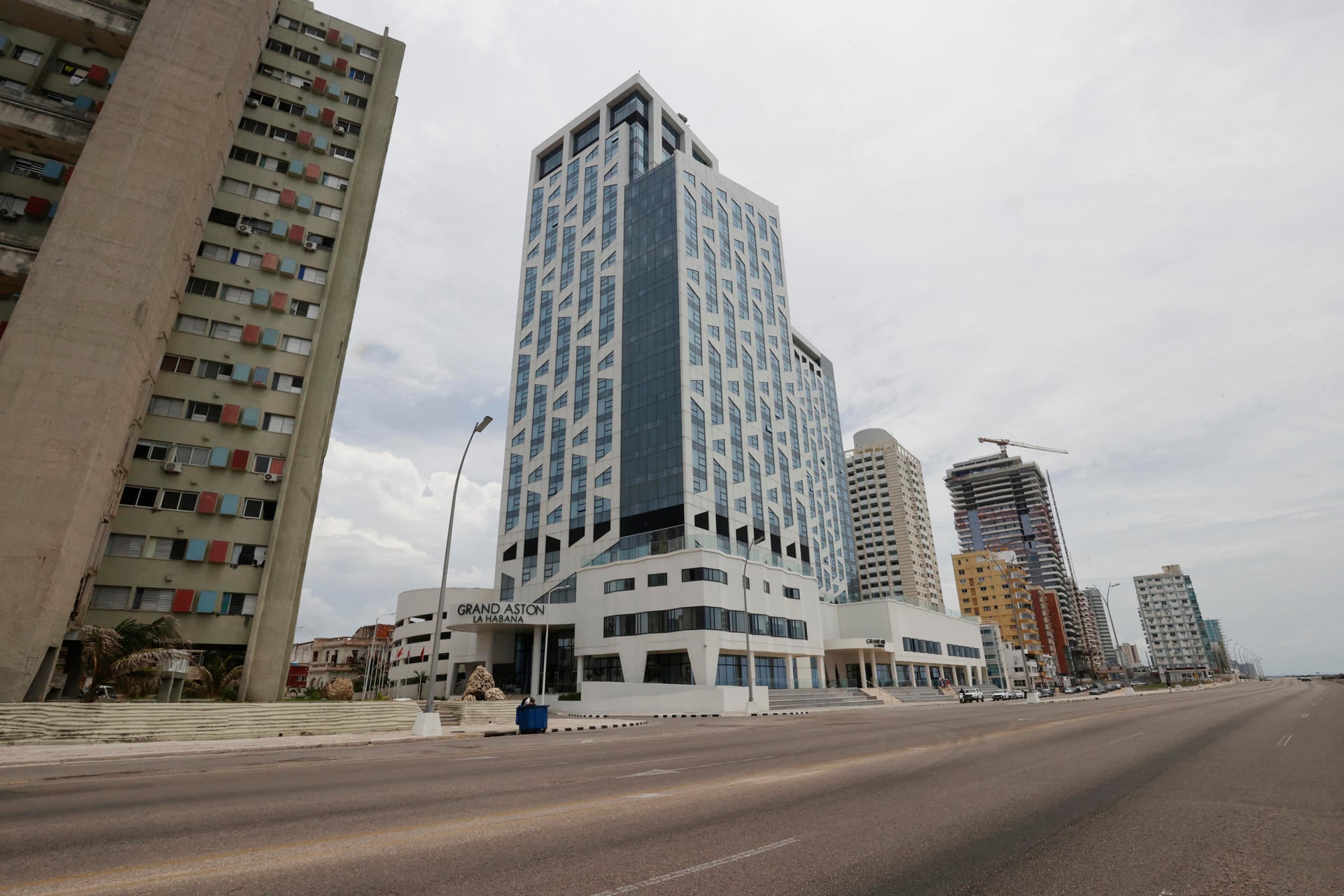
Gaviota, el grupo hotelero del Ejército cubano, mantiene fuera de servicio casi nueve de cada diez de sus habitaciones mientras promociona la reapertura de un hotel de lujo en Varadero.
La propia empresa reconoció el viernes que de las más de 30,000 habitaciones que dice poseer en toda la isla, solo 3,470 están operativas, según informó 14ymedio, sitio de noticias cubano independiente, en una nota sobre la situación del conglomerado turístico perteneciente a Gaesa.
El dato equivale apenas al 11.6% de la capacidad que el propio grupo exhibe en su página oficial, con instalaciones repartidas también por Holguín, Jardines del Rey, Baracoa y Santiago de Cuba.
La directora de Ventas de Gaviota, Elia Elena Cortés, detalló durante una presentación en el hotel Paseo del Prado, en La Habana, que las habitaciones activas se concentran en cuatro polos: La Habana, Varadero, Topes de Collantes y Cayo Santa María.
Según la ejecutiva, esa reducción ha permitido “mejorar la atención a los clientes” y “garantizar los suministros”, dijo ante 14ymedio.
El sector turístico en su peor momento en décadas
La isla recibió apenas 450,353 visitantes internacionales entre enero y agosto de 2026, un 64.4% menos que el año anterior.
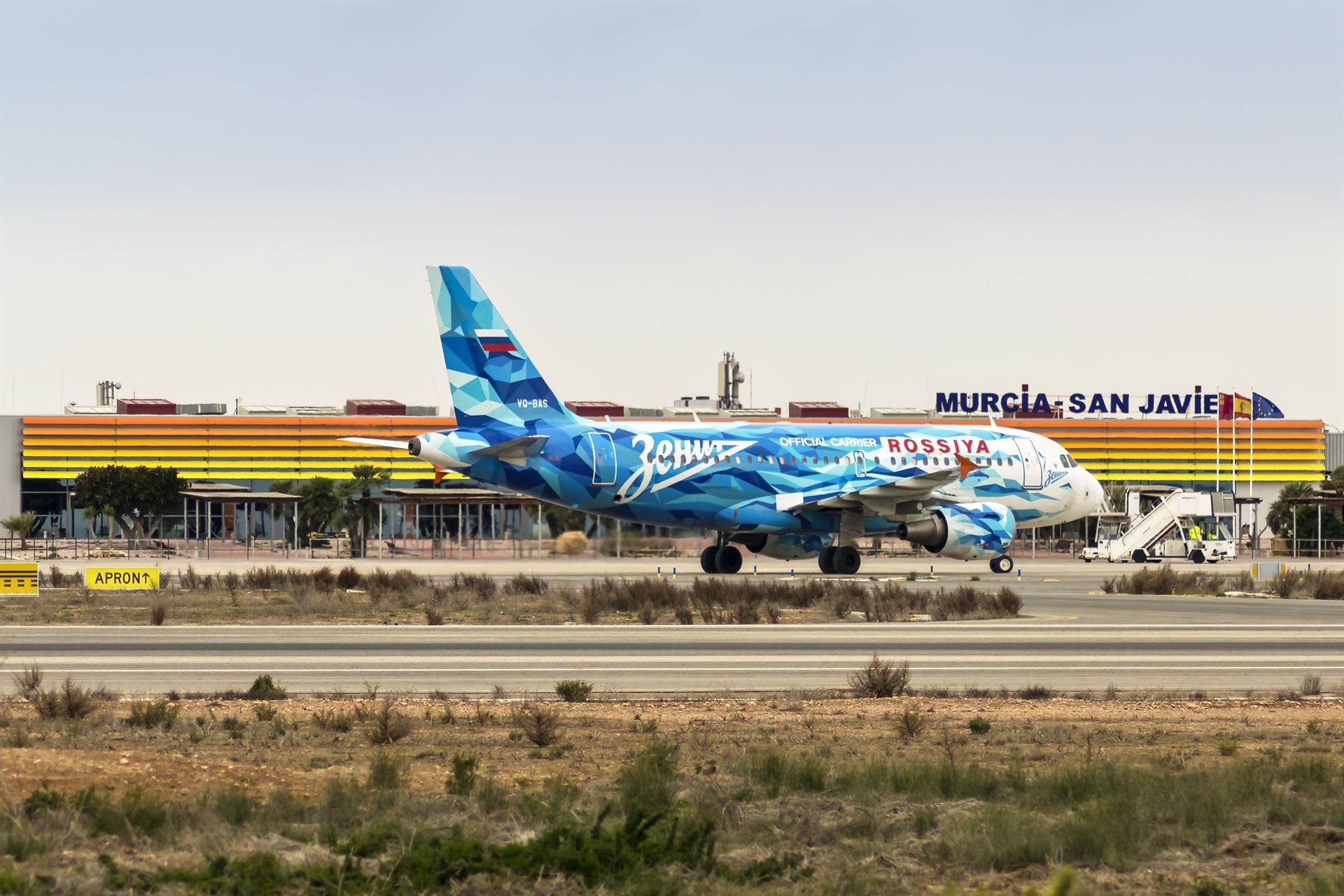
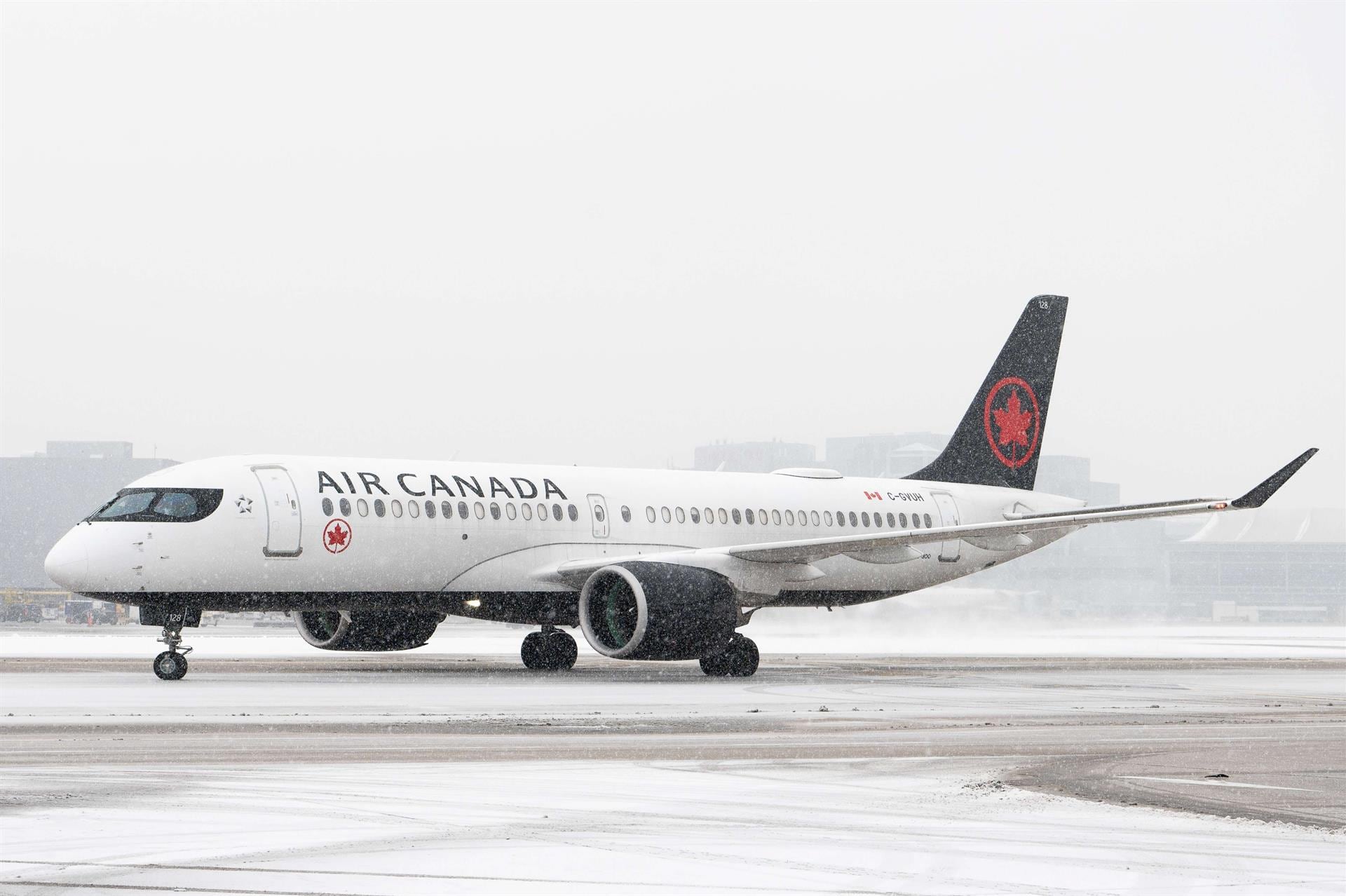
Siete cadenas hoteleras extranjeras abandonaron el país y aerolíneas como Air Canada, Iberia, Air France y Turkish Airlines suspendieron sus vuelos por la crisis de combustible y la caída de la demanda.
La contracción no se limita al turismo. La Comisión Económica para América Latina y el Caribe, organismo de las Naciones Unidas, proyecta una caída del producto interno bruto cubano del 10.3% para este año, la mayor contracción prevista entre los países de la región, según cifras divulgadas en los últimos días.
El desplome se agravó durante el verano. En agosto llegaron apenas 30,490 visitantes internacionales, por debajo de los 32,272 registrados en julio.
Los mercados emisores tradicionales también se derrumbaron: Canadá cayó más del 70% interanual y Rusia retrocedió una proporción similar, mientras España perdió cerca de dos tercios de sus visitantes respecto al año previo.
Un relanzamiento con nombre repetido en Cayo Libertad
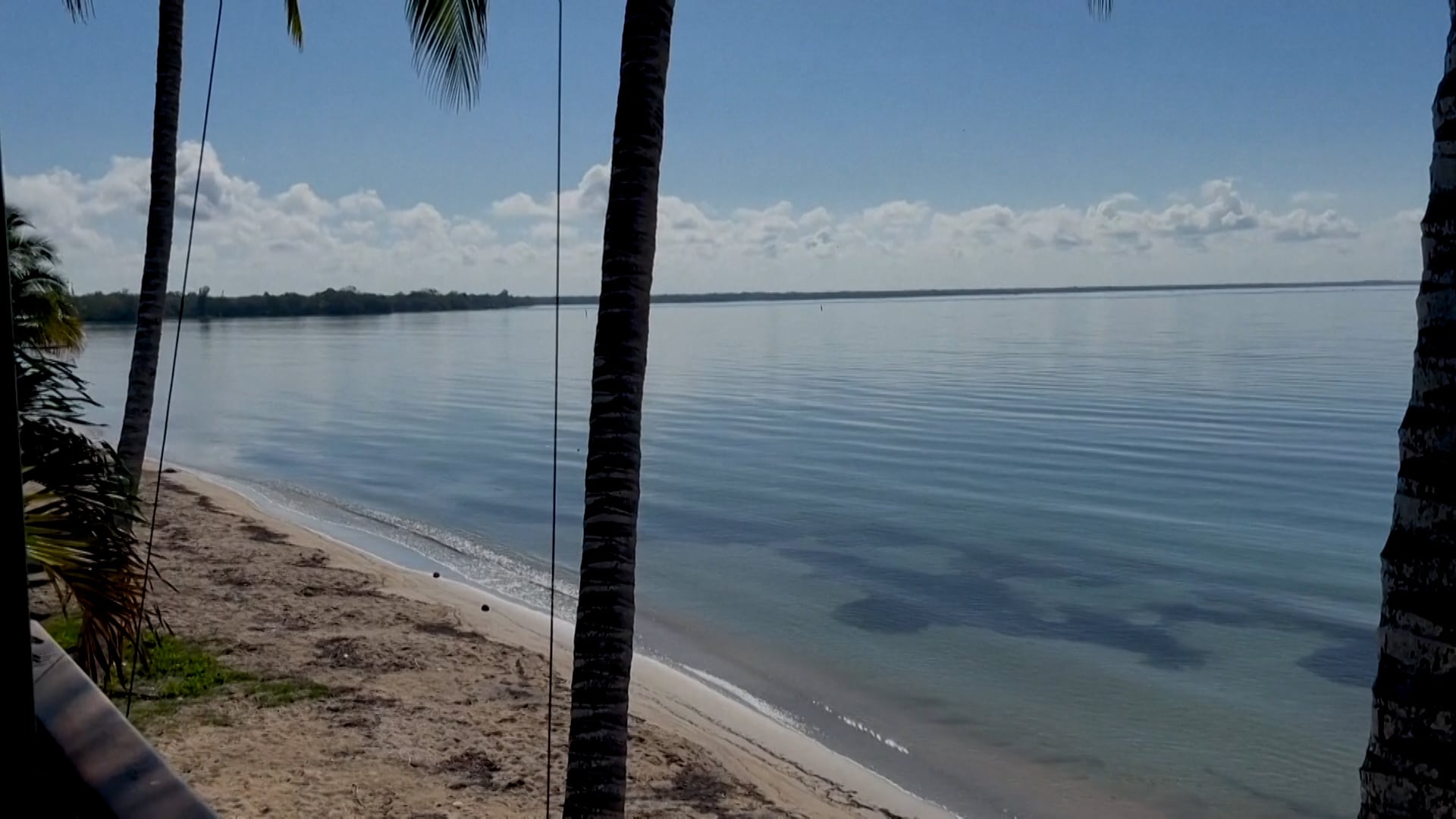
En ese contexto, Gaviota presentó como una de las principales novedades de la temporada 2026-2027 la apertura, prevista para el 23 de octubre, del Playa Luxury Varadero. Se trata de un hotel de 85 habitaciones exclusivo para adultos, situado en Cayo Libertad, en el extremo de la península de Hicacos.
El establecimiento no es nuevo. Construido en 2005 como parte del complejo Marina Palace, funcionó primero como Cayo Libertad Royal Island y luego, bajo gestión de Barceló, como Cayo Libertad Club Premium.
Tras la salida de la cadena española pasó a manos de Blau, que lo explotó como Blau Privilege Cayo Libertad. Más tarde quedó integrado en la etapa de Posadas bajo la marca Fiesta Americana, hasta que Gaviota lo relanzó en agosto de 2025 con el mismo nombre que ahora vuelve a anunciar como “apertura”.
La propia plataforma de reservas de la empresa mantiene bloqueadas todas las fechas de octubre y solo ofrece disponibilidad a partir del 1 de noviembre.
Para entonces, una habitación cuesta desde USD 363 por noche, precio mínimo que confirma el posicionamiento de lujo del hotel en un mercado con escasa demanda.
Las sanciones estadounidenses y la salida de cadenas españolas
El golpe más reciente al sector llegó por la vía de las sanciones de Washington. La Administración estadounidense amplió este año las restricciones contra el Ministerio de Turismo cubano, lo que terminó por asfixiar a la estructura hotelera del Gobierno de la isla.

Ante ese escenario, Meliá comunicó el cese de toda su actividad en Cuba y alegó “notables dificultades” operativas, legales, económicas y financieras. Barceló e Iberostar también dejaron de operar y comercializar los hoteles que hasta entonces habían quedado al margen de las sanciones.
El primer ministro cubano, Manuel Marrero, reconoció en julio que el 73% de las instalaciones hoteleras del país permanecían cerradas y que alrededor de 25.000 trabajadores del sector se encontraban en situación de disponibilidad, es decir, sin actividad laboral asignada.
La reapertura de otros destinos, condicionada a las sanciones
Frank País Oltuski Rodríguez, vicepresidente del grupo, afirmó que la empresa estudia la reapertura de otros destinos durante la temporada alta. Sin embargo, reconoció ante 14ymedio que esa posibilidad dependerá de la situación del país y de las sanciones estadounidenses.
“Los clientes no se merecen perder Cuba”, lamentó el directivo.
Gaviota anunció además una edición especial del evento Cayotonazo, entre el 31 de diciembre y el 3 de enero, y aseguró que mantiene disponibles traslados privados y colectivos entre sus principales polos, además de excursiones y una flota de automóviles en puntos estratégicos del país.
El deterioro del destino, anterior a las sanciones de este año
El retroceso del turismo cubano no comenzó con las restricciones de este año. A finales de 2025, huéspedes de hoteles en Varadero, Holguín y otros polos denunciaban en Tripadvisor falta de variedad en la comida, instalaciones deterioradas, problemas de limpieza, restaurantes cerrados y fallos en servicios básicos.
A esos reclamos se sumaron los apagones y los problemas de transporte derivados de la crisis energética. La isla registró ocho desconexiones totales de su sistema eléctrico en lo que va de 2026, según constató la agencia EFE, un factor que también incide en la operación hotelera y en la experiencia de los visitantes.
Cuba fue además perdiendo competitividad frente a otros destinos del Caribe por sus precios, las dificultades cambiarias y las carencias de infraestructura fuera de los grandes complejos hoteleros.
A ello se añadieron la lenta recuperación tras la pandemia, la reducción de rutas aéreas y, a finales del año pasado, el impacto de las epidemias de dengue y chikunguña sobre la imagen del destino.
La isla cerró 2025 con algo más de 1,8 millones de visitantes internacionales, una cifra muy lejana a los más de cuatro millones anuales que recibía antes de la pandemia. Las nuevas sanciones de este año no originaron la crisis, pero sí profundizaron una caída que ya estaba en marcha desde antes.
Cuba,turismo,playa,desierto,Caribe,océano,palmeras,paisaje,calma,crisis
INTERNACIONAL
Former MN state trooper tears into Dems as Somali gang violence terrorizes Minnesota: ‘Where is Ilhan Omar?’
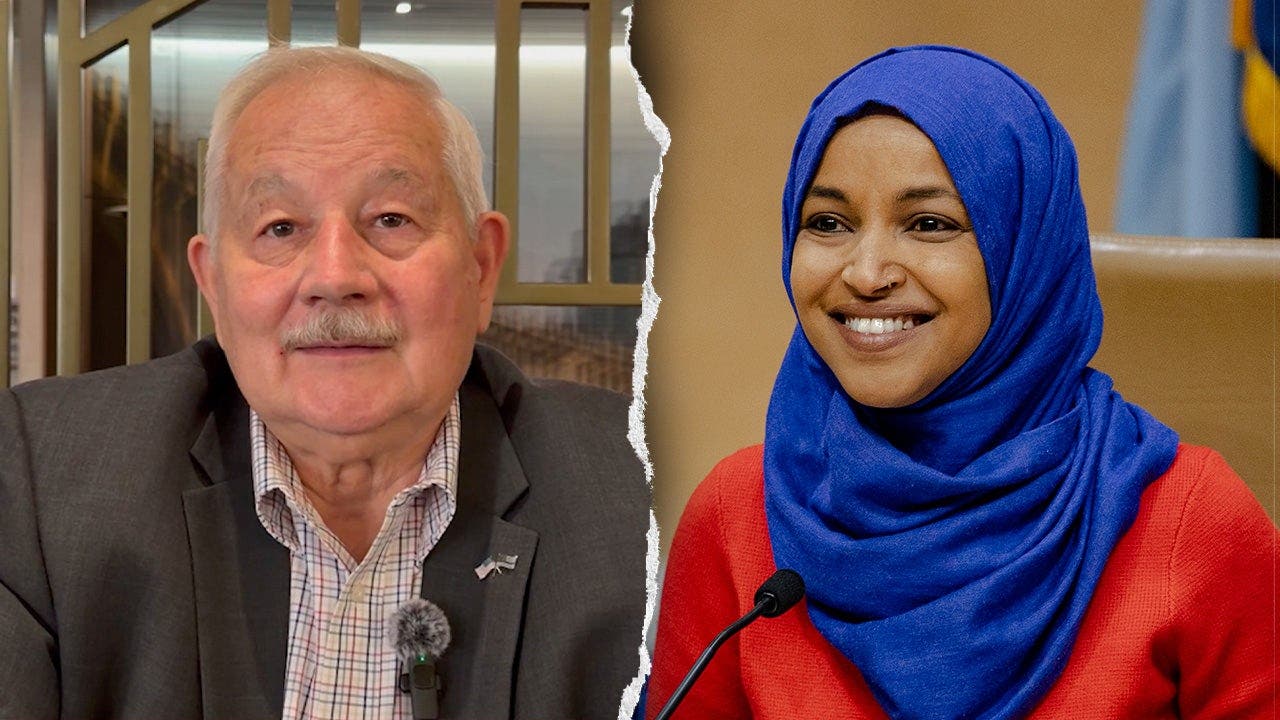
Former state trooper John Nagel pointed the finger at his opponent, Rep. Ilhan Omar, D-Minn., and the Democratic Party for allowing Somali American gang-linked violence to escalate in the Twin Cities.
Residents of Eden Prairie and surrounding Twin Cities suburbs have been left fearing for their safety after a string of gang-related incidents this month, including the shooting of two teens outside an Eden Prairie High School football game and more than 100 shell casings recovered in a Bloomington neighborhood.
«Where is Ilhan Omar in all of this?» Nagel, a Minnesota native who spent 30 years as a state trooper, asked in an interview with Digital.
«I would think that, as a congressman that represents this particular area, that she’d be at these meetings, or she’d have a statement, or she’d be sitting down and saying, ‘Hey, how can we help this? How could we stop this?’ And I don’t see her.»
OMAR’S GOP CHALLENGER COMES OUT FIRING WITH VOW TO CLEAN UP ‘MESS’ IN DEEP BLUE DISTRICT: ‘PEOPLE ARE FED UP’
Nagel accused other Minnesota Democrats, including Hennepin County Attorney Mary Moriarty, of having their «heads in the sand» and preventing law enforcement from stopping the violence before it got out of control.
«They’re being restrained by politicians, people that are trying soft on crime, people that are trying to send somebody other than a police officer to take care of issues, and it’s not working,» Nagel said.
Looking at the responses of statewide leaders, including Gov. Tim Walz and Attorney General Keith Ellison, Nagel said the majority of Democrats «don’t want enforcement.»
«The people do,» he said. «They’re tired of it.»
Democrats have been too lenient on crime for years, according to Nagel, which he said has «emboldened» gang members to break the law without serious consequences.
«Because of how the Democrats have run Minnesota over the years, these gang members and then just crooks in general, they’re emboldened by this,» he said.
ILHAN OMAR ON TRACK FOR FIFTH TERM AS MINNESOTA VOTERS MAINTAIN FAR-LEFT STREAK
Ramsey County Sheriff Bob Fletcher spoke at a news conference this week, highlighting that a «big chunk of the problem» is failing to hold gang members accountable, saying Moriarty’s office needs to be more «aggressive» with prosecuting juveniles.
In a statement to Digital, Daniel Borgertpoepping, a spokesperson for Moriarty’s office, said no cases related to the Bloomington incident have been submitted for charging consideration, but «they’ll be thoroughly reviewed» if they are.
Adam Abdihakeem Adam, 18, was charged Friday in the Eden Prairie homecoming football game shooting with two counts of second-degree assault with a deadly weapon and second-degree riot.
«Mr. Adam will be held accountable,» Moriarty said in a press release Friday. «Violence in our communities is completely unacceptable, and it requires a professional, coordinated response, which happened here.»
Fletcher also pushed back on «East African» being used to generalize the gang members’ ethnicity, adding that «98% of these gang members are Somali» and that the broader label isn’t «fair.»
«I think we just have to say what it is and not run away from the term,» he said.
AMY KLOBUCHAR CALLS FOR MAJOR ANTI-TERRORISM INVESTMENTS AFTER ALLEGED MALL OF AMERICA PLOT
Nagel said people are afraid of being called «racist» for referring to the gangs as Somalian, arguing that law enforcement is simply going after those committing the crimes rather than blaming an entire community.
«I mean, we have Latino gangs and Asian gangs and Black gangs, and we have Somali gangs. This is not being prejudicial.»
He said it’s a «Somali problem» because that’s «who’s showing up.»
«It’s ridiculous,» he said. «I’m a police officer. I don’t care who you are. I don’t care what color you are.»
Nagel said a «gang task force» could be part of the solution.
«We don’t need to pass any more laws,» he argued. «We don’t need any more people asking for money to help their group. We need to take the laws that we have and prosecute people.»
As gang violence spills into Minnesota communities, Nagel said it can’t continue to go on like it has.
«We need enforcement, we need arrests and we need incarceration,» he said. «Otherwise, this is going to continue to spiral.»
Nagel will face off against Omar and Independent candidate DeVelle Jackson in the upcoming midterm elections for the U.S. House seat representing Minnesota’s 5th Congressional District.
Digital reached out to Omar, Walz and Ellison’s offices for comment.
politics, blue city crime, ilhan omar, tim walz, minnesota, somali immigrant community
INTERNACIONAL
Estados Unidos desactivó un buque comercial que intentó violar el bloqueo a los puertos de Irán
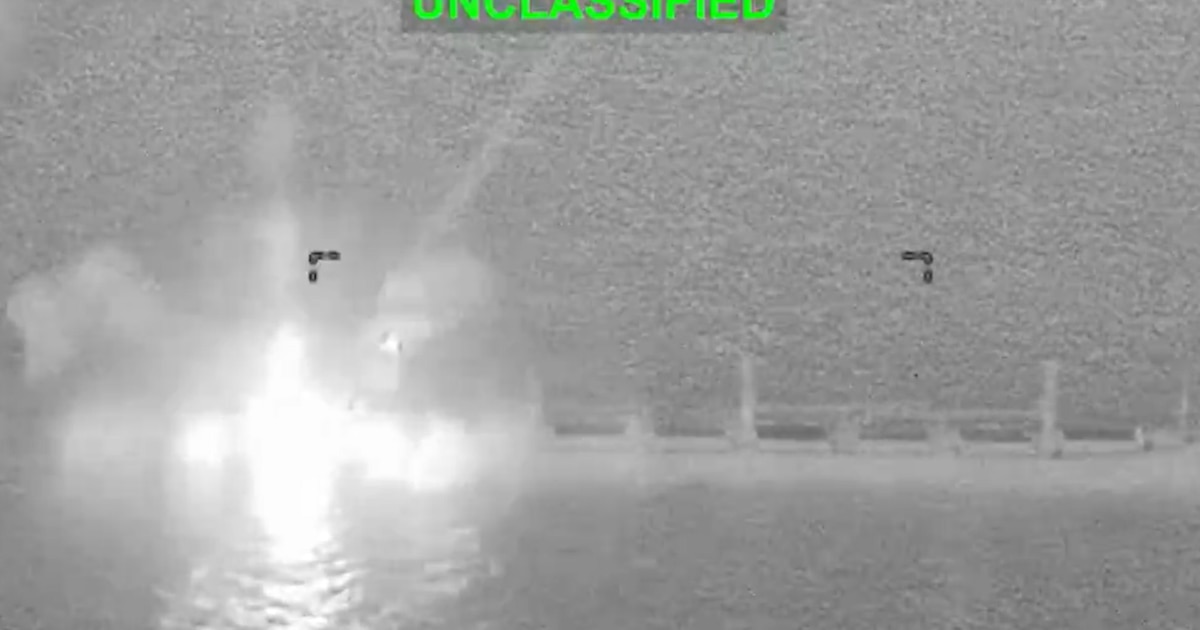
Las fuerzas del Comando Central de Estados Unidos (CENTCOM) informaron que desactivaron un buque comercial de carga en el Golfo de Omán el sábado, después de que su tripulación ignorara advertencias e intentara sortear el bloqueo naval estadounidense al régimen de Irán.
Según el comunicado difundido por CENTCOM en la red social X, un avión militar estadounidense alcanzó la popa del M/V Ocean Molica, de bandera panameña y también identificado como “Arika Sun”, con una munición de precisión. El ataque dejó fuera de servicio por completo el sistema de propulsión de la embarcación, sin causar daños a los integrantes de la tripulación.
El carguero había salido antes de un puerto iraní e intentaba navegar por aguas de la región. CENTCOM sostuvo que el barco desoyó advertencias reiteradas antes de la intervención.
Las fuerzas estadounidenses retomaron el bloqueo contra los buques que ingresan o salen de puertos iraníes el 14 de julio. Desde entonces, cuatro embarcaciones comerciales quedaron desactivadas y 135 barcos regresaron durante tres meses de aplicación de la medida, de acuerdo con el mando militar.
CENTCOM también afirmó que Estados Unidos destruyó 10 petroleros vinculados a la red clandestina del Cuerpo de la Guardia Revolucionaria Islámica durante ese período. El organismo describió esa estructura como una red de varios miles de millones de dólares.
El Ejército estadoundiense recomendó a los navegantes prestar atención a las advertencias del bloqueo y seguir las transmisiones de Aviso a Navegantes. Además, pidió a las tripulaciones que operen en el Golfo de Omán que contacten a las fuerzas navales estadounidenses a través del canal 16 de comunicaciones entre puentes de mando.
En paralelo, la Guardia Revolucionaria de Irán informó también el sábado que un superpetrolero se incendió tras impactar contra una mina marítima en el estrecho de Ormuz, cuando intentaba abandonar esa vía por una ruta que Teherán considera no autorizada.
La fuerza militar aseguró que el buque transportaba crudo, aunque no difundió su nombre ni su bandera. También afirmó que la nave había desconectado sus sistemas de navegación y posicionamiento antes de la maniobra, mientras el humo del incendio podía verse desde la costa.
La Armada de la Guardia Revolucionaria detalló que “Un superpetrolero que transportaba crudo y que intentaba salir del estrecho de Ormuz por una ruta no autorizada sufrió una fuerte explosión tras chocar con una mina marina en una zona declarada de alto riesgo”.
El organismo sostuvo que el barco continuaba en llamas y advirtió que ampliará sus operaciones contra embarcaciones comerciales fuera de ese corredor marítimo. “Un incendio de grandes proporciones es el destino de cualquier petrolero infractor que pretenda ignorar la seguridad y las normas del estrecho de Ormuz”, señaló en el comunicado.
La agencia británica de vigilancia del comercio marítimo UKMTO no había informado sobre este episodio. Desde el 29 de septiembre, el organismo registró 10 incidentes con buques en el estrecho de Ormuz, entre ellos varios ataques con proyectiles de origen desconocido.
El anuncio iraní se conoció horas después de que la Guardia Nacional de Emiratos Árabes Unidos comunicara el rescate de 22 tripulantes de un petrolero incendiado en el golfo Pérsico. Las autoridades indicaron que los marineros, de distintas nacionalidades asiáticas, recibieron primeros auxilios y permanecían estables, sin establecer una relación entre ambos hechos.
La Guardia Revolucionaria reiteró que mantiene bajo su control el estrecho de Ormuz, una vía marítima por la que transita parte relevante del comercio energético mundial. El flujo de petróleo en esa zona regresó a niveles cercanos a los registrados antes del inicio de la guerra en febrero.
El régimen iraní cerró el estrecho de Ormuz tras el comienzo del conflicto iniciado por Estados Unidos e Israel y utilizó esa decisión como uno de sus mecanismos de presión. Washington respondió con un cerco naval sobre puertos y embarcaciones iraníes.
(Con información de EFE)
Middle East

El grupo Gaviota mantiene inactivas casi nueve de cada diez habitaciones que declara poseer en Cuba

Luis Enrique diseña un plan especial para Dembélé tras el parón

Un modder ha logrado en Starfield algo que parecía imposible, ni Bethesda pudo hacerlo

Former MN state trooper tears into Dems as Somali gang violence terrorizes Minnesota: ‘Where is Ilhan Omar?’

En medio del debate por los candidatos jóvenes, LLA prepara un congreso con más de 1.000 militantes para mostrar estructura

Homero Pettinato confesó que sigue enamorado de Sofía Gonet: “Es muy fuerte lo que nos pasa a los dos”

Escándalo total en la AFA: reventa millonaria, un homenaje paupérrimo a Messi y el pedido urgente de renuncia a Chiqui Tapia

El presidente de Burkina Faso, duro tras el amistoso con la Selección: «Nuestro fútbol está enfermo» :: Olé

100-shot Somali gang gun battle rocks Minnesota as sheriff warns ‘we’re in trouble’

Tobey Maguire se quedaba ciego con el traje de Spider-Man y casi se desmaya durante una prueba: fabricar su disfraz fue una pesadilla

 DEPORTE3 días ago
El presidente de Burkina Faso, duro tras el amistoso con la Selección: «Nuestro fútbol está enfermo» :: Olé
- INTERNACIONAL3 días ago
100-shot Somali gang gun battle rocks Minnesota as sheriff warns ‘we’re in trouble’
- SOCIEDAD3 días ago
Tobey Maguire se quedaba ciego con el traje de Spider-Man y casi se desmaya durante una prueba: fabricar su disfraz fue una pesadilla