INTERNACIONAL
Funerals, beauty queens and bombs: The Ukrainian city that won’t let Putin win

Inside Lviv: Ukraine’s ‘Unbroken City’
Fox News Digital reports from Lviv, where military funerals, civilian weapons training and beauty pageants coexist as residents struggle to preserve normal life four years into Russia’s war against Ukraine.
NEWYou can now listen to Fox News articles!
LVIV, Ukraine — As Kyiv takes a massive hit from Russia, another city seeks to carry on amid war. Four years into Russia’s war, the western Ukrainian city of Lviv is trying to master something impossible: how to live normally while surrounded by death.
At 11:30 a.m., the city stops.
Cars freeze in the middle of the street. Pedestrians pause on sidewalks. In the center of town, underneath the tall clock tower that rises above city hall, people bow their heads in silence as another military funeral convoy passes through the streets.
«It happens one to five times a day,» a local resident says quietly.
The war feels far from Lviv, until suddenly it doesn’t.
UKRAINE’S BATTLEFIELD IS TRANSFORMING THE FUTURE OF NATO
Residents stop in silence as a military funeral convoy carrying a fallen Ukrainian soldier passes through central Lviv near City Hall. (Efrat Lachter/Fox News Digital)
The city of roughly one million people sits near the Polish border, hundreds of miles from the brutal front lines in eastern Ukraine. But Russian drones and missiles still hit here. Air raid sirens interrupt coffee dates and children’s soccer games. Funeral processions cut through wedding traffic. Entire neighborhoods live between moments of beauty and grief.
«We lost approximately 2,000 citizens of Lviv,» Mayor Andriy Sadovyi told Fox News Digital during an interview at city hall. «It is a very huge price which we pay to our independence, to our democracy.»
Sadovyi has led the city for nearly two decades, except for a brief presidential run. Inside his office overlooking the historic center, he proudly points to the terrace where he has hosted world leaders and celebrities, including actor Tom Cruise. At one point, a large well-fed cat jumps onto his desk.
«This is my deputy,» Sadovyi jokes. The cat, he explains proudly, has become something of a city mascot. «He’s tough like a Ukrainian.»
But beneath the humor is exhaustion. Sadovyi says he realized at the beginning of the war that Lviv had a special responsibility. It was close enough to Europe to remain functioning, but close enough to war to understand what was at stake.
His answer was what he calls the «Unbroken» project: a sprawling rehabilitation and innovation effort aimed at helping Ukraine survive physically and psychologically.
The city built rehabilitation centers for wounded soldiers and civilians arriving from across the country, treating amputees, burn victims and trauma patients. Sadovyi says the municipality also dedicated 20% of its budget to supporting defense technology companies developing military solutions for the war effort.
«Every family in this city was affected by war,» he says. «We need to be strong. We need to survive. I’m building what is needed for that.»
‘A NEW KIND OF WAR’: INSIDE UKRAINE’S HIDDEN FACTORIES MASS-PRODUCING COMBAT DRONES
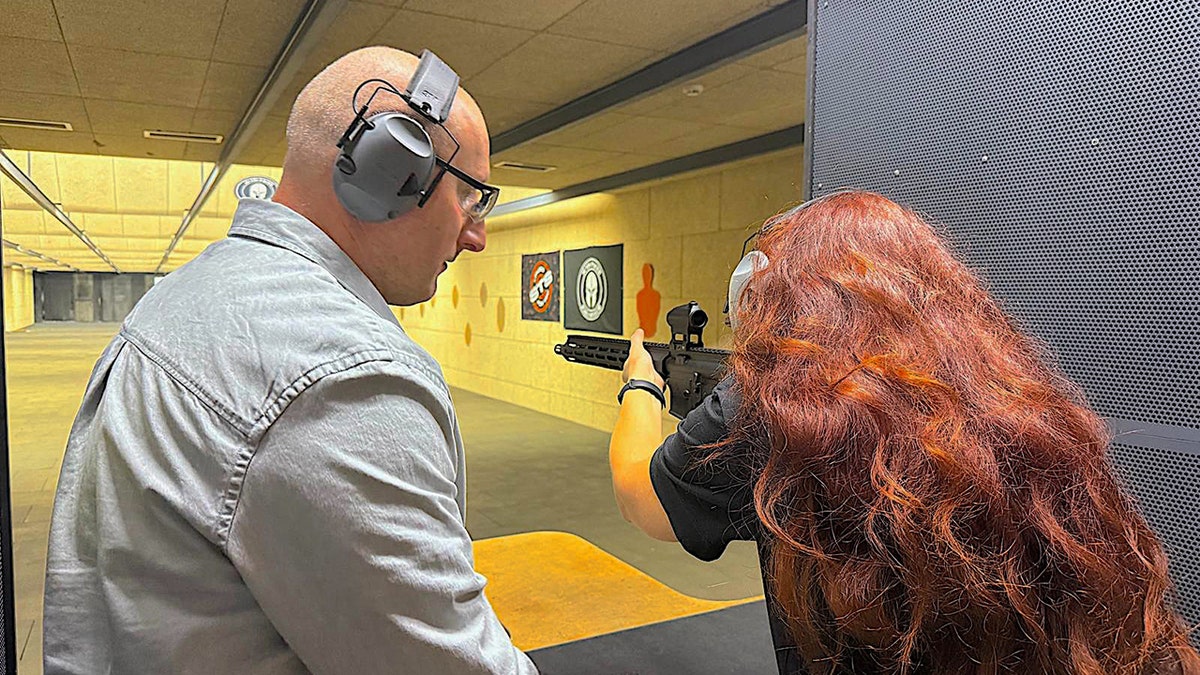
A shooting instructor stands inside a civilian training range in Lviv, where residents learn weapons handling, survival skills and emergency preparedness amid the ongoing war. (Efrat Lachter/Fox News Digital)
Yet survival in Lviv is not only about weapons or hospitals. It is also about convincing people not to give up on life itself.
«People are afraid to come here,» Sadovyi says. «But we need them to come.»
One of the city’s newest projects reflects that mentality. Part school, part shooting range, part patriotic training center, it was designed to prepare civilians for a country where war has become everyday reality.
Inside one classroom, dozens of teenage girls sit listening to instructors explain emergency survival skills. Upstairs, at the indoor shooting range, instructor Vitaliy proudly shows off rows of American-made weapons including AR-15 style rifles and pistols.
«It’s not as big as ranges in the United States,» he says apologetically.
On the wall hangs a shredded image of Soviet founder Vladimir Lenin, riddled with bullet holes from target practice.
Vitaliy laughs when asked about Russian President Vladimir Putin posters.
«We ran out,» he jokes. «They’re too popular. We can’t keep them.»
On the terrace outside, two wounded veterans practice archery.
One sits in a wheelchair after losing both legs in the war. Another leans on a cane. Both have become competitive athletes through rehabilitation programs.
NATO ALLY POLAND WARNS RUSSIA, BELARUS PUSHING ILLEGAL MIGRANTS TOWARD ALLIANCE — AND THE US
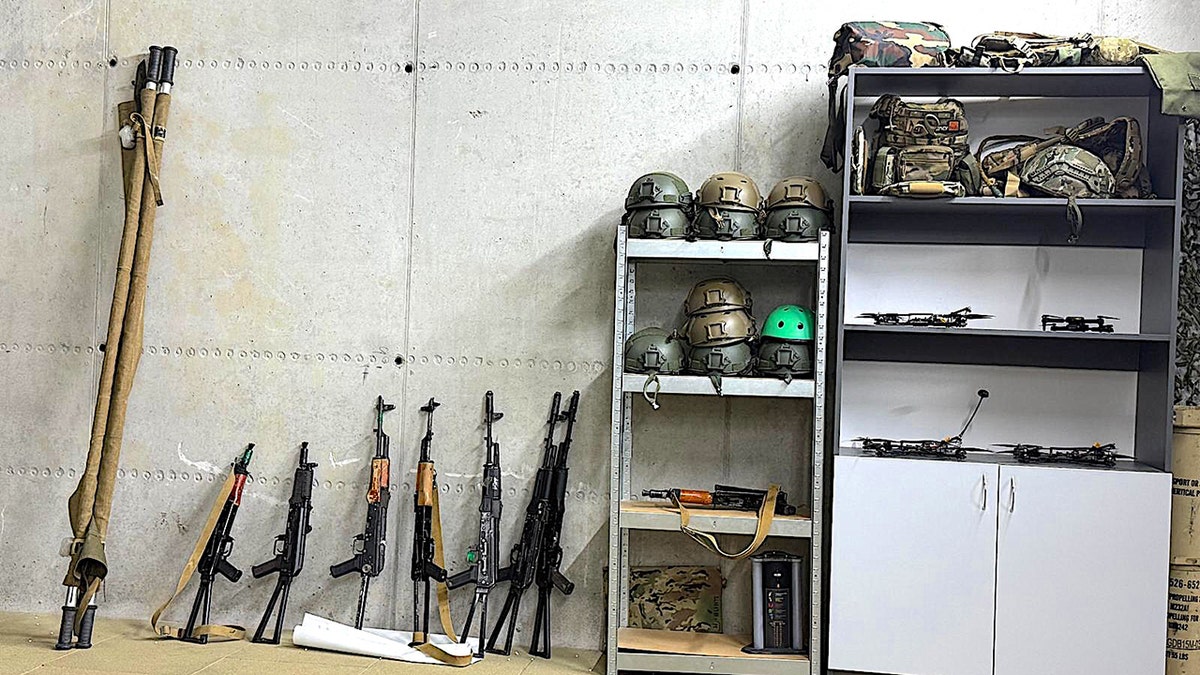
Weapons and helmets at a local center in Lviv where locals practice shooting among other things. (Efrat Lachter/Fox News Digital.)
One proudly explains he won a silver medal during a national contest. The other recently took gold and is now preparing for an international championship. Neither wants to talk much about what happened to them during combat.
Their therapy now is sport.
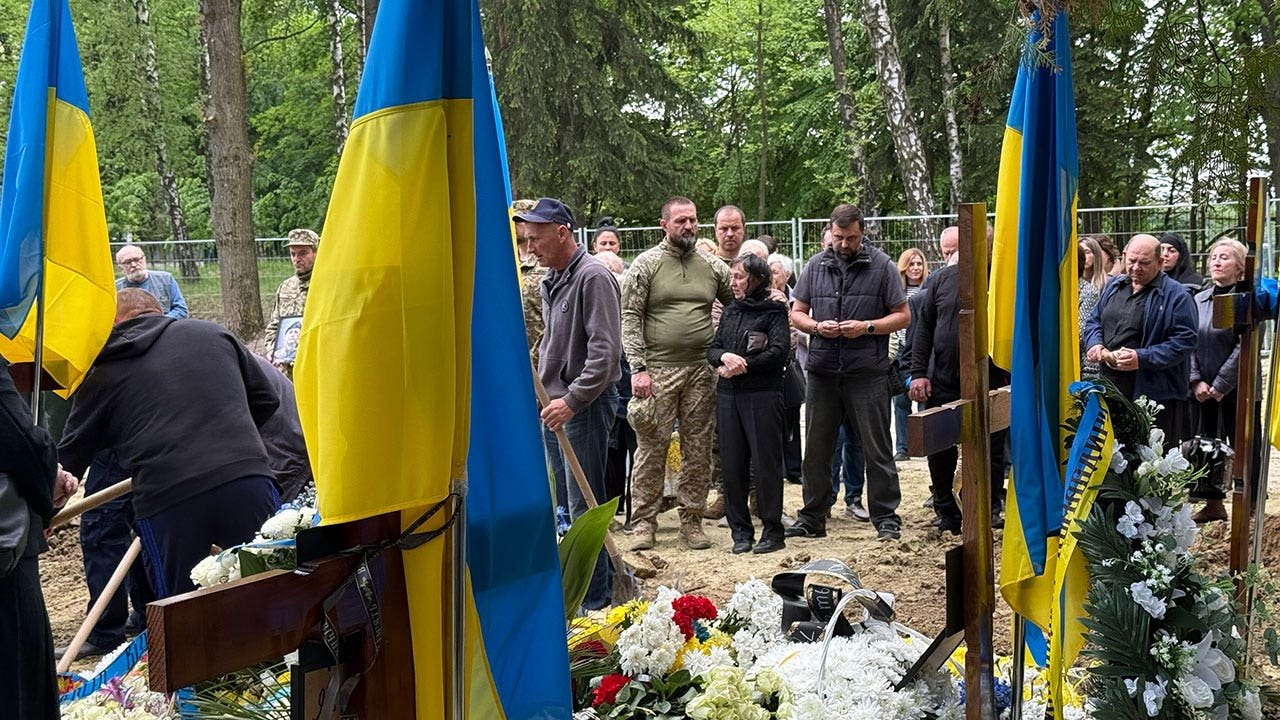
Down the road, another funeral begins. A military convoy carrying the body of a 32-year-old soldier drives slowly through the city center until it arrives at the cemetery.
The city’s military cemetery filled so quickly that officials recently had to open a new burial ground just weeks ago. Already, rows of fresh graves stretch across the hillside, above them blue-and-yellow flags and photographs of young men and women smiling back from before the war.
The grieving brother at the funeral says the fallen soldier never had time to start his own family.
Around him, families kneel beside the earth.
And still, life continues.
Children go to school. Mothers rush to work. Cafés remain packed. Street musicians perform in the old town square.
That same evening, inside the Lviv Theater of Opera and Ballet, hundreds gather for the «Miss Lviv» beauty pageant.
Young women dressed in glittering gowns pose beneath bright stage lights while music echoes through the theater. The audience is overwhelmingly female. Many of the men still in the city work in defense industries or hold exemptions from military service.
POLAND SEEKS ANSWERS AFTER PENTAGON SCRAPS PLANNED US ARMORED BRIGADE ROTATION
The contrast feels surreal only hours after attending a military burial.
But for many residents, events like these are an act of resistance.
«We are trying to keep life going,» the reigning Miss Lviv says backstage before crowning the next winner. «I want the war to stop.»
One of her friends explains why gatherings like this matter.

The reigning Miss Lviv during the «Miss Lviv» beauty pageant in Lviv, as residents attempt to preserve normal life four years into the war. (Efrat Lachter/Fox News Digital)
«These are difficult times,» she says. «Doing normal things like this gives us a reason to dress up and enjoy ourselves.»
Nobody here believes anymore that peace can come in 24 hours. But many still hope that President Trump and the U.S. can help bring the war to an end.
By the time evening arrives, air raid sirens once again cut through the city.
At outdoor cafés, people barely react at first.

Contestants participate in the «Miss Lviv» beauty pageant in Lviv, as residents attempt to preserve normal life amid the ongoing war.
‘WRITTEN IN OUR DNA’: POLISH PILOTS WHO REMEMBER SOVIET RULE PREPARE FOR AMERICA’S MOST LETHAL FIGHTER JET
Parents continue watching children play near fountains. Young couples finish drinks on restaurant terraces. Residents wait to hear whether the threat is «only» drones or actual missiles before deciding whether to move toward one of the hundreds of shelters spread throughout the city.
That frustration increasingly extends beyond the battlefield itself. Speaking to Fox News Digital while the latest wave of Russian strikes battered Ukrainian cities overnight, Ukraine’s Ambassador to the United Nations Andriy Melnyk warned that the war was becoming even more dangerous for civilians.
Melnyk, a native of Lviv, described the massive Russian assault between Saturday and Sunday as «the worst and the most devastating Russian attack on the capital since the beginning of the large-scale invasion.»
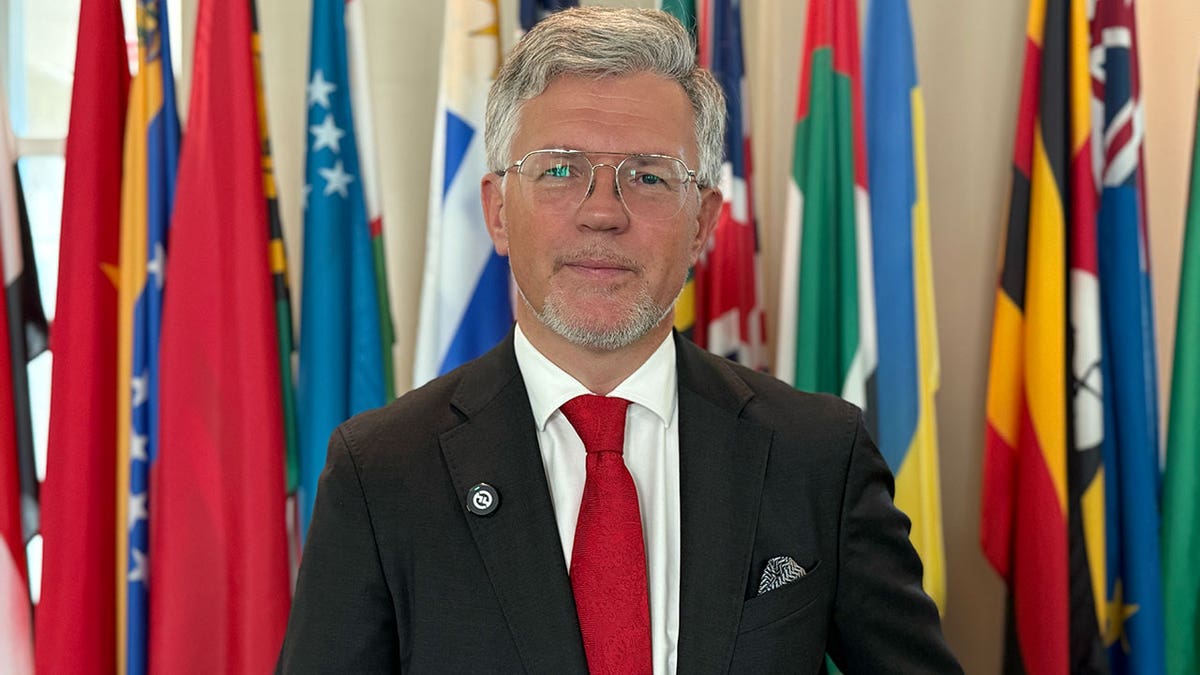
Andriy Melnyk, Ukraine’s ambassador to the United Nations and a native of Lviv, speaks to Fox News Digital on May 26, 2026, warning that Russia’s latest assault was «the worst and the most devastating Russian attack on the capital since the beginning of the large-scale invasion.» (Efrat Lachter/ Fox News Digital)
Even members of his own family in Kyiv, he said, are now considering temporarily leaving the city because «it becomes unbearable to stay.»
In Lviv, residents repeatedly ask to remind the world that the war is still intensifying, not fading into the background. Melnyk called on the United States and European allies to take «bold actions» to pressure Russian President Vladimir Putin and urged Western countries to provide additional air defense systems capable of intercepting ballistic missiles and drones targeting civilians.
He also criticized the United Nations for failing to stop the war, arguing that Russia’s veto power had left the Security Council effectively paralyzed.
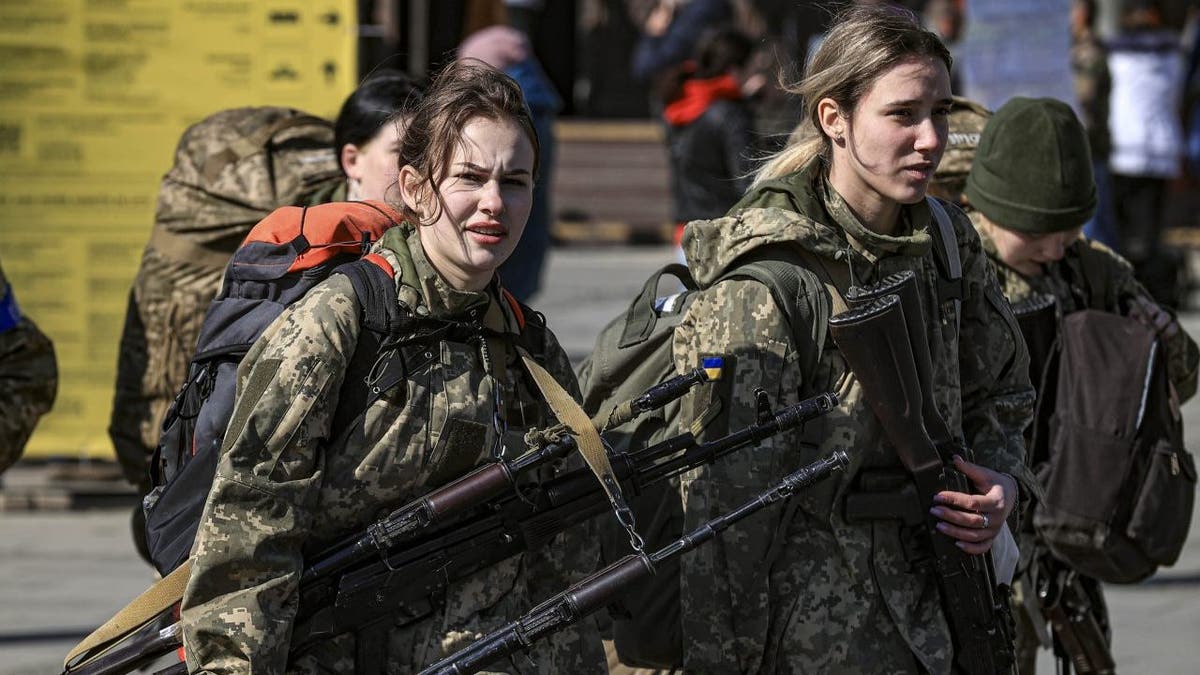
Ukrainian female soldiers are seen before heading to the frontline as Ukrainian displaced civilians continue to swarm around the train station to flee due to ongoing Russian attacks, in Lviv, Ukraine on March 24, 2022. (Photo by Metin Aktas/Anadolu Agency via Getty Images)
On the overnight train leaving Lviv, most passengers are women. Border guards spend long minutes questioning the few men onboard, making sure they are not trying to escape mandatory military service.
The exhaustion is visible everywhere. Still, Sadovyi is full of hope.
«This city will have a great future,» he says confidently.
He believes the world will eventually come to Lviv not only to rebuild, but to learn.
CLICK HERE TO DOWNLOAD THE FOX NEWS APP
«To learn how to be unbroken,» he says.
Because, he warns, what happened to Ukraine could happen elsewhere too.
ukraine, wars, vladimir putin, military, technology












INTERNACIONAL
Unearthed posts show Heartland Dem candidate rallying in favor of child gender surgery: ‘Radical as it gets’
NEWYou can now listen to Fox News articles!
FIRST ON FOX: Nebraska Democratic congressional nominee Denise Powell publicly opposed Nebraska’s 2023 law restricting gender transition procedures for minors, calling it «discriminatory and hateful» and urging supporters to contact lawmakers, according to unearthed social media posts that are generating pushback from critics.
Before becoming her party’s nominee, Powell made multiple Facebook and TikTok posts opposing LB 574, Nebraska’s «Let Them Grow Act,» which prohibits gender transition procedures for minors and regulates the use of puberty blockers and hormone treatments for those under 19.
In a March 2023 Facebook post, Powell, listed as an administrator on The Bellwether Initiative Nebraska page, urged Nebraskans to contact their state senators and join her at the Capitol on the final day of the first round of floor debate over the bill while wearing a shirt that read «PROTECT TRANS KIDS.»
«Today is the final day of the first round of floor debate on LB 574, a bill that would prohibit and punish healthcare providers from providing gender affirming care to children under the age of 19,» she wrote.
WATCH: BATTLEGROUND DEMOCRAT CALLED IOWA A ‘BACKWATER’ OVER TRANSGENDER ATHLETES BAN
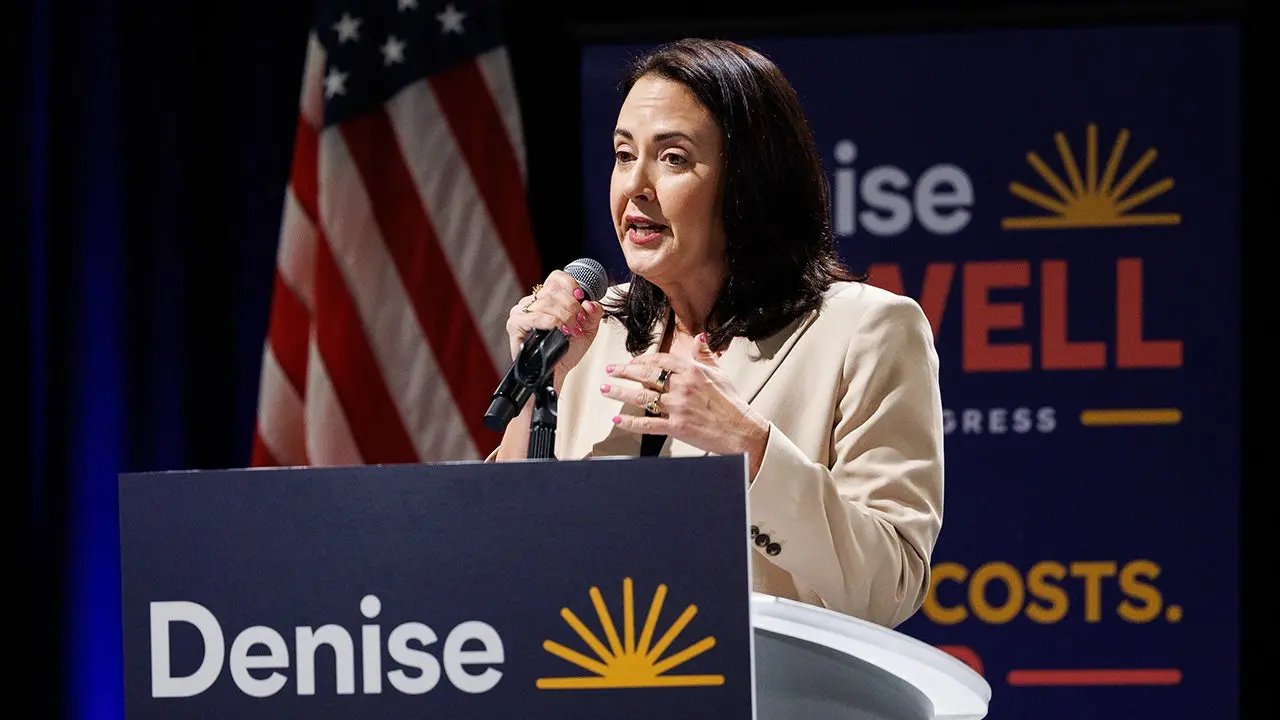
Denise Powell, Democratic candidate for Nebraska’s second congressional district, speaks during a campaign event at Metro Community College’s Center for Advanced Manufacturing in Omaha, Neb., on Tuesday, July 14, 2026. Powell was joined by former U.S. Transportation Secretary Pete Buttigieg. (Nikos Frazier/Omaha World-Herald via Getty Images)
«Laws like this one are passing all over the country — Iowa, Kentucky, Tennessee, to name a few. Nebraska has the opportunity to set an example; to show trans kids and families around the country that we won’t stand for this discriminatory and hateful behavior.»
Powell also praised lawmakers «fighting this on the front line» and urged supporters to «call or tweet at your senators TODAY.»
«Trans people belong in Nebraska and everywhere and we will never ever stop fighting for their right to exist and thrive,» she wrote.
SEN HAWLEY WARNS IT WOULD BE ‘UNCONSCIONABLE’ IF BILLIONS OF TAXPAYER FUNDS FLOW TO TRANS KIDS’ SEX CHANGES
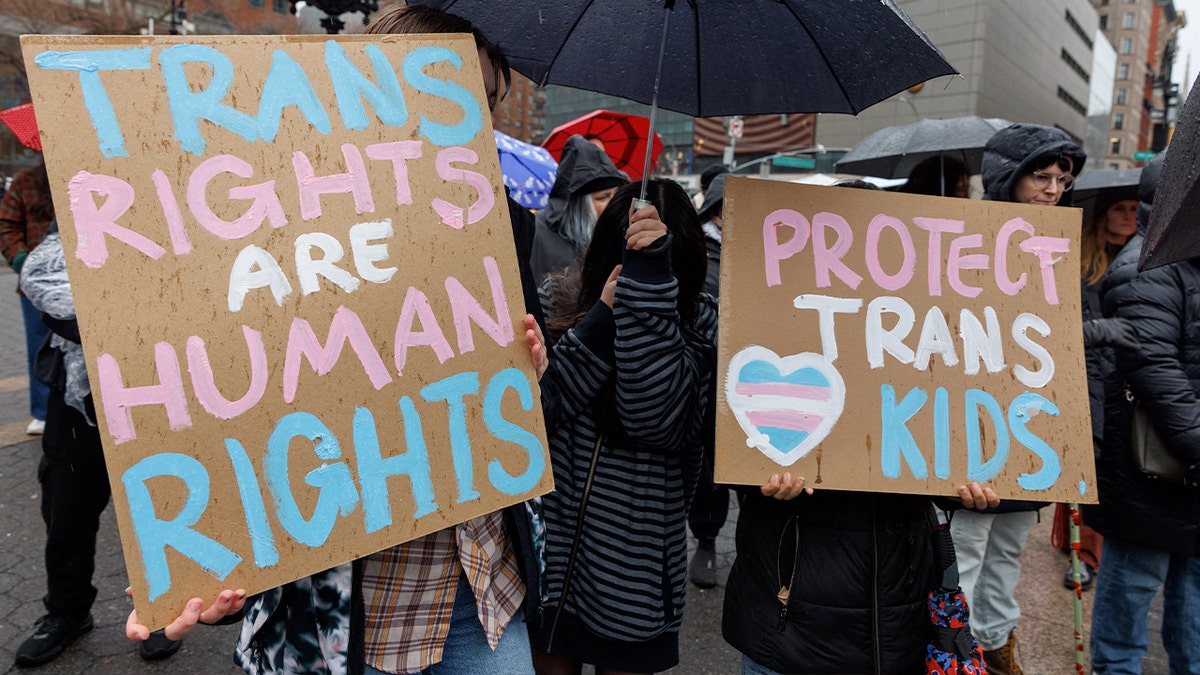
People gather in Union Square for the Together We Win rally in support of transgender youth held in New York City, N.Y., on Jan. 10, 2026. (Jason Alpert-Wisnia / Hans Lucas / AFP via Getty Images)
Powell also took to TikTok under the username «dbpinomaha» to oppose the legislation.
In a video posted Feb. 8, 2023, Powell wrote, «Aaaaand we’re back, this time to oppose LB 574, a bill that would make it illegal for kids to access gender-affirming care,» before the video showed her sipping from a mug beneath the words, «Lord it’s too early for the garbage.»
The video then showed a photo of the Nebraska State Capitol exterior with the words, «Democracy happens here. Sometimes,» before cutting to footage of protesters holding signs reading, «Trans Nebraskans Belong.»
The video also included photos appearing to show Powell in her car holding one of the protest signs herself.
DEMOCRATS STAY QUIET ON NEXT STEPS AFTER SUPREME COURT TRANSGENDER SPORTS RULING
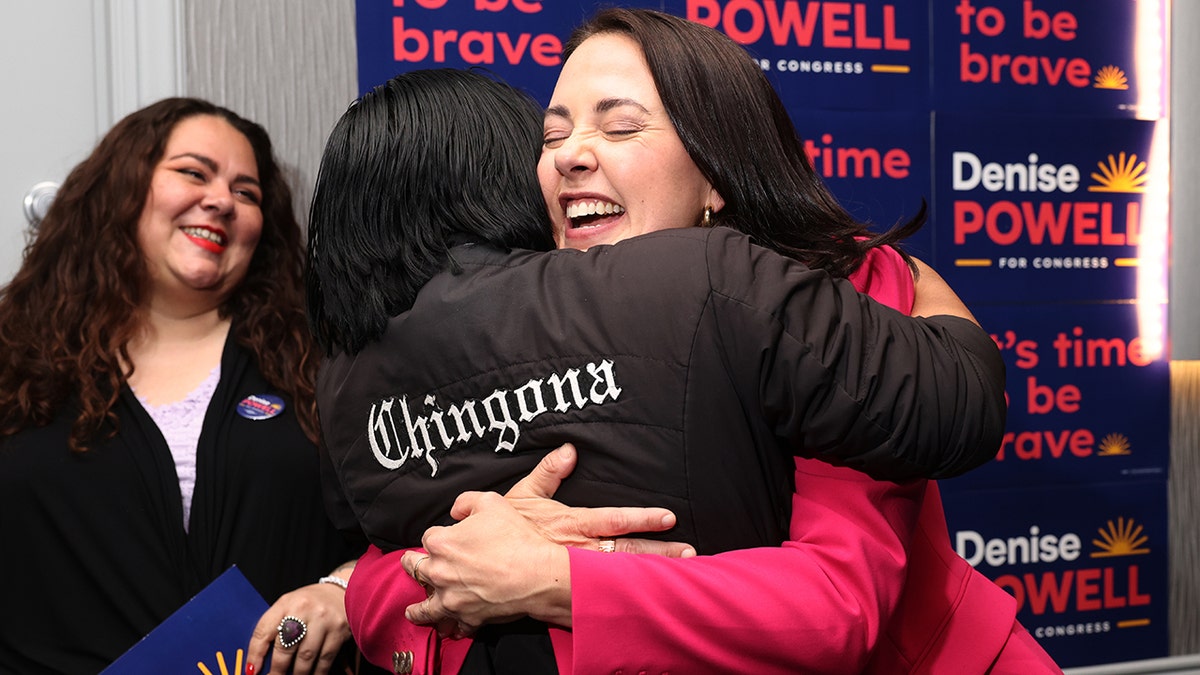
Denise Powell, candidate for the Democratic nomination to the House of Representatives in Nebraska’s second district, right, hugs Jennifer Reyna, chair of Latino Caucus for the Democratic Party of Nebraska, during an election night watch party Wednesday, May 13, 2026, in Omaha, Neb. (Rebecca S. Gratz/AP Photo)
«LB 574 hurt kids,» she wrote in the caption. «Call your senator and tell them TRANS NEBRASKANS BELONG.»
In a separate TikTok posted on March 31, 2023, Powell shared a video of student walkouts at high schools around Omaha and Lincoln, writing that students had walked out in support of transgender youth and adding, «we are here for it!»
The Nebraska Legislature passed LB 574 by a 33-15 vote, and Gov. Jim Pillen later signed it into law.
That same year, Nebraska First PAC poll found that 61% of likely Nebraska voters supported prohibiting «gender altering procedures like surgeries, puberty blockers, or hormone therapies» for those under 19, while 78% agreed children should wait until adulthood before undergoing «irreversible, sex-change surgeries.»
In April, a bill from Republican state Sen. Kathleen Kauth to expand LB 574 by banning puberty blockers and cross-sex hormones for those under 19 failed to advance, according to the Nebraska Examiner .
«NE-2 is a swing district known for electing moderates, but Denise Powell is about as radical as it gets,» Jon Schweppe, former Trump official at the FTC and senior advisor at American Principles Project, told Fox News Digital.
«Not only has she been an advocate for transgender sex changes for kids, but she served on the board of an organization which opposes parental rights in education and promotes an ‘LGBTQ liberation’ curriculum for fifth graders. These are the issues she clearly cares about the most.»
Zach Bannon, a spokesperson for the National Republican Congressional Committee (NRCC) told Fox News Digital that Powell is a «rubber stamp for the radical far-left, supporting their most extreme policies, including sex change surgeries for kids.»
«Denise Powell continues to prove that she rejects common sense and is completely out of touch with Nebraska values,» Bannon added.
Powell is challenging Republican Omaha City Councilman Brinker Harding for Nebraska’s open 2nd Congressional District, a seat Democrats are seeking to flip as Republicans try to hold on to their razor-thin majority in the House of Representatives.
According to her campaign website, Powell says her priorities are lowering costs, protecting healthcare access and abortion rights, supporting workers, and opposing President Donald Trump’s «abuse of power and attacks on our democracy.»
Fox News Digital reached out to Powell’s campaign multiple times for comment.
state and local, nebraska, politics, house of representatives, midterm elections
INTERNACIONAL
Murió el montañista Nirmal Purja en una avalancha en Pakistán: había escalado los 14 picos más altos del mundo en tiempo récord
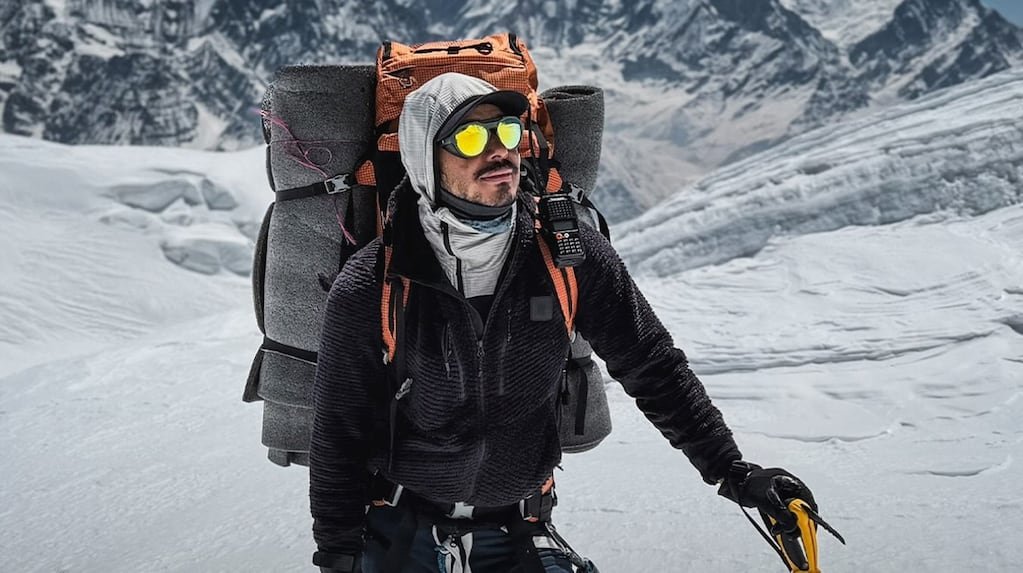
El reconocido alpinista Nirmal Purja, famoso por su hazaña de escalar los 14 picos de más de 8.000 metros en tiempo récord, murió junto a varios integrantes de su equipo tras una avalancha en el Broad Peak, al norte de Pakistán.
La noticia fue confirmada este sábado por Elite Exped, la compañía que fundó. “Hoy, con una profunda tristeza y un inmenso dolor, confirmamos que Nirmal ‘Nimsdai’ Purja perdió trágicamente la vida a raíz de la avalancha ocurrida en el Broad Peak. También hemos recibido la confirmación de que otros integrantes de la expedición, lamentablemente, no sobrevivieron”, indicaron en un posteo de Instagram.
“Lloramos no solo la pérdida de Nims, sino la de todas las personas que fallecieron en esta tragedia, entre ellas sus compañeros de escalada y guías de confianza, Pur Bahadur Gurung (Yukta) y Nima Sherpa. Nuestros más profundos pensamientos, oraciones y sinceras condolencias están con sus familias, amigos y seres queridos», agregaron.
Recuperaron
Las autoridades confirmaron que tres cuerpos fueron encontrados cerca del lugar del accidente, mientras que el resto de los escaladores sigue sin ser localizado.
La expedición, compuesta por diez personas, partió bajo el liderazgo de Purja, conocido como “Nims”. Entre los desaparecidos hay cinco nepalíes, un pakistaní, una omaní, un chino, una estadounidense, según detalló la policía regional de Gilgit Baltistan. Días atrás, Nirmal Purja conquistó su 57° cumbre. (Foto: Instagram/@nimsdai)
El operativo de rescate y la incertidumbre sobre los desaparecidos
La avalancha se produjo el jueves mientras los montañistas intentaban alcanzar la cima del Broad Peak (8.047 metros), cuando el equipo ascendía a una altitud de unos 6.600 metros y cortó el contacto con la expedición internacional de diez miembros.
El accidente ocurrió en la zona del Broad Peak, una de las montañas más exigentes del mundo, ubicada en la cordillera del Karakórum. Nirmal Purja saltó a la fama por un documental de Netflix. (Foto: AFP/Aamir Qureshi).
“Los datos de sus dispositivos de seguimiento indican que fueron arrastrados cientos de metros montaña abajo”, declaró Naila Kiani, del Club Alpino de Pakistán, al diario Le Monde.
Tras la avalancha, equipos de rescate equipados con dispositivos de geolocalización y helicópteros militares se desplegaron en la región para intentar dar con los alpinistas.
Por ahora lograron recuperaron tres cuerpos, el de una mujer estadounidense, una mujer omaní -Nathira Al Harthy- y un sherpa nepalí -Pur Bahadur- , indicó el gobierno regional en un comunicado difundido el viernes en la noche. Nirmal Purja se convirtió en una figura destacada dle montañismo mundial. (Foto: Instagram/@nimsdai).
Las tareas de búsqueda se suspendieron este viernes por las difíciles condiciones meteorológicas y se retomaron el sábado.
“El equipo de rescate informó que avistó algunos cadáveres de los escaladores mediante imágenes de dron”, señalaron.
“La operación de rescate se está llevando a cabo en condiciones de terreno extremadamente exigentes y de clima de gran altitud por parte del ejército pakistaní, en coordinación con escaladores locales de gran altitud y equipos de rescate”, indicó la policía de la montañosa región norte de Gilgit-Baltistán.
Quién es Nirmal Purja, el líder de la expedición
Nirmal Purja, de 43 años, es una figura central del montañismo. Su historia se popularizó a través del documental de Netflix “14 Cumbres: Nada es imposible”, que narra su récord al escalar los 14 “ochomiles” en solo seis meses y seis días en 2019.
Criado en el sur de Nepal en una familia humilde, Purja sirvió en la Brigada de Gurkhas del ejército británico y luego en el Escuadrón Especial de Barcos de los Marines Reales. “Lo que me enseñaron os gurkhas y las fuerzas especiales no tiene precio: la disciplina, la mentalidad, esa voluntad de no rendirse nunca, entender el panorama general y ser siempre fiel a uno mismo», dijo en un posteo de Instagram sobre los 16 años de su vida militar.

Purja sirvió durante 16 años en la Brigada de Gurkhas del ejército británico y luego en el Escuadrón Especial de los Marines Reales. (Foto: Instagram/@nimsdai).
Desde que se dedicó de lleno al montañismo, batió múltiples récords y en 2021 lideró la primera ascensión invernal al K2 junto a otros nueve escaladores nepalíes.
En los días previos a la tragedia, Purja había compartido en redes sociales su objetivo de convertirse en la primera persona en escalar dos veces los 14 “superpicos” sin oxígeno.
“Broad Peak, no pido nada más que un camino seguro hacia la cima y de vuelta”, publicó el alpinista días atrás.
“No doy por sentada ni una sola montaña. Ni una. En el momento en que mis pies abandonan el campamento base, voy al 100%. Siempre ha sido así. Siempre será así”, agregó. «No doy por sentada ninguna montaña», afirmaba Nirmal Purja hace poco en un posteo en redes. (Foto: Instagram/@nimsdai).
Hace una semana, había sumado una nueva hazaña al conquistar su 57° cumbre, el Gasherbrum II. “Cada montaña me planteó nuevos retos y me enseñó nuevas lecciones. Cada cima es el resultado de la perseverancia, la preparación y el respeto por la montaña”, afirmó entonces.
«El mundo perdió a uno de los más grandes alpinistas de la historia; un líder que inspiró a millones de personas con su valentía, su humildad y su firme convicción de que el potencial humano es mucho mayor de lo que solemos imaginar. Más allá de sus extraordinarios logros, quería demostrarle al mundo todo lo que era posible cuando uno se anima a soñar en grande, cree en sí mismo y se niega a aceptar los límites. Con sus acciones, inspiró a millones de personas a creer que ellas también podían alcanzar mucho más de lo que jamás pensaron posible», lo despidieron desde Elite Exped.
El Broad Peak y la reacción internacional
El Broad Peak, con 8.047 metros, es la duodécima montaña más alta del planeta y una de las más técnicas y peligrosas.
Fue conquistada por primera vez en 1957 por un equipo austríaco y desde entonces es un desafío para los mejores alpinistas del mundo.
Montañismo, Pakistan
NEWYou can now listen to Fox News articles!
ŠKOFJA LOKA, Slovenia: The Republic of Slovenia, the central European nation known for being the birthplace of First Lady Melania Trump and LA Lakers star Luka Dončić, is undergoing a radical shift in politics as the country comes to terms with its new larger-than-life prime minister.
Prime Minister Janez Janša recently scraped together a coalition that did away with the country’s leftist leader, Robert Golob.
In what is his fourth term, Janša has begun what many see as Trump-like policy corrections. He has reversed Golob’s anti-Israel policies by announcing his intent to move the Slovenian embassy to Jerusalem, freezing Slovenia’s recognition of a Palestinian state and revoking a 2025 ban on military trade with Israel.
EUROPE’S ‘GREEN IDEOLOGY’ CLIMATE AGENDA RISKS CRUSHING ITS INDUSTRY, ENVIRONMENT MINISTER WARNS
Right-wing Slovenian Democratic Party (SDS) leader Janez Jansa addresses the media after his investiture vote as Slovenia’s Prime Minister at the National Assembly in Ljubljana on May 22, 2026. (Jure Makovec / AFP via Getty Images)
Janša also believes in strong U.S. relations. During an America 250 event hosted by the U.S. Embassy in Ljubljana, and with the First Lady’s father, Viktor Knavs, in attendance, Janša described how America was the beacon for Slovenian independence. «We imagined America, the United States of America, as the ideal embodiment of that free world… That Slovenia, too, would become the home of the brave in a land of the free.»
Domestically, he says his new government will reverse what he called the Golob government’s «inefficiency» and turn Slovenia into «a country of opportunity, prosperity and justice, where each responsible citizen will feel safe and accepted.»
He has announced plans to reverse many anti-business policies, cut government red tape, support private education and healthcare, reform the pension system, decrease the size of government and invest in infrastructure projects, including a plan to build a second reactor at Slovenia’s Krško nuclear power plant.
Despite some policy disagreements, Janša was a close ally of former Hungarian Prime Minister Viktor Orbán. He has expressed support for Ukraine, traveling to Kyiv during his last term as prime minister in March 2022 with the then-Polish and Czech Prime Ministers in an early showing of EU solidarity against the Russian invasion and he recently returned to Kyiv to mark Ukraine Statehood Day as part of the Ukraine–Southeast Europe Summit.
WHITE HOUSE BLASTS SPANISH GOVERNMENT AS THOUSANDS OF MIGRANTS SURGE FROM MOROCCO, EMERGENCY REQUEST DENIED

File: A sign which reads ‘Welcome to the Hometown of the First Lady’ in Slovenian, is pictured on November 27, 2016 in Sevnica, Slovenia. Born in Slovenia, Melania Trump was raised in the town of Sevnica, by her father, a car salesman, and her mother, a pattern maker at a textile factory. The former model will become the second foreign-born First Lady of the United States when her husband Donald Trump is sworn in as President during a ceremony in Washington DC on January 20, 2017. ( Jack Taylor/Getty Images)
He supports increased military aid to the country and increased sanctions against Russia. And like Orbán, Janša was staunchly anti-immigrant during the huge Europe migration wave in 2015, when «Balkan Route» migrants practically marched through Slovenia on their way to other parts of Europe.
Janša often praises many of President Trump’s immigration policies. Although no reforms have yet made it through the Slovenian parliament, shortly after taking office, Janša joined 18 other EU leaders in signing a letter calling for «a fundamental change in immigration policy» and practice.
They called for reducing irregular migration, combatting human smuggling more effectively, increasing deportations, and strengthening cooperation with third countries. Janša said Slovenia is «finally joining» other countries calling for these reforms, writing, «The end is approaching for social tourism, overlooked people smuggling and the importation of voters for the European left.»
‘YOU’RE DESTROYING YOUR COUNTRIES’: IS EUROPE FINALLY HEEDING TRUMP’S WARNING ON ILLEGAL IMMIGRATION?
And, like Trump, Janša has his critics. He has been called «the greatest threat to Slovenia’s sovereignty and democracy.»
An aggressive user of X, where he comments on politics and criticizes his opponents in late night posting sprees, Janša has had battles with the country’s media, with many accusing him of undermining its independence.
Janša has also served time in jail, having been convicted and imprisoned in a case he called politically motivated.
Now serving a fourth non-consecutive term as prime minister— or predsednik vlade—he strangely lost the election that eventually put him back in office in June.
On two occasions, Janša and his party lost an election, yet he still became the prime minister. Think of it as losing the popular vote yet winning the Electoral College.
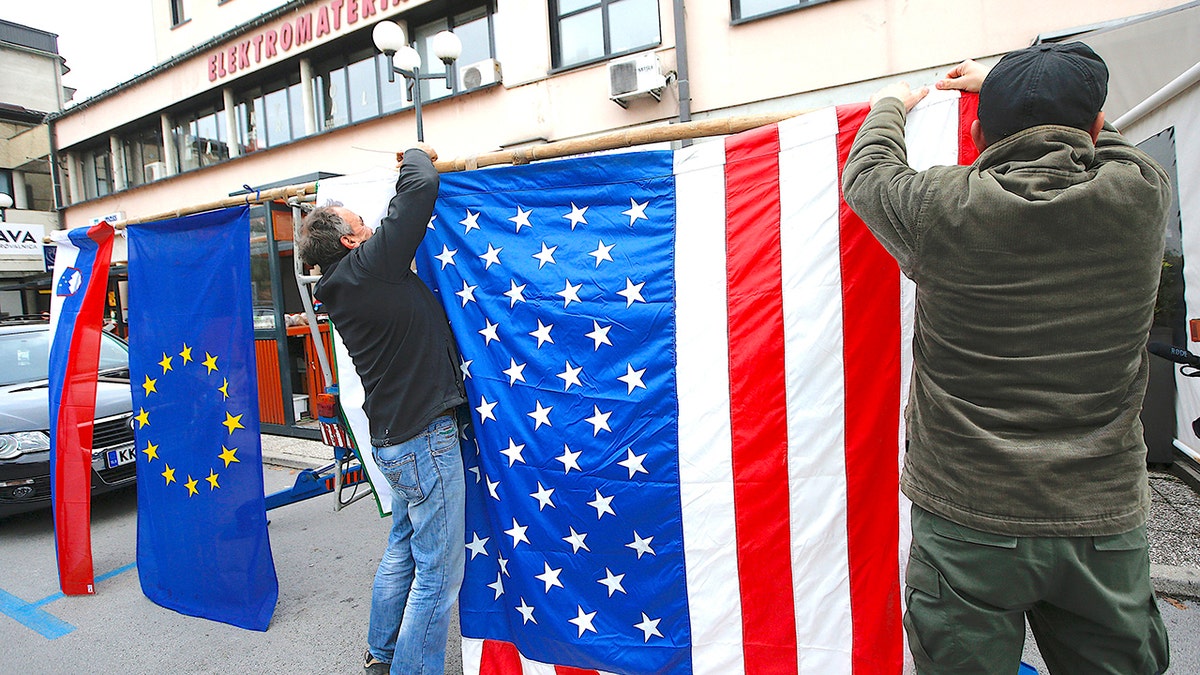
FILE: Residents of Sevnica, hometown of Melania Trump, wife of Republican presidential elect Donald Trump, hang a US flag as they celebrate the victory of Donald Trump in the race for the White House in Sevnica, Slovenia on November 9, 2016. Republican Donald Trump has won the US presidency with at least 290 electoral votes, securing more than the 270 he needed to succeed Barack Obama. (Jure Makovec/AFP Via Getty Images)
Slovenes went to the polls on March 22 after a tumultuous four-year term for then-Prime Minister Robert Golob and his far-left coalition partners. Polls that had initially forecast a landslide victory for Janša tightened quickly in the run-up to election day. Golob’s Gibanje Svoboda, or Freedom Movement, party would «win» by taking 29 seats of the 90-seat legislature with 28.7% of the vote. That was a net loss of 12 seats from the 41 seats and 34.5% of the vote the party won in 2022.
Janša’s Slovenska demokratska stranka, or Slovenian Democratic Party, the party he has led since 1993, took 28 seats with 27.9% of the vote. The same 29-28 outcome as in 2008, when Janša also «lost» yet was able to form a governing coalition.
MELANIA TRUMP HELPS REUNITE FIFTH GROUP OF UKRAINIAN, RUSSIAN CHILDREN WITH FAMILIES
After a month of trying, Golob was unable to form a new ruling coalition. Slovenian President Nataša Pirc Musar said she would not nominate anyone for prime minister as no one was able to get the 46 votes needed in Parliament.
Enter Janša, who many analysts call a master coalition builder. After two weeks of discussions, his future government would end up receiving 51 votes in a secret ballot of the National Assembly: 48 from his coalition and their partners, two from the representatives of the Italian and Hungarian minorities in Slovenia… and, surprisingly, one from an anonymous member of the opposition.
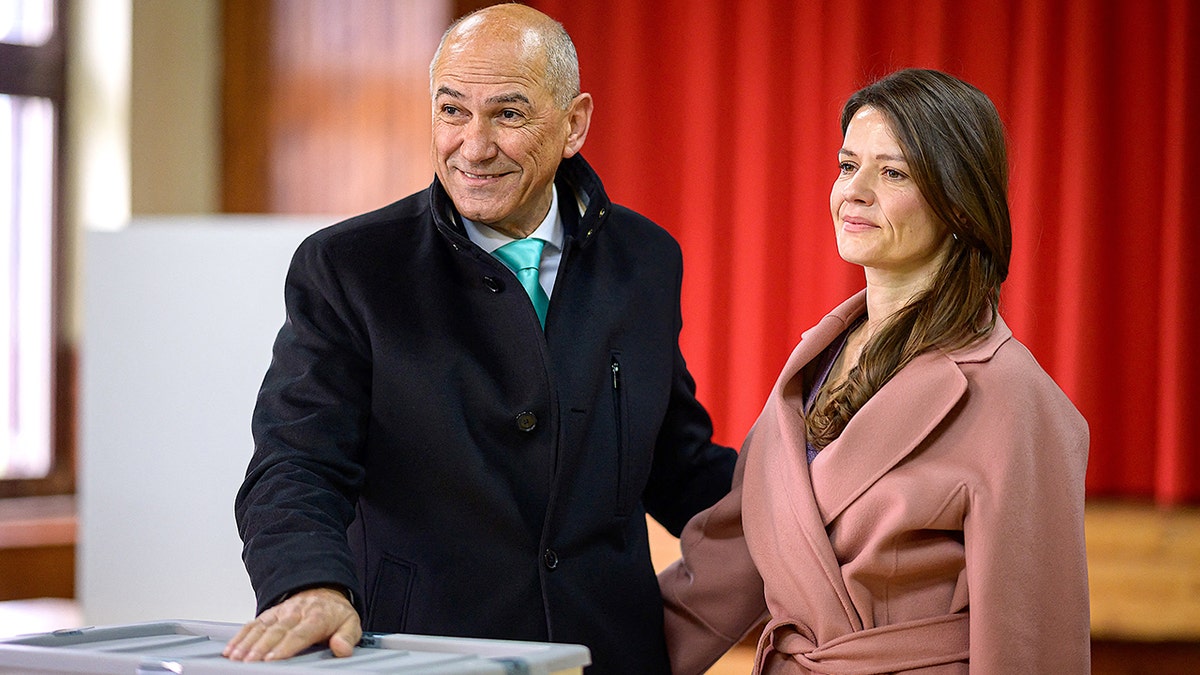
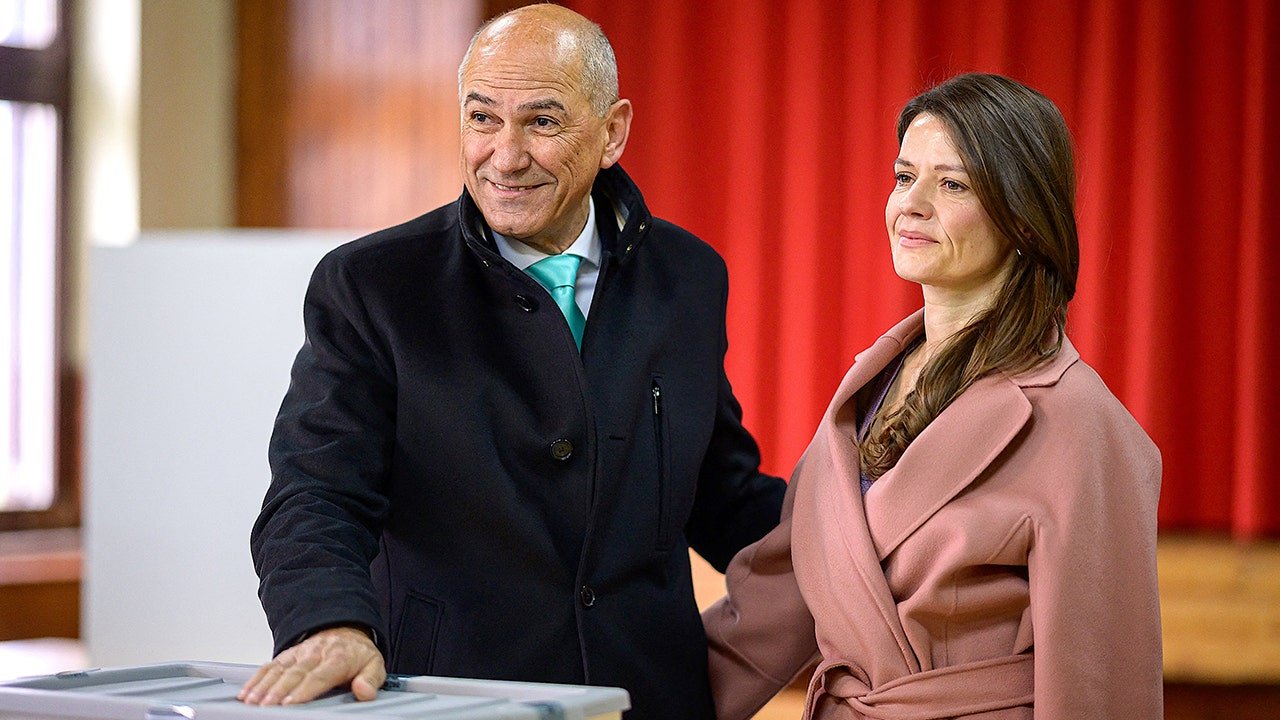
Then Slovenia’s opposition leader and nationalist former Prime Minister Janez Jansa and his wife Urska cast their ballots at a polling station during the general election in Arnace on March 22, 2026. ( Jure Makovec / AFP via Getty Images)
Janša has been involved in Slovenian politics since before there was an independent Slovenia. In 1988, he was arrested, tried «in camera» in a military court, and imprisoned by the Yugoslav People’s Army in what became known as the «JBTZ affair». He was alleged to have shared military documents with journalists. After public outcry at the time, Janša was released after serving six months of an 18-month sentence.
In 1989, Janša helped form the Slovenian Democratic Union, one of the first opposition parties in the then-Socialist Republic of Slovenia. After Slovenia’s first free elections in May 1990, Janša was named minister of defense, helping lead Slovenia’s 10-day war of independence against Yugoslavia in the summer of 1991.
In June 2013, the Ljubljana District Court ruled Janša and two others had sought about €2million (about $2.3 million) from a Finnish firm, Patria, to help it win a 2006 military supply contract. Janša was sentenced to 2 years in the same prison in which he began his 1988 imprisonment. He called the case politically motivated and, again, he was released after serving 6 months. The conviction was unanimously overturned by the Constitutional Court in April 2015.
Janša is expected to come to the U.S. to address the United Nations General Assembly in September. It is not known if he will meet with President Trump and the First Lady.
europe, israel, immigration, donald trump, ukraine, the balkans

¡En 15 días! De estar con una figura de la Scaloneta a ser novia de un compañero de Ronaldo: quién es la influencer argentina que sale en las revistas del mundo

Unearthed posts show Heartland Dem candidate rallying in favor of child gender surgery: ‘Radical as it gets’

Hasta cuándo podés acceder a la moratoria previsional de ANSES y qué cambia

La decisión que Franco Mastantuono le habría comunicado a José Mourinho tras quedar relegado del amistoso de Real Madrid

Murió el montañista Nirmal Purja en una avalancha en Pakistán: había escalado los 14 picos más altos del mundo en tiempo récord

Alerta en el mercado de pases de River Plate

La pelea con Lula y el verdadero desafío que enfrenta Milei

El BCRA cortó la racha de compra y en el mercado vuelan rumores de maniobras para frenar al dólar

World-famous Catholic shrine torched, ‘Devil in a skirt’ scrawled on Virgin Mary statue

La aprobación del Gobierno cayó en julio según distintas encuestas, en sintonía con el índice de la universidad Di Tella

 INTERNACIONAL2 días ago
Trump admin invokes 30-year dormant terror court as it seeks to deport Afghan woman tied to Election Day plot
- CHIMENTOS3 días ago
El romántico mensaje de Nico Vázquez a Dai Fernández: “Me encanta compartir con vos arriba y abajo del escenario”
- ECONOMIA3 días ago
Le pedimos a ChatGPT, Gemini y Claude que dijeran en qué acciones argentinas invertir y así nos fue