INTERNACIONAL
GOP Gov DeWine urges Ohio to abolish the death penalty, says it is no longer a deterrent

NEWYou can now listen to Fox News articles!
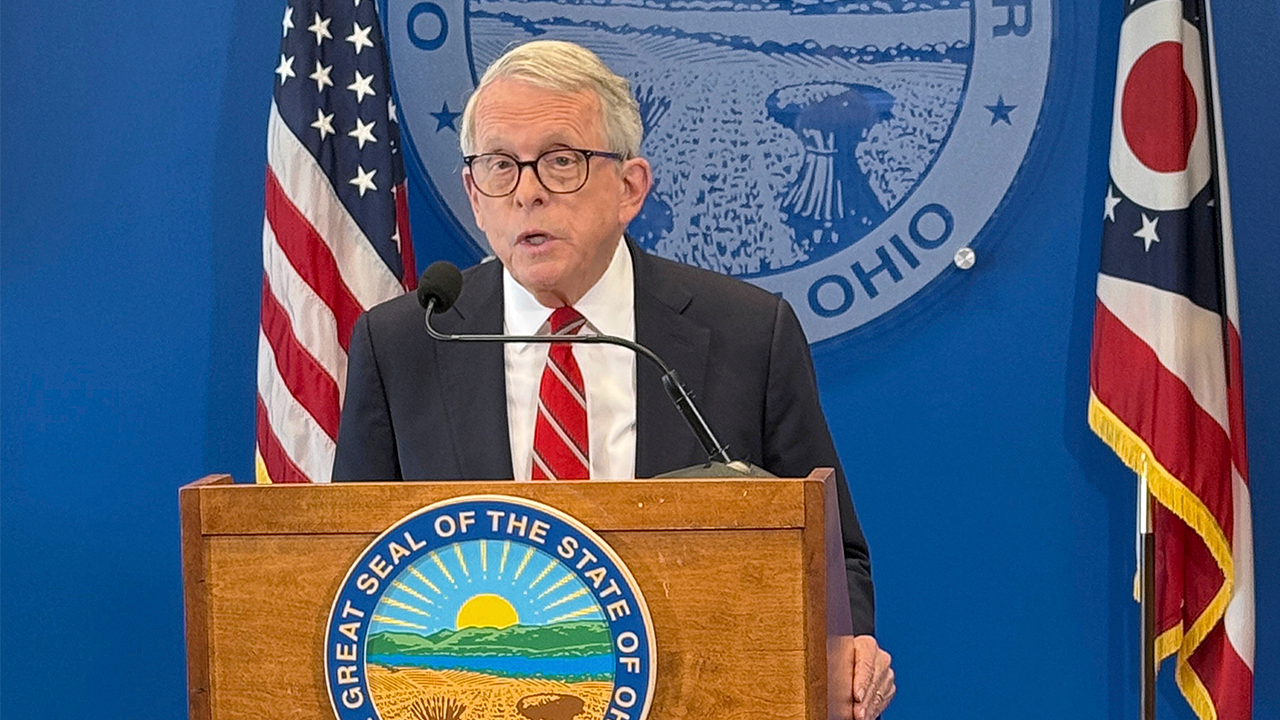
Ohio Gov. Mike DeWine, a Republican, on Tuesday announced support for abolishing capital punishment in his state, reaffirming his change of heart on the policy he helped write as a legislator 45 years ago to reinstate the death penalty in Ohio.
DeWine, who has repeatedly postponed executions during his time as governor, pointed to data showing that the death penalty does not serve as a deterrent to violent crime.
«For the state to take a human life, there must, in my opinion, there must be evidence that in doing so it will help protect the public, that the threat of that action will deter someone from committing murder,» DeWine said at a news conference.
«I do not believe that argument today can be successfully made, nor do I believe that there’s any chance in the future the facts that I’ve cited to support that belief will change,» he said. «Therefore, I believe Ohio should abolish the death penalty.»
TEXAS LAWMAKER PROPOSES BILL TO ABOLISH DEATH PENALTY IN LONE STAR STATE: ‘I THINK SENTIMENT IS CHANGING’
Ohio Gov. Mike DeWine announced support for abolishing capital punishment in his state. (AP Photo/Patrick Aftoora-Orsagos)
As he made his case, DeWine brought out charts and graphs showing the decline in both the number of death sentences handed down by courts and the quantity of executions being carried out. The data also showed the exceedingly long wait times as legal appeals play out for inmates on death row.
The governor said condemned murderers are increasingly unlikely to be executed, as they sometimes die by natural causes or by suicide before they can be executed.
«Even if the murderer is caught, indicted, convicted and sentenced to death, the odds are still pretty good they’re not going to be executed,» he said.
«In summary, each decade that the death penalty has been in effect, the chances of a murderer getting executed get more and more and more remote,» he added.
The last 10 people to be executed in Ohio had been on death row between 14 and 32 years, he said. Since the state reinstated capital punishment in 1981 under a law co-written by DeWine, 56 people who received the death sentence have been executed and 41 died by natural causes or suicide while on death row. Another 89 death sentences were overturned due to «judicial action» such as legal errors.
DeWine emphasized the years of pain for victims’ loved ones due to the delays and the impact on the mental health of state employees who work on execution teams.
UTAH DEATH ROW INMATE WITH DEMENTIA DIES OF NATURAL CAUSES 3 MONTHS AFTER EXECUTION WAS HALTED
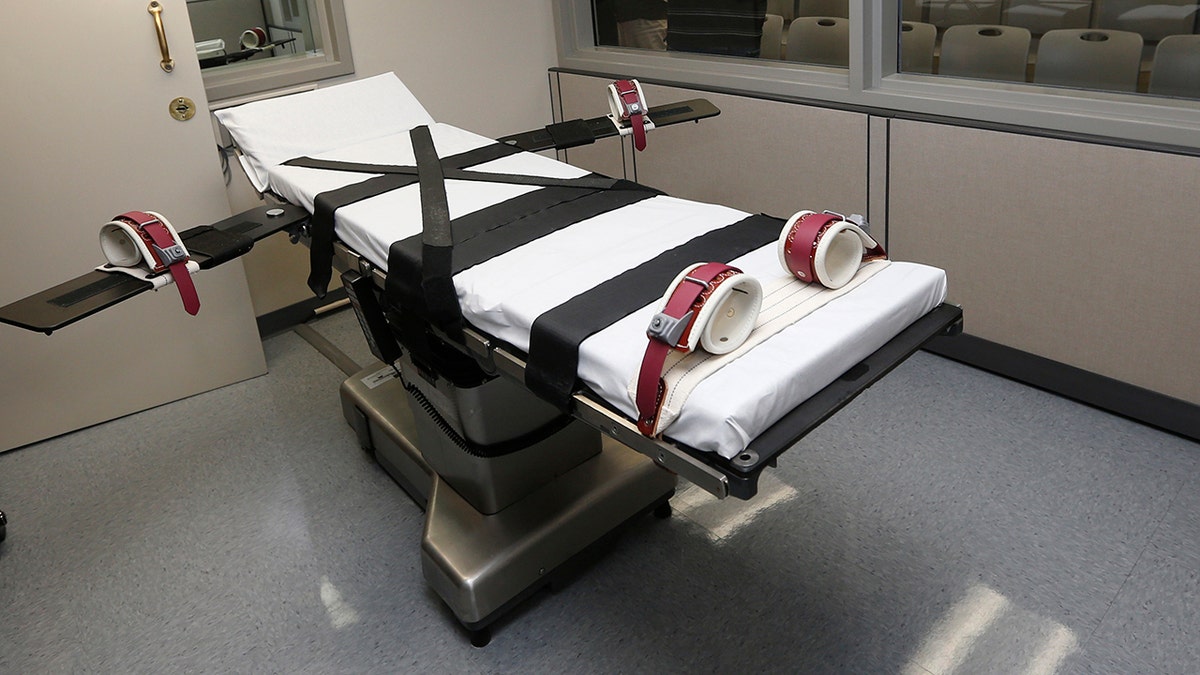
The governor cited data showing that the death penalty does not serve as a deterrent to violent crime. (AP Photo/Sue Ogrocki, File)
«I no longer believe the death penalty is a deterrent to murder,» DeWine said. «The moral justification I had for voting for the death penalty simply no longer exists.»
The governor, who is term-limited and cannot seek another term in the 2026 election, said he felt compelled to share his thoughts now after 50 years of experience with the death penalty issue, including as a Greene County prosecutor, a member of the U.S. House and Senate and as Ohio’s attorney general.
However, he said his outright opposition to the death penalty has become solidified in the past year.
DeWine urged the legislature to abolish the death penalty or to leave it up to state residents to vote on the issue, although Republican House Speaker Matt Huffman has said he would oppose such an effort. Other supporters of capital punishment have argued that Ohio’s yearslong execution pause has denied justice to victims’ families and weakened the deterrent effect of death sentences.
DeWine has not authorized an execution since taking office seven years ago, citing, on numerous occasions, pharmaceutical suppliers’ unwillingness to provide the drugs used in lethal injections. Last year, President Donald Trump ordered the U.S. Justice Department to help states to resolve that issue. In January 2025, President Donald Trump ordered the U.S. Justice Department to help states resolve that issue.
The governor has said he expects no more executions during the remainder of his term. Delaying executions has left Ohio with 30 scheduled over the next four years, according to the Ohio Department of Rehabilitation and Correction. The state has not put an inmate to death since July 18, 2018, before DeWine took office.
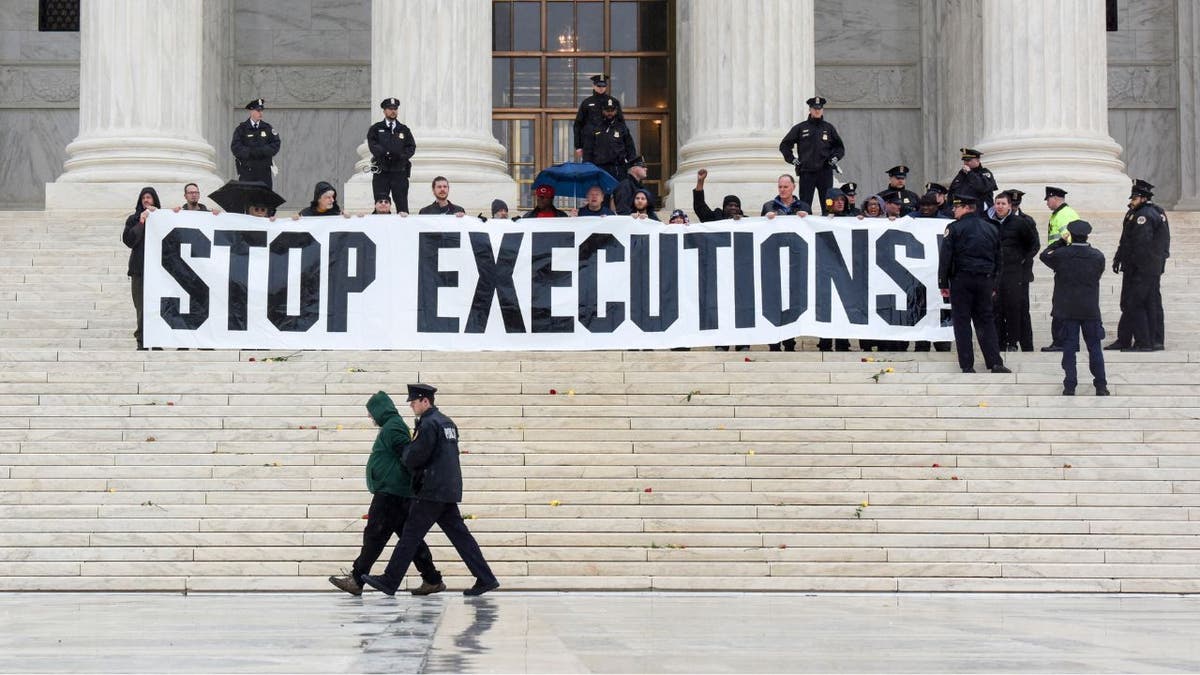
The governor urged the legislature to abolish the death penalty or to leave it up to state residents to vote on the issue. (Jahi Chikwendiu/The Washington Post via Getty Images)
CLICK HERE TO DOWNLOAD THE FOX NEWS APP
«The most important way to protect the public is to lock up violent criminals and to keep them out of society,» DeWine said. «That is a proven way of saving lives and protecting our citizens. Our money and energies are much better spent focusing on keeping these repeat violent offenders out of society.»
Currently, 27 states allow the death penalty while 23 states and Washington, D.C., do not, according to the Death Penalty Information Center.
Since 2019, including that year, three states have abolished capital punishment, while five states now authorize nitrogen hypoxia as an execution method amid ongoing controversy over lethal injection protocols.
At the federal level, Trump has pushed to expand executions. During his first term, 13 federal executions were carried out, which was more than any president in modern history.
The Associated Press contributed to this report.
ohio, politics, us, crime world, judiciary, mike dewine












INTERNACIONAL
El despoblamiento del campo no deja «una solución sencilla» a los incendios forestales europeos

Zelenskyy: War initiative no longer in Putin’s hands
Ukrainian President Volodymyr Zelenskyy says Ukraine’s military has transformed dramatically, now supported by more than 500 defense companies. He says Russia is losing 30,000 troops each month and argues the initiative in the war is no longer in Russian President Vladimir Putin’s hands.
NEWYou can now listen to Fox News articles!
Poland, the closest NATO member to the Ukraine-Russia war, scrambled fighter jets and placed its air defenses on high alert early Thursday as Russia launched more than 70 missiles and roughly 280 drones across Ukraine, killing at least eight and wounding dozens from Kyiv to the western city of Lviv.
Ukrainian President Volodymyr Zelenskyy, just returning from this week’s U.S. visit with President Donald Trump and the funeral of late Sen. Lindsey Graham, R-S.C., said the barrage exposed a critical shortage of Western-supplied interceptors, particularly against ballistic missiles.
«The protection of people’s lives depends directly on their willingness» to provide Ukraine with air-defense missiles, Zelenskyy said of Kyiv’s allies.
Hours later Thursday morning, the European Union disbursed $4 billion to Ukraine to finance the procurement of more drones, missiles, air defense and fighter jets, according to the European Commission.
RUSSIA LAUNCHES BALLISTIC MISSILE ATTACK ON KYIV HOURS AFTER ZELENSKYY WARNS OF MAJOR STRIKE
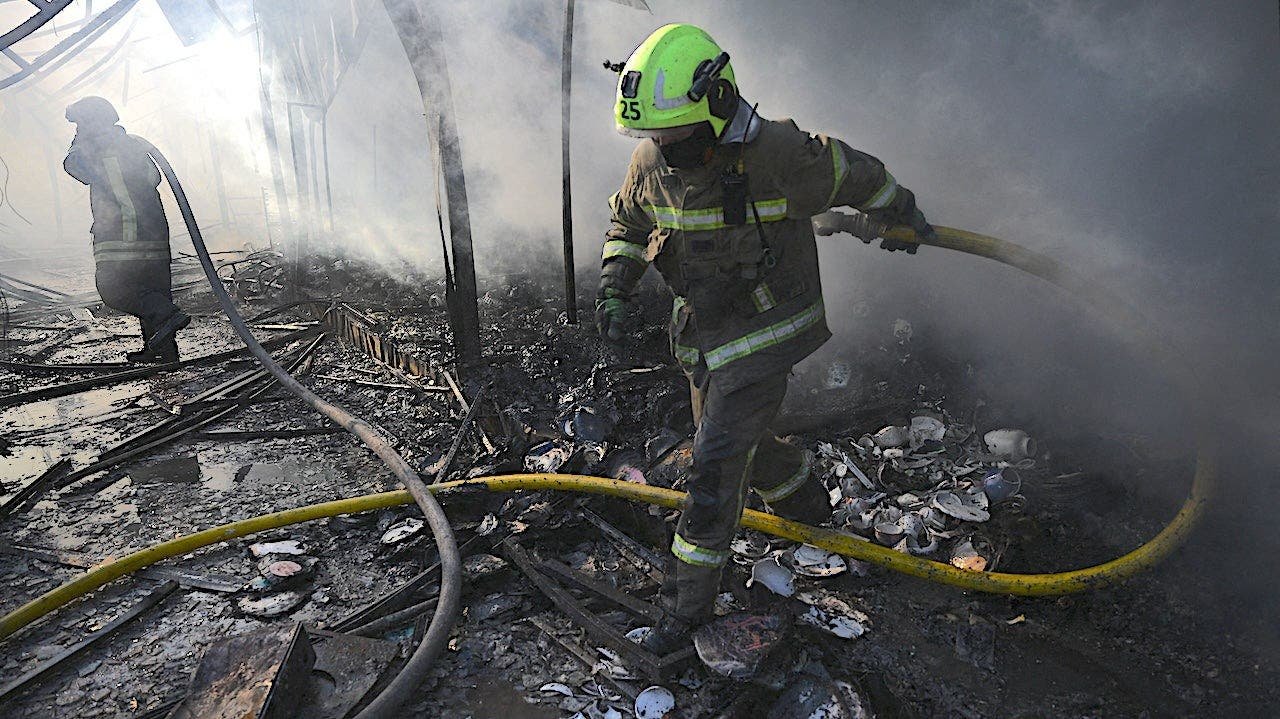
Ukrainian firefighters work to extinguish a fire at a market following a Russian missile strike in Kyiv on overnight into Thursday morning. Russian strikes killed at least eight people and wounded more than a dozen others across Ukraine, authorities said, triggering renewed calls from Kyiv for its allies to send air defense supplies. (AFP)
The disbursement is part of a more than $100 billion loan approved by the EU earlier this year and follows the roughly $3.5 billion installment on June 25 and $4.5 billion on June 30.
Polish forces detected an unidentified object moving west through the country’s airspace shortly before 4 a.m. An F-16 was dispatched to intercept it, but the object disappeared from radar minutes later. Authorities subsequently found a crater about 33 feet wide and scattered debris in farmland near Tarnawa-Kolonia, about 1.2 miles from the closest buildings.
Polish Prime Minister Donald Tusk said initial evidence indicated the object was a Russian Kh-101 missile, although investigators were still working to confirm its type and origin.
THE TWO MOST IMPORTANT AMERICAN WEAPONS SYSTEMS NATO IS EAGER TO HAVE
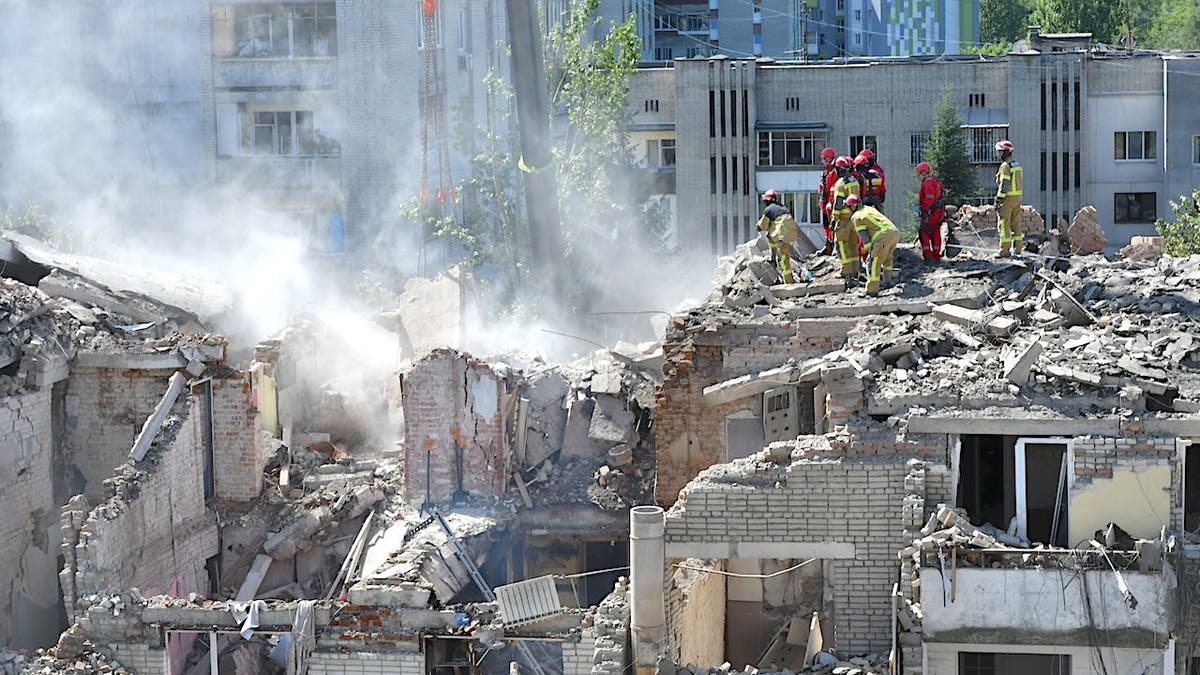
Emergency workers use heavy equipment to clear rubble from apartment buildings in Lviv, the westernmost city in Ukraine and the closest to NATO ally Poland, after a Russian missile attack Thursday, July 30, 2026. (Anadolu)
«All the indications are that it was a Russian Kh-101,» Tusk said, adding that Polish forces were prepared to shoot it down if it had continued flying toward a populated area.
He added the U.S. is interested in joining the investigation, which has initially determined the missile was not intended for Poland territory. The fate of the Ukraine-Russian war might be decided within the next 100 days, Tusk told reporters.
The threat to a NATO ally is a new frontier in the long-running war and comes after Zelenskyy pressed senators to advance Graham’s sweeping sanctions package. Also, Trump and Zelenskyy discussed U.S. licenses allowing Ukraine to produce Patriot interceptors, along with other defense cooperation and efforts to revive stalled diplomacy with Moscow.
Six people, including two girls ages 5 and 12, were killed when a Russian Iskander-M ballistic missile struck a private home housing a large family near Kryvyi Rih, according to local officials. Seven others were reported killed in Kyiv and elsewhere in the Dnipropetrovsk and Poltava regions as the casualty count rose during rescue operations.
‘WRITTEN IN OUR DNA’: POLISH PILOTS WHO REMEMBER SOVIET RULE PREPARE FOR AMERICA’S MOST LETHAL FIGHTER JET
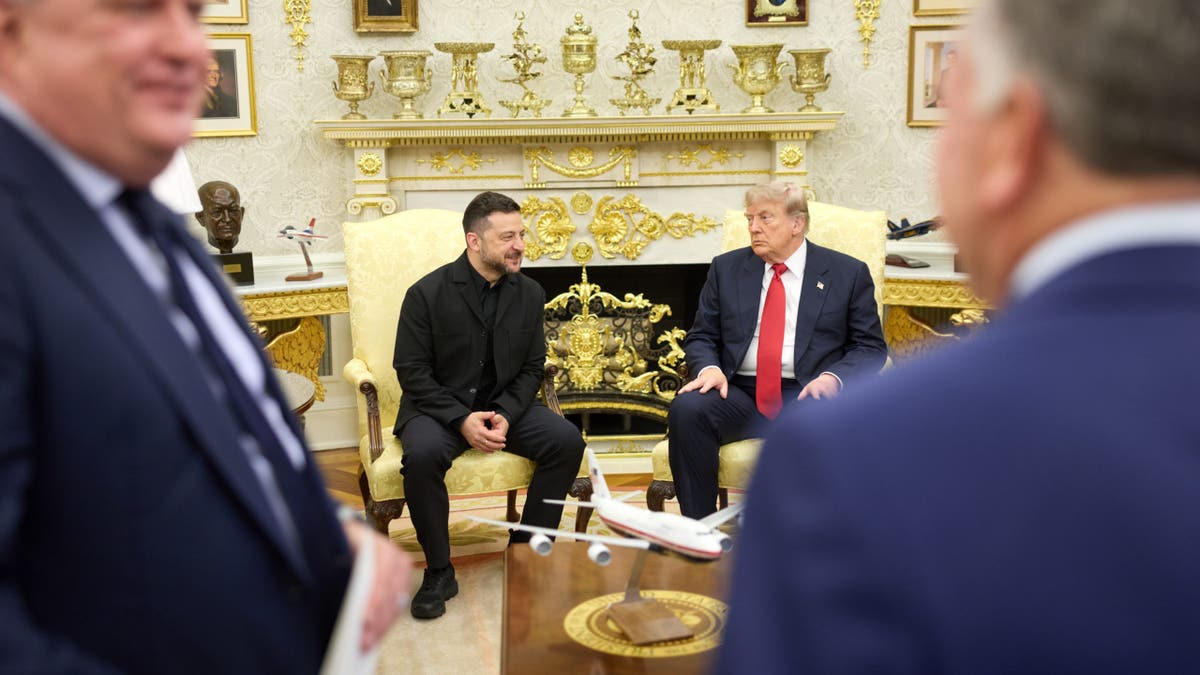
Ukrainian President Volodymyr Zelenskyy met with President Donald Trump at the White House during his Tuesday visit to Washington, D.C.
«A dark night,» Oleksandr Vilkul, the head of Kryvyi Rih’s defense council, wrote on Telegram. Eight people were wounded in the strike on the home.
The person killed in Kyiv was a 31-year-old man, while two others were wounded, according to Ukrainian police. Russian strikes damaged residential buildings, vehicles, storage facilities, a market and a garage complex in the capital, where air raid warnings lasted more than five hours and thousands of residents sheltered in subway stations.
In Lviv, about 40 miles from the Polish border, emergency crews searched damaged apartment buildings for people trapped beneath concrete and debris. Thirty people, including children, were reported injured. More than 20 residential buildings, a school and two kindergartens were damaged, officials said.
«I was terrified watching the rescuers go beneath those concrete slabs,» one Lviv resident told Reuters as crews pulled a boy from a damaged building.
Ukraine’s air force said its defenses intercepted 55 missiles and 265 drones. But only one of nine ballistic missiles was shot down, while 11 missiles and 17 drones struck targets at 20 locations.
The U.S.-made Patriot is the only system currently in Ukraine’s arsenal capable of reliably intercepting Russian ballistic missiles, which travel at several times the speed of sound. Zelenskyy has repeatedly warned that Patriot interceptors are arriving too slowly and in insufficient numbers.
During his Tuesday meeting with Trump, Zelenskyy said the leaders discussed licenses for Patriot interceptor production in Ukraine. He also met with Lockheed Martin executives and told senators that domestic production would be a long-term solution but would not address Ukraine’s immediate shortage of missiles. European countries have offered to pay for additional U.S.-made interceptors.
Zelenskyy’s Washington visit coincided with Senate consideration of the Lindsey O. Graham Sanctioning Russia and Iran Act of 2026, named for the longtime defense hawk and outspoken Ukraine supporter who died unexpectedly earlier this month.
The Senate voted 86-12 Tuesday to clear an initial procedural hurdle and voted 84-12 Wednesday to formally proceed with the legislation. Additional votes were still required before final passage.
The package would impose sanctions on Russian officials, oligarchs, financial institutions, energy projects and vessels accused of helping Moscow evade existing restrictions. It would also authorize tariffs of up to 100% on goods from the five largest purchasers of Russian oil and natural gas and the leading countries facilitating sanctions evasion.
CLICK HERE TO DOWNLOAD THE FOX NEWS APP
Graham negotiated the revised package with the White House shortly before his death. The legislation also includes an extension of sanctions targeting Iran’s energy and weapons sectors, a provision sought by the Trump administration.
Zelenskyy met with a bipartisan group of senators before the procedural votes and called the legislation an important signal to Russia, Europe and the Ukrainian people. He watched the Senate vote from the chamber’s gallery after attending Graham’s funeral at Washington National Cathedral.
Reuters and The Associated Press contributed to this report.
nato, wars, ukraine, volodymyr zelenskyy, russia
INTERNACIONAL
Hawley moves to close federal cash prize loopholes after Fauci ‘got rich while millions of people died’

NEWYou can now listen to Fox News articles!
Sen. Josh Hawley, R-Mo., is introducing legislation to block federal bureaucrats from accepting cash prizes on Thursday, just a day after laying into Dr. Anthony Fauci for receiving what Hawley said was over $1 million during the COVID-19 pandemic.
Hawley accused Fauci during a Wednesday Senate hearing of exploiting loopholes in federal laws that already prohibit government employees from soliciting rewards like cash prizes. Hawley’s bill, dubbed the No Cash Prizes for Bureaucrats Act, would close those loopholes.
«No federal bureaucrat should accept cash prizes while on the job. That’s why I’m introducing legislation to bar federal employees from accepting cash prizes or soliciting awards. Fauci got rich while millions of people died. It can never happen again,» Hawley told Fox News Digital in a statement.
TOP 5 MOMENTS FROM FAUCI’S HEARING: PAUL BOOTS LAWYER, MORENO ERUPTS AS CONTEMPT VOTE LOOMS
Sen. Josh Hawley, R-Mo., speaks in front of a board with an image of Anthony Fauci, the former Director of the National Institute of Allergy and Infectious Diseases and medical advisor to several U.S. presidents, as Fauci (not pictured) attends a U.S. Senate Homeland Security and Governmental Affairs Committee on Capitol Hill in Washington, D.C., U.S., July 29, 2026. Anthony Fauci declined to answer questions, invoking his Fifth Amendment right against self-incrimination. (REUTERS/Nathan Howard)
Hawley cited public records showing that Fauci, while director of the National Institutes of Health, used employees to solicit at least eight cash awards for himself, with one award check alone totaling $900,000.
The new legislation would block federal employees from receiving rewards for medicine and research as well as block employees from soliciting such rewards. It would also strengthen existing federal regulations that block NIH officials from using their or a subordinate’s official duty time to solicit rewards.
The bill comes after Hawley thrashed Fauci during a Wednesday hearing with the Homeland Security and Governmental Affairs Committee, during which Fauci invoked the Fifth Amendment over 100 times.
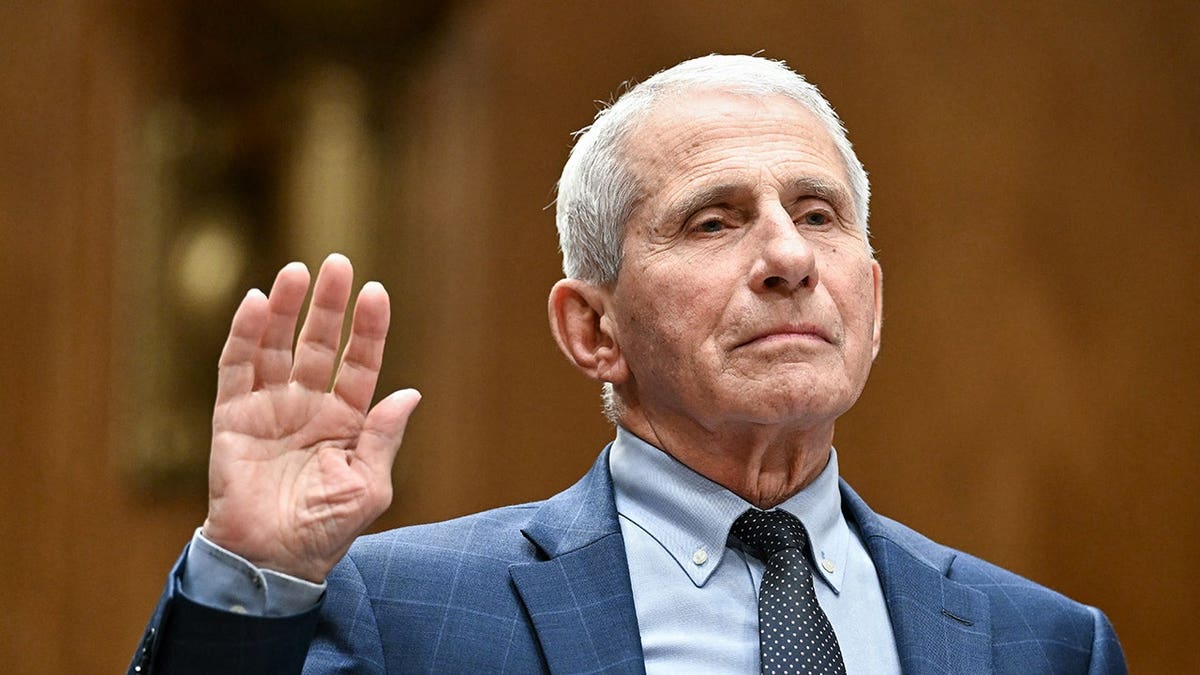
Dr. Anthony Fauci is sworn in during a Senate Homeland Security and Governmental Affairs committee hearing on Capitol Hill in Washington, DC, on July 29, 2026. Dr. Fauci, the former Director of the National Institute of Allergy and Infectious Diseases, is testifying after Senator Rand Paul, Republican from Kentucky, released more than 1000 pages of Fauci’s diary entries from the COVID-19 pandemic. (Alex Wroblewski / AFP via Getty Images)
RAND PAUL SEEKS CONTEMPT CHARGES AFTER FAUCI INVOKES FIFTH AMENDMENT MORE THAN 100 TIMES
«But I think I know why you’re doing it,» Hawley said of Fauci’s refusal to testify. «It’s because you don’t want to answer questions. It’s because you did all kinds of terrible things. It’s because during the pandemic, you got rich … while people were dying.»
«You were using federal employees with taxpayer money to apply for and solicit cash prizes for you personally, cash prizes totaling over $1 million,» Hawley said. «You did all of that during the pandemic, didn’t you?»
Rather than respond to Hawley’s questions, Fauci repeatedly said, «On the advice of counsel, I respectfully decline to answer based upon my rights under the Fifth Amendment to the Constitution.»
FAUCI’S NEWLY RELEASED COVID DIARIES REVEAL BIZARRE FIXATION ON FAME AS PANDEMIC DEATHS MOUNTED
Hawley then pointed to what he described as internal emails from Fauci’s staff, including one from former chief of staff Greg Folkers discussing a nomination for the Dan David Prize. According to Hawley, the email asked federal employees to bolster the COVID-19 section of Fauci’s nomination by providing language detailing his pandemic response.
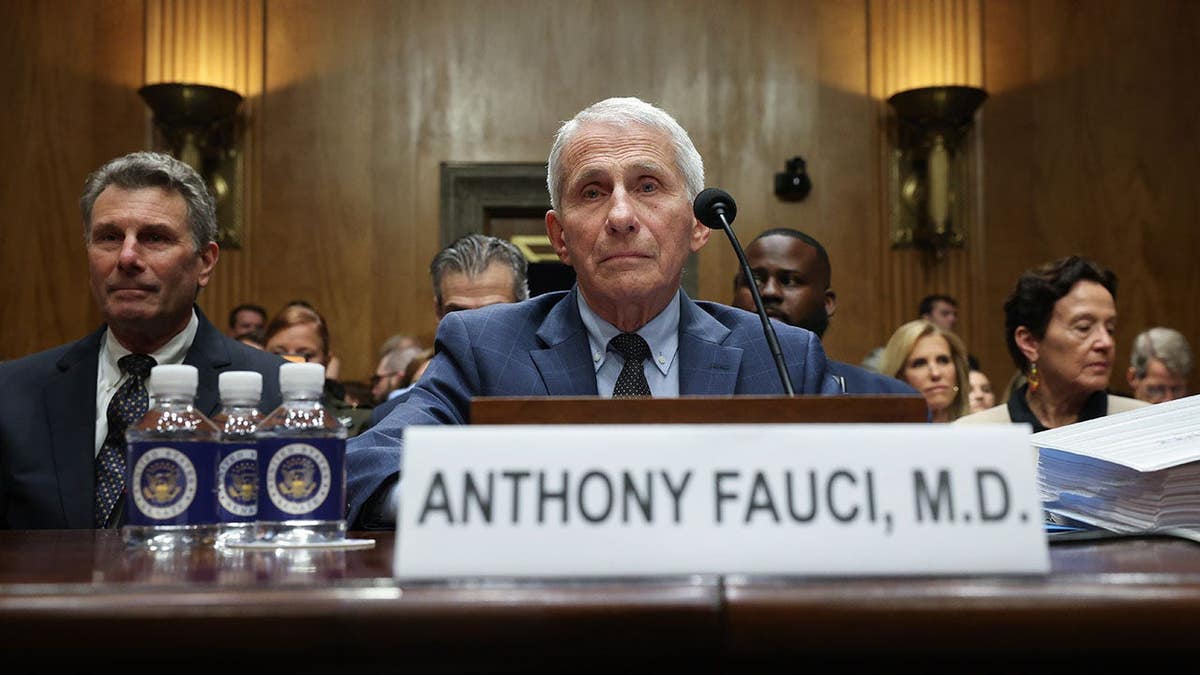
Former NIH Director Anthony Fauci testifies before the Senate Homeland Security and Governmental Affairs Committee in Washington, D.C., on July 29, 2026. Fauci was expected to be questioned about his diary entries during his handling of the COVID-19 pandemic. (Getty Images)
«We’re working on this nomination for the Dan David Award for Fauci,» Hawley read from the email. «We need to beef up the COVID part.»
Hawley said the Dan David Award carried a $900,000 cash prize and claimed Fauci used federal employees to help obtain it. He further accused Fauci of using government staff and resources to pursue at least eight additional cash awards, including honors from the Partnership for Public Service, the Adelson Prize, the Smithsonian Institution, the National Academy of Medicine and the CDC Foundation.
CLICK HERE TO DOWNLOAD THE FOX NEWS APP
«In fact, you turned your staff into a full-time application machine,» Hawley said. «You actually wrote to people and said, ‘Do you think maybe I’d qualify?’»
Fox News’ Stephen Sorace contributed to this report.
congress, anthony fauci, senate elections, fox news media, politics

Todo lo que se sabe sobre el trágico accidente del helicóptero en San Juan y qué investiga la Justicia

El influencer-Youtuber más querido del país superó una crisis por besar a otra mujer, fue papá, tardó 6 días en darlo a conocer y desde entonces es pura queja: «Mi hijo ya perdió con…»

A qué hora hablará Javier Milei por cadena nacional

Días templados y una jornada de lluvias y viento: así estará el primer fin de semana de agosto en el AMBA

A qué hora se juega O’Higgins vs. Boca y cómo ver hoy EN VIVO los playoffs de la Copa Sudamericana

El despoblamiento del campo no deja «una solución sencilla» a los incendios forestales europeos

Crisis entre Milei y Lula: la trama política, personal y geopolítica detrás del mayor choque diplomático entre Argentina y Brasil

San Isidro: la ballena que quedó varada en un banco de arena murió pese al operativo de rescate

La pelea con Lula y el verdadero desafío que enfrenta Milei

Cómo manejar en el hielo y la nieve: técnicas y precauciones para usar el auto en la montaña en vacaciones de invierno

 POLITICA2 días ago
La pelea con Lula y el verdadero desafío que enfrenta Milei
- ECONOMIA2 días ago
Cómo manejar en el hielo y la nieve: técnicas y precauciones para usar el auto en la montaña en vacaciones de invierno
- ECONOMIA2 días ago
El BCRA cortó la racha de compra y en el mercado vuelan rumores de maniobras para frenar al dólar