
INTERNACIONAL
¡Histórico! Kevin Mejía conquista el oro y hace vibrar a Honduras en Santo Domingo 2026


Kevin Mejía ganó la medalla de oro en lucha grecorromana, en la división de 97 kilogramos, y le dio a Honduras su primer oro en los Juegos Centroamericanos y del Caribe Santo Domingo 2026.
El luchador hondureño firmó un torneo sólido desde sus primeros combates. En el camino hacia la final superó al mexicano Dorian Trejo y al cubano Gabriel Rosillo, dos de los favoritos de la competencia.
La conquista tiene un valor especial para el deporte hondureño, ya que convierte a Kevin Mejía en el primer atleta del país en alcanzar una medalla de oro en lucha grecorromana en este evento regional. Además, representa el primer oro para Honduras en la presente edición de los Juegos.
Nacido el 5 de mayo de 1995 en Tela, departamento de Atlántida, Kevin Mejía ha construido una de las carreras más exitosas del deporte hondureño. Segundo de cinco hermanos, encontró en la lucha grecorromana el camino para convertirse en uno de los atletas más destacados del país.
Su desarrollo deportivo dio un salto en 2011, cuando ingresó al Centro de Alto Rendimiento del Comité Olímpico Hondureño. Ese mismo año comenzó a mostrar su potencial al conquistar una medalla de bronce en el Campeonato Mundial Juvenil de Lucha, disputado en Hungría.
Desde entonces, su crecimiento ha sido constante. En 2015 logró una medalla de plata en los Juegos Panamericanos, con lo que se convirtió en el primer hondureño en obtener una presea individual de ese color en la competencia. Además, fue el único medallista nacional en aquella edición.
Su trayectoria continuó con la incorporación al club alemán SC-Oberlsbach en 2016, experiencia que le permitió competir al más alto nivel internacional y seguir acumulando resultados.

Entre sus mayores conquistas figuran la plata en 2018 en los Juegos Centroamericanos y del Caribe, el bronce en los Juegos Panamericanos de Lima 2019 y otro tercer lugar en el Gran Premio de Francia en 2020.
Uno de los momentos más importantes de su carrera llegó en 2021, cuando se proclamó campeón del Campeonato Panamericano de Lucha y se convirtió en el primer hondureño en alcanzar ese título continental.
En 2023 volvió a confirmar su protagonismo al conquistar el oro en los Juegos Deportivos Centroamericanos y sumar dos medallas de bronce en los Juegos Centroamericanos y del Caribe. Ese mismo año también obtuvo otra medalla de bronce en los Juegos Panamericanos y volvió a ser el único representante hondureño que logró subir al podio.
Kevin Mejía también marcó un precedente para Honduras rumbo a los Juegos Olímpicos de París 2024. Su clasificación directa mediante el Torneo Clasificatorio Olímpico Panamericano lo convirtió en el primer luchador hondureño en conseguir el boleto olímpico por mérito deportivo, sin depender de una plaza de reasignación.

Durante la ceremonia inaugural fue designado coabanderado de la delegación nacional, un reconocimiento reservado para los atletas más destacados del país. Aunque su participación olímpica terminó en la primera ronda frente al uzbeko Rustam Assakalov, su clasificación ya representaba un logro para el deporte hondureño.
A sus 31 años, Kevin Mejía continúa ampliando un palmarés que lo ubica entre los deportistas más exitosos que ha tenido Honduras. Su disciplina, constancia y capacidad para competir frente a las principales potencias de la lucha grecorromana lo han convertido en un referente para las nuevas generaciones.
Con la medalla de oro obtenida en Santo Domingo 2026, el atleta volvió a colocar el nombre de Honduras en la élite del deporte regional.
Corresponsal:Desde Tegucigalpa, Honduras









NEWYou can now listen to Fox News articles!
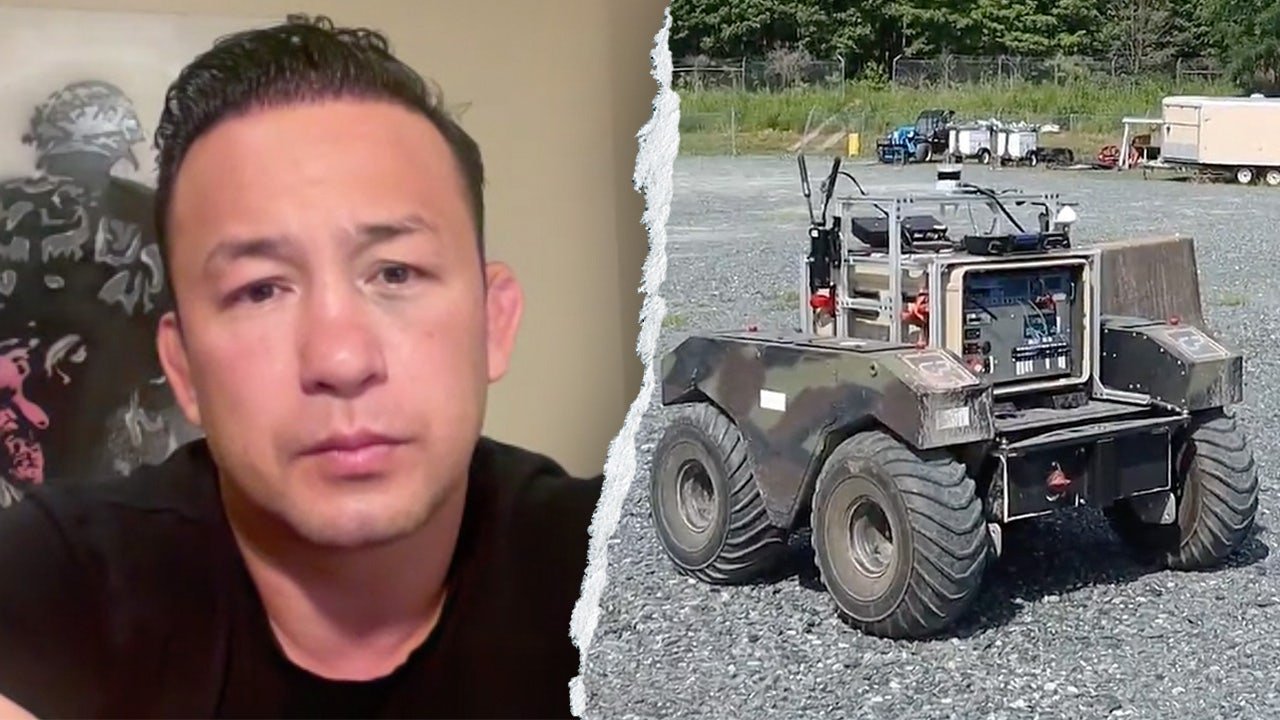
FIRST ON FOX: The U.S. Army is teaming up with an artificial intelligence (AI) company to build an AI «brain» for military robots that can think, understand their surroundings and continue missions even after losing contact with human operators as the race for AI dominance intensifies.
Working with the Army Research Laboratory, defense AI company EdgeRunner AI has developed an onboard AI system that allows military robots to function in the battlefield without relying on cloud computing or an internet connection in environments where connectivity is lost.
«We like to think of robots as the next frontier of AI,» EdgeRunner AI founder and CEO Tyler Saltsman told Fox News Digital.
«Think of them as a very far-out edge device, kind of like a cell phone, a tablet or a laptop. But now what we can do is we can put a brain, or a neural network, right on that robot so that robots can have context when they’re on a mission helping the warfighter.»
CHINA IS BUILDING AN AI WAR MACHINE. WASHINGTON MUST WAKE UP BEFORE IT’S TOO LATE
EdgeRunner AI founder and CEO Tyler Saltsman told Fox News Digital about the company’s work with the U.S. Army to develop an AI «brain» for the next generation of military robots. (Fox News Digital/EdgeRunner AI)
The partnership comes as the U.S. and China race to integrate AI into their militaries, with both countries viewing AI as critical to maintaining a technological edge in future conflicts.
Saltsman said it’s important for the U.S. to stay ahead in the global AI race, calling China’s dominance in drone manufacturing «problematic.»
«Whether or not China’s ahead of us is debatable, but if China is, it’s not by much,» he said.
Saltsman said today’s AI is «too generalized,» which is why his company is developing technology built for specific military missions.
«Warfighters don’t need 19th-century poetry,» he said. «They need specific intelligence to his or her occupation in order to make better decisions in the heat of battle and that can increase the probability of winning the fight.»
Working alongside aerial drones, the AI is designed to help robots «problem solve through different routes» while detecting explosives, carrying ammunition, scouting routes and reporting enemy activity.
UKRAINE’S BATTLEFIELD IS TRANSFORMING THE FUTURE OF NATO
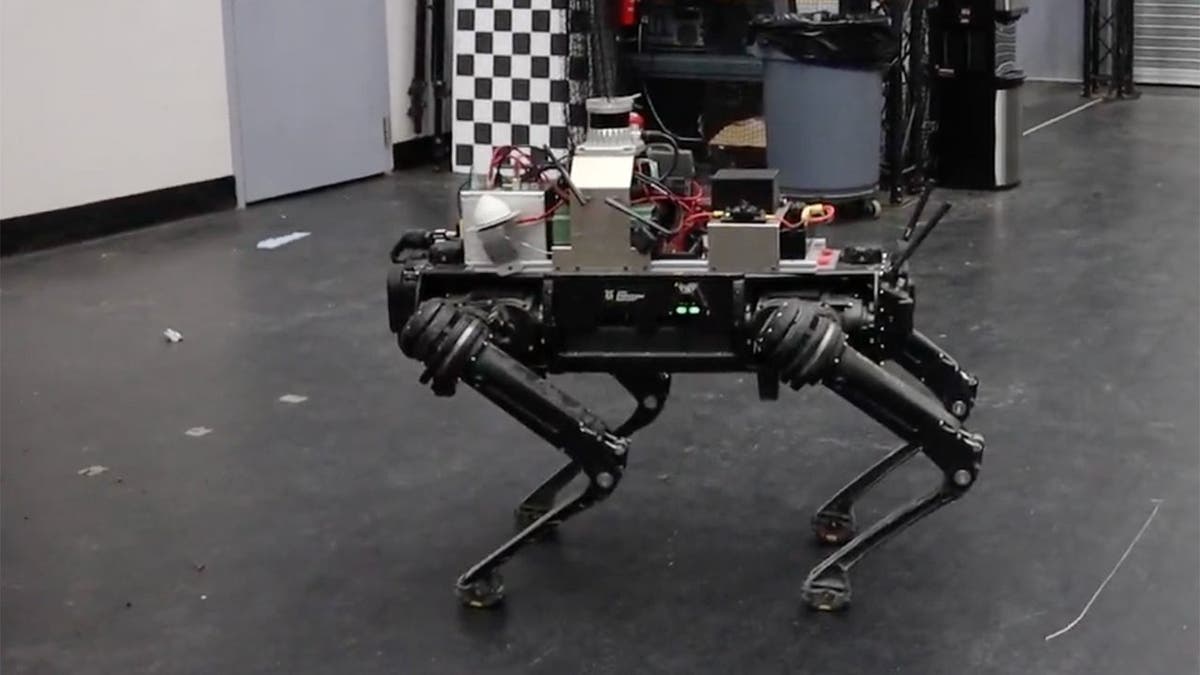
Saltsman said the technology remains in the «development phase» and gives military robots the ability to understand what they see, not just detect it. (EdgeRunner AI)
«As you combine them together, you get a much better clarity of the battlefield and increased situational awareness,» he said.
When communications are cut off, Saltsman said the military will need autonomous systems that can continue making decisions on their own.
«You can have a human pilot that controls the ground robot or the drone in the air,» he said. «But then if they were to be jammed by a radar jammer and lose connectivity, then the neural network on that robot can still continue the mission and still aid the warfighter.»
Saltsman argued the military «can’t rely on internet access in war,» warning that depending on systems like SpaceX’s Starlink could add a «risk» to missions.
«The problem with Starlink is if you use it, you’re effectively showing the enemy where you are, so you might as well be wearing a beacon on you saying, ‘Hey, here’s where I’m located,’» he said.
INSIDE CHINA’S AI ‘WOLF PACK’ DRONES BUILT WITH TAIWAN CONFLICT IN MIND
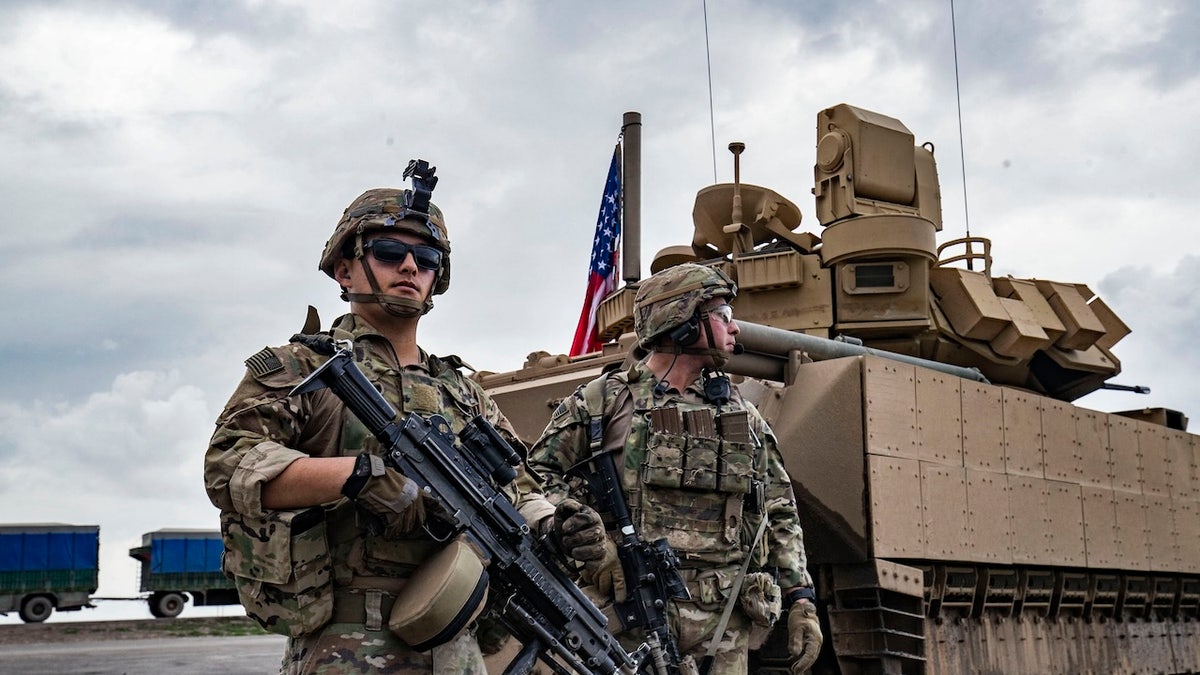
U.S. Army soldiers stand near an armored military vehicle on the outskirts of Rumaylan in Syria’s northeastern Hasakeh province, bordering Turkey, on March 27, 2023. (Delil Souleiman/AFP via Getty Images)
Pointing to the Russia-Ukraine war, Saltsman said the success of drones has sparked a new push for autonomous ground robots.
«As drones have become ubiquitous, now ground robots are like the next thing and then eventually humanoid robots so robots that move and look like humans,» he said.
Despite the push to advance military AI, Saltsman said safety can’t take a back seat and that the technology is built using «transparent» datasets to «understand the biases» of the AI.
«That’s another thing that differentiates us,» he said. «One of the problems is how to use AI safely, how to put guardrails around it and how to understand it.»
While the technology remains in the «development phase,» Saltsman said the breakthrough gives robots the ability to understand what they see, not just detect it.
«You can put computer vision models on robots so they can see, but if they don’t understand the context of what they’re seeing, they’re not useful and that’s what we’re solving for.»
politics, us army, artificial intelligence, robots, tech
INTERNACIONAL
Ceuta migrant surge exposes Spain-Morocco tensions as Islamist groups reportedly seek to exploit border crisis
NEWYou can now listen to Fox News articles!
Thousands of migrants remained stranded in Spain’s North African city of Ceuta on Tuesday as the European Union offered emergency assistance to reinforce the enclave’s border and Spanish authorities investigated whether criminals or suspected jihadists used last week’s chaotic mass crossing to enter European territory.
Approximately 72,000 people entered Ceuta from Morocco, and about 70,000 have since returned, Spanish officials said Tuesday, leaving roughly 2,000 people in the small territory. Reception facilities remained overwhelmed as authorities struggled to shelter hundreds of migrant minors and determine the status of those who remained.
Local authorities were processing 862 migrant minors, who receive special protections under Spanish law and cannot be summarily returned. The Associated Press reported that children were begging for food or sleeping outside after the youth shelter became overwhelmed.
SPAIN DEPLOYS MILITARY AFTER THOUSANDS OF MIGRANTS OVERWHELM BORDER ENCLAVE, AT LEAST 18 DEAD
Migrants who crossed into Spain return to Morocco from the Spanish enclave of Ceuta, Saturday, Aug. 1, 2026. (AP Photo/Bernat Armangue)
The EU offered Spain assistance, including emergency financial support, to strengthen protection of its external border in Ceuta, European Commissioner for Internal Affairs and Migration Magnus Brunner said Tuesday following an emergency meeting of the bloc’s ministers in Brussels.
Brunner said the unprecedented crossing was fueled by criminal smuggling networks and disinformation spread through social media, as Spanish authorities were examining whether known criminals or suspected jihadists exploited the scale and disorder of the crossing to enter Ceuta undetected.
Spain’s National Police and Guardia Civil were reviewing video of the crossings and checking people who remained in the territory against criminal and counterterrorism databases, according to El Confidencial, which cited Spanish Interior Ministry sources.

Map depicting Spain, Morocco, and Spain’s Cueta, which borders Morocco. (2026 EarthStar Geographics, OpenMapTiles, OpenStreetMap contributors)
The Spanish outlet reported that authorities were searching for known criminals and possible jihadists who may have entered among the tens of thousands who crossed. Interior Ministry sources acknowledged that the sheer scale of the surge created a genuine infiltration risk, according to the report.
El Confidencial said the concern was heightened by Ceuta’s proximity to Fnideq, also known as Castillejos, a Moroccan border town that has figured in previous jihadist recruitment investigations. Authorities have previously dismantled extremist cells operating across the Ceuta-Fnideq border area, while hundreds of people from northern Morocco traveled to join ISIS and other terrorist groups in Syria and Iraq during the mid-2010s, the outlet reported.
TRUMP BLASTS SPAIN MIGRANT SURGE AS ‘CATASTROPHE,’ WARNS US COULD FACE WORSE IF DEMOCRATS REGAIN POWER

Escorted by the Spanish army, migrants who crossed into Spain return to Morocco from the Spanish enclave of Ceuta on Saturday, Aug. 1, 2026. (AP Photo/Antonio Sempere)
The crisis is also creating an opening for Islamist movements seeking to weaken confidence in Morocco’s government, according to Zineb Riboua, a research fellow at the Hudson Institute.
Riboua said in an article that Moroccan Islamists have spent years portraying the monarchy as overly secular and pro-Western, attacking its relationships with the United States and Israel and encouraging the belief that young Moroccans have little future at home.
At the same time, she wrote, Islamist voices have promoted an idealized image of Europe as a place where prosperity and legal status can be easily obtained.
Riboua said the Ceuta crisis allows those movements to transform public frustration over migration, unemployment and economic conditions into a broader political attack on the Moroccan state ahead of the national elections in September.
Evidence has separately emerged that the mass crossing was preceded by an extensive online mobilization campaign.

Migrants inundating Spain’s Ceuta. (FARO DE CEUTA via AP)
An open-source intelligence report prepared by Golden Owl Intelligence traced weeks of activity across TikTok, Facebook, Instagram and WhatsApp, including misleading interpretations of Spanish immigration law and practical information about routes, meeting points and recommended crossing times.
The report estimated that the content generated more than 11 million potential impressions through posts, videos, comments and interactions. It also identified messaging groups administered through telephone numbers carrying Algerian international codes.
The campaign accelerated after Spain’s Supreme Court issued a July 8 ruling concerning the immediate return of migrants intercepted at sea near Ceuta and Melilla, according to the report. Simplified and misleading interpretations of the decision, combined with confusion surrounding Spain’s policy to regularize hundreds of thousands of undocumented migrants, were presented online as evidence that people who reached Spanish territory would be allowed to remain and eventually obtain legal status.
The investigation documented the later circulation of maps, swimming routes, transportation information and suggested departure points as tens of thousands of people began moving toward the border.
MIGRANT CRISIS PUSHES ITALY TO RESTORE BORDER CHECKS WITH SPAIN, TESTING EUROPE’S OPEN-BORDER SYSTEM
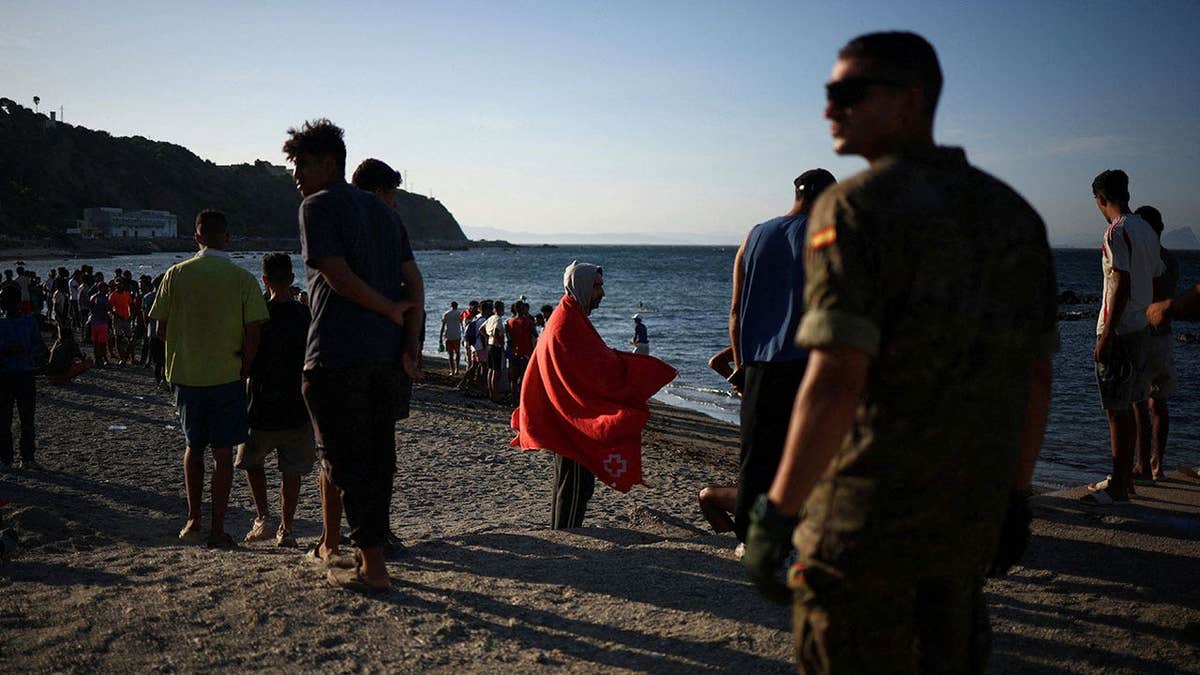
Migrants wait outside Ceuta’s temporary migrant center (CETI), which is currently at full capacity, following mass crossings of migrants on foot and by sea from Morocco into Spanish territory, in Ceuta, Spain, August 3, 2026. (Pedro Nunes/Reuters)
Morocco’s Interior Ministry spokesman Rachid El Khalfi said at a news conference Sunday that the surge resulted from several overlapping factors, including the exploitation of digital platforms, misleading information, human-trafficking networks and inaccurate interpretations of legal and administrative developments.
Khalfi said the messaging created the false impression that the border was open and that people could reach European territory without legal consequences. He said Moroccan prosecutors had opened investigations to identify those responsible and determine the appropriate legal consequences.
Reuters and the Associated Press have independently documented cases in which online claims influenced people to travel toward Ceuta. Reuters interviewed a Moroccan teenager who said Instagram videos inspired him and his cousin to make the journey, while a Moroccan human-rights activist told the AP that social-media posts initially claimed the border was open and later promoted a misleading interpretation of the Supreme Court ruling.
The crisis has also placed Spain’s intelligence services and its relationship with Morocco under scrutiny.
El País and Cadena SER reported, citing officials familiar with Spain’s intelligence assessment, that Morocco did not plan the mass crossing but allowed it to unfold after border controls were gradually relaxed.
Spanish Interior Minister Fernando Grande-Marlaska said Spain’s foreign intelligence agency had not warned him of an imminent surge of that magnitude.
WHITE HOUSE BLASTS SPANISH GOVERNMENT AS THOUSANDS OF MIGRANTS SURGE FROM MOROCCO, EMERGENCY REQUEST DENIED
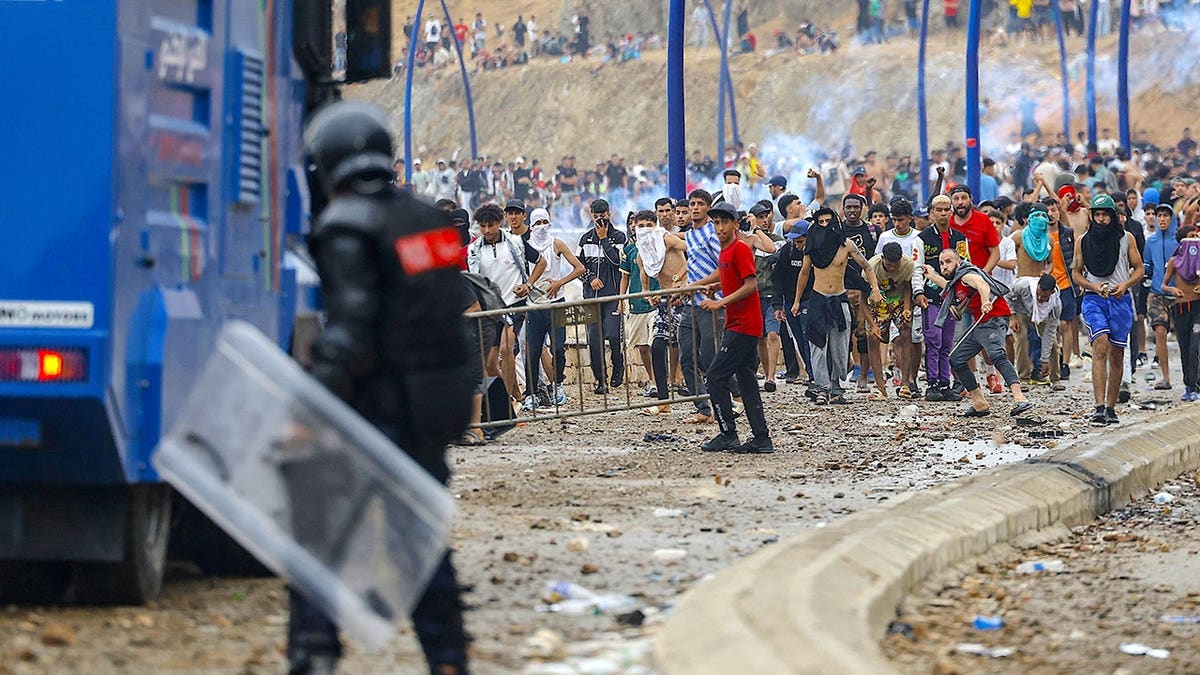
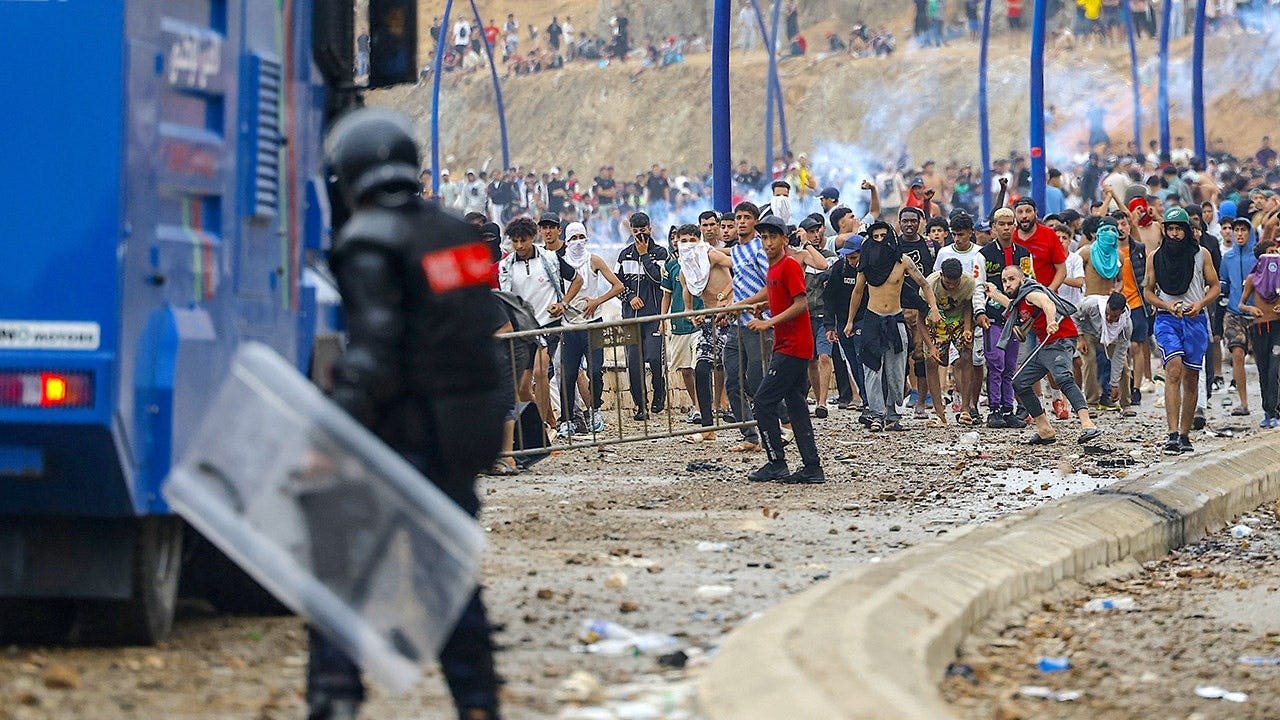
Moroccan security forces clash with migrants attempting to cross into Spain’s North African enclave of Ceuta near the town of Fnideq, on the Morocco-Spain border, on July 31, 2026. (Abdel Majid Bziouat / AFP via Getty Images)
Morocco has denied deliberately orchestrating the crossing. Interior Ministry spokesman Rachid Khalfi blamed the surge on online misinformation, human-trafficking networks and distorted interpretations of Spanish legal and administrative developments, according to The Jerusalem Post. The ministry said Morocco remained committed to international cooperation against irregular migration and human trafficking.
Spanish Foreign Minister José Manuel Albares defended Rabat’s response, saying Moroccan authorities quickly provided police support and helped facilitate the return of most of those who crossed.
Juan Jesus Vivas Lara, president of the autonomous city of Ceuta, offered a sharply different assessment, telling El País that many Ceuta residents believed Morocco had allowed, if not orchestrated, the surge.
«Morocco has shown us that it isn’t reliable,» Vivas said. «There’s no alternative but to put in place whatever means are necessary to ensure it cannot do this again.»
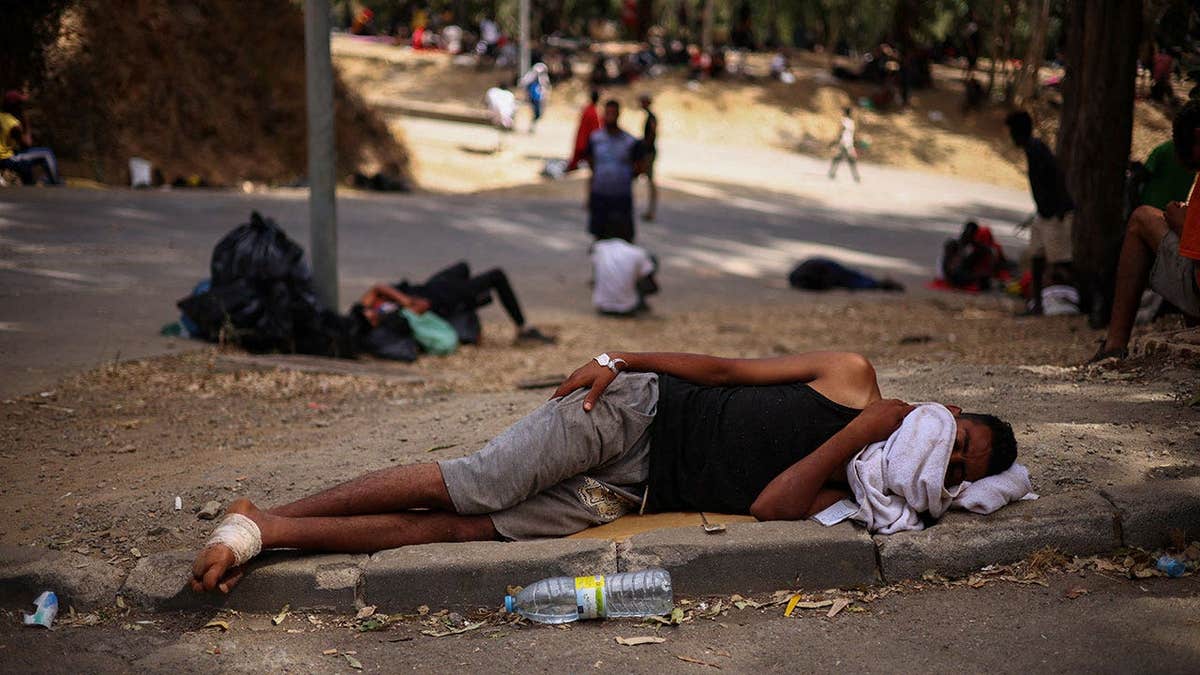
Migrants wait outside Ceuta’s temporary migrant center (CETI), which is currently at full capacity, following mass crossings of migrants on foot and by sea from Morocco into Spanish territory, in Ceuta, Spain, August 3, 2026. (Pedro Nunes/Reuters)
Fox News Digital reached out to the Moroccan government for comment but did not receive a response by the time of publication.
Reuters and the Associated Press contributed to this report.
spain, illegal immigrants, europe, world
INTERNACIONAL
La extrema derecha europea, antes marginal, ahora marca la pauta en la crisis migratoria española


Arthur Melo convence a Spalletti en la Juventus

El Gobierno anunció que aplicará sanciones a los prácticos por el paro de actividades

Son dos mujeres muy importantes de la pantalla, salieron con el mismo hombre y un detalle íntimo hizo que estalle el escándalo

Battlefield robots open new front in innovation war with major US adversary

Facundo Moyano, un rebelde con perfil propio dentro del clan familiar que encabeza el líder del Sindicato de Camioneros

Mercados: cede el riesgo país argentino mientras Wall Street sondea nuevos máximos y cae el petróleo

“Vamos a acelerar con todo”: el objetivo del Gobierno por las reformas y la agenda electoral de cara al 2027

Reelecciones indefinidas: el oficialismo bonaerense niega que busque ampliar la Legislatura como parte de una reforma política para beneficiar a los intendentes

Javier Milei cruzó a Victoria Villarruel y elevó la tensión: “Es una opositora, replica los argumentos kirchneristas”

¡Chau Luck Ra! La salida de soltera de La Joaqui, muy bien acompañada, a días de su separación
-
 POLITICA2 días ago
“Vamos a acelerar con todo”: el objetivo del Gobierno por las reformas y la agenda electoral de cara al 2027
-
 POLITICA2 días ago
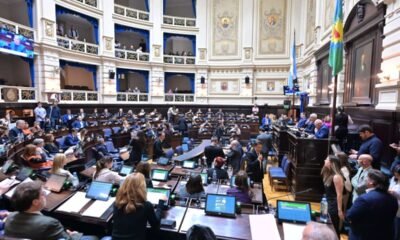
Reelecciones indefinidas: el oficialismo bonaerense niega que busque ampliar la Legislatura como parte de una reforma política para beneficiar a los intendentes
-
 POLITICA18 horas ago
Javier Milei cruzó a Victoria Villarruel y elevó la tensión: “Es una opositora, replica los argumentos kirchneristas”