INTERNACIONAL
House GOP pushes back on Senate’s ‘skinny’ plan to end record-breaking DHS shutdown


NEWYou can now listen to Fox News articles!
Senate Republicans are forging ahead with a two-step plan to end the record-breaking Department of Homeland Security (DHS) shutdown, but their House counterparts tell Fox News Digital they are not on board with the strategy.
A swath of House Republicans have voiced growing frustration that a forthcoming GOP-only funding package does not include other policy priorities beyond funding immigration enforcement ahead of November’s midterm elections.
«I think we’ve got one last opportunity for reconciliation,» Rep. Pat Harrigan, R-N.C., told Fox News Digital in an interview. «I know some people are talking about two, but I think we’ve got one guaranteed shot.»
«I like the idea of making it bigger,» he added, mentioning defense funding and affordability concerns. «We’ve got a lot of important stuff to do and we need to get it done.»
Rep. Pat Harrigan, R-N.C., is advocating for a larger budget reconciliation package that could include defense funding and cost-of-living priorities, but he told Fox News Digital he would ultimately defer to House GOP leadership’s guidance.
ICE SHUTDOWN FIGHT MIGHT RESTRICT FEMA, COAST GUARD TO ‘LIFE-THREATENING’ EMERGENCIES
«I’m undecided,» Rep. Clay Higgins, R-La., a member of the House Freedom Caucus, told Fox News Digital, referring to the Senate’s approach. «I’ve got issues with it. We believe it should be more expansive.»
The Senate approved a budget resolution early Thursday largely along party lines that would fund Immigration and Customs Enforcement (ICE) and U.S. Customs and Border Protection (CBP) for the rest of President Donald Trump’s term.
Republicans are pursuing the partisan budget reconciliation process to bypass Democrats and fund immigration enforcement with GOP votes after Senate Minority Leader Chuck Schumer, D-N.Y., refused to fund the department without sweeping reforms added to the proposal.
House Speaker Mike Johnson, R-La., is racing to pass the Senate’s budget resolution as early as next week, at which point he can afford to lose only a handful of votes. President Donald Trump has set a June 1 deadline to fully fund immigration enforcement through a GOP-only bill, forcing Republicans to act quickly with little room for error.
Before the DHS shutdown, House Republican leadership teased a budget reconciliation sequel to the One Big Beautiful Bill Act that would incorporate a diverse set of priorities, such as a defense supplemental package, spending cuts targeting fraud and policies aimed at lowering the cost of living.
Concerns among rank-and-file Republicans that a forthcoming budget bill will not include those provisions threaten to jeopardize that timeline.
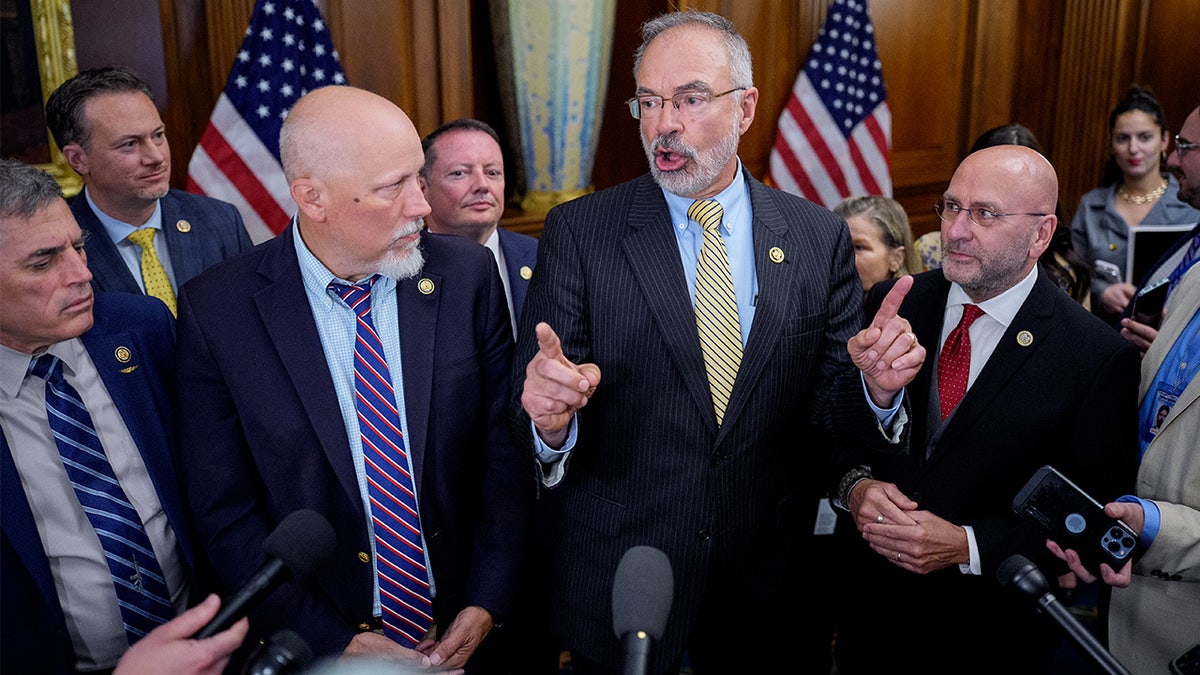
Members of the conservative House Freedom Caucus have voiced frustration about the Senate’s «skinny» budget reconciliation package to fund immigration enforcement. (Andrew Harnik/Getty Images)
House conservatives have also fiercely objected to the Senate passing a bipartisan partial DHS bill carving out ICE and the Border Patrol from the normal appropriations process and keeping those two agencies unfunded.
After Democrats in the upper chamber repeatedly filibustered DHS funding bills, the Senate approved legislation funding parts of the department that Democrats would support. The House has yet to take up that legislation.
«The bill the Senate sent over is totally unacceptable to conservatives,» House Freedom Caucus Chairman Andy Harris, R-Md., said Thursday, referring to the upper chamber’s partial DHS bill. «We will never vote or support in any way a bill that puts in a zero» for immigration enforcement, he added.
«The very premise of needing a reconciliation bill to pass funding for ICE and CBP is repulsive to me,» Higgins told Fox News Digital. «That sort of thing has never been done up here, to take an appropriations bill and sort of cherry pick what you don’t want in it and isolate whole agencies … I’m against that whole premise.»
BEHIND THE SCENES OF CONGRESS’ ELEVENTH-HOUR RUSH TO FUND THE DHS

DHS warned this week it is short on funds to continue paying its employees through May. (Photo by Heather Diehl/Getty Images)
Senate Republicans are largely unified on keeping the package as narrow as possible out of concern that adding more to the pot could stall lawmakers’ progress.
Senate Budget Committee Chairman Lindsey Graham, R-S.C., has sought to expedite the passage of a forthcoming budget bill by involving in the process just two panels — the Senate Judiciary and the Senate Homeland Security and Governmental Affairs Committees.
«The vast majority of Republicans stuck together to do something Democrats are refusing to do: Fully fund the Border Patrol and ICE for three and a half years through the Trump presidency,» Graham said Thursday after the upper chamber adopted the budget blueprint. «As Senate Budget Committee Chairman, I am very proud of my colleagues.»
Still, some Senate Republicans agree with their House colleagues who want to supersize the forthcoming package out of fear that they may not get another shot before the midterms.
Sen. John Kennedy, R-La., argued that Republicans should try to beef up the package despite promises from leadership that there could be a third bite at the apple later in the year.
«I’m not saying anybody’s lying, they’re not. People probably intend to do a third reconciliation bill,» Kennedy said on the Senate floor. «But you’re not looking at Bambi’s baby brother here. There won’t be a third reconciliation bill. You know it … and I know it. This is it. This is the last train leaving the station.»
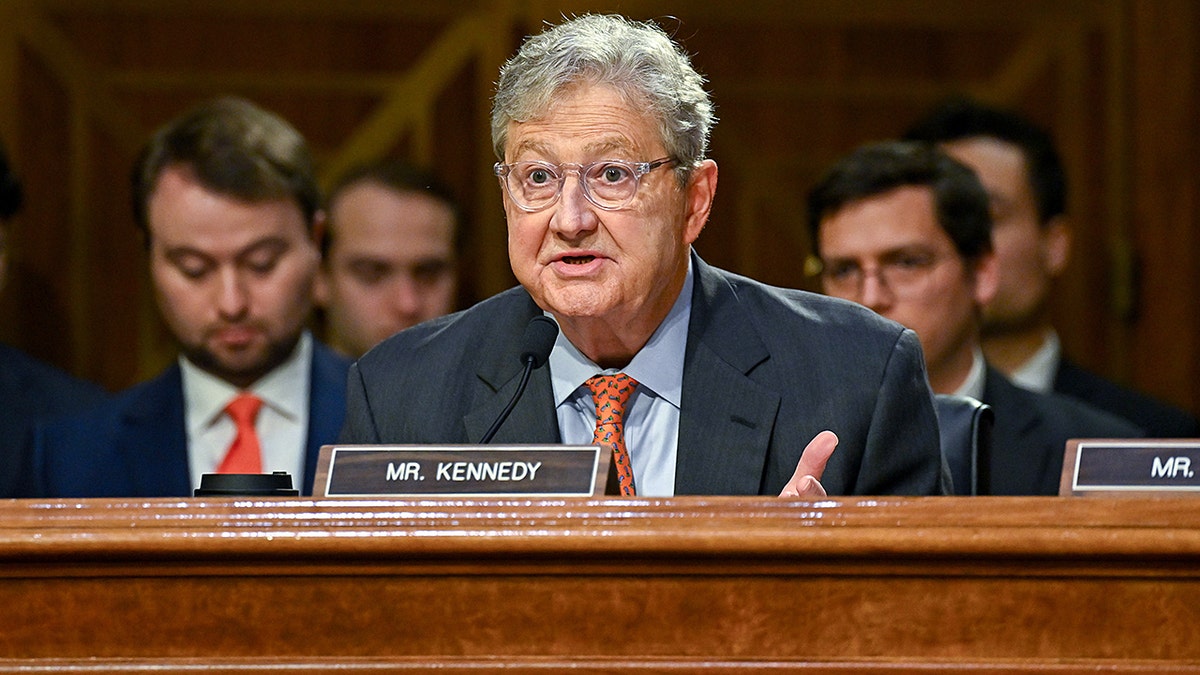
Sen. John Kennedy, R-La., has argued a third budget reconciliation package is unlikely to materialize this year, adding the forthcoming immigration enforcement-focused bill is the «last train leaving the station» ahead of November’s midterm elections. (Graeme Sloan/Bloomberg via Getty Images)
It is unclear whether the House will ultimately modify the Senate’s budget blueprint funding immigration enforcement.
Any changes to the resolution would kick it back to the Senate for reconciliation and require another marathon vote series before Congress could officially unlock the reconciliation process.
CLICK HERE TO DOWNLOAD THE FOX NEWS APP
DHS, meanwhile, has warned this week it is short on funds to continue paying its employees through May.
Earlier in April, Trump ordered the department to use existing funds to provide back pay to federal employees who had been furloughed or reported to work without their salary during the funding lapse, which began in mid-February.
government shutdown, homeland security, immigration, republicans, senate elections, budget house of representatives politics













INTERNACIONAL
Sergio Ramírez, de vicepresidente a “traidor” y exiliado: “Daniel Ortega durará poco pero yo no sé si volveré a Nicaragua”

Sin embargo, le queda bien el escritor Sergio Ramírez a esta sala elegante que es el Círculo de Bellas Artes de Madrid. Sin embargo, aunque está lejos de su tierra, aunque es un exiliado nicaragüense, aunque su casa fue confiscada, aunque ni sus hijos ni sus nietos pueden vivir en su país, aunque carga con todo eso, Ramírez camina altísimo, tranquilo, digno, entre las sillas caoba. Aunque, hay que decirlo, un aire espeso le pesa en los hombros y eso se ve. ¿Cómo podría ser de otra manera?
Ramírez llega de la mano de Tulita, la mujer con la que se casó hace más de 60 años. En esa vida juntos pasaron cosas como que el escritor se uniera al movimiento sandinista, que llegó al gobierno, tras una revolución, en 1979. Entre 1985 y 1990, él fue el vicepresidente de Daniel Ortega en Nicaragua. Después perdieron las elecciones, después -años después- Ramírez se alejó del sandinismo: lo contó todo en su libro Adiós muchachos. Para cuando Ortega retomó el poder, en 2007, ya era un opositor, considerado un enemigo. En 2017 ganó el Premio Cervantes, el Nobel de las letras en español. En 2021 lo acusaron de incitación al odio y lavado de dinero: estaba por salir del país para una gira literaria, así que salió y, en España, el corazón -el de carne- se resintió. Lo internaron. Y ahí andaba cuando, en 2023, lo declararon “traidor a la patria”. Se quedó en España pero, algunas tardes, el consagrado, el Premio Alfaguara, el Premio Cervantes, espía su pueblo en los videos caseros que la gente sube a Tik Tok o a YouTube cuando hay una fiesta.
Todo eso cargan los hombros de Sergio Ramírez cuando llega la confitería del Circulo de Bellas Artes de Madrid. Donde, un poco, la excusa es que hace un mes fue elegido para entrar a la Real Academia Española, en el sillón que antes ocupaba Mario Vargas Llosa.

Por eso, hablaremos del idioma, pero también de cómo se vive en otra variante del idioma en que uno hizo su obra y, un poco de qué pasa y qué pasará en Nicaragua. “Es una dictadura familiar muy tradicional”, dice. Pero también que, con las políticas de Donald Trump, ese gobierno correrá la suerte del de Maduro. Y pronto.
-Ahora que va a estar en la Real Academia, ¿piensa que va a influir más en la lengua que como escritor?
-Influir en la lengua desde la academia me parece que es bastante pretencioso, ¿no?
-Bueno, “limpia, fija y da esplendor” es el lema histórico…
-Yo creo que es una oportunidad de divertirse con las palabras. Que la Academia no es más que un laboratorio de, de palabras. No es un tribunal sino que un observatorio en el que se ve cómo se comportan las palabras, cuáles palabras nuevas surgen, cuáles pasan de moda. Una de las cosas que más me ha llamado la atención es cómo hay palabras que son dadas de baja del diccionario porque ya nadie las usa. Y otras dadas de alta.
-¿Se acuerda de algunas?
-No, pero sí que muchas de las que son dadas de alta vienen del inglés. El idioma es un cuerpo vivo, cambia. Algunas células se mueren, otras nacen… mira todo lo que recibió el español del Río de la Plata del italiano… Entonces, que el español reciba influecia del inglés, sobre todo cuando el español penetra dentro del territorio de Estados Unidos, no es ninguna novedad. No son sólo términos, las estructuras también se modifican.

-¿Por ejemplo?
-Transformar sustantivos en verbos en el inglés es muy común, en el español es más difícil.
-Como “googlear”.
-¡Como “microfonar”, que es una palabra espantosa! ¿Cuál es la gran dificultad? Que cuando una cultura no genera términos nuevos, no le queda más que adaptarlos o copiarlos. Y toda la tecnología se genera en inglés. Así como los términos médicos se generaban en francés en el siglo XIX. Entonces, todo buen médico tenía que saber cómo manejar los términos en francés.
-Y ya estamos hablando de por qué los países que hablan español no generan tecnología. Es imposible no volver a la política.
-No, no generan tecnología. Pero no le pasa solo al español. Alemania no genera tecnología. La tecnología la generan los estadounidenses, los chinos, los indios y, en alguna medida, los japoneses.
-Pero la lengua franca de la tecnología es el inglés.
-Igualmente, el español sigue siendo un idioma muy elástico, muy receptivo, muy adaptable y mantiene su integridad en la diversidad que tiene. Un idioma que se habla en un territorio tan vasto, necesariamente tiene que ser diverso.
-¿Vivir fuera de su país lo hace más consciente de las diferencias del idioma?
-Mucho, mucho. Cuando vienes a vivir aquí -no a pasar unos días, a vivir- tienes que hacer todo un proceso de readaptación de tu oído, de tu lengua y perder el miedo a dejarte ir en otra corriente. A mí no hay nadie que me haga decir “vosotros”. En mi estructura mental el “vosotros” no existe. Eso no, pero sin darse cuenta uno se va haciendo cargo de los términos de la lengua corriente, de la calle.
-¿Cuando pasa el tiempo va haciendo suyos esos términos?
-Sí. Una dificultad del exilio es que el idioma se transforma todos los días. Y cuando te vas a dar cuenta, el idioma que tú hablabas cuando saliste de tu país ya ha mutado totalmente. Entonces me contaban de alguien que vive en otro país y cuando vuelve habla un español de los años ochenta. El que se hablababa cuando se fue, cincuenta años antes.

-La lengua de su país para esa persona quedó cristalizada…
– Y es que lo que suele pasar con el exilio es que uno sueña con volver a un lugar y muchas veces ese lugar ya no existe. Ahora que se han dado estas expulsiones masivas de Estados Unidos, de repente montan a la gente en un avión y aparece en su país, pero no ya es su país. Esta gente vivió ilegal en los Estados Unidos veinte, treinta años y de repente te ponen en un aeropuerto y no tienes para dónde coger. No tienes familiares, no tienes amigos. La ciudad a la que has llegado es otra, las calles son otras.
-¿Le da miedo eso?
-Sí, claro. Por mucho que te esfuerces, siempre vas a volver a un lugar extraño. Yo me asomo a Nicaragua buscando los videítos estos que producen en las redes sociales ahora, domésticos, de TikTok, de YouTube. Y de repente, hace poco estaba viendo unas fiestas patronales de mi pueblo, Masatepe, que es un pueblo pequeño de la sierra. Son unas fiestas patronales, folclóricas, con santo y trono. Y ahí vas viendo cómo queda registrado el pueblo, las casas, las calles. A mí me sigue siendo igual. Y la gente sigue siendo la misma. Pero Managua no, aunque Managua no es una ciudad que alguna vez fue mía.
-¿Dónde están sus nietos?
-Mis nietos están repartidos. Hay dos en Estados Unidos, dos en Inglaterra y la mayor de tdos en España.
-No quedó nadie en Nicaragua.
-No pueden vivir allá, les prohibieron la entrada. Se fueron de vacaciones y cuando volvieron no los dejaron entrar. Un drama terrible para mi nieto, porque tenía a su novia en Nicaragua y ya no la pudo ver más.

-¿Qué va a pasar en Nicaragua?
-Yo creo que en el esquema que Trump está imponiendo en América Latina -y que los electorados están imponiendo- un régimen como el de Daniel Ortega no tiene cabida. Simplemente, no podrá existir.
-¿Cómo define ese régimen?
-Una dictadura familiar muy tradicional, donde a la cabeza está un matrimonio y, alrededor, los hijos. Cada hijo maneja un sector de poder y cada vez barren con escoba para afuera, eliminando a quienes logran destacar
-¿Y cómo está viviendo la gente?
-En Nicaragua no hay hambruna, no hay apagones como en Cuba. La gente vive de las remesas que llegan de quienes se fueron al exterior, unos seis mil millones de dólares. Pero eso ya se estancó: la política migratoria de Trump ha estancado las remesas.
-¿Usted piensa que el gobierno de Daniel Ortega va a durar poco?
-Sí, creo que van a transformar el régimen en algo como Venezuela, o lo que quieren hacer con Cuba: quitar a la cúpula y entenderse con las estructuras. Y creo que esa política va a sobrevivir a Trump, porque hay un movimiento universal de la derecha contra la migración. Es fuerte en Europa también. En Alemania, si hubiera elecciones mañana, las gana la ultraderecha.
-¿Usted e imaginan volver a Nicaragua?
El escritor levanta la cabeza mira como a lo lejos, sonríe.
-Pregúntale a Tulita -dice, mirando a su mujer. Pero Tulita niega con la cabeza: “Yo lo sigo”, dice.
-¿Se lo imagina?
-Bueno, me gustaría regresar. Pero a vivir otra vez, a empezar una vida ya no estoy tan seguro. No sé si volveré a Nicaragua. Reconstruir todo a esta altura de la vida… Pero bueno, habría que ver qué pasa cuando llegue el momento, ¿no?
Sergio Ramirez,escritor,ensayista,retrato,hombre,gafas
INTERNACIONAL
La Armada de Irán amenazó a las bases de EEUU en Medio Oriente y aseguró que “vivirán un infierno”

En medio de la escalada de las tensiones en Medio Oriente, la Armada del Cuerpo de la Guardia Revolucionaria de la República Islámica (CGRI) difundió un nuevo comunicado tras la ofensiva del Comando Central de Estados Unidos (CENTCOM) lanzada ante “la persistente agresión iraní contra la navegación comercial” en el estrecho de Ormuz.
“Cazas de la Marina y la Fuerza Aérea de EEUU llevaron a cabo ataques esta noche (sábado) contra 10 objetivos militares iraníes en múltiples ubicaciones en el Estrecho de Ormuz y sus alrededores”, precisó el cuerpo militar antes de que el régimen de Irán atacara este domingo a Kuwait y Bahréin con misiles y drones.
Ante este cruce de hostilidades que aumenta la presión sobre el frágil alto el fuego firmado entre Washington y Teherán, y con el respaldo de los mediadores Pakistán y Qatar, el cuerpo naval del CGRI afirmó: “Los ataques indiscriminados de Estados Unidos contra Sirik no socavarán nuestro control sobre el estrecho, pero nuestros ataques contra los infractores sirven como recordatorio para otros buques de la ruta correcta para un paso seguro”.
En una publicación en X, la Armada amenazó: “En cuanto a las bases estadounidenses en la región, ese es otro asunto. Se enfrentarán a un infierno en los próximos días”. Luego, el Ministerio de Exteriores de Bahréin condenó este domingo los ataques militares contra bases estadounidenses en el reino, a los cuales calificó una “peligrosa escalada” por parte del régimen persa.
En un comunicado, la cancillería bahrení señaló: “La agresión se produce como una reanudación explícita al día siguiente de lo que Teherán se comprometió a hacer en virtud del preacuerdo firmado el 17 de junio, relativo al cese permanente de las operaciones militares y al respeto de la soberanía de los países de la región; lo que lo sitúa solo frente a la responsabilidad por incumplir sus promesas y socavar lo que queda de las oportunidades de calma y estabilidad en la región”.
Al sonar las alarmas durante los ataques de Teherán, el Ministerio del Interior de Bahréin instó a la población local a “mantener la calma y dirigirse al sitio seguro más cercano”, en anticipación a posibles riesgos derivados de la escalada del conflicto.
Las declaraciones se producen tras los ataques de la Guardia Revolucionaria iraní durante la madrugada, con misiles balísticos y drones dirigidos contra la Quinta Flota Naval de Estados Unidos, estacionada en el puerto de Salman en Manama, y contra otra base ubicada en Kuwait.
La Guardia Revolucionaria difundió por medios iraníes que los lanzamientos de misiles balísticos y drones buscó contestar a las recientes acciones estadounidenses y advirtió que cualquier violación adicional recibiría una “respuesta aplastante” por parte de Irán. El CGRI anticipó que futuras acciones podrían intensificarse y estar dirigidas contra buques en la región, aunque no precisó si los objetivos serían navíos militares estadounidenses o embarcaciones mercantes en el estrecho de Ormuz.
Frente a este panorama, el presidente de Estados Unidos, Donald Trump, emitió un mensaje contundente el sábado en el que advirtió que podría llegar el momento en que el país deba “completar militarmente el trabajo iniciado” si persisten las hostilidades con Irán.
“Aviones de Estados Unidos acaban de atacar almacenes iraníes de misiles y drones, así como sitios de radar costeros, por violar el Acuerdo de Alto el Fuego, nuevamente. Es muy posible que nunca aprendan. Puede llegar un punto en el que ya no seamos capaces de ser razonables y nos veamos obligados a completar militarmente el trabajo que comenzamos con tanto éxito. Si eso sucede, la República Islámica de Irán dejará de existir”, afirmó Trump en su mensaje publicado en la red Truth Social.

La escalada en la región tras la firma del pacto entre EEUU e Irán comenzó el jueves pasado, cuando el CGRI atacó el buque mercante M/V Ever Lovely, con bandera de Singapur. Washigton calificó la acción como la primera violación militar del acuerdo de alto el fuego firmado el 17 de junio. En respuesta, el Comando Central de Estados Unidos (CENTCOM) efectuó bombardeos sobre posiciones militares iraníes en la costa sur del país.
Las autoridades de Teherán argumentaron que el buque navegaba por una ruta no autorizada, mientras que el gobierno estadounidense sostuvo que Irán “socavó la libertad de navegación” en una de las principales rutas energéticas del mundo. El Centro de Operaciones de Comercio Marítimo del Reino Unido (UKMTO) confirmó que el impacto de un proyectil no identificado causó daños en el puente de mando de un petrolero, sin que se reportaran víctimas ni derrames. El organismo elevó el nivel de amenaza a “sustancial” y recomendó extremar precauciones en la zona.
Las fuerzas estadounidenses aseguraron que el tránsito comercial por el estrecho de Ormuz permanece bajo vigilancia y que sus unidades militares siguen “vigilantes, letales y preparadas” ante cualquier nueva escalada. El estrecho de Ormuz continúa siendo un escenario de choques recurrentes entre fuerzas iraníes y occidentales, situación que mantiene la atención de la comunidad internacional y de los mercados energéticos.
20220121_zih_i98_066.jpg,a87i4388.jpg,press,zhandout
NEWYou can now listen to Fox News articles!
Rep. Alexandria Ocasio-Cortez, D-N.Y., revealed that she believes Congress should look to break up companies like Apple amid news that the tech giant might soon raise its prices on phones and laptops due to a strained processing chip supply chain.
«We need to break up a lot of these companies that are far, far too big and we need to be instituting consumer protections for people,» Ocasio-Cortez said.
Her statements reveal one of the many ways lawmakers are grappling with the realities of the AI race as companies feel the squeeze of global demand for processing power and as local communities wrestle with the costs of their use.
Like many other progressives, Ocasio-Cortez has advocated for a more government-led response, citing a distrust of corporate influence.
THE RISE OF AI: WHEN WILL CONGRESS REGULATE IT?
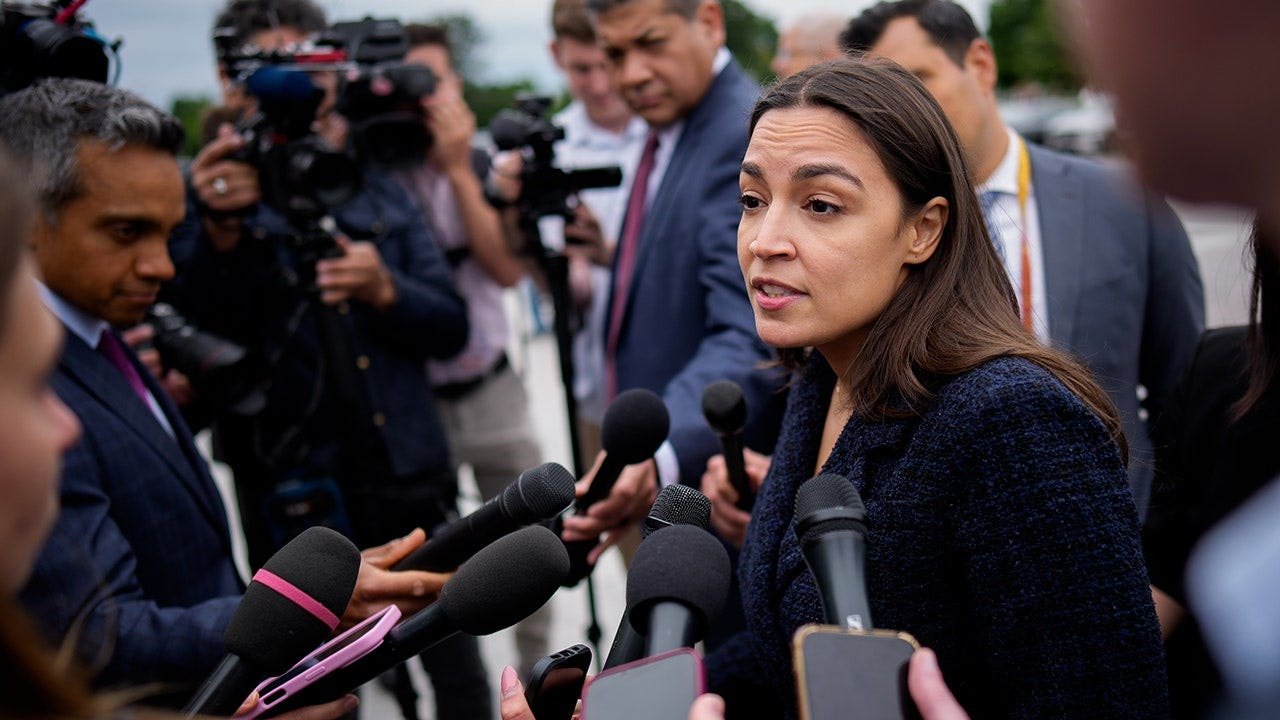
Rep. Alexandria Ocasio-Cortez, D-N.Y., arrives to the U.S. Capitol for the last votes of the week on Friday, May 15, 2026. (Tom Williams/CQ-Roll Call, Inc via Getty Images)
«The problem that we have is that these big companies think they are governments. They want to be governments. They want to have totally unchecked power,» Ocasio-Cortez said.
In recent weeks, Apple’s outgoing CEO Tim Cook signaled that the company might soon have no choice but to pass some of its climbing costs off to consumers.
«Unfortunately, price increases are unavoidable,» Cook said in a recent interview with the Wall Street Journal.
«We’re doing our best to mitigate the huge increases that are being passed to us, and we’ve been trying to shield our customers from the increases, but the situation has become unsustainable.»
For years, companies like Apple have dominated demand for the processing chip market, the part of a computer that acts as the brain of a device. These chips, which require highly sophisticated production, allow computers to perform calculations, process data and execute commands.
AI COMES WITH A HEFTY CHARGE. ARE YOU THE ONE WHO GETS STUCK WITH THE BILL?

Rep. Alexandria Ocasio-Cortez, D-N.Y., walks down the House steps after a vote at the U.S. Capitol on April 23, 2026. (Bill Clark/CQ-Roll Call, Inc)
Now that AI companies are also adding to demand, Apple finds itself competing for a dwindling supply of processors, driving the company’s costs up.
Beyond her views on the relationship between the government and business, Ocasio-Cortez said that she believes it’s time Congress re-visit ways it can mitigate costs of the AI-race that have climbed on a local level. In particular, she believes it’s time for lawmakers to address the energy strain of data centers.
When asked if she believed Congress should consider something beyond the Creating Helpful Incentives to Produce Semiconductors (CHIPS) Act, President Joe Biden’s signature technology investment bill that became law in 2022, Ocasio-Cortez said she thought so.
«The CHIPS Act was passed before we saw this huge development in AI, so the CHIPS Act was really passed before data centers were a thing, so it wasn’t designed to anticipate the huge amount of supply that these centers are sucking up,» Ocasio-Cortez said.
IN 2026, ENERGY WAR’S NEW FRONT IS AI, AND US MUST WIN THAT BATTLE, API CHIEF SAYS
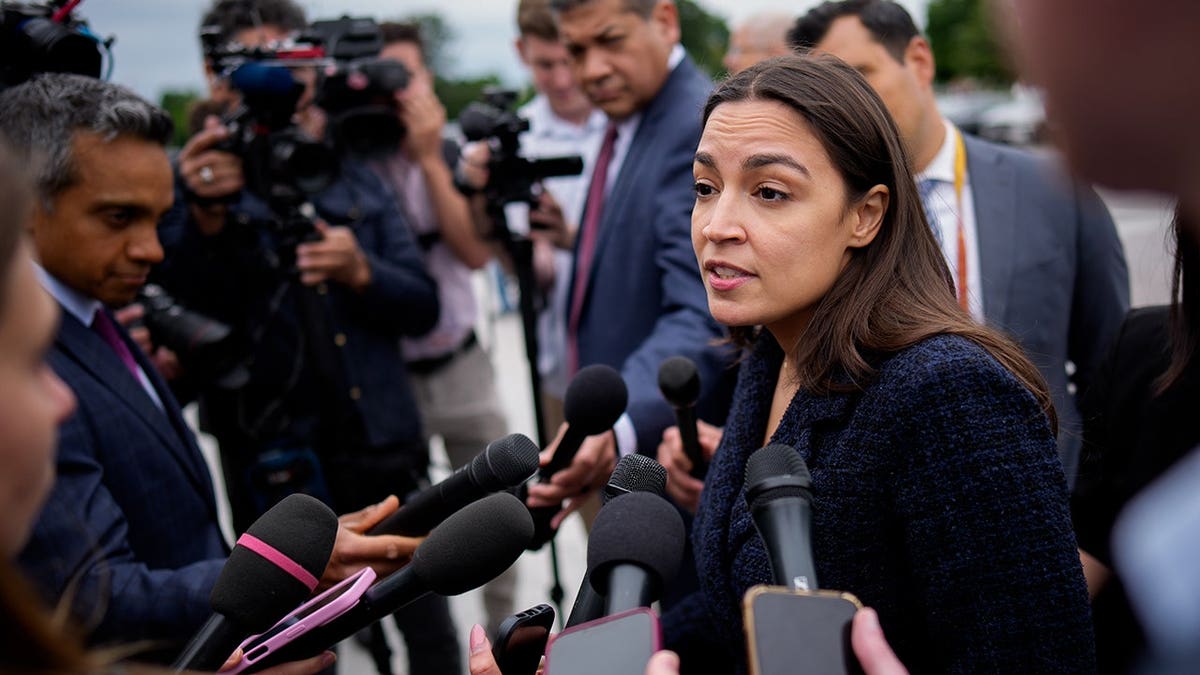
U.S. Rep. Alexandria Ocasio-Cortez (D-NY) speaks to members of the media as she arrives for the last votes of the week at the U.S. Capitol Building on May 21, 2026 in Washington, DC. Ocasio-Cortez criticized the recently released DNC autopsy of the 2024 election’s timing and its exclusion of any mention of Gaza. (Andrew Harnik/Getty Images)
Among other provisions, the CHIP act included $11.2 billion to modernize the country’s energy grid, created clean energy innovation programs and included $39 billion in domestic semiconductor production incentives.
CLICK HERE TO DOWNLOAD THE FOX NEWS APP
The bill did not address the energy consumption strain caused by data centers.
«We are subsidizing a lot of these pieces of these AI data centers,» Ocasio-Cortez said.
companies, alexandria ocasio cortez, congress, tech, apple

Titi Tcherkaski, la exGran Hermano, habló de su relación tóxica: “La única vez que me levantó la mano, me separé”

Uno por uno, los escándalos que complicaron a Adorni y derivaron en su renuncia

Dibu Martínez explicó cómo ayuda a sus compañeros en los tiros libres de Argentina y dio detalles de su lesión: “La pasé mal”

Milei pagó un alto costo por sostener a Adorni: ¿su salida lo ayudará en su reelección?

Sergio Ramírez, de vicepresidente a “traidor” y exiliado: “Daniel Ortega durará poco pero yo no sé si volveré a Nicaragua”

Círculo rojo: la trama que decretó la caída de Adorni y los interrogantes de la nueva etapa

Desesperación y burocracia: Pacientes con cáncer denuncian esperas de más de 20 días en PAMI para recibir su medicación

Nuevos controles a las devoluciones de 30% por gastos en el exterior: cómo pedir el reembolso del dólar tarjeta ante ARCA

Líderes mundiales ofrecieron ayuda humanitaria y equipos de rescate a Venezuela tras los devastadores terremotos

La bomba de Nico Occhiato tras el escándalo de Florencia Peña con Messi: “Lo más groso que pudimos haber logrado”

 CHIMENTOS14 horas ago
La bomba de Nico Occhiato tras el escándalo de Florencia Peña con Messi: “Lo más groso que pudimos haber logrado”
- POLITICA18 horas ago
El punto de quiebre que sentó la suerte de Manuel Adorni y los preparativos que hace el Gobierno ante su inminente salida
- POLITICA3 días ago
El oficialismo hizo caer la sesión del Senado para evitar la interpelación a Manuel Adorni