INTERNACIONAL
Investigadores argentinos lograron reducir tumores de mama triple negativo en un estudio preclínico


Una proteína que ayuda a las células de un tumor de mama agresivo a crecer y a esquivar las defensas del organismo quedó bajo estudio como posible blanco para futuros tratamientos. Investigadores del Consejo Nacional de Investigaciones Científicas y Técnicas (CONICET) bloquearon esa proteína, llamada receptor H4 de histamina o H4R, en células tumorales y ratones.
Como resultado, los tumores crecieron menos y el sistema inmunitario respondió con mayor fuerza contra las células cancerosas.
El trabajo se publicó en la revista Frontiers in Immunology. Se trata de una investigación preclínica, es decir, realizada con células de ratón y modelos animales. Por lo tanto, todavía no se puede afirmar que este método funcione en personas con cáncer de mama ni que el compuesto utilizado sea seguro para pacientes.
La investigación fue liderada por Mónica Vermeulen, investigadora del CONICET y directora del Laboratorio de Células Presentadoras de Antígeno y Respuesta Inflamatoria del Instituto de Medicina Experimental (IMEX). El primer autor fue Ramiro Vázquez, integrante del mismo equipo.

Por qué el cáncer de mama triple negativo es difícil de tratar
El cáncer de mama triple negativo representa entre el 10 y el 15% de todos los casos de cáncer de mama. Se lo denomina “triple negativo” porque las células del tumor no tienen tres proteínas que suelen servir como objetivo de tratamientos: los receptores de estrógeno, los receptores de progesterona y la proteína HER2.
En otros tipos de cáncer de mama, los médicos pueden usar medicamentos que bloquean esas proteínas o hormonas para frenar el tumor. En el triple negativo, esas opciones no sirven porque las células cancerosas no tienen esos blancos. Por eso, los especialistas buscan otras proteínas que puedan atacar sin dañar en exceso a las células sanas.
El equipo del CONICET estudió el receptor H4R en células 4T1, un tipo de célula de ratón que se usa para investigar tumores con características parecidas a las del cáncer de mama triple negativo.
H4R es uno de los receptores de la histamina, una sustancia que el cuerpo produce de manera natural. La histamina participa, por ejemplo, en las reacciones alérgicas y en la inflamación. También cumple funciones en el estómago y el sistema nervioso. Para actuar, se une a receptores ubicados en las células. Uno de ellos es H4R, que aparece en distintos tumores mamarios.

El compuesto bloqueó una señal que favorecía al tumor
Los investigadores usaron un compuesto llamado JNJ-7777120, abreviado como JNJ. Su función es bloquear H4R. Dicho de forma simple, impide que la histamina active ese receptor y envíe señales a la célula tumoral.
Cuando trataron las células cancerosas con JNJ, observaron que se multiplicaban menos y perdían parte de su capacidad para moverse. Este segundo punto es relevante porque las células tumorales deben desplazarse para invadir otros tejidos y, en algunos casos, formar metástasis. La metástasis ocurre cuando el cáncer se extiende desde el tumor original hacia otros órganos.
El compuesto no eliminó las células tumorales. Lo que hizo fue detenerlas en una etapa previa a la división. En otras palabras, no las mató, pero redujo su capacidad para generar nuevas células cancerosas.
Además, el tratamiento redujo la producción de especies reactivas de oxígeno. Son moléculas que las células producen y que, en cantidades elevadas, pueden contribuir al crecimiento y a la supervivencia de algunos tumores. El bloqueo de H4R también modificó procesos metabólicos, es decir, la forma en que las células obtienen y utilizan energía.

“Nuestros hallazgos respaldan un papel protumoral de la histamina que actúa a través de H4R durante las primeras etapas de la tumorigénesis en células 4T1”, escribieron los autores. Esto significa que, en el modelo analizado, la histamina parece favorecer el desarrollo del tumor cuando se une a ese receptor.
Los tumores crecieron menos después de una sola exposición al compuesto
Luego, los científicos evaluaron qué ocurría en animales. Para eso, trataron las células tumorales con JNJ antes de inocularlas en ratones con un sistema inmunitario normal.
Una semana después, los ratones que recibieron células tratadas desarrollaron tumores más pequeños que los animales del grupo de control, que recibieron células sin exposición al compuesto. El efecto se mantuvo durante al menos dos semanas.
“Curiosamente, una sola dosis fue suficiente para inhibir el crecimiento tumoral durante al menos dos semanas”, indicaron los investigadores.
Este resultado sugirió que el JNJ no actuaba solamente sobre la célula tumoral. También parecía modificar la respuesta de las defensas del organismo frente al cáncer.
El efecto dependió del sistema inmunitario
Para comprobarlo, el grupo repitió la prueba en ratones RAG1. Estos animales no tienen linfocitos T y B funcionales, dos tipos de células esenciales para la inmunidad adaptativa. Se trata de la parte del sistema inmunitario que reconoce amenazas específicas, como una célula infectada o cancerosa, y dirige una respuesta contra ellas.
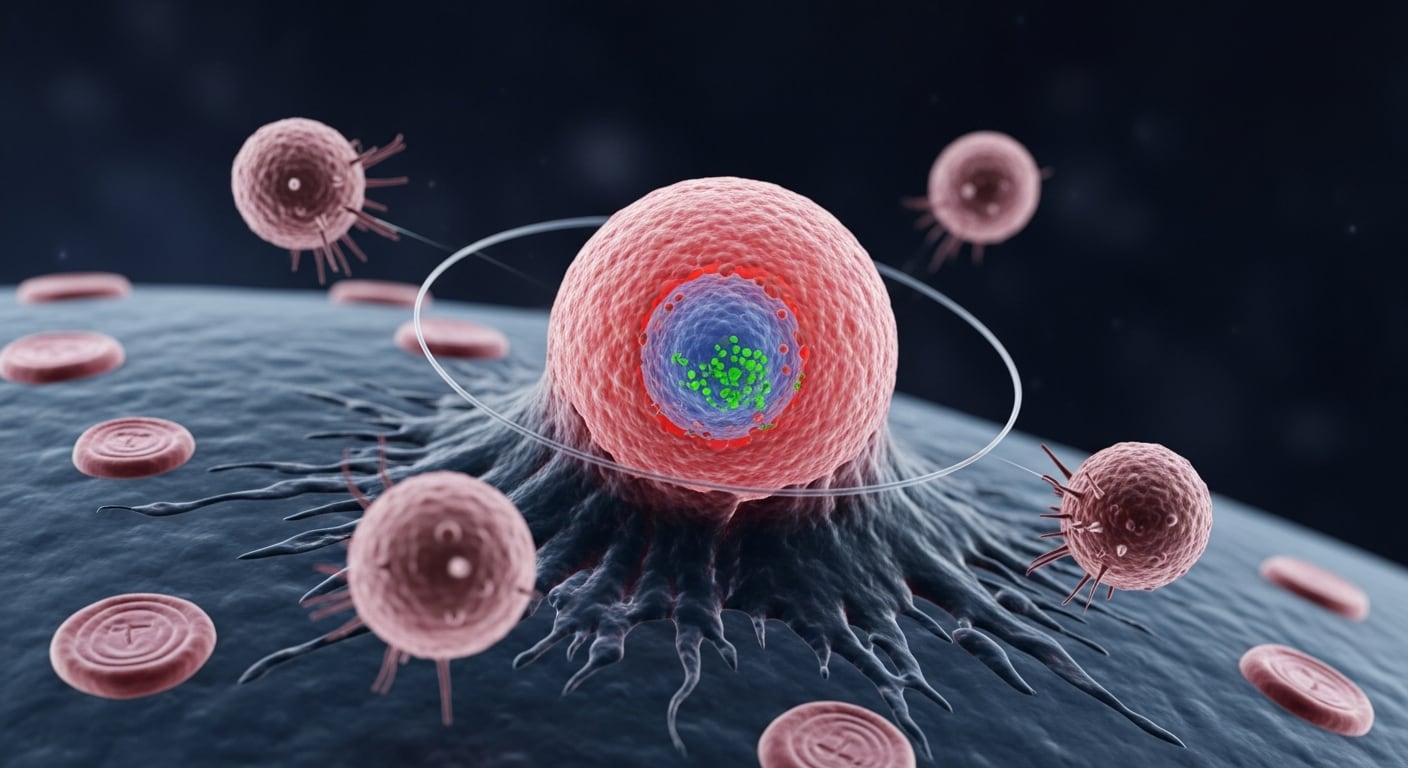
En esos ratones, el tumor creció de manera similar al del grupo que no recibió el compuesto. “El crecimiento tumoral en estos animales fue comparable al de los controles, lo que indica que la respuesta inmunitaria adaptativa desempeña un papel central”, señalaron los autores.
En los ratones con defensas normales, en cambio, el bloqueo de H4R aumentó la presencia de linfocitos CD8+ dentro del tumor durante la primera semana. Estos linfocitos son células que pueden reconocer y destruir células cancerosas.
A los 14 días, su cantidad ya era similar a la registrada en el grupo de control. Sin embargo, los linfocitos obtenidos de tumores tratados con JNJ mostraron mayor capacidad para eliminar células cancerosas.
Los investigadores también detectaron un aumento de interferón gamma, una proteína que participa en la activación de las defensas y en la respuesta contra infecciones y tumores.
Falta comprobar si el mecanismo se repite en pacientes
Vermeulen remarcó que los resultados todavía están lejos de una aplicación médica. “Son resultados alentadores que requieren estudios adicionales para determinar si pueden reproducirse en muestras humanas de pacientes con cáncer de mama triple negativo”, sostuvo.
El próximo paso será analizar tumores humanos para determinar si H4R tiene el mismo papel que mostró en el modelo de ratón. También será necesario establecer qué tipo de medicamento podría bloquearlo, en qué dosis y bajo qué condiciones podría resultar seguro.
Los investigadores indicaron que esta línea también puede ser de interés para otros tipos de tumores donde la histamina y sus receptores tienen participación, entre ellos los cánceres de colon, páncreas, ovario e hígado, además del melanoma.
mamografía,cáncer de mama,negatoscopio,médica,diagnóstico










INTERNACIONAL
NYC ICE chief fires back at far-left politicians seeking to abolish agency: ‘Change the law’
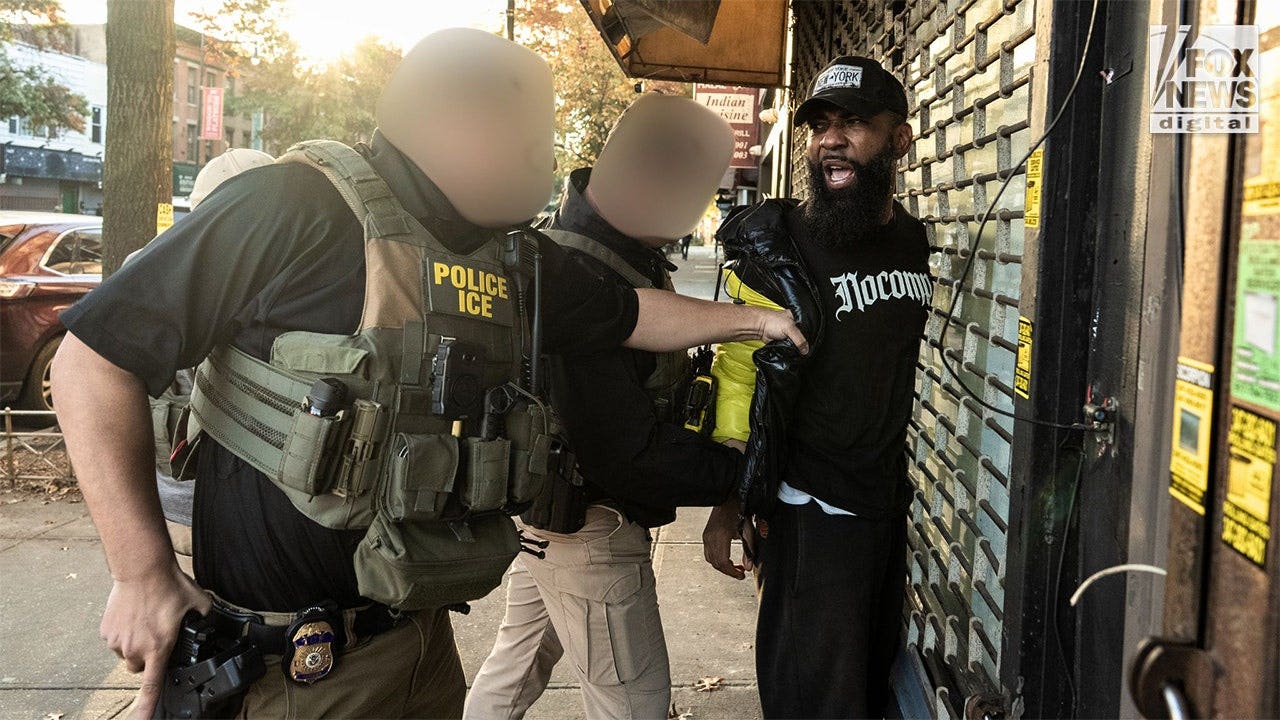
New York City’s top immigration enforcement official has a blunt message for far-left politicians demanding the abolition of ICE: Change the law instead of demonizing federal agents who put their lives on the line enforcing it.
Kenneth Genalo, who leads ICE’s Enforcement and Removal Operations (ERO) in New York City, issued the challenge during an exclusive interview with Digital, taking aim at elected officials who have increasingly called to dismantle the agency.
«If you don’t like the job we’re doing and the priorities and the people that we’re targeting, change the law,» Genalo said. «Congressional people, senators, representatives. Change the law, don’t demonize ICE for doing the job that you empowered us to do.»
The remarks came during a recent Digital ride-along with ICE in Brooklyn, where agents arrested two men, including one facing a pending felony sexual abuse charge, and another who had served seven years in prison for assault, according to ICE.
INSIDE ICE’S HIGH-STAKES RAIDS TARGETING ILLEGAL MIGRANTS IN NYC AS CHIEF RIPS SANCTUARY LAWS
Genalo’s rebuke comes amid a widening campaign to abolish ICE and increasingly heated rhetoric directed at federal immigration agents.
In July, no less than 143 New York elected officials, including 31 of the city’s 51 Council members, signed a letter urging congressional Democrats to dismantle the agency, accusing ICE of widespread abuses and portraying it as a threat to public safety and democracy.
The signatories argued that ICE could no longer be reformed and urged congressional Democrats to defund and dismantle it. They also cited the fatal shootings of Renee Good and Alex Pretti by federal immigration enforcement officers in Minneapolis as evidence of what they described as the agency’s disregard for public safety.
Among the signatories was newly elected New York Democrat Claire Valdez, who has also made abolishing ICE part of her congressional platform. New York City Mayor Zohran Mamdani and Rep. Alexandria Ocasio-Cortez, D-N.Y., have also separately called for dismantling the agency.
Genalo blamed inflammatory political rhetoric for emboldening anti-ICE protesters and escalating tensions during enforcement operations.
He questioned why activists would interfere with arrests without knowing the criminal histories of those being targeted, pointing to an operation during the Brooklyn ride-along in which protesters disrupted ICE agents attempting to apprehend an Ecuadorian national facing child sexual abuse charges, according to ICE.
«Why would you protest that we’re trying to arrest this individual?» he asked.
MAMDANI CALLS ICE A ‘ROGUE’ AGENCY AFTER NYC SHOOTING, CLAIMS AGENTS VIEW LAW AS ‘MERELY A SUGGESTION’
For Genalo, the increasingly hostile rhetoric overlooks the people behind the badges — officers enforcing laws enacted by Congress while confronting potentially dangerous suspects and protesters.
«We’re mothers, we’re fathers, we are brothers, we have sisters, sons and daughters, and we’re doing our job,» he said.
The Brooklyn-born, 34-year law enforcement veteran argued that politicians were vilifying agents for carrying out their duties, even as restrictions on local cooperation force ICE to pursue suspects on public streets rather than take them into custody in secure jails.
Genalo said such encounters expose officers, suspects and bystanders to dangers that could be avoided through cooperation with local authorities.
During the Brooklyn ride-along, Genalo said both men arrested had previously been in local custody but were released despite ICE detainer requests.
Genalo’s concerns about the breakdown in cooperation drew on his experience responding to one of the darkest days in New York’s history.
The veteran official recalled being deployed to ground zero after the Sept. 11 terrorist attacks, warning that New York was forgetting lessons about the importance of cooperation between federal and local law enforcement.
«I go back to 9/11, I do it all the time because I was there, I was deployed, SRT, I was down at ground zero,» he recalled.
He cited the 9/11 Commission’s findings about failures in cooperation and intelligence sharing, drawing a parallel to the restrictions ICE faces today.
«We should be standing arm-in-arm with our NYPD brethren, helping the city,» Genalo said, recalling a time when ICE worked more closely with local authorities.
The agency once maintained a dedicated unit at Rikers Island that reviewed the immigration status of foreign-born inmates before their release, Genalo said. Agents took more than 100 people a week into federal custody through the arrangement, which he blamed former Mayor Bill de Blasio for ending.
Genalo said former Mayor Eric Adams later tried to restore cooperation, but faced City Council restrictions.
The political confrontation with ICE has since intensified under Mamdani.
On Nov. 2, Mamdani threatened legal action over ICE’s alleged unauthorized use of city-owned parking lots in a letter addressed directly to Genalo and other federal officials.
Genalo had criticized the mayor’s efforts to discourage private businesses from allowing ICE agents to use their parking facilities during the Digital interview, four days before the letter was issued.
DHS rejected the mayor’s position in a statement to Digital on Saturday.
«Mayor Mamdani should be grateful to our brave law enforcement officers for cleaning up the streets of NYC since he won’t. Luckily, no terminated parking will stop ICE from deporting criminal illegal aliens to make New York safe again,» a DHS spokesperson said. «We need New York to cooperate with our officers and stop RELEASING criminals from their jails into New York’s neighborhoods. Seven of the 10 safest cities in America cooperate with ICE.»
DHS also provided Digital with examples of migrants it identified as public safety threats arrested in New York City, including individuals it said had convictions for sexual assault, weapons offenses and robbery.
The confrontation with ICE has also extended to the state level.
On Nov. 6, Gov. Kathy Hochul and Attorney General Letitia James reminded local governments of a Nov. 25 deadline to terminate agreements allowing their facilities to hold people solely for federal civil immigration detention under the Local Cops, Local Crimes Act.
Genalo criticized the legislation, arguing that it would extend restrictions on ICE cooperation beyond New York City to the rest of the state.
He also challenged city leaders to put cooperation with ICE on the ballot and let New Yorkers decide for themselves — a demand that takes on added significance given the 31 City Council members who signed the abolition letter.
But Genalo said the City Council had refused to put the question before voters.
«The City Council voted no, they didn’t want to do that. I wonder why,» he said.
For Genalo, the growing political opposition reflects what he described as a fundamental misunderstanding of ICE’s mission and the officers carrying it out.
He argued that immigration enforcement has continued under successive administrations, but the rhetoric directed at agents has become increasingly hostile, with politicians and the media vilifying officers rather than acknowledging the work they do.
«They don’t realize the ramifications that their verbiage has,» Genalo said.
«But instead we’re getting demonized by politicians, by congressional people, by mayors, by governors, by the media.»
politics, new york city, new york, zohran mamdani, police and law enforcement, immigration, illegal immigrants

Cuando la desgracia llama a la puerta, nada vuelve a ser igual. De un poco de esto habla la autora de Un dios sacude la casa (Edhasa, 2026) y ofrece una imagen para nombrar esos momentos en los que el mundo conocido ya no brinda garantías.
“Felices aquellos cuya vida no ha probado los males. Pero no hay calamidad que deje de abatirse sobre toda la raza de aquellos a quienes un dios sacude la casa”. La cita viene de Antígona, de Sófocles, y aparece como frase de apertura. Y fue la propia Eugenia Almeida quien explicó que llegó a ella mientras escribía y que encontró ahí una manera de hilvanar los cuentos: los momentos en los que, por distintas razones, la vida se tambalea. Y sí. La m… ocurre. Y no avisa.
En su primer libro de textos breves, la escritora y periodista cordobesa reúne personajes y contextos que, a partir de la sospecha, los secretos y la violencia, construyen un territorio que se anuda por una misma inquietud: el instante en que la vida pierde su aparente estabilidad. Son quince los cuentos y no tienen una continuidad argumental que los obligue a responder a una misma trama. Así, el lazo entre ellos es, sin duda, la mirada sobre lo que se esconde detrás de las conductas habituales y las consecuencias que puede tener un hecho inesperado.
Un hijo que quiere incendiar la casa con sus padres dentro, unos policías que se pasan de la raya, una boda que termina en sangre, una mujer que entierra algo perturbador en el patio de su casa, dos hombres unidos por un pacto silencioso junto al río y un arma familiar alrededor de la cual se instaló la fatalidad. Y hay mucho más. Como sea, si bien son puntos de partida muy diferentes entre sí, en todos aparece la misma pregunta: ¿en qué nos transformamos cuando todo explota? “El viejo vio eso de lejos y pensó en volver a hablar con su hija. ‘A ese chico le está creciendo la noche por dentro’. Acá es así, la historia se enrosca y gira, siempre eso mismo: las gallinas, los caballos, los perros, la inundación, los vientos, la sequía, los fuegos. Siempre igual pero siempre espiral que va más hondo, al menos en el chico, más hondo, más ronco, más ciego. ¿De qué se construye la propia desgracia? Ese abismo hecho a medida. Una roldana de repetición y desasosiego.”

La casa: ¿nuestro lugar seguro?
Lo inquietante no siempre llega desde un lugar desconocido. A veces está en nuestra propia casa, ese lugar que sentimos seguro, nuestro refugio. O también en nuestro entorno cercano: la familia, los amigos, los vecinos. Además, la casa puede ser también el espacio doméstico por excelencia, aquello que construimos para sentirnos seguros. Así las cosas, son las costumbres, los vínculos, las convicciones las que un día pueden derrumbarse así nomás. Un día cualquiera, algo te sacude y en el colapso de una aparente solidez aparecen las fisuras. Y Almeida escribe sobre ese momento sin ofrecer consuelo. Porque, cuando la desgracia entra, viene para quedarse. Es que capaz que llevaba mucho tiempo ahí esperando. Quién sabe.
“Y hay un segundo que une todo con la mirada. El menor de los Zárate que está montando la yegua que ha dejado atada, el tablón de la mesa que cae, el galope de la yegua que se acerca, ella que piensa que gracias a dios el hijo del patrón va a sacar a Luis de ahí, Baravale que da dos pasos mostrando el filo, algo que la levanta en el aire y la boca de Luis que se tuerce hacia abajo cuando el cuchillo de Baravale le entra en el cuerpo. Después el galope, el galope, el galope, ella que grita, que se oye gritar que grita, el menor de los Zárate que la lleva agarrada de la cintura y la sacudida del galope, ella que grita, la estancia y después nada. Oscuridad, noche, silencio.”
La violencia institucional es otro de los temas que atraviesa la antología de Almeida. Los espacios de poder, policía, justicia, gobierno, aparecen como lugares donde las relaciones entre personas y estructuras adquieren una dimensión escalofriante. En una entrevista reciente, Almeida reflexionó sobre cómo ciertas instituciones producen formas particulares de violencia y sobre la metamorfosis que se experimenta cuando se pasa a formar parte de ellas. La propuesta literaria pone la lupa ahí y un poco más allá: sobre los mecanismos de la impunidad, las jerarquías y las pequeñas complicidades que permiten que determinadas situaciones se naturalicen y se perpetúen a través de los años.

“Y ahí nomás me fui corriendo a la oficina y llamé a la policía. Vinieron dos. Lo molieron bien a palos. Sin una palabra, ¿eh? Entraron y pum, pum, pum. Yo hasta pensé en decirles que pararan porque el otro ya estaba tirado en el piso y estos dos seguían palo, palo, palo. Y de golpe, paran. Uno se da cuenta de que al que estaban fajando era el loco que se había escapado de la clínica. Y ya se asustaron porque lo habían dejado arruinado.”
La autora de El colectivo y Desarmadero, demuestra, con esta obra, que el cuento exige una economía narrativa que domina y muy bien. En 116 páginas consigue crear el clima, delinear personajes y abrir interrogantes sin necesidad de resolverlos todos. No subestima al lector ni le entrega interpretaciones prefabricadas. Sobria, inteligente y conmovedora, la prosa de Almeida confía en la potencia de lo sugerido. Sus cuentos no necesitan compartir una trama para dialogar entre sí: los amalgama una sensibilidad particular, una atención especial a las fragilidades humanas y la convicción de que ningún orden está completamente a salvo. Porque pasa que, lo que sacude a una casa no es únicamente la desgracia que llega, sino también eso que sus habitantes habían conseguido mantener en pie.
¿Quién es Eugenia Almeida?
Nació en Córdoba en 1972. Es licenciada en Comunicación por la Universidad Nacional de Córdoba. Como periodista trabajó en medios gráficos, radiales y televisivos. Por Edhasa, publicó varias novelas. Entre ellas: El colectivo (2007, 2026), que apareció en Argentina, España, Francia, Alemania, Grecia, Italia, Portugal e Islandia y que ganó el Premio Internacional de Novela Dos orillas, organizado por el Salón del Libro de Gijón, La pieza del fondo (2011), La tensión del umbral (2015, 2026), Desarmadero (2022). Un dios sacude la casa (2026) es su primer libro de cuentos. Coordina talleres de lectura y escritura.
Eugenia Almeida,retrato,literatura
INTERNACIONAL
White House doubles down after Trump angers base by floating illegal alien deal with Dems

The White House on Monday morning wouldn’t rule out the administration working with Democrats on a «deal» for illegal immigrants who have been living in the U.S. for more than a decade as Republicans prepare to lose control of Congress in January.
President Donald Trump, in his first sit-down interview since sweeping GOP midterm losses, opened the door to the possibility of considering amnesty.
«The President never said the word amnesty,» a White House official insisted to Digital.
«We want Democrats to show their cards,» the official revealed.
TRUMP ADMITS IMMIGRATION ENFORCEMENT MAY HAVE BEEN TOO ‘TOUGH’ IN FIRST INTERVIEW SINCE MIDTERMS
They said, «There has never been a President stronger on immigration enforcement than President Trump.»
«Thanks to his efforts more than 3 million illegal aliens have left the U.S. and we have the most secure border in American history. Like the President has said, he’s willing to work with anyone to improve the lives of Americans and Make America Safe Again.»
In a «60 Minutes» interview that aired on Sunday, host Ross Douthat asked Trump how he is open to working with Democrats on immigration as he enters a lame-duck final stretch of his presidency.
«I’d love to do something on immigration,» the president replied. «I think [immigration] both helped and hurt. I think I got an A+ for closing up the border. I get very high marks for getting the bad ones out, but I get hurt because we also took people that had good jobs, that created one violation or breaking of the law — that was that they came into the country illegally.»
Trump, however, maintained that there are people in the United States who want to see all illegal aliens deported.
POLL: MAJORITY SAYS IMMIGRATION ENFORCEMENT HAS CROSSED THE LINE
But, Trump said, «if they’re good people working in a landscaping company or working in a hotel, or doing something, right? And in some cases paying taxes, and there’s a large group of people that think they should be allowed to stay.»
«When you go into a hotel and you have a woman that’s working there as a maid, as a cleaner as a this as a that, as a waitress, a lot of good things, great jobs, and all of a sudden they’re being taken out of the country, it’s tough. It’s a tough thing,» he said, adding that people who he called «far-right» want deportations regardless of whether the illegal alien is working.
FIRST ON FOX: DEMS’ AFFORDABILITY CRUSADE COLLIDES WITH EYE-POPPING PRICE TAG FOR SOCIALIST IMMIGRATION PLANS
While Trump didn’t say «amnesty,» as the White House noted, he signaled in the interview his willingness to «work a deal» for people who have been in the United States illegally for «10 and 15 years» who haven’t committed other crimes.
Rep. Maria Salazar, R-Fla., a longtime proponent of giving legal status to illegal aliens, celebrated Trump’s comments on X.
«Well done, Mr. President! What you described on 60 Minutes is what the Dignity Act is all about,» she said in the post.
Salazar’s Dignity Act would offer legal status to people who have been in the United States continuously since 2020, provided they haven’t committed other crimes and pay a restitution fee and back taxes.
The White House wouldn’t clarify what such a deal could entail when asked Monday.
Notably, the interview was taped before Stephen Miller, a notorious immigration hawk, was selected to be Trump’s new chief of staff.
Immigration restrictionism has been Trump’s calling card since he first ran for president beginning in 2015. His comments in the interview that aired Sunday drew a sharp reaction from those favor immigration restriction.
TED CRUZ SAYS ‘BLUE TSUNAMI’ TOOK OVER TEXAS AFTER DEMOCRATS SWEPT STATEWIDE RACES
«To be clear, if President Trump struck an amnesty deal with the Democrat-controlled Congress, it would be a bigger betrayal than starting the foolish war in Iran,» commentator Steve Cortes said on X, adding a clip of Trump promising «the largest deportation operation in the history of our country» during a campaign rally in 2024.
«This plan absolutely guarantees that Texas never again votes Republican,» said radio show host Anthony Cumia. «More states will turn permanently blue if illegals are given amnesty. Regan did the same this and California became a forever democrat state. Trump can do the same to Texas. Disgusting.»
«Someone needs to tell Trump: Any amnesty deal with Democrats will destroy the Republican Party,» said X personality Kelly McCarty. «We voted for NO amnesty and mass deportations of ALL illegals. No compromises. No exceptions.»
white house, donald trump, politics, immigration, illegal immigrants, deportation, amnesty

Polémica religiosa con Nmecha: la Federación Alemana tomará cartas en el asunto

NYC ICE chief fires back at far-left politicians seeking to abolish agency: ‘Change the law’

Los comprometedores chats que complican a Mauro Icardi en su causa por lesiones: «¡Ma, llamá a un médico que me muero!»

Misterio por la jugadora influencer que se fue de su club a pocos meses de haber firmado: “Fin de un capítulo”

El Gobierno desmintió que Villarruel no haya sido invitada a la misa de León XIV – Nexofin

Con show de drones y música, 200 mil fieles realizaron una vigilia a la espera de la misa del Papa en Córdoba

Así fue el saludo entre Javier Milei y el papa León XIV en Aeroparque tras la llegada a la Argentina

Artemis IV: los detalles de cómo será la misión de la NASA que busca llevar astronautas a la superficie lunar en 2028

Racing sigue en la busqueda de un nuevo entrenador para el 2027 y hay tres nombres apuntados

El Ministerio de Economía pasó a disponibilidad a más de diez empleados de planta permanente

 POLITICA1 día ago
Así fue el saludo entre Javier Milei y el papa León XIV en Aeroparque tras la llegada a la Argentina
- DEPORTE3 días ago
Gimnasia de Mendoza vs Independiente Rivadavia: formaciones, hora y dónde ver por tv
- DEPORTE2 días ago
Franco Colapinto le hizo probar mate a Lewis Hamilton en un evento durante el GP de Brasil: la reacción del piloto de Ferrari