INTERNACIONAL
La actividad agrícola de Nicaragua cae 2.5% en el primer semestre por el déficit de lluvias

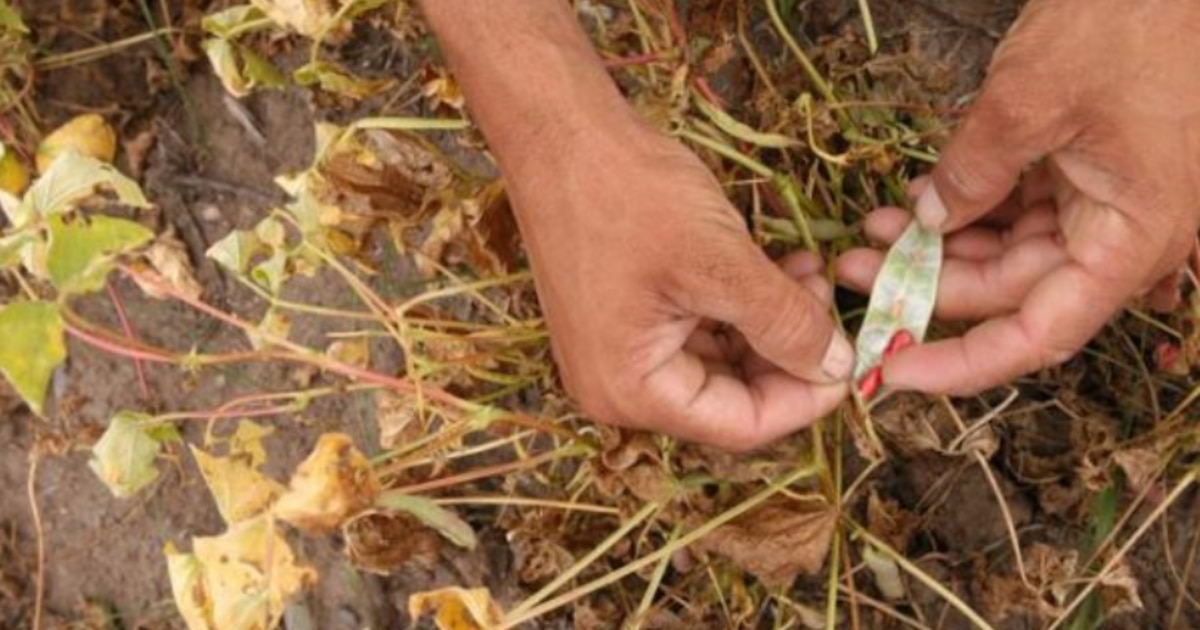
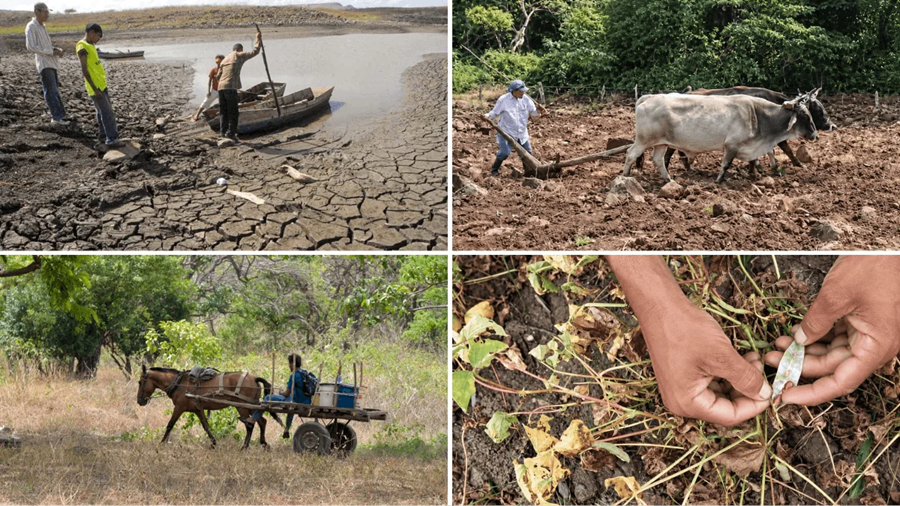
La actividad agrícola de Nicaragua registró una reducción acumulada de 2.5% durante el primer semestre de 2026, de acuerdo con el Índice Mensual de Actividad Económica. El dato coincide con un período de déficit de lluvias que afecta cultivos de subsistencia, producciones agroindustriales y actividades pesqueras.
El presidente del Banco Central de Nicaragua, Ovidio Reyes, atribuyó parte de las dificultades al fenómeno de El Niño. Según indicó, el sector agrícola cayó 2.4% en el primer trimestre y 2.9% en el segundo.
“El Niño está provocando afectaciones en todos los países de Centroamérica. Eso es algo que es innegable, no podemos decir lo contrario”, afirmó Reyes. El funcionario señaló que existen pérdidas en la producción, aunque sostuvo que la escasez de alimentos en países vecinos aumentó la demanda de algunos productos nicaragüenses, de acuerdo con información de Diario La Prensa.
El déficit de lluvias se concentra en zonas del corredor seco
El corredor seco de Nicaragua comprende 44 municipios de Madriz, Nueva Segovia, Estelí, Matagalpa, Chinandega, León, Managua, Masaya, Granada, Carazo y Rivas, según un estudio publicado por el Programa Mundial de Alimentos en 2024.
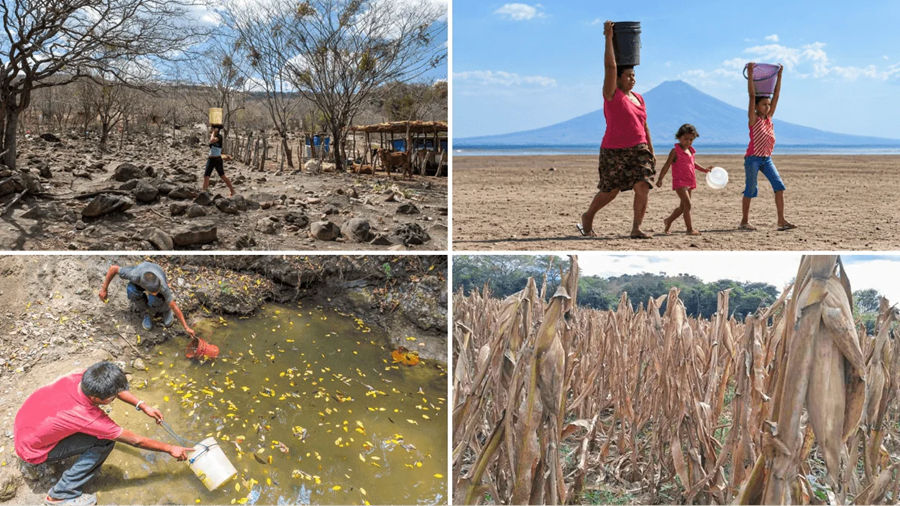
En esas localidades, una parte de la población depende de la agricultura para abastecerse de alimentos y obtener ingresos. Los productores siembran granos básicos para consumo familiar y comercializan los excedentes en el mercado nacional.
Las empresas agroindustriales de la zona occidental que llevan registros de las precipitaciones indicaron que el período lluvioso de 2026 ha sido el más seco de los últimos 124 años. La menor disponibilidad de agua afecta la producción de maíz, frijol y sorgo, además de cultivos como la caña de azúcar y el maní.
El boletín agrometeorológico elaborado por el Ministerio Agropecuario, el Instituto Nicaragüense de Estudios Territoriales y el Instituto de Protección y Sanidad Agropecuaria anticipó que el déficit de lluvias continuará en el Pacífico y en sectores de las regiones norte y central del país.
Los pequeños productores enfrentan riesgos para sus cosechas
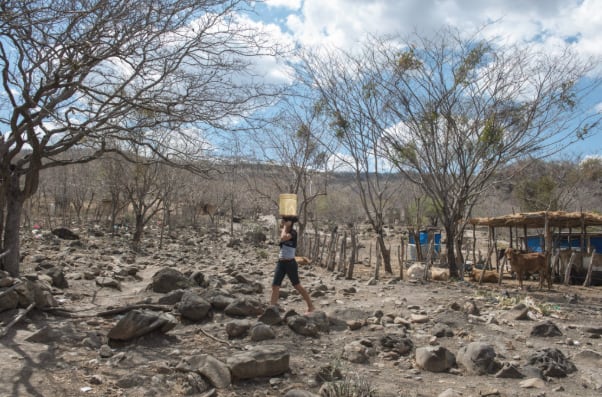
Los habitantes del corredor seco que trabajan parcelas pequeñas son señalados como uno de los grupos más expuestos a las consecuencias de la sequía. Sus cultivos suelen destinarse al consumo de los hogares, por lo que una reducción de la cosecha limita tanto la alimentación familiar como los recursos que podrían obtener por la venta de productos.
Un dirigente del sector productivo, que pidió no revelar su identidad por temor a represalias, aseguró que quienes sembraron durante el ciclo de primera perdieron sus cultivos. También consideró que las lluvias registradas recientemente no permiten garantizar el resultado de la cosecha de postrera.
“Definitivamente los más afectados son los pequeños productores, los de subsistencia del corredor seco”, declaró la fuente. El representante añadió que los rendimientos de esas familias ya eran bajos y que la sequía redujo aún más sus posibilidades de obtener ingresos.
Los dirigentes agropecuarios consultados estiman que la producción de caña de azúcar y maní también presenta afectaciones. No obstante, consideran que estos sectores podrían recuperarse parcialmente durante la postrera por las precipitaciones que han caído en la zona occidental.
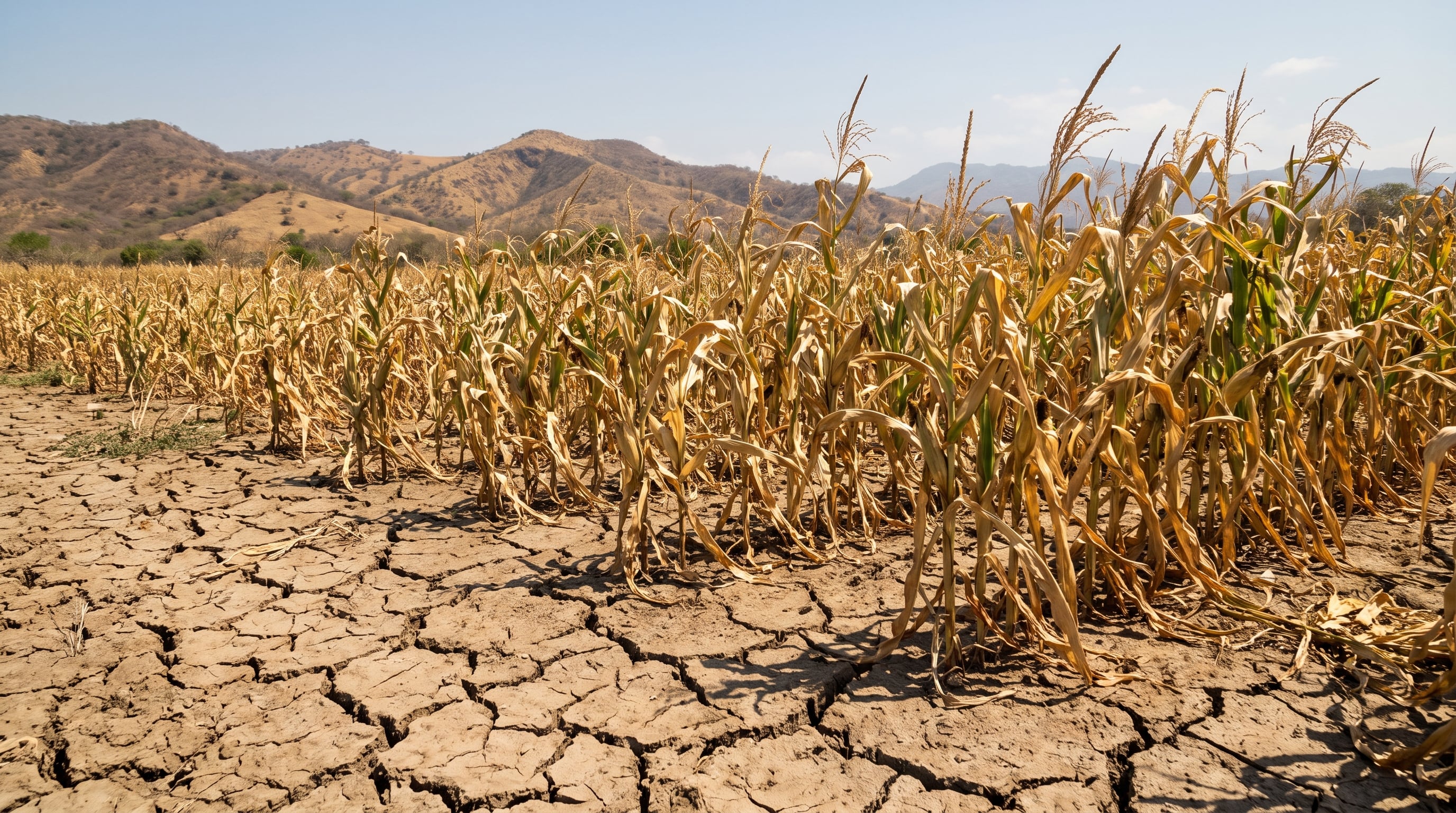
La situación resulta más compleja para los agricultores que dependen del maíz, el frijol y el sorgo. La pérdida de esos alimentos podría dificultar el abastecimiento de las familias rurales y limitar su capacidad de enfrentar los meses posteriores al ciclo agrícola.
Las exportaciones de hortalizas aumentaron por la demanda regional
Reyes sostuvo que Nicaragua comenzó a vender más hortalizas a otros países de Centroamérica a causa de la escasez y de los mayores precios regionales. El funcionario mencionó los envíos de tomate, chiltoma y repollo.
“Sí hay afectaciones, no podemos decir tampoco que todo está en positivo”, dijo el titular del Banco Central. A la vez, explicó que la reducción de cosechas en otros países abrió oportunidades para productos nicaragüenses.
El presidente del organismo indicó que algunos de esos intercambios comerciales no tenían antes la misma presencia. “Ahora estamos exportando hortalizas”, afirmó al referirse al comportamiento reciente de las ventas externas.
El aumento de las exportaciones corresponde a determinados cultivos y no implica que la sequía haya dejado de afectar a los productores locales. Las dificultades descritas por las autoridades y los representantes del sector se mantienen en las áreas que dependen de la regularidad de las precipitaciones.
Reyes también planteó que el déficit de agua puede influir en la generación de energía hidroeléctrica de Centroamérica. La disminución del nivel de los embalses podría reducir la disponibilidad de ese recurso en los países de la región.
La pesca presenta dificultades por el calentamiento de las aguas
La actividad pesquera también registra afectaciones, según Reyes. El funcionario indicó que la producción de camarón de cultivo atravesaba una reducción desde años anteriores y que las condiciones asociadas a El Niño agravaron ese escenario.
“Tenemos afectación en la pesca para este año, recrudecida por el fenómeno de El Niño”, explicó. Reyes señaló que el calentamiento de las aguas redujo la producción de peces y desplazó parte de las especies hacia sectores más profundos del mar.
Esa situación dificulta las capturas y se suma a las limitaciones que ya enfrentaba la producción camaronera. El funcionario dijo que la langosta y el caracol se encuentran en una etapa de recuperación, a diferencia de otros productos del mar.
Las lluvias abundantes complican la ganadería en otras áreas
Las condiciones climáticas no son uniformes en todo el territorio nicaragüense. Mientras algunas comunidades enfrentan falta de agua, otras zonas registran lluvias intensas que dificultan las actividades del sector ganadero.
Los precios del ganado y de la leche permanecen estables, de acuerdo con datos de Diario La Prensa. No obstante, los productores han tenido problemas para movilizar a los animales hacia las zonas secas de Boaco y Chontales.
El traslado estacional del ganado hacia lugares con mejores condiciones de agua y pasto se conoce como trashumancia. En esta ocasión, la falta de recursos en las áreas que suelen recibir a los animales impidió que los productores realizaran esa práctica.
Guatemala, El Salvador y Honduras también mantienen alertas
El corredor seco centroamericano atraviesa Guatemala, El Salvador, Honduras, Nicaragua y Costa Rica. La Organización de las Naciones Unidas para la Alimentación y la Agricultura calcula que más de 10 millones de personas viven en esa región, considerada vulnerable a fenómenos climáticos extremos.
En El Salvador, las autoridades mantienen una alerta roja por sequía meteorológica y agrícola en todo el territorio. La Cámara Salvadoreña de Pequeños y Medianos Productores Agropecuarios informó pérdidas de alrededor del 20% en los granos básicos de la cosecha de primera.
Guatemala declaró el 21 de septiembre una alerta roja en 15 municipios del corredor seco de la región del Trifinio. Las primeras evaluaciones identificaron a 113,825 familias afectadas.
Honduras informó un aumento de los problemas de acceso al agua potable y al recurso destinado a las actividades agropecuarias. El país mantiene 103 municipios bajo alerta roja y más de 100 bajo alertas amarilla y verde.
El Salvador,maíz,sequía,agricultura









INTERNACIONAL
Epstein-linked billionaire pours $500K into super PAC backing Kentucky Democrat: ‘Dirty Epstein-class money’

A Kentucky Democrat campaigning against the influence of wealthy political donors is facing calls to disavow a $500,000 contribution from billionaire Reid Hoffman to a super PAC supporting his congressional bid, with his Republican opponent blasting the financial support as «dirty Epstein class money.»
Hoffman contributed $500,000 to Kentuckians Not Corruption, an independent super PAC supporting Democratic congressional nominee Zach Dembo in Kentucky’ s 6th Congressional District, on Sept. 24, 2026, according to Federal Election Commission records. The contribution came as the group was spending heavily on television advertisements supporting Dembo and opposing his Republican opponent, former Kentucky state Sen. Ralph Alvarado. Advertising records filed with the Federal Communications Commission show the super PAC’ s weekly television advertising orders on Lexington’ s WLEX- TV increased more than sevenfold between mid- September and early October, climbing from $ 14, 650 before Hoffman’ s contribution to $ 109, 990 for the week of Oct. 6.
«This is really, it’s dirty Epstein class money fueling Zach Dembo’s campaign,» Alvarado told Digital. «It’s offensive.»
EXCLUSIVE: OSSOFF CHALLENGED TO RETURN EPSTEIN-LINKED DONATION OR RETRACT ‘EPSTEIN CLASS’ ATTACK
«If he has any integrity, he should, but he won’t disavow it,» Alvarado added. «Dembo will not disavow it. I don’t even think I’ll bother to ask. Again, the least they could do is apologize.»
Digital reached out to Dembo’s team repeatedly about the contribution but did not receive a response.
The criticism comes as Dembo has made combating political corruption and the influence of wealthy donors a central part of his congressional campaign, arguing on his website that «big business and the ultra-wealthy shouldn’t be able to buy influence in Washington» and that we need to «get rid of dark money in politics.»
ABDUL EL-SAYED CONFRONTED ON SOROS TIES AFTER RIDICULING POLITICIANS FOR TAKING CORPORATE MONEY
The Democratic candidate for Kentucky’s 6th District has also criticized tax breaks for «billionaires and coastal elites» and pledged to fight for working families rather than wealthy political interests.
Dembo, a former federal prosecutor and Navy veteran, is facing former Kentucky state Sen. Ralph Alvarado in the race to replace Republican Rep. Andy Barr, who is running for the U.S. Senate seat being vacated by retiring Sen. Mitch McConnell.
The central Kentucky district, which includes Lexington, has been represented by Barr since 2013 but has drawn increased attention from national political groups as Democrats seek to flip the Republican-held seat in November.
THE SOROS POLITICAL MACHINE IS PUTTING MILLIONS TO WORK BEFORE ELECTION DAY — AND ZEROING IN ON KEY RACES
Hoffman’s $500,000 contribution went to an independent super PAC, not Dembo’s campaign committee, and federal records do not establish that Dembo solicited or directed the donation.
Federal advertising records show Kentuckians Not Corruption’s television operation expanded in the weeks surrounding Hoffman’s donation.
Kentuckians Not Corruption booked $14,650 in television advertising on Lexington’s WLEX-TV for Sept. 15–21, before Hoffman contributed. Its weekly orders climbed to $26,450 for Sept. 22–28, the period during which Hoffman made his $500,000 contribution, and rose again to $35,820 for Sept. 29–Oct. 5.
WATCH: GEORGIA SENATE DEBATE ERUPTS OVER WHITE SUPREMACY ALLEGATIONS, EPSTEIN TIES IN FIERY EXCHANGE
The following week, the group’s advertising orders surged to $109,990 for Oct. 6–12, more than seven times its mid-September level. The purchases included spots during NBC Nightly News, Today and local evening newscasts, according to the FCC records.
The group’s advertising campaign extended well beyond WLEX. Kentucky Public Radio reported that federal filings show Kentuckians Not Corruption had spent approximately $1.6 million on advertising in the race by mid-October, including commercials promoting Dembo and attacking Alvarado’s record.
«Reid Hoffman is not just an associate or a casual acquaintance of Jeffrey Epstein,» Alvarado said. «He was one of his best friends. I mean, Hoffman was a guest on Epstein’s private island. He was in his Manhattan townhouse. There’s all kinds of images of those two together.»
DEM ‘EPSTEIN CLASS’ ATTACK BACKFIRES AS TOP CANDIDATES FUNDED BY EPSTEIN-TIED BILLIONAIRE
«Hoffman once sent Epstein a shipment of ice cream on Christmas Eve with a note that said that the treat was either for yourself or for the girls,» Alvarado continued, citing documents released by the Justice Department.
SIGN UP TO GET THE POLITICS NEWSLETTER
Alvarado also accused Dembo of hypocrisy over his criticism of wealthy political donors and opposition to dark money, arguing that the Democrat was benefiting from the very kind of outside financial support he has publicly criticized.
«The hypocrisy is so thick from Dembo in which he claims he won’t take it, but yet here he is,» Alvarado said.
campaigning, jeffrey epstein, politics, elections, house of representatives
INTERNACIONAL
WHO’S WHO: Inside France’s ‘Chaos Inc.’ franchise of communist groups, labor unions and global activists
NEWYou can now listen to Fox News articles!
As France’s fiery student protests merged with a nationwide revolt on Saturday, a communist leader and academic, Vijay Prashad, celebrated the unrest with a message linking protests across three continents.
«Paris-New Delhi-Buenos Aires,» Prashad posted on X, borrowing a line from the British punk band The Clash: «Let fury have the hour, anger can be power.»
Prashad was important not only for what he said but who he is: executive director of Tricontinental Ltd., a nonprofit funded by an American-born Marxist tech tycoon, Neville Roy Singham, who lives in Shanghai.
The message captured how France’s riots have become part of a wider international narrative of rebellion — a kind of «Chaos, Inc.» — amplified by a transnational network of communist and socialist organizations stretching from Europe to Asia, Australia, Africa and South America and North America.
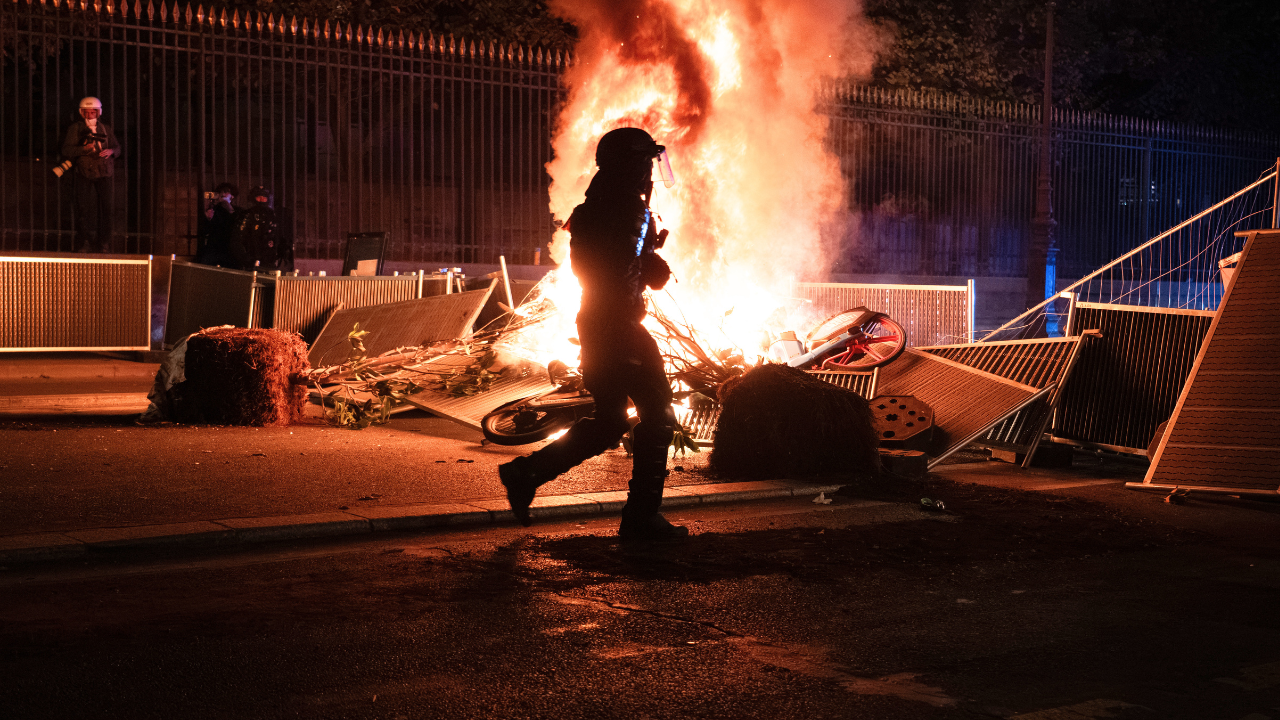
A protestor jumps over a wheelie bin as a fire is started on Voltaire boulevard while tens of thousands of secondary school students and their supporters march from Republic to Nation square on October 6, 2026 in Paris, France (Guy Smallman/Getty Images)
FRANCE IS DEVOURING ITSELF AS SCHOOL RIOTS REVEAL A CRISIS FAR BIGGER THAN BROKEN CLASSROOMS
A Fox News Digital investigation has identified 54 organizations and movements in France’s October student protests and their wider network of supporters and international amplifiers, including communist parties, revolutionary socialist groups, labor unions, environmental activists, Muslim student advocates, Palestinian-solidarity organizations and international media outlets.
Of the 54 organizations identified in the October protest ecosystem, 16 — or only about one in three — are student or youth organizations, including communist youth groups and a Muslim student association. The remaining 38 include adult-led communist groups, labor unions, political parties, revolutionary-left organizations, advocacy groups and international propaganda outlets.
They include Gilets jaunes, or «Yellow Vests,» a radical far-left group that led protests with other groups this weekend, and far-left socialist political party La France Insoumise (LFI), or France Unbowed.
From the outset, far-left socialist and communist organizations helped organize and amplify France’s student revolt, using grievances over school conditions as a pretext to mobilize a broader political struggle against capitalism, government austerity, policing and military spending.
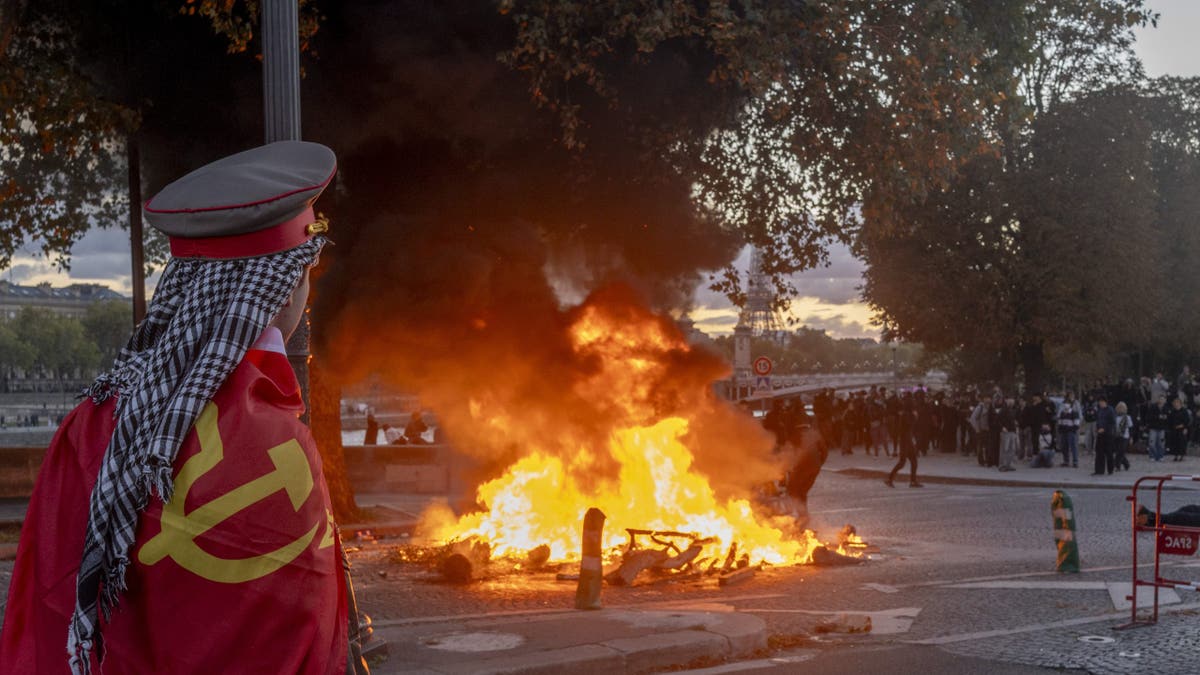
A protester wearing a communist hammer-and-sickle flag and Palestinian keffiyeh scarf watches a fire burn at a demonstration in Paris, France, on Saturday, Oct. 17, 2026. Rioters attacked French public buildings and looted stores in cities including Paris as protests against the high cost of living drew more than half a million people, underscoring the nation’s challenges ahead of presidential elections next year. (Nathan Laine/Bloomberg via Getty Images)
HOUSE PANEL WARNS SINGHAM-LINKED NONPROFITS: COMPLY WITH SUBPOENAS OR FACE CONGRESS
In a sign of unrest to come, France is inspiring an expansion of Chaos Inc.
Fox News Digital has learned an international coalition of 28 communist and socialist youth and organizations are galvanizing students and youth for a coordinated strike across 12 countries in Europe under the slogan «Fight for Our Future, Not Their Wars!» They are calling for walkouts, demonstrations, assemblies, blockades and occupations.
Among the international amplifiers for this mayhem are organizations within the Singham network, including Tricontinental, named for a communist convention in Havana, Cuba in 1966, CodePink and BreakThrough News, a New York-based media outlet, which promoted coverage of the weekend’s mayhem in France with the headline: «ANTI-MACRON PROTESTS ROCK FRANCE.»
It shared a montage of chaotic scenes from Montpellier, Paris, Marseille, Bordeaux, Strasbourg and Saint-Étienne, showing activists engulfed in smoke, Palestinian flags flapping above the crowds, black smoke billowing over flames and police hitting demonstrators with clubs. Its editors added a soundtrack of dramatic music. Its videos include politicians from the far-left socialist political party La France Insoumise (LFI).
In an interview with BreakThrough News, Jodie Evans, Singham’s wife and co-founder of a far-left group he funded, CodePink, promoted a planned November campaign in Washington opposing U.S. military spending.
She explicitly invoked youth demonstrations abroad, including France, Spain and India, while urging Americans to participate in CodePink’s campaign.
«I want people to look at France, Spain, and India,» Evans said, urging Americans to take to the streets.
Fox News Digital has prepared a «Who’s Who Guide to Chaos Inc. in France,» identifying the 54 organizations in the international network promoting the riots and protests in France, from direct organizing to participation, public solidarity and media amplification.
FRENCH SCHOOL RIOTS DEEPEN AS EXPERTS POINT TO FAR-LEFT ALLIANCE FUELING ‘BROADER CONFRONTATION’
WHO’S WHO IN FRANCE’S ‘CHAOS INC.’ NETWORK
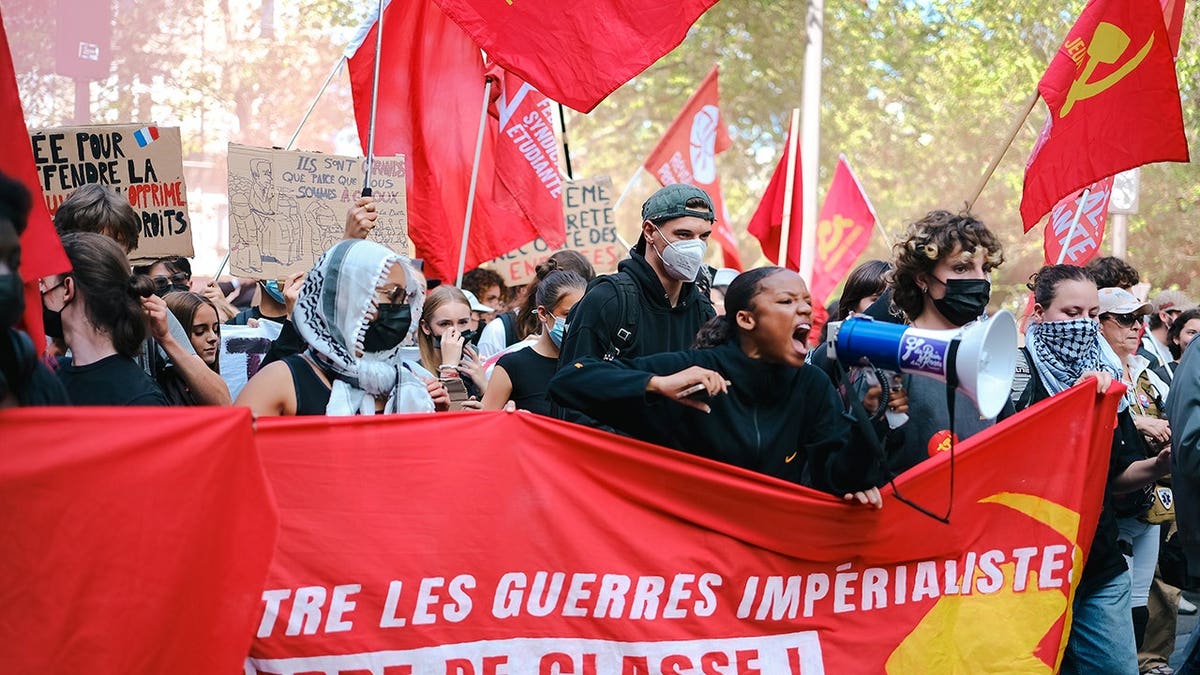
Young communists protesting as part of the student protests in France on Oct. 6, 2026 (Vincent Koebel/NurPhoto via Getty Images)
STUDENT UNIONS AND YOUTH GROUPS (16)
COMMUNIST AND SOCIALIST STUDENT AND YOUTH GROUPS
- Communist Youth of Greece — COMMUNIST: A Greek communist youth organization that has publicly supported French students, connecting their education demands to opposition to military spending and government austerity. It has also supported communist protesters in Madrid, Spain, and Greece.
- La Jeunesse Communists — COMMUNIST: A group coordinating communist youth activism visible in the French demonstrations, including hammer-and-sickle flags and banners calling for «Class War!»
- Le Poing Levé — The Raised Fist — REVOLUTIONARY COMMUNIST: A revolutionary student and youth organization associated with Révolution Permanente that works to connect high-school and university protests.
- Union de la Jeunesse Communiste (UJC) — Communist Youth Union — COMMUNIST: A French communist youth organization that called on supporters to join and amplify the student struggle.
STUDENT AND YOUTH GROUPS
- AFGES – Les étudiant·e·s d’Alsace — The Students of Alsace: A Strasbourg-based student federation affiliated with FAGE that posted about the early October mobilization while describing itself as politically independent. It coordinated protests in Strasbourg on Oct. 17 with an Instagram post that said, «MOBILISER,» which means «MOBILIZE.» Another post invited activists onto the streets with the message, «LE COMBAT CONTINUE,» or «THE FIGHT CONTINUES.»
- Étudiants Musulmans de France (EMF) — Muslim Students of France: A Muslim student association involved in student representation and campus solidarity whose social-media activity appears in the protest research; its exact Oct. 17 role remains unconfirmed.
- Fédération des associations générales étudiantes (FAGE) — Federation of General Student Associations: A national student federation that joined calls for student mobilization against the «extremely violent repression» of youth. It shared footage of its members marching on Oct. 17, with the hashtags #manifestation #genz #17octobre.
- Fédération Syndicale Étudiante (FSE) — Student Trade Union Federation: A left-wing student organization whose activists appeared in demonstrations and announced «Democratic and Antifascist Vigilance Committees,» linking high-school grievances to the treatment of anti-Israel activists and union members. On Saturday, it posted videos with its trademark solid red flags. One message read: «In Bordeaux, protesters invade the house of the mayor! On October 17, the whole country is on a standstill. Everyone is mobilizing for better living conditions, and against cutting the budget for public service! In Bordeaux, we hear echoing in the protest: Only one solution, the Revolution! The mobilization of the 17 continues: let’s block everywhere in France!»
- Interfac Île-de-France — Regional Student Coordination: A student coordination organization among Oct. 17 organizers involved in discussions over demonstration routes in Paris.
- Les Lycéens! — The High School Students!: A high-school student organization active in the early school blockades.
- Renouveau lycéen — High School Renewal: A high-school student organization identified in coverage of the October school mobilization.
- Rassemblement pour l’égalité et la démocratie Jeunes — Youth for Equality and Democracy: A youth civic and political organization associated with organizing support for students in Seine-Saint-Denis; its specific Oct. 17 role has not been independently established.
- Solidaires Étudiant·e·s — Solidaires Students: A left-wing student union that supported the high-school movement and helped connect university students with the October demonstrations.
- Union Étudiante — Student Union: A national university student union that helped mobilize students for the Oct. 6 demonstrations and encouraged participation in the broader movement.
- Union nationale des étudiants de France (UNEF) — National Union of Students of France: One of France’s established student unions, it was among the organizers of the Oct. 6 nationwide demonstrations.
- Union syndicale lycéenne (USL) — High School Students’ Union: A French high-school student union that helped organize the initial school blockades and October demonstrations before publicly supporting students joining the Oct. 17 Yellow Vest mobilization.
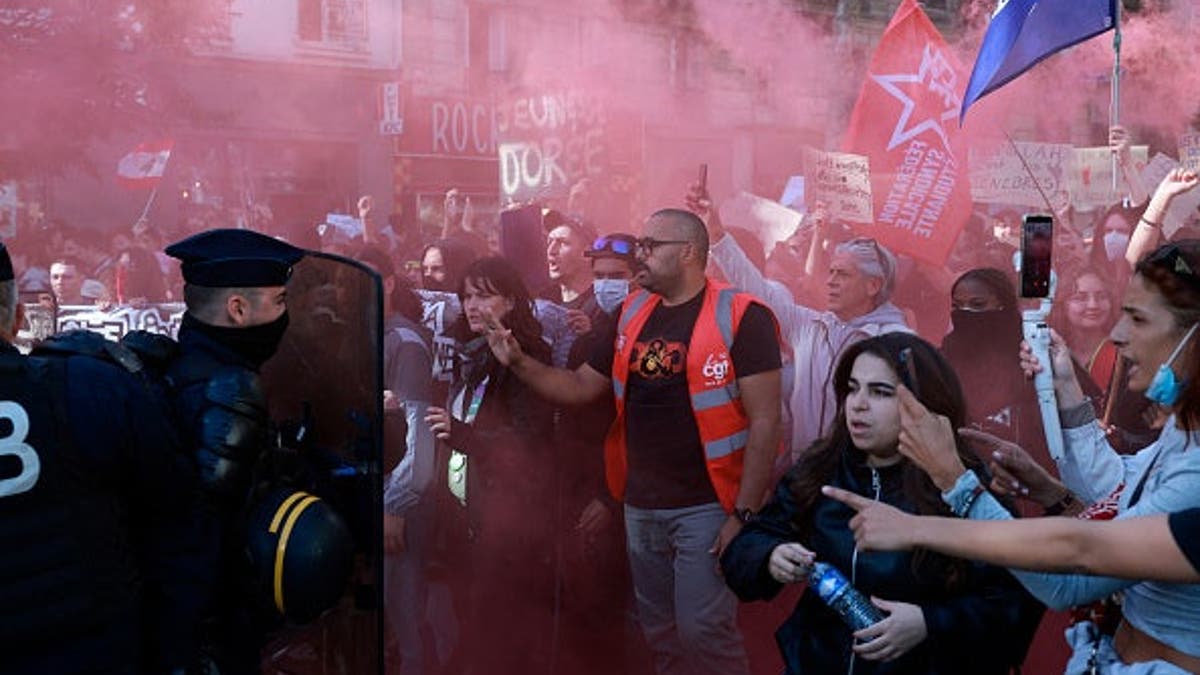
Smoke billows around protesters as they march toward the Place de la Bastille in Paris on Oct. 8, 2026, as part of a nationwide protest movement over learning conditions. The orange vest carries the acronym «CGT» for the Confédération générale du travail, a trade union. Protestors carry a purple flag of La France insoumise, a political party, and a red flag of Fédération Syndicale Étudiante, a student group. (Kenzo Tribouillard/AFP via Getty Images)
COMMUNIST, MARXIST, TROTSKYIST AND REVOLUTIONARY-SOCIALIST ORGANIZATIONS (11)
- International Communist League — TROTSKYIST: An international communist organization whose French publication Le Bolchévik called on labor unions to mobilize in support of the school protests.
- Jeunesse du Monde — COMMUNIST PUBLICATION: A communist publication associated with the Organisation Communiste de France; separate organizational participation in the October 17 protests has not been established.
- La France insoumise (LFI) — France Unbowed — LEFT-POPULIST / SOCIALIST: A political movement whose elected officials supported student blockades, including lawmaker Louis Boyard, who waved a Palestinian flag alongside students at Paris-Est-Créteil University.
- Nouveau Parti anticapitaliste – L’Anticapitaliste (NPA) — New Anticapitalist Party — REVOLUTIONARY SOCIALIST: A revolutionary anti-capitalist party that urged continued mobilization after the Oct. 6 protests.
- Organisation communiste révolutionnaire — REVOLUTIONARY COMMUNIST: A communist organization identified in the wider research whose precise legal identity and direct October protest activities require additional verification.
- Parti communiste français (PCF) — French Communist Party — COMMUNIST: Party leader Fabien Roussel publicly supported student demonstrators in Paris alongside communist elected officials and activists as demonstrators carried party flags.
- Parti des Indigènes de la République (PIR) — Party of the Indigenous of the Republic — DECOLONIAL POLITICAL MOVEMENT: A political organization that defended the student revolt and circulated imagery of protesters outside Lycée Paul Éluard holding a Palestinian flag.
- Parti de l’égalité socialiste — Socialist Equality Party — TROTSKYIST: A French socialist organization that called for workers’ action committees and broader mobilization in support of the student movement.
- Revolutionary Communist Group — COMMUNIST: A British revolutionary communist organization that published an article connecting the French student revolt to opposition to capitalism, imperialism and support for Palestine.
- Révolution Permanente — Permanent Revolution — TROTSKYIST: A revolutionary socialist organization and publication that reported on university blockades and encouraged solidarity between high-school and university students.
- World Socialist Web Site — TROTSKYIST MEDIA: An international socialist publication that covered the French school blockades and placed them within a broader argument about austerity, militarization and capitalism.
MUSLIM STUDENT AND PRO-PALESTINE ORGANIZATIONS (2)
- Union juive française pour la paix (UJFP) — French Jewish Union for Peace: A Jewish peace and Palestine-solidarity organization that publicized «support for high school students» who joined protests in early October.
- Urgence Palestine — Palestine Emergency: A French Palestine-solidarity organization whose protest-related social-media activity appears in the research, although direct organization of the October 17 demonstrations is not established.
LABOR UNIONS, TEACHERS’ FEDERATIONS AND FARMERS (12)
- CGT Éduc’action — CGT Education: The education-sector organization of the General Confederation of Labour that joined union mobilization calls.
- CFDT Éducation Formation Recherche Publiques — CFDT Public Education, Training and Research: A public education and research union that joined education-sector statements supporting the school movement.
- Confédération générale du travail (CGT) — General Confederation of Labour: One of France’s major national labor confederations that supported the October school mobilizations and joined the Oct. 17 cost-of-living protests.
- Confédération nationale du travail (CNT) — National Confederation of Labour — ANARCHO-SYNDICALIST TRADITION: A revolutionary-syndicalist labor organization that endorsed the student movement, declaring that students were right to revolt.
- Confédération paysanne — Peasant Confederation: A farmers’ union that called on agricultural workers to join Oct. 17 protests, linking rural economic grievances with the national mobilization.
- Fédération syndicale unitaire (FSU) — Unitary Trade Union Federation: A major education and public-sector union federation that supported the school mobilization.
- FNEC FP-FO — National Federation of Education, Culture and Vocational Training–Workers’ Force: Force Ouvrière’s education federation, which joined calls supporting high-school demonstrations.
- Force Ouvrière (FO) — Workers’ Force: A national labor confederation whose education affiliates joined calls supporting high-school students.
- SUD éducation — SUD Education: A left-wing education union that joined mobilization calls involving students and education workers.
- Syndicat national des enseignements de second degré (SNES-FSU) — National Union of Secondary Education: A major secondary-school personnel union that supported strikes and demonstrations in solidarity with students.
- Union syndicale Solidaires — Solidaires Trade Union: A left-wing labor federation whose regional branches promoted Oct. 17 demonstrations and strikes after earlier student solidarity mobilizations.
- Union nationale des syndicats autonomes (UNSA) — National Union of Autonomous Trade Unions: A national trade-union federation whose education organizations supported the school movement.
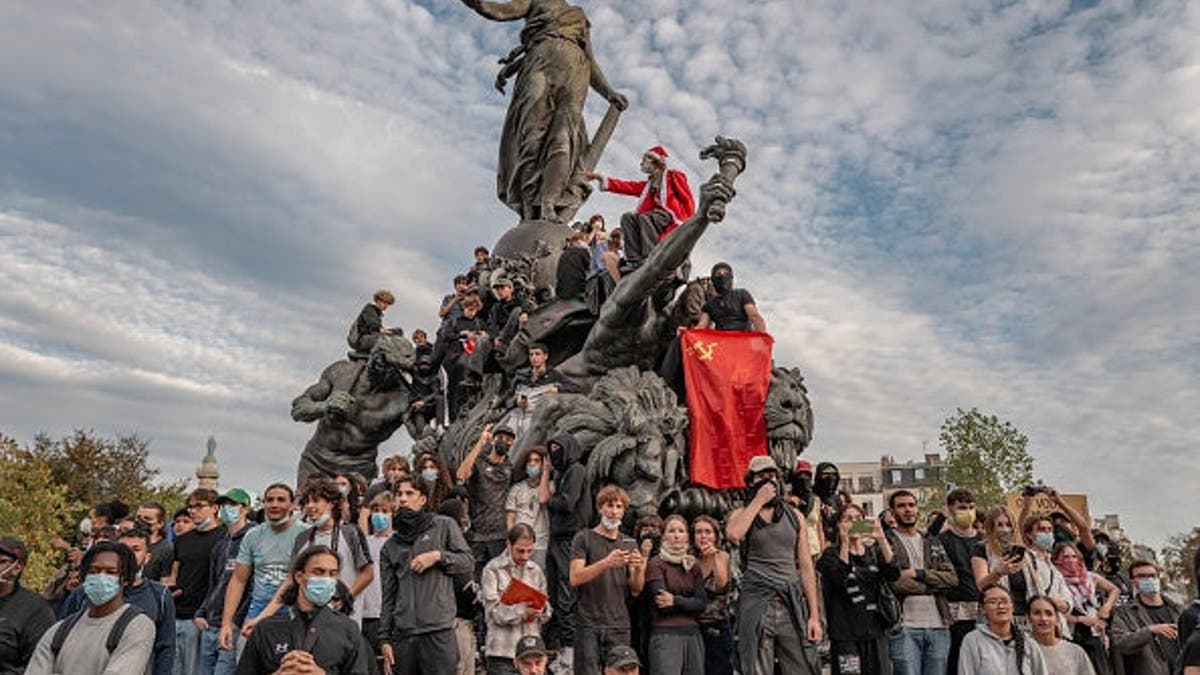
Protestors gather around the Monument à la République in Place de la République in Paris on Oct. 4, 2026, during nationwide demonstrations against an overcrowded, ill-equipped and understaffed education system. A masked protestor holds a red flag of the Soviet Union with the communist hammer and sickle. (Veronique de Viguerie/Getty Images)
HUMAN-RIGHTS, PARENTS’, ENVIRONMENTAL AND ECONOMIC-JUSTICE ORGANIZATIONS (11)
- Amnesty International France: The French section of Amnesty International that reported on police treatment of minors during the school protests.
- ATTAC France — Association for the Taxation of Financial Transactions and Citizen Action: An economic-justice organization that linked protest grievances with opposition to austerity and restrictions on civil liberties.
- Coordination nationale du mouvement du 26 septembre — September 26 Movement Coordination: A climate-mobilization network that encouraged participation in Oct. 17 protests and connected environmental concerns with household economic pressures.
- Extinction Rebellion: An international environmental activist movement whose imagery appeared in photographic coverage of the French demonstrations.
- Fédération des conseils de parents d’élèves (FCPE) — Federation of Parents’ Councils: A national parents’ federation that called on members to demonstrate and announced participation by its national board in Paris.
- Gilets jaunes — Yellow Vests: A radical far-left French protest group revived around fuel prices and the cost of living whose Oct. 17 demonstrations converged with the student mobilization.
- Intersyndicale nationale VTC — National Private-Hire Drivers’ Union Coalition: A professional drivers’ coalition that promoted participation in the Oct. 17 mobilization, including a gathering at Place de la Bastille.
- Les Soulèvements de la Terre — Earth Uprisings: A radical environmental movement that celebrated the student revolt and called for an antifascist uprising.
- Ligue des droits de l’Homme (LDH) — Human Rights League: A French civil-liberties organization that publicized support for students and criticism of police repression.
- Mouvement contre le racisme et pour l’amitié entre les peuples (MRAP) — Movement Against Racism and for Friendship Between Peoples: An antiracism organization identified in earlier coalition activity around the student demonstrations.
- SOS Racisme — SOS Racism: A French antiracism organization included in coalition activity supporting the school movement.
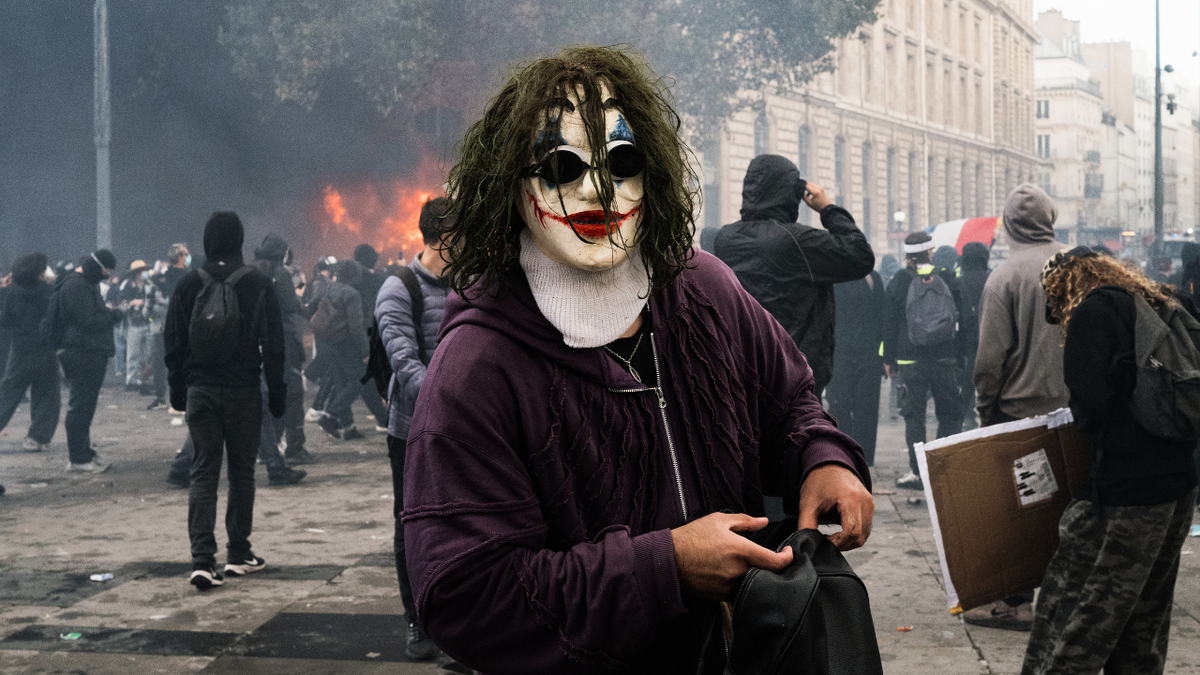
Clashes occur between protesters throwing projectiles and police responding with tear gas during a demonstration against the high cost of living in Paris, France, on October 17, 2026. (Jerome Gilles/NurPhoto/Getty Images)
INTERNATIONAL AMPLIFIERS AND ADDITIONAL OCT. 17 ORGANIZERS (2)
- BreakThrough News — COMMUNIST SINGHAM NETWORK: A New York-based outlet that reported on French student demonstrations and previewed their participation in the October 17 cost-of-living mobilization.
- Indian Alliance Paris — COMMUNIST SINGHAM NETWORK: A France-based Indian diaspora organization that connected French and Indian youth protests through its social-media messaging. It has partnered with the SIngham network’s People’s Forum for an event.
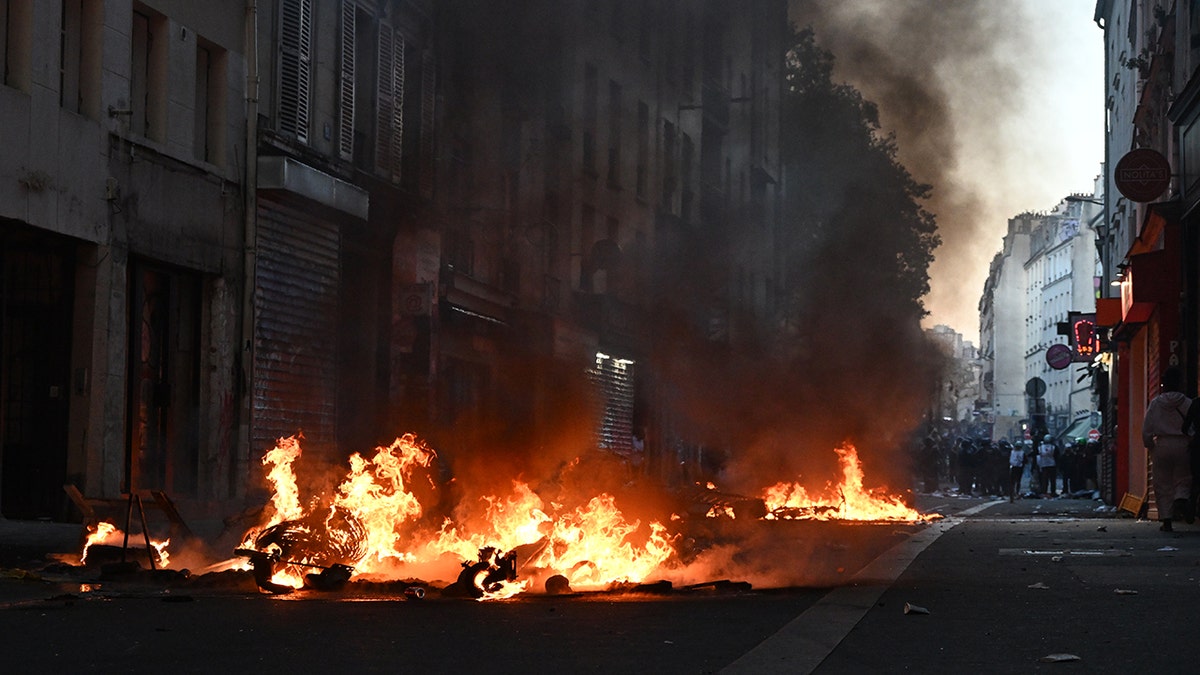
Trash burns during clashes between protestors and police officers during a demonstration against rising living costs, joining students’ grievances, in Paris, Sunday, Oct. 18, 2026. (AP Photo/Emma Da Silva)
THE NEXT MOBILIZATION: NOV. 20 EUROPEAN YOUTH STRIKE
- Counterfire — United Kingdom — REVOLUTIONARY SOCIALIST / ANTI-WAR: A British socialist organization that advertised the Nov. 20 strike and connected opposition to war with campaigns involving universities and Palestine.
- International Socialist Alternative — REVOLUTIONARY SOCIALIST: An international socialist organization that endorsed the Nov. 20 action and connected opposition to militarization with criticism of capitalism.
- International Youth Strike coalition: The international organizing coalition announced plans in August for coordinated Nov. 20 student walkouts and demonstrations across Europe under the slogan «Fight for Our Future, Not Their Wars!»
- Socialist Party — United Kingdom — TROTSKYIST: A British socialist party whose October commentary linked France’s student revolt with wider European mobilization and the forthcoming strike.
- Socialist Students — United Kingdom — SOCIALIST: A British socialist student organization that promoted the Nov. 20 strike and sought to connect student opposition to military spending with wider socialist campaigns.
- Stop the War Coalition — United Kingdom — ANTI-WAR: A British anti-war organization that promoted the youth strike and encouraged demonstrations opposing military spending.
france, world, world protests, globalism, politics
INTERNACIONAL
Las midterms del 3 de noviembre: elección o referéndum sobre el mandato del presidente Trump
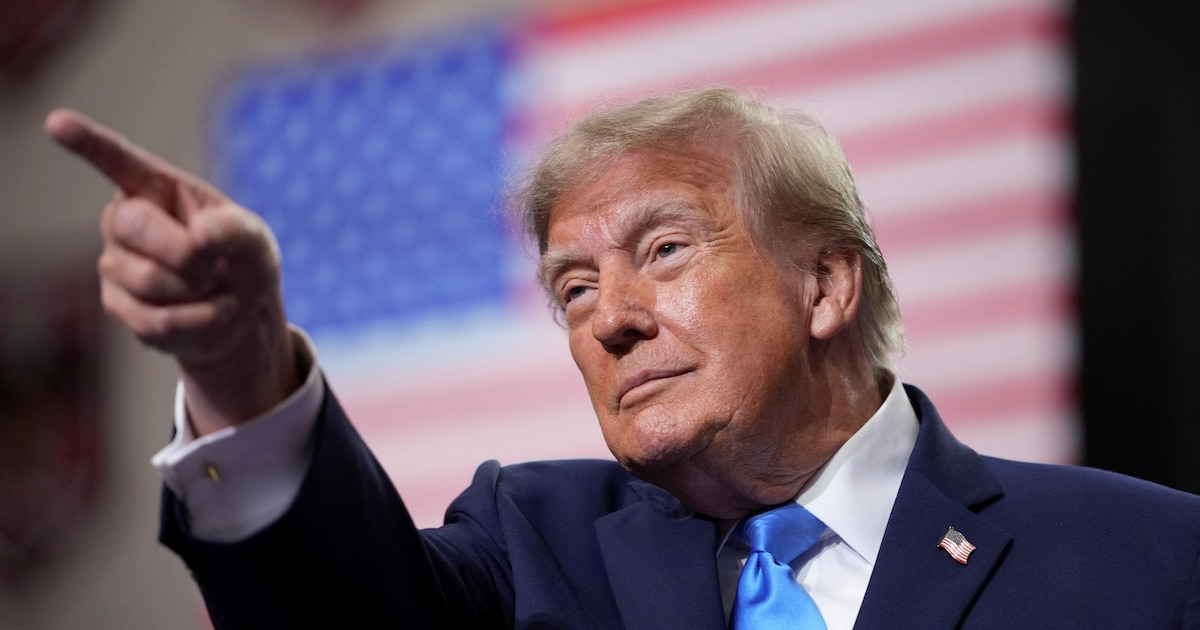
El mundo entero está pendiente de lo que ocurrirá el próximo martes 3 de noviembre de 2026, cuando los estadounidenses decidirán la renovación de la totalidad de la Cámara de Representantes —435 escaños— y de aproximadamente un tercio del Senado, con 35 escaños en disputa. Estos comicios podrían cambiar el equilibrio de mayorías en el Congreso. Los estados, por su parte, suelen incorporar otras contiendas a la boleta, como elecciones para gobernador, representantes estatales, cargos judiciales y otros puestos locales. También pueden someterse a votación propuestas que modifiquen las leyes estatales.
Es importante que los ciudadanos estadounidenses, vivan o no en Estados Unidos, ejerzan su derecho al voto. De estas elecciones surgirá la composición del Poder Legislativo, que, junto con el presidente, participa en la aprobación de los planes y proyectos que marcarán el rumbo del país. En 2022, la participación electoral fue del 52,2 %, una cifra que evidencia el desafío de movilizar a los votantes en unos comicios de enorme trascendencia.
Muchos consideran esta elección una oportunidad para expresar su apoyo —o su rechazo— a la gestión del segundo mandato del presidente Donald Trump, más allá del propósito institucional de las elecciones legislativas. Aunque el mandatario no aparecerá en la papeleta, su liderazgo, su influencia dentro del Partido Republicano y el respaldo a su gestión estarán, sin duda, en juego el próximo 3 de noviembre.
Para cualquier ciudadano de América Latina conviene entender el mecanismo básico: el Congreso de Estados Unidos aprueba leyes, presupuestos e impuestos, y puede investigar las actuaciones del Poder Ejecutivo. Si los republicanos mantienen ambas cámaras, Trump podrá impulsar su agenda con mayor fluidez. Si los demócratas recuperan la Cámara de Representantes —algo históricamente frecuente para el partido que ocupa la Casa Blanca—, aumentarán los bloqueos, las negociaciones difíciles y las investigaciones. Para la oposición, también sería una oportunidad de debilitar al partido gobernante de cara a las elecciones presidenciales de 2028.
El Senado presenta un panorama distinto: sus mandatos son escalonados y solo una parte de sus escaños se somete a elección en cada ciclo, por lo que cambiar su mayoría puede resultar más difícil. En cualquier caso, el mensaje de los votantes será interpretado como una evaluación de la dirección que ha tomado el país desde enero de 2025.
Uno de los asuntos que seguramente pesará en el voto es la política migratoria. Durante la administración anterior, las detenciones de migrantes en situación irregular superaron los dos millones anuales en varios años. En 2026, las aprehensiones de la Patrulla Fronteriza habrían caído a alrededor de 137.000, cerca de un 94 % por debajo del máximo registrado en 2023. Los defensores de la política actual sostienen que se ha frenado el uso abusivo de los mecanismos migratorios y que se ha endurecido la respuesta frente a los cruces irregulares.
El enfoque de la administración busca proyectar un mayor control fronterizo y una estrategia de largo plazo. Sus partidarios argumentan que una frontera más ordenada reduce la presión sobre los países de tránsito y limita las oportunidades de las redes criminales que explotan las rutas migratorias. Sin embargo, el impacto de estas medidas seguirá siendo objeto de debate político y humanitario.
En materia económica, el análisis es más matizado. El desempleo se mantiene relativamente bajo, en torno al 4,2 %. Estados Unidos también produce petróleo a niveles récord: más de 13,6 millones de barriles diarios en 2025, con proyecciones de alrededor de 13,8 millones para 2026. La administración ha promovido inversiones privadas en manufactura, acero, semiconductores y energía, y sus objetivos incluyen reindustrializar el país, fortalecer la seguridad energética e impulsar la economía en su conjunto.
Al mismo tiempo, la inflación sigue siendo un punto débil. El aumento del costo de vida, en particular de los combustibles, presiona los presupuestos familiares. Las tensiones en Oriente Medio y la situación del estrecho de Ormuz añaden incertidumbre a los mercados energéticos. Para muchas familias, el problema no se mide únicamente en indicadores macroeconómicos, sino en cuánto rinde el salario al pagar la vivienda, los alimentos, el transporte y otros gastos cotidianos.
Las encuestas reflejan parte de esa frustración, especialmente en economía e inflación. Aun así, sus resultados pueden variar y no anticipan por sí solos el desenlace electoral. La historia muestra que el partido del presidente suele afrontar dificultades en las elecciones de mitad de mandato, y el malestar económico puede convertirse en un factor decisivo. La pregunta central será si los votantes consideran que el control fronterizo, la energía, la política industrial y la lucha contra el crimen organizado compensan el costo de vida que hoy preocupa a una parte importante de la población.
En política exterior, la captura de Nicolás Maduro en enero de 2026 y su traslado a Estados Unidos para enfrentar cargos marcaron un giro de gran impacto regional. La administración presentó esa actuación como una señal de firmeza frente a regímenes vinculados, según sus argumentos, al narcotráfico y a la migración irregular masiva. La cooperación internacional bajo el llamado “Escudo de las Américas” también ha situado en primer plano la seguridad frente a los carteles y las redes de narcotráfico, con una estrategia que busca priorizar resultados concretos.
Las midterms, sin embargo, no se deciden solo por logros cuantificables. También dependen de la percepción pública, del costo de la vida y de una dinámica histórica que suele castigar al partido en el poder. Un cambio de fuerzas en la Cámara baja obligaría a negociar y podría abrir la puerta a nuevas investigaciones, aunque no borraría automáticamente las políticas ya ejecutadas en inmigración, seguridad y energía.
Para América Latina, el interés va más allá del color partidario. Importa saber si prevalecerá una política de resultados concretos en seguridad y estabilidad, y si se mantendrá la coordinación regional, o si el nuevo equilibrio político abrirá una etapa de mayor incertidumbre en asuntos migratorios y de cooperación internacional.
En definitiva, el veredicto de las urnas revelará qué peso concede hoy la ciudadanía a cada uno de estos asuntos. El 3 de noviembre será un referéndum imperfecto, pero real, sobre si los estadounidenses consideran que la dirección tomada por la administración justifica el malestar inflacionario de corto plazo. La respuesta no dependerá únicamente de los discursos del presidente, sino de la experiencia diaria de los ciudadanos y de su expectativa sobre el futuro.
“Las urnas no solo cuentan votos: miden la confianza de un país y ponen a prueba el rumbo de quienes lo gobiernan.”
* El autor es empresario y comentarista político ecuatoriano. Fue presidente de BanEcuador.
Domestic,Politics,North America,Government / Politics

Comienza el juicio contra los Kirchner por lavado y asociación ilícita: las pruebas que reunieron los fiscales

La City anticipa un rebote de los bonos de deuda argentina tras semanas de castigo

Uno de los juegos más esperados de Steam ha cancelado su demo por miedo a que la IA le copie sus deberes, algo que ya ha pasado

El comunicado oficial de la productora tras la cancelación del show de Tini Stoessel en Miami

El Gobierno admite que no hubo acuerdo interno por Discapacidad y mantiene abierta la posibilidad de un veto de Milei

Epstein-linked billionaire pours $500K into super PAC backing Kentucky Democrat: ‘Dirty Epstein-class money’

El crédito que nadie te cobra

La lesión de Lautaro Martínez que encendió las alarmas de la selección argentina: el comunicado del Inter

Noche negra y oleada de críticas contra Jofre Torrents

Lautaro se lesiona y podría perderse el derbi milanés

 CHIMENTOS2 días ago
Juan Minujín contó como llegó a trabajar con Angelina Jolie y Salma Hayek: «Al principio dije que no»
- INTERNACIONAL2 días ago
Trump’s new press secretary out of the job just days after rocky debut
- POLITICA2 días ago
Los intendentes del PJ que afrontarán un recambio inédito si es que la ley de reelecciones no se revierte