INTERNACIONAL
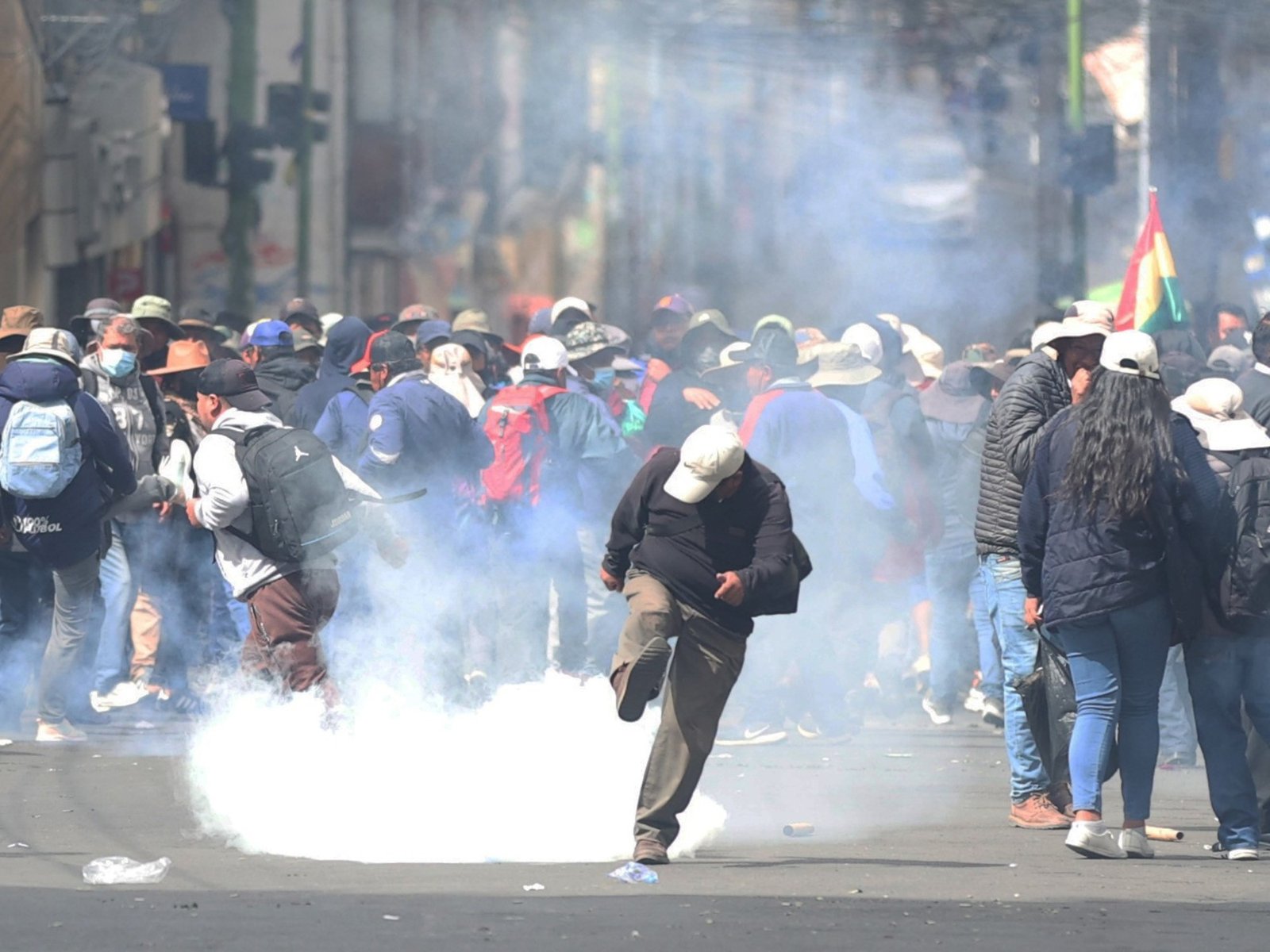
Largas filas para conseguir pollo o combustible: los piquetes ahogan a La Paz y surgen «contramarchas» en toda Bolivia




INTERNACIONAL
Summer School: Republicans’ crusade to teach voters the ‘New Math’ on the ‘commie caucus’
NEWYou can now listen to Fox News articles!
The House is gone. But the campaign is on.
«We’re going to have a lot to talk about during this break,» said House Majority Leader Steve Scalise, R-La. «The contrast on the ballot this November between communism and freedom.»
School is out for the summer in the House until August 31. But Republicans envision a version of summer school for the voters. They intend to educate people about Democratic candidates who are veering to the left.
«The reality is that the communist caucus, the commie caucus is coming to Congress,» claimed Rep. Nicole Malliotakis, R-N.Y.
REPORTER’S NOTEBOOK: HOUSE’S FINAL SPRINT PUTS SAVE AMERICA ACT AND IRAN FUNDING IN PLAY
The House might be a lost cause for Republicans, but their summer campaign to educate voters on the Democrats’ insurgent left flank has just begun. (Emma Woodhead/Fox News Digital)
Republicans hope to cling to their narrow House majority by distinguishing themselves from Democrats – and noting how Democrats tapped far-left candidates in New York City and even Colorado. These «Democratic Socialists of America» candidates will undoubtedly prevail in their districts. But Republicans believe that left-wing Democrats freak out independents and mainstream Democrats. The GOP is banking on that as an insurance policy to maintain control of the House.
House Republicans also enjoyed some relative success last week for the first time in months. The GOP advanced a host of bills important to them. And, simultaneously got Democrats on the record about bills which Republicans think they can boomerang against their adversaries this fall.
«They have to answer for why they voted against funding our troops, against funding the government, against common sense policies like voter ID and proof of citizenship,» said House Speaker Mike Johnson, R-La.

«They have to answer for why they voted against funding our troops, against funding the government, against common sense policies like voter ID and proof of citizenship,» House Speaker Mike Johnson, R-La., said of the opposition. (Graeme Sloan/Bloomberg via Getty Images)
The House approved a plan barring stock trades by Members, 232-198. Only 13 Democrats voted yes compared to all Republicans. But the GOP tacked on a voter ID mandate. Democrats argue that provision transformed a once bipartisan issue into a GOP political wedge.
«I proudly voted no because we are not going to sabotage mail-in voting in this country. And we’re not going to fall for that kind of bait-and-switch tactic here,» fumed Rep. Alexandria Ocasio-Cortez, D-N.Y.
Democrats have long campaigned on affordability.
«Today, prices are up over 25 cents a gallon above $4 a gallon in my region,» said Rep. Mary Gay Scanlon, D-Pa.
SUCCESSION: WHY CONGRESS HAS NO CLEAR PLAN WHEN LAWMAKERS CAN’T SERVE
President Donald Trump has now paused the air campaign against Iran after two weeks of consecutive bombing. But the war in Iran presents Democrats with a political opening.
«Will Democrats recalibrate their message on Iran? Will we see ads on Iran going into the midterms?» yours truly asked House Minority Leader Jeffries, D-N.Y.
«We don’t have to recalibrate our message. We’ve been opposed to Donald Trump’s reckless and costly war of choice in the Middle East from the very beginning,» replied Jeffries.
There was a split decision on Capitol Hill last week. The House voted to shackle the president on Iran war powers. Four Republicans defected and sided with Democrats.
«He ran on no new wars,» said Rep. Becca Balint, D-Vt. «He’s making the case for us. He hit voters over and over and over with this promise. And then he did the exact opposite.»

President Trump has paused the air campaign against Iran after weeks of regular bombing. (CENTCOM)
Still, the president’s allies claimed that the vote undercuts American forces in harm’s way.
«To belittle this mission is to belittle and demean the very service these members who gave their lives,» said House Foreign Affairs Committee Chairman Brian Mast, R-Fla.
A couple of hours later, the Senate rejected the House’s rebuke of the President.
«I think Democrats have taken that tack from the start,» said Sen. John Hoeven, R-N.D., of the Democrats hoping to cut off the Iran operation.
«It wouldn’t have passed if it wasn’t for Republicans in the House,» yours truly pointed out.
«A few Republicans,» conceded Hoeven. «But I think there’s strong support in our party (for the President).»
That’s ultimately why the Senate defeated its Iran measure. Some GOPers argued that the U.S. has Iran on the ropes.
«Last time I checked, we’ve wiped these b——s out. An occasional missile strike and boats in the Strait (of Hormuz). That’s not military strength. Those are the flailings of a failing empire,» declared Sen. Tim Sheehy, R-Mont.
HOUSE GOP VOTES TO PUNT GOVERNMENT SHUTDOWN BATTLE TO AFTER NOVEMBER MIDTERMS
But Senate Democrats chided Republicans for not intervening in the conflict.
«Every time Republicans oppose our war powers resolution and vote against ending this war, they lose the faith of the American people,» said Senate Minority Leader Chuck Schumer, D-N.Y. «Senate Republicans need to wake up. Not next week. Not next month. Now.»
Top Congressional GOP leaders say it’s not necessary for Congress to flex its war powers muscles.
«I don’t think an AUMF (authorization for use of military force) is in order right now. I think we need to bring this to a resolution,» said Johnson.
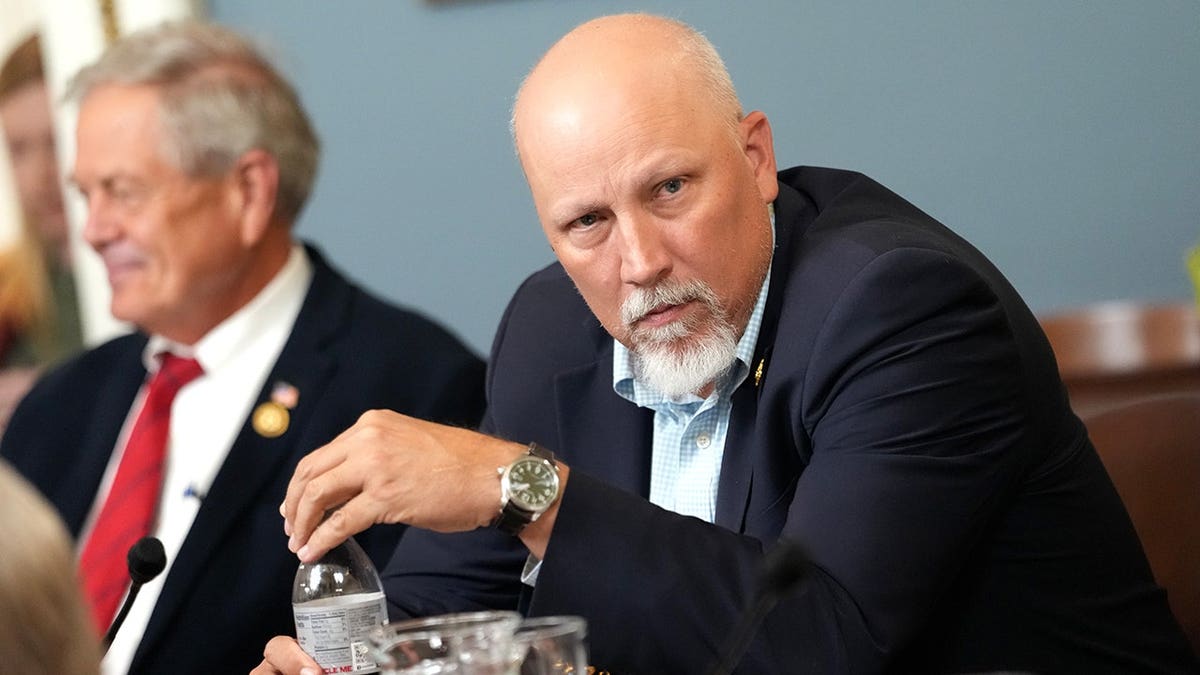
Rep. Chip Roy, R-Texas, is calling for «greater clarity» on the Iran conflict. (Kevin Dietsch/Getty Images)
However, some Republicans demand answers about the endgame.
«I think we need greater clarity there. I think Congress needs to exercise more of its powers here,» said Rep. Chip Roy, R-Texas.
Democrats may believe they have an advantage on Iran. But like Roy, they demand a plan.
«This whiplash policy in Iran is not good,» said Rep. Bennie Thompson, D-Miss., the top Democrat on the Homeland Security Committee. «You can’t run a war at 2:00 in the morning on Twitter.»
JOHNSON HAS THREE-WORD ANSWER ON WHETHER HOUSE WILL LEAVE EARLY
Despite their criticism, Democrats are vague about how they’d go about ending the war.
«We’ve got to figure that out. But Donald Trump got us into this mess,» said Jeffries.
«But won’t voters demand you guys to have a plan if you’re going to win the majority, Mr. Leader?» I asked as Jeffries walked away.
I posed a similar question to Sen. Chris Coons, D-Del., one of the most thoughtful Democrats on foreign policy and national security issues.
«We didn’t start it,» replied Coons.
«But don’t you have to have a plan if you’re going to criticize the president on this?» I asked.
«I wouldn’t have gotten into this war,» said Coons.
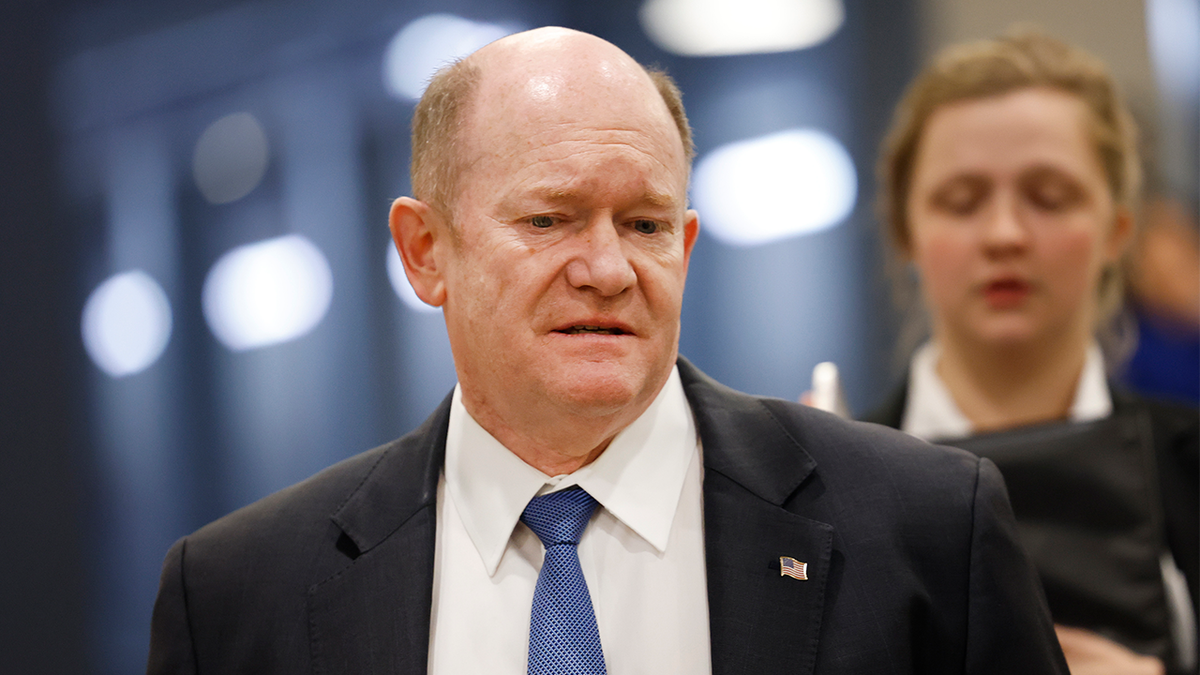
Sen. Chris Coons, D-Del., was more blunt – saying outright that he «wouldn’t have gotten into this war.» (Photo by Anna Moneymaker/Getty Images)
The Pentagon is now running short on cash since the defense policy bill is stalled. That’s to say nothing of the budget resolution which could provide $95 billion to the Pentagon. Congressional approval to pay for the war could take months. Perhaps until December. That’s after the election. Democrats may want to see how they fare in the midterms before coughing up money for the military.
Midterm elections are often a referendum on the president.
CLICK HERE TO DOWNLOAD THE FOX NEWS APP
In 2006, Democrats flipped the House and Senate by campaigning on ending the unpopular war in Iraq. They had a plan to wind down the conflict. Eighteen years later, Democrats want to run on Iran in this fall’s midterms. But unlike 2006, they don’t seem to have a clear plan on how to end the conflict.
But they know who to blame: President Trump.
congress, house of representatives politics, midterm elections, democratic party
INTERNACIONAL
Confirmaron la identidad: una mujer que figuraba como desaparecida por la dictadura en Chile está viva y reside en Argentina

Después de casi diez meses de investigación, un estudio de ADN confirmó la identidad de Bernarda Vera, una mujer que figuraba como desaparecida en el listado oficial de víctimas de la dictadura militar de Augusto Pinochet en Chile. Se trata de la mujer que una investigación periodística de TV descubrió el año pasado en Miramar.
A través de un comunicado, el Poder Judicial chileno indicó que, tras varios meses, las pruebas confirmaron que «el perfil genético de la mujer encontrada corresponde a Bernarda Vera Contardo».
Ante la novedad, el ministro en visita para causas de Derechos Humanos, Álvaro Mesa Latorre, se reunió con los familiares de la presunta desaparecida y les compartió «los resultados del informe pericial correspondiente al perfil genético y las muestras de sus familiares disponibles en el Banco Genético de Familiares de Detenidos y Ejecutados Políticos del Servicio Médico Legal».
“En la diligencia se informó que los antecedentes científicos acreditaron una probabilidad de identificación de la señora Bernarda Rosalba Vera Contardo superior al 99,9999%”, indicó la institución en la nota.
El funcionario remarcó que la causa está «bajo estricto secreto de investigación» y estableció que “el informe pericial genético de ADN es de carácter reservado y se entrega con el único y exclusivo fin para conocimiento del grupo familiar directo y su ámbito interno”, según declaraciones que recogió La Tercera.
El caso salió a la luz en septiembre del año pasado, cuando la cadena local Chilevisión dio a conocer un informe en el que mostraba que habría encontrado a Vera viviendo en la localidad balnearia boanerense.
La polémica estalló porque la protagonista del reportaje era una profesora que, con 27 años y una hija de 5, fue detenida por militares el 10 de octubre de 1973 y que, aparentemente, había sido ejecutada en el puente de Villarrica, en la región de La Araucania.
La joven era militante del Movimiento de Izquierda Revolucionaria (MIR) y su nombre figura entre las 1.162 personas incluidas en el Informe de la Comisión Verdad y Reconciliación (Rettig), el registro elaborado en 1991 sobre las víctimas de violaciones a los derechos humanos durante la dictadura pinochetista
Luego de que trascendiera el informe televisivo, el gobierno de Gabriel Boric reconoció que había recibido avisos sobre posibles «incongruencias” en algunos testimonios que fueron reportadas por el Plan Nacional de Búsqueda (PNB) y dispuso la apertura de una nueva investigación.
Ante el escándalo generado, fue el por entonces ministro de Seguridad, Luis Cordero, quien señaló que la tarea de «corroborar científicamente la identidad de la mujer que vive en Argentina y que sería Bernarda Vera» le correspondía a la Justicia. La causa quedó radicada en el Primer Juzgado del Crimen de Temuco, también en la región de la Araucanía.
El funcionario estaba al frente del Ministerio de Justicia y Derechos Humanos cuando se puso en marcha el PNB y fue la persona señalada por la oposición a la administración de Boric como el responsable de la eventual «inexactitud respecto al caso».
Conocida como «Anita» en sus tiempos de militancia en el MIR, Bernarda Vera figura en el Informe Rettig. Testimonios que quedaron fuera de la causa y algunos detalles del boletín que cada mes publicaba el PNB dieron indicios de que la mujer podría haber escapado de ese destino.
El reporte que se difundió en septiembre del año pasado mencionó que «en algunos casos, muy excepcionales, este proceso ha revelado incongruencias con las conclusiones de las Comisiones de Verdad. Un primer caso refiere a una persona, condenada a muerte por un Consejo de Guerra en 1973, que fue calificada por la Comisión Rettig, con los antecedentes disponibles en la época como víctima de desaparición forzada”.
“Posteriormente, el PNB recogió testimonios de personas que dijeron haberla visto fuera de Chile después de la fecha en la que la CNVR estableció su desaparición. A raíz de ello, se abrió una investigación administrativa respecto de su trayectoria», dealló el documento oficial.
Esos datos fueron parte de la investigación periodística de Chilevisión, que condujo a una de sus cronistas a la ciudad de la costa bonaerense, donde dio con el paradero de quien ahora se confirma en un «99,9999%» que es Bernarda Vera Contardo, quien detrás de la puerta de su casa en ese momento se negó a hablar con la periodista.
INTERNACIONAL
Para bajarle el tono a la crisis, Lula reaccionó con ironía y buscó evitar la pelea directa con Milei: “¿Quién es ese tipo?”
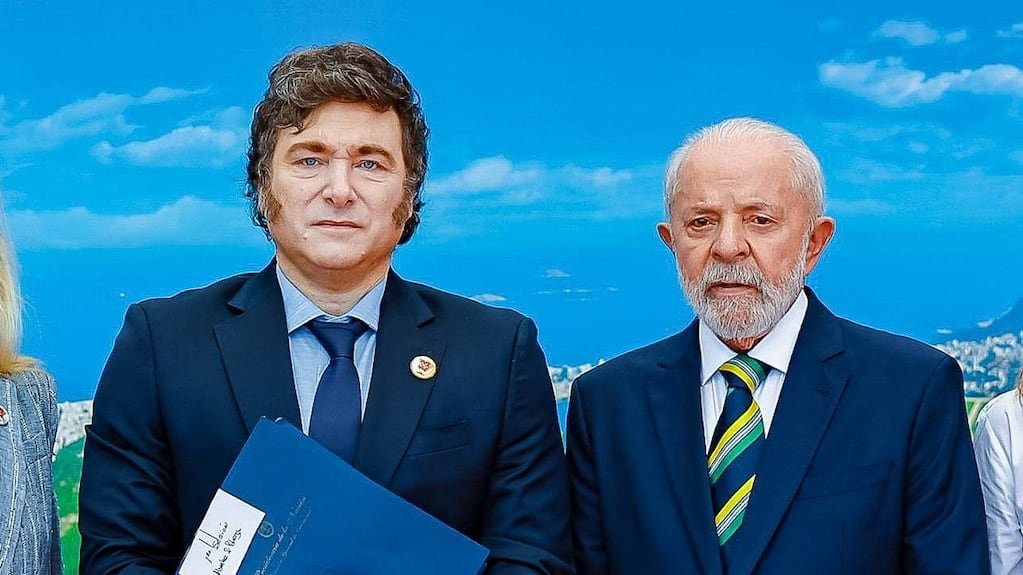
A dos meses y medio de las elecciones presidenciales en las que buscará su reelección, Lula decidió no subirse al ring armado por Javier Milei y dejar que la crisis desatada por las descalificaciones del presidente argentino avance por los carriles diplomáticos.
“¿Quién es ese tipo?“, reaccionó este lunes con ironía cuando periodistas brasileños le preguntaron sobre las declaraciones de Milei.
Más allá de la respuesta formal de la Cancillería y de la peyorativa calificación de “payaso” que le endilgó a Milei el ministro de Economía brasileño, Dario Durigan, el mandatario izquierdista dejó en claro que no piensa responder personalmente a los insultos.
“Sus asesores dicen que él es un peso pesado y que no debería subirse al ring contra un peso pluma como el presidente argentino”, escribió el influyente diario Folha de San Pablo.
En síntesis, Lula prefiere concentrarse en la campaña y en todo caso pelear con Donald Trump y no con su “representante” en América Latina. Lula debe lidiar con los aranceles del 25% que le aplicó el presidente republicano a productos brasileños.
La reación de Lula cuando le preguntaron por Javier Milei (Video: X/@g1)
¿Puede escalar la crisis entre Argentina y Brasil?
No es la primera vez que Milei vocifera este tipo de descalificaciones contra el presidente brasileño.
La diferencia es que ahora lo hizo en el lanzamiento oficial de la candidatura presidencial del senador Flávio Bolsonaro, hijo del expresidente Jair Bolsonaro y principal rival de Lula en las elecciones del 4 de octubre próximo. Y todo esto en tierra brasileña.

Javier Milei y Flavio Bolsonaro en un acto en San Pablo (Foto: REUTERS/Jean Carniel)
Antes de tomar una decisión, Lula se reunió con su canciller, Mauro Vieira, y optó por convocar a consultas al embajador brasileño en Buenos Aires, Julio Bitelli. El diplomático llegó este lunes por la mañana a la capital brasileña, informó el diario Correio Brasiliense, y se encontró con el ministro de Exteriores y con Lula.
Luego, el presidente subió la apuesta y llamó al representante argentino en Brasilia, Daniel Raimondi, para exigirle explicaciones. La reunión se celebró esta tarde en Brasilia y no dejó ningún acercamiento. Para el canciller Vieira, Milei lanzó «una provocación sin precedentes en la historia de más de 200 años de relaciones bilaterales”.
Leé también: El sandinismo adopta el modelo de partido único: ¿por qué Trump apuntó contra Cuba y Venezuela y minimizó a Nicaragua?
La orden que bajó del Palacio del Planalto fue bajar el tono. Sin embargo, algo trastocó la estrategia oficial.
La irrupción del ministro de Economía en la crisis, llamando “payaso” a Milei, echó más nafta al fuego y causó malestar en Brasilia. “Las declaraciones no se ajustaron a la línea previamente acordada entre el Ministerio de Asuntos Exteriores y el Palacio Presidencial», dijeron fuentes de la Cancillería brasileña citadas por el portal G1.
En el Palacio Itamaraty sostienen que Lula no quiere ahondar en medidas más drásticas como el retiro de su embajador. Piensa que el vínculo bilateral se debe sostener más allá de este evidente destrato por el bien de ambos pueblos y de sus históricas relaciones.
“Es posible que, en alguna entrevista o declaración, haga referencia a Milei. Pero no le dará una respuesta oficial”, dijo Folha.
¿Lula cayó en la trampa de Milei?
El analista brasileño Marco Teixeira, de la Fundación Getúlio Vargas, dijo a TN que más allá del silencio de Lula, su gobierno pisó el palito que le puso Milei en la campaña.
“Ya lo había llamado corrupto, pero eso fue durante su campaña electoral. Ahora, como jefe de Estado, hay ciertos protocolos que ha traspasado, especialmente cuando decidió asistir a la convención del Partido Liberal (PL) y participar en la campaña de Flávio Bolsonaro. Se quitó el traje presidencial. Y Brasil cayó en la trampa”, dijo.
Al respecto, afirmó: «La respuesta del Ministro de Hacienda terminó, en cierto modo, agravando la crisis y no debió haberse dado de esa manera».
Desde el gobierno, creen que “Milei lleva tiempo intentando ´provocar a Lula´“ y que la respuesta no debe salirse del ámbito diplomático formal. Quieren responder con altura.
“No sabemos hasta dónde llegará esto, pero creo que la diplomacia lo gestionará, ya que tanto Brasil como Argentina tienen intereses mutuos que pesan mucho más que cualquier tipo de vanidad”, dijo Teixeira.
Pero el analista considera que aún pueden esperarse más dardos desde Buenos Aires contra Lula.
“Milei cruzó la línea. Era algo previsible. Ahora que la campaña electoral en Brasil está a punto de intensificarse, es probable que esto vuelva a ocurrir”, señaló.
Leé también: A un mes del doble terremoto, Venezuela busca salir adelante: cuál fue el impacto social, económico y político de la tragedia
En un artículo de opinión publicado en Folha, el analista y periodista brasileño Hélio Schwartsman opinó que a Milei «no le conviene generar fricciones con uno de sus principales socios comerciales. Brasil absorbe entre el 15% y el 20% del total de las exportaciones del país vecino, mientras que Argentina recibe el 5% de las exportaciones brasileñas».
Según el analista, “es improbable que Lula vaya más allá de medidas simbólicas” contra el gobierno argentino. “Y eso es precisamente con lo que cuenta Milei”.
Sin embargo, no absolvió de culpa al presidente brasileño.
“Lula (…) no está exento de culpa cuando se trata de inmiscuirse en las elecciones de otros países. Después de todo, rompió con la tradición de que los presidentes brasileños no interfieran en las elecciones de naciones amigas y comenzó a apoyar explícitamente a candidatos con los que tenía afinidad ideológica”, indicó.
En forma implícita, el artículo recordó así su visita a Cristina Kirchner en su departamento de Constitución, donde cumple arresto domiciliario en julio de 2025.
Lula Da Silva, Brasil, Javier Milei

Proverbio chino del día: “Si voy con 2 hombres, cada uno de ellos será mi maestro; tomaré las virtudes de 1 y las imitaré, y los defectos del otro y los corregiré en mí”

Los cuatro signos del horóscopo chino que podrían reencontrarse con alguien especial antes de agosto, según Ludovica Squirru

Entre el «riesgo kuka» y el factor Trump, a Caputo le conviene pedir dólares en el mercado local

La oferta millonaria que Palmeiras rechazó por José López

Summer School: Republicans’ crusade to teach voters the ‘New Math’ on the ‘commie caucus’

Kristalina Georgieva se reunió con el círculo rojo: quiénes son los empresarios argentinos que cenaron con la número uno del Fondo Monetario

Vocero de Milei dijo que un dólar a $1.800 es «posible» y la City alerta por fin de la paz cambiaria

Polémica por el proyecto que busca desregular los planes de ahorro de autos 0 km: qué podría cambiar

Panorama internacional: Brasil, una batalla electoral no solo de los brasileños

Convivencia pacífica o tensión administrada: el PRO define cómo pararse frente al gobierno de Milei rumbo a 2027

 POLITICA15 horas ago
Crisis entre Milei y Lula: la trama política, personal y geopolítica detrás del mayor choque diplomático entre Argentina y Brasil
- POLITICA2 días ago
Cuentapropismo emocional en lo profundo del conurbano
- SOCIEDAD1 día ago
San Isidro: la ballena que quedó varada en un banco de arena murió pese al operativo de rescate