
INTERNACIONAL
Leaked Iran report finds record public anger as regime focuses on holding power

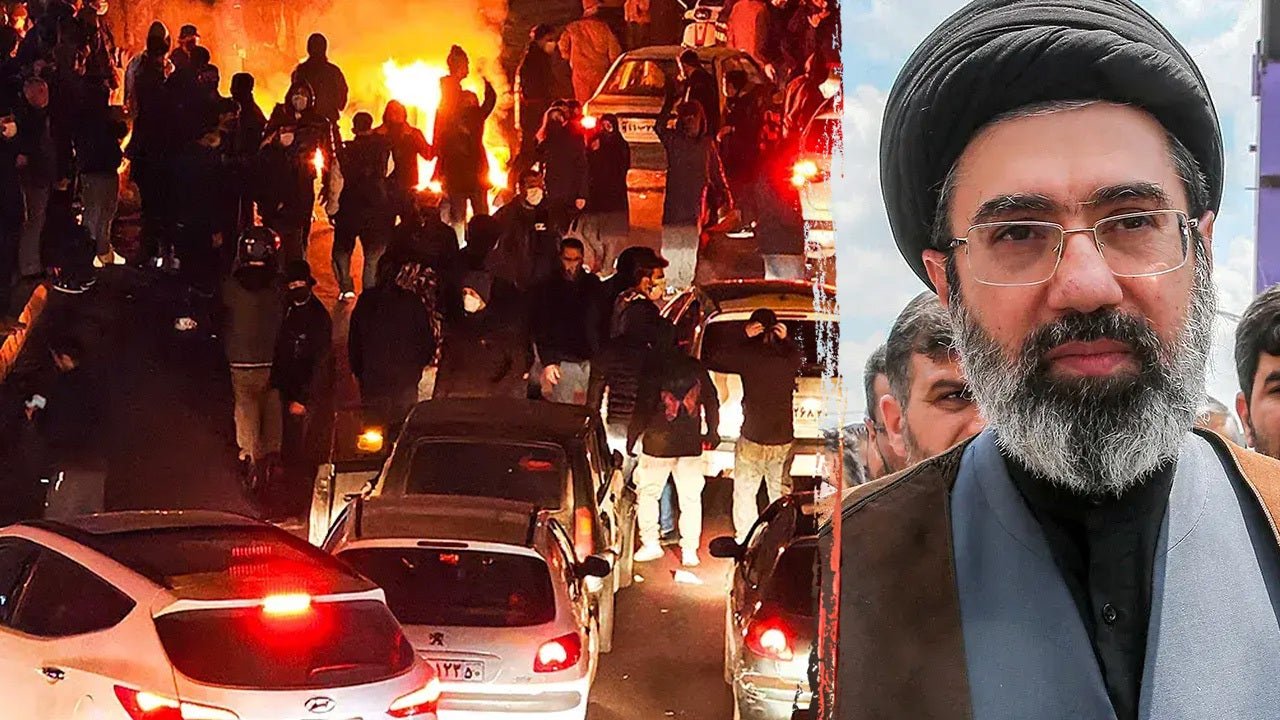
NEWYou can now listen to Fox News articles!
A confidential report prepared for Iran’s presidency is raising a consequential question for Washington and its allies: Do extraordinary levels of public anger and support for systemic change justify reassessing whether the Islamic Republic may be more vulnerable to regime change than previously believed?
The classified document, titled «What Iran Wants,» reportedly found that only 9% of respondents supported maintaining the status quo, with 53% calling for fundamental or structural reforms and more than 19% favoring changing the political system outright.
Taken together, nearly three-quarters of those surveyed reportedly supported either deep structural reform or replacement of the existing system — findings that could strengthen arguments that Iran’s political crisis has moved beyond dissatisfaction with individual leaders or policies.
IRANIANS SPEAK OUT OVER POSSIBLE TRUMP-REGIME DEAL
Protesters march in downtown Tehran, Iran, Monday, Dec. 29, 2025. (Fars News Agency via AP)
IranWire reported on July 13 that it had obtained the document, which was compiled by Ali Rabiei, President Masoud Pezeshkian’s social adviser and a former government spokesman. It was based on polling conducted by the Ara Opinion Research Center in May 2026 and circulated among institutions within Iran’s governing structure in June, according to the outlet.
Miad Maleki, a senior fellow at the Foundation for Defense of Democracies, told Fox News Digital that the report should prompt a fresh assessment of the potential for political upheaval inside Iran.
«If anything, this research understates the depth of Iranians’ rage,» Maleki said. «And that is what makes it remarkable: even a survey prepared for the regime’s own president, by its own pollsters, records anger levels above 63%, well beyond the highest rate Gallup has ever recorded anywhere in the world, alongside 81% struggling to put food on the table and a majority expressing hopelessness.»
Maleki cautioned that polling conducted under an authoritarian government cannot be treated as precise because respondents may fear the consequences of expressing opposition.
«In a police state where expressing the wrong opinion can cost you your job, your freedom, or your life, respondents self-censor, which means these findings are best read as a floor, not a ceiling,» he said.
TRUMP ADMIN BYPASSES TEHRAN’S ISOLATION CAMPAIGN TO REACH IRANIANS DIRECTLY
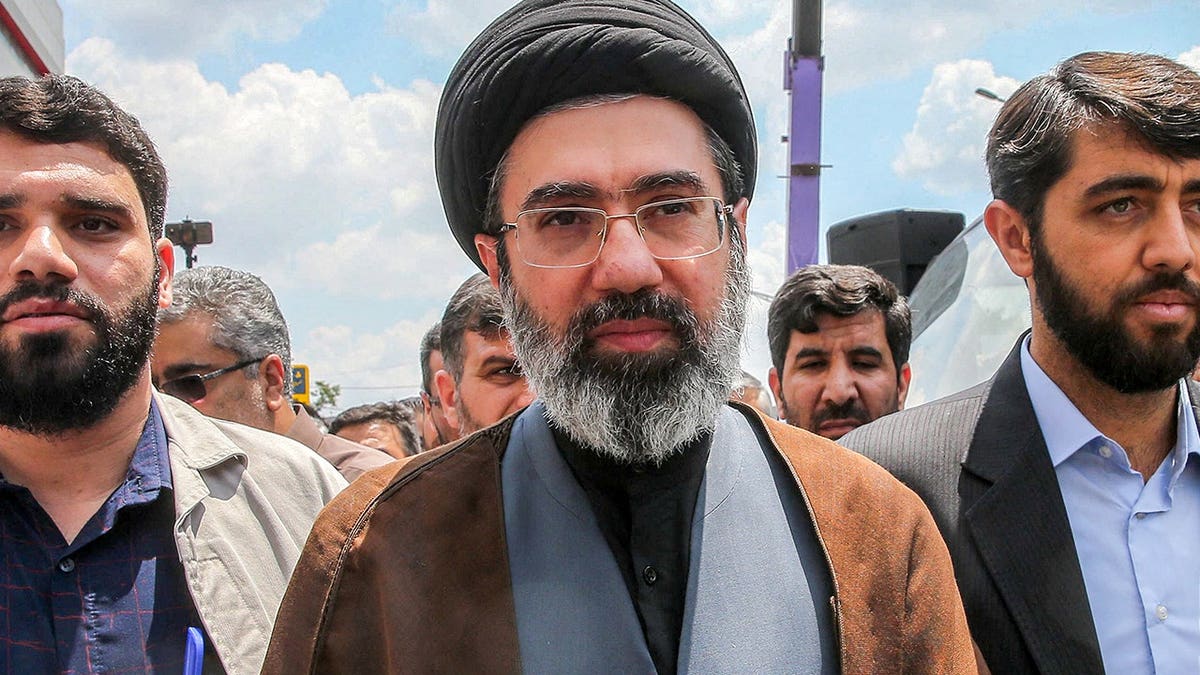
In this picture obtained from Iran’s ISNA news agency, Mojtaba Khamenei (C), son of Iran’s supreme leader Ayatollah Ali Khamenei, walks along a street in Tehran on May 31, 2019. (Hamid FOROUTAN / ISNA / AFP via Getty Images)
The complete survey methodology was not included in the material obtained by IranWire. The report reportedly did not disclose how respondents were selected, who was questioned or whether the sample reflected Iran’s geographic and demographic makeup.
Its findings therefore cannot be independently verified or treated as definitive measurements of Iranian opinion. The report also cannot establish that dissatisfaction will translate into an organized movement capable of removing the government.
Still, its findings portray multiple pressures converging at once.
Approximately 64% of respondents reported persistent anger, up roughly 12% points from a previous government survey conducted in December 2025. Half reported hopelessness, approximately 48% reported sadness or depression and about 45% reported persistent fear or anxiety, according to IranWire.
Economic distress also appears central to the public anger.
More than 81% experienced severe or partial difficulty obtaining enough food, while 75% struggled to cover medical costs, IranWire reported. Fifty-four percent said their income did not cover current household expenses, and only 8% reported earning enough to save.
Respondents blamed domestic governance more frequently than international pressure. 46.9% cited government inefficiency as the cause of Iran’s economic problems, 26.3% blamed corruption and 20.7% cited foreign sanctions.
IRAN TO EXECUTE FIRST FEMALE PROTESTER TIED TO ANTI-REGIME UNREST
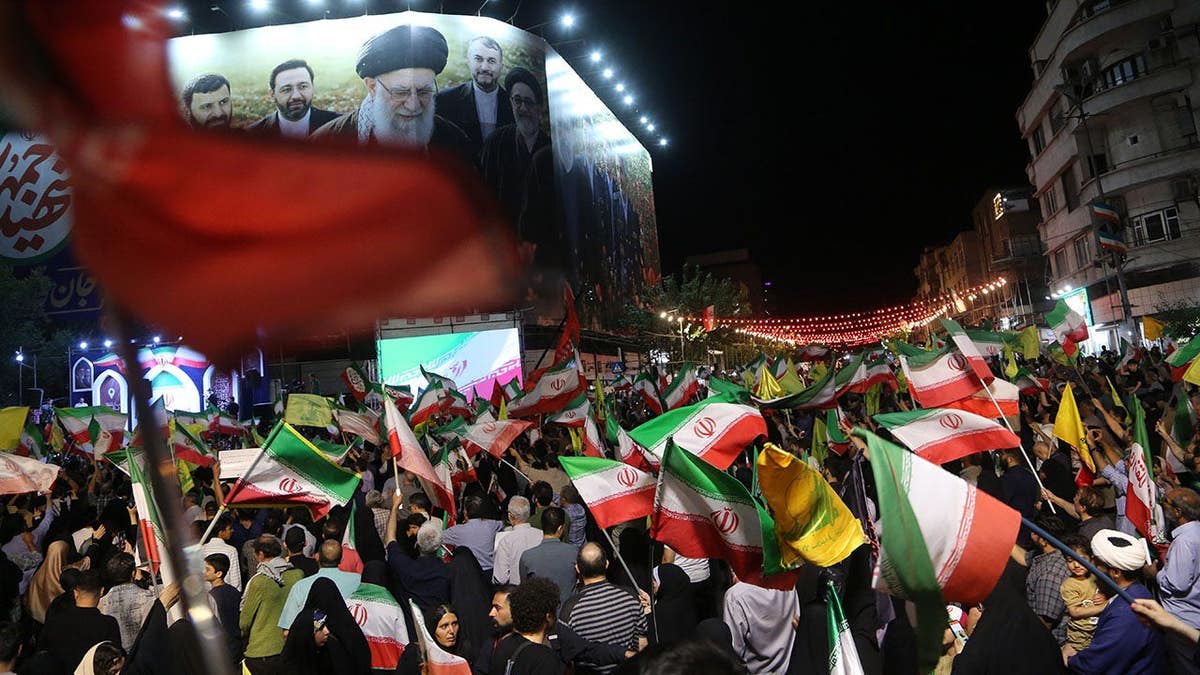
Thousands gathered at Revolution Square in Tehran on May 30, 2026, to protest attacks by the US and Israel on Iran, carrying Iranian flags and posters of the late Supreme Leader Ali Khamenei. (Fatemeh Bahrami/Anadolu)
That finding could be especially significant to the regime-change debate because it suggests many Iranians do not primarily blame outside powers for their deteriorating living conditions.
The document also points to a crisis of institutional confidence. Roughly 60% reportedly distrusted major government institutions, while 61.2% negatively assessed officials’ ability to solve Iran’s problems. Distrust of the government, parliament, judiciary and state television remained above 50%, IranWire reported.
The report’s recommendations, however, reportedly centered on managing dissatisfaction rather than addressing demands for systemic change.
Rabiei urged state institutions to better explain the impact of sanctions, moderate the rhetoric used by officials and religious platforms, present a more inclusive image through state television and avoid policies that place the government in direct confrontation with society.
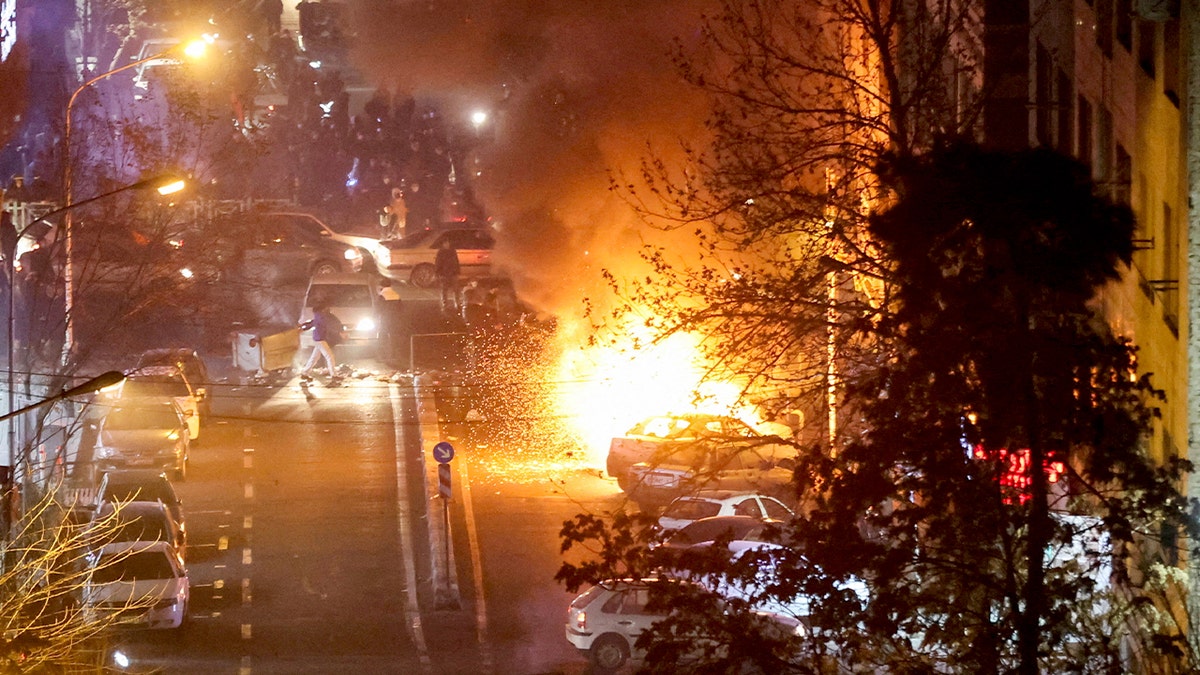
Cars burn in a street during a protest over the collapse of the currency’s value in Tehran, Iran, Jan. 8, 2026. (Stringer/WANA (West Asia News Agency) via REUTERS)
IranWire’s follow-up analysis argued that the recommendations treated Iran’s crisis primarily as a communications and public-perception problem. The report offered few concrete proposals involving institutional accountability, political liberalization or fundamental economic reform, according to the outlet.
Maleki said the findings were consistent with the expanding scale of unrest, citing demonstrations that spread from more than 80 cities in 2017 to more than 200 cities across all 31 provinces this year, alongside what he described as a quadrupling of strikes.
«Iranians have moved from being skeptical of what another revolution might bring to concluding there is no alternative to one, because reform has proven impossible,» Maleki said.
Yet the report does not resolve one of the largest obstacles to regime change: The Islamic Republic has spent decades building institutions designed to monitor, deter and violently suppress organized opposition.
«This regime was born of revolution, by revolutionaries,» Maleki said. «Preventing and crushing the next one is the one thing they genuinely know how to do.»
CLICK HERE TO DOWNLOAD THE FOX NEWS APP
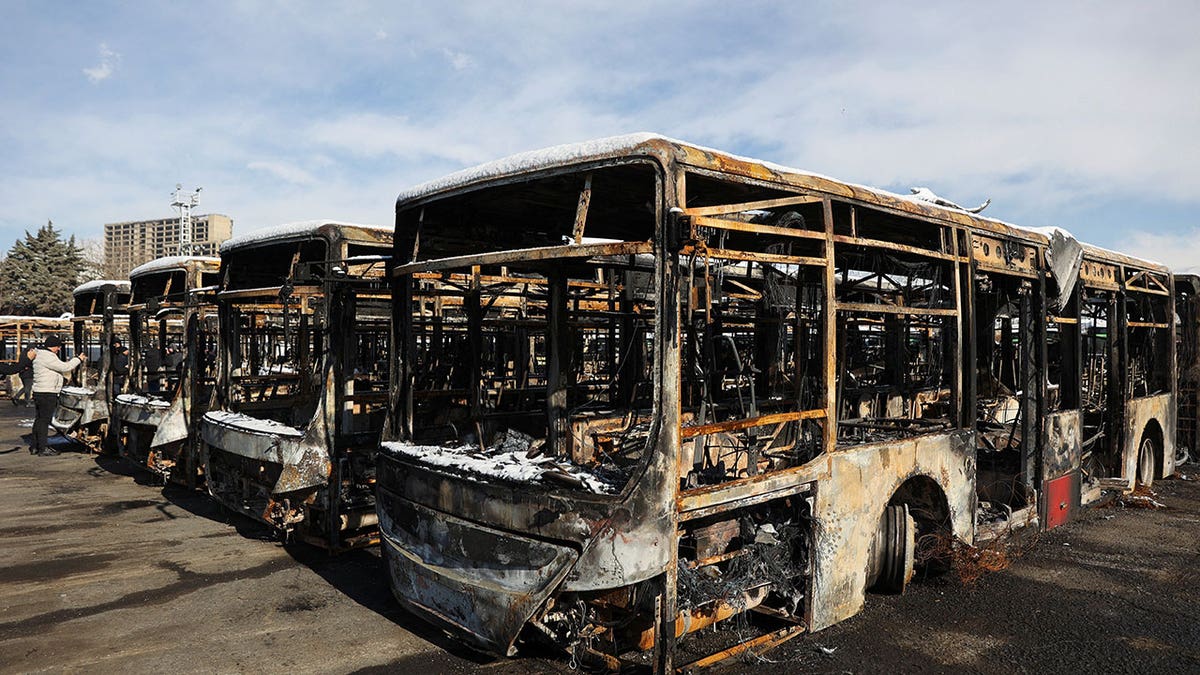
Buses that were burned during Iran’s protests, in Tehran, Iran, Jan. 21, 2026. (Majid Asgaripour/WANA (West Asia News Agency) via Reuters)
He nevertheless argued that further unrest was inevitable.
«So the discontent will translate into renewed protest,» Maleki said. «The question is not if, but when, and whether anyone is prepared to stand with the Iranian people when it does.»
war with iran, iran, world protests, world









NEWYou can now listen to Fox News articles!
A student opened fire at a high school in Thailand on Friday, killing at least six and injuring others, police reported.
The attack took place at the Debsirin Nonthaburi School in Nonthaburi province northwest of Bangkok, Royal Thai Police spokesperson Trairong Piwpan indicated to The Associated Press.
A witness told reporters that students hid inside a classroom while they heard gunshots from another building before police officers knocked on the door and cleared a way for them to leave the building.
THREE PEOPLE KILLED IN NORTH CAROLINA SHOOTING, OFFICIAL SAYS
Forensic police walk at the scene of the school shooting in Bang Kruai district, Nonthaburi province, north of Thailand’s capital Bangkok, on Aug. 7, 2026. (Lillian SUWANRUMPHA / AFP via Getty Images)
Authorities provided conflicting numbers of casualties in connection with the attack.
Trairong told news broadcaster Channel 3 that the attacker was being hospitalized in serious condition, while 15 other individuals had been hurt, including two in critical condition — he reported that three teachers and three students had been killed.
OFF-DUTY TROOPER AND ARMED CITIZEN HAILED AS HEROES AFTER RETURNING FIRE ON IN-N-OUT GUNMAN
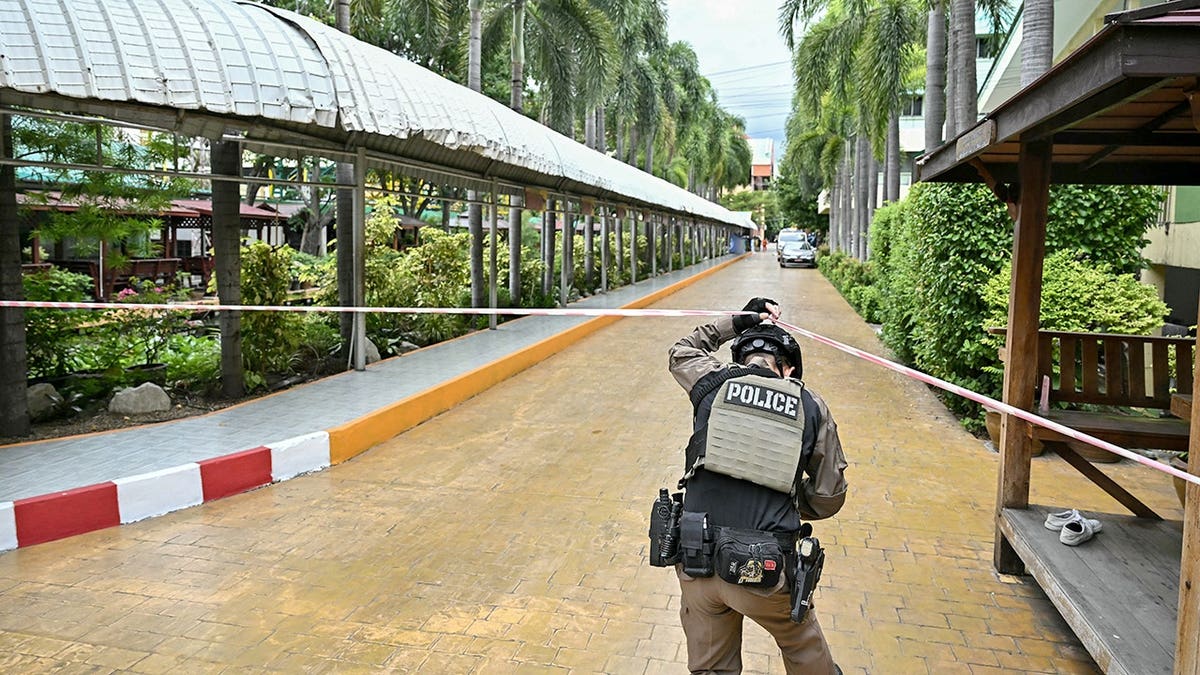
A policeman holds up a cordon tape after a school shooting in Bang Kruai district, Nonthaburi province, north of Thailand’s capital Bangkok, on Aug. 7, 2026. (Lillian SUWANRUMPHA / AFP via Getty Images)
Thailand Health Minister Pattana Promphat indicated that 22 individuals were hurt with nine in critical condition. Some were hurt due to causes like falls, and it was unclear how many were gunshot victims.
Deputy Interior Minister Polapee Suwunchwee indicated to reporters that five teachers passed away and that the perpetrator took the lives of his two grandparents at home prior to heading to the school. He reported that the attacker died at a hospital.
FATHER WHO BOUGHT AR-15 FOR GEORGIA SCHOOL SHOOTER LEARNS FATE IN FIRST-OF-ITS-KIND CONVICTION
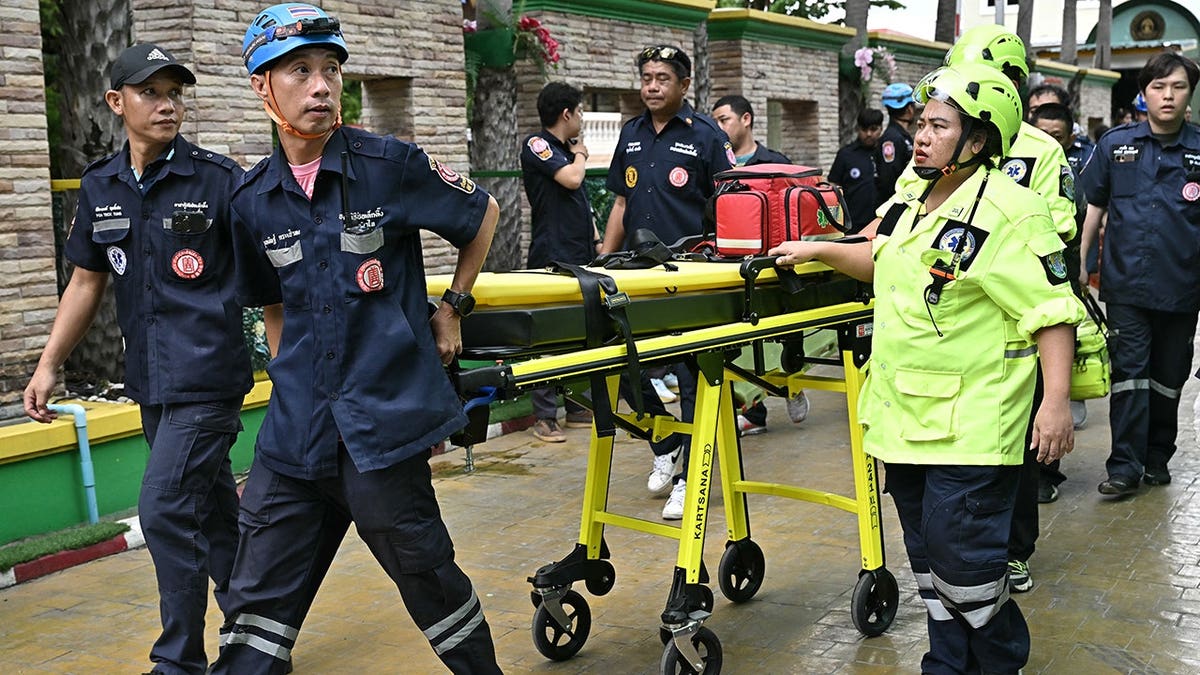
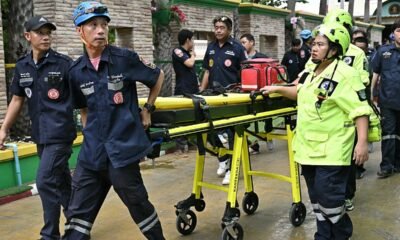
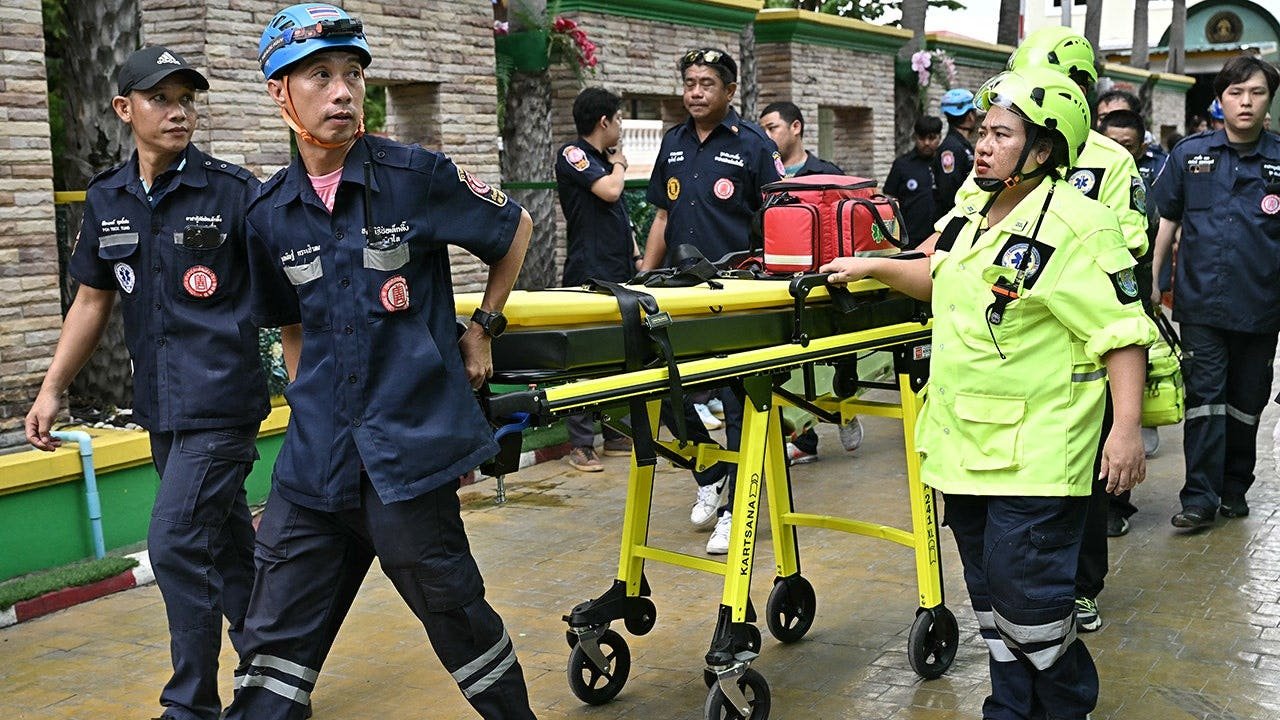
Emergency responders walk with a stretcher outside a school following a shooting in Bang Kruai district, Nonthaburi province, north of Thailand’s capital Bangkok, on Aug. 7, 2026. (Lillian SUWANRUMPHA / AFP via Getty Images)
Trairong reported that the weapon was thought to have been taken from a member of the shooter’s family.
The Associated Press contributed to this report
world, thailand, mass shootings, high school
INTERNACIONAL
Agentes iraníes en Qatar inquietan a Medio Oriente: sospechas de una creciente complicidad entre Doha y Teherán
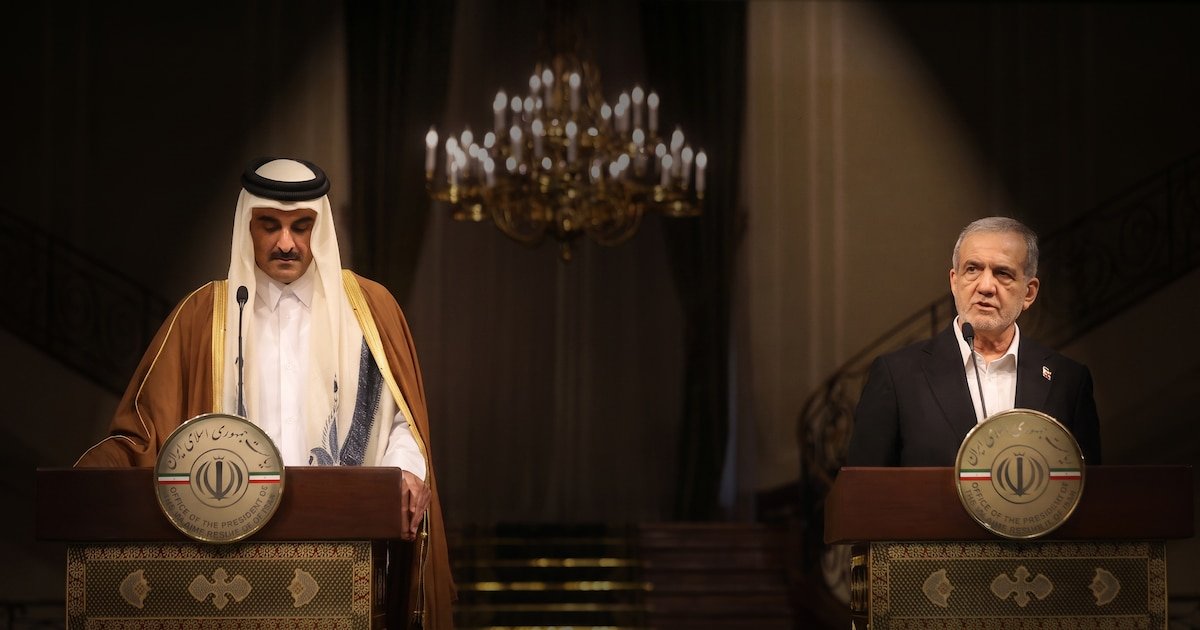
Recorren la calle Dafna -en el West Bay de Doha– con total soltura. Se sienten amparados y protegidos. Saben que ningún miembro de las fuerzas del orden qatarí los perseguirá o les demandará los documentos con que llegaron al país bajo un manto diplomático. O al menos esa es la sospecha que crece cada vez más entre sus vecinos del Golfo y potencias occidentales.
Arabia Saudita, Kuwait, Emiratos Árabes Unidos y Baréin observan con detenimiento lo que ocurre en la península.
La presencia de agentes del Ministerio de Inteligencia y Seguridad iraní (MOIS, por sus siglas en inglés) en la capital de Qatar es cada vez más visible. Mantienen reuniones tanto en su embajada como en habitaciones de hoteles de cadenas internacionales. Pretenden actuar discretamente, pero es inevitable reconocerlos, de acuerdo a fuentes europeas bien informadas.
El MOIS -o Vevak, como lo conocen en Irán– es la principal agencia de inteligencia civil del país. Tiene como misión la seguridad interna, el espionaje tanto interno como externo, la contrainteligencia y la represión de la disidencia. Esa dependencia fue una de las responsables de la masacre de decenas de miles de iraníes durante las protestas de enero pasado.
Es, además, una tenebrosa oficina que opera trasfronteras. Su encargado en Doha ingresó bajo el nombre de Hassan Redhari. ¿Es su verdadera identidad? No hay registros público suyos. Es un fantasma. ¿Cómo ingresó a la capital de Qatar?
Pero los miembros del MOIS que recorren la elegante zona de embajadas de Doha no son los únicos iraníes con presencia en Qatar. Agentes de la Guardia Revolucionaria Islámica de Irán (IRGC, por sus siglas en inglés) también tienen presencia en el país arábigo.

La molestia de sus vecinos y de Occidente con Qatar se repite. El mantener vínculos con organizaciones -que persiguen la desestabilización de la región- pareciera ser un patrón que se repite en la cúpula del poder comandado por el emir Tamim bin Hamad Al Thani.
Durante años, el sistema dirigencial de Doha fue el refugio de la cúpula del grupo terrorista de Hamás. La península continuó hospedando a Ismail Haniyeh -jefe “político” de esa organización- aún después de la Operación Diluvio de Al-Aqsa, el poético nombre que los extremistas le pusieron al exterminio de israelíes el 7 de octubre de 2023. Haniyeh, quien vivía en un hotel cinco estrellas en Doha, fue ultimado en Teherán el 30 de julio de 2024.
Hoy, Qatar queda en medio de las sospechas -por ahora silenciosas- de sus vecinos. Arabia Saudita, Kuwait, Emiratos Árabes y Baréin están en la primera línea de agresiones iraníes. Los ataques son emitidos directamente desde tierra iraní o desde alguna de los grupos terroristas satélites que le responden: en Irak o en Yemen.
Desde territorio iraquí dirigen sus agresiones contra Emiratos Árabes, Baréin y Kuwait. Desde Yemen, los hutíes retomaron la escalada contra Riad y sus intereses en el Mar Rojo. Arabia Saudita se prepara ante la posibilidad de “ataques coordinados múltiples” por parte de milicias iraquíes que actúan junto a los hutíes, según informó un funcionario saudí a CNN. Informes de inteligencia de ese país y gobiernos regionales advierten que estos grupos planean atacar el reino “en un futuro muy cercano”, bajo la dirección de la Guardia Revolucionaria Islámica de Irán, la misma cuya presencia crece en Doha.

La alerta en la región surge después de que los hutíes -que responden al régimen de Teherán– reivindicaran ataques contra dos petroleros saudíes en el Golfo de Adén, una arteria marítima estratégica para el comercio global. En las últimas semanas, Arabia Saudita fue el objetivo de misiles lanzados por ese grupo y ataques con drones atribuidos a terrristas iraquíes también respaldados por Irán.
Fuentes europeas confiaron a Infobae que la actual situación, aunque temporariamente, podría beneficiar los intereses políticos de Qatar, Irán y de uno de los principales socios de ambos estados, silencioso en este conflicto de Medio Oriente: China. Cuánto más lejos Estados Unidos del Asia-Pacífico, más beneficiado se presenta Beijing.
Curiosa paradoja. Hace un año Qatar regalaba un Boeing 747 a la Casa Blanca. ¿Hoy busca empantanarla en el estrecho de Ormuz? El tráfico marítimo en ese corredor internacional se encuentra en situación drástica. En las últimas 48 horas menos de puñado de embarcaciones -petroleros o metaneros- cruzaron por el sensible estrecho, en comparación con una cifra previa al conflicto de entre 130 y 140 buques diarios.
X: @TotiPI
Irán,diplomacia,conferencia de prensa,Oriente Medio,funcionarios,relaciones internacionales

Javier Milei y sus medidas, EN VIVO: tras su visita a Ecuador, el Presidente ya está en Colombia para la asunción de Abelardo De la Espriella

Kicillof fue a la misa por San Cayetano, se refirió a la sesión del Senado y apuntó contra Milei

Panorama Internacional: Donald Trump en Brasil, un jefe de campaña en problemas

Rosario: detuvieron a Ezequiel Riquelme, hijo de un capo narco que opera para Lindor Alvarado desde un penal

Tras el traspié, el Gobierno no insistirá con la Ley de Tierras y se frenan los paquetes de desregulación

El plan del Inter Miami con Lionel Messi para mantenerlo vinculado al club después de su retiro

Javier Milei cruzó a Victoria Villarruel y elevó la tensión: “Es una opositora, replica los argumentos kirchneristas”

Dólar hoy en vivo: a cuánto se negocian todas las cotizaciones minuto a minuto este miércoles 5 de agosto

La oposición cuestionó a Benegas Lynch por su empresa para vender campos a extranjeros y el senador libertario se defendió

Top Trump ally warns super PAC bankrolled by Dem billionaire is meddling in his GOP primary
-
 ECONOMIA2 días ago
Dólar hoy en vivo: a cuánto se negocian todas las cotizaciones minuto a minuto este miércoles 5 de agosto
-
 POLITICA14 horas ago
La oposición cuestionó a Benegas Lynch por su empresa para vender campos a extranjeros y el senador libertario se defendió
-

 POLITICA2 días ago
Brasil retira a su embajador en la Argentina: qué consecuencias tiene la medida diplomática