
INTERNACIONAL
Mexican president in the dark about drug operation after which US, Mexican officials were killed

NEWYou can now listen to Fox News articles!
Mexican President Claudia Sheinbaum indicated Monday that she would call for explanations regarding what U.S. and Mexican officials were doing when they died due to a car accident in Mexico.
Sheinbaum said her government would investigate the incident to ensure no laws were broken after the deaths on Sunday, adding that state governments must have authorization from Mexico’s federal government to collaborate with U.S. and other foreign entities «as established by the Constitution,» according to The Associated Press.
The deadly incident, which killed two U.S. embassy personnel and two individuals with the Chihuahua State Investigation Agency (AEI), occurred after a drug-related operation in Mexico.
«It was not an operation that the security cabinet was aware of,» Sheinbaum said, according to the AP. «We were not informed; it was a decision by the Chihuahua government.»
TWO US EMBASSY PERSONNEL KILLED IN ‘ACCIDENT’ IN MEXICO, AMBASSADOR SAYS
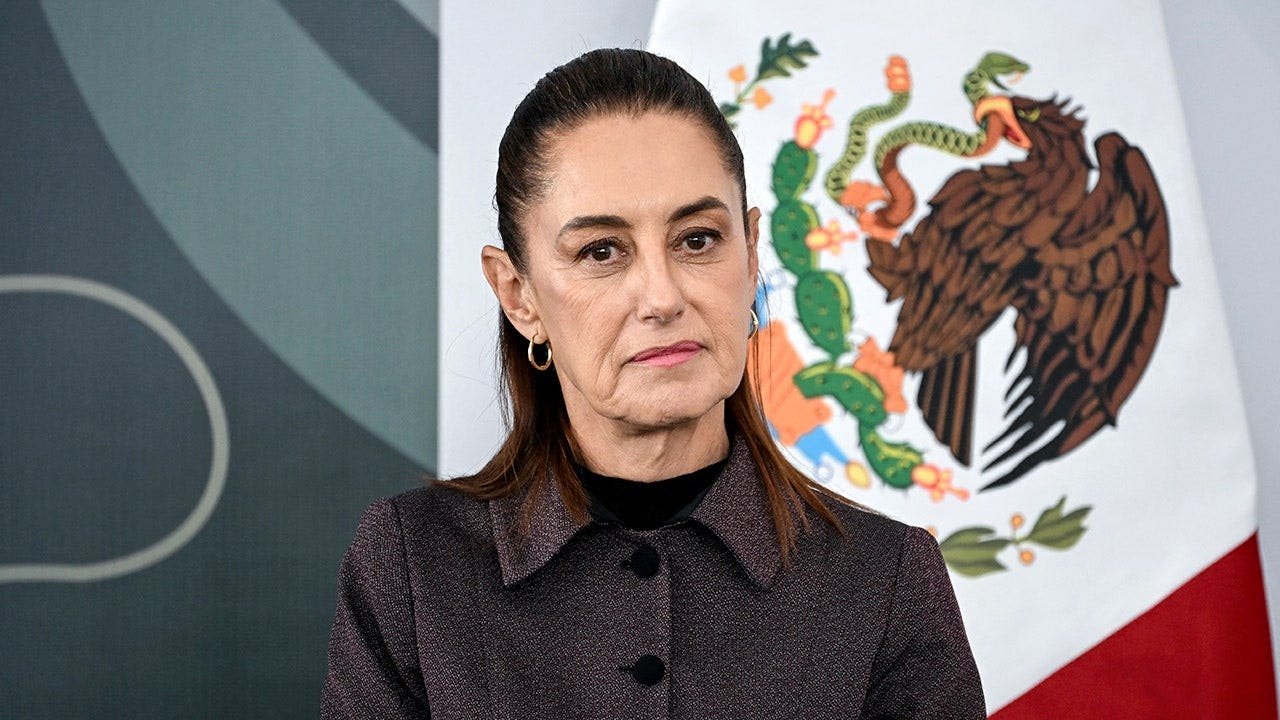
Mexico’s President Claudia Sheinbaum looks on during her daily press conference at the Women’s Oncology Hospital in Mexico City on March 9, 2026. (Yuri CORTEZ / AFP via Getty Images)
In a statement issued Sunday, César Jáuregui Moreno, the Chihuahua state attorney general, announced the deaths «of the members of the State Investigation Agency, as well as two instructor officers from the United States Embassy, who died in an accident while returning from the operation to destroy clandestine laboratories in the municipality of Morelos,» according to an English translation.
The attorney general indicated in another statement that there were no foreign agents involved in the operation and that it was not connected to the accident.
DHS SAYS ILLEGAL IMMIGRANT SOUGHT AMID PRETTI SHOOTING HAD VIOLENT DOMESTIC HISTORY
«In order to avoid speculation and misunderstandings surrounding the operation that led to the discovery of a drug lab in the community of El Pinal, in the Sierra de Chihuahua, the Attorney General of the State, César Jáuregui Moreno, specified that only elements of the State Investigation Agency (AEI) and the Mexican Army participated in it,» the April 20 statement said, according to an English translation.
«With the above, he rules out the intervention of foreign elements, however, he specified that instructors from the United States were in the state and in a neighboring community, but for other purposes, such as teaching in the handling of drones,» the office said. «He stated that around 80 officers participated in the seizure of the drug lab, 40 of them from the AEI and another 40 from the Secretariat of National Defense (DEFENSA).»
MEXICO PYRAMID SHOOTER WHO TOOK HOSTAGES AND KILLED 1 IS IDENTIFIED
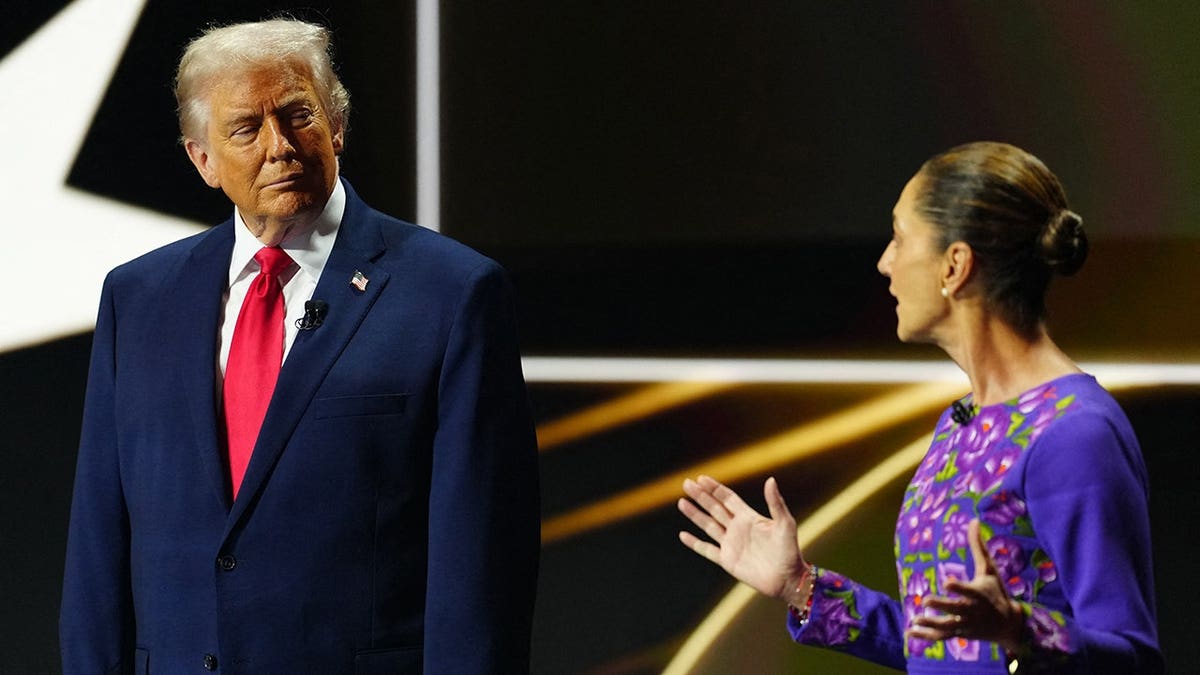
Mexico’s President Claudia Sheinbaum talks on stage next to US President Donald Trump during the draw for the 2026 FIFA Football World Cup taking place in the U.S., Canada and Mexico, at the Kennedy Center, in Washington, D.C., on Dec. 5, 2025. (Jia Haocheng / POOL / AFP via Getty Images)
Jáuregui Moreno said AEI Director Pedro Román Oseguera Cervantes «met with instructors from the U.S. Embassy, who were in Polanco giving a course on drone operation» and «they had a flight on Sunday morning from the city of Chihuahua and asked for assistance to travel along with the convoy in which the Director was traveling»
«They got into the vehicle at approximately two in the morning, and suffered the accident in which they lost their lives when it went off the road into one of the ravines in the area,» Jáuregui Moreno said, also noting «there was never any involvement of any foreign agent in El Pinal.»
He noted there «were no U.S. agents in the operation to secure the narco-lab,» according to the AP.
US MILITARY ANNOUNCES ANOTHER DEADLY STRIKE AGAINST ‘NARCO-TERRORISTS’
The outlet reported that the Mexican Security Cabinet confirmed that the army and state prosecutor’s office executed a joint effort over the weekend in Chihuahua targeting drug labs in the same place, Morelos.
U.S. Ambassador to Mexico Ronald Johnson said in part of a Sunday post on X, «We are deeply saddened by the tragic loss of two U.S. Embassy personnel, the Director of Chihuahua’s State Investigation Agency (AEI), and an AEI officer in this accident.»
«We honor their dedication and tireless efforts to confront one of the greatest challenges of our time. Our thoughts and prayers are with them and their loved ones. This tragedy is a solemn reminder of the risks faced by those Mexican and U.S. officials who are dedicated to protecting our communities. It strengthens our resolve to continue their mission and advance our shared commitment to security and justice, to protect our people,» he added.
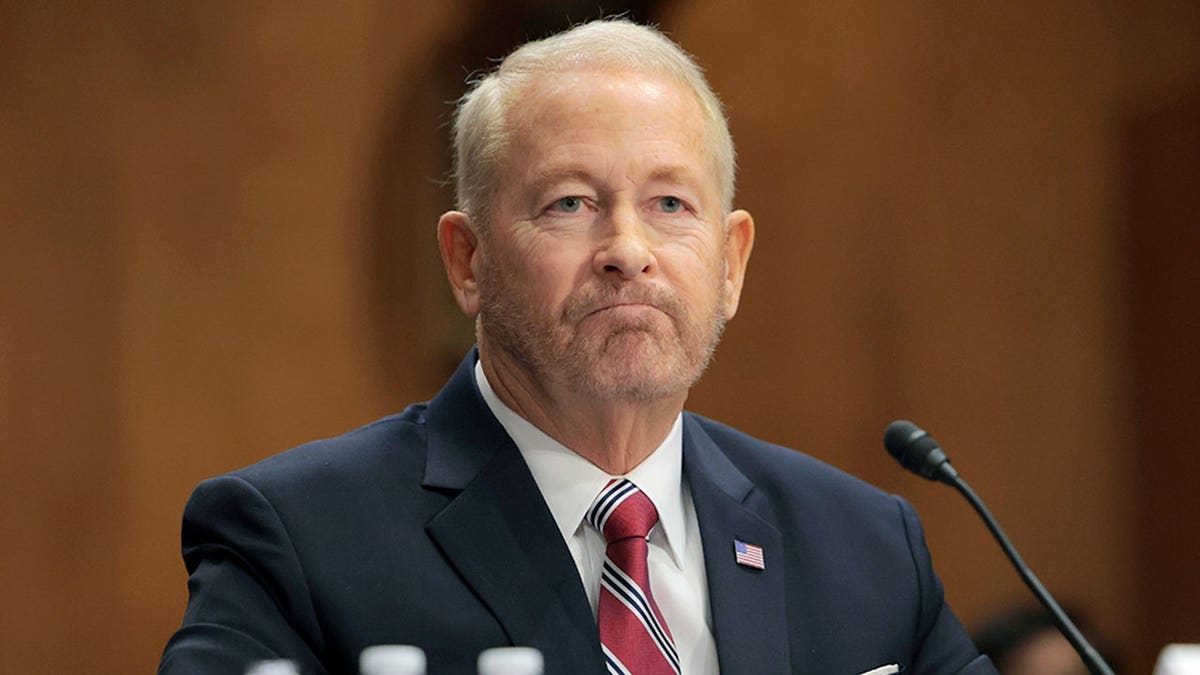
Ronald Johnson, U.S. President Donald Trump’s nominee to be U.S ambassador to Mexico, speaks during a Senate Foreign Relations committee nomination hearing in the Dirksen Senate Office Building on March 13, 2025, in Washington, D.C. (Anna Moneymaker/Getty Images)
CLICK HERE TO DOWNLOAD THE FOX NEWS APP
The U.S. State Department did not provide further comment to Fox News Digital on Tuesday.
The Associated Press contributed to this report
police and law enforcement, mexican cartel violence, mexico, investigations, state department










INTERNACIONAL
Como respuesta a Meloni, España estableció controles fronterizos a viajeros desde Italia
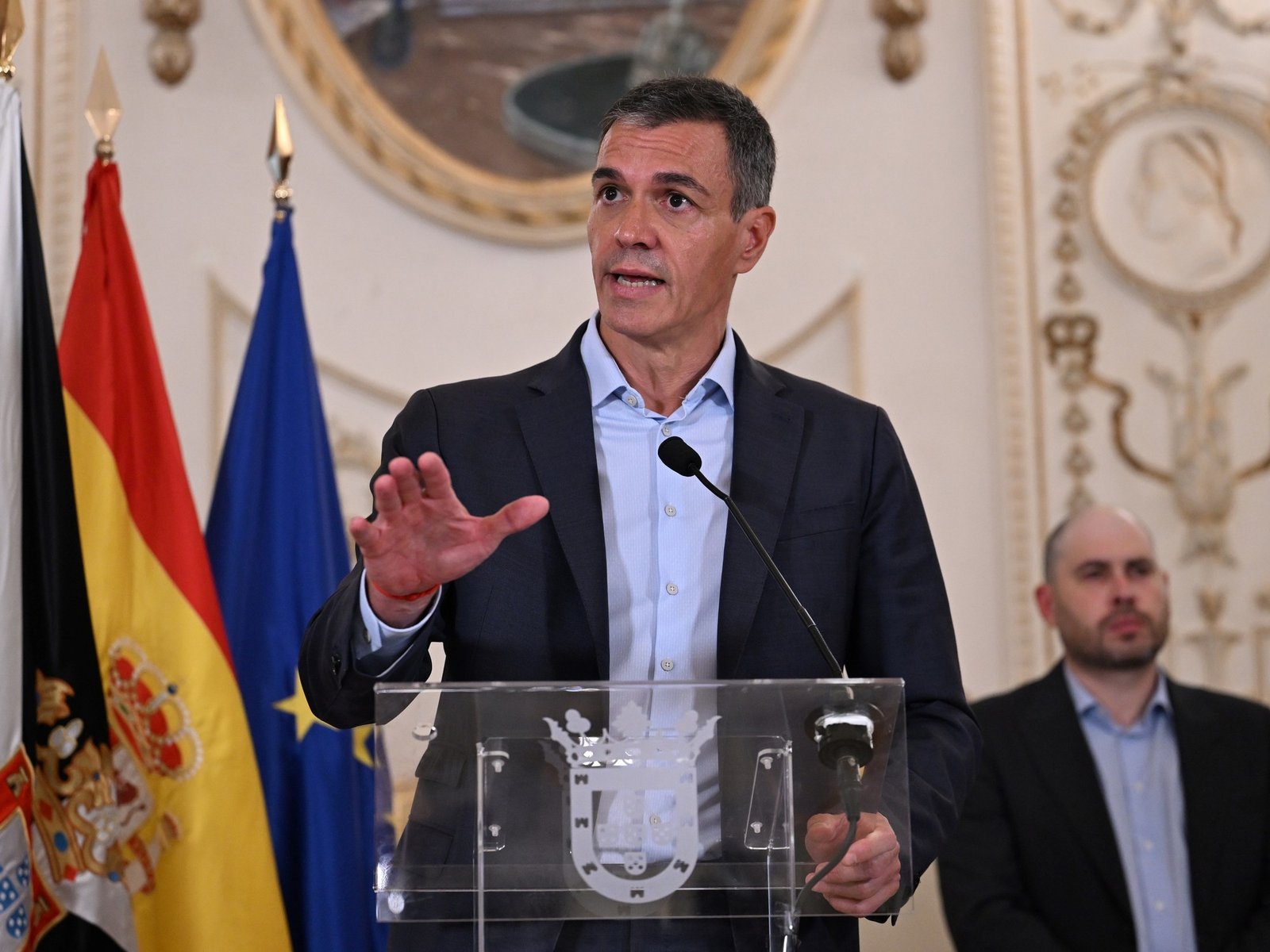
España anunció este viernes controles fronterizos temporales para los viajeros procedentes de Italia, en respuesta a medidas similares impuestas por el gobierno de Giorgia Meloni tras la entrada masiva de migrantes a Ceuta.
Estos controles, que se aplican «ante la persistente presión migratoria irregular» que afronta Italia, comenzarán a regir el sábado 8 de agosto a las 00H00 (02H00 GMT) y se prolongarán hasta el 7 de septiembre, indicó el Ministerio del Interior en un comunicado.
Más temprano, el gobierno español había amenazado con «medidas proporcionales» a Italia, que cerró temporalmente a España el espacio Schengen, la zona de libre circulación de la Unión Europea, hace una semana, tras la llegada de unos 72.000 migrantes al enclave español en el norte de África desde el vecino Marruecos.
El episodio levantó críticas de otros países de la Unión Europea cuyos gobiernos, a diferencia del Ejecutivo español de Pedro Sánchez, promueven políticas de mano dura hacia la migración.
Italia encabezó ese frente y desde el 1 de agosto aplica controles fronterizos en puntos de entrada marítimos y aéreos para ciudadanos de terceros países que lleguen desde España.
El gobierno español había arremetido más temprano el viernes contra la decisión de Roma, que considera «injusta, contraria a los intereses de la UE, y discriminatoria para la población española».
El ministro de Asuntos Exteriores, José Manuel Albares, la describió como «un torpedo en la línea de flotación de la unidad europea». La Moncloa pidió que Italia levantara las restricciones de inmediato.
«Si no lo hiciera antes de que concluya el domingo 9 de agosto, España se verá obligada a adoptar medidas proporcionales para proteger los intereses y la dignidad de sus ciudadanos», indicó el Gobierno en un comunicado.
Sin embargo, poco después decidieron adelantar la entrada en vigencia de la medida, que comenzó a regir este viernes 7 de agosto a la medianoche local.
Las impactantes imágenes de la masiva llegada de migrantes a Ceuta dieron la vuelta al mundo y provocaron fuertes tensiones en la Unión Europea.
De las 72.000 personas que entraron a Ceuta, 70.000 han regresado a Marruecos, según cifras oficiales españolas. Los migrantes que siguen en la ciudad autónoma, entre ellos cientos de menores solos, disponen de poco acceso a comida, agua o techo.
Comunicado oficial del Gobierno de España sobre los injustificados controles de Italia a viajeros de España.
— Ministerio de Asuntos Exteriores, UE y Cooperación (@MAECgob) August 7, 2026
Las autoridades españolas indicaron que 80 personas murieron durante los cruces. El Ministerio del Interior marroquí, reportó 11 fallecidos en su lado de la frontera, todas salvo una por ahogamiento.
Sin embargo, ONGs en Marruecos afirmaron el viernes que se habían registrado al menos 141 muertes y que el balance probablemente iba a aumentar.
Italia justificó la suspensión de la libre circulación, uno de los grandes logros de la Unión Europea, como una «decisión necesaria para proteger la seguridad» de sus ciudadanos «y defender las fronteras de Europa».
La oficina de la primera ministra Giorgia Meloni dijo no tener intención de «revisar la decisión» antes del 15 de agosto. «Solo cuando haya certeza de que no hay riesgos de seguridad o terrorismo para Italia, de que no ocurre una nueva oleada y de que no hay migrantes irregulares dirigiéndose a territorio europeo, reconsideraremos», indicó en un comunicado.
El gobierno de Meloni ha intentado contener la llegada de los decenas de miles de migrantes que desembarcan cada año en pequeñas barcas en las costas de la península.
El gobierno español le reclamó en su ultimátum evitar «crear fracturas y conflictos estériles impulsados por motivaciones electorales» y confió en que «el europeísmo, el sentido común y la buena fe se impongan».
Según medios españoles, la policía vigila rumores que circulan en internet y mensajes en redes sociales ante otra posible llegada masiva de migrantes.
Por su parte, la Comisión Europea instó a Meta y TikTok a «actuar de manera contundente» para frenar la desinformación, indicando que mantuvo conversaciones con ambas plataformas el viernes.
«Las plataformas deben actuar de manera contundente para preservar la integridad del espacio digital, especialmente en situaciones de crisis», afirmó Henna Virkkunen, comisaria europea de soberanía tecnológica, seguridad y democracia.
INTERNACIONAL
Maryland’s lone congressional Republican blasts Moore’s redistricting push as alleged 2028 White House play
NEWYou can now listen to Fox News articles!
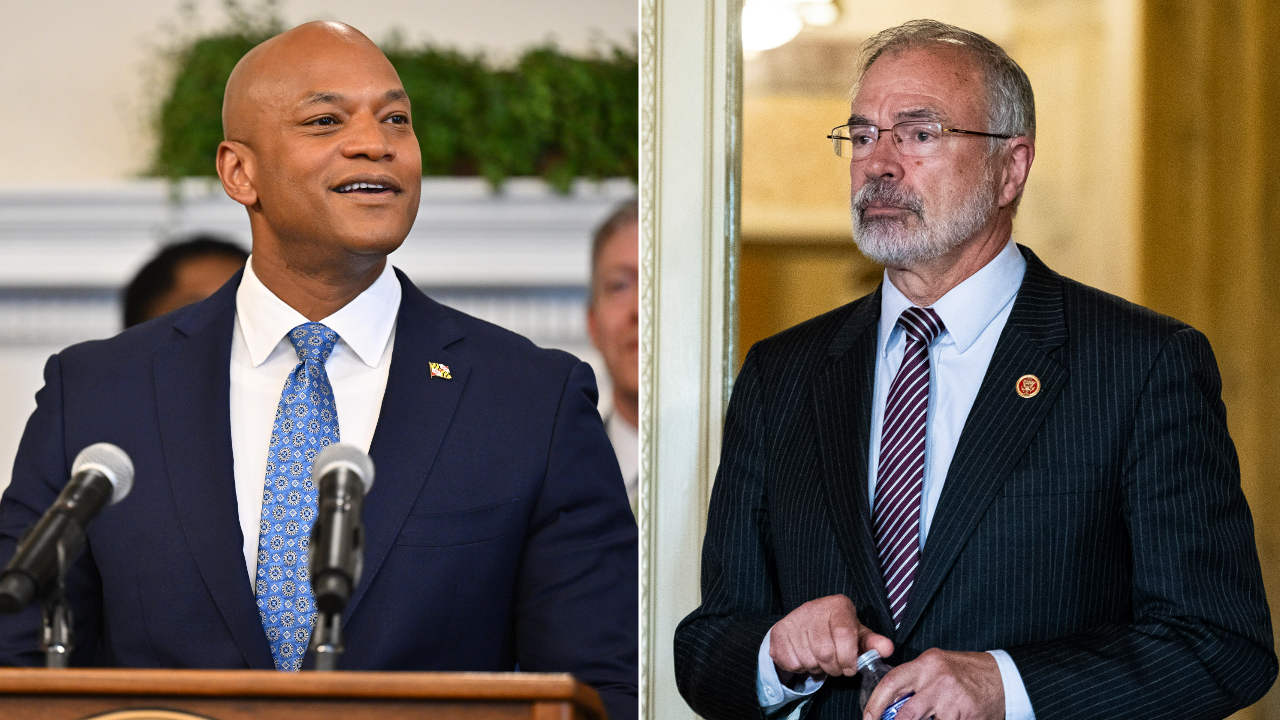
U.S. Rep. Andy Harris, R-Md., the only Republican in Maryland’s congressional delegation, is accusing Gov. Wes Moore of backing an amendment to the state constitution that could eliminate his district through redistricting, arguing that the push is driven by the governor’s alleged presidential ambitions.
The amendment, if approved by voters in November, would give the Democratic-controlled General Assembly far greater latitude to redraw the state’s congressional districts ahead of the 2028 election.
«The governor certainly led the charge in trying to eliminate the only Republican in the Maryland delegation in furtherance of his presidential aspirations,» Harris told Fox News Digital in an interview. «It’s obvious that this is not being done for Maryland, it is being done for a national agenda.»
Moore has repeatedly said he is not running for president in 2028, but speculation around his potential White House bid remains.
EXCLUSIVE: OVERSIGHT PROJECT SUES TO BLOCK MARYLAND DEMOCRATS’ REDISTRICTING MEASURE BACKED BY GOV MOORE
Rep. Andy Harris, R-Md., the only Republican in Maryland’s congressional delegation, says Democrat Gov. Wes Moore is backing an amendment to the state constitution that could eliminate his district through redistricting. (Graeme Sloan/Bloomberg via Getty Images, File)
Harris also called out Moore for engaging in a «photo-op» on Wednesday by publicly signing the bill that will put the amendment on the ballot this fall.
The bill passed Tuesday with three-fifths majorities in both chambers, which is the only requirement for an amendment to become a ballot question, according to Article XIV of the Maryland Constitution.
«Gov. Moore, never missing a photo op for his presidential aspirations, convened a signing ceremony, which is a little unusual considering there’s really nothing to sign for the governor,» Harris said. «But again, this is all for show. This is to make sure that he can look Gavin Newsom in the eye and say, ‘Yeah, I did something too, for mid-cycle redistricting.’»
Fox News Digital reached out to Moore’s office for comment.
Harris, who worked as an anesthesiologist before getting into politics, has represented Maryland’s first congressional district since 2011. The district includes the entire Eastern Shore, a relatively rural part of the state, as well as parts of Baltimore County.
TRUMP-BACKED INCUMBENT OUSTED IN HOUSE PRIMARY AS GOP REDISTRICTING PUSH SET TO RESHAPE TENNESSEE
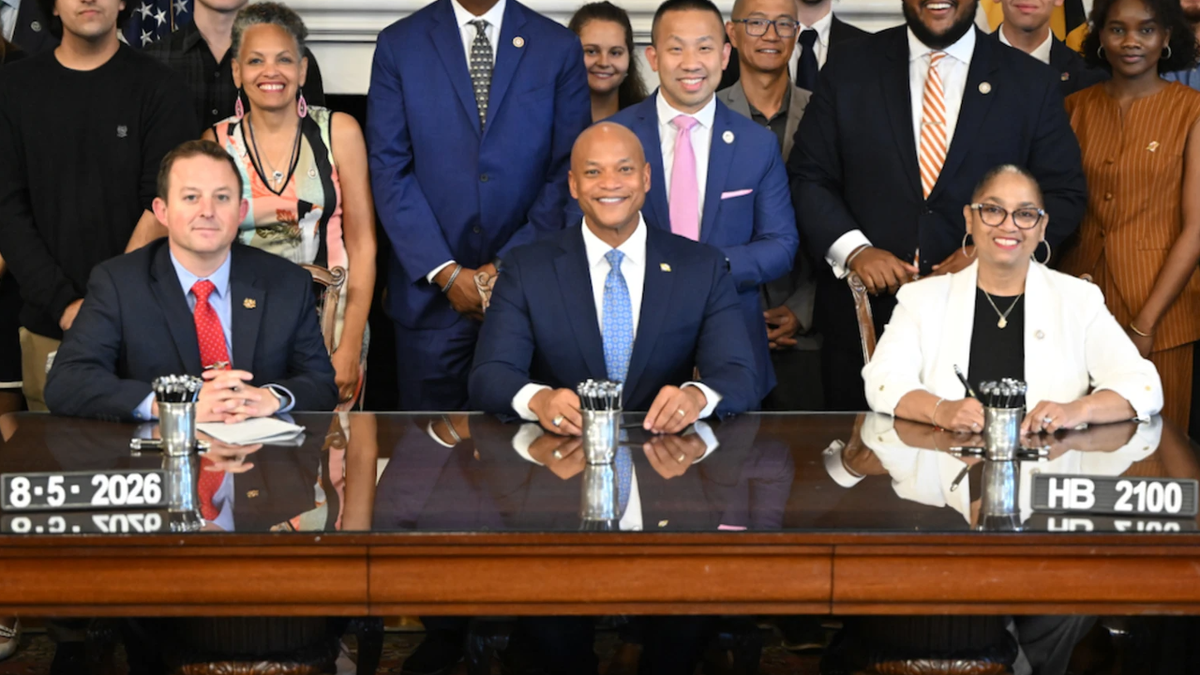
Maryland Gov. Wes Moore, center, sits between state Senate President Bill Ferguson and House Speaker Joseline Peña-Melnyk during a signing ceremony for HB2100 on Wednesday. The bill Moore signed puts a question on the November ballot to amend the state’s redistricting practices. (Maryland Governor’s Office)
The proposed amendment Harris is fighting against could allow state lawmakers to carve up his district and make it untenable for a Republican to win.
As it stands, the Maryland Constitution requires General Assembly districts and U.S. House districts to respect natural boundaries and existing county and municipal lines.
The amendment would remove those requirements for congressional districts while leaving them in place for state legislative districts.
«It absolutely sets up a double standard for redistricting in the state of Maryland. And again, the blatant attempt is to eliminate the Republican representation,» Harris said.
MARYLAND BALLOT BLUNDER SPARKS HOUSE GOP PROBE AHEAD OF PRIMARY
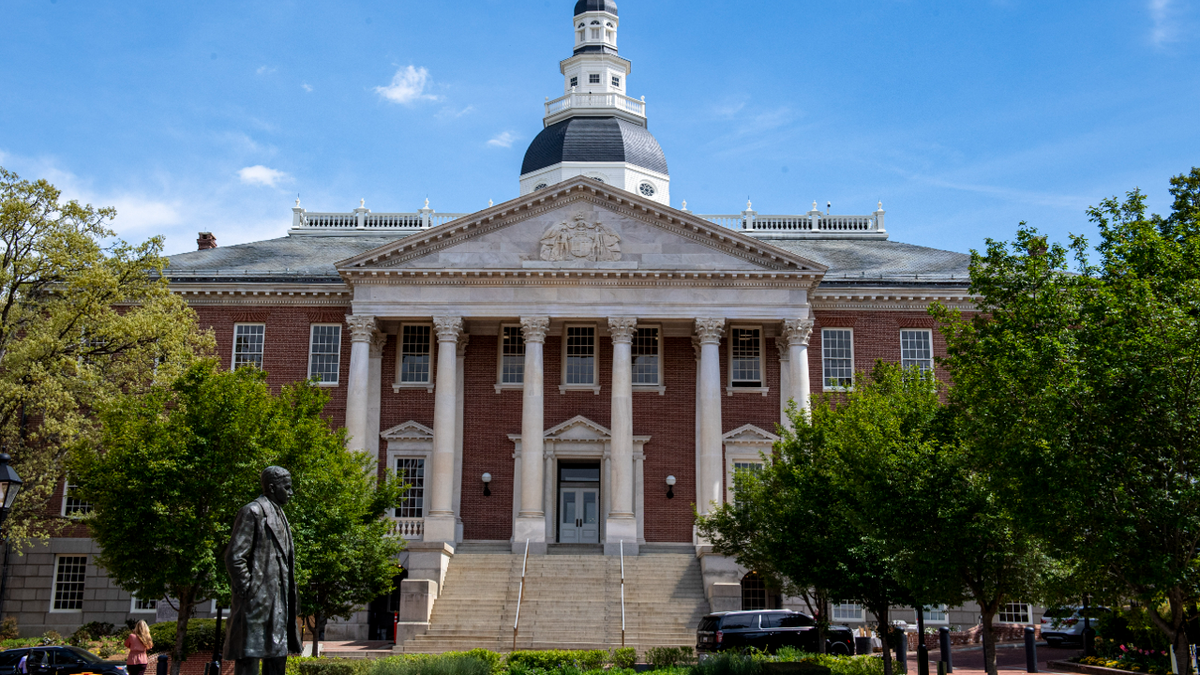
The Maryland State House, which houses the General Assembly, in Annapolis. If the amendment Gov. Moore supports is approved by voters, state legislators would be granted far greater leeway to redraw congressional maps. (Jonathan Newton/For The Washington Post via Getty Images, File)
As first reported by Fox News Digital, the amendment is already facing a court challenge from the Oversight Project, a conservative watchdog group that filed a complaint Thursday night in Anne Arundel County Circuit Court seeking to keep it off the November ballot.
The Oversight Project accused state legislators of bypassing the established July 1 deadline to introduce statewide ballot questions.
The ballot question for the amendment was introduced by Maryland House Speaker Joseline Peña-Melnyk and Senate President Bill Ferguson on Aug. 3, more than a month after the deadline.
Fox News Digital reached out to Peña-Melnyk and Ferguson for comment.
The move by Peña-Melnyk and Ferguson at the tail end of the legislative session is a response to a 2022 court ruling that struck down Democratic lawmakers’ proposed congressional map at the time.
Judge Lynne Battaglia found that the map — which added more Democratic voters to Harris’ district — failed to give sufficient regard to the natural boundaries and political subdivisions throughout the state.
VIRGINIA VOTERS CEMENT SWING DISTRICT REMATCH AFTER DEMS’ REDISTRICTING FAIL
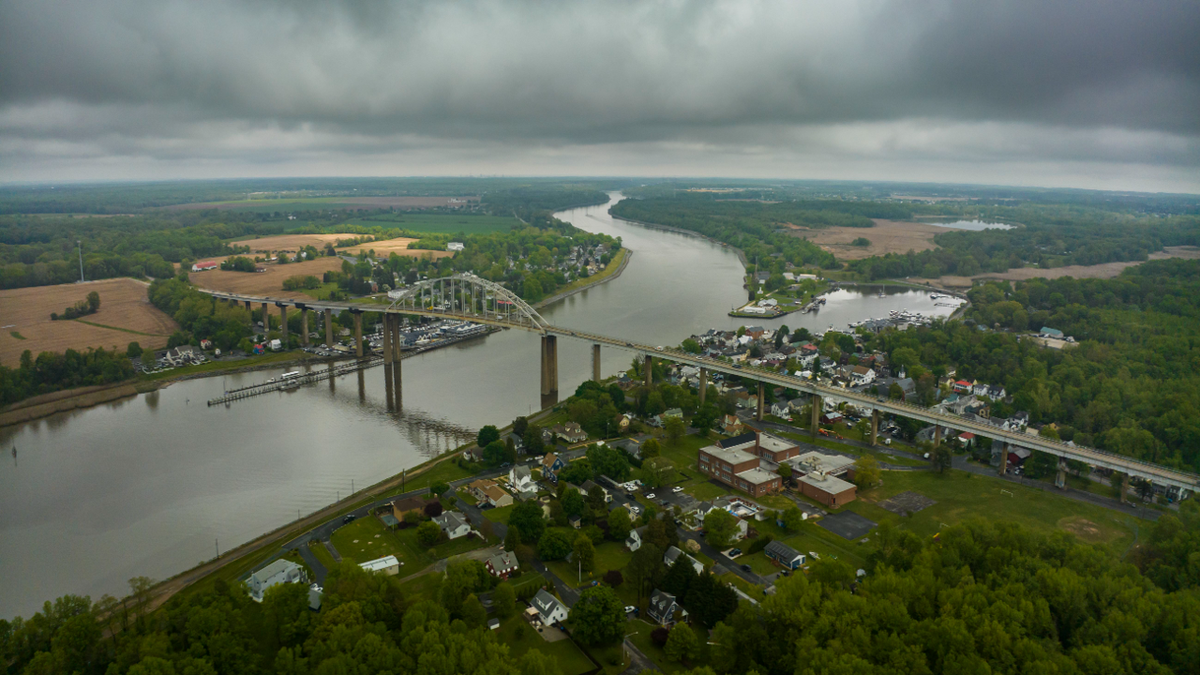
An aerial view of Chesapeake City, a city in Maryland’s mostly-rural Eastern Shore that has been represented by Rep. Harris since 2011. (Visions of America/Joseph Sohm/Universal Images Group via Getty Images, File)
Amending the state constitution could be a way to get around this, but Harris said that even if voters approve the amendment, it would not guarantee that the courts would approve subsequently drawn maps that have «hyper-partisan gerrymandering.»
If the state legislature tried to eliminate or substantially dilute Republican voting power his district, Harris said he would sue based on the precedent set by Battaglia’s 2022 ruling.
Meanwhile, Moore has framed his support of the amendment as a necessary response to GOP redistricting around the country, which he called «political redlining.»
«For over a year, I have warned that Donald Trump and Republicans across the country are working to rig the system, weaken voting rights, and make this pain permanent. I am proud that today we united and took action,» Moore said. «I continue to believe that our country needs national redistricting reform. But until that happens, inaction is not an option.»
DEMOCRATS TARGETING 12 ADDITIONAL RED DISTRICTS IN MIDTERMS PUSH TO RETAKE HOUSE
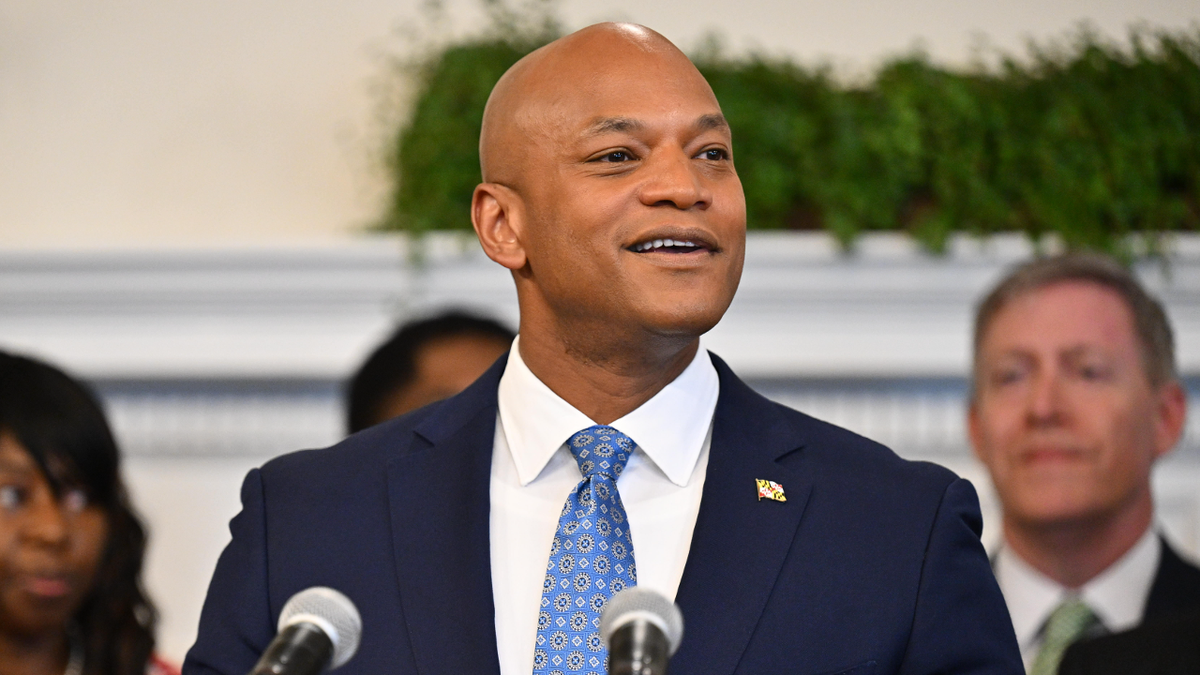
Maryland Gov. Wes Moore speaks during a news conference at the Maryland State House on Wednesday in Annapolis. (Jamie Sabau/Getty Images)
Harris pushed back on Moore’s assertion that Republicans are responsible for the current redistricting battle playing out in dozens of states.
He pointed out that the redistricting organization founded by Eric Holder, who served as attorney general under President Obama from 2009 to 2015, aggressively pursued litigation to change legislative and congressional maps in North Carolina and Alabama.
However, a mid-decade congressional redraw was successfully enacted by Texas Republicans in 2003. The Supreme Court largely upheld the redraw in 2006 but said one district violated the Voting Rights Act because it diluted Latino voting strength.
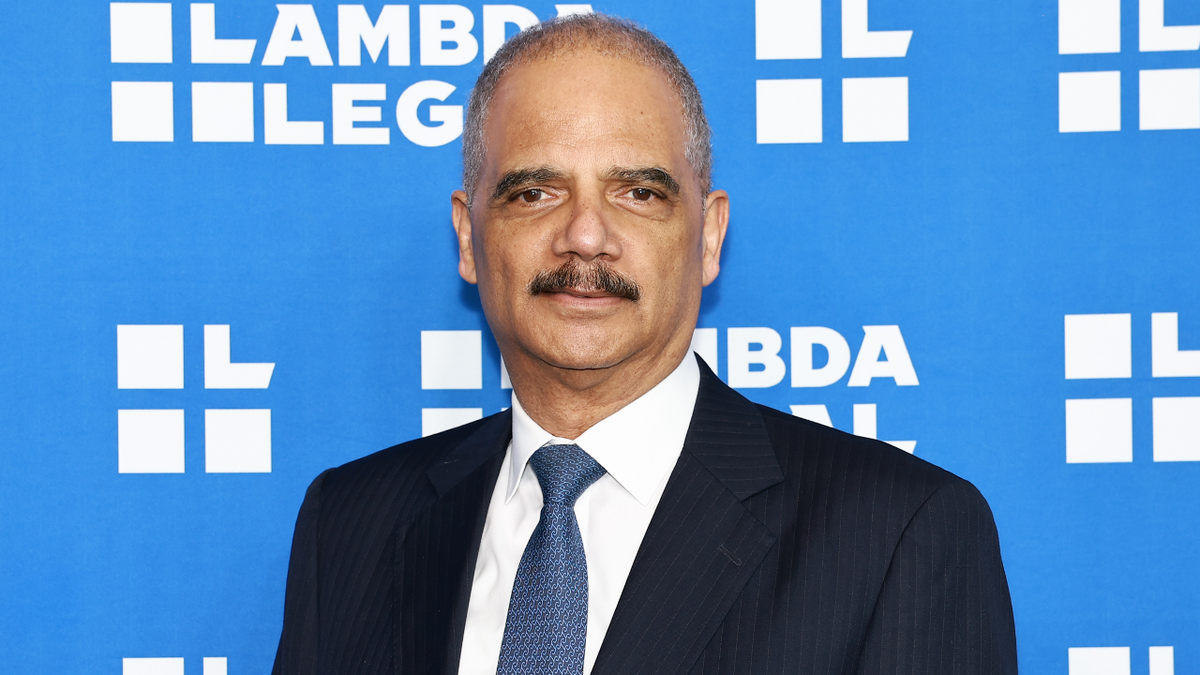
Eric Holder, who served as attorney general under President Obama, has also pursued redistricting, Rep. Harris says. (Arturo Holmes/Getty Images, File)
Although courts have upheld the legality of redrawing congressional maps between the decennial censuses, Harris said he would like to move away from the practice in the future.
«I don’t think it is good for anyone,» Harris said. «It’s not good for democracy. You get to know your constituents, your constituents get to know their representative. That’s important in a representative government like we have.»
Fox News Digital’s Jasmine Baehr contributed to this report.
maryland, politics, congress, elections, republicans, midterm elections, democrats elections

Mientras resuenan los ecos del pedazo de cohete de SpaceX que esta semana impactó en la Luna tras deambular en su órbita por un año tras una misión en 2025, la preocupación por la basura espacial crece a medida que miles de satélites, cohetes y fragmentos orbitan la Tierra a velocidades que superan los 27.000 kilómetros por hora.
En este escenario, científicos e ingenieros buscan formas innovadoras para detectar, rastrear y anticipar riesgos tanto en órbita como durante el reingreso de estos restos a la atmósfera. En los últimos meses, dos avances tecnológicos rompieron paradigmas: el uso exitoso de radiotelescopios para seguir desechos en la órbita geoestacionaria y la implementación de sensores sísmicos terrestres para localizar objetos que caen casi en tiempo real.
Un equipo internacional, compuesto por ingenieros del Laboratorio Lincoln del Instituto Tecnológico de Massachusetts (MIT), la Universidad de Birmingham y el radiotelescopio de Jodrell Bank en el Reino Unido, presentó resultados inéditos en la observación de basura espacial a gran altitud.

El proyecto, denominado Radar Multiestático de Línea de Base Larga (LBMR), demostró que es posible aprovechar radiotelescopios para captar y analizar los ecos de radar reflejados por fragmentos de escombros en órbitas tan altas como la geoestacionaria, a 36.000 kilómetros de la superficie. “Es la primera vez que se hace algo así”, destacó Simon Garrington, director asociado de Jodrell Bank.
La basura espacial incluye satélites inactivos, etapas de cohetes abandonadas, fragmentos dispersos por colisiones y millones de pequeñas partículas como escamas de pintura. Si bien la mayor parte se concentra en la órbita baja terrestre (LEO), donde los radares convencionales funcionan de manera eficiente, los objetos en órbitas más altas, como la geoestacionaria (GEO), han resultado mucho más difíciles de rastrear.
En la GEO se encuentran satélites meteorológicos y de comunicaciones críticos, y un solo impacto puede dejar inutilizado un aparato esencial para la vida moderna.

(Imagen Ilustrativa Infobae)
La novedad de la estrategia LBMR radica en la combinación de un potente radar emisor en el MIT y radiotelescopios receptores en el Reino Unido. Las ondas de radio emitidas rebotan en los desechos espaciales y regresan a antenas como la del Telescopio Lovell, donde son procesadas en tiempo real.
Este método, desarrollado durante siete años y con apoyo de la OTAN y la Agencia Espacial del Reino Unido, permite medir la distancia y velocidad de los fragmentos con una sola antena. La meta siguiente es captar ecos de un mismo objeto con múltiples radiotelescopios, lo que posibilitaría reconstruir trayectorias en tres dimensiones y optimizar la vigilancia.
“Esta idea surgió hace unos siete años. En aquel entonces parecía una locura, porque no teníamos sincronización. Teníamos recursos en un extremo del océano y otros recursos en el otro extremo. Pero estábamos lo suficientemente locos como para seguir adelante”, contó Marco Martorella, ingeniero electrónico de Birmingham y miembro de LBMR.

El equipo ya demostró la viabilidad del sistema y espera ampliar la cobertura para seguir rastreando en tiempo real fragmentos cada vez más pequeños y peligrosos.
La basura espacial representa un riesgo real para las misiones activas, las estaciones orbitales y hasta para la aviación. Un objeto de apenas unos centímetros puede atravesar paneles, destruir instrumentos y generar nuevos fragmentos, alimentando el temido “síndrome de Kessler”, una reacción en cadena donde cada colisión produce más escombros y satura las órbitas terrestres.
Si bien la mayoría de los fragmentos se desintegran en la atmósfera durante su reentrada, los de mayor tamaño pueden llegar intactos a la superficie, con potencial de causar daños a infraestructuras, el medioambiente o la salud pública. Algunos restos transportan materiales tóxicos, inflamables o radiactivos, y existe además el riesgo de impacto con aeronaves en vuelo.

Para abordar el desafío de la reentrada, científicos encabezados por Benjamin Fernando (Universidad Johns Hopkins) y Constantinos Charalambous (Imperial College de Londres) dieron un paso adelante utilizando sensores sísmicos terrestres.
Su estudio, publicado en la revista Science, muestra cómo las redes sísmicas públicas permiten registrar los estampidos sónicos que generan los fragmentos al entrar en la atmósfera a velocidades supersónicas.
Analizando los datos de 127 sismómetros en el sur de California y Nevada, los investigadores rastrearon la caída de un módulo orbital chino, la Shenzhou-15, identificando la trayectoria real a 30 kilómetros al sur de la prevista por sistemas de radar orbital.
“Podemos rastrear cosas muy bien en el espacio. Pero una vez que llega al punto en que realmente se está desintegrando en la atmósfera, se vuelve muy difícil de rastrear”, explicó Fernando.

El método no solo permite ubicar la zona de caída casi en tiempo real, sino que también ofrece información sobre la velocidad, dirección y fragmentación del objeto. Esto resulta vital para la rápida recuperación de restos, especialmente si contienen sustancias peligrosas, y para reducir el tiempo entre la reentrada y la determinación de la trayectoria.
Los autores del estudio ya emplearon esta técnica para rastrear decenas de reentradas, y su objetivo es lograr estimaciones precisas en minutos o segundos tras el evento. Chris Carr, del Laboratorio Nacional de Los Álamos, destacó en un análisis que “el método permite identificar rápidamente las zonas de caída de desechos”, una capacidad cada vez más relevante ante el aumento de satélites y basura en órbita.
La comunidad científica subraya que, con el ritmo actual de lanzamientos y la proliferación de objetos en el espacio, el seguimiento detallado y constante de la basura espacial será clave para evitar incidentes graves.
Los avances en radiotelescopía y sismología aplicada abren nuevas puertas para una vigilancia más eficaz, combinando observación a gran altitud y monitoreo de reentradas.
En este escenario, la cooperación internacional y la innovación tecnológica se convierten en herramientas imprescindibles para enfrentar los desafíos de la próxima era espacial.
basura espacial,radiotelescopios,sensores sísmicos,monitoreo orbital,rastreo espacial,sistemas de detección

La competencia con los 0 km hizo caer las ventas y los precios de los autos usados

Al Gobierno se le achicó su margen de maniobra y la reelección de Milei pasó a ser la máxima prioridad

La historia de Joffre Guerrón, el ecuatoriano que tuvo un paso fugaz por Boca y luego se convirtió en leyenda de la Copa Libertadores

Andy Kusnetzoff: “PH Podemos Hablar se basa en valores de mi papá; que decía ‘lo que se verbaliza deja de ser peligroso’”

La productividad laboral en Argentina repuntó desde 2024 tras años de caída

Fentanilo mortal: La ex funcionaria encargada de controlar los medicamentos dijo 33 veces “no recuerdo” ante el juez que la investiga

Dólar hoy en vivo: a cuánto se negocian todas las cotizaciones minuto a minuto este miércoles 5 de agosto

La oposición cuestionó a Benegas Lynch por su empresa para vender campos a extranjeros y el senador libertario se defendió

Brasil retira a su embajador en la Argentina: qué consecuencias tiene la medida diplomática

Las centrales obreras y los movimientos sociales anunciaron dos días de conflicto callejero
-
 ECONOMIA3 días ago
Dólar hoy en vivo: a cuánto se negocian todas las cotizaciones minuto a minuto este miércoles 5 de agosto
-
 POLITICA1 día ago
La oposición cuestionó a Benegas Lynch por su empresa para vender campos a extranjeros y el senador libertario se defendió
-
 POLITICA3 días ago
Brasil retira a su embajador en la Argentina: qué consecuencias tiene la medida diplomática