INTERNACIONAL
New Trump UFO file dump includes military footage of mysterious star-shaped object

NEWYou can now listen to Fox News articles!
The Trump administration on Friday released its fourth tranche of declassified unidentified anomalous phenomena (UAP) records, including newly released military infrared videos and additional details about a 2015 unidentified object reported near the nation’s primary nuclear weapons assembly facility.
Officials said the latest release is part of the administration’s effort to expand public access to UAP records while protecting information that could reveal sensitive military capabilities, eyewitness identities or national security operations.
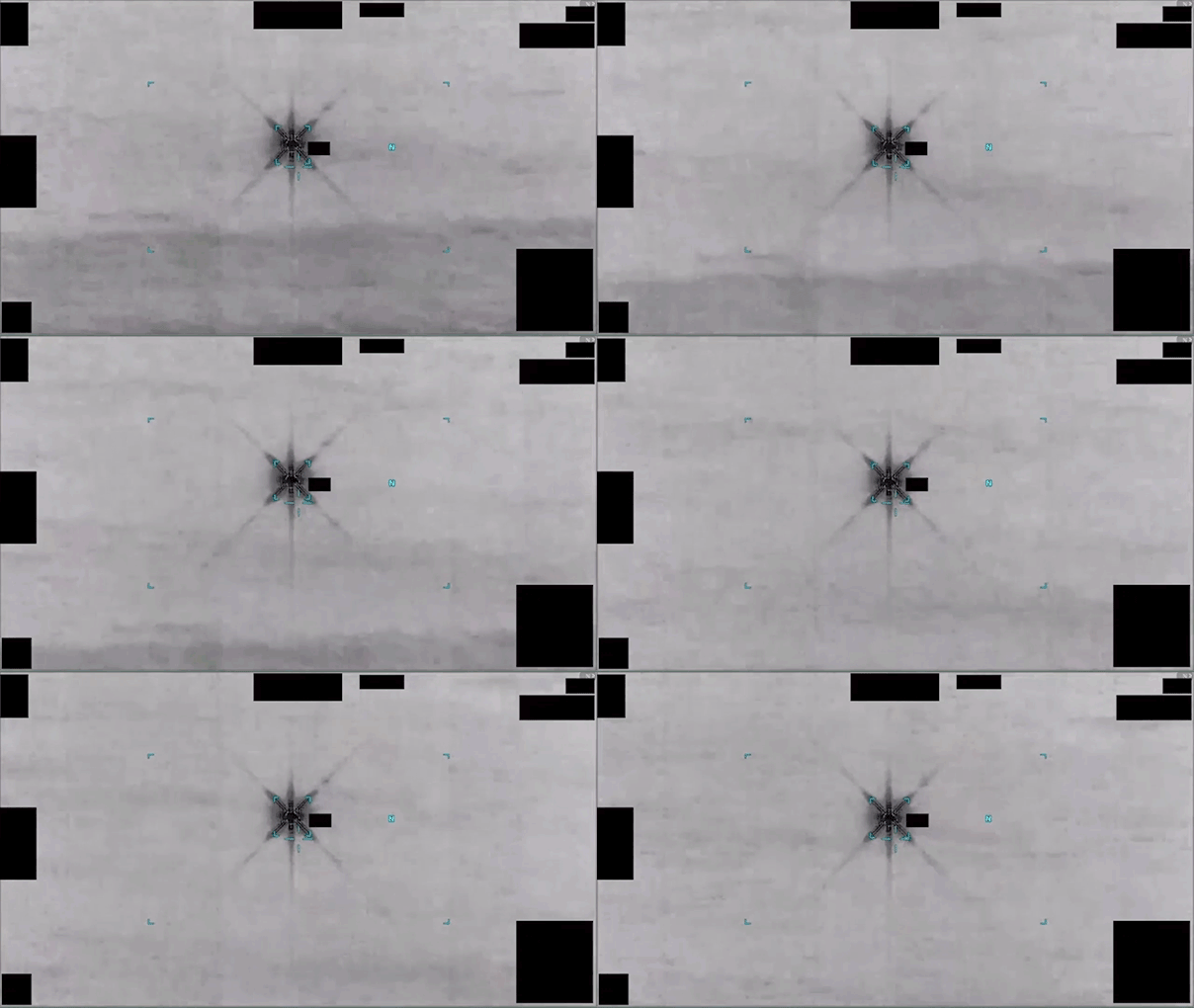
Among the newly released files is an 18-second infrared video submitted by U.S. Indo-Pacific Command in 2025 showing an object officials described as resembling a six-pointed star.
UFO EXPERT WARNS MYSTERY CRAFT ARE OUTMANEUVERING US MILITARY IN RESTRICTED AIRSPACE
An infrared image released by the Department of War shows an object described by officials as resembling a six-pointed star during a U.S. Indo-Pacific Command mission over the Yellow Sea on Jan. 1, 2025. (Department of War)
The footage, captured by an infrared sensor aboard a U.S. military platform over the Yellow Sea, shows the sensor tracking what the government described as an «area of contrast» while cautioning that the video’s description should not be interpreted as an official conclusion about the object’s identity or significance.
The latest release also includes a newly declassified Department of Energy report detailing a 2015 incident involving an unidentified object over the Pantex Plant near Amarillo, Texas, the nation’s primary facility for assembling, maintaining and dismantling nuclear weapons. Portions of the report had previously been released in a more heavily redacted form, but Friday’s tranche includes additional details and imagery.
The release also includes a 1-minute, 46-second infrared video submitted by U.S. Indo-Pacific Command in 2024 that shows a military sensor tracking an elongated area of contrast. As the sensor zooms in, the object appears as a line of several points moving across the field of view before becoming less distinct as it recedes into the distance. Officials cautioned that the video’s description should not be interpreted as an official conclusion about the object’s identity or significance.
Another newly released Navy «Range Fouler Debrief» — a standardized report used to document unauthorized intrusions into military training airspace — describes a military operator observing a «quite small» object with a metallic appearance and reflective underside that continued traveling in a constant direction. The report cautions that the descriptions reflect the observer’s impressions at the time and are not definitive assessments of the object’s characteristics.
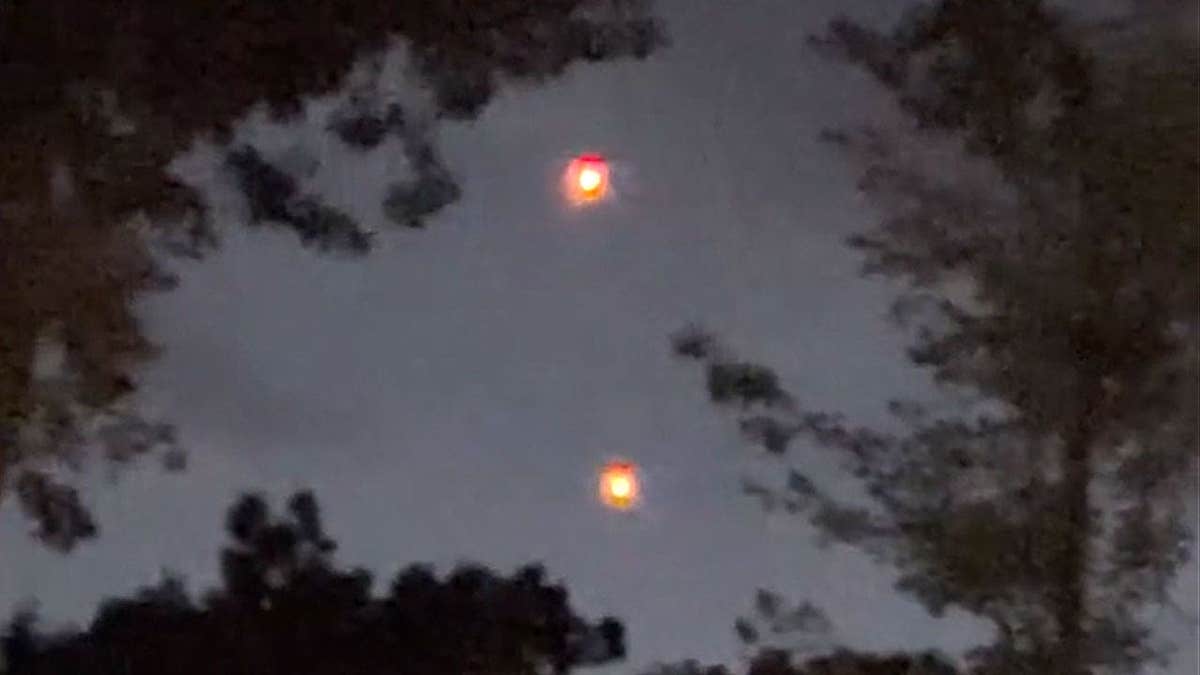
A screenshot of video footage from an alleged unidentified anomalous phenomenon (UAP) sighting in the northeastern United States in July 2025, which was detailed in files released by the DOW and originally obtained by the FBI. (DOW/FBI)
PENTAGON FILES REVEAL AGENTS’ REPORTS OF ‘ORBS LAUNCHING ORBS’ NEAR SENSITIVE US SECURITY SITE
The release also features additional infrared videos submitted by U.S. Central Command, the Air Force and Indo-Pacific Command. One 2024 video shows what appears to be an elongated area of contrast that later resembles a line of multiple bright points as the military sensor tracks it. Another 2023 video captures two areas of contrast crossing the sensor’s field of view in opposite directions.
In at least one case, AARO included technical context alongside the footage, noting that apparent flickering in a 2019 Air Force infrared video could result from the sensor’s automatic contrast adjustments when tracking an object whose temperature closely matched its background.
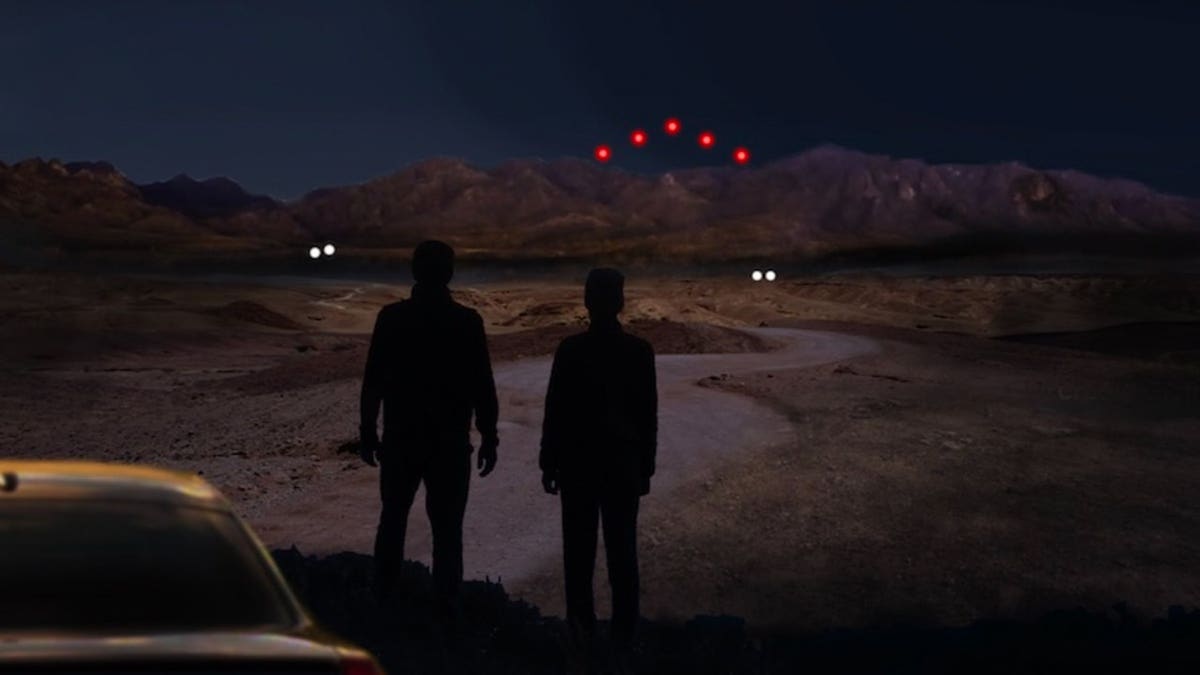
An artist’s rendering released by the U.S. Department of War depicting a 2023 sighting of «orbs launching other orbs» near a national security site in the western United States. (Department of War)
CLICK HERE TO DOWNLOAD THE FOX NEWS APP
Congress established AARO in 2022 to investigate reports of unidentified objects across air, sea, space and other domains, with a focus on determining whether incidents could pose flight safety or national security risks. The office is tasked with assessing whether sightings can be attributed to foreign adversaries, classified U.S. programs or conventional explanations before labeling them unresolved.
The latest release is the fourth tranche in a series that is part of President Donald Trump’s directive to expand public access to UAP records, adding that redactions were limited to protecting eyewitness identities, sensitive military locations and unrelated government facilities.
ufos, national security, pentagon defense, us navy












INTERNACIONAL
Investigators believe Iranian hackers are likely behind cyberattack on Minnesota water systems: report
NEWYou can now listen to Fox News articles!
U.S. investigators believe a cyberattack that targeted dozens of water systems in Minnesota this week likely was orchestrated by Iranian hackers, a report said.
Minnesota IT Services (MNIT) said the «coordinated cyberattack targeted operational technology at more than 30 Minnesota community water systems» on Sunday and Monday, but the Minnesota Department of Health is «not aware of any active requests from Minnesota cities to have their residents modify their drinking water usage.»
U.S. and state officials and others familiar with the incident told The New York Times that Iranian hackers were likely behind the cyberattack.
The newspaper reported that three state officials briefed on an investigation into the cyberattack said the tradecraft used and the absence of a ransom demand led analysts to initially determine Iran was involved. Officials also cautioned that the assessment could change as more data is collected by investigators, according to the newspaper.
«The FBI is aware of recent public reporting around Water and Wastewater sectors. The FBI and our interagency partners are fully engaged to protect critical infrastructure and we remain well-equipped to protect against cyber threats of all varieties,» the FBI said in a statement to Fox News Digital on Friday.
IRAN-LINKED HACKERS TARGET US MEDICAL TECH COMPANY
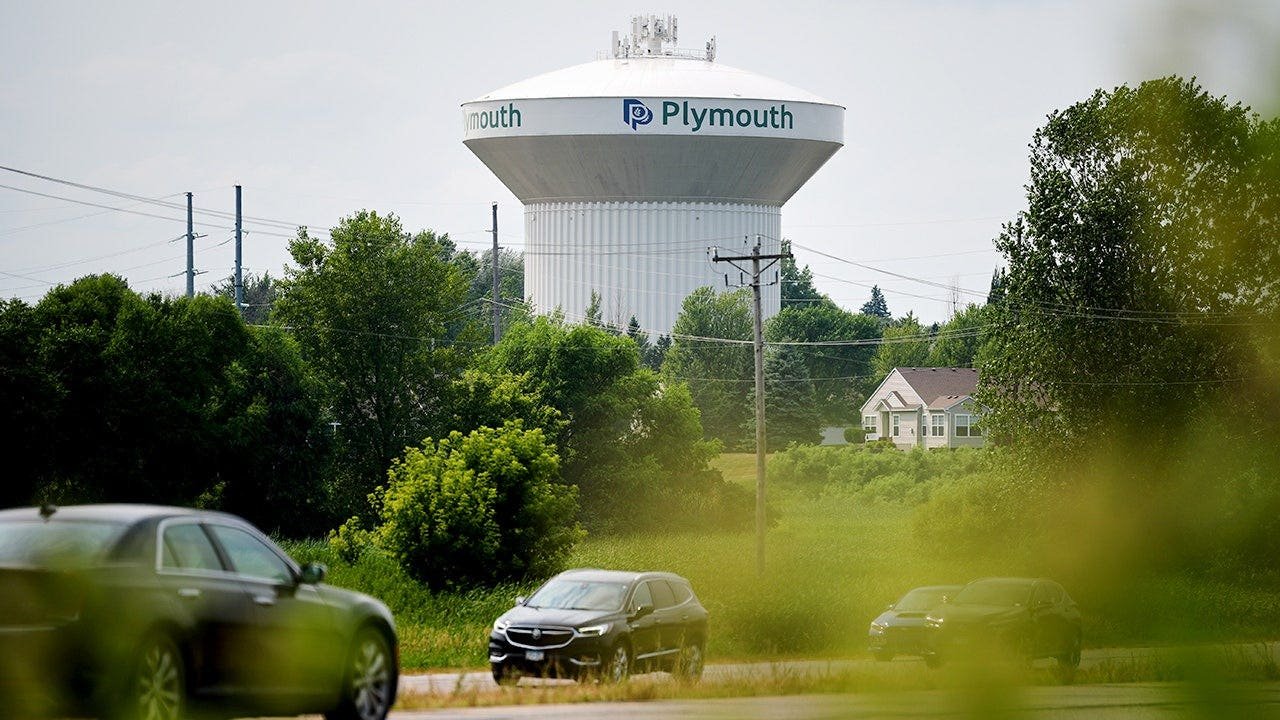
A water tower is seen Thursday, July 30, 2026, in Plymouth, Minn. A cyberattack targeted operating technology at more than 30 water systems in Minnesota, including Plymouth’s, earlier this week, state officials said. (Ellen Schmidt/AP)
The newspaper reported that the hackers targeted infrastructure used to manage and monitor water towers operated by municipal governments.
The mayor of the city of Braham, Nate George, said on Monday, a «plant operator found that the water tower was calling for water, but the well was not operating.»
«After learning that similar problems were occurring in at least four other Minnesota communities, Braham staff determined that the plant’s computerized control system had been compromised,» he continued.
«Public works isolated the affected system, restored a backup, and restarted the plant within approximately 90 minutes. While the plant was offline, residents continued receiving water from the city’s water tower. City administration temporarily requested that residents conserve water to prevent the tower’s limited supply from being exhausted,» George added.
In a statement shared with Fox News Digital, MNIT noted that «the investigation remains active, and Minnesota has not attributed the activity to a specific actor.»
MNIT said it «continues to collaborate with federal, state, local, Tribal, and private-sector partners to investigate the attack, support affected communities, and strengthen the security of Minnesota’s critical infrastructure.»
«Cyberattacks against critical infrastructure require a coordinated, whole-of-government response,» John Israel, MNIT Assistant Commissioner and Minnesota Chief Information Security Officer, said in a statement. «MNIT is working side by side with our partners to share intelligence, support affected communities, and help utilities restore operations safely while strengthening defenses against future attacks.»
LIVE UPDATES ON IRAN WAR: TRUMP ANNOUNCES HAMAS DISARMAMENT DEAL WHILE SAUDI ARABIA LAUNCHES RED SEA DEFENSE COALITION

A woman is seen holding an Iranian flag during a religious ceremony during Eid al-Adha on May 26, 2026, in Qom, Iran. Iran is believed to be behind recent cyberattacks in Minnesota, a report said. (Majid Saeedi/Getty Images)
Israel told the Times that the breach was first detected Sunday and that hackers targeted 36 municipal water systems.
«Minnesota was one of the early detectors of this, but we’re seeing that this same threat activity has likely been occurring in other states throughout the nation,» he was quoted as saying.
Nick Andersen, the Cybersecurity and Infrastructure Security Agency’s (CISA) acting director, told the newspaper that the agency was aware of «multiple potential incidents affecting local water utilities.»
In the days leading up to the incident, CISA issued an advisory warning U.S. organizations of «ongoing Iranian-affiliated cyber activity targeting internet-connected operational technology (OT) devices.»
«Iranian cyber actors continue to target U.S. critical infrastructure, and the FBI is committed to identifying, disrupting, and imposing costs on those responsible,» Assistant Director Brett Leatherman of the FBI’s Cyber Division said in the advisory.
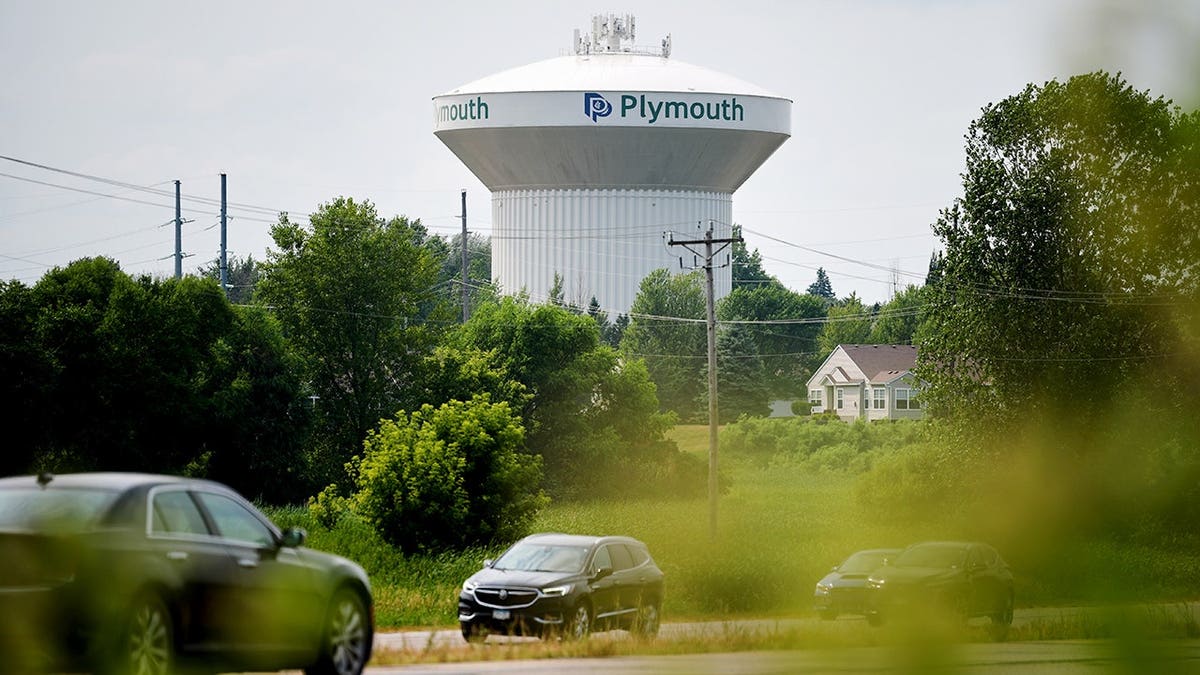
A water tower in Plymouth, Minn. (Ellen Schmidt/AP)
It stated that a «group of Iranian-affiliated actors» has «targeted devices spanning multiple U.S. critical infrastructure sectors, including Water and Wastewater Systems, Energy and Government Services and Facilities, to include local municipalities.»
minnesota, cybercrime, hackers, iran, midwest, us
INTERNACIONAL
Lídia Jorge: “Cuanto más sofisticadas son nuestras sociedades, más fácilmente aceptan ser conducidas como rebaños”

La escritora portuguesa Lídia Jorge, galardonada con el Premio Camões 2026 —el máximo reconocimiento de las letras en lengua portuguesa— y el Premio Estatal Austriaco de Literatura Europea, afirmó que “la literatura no anuncia la destrucción del mundo, intenta impedirla”. La autora de Misericordia y La costa de los murmullos hizo estas declaraciones en una entrevista concedida al diario El Mundo durante el Festival literario BABELL, celebrado en Oporto.
El Premio Camões, instituido en 1988 por los gobiernos de Portugal y Brasil con una dotación de 100 mil euros, le fue otorgado por unanimidad del jurado, que destacó “el diversificado conjunto de su obra y la gran contribución para el enriquecimiento del patrimonio literario y cívico-cultural de la lengua portuguesa”. El Premio Estatal Austriaco, entregado el lunes 28 de julio en el marco del Festival de Salzburgo, se suma a una trayectoria que incluye el Premio Médicis al mejor libro extranjero publicado en Francia en 2023, el Premio FIL de Literatura en Lenguas Románicas de Guadalajara en 2020 y el Premio Pessoa en 2025.
A sus 80 años, la escritora portuguesa se mantiene ajena a la solemnidad que suelen imponer los premios. “Los premios no se conceden a mi esencia. Se conceden a mi sombra”, afirmó. Y añadió: “Ningún premio puede alterar la humildad con la que uno se enfrenta al lenguaje”. Nacida en Boliqueime, en el Algarve, en 1946, Lídia Jorge debutó en la ficción con El día de los prodigios en 1980, obra que marcó un punto de ruptura con el realismo documental dominante en la literatura portuguesa de la época.
En la entrevista publicada por El Mundo, Jorge reflexionó sobre la paradoja que define a las sociedades contemporáneas: el avance material convive con un retroceso moral. “He visto dos movimientos simultáneos: una mejora extraordinaria de las condiciones materiales de la existencia —la medicina, la comunicación, la ciencia, la exploración espacial— y, al mismo tiempo, un proceso inquietante por el que volvemos a comportarnos como una manada”, señaló. “Cuanto más sofisticadas son nuestras sociedades, más fácilmente aceptan ser conducidas como rebaños”.
Esa tensión ha ocupado buena parte de su obra. Desde La costa de los murmullos —novela que reconstruye la guerra colonial en Mozambique desde la perspectiva de una mujer— hasta Los memorables, sobre los protagonistas de la “Revolución de los Claveles” de 1974, Lídia Jorge ha construido una cartografía de las grandes fracturas de Portugal y de Europa. “Me siento testigo de una época y prefiero pensar que mis libros son testimoniales antes que históricos”, declaró.

La autora también abordó el estado de las democracias occidentales con una mirada que rechaza tanto el catastrofismo como la complacencia. “Lo que me preocupa es que algunos hayan llegado a la conclusión de que hay que abolir la democracia cuando lo que necesitamos es lo contrario: reforzarla, devolverle credibilidad”, dijo. Para ella, el problema no radica en el sistema democrático en sí, sino en su relación con un modelo económico que “ha dejado de servir a una distribución justa de la riqueza y que cada crisis fortalece a quienes ya concentran el poder”.
Europa, tema recurrente en sus ensayos y artículos, aparece en su pensamiento no como una institución política sino como una conciencia moral compartida. Citó a Ortega y Gasset, que retomaba a San Agustín cuando le preguntaban qué era Europa. “No necesitamos definir Europa, la sentimos”, sostuvo. “Sabemos por qué no queremos volver a la guerra, por qué desconfiamos de ciertos modelos de poder como el ruso o el estadounidense y por qué seguimos buscando una forma de convivencia que vaya más allá del nacionalismo”.
Entre 2021 y 2026, Jorge formó parte del Consejo de Estado portugués, donde sucedió al filósofo Eduardo Lourenço. Fue, según explicó, un servicio que aceptó “con gusto porque exigía pensar constantemente en el presente del país y en los grandes asuntos internacionales”. El Consejo reúne en Portugal no solo a políticos, sino también a científicos, músicos, juristas y escritores, una práctica que la autora consideró natural para cualquier ciudadano.
Su última novela, Misericordia (2022), supuso para ella una aproximación inédita a la materia autobiográfica. En la entrevista con El Mundo, Jorge la describió como “un intervalo, no un final”, y la conectó con una idea del crítico literario Frank Kermode: “Las narraciones sobre el apocalipsis no hablan del deseo del fin del mundo, sino del intento de impedirlo”. La protagonista del libro llega a preguntarse si la pandemia será el fin de todo y descubre, precisamente entonces, un deseo intenso de seguir viviendo.
Esa voluntad de seguir escribiendo, de seguir buscando, es quizás la constante más firme en su trayectoria. “Yo escribo porque no entiendo las cosas”, confesó. “Multiplico los personajes porque, hablando entre ellos, saben más que yo sola. Y, aun así, nunca alcanzo del todo aquello que busco”. A los 80 años, con el Premio Camões recién recibido, la escritora mantiene intacta esa insatisfacción productiva: “Sigo creyendo que el próximo libro estará más cerca de ese libro que llevo toda la vida intentando escribir”.
[Fotos: cortesía João Barata]

El informe de la FIFA que muestra que se estudia una ampliación de 48 a 64 equipos para el próximo Mundial

Georgieva habló sobre su viaje a la Argentina: Messi, Milei, Vaca Muerta, sus dólares en una lata y la maquilladora con 3 trabajos

Wanda Nara podrá traer al pais a sus hijas aún sin la firma de Mauro Icardi: la resolución de la Justicia Italiana

El Gobierno apuesta a reconfigurar el vínculo con aliados: la nueva estrategia y los números que hacen en Senado

Cuáles son las ciudades más frías de la Argentina hoy, viernes 31 de julio

El histórico salario de Zidane en la selección francesa

La pelea con Lula y el verdadero desafío que enfrenta Milei

Cómo manejar en el hielo y la nieve: técnicas y precauciones para usar el auto en la montaña en vacaciones de invierno

El BCRA cortó la racha de compra y en el mercado vuelan rumores de maniobras para frenar al dólar

World-famous Catholic shrine torched, ‘Devil in a skirt’ scrawled on Virgin Mary statue

 ECONOMIA3 días ago
El BCRA cortó la racha de compra y en el mercado vuelan rumores de maniobras para frenar al dólar
- INTERNACIONAL3 días ago
World-famous Catholic shrine torched, ‘Devil in a skirt’ scrawled on Virgin Mary statue
- ECONOMIA3 días ago
SUTEP cerró paritaria y ya se sabe cuánto ganará un empleado de parque de diversiones durante 2026