INTERNACIONAL
“No estamos listos para ir a Marte”: la advertencia de la astronauta Sophie Adenot tras pasar 237 días en el espacio y volver a la Tierra con mareos

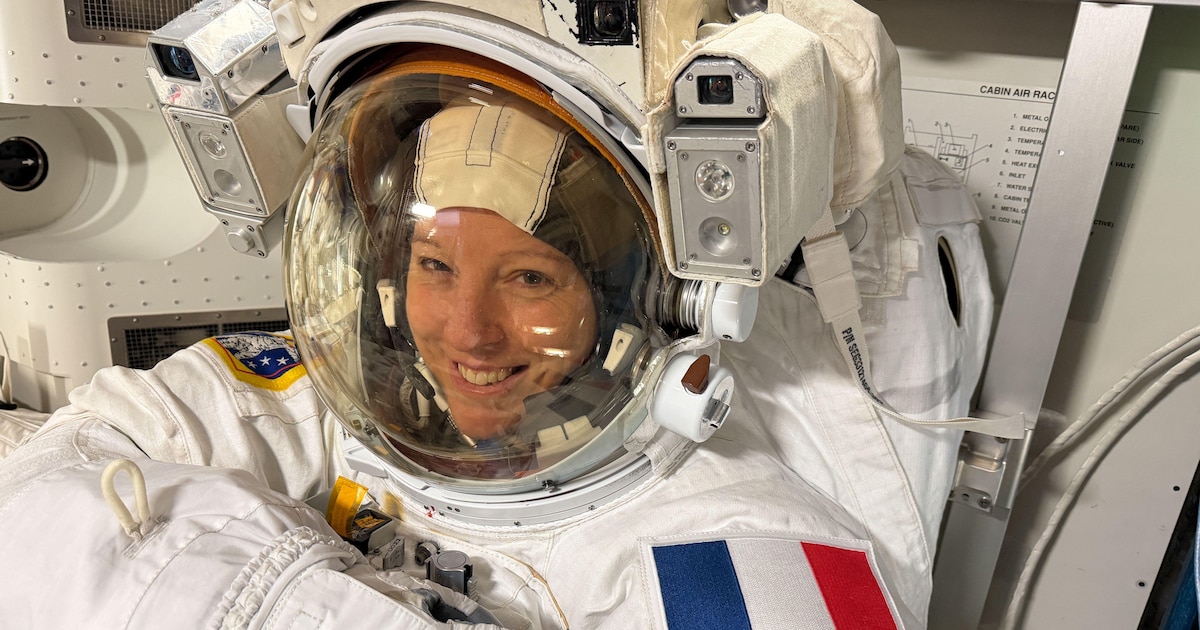
La cápsula acababa de abrirse en el océano Pacífico y Sophie Adenot tenía náuseas por el movimiento del mar. Tras 237 días en la Estación Espacial Internacional, la astronauta francesa formuló una frase que contrastó con los proyectos para llegar al planeta rojo: “No estamos listos para ir a Marte”.
Cinco días después de su amerizaje, Adenot explicó en una conferencia de prensa de la Agencia Espacial Europea (ESA), celebrada en Colonia, Alemania, que una misión tripulada a Marte aún exige avances técnicos que no están disponibles. La francesa regresó a la Tierra, tras casi ocho meses en órbita durante la misión εpsilon.
“Necesitamos rupturas tecnológicas”, afirmó Adenot. Su advertencia partió de una experiencia personal: el cuerpo humano necesita readaptarse a la gravedad terrestre después de períodos prolongados de ingravidez, incluso cuando los astronautas cuentan con entrenamiento, atención médica y equipos de ejercicio a bordo.

Secuelas físicas tras ocho meses en el espacio
Al volver a la Tierra, la astronauta de Francia describió una sensación contradictoria. “Justo después de que se abrió la cápsula, lo primero que dije fue ‘devuélvanme al espacio’, porque estaba mareada, con el mar moviéndose”, relató.
Adenot señaló que más de la mitad de los astronautas experimenta síntomas físicos tras el retorno de una misión de larga duración. Debilidad intensa, náuseas y vómitos pueden aparecer cuando el organismo vuelve a estar sometido a la gravedad después de meses en microgravedad.
La astronauta aterrizó en Colonia el 10 de octubre, donde inició un período de recuperación y estudios médicos. La ESA informó que permanecerá entre dos y tres semanas bajo seguimiento en las instalaciones del Centro Aeroespacial Alemán, conocido como DLR, antes de continuar con su rehabilitación.
En una aparición ante la prensa tras su llegada a Europa, Adenot admitió: “Mi principal desafío ahora es sostenerme sola de pie”, declaró.
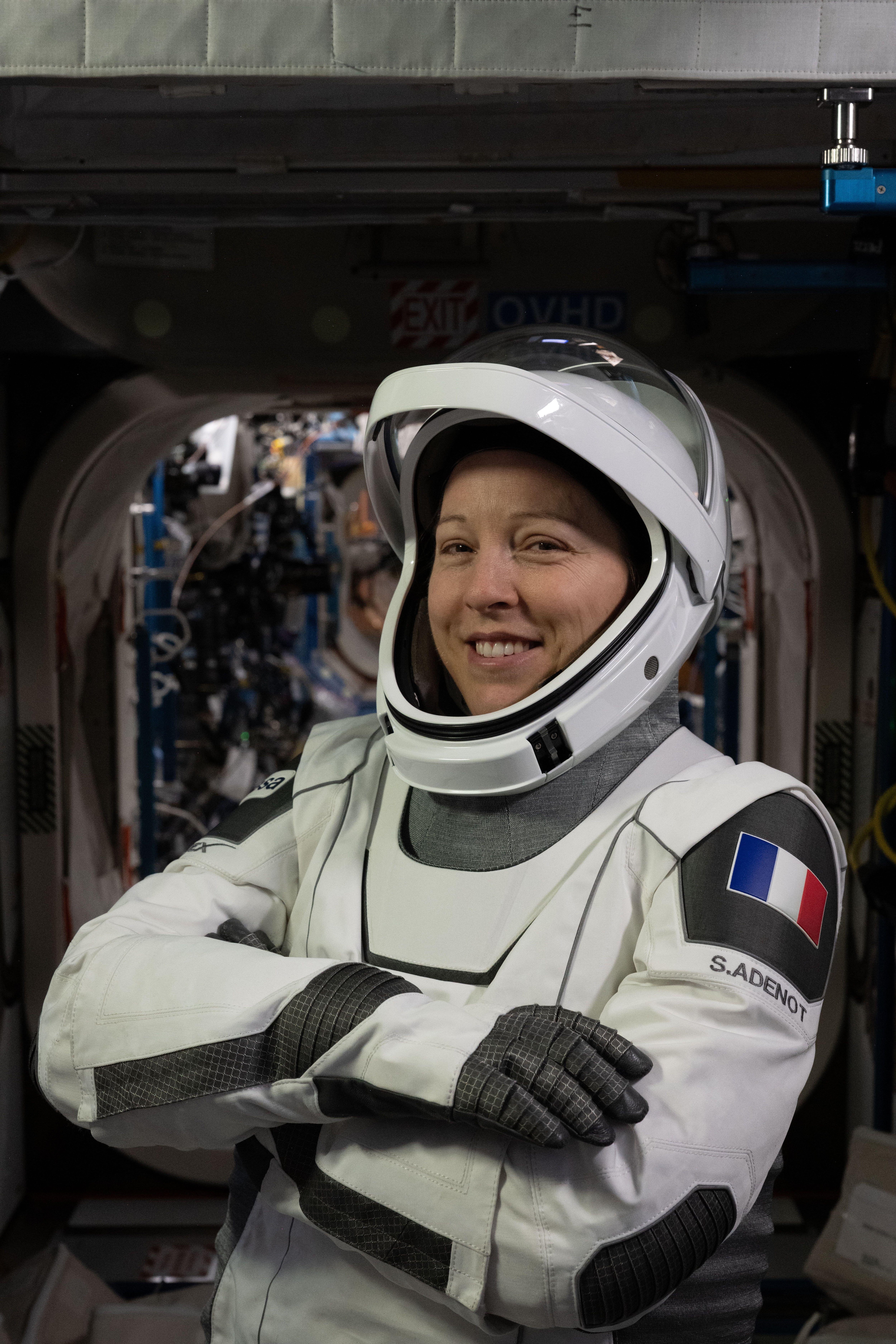
Un viaje a Marte duraría entre seis y nueve meses con la tecnología actual
La advertencia de la astronauta tiene un punto central: el tiempo de vuelo. Con los sistemas de propulsión actuales, un trayecto hasta Marte puede demandar entre seis y nueve meses. Ese período es comparable con el tiempo que la francesa pasó en la Estación Espacial Internacional, aunque las condiciones de ambos viajes serían muy diferentes.
La estación orbital dispone de áreas para moverse, equipos para actividad física y una infraestructura preparada para estadías extensas. Una nave destinada a transportar personas a Marte tendría, previsiblemente, menos espacio y menos recursos para compensar los efectos de la falta de gravedad sobre el cuerpo.
“Con la tecnología que tenemos actualmente, una misión de muy larga duración, un viaje de varios meses a Marte, imaginen el desastre”, sostuvo la astronauta. “Nos encontramos con incapacidades fisiológicas y dificultades para gestionar lo básico”, añadió.

La microgravedad afecta músculos, huesos, equilibrio, coordinación y sistema cardiovascular. En términos simples, el cuerpo se adapta a vivir sin el peso habitual que ejerce la Tierra. Al regresar, acciones cotidianas como caminar, permanecer de pie o tolerar el movimiento pueden exigir un proceso de readaptación.
Adenot completó una estadía de 237 días, cinco horas y 18 minutos en el espacio, según los datos difundidos por la Agencia Espacial Europea. La misión superó en más de 35 días el anterior récord europeo de vuelo espacial individual, que pertenecía al italiano Luca Parmitano.
La gravedad artificial y viajes más rápidos aparecen como alternativas
Para que una expedición humana a Marte sea viable, Adenot consideró necesarias soluciones que reduzcan los riesgos físicos del trayecto.
“Si tenemos rupturas tecnológicas que nos permitan acelerar el trayecto o, por ejemplo, contar con gravedad artificial, con un vehículo espacial que gire para que los astronautas estén expuestos siempre a una forma de gravedad, entonces podría funcionar. Pero hoy todavía necesitamos varias etapas clave”, explicó Adenot.

La gravedad artificial consiste en generar una fuerza similar a la gravedad terrestre mediante el movimiento de una estructura espacial. Una opción teórica es hacer girar una nave o parte de ella para que la rotación empuje a los tripulantes hacia una superficie. De ese modo, los astronautas podrían mantener parte de las condiciones físicas que tienen en la Tierra.
La francesa se convirtió además en la primera astronauta de Francia en realizar una caminata espacial. Durante su misión llevó a cabo tres salidas al exterior de la estación en 14 días, con un total de 19 horas y 42 minutos de actividad fuera del laboratorio orbital.
El regreso de la astronauta reavivó el debate sobre las misiones tripuladas a Marte

Las declaraciones de Adenot difieren de los calendarios propuestos por empresas y organismos que proyectan misiones hacia Marte en las próximas décadas. La astronauta no descartó esa meta, pero remarcó que la experiencia acumulada en vuelos prolongados muestra límites que aún deben resolverse antes de enviar una tripulación a un viaje interplanetario.
Su mensaje se apoyó en lo vivido durante ocho meses en órbita: incluso con el respaldo de la Estación Espacial Internacional, una misión de larga duración exige un esfuerzo físico considerable. El recorrido a Marte añadiría distancia, aislamiento, menor capacidad de asistencia y una permanencia mucho más extensa lejos de la Tierra.
La recuperación de Adenot continuará en el Centro Europeo de Astronautas de la ESA, en Colonia, donde los equipos médicos y científicos evaluarán los efectos de la misión εpsilon y su readaptación a la gravedad terrestre.
astronaut,astronaut equipment,astronaut equipment testing,astronaut training,astronautics,engineering,esa,esa astronaut,european space agency,expedition 74,flight engineer,international space station,iss,iss expedition,quest airlock,space,space agency,space exploration,space program,space station operations,space suit,space technology,spacesuit,spacesuit testing,spacewalk,spacewalk preparation,station














When voters rate the economy and the president negatively just weeks before Election Day, the incumbent party is vulnerable, and that’s certainly the case in the latest survey.
The economic landscape is stark. Six in 10 voters say the cost of living is their top economic worry, overshadowing government spending (15%), jobs and income inequality (7% each), tariffs (6%) and taxes (5%).
Majorities rate the economy negatively (74%) and expect it to worsen next year (53%), while two-thirds are dissatisfied with how things are going in the country (66%). Few, 18%, say their family is better off compared to two years ago. Independents say they’re worse off (52%) and think the economy will get worse (70%).
POLL: IT’S A LONE STAR SENATE SHOWDOWN BETWEEN TALARICO AND PAXTON
A majority of voters, 55%, say inflation is «not at all» under control. That’s up from a low of 45% earlier this year, and includes 30% of Republicans.
President Donald Trump’s lowest job rating is on inflation: 22% approve, a new low. Last summer, 36% approved. Four years ago, before the 2022 midterms, 29% approved of former President Joe Biden’s performance on inflation.
Disapproval of the job Trump is doing has reached 77% on inflation, 70% on the economy, 69% on tariffs and 64% on foreign policy. A smaller share, but still a majority, disapprove of his handling of immigration (56% disapprove), while border security is the only issue that is close to positive (50% approve, 50% disapprove).
Trump’s overall job approval is 36%, his lowest ever in a survey for either term. It had been holding steady at 39% since May. The decline is mainly driven by decreases among voters under age 45, those with annual household income below $50,000, non-White voters, and those without a college degree.
POLL: MICHIGAN VOTERS SPLIT BETWEEN EL-SAYED AND ROGERS
Approval stands at a low of 76% among Republicans. That’s down 3 points since last month, 12 points since September 2025, and 16 points since early in his second term (March 2025).
As in most midterms, voters are prone to punish the party in power: 7 in 10 say they will vote to send a message to Trump, with nearly twice as many expressing opposition (47%) as support (25%).
If the election were today, 54% of voters say they would back the Democratic candidate in their House district and 45% would support the Republican. That is outside the margin of error and is a wider lead than last month when Democrats were ahead by 51%-44%. The race narrows among those saying they are certain to vote, with the Democratic candidate ahead by 52%-46%.
The survey finds about the same number self-identify as Democrats (43%) and Republicans (41%), and both parties feel equally certain about voting (62% and 64% respectively), while more Democrats (61%) than Republicans (52%) say they are extremely interested in the election.
Party loyalty is solid: 98% of Democrats support their party’s candidate, and 94% of Republicans back theirs. Independents favor the Democrats by 26 points.
The Democratic candidate is the choice among Whites with a degree, those under age 45, women, union households and Hispanics. The Republican is ahead among Whites without a college degree (White men without a degree in particular), those 65 and over, voters who attend religious services regularly, military veterans and White evangelical Christians.
While 43% of Hispanic voters supported Trump in the 2024 election, just 31% prefer the Republican candidate this year.
«When the country is this closely divided in terms of partisanship, slight differences in defection and turnout rates can make all the difference,» said Republican pollster Daron Shaw, who helps conduct the Poll with Democrat Chris Anderson. «Republicans have time to close these apparent gaps, but it’s getting late.»
Meanwhile, Democrats lead on 10 out of 13 issue concerns.
The top five voter concerns are government corruption (60% extremely concerned), inflation (58%), gas prices (50%), government leadership (49%), and healthcare (48%). And double digits more trust the Democrats than the Republicans to handle each of those.
Republicans retain the advantage on crime (by 10 points) and border security (R+8), while views are closely divided on immigration (R+3). The Democrats are seen as better on healthcare (D+22), inflation (D+16), gas prices (D+12), voting rights (D+12), election integrity (D+12), government leadership (D+11), what’s taught in public schools (D+11), artificial intelligence (D+10), government corruption (D+10) and foreign policy (D+9).
Republicans have lost ground on key issues compared to four years ago, when more voters trusted them by 21 points on border security, 13 points on inflation and 9 points on foreign policy.
Other issues that voters are extremely concerned about are the Iran war (42%), immigration (35%), crime (34%), voter suppression (32%), AI technology (32%), what’s taught in public schools (29%), voter fraud (28%) and border security (25%).
While corruption in government and inflation are the top two worries about both parties, far more Democrats (72% and 70%) than Republicans (47% and 49%) are extremely concerned.
The issue that helps explain the Democrats’ advantage isn’t an issue at all. By a 14-point margin, more voters think the Democrats will do a better job «fighting for people like you.» Majorities of White voters with a college degree (53%), men (52%), women (60%) and non-White voters (77%) think Democrats will fight for them. Whites without a college degree are split 49-49%.
Despite their issue advantage, just 35% say Democrats have a clear plan for dealing with the country’s problems, and 33% say the same about the Republicans. That reverses the Republican advantage from July 2025, when 43% said the Republicans had a clear plan compared with 33% for the Democrats.
There’s deep dissatisfaction with lawmakers: 15% approve of Congress, while 84% disapprove. Remarkably, that’s above the low of 9% approval in October 2013.
Both parties are viewed negatively. The Democratic Party is underwater by 16 points (42% favorable, 58% unfavorable), while ratings of the GOP are net negative by 23 points (38% favorable, 61% unfavorable).
Yet, favorable ratings fail to translate directly into vote choice. One third of those backing the Democratic candidate (31%) dislike the party, while 23% of those supporting the Republican dislike the GOP. Among the 26% who dislike both parties (double haters), Democrats lead 62%-36%.
Here’s how polarized the parties are: Just 16% of Republicans say that Democrats love America and want what’s best for the U.S., and even fewer Democrats, 6%, think Republicans do.
Compared to four years ago, the number of voters saying Democrats want what’s best for the country is up four points, while fewer say Republicans love the country now by 6 points.
Fifty-one percent of voters have a favorable view of capitalism compared with 32% for socialism. Compared to a year ago, positive ratings of capitalism are down 2 points while they are up 5 points for socialism. Eight in ten of those with a positive view of socialism support the Democratic candidate, while 6 in 10 of those viewing capitalism favorably back the Republican.
Voters who plan to cast their ballots early favor the Democratic candidate (by 19 points) as do mail voters (D+33), while the candidate choice splits among those voting in person (early or on Election Day).
Six in 10 oppose U.S. military action against Iran, and they back the Democrats by 56 points.
CLICK HERE FOR CROSSTABS AND TOPLINE
A new high of 46% think the U.S. is too supportive of Israel, and those voters favor the Democratic candidate by 42 points, while the 4 in 10 who think U.S. support of Israel is about right pick the Republican by 27 points.
Nearly 6 in 10 have a negative view of artificial intelligence technology, and they back the Democratic candidate by 27 points.
Conducted Oct. 9-12, 2026, under the direction of Beacon Research (D) and Shaw & Company Research (R), this survey includes interviews with a sample of 1,202 registered voters randomly selected from a national voter file. Respondents spoke with live interviewers on landlines (114) and cellphones (786) or completed the survey online after receiving a text (302). Results based on the full sample have a margin of sampling error of ±2.5 percentage points. Sampling error for results among subgroups is higher. In addition to sampling errors, question wording and order can influence results. Weights are generally applied to age, race, education and area variables to ensure the demographics are representative of the registered voter population. Sources for developing weight targets include the most recent American Community Survey, Voter Analysis and voter file data.
Fox News’ Victoria Balara contributed to this report.
fox news poll, politics, midterm elections, donald trump, republicans, democratic party, war with iran

NEWYou can now listen to Fox News articles!
A woman who went overboard from a Royal Caribbean cruise ship was rescued after spending 20 hours in the water clinging to a lifebuoy, the Hellenic Coast Guard said.
The 44-year-old Salvadoran national was traveling aboard Odyssey of the Seas as it sailed through the Ionian Sea near the island of Zakynthos on Saturday, the Greek Ministry of Foreign Affairs told USA Today.
The cargo ship MSC Rossella III was assisting in the search and spotted the woman inside the bright orange lifebuoy in dark waters. The vessel alerted authorities, and a Greek Coast Guard crew arrived to toss her ropes and pull her to safety.
CRUISE PASSENGER JUMPS FROM BALCONY AND DIES AFTER FALLING OVERBOARD INTO OCEAN
A Royal Caribbean passenger was rescued in the waters near a Greek island last week after she jumped overboard. (Hellenic Coast Guard; Getty Images)
The woman reportedly told authorities she jumped off the ship because she «wanted to disembark,» a Coast Guard spokesperson told Agence France-Presse, adding that «she was 20 hours at sea.»
Following her rescue, she was transported to the port of Katakolo and brought to a local hospital, where a prosecutor ordered a psychiatric evaluation, according to the Hellenic Coast Guard.
CARNIVAL CRUISE SHIP PASSENGER DIES AFTER FALLING FROM BALCONY – FBI INVESTIGATES HIGH-SEAS HORROR
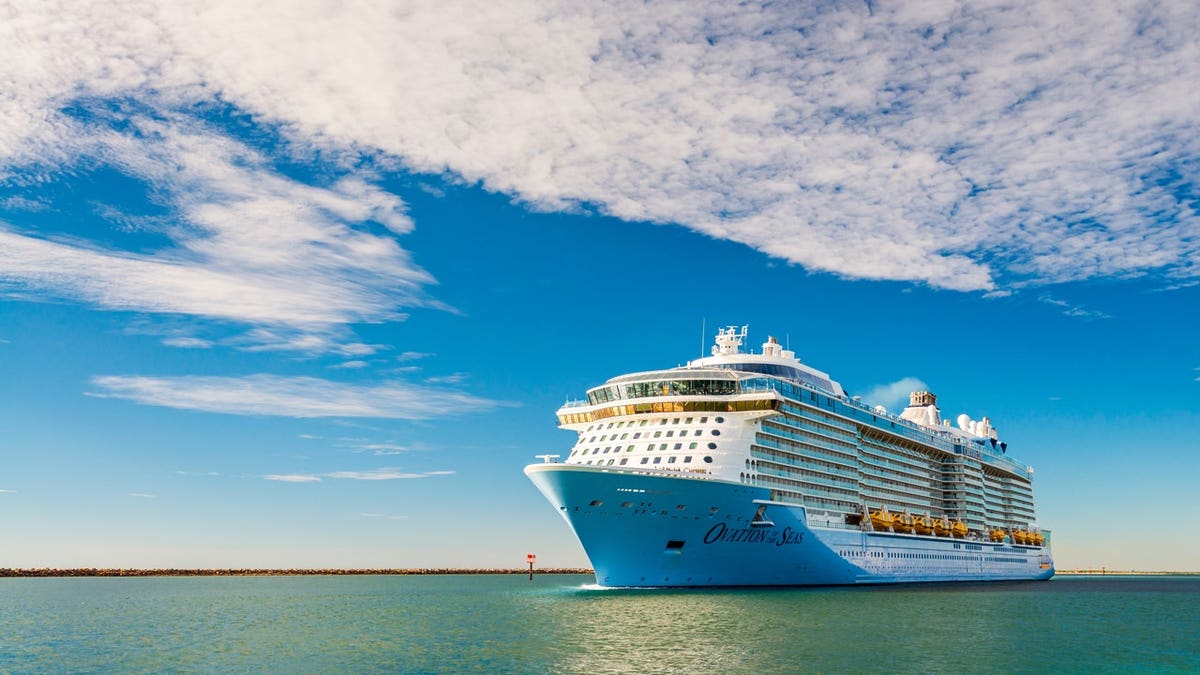
Greek authorities reportedly deployed a Coast Guard vessel and military helicopter to search for a woman who went overboard from a Royal Caribbean cruise ship. (moisseyev/Getty Images)
Fox News Digital reached out to Royal Caribbean for comment.
The incident follows a similar stunt last year when a man jumped off Royal Caribbean’s Rhapsody of the Seas in San Juan, Puerto Rico, in an attempt to evade nearly $17,000 in gambling debt.

A 44-year-old woman reportedly went overboard from Royal Caribbean’s Odyssey of the Seas while the cruise ship was traveling from Greece toward Italy. (Gerard Bottino/SOPA Images/LightRocket via Getty Images)
The passenger, Jey Gonzalez-Diaz, survived the jump and was detained by U.S. Customs and Border Protection officers.
cruises, oceans, europe, travel
INTERNACIONAL
Mató a su compañero de celda para ser condenado a muerte y sorprendió con sus últimas palabras antes de ser ejecutado
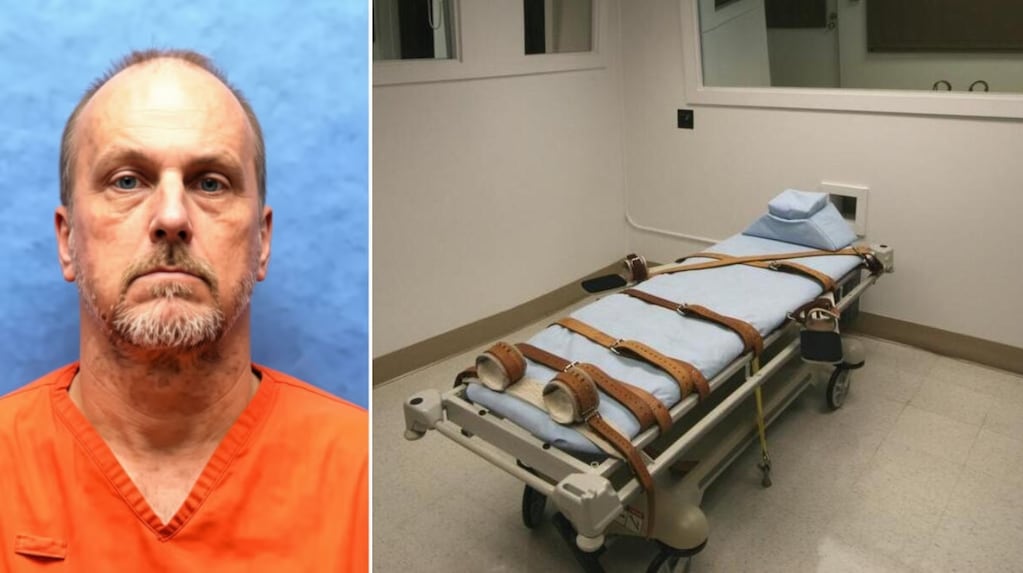
Florida llevó adelante este martes la ejecución de James Robertson, un recluso de 63 años. En 2008, el hombre había asesinado a su compañero de celda con el objetivo de ser condenado a muerte.
El procedimiento se realizó mediante inyección letal en la Prisión Estatal de Florida, cerca de Starke, y se concretó a las 12.32 horas locales.
“La ejecución se desarrolló sin incidentes”, declaró Jordan Kirkland, portavoz del departamento penitenciario estatal.
Qué crimen cometió James Robertson
Robertson había sido sentenciado por estrangular a Frank Hart en diciembre de 2008, mientras cumplía condenas por otros delitos en una prisión del suroeste del estado de Florida.
Según los documentos judiciales, el propio Robertson había confesado que cometió el crimen para obtener una sentencia de muerte y evitar pasar el resto de su vida en prisión.
Tras declararse culpable, renunció a apelar y reiteró ante el juez su deseo de que se cumpliera la condena.
Las sorprendentes últimas palabras de Robertson
Según Gulf Coast News Now, cuando le preguntaron a Robertson si deseaba pronunciar unas últimas palabras, contestó con un soprendente “No, estoy bien”.
La hija de Hart contó que su padre había sido asesinado tan solo ocho días antes de su fecha prevista de liberación.
“Cuando te arrebatan a un ser querido de una manera tan violenta, el mundo sigue girando, aunque sientas que una parte del tuyo se detuvo”, aseguró. “Otros siguen con sus vidas, pero vos cargás con tu pérdida cada día”.
Ya van 17 ejecuciones en lo que va del año en Florida
Con esta ejecución, Florida alcanzó las 17 muertes en lo que va de 2026, luego de cerrar 2025 con un récord de 19 ejecuciones, la cifra más alta desde que se restableció la pena capital en 1976.
El Estado de Florida, gobernado por Ron DeSantis, concentra más de la mitad de las 31 ejecuciones realizadas este año en los Estados Unidos.
DeSantis suspendió otra ejecución prevista para el mismo día
El martes también estaba programada la ejecución de William Lee Thompson, de 74 años, pero el gobernador DeSantis retiró la orden.
La defensa de Thompson argumentó que el preso padece demencia y otros problemas graves de salud. El mandatario primero suspendió la ejecución para una evaluación psiquiátrica y luego retiró la orden, sin dar explicaciones públicas.
Florida tiene previstas otras dos ejecuciones, el 20 de octubre y el 5 de noviembre. Si se concretan, igualará el récord de 19 ejecuciones alcanzado el año pasado.
El caso de Tennessee reavivó el debate sobre la pena de muerte
La muerte de Robertson se produjo en medio de la controversia nacional por la fallida ejecución de Christa Pike en Tennessee.
El 30 de septiembre, Pike, de 50 años, sobrevivió a dos dosis de pentobarbital durante un intento de ejecución por inyección letal, y debió ser trasladada de urgencia a un hospital. Tras su asombrosa recuperación, regresó a prisión.
El gobernador de Tennessee, Bill Lee, ordenó una investigación independiente y suspendió las ejecuciones pendientes en el estado.
El episodio, considerado sin precedentes en la era moderna de la pena capital en los Estados Unidos, intensificó el debate sobre los protocolos de ejecución y las condiciones en que se aplican.
Protestas y reclamos contra la pena capital en Florida
Mientras tanto, decenas de líderes evangélicos latinos se movilizaron este martes en Tallahassee, la capital de Florida, para pedirle a DeSantis que suspenda las ejecuciones. La organización Mission Talk entregó una carta firmada por más de 70 obispos, pastores y responsables de iglesias latinas que rechazan la pena de muerte.
El fundador de Mission Talk, Agustín Quiles, acusó al gobernador de convertir a Florida en la capital de las ejecuciones del país, mientras otros estados se alejan de esta práctica.
Estados Unidos, pena de muerte, florida

Alejandro López, el juez que absolvió a los gremialistas, llegó al puesto gracias a un acuerdo de la Legislatura y es calificado de “garantista”

¿Dónde ver EN VIVO y ONLINE el Inter Miami vs New York City FC por la MLS?

¿Por qué son un boom los grandes locales comerciales que seducen a niños y adolescentes?

Juan Pablo Valdés recorrió las zonas inundadas en Corrientes y reunió al Comando Operativo de Emergencias

Salieron a la luz las pericias psiquiátricas de Darío Giordano en la causa por la violencia a sus hijos: “Desprecio, maltrato, es un…”

Poll: Cost-of-living concerns weigh on GOP in midterms

Corinthians presentó a un técnico europeo para salvarse del descenso

Andrea Rincón recordó el quiebre de su amistad con Julieta Ortega: «No se remontó»

Anticipan más crédito y mayor flujo en acciones con reforma del mercado de capitales