INTERNACIONAL
Por primera vez desde la captura de Nicolás Maduro, Donald Trump se reunió con la mandataria venezolana Delcy Rodríguez

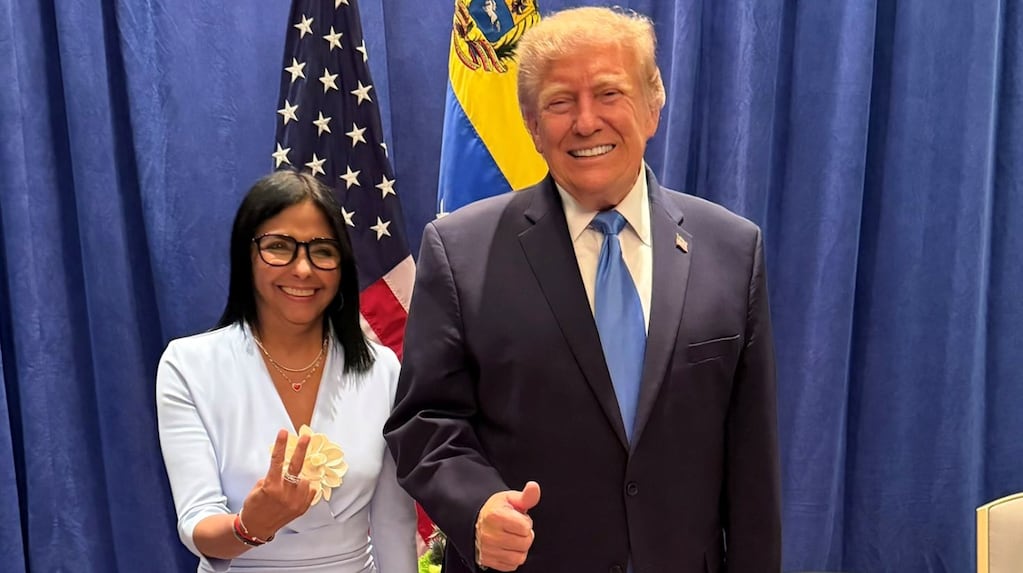
El presidente de Estados Unidos, Donald Trump, se reunió este martes con la mandataria venezolana Delcy Rodríguez en el primer encuentro entre ambos desde la captura de Nicolás Maduro por fuerzas estadounidenses en enero, un hecho que derivó en la instalación de un gobierno supervisado por Washington en el país sudamericano.
“Sostuvimos una histórica reunión con el presidente de los Estados Unidos, Donald Trump, con quien conversamos sobre el fortalecimiento de la relación bilateral”, escribió Rodríguez en su cuenta oficial de X.
La mandataria agregó que temas como cooperación en áreas estratégicas como energía, minería y seguridad fueron el centro de la conversación durante el encuentro, que se realizó en el hotel Lotte New York Palace, en el marco de una recepción ofrecida por Trump a líderes extranjeros con motivo de la Semana de Alto Nivel de la ONU.
Además de ambos mandatarios, participaron el secretario de Estado de EE.UU., Marco Rubio; el secretario del Tesoro, Scott Bessent; la jefa de gabinete de la Casa Blanca, Susie Wiles, y el subjefe de gabinete Stephen Miller.
El encuentro se celebró a puerta cerrada y sin acceso de la prensa, a diferencia de otras reuniones mantenidas por Trump en Nueva York, como la que sostuvo con el presidente ucraniano, Volodímir Zelenski.
La cita se produjo poco después del controvertido acuerdo por el que Venezuela cedió a Estados Unidos parte de sus reservas petroleras y a escasos kilómetros de la prisión neoyorquina donde Nicolás Maduro permanece recluido, acusado de narcotráfico.
Se trata del primer encuentro entre un presidente estadounidense y un gobernante venezolano en más de once años, desde la breve reunión que mantuvieron Barack Obama y Nicolás Maduro durante la Cumbre de las Américas de 2015, celebrada en Panamá.
La principal muestra del acercamiento entre Washington y Caracas se produjo recientemente con el anuncio de un acuerdo petrolero que permitiría a Estados Unidos controlar una quinta parte de las reservas de crudo venezolanas.
El pacto ha suscitado recelos entre sectores que consideran que al Gobierno de Trump solo le interesa el petróleo y que no impulsa activamente una transición democrática en Venezuela.
Durante su estadía en Nueva York, los representantes venezolanos mantuvieron reuniones vinculadas con los sectores energético y minero, además de conversaciones sobre financiamiento y deuda con organismos multilaterales y empresas privadas. Rodríguez también se reunió con autoridades del Banco Interamericano de Desarrollo (BID), que trabaja en la aprobación de un préstamo de 2500 millones de dólares para Venezuela.
La relación entre Trump y Rodríguez se consolidó en los últimos meses en torno a acuerdos económicos y energéticos. Sin embargo, la estrategia de Washington ha sido cuestionada por sectores opositores venezolanos y organizaciones de la diáspora, que sostienen que la Casa Blanca relegó las demandas de elecciones libres y el respaldo a la oposición encabezada por María Corina Machado para priorizar entendimientos vinculados al petróleo y las inversiones.
Horas antes de la reunión, Trump defendió esa política durante su discurso ante la Asamblea General de la ONU. Allí calificó a Maduro como un “dictador fuera de la ley”, destacó la liberación de cientos de presos políticos desde su detención y presentó la operación que llevó a su captura como una demostración de la disposición de Estados Unidos a utilizar su poder militar para proteger sus intereses en el hemisferio occidental.
El mandatario también elogió el acuerdo petrolero firmado el mes pasado con Caracas y reiteró su intención de impulsar inversiones por hasta 100.000 millones de dólares en la industria energética venezolana.
Maduro












INTERNACIONAL
Varios funcionarios de Estados Unidos viven con miedo por las amenazas anónimas que reciben
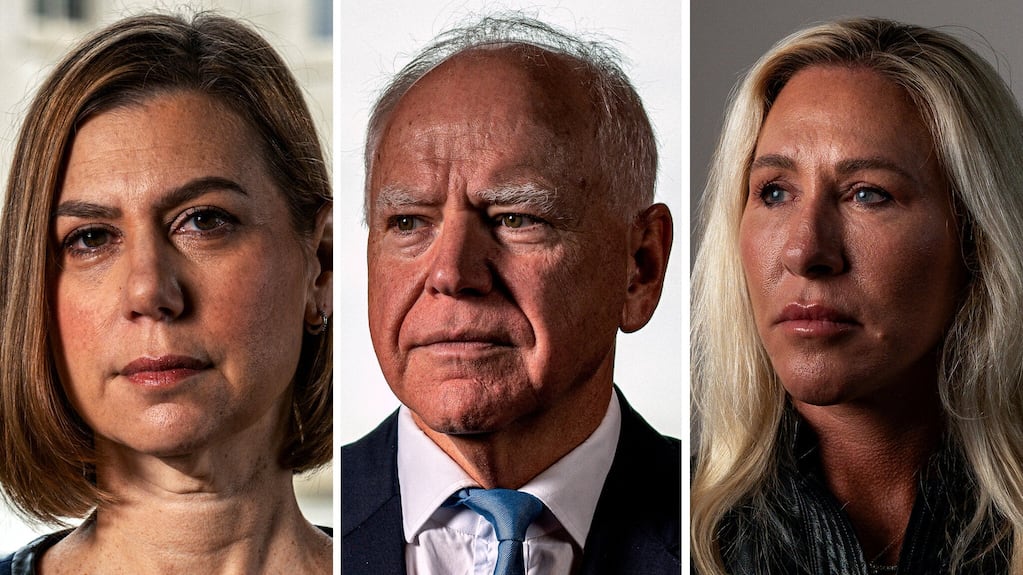
En enero, una persona empezó a dejar amenazas en los buzones de voz de algunos miembros del Congreso: “Quiero ver su garganta cortada de oreja a oreja”.
Otra persona dejó una amenaza directa para un senador estadounidense: “Te voy a asesinar, y voy a empezar por tus hijos”.
Un fiscal general estatal recibió esta misiva de tres palabras: “Bang, bang, bang”.
Ocupar un cargo público en Estados Unidos es peligroso. Desde el gobierno estatal y local hasta el Congreso, un torrente interminable de amenazas violentas inunda los buzones, las oficinas, los correos de voz y los mensajes de texto de quienes gobiernan el país. Miles de servidores públicos viven, trabajan y, en las últimas semanas de la temporada electoral, hacen campaña en un estado de miedo.
Y la situación está empeorando, dijeron los funcionarios en decenas de entrevistas.
Una investigación de The New York Times que examinó cientos de registros obtenidos a través de solicitudes de la Ley de Libertad de Información, documentos judiciales y bitácoras policiales ha descubierto que, durante un periodo de dos años desde 2024 hasta agosto de este año, miles de amenazas violentas inundaron de formas sin precedentes las vidas de los funcionarios electos.
Algunas amenazas eran vagas; otras, aterradoramente específicas. Prometían tortura, apuñalamientos, violación y asesinato. Se dirigían a republicanos y demócratas por igual, y a una variedad de funcionarios, desde secretarios de condado hasta senadores de Estados Unidos. Iban contra cónyuges, padres, hermanos e hijos.
Al menos 44 gobernadores, así como su personal y familias, han sido objeto de amenazas violentas en los últimos dos años, según descubrió la investigación del Times. Eso también es cierto para al menos 70 de los 100 senadores del país, y al menos 185 miembros de la Cámara de Representantes, casi la mitad de sus integrantes. Más de la mitad de los secretarios de Estado del país, la mayoría de los cuales fungen como los principales funcionarios electorales de sus estados, han recibido amenazas de violencia.
La violencia real también se disparó en ese periodo: los intentos de asesinato contra Donald Trump, el homicidio de Charlie Kirk, el asesinato de la líder legislativa Melissa Hortman y de su esposo en Minnesota, y el ataque con bombas incendiarias contra la casa del gobernador Josh Shapiro en Pensilvania. Para muchos funcionarios electos, esta escalada es un testimonio sombrío de la toxicidad de la retórica violenta y de cómo esta puede sacudir las instituciones democráticas del país.
Las amenazas también han transformado vidas privadas. Decenas de funcionarios han fortificado sus casas, instalado cámaras y contratado guardias de seguridad privada, a menudo pagando de su propio bolsillo. Han cambiado sus rutinas cotidianas, cambiado a sus hijos de escuela y limitado sus compras del supermercado a determinados horarios y lugares. Han eliminado de internet información personal sobre ellos y sus seres queridos.
Algunos de ellos han cambiado lo que dicen en público y, en casos raros, la manera en que gobiernan. Algunos, incluidos miembros del Congreso, han renunciado. A ambos partidos se les ha complicado reclutar candidatos, en especial mujeres.
Y combatir las amenazas violentas contra funcionarios es una tarea difícil. La revisión que hizo el Times de los datos de los tribunales federales de los últimos dos años encontró solo 53 casos en los que se acusó a individuos de amenazar a funcionarios públicos, excluyendo al presidente.
La imprecisión de las leyes estatales y federales, así como las protecciones a la libertad de expresión, pueden dificultar los procesos judiciales. Las cartas anónimas y los nombres de usuario pueden ser difíciles de rastrear. El simple volumen de las amenazas puede hacer que dar con los responsables sea prácticamente imposible.
Esta nueva normalidad también puede medirse en dólares gastados. En el ciclo electoral 2017-2018, los candidatos a cargos federales gastaron aproximadamente 6 millones de dólares en artículos relacionados con la seguridad, según los registros de financiación de campañas. En el actual ciclo de elecciones de mitad de mandato, para el 1 de agosto los candidatos ya habían gastado al menos 25 millones de dólares, con el impulso final de las elecciones generales aún por venir. Eso excluye lo que muchos funcionarios gastan de sus propios bolsillos.
data-cc-nyt
INTERNACIONAL
Iowa Dem Senate candidate says he’s too busy campaigning to attend all state House votes
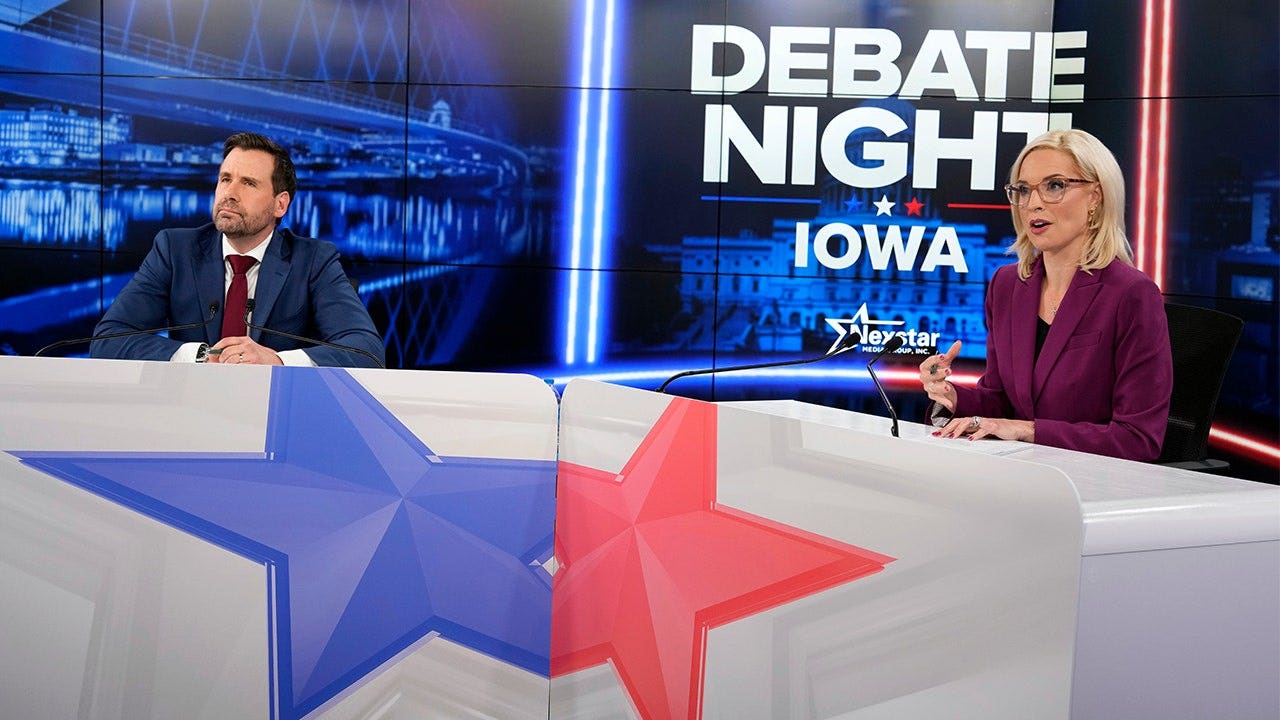
Democratic Iowa State Rep. Josh Turek defended his attendance record after being called out by his opponent, Republican Rep. Ashley Hinson, R-Iowa, during a Tuesday night debate for the state’s open Senate seat.
Hinson remarked on Turek’s absences while responding to a question posed to both candidates about Iowa’s rising cancer rates.
«You have to show up to vote for things like pediatric cancer research, and I’ve invested in legislation to make sure that we’re redirecting those resources to get to where it needs to go to help get to the bottom of this cancer crisis,» Hinson said.
As Digital first uncovered, Turek missed 261 votes in Iowa’s state legislature from Jan. 12, 2026, through May 3, representing nearly 58% of the total votes during that time.
The debate’s moderator asked Turek directly why he missed the votes.
DEM SENATE HOPEFUL RIPPED AS ‘ABSENTEE LEGISLATOR’ AFTER MISSING NEARLY 60% OF VOTES
«I have gone out there, and I have met with Iowans all over the state, all 99 counties, hundreds of public forums,» Turek responded.
POLL: TUREK, HINSON IN CLOSE IOWA SENATE RACE
«Meanwhile, Ashley Hinson, since she’s decided to run for U.S. Senate, has not done one in-person town forum. Also, in my first three years in the legislature, [I had] more than a 90% attendance record,» Turek continued.
«I want to ask again, though, why did you miss those votes?» the moderator repeated.
MEDIA NARRATIVE PREDICTING BLUE WAVE IN KEY BATTLEGROUND STATE NOT MESHING WITH LOCAL REPUBLICANS: ‘FIRED UP’
«I’m out campaigning. I’m out meeting Iowans all over all 99 counties. I’ve done hundreds of in-person town halls. Meanwhile, Ashley Hinson, since she’s running for the U.S. Senate, has not done a single in-person town hall,» he said.
Hinson objected to the notion that she hasn’t done any town halls during the campaign cycle.
POLL: A CLOSE SENATE CONTEST IS BREWING IN IOWA
«I’ve done more town halls than the percentage of time he showed up to work this year. 42% of the time is all Rep. Turek showed up to work this year. That’s two out of every five days of work,» Hinson said.
«Iowans, if you’re watching tonight, you should know if you don’t show up to work two out of five days, you’re not getting a promotion. You’re getting fired. I am proud of my bipartisan record working with both parties to get things across the finish line. I rank in the top 20% of bipartisan lawmakers in Congress and I have a 99% attendance record even while running a statewide campaign,» she concluded.
OBAMA ENDORSES DEMOCRATIC IOWA STATE REP RUNNING FOR US SENATE AGAINST TRUMP-BACKED HOUSE REPUBLICAN
Turek, before the moderator moved on, chimed in, adding, «She also missed 193 votes.»
A spokesperson for the Hinson campaign clarified to Digital that the 193 votes Hinson missed accounted for her entire time in Congress, while the 261 votes Turek missed were in the 2026 legislative session alone.
IOWA GOP GOVERNOR NOMINEE RECOUNTS VIRAL CLASH THAT PUT OBAMA ON THE SPOT AT 2009 TOWN HALL
The Hinson campaign also disputed the idea that she hasn’t held any town halls.
«Since being elected to Congress, Ashley Hinson has held 47 in-person town halls and more than 30 telephone town halls — speaking directly to Iowans about the issues that matter most to them,» Billy Fuerst, the Hinson campaign communications director, told Digital.
TRUMP-BACKED IOWA US SENATE HOPEFUL SAYS IRAN WAR MUST ‘BE BROUGHT TO A SUCCESSFUL AND IMMEDIATE END’
«Ashley has a 98.8% lifetime voting record while Josh Turek registered a 42% voting record in the State House this year. Ashley missed 16% (94 of 553) of committee amendment votes over the course of her congressional tenure, but has been present for all final passage votes (final passage votes include the amendment language) in her time on the Appropriations Committee — 70 total bills since 2021,» Fuerst concluded.
Rep. Turek and his campaign did not immediately respond to Digital for comment.
Digital’s Leo Briceno contributed to this report.
politics, senate, midterm elections, iowa, democratic party, republicans
NEWYou can now listen to Fox News articles!
The entire Horn of Africa region is said to be on a knife’s edge. As explosions reportedly claimed to be caused by drones hit Ethiopia’s capital city in early October, the U.S. Embassy in Addis Ababa warned U.S. citizens of the danger of «long-range attacks.»
Analysts say there’s a high probability that Ethiopia and Eritrea are about to erupt in a new war, with worrying regional backing for both sides.
Former CIA analyst and National Security Council Africa Director Cameron Hudson says the Trump administration needs to become more involved. He told Fox News Digital, «Regional leaders will say privately that they don’t want a regional war. But with so many armed actors and so much meddling going on in each other’s countries, a regional conflagration becomes increasingly likely. It is this kind of miscalculation that the Trump administration needs to be working now to guard against.»
EXCLUSIVE: TRUMP ENVOY BLASTS SOUTH AFRICA OVER HATEFUL ‘KILL’ CHANT, SAYS COUNTRY IS DRIFTING TOWARD US FOES
The U.S. Embassy in Addis Ababa took to its website to caution Americans in Ethiopia that it «is aware of reports of possible long-range attacks directed at Ethiopian military installations on several instances in October of this year. U.S. citizens should accordingly exercise caution and follow the advice of local authorities.»
The Embassy also hit out at reported disinformation, «some social media accounts contain false and misleading reports about the security situation in Ethiopia. U.S. citizens are urged to verify information using multiple sources or reliable information.»
Indeed, although explosions in and around Addis Ababa, mainly at military installations, can be confirmed as having taken place, it cannot be established that the frightening spectacle of drones crashing into buildings in a major African city which houses the headquarters of the African Union happened.
Requests for comment to the Ethiopian government were not returned.
Analysts say there is a high probability that Ethiopia and Eritrea are about to erupt in a new war. (Getty Images)
TRUMP GETS MAJOR WIN AGAINST CHINA IN AFRICAN RARE EARTH MINERALS RACE
Blen Mamo, executive director of the Ethiopian Horn Review think-tank, told Fox News Digital this is potentially a worrying development. «If identified as an aerial or drone attack, they exceed the capabilities of Ethiopia’s domestic insurgent groups, confirming Ethiopia’s allegation of foreign state involvement.»
The rebel groups opposing Ethiopia’s government have joined together to form the Ethiopian Peoples’ Forces Alliance for Survival. This coalition claimed responsibility for the Addis Ababa attacks, stating they used drones.
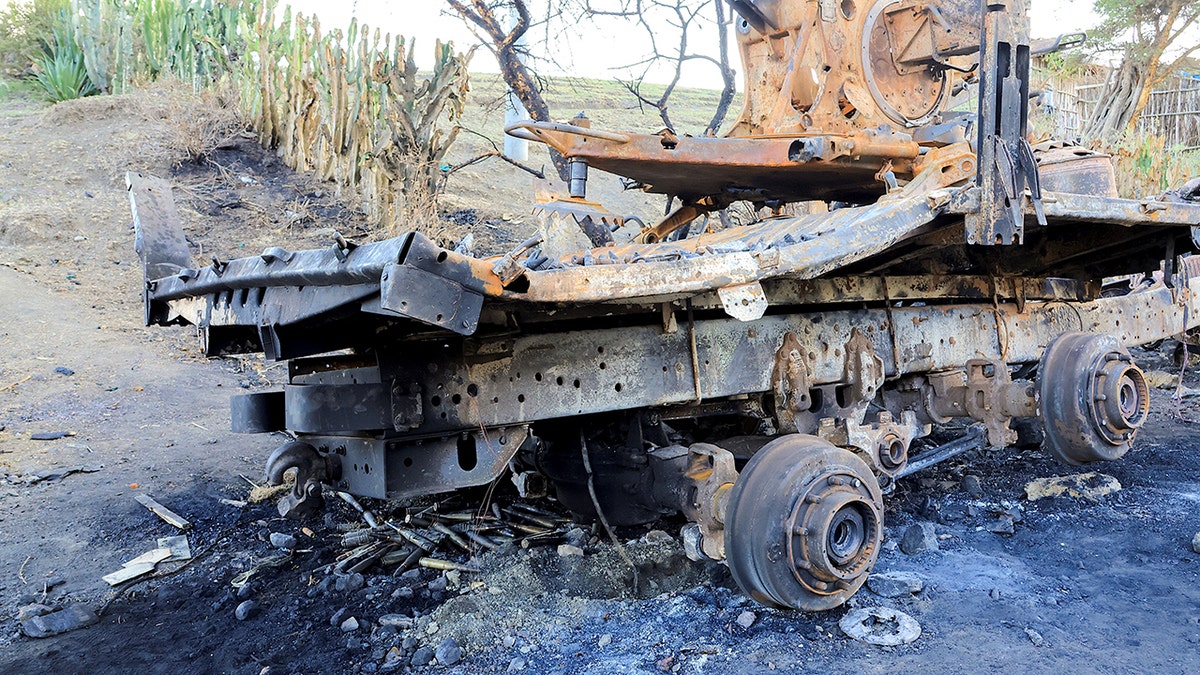
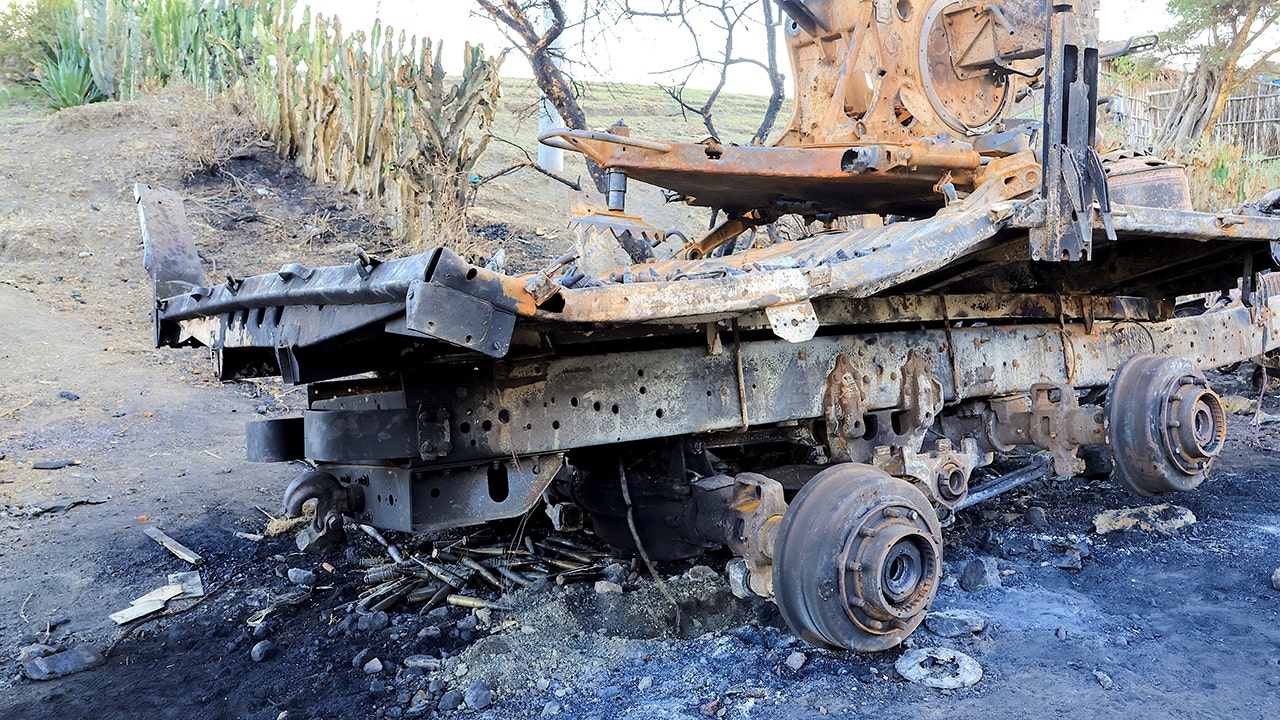
Destroyed ammunition lies on the ground under the charred wreckage of an abandoned truck damaged by a drone strike during fighting between the Ethiopian National Defense Force (ENDF) and the Tigray People’s Liberation Front (TPLF) forces in Adi Mesno, Southern Tigray region, Ethiopia, Oct. 9, 2026. (Reuters)
Dr. Jalale Getachew Birru, regional expert of the U.S.-based Armed Conflict Location and Event Data research group, is also concerned about a new phase of conflict using drones. Birru told Fox News Digital, «should the Alliance for Survival possess drone capabilities, it could fundamentally alter the dynamics of the conflict, refocusing strategic control on aerial dominance.»
In early October, Ethiopian troops pushed out rebel groups who had occupied the Tigrayan capital, Mekelle. This operation ended a four-year-long ceasefire between Ethiopia and Tigray, the northernmost province of Ethiopia.
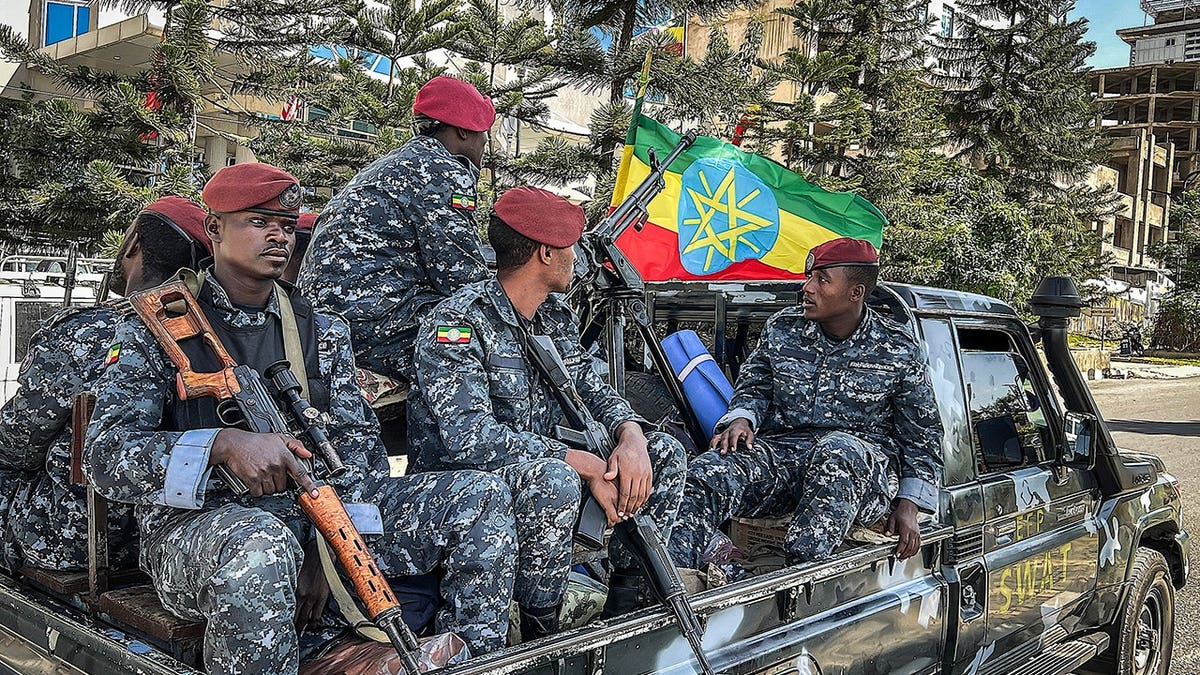
Members of the Ethiopian Federal Police (EFP) patrol aboard a pickup truck as they resumed operations after federal forces pushed back the rebel Tigray People’s Liberation Front (TPLF) in Mekelle on Oct. 9, 2026. Ethiopia and Eritrea each accused the other of starting a war of aggression as an internal Ethiopian conflict threatened to escalate into a regional war. Over the past week, the Ethiopian army has pushed back the rebel Tigray People’s Liberation Front (TPLF) and seized their capital city, Mekelle, with Ethiopian Airlines saying flights to the city would resume from Oct.11. (AFP via Getty Images)
Last week, reports claimed Eritrean troops had entered Ethiopia. Although the allegations have not been independently verified, Fox News Digital has seen multiple videos showing what appears to be large convoys of trucks carrying uniformed soldiers passing through the Ethiopian city of Adigrat. Addis Ababa is said to have subsequently launched drone attacks and pushed the Eritreans back over the border.
The latest fighting was sparked principally by Ethiopia’s statements that it wants to get access to Red Sea ports. The country became landlocked when Eritrea became independent in 1993. In a speech as he was sworn in for a new five-year term Oct. 5, Ethiopian Prime Minister Abiy Ahmed said sea access was «of vital importance to Ethiopia’s civilization.»
He added, «Based on the principle of give and take, we will work diligently to ensure that Ethiopia has an outlet to the sea.»
US VISA CLASH EXPOSES SUDAN’S FORGOTTEN WAR AS FOREIGN POWERS COMPETE FOR STRATEGIC FOOTHOLD
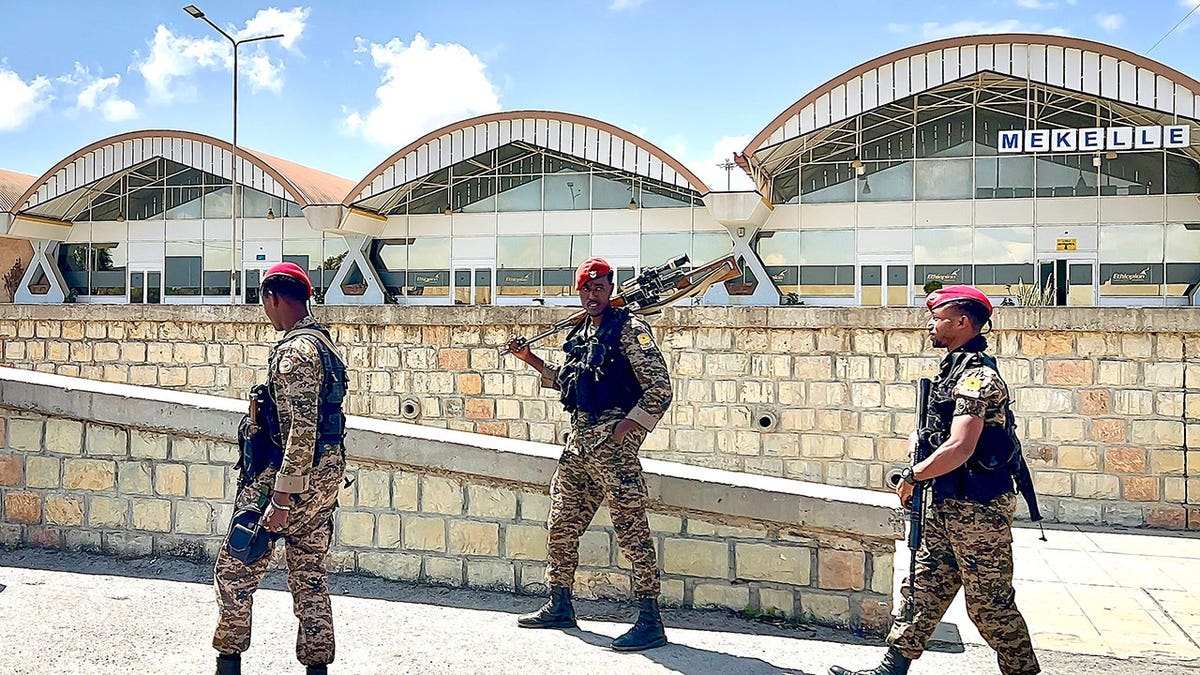
Members of the Ethiopian National Defense Force (ENDF) gather in front of Mekelle Alula Aba Nega International Airport after federal forces retook control of the facility in Mekelle on Oct. 6, 2026. (AFP via Getty Images)
Possible regional expansion of any conflict also comes from the creation of the Grand Ethiopian Renaissance Dam. Egypt and Sudan are at odds with Addis Ababa, after it built the dam across the Blue Nile, affecting access to water to these countries which are downstream. Egypt this month took up a formal position against Ethiopia, when it created a coalition with Sudan, Eritrea and Somalia.
The State Department has been active diplomatically to try and resolve the situation. A spokesperson told Fox News Digital that Undersecretary of State for Political Affairs Allison Hooker met this month with Eritrean Foreign Minister Osman Saleh and spoke with Ethiopian Foreign Minister Gedion Timotheos.
Also, Assistant Secretary for African Affairs Frank Garcia met with Minister Saleh. The spokesperson added, «Both U.S. officials underscored the importance of respecting the sovereignty and territorial integrity for all countries in the Horn of Africa.»
Following these discussions, State Department spokesman Thomas «Tommy» Piggott released a statement, saying, «Increasing cross-border tensions between Ethiopia and Eritrea have the potential to affect the entire region. The Horn of Africa cannot sustain another military conflict and humanitarian crisis. A conflict jeopardizes ongoing U.S. collaboration on shared interests with both countries.»
Piggott added, «We strongly urge Ethiopia and Eritrea to respect the sovereignty and territorial integrity of their neighbors, exercise maximum restraint and return to dialogue and cooperation as agreed in their 2018 peace framework. Peace through dialogue is the only path toward sustainable security, economic growth, and prosperity.»
The Horn Review’s Mamo told Fox News Digital the reality on the ground is «increasingly pointing toward a conflict that may prove impossible to avoid,» and warned of Egypt’s motives: «Parallel military and technical cooperation with Asmara (the capital of Eritrea) also adds strategic depth along Ethiopia’s northern frontier, while Egypt’s expanding role in Somalia and Red Sea port initiatives extends its regional influence.»
«The situation in Ethiopia and in the region is extremely dynamic,» analyst Cameron Hudson told Fox News Digital. Hudson added, «The question remains, given the weakness of the internal (rebel) coalition, will external forces attempt to step in and exert greater leverage against Abiy.»
He continued, «We are seeing Eritrea begin to move forces into Ethiopia, while a coalition of regional states including Somalia, Egypt, Sudan and Eritrea have issued a statement that amounts to a veiled threat against Ethiopia and its regional ambitions to establish a Red Sea naval presence and expand a series of hydroelectric dams on the Nile. The entire Horn of Africa region is on a knife’s edge and it is being made only more complicated by Houthi efforts to shut Red Sea shipping and the war in Iran.»
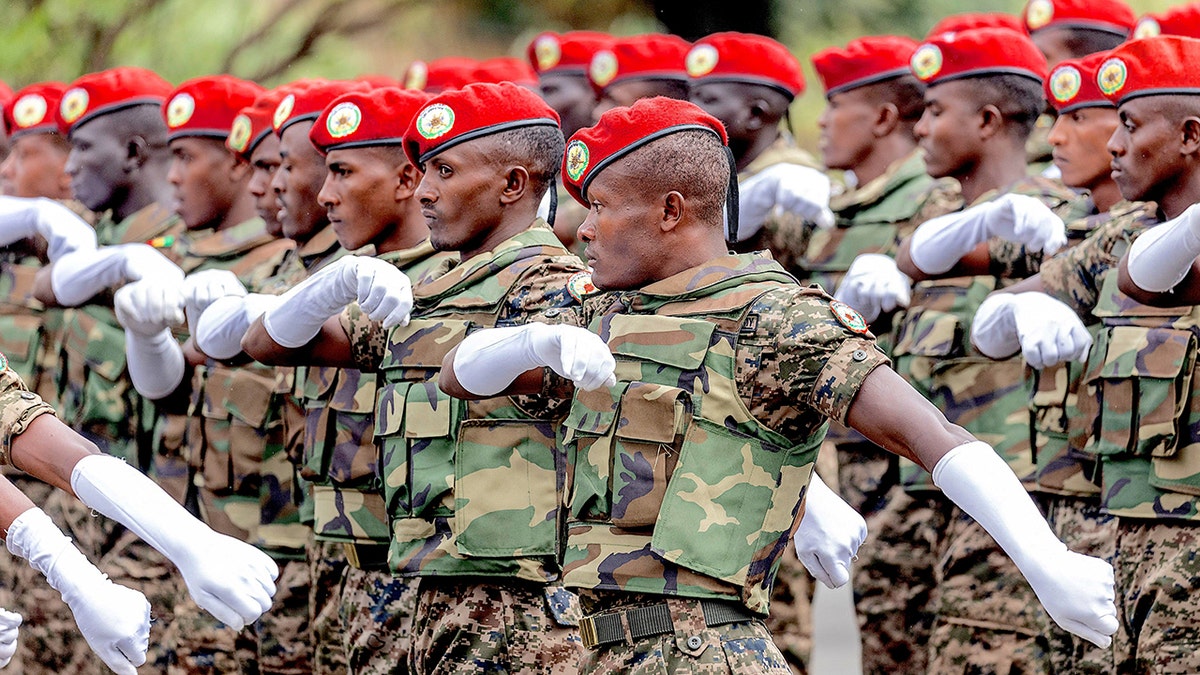
Members of the Ethiopian National Defense Force parade during a celebration of Ethiopian Defense Force day in Addis Ababa, Ethiopia. (Amanuel Sileshi/AFP via Getty Images)
«The risk of regional conflict remains high,» Hudson said. «Egypt would be happy to see Ethiopia bogged down in internal conflict and unable to pursue its ambitions on the Nile and in the Red Sea. Similarly, Sudan hopes that internal conflict in Ethiopia distracts Addis from its support of the rapid support forces militia in Sudan’s war.»
«Local disputes can quickly become regional and international disputes with global consequences very quickly in this corner of the world,» Hudson added, «Closure of the Bab el Mandab Strait, owing to unchecked tensions and violence across the Red Sea, will quickly be felt in the U.S.»
world, africa, wars, geopolitics

Premios Ídolo 2026: Yanina Latorre, Gastón Edul, Zaira Nara y Nico Occhiato, entre los famosos nominados a la gran gala

os empleados avícolas cobrarán sumas extra en cuatro tramos y las incorporarán al sueldo en enero

La FIFA busca justificar el indulto a Balogun tras la llamada de Trump

Autos chinos en Argentina: el caso de Noruega reaviva las alertas por espionaje y riesgos para la seguridad nacional

Varios funcionarios de Estados Unidos viven con miedo por las amenazas anónimas que reciben

El Índice de Incertidumbre Económica de septiembre alcanzó el nivel más alto de 2026, según la UCA

Anticipan más crédito y mayor flujo en acciones con reforma del mercado de capitales

Andrea Rincón recordó el quiebre de su amistad con Julieta Ortega: «No se remontó»

La controversia por la ley de Tierras avivó las diferencias internas en la Corte Suprema

Corinthians presentó a un técnico europeo para salvarse del descenso

 INTERNACIONAL3 días ago
El presidente Mulino confirma una llamada con Delcy Rodríguez tras el terremoto que sacudió Panamá
- POLITICA3 días ago
El Gobierno enfrenta una nueva marcha universitaria en medio del conflicto por la Ley de Financiamiento
- DEPORTE3 días ago
Miguel Merentiel dejó un emotivo mensaje para el Manteca Martínez