INTERNACIONAL
‘Pure hell’ in Moscow as Ukrainian drones strike major refinery supplying capital’s fuel market

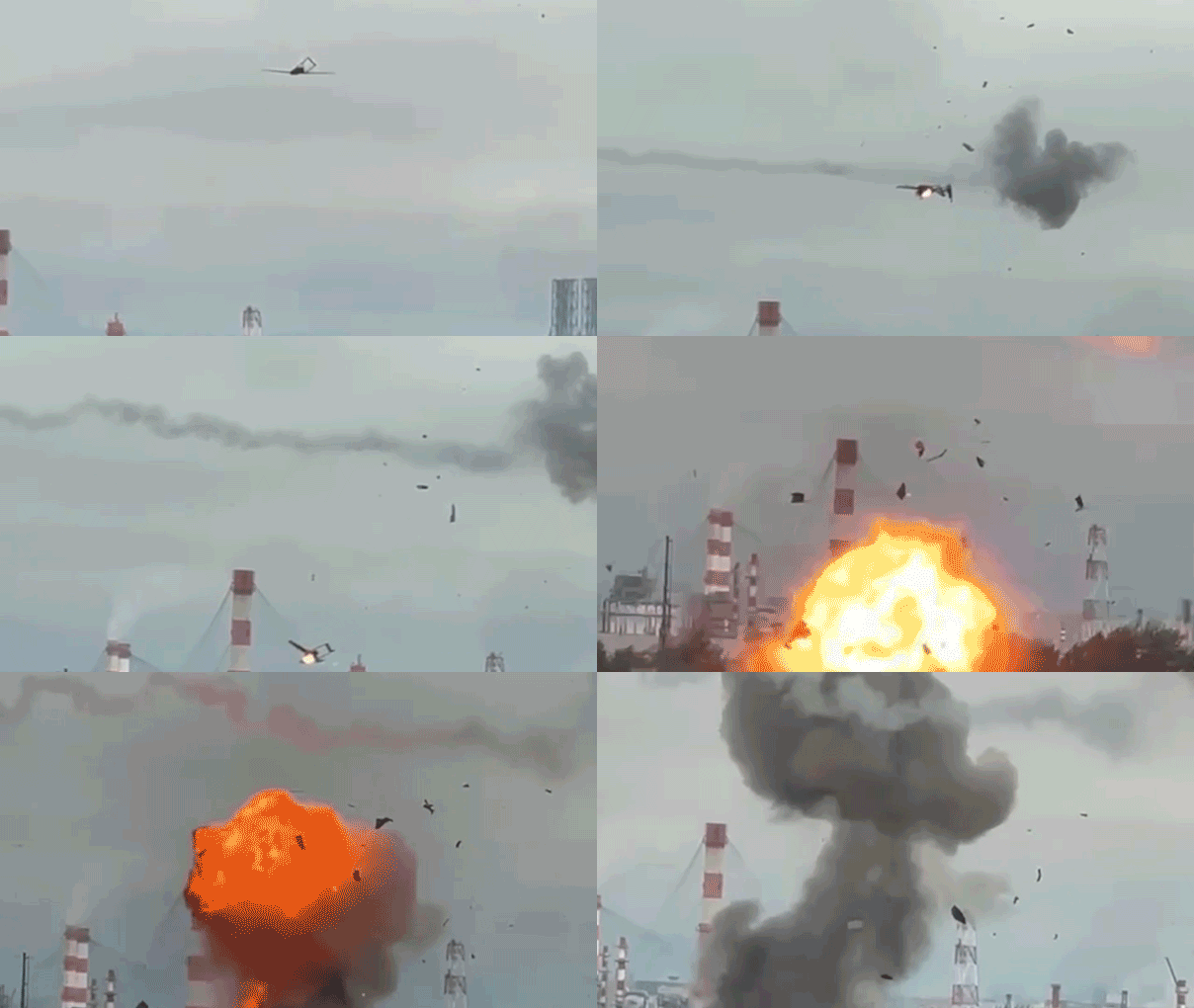
NEWYou can now listen to Fox News articles!
Ukraine launched one of its largest drone attacks on Moscow since the start of Russia’s full-scale invasion, striking a major oil refinery in the Russian capital and sending thick black smoke over parts of the city, according to Russian officials and multiple reports.
The Moscow Oil Refinery in the Kapotnya district — one of the capital region’s key fuel facilities — was hit overnight Thursday, marking the second reported strike on the site in three days. Videos circulating online showed large flames and black smoke rising from the facility, while Russian officials said air defenses intercepted waves of incoming drones.
Kyiv says its strikes deep inside Russia are evidence that it is turning the tide of the war — a message President Volodymyr Zelenskyy took this week to President Donald Trump and other G7 leaders at a summit in France.
The latest strikes underscore a new phase of the war, with Ukraine increasingly able to hit high-value targets deep inside Russia while Moscow struggles to prevent drones from reaching politically sensitive and economically important sites near the capital.
‘A NEW KIND OF WAR’: INSIDE UKRAINE’S HIDDEN FACTORIES MASS-PRODUCING COMBAT DRONES
Smoke and flames rise over Moscow on June 18, 2026, following a Ukrainian drone attack that hit the Kapotnya oil refinery and other targets in the Russian capital. (East2West)
«This is pure hell, I’ve never felt such terror,» one Moscow resident said after the attack, according to East2West News.
Another resident, according to the outlet, asked: «Why won’t this madman stop his crazy and pointless war and end the death and destruction?»
East2West news agency also reported that a heavy security presence was deployed around the Kremlin, with Red Square sealed off and machine-gunners positioned on towers, ramparts and near Bolsheviks’ founder Vladimir Lenin’s Mausoleum.
Moscow Mayor Sergey Sobyanin said air defenses shot down more than 130 drones approaching the city. Russia’s Defense Ministry claimed more than 550 Ukrainian drones were intercepted overnight across several regions, though battlefield claims from either side could not be independently verified.
PUTIN RESIDENCE ATTACK VIDEO SLAMMED AS US OFFICIALS SAY UKRAINE DID NOT TARGET LEADER
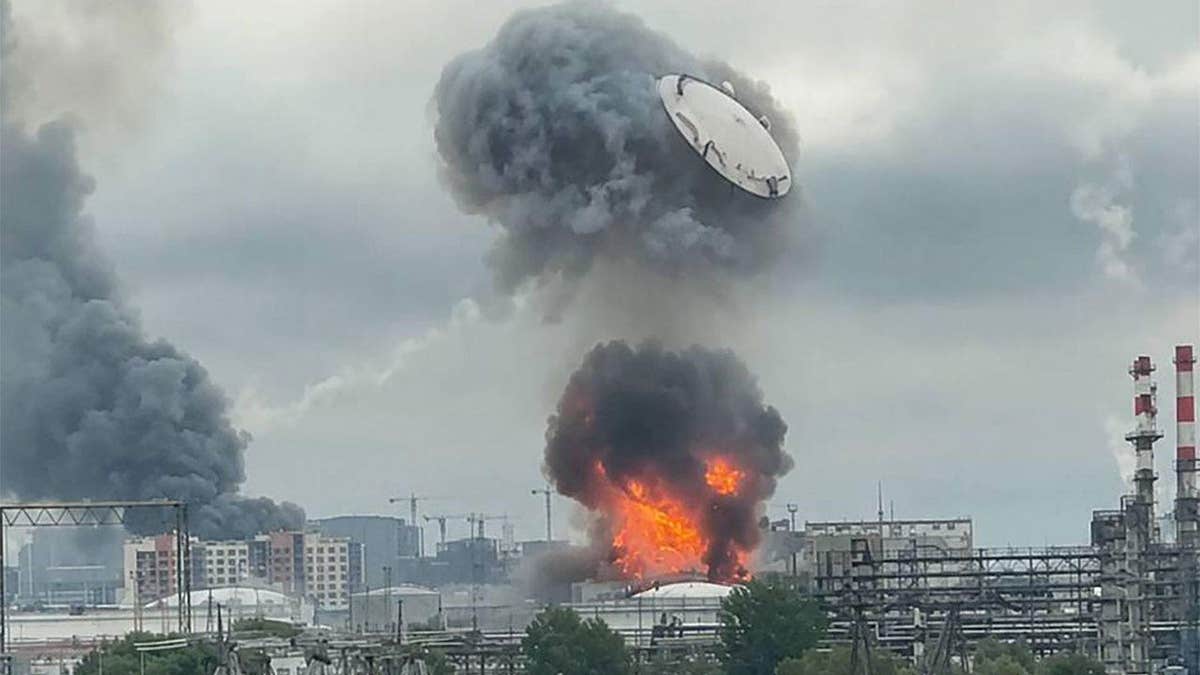
The Moscow Oil Refinery in Kapotnya burns after being hit during Ukraine’s June 18, 2026, drone attack on the Russian capital. (East2West)
The attack disrupted daily life across Moscow, forcing temporary flight suspensions at major airports and traffic restrictions near the refinery. Russian officials said debris also fell near the Sadovod shopping center, damaging a building. The Moscow region governor said 16 people were injured in the broader attack.
Ukraine’s Foreign Minister Andrii Sybiha mocked the confusion in Moscow, writing on X: «One of the most popular questions asked by Muscovites this morning is ‘What is going on?’ I can answer. Your country started a war of aggression against ours. For years, it has been killing our people. Now that you know what’s going on, ask Putin when he is planning to end it.»
The strike appeared to expose vulnerabilities in Moscow’s heavily promoted air defense network, bringing the war deeper into the Russian capital even as the Kremlin continues its long-range missile and drone attacks on Ukrainian cities.
RUSSIA SAYS UKRAINIAN DRONES HIT NUCLEAR POWER PLANT DURING INDEPENDENCE DAY STRIKES
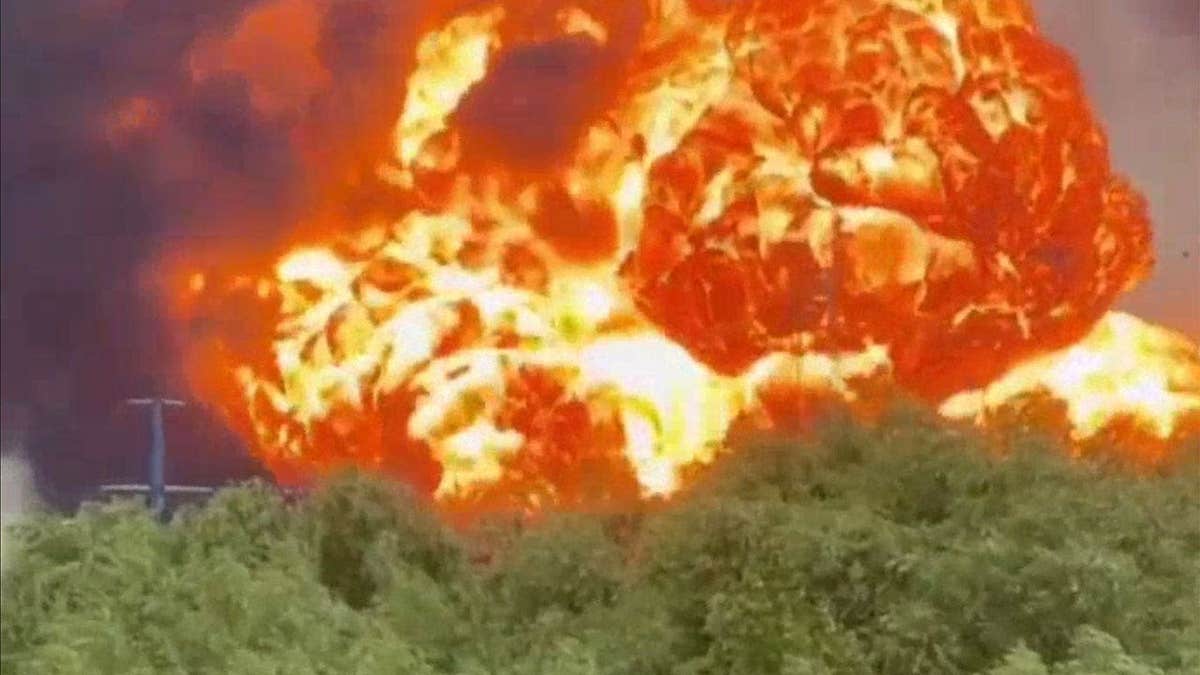
Explosion seen over Moscow after Ukrainian drones struck the Russian capital, including the Kapotnya oil refinery, June 18, 2026. (East2West)
The Kapotnya refinery is a strategically significant target. A prior Ukrainian drone strike damaged part of the refinery in recent days, according to Reuters, and forced a halt in some operations.
East2West reported that the refinery supplies 40% of Moscow’s fuel market and 70% of the surrounding region’s gasoline and aviation fuel needs.
Ukraine increasingly has targeted Russian energy infrastructure in an effort to undermine Moscow’s war machine and increase the domestic cost of the war inside Russia. Kyiv has described such strikes as part of its campaign of «long-range sanctions» against Russia’s oil and military infrastructure.
The Moscow attack came as President Vladimir Putin hosted leaders from the 10-member Association of Southeast Asian Nations bloc in Kazan, Russia. Ukraine also reportedly struck targets linked to Russia’s supply routes to occupied Crimea, including road and rail infrastructure. Ukrainian officials have repeatedly said isolating Crimea is a key military objective as Kyiv seeks to weaken Russia’s hold on the peninsula, which Moscow illegally annexed in 2014.
Russia, meanwhile, continued its own strikes on Ukraine. Ukrainian officials reported Russian attacks on energy and oil facilities in the Poltava region and near Kyiv.
East2West reported that Russia was moving Tu-95MS strategic bombers across the country, raising concerns that Moscow could be preparing another major strike on Ukraine in the coming days.
CLICK HERE TO DOWNLOAD THE FOX NEWS APP
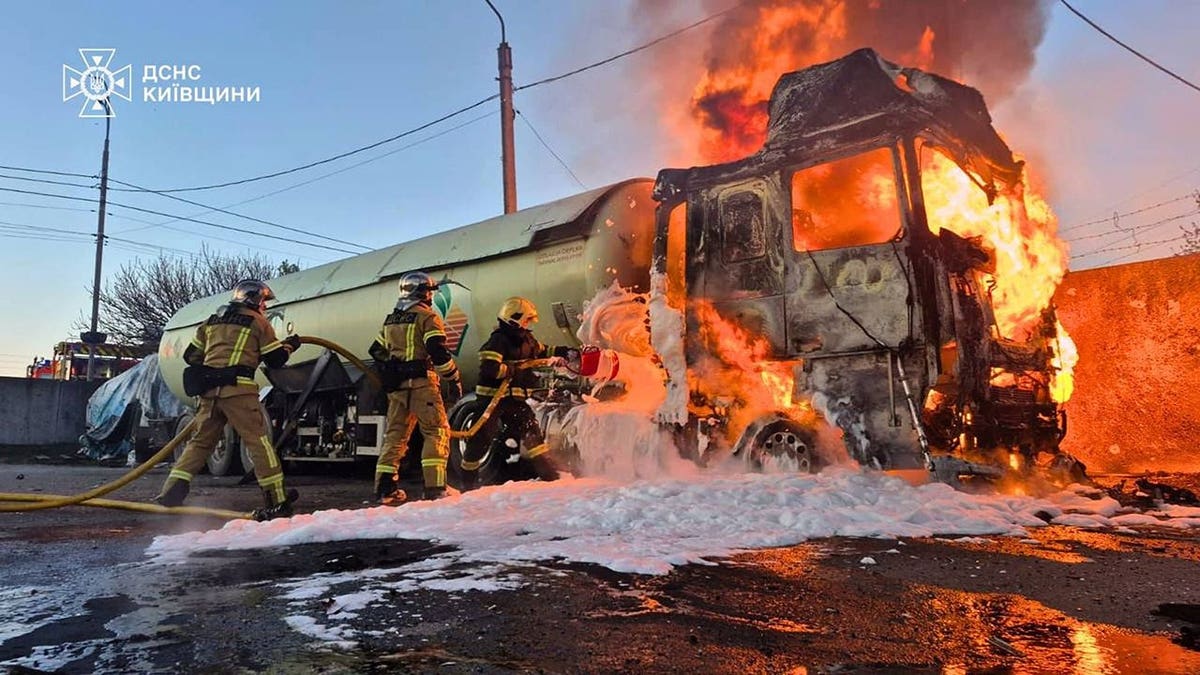
Emergency services personnel work to extinguish a vehicle fire following a Russian drone attack in the Kyiv region, Ukraine, on May 5, 2026. (Ukrainian Emergency Service/AP)
Zelenskyy has said the war could end if Putin agrees to genuine peace talks, while accusing Moscow of prolonging the conflict and using negotiations as cover for continued attacks.
Reuters contributed to this report.
volodymyr zelenskyy, ukraine, vladimir putin, drones, bombings











INTERNACIONAL
Can the ‘best showman in politics’ deliver again? GOP bets on Trump at historic midterm convention
NEWYou can now listen to Fox News articles!
DALLAS — The stakes couldn’t be much higher for President Donald Trump and Republicans.
With less than two months until the midterm elections — and early voting just weeks away — Trump and the GOP descend on Texas starting Wednesday for the party’s first-ever midterm convention, as Republicans fight to keep control of Congress.
The GOP’s playbook for the convention, which comes as Republicans face energized Democrats and political headwinds as they defend their slim House and Senate majorities, is to energize the party’s base and boost turnout in key races that will determine control of Congress.
«We are putting the president on the ballot,» Republican National Committee (RNC) Chair Joe Gruters emphasized in a Fox News Digital interview on the eve of the gathering. «That’s exactly what we’re doing with this midterm convention.»
FIRST ON FOX: WHO’S SPEAKING – AND WHEN – AT THE GOP’S HISTORIC MIDTERM ELECTION
President Donald Trump will speak on both nights of the first ever Republican midterm convention, which kicks off Wednesday in Dallas, Texas (SAUL LOEB / AFP via Getty Images)
Democrats and Republicans traditionally hold large nominating conventions during presidential election years. However, Trump a year ago floated the idea of a similar gathering ahead of the midterms, to showcase the signature policy achievements he and the Republicans in Congress produced since he returned to the White House.
But Republicans are facing a low-propensity problem: MAGA voters who don’t always go to the polls when Trump’s name isn’t on the ballot.
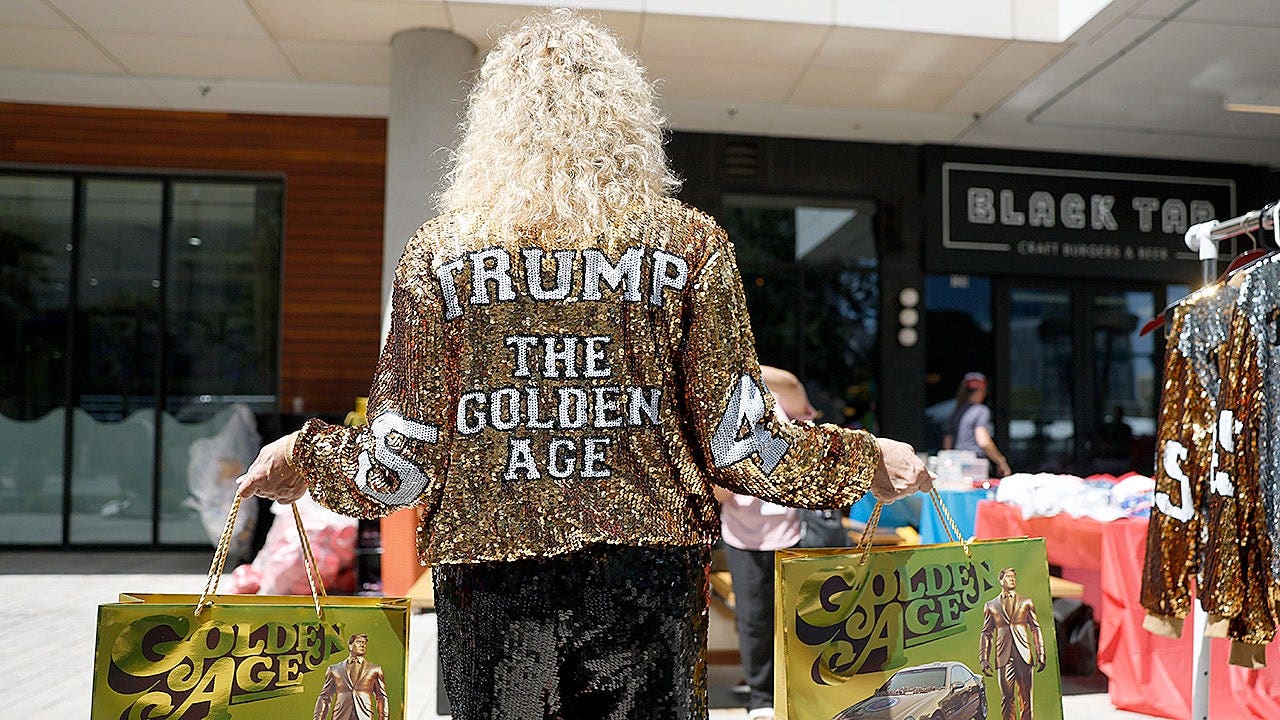
The GOP’s solution: Hold what’s been touted as a «Trumpapalooza.»
«We have the best showman in politics in President Donald J. Trump,» Gruters said. «He is the best vote getter for these little propensity voters. He’s done it three times. He’s going to deliver once again.»
According to a speakers list, which was shared first with Fox News Digital on the eve of the convention, the president will deliver Wednesday’s keynote address, which is tentatively scheduled to start at 9 p.m. ET.
Trump will return on Thursday evening at the American Airlines Center in downtown Dallas to close out the convention, with remarks after Vice President JD Vance gives the second night’s keynote speech.
DEMOCRACY ’26: STAY UP TO DATE WITH THE FOX NEWS ELECTION HUB

The American Airlines Center, as preparations are underway for the Republican National Midterm Convention in Dallas, Texas, U.S., September 7, 2026 ( )
But the GOP is fighting political history, which has traditionally seen the party in power in Washington lose congressional seats during midterm election years. Add to that a challenging political climate fueled by persistent inflation Americans see at the grocery store, high gas prices tied to what polls show is an unpopular war with Iran, and Trump’s negative approval ratings.
Gruters said, «in order to defy history, you’ve got to do things a little bit differently and that’s why we’re doing this Republican convention.»
«We’re going to use him where we can, where it’s going to be advantageous,» Gruters said of Trump. «We think that this midterm convention and what we’re doing over the next couple of days will be just the start of some very exciting things over the next two months.»
Democrats, obviously, see it differently.
«Democrats are going to win back power,» Democratic National Committee (DNC) Chair Ken Martin predicted last month at the party’s summer meeting as he looked towards the midterms.
The DNC, which remains in debt and decided against holding a similar convention, views the GOP gathering as an opportunity to criticize Republicans.
«While working families struggle to make ends meet in Donald Trump’s economy, Republicans are throwing a multi-million dollar party to celebrate Trump’s failing presidency,» Martin argued in a convention eve statement. «Democrats are on the ground talking to voters about how to lower costs, expand affordable health care, and make life more affordable, offering real solutions while Republicans desperately attempt to paper over their billionaire-first agenda.»
Democrats have also spotlighted the sizable number of Republican politicians who are staying away from the Dallas gathering.
Asked about the no-shows, Gruters said, «There’s some people in tight races, they want to stay home. But listen, if you look at our speaker list, we have tons of those toss-up candidates that are here that are going to speak, that understand the value of the messaging and that we could deliver directly to the American people.»
Midterm elections are often a referendum on the party in power, but Republicans aim to use the convention to draw a contrast as they spotlight Democrats’ leftward lurch in this year’s primaries and tie the party to far-left and socialist proposals.
SIGN UP TO GET THE POLITICS NEWSLETTER
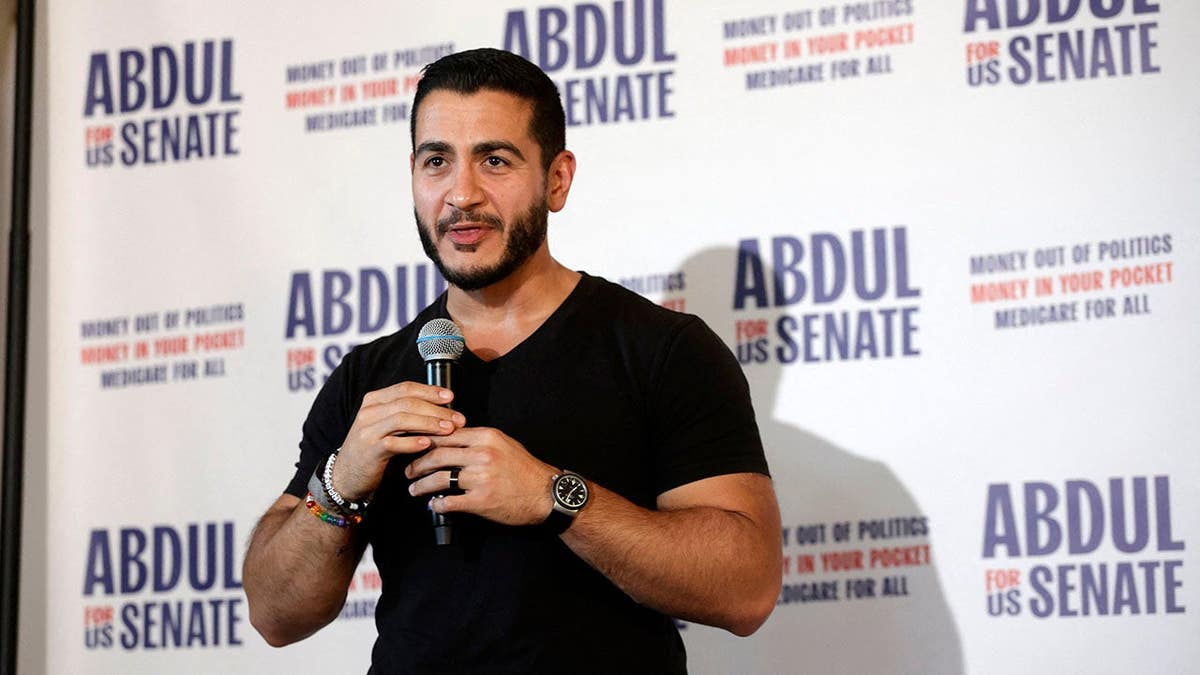
Left-wing Democrat Abdul El-Sayed’s victory in his party’s Senate primary in Michigan is giving Republicans optimism that they’ll flip the crucial Great Lakes battleground seat in the midterm elections. (JEFF KOWALSKY/AFP via Getty Images)
Gruters said speakers at the convention will ask Americans, «Do you want common sense and mainstream, or do you want the extreme left and these radicals that have been elected who fundamentally want to change our country.»
«They want to fundamentally change the way you live at home,» Gruters claimed as he referred to the Democrats.
The other part of the convention gameplan is to showcase Trump’s second-term achievements.
«He delivered for the American worker more so than anybody has over the last five decades,» Gruters claimed. «Things like the Working Family Tax Cuts, the fair trade policies, the $19 trillion in investments that you’re not going to feel right now today, but you will over time. Him constantly going to bat for the American worker, Trump RX accounts… This president understands what it takes and has empathy for what people are going through.»
Also boosting the GOP: Money.
In the midterm battle, the RNC comes into the convention with a major campaign cash advantage over the DNC.
«We’ve been raising a lot of money. We’ve been saving that money,» Gruters emphasized. «Now over the next 60 days you’re going to see us spend that money to make sure we could turn out our voters, to make sure people know exactly where our candidates stand and where the opposition stands.»
republicans elections, donald trump, midterm elections, republican convention, dallas fort worth, texas, politics
INTERNACIONAL
Su exnovio no aceptó la separación y la secuestró: la historia de Eloá, la adolescente asesinada tras cuatro días de cautiverio

Durante cuatro días, una adolescente apareció detrás de una ventana mientras, en la calle, decenas de policías, periodistas y vecinos seguían cada movimiento desde el exterior. En algunas de las imágenes que quedaron de aquellos días se ve a Eloá Cristina Pimentel llorando, asomada al departamento donde estaba encerrada.
Tenía 15 años y llevaba horas retenida por su exnovio, que había irrumpido armado en su casa. Nadie sabía cómo iba a terminar el episodio que había comenzado en Santo André, en el estado brasileño de San Pablo.
Lo que siguió fue un extenso operativo policial, negociaciones televisadas y una toma de rehenes que duró más de 100 horas. El 17 de octubre de 2008, la Policía ingresó al departamento y Lindemberg Alves Fernandes, el secuestrador, disparó contra Eloá y su amiga Nayara Rodrigues da Silva. El desenlace fue fatal.
El secuestro que duró más de 100 horas
Eloá Cristina Pimentel había nacido en Maceió, tenía 15 años y vivía con su familia en Santo André. Era estudiante y llevaba alrededor de tres años en pareja con Lindemberg Alves Fernandes, quien tenía 22 al momento del secuestro.
La relación había comenzado cuando Eloá tenía 12 años y Lindemberg, 19. De acuerdo con testimonios que surgieron durante la investigación y el juicio, el vínculo había atravesado reiteradas discusiones, separaciones y reconciliaciones. La pareja llevaba aproximadamente un mes separada cuando ocurrió el crimen.
En los días previos al secuestro, Lindemberg había intentado retomar la relación, pero Eloá no quería volver con él.
El 13 de octubre de 2008, el joven fue hasta el departamento donde vivía la adolescente y llevó un arma. Ella estaba allí junto a su amiga Nayara y otros dos compañeros de escuela, con quienes realizaba un trabajo.
Poco después de la toma de rehenes, la policía llegó al lugar y comenzó una negociación con Lindemberg. Los dos varones que estaban en el departamento fueron liberados ese mismo día. Eloá y Nayara, en cambio, permanecieron encerradas.
Durante las siguientes horas, el caso adquirió una enorme repercusión en Brasil. Las cámaras de televisión permanecieron frente al edificio mientras los negociadores intentaban conseguir la liberación de las jóvenes.
Lindemberg hablaba con los policías y, en distintos momentos, amenazaba con matar a Eloá y luego suicidarse. Durante el juicio, un integrante del Grupo de Acciones Tácticas Especiales (GATE) declaró que había advertido episodios de violencia contra la adolescente durante las negociaciones.
Después de aproximadamente 59 horas, Lindemberg liberó a Nayara. Sin embargo, un día después ocurrió uno de los momentos más cuestionados de todo el operativo: la adolescente volvió al departamento para colaborar con las negociaciones, a pedido de la policía y luego de que Lindemberg exigiera su presencia.
Una vez dentro, el secuestrador volvió a retenerla y la situación se prolongó hasta el día siguiente. Para entonces, Eloá llevaba más de cuatro días encerrada y el caso se había convertido en uno de los secuestros más extensos registrados en el estado de San Pablo.
El ingreso de la policía y el asesinato de Eloá
La tarde del 17 de octubre, después de más de 100 horas de negociaciones, efectivos del GATE decidieron ingresar al departamento por la fuerza.
La versión policial sostuvo que los agentes escucharon un disparo proveniente del interior de la casa y que esa fue la razón para avanzar con el operativo. La puerta fue volada y los policías irrumpieron en el departamento. En medio de la intervención se produjeron los disparos.
Eloá recibió dos tiros durante el ingreso de los efectivos. Uno de los impactos fue en la cabeza y el otro en la ingle. La adolescente fue trasladada de urgencia al Hospital Municipal de Santo André, donde permaneció internada en estado crítico. Al día siguiente, los médicos confirmaron la muerte cerebral. Ante ese diagnóstico, su familia tomó la decisión de donar sus órganos.

Nayara también resultó herida durante el operativo, pero logró sobrevivir. La joven fue alcanzada por un disparo y trasladada a un centro médico, donde recibió atención por las lesiones. Con el tiempo, se convirtió además en una de las principales testigos del caso y aportó su relato sobre las horas que había pasado cautiva junto a Eloá.
Por su parte, Lindemberg fue detenido dentro del departamento después de que los agentes lograran ingresar al lugar. El joven, que había mantenido a las adolescentes encerradas durante más de cuatro días, fue retirado del edificio por la policía y quedó a disposición de la Justicia.
La investigación y la condena
El operativo quedó bajo cuestionamiento desde el comienzo. Uno de los principales puntos de discusión fue el regreso de Nayara al lugar después de haber sido liberada.
Años después, la Justicia condenó al Estado de San Pablo a indemnizarla por los daños sufridos, al considerar que existió responsabilidad estatal vinculada con la decisión de hacerla volver al cautiverio.
También hubo versiones contrapuestas sobre el momento exacto en que se produjo el disparo que habría desencadenado la intervención policial. La policía sostuvo que había escuchado un tiro antes de ingresar, mientras que el testimonio de Nayara contradijo esa versión.
Sin embargo, la Policía Civil concluyó rápidamente la investigación y acusó a Lindemberg por homicidio doloso calificado, dos intentos de homicidio, disparos de arma de fuego y otros delitos.
El juicio comenzó en febrero de 2012, más de tres años después del crimen. Durante las cuatro jornadas declararon 13 testigos, entre ellos los amigos de Eloá que habían estado en el departamento, sus hermanos, Nayara y policías que habían participado de las negociaciones y del ingreso a la propiedad.
Lindemberg también declaró y reconoció haber disparado contra Eloá durante la irrupción policial, aunque sostuvo que no tuvo intención de matarla. Dijo que creyó que la adolescente intentaría quitarle el arma y que disparó de manera impulsiva. También negó haber querido matar a Nayara.
Leé también: Amenazas, acoso y denuncias cruzadas: la historia detrás del documental sobre la muerte de la esposa de un pastor de EE.UU.
Los jurados no aceptaron esa versión y lo encontraron culpable por el homicidio de Eloá, el intento de homicidio de Nayara y del policía Atos Valeriano, además de los delitos de privación ilegítima de la libertad y disparos de arma de fuego, entre otros.
El 16 de febrero de 2012, la jueza Milena Dias dictó la sentencia: 98 años y 10 meses de prisión, en régimen inicial cerrado. Sin embargo, al año siguiente, el Tribunal de Justicia de San Pablo redujo la pena a 39 años y tres meses tras analizar el recurso presentado por su defensa.
En 2021, Lindemberg obtuvo la progresión al régimen semiabierto, donde permanece actualmente en la Penitenciaría II de Tremembé.
Brasil, secuestro, Femicidio
INTERNACIONAL
Panamá flexibilizará permisos ambientales y podrá restringir el acceso a zonas protegidas por el impacto de El Niño


El Ministerio de Ambiente autorizó una serie de intervenciones extraordinarias para enfrentar inundaciones y la sequía prevista por el fenómeno de El Niño en Panamá.
Las medidas incluyen dragados, construcción de obras en cauces, instalación de puentes modulares, protección de fuentes de agua y rescate de animales y plantas amenazados.
Las disposiciones aparecen en la Resolución DM-0433-2026, publicada el 7 de septiembre en la Gaceta Oficial. El documento desarrolla las acciones ambientales que podrán ejecutarse durante la emergencia nacional y hasta 60 días después de su finalización, con un límite fijado inicialmente para el 30 de junio de 2027.
Una de las medidas de mayor alcance permite que determinadas obras estatales sean ejecutadas sin completar una evaluación de impacto ambiental, siempre que estén directamente vinculadas con la mitigación de los daños.
La excepción incluye trabajos en cauces, dragados y colocación de puentes modulares para restablecer comunicaciones o reducir riesgos.
Esto abre la puerta a retirar sedimentos, árboles, rocas y otros materiales que obstruyan ríos o aumenten el peligro de desbordamientos. También podrían realizarse adecuaciones destinadas a recuperar el flujo del agua y proteger comunidades, carreteras o infraestructuras amenazadas, aunque la resolución no autoriza intervenciones privadas bajo esta excepción.
La exoneración del estudio ambiental no representa un permiso ilimitado. Cada proyecto tendrá que estar relacionado directamente con la emergencia y quedar inscrito ante MiAmbiente.
Las autoridades deberán documentar su descripción, ubicación y entidad responsable, además de mantener controles que permitan revisar posteriormente sus efectos y el cumplimiento de las medidas de protección.
Las direcciones nacionales y regionales también podrán autorizar el aprovechamiento de madera caída como consecuencia del desastre. La medida permitirá retirar y utilizar árboles derribados por inundaciones, deslizamientos u otros eventos, pero exigirá su registro y la emisión de los permisos y las guías necesarias para transportar los productos forestales.

Para evitar que esa autorización sea utilizada como cobertura para la tala ilegal, los puestos de control de los organismos de seguridad verificarán las guías forestales emitidas durante la emergencia.
El uso indebido de estos documentos podrá generar sanciones administrativas, además de responsabilidades civiles o penales, dependiendo de la infracción cometida.
MiAmbiente deberá aplicar medidas especiales en áreas protegidas, fuentes de agua y zonas ambientalmente sensibles. La resolución permite restringir temporalmente el acceso a lugares considerados de alto riesgo o severamente afectados, una decisión que podría alcanzar parques, reservas, nacimientos de ríos y otros espacios vulnerables ante incendios, sequías o deslizamientos.
El documento también ordena priorizar el rescate, traslado, cuidado y protección de especies de flora y fauna expuestas a los efectos del fenómeno climático. Cuando resulte necesario, las autoridades podrán establecer centros temporales de rehabilitación para atender animales afectados y preparar su recuperación o posterior retorno a condiciones seguras.
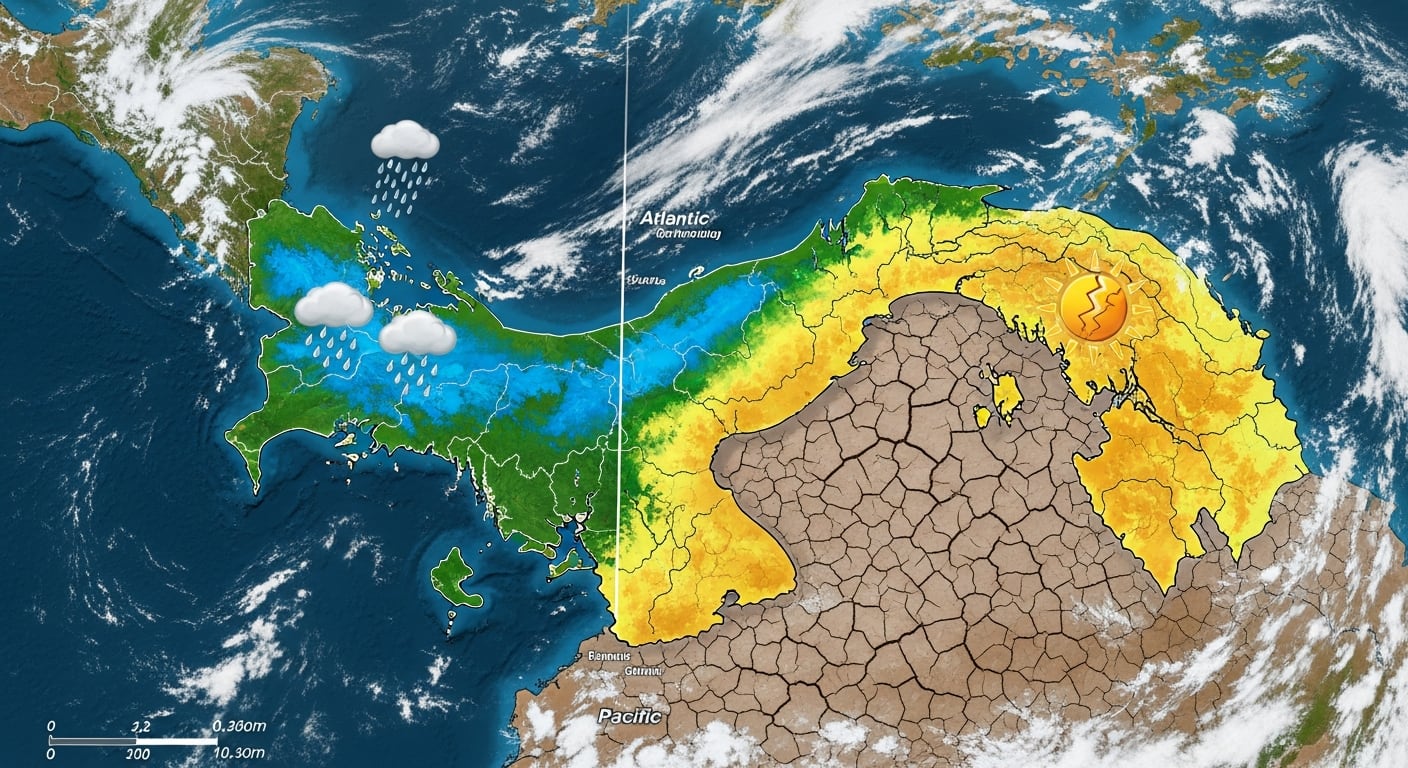
Otra línea de acción será el seguimiento de los niveles de cuencas hidrográficas, lagos y embalses del país, con atención específica al lago Bayano. MiAmbiente coordinará con el Sistema Nacional de Protección Civil, la Autoridad del Canal de Panamá y otras instituciones el reporte de condiciones que puedan agravarse por la falta de lluvias.
El Instituto de Meteorología e Hidrología de Panamá prevé un déficit de precipitaciones entre octubre de 2026 y marzo de 2027, mientras los efectos de El Niño podrían extenderse hasta mayo. Esta situación amenaza el abastecimiento de agua, la generación hidroeléctrica, la agricultura y la disponibilidad hídrica requerida para las operaciones del Canal de Panamá.
La emergencia tiene una naturaleza doble porque Panamá debe responder simultáneamente a los daños causados por inundaciones y al riesgo de una próxima sequía. Entre enero y agosto, 15,643 personas resultaron afectadas por eventos pluviales, con más de 70% de los casos concentrados en Bocas del Toro y Colón.
El Consejo de Gabinete autorizó hasta $80 millones para obras, bienes y servicios relacionados con la emergencia, mediante procedimientos especiales de contratación. Sin embargo, ese monto no pertenece exclusivamente a MiAmbiente ni constituye una transferencia automática: los recursos deberán incorporarse según la disponibilidad presupuestaria y ser aprobados para cada intervención solicitada.

Las medidas provisionales tendrán que ser supervisadas, controladas y fiscalizadas durante toda su ejecución, mientras las dependencias ambientales presentarán informes mensuales.
La rapidez concedida para actuar reduce trámites ante una amenaza climática, pero también exige controles efectivos para evitar que la emergencia termine justificando obras innecesarias, daños ambientales o gastos sin suficiente sustento.
buildings,city,clean up the river bottom,cleaning,cleanliness,day,facilities,heavy equipment,holiday,japan,landscape,lifestyle,machine,promenade,public facilities,river,river alley,river bed,road,shovel car,sidewalk,tokyo,walking,water

Base Naval Integrada de Ushuaia: cómo está la obra que Milei busca reactivar tras su reclamo por Malvinas

Can the ‘best showman in politics’ deliver again? GOP bets on Trump at historic midterm convention

El escándalo amoroso que sacude al nuevo novio de la Joaqui: «Tenía una relación secreta con…»

Una cabaña en la montaña, madera y una tradición familiar: la particular rutina de Erling Haaland para desconectarse

El Gobierno inició procesos sancionatorios contra 15 nuevos sujetos por operar en las Islas Malvinas

Su exnovio no aceptó la separación y la secuestró: la historia de Eloá, la adolescente asesinada tras cuatro días de cautiverio

Franco Colapinto elogió la pole de Gasly en Monza y explicó cuál fue la diferencia de rendimiento con su compañero de Alpine

Arizona voter-law fight reaches SCOTUS as election groups warn ‘absurd’ consequence could ensue

Final Fantasy VII Revelation confirma nuevos detalles: Cambio de personaje, pistola de agarre y más – Nintenderos

El Gobierno nacional y la Conferencia Episcopal anunciaron avances en la planificación de la visita de León XIV

 POLITICA3 días ago
1000 días de Milei: los logros, las crisis que lo marcaron y los déficits de su gestión
- POLITICA3 días ago
Martín Menem dijo que Milei será el primer no peronista en ser reelecto y llamó a invertir más
- DEPORTE3 días ago
Franco Colapinto largará en el puesto 7 con su Alpine el Gran Premio de Italia de la Fórmula 1: hora, TV y todo lo que hay que saber