
INTERNACIONAL
Reporter’s Notebook: GOP bets on fraud crackdown as economic woes surge ahead of midterms

NEWYou can now listen to Fox News articles!
The GOP’s campaign message about a porous border resonated with voters in 2024. Voters routinely listed border security as the first or second most important issue to them in multiple polls ahead of the last election.
But how about ahead of the midterms?
Well, the border is sealed. The nation’s economic outlook is shaky as the war in Iran drags on. Gas prices are skyrocketing. And the hallmark of President Donald Trump’s legislative agenda — The One Big Beautiful Bill — hasn’t materialized as a campaign juggernaut.
HEALTHCARE, ECONOMY AND THE ‘ONE BIG BEAUTIFUL BILL’: WELCOME TO THE MIDTERMS
President Donald Trump speaks to the press in the Oval Office of the White House in Washington, D.C., on June 3, 2026. (Mandel Ngan/AFP)
So Republicans are seeking an issue they hope will connect with voters this fall.
They may have settled on fraud. And returned to a favorite old punching bag.
«I’m just going to give you a couple facts,» declared House Republican Conference Chairwoman Lisa McClain, R-Mich., at the GOP’s weekly press conference Wednesday morning. «The Biden Administration thought it was really important to spend $20 million for Sesame Street in the Middle East. They gave $8 million to make mice transgender.»
McClain continued about the Biden Administration providing «free housing and cars for illegals,» adding that «under Biden federal agencies handed out taxpayer dollars with weak oversight, loose control and almost no accountability.»
The government weaponization fund waylaid Congressional Republicans. They’re still trying to figure out what to shove into some sort of an economic package which they can pitch to the voters this fall. So for now, Republicans are focusing on fraud.
«Crazy says fraudsters should be protected. Crazy says the American people’s hard earned tax dollars should be given to criminals who are stealing their money. That’s crazy,» said McClain.
TRUMP SAYS ANTI-FRAUD EFFORTS ARE UNCOVERING BILLIONS IN WASTE, CLAIMS SAVINGS COULD BALANCE BUDGET
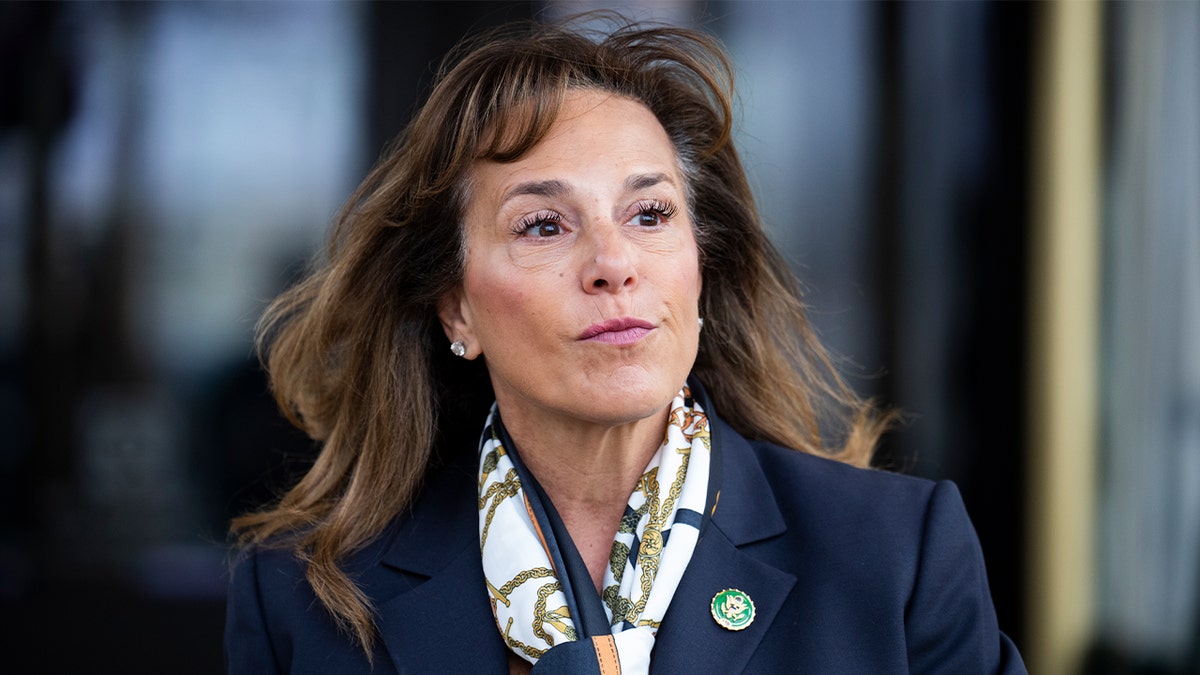
Rep. Lisa McClain, R-Mich., leaves a House Republican Conference meeting at the Capitol Hill Club on Feb. 28, 2023. (Tom Williams/CQ Roll Call)
House Republicans planned debate on three bills this week to root out fraud in government programs. One bill would enhance oversight over childcare block grants. Another bill would help prevent people from bilking a program which provides emergency aid to society’s most needy. A third measure would target «ghost students» and crack down on fraud in student aid programs.
«The integrity of the programs matter because the taxpayers are not going to support them when they’re filled up with fraud. And it doesn’t matter if it’s child care or SNAP. The American citizens want the fraud eliminated from the system,» argued Rep. Austin Scott, R-Ga.
Some Democrats found the anti-fraud message to be a little absurd.
«They’re not dealing with affordability. The President is saying he’s not concerned. Second, all of us are against fraud. I’ve yet to meet any politician who, when asked ‘Are you for fraud?’ says ‘Yes.» We’re all against it,» said Sen. Peter Welch, D-Vt.
Another Democrat believes Republicans are focusing on the wrong things with fraud.
«What I would love to see is an investigation of fraud and corruption involving the Trump administration, and the Trump family. There’s not a day that goes by that there’s another story about Trump kids benefiting from some government contract,» said Sen. Mark Warner, D-Va.
On Wednesday, Republicans launched a hearing probing alleged Medicaid fraud in Ohio. This came after they unearthed various forms of fraud in Minnesota. Rep. Brandon Gill, R-Texas, claims that bad actors from the Somali community operate in both states.
I’M OHIO’S STATE AUDITOR — MEDICAID FRAUD IS NOT JUST A WASHINGTON PROBLEM
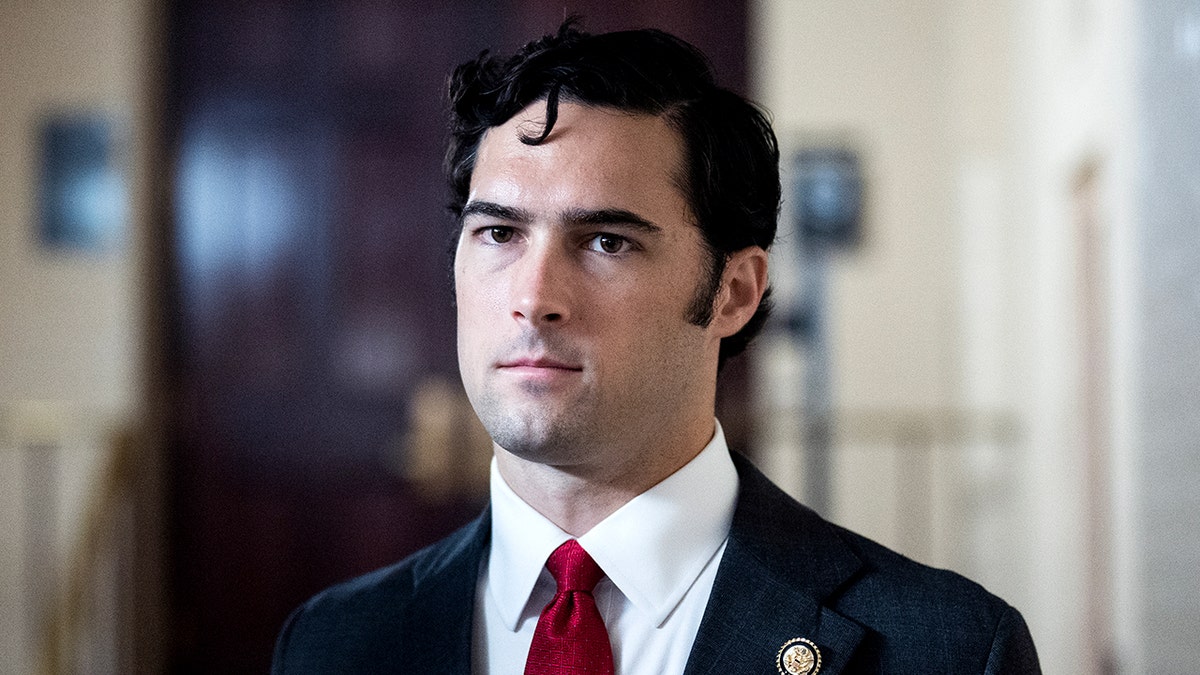
Rep. Brandon Gill, R-Texas, leaves a House Republican Conference meeting in the U.S. Capitol on June 4, 2025. (Tom Williams/CQ-Roll Call, Inc via Getty Images)
«You’ve got the largest Somali population in the United States is in Minnesota. The second largest in the United States is in Ohio. Now, it’s not politically correct to say, but the reality is this fraud is coming predominantly from that community,» said Gill.
At the hearing, Gill charged that Somalis «are moving from Ohio to Minnesota and back to Ohio.» He added that «it certainly seems to have some overlap.»
Gill tangled with Democrat Ohio State Sen. Nickie Antonio.
«Would you like to see more immigration from Somalia?» Gill asked the state lawmaker.
«As far as I’m processing your question, I have to say that I was almost brought to tears just now,» replied Antonio.
The two yelled over one another.
«Seventy percent of Somali immigrants are on welfare,» said Gill.
«The rate and the level of hateful rhetoric is based on false information is shocking to me,» responded Antonio.
«They’re defrauding your state at an astounding rate. Most Ohioans have a problem with that,» piled on Gill.
But Antonio pushed back, arguing that Republicans have controlled key positions of power in the Buckeye State for the past 15 years.
«[Republicans] hold the House, the Senate, the governor’s office and four statewide offices. If there is fraud in Medicaid, it has happened on the Republican majority’s watch. Perhaps it’s time to clean Ohio’s house,» rebutted Antonio.
MINNESOTA FRAUD HEARING SPARKS IMMIGRATION CLASH AS GOP LAWMAKER SPOTLIGHTS SOMALI WELFARE DATA
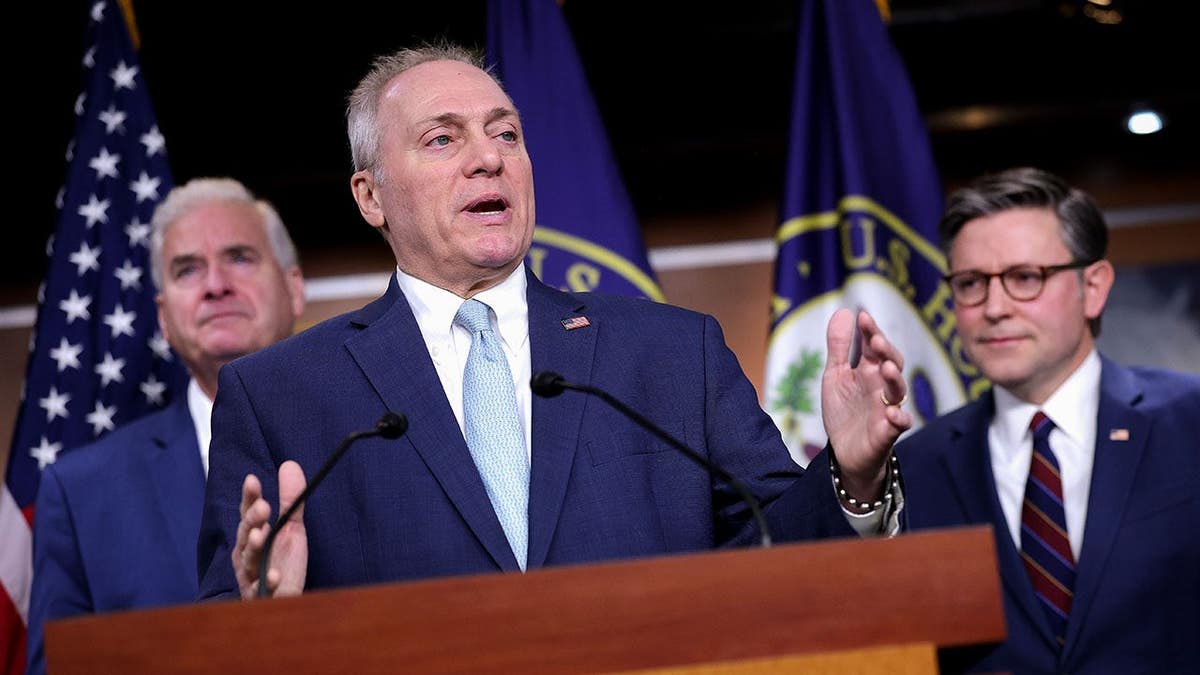
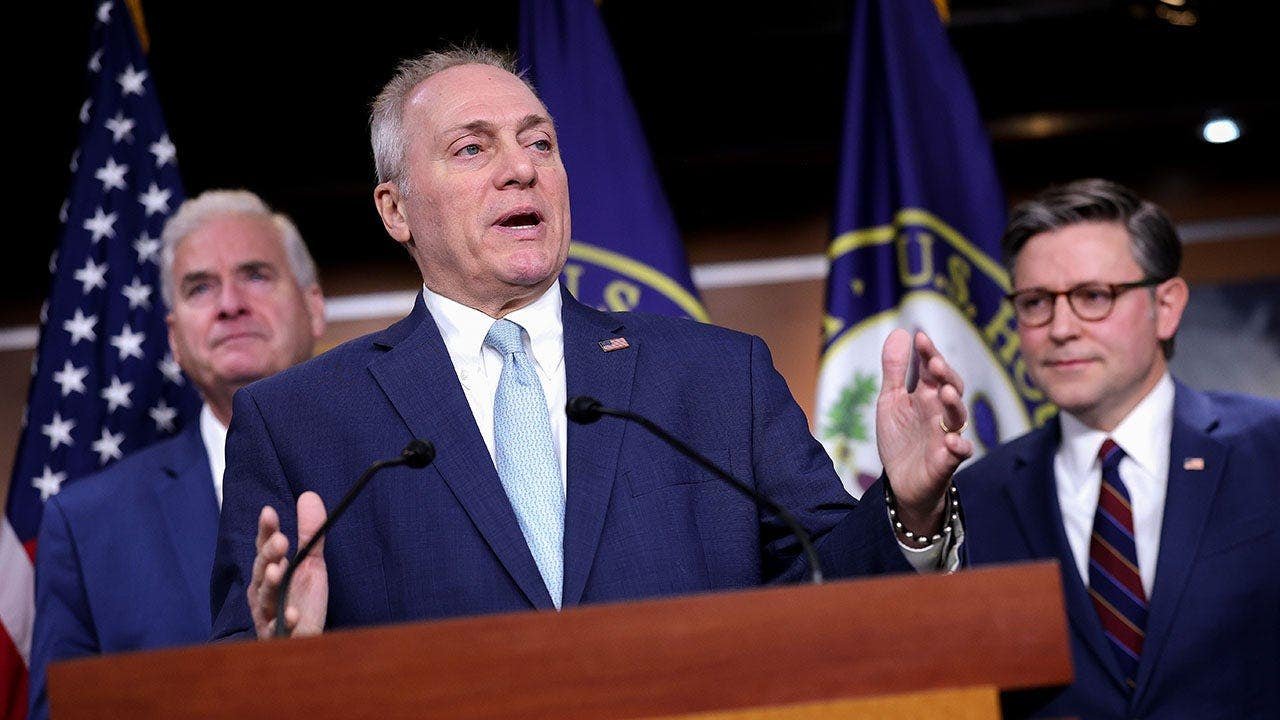
House Majority Leader Steve Scalise, joined by House Majority Whip Tom Emmer and Speaker of the House Mike Johnson, holds a news conference after a House Republican Conference meeting at the U.S. Capitol in Washington, D.C., on Jan. 13, 2026. (Kevin Dietsch/Getty Images)
A recent Fox poll found that more than 70 percent of those surveyed believe fraud is «very common» in government welfare programs. Since it’s an election year, Republicans hoped to dare Democrats to oppose their anti-fraud efforts when the bills hit the floor.
«For some of the Democrats who might vote against the fraud bills today, will you guys try to weaponize and boomerang those on members who vote no today?» yours truly asked House Majority Leader Steve Scalise, R-La.
«I think their own voters are going to be questioning that,» replied Scalise. «If Democrats vote no on that, it’s going to a hard vote to explain.»
House Minority Leader Hakeem Jeffries, D-N.Y, opposed the GOP’s anti-fraud efforts. But he gave Democrats from battleground districts a wide berth to decide what to do.
«Democrats are going to make a decision based on what’s the right thing to do for the district that they represent. And I trust every single Democrat, particularly those who are in swing districts, to do the right thing for the people that they’re privileged to represent,» said Jeffries.
On Wednesday afternoon, the House passed the childcare fraud bill. Only four Democrats voted yea.
GOP MUST RACE FOR NEW ‘BIG, BEAUTIFUL BILL’ TO SLASH COSTS BEFORE MIDTERMS, TOP HOUSE REPUBLICANS WARN
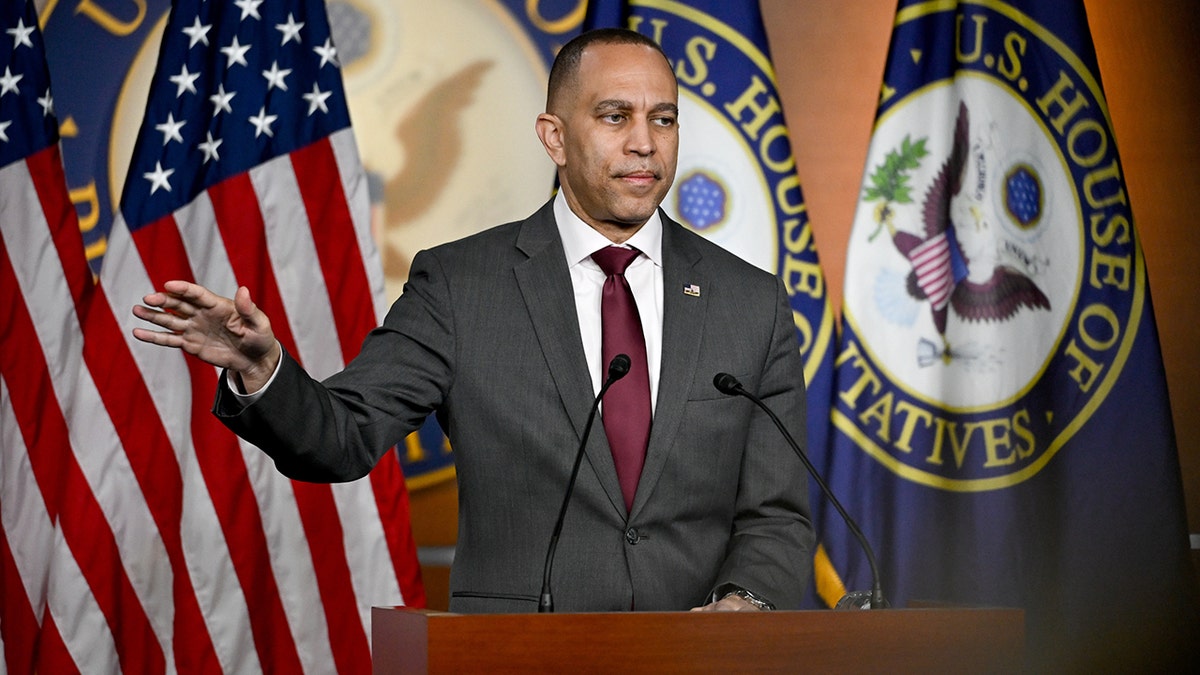
Rep. Hakeem Jeffries holds a news conference at the U.S. Capitol in Washington, D.C., on March 19, 2026. (Daniel Heuer/Bloomberg)
But Republicans yanked the bill focused on fraud in the Temporary Assistance for Needy Families (TANF) bill. The reason? One senior House GOP leadership source said the bill lacked the votes and «needed a little work.» Another Republican source said attendance issues among Republicans might inhibit passage of the bill.
So what about the ghost student bills? Well, that measure was a legislative phantasm. The House didn’t conduct votes until Wednesday this week. The House then ghosted everyone on Friday, leaving the Capitol a day earlier than planned.
This trio of fraud measures are «messaging» bills in Congress. It’s doubtful that these plans will become law. But the leadership believes it’s important to «message» a subject like this to voters. And also point to votes where Democrats opposed such efforts.
But for all of the focus on fraud by House Republicans, they only managed to pass one of their three messaging bills this week.
That’s a .333 average. Baseball old-timers Paul Waner and Eddie Collins both boasted .333 batting averages for their career. They’re in the baseball Hall of Fame. But a .333 average isn’t Cooperstown-worthy on Capitol Hill.
CLICK HERE TO DOWNLOAD THE FOX NEWS APP
That said, Republicans will tee up several other anti-fraud measures next week. So there’s a reprieve. However, if the GOP doesn’t bat 1.000 on their fraud bills next week, some voters may designate them for assignment.
Or maybe ghost them at the polls.
politics, midterm elections, democrats elections, republicans, minnesota fraud exposed, bills











INTERNACIONAL
Mamdani repeatedly sidesteps questions on reported plan to revive tax hikes on wealthy New Yorkers
NEWYou can now listen to Fox News articles!
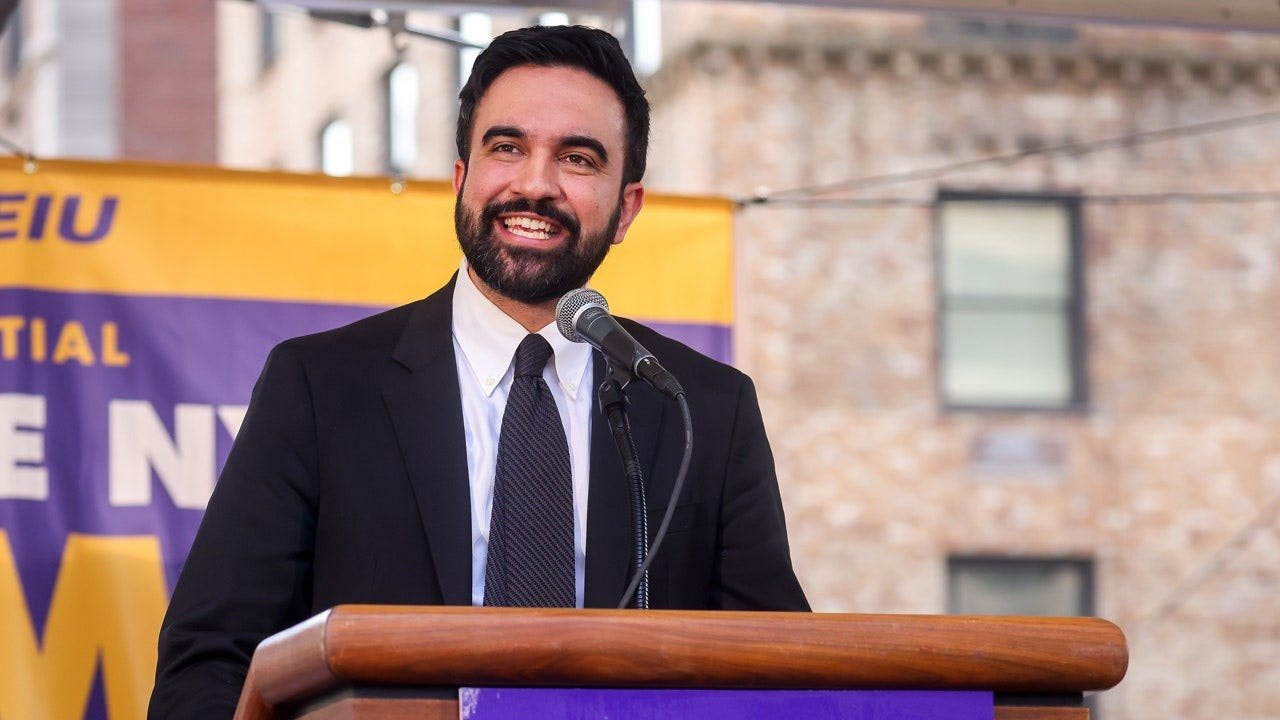
New York City democratic socialist Mayor Zohran Mamdani repeatedly sidestepped questions Thursday about reported plans to launch a public pressure campaign this fall pushing tax hikes on wealthy New Yorkers and corporations.
Mamdani reportedly plans to build public support after Labor Day for similar proposals that Gov. Kathy Hochul previously rejected in early 2026. The reported push is expected ahead of the New York Legislature’s return to Albany in January 2027 and Hochul’s re-election campaign this fall, according to The New York Post.
During an interview with Fox 5 New York, Mamdani repeatedly declined to answer questions about the potential campaign before later saying such discussions would only come after the November election.
Asked whether he had spoken with Hochul about the reported campaign, Mamdani did not answer directly, instead using the opportunity to tout the opening of 2,000 free child care seats for New Yorkers through their policy efforts.
NYC MAYOR MAMDANI CALLS THREAT OF RICH PEOPLE LEAVING NYC OVER TAXES ‘IMAGINED’
Mayor Zohran Mamdani speaks to reporters about the city’s finances during a news conference in New York, Tuesday, Feb. 17, 2026. (Seth Wenig/AP Photo)
«The governor and I are in constant communication and, frankly, I appreciate her partnership because if it wasn’t for the governor, then we wouldn’t have been able to stand together to announce that we had more than 5,000 New Yorkers come forward to apply for these 2,000 free child care seats,» he said. «And I’m so excited about that, and the fact that we’re going to expand to 12,000, and the work that’s still to come.»
The reporter then pressed Mamdani on whether the Democratic Socialists of America would join the potential campaign this fall, but he again declined to answer directly, saying his focus remains on the present.
BERNIE SANDERS, DSA REVEAL DEMANDS FOR DEM PARTY AFTER SOCIALISTS SWEEP NEW YORK ELECTIONS
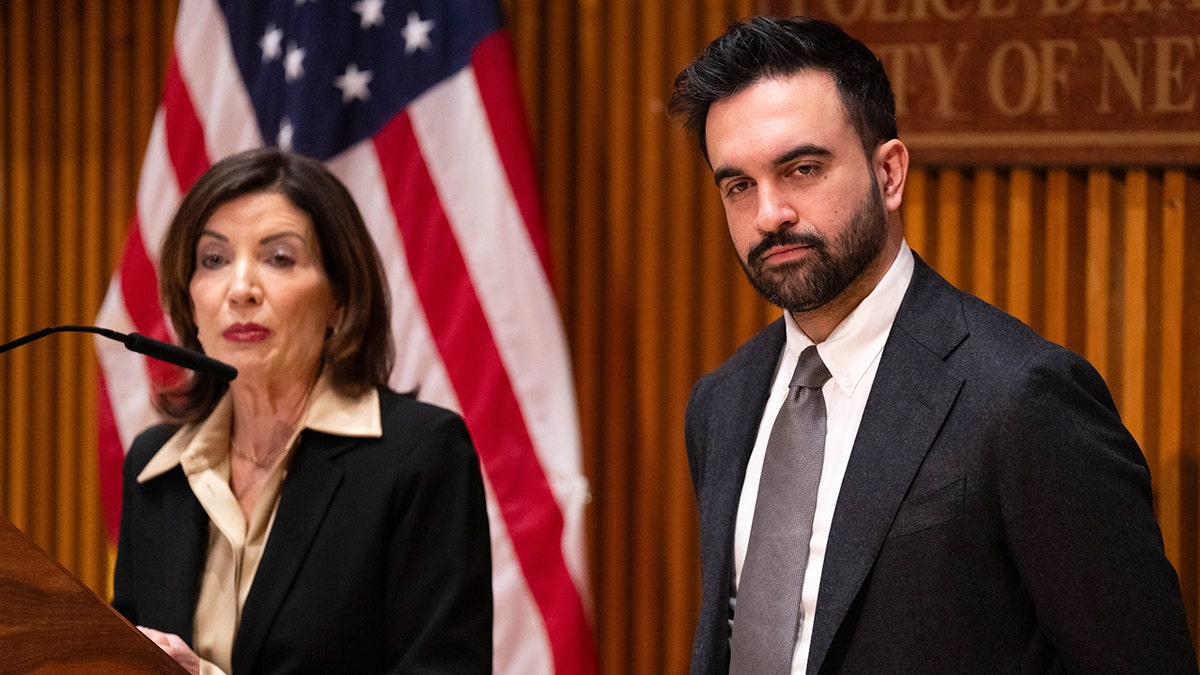
Kathy Hochul, governor of New York, left, and Zohran Mamdani, mayor of New York, speak during an announcement in New York, US, on Tuesday, Jan. 6, 2026. (Adam Gray/Bloomberg via Getty Images)
«My focus right now is where we are, which is August, and ensuring that everything that we’re doing is keeping New Yorkers safe amidst a heat wave and preparing for the school year,» Mamdani said. «A lot of the conversation about what comes after November, I think, is a conversation for what comes after November.»
«So you don’t plan to launch a campaign to tax the rich before the November election?» the reporter asked.
«The conversations I’ve been having with the governor and with my team are about the here and now and there will always be time for the conversations that come after that,» Mamdani said.
MAMDANI EXTENDS DEADLINE FOR NYC HOMEOWNERS TO SEEK EXEMPTION FROM NEW PIED-À-TERRE TAX
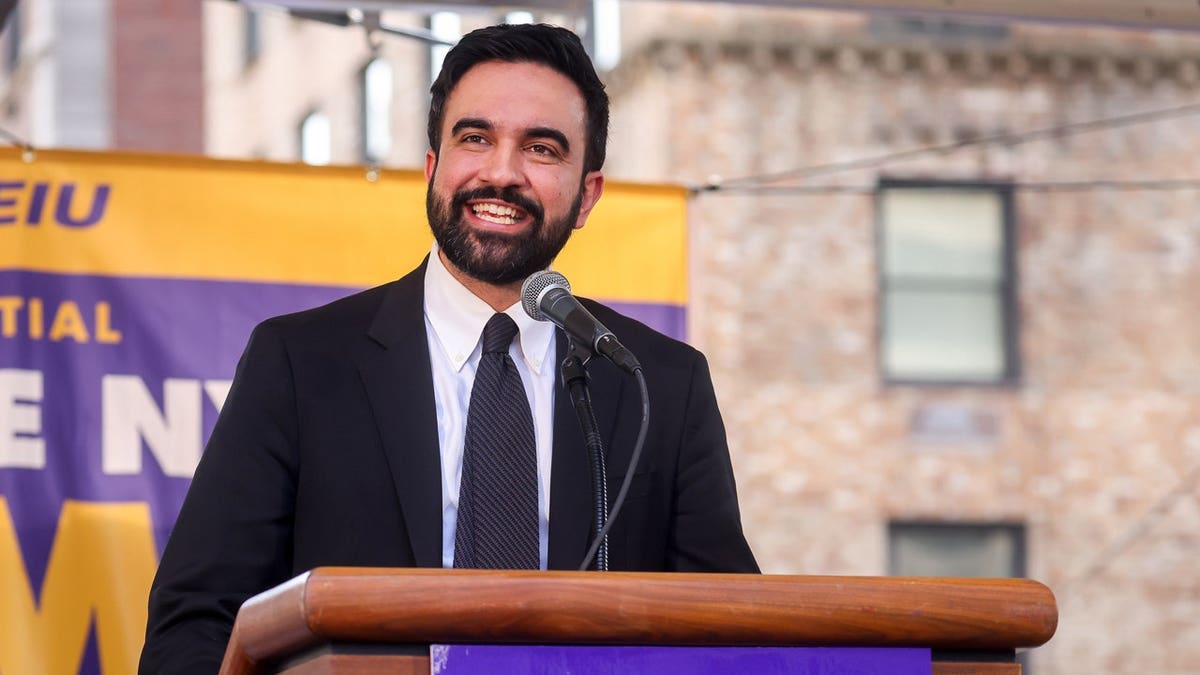
New York City Mayor Zohran Mamdani previously backed a proposal to tax luxury second homes owned by non-residents, targeting ultra-wealthy property owners. (Michael Nagle/Bloomberg via Getty Images)
The reported campaign would revive a previous push by Mamdani to close the city’s multibillion-dollar budget gap through tax increases, a proposal Hochul previously rejected. Mamdani’s earlier plan called for raising the city’s personal income tax rate on filers earning $1 million or more, a move he projected could generate roughly $3 billion annually, while also increasing corporate tax rates.
As an alternative, Hochul and Mamdani jointly advanced the state’s first pied-à-terre tax, an annual surcharge on certain high-value second homes, which passed in May 2026. State and city officials have projected the measure could raise about $500 million annually.
Mamdani also said his May 2026 executive budget closed what his administration described as an inherited $12 billion budget gap, crediting aggressive savings, new investments, his partnership with Albany and new tax revenue, including the pied-à-terre tax.
Mamdani’s office did not immediately respond to a request for comment from Fox News Digital.
zohran mamdani, new york city, elections state and local, taxes, kathy hochul
INTERNACIONAL
Fiscalía prepara escrito de acusación para audiencia intermedia y cierra investigación contra exvicepresidente panameño José Gabriel “Gaby” Carrizo
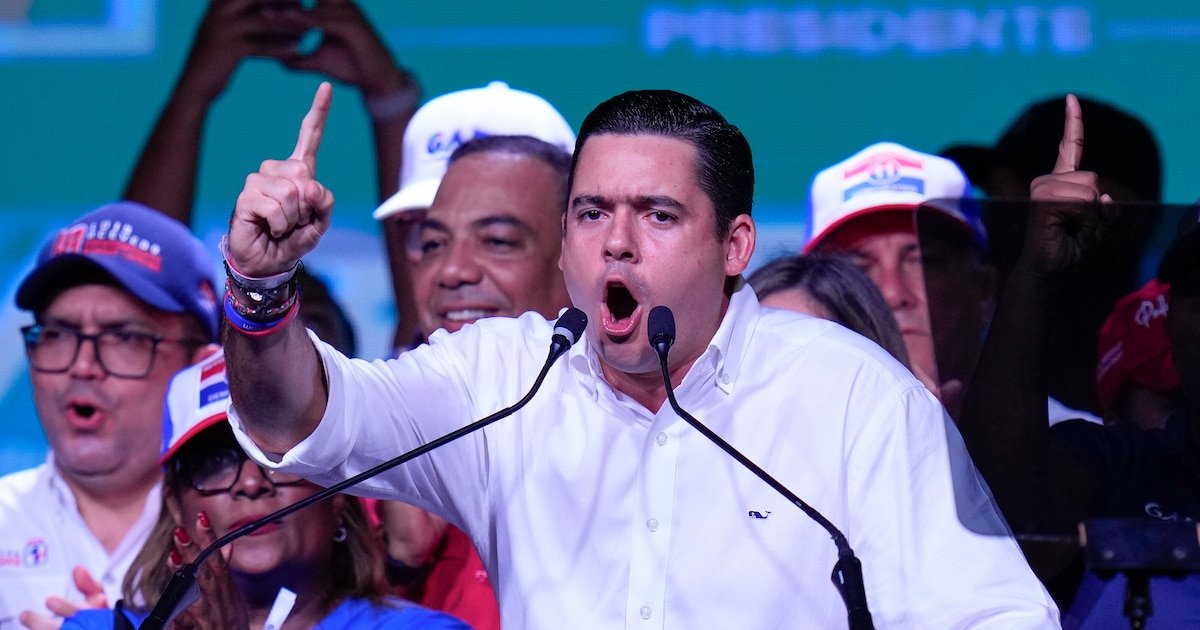
El Ministerio Público de Panamá se encuentra en la etapa decisiva del caso contra José Gabriel “Gaby” Carrizo, exvicepresidente de la República (2019-2024) y excandidato presidencial.
El proceso, que investiga el presunto delito de enriquecimiento injustificado agravado, avanza tras el cierre formal de la investigación, lo que obliga a la Fiscalía Anticorrupción a presentar un escrito de acusación para su revisión judicial.
La defensa de Carrizo, representada por el abogado Víctor Orobio, confirmó a TVN que había recibido la notificación oficial sobre el cierre de la investigación.
“Ya nos notificaron del cierre de la investigación. Estamos esperando la presentación del escrito de acusación y de la fecha de la audiencia intermedia”, detalló Orobio.
El cierre de la investigación responde a la expiración del plazo legal para las pesquisas, después de que los tribunales rechazaran la solicitud fiscal de extender el periodo bajo la figura de “investigación compleja”.

Por tanto, la Fiscalía Anticorrupción debe ahora solicitar formalmente la audiencia y presentar el escrito de acusación, en el que se expondrán los hechos, la calificación jurídica y las pruebas reunidas.
Posteriormente, la defensa tendrá la oportunidad de contestar e introducir sus propias pruebas para la audiencia intermedia.
La causa se originó tras un informe de la Contraloría General de la República, que identificó un supuesto incremento patrimonial injustificado de Carrizo por $1,9 millones durante su gestión pública.
Como consecuencia, el contralor Anel “Bolo” Flores dispuso en noviembre de 2025 el secuestro de bienes y cuentas bancarias pertenecientes al exvicepresidente hasta por $1,3 millones.
El secuestro de bienes, anunciado públicamente el 6 de noviembre, se implementó, según se dijo, como medida cautelar para asegurar fondos en caso de una eventual condena y resarcimiento al Estado panameño.

La decisión de la Contraloría, bajo la gestión de Flores, intensificó la presión sobre Carrizo, quien ya era objeto de dos investigaciones distintas por presuntas irregularidades durante su periodo como vicepresidente entre 2019 y 2024.
La intervención de la Contraloría en este caso marcó la segunda ocasión en la que se aplica una medida similar contra un miembro de alto perfil del Partido Revolucionario Democrático (PRD).
Esta reiteración provocó en su momento especulaciones y aumentó la controversia pública sobre la transparencia y la gestión de los recursos estatales.
El presunto enriquecimiento injustificado constituye una infracción que afecta de manera directa la confianza ciudadana en las instituciones públicas.
Las autoridades buscan determinar si Carrizo obtuvo ventajas económicas ilícitas aprovechando su cargo, un aspecto central para la integridad de la función pública.

La medida de secuestro de bienes tiene como finalidad principal garantizar la posibilidad de reparación al Estado en caso de condena. Los bienes afectados permanecerán bajo custodia judicial hasta que se resuelva el caso en las instancias correspondientes.
El caso de Carrizo se suma a una cadena de escándalos que han sacudido el escenario político panameño, profundizando el malestar social y la desconfianza en la administración pública.
La lucha contra la corrupción se impone como un reto permanente para Panamá, que requiere acciones decididas de todos los sectores para fortalecer el Estado de derecho y la gobernabilidad.
El desenlace del proceso judicial contra el exvicepresidente será determinante para definir el alcance real de la política anticorrupción en el país y marcará un precedente sobre la responsabilidad de los altos funcionarios en la gestión de los recursos públicos.
INTERNACIONAL
Trump-backed incumbent loses primary after super PAC bankrolled by Dems meddled in race
NEWYou can now listen to Fox News articles!
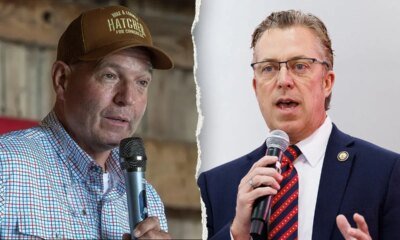
Rep. Andy Ogles, R-Tenn., was defeated in a primary challenge on Thursday evening by Republican challenger Charlie Hatcher, a farmer and the state’s former commissioner of agriculture.
Although the primary was far from a top-watched contest coming into the 2026 primaries, it served as a microcosm of larger forces at play in the Republican Party. From a break in endorsements between President Donald Trump and Tennessee’s Republican Governor Bill Lee to millions being pumped into the district over environmental policy, the race attracted attention well beyond its borders.
The Invest in Tomorrow Coalition super PAC had spent roughly $2 million opposing Ogles and supporting Hatcher. The group has raised $6.7 million this year, making Ogles a sizable portion of their spending this cycle.
TOP TRUMP ALLY WARNS SUPER PAC BANKROLLED BY DEM BILLIONAIRE IS MEDDLING IN GOP PRIMARY
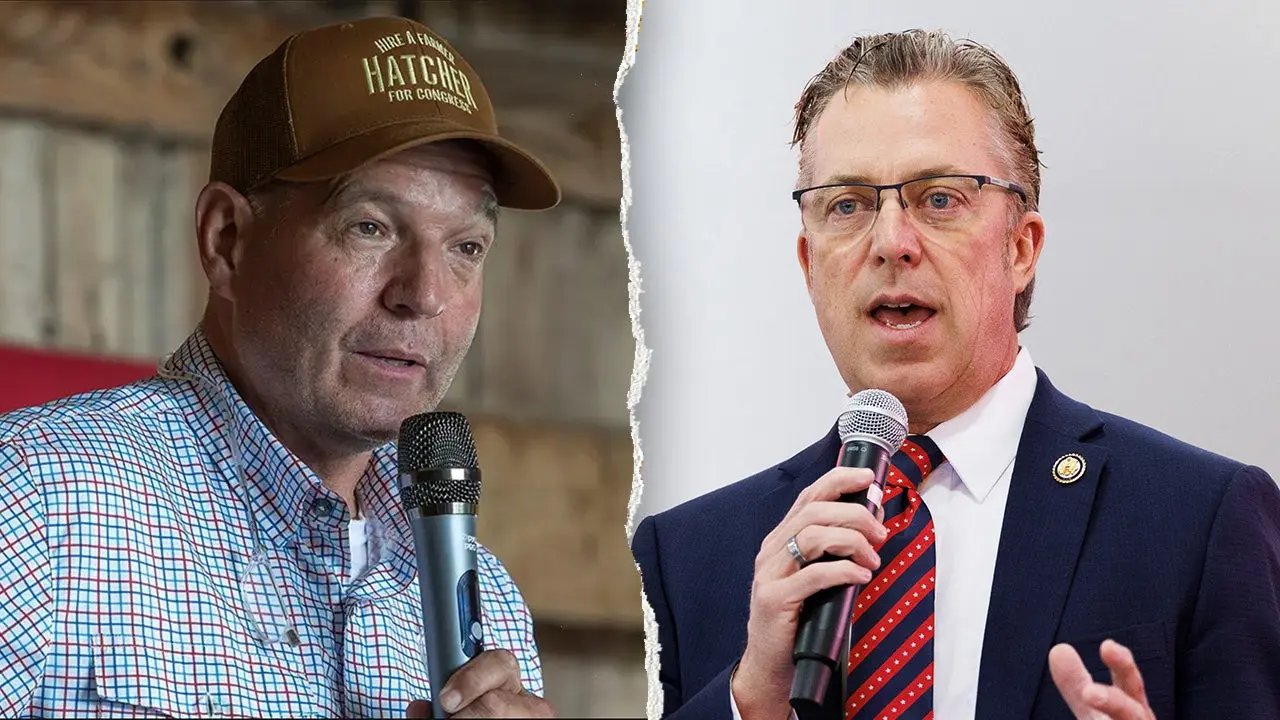
Charlie Hatcher, Republican candidate for Congress, left, pictured next to incumbent Rep. Andy Ogles, R-Tenn., right. (USA TODAY Network via Reuters Connect; Brett Carlsen/Getty Images)
The way that Ogles sees it, it’s an attempt to show Republicans what happens when lawmakers attempt to claw back government funding for renewable energy sources.
Like many other Republicans, Ogles has called to scale back renewable energy investments made under the Biden Administration.
«When you have a group spending roughly $2 million in a Republican primary, that tells you how much money they’re making off of government subsidies, and they’re upset that the government welfare has been taken away from them,» Ogles told Fox News Digital in an interview.
A Fox News Digital review of FEC filings discovered that the super PAC is bankrolled by Chris Larsen, the California-based billionaire chairman of Ripple, a financial technology company that, according to its website, offers crypto solutions for businesses.
Larsen is also a frequent Democratic donor, having contributed $5,444,975 to support Kamala Harris’s failed presidential campaign.
More than just his opposition to government-backed renewable energy initiatives, Ogles thinks it’s his proximity to Trump that has made him a target.
«It’s because I’m close to the president. It is because I am outspoken. And quite frankly, it is because I speak plainly on these issues,» Ogles said.
GOP GOVERNOR ENDORSES CANDIDATE CHALLENGING TRUMP-BACKED CONGRESSMAN IN REPUBLICAN US HOUSE PRIMARY

Rep. Andy Ogles (R-TN) addresses the New York Young Republican Club’s 113th Annual Gala at Cipriani Wall Street on December 13, 2025 in New York City. (Adam Gray/Getty Images)
For his own part, Hatcher, a fifth-generation Tennessee dairy farmer, has pitched himself as someone unencumbered by the political scene and ensnaring interests.
«I think there’s something missing in Washington. There’s a lack of farmer common sense. There’s a lack of work ethic. One of my strengths is problem-solving, looking for solutions, looking for collaborations and supporting the Trump Administration and Speaker Johnson on their agenda,» Hatcher said in a campaign video.
Notably, Tennessee’s Republican governor put his weight behind Hatcher late on Tuesday evening, citing a personal relationship between them.
«He served as my commissioner of agriculture; I know Charlie. I know his conservative values and how much he loves our country. Charlie has stood with President Trump since day one,» Lee said in a video.
Trump, who has endorsed Ogles, reaffirmed his support for the conservative firebrand ahead of the primary.
«Andy will be really enshrined as one of the best congressmen that you’ll ever see. He’s just fantastic,» Trump said. «Andy has always been there when we needed him and when I needed him. He’s been a great help. He’s been a source of inspiration to a lot of people in Congress,» Trump said in a post to Truth Social earlier this year.
TENNESSEE PASSES NEW CONGRESSIONAL MAP LIKELY TO FLIP FINAL DEM SEAT AS PROTESTS ERUPT INSIDE CAPITOL
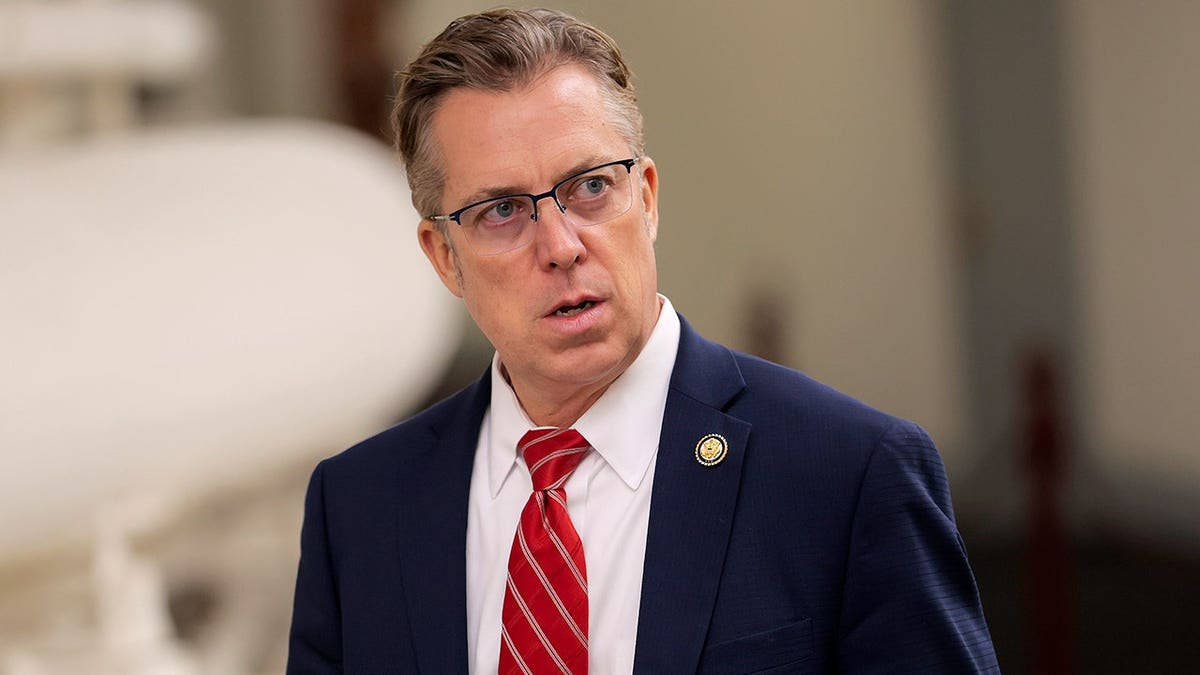
Rep. Andy Ogles, R-Tenn., walks through the U.S. Capitol on February 03, 2026 in Washington, D.C. (Heather Diehl/Getty Images)
Having captured the Republican nomination, Hatcher now advances to a general election he’s heavily favored to win on Nov. 3. He won re-election in 2024 in a 56.9% to 39.5% victory over Maryam Abolfazli.
politics, campaigning, tennessee

La crisis política de Misiones se trasladó al Senado y podría complicar al Gobierno nacional

Mamdani repeatedly sidesteps questions on reported plan to revive tax hikes on wealthy New Yorkers

La Corte Suprema rechazó los planteos de una comunidad Mapuche y habilitó avanzar con desalojos en Villa La Angostura

Independiente Rivadavia vs Estudiantes (RC): formaciones, hora y dónde ver por tv

El nuevo nuncio apostólico inició su actividad con una misa en la Catedral y un mensaje del Papa

El horóscopo de hoy: viernes 7 de agosto

Javier Milei cruzó a Victoria Villarruel y elevó la tensión: “Es una opositora, replica los argumentos kirchneristas”

Dólar hoy en vivo: a cuánto se negocian todas las cotizaciones minuto a minuto este miércoles 5 de agosto

La oposición cuestionó a Benegas Lynch por su empresa para vender campos a extranjeros y el senador libertario se defendió

Inédito boicot a un decreto para bajar costos portuarios: el Gobierno envió intimaciones con Prefectura
-
 ECONOMIA2 días ago
Dólar hoy en vivo: a cuánto se negocian todas las cotizaciones minuto a minuto este miércoles 5 de agosto
-
 POLITICA6 horas ago
La oposición cuestionó a Benegas Lynch por su empresa para vender campos a extranjeros y el senador libertario se defendió
-

 POLITICA2 días ago
Brasil retira a su embajador en la Argentina: qué consecuencias tiene la medida diplomática