INTERNACIONAL
Senate parliamentarian rejects $1 billion in reconciliation bill for White House security, Trump ballroom

NEWYou can now listen to Fox News articles!
The Senate parliamentarian rejected the last item in the Republicans’ budget reconciliation bill — $1 billion in White House and Secret Service security funding tied in part to President Donald Trump’s planned ballroom
Senate Parliamentarian Elizabeth MacDonough, considered nonpartisan since taking the role in 2012 during former President Barack Obama’s administration, ruled the funding provision could not be included as written under budget reconciliation rules, an outcome long expected from both sides of the aisle.
Ryan Wrasse, spokesman for Senate Majority Leader John Thune, R-S.D., said in a social media post that Republicans would keep trying to revise the legislation to try to gain the parliamentarian’s approval.
«Redraft. Refine. Resubmit,» Wrasse wrote on X. «None of this is abnormal during a Byrd process.»
FURY ERUPTS AS UNELECTED SENATE ‘SCOREKEEPER’ BLOCKS TRUMP’S AGENDA
The decision deals a blow to efforts to pass the money with a simple majority as part of a broader roughly $72 billion package focused largely on immigration enforcement after Democrats forced those budgetary items under the longest shutdowns in American history.
MacDonough ruled that the security funding provision falls under chamber rules that require 60 votes to pass most legislation, according to the office of Sen. Jeff Merkley, D-Ore., the Senate Budget Committee ranking member.
«While we expect Republicans to change this bill to appease Trump, Democrats are prepared to challenge any change to this bill,» Merkley said.
REPUBLICANS EYE PICKING UP $400M TAB FOR TRUMP’S BALLROOM AS SOME DEMS OPEN TO ‘DISCUSS’ IDEA
Senate parliamentarian Elizabeth MacDonough forced Senate Republicans to rewrite the $72 billion reconciliation bill with regard to the $1 billion for White House security and ballroom backing. (Getty Images/Reuters)
The parliamentarian interprets Senate rules, including whether legislative provisions are permitted. While MacDonough is nonpartisan by Senate standards, she served as former Vice President Al Gore’s advisor in the Bush v. Gore 2000 election challenge that was resolved in the Supreme Court.
Her ruling came days after several Senate Republicans questioned the Trump administration’s $1 billion request, with some saying they needed far more detail before backing taxpayer funding connected to a project Trump has said would be privately financed.
«It was one thing when private dollars were building it,» Sen. John Curtis, R-Utah, told Fox News Digital before a closed-door briefing with Secret Service Director Sean Curran. «If you’re asking me for a billion dollars, I have some really hard questions.»
TRUMP CLAIMS DONOR FUNDED WHITE HOUSE BALLROOM INCLUDES HIDDEN BUILD BELOW WITH SECURITY FOCUS
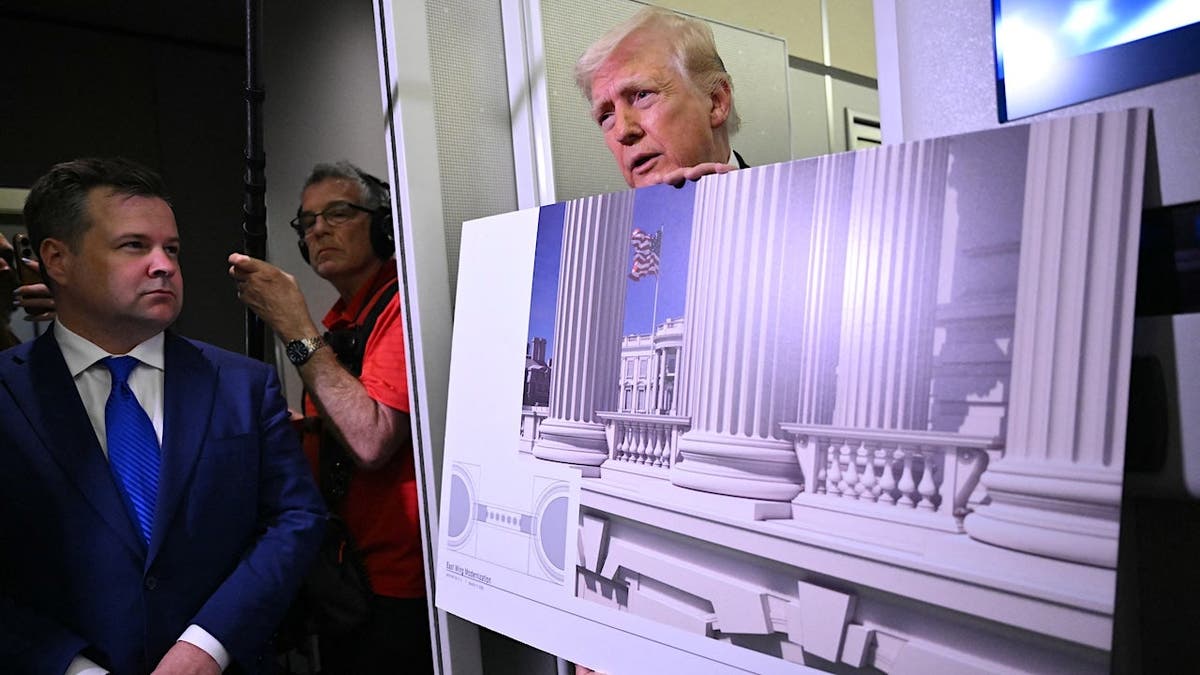
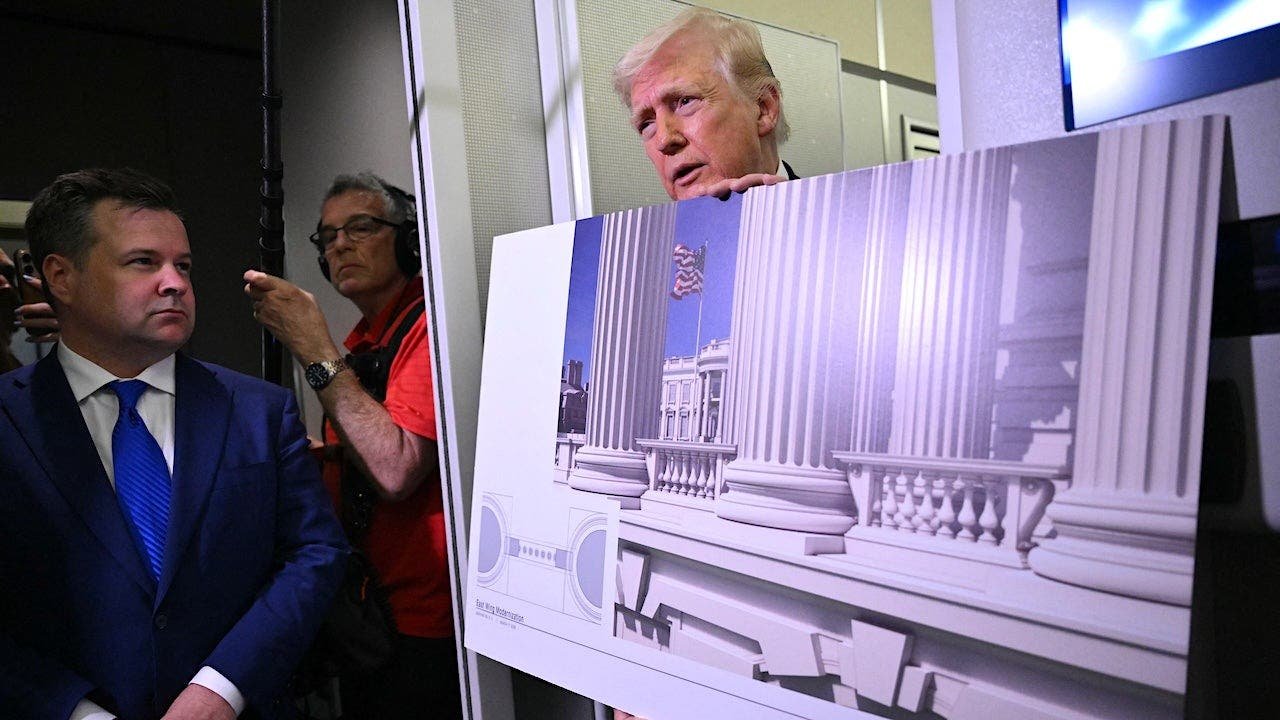
President Donald Trump holds rendering of the White House ballroom in an Air Force One media scrum. (Mandel Ngan/AFP)
Curtis added that if an employee brought him a billion-dollar project with little explanation, he would respond: «You made that number up.»
The request included $220 million for «White House complex hardening,» including above- and below-ground security enhancements for the ballroom, according to a one-page breakdown obtained by Fox News Digital. Those upgrades included bulletproof glass, drone detection technology, chemical filtration and detection systems and other national security measures.
Another $180 million was proposed for a White House visitor screening center, while $600 million would go toward Secret Service training, protection for Trump and other officials, counter-drone measures and other security needs after Trump dodged an unprecedented third assassination attempt last month.
TRUMP’S TROUBLING WEEK: DEMANDING GOVERNMENT MONEY, DEMOLISHING THE EAST WING
Republicans defending the request have argued Democrats and critics are mischaracterizing the funding as a direct ballroom subsidy.
«What was clear today is this whole statement, ‘It’s a billion dollars for a ballroom.’ Anyone who prints that is printing something they know is a lie,» Sen. James Lankford, R-Okla., told Fox News Digital. «It’s not a billion dollars for the ballroom.»
Still, other Republicans said the administration had not fully explained how it arrived at the number. Sen. Todd Young, R-Ind., said officials needed to provide «more details about exactly how they arrived at the figure,» while Sen. Rick Scott, R-Fla., said the administration would have to explain to taxpayers what return they would get for the spending.
SCHUMER, DEMOCRATS PLOT COORDINATED RESISTANCE TO TRUMP’S ‘ONE UGLY BILL’
The White House and GOP supporters have framed the funding as a national security matter, citing threats against Trump and the need to modernize protective infrastructure at the White House. The administration has said the ballroom would reduce reliance on temporary outdoor structures for large events while improving security for the president, his family and visitors.
The ballroom project has faced opposition since Trump ordered the demolition of the White House’s East Wing last year to make way for the new facility. The National Trust for Historic Preservation sued, arguing the administration lacked authority to tear down the historic structure or build a major new facility without explicit congressional approval. A federal appeals court in April allowed construction to continue while the legal fight proceeds.
Trump has said the ballroom itself would be funded by $400 million in private donations and completed around September 2028, near the end of his second term. The parliamentarian’s ruling does not end the broader spending bill, but it complicates GOP efforts to keep the White House security money in a package Republicans hope to pass along party lines.
APPEALS COURT LETS TRUMP RESUME WHITE HOUSE BALLROOM CONSTRUCTION, SEEKS LOWER COURT CLARITY
Democrats have cast the project as excessive and politically tone-deaf, arguing Republicans are trying to steer taxpayer money toward Trump’s signature construction project while Americans face rising costs.
Senate Minority Leader Chuck Schumer, D-N.Y., called the ballroom «a disgrace» and said Republicans should reject the funding.
«The bottom line is, this ballroom is a disgrace,» he said. «The Republicans know it. Let’s see if they have the guts to do what they know is right, both substantively and politically, and tell Trump we don’t need a God — we don’t need a damn ballroom.»
CLICK HERE TO DOWNLOAD THE FOX NEWS APP
Notably, the ballroom would not be finished until 2028, the last year of Trump’s second, and last, presidential term by constitutional law. Trump argues it would serve Democrat and Republican administrations equally.
Fox News’ Alex Miller and Reuters contributed to this report.
senate elections, white house, national security, republicans, democrats senate












INTERNACIONAL
Los nuevos ataques de Irán y EE.UU. entorpecen la recuperación del tráfico marítimo en el Golfo
La reanudación de los ataques por parte de las fuerzas de Irán y Estados Unidos amenazó la incipiente recuperación del comercio en el golfo Pérsico, donde el tráfico por el estrecho de Ormuz había alcanzado recientemente los niveles más altos desde el inicio de la guerra.
Los ataques de los últimos tres días demostraron que ambos países están dispuestos a usar la fuerza militar para hacerse con el control del estrecho, lo que ha llevado a muchos operadores navieros a seguir cautelosos con esta vía marítima, un punto de estrangulamiento crucial para los envíos de petróleo y gas desde el Golfo.
“El transporte marítimo se encuentra, literalmente, en medio del fuego cruzado mientras EE.UU. e Irán se disputan el control del estrecho de Ormuz», dijo Michelle Wiese Bockmann, analista de Windward, una empresa de inteligencia marítima. “Esto no ayuda mucho a recuperar la confianza en que se pueda garantizar la seguridad para sacar de allí a los barcos varados”.
El sábado, Baréin, un aliado de Estados Unidos en la región, dijo que había sido atacado por drones iraníes, en lo que parece una represalia por los ataques que las fuerzas estadounidenses lanzaron contra Irán el viernes. El ataque de Estados Unidos fue, a su vez, una respuesta a que Irán disparara el jueves contra un buque de carga, el Ever Lovely, que navegaba por el estrecho.
Los ataques se produjeron aproximadamente una semana después de que Estados Unidos e Irán firmaran un acuerdo de paz preliminar que incluía una cláusula para reabrir el estrecho.
Pero la vía navegable aún no ha vuelto a la normalidad. Tras el ataque iraní al Ever Lovely, la Organización Marítima Internacional, una agencia de las Naciones Unidas, suspendió una operación para evacuar a cientos de barcos varados en el golfo Pérsico.
El sábado, la agencia británica Maritime Trade Operations elevó su evaluación del nivel de amenaza en el estrecho de Ormuz a “sustancial”, citando los ataques a buques. La organización, dirigida por la Armada británica y que actúa como servicio de vigilancia y emergencia para la navegación comercial, dijo que había recibido informes de que un buque petrolero en el estrecho había sido alcanzado por un “proyectil no identificado” el sábado, y señaló que no hubo heridos ni daños medioambientales.
Harry Vafias, director ejecutivo de Stealth Gas, una empresa de servicios de transporte marítimo, dijo el sábado que, de sus tres buques atrapados en el golfo Pérsico desde hace más de tres meses, uno había podido salir del Golfo en los últimos días. Pero los otros dos siguen atrapados y les resulta demasiado difícil salir en este momento. Dijo que “la situación en Ormuz parece estar empeorando de nuevo”.
En las últimas semanas, Irán ha intentado establecer un control formal sobre el tráfico marítimo en el estrecho, algo de lo que antes no disponía. Irán ha exigido a los operadores de buques que obtengan su permiso antes de atravesarlo, y ha amenazado a los barcos que no lo han hecho.
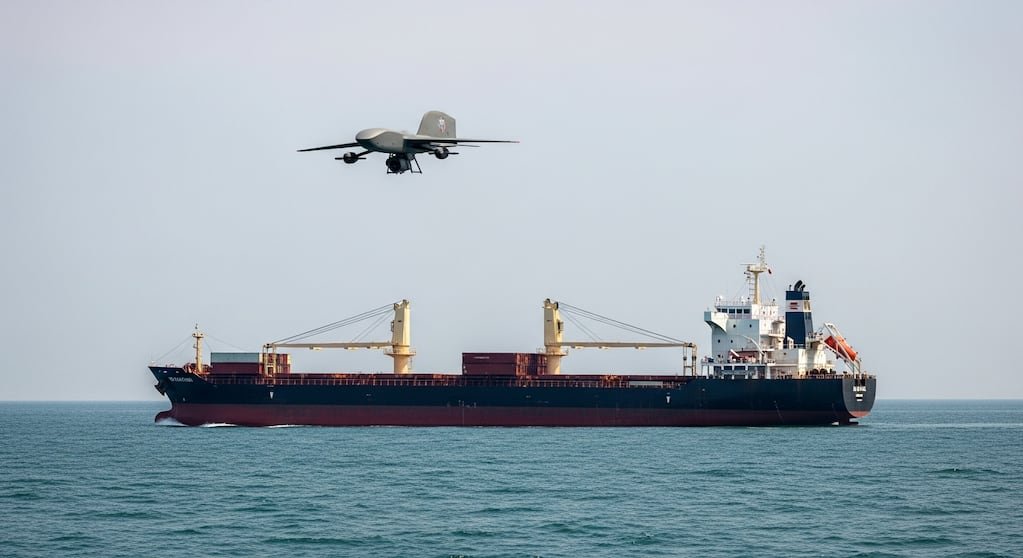
Irán atacó el buque portacontenedores cuando este navegaba por el estrecho cerca de Omán.
Desde hace casi dos meses, el Comando Central de Estados Unidos ha estado ayudando a los barcos comerciales a atravesar el estrecho por rutas cercanas a la costa de Omán, y esta semana dijo que ha facilitado el paso de más de 500 buques desde principios de mayo.
“La agresión injustificada contra la navegación comercial por parte de las fuerzas iraníes violó claramente el alto al fuego”, dijo el Comando Central de Estados Unidos en un comunicado el viernes. Añadió que seguía coordinando y prestando apoyo para garantizar un paso seguro a los buques comerciales que transitan por el estrecho.
Antes del ataque de Irán, el tráfico marítimo por esta vía había ido aumentando. El miércoles pasaron 73 barcos y el jueves 54, según datos de Kpler, una empresa de análisis marítimo. Era demasiado pronto para saber qué efecto habían tenido los últimos ataques en el número de barcos que cruzaban el estrecho. El viernes transitaron al menos 34 buques y el sábado al menos 10, pero ese recuento estaba incompleto y se esperaba que aumentara, según Kpler.
Esas cifras de tráfico eran superiores a los minúsculos totales diarios registrados durante la guerra, pero seguían estando muy por debajo de los aproximadamente 130 barcos que transitaban a diario antes del conflicto.
Las últimas cifras incluyen los barcos iraníes y aquellos que han obtenido permiso de Irán para atravesar el estrecho; los buques que transitan con ayuda de Estados Unidos; y los barcos que formaban parte de la evacuación organizada por la Organización Marítima Internacional, la agencia de las Naciones Unidas.
Arsenio Dominguez, secretario general de la OMI, dijo el viernes que desde el martes se habían evacuado 115 buques, con unos 2500 tripulantes. Del total, 51 salieron el jueves y 16 el viernes.
La OMI dijo que el barco atacado el jueves no formaba parte de la evacuación de su organización, y Dominguez dijo que necesitaba “información adicional” para determinar si el barco formaba parte de la operación del Comando Central de Estados Unidos. Un vocero se negó a confirmar si el Ever Lovely había formado parte de su iniciativa.
La operación de evacuación de las Naciones Unidas atrajo a operadores de buques que no querían tratar con Irán y que no querían correr el riesgo de seguir adelante con la ayuda de Estados Unidos y convertirse potencialmente en blanco de un ataque iraní, dijo un experto en transporte marítimo.
Tras los ataques iraníes y estadounidenses, lo más probable es que esos operadores de buques eviten ahora el estrecho hasta que la situación parezca más segura, lo que podría retrasar el retorno a los niveles de tráfico previos a la guerra.
“Los riesgos seguirán siendo elevados para el transporte marítimo”, dijo Noam Raydan, investigador principal del Washington Institute for Near East Policy. “Irán no está dispuesto a detener sus ataques contra buques ni sus amenazas, y esto seguirá exigiendo una respuesta por parte de EE. UU.”
Wiese Bockmann, de Windward, dijo que, poco después de los ataques de Estados Unidos, los barcos empezaron a apagar los sistemas que transmiten su ubicación.
—-
Peter Eavis cubre el negocio de trasladar productos por todo el mundo.
Jenny Gross escribe sobre negocios y economía para The New York Times y está basada en Londres.
The New York Times, data-cc, data-cc-nyt

En Panamá los accidentes cerebrovasculares (ACV) ya no son una condición exclusiva de los adultos mayores. Cada vez con mayor frecuencia afectan a personas jóvenes, debido al incremento de factores de riesgo, como la obesidad, la hipertensión arterial, el tabaquismo, el vapeo y los estilos de vida poco saludables.
La advertencia la dio el jefe del Servicio de Cardiología del Hospital Santo Tomás, Dr. Gabriel Frago, quien explicó que la obesidad infantil y juvenil continúa en ascenso, y constituye uno de los principales factores de riesgo para desarrollar enfermedades cerebrovasculares y cardiovasculares a edades tempranas.
En Panamá un 72% de la población adulta tiene sobrepeso, mientras que el 28% de los menores de edad presentan exceso de peso, y el 10% es obeso.
Para enfrentar lo que llaman una “epidemia silenciosa” se mantiene el llamado Plan de Aceleración para Detener la Obesidad en Panamá (2025-2030), lanzado en enero de 2025, pero cuyos resultados no se conocen.
Detener el aumento del sobrepeso y la obesidad en la población panameña para dentro de 4 años, en 2030, es la meta que han establecido las autoridades de salud, mediante la implementación de acciones multisectoriales dirigidas a mejorar los entornos alimentarios, regular la publicidad de alimentos, promover la actividad física e impulsar el etiquetado de alimentos envasados.

Reconocer los síntomas de manera oportuna puede marcar la diferencia entre una recuperación favorable o secuelas permanentes, dijo Frago.
Entre los principales signos de alarma se encuentran la desviación de la comisura labial, caída de un párpado, dificultad para hablar, pérdida de fuerza en un brazo o una pierna, desorientación, mareos y pérdida repentina de la visión.
Ante cualquiera de estos síntomas, manifestó que el paciente debe acudir inmediatamente a un centro de atención médica.
El especialista explicó que un accidente cerebrovascular ocurre cuando el flujo sanguíneo hacia el cerebro se interrumpe de forma súbita por la obstrucción de una arteria, ocasionando daños en funciones como el habla, el movimiento, la coordinación y otras capacidades neurológicas.
Frago manifestó que existe una “ventana de oro” de cuatro horas y media desde el inicio de los síntomas, período durante el cual puede aplicarse un tratamiento denominado trombólisis, capaz de disolver el coágulo que obstruye la arteria y mejorar significativamente el pronóstico del paciente.

El cardiólogo insistió en que la obesidad favorece la aparición precoz de hipertensión arterial, que también incrementa el riesgo de infartos, daño renal e insuficiencia cardíaca.
Añadió que el tabaquismo y el vapeo representan amenazas importantes para la salud cardiovascular, debido a las sustancias tóxicas y la nicotina que contienen, las cuales elevan la presión arterial, dañan los vasos sanguíneos y favorecen la formación de coágulos.
El especialista destacó el liderazgo de Panamá con la Ley Antitabaco y reiteró la importancia de fortalecer la atención primaria para detectar oportunamente enfermedades como la hipertensión, la hipercolesterolemia familiar y otros trastornos que pueden permanecer sin síntomas durante años.
Hizo un llamado a la población, especialmente a los adultos jóvenes, a realizarse chequeos médicos anuales, mantener una alimentación saludable, practicar actividad física, evitar el consumo de tabaco y vapeadores, moderar el consumo de alcohol y acudir periódicamente a su médico de cabecera.
“Cada persona debe asumir un papel activo en el cuidado de su salud. La clave está en la prevención y en actuar de inmediato ante cualquier signo de alarma“, concluyó el especialista, citado en una nota de prensa del Ministerio de Salud.

La entidad también informó que ha logrado reducir en más del 70 % la mora en la lectura de citologías cervicales (Papanicolaou), en el distrito de San Miguelito, y avanza hacia la meta de mora cero a nivel nacional, para fortalecer la detección temprana del cáncer cervicouterino y garantizar diagnósticos oportunos a las mujeres en todo el país.
adult,anxiety,bad news,caucasian ethnicity,depression,displeased,distraught,exhaustion,eyes closed,failure,head in hands,headache,home,indoors,leisure activity,lifestyles,living room,males,man,one man only,one person,pain,people,problems,sadness,sofa,solitude,stress,tired,worried,young adult
INTERNACIONAL
Europa le está ganando el Cáucaso a Rusia: busca quitar de su histórica influencia a Armenia y Azerbaiyán
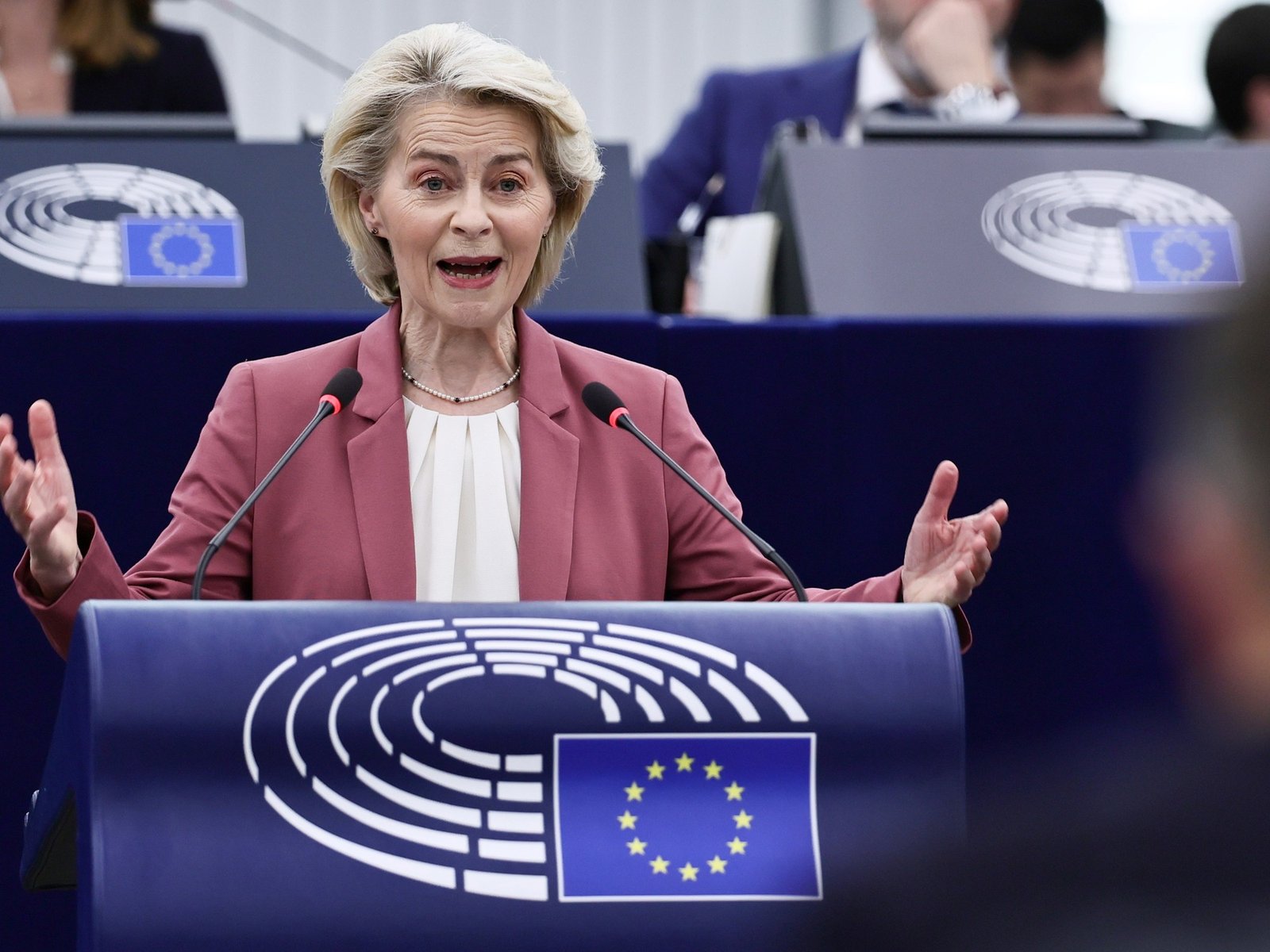
Europa está ganando la partida geopolítica a Rusia en el Cáucaso sur, una región que Moscú considera parte de su patio trasero. La presidenta de la Comisión Europea, la alemana Úrsula Von der Leyen, viaja la próxima semana a Armenia y Azerbaiyán y lo hace acompañada de la comisaria de Ampliación, Marta Kos, en una clara señal a países que querrían verse en el futuro siendo miembros de la Unión Europea, un escenario que aterroriza al Kremlin.
El juego de cartas en la región lleva décadas. A la caída de la Unión Soviética en 1991 la independencia de aquellas antiguas repúblicas soviéticas no fue suficiente para evitar que Moscú consolidara su posición como actor dominante en la región. Ese papel se fue degradando desde las guerras en Chechenia y, sobre todo, cuando los países del Cáucaso vieron que Moscú podría llegar a usar la fuerza para arrebatarles (como a Georgia) trozos de su territorio.
El ataque del 24 de febrero de 2022 a Ucrania parece ser la gota que colmó el vaso y que dio más influencia a los dirigentes proeuropeos o que, al menos, quieren acercarse a Europa para depender menos del Kremlin. Eso ha servido para que la Unión Europea haya ido incrementando su presencia diplomática y económica en la región, que hasta hace pocos años se limitaba a ciertos planes de cooperación al desarrollo.
La ampliación de la Unión Europea al centro y el este del continente con la entrada en 2004 de 10 países en el bloque hizo que los intereses de esos países se tuvieran en cuenta y se mirara más hacia el este. Ahí nació la Política Europea de Vecindad y la Asociación Oriental, marcos donde fueron ampliándose las relaciones con esos países.
La invasión rusa de Ucrania cambió el escenario por la ruptura con la Unión Europea y porque Europa ha buscado disminuir todo lo posible su dependencia de la energía rusa, diversificando corredores de gasoductos (esencial en eso Azerbaiyán) y mejorando sus relaciones con países que iban moviéndose hacia sistemas democráticos y que miraban más hacia Europa.
El conflicto de 2023 entre Armenia y Azerbaiyán por la región de Nagorno Karabaj aceleró los cambios políticos en la derrotada Armenia y mostró que Rusia no cumplía con su papel de fuerza de interposición. Tras depender durante décadas de la seguridad rusa mientras su tradicional enemiga Azerbaiyán se apoyaba en Turquía, Armenia giró cuando sintió la traición de Moscú. La reciente victoria electoral en Armenia, contra las maniobras del Kremlin, de un gobierno pro europeo liderado por Nikol Pasyihan, abre ahora la puerta a acelerar el acercamiento del país a la Unión Europea.
Cuando Rusia impuso medidas restrictivas comerciales a Armenia, Europa respondió anunciando paquetes de ayuda económica y de apoyo al sector privado. Mientras, los europeos buscan diversificar sus rutas comerciales y de energía, poniendo buena parte de la plata para infraestructuras energéticas que conecten la región desde Georgia hasta Turquía. Europa ve en Armenia un nudo de transportes en la región. Por eso también consiguió que, tras décadas cerrada, Turquía aceptara abrir su frontera con Armenia.
Los europeos se movieron rápido en las últimas ocasiones en que el Kremlin generó problemas económicos a Armenia. Cuando Moscú prohibió la venta de flores armenias en Rusia, paralizando un sector económico muy lucrativo para Erevan, la Comisión Europea se movió rápido para encontrar compradores alternativos en Europa.
El viaje de Von der Leyen a la región (el 1 de julio estará en Bakú y el 2 y 3 de julio en Ereván), simboliza ese acercamiento. Que con ella viaje Marta Kos, comisaria europea de Ampliación, es una señal tanto a los gobiernos de la región como al Kremlin. El mensaje que lleva la dirigente europea es que seguirá usando sus herramientas diplomáticas y económicas para anclar la región en Europa y alejarla del control de Moscú.
La relación europea con Azerbaiyán es más compleja por el carácter autoritario de su gobierno, pero Bruselas la mantiene engrasada por el papel de los azerís como suministradores de gas y porque su actitud es clave para mantener la estabilidad de la región.

Mauricio Macri apoyó la designación de Diego Santilli como jefe de Gabinete: «Celebro esa decisión, confío en que ayude a fortalecer el cambio»

Pax Silica: Argentina ingresó a una alianza estratégica con EEUU, que financiará inversiones clave para contener la ofensiva global de China

El comunicado del agente de Muslera con el que lo respaldó tras las críticas por la eliminación de Uruguay del Mundial: “Caretas”

Del partido de fútbol a la falsa sorpresa: paso a paso, así reconstruyó la Justicia el engaño de Claudio Barrelier a Agostina Vega

Según un ránking, Córdoba, Entre Ríos y Santa Fe son las provincias de mayor transparencia fiscal

Patricia Bullrich habló sobre la salida de Manuel Adorni: “Genera un nuevo aire para el Gobierno”

La bomba de Nico Occhiato tras el escándalo de Florencia Peña con Messi: “Lo más groso que pudimos haber logrado”

El punto de quiebre que sentó la suerte de Manuel Adorni y los preparativos que hace el Gobierno ante su inminente salida

Líderes mundiales ofrecieron ayuda humanitaria y equipos de rescate a Venezuela tras los devastadores terremotos

Una escena estremecedora: el dato más doloroso de los minutos posteriores a la muerte de Ernestina Pais

 CHIMENTOS1 día ago
La bomba de Nico Occhiato tras el escándalo de Florencia Peña con Messi: “Lo más groso que pudimos haber logrado”
- POLITICA1 día ago
El punto de quiebre que sentó la suerte de Manuel Adorni y los preparativos que hace el Gobierno ante su inminente salida
- CHIMENTOS2 días ago
Una escena estremecedora: el dato más doloroso de los minutos posteriores a la muerte de Ernestina Pais