INTERNACIONAL
Tras las multas a Google y AliEpress, ahora la Unión Europea apunta contra TikTok por no proteger a los chicos

La semana europea acaba con otro aviso a una de las grandes plataformas digitales del planeta. Después de multar el lunes a AliExpress y el jueves a Google, la Comisión Europea anunció este viernes que prepara sanciones contra TikTok por incumplir el Acta de Servicios Digitales al no garantizar cuentas seguras para los menores. Esa norma, en vigor desde 2024, es la que está permitiendo al brazo ejecutivo de la UE meter en vereda a las grandes plataformas pese a las protestas de Washington o Beijing.
La empresa china recibió este viernes el documento con las conclusiones preliminares (que no suele variar prácticamente del definitivo) de la investigación lanzada por la Comisión Europea el 19 de febrero de 2024. Bruselas asegura que las cuentas de los menores de edad en esa red social “no cumplen los estándares de seguridad exigidos por el Acta de Servicios Digitales”.
Henna Virkkunen, comisaria europea de Soberanía Tecnológica, Seguridad y Democracia, dijo este viernes que “los menores merecen disfrutar de una experiencia segura desde el momento en que se conectan a internet. El Acta de Servicios Digitales exige a las plataformas incorporar protecciones para los menores en el diseño de sus servicios y las hace responsables cuando no lo hacen. Un alto nivel de protección no debería depender de que el usuario lo active; debe ser la configuración por defecto. Esa es nuestra responsabilidad con las generaciones presentes y futuras”.
Los servicios del brazo ejecutivo de la Unión Europea explican que en esa red social los menores “pueden elegir configurar su cuenta como pública”. Eso significa que cualquier usuario, incluso quienes no tienen cuenta en TikTok, puede acceder al contenido que publican esos menores. Además, la plataforma permite que en su apartado “Para ti” (For your feed, en inglés) se recomiendo a adultos el contenido de menores de edad de 16 y 17 años.
Para la Comisión Europea eso es un peligro para los menores porque “puede dar lugar a contactos no deseados por parte de posibles depredadores, así como aumentar el riesgo de que el contenido sea utilizado para ciberacoso”.
La Comisión Europa asegura que “esta funcionalidad ofrece a desconocidos una ventana a la vida privada de un menor” y que “dado que lo que los menores publican puede permanecer en internet de forma permanente y acompañarlos durante la vida adulta, existe el riesgo de que esas publicaciones tengan consecuencias a largo plazo”.
Bruselas va más allá. Explica que incluso cuando los menores de edad configuran sus cuentas como privadas sus perfiles siguen siendo localizables a través de listas de seguidores y seguidos para otros usuarios, sus fotografías de perfil permanecen visibles para cualquier persona. Eso, cree la Comisión Europea, expone “a los menores a riesgos como el contacto no deseado, el ciberacoso o comportamientos depredadores”.
El Acta de Servicios Digitales obliga a que las plataformas tengan en marcha sistemas que garanticen “un alto nivel de privacidad, seguridad y protección”. Y la Comisión Europea considera que TikTok deja mucho que desear “al permitir una exposición excesiva de las cuentas y contenidos de los menores”.
Bruselas recuerda que el momento de crear una cuenta es uno de los primeros contactos de cualquier usuario con una plataforma digital, y que las forma en la que la cree “puede condicionar de forma duradera su experiencia en línea”.
Las directrices europeas sobre protección de menores, que las plataformas deben cumplir, recomiendan configuraciones que tengan el máximo nivel posible de privacidad, seguridad y protección.
La Comisión le señala a TikTok que debe cambiar la forma en que se configuran por defecto las cuentas públicas de los menores para que su contenido sólo sea visible para los usuarios de TikTok que el menor haya aceptado previamente. Además, Bruselas exige a la compañía que deje de recomendar el contenido de las cuentas de los menores a otros usuarios.
El proceso sigue con un período de alegaciones para TikTok, pero generalmente los resultados preliminares de la investigación suelen repetirse cuando esta es definitiva. Si cuando llegue esa resolución la plataforma no ha tomado las medidas necesarias para cumplir con las exigencias de la Comisión Europea, esta ya avisa que le impondrá una multa que dependerá “de la naturaleza, gravedad, reiteración y duración de la infracción”. En este caso, podría llegar hasta el 6% de la facturación mundial de la empresa.

‘FINISH LINE’: Lummis reveals CLARITY Act TIMELINE
Sen. Cynthia Lummis, Senate Digital Assets Subcommittee Chair, confirms the CLARITY Act is set for a Senate floor vote the week of July 20th. This crucial bill, developed over 10 months, aims to bring much-needed stability and regulatory certainty to the US crypto markets. Its passage before the August recess is vital for encouraging onshore business.
NEWYou can now listen to Fox News articles!
Senate Republicans want to rein in President Donald Trump’s income explosion since returning to the White House, but Democrats aren’t sold on how they’re going to do it.
The Senate is on the cusp of moving landmark cryptocurrency legislation known as the Clarity Act that, if passed, proponents say would finally fold the novel currency into the nation’s web of financial regulations.
Tucked away in the over 600-page package are a slate of ethics provisions that target Trump, the vice president and their spouses. The White House signed off on the provisions, and the architects of the bill say that the restrictions reach beyond just Trump and target lawmakers, too.
GOP RIFT GROWS AS THUNE HITS BRAKES ON TRUMP’S ELECTION BILL TO AVERT SHUTDOWN
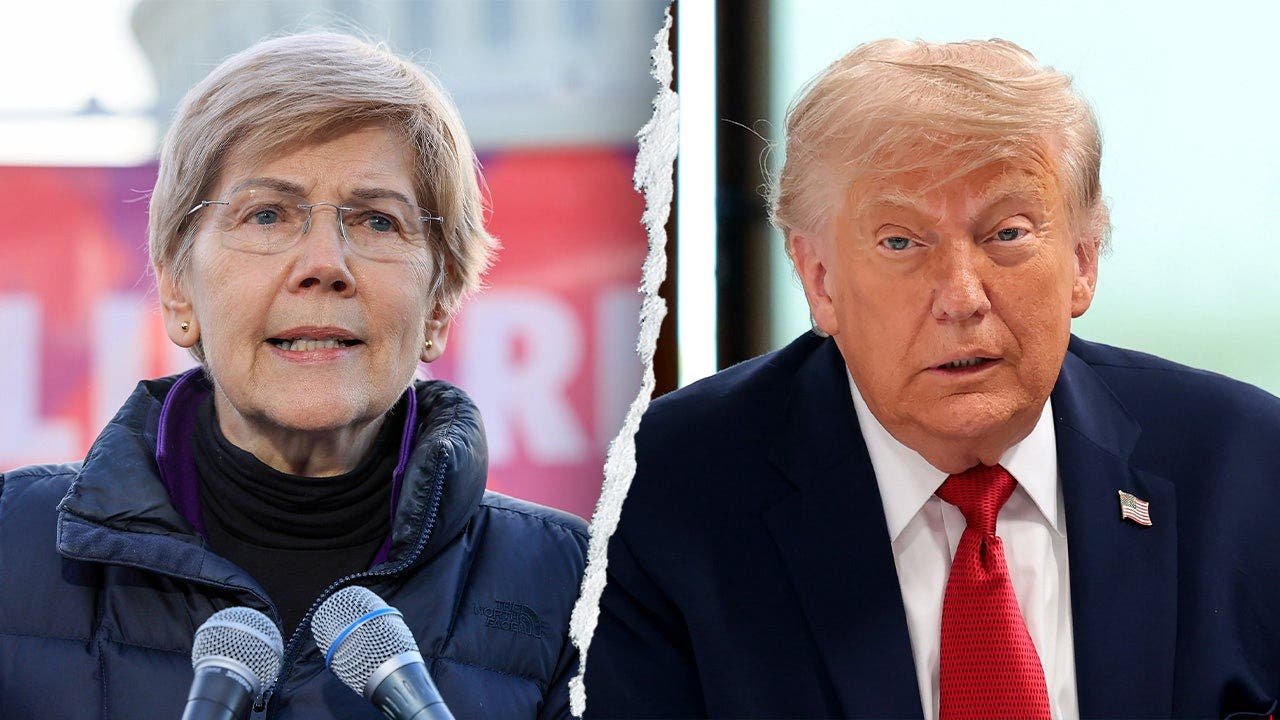
The Senate advanced a massive, Trump-backed housing package geared toward lowering the costs of homes and supercharging the housing supply. Sen. Elizabeth Warren, D-Mass., pitched it as legislation to prevent America from becoming a «nation of renters.» (Jemal Countess/Getty Images for Protect Borrowers ; Anna Moneymaker/Getty Images)
But for now, it’s not enough for Senate Democrats.
«Someone can call it an ethics provision,» Sen. Elizabeth Warren, D-Mass., said. «But if it doesn’t stop the president from profiting off of crypto, and using it as a way to take bribes right out in public. Then it’s not really any expedition.
The list of guardrails included preventing federal officials from creating their own digital currency for profit, promoting or endorsing crypto, creating a divestiture or blind trust requirement one year after enactment, allowing officials to own crypto and a disclosure of crypto sales.
Sen. Cynthia Lummis, R-Wyo., who has led the effort on the Clarity Act, told Fox News’ Maria Bartiromo that the idea isn’t to «plan legislation around one person who holds one office for the next two years, but rather, over time, that will serve the House, the Senate, the judiciary, and the executive branch in a fair way.»
HOUSE GOP VOTES TO PUNT GOVERNMENT SHUTDOWN BATTLE TO AFTER NOVEMBER MIDTERMS
«The struggle is, of course, a lot of Democrats are absolutely focused on one person, and that’s President Trump,» Lummis said. «So since President Trump actually agreed that he would have the choice to either put his assets in a blind trust, or divest of his participation in digital assets and companies that derive revenue from digital assets, somehow, that’s not enough.»
There are other gripes with the package, but the ethics provisions are proving a sharp red line. That’s because Trump’s income between 2024 and 2025 erupted by about 250% — from just over $620 million to about $2.2 billion.
And much of that increase is attributed to his various holdings and ventures in crypto, which are run by his sons, Don Jr. and Eric, according to the president’s financial disclosure forms reviewed by Fox News Digital.
Trump’s income shot up by $1.4 billion during his first year in office thanks to earnings from the $TRUMP memecoin, World Liberty Financial token sales and Stablecoin Holdco, among others.
Sen. Bernie Moreno, R-Ohio, who alongside Sen. Cynthia Lummis, R-Wyo., worked with the White House to draft the ethics provisions, said that the «behavior» that was being targeted was issuance, promotion, and sponsorship of crypto.
«Again, a very different standard than Nancy Pelosi was held to,» Moreno said.
REPUBLICAN SAYS TRUMP’S TOP ELECTION PRIORITY ‘DEAD’ IN SENATE AS GOP FRACTURES AHEAD OF MIDTERMS
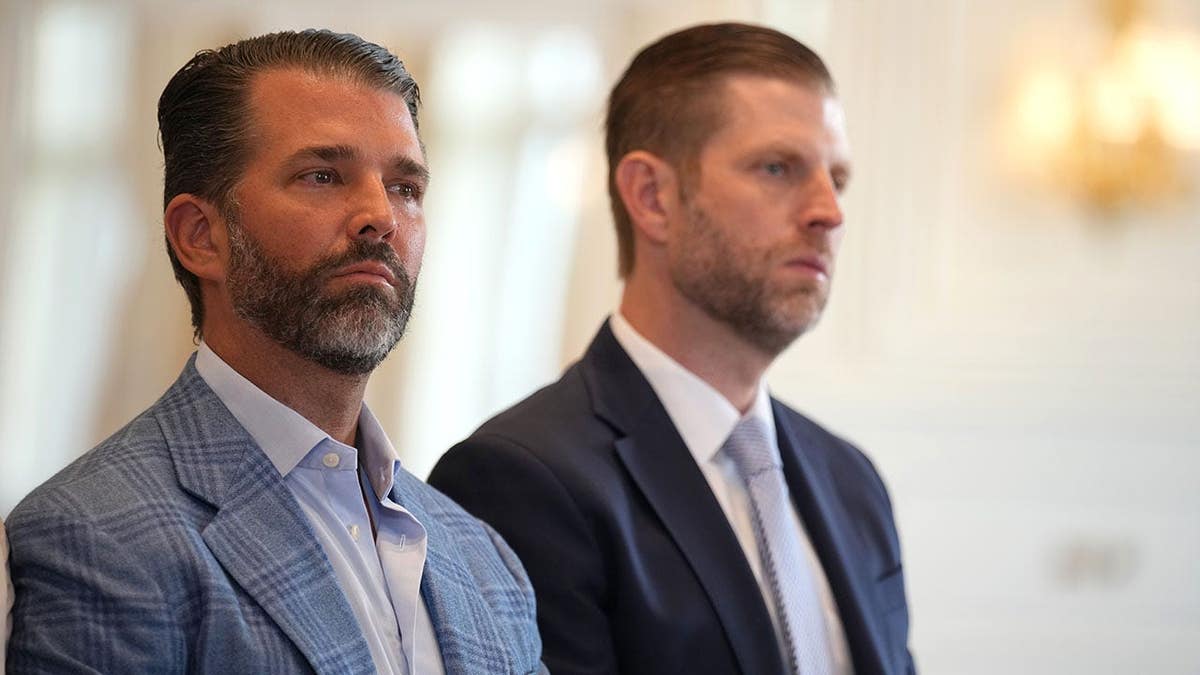
Much of the president’s income increase is attributed to his various holdings and ventures in crypto, which are run by his sons, Don Jr. and Eric, according to the president’s financial disclosure forms reviewed by Fox News Digital. (Andrew Harnik/Getty Images)
When asked about Democrats already raising issues with the provisions, Moreno told Fox News Digital, «They’re always obsessed with putting things into the base bill, just offer an amendment.»
«That’s the way this place was built, you know, let’s put the base bill out there,» he said. «The ethics piece is this much of the bill — Tiny bit — just offer an amendment.»
Democrats have noted that the ethics provisions don’t specifically target his sons, meaning that the Trump family crypto empire, which has heavily benefited from his name and time in office, would be left largely unchecked.
They also put sole enforcement power into the hands of Acting Attorney General Todd Blanche, a close ally of Trump’s, and are set to sunset on Jan. 20, 2029, when Trump will have left office.
Sen. Cory Booker, D-N.J., told Fox News Digital that he still has «a lot of ethics concerns, and there’s still work to do.»
CLICK HERE TO DOWNLOAD THE FOX NEWS APP
«This is the partisan draft. It’s very obviously not going anywhere,» Booker said. «If there’s only one pathway to do this it’s doing (it in) a bipartisan manner. There are enough of us on both sides of the aisle that we should be able to land this. It’s good faith negotiations.»
The objections to the bill, for now, appear to be slowing its roll through the Senate as the upper chamber sprints to a monthlong break in August, and deals with a shrinking window of opportunity to finish legislation before the year is out.
Senate Majority Leader John Thune, R-S.D., had hoped to get the Clarity Act on the floor next week, but acknowledged that might not be possible.
«I don’t think we’ll be able to get it done, but I would like to at least get Clarity started,» he said.
politics, donald trump, elizabeth warren, senate elections, legislation
INTERNACIONAL
Bombshell memo shows Biden planned to leave Trump with even more massive immigration crisis
NEWYou can now listen to Fox News articles!
A newly-uncovered Biden White House memo from the administration’s final days revealed plans that could have expanded Temporary Protected Status (TPS) to more than 3 million noncitizens while acknowledging that previous court challenges had blocked many of President Donald Trump’s efforts to end the protections.
TPS is meant for foreign populations experiencing crises like political unrest or natural disasters, and while Trump has tried to end the «temporary» provisions for Haitians, Nepalese, Salvadorans and Sudanese people, lawsuits from pro-migrant advocates have halted most attempts.
«Stakeholders argue that granting TPS will potentially protect many vulnerable people from President-elect Trump’s planned mass deportations… They argue that these protections are likely to hold in court, and they are prepared to litigate efforts to terminate or slow down the implementation of TPS for specified nations by the Trump Administration,» read a section of the memo — acquired by Sen. Eric Schmitt, R-Mo.
SUPREME COURT WEIGHS TRUMP EFFORT TO TERMINATE TEMPORARY PROTECTIONS FOR HAITIAN, SYRIAN MIGRANTS
US President Joe Biden (L) and President-elect Donald Trump arrive for the inauguration ceremony where Donald Trump will sworn in as the 47th US President in the US Capitol Rotunda in Washington, DC, on January 20, 2025. (Melina MARA / POOL / AFP via Getty Images)
«[P]rior federal litigation brought by advocates during the first Trump administration was successful in halting [its] efforts to terminate TPS, though that was due in large part to [its] failure to produce a factual record in support of termination, which is something that could be rectified,» the memo went on.
Schmitt said he obtained the memo from Archivist of the United States Edward Forst through his authority as chairman of the Senate Judiciary Subcommittee on the Constitution.
BIRTH TOURISM COULD SOON CARRY A SEVERE NEW CONSEQUENCE FEW WOULD RISK: ‘EXISTENTIAL CRISIS’
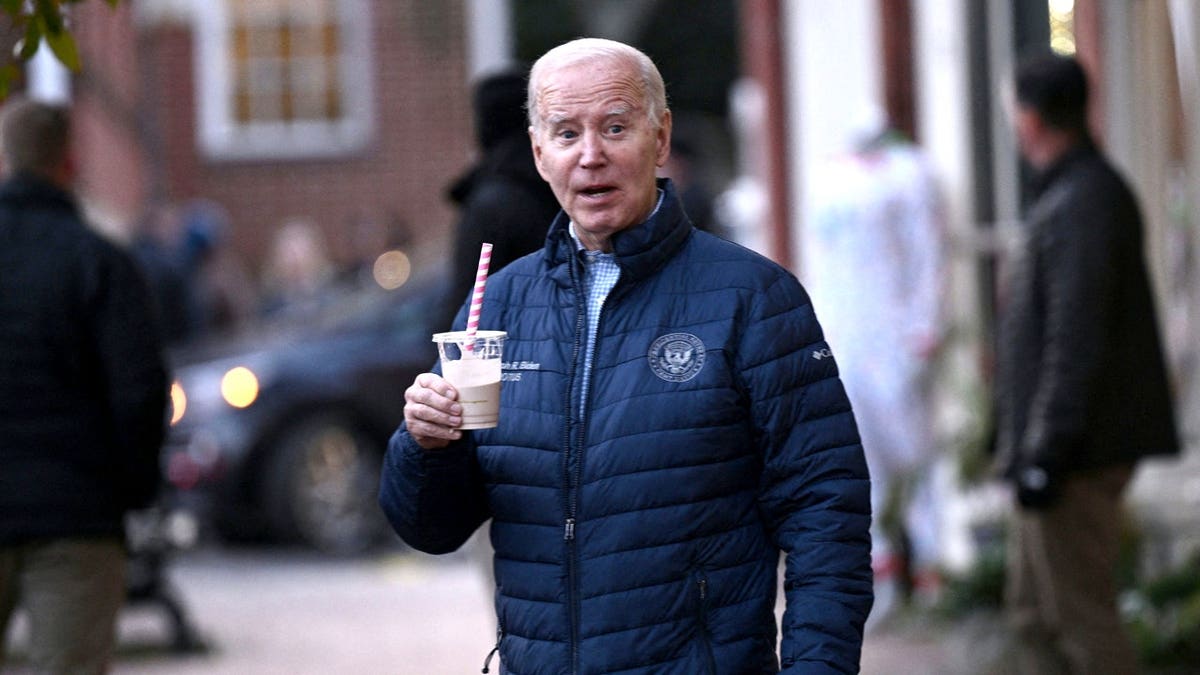
President Joe Biden carries a milkshake while visiting Nantucket for the Thanksgiving holiday in 2023. (BRENDAN SMIALOWSKI/AFP via Getty Images)
«Biden tried to turn TPS into a 3.1-million-person deportation shield, protect Tren de Aragua members, and trap President Trump in years of litigation,» he said, adding the move directly betrayed the «will of the people» who ousted liberal Democrats from power the prior election.
«The most disturbing part, Biden’s ‘Senior Advisors’ recommended he create 2.1 million NEW TPS designees in the last few weeks of his presidency, despite admitting TPS applications take 6 months,» Schmitt added.
«Luckily, that never happened and we have been deporting Ecuadorians and Guatemalans.»
TRUMP’S ‘THIRD WORLD’ TRAVEL BAN COULD BECOME PERMANENT IF FIREBRAND REPUBLICAN LAWMAKER GETS HER WAY
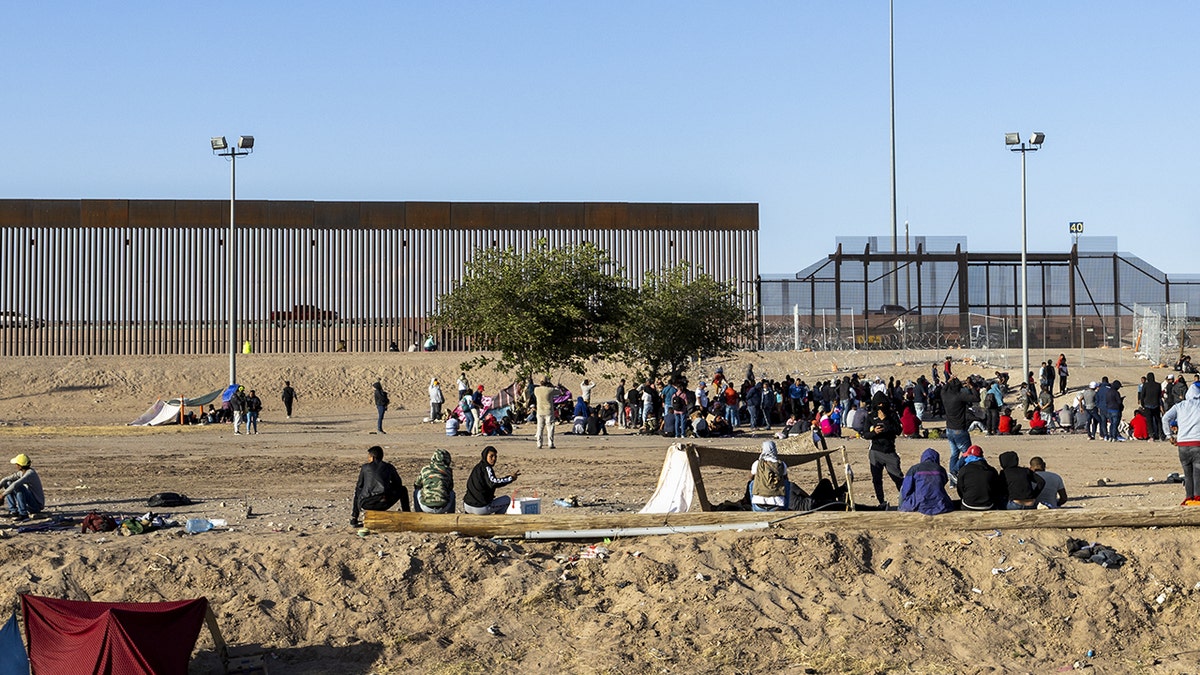
CIUDAD JUAREZ, MEXICO – APRIL 25: Hundreds of Venezuelan migrants try to cross the border by foot from Mexico to United States on April 25, 2023 in Ciudad Juarez, Mexico. About 4,000 people left Chiapas city on Apr. 23 to reach United States. (David Peinado/Anadolu Agency via Getty Images)
Fox News Digital reached out to Biden, a former Biden official and Schmitt for additional comment.
Schmitt noted that one week after the January 2025 memo — which he said was erroneously dated «2024» — Biden extended TPS protections for nearly 1 million noncitizens, meaning its transmission still led to «a concrete, mass-migration action.»
Schmitt shared a clip of his recent floor remarks on a related topic, where he said the U.S. should not be a «get-rich-quick scheme for the third world» and that Americans don’t try to delay enforcement of squatters on their property in real-life.
The memo reminded Biden he gave TPS protections to Afghans, Cameroonians, Ethiopians, people from Burma, Lebanese, Ukrainians and Venezuelan nationals and repeatedly extended protections for Haitians.
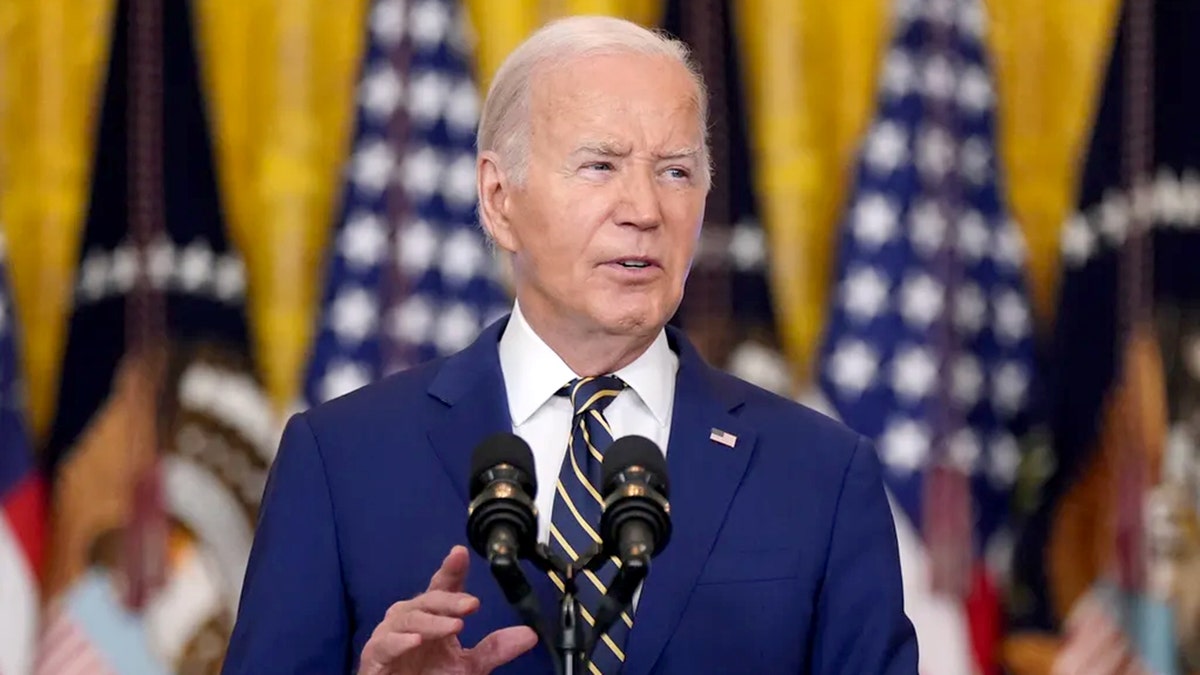
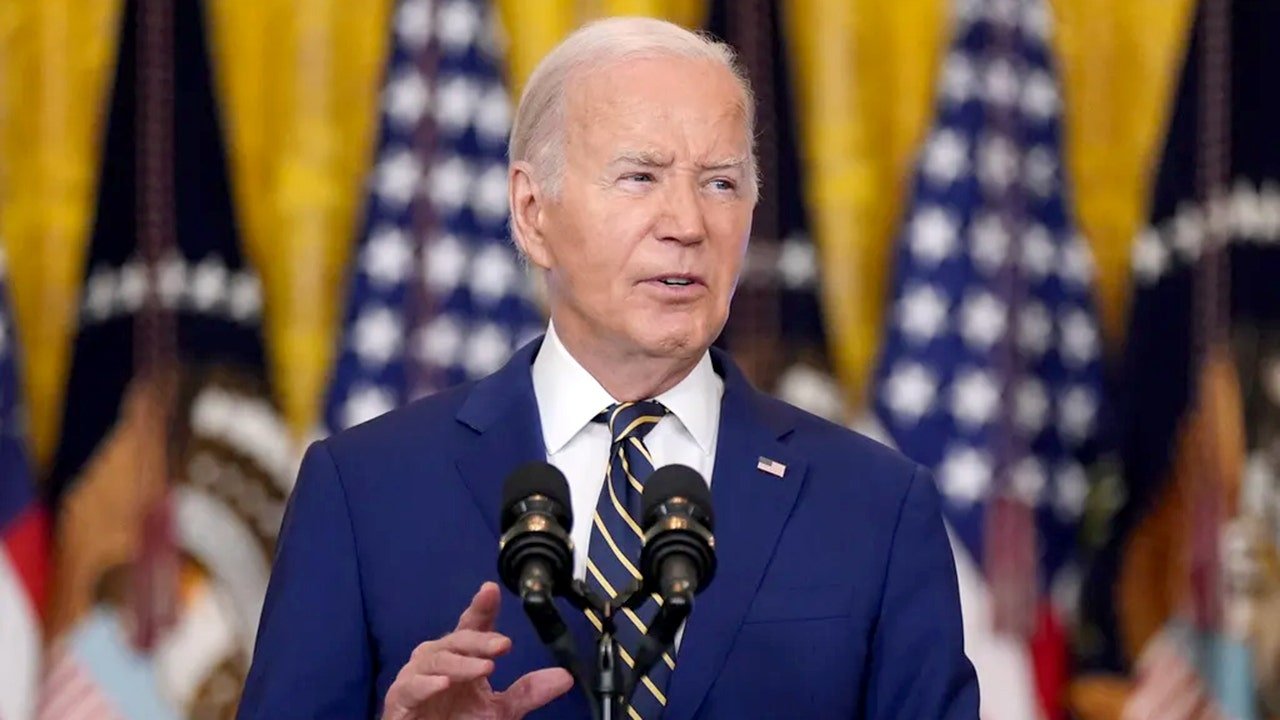
Former President Joe Biden addresses from a podium. (AP Photo/Manuel Ceneta)
«The previous Administration unsuccessfully attempted to terminate TPS designations for Sudan, Nicaragua, Haiti, El Salvador, Nepal, and Honduras. Courts issued preliminary injunctions blocking the Trump Administration’s actions,» it read. «Your administration took actions to resolve this litigation by either redesignating Haiti or rescinding the terminations.»
The memo noted that Trump had said during the 2024 campaign he intended to revoke TPS protections for Haitians and predicted his incoming administration would likely seek to rescind additional TPS designations.
A chart in the memo estimated potential new TPS eligibility for roughly 1.5 million Guatemalans, 600,000 Ecuadorians, 464,000 Nicaraguans, 455,000 Venezuelans, and smaller populations from Ukraine, Sudan, and Afghanistan — figures Schmitt said totaled more than 3.1 million people.
SIGN UP TO GET THE POLITICS NEWSLETTER
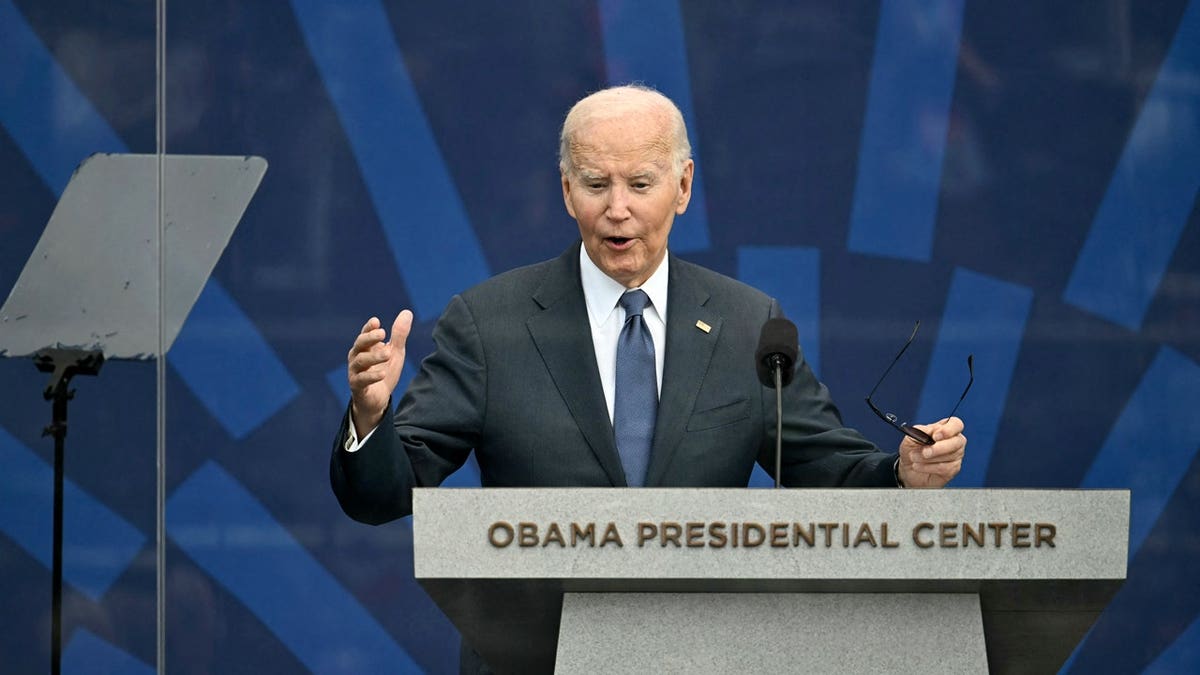
Joe Biden speaks during the opening of the Barack Obama Presidential Center in Chicago, Illinois (Kent NISHIMURA / AFP via Getty Images))
The memo said Biden’s «senior team» had also received requests for varying types of new TPS-related actions before Trump would take office from Sens. Michael Bennet, D-Colo., Catherine Cortez-Masto, D-Nev., Cory Booker, D-N.J., Richard Durbin, D-Ill., Mazie Hirono, D-Hawaii, Ben Ray Lujan, D-N.M., Tammy Duckworth, D-Ill., and Alex Padilla, D-Calif.
CLICK HERE TO DOWNLOAD THE FOX NEWS APP
«In addition, some stakeholders are requesting that your Administration designate nationals from new countries, most notably Ecuador and Guatemala, for TPS,» it stated.
While the proposals outlined in the memo were never fully implemented, the document offers a rare glimpse into the immigration options Biden advisers presented as Trump prepared to return to the White House promising mass deportations.
illegal immigrants, immigration, deportation, joe biden, white house, donald trump, democrats senate, republicans elections
INTERNACIONAL
Guerra comercial: qué cambia con los nuevos aranceles de Trump y por qué decenas de países reaccionaron contra la medida
La decisión de Estados Unidos de aplicar nuevos aranceles de entre el 10% y el 12,5% a importaciones provenientes de más de 80 países generó un fuerte rechazo global. La administración de Donald Trump justificó la medida por la supuesta falta de controles contra el trabajo forzoso en esos países, pero los gobiernos afectados salieron al cruce y anticiparon negociaciones o acciones diplomáticas.
Los gravámenes, que reemplazaron al arancel global temporal del 10% vencido el jueves, entraron en vigor a las 00:01 de este viernes 24.
La agenda comercial de Trump sufrió un amplio revés en febrero, cuando la Corte Suprema dictaminó que sus aranceles indiscriminados eran inconstitucionales, ya que solo el Congreso puede aprobar medidas de este tipo.
Por eso, para la nueva ronda de aranceles, el gobierno estadounidense se amparó en la Sección 301 de la Ley de Comercio de 1974, que habilita represalias ante prácticas comerciales consideradas injustas o discriminatorias. Según el representante comercial Jamieson Greer, la medida busca forzar la eliminación de prácticas sancionadas por la investigación sobre trabajo forzoso.
Según el anuncio de este jueves, las economías que han implementado una prohibición a la importación basada en trabajo forzoso o comprometidos a hacerlo tendrán el arancel del 10%. Entre ellos están Canadá, la Unión Europea, la India, el Reino Unido y la Argentina.
China, Japón, Corea del Sur y decenas de otros países recibirán el arancel del 12,5%. Sin embargo, algunos bienes que ya enfrentaban aranceles específicos -como el acero y el aluminio- que seguirán como estaban.
Brasil y Chile cuestionaron el argumento del trabajo forzoso
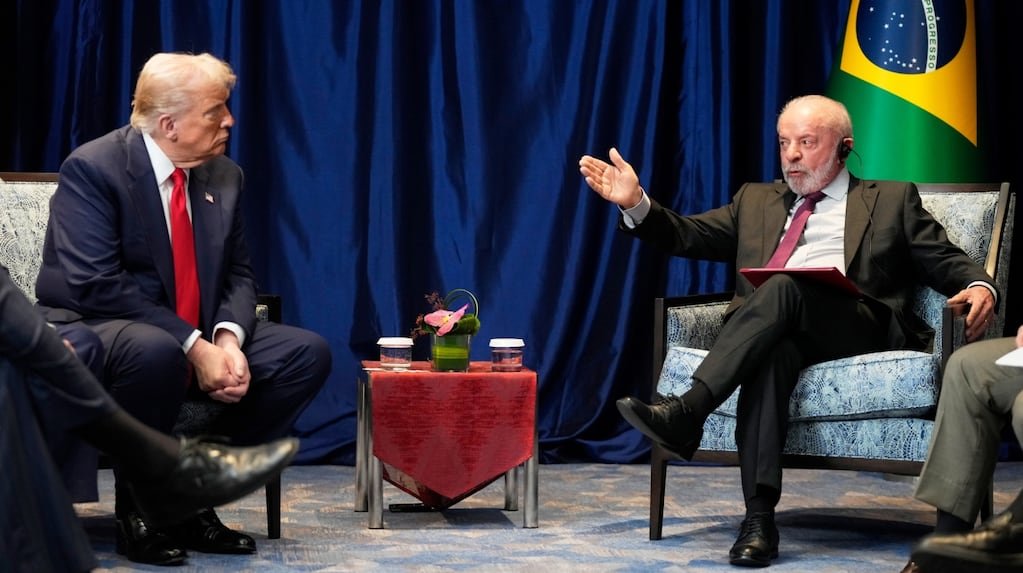
Brasil fue uno de los primeros en responder. El gobierno de Luiz Inácio Lula da Silva acusó a Estados Unidos de usar el trabajo forzoso como excusa para reforzar el proteccionismo. En un comunicado, Brasil sostuvo que Washington “optó por manipular un tema tan importante” ante la falta de fundamentos legales internos para justificar la suba de aranceles. Brasil criticó las nuevas tarifas impuestas por Estados Unidos. (Foto: REUTERS/Adriano Machado).
La medida representa el segundo aumento arancelario contra Brasil en menos de una semana, tras el gravamen del 25% aplicado el miércoles por supuestas prácticas desleales. Según la Cámara Americana de Comercio para Brasil, la carga total sobre las exportaciones brasileñas llegará al 37,5%.
En la misma línea, Chile anunció que buscará quedar excluido de la lista de países afectados. La Cancillería chilena defendió la “sólida institucionalidad laboral” del país y consideró que la sanción no se condice con los antecedentes técnicos ni jurídicos presentados. El presidente de la Sociedad Nacional de Agricultura, Antonio Walker, advirtió que la medida afecta la competitividad y genera incertidumbre para productores y trabajadores.
Japón, Corea del Sur y Australia reclamaron respeto a los acuerdos vigentes
En Japón, el portavoz gubernamental Minoru Kihara calificó la decisión de “lamentable” y recordó que la industria nipona cumple con las normas internacionales. Kihara subrayó que el acuerdo bilateral firmado en 2025 fijó un arancel del 15% para la mayoría de las importaciones japonesas a cambio de inversiones por 550.000 millones de dólares en Estados Unidos.

El vocero japonés Minoru Kihara calificó como «lamentable» la decisión de Estados Unidos. (Foto: REUTERS/Kim Kyung-Hoon).
Corea del Sur también pidió mantener el entendimiento comercial alcanzado con Washington. La oficina presidencial informó que el gobierno “planea mantener estrechas consultas” para garantizar el arancel del 15% pactado. El Ministerio de Comercio surcoreano aseguró que las autoridades estadounidenses reafirmaron su compromiso con el acuerdo vigente.
Desde Australia, el ministro de Comercio Don Farrell reclamó la eliminación de los nuevos gravámenes y sostuvo que son “injustificados” y “incompatibles” con el acuerdo de libre comercio. Farrell destacó que Australia cuenta con “algunas de las medidas más sólidas del mundo” para combatir el trabajo forzoso y la esclavitud moderna.
México, Nueva Zelanda, Filipinas, Canadá y Panamá: distintas respuestas ante la decisión de Trump
México informó que el Tratado entre México, Estados Unidos y Canadá (T-MEC) permitió evitar el impacto de las nuevas tarifas: el 85% de las exportaciones mexicanas seguirá ingresando con arancel cero, mientras el resto mantendrá el 10% previo.
En Nueva Zelanda, el primer ministro Christopher Luxon rechazó la medida y cuestionó la falta de pruebas sobre trabajo forzoso. “Los aranceles no son el camino; aumentan los costos y la incertidumbre para las empresas”, afirmó en la red social X.
La Cámara de Comercio e Industria de Filipinas expresó preocupación por la nueva tarifa del 12,5%. Su presidente, George Barcelon, consideró que la medida hará menos competitivas a las industrias y calificó de “muy poco claros” los argumentos sobre trabajo infantil. La secretaria de Comercio, Christina Roque, defendió la política nacional contra el trabajo forzoso.
En Canadá, el primer ministro Mark Carney confirmó que su gobierno intensificó las negociaciones con Washington para evitar la entrada en vigor, el 19 de agosto, de un arancel del 50% sobre productos canadienses. Carney advirtió que “todo está sobre la mesa” y que Ottawa comparte el objetivo de impedir el ingreso de bienes producidos con trabajo forzoso.
Por su parte, Panamá celebró haber quedado excluida de la nueva lista. El ministro de Comercio e Industrias, Julio Moltó, destacó que la exclusión reafirma la relación de confianza y cooperación con Estados Unidos.
Estados Unidos, aranceles, guerra comercial

Republicans target Trump’s crypto empire with new plan, Dems say it falls short

La justicia laboral dictó un fallo favorable a una pyme que sufrió un bloqueo sindical y despidió 35 empleados

Inauguraron una nueva telecabina de última generación en Cerro Chapelco

¿Dónde ver EN VIVO el Racing Club vs Gimnasia y Esgrima de La Plata por el Torneo Clausura 2026?

En un gesto de acercamiento, el nuevo nuncio apostólico fue recibido por el canciller Quirno

Vocero de Milei dijo que un dólar a $1.800 es «posible» y la City alerta por fin de la paz cambiaria

Escándalo Mundial: Las presiones secretas, la amenaza de la FIFA por Malvinas y la verdad detrás del partido contra España

Samuel L. Jackson llamó a Argentina “el país más racista del mundo”: la contundente respuesta que le dejó Bárbara Lombardo

Jorge Berredo, general retirado de las FFAA, asumió como Secretario de Seguridad en San Isidro

Sin la anestesia mundialista, aflora la crisis del conurbano y Milei necesita reconectar con lo popular

 DEPORTE3 días ago
Escándalo Mundial: Las presiones secretas, la amenaza de la FIFA por Malvinas y la verdad detrás del partido contra España
- POLITICA2 días ago
Jorge Berredo, general retirado de las FFAA, asumió como Secretario de Seguridad en San Isidro
- POLITICA1 día ago
Sin la anestesia mundialista, aflora la crisis del conurbano y Milei necesita reconectar con lo popular