INTERNACIONAL
Trump-aligned House holdouts accused of holding ‘life-saving’ veterans bill ‘hostage’ over SAVE America Act

NEWYou can now listen to Fox News articles!
A sweeping veterans package supporters describe as the largest expansion of veterans’ health care and benefits in more than a decade is expected to return to the House floor when lawmakers come back from the July recess, but backers warn the legislation could once again become collateral damage in the Republican standoff over the SAVE America Act.
The Take Care of America’s Veterans Act rolls roughly 60 veterans bills into a package that would dramatically expand veterans’ health care and benefits. At its core, the legislation would cement veterans’ access to community care outside the VA while increasing benefits for combat-wounded veterans, caregivers and Gold Star families, expanding mental health services and enacting dozens of additional reforms.
House Veterans’ Affairs Committee Chairman Mike Bost, R-Ill., told Fox News Digital he intends to bring the Take Care of America’s Veterans Act back for a vote as soon as the House reconvenes next week.
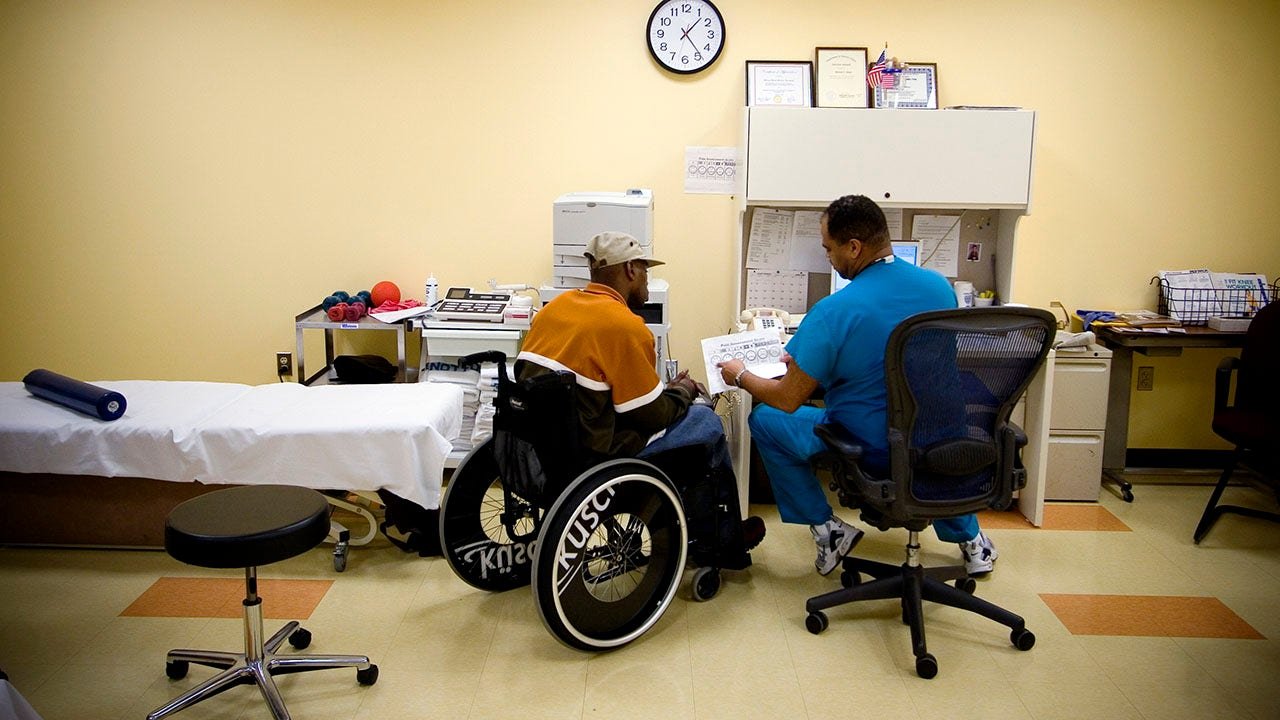
WASHINGTON, D.C. – MARCH 17: Eugene Simpson, 29, from Dale City, Virginia goes through physical therapy at the Veterans Affairs Medical Center in Washington, D.C. with Michael Minor, a kinesiotherapist with the United States Department of Veterans Affairs on March 17, 2006 in Washington, D.C., USA. (Photo by Jeff Hutchens/Getty Images) (Jeff Hutchens/Getty Images)
HOUSE CONSERVATIVES DERAIL GOP AGENDA IN SAVE AMERICA ACT SHOWDOWN
The legislation was held up last month after a group of House Republicans joined Democrats to defeat a procedural vote, stopping the House from taking up the bill.
«I’m feeling good as long as my members stay with us on the rule,» Bost said. «Right now, there’s some politics being played, not about this bill, but just in general.»
The bill became entangled in a broader House Republican fight over the SAVE America Act, legislation championed by President Donald Trump that would require proof of U.S. citizenship to register to vote in federal elections.
On June 30, the House voted on H. Res. 1398, the procedural rule governing floor consideration of several bills, including the National Defense Authorization Act and the Take Care of America’s Veterans Act. The rule failed after 14 Republicans joined Democrats in opposition, preventing the House from taking up the veterans package and bringing floor business to a standstill. Rep. Anna Paulina Luna, R-Fla., claimed to have voted against the rules vote in protest against House leadership’s handling of the SAVE America Act. As a result, Speaker of the House Mike Johnson sent the members home early.
Bost accused the holdouts of effectively putting veterans legislation on hold.
The US Department of Veterans Affairs building is seen in Washington, DC, on July 22, 2019. (Photo by Alastair Pike / AFP) (Photo credit should read ALASTAIR PIKE/AFP via Getty Images) (Photo credit should read ALASTAIR PIKE/AFP via Getty Image)
‘IT’S A MESS’: GOP TURNS ON HOUSE CONSERVATIVES AS VOTER ID BLOCKADE STALLS TRUMP’S AGENDA
«They’re holding all bills hostage,» Bost said. «They’re not voting for any rule. Any bill that has to pass a rule before it comes to the floor—which this bill does because of its size—can’t move.»
Although Bost said he supports the SAVE America Act and has voted for it three times, he argued the Senate’s failure to act should not stop the House from advancing unrelated legislation.
«I agree with that bill,» Bost said. «But the Senate still has to do their work. We don’t stop our work because the Senate isn’t doing it.»
With 23 legislative days left in the Congressional session, Concerned Veterans for America Strategic Director John Byrnes, a supporter of the bill, said time is of the essence.
«There are lots and lots of things that have to get done,» Byrnes told Fox News Digital. «There’s also the National Defense Authorization Act, which is a must pass every year, so these things eat up time. There’s requirements to have debate on these, which eat up session time.»
Byrnes argued that every procedural delay pushes other legislation further down the calendar.
«This bill will save lives in 2027,» Byrnes said. «If we lose veterans because they could have had faster, better access to health care, we’re never going to get those veterans back.»
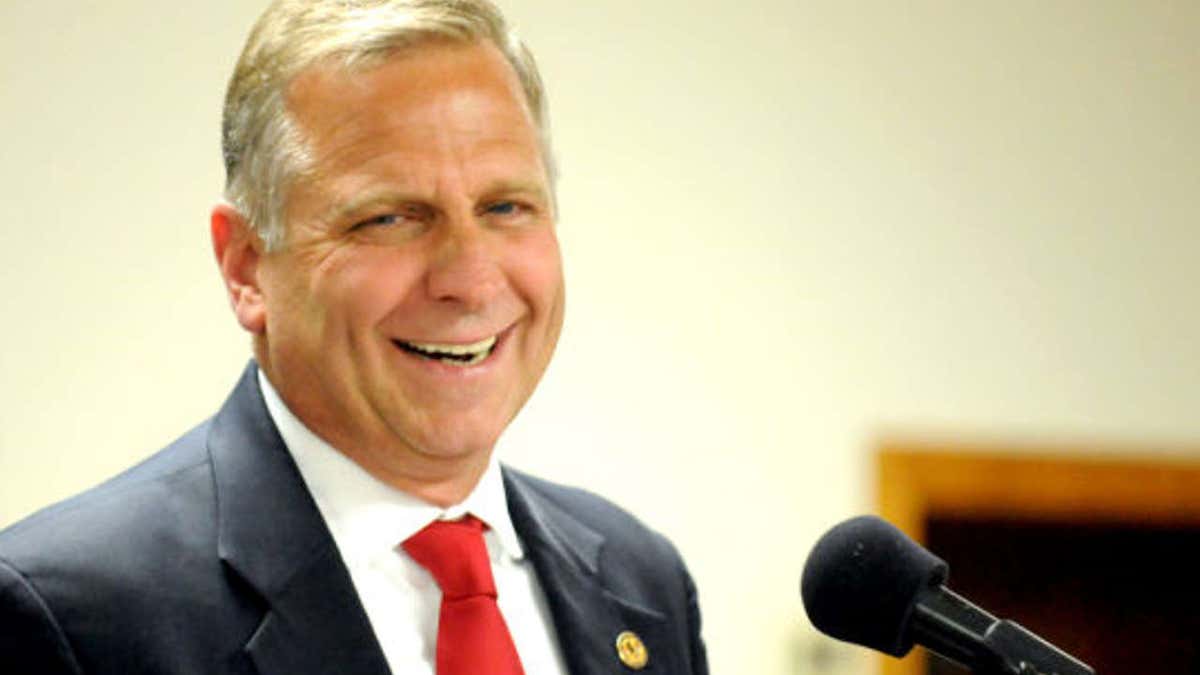
Rep. Mike Bost, R-Ill. ( )
TRUMP’S SAVE AMERICA ACT SHOWS SIGNS OF LIFE IN THE SENATE DESPITE REPUBLICAN REVOLT
But Rep. Chip Roy, R-Texas, who also voted no on the procedural vote, told Fox News Digital that he has concerns about how the bill is financed.
«I appreciate what the chairman’s trying to do in some respects, but there’s a few issues,» Roy said.
Among them, Roy pointed to provisions offsetting new spending through changes affecting other veterans.
«You’re taxing certain veterans to provide some sort of benefits and changes to other veterans,» Roy said. «There are concerns about some of the pay-fors.»
Veterans of Foreign Wars has also taken issue with Section 108 of the bill, warning that it would codify changes to future disability ratings for tinnitus and sleep apnea to help finance other veterans priorities.
But Bost said this is inaccurate.
«No veteran is going to have their benefits reduced,» Bost said. «If you’re receiving a benefit right now, that’s not going to be reduced at all.»
Roy, who previously served two years on the House Veterans’ Affairs Committee, said he supported a lot of what the bill was seeking to accomplish; but said other pieces of legislation are priorities, too.
CLICK HERE TO DOWNLOAD THE FOX NEWS APP
«There is a block of us for whom border security, the SAVE Act and demonstrating our leadership on major issues is critical,» Roy said. «Some of these other bills may or may not get hung up based on a desire of many in the conference to see movement on other things.»
Fox News Digital reached out to Luna’s office and the White House for comment.
veterans, legislation, congress, defense, domestic policies









NEWYou can now listen to Fox News articles!
ŠKOFJA LOKA, Slovenia: The Republic of Slovenia, the central European nation known for being the birthplace of First Lady Melania Trump and LA Lakers star Luka Dončić, is undergoing a radical shift in politics as the country comes to terms with its new larger-than-life prime minister.
Prime Minister Janez Janša recently scraped together a coalition that did away with the country’s leftist leader, Robert Golob.
In what is his fourth term, Janša has begun what many see as Trump-like policy corrections. He has reversed Golob’s anti-Israel policies by announcing his intent to move the Slovenian embassy to Jerusalem, freezing Slovenia’s recognition of a Palestinian state and revoking a 2025 ban on military trade with Israel.
EUROPE’S ‘GREEN IDEOLOGY’ CLIMATE AGENDA RISKS CRUSHING ITS INDUSTRY, ENVIRONMENT MINISTER WARNS
Right-wing Slovenian Democratic Party (SDS) leader Janez Jansa addresses the media after his investiture vote as Slovenia’s Prime Minister at the National Assembly in Ljubljana on May 22, 2026. (Jure Makovec / AFP via Getty Images)
Janša also believes in strong U.S. relations. During an America 250 event hosted by the U.S. Embassy in Ljubljana, and with the First Lady’s father, Viktor Knavs, in attendance, Janša described how America was the beacon for Slovenian independence. «We imagined America, the United States of America, as the ideal embodiment of that free world… That Slovenia, too, would become the home of the brave in a land of the free.»
Domestically, he says his new government will reverse what he called the Golob government’s «inefficiency» and turn Slovenia into «a country of opportunity, prosperity and justice, where each responsible citizen will feel safe and accepted.»
He has announced plans to reverse many anti-business policies, cut government red tape, support private education and healthcare, reform the pension system, decrease the size of government and invest in infrastructure projects, including a plan to build a second reactor at Slovenia’s Krško nuclear power plant.
Despite some policy disagreements, Janša was a close ally of former Hungarian Prime Minister Viktor Orbán. He has expressed support for Ukraine, traveling to Kyiv during his last term as prime minister in March 2022 with the then-Polish and Czech Prime Ministers in an early showing of EU solidarity against the Russian invasion and he recently returned to Kyiv to mark Ukraine Statehood Day as part of the Ukraine–Southeast Europe Summit.
WHITE HOUSE BLASTS SPANISH GOVERNMENT AS THOUSANDS OF MIGRANTS SURGE FROM MOROCCO, EMERGENCY REQUEST DENIED

File: A sign which reads ‘Welcome to the Hometown of the First Lady’ in Slovenian, is pictured on November 27, 2016 in Sevnica, Slovenia. Born in Slovenia, Melania Trump was raised in the town of Sevnica, by her father, a car salesman, and her mother, a pattern maker at a textile factory. The former model will become the second foreign-born First Lady of the United States when her husband Donald Trump is sworn in as President during a ceremony in Washington DC on January 20, 2017. ( Jack Taylor/Getty Images)
He supports increased military aid to the country and increased sanctions against Russia. And like Orbán, Janša was staunchly anti-immigrant during the huge Europe migration wave in 2015, when «Balkan Route» migrants practically marched through Slovenia on their way to other parts of Europe.
Janša often praises many of President Trump’s immigration policies. Although no reforms have yet made it through the Slovenian parliament, shortly after taking office, Janša joined 18 other EU leaders in signing a letter calling for «a fundamental change in immigration policy» and practice.
They called for reducing irregular migration, combatting human smuggling more effectively, increasing deportations, and strengthening cooperation with third countries. Janša said Slovenia is «finally joining» other countries calling for these reforms, writing, «The end is approaching for social tourism, overlooked people smuggling and the importation of voters for the European left.»
‘YOU’RE DESTROYING YOUR COUNTRIES’: IS EUROPE FINALLY HEEDING TRUMP’S WARNING ON ILLEGAL IMMIGRATION?
And, like Trump, Janša has his critics. He has been called «the greatest threat to Slovenia’s sovereignty and democracy.»
An aggressive user of X, where he comments on politics and criticizes his opponents in late night posting sprees, Janša has had battles with the country’s media, with many accusing him of undermining its independence.
Janša has also served time in jail, having been convicted and imprisoned in a case he called politically motivated.
Now serving a fourth non-consecutive term as prime minister— or predsednik vlade—he strangely lost the election that eventually put him back in office in June.
On two occasions, Janša and his party lost an election, yet he still became the prime minister. Think of it as losing the popular vote yet winning the Electoral College.
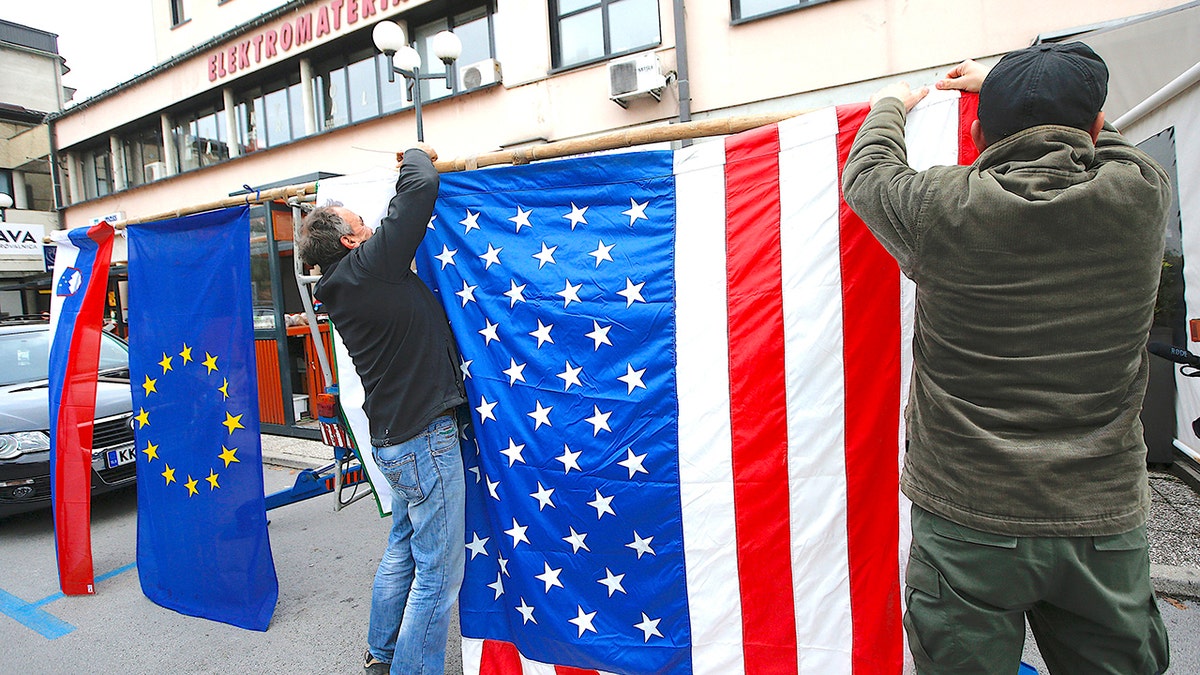
FILE: Residents of Sevnica, hometown of Melania Trump, wife of Republican presidential elect Donald Trump, hang a US flag as they celebrate the victory of Donald Trump in the race for the White House in Sevnica, Slovenia on November 9, 2016. Republican Donald Trump has won the US presidency with at least 290 electoral votes, securing more than the 270 he needed to succeed Barack Obama. (Jure Makovec/AFP Via Getty Images)
Slovenes went to the polls on March 22 after a tumultuous four-year term for then-Prime Minister Robert Golob and his far-left coalition partners. Polls that had initially forecast a landslide victory for Janša tightened quickly in the run-up to election day. Golob’s Gibanje Svoboda, or Freedom Movement, party would «win» by taking 29 seats of the 90-seat legislature with 28.7% of the vote. That was a net loss of 12 seats from the 41 seats and 34.5% of the vote the party won in 2022.
Janša’s Slovenska demokratska stranka, or Slovenian Democratic Party, the party he has led since 1993, took 28 seats with 27.9% of the vote. The same 29-28 outcome as in 2008, when Janša also «lost» yet was able to form a governing coalition.
MELANIA TRUMP HELPS REUNITE FIFTH GROUP OF UKRAINIAN, RUSSIAN CHILDREN WITH FAMILIES
After a month of trying, Golob was unable to form a new ruling coalition. Slovenian President Nataša Pirc Musar said she would not nominate anyone for prime minister as no one was able to get the 46 votes needed in Parliament.
Enter Janša, who many analysts call a master coalition builder. After two weeks of discussions, his future government would end up receiving 51 votes in a secret ballot of the National Assembly: 48 from his coalition and their partners, two from the representatives of the Italian and Hungarian minorities in Slovenia… and, surprisingly, one from an anonymous member of the opposition.
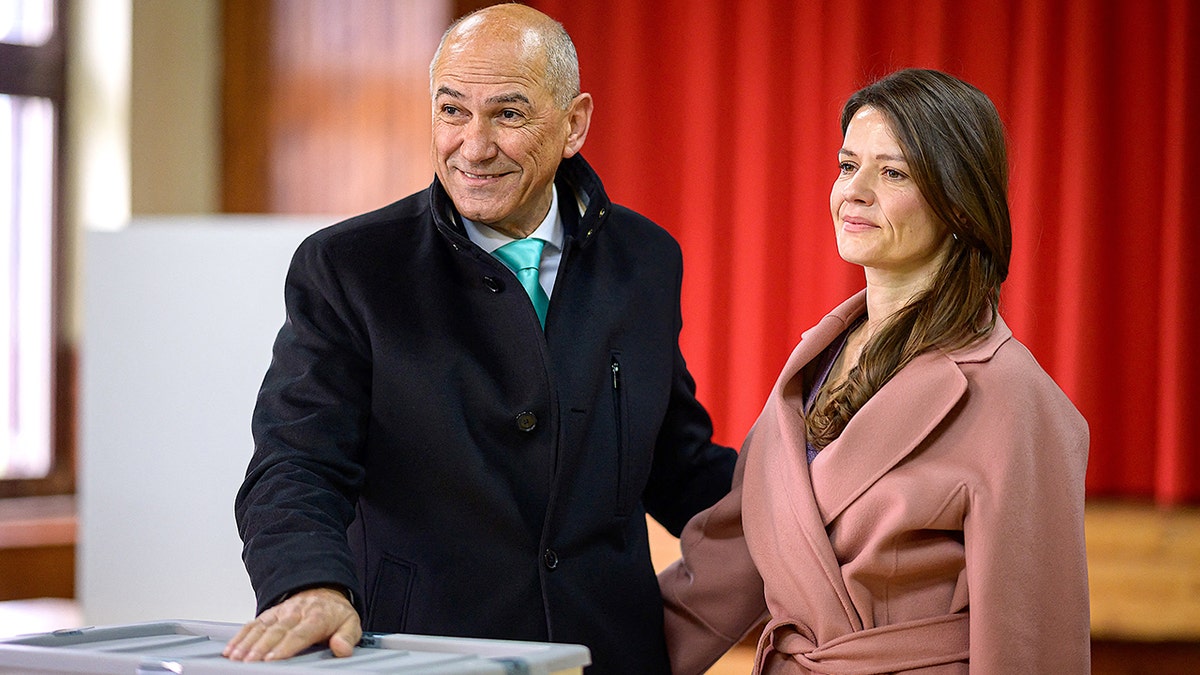
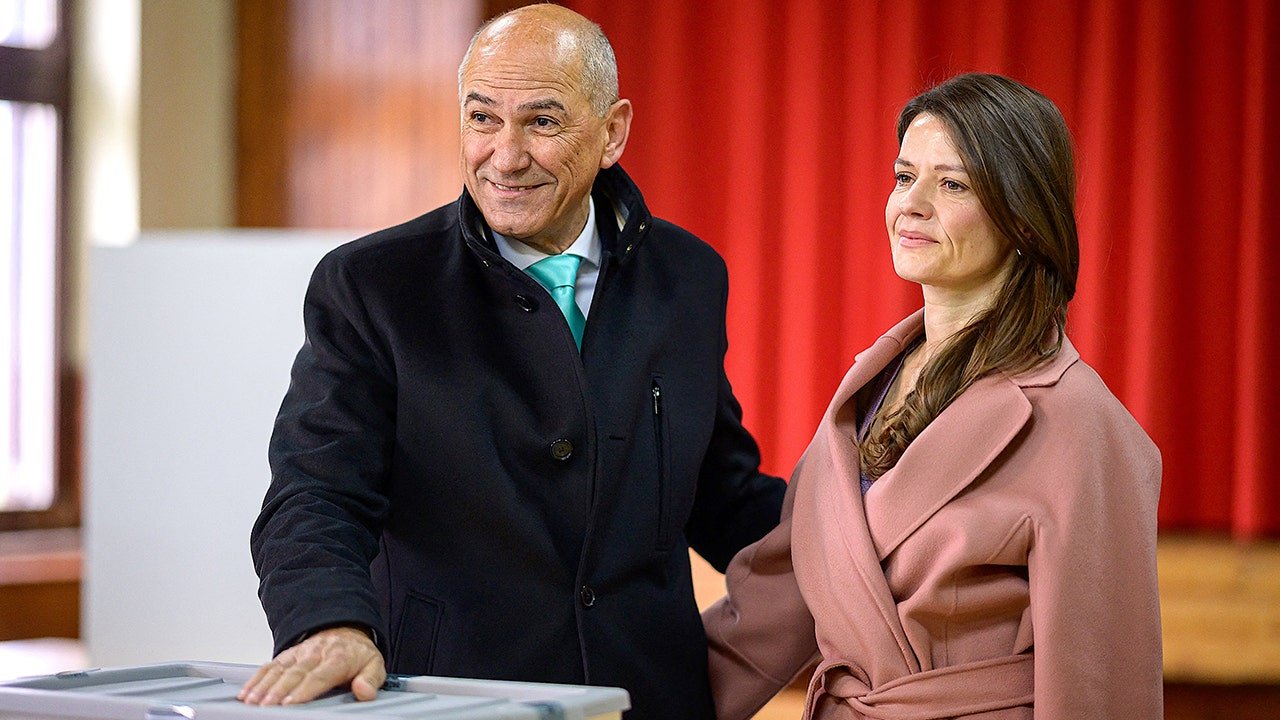
Then Slovenia’s opposition leader and nationalist former Prime Minister Janez Jansa and his wife Urska cast their ballots at a polling station during the general election in Arnace on March 22, 2026. ( Jure Makovec / AFP via Getty Images)
Janša has been involved in Slovenian politics since before there was an independent Slovenia. In 1988, he was arrested, tried «in camera» in a military court, and imprisoned by the Yugoslav People’s Army in what became known as the «JBTZ affair». He was alleged to have shared military documents with journalists. After public outcry at the time, Janša was released after serving six months of an 18-month sentence.
In 1989, Janša helped form the Slovenian Democratic Union, one of the first opposition parties in the then-Socialist Republic of Slovenia. After Slovenia’s first free elections in May 1990, Janša was named minister of defense, helping lead Slovenia’s 10-day war of independence against Yugoslavia in the summer of 1991.
In June 2013, the Ljubljana District Court ruled Janša and two others had sought about €2million (about $2.3 million) from a Finnish firm, Patria, to help it win a 2006 military supply contract. Janša was sentenced to 2 years in the same prison in which he began his 1988 imprisonment. He called the case politically motivated and, again, he was released after serving 6 months. The conviction was unanimously overturned by the Constitutional Court in April 2015.
Janša is expected to come to the U.S. to address the United Nations General Assembly in September. It is not known if he will meet with President Trump and the First Lady.
europe, israel, immigration, donald trump, ukraine, the balkans
¿Y si lo que acabamos de vivir en Ceuta es, sobre todo, un fenómeno de redes sociales?
Conviene empezar por explicar qué es Ceuta, porque buena parte de la confusión de estos días nace de imaginarla como un puesto fronterizo cualquiera. Ceuta es una ciudad española situada en la costa norte de África, frente a Gibraltar, separada de la Península por los catorce kilómetros del Estrecho. Es española desde 1580, más de dos siglos antes de que existieran los Estados Unidos. Tiene 18,5 kilómetros cuadrados, unos 84.000 habitantes y estatuto de ciudad autónoma. Junto con Melilla constituye la única frontera terrestre entre la Unión Europea y el continente africano, y esa condición la convierte en el punto exacto donde la presión migratoria de todo un continente se concentra en unos pocos kilómetros de valla y una playa, la del Tarajal, con su espigón que se adentra en el mar marcando la línea entre Marruecos y España.
Esa frontera tiene historia trágica. En febrero de 2014 murieron ahogadas 14 personas a pocos metros de la playa del Tarajal, en parte por el pánico de la multitud en el agua. En mayo de 2021, en plena crisis diplomática con Rabat por la acogida en España del líder del Frente Polisario, Marruecos relajó los controles y más de 8.000 personas entraron en Ceuta en dos días, obligando a desplegar al Ejército. En junio de 2022, el asalto a la valla de Melilla dejó al menos 23 muertos. La frontera sur funciona desde hace décadas como válvula de presión, y cada episodio ha alimentado la sospecha de manos que mueven los hilos.
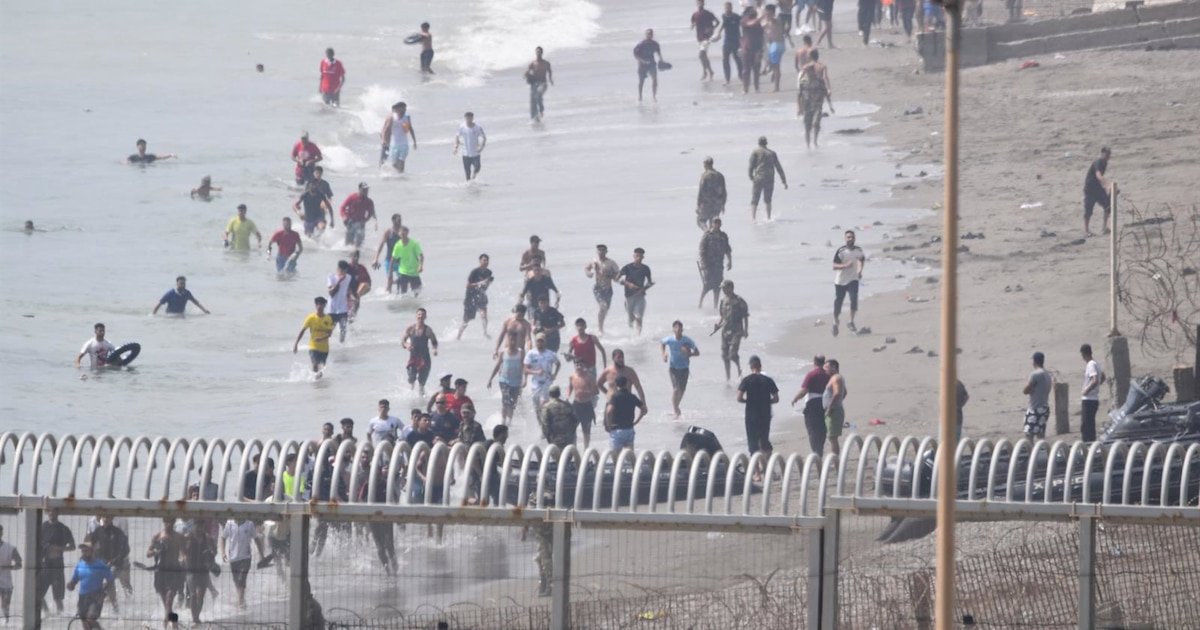
Lo de esta semana supera todo lo anterior en un orden de magnitud. Entre el jueves 30 y el viernes 31 de julio entraron en Ceuta entre 50.000 y 60.000 personas en menos de 24 horas, el equivalente al 70% de la población de la ciudad. Trasladado a escala peninsular, sería como si 34 millones de personas entraran en España en un día. El balance es de al menos 57 muertos, con las tareas de búsqueda todavía en curso. La mayoría se ahogó intentando bordear a nado el espigón del Tarajal, de noche, vestidos, atrapados entre las olas y las rocas de la escollera mientras miles de personas entraban al agua a la vez. Otros murieron aplastados en los intentos masivos de cruzar las vallas. El Gobierno desplegó al Ejército, Pedro Sánchez viajó a Ceuta, calificó lo ocurrido de ataque a la integridad territorial de España y anunció un sistema de boyas junto al espigón para impedir nuevos cruces a nado.
La pregunta obligada es qué fuerza consigue que decenas de miles de personas asuman ese riesgo a la vez. Y aquí es donde la explicación más sólida resulta ser la menos conspirativa.
El 8 de julio el Tribunal Supremo dictaminó que las devoluciones en caliente no se aplican a quienes llegan por mar, que deben pasar por un procedimiento formal de devolución. En redes, ese matiz jurídico se transformó en otra cosa: España ha abierto la frontera y si entras a nado no te pueden devolver. El bulo corrió por WhatsApp, TikTok, Instagram y Telegram. Circularon mapas con la ruta a nado desde Castillejos, en Facebook llegaron a venderse trajes de neopreno para el cruce y los primeros vídeos de jóvenes celebrando en la playa hicieron el resto. Adolescentes de 16 y 17 años contaron después que se habían enterado por las redes y que habían pasado cinco horas nadando.

El patrón es conocido. En 2019, más de dos millones de personas se apuntaron en Facebook a asaltar el Área 51 y varios miles se presentaron de verdad en el desierto de Nevada. En 2012, una invitación de cumpleaños mal configurada en Facebook arrastró a miles de jóvenes al pueblo holandés de Haren, que acabó arrasado. En 2021, un foro de Reddit coordinó a millones de pequeños inversores para disparar la acción de GameStop y poner contra las cuerdas a varios fondos de Wall Street. Ese mismo año, 25.000 jóvenes se juntaron en un macrobotellón en Madrid convocados por redes. Ninguno de estos episodios tuvo un organizador central. Todos siguieron la misma secuencia: un mensaje simple, una promesa creíble, vídeos de los primeros que lo consiguen y una avalancha. La diferencia es que en Ceuta la promesa exigía meterse al mar.
La noche del jueves lo vi en directo. En Horizonte, el programa de Iker Jiménez en el que colaboro, las cámaras mostraban cómo centenares de personas llegaban a Ceuta y al poco rato emprendían el camino de vuelta. Entraban, comprobaban que la promesa era falsa, que allí les esperaba frío, hambre y un ejército desplegado en lugar de un pasaje a la Península, y regresaban. La ola completa, subida y bajada, se veía en tiempo real. Una operación orquestada para desestabilizar habría intentado que la gente se quedara. El regreso lo aceleraron el despliegue militar y el acuerdo con Marruecos para las repatriaciones, y queda pendiente el problema serio de los menores no acompañados que sí permanecen. Pero el motor del retorno fue el mismo que el de la ida: los canales que crearon el efecto llamada empezaron a difundir el efecto regreso, con mensajes de quienes ya volvían advirtiendo a los suyos de que ni lo intentaran.
Hay además un detalle que desmonta la tesis de una marcha nacionalista para reclamar Ceuta: en las imágenes faltan banderas marroquíes y camisetas de la selección. Se ven jóvenes saltando la valla con la camiseta de Messi. Quien va a reconquistar un territorio lleva su bandera. Quien busca un futuro lleva la camiseta de su ídolo.
Esta explicación tiene una virtud: se sostiene sola. El socialismo español sobra como organizador, sobra el rey de Marruecos, sobran Estados Unidos e Israel. La pólvora es real. Es el paro juvenil y la falta de horizontes en Marruecos, y es también lo que cada joven marroquí ve a diario en su teléfono: los marroquíes son la mayor comunidad extranjera de España, con cerca de 900.000 residentes legales, y muchos de sus compatriotas cobran el Ingreso Mínimo Vital y el paro viviendo mejor que ellos, o trabajan y ganan en un mes lo que en casa cuesta meses ganar. Esto fue una búsqueda personal de un futuro mejor. El socialismo español sobra como conspirador y aparece como imán: el efecto llamada del Estado del bienestar, viralizado. La chispa fue una sentencia mal entendida, millones de teléfonos y la promesa de una vida mejor a cinco horas nadando.
Marruecos merece escrutinio de todas formas. Un país que intercepta a cinco nadadores con neopreno un día cualquiera y deja pasar a 60.000 otro día ejerce política también por omisión. En 2021 relajó los controles en plena crisis diplomática y esta vez su gendarmería tardó en reaccionar. España respalda además con cerca de 340 millones de euros públicos la desaladora de Casablanca y mantiene otras líneas de cooperación, de modo que condicionar ese apoyo financiero a resultados verificables en frontera sigue siendo razonable aunque el fenómeno haya sido viral. Pero hay una diferencia entre tolerar y organizar, y a día de hoy no existen pruebas públicas de organización estatal.
La conclusión es incómoda porque un fenómeno viral es en cierto sentido más grave que una maniobra de Estado. Con un Estado se negocia, se firman acuerdos, se condicionan fondos. Contra un rumor capaz de meter a 60.000 personas al mar en una noche solo funcionan dos cosas: capacidad real de respuesta en la frontera y desmentidos oficiales tan virales como los bulos. Un bulo llenó el agua de gente y el agua devolvió 57 cuerpos. La próxima avalancha no la decidirá Rabat. La decidirá un vídeo de TikTok.
Immigration,Europe,Asylum / Immigration / Refugees

NEWYou can now listen to Fox News articles!
Applied Behavior Analysis therapy is a lifeline for hundreds of thousands of American families — helping children with autism develop communication, social and daily living skills.
But as Medicaid spending on the autism therapy has exploded into the billions and with fraud on the rise, a partisan divide is emerging over how states should handle public assistance programs for the ballooning treatment option.
Republican-led states like Florida have prioritized fraud enforcement and tighter oversight, while debates in states like Georgia have centered on reimbursement rates and preserving access to care. The scrutiny comes as the Trump administration has made it a focus of his second term to eliminate fraud, waste and abuse across federal programs, including Medicaid, a central policy priority.
Supporters of stronger oversight argue that every dollar lost to fraud is money that cannot be used to provide care for children and families who depend on Medicaid-funded autism therapy.
Applied Behavior Analysis (ABA) therapy helps children with autism build communication, social and daily living skills through structured, one-on-one sessions. (iStock)
TRUMP ADMIN PAUSING OVER $1B IN MEDICAID PAYMENTS TO MINNESOTA, CALIFORNIA OVER FRAUD, COMPLIANCE CONCERNS
According to Department of Health and Human Services (HHS) Medicaid provider spending data, Medicaid paid more than $5.15 billion between 2018 and 2024 under one of the primary billing codes used for Applied Behavior Analysis (ABA) therapy.
Three providers received roughly $685 million in Medicaid reimbursements during that period.
ABA therapy is one of the most common treatments for children with autism, using structured, one-on-one sessions to build communication, social and daily living skills.
Much of that therapy is delivered by Registered Behavior Technicians (RBTs), entry-level workers who complete a 40-hour training program and work under the supervision of Board Certified Behavior Analysts, whose job it is to design and oversee treatment plans.
MEDICAID FRAUD FEARS GROW AMID MASSIVE RED STATE BILLING SPIKE IN SECTOR THAT ALSO PLAGUED MINNESOTA

Republicans have argued that eliminating fraud, waste and abuse in Medicaid should be a priority before considering broader changes to the program, saying improper payments divert taxpayer dollars from vulnerable Americans who depend on the safety net. (Leigh Vogel/Getty Images for Caring Across Generations)
As Medicaid spending on ABA therapy has surged, so has scrutiny over how taxpayer dollars are being spent.
In May, federal prosecutors charged two Minnesota autism clinic operators with allegedly billing Medicaid $46.6 million for services prosecutors say were unnecessary or never provided, including claims tied to children with allegedly fraudulent autism diagnoses.
Earlier this year, another Minnesota woman pleaded guilty in a separate $14 million Medicaid autism fraud scheme.
Investigations by The Wall Street Journal and The New York Times have also documented allegations that some providers billed for services that were never provided, inflated therapy hours and aggressively expanded as Medicaid spending surged.
MINNESOTA FRAUD SUSPECT SKIPS COURT, FORFEITS BOND, THROWING $11M MEDICAID CASE INTO DOUBT
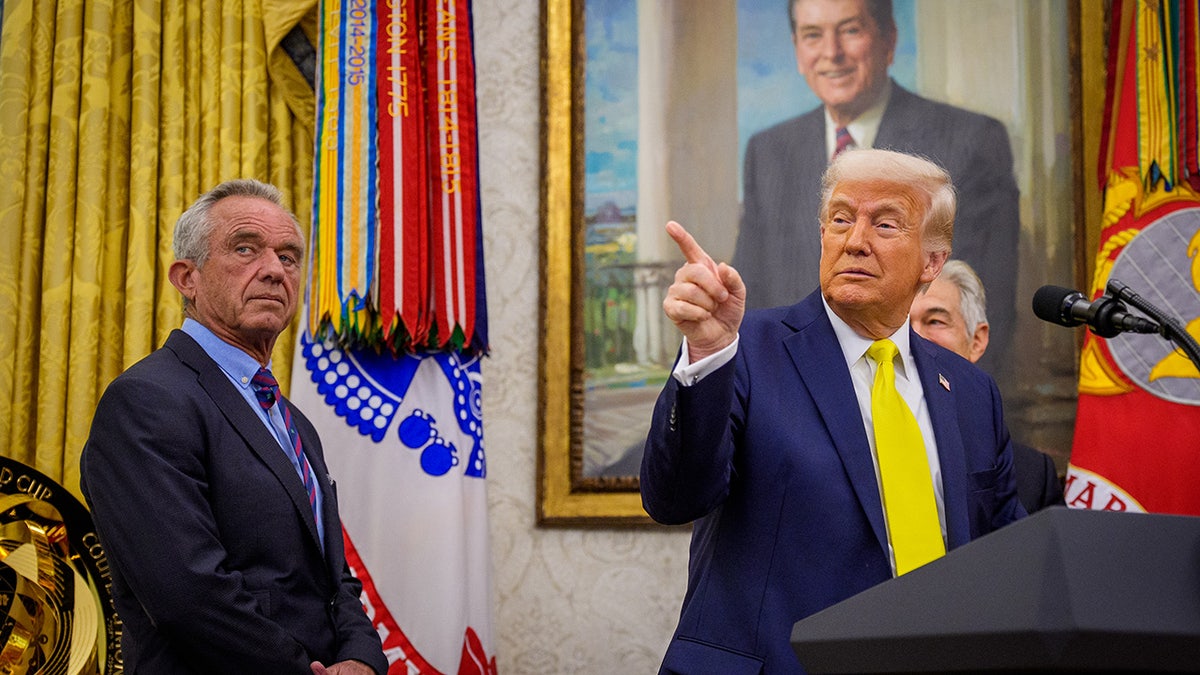
The Trump administration has made eliminating fraud, waste and abuse in Medicaid a central priority, calling on states to tighten oversight and remove fraudulent providers from the program. (Andrew Harnik/Getty Images)
The Medicaid data also identifies examples of providers receiving unusually large reimbursements under the ABA billing code, including some claims that equate to hundreds of dollars per minute of therapy based on a standard 15-minute billing unit. The data alone does not explain why those reimbursements were so high, and billing experts say unusually large payments can reflect a variety of factors, including claim adjustments or other administrative processes.
The Centers for Medicare & Medicaid Services (CMS), the federal agency that oversees Medicaid in partnership with states, told Fox News Digital it has observed «significant growth» in Medicaid spending on ABA therapy in recent years.
«While access to medically necessary services remains a priority, rapid program growth also underscores the importance of ensuring services are clinically appropriate, delivered by qualified providers, and supported by strong program integrity safeguards,» a CMS spokesperson said.
As concerns over fraud have grown, states have responded differently.
Florida says it recovered more than $72 million in improper Medicaid payments over the past year and prevented hundreds of behavior analysts from participating in Medicaid because of documented fraud concerns.
Last month, Republican Florida Gov. Ron DeSantis announced a statewide Medicaid Integrity Initiative to strengthen provider screening, enhance fraud detection and increase oversight aimed at protecting taxpayer dollars.
While Florida has focused on strengthening fraud enforcement, Georgia lawmakers have focused on reimbursement rates. Lawmakers recently questioned a Medicaid managed care organization’s decision to reduce ABA reimbursement rates by 20%, even as industry representatives testified that use of autism therapy services had increased by more than 300% in recent years.
The debate reflects the difficult balance between rooting out fraud and preserving access to a therapy that many families say has been life-changing for children with autism.
health care, health care senate, autism, childrens health, politics

Milei designó a un exintendente de Bariloche como vicepresidente de la Comisión Nacional de Energía Atómica

What’s old is new again: Trump-style conservative is back as PM of European nation

Ceuta y el bulo que metió a 60.000 personas en el mar

Duro comunicado de la UEFA contra Infantino: ‘Debemos identificar a los responsables y exigirles que rindan cuentas’

Latest fraud scheme targets taxpayer-funded autism therapy boom

Nazarena Vélez confesó el inesperado accidente que tuvo con su pareja en la cama y se lo atribuyó a la edad: «Soy la famosa vieja meada»

La pelea con Lula y el verdadero desafío que enfrenta Milei

El BCRA cortó la racha de compra y en el mercado vuelan rumores de maniobras para frenar al dólar

World-famous Catholic shrine torched, ‘Devil in a skirt’ scrawled on Virgin Mary statue

La aprobación del Gobierno cayó en julio según distintas encuestas, en sintonía con el índice de la universidad Di Tella

 INTERNACIONAL2 días ago
Trump admin invokes 30-year dormant terror court as it seeks to deport Afghan woman tied to Election Day plot
- ECONOMIA3 días ago
Creció la oferta de frutas importadas en las verdulerías: cuáles son las que más llegan y por qué
- ECONOMIA3 días ago
Le pedimos a ChatGPT, Gemini y Claude que dijeran en qué acciones argentinas invertir y así nos fue