
INTERNACIONAL
Trump gets red-carpet welcome in China, but past Beijing trip shows pageantry only goes so far

NEWYou can now listen to Fox News articles!
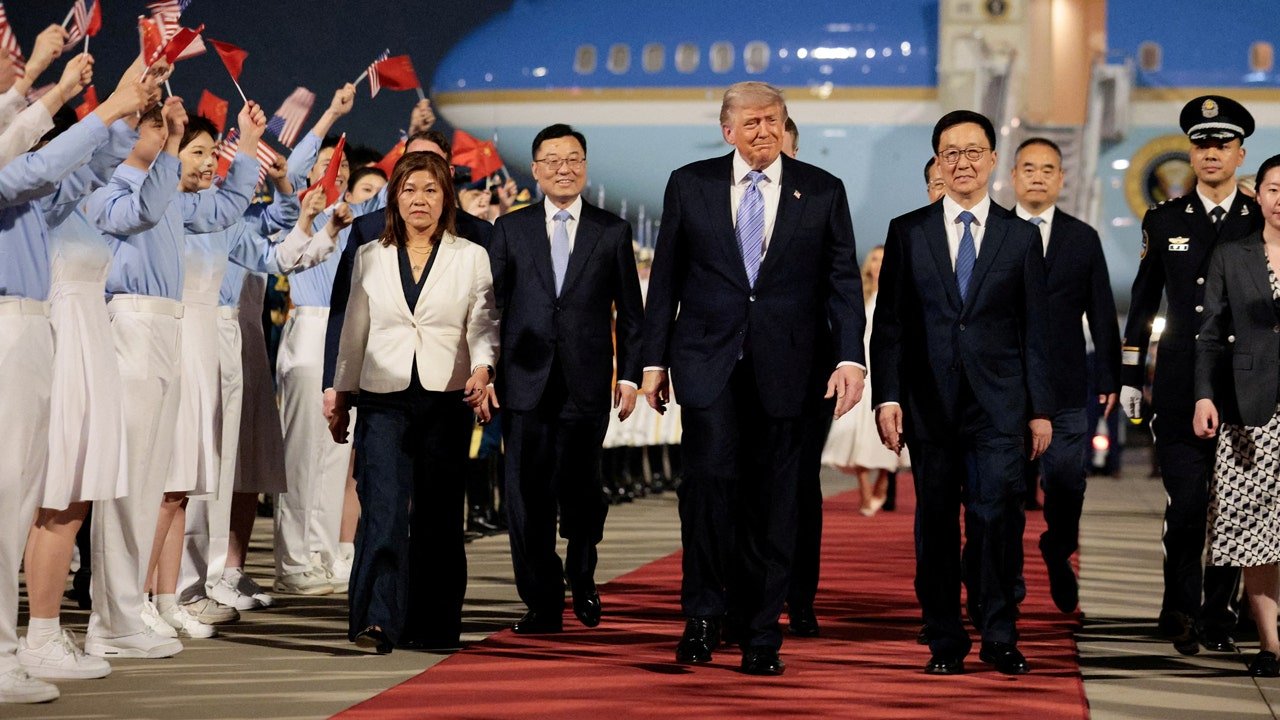
President Trump received a red-carpet welcome when he landed in Beijing on Wednesday, with a military honor guard, band and children waving American and Chinese flags ahead of high-stakes talks with Chinese President Xi Jinping.
The ceremony also highlighted the bigger question around Trump’s return to China: whether this visit can yield more lasting progress than his 2017 trip, which featured major business announcements but was later followed by a sharp deterioration in U.S.-China trade relations.
The meeting comes as trade tensions, the Iran war and disputes over Taiwan place new pressure on Washington and Beijing to stabilize relations between the world’s two largest economies.
TRUMP HEADS TO BEIJING FOR HIGH-STAKES XI TALKS AS TAIWAN TENSIONS, TRADE DISPUTES TEST US STRENGTH
U.S. President Donald Trump walks with Chinese Vice President Han Zheng during an arrival ceremony at Beijing Capital International Airport in 2026. (REUTERS/Evan Vucci)
The red carpet was rolled out with a welcome ceremony consisting of military honor guard and a military band with Chinese children waving American and Chinese flags. «Welcome, welcome! Warm welcome!» the children chanted in Chinese.
Trump exited Air Force One and was greeted by United States Ambassador to China David Perdue, Chinese Vice President H.E. Han Zheng, Ambassador of the People’s Republic of China to the United States H.E. Xie Feng, and Executive Vice Minister of Foreign Affairs H.E. Ma Zhaoxu.
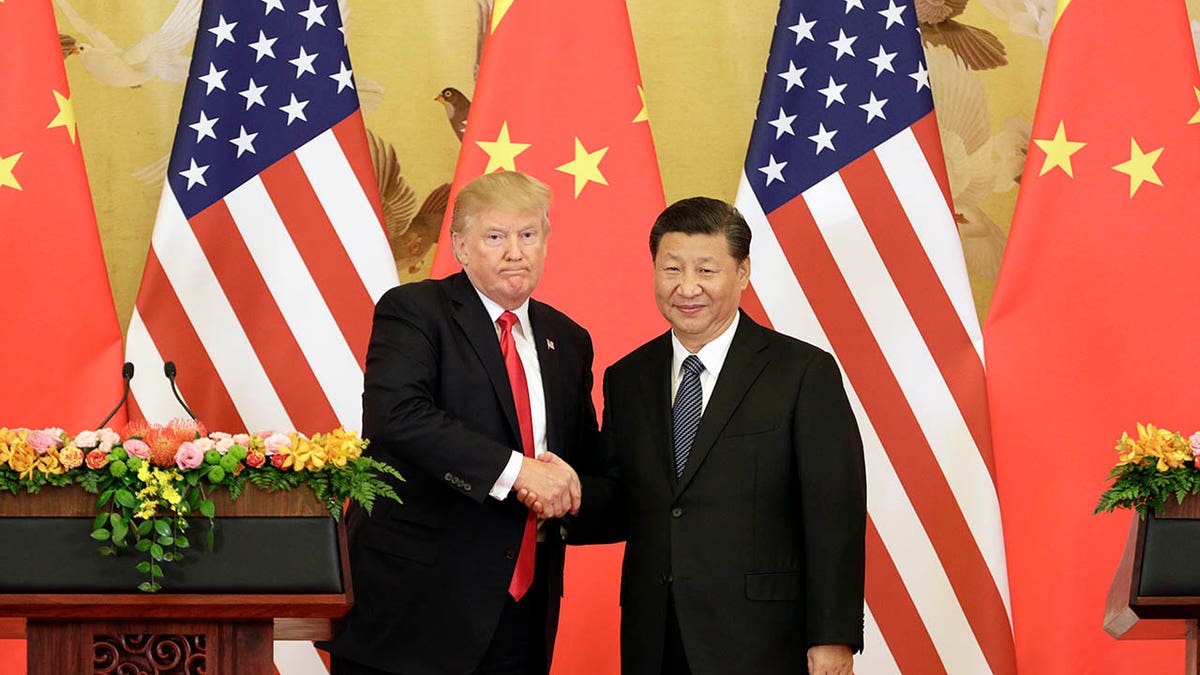
Trump visited China in 2017 for his first state visit. (Qilai Shen/Bloomberg)
First Lady Melania Trump accompanied Trump nearly nine years ago for his first state visit. The 2017 trip emphasized pomp, personal diplomacy and commercial announcements, and included excursions such as a Forbidden City tour, a Peking opera performance, and a formal welcome ceremony at the Great Hall of the People.
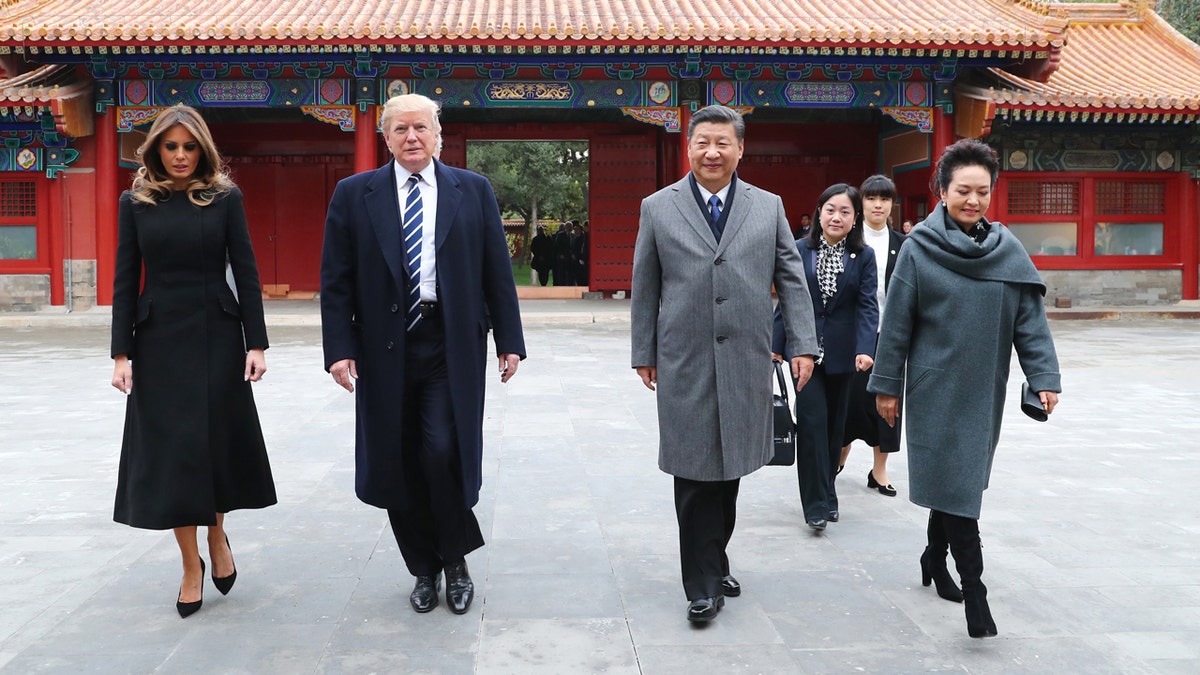
Chinese President Xi Jinping and his wife Peng Liyuan welcome the Trumps in the Forbidden City in 2017. (Xinhua/Xie Huanchi via Getty Images)
The 2017 trip produced more than $250 billion in announced commercial deals and cooperation pledges, but it did not prevent trade relations from deteriorating in 2018.
Most notably, Trump announced a $12 billion deal for cellphone chips from Qualcomm and $37 billion for Boeing commercial jets, AP reported at the time.
DONALD TRUMP DETAILS ‘MOST EXCITING PART’ OF CHINA TRADE AGREEMENT
«These deals will create jobs for American workers, farmers, and ranchers by increasing United States exports to China and stimulating investment in American communities,» the White House said at the time.
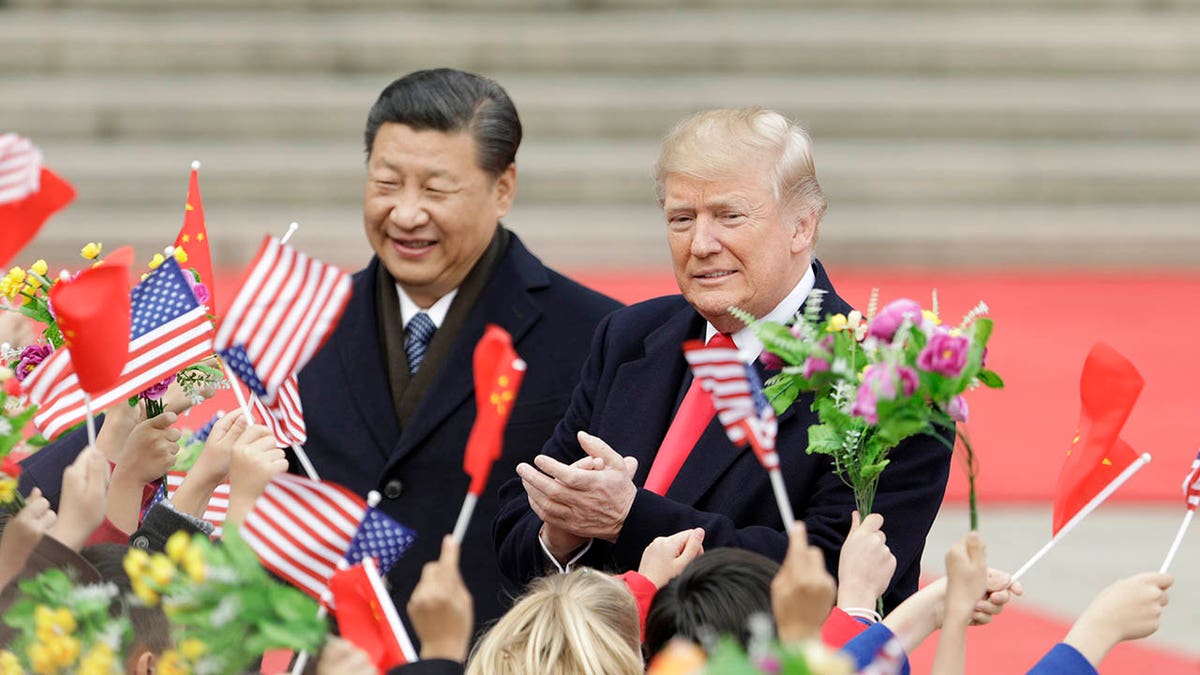
Trump’s first visit to China focused largely on symbolic diplomacy and major business announcements. (Qilai Shen/Bloomberg)
A strategic focus of his first visit was North Korea’s nuclear program. Trump and Xi agreed at the time that North Korea should not become a nuclear weapons state, declaring the two countries would apply «maximum pressure.»
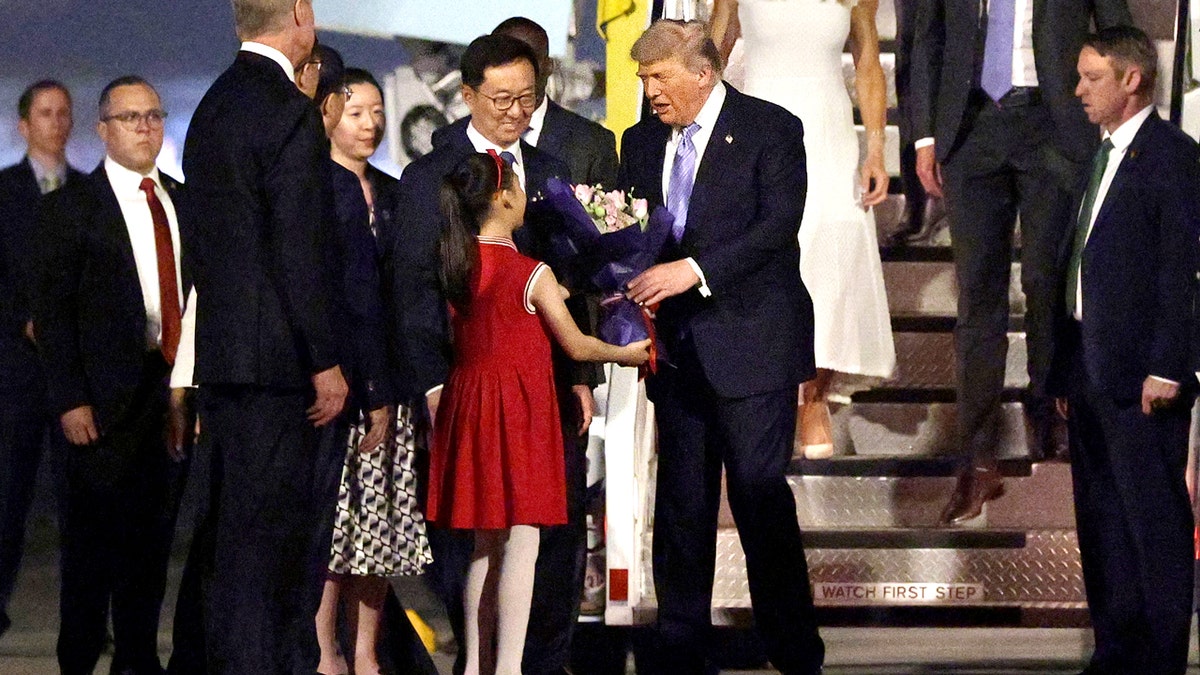
Trump receives a flower bouquet from a young girl upon his arrival at Beijing Capital International Airport. (Alex Wong/Getty Images)
China had already tightened enforcement earlier that year, including suspending North Korean coal imports, while Trump later said Chinese banks were scaling back business with North Korean entities. But U.S.-China cooperation weakened as broader trade tensions escalated, and North Korea continued advancing its missile and nuclear programs.
The summit did not prevent a sharp deterioration in trade relations the following year, after Trump imposed tariffs on Chinese imports, triggering a prolonged trade standoff.
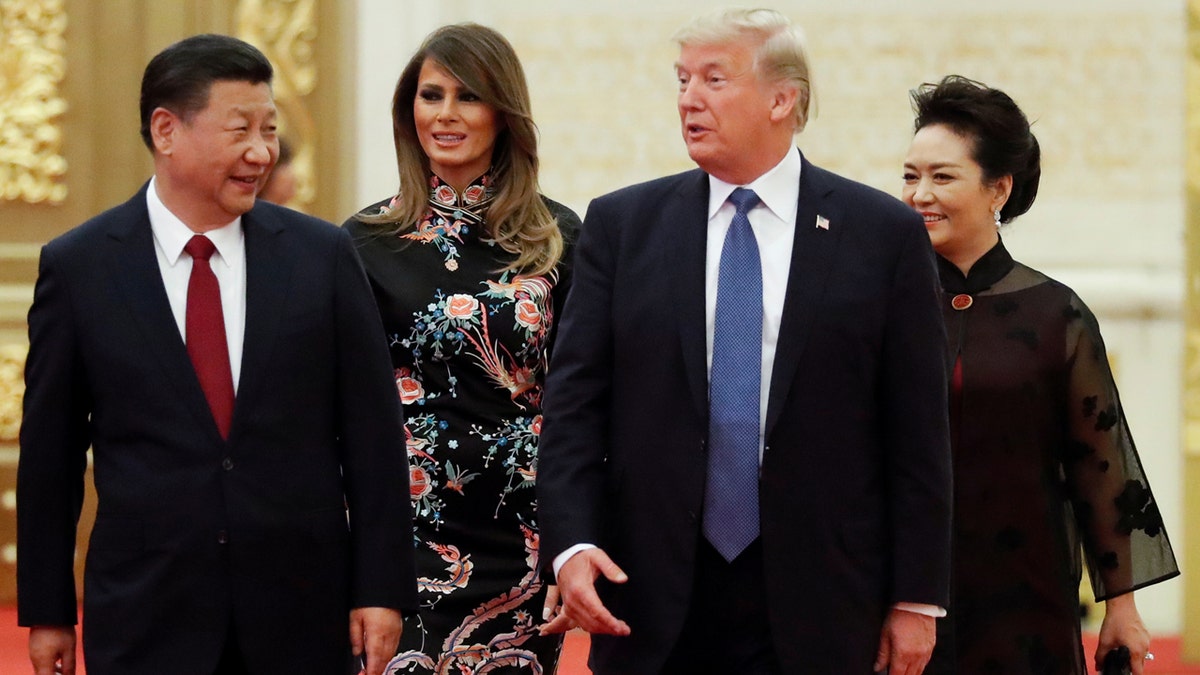
President Donald Trump and first lady Melania Trump arriving for a state dinner last November with China’s President Xi Jinping and China’s first lady Peng Liyuan in Beijing in 2017. (REUTERS/Jonathan Ernst, File)
Trump’s latest visit comes after a broader tariff escalation in which his administration imposed sweeping duties on imports from dozens of countries, with China emerging as the central flashpoint after Beijing retaliated and later tightened export controls on rare earth minerals, prompting Trump to threaten an additional 100% tariff on Chinese goods.
Trump is expected to press Xi on trade once again, suggesting that American entrepreneurs and executives could help drive growth inside China if Beijing lowers barriers and allows U.S. firms more room to operate.
TRUMP WARNS CHINA OF ‘STAGGERING’ 50% TARIFF IF CAUGHT SUPPLYING MILITARY AID TO IRAN
Accompanying Trump on the trip are top U.S. executives, including Elon Musk, Apple CEO Tim Cook, BlackRock CEO Larry Fink, Blackstone CEO Stephen Schwarzman, Boeing CEO Kelly Ortberg, Cargill CEO Brian Sikes, Citi CEO Jane Fraser, GE Aerospace CEO Larry Culp, Goldman Sachs CEO David Solomon, Micron CEO Sanjay Mehrotra, and Qualcomm CEO Cristiano Amon.
Iran is expected to be among the issues surrounding the talks, though Trump has downplayed differences with Xi over the war.
CLICK HERE TO DOWNLOAD THE FOX NEWS APP
Trump and Xi will hold bilateral talks and a formal banquet Thursday.
Fox News Digital’s Eric Mack and Morgan Phillips contributed to this report.
donald trump, north korea, china, war with iran, xi jinping








INTERNACIONAL
El-Sayed campaign backed by over $100,000 from dozens of members of group with alleged terror ties
NEWYou can now listen to Fox News articles!
FIRST ON FOX: GRAND RAPIDS, MI – Michigan Democratic Senate nominee Abdul El-Sayed’s campaign has collected more than $115,000 from individuals who work for or have held leadership roles with the Council on American-Islamic Relations (CAIR), which has been designated a terrorist organization by the United Arab Emirates and formally designated or labeled as such in Florida and Texas.
A Fox News Digital review found that El-Sayed, who has made getting «money out of politics» a central campaign rallying cry, has accepted donations from at least 41 individuals who either work for CAIR, formerly worked for CAIR, or have served in leadership positions with the organization.
The donor list includes several of CAIR’s highest-ranking officials, including national Board Chair Manal Fakhoury, national Board Treasurer Eyas Abdeen, national Vice Chair Emad Sabbah, and CAIR-Michigan board member Jukaku Tayeb, El-Sayed’s father-in-law.
Tayeb has been one of the largest financial backers of the super PAC supporting El-Sayed’s campaign and is also part of the founding committee of the Islamic Society of North America (ISNA), a group linked to Hamas and Muslim Brotherhood funding, Washington Free Beacon first reported.
DEMS CLASH OVER AIPAC MONEY, ‘OGRE’ ATTACK AND ELECTABILITY DURING CRUCIAL SENATE DEBATE
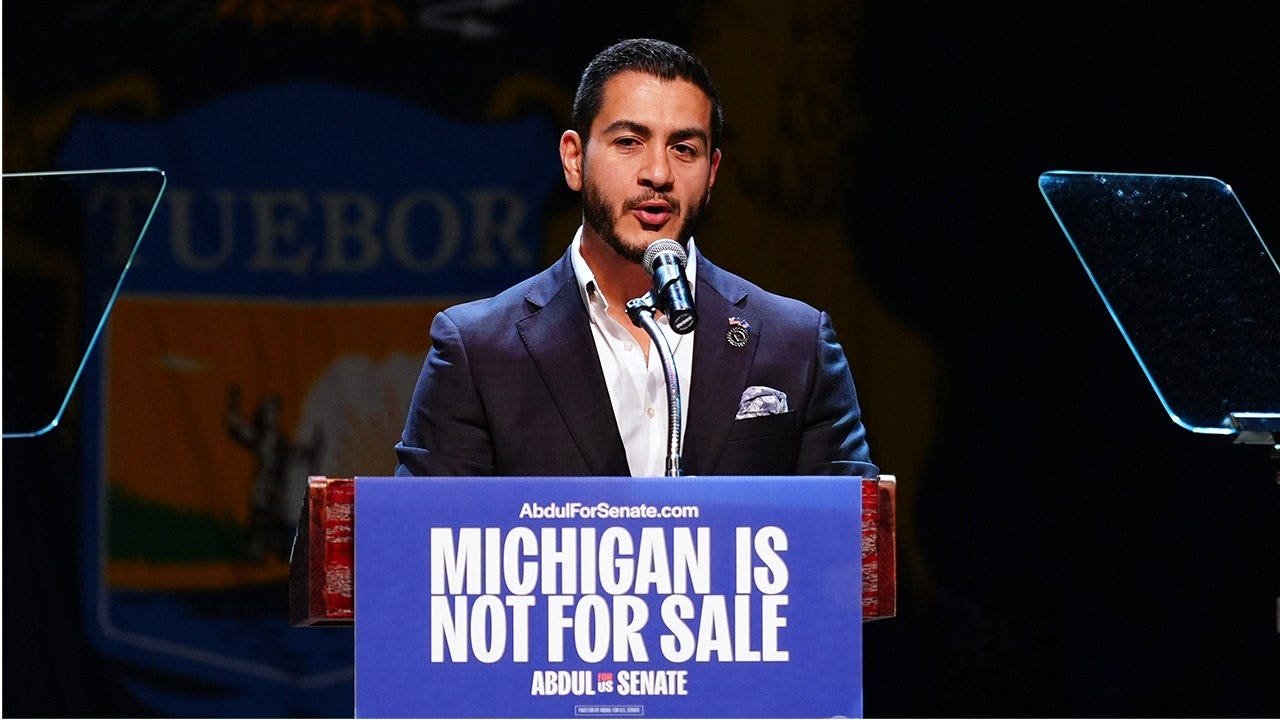
Abdul El-Sayed, a progressive candidate in the Democratic primary for U.S. Senate in Michigan, speaks during a primary election night event Wednesday, Aug. 5, 2026, at the Majestic Theatre in Detroit. (Julia Demaree Nikhinson/AP Photo)
One donor, CAIR Executive Director Nihad Awad, listed in FEC records under the name Nehad Hammad, drew national condemnation after saying he was «happy» to see Hamas break out of Gaza on Oct. 7, 2023, and arguing Israel «does not have the right to self-defense» as an occupying power.
The contributions were not limited to Michigan. Fox News Digital identified donations from CAIR national leaders and officials affiliated with chapters in California, Arizona, Texas, Georgia, Washington, Illinois, Minnesota and Ohio, among other states, illustrating the breadth of support El-Sayed received from within the organization’s leadership ranks.
Other names on the donor list include CAIR-California Governance Board Treasurer Rubina Alvi, CAIR-California Governance Board Chair Asaad Traina, CAIR-Michigan board member Muzammil Ahmed, who contributed $11,600 to El-Sayed’s campaign, CAIR-California Governance Board member Atef Ibrahim, CAIR-California Governance Board member Dina Ezzeddine, and former CAIR National Board Chair Roula Allouch.
EL-SAYED PALS AROUND WITH FAR-LEFT STREAMER HASAN PIKER THE DAY BEFORE CRUCIAL MICHIGAN SENATE ELECTION
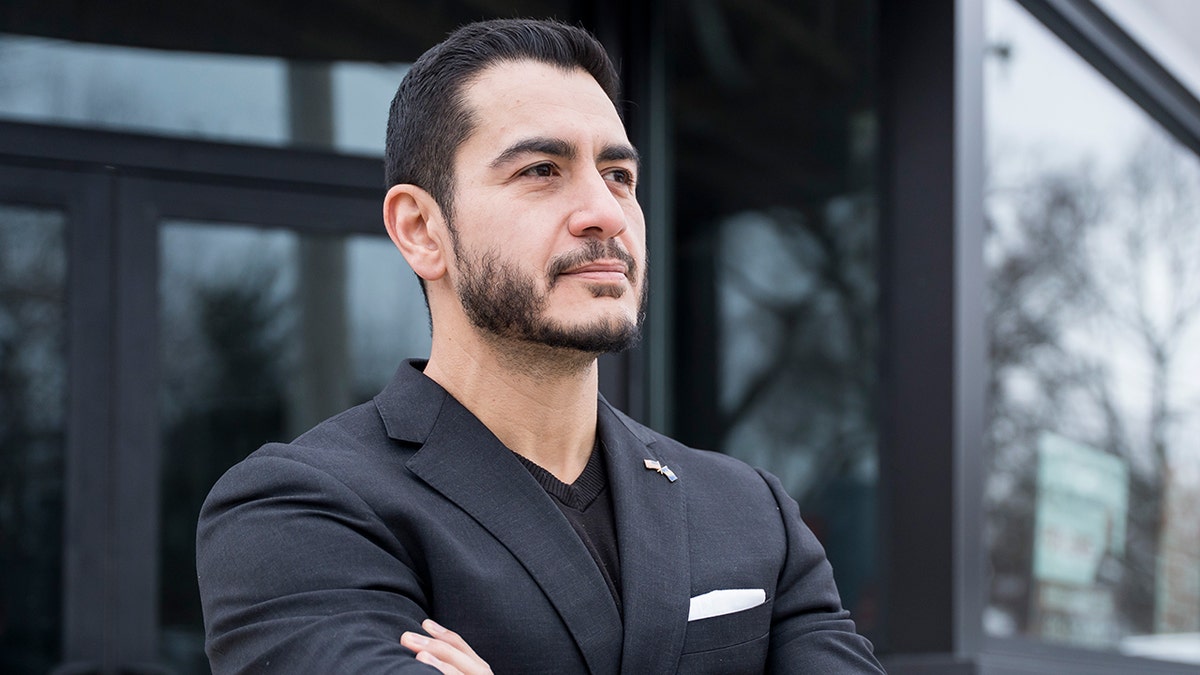
Michigan Senate candidate Abdul El-Sayed poses for a portrait in Grand Rapids, Michigan, on Saturday, Feb. 21, 2026. (Evan Cobb for The Washington Post via Getty Images)
El-Sayed has maintained ties to CAIR beyond campaign fundraising. In 2022, he appeared at a CAIR event and was paid for a speaking engagement, where he criticized Oklahoma’s ban on Sharia law and compared it to the Trail of Tears, Washington Free Beacon reported.
CAIR has long been the subject of controversy over its alleged ties to Hamas. In 2007, federal prosecutors named the organization an unindicted co-conspirator in the Holy Land Foundation terrorism financing case, the largest terrorism financing prosecution in U.S. history.
Although CAIR was never charged with a crime, federal prosecutors argued the organization was part of a network created to support Hamas in the United States. CAIR has denied the allegations and has challenged its inclusion as an unindicted co-conspirator.
In recent years, Florida and Texas have formally designated or labeled CAIR a terrorist organization, while the United Arab Emirates designated the group a terrorist organization in 2014 which is widely understood to stem from the UAE’s view that CAIR has ties to the Muslim Brotherhood.
In response to Fox News Digital’s request for comment, CAIR denied allegations that it has ties to terrorism, citing its «Dispelling Rumors About CAIR» webpage and a memorandum stating it has «repeatedly condemned antisemitism throughout our 30 years of existence» and has «for decades» maintained a statement condemning «terrorist attacks committed by Hamas and other designated terrorist groups.»
CAIR also highlighted a previous statement «has appeared on CAIR’s website since 2009» saying, «We unequivocally condemn all acts of terrorism, whether carried out by al-Qa’ida, the Real IRA, FARC, Hamas, ETA, or any other group designated by the U.S. Department of State as a ‘Foreign Terrorist Organization.»
Additionally, CAIR cited a National Board statement condemning antisemitism and the Oct. 7, 2023, attacks, along with a 2023 editorial in which National Executive Director Nihad Awad said he agreed with the organization’s condemnation of attacks on civilians.
Fox News Digital reached out to the El-Sayed campaign for comment.
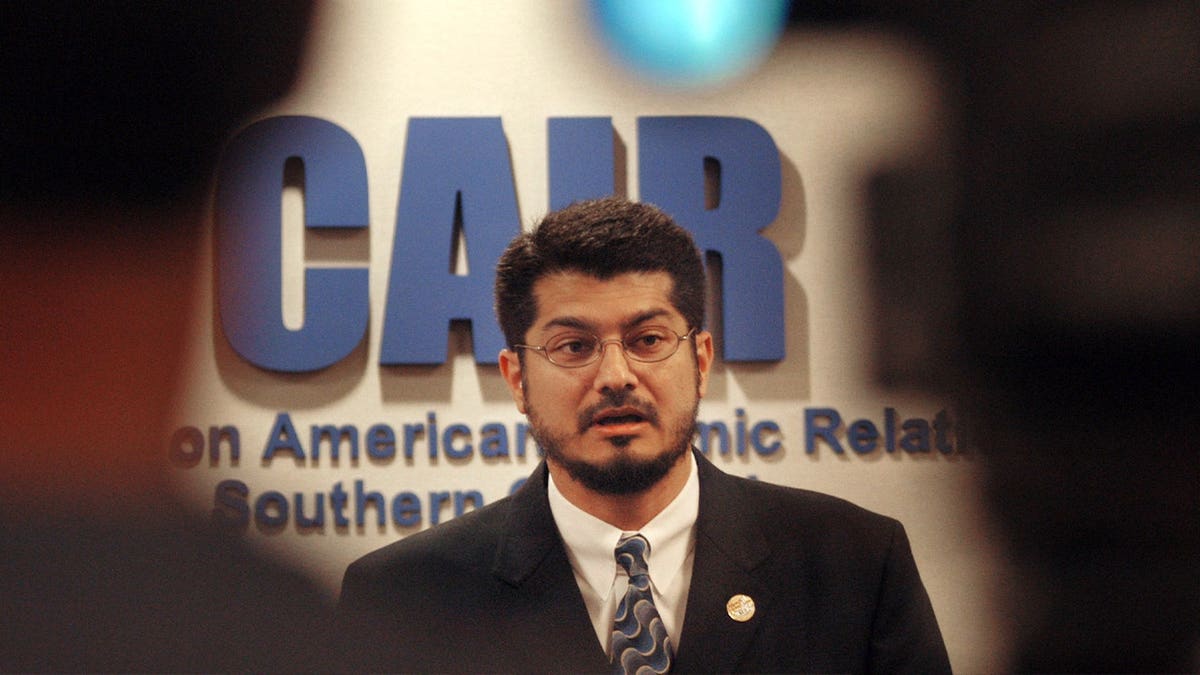
Hussam Ayloush, an executive director of CAIR, speaks during a press conference. (Marc Martin/Los Angeles Times via Getty Images)
El-Sayed has repeatedly drawn criticism from Republicans and pro-Israel advocates over his associations and comments related to the Middle East, including campaigning with far-left streamer Hasan Piker, his response to an attack targeting a Detroit synagogue, and declining to comment on the death of Iran’s supreme leader, citing constituents in Dearborn who were mourning.
El-Sayed defeated Dem. Rep. Haley Stevens in the Democratic Senate primary on Tuesday night in a race that was much closer than most pundits expected. El-Sayed will face off against Republican Mike Rogers, a former congressman, in November.
hamas, politics, midterm elections, senate, michigan, terrorism
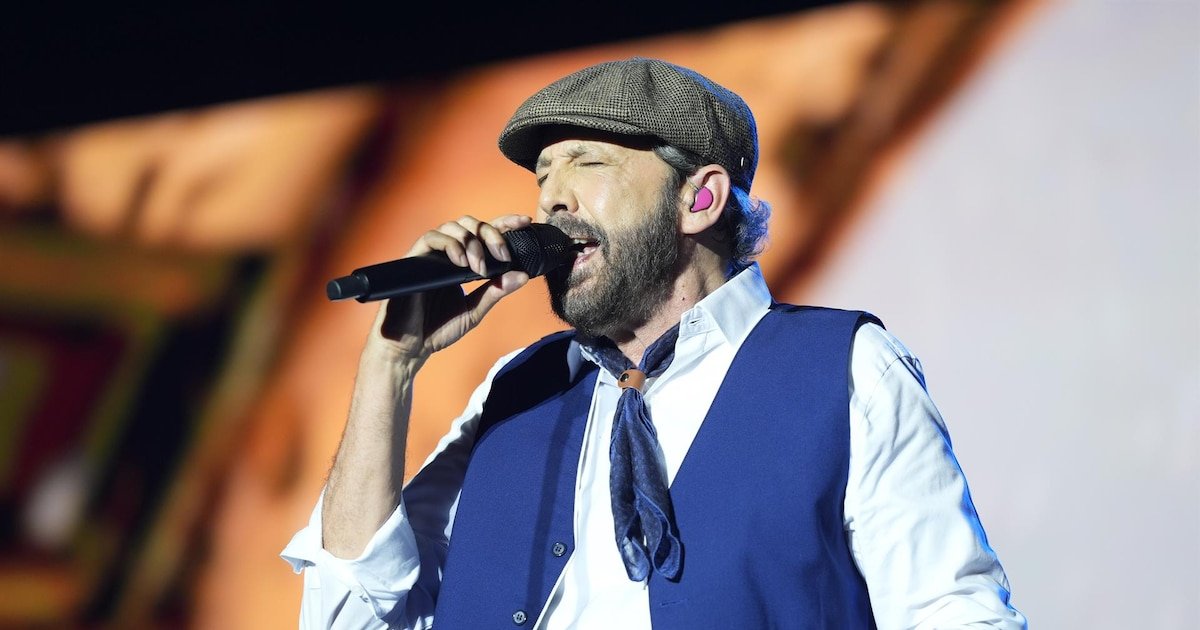
Juan Luis Guerra cerrará el 8 de agosto los Juegos Centroamericanos y del Caribe Santo Domingo 2026 con Canto a la Patria, obra que compuso y donó al Estado dominicano en 2006. La clausura será a las 18:00 hora horas en la Arena Banreservas Virgilio Travieso Soto, tras 16 días de competencia.
El acto de cierre pondrá fin a los XXV Juegos Centroamericanos y del Caribe y servirá como despedida formal de Santo Domingo 2026. La organización indicó, citada por el medio dominicano El Día, que la noche evocará la gesta deportiva vivida en el país y recordará la participación de atletas de distintas naciones que compitieron por las medallas.
El coro Más que Vencedores formará parte de esa presentación, en un segmento concebido como tributo tanto a la nación como a quienes sostuvieron la producción de las ceremonias. La publicación señaló que el homenaje alcanzará al personal que trabajó en esos actos conmemorativos.
Alberto Zayas, productor general y director creativo de las ceremonias, definió la presencia del artista como un gesto nacional. “Recibir este regalo del maestro es un honor para todo el país. Cerrar el centenario de los Juegos con su voz será un momento inolvidable”.

José P. Monegro, presidente del Comité Organizador de Santo Domingo 2026, sostuvo que la participación del cantante refuerza el sentido que la organización quiso darle al evento desde su apertura. “Que el maestro Juan Luis Guerra esté en el cierre de estos Juegos confirma lo que han sido desde el primer día: una causa de país”.
Monegro añadió que la organización asumió esa confirmación como una muestra de respaldo institucional y simbólico. “El Comité Organizador recibe su gesto con profunda gratitud, y lo devuelve con el compromiso de una clausura a la altura de estos dieciséis días inolvidables”.
De acuerdo con el medio dominicano Listín Diario, Juan Luis Guerra llegará a esta clausura con una trayectoria de más de 4 décadas y decenas de premios internacionales. El medio subrayó que su carrera lo ha convertido en una de las figuras que más han proyectado el nombre de la República Dominicana en el exterior.

Juan Luis Guerra nació en Santo Domingo el 7 de junio de 1957 y construyó una carrera que, según la biografía publicada en su sitio oficial, convirtió al merengue y la bachata en repertorios de alcance internacional, con discos de alto impacto comercial, premios Grammy y Latin Grammy, giras mundiales y reconocimientos académicos y culturales.
Entre los datos más contundentes de ese recorrido figuran ventas de más de nueve millones de copias para Bachata Rosa, más de siete millones para la compilación Grandes Éxitos y una convocatoria superior a 400,000 personas en el cierre del Festival de Tenerife, en España. La publicación también ubica entre sus hitos un concierto agotado para más de 60,000 personas en el Estadio Olímpico Félix Sánchez de Santo Domingo.
El músico dominicano estudió Filosofía y Letras en la Universidad Autónoma de Santo Domingo y luego ingresó al Conservatorio Nacional de Música de la capital dominicana. Más tarde se trasladó a Boston para formarse en Berklee College of Music, donde obtuvo una licenciatura en Composición de Jazz y años después recibió un doctorado honoris causa.
De regreso en República Dominicana, grabó en 1984 su primer álbum, Soplando, junto a un grupo de músicos y vocalistas locales que después sería conocido como Juan Luis Guerra y 4.40.
Citado por la biografía oficial, el artista definió ese debut como “una fusión de merengue tradicional con jazz unido a una vocalización al estilo del grupo vocal estadounidense Manhattan Transfer”.
INTERNACIONAL
Israeli President Herzog calls antisemitism a ‘contamination of societies’ as hate crimes surge
NEWYou can now listen to Fox News articles!
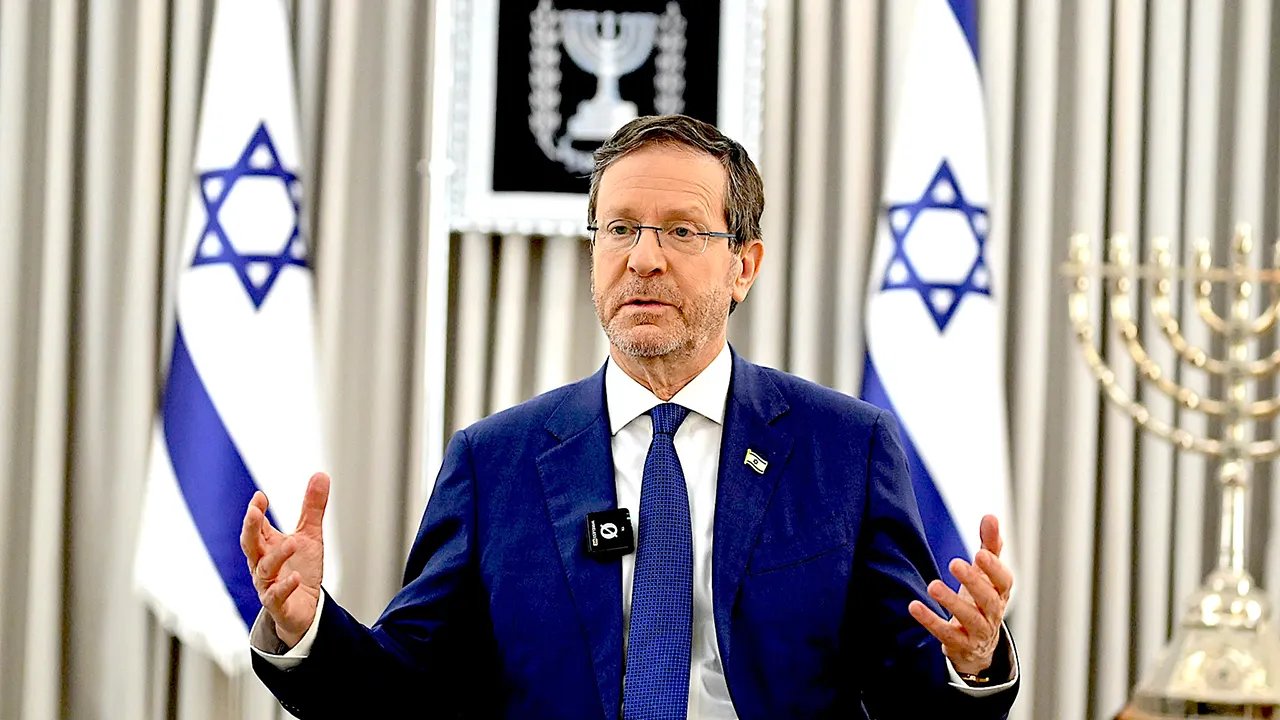
Israeli President Isaac Herzog issued a stern warning about the global spread of antisemitism in an exclusive interview with Fox News Digital at his Jerusalem residence.
«Antisemitism is an age-old plague which should be dealt with by everybody, by all societies. It’s not an Israeli issue or only a Jewish issue,» he said.
«It’s a contamination of societies that starts with the Jews — never ends with them. It’s the most dangerous phenomena that has to be dealt with aggressively, with no mercy, with full adjudication, and most importantly, with education,» he added.
EXCLUSIVE: ISRAELI PRESIDENT HERZOG BLASTS MAMDANI, PRAISES TRUMP, SOUNDS ALARM ON IRAN
Growing antisemitism and other issues led President Isaac Herzog to launch Voice of the People in April 2023. (Yoav Dudkevitch/TPS-IL for Fox News Digital)
Herzog’s warning comes as newly released New York City Police Department (NYPD) data show anti-Jewish incidents accounted for 56.9% of all confirmed hate crimes since the start of 2026, even though Jewish New Yorkers make up only about 10% of the city’s population.
Herzog pointed to New York City Mayor Zohran Mamdani, whom he accused of spreading hate and compromising the lives of New Yorkers.
«Mamdani does not respect my nation’s right for self-determination — the Jewish people’s inherent right to have a nation of their own. And he’s basically spreading blasphemy, hate, antisemitic rhetoric. He should understand that he’s risking his own citizens, he’s risking their safety, well-being and life,» Herzog told Fox News Digital.
In a video posted on social media on July 21, Mamdani called Israeli Prime Minister Benjamin Netanyahu «a war criminal» and «the architect of a horrific genocide against the Palestinian people.»
Days later, Raul Morales, 51, allegedly yelled «Allahu Akbar» while stabbing two men on Manhattan’s Upper West Side, including one who was visibly identifiable as Jewish.
SUSPECT ARRESTED AFTER ALLEGEDLY YELLING ‘ALLAHU AKBAR,’ STABBING 2 MEN IN NYC ATTACK
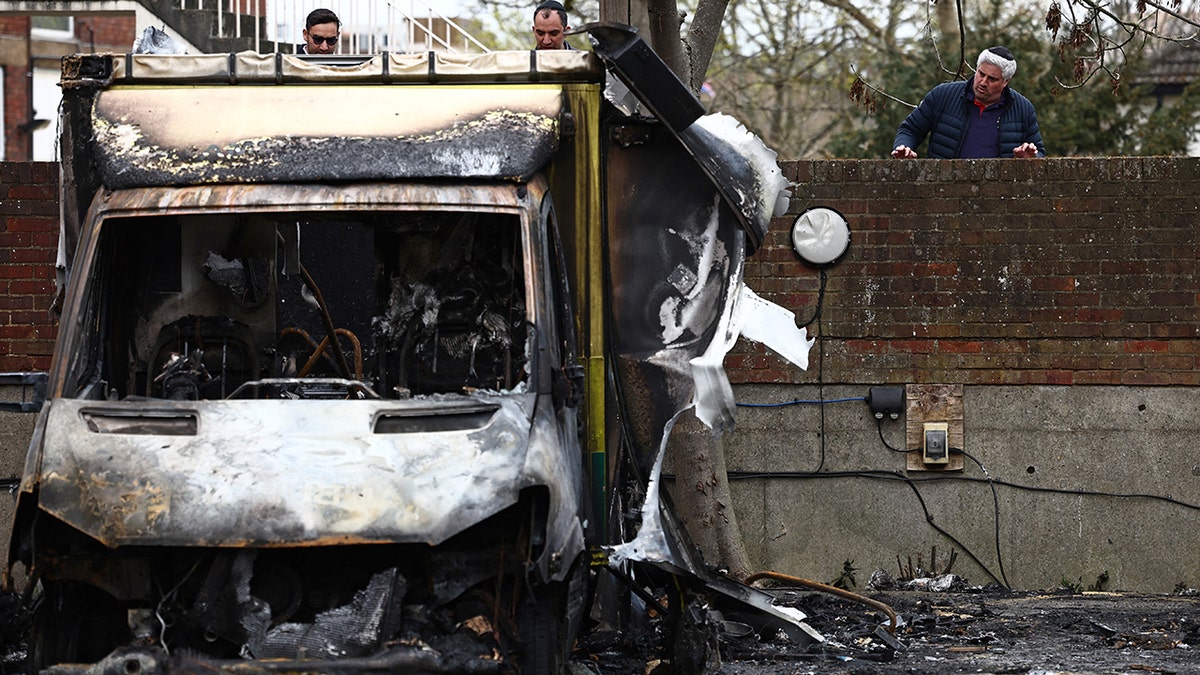
Members of the Jewish community view the scene of an antisemitic arson attack in the Golders Green neighborhood of north London, on March 24, 2026. (Henry Nicholls/AFP via Getty Images)
«We’ve seen the stabbing just a few days ago… just because somebody was dressed as an Orthodox Jew. This cannot be accepted in New York, which is a city that is dear to our heart, dear to Israelis, and dear to me personally,» Herzog said.
More broadly, a report released last month by the J7 Large Communities’ Task Force Against Antisemitism found that 20 people were killed in antisemitic attacks across seven countries outside Israel in 2025, marking the deadliest year for such violence in the Jewish diaspora since 1994.
The J7 comprises Jewish communities in the United States, Australia, Canada, Argentina, the United Kingdom, Germany and France.
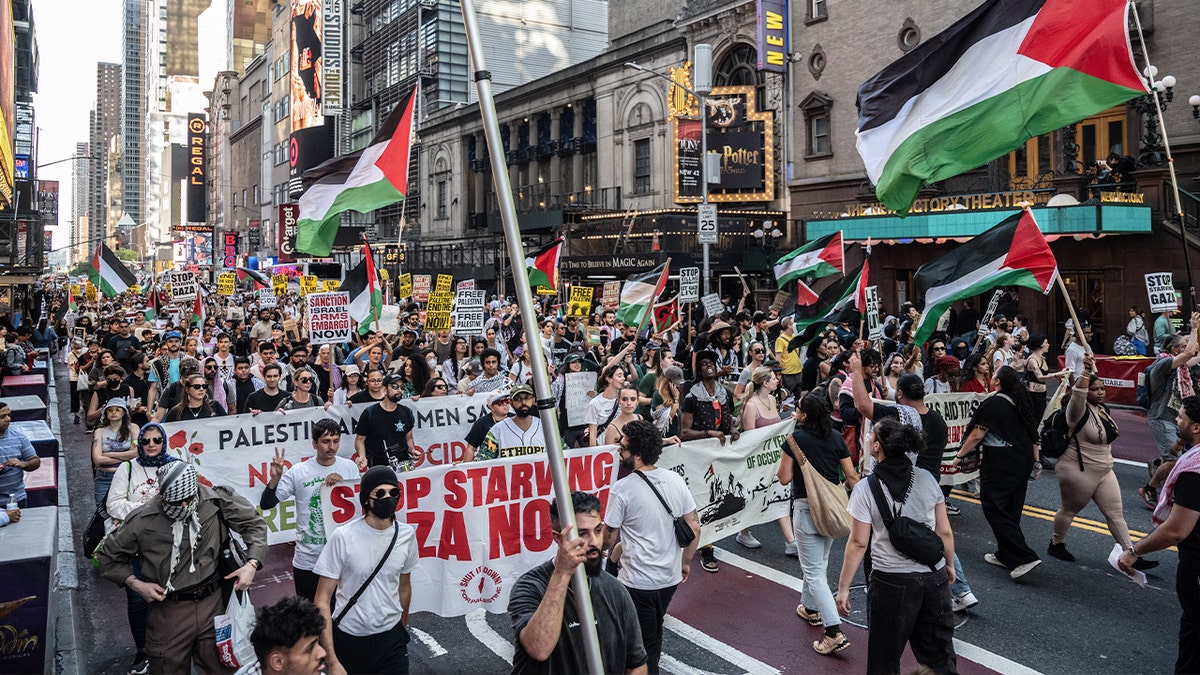
People walk through Times Square during an anti-Israel rally on Oct. 4, 2025, in New York City. (Stephanie Keith/Getty Images)
According to the report, more than 23,000 antisemitic incidents were recorded across the J7 countries last year, representing a 97% increase in violent attacks and a 136% rise in overall incidents compared with 2022.
«Of course, Israel is doing its best, but it has to be an effort with governments all over the world, law enforcement agencies, educational systems and Jewish communities, which we care about a lot,» Herzog said, in reference to confronting Jew-hatred.
Referencing a recent article by professor Niall Ferguson titled «The Death of History,» he said, «How much TikTok or the social networks distort the facts of history? They negate the worst and greatest horror of humankind, the Holocaust. And that’s why we have to stand up together and combat it,» he told Fox News Digital.
Herzog stressed that misinformation spread through distorted and superficial channels makes it easy to smear Israel on social media, but that such narratives do not reflect reality.
GERMAN OFFICIALS WARN ISLAMIST, FAR-LEFT RHETORIC DRIVING SPIKE IN ANTISEMITIC ATTACKS
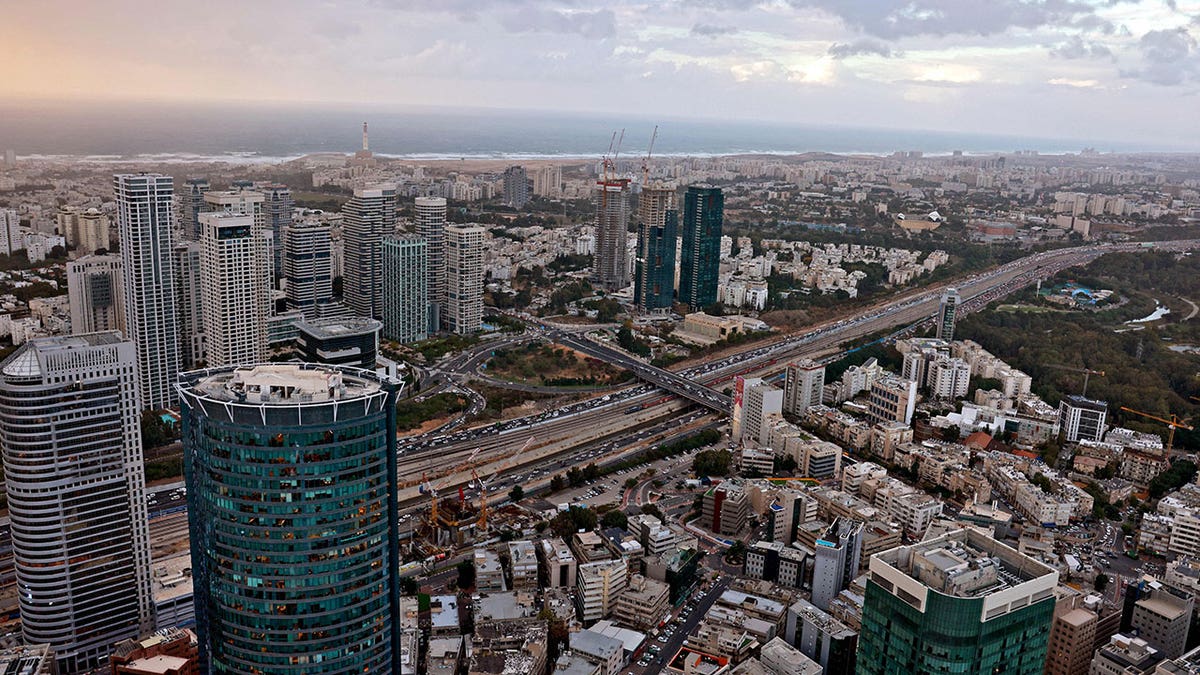
Aerial view of Israel’s Mediterranean coastal city Tel Aviv. (Menahem Kahana/AFP via Getty Images)
SIGN UP FOR ANTISEMITISM EXPOSED NEWSLETTER
«[Israel] is the place where the Startup Nation flourishes. This is the place where great ideas are given to the world and contribute enormously to the world in so many great fields, from health to energy, to science, to agriculture, to food security, to what not. There’s a reason why Americans who visit our country, young Americans, fall in love with this country,» he said.
Growing antisemitism, coupled with polarization within and between Jewish communities and a weakening sense of Jewish identity in some places, led Herzog to launch Voice of the People in April 2023. The initiative brings together a council of 150 emerging leaders — one-third from Israel, one-third from the United States and the remainder from around the world.
Leaders are selected through an algorithm from thousands of candidates and serve rotating terms of roughly two years, developing ideas to address challenges facing the Jewish world.
The initiative held an in-person kickoff summit in March 2025 in Haifa, featuring Herzog and bringing together all council members, reflecting his belief in building the next generation of Jewish leadership, which he described as one of his main tasks.
«I’m overjoyed by the great ideas I see and feel, and I hope that around November we will have a new registration starting for the next slot, the next cohort, and I invite as many Jewish friends to register,» he said.
anti semitism, israel, zohran mamdani, new york city, middle east

Justicia social y concordia política: León XIV traerá a la Argentina una agenda que choca con las prioridades de Javier Milei

El-Sayed campaign backed by over $100,000 from dozens of members of group with alleged terror ties

Enner Valencia a Boca Juniors: Cómo le fue al ecuatoriano en las últimas dos temporadas

Ley de Tierras: el oficialismo dio de baja el capítulo que generó debate para avanzar con la sesión de mañana

Karina Milei visitó las oficinas de Google y se reunió con directivos de la compañía

El verano de Antonela Roccuzzo en Miami: relax al sol, paseos en yate y su nueva saga de fantasía favorita

“Vamos a acelerar con todo”: el objetivo del Gobierno por las reformas y la agenda electoral de cara al 2027

Javier Milei cruzó a Victoria Villarruel y elevó la tensión: “Es una opositora, replica los argumentos kirchneristas”

Reelecciones indefinidas: el oficialismo bonaerense niega que busque ampliar la Legislatura como parte de una reforma política para beneficiar a los intendentes

¡Chau Luck Ra! La salida de soltera de La Joaqui, muy bien acompañada, a días de su separación
-
 POLITICA2 días ago
Javier Milei cruzó a Victoria Villarruel y elevó la tensión: “Es una opositora, replica los argumentos kirchneristas”
-
 POLITICA3 días ago
Reelecciones indefinidas: el oficialismo bonaerense niega que busque ampliar la Legislatura como parte de una reforma política para beneficiar a los intendentes
-

 CHIMENTOS3 días ago
Zaira Nara realizó un topless en Formentera y un comentario de un seguidor generó debate: “¿Nunca vestida?»