
INTERNACIONAL
Trump responds to reports FDA chief Mark Makary could be fired: ‘Know nothing about it’


NEWYou can now listen to Fox News articles!
President Donald Trump downplayed reports that he was getting ready to fire Food and Drug Administration (FDA) Commissioner Marty Makary while speaking to reporters Friday.
«I’ve been reading about it, but I know nothing about it,» Trump said in response to a question about Makary’s potential firing. When asked what’s going on with Makary, Trump responded «nothing much.»
Initial buzz about a possible Makary ouster started circulating when The Wall Street Journal reported Tuesday that Trump had pressured Makary to fast track approval for flavored nicotine vapes.
Makary, according to WSJ, pushed back on the request, drawing Trump’s ire.
The friction pushed Trump to sign off on a plan to fire Makary, WSJ reported Friday.
TRUMP FDA NOMINEE TURNS VACCINE QUESTION ON DEM, RECALLING CONTROVERSIAL BIDEN DECISION
President Donald Trump and Health and Human Services Secretary Robert F. Kennedy Jr. look on as Food and Drug Administration Commissioner Dr. Marty Makary delivers remarks during an announcement on significant medical and scientific findings for America’s children in the Roosevelt Room of the White House in Washington, D.C., on Sept. 22, 2025. (Andrew Harnik/Getty Images)
Trump did not confirm the WSJ reporting, instead telling reporters «no, no» when asked if he was bringing in a new FDA head.
Makary has been embroiled in a number of controversies since being confirmed as the FDA head in March 2025.
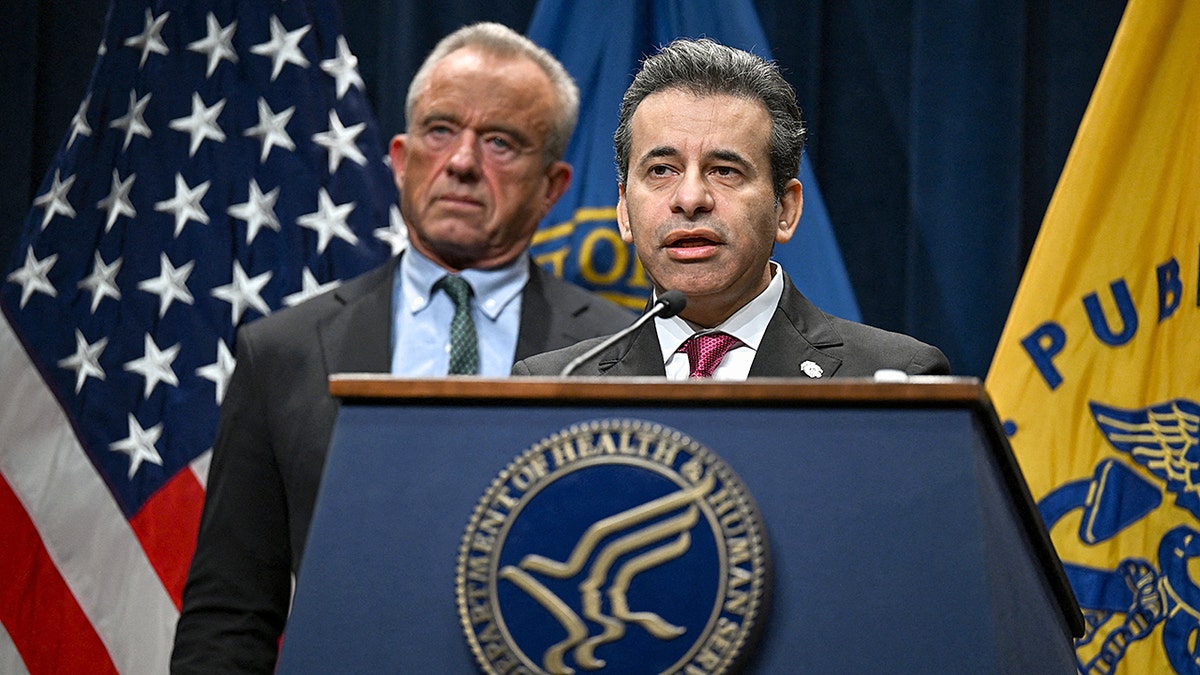
Food and Drug Administration Commissioner Marty Makary speaks during a press conference with Secretary of Health and Human Services Robert F. Kennedy Jr. at the Department of Health and Human Services in Washington, D.C., on Oct. 29, 2025, discussing administration’s plans to lower drug costs. (Annabelle Gordon/REUTERS)
Pro-life activists have accused the former oncology surgeon of slow-walking a safety review for abortion pill mifepristone.
PRO-LIFE GROUP FINDS BIDEN-ERA FDA POLICY IS DRIVING 500 ABORTIONS PER DAY, SAYS TRUMP HAS POWER TO END IT
«This is a five-alarm crisis for the pro-life movement and for the GOP,» SBA Pro-Life America president Marjorie Dannenfelser said in a statement calling for Makary’s firing.
«The GOP cannot win without its base and simply will not get the enthusiasm that drives turnout without leadership from the top,» she wrote.
Pharmaceutical and biotech firms have also opposed Makary. John Crowley, the head of the biotech trade group, Biotechnology Innovation Organization (BIO), condemned some of Makary’s personnel cuts in a recent op-ed.
«Some of the administration’s recent efforts to reform the federal government through aggressive and often indiscriminate personnel cuts have lacked the strategic insights necessary to modernize and reform our nation’s health care agencies, especially the FDA,» Crowley wrote.
‘FOOD BABE’ VANI HARI: DON’T BOO THE MAHA MOVEMENT. OUR HEALTH AND SAFETY ARE BIGGER THAN BUREAUCRATS’ EGOS
But others, particularly those in Robert F. Kennedy Jr.’s Make America Healthy Again (MAHA) camp, have come to Makary’s defense, arguing calls for his firing are corporate-funded attacks.
«Dr. Makary is an ally in the MAHA movement,» Kelly Ryerson, an author and popular advocate also known as Glyphosate Girl, told Fox News Digital.
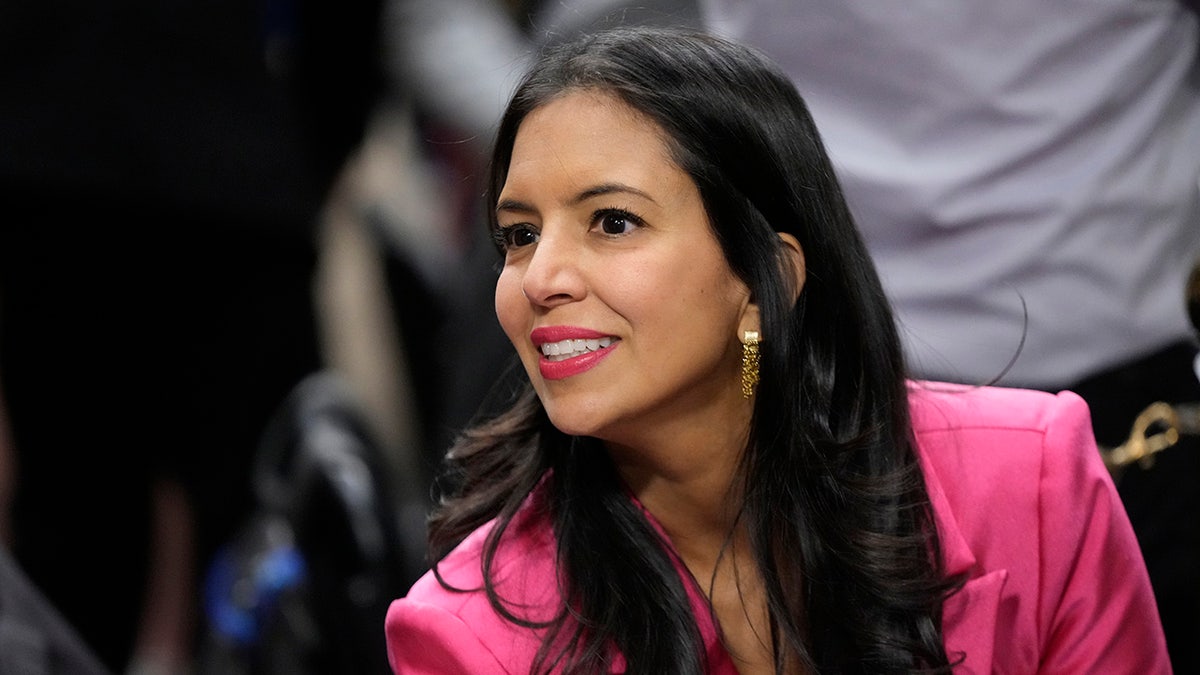
Food activist Vani Hari attends the Senate Finance Committee confirmation hearing for Robert F. Kennedy Jr., President Donald Trump’s nominee for Secretary of Health and Human Services, at the Capitol in Washington on Jan. 29, 2025. (Ben Curtis/AP)
«It is not surprising that his uncaptured approach to protecting human health has been met with the swamp calling for his firing,» she continued.
«The criticism is that he didn’t approve flavored vapes quickly enough. The mothers who don’t want their kids smoking find that reasoning alarming,» Ryerson concluded.
«The attacks against FDA Commissioner Marty Makary are coming from Big Pharma and the media outlets financially dependent on pharmaceutical advertising for survival,» Turning Point USA-affiliated podcaster Alex Clark wrote in a Friday post on X.
CLICK HERE TO DOWNLOAD THE FOX NEWS APP
«Washington SWAMP CREATURES hate Makary because he brings actual scientific scrutiny, independent thinking, and puts Americans’ health FIRST. President Trump has consistently said he wants to Make America Healthy Again. Replacing Makary with a pharma puppet would move us backward, not forward. DO NOT FIRE MAKARY. He is one of the strongest representatives of the MAHA movement inside the federal government. SCREW OFF BIG PHARMA,» Clark wrote.
Vani Hari, a popular food blogger and prominent media figure among the MAHA movement, also wrote that a Makary ouster «would be a horrible move.»
Fox News Digital contacted the White House, HHS, the FDA, BIO and SBA Pro-Life America for additional comment.
health care, robert f kennedy jr, white house, maha











INTERNACIONAL
Trump DOJ unleashes largest denaturalization effort in department history — and says it’s ‘only the beginning’
NEWYou can now listen to Fox News articles!
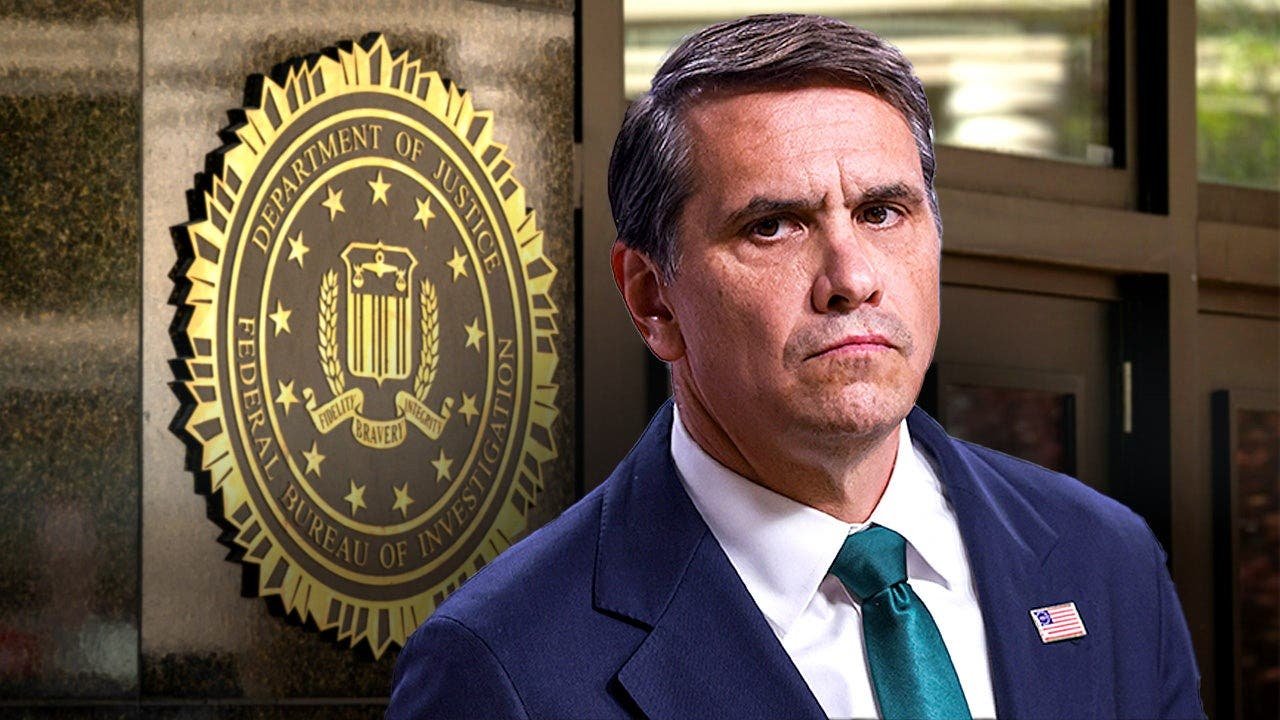
FIRST ON FOX: The Department of Justice is moving to revoke the citizenship of more than two dozen individuals who the DOJ said committed crimes ranging from attempted murder to child sexual abuse to identity fraud, marking its largest citizenship revocation surge on record, Fox News Digital learned Monday.
«U.S. citizenship is one of our nation’s highest privileges, and it must be obtained lawfully and honestly,» Acting Attorney General Todd Blanche told Fox News Digital on Monday.
«The complaints announced today allege that these individuals secured naturalization through fraud, concealment, or other unlawful conduct— including by concealing violent crimes, sexual offenses against children, fraudulent identities, and other disqualifying facts,» said Blanche.
The complaints against the 25 individuals, filed between July 20 and Aug. 3, involve naturalized U.S. citizens who are natives of 17 countries: Pakistan, Moldova, India, Mexico, Colombia, Nigeria, Liberia, Ghana, Jamaica, Taiwan, Honduras, Cameroon, Jordan, Cuba, El Salvador, Haiti and Sweden, Fox News Digital learned. The DOJ told Fox News Digital later Monday that it had added another case, raising the number of people facing denaturalization from 24 to 25.
DOJ MOVES TO STRIP CITIZENSHIP FROM 17 PEOPLE ACCUSED OF HIDING DISTURBING CRIMES
Citizenship and Immigration Services officers detained a man believed to be committing immigration fraud. (USCIS)
«Today’s filings represent the largest coordinated denaturalization effort in Department history, but they are only the beginning. The Justice Department will continue to use every tool available to protect the integrity of the naturalization process and the safety of the American people,» Blanche added.
The cases bring the department’s total denaturalization filings to 88 since Jan. 20, 2025, as the Trump administration ramps up efforts to strip citizenship from individuals it says obtained it unlawfully.
The cases span a wide range of alleged conduct that the Justice Department says should have disqualified the individuals from obtaining or keeping U.S. citizenship.
The complaints involve allegations including attempted murder, child sexual abuse, domestic violence, marriage fraud, identity fraud, passport fraud, bank and credit card fraud, and practicing medicine without a license, among other offenses.
«Today marks the largest denaturalization surge in recorded history,» said Justice Department’s Civil Division Assistant Attorney General Brett Shumate told Fox News Digital.
TRUMP PUTS ASYLUM LAWYERS ‘ON NOTICE’ WITH NEW FRONT IN WAR ON FRAUD

Migrants wait in line to turn themselves in for processing to U.S. Customs and Border Protection border patrol agents near the Paso del Norte Port of Entry after crossing the US-Mexico border in El Paso, Texas, on May 9, 2023. (PATRICK T. FALLON/AFP via Getty Images)
«Every one of these individuals committed crimes incompatible with U.S. citizenship. We are moving at record speed to denaturalize those who sought to deceive the federal government and abuse the naturalization process.»
In one case, the department seeks to denaturalize a man in North Carolina convicted of attempted first-degree murder and assault with a deadly weapon after obtaining citizenship through military service but allegedly failing to meet the required period of honorable service.
ICE NABS ILLEGAL ALIENS CONVICTED OF CHILD SEX CRIMES AND METH TRAFFICKING IN NATIONWIDE ENFORCEMENT SWEEP

U.S. President Donald Trump walks to a waiting Air Force One at the Hagerstown Regional Airport on July 31, 2026, in Hagerstown, Maryland. (Anna Moneymaker/Getty Images)
Prosecutors also allege a naturalized citizen in South Carolina concealed a violent assault in which he beat and choked his wife, later pleading guilty to assault and battery after the attack left her hospitalized.
In June, DOJ moved to revoke 17 individuals from 13 different countries over allegations of child sexual abuse, narcotics trafficking and large-scale financial fraud.
justice department, immigration, migrant crime, naturalization, attorney general
Dos pueblos en «guerra»
El debate sobre las indemnizaciones

En el Var
El estado de los incendios
Vuelve la ola de calor
INTERNACIONAL
Costa Rica vuelve a destacar entre los mejores destinos del mundo para jubilados, según Forbes

Costa Rica fue incluida nuevamente entre los mejores lugares del mundo para que ciudadanos disfruten su etapa de retiro, según la edición 2026 del ranking de destinos internacionales para jubilados elaborado por la revista Forbes.
La clasificación analizó 96 destinos ubicados en 24 países de cinco continentes, tomando en cuenta factores como costo de vida, impuestos, calidad y precio de los servicios médicos, seguridad, estabilidad política, facilidad para regresar a Estados Unidos, integración social, requisitos migratorios y riesgos asociados al cambio climático.
El país centroamericano destacó por una combinación de características que durante años han atraído a jubilados extranjeros: naturaleza, tranquilidad, acceso a servicios, cercanía con Norteamérica y un estilo de vida menos acelerado que el de muchas ciudades estadounidenses.
Según Forbes, Costa Rica mantiene un atractivo especial para quienes buscan retirarse cerca de espacios naturales. Sus playas en ambos océanos, los bosques tropicales y la diversidad ecológica fueron señalados como algunos de los principales motivos por los cuales el país continúa apareciendo en este tipo de rankings internacionales.
Además, el informe resalta que el costo de vida es considerablemente menor al promedio estadounidense, mientras que la seguridad es valorada como relativamente alta en comparación con otros destinos internacionales y el sistema político es considerado estable.

Sin embargo, el análisis también menciona algunos desafíos. Entre ellos destaca el impacto de la temporada lluviosa, especialmente las inundaciones que afectan distintas zonas del territorio nacional y que representan uno de los principales riesgos para residentes locales y extranjeros.
Uno de los puntos destacados por Forbes fue el sistema de salud costarricense. El ranking señala que en las principales ciudades del país existe atención médica de alta calidad a costos accesibles y menciona la posibilidad de que residentes extranjeros jubilados se incorporen a la Caja Costarricense de Seguro Social (CCSS).
El informe indica que algunos jubilados pueden pagar alrededor de $150 mensuales por la cobertura, aunque en la práctica la contribución depende de los ingresos declarados y de la situación particular de cada residente extranjero.
El idioma español aparece como un elemento recomendable para facilitar la adaptación, aunque Forbes señala que no representa una barrera determinante debido a la presencia de comunidades extranjeras y servicios orientados a residentes internacionales.
En materia migratoria, el país también conserva una ventaja competitiva. La publicación destaca la categoría de residencia para pensionados, conocida como “pensionado”, que permite a extranjeros con ingresos permanentes solicitar autorización para vivir legalmente en Costa Rica.
Este régimen exige demostrar una pensión vitalicia de al menos $1,000 mensuales y otorga una residencia temporal renovable por periodos de dos años, de acuerdo con la normativa migratoria costarricense. Además, el país permite a visitantes estadounidenses permanecer como turistas durante varios meses mientras completan sus trámites de residencia.
Otro aspecto señalado fue el sistema tributario. Forbes resalta que Costa Rica no grava los ingresos generados fuera del territorio nacional, una característica relacionada con su modelo de tributación territorial. Aunque Estados Unidos y Costa Rica no cuentan con un tratado específico para evitar la doble imposición, los ingresos extranjeros de muchos jubilados no son sujetos al impuesto costarricense.
Entre las zonas recomendadas aparecen San José, el Valle Central y comunidades como Atenas, reconocida internacionalmente por su clima templado. También se menciona Santa Cruz, en Guanacaste, como una alternativa atractiva para quienes buscan cercanía con playas y comunidades de extranjeros.
El Valle Central continúa siendo una de las regiones preferidas por jubilados internacionales debido a su cercanía con hospitales, servicios, el aeropuerto internacional y costos generalmente más bajos que algunas zonas costeras de alta demanda.

Costa Rica comparte la lista con otros destinos que compiten por atraer a esta población, entre ellos Panamá, México, Belice, Colombia, Uruguay, Portugal, España, Francia, Italia, Tailandia y Vietnam.
El ranking de este año también incorporó con mayor peso los riesgos climáticos. Algunos destinos europeos fueron retirados debido a factores como incendios forestales y temperaturas extremas, mientras que otros países fueron descartados por altos niveles de vulnerabilidad ante fenómenos naturales.
Costa Rica, que ha aparecido durante años en listas similares, mantiene su presencia gracias a una combinación de factores que siguen siendo valorados por los jubilados extranjeros: estabilidad, naturaleza, servicios médicos, cercanía geográfica con Estados Unidos y opciones migratorias accesibles.
No obstante, el escenario internacional cambia constantemente y cada edición de estos rankings refleja nuevas prioridades, especialmente aquellas relacionadas con seguridad, sostenibilidad y capacidad de los países para enfrentar los efectos del cambio climático.
Costa Rica,adultos mayores,casa de montaña,balcón,estadounidenses,paisaje montañoso

La Legislatura porteña declaró a Nicolás Vázquez como nueva Personalidad Destacada de la Ciudad de Buenos Aires

A 10 años de la primera marcha, los movimientos sociales vuelven a peregrinar por Tierra, Techo y Trabajo

“No pensé que yo pudiera caer”: el auge de las falsas ofertas laborales que se difunden por WhatsApp y otras redes de mensajería

La despedida más dolorosa de Rashford: del sueño frustrado del Camp Nou a la tentación turca

A cuánto podría llegar el dólar en agosto sin la intervención del Gobierno, según el nuevo techo de la banda cambiaria

Trump DOJ unleashes largest denaturalization effort in department history — and says it’s ‘only the beginning’

“Vamos a acelerar con todo”: el objetivo del Gobierno por las reformas y la agenda electoral de cara al 2027

Reelecciones indefinidas: el oficialismo bonaerense niega que busque ampliar la Legislatura como parte de una reforma política para beneficiar a los intendentes

“Casta”, “parásito” y “sea democrático”: fuerte respuesta de Victoria Villarruel a Diego Santilli

¡Chau Luck Ra! La salida de soltera de La Joaqui, muy bien acompañada, a días de su separación
-
 POLITICA2 días ago
“Vamos a acelerar con todo”: el objetivo del Gobierno por las reformas y la agenda electoral de cara al 2027
-
 POLITICA1 día ago
Reelecciones indefinidas: el oficialismo bonaerense niega que busque ampliar la Legislatura como parte de una reforma política para beneficiar a los intendentes
-
 CHIMENTOS2 días ago
¡Chau Luck Ra! La salida de soltera de La Joaqui, muy bien acompañada, a días de su separación