INTERNACIONAL
Trump’s endorsement power faces crucial tests in closely watched Georgia and Alabama GOP runoff elections

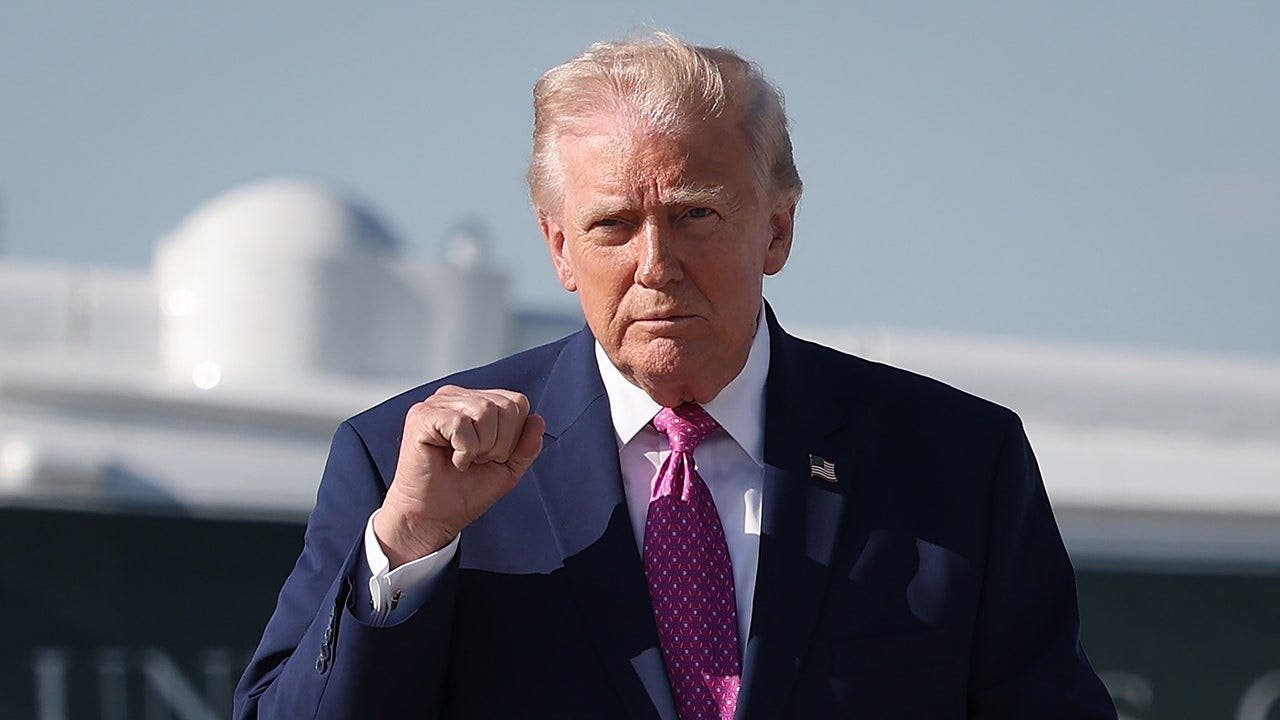
NEWYou can now listen to Fox News articles!
While he isn’t on the ballot, President Donald Trump’s immense clout over the GOP faces more key tests on Tuesday in high-stakes Republican runoffs in Georgia and Alabama.
Trump-endorsed candidates are fighting in competitive showdowns against Republican rivals for the GOP gubernatorial and Senate nominations in battleground Georgia and for the Senate in solidly red Alabama.
Tuesday’s contests in Georgia and Alabama come as Oklahoma and the District of Columbia hold primary elections, and voters in California’s 14th Congressional District will vote in a special election to narrow the field of nearly a dozen candidates hoping to fill the seat left vacant when scandal-plagued Democratic Rep. Eric Swalwell resigned.
But the biggest spotlight is on Georgia, where Trump made an 11th-hour endorsement this past weekend in the Senate race in Georgia, which is one of a handful of midterm election contests across the country that will decide if the GOP holds its slim majority in the chamber.
DEMOCRACY ’26: STAY UP TO DATE WITH THE FOX NEWS ELECTION HUB
Derek Dooley, Republican US Senate candidate for Georgia, from left, his wife Allison Jeffers Dooley, Marty Kemp, Georgia’s first lady, and Gov. Brian Kemp during an election night event at Park Bench Battery in Atlanta, Georgia, on Tuesday, May 19, 2026. (Ben Hendren/Bloomberg via Getty Images)
Trump endorsed Republican Rep. Mike Collins, a MAGA champion and strong supporter of the president, who is facing off against former college football coach Derek Dooley, who has the support of popular conservative Georgia Gov. Brian Kemp.
«It’s an honor to have that endorsement. It just shows that he has confidence that we know how to win this race, we know we’re in the lead in this thing,» Collins told Fox News Digital on Sunday, hours after landing Trump’s endorsement.
Asked if Trump’s endorsement in Georgia came too late to make a difference, Collins said, «I don’t think President Trump ever is too late. He has this impeccable ability of putting his thumb right on the scale at the right time with whatever he wants to do.»
Dooley, who’s running as an outsider, said in a Fox News Digital interview on the eve of the runoff that the president’s backing of his rival «doesn’t change how I feel.»
THESE MIDTERM RACES WILL DETERMINE WHETHER REPUBLICANS HOLD THEIR SENATE MAJORITY
«I’m honored to have Governor Kemp’s endorsement. I certainly would have been honored to have the President’s endorsement. But the most important endorsement that I’m fighting for is the people of Georgia,» he emphasized.
Collins, who represents Georgia’s 10th Congressional District, which is located between Atlanta and Augusta, is the son of the late Rep. Mac Collins, and is the founder and co-owner, along with his wife, of a trucking company.
Dooley, a lawyer, a former University of Tennessee football coach and the son of legendary University of Georgia head football coach Vince Dooley, is strongly backed by Kemp, who is a lifelong friend. The governor and his wife, Georgia First Lady Marty Kemp, have regularly appeared with Dooley on the campaign trail, and the governor’s top political advisor is a senior consultant for Dooley’s Senate bid.
Collins and Dooley were the top two finishers in a crowded field of candidates in last month’s primary that also included Rep. Buddy Carter. Since no one topped 50%, Collins and Dooley advanced to Tuesday’s runoff election.
The winner of the GOP Senate nomination in Georgia will face off in the midterms against Democratic Sen. Jon Ossoff. Republicans view Ossoff as the most vulnerable Senate Democrat seeking re-election and are heavily targeting the first-term senator. But while Republicans have been battling for their party’s nomination over the past year, Ossoff’s built a powerful war chest that will give him a major fundraising advantage as the general election gets underway.
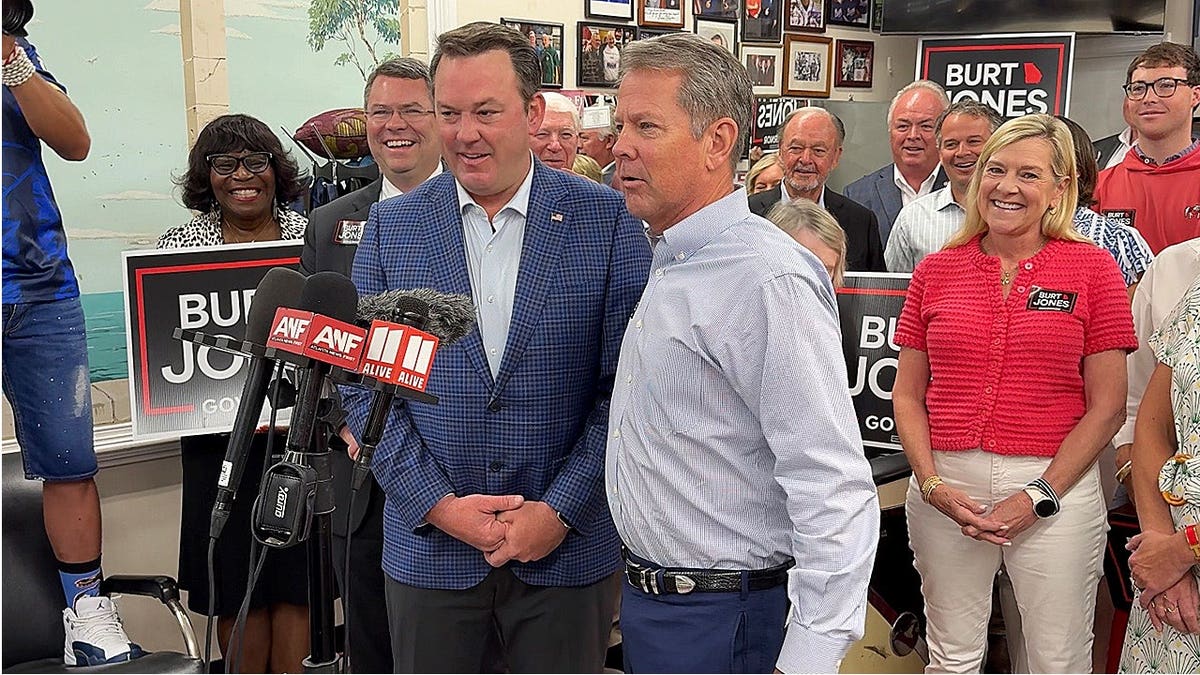
Term-limited GOP Gov. Brian Kemp of Georgia, right, endorses Lt.. Gov. Burt Jones in the Republican gubernatorial runoff, in Atlanta, Georgia on June 15, 2026. (Paul Steinhauser/Fox News)
The power of a Trump endorsement is also facing a key test in Georgia’s gubernatorial nomination runoff, where Trump last year backed Lt. Gov. Burt Jones in the race to succeed the term-limited Kemp. Jones is battling billionaire businessman Rick Jackson, who has dished out over $100 million of his own money on his campaign, in the runoff.
The winner will take on former Atlanta Mayor Keisha Lance Bottoms, who served in the Biden administration, in this autumn’s general election. Bottoms avoided a runoff by winning a majority of the vote as she topped six other candidates in last month’s Democratic gubernatorial primary.
Jones and Jackson were the top two finishers in last month’s crowded and competitive GOP gubernatorial primary, which also included state Attorney General Chris Carr and Georgia Secretary of State Brad Raffensperger. Because no candidate topped 50%, Jones and Jackson advanced to the runoff.
Pointing to a tele-rally Trump headline for him last week, Jones told Fox News Digital «The president’s endorsement carries a lot of weight here in Georgia.
Kemp made a last-minute endorsement on Sunday, backing Jones. And at an event Monday morning, Kemp explained that his mission is «to make sure that we have the best folks at the top of the ticket that can win in November and you know that’s why I’m supporting Burt Jones for governor.»
«When you think about the direction of the state the great things that we’ve been able to do, I think he’s best suited to move the state forward,» Kemp said. And he warned of the «consequences of not winning, like we’ll be going the way of Virginia, New York, California, we just cannot afford to do that.»
Jones, a former captain of the University of Georgia football team, an oil executive and heir to the Jones Petroleum Company, served as a state senator before winning election in 2022 as lieutenant governor.
Jackson was unknown to Georgia voters before launching his gubernatorial campaign in February, but thanks to an avalanche of ads, his story of building a business empire despite growing up in foster care and not being able to afford college became well known in the Peach State.
And he’s repeatedly highlighted that, like Trump, he’s an outsider and businessman. «I’m going to be Trump’s favorite governor because we’re just alike on the way that we handle business and handle problems, and I want to do exactly in Georgia what he’s doing at the federal government,» he reiterated in a Fox News Digital interview Sunday.
And on the eve of the runoff, he predicted, «I think people are ready for an outsider. That’s what they want, and that’s what they’re going to vote for. And that’s why we’re going to win tomorrow.»
Jackson also landed a last-minute endorsement, as conservative firebrand Sen. Ted Cruz backed Jackson on Friday and joined him on the campaign trail for a runoff eve rally.
«Rick has an extraordinary record, an extraordinary life story. And I also think he’s positioned to win. And the stakes are too high. This election is a battleground all across the country. We can’t afford to lose Georgia,» Cruz told Fox News.
When Cruz endorsed Jackson on Friday, he also supported South Carolina Attorney General Alan Wilson, who is facing off in a week against Trump-backed Lt. Gov. Pamela Evette.
Asked if he’s trying to put some daylight between himself and the president on the campaign trail, Cruz quickly responded, «No. Not remotely….The president and I agree on the vast majority of races. What I try to do in every race is endorse the strongest conservative who can win. And typically I get in races late in the race at a time where where my support might be able to make a difference and be helpful.»
Jones, on the eve of the Cruz visit, took aim at Jackson.
«He keeps on bringing in these out-of-state senators, and I would much rather have the president’s endorsement,» he said. «He’s having to go out of state to get his support. We’re keeping all our stuff in state.»
In neighboring Alabama, Trump is supporting Rep. Barry Moore, who is facing off with former Navy SEAL sniper Jared Hudson in the GOP Senate runoff, in the race to succeed Republican Sen. Tommy Tuberville, who is running for governor this year rather than seeking re-election.
Moore, who founded a waste hauling company and later served as a state lawmaker before first winning election to the U.S. House in 2020, and was one of the first politicians to endorse Trump in 2015 when the president first ran for the White House, is also endorsed by Vice President JD Vance and Senate Majority Leader Sen. John Thune.
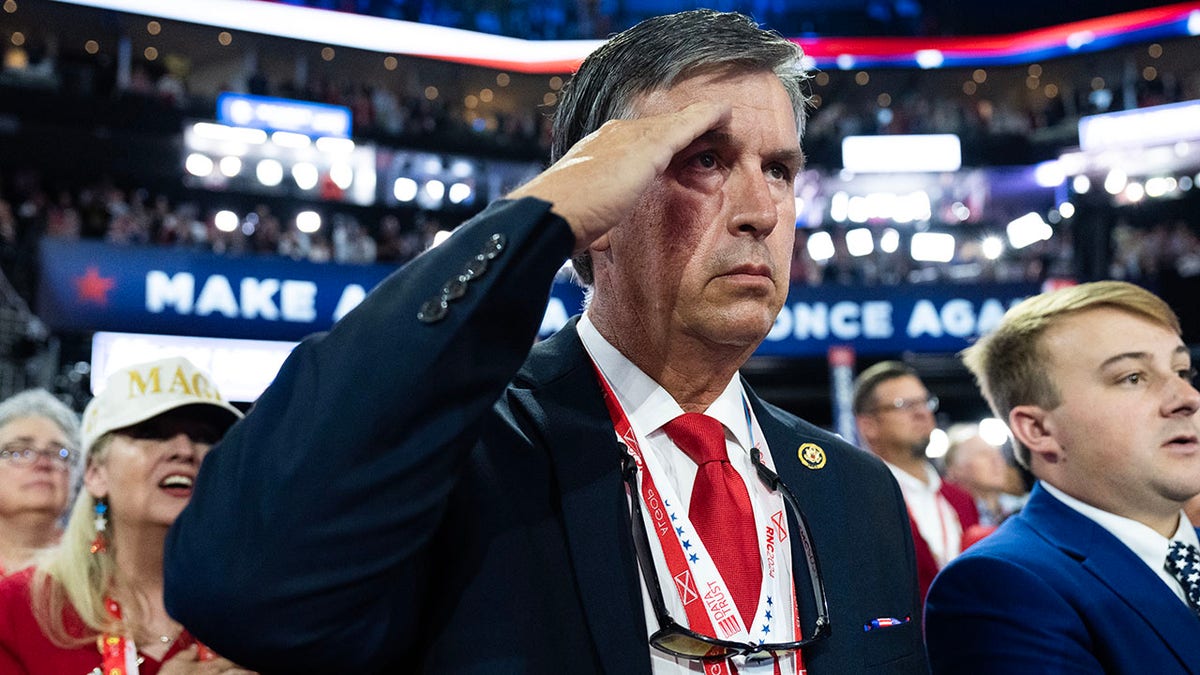
Rep. Barry Moore, seen on the final night of the 2024 Republican National Convention, is running for the Senate in Alabama this year. (Tom Williams)
Moore, who represents Alabama’s 1st Congressional District, in the southern portion of the state, is a member of the ultra-conservative House Freedom Caucus.
Hudson, running as an outsider, edged out state Attorney General Steve Marshall to advance to the runoff with Moore.
Besides being a combat veteran, Hudson has served as a sheriff’s deputy, firefighter, small business owner and current head of a nonprofit that trains law enforcement in taking out human traffickers.
Hudson was endorsed by then-Sen. Markwayne Mullin, who is now Trump’s Department of Homeland Security secretary, as well as Sen. Tim Sheehy, the National Association for Gun Rights PAC, and conservative activist and media star Riley Gaines.
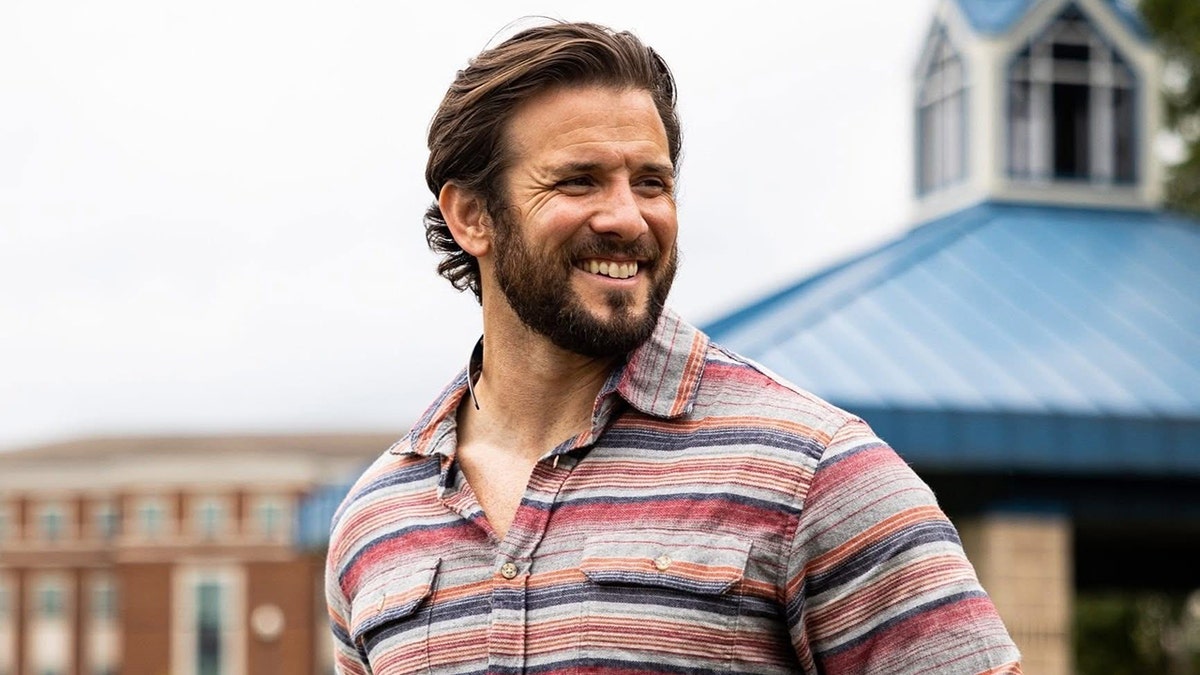
Former Navy SEAL Jared Hudson is running for U.S. Senate. (Jared Hudson)
Moore or Hudson will be considered the clear front-runner in November against the winner of the Democratic runoff between small business owner Dakarai Larriett and attorney and former judge Everett Wess.
In Oklahoma, Trump is backing Mike Mazzei, a former state senator and Oklahoma budget secretary, in the GOP gubernatorial primary in the race to succeed term-limited GOP Gov. Kevin Stitt.
The president is also supporting minister Jackson Lahmeyer, who founded the group Pastors for Trump, in the Republican primary in the state’s 1st Congressional District, in the race to succeed Rep. Kevin Hern, who is running for the Senate.
And in deep blue Washington D.C., the Democratic primary between seven candidates trying to succeed outgoing Mayor Muriel Bowser will effectively decide her successor in the District of Columbia.
The brute force of the president’s endorsement power has been on display in GOP primaries over the past month, and a half, with his candidates ousting incumbents he targeted in showdowns in Indiana, Louisiana, Kentucky and Texas that grabbed plenty of national attention.
But Trump’s endorsement streak in statewide and congressional Republican primaries was snapped two weeks ago when his 11th-hour endorsement of Republican Rep. Randy Feenstra of Iowa in the race to succeed retiring GOP Gov. Kim Reynolds wasn’t enough to propel the three-term congressman to victory.
Feenstra was narrowly edged by Zach Lahn, a businessman, farmer and former political strategist who was backed by the political wings of MAHA — the acronym for the Make America Healthy Again movement aligned with Trump Health Secretary Robert F. Kennedy Jr. — and Turning Point USA, the powerful conservative organization co-founded by the late Charlie Kirk.
Trump rebounded last week, as the candidate he endorsed in the South Carolina GOP gubernatorial primary, Lt. Gov. Pamela Evette, finished first in a crowded field and clinched one of the two tickets in the race for the nomination.
CLICK HERE TO DOWNLOAD THE FOX NEWS APP
Meanwhile, longtime Trump ally Sen. Lindsey Graham did win a majority of the vote in the Republican Senate primary, and avoided a runoff.
Graham, who was endorsed by Trump, was facing primary challenges from five candidates, including conservative businessman Mark Lynch, who took aim at the senator over his support for the war in Iran. Lynch was backed by some MAGA leaders who have been critical of the president.
midterm elections, brian kemp, donald trump, ted cruz, republicans elections, georgia, alabama








INTERNACIONAL
Putin, Russia put on notice as Senate takes crucial step to grind down the Kremlin’s war machine
Capitol ceremony honors Lindsey Graham’s life and legacy
Chief congressional correspondent Chad Pergram details the casket departure for Sen. Lindsey Graham at the United States Capitol following the memorial service. Pergram reports Ukrainian President Volodymyr Zelenskyy will meet with lawmakers ahead of a scheduled Senate vote on Russia sanctions legislation negotiated by Graham.
NEWYou can now listen to Fox News articles!
The Senate took its first major step in fulfilling one of the late Sen. Lindsey Graham’s biggest desires: levying bone-crushing sanctions against Russia.
A bipartisan swell carried the sanctions package through its first hurdle on an 86-12 vote, which has gone through several iterations in the time since it was first formulated by Graham and Sen. Richard Blumenthal, D-Conn. He explained that at its core, the package was designed to stop purchases of Russian oil and gas that was «fueling Putin’s war machine.»
«Ukraine’s fight is our fight,» Blumenthal said. «Nobody believed that more deeply and passionately than Lindsey Graham. He lived it, and this vote is a step forward.»
LINDSEY GRAHAM’S FINAL MISSION NEARS FINISH LINE AS WORLD LEADERS GATHER TO HONOR HIM
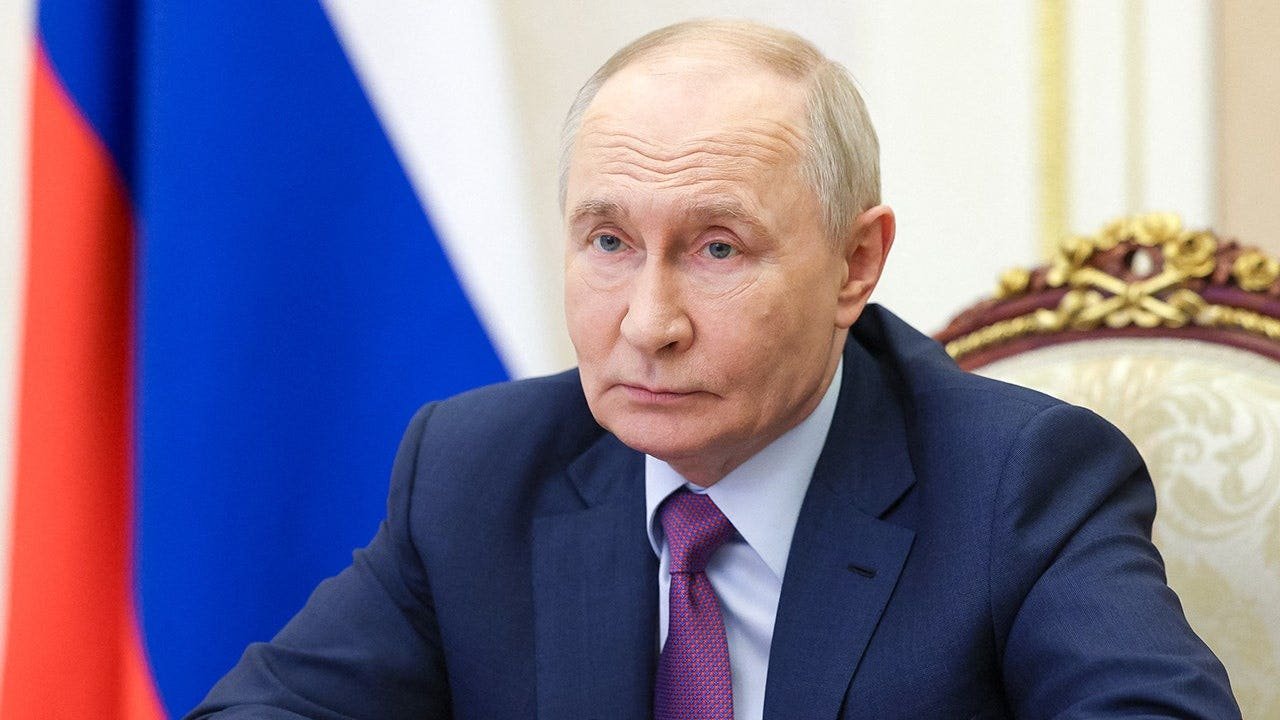
In this pool photograph distributed by the Russian state agency Sputnik, Russia’s President Vladimir Putin chairs a meeting of the Presidential Council for the Implementation of State Policy on the Promotion of the Russian Language and the Languages of the Peoples of Russia via video link at the Kremlin in Moscow on June 2, 2026. (Vyacheslav PROKOFYEV / POOL / AFP via Getty Images)
The colossal vote also marks a huge victory on the floor for Senate Majority Leader John Thune, R-S.D., who over the summer has managed to pass or advance two major bills with a massive wave of bipartisan support on the Senate floor, even during starkly partisan times in upper chamber.
And the package that survived Tuesday night, just hours after lawmakers, world leaders and family said their last Washington, D.C., goodbyes to the longtime senator has once again been revamped.
A bipartisan group led by Blumenthal and Sen. Darline Graham, R-S.C., who picked up her older brother’s sanctions crusade, announced that a deal had been reached to rename the package in honor of the late lawmaker, and tack on additional sanctions against Iran.
Lawmakers argue that the best way to remember Graham, and cement his legacy into law, is to pass the newly-minted Lindsey O. Graham Sanctioning Russia and Iran Act, particularly as a symbol of his ferocious support for Ukraine.
LINDSEY GRAHAM’S SISTER CARRIES ON LATE SENATOR’S WORK, BECOMING SOUTH CAROLINA’S FIRST FEMALE SENATOR
Sen. Jon Husted, R-Ohio, told Fox News Digital that «literally the first conversation I ever had with Lindsey Graham was about Russia sanctions.»
«I know he was very passionate about this and I know that sanctions are one of the best tools we have for bringing wars to an end without having to commit any of our military,» Husted said.
The bill, as Blumenthal noted, still focuses on kneecapping Russian President Vladimir Putin’s war effort by targeting Moscow’s top financial gainer: oil and gas sales.
BRINGING THE WAR TO PUTIN’S FRONT DOOR: IS UKRAINE’S ENERGY STRIKE STRATEGY WORKING?
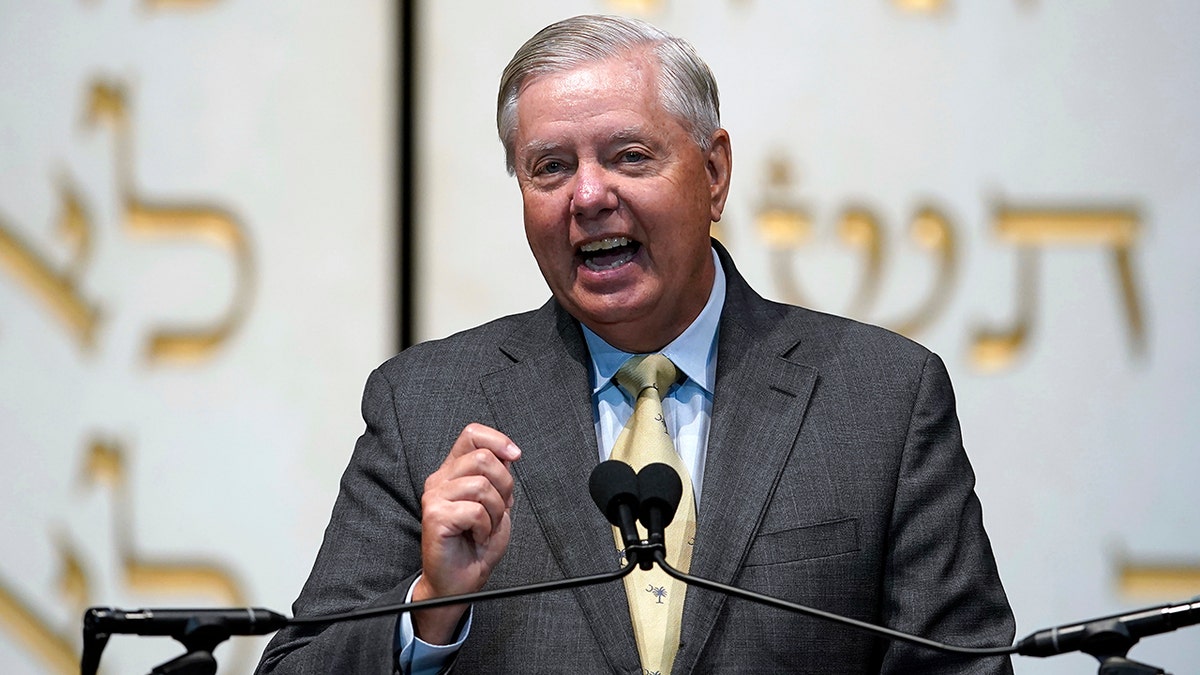
Sen. Lindsey Graham, R-S.C., speaks during a memorial service for former U.S. Sen. Joseph Lieberman, D-Conn., Wednesday, July 24, 2024, at the Washington Hebrew Congregation, in Washington. ( AP Photo/Jose Luis Magana) (AP Photo/Jose Luis Magana)
But it also extends sanction authority against Iran that hampers funding to the country’s weapons and energy sectors as the administration and negotiators abroad seek to find a long-lasting peace agreement for the war in the Middle East.
Also, still in the legislation are targeted sanctions against Putin, Russian officials and Russian military leaders, up to 500% tariffs on Russian imports, tariffs of up to 100% on countries buying Russian energy, like China and India.
It also gives President Donald Trump flexibility for when to turn off some aspects of the sanctions, among others.
Sen. Katie Britt, R-Ala., one of the original backers of the sanctions package, is already putting pressure on the House to make a move on the legislation. The lower chamber left until the end of August last week.
«I am hopeful that when we get this across the finish line, which is going to happen in a big way, that the House will come back immediately and pass this legislation,» Britt said.
Meanwhile, Ukrainian President Volodymyr Zelenskyy, a close ally of Graham’s, made the journey to Washington to attend his funeral, and meet with President Donald Trump and lawmakers in the process to push the sanctions bill and a deal for more anti-ballistic defenses in the war against Russia.
CLICK HERE TO DOWNLOAD THE FOX NEWS APP
Zelenskyy said on X that, «First and foremost, I offered President Trump our condolences on the passing of Lindsey Graham. He was a true friend of Ukraine.»
«The President and I discussed licenses for Patriot interceptor production and several other ideas that could help,» Zelenskyy said. «We also spoke about diplomacy – it’s important that the diplomatic process be reinvigorated.»
And Zelenskyy, after his closed-door meeting with lawmakers, went to the viewing gallery in the Senate to watch vote, which after many stops and starts, finally showed signs of progress.
politics, sanctions, senate elections, foreign affairs, lindsey graham
INTERNACIONAL
Una agencia de la ONU alertó sobre la suba del tráfico de personas en centros de estafas en línea

La agencia de migración de la ONU alertó sobre el aumento de tráfico de personas para trabajos forzados en centros de estafas en línea, una modalidad que afecta a cientos de miles de víctimas, incluidas personas angloparlantes con estudios universitarios. Según la Organización Internacional para las Migraciones (OIM), los grupos criminales captan a sus víctimas mediante anuncios falsos de empleo, especialmente a través de redes sociales, que prometen oportunidades laborales en el extranjero.
Al llegar al destino, los afectados son privados de libertad, se les retienen documentos y se les obliga a participar en esquemas de fraude por internet, bajo amenazas, violencia y “servidumbre por deudas”.
“Estamos viendo que ahora mismo surgen muchos más de estos casos”, declaró la directora general de la OIM, Amy Pope, el martes en Ginebra. La funcionaria precisó que hay víctimas de más de 80 países distintos en este tipo de delitos. Pope subrayó que los reclutadores buscan perfiles que “por lo general hablan muy bien inglés”, a menudo con títulos de posgrado y cierto nivel académico, y que los casos “se están dando específicamente en toda Asia”.
“Las redes criminales atraen a estas personas con promesas de empleo, anunciando ofertas en redes sociales, reclutando a personas que a menudo hablan inglés muy bien, y que frecuentemente tienen títulos universitarios”, sostuvo Pope y agregó: “No todas las personas que trabajan en esos centros son víctimas de trata, algunas saben en lo que se están involucrando, pero un porcentaje significativo son víctimas de trata”.
La OIM citó estimaciones de la Oficina de las Naciones Unidas contra la Droga y el Delito (ONUDD) que calculan pérdidas por hasta 114.000 millones de dólares el año pasado en Asia oriental, Australia y Nueva Zelanda, y advierten que los “complejos de estafas” en la región podrían albergar a cientos de miles de trabajadores traficados.

Entre 2022 y 2025, la OIM asistió a más de 3.500 víctimas de este tipo de explotación, originarias de casi 40 países, siendo las más afectadas Indonesia, India, Sri Lanka, Etiopía, Kenia y Bangladesh.
Pope, precisó que, aunque inicialmente las víctimas procedían principalmente de países asiáticos cercanos a los centros de estafa, actualmente se han documentado afectados de más de 80 países, lo que indica una diversificación en el origen de las personas explotadas por estas organizaciones. Respecto a los perjudicados por los fraudes en línea, Pope advirtió que estas redes suelen seleccionar como objetivo a personas mayores, a quienes contactan telefónicamente para intentar obtener datos bancarios y cometer estafas.
La Policía de Malasia desarticuló dos centros de estafas digitales en el estado de Johor, frente a Singapur, y detuvo a más de 300 personas presuntamente implicadas en fraudes millonarios contra víctimas internacionales, según informaron las autoridades y recogen medios locales.
De acuerdo con el jefe policial de Johor, Ab Rahaman Arsad, citado por la prensa malasia, los centros operaban en 32 inmuebles —27 apartamentos en un complejo de lujo y 5 chalés— y estaban vinculados a sospechosos con antecedentes en fraudes similares en otros países. El diario nacional The Star indicó que cada residencia tenía asignadas víctimas de un país específico, y que la mayoría de los engaños estaban relacionados con falsas inversiones, criptomonedas y la suplantación de bufetes de abogados.

El operativo culminó con la detención de 335 personas de entre 20 y 58 años, entre ellos 309 ciudadanos chinos, 19 indonesios, cuatro birmanos y cuatro malasios, según el mismo medio.
Expertos y la ONU señalaron que los centros de estafa surgieron en el Sudeste Asiático ligados a la industria de los casinos, y se trasladaron al entorno digital tras la pandemia de la covid-19. Muchos de sus trabajadores cumplen labores en condiciones cercanas a la semiesclavitud, defraudando millones de dólares a víctimas en todo el mundo bajo las órdenes de mafias, en su mayoría de origen chino.
(Con información de Associated Press y EFE)
asia,diplomacía,encuentro,filipinas,indonesia,malasia,naciones asiáticas,política exterior,políticos,rusia,singapur,tailandia
INTERNACIONAL
Iran expert brands Islamic Center of England Iran’s ‘UK office,’ urges immediate closure
NEWYou can now listen to Fox News articles!
A leading Iran expert has called on the British government to shut down an Islamic center that he claimed has been functioning as an office of the regime’s supreme leader amid a shocking report that Iran’s regime smuggled operatives into the United Kingdom.
The Islamic Center of England recently came into the spotlight following revelations that the U.K. government has allegedly allowed the center to sponsor visas for imams. The report comes at a time when Iran has said Britain is a legitimate target if it allows the U.S. to use its bases to fly missions against Tehran.
The reported green light to imams to secure visas as «skilled workers» for the Islamic Center raises profound questions about dangerous gaps in Britain’s national security and immigration policies, according to lawmakers and Mideast experts.
UK PINS STRING OF ANTISEMITIC ATTACKS ON IRAN-LINKED GROUP, BANS IRGC
A Google maps photo showing the Islamic Center of England in London. (Google Maps)
Kasra Aarabi, director of IRGC [Islamic Revolutionary Guard Corps] Research at United Against Nuclear Iran told Fox News Digital, «In light of the IRGC’s threat to attack Britain and reports that it has been exploiting the illegal migrant crisis to send ‘Islamic revolutionary agents’ to the country, the U.K. government simply must not tolerate the existence of this Islamist extremist infrastructure on British soil.»
Aarabi added, «The Islamic Centre of England — a U.K.-registered charity and mosque — has long been operating as the office of the Iranian regime’s supreme leader in the U.K. Its Imam is the personally appointed U.K. representative of the regime’s supreme leader. The very fact that the supreme leader of the Iranian regime, who is ordering terror plots on British soil, has an office and appointed representative in the U.K. is completely unacceptable. In light of the IRGC’s latest threats against Britain, the center should be immediately shut down and all of its non-British staff deported.»
The revelation about the Islamic Center of England comes amid a report in the U.K.’s Daily Telegraph that Tehran officials claimed the IRGC controls some illegal human trafficking routes between the Middle East and the English Channel.
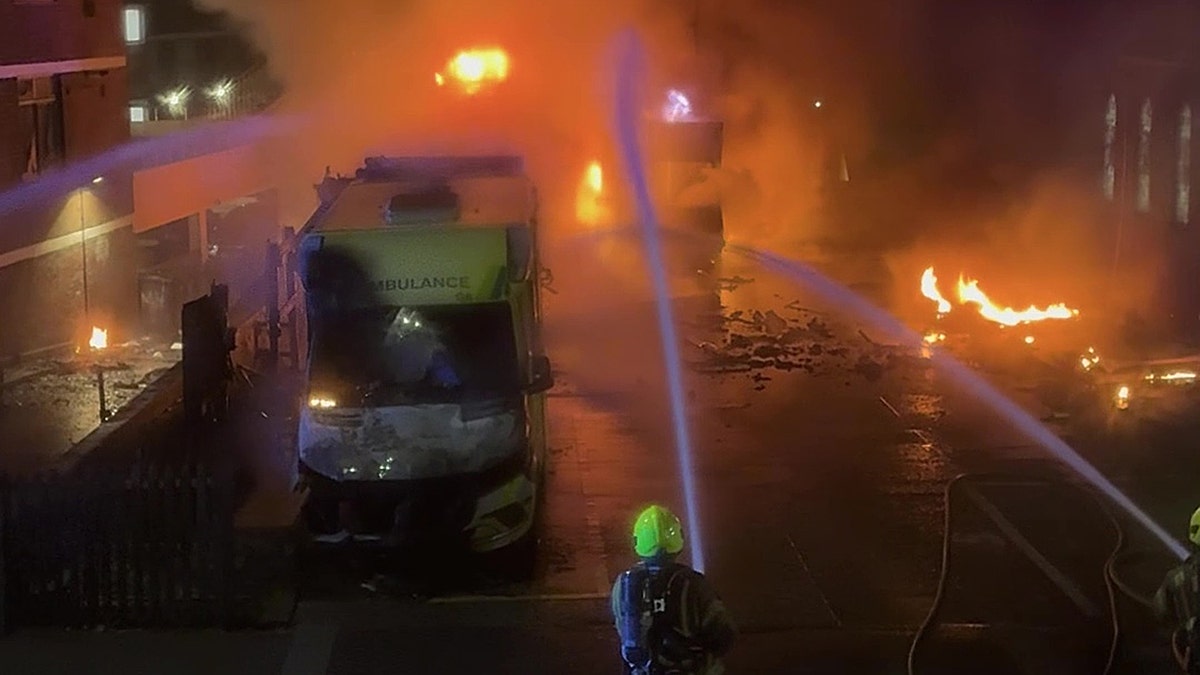
Firefighters are seen tackling a blaze at Highfield Road in the Golders Green neighborhood of London, following an arson attack on four charity ambulances belonging to the Jewish Community volunteer Ambulance Service. (PA/PA Images via Getty Images)
An Iranian official told The Telegraph, «Of course, don’t forget that our armed forces have influence and run the [smuggling] routes in some cases if they want.» The official warned, «At the moment we have people right there in London, revolutionary people who care about the world and the lives of children – they wait for us to tell them what to do. We have not done that yet, but we can easily make London unsafe for you if we want to.»
The official added, «These smuggling routes are more important and useful than the missiles for us – we do not need a missile to target London, it’s easier than that.»
WHO IS AHMAD VAHIDI? IRAN’S NEW IRGC CHIEF TIED TO GLOBAL ATTACKS AND ‘DEATH TO AMERICA’ IDEOLOGY
Fox News Digital previously reported in February that the Islamic Center of England was accused of selling merchandise supporting the U.S.-designated terrorist movement, Hezbollah and the IRGC — also a U.S.-classified terrorist entity.
The Islamic Center allegedly had stickers of late Islamic Revolutionary Guard Corps global terrorist Qassem Soleimani, who was responsible for the murders of over 600 U.S. military personnel, according to the Trump administration. President Donald Trump ordered a drone strike in January 2020 that killed Soleimani in Iraq.
A spokesperson for the United Kingdom’s Home Office — a mix of the Department of Homeland Security and DOJ — told Fox News Digital, «The Islamic Center of England has not sponsored any workers since 2022 under the previous government, and the Charity Commission is currently investigating this organization.»
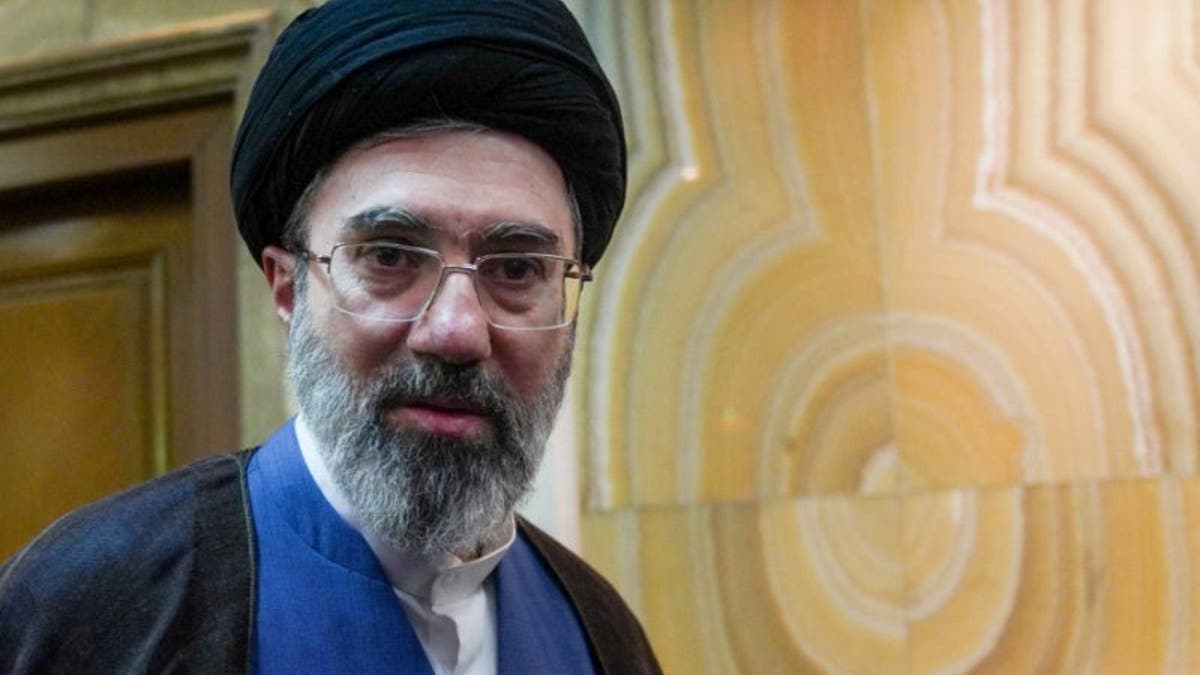
Mojtaba Khamenei, the new supreme leader of Iran and second son of the late Ayatollah Ali Khamenei, attends a meeting in Tehran on Oct. 13, 2024. (Hamed Jafarnejad/ISNA/WANA/Reuters)
The Home Office spokesperson continued, «We treat the threat posed by the Iranian regime and those who do its bidding with the utmost seriousness. That’s why we have fast-tracked a change in the law to outlaw support for the IRGC, equipping the police and intelligence service with more powers to disrupt those working on their behalf, and making it easier to prosecute them. If wrongdoing is uncovered, those responsible will face the full force of the law, with the possibility of lengthy prison sentences, loss of licenses, and further civil action.»
Iran and its chief strategic ally, Hezbollah, have been blamed for bombing the U.S. Embassy in Beirut in 1983 in which 63 people, including 17 Americans, were murdered, and dual suicide truck bombers blew up the barracks of American and French members of a multinational force in Lebanon in 1983, in which 220 U.S. Marines, 18 U.S. Navy sailors and 3 U.S. Army soldiers lost their lives. Fifty-eight French troops were also murdered in the terrorist attack.
Critics have long urged the British government to pull the plug on the Islamic Center’s operation as pressure mounts on the new prime minister, Andy Burnham, to act against Iranian regime apparatus in the country.
Aarabi said, «Burnham’s government should use all available tools — including the new designation of the IRGC under the National Security (State Threats) Act — to dismantle this Islamist extremist apparatus across Britain that is linked to the IRGC. To put it more clearly: all the charities, mosques and centers that have carried out IRGC-linked activity should be dismantled, and their non-British staff deported immediately. No ifs or buts.»
He added «The Imam of the center, who is the representative of the ayatollah in the U.K., has continuously expressed extremist views that are sympathetic to the IRGC. In spite of this, not only does he continue to reside in the U.K. but he is listed as the trustee of several charities in Britain. This individual does not hold a diplomatic passport, meaning his visa could be immediately revoked.»

Naval units from Iran and Russia simulate the rescue of a hijacked vessel during joint drills at the Port of Bandar Abbas in Hormozgan, Iran, on Feb. 19, 2026. (Iranian Army/Handout/Anadolu via Getty Images)
US-SANCTIONED MOJTABA KHAMENEI NAMED IRAN’S NEXT SUPREME LEADER AFTER FATHER’S DEATH: REPORTS
Aarabi argued that the «IRGC has built an entire ‘soft power’ infrastructure across Britain under the guise of charities, mosques and colleges. The IRGC’s goal has been to use this infrastructure to nurture home-grown Islamist radicalization, terrorism and acts of violence. In doing so, it has successfully cultivated, within segments of the British Muslim community, what can only be described as an Islamist constituency that is loyal to it and its violent extremist ideology. These tactics mimic ISIS and al Qaeda — yet there has been no attempt to counter it by the British government.»
Iranian agents have attacked Iranian dissidents over the years in Britain. Two Romanian nationals, who prosecutors said had been acting for Iran, were jailed this month for stabbing a journalist working for an independent Iranian news outlet, Iran International, in London.
Tehran has always denied involvement in such attacks, calling allegations to the contrary unfounded and politically motivated.
«If the IRGC seeks to attack Britain, it could activate this radicalized Islamist constituency for acts of home-grown violence and terror. This form of kind-actor terror, where a radicalized extremist carries out an attack because they’re ideologically inspired rather than paid or directed by Tehran, also provides the IRGC with sufficient plausible deniability to complicate attribution and reduce the likelihood of British retaliation,» said Aarabi.
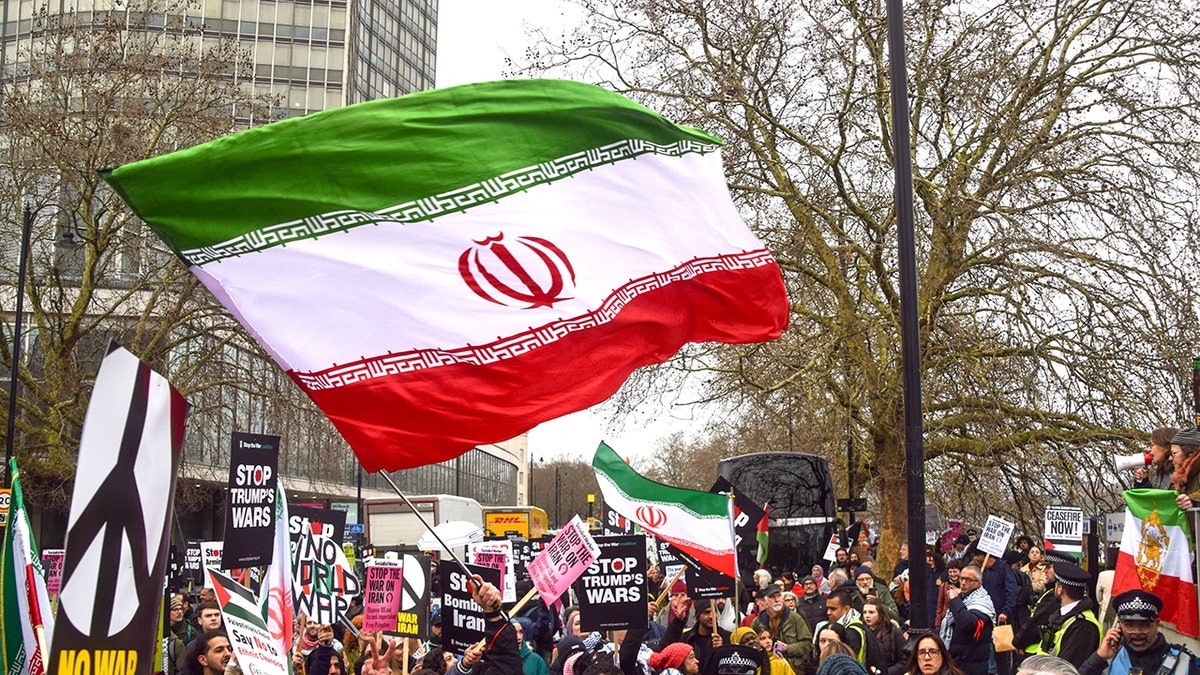
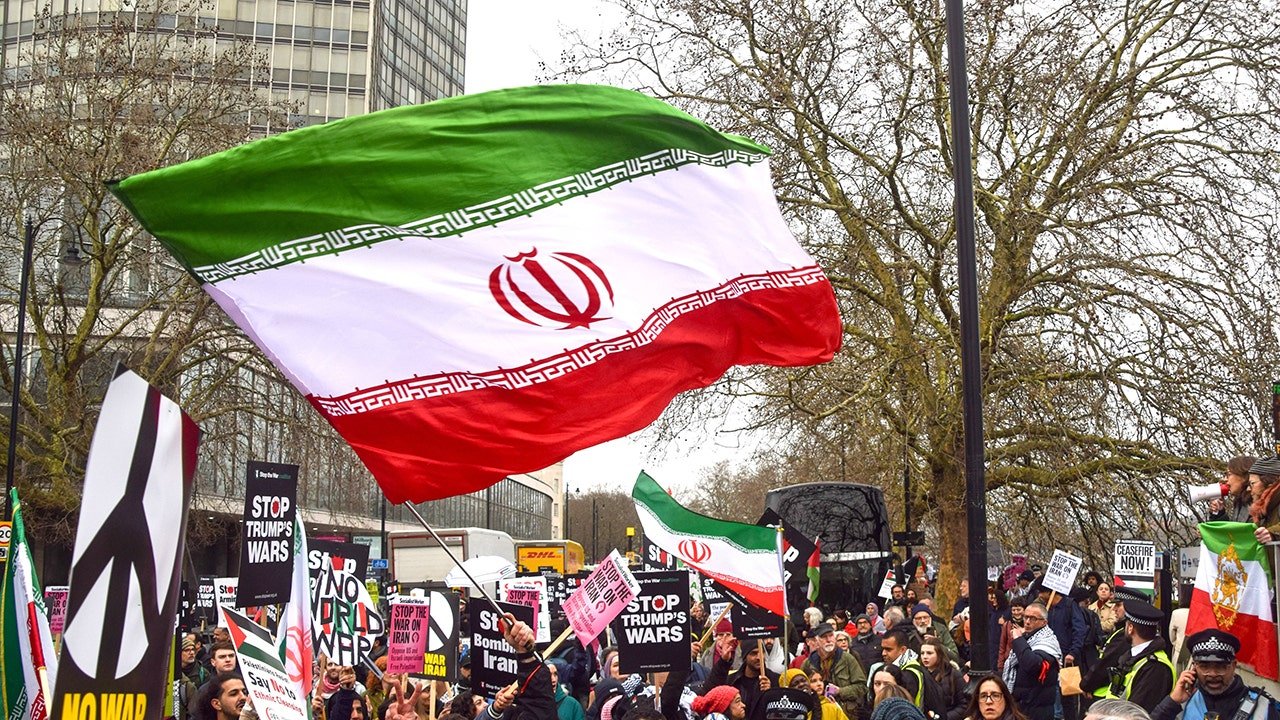
A protester waves a flag of Iran during the demonstration in Millbank. Thousands of people marched to the U.S. Embassy in protest the war against Iran. (Vuk Valcic/SOPA Images/LightRocket via Getty Images)
A spokesperson for the Islamic Center of England told Fox News Digital, «The Islamic Center of England is an independent registered charity, established and operating under the laws of England and Wales. It is governed by English charity law and regulated by the Charity Commission. It is not an official office or representative of any government, political entity, or individual.»
The spokesperson for the center added, «Like many charities, faith organizations and other eligible institutions in the U.K., the Center holds a Home Office sponsor license, which allows it to sponsor skilled workers where it meets the requirements of the U.K.’s immigration system.»
The spokesperson concluded, «Sponsor licenses are granted and overseen by the Home Office, and all licensed sponsors are required to comply with the same legal and regulatory obligations. The Center has consistently maintained that it is an independent U.K. charity and carries out its activities in accordance with U.K. law and its charitable objectives.»
CLICK HERE TO DOWNLOAD THE FOX NEWS APP
The British prime minister’s press office referred Fox News Digital to the Home Office for comments.
Reuters contributed to this report.
war with iran, united kingdom, terrorism, iran

Putin, Russia put on notice as Senate takes crucial step to grind down the Kremlin’s war machine

Sur Finanzas: cómo sigue la causa, los que faltan declarar y la defensa del ex presidente de Banfield

Vaca Muerta ya genera el doble de dólares que Argentina paga al FMI por año

Un título memorable y un sí que lo cambió todo: la historia de amor detrás de la primera estrella de Racing en el fútbol femenino

Una agencia de la ONU alertó sobre la suba del tráfico de personas en centros de estafas en línea

Wanda Nara acusó a la China Suárez del fracaso de Icardi en el fútbol y Mauro le respondió con todo

Crisis entre Milei y Lula: la trama política, personal y geopolítica detrás del mayor choque diplomático entre Argentina y Brasil

Cuentapropismo emocional en lo profundo del conurbano

San Isidro: la ballena que quedó varada en un banco de arena murió pese al operativo de rescate

Joaquín Furriel contó cómo fue ver la final del Mundial con su novia española: “Una situación incómoda”

 POLITICA2 días ago
Crisis entre Milei y Lula: la trama política, personal y geopolítica detrás del mayor choque diplomático entre Argentina y Brasil
- SOCIEDAD2 días ago
San Isidro: la ballena que quedó varada en un banco de arena murió pese al operativo de rescate
- POLITICA3 días ago
Milei cruzó al aire a De Mendiguren, exministro de Duhalde: “Vos, sí, ladrón”