INTERNACIONAL
Ukraine hits Putin’s prized bridge in record drone blitz as Kremlin tells lawmakers to prepare for ‘victory’

President Trump to hold historic trilateral summit with Xi and Putin
The upcoming trilateral summit in China between President Trump, Xi Jinping and Vladimir Putin faces critical global challenges. Alexandria Hoff reports on key agenda items, while retired Navy Captain Brent Sadler analyzes strategic threats from Iran. Discussions are expected to address nuclear talks, international trade and the potential inclusion of tech leaders.
NEWYou can now listen to Fox News articles!
Ukraine launched what Russia described as the largest overnight drone attack of the war Monday, striking President Vladimir Putin’s prized Crimea bridge and setting industrial facilities ablaze, as separate reports revealed a covert French military mission in Ukraine and preparations in Moscow for a possible return of Russian troops.
The developments came days before President Donald Trump is expected to meet Putin and Chinese President Xi Jinping in China, amid renewed U.S.-brokered efforts to end the nearly five-year conflict.
«The sheer scale and effectiveness of these drone attacks are remarkable,» retired Air Force Lt. Gen. Richard Newton told Fox News Digital. «Ukraine has developed the capability to produce large numbers of drones and strike targets once considered a safe haven deep inside Russia.»
UKRAINE TARGETS RUSSIA WITH OVER 1,000 DRONES, KILLING 2 AS MOSCOW HOLDS LAST DAY OF ELECTIONS
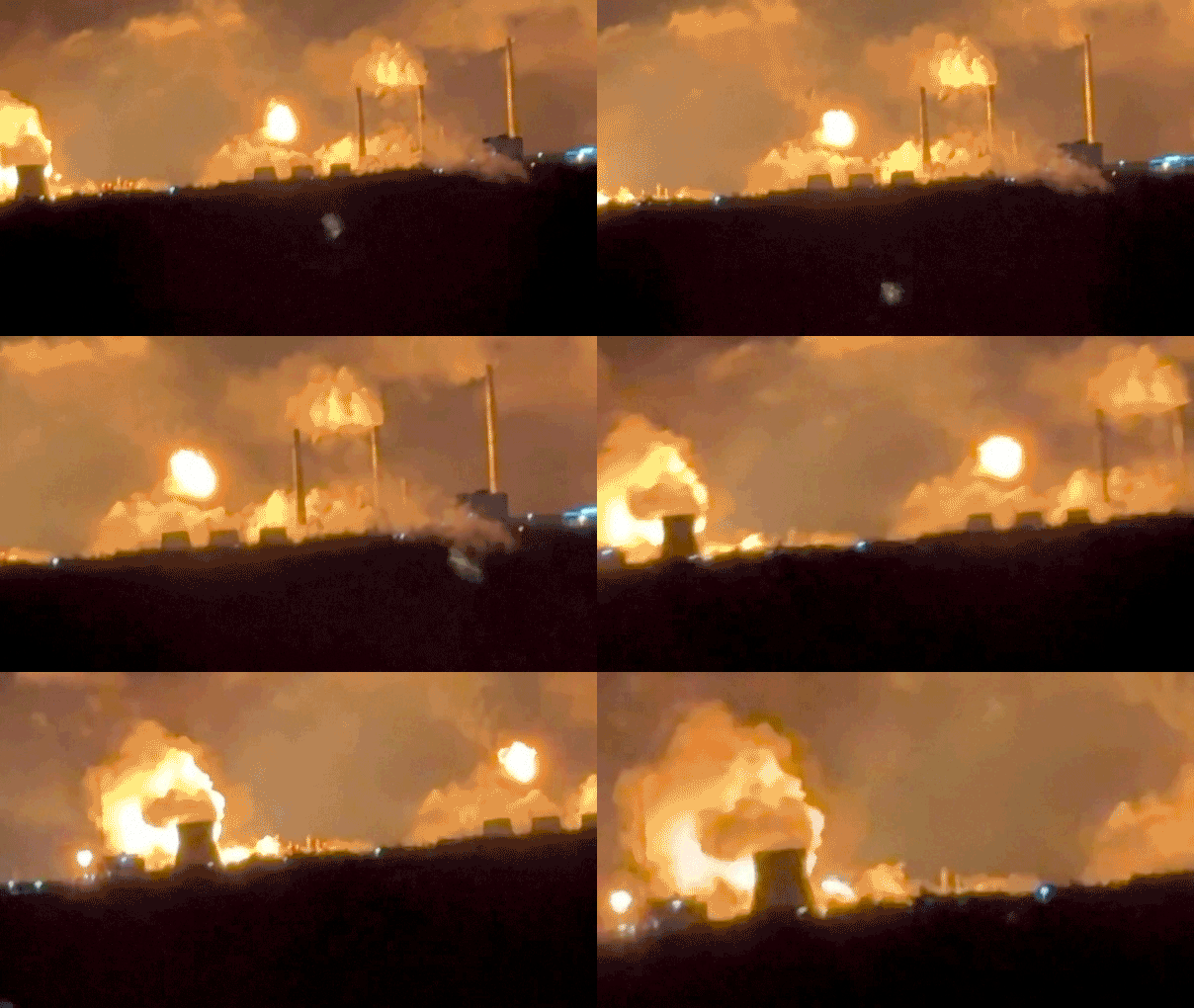
Flames engulf industrial structures as a massive fire lights up the night sky in Nizhnekamsk, Russia, Nov. 15, 2026. (Reuters)
Russia’s Defense Ministry claimed its forces intercepted 1,336 Ukrainian drones across 16 regions, exceeding the previous overnight record of 1,254 on Oct. 29, Reuters reported Nov. 16. The numbers could not be independently verified.
Moscow Mayor Sergei Sobyanin said about 600 drones had been launched toward the capital region since Sunday evening, with 191 intercepted.
Russian-installed Crimean governor Sergei Aksyonov confirmed that the Kerch Strait bridge, linking occupied Crimea to mainland Russia, had been struck. The Kremlin characterized the damage as minor. Road traffic was temporarily suspended for repairs, while trains continued running, according to Russian transportation officials.
The bridge is both a strategically important supply route and a symbol of Russia’s annexation of Crimea in 2014.
The strikes also hit Russia’s energy sector. Rostov regional governor Yuri Slyusar reported fires at four industrial sites in Azov, where three people were injured. Officials in neighboring Krasnodar said a separate fire broke out at an industrial facility in Ilsky. Falling drone debris reportedly injured six people in the Krasnodar region.
ZELENSKYY ACCUSES PUTIN OF DEFYING TRUMP’S CEASEFIRE PUSH, SENDS POINTED MESSAGE TO WHITE HOUSE

Rescuers from the State Emergency Service of Ukraine work at a packaging facility damaged by a Russian attack in Odesa region, Ukraine, on November 16, 2026. The strike destroyed a two-storey administrative and warehouse building, damaged the roof of a production facility and shattered windows. Two people were injured in the attack. (Nina Liashonok/Ukrinform via Reuters)
Ukrainian President Volodymyr Zelenskyy claimed Sunday that strikes had disabled more than half of Russia’s refining capacity, a figure Fox News Digital could not verify. Two industry sources separately estimated that recent attacks reduced refining capacity by approximately 30%, Reuters reported.
«Putin has a serious problem on his hands,» Newton said. «Russia is enormous in terms of size; there’s simply no way to 100% defend every refinery, airfield, and military installation.»
Newton said Ukraine’s campaign was designed to strengthen its negotiating position while disrupting Russia’s military and logistics networks.
«I don’t believe Ukraine has reached a culminating point yet, by any stretch, to change Putin’s mind, but sustained military and economic pressure just may eventually at some point force him to reconsider his position,» he said.
Secret French military mission
In a separate development, Radio France Internationale reported Nov. 16 that French troops had been operating inside Ukraine since at least summer 2026 as part of a confidential mission codenamed «Volia.»
The mission reportedly consists of small teams making short visits to train Ukrainian personnel and maintain equipment. RFI said French lawmakers had not been informed and alleged that an established French training operation in Poland, known as «Gerfaut,» provided a gateway for deployments into Ukraine.
An anonymous source familiar with the mission confirmed French personnel’s presence to AFP, while stressing that they were not combat troops.
«The rotation of French trainers supporting Ukraine in France, Poland, or occasionally in Ukraine is a reality,» the source told AFP. «But this is not a military operation. There is absolutely no intention of engaging in coercive actions.»
France’s military general staff did not immediately comment to AFP. The number of troops involved remains unknown.
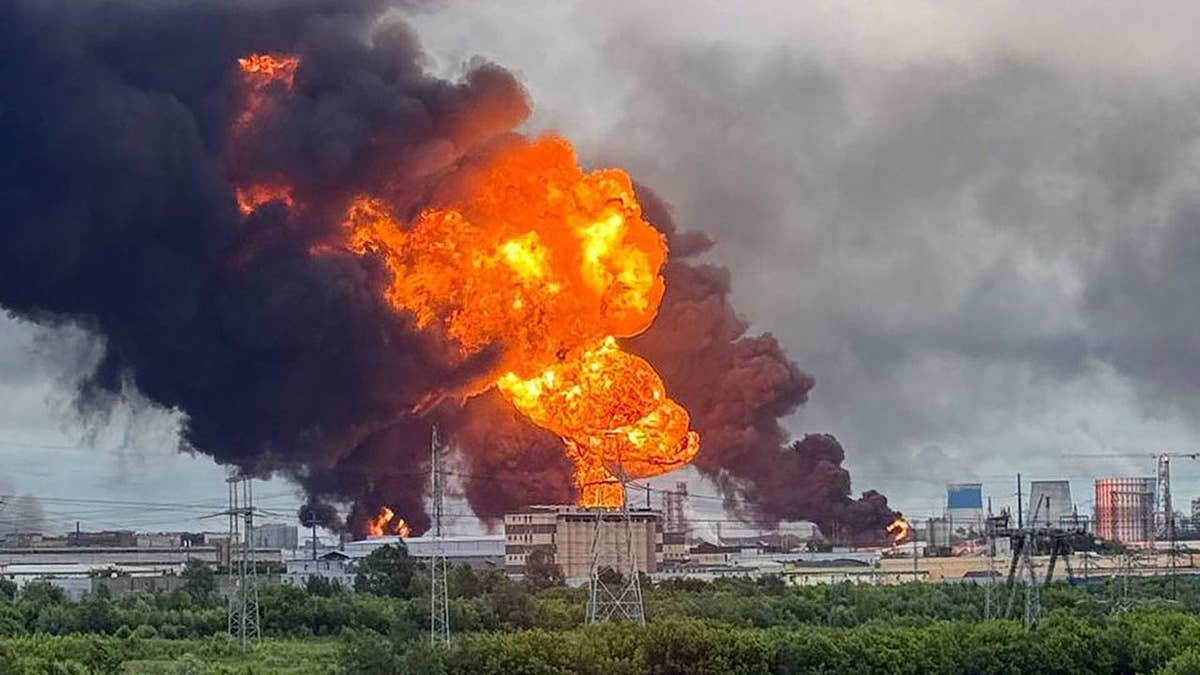
Smoke and flames rise over Moscow on June 18, 2026, following a Ukrainian drone attack that hit the Kapotnya oil refinery and other targets in the Russian capital. (East2West)
Kremlin reportedly prepares for ‘victory’
Meanwhile, Russian newspaper Vedomosti reported Nov. 16 that Kremlin officials had instructed lawmakers from Putin’s United Russia party to prepare for «victory» and the return of personnel from the battlefield.
The message was reportedly delivered during a closed-door seminar attended by senior presidential administration official Sergei Kiriyenko. A source described lawmakers being told to anticipate the possibility of soldiers returning home simultaneously.
The report provided no timetable and did not establish that Putin had ordered a withdrawal or decided to end the war.
The reports emerged after U.S.-brokered talks in Abu Dhabi last week resulted in a major prisoner-exchange agreement but no breakthrough over territory.
Trump, Putin and Xi were due to meet Thursday, Nov. 19, in Shenzhen, China, with Kremlin aide Yuri Ushakov describing the trilateral summit as a potentially significant event.
Newton expressed skepticism about an immediate diplomatic breakthrough. «I don’t anticipate a major breakthrough on any issue, including Russia’s war against Ukraine,» he said.

Left to right: Russian President Vladimir Putin, U.S. President Donald Trump and Chinese President Xi Jinping (Reuters)
«If President Trump has any discussions with Xi and Putin regarding Ukraine I would advise him to look those two leaders in the eye and underscore the U.S. is not backing down in our support to the Ukrainian people as they valiantly defend their homeland,» he concluded.
Reuters contributed to this story.
ukraine, russia, vladimir putin, france, military, world







FIRST ON FOX: It’s a circumstance almost ripped from a screenplay: a Gaza-born political newcomer wants to topple one of the Senate’s staunchest supporters of Israel in the Democratic Party.
But for Ahmed Moor, a member of the Democratic Socialists of America who is the first to toss his hat into the arena to challenge Sen. John Fetterman, D-Pa., the story doesn’t end there.
«Look, so this race is not about John Fetterman,» Moor told Digital in an interview. «John Fetterman’s story is over, but the story of the United States continues. I’m getting in now because I believe we’re in the midst of a constitutional crisis.»
GAZA-BORN DEMOCRATIC SOCIALIST LAUNCHES PRIMARY BID AGAINST SEN JOHN FETTERMAN
«I have some compassion for John Fetterman — I want to depersonalize,» he continued. «Let’s talk about policy. The policies that man has expressed and committed to are just a reflection of the special interests which have run his office for too long now. The problem of John Fetterman’s policies is the problem of corruption in America.»
Fetterman is up for re-election in the 2028 cycle and has become a target for Democrats in Pennsylvania ready to replace him as he continuously moved more to the center of the political spectrum and aligned with Republicans on key issues like the war in Iran, government funding and immigration.
Whether he runs again for a second term remains in the air. When asked by Digital if he had made a decision, Fetterman said, «The more, the merrier,» to challengers entering the Democratic primary.
But Moor, so far, is the only candidate officially in the race.
FETTERMAN WARNS THERE IS NO LONGER ‘COMMON GROUND’ WITH FAR-LEFT DEMOCRATS OVER ISRAEL
«I know, he seems to really love Hamas,» Fetterman said. «And now, so, like, so if you tell him, say thank you for running.»
Moor was born in Gaza before immigrating to Philadelphia, where he went to public schools, attended the University of Pennsylvania and later went to Harvard to obtain a public policy degree.
His policy positions are in line with the growing progressive flank in the Senate Democratic caucus and echo the positions that Fetterman first ran on in 2022 when he pledged to support the Senate’s progressive standard-bearer, Sen. Bernie Sanders, I-Vt., if he won.
«I spent a lot of time on international policy, kind of a foreign policy specialist, one of the reasons the Senate job appeals to me,» Moor said. «But equally, I’m committed to what I call the ‘Dignity Agenda,’ which is universal access to healthcare, childcare and affordable housing.»
Among the top concerns for Moor in the «constitutional crisis» he sees in the country is freedom of speech, which he contended came under assault during the Biden administration when protests against «the genocide in Palestine» exploded across college campuses.
FETTERMAN PLAYS POLITICAL MAVERICK, BUT HIS VOTING RECORD TELLS ANOTHER STORY
«Students were brutalized for assembly, for speech,» Moor said. «That shouldn’t happen in America. Donald Trump stepped through that breach and accelerated the assault. And ICE today is the worst expression, the violation of due process in America.»
Like other Democrats and progressives, Moor wants to abolish Immigration and Customs Enforcement (ICE), but he would «like to see immigration law enforced.»
«ICE is a lawless organization — ICE is a paramilitary militia. ICE is not law enforcement,» he said. «Let’s abolish ICE. Let’s hold the bad actors who’ve killed Americans and kidnapped others in our streets. Let’s hold them to account for breaking our local ordinance and our local laws. That’s a criminal matter today in America. I hope local prosecutors run with it.»
And like other progressives who scored stunning victories during the midterm elections to help flip the Senate, like Sens.-elect Abdul El-Sayed and Peggy Flanagan, Moor is against the old guard of Democratic leadership staying in charge.
It’s a position that is gaining steam in the Senate, where Sen. Chris Van Hollen, D-Md., is mounting a rare challenge to Senate Minority Leader Chuck Schumer, D-N.Y., to lead Democrats through the forthcoming majority in the upper chamber.
Moor said Schumer and House Minority Leader Hakeem Jeffries, D-N.Y., both have to go.
«Chuck Schumer and Hakeem Jeffries don’t have what it takes to meet the moment. They need to be replaced,» Moor said. «This campaign is also about sustaining pressure in that direction. If they survive the leadership contest, which is underway today, I’m going to continue to sustain the pressure on both of those men to do the right thing continuously.»
politics, john fetterman, chuck schumer, midterm elections, senate
INTERNACIONAL
Cinco países de la UE propusieron abrir en Ruanda un centro para migrantes expulsados de Europa
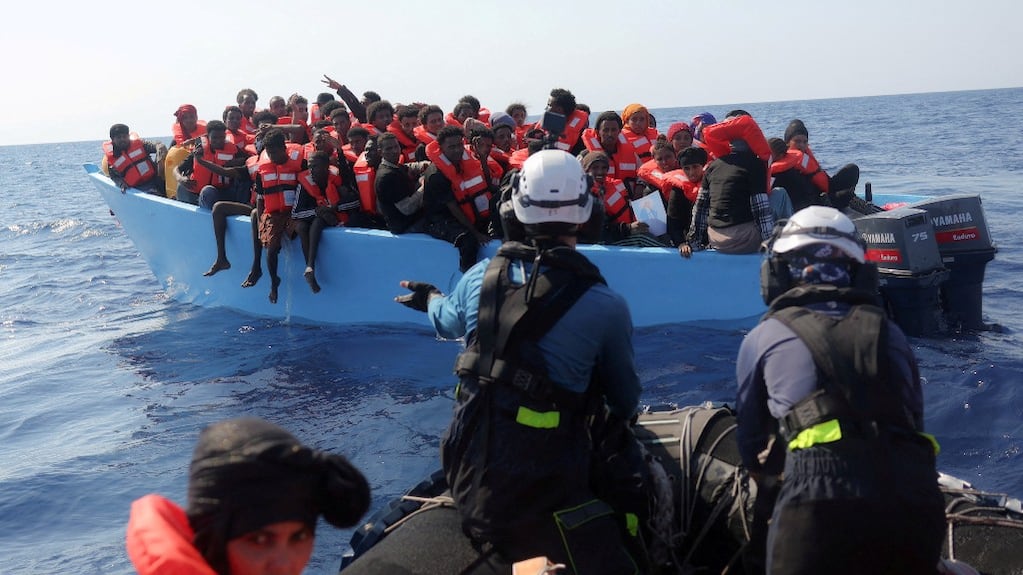
Cinco países de la Unión Europea (UE), entre ellos Alemania y Dinamarca, anunciaron este lunes un proyecto para abrir en Ruanda el primer centro para migrantes expulsados de Europa. Esta iniciativa, criticada por los defensores de los derechos humanos, fue presentada durante una conferencia de prensa en Viena.
Participan también en el plan Grecia, Austria y los Países Bajos, todos partidarios de una línea dura en materia de migración.
Hace meses que estos cinco países trabajan en la idea de enviar a centros fuera de Europa a personas cuyas solicitudes de asilo hayan sido rechazadas. Y eligieron Ruanda para un primer proyecto piloto, cuya inauguración está prevista para 2027.
Este centro estará destinado a un centenar de migrantes, tanto hombres como mujeres, cuyas solicitudes de asilo hayan sido rechazadas y que hayan agotado todas las vías de recurso en uno de los cinco países europeos citados. Los menores quedan excluidos del dispositivo.
“Si el retorno a su país de origen no es posible, en el futuro las personas sin derecho de residencia serán enviadas a un tercer país, como Ruanda”, dijo el canciller austriaco, Christian Stocker, tras una reunión de ministros de los cinco países en Viena.
“Me complace que hoy hayamos logrado un cambio de paradigma verdaderamente histórico en la política migratoria”, añadió Stocker.
Cerca de un centenar de manifestantes se congregaron este lunes en Viena antes de la reunión, portando pancartas con lemas como “íAlto al acuerdo entre la UE y Ruanda!“.
El rechazo de organismos de derechos humanos
La iniciativa fue ideada en colaboración con la Comisión Europea hace año y medio para incrementar de forma significativa las expulsiones de migrantes del territorio europeo.
El portavoz de la Comisión Europea, Markus Lammert, celebró los planes y señaló que la UE había estado “siguiendo de cerca los trabajos preparatorios de los cinco Estados miembros para este tipo de centro de retorno”.
El razonamiento responde a una doble lógica: además de expulsar a quienes se les denegó el asilo, buscan disuadir a otros migrantes de intentar establecerse en el continente europeo.
Sin embargo, estos “centros de retorno” son fuertemente criticados por la izquierda y las ONG, que temen por el trato que puedan recibir los migrantes en estas instalaciones.
Ruanda
INTERNACIONAL
La Unión Europea sanciona a cuatro bandas haitianas por asesinatos, violencia sexual y ataques contra infraestructuras críticas
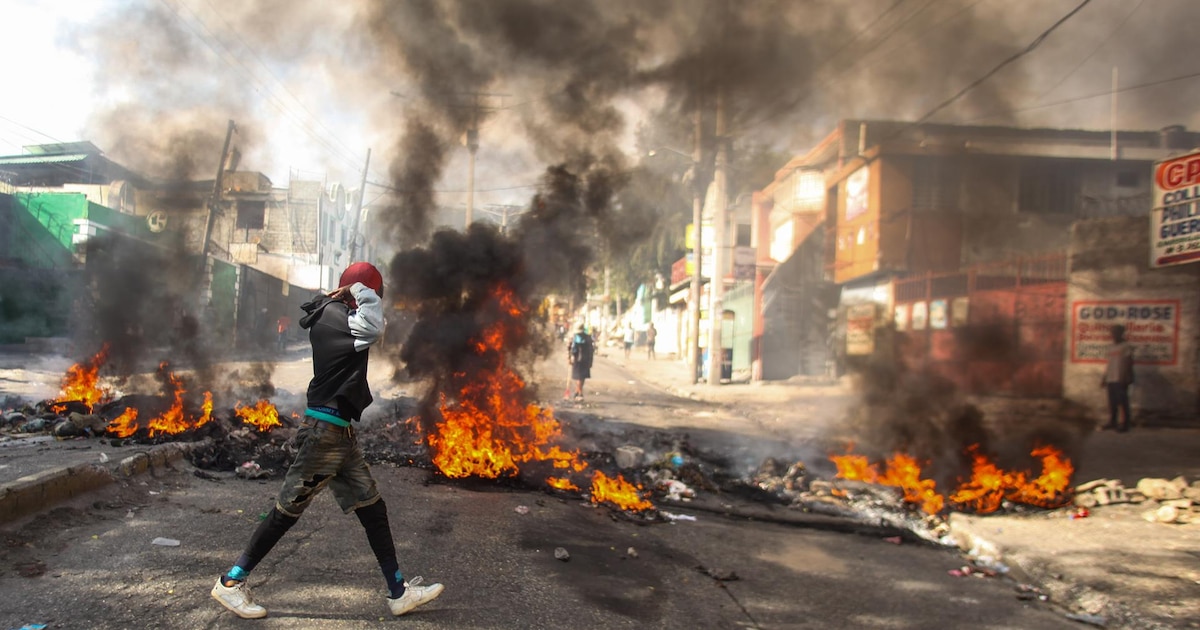
La Unión Europea amplió este lunes su régimen de sanciones sobre Haití. El Consejo de la UE incluyó a cuatro grupos armados haitianos por asesinatos, violencia sexual y ataques contra infraestructuras críticas, según informó la agencia EFE.
Entre los señalados figura el grupo 400 Mawozo, la misma banda contra la que opera en estos días el contingente militar enviado por El Salvador a Puerto Príncipe.
La medida llega en un momento de máxima tensión en la capital haitiana, donde conviven cinco fuerzas de seguridad distintas en la ofensiva contra las pandillas.
Entidades sancionadas por la Unión Europea
El Consejo de la UE sancionó al grupo armado 5 Segond, señalado por asesinatos, violaciones y otras formas de violencia sexual contra menores. La organización también es responsable de ataques contra infraestructuras sanitarias y servicios humanitarios, de acuerdo con el comunicado del organismo europeo.
También quedó incluido Gran Ravine, grupo criminal responsable de secuestros y delitos graves que derivaron en muertes de civiles y desplazamientos forzosos.
La lista se completa con 400 Mawozo y Krazé Baryè, sancionados por el reclutamiento de menores y su exposición a la violencia armada. El Consejo congeló los activos de los cuatro grupos, les prohibió el ingreso a territorio comunitario y vetó cualquier financiamiento desde la UE hacia esas organizaciones.
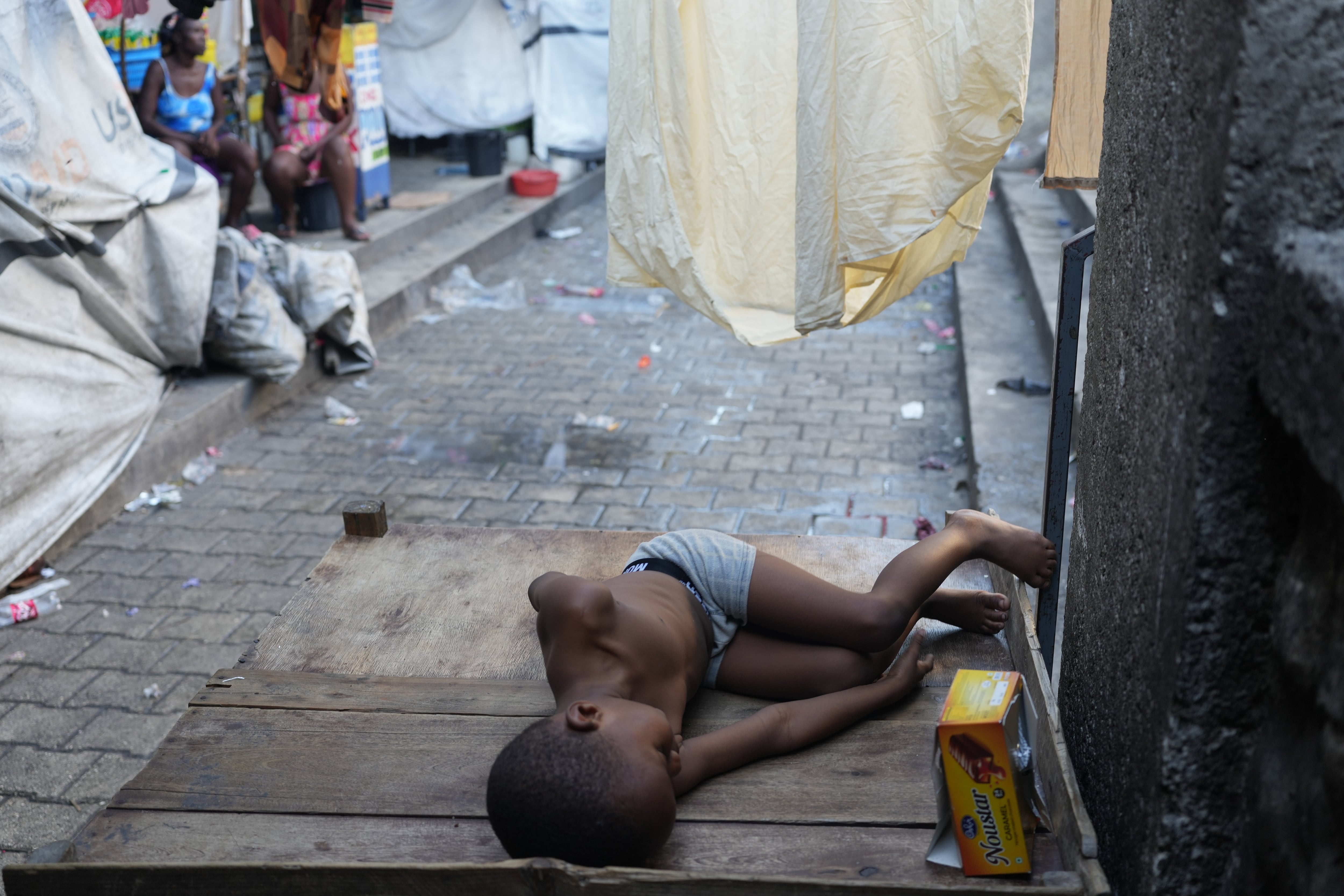
Con estas cuatro entidades, las medidas restrictivas vinculadas a violaciones de derechos humanos alcanzan ya a 152 personas físicas y 49 entidades.
El foco en los crímenes contra la infancia
El organismo europeo remarcó que las sanciones apuntan en particular a combatir las seis violaciones graves contra menores en conflictos armados.
Entre ellas incluyó el asesinato, el reclutamiento como soldados, la violencia sexual, el secuestro, los ataques contra escuelas u hospitales y la denegación de acceso humanitario.
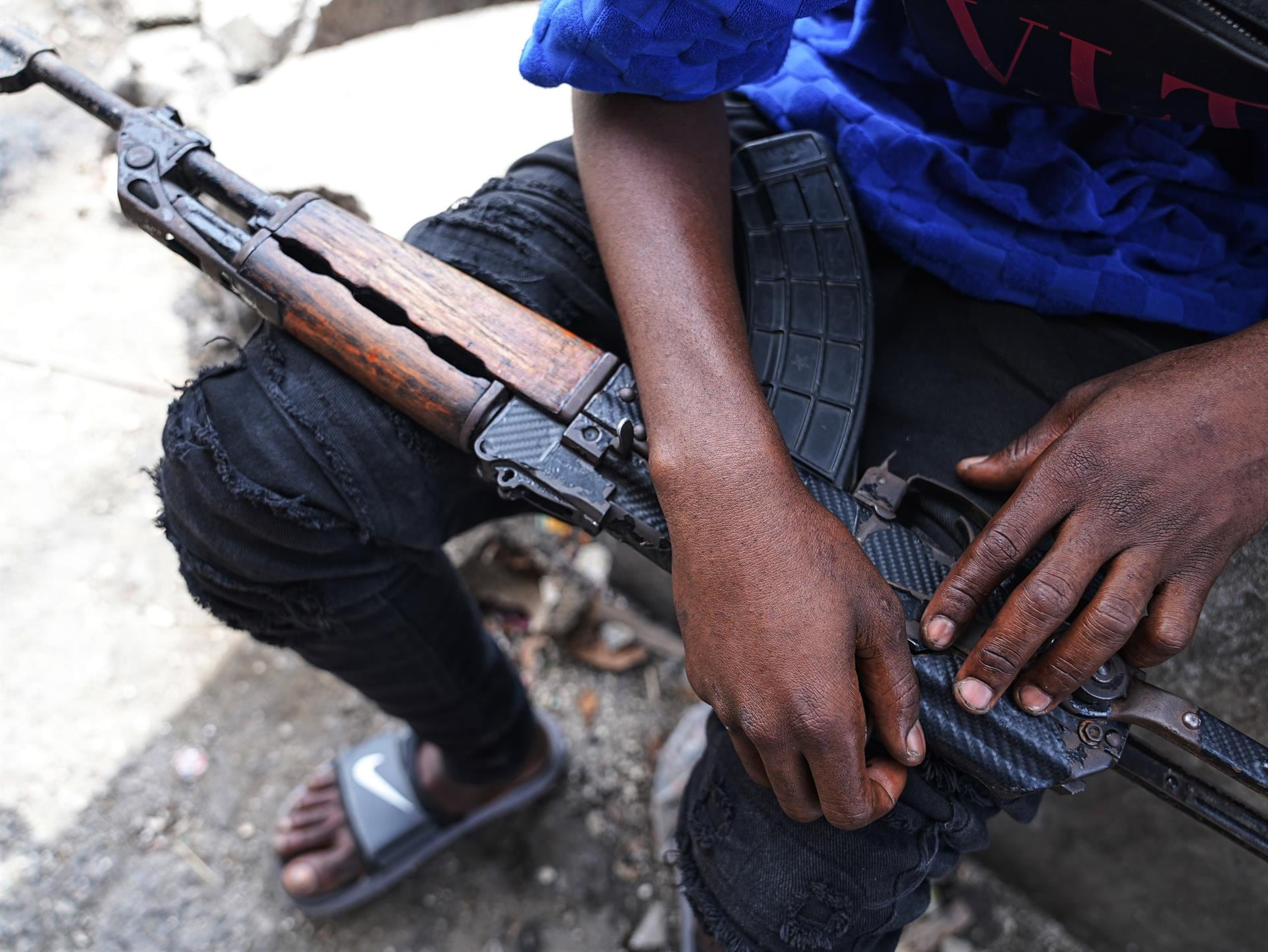
“Este nuevo paquete de sanciones reafirma el compromiso inquebrantable de la UE con la protección de la infancia y el respeto del derecho internacional”, señaló el Consejo en el comunicado.
El texto agregó que la Unión Europea es un socio político y de desarrollo de larga data de Haití y que seguirá colaborando con otros socios regionales para atender la crisis humanitaria del país.
El régimen de sanciones aplicado data de diciembre de 2020, cuando el Consejo estableció el mecanismo global de la UE en materia de derechos humanos. Ese marco cubre actos como el genocidio, los crímenes de lesa humanidad y otras violaciones graves.
El despliegue salvadoreño contra 400 Mawozo se intensifica
Mientras la UE aplicaba las sanciones, las tropas de El Salvador mantenían su ofensiva precisamente contra 400 Mawozo, una de las bandas señaladas por Bruselas.
El 8 de noviembre, unidades especiales de la Policía haitiana, con apoyo de militares salvadoreños, destruyeron una vivienda utilizada por Wilson Joseph, alias Lanmò San Jou, líder de esa organización.
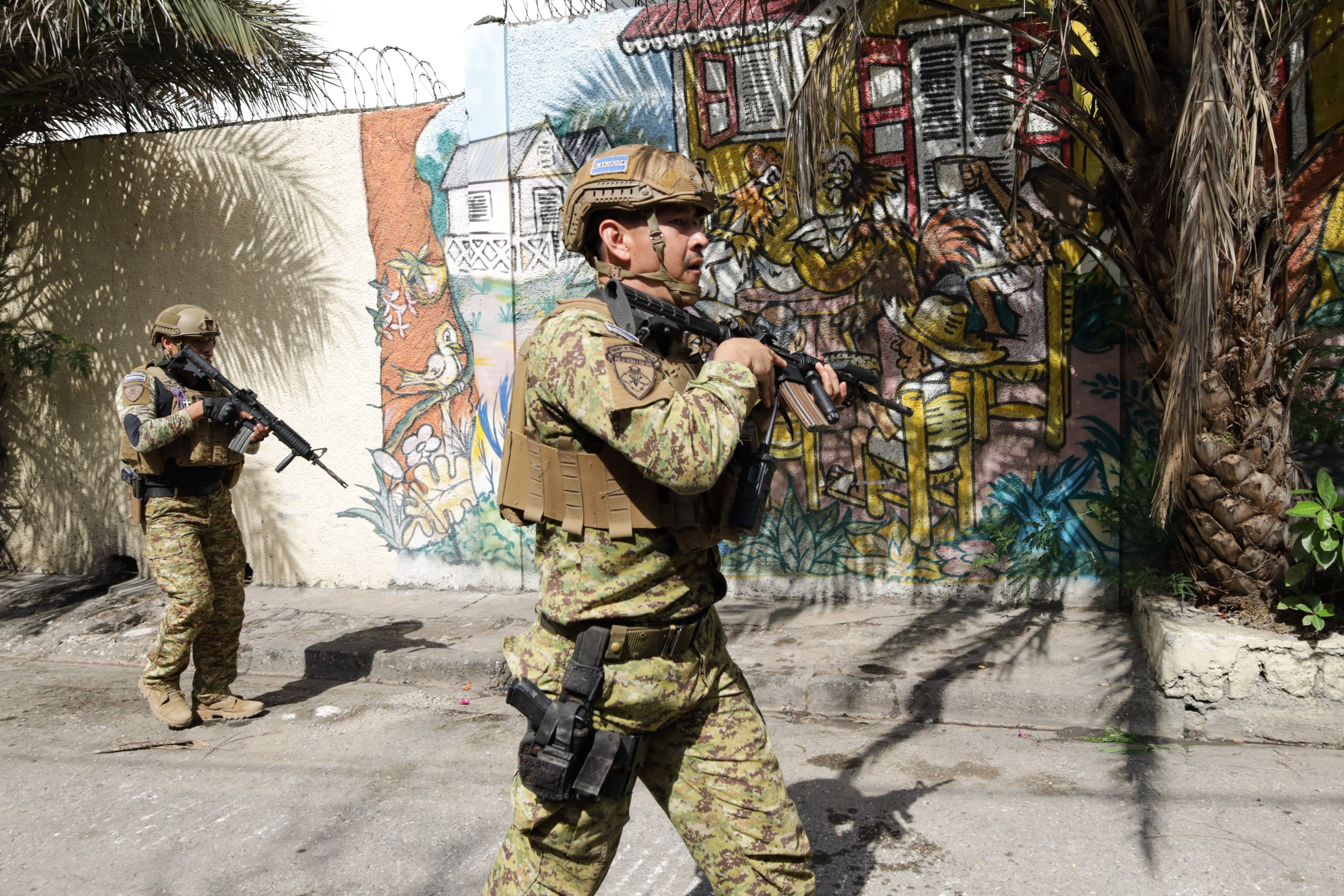
Según una investigación de The Miami Herald, diario estadounidense, el operativo incluyó drones explosivos y cuatro helicópteros, dos de ellos operados por efectivos salvadoreños.
El contingente enviado por el presidente Nayib Bukele llegó a Haití tras la emboscada del 18 de octubre que dejó desaparecidos a cuatro técnicos de aviación salvadoreños adscritos a la Fuerza de Supresión de Pandillas (GSF), respaldada por Naciones Unidas.
El despliegue alcanza cerca de 2.500 soldados y se convirtió en la mayor presencia militar extranjera en el país caribeño.
El 12 de noviembre, la Policía Nacional de Haití recuperó el estadio Sylvio Cator, en Puerto Príncipe, que permanecía bajo control de grupos armados desde 2024.
Tras la operación, las autoridades entregaron la vigilancia del predio a las fuerzas salvadoreñas, que lo convertirán en base para avanzar sobre otras zonas dominadas por las pandillas, según anunció Bukele.

El primer ministro haitiano, Alix Didier Fils-Aimé, reconoció la colaboración salvadoreña y estará en El Salvador este 16 y 17 de noviembre para discutir, junto al vicepresidente Félix Ulloa, el futuro del contingente, cuya fecha de retorno aún no está definida.
La convivencia de cinco fuerzas distintas en el terreno —la Policía Nacional, las Fuerzas Armadas haitianas, la GSF, el contingente salvadoreño y la Task Force vinculada a la empresa Vectus Global— generó cuestionamientos internacionales.
Amnistía Internacional reclamó a ambos gobiernos que hagan pública la cadena de mando y las reglas de actuación del despliegue, mientras el G7 respaldó el mandato de la GSF y pidió garantías para la protección de la población civil.
corresponsal:Desde San Salvador, El Salvador

Presupuesto 2027: los gobernadores negocian y condicionan el respaldo en el Congreso

Qué recomienda bróker de inversiones entre bonos en dólares y en pesos hasta fin de año

LLA busca 4 firmas en el Senado para avanzar en la suspensión de las PASO y aprobar el sistema de colectoras

Ukraine hits Putin’s prized bridge in record drone blitz as Kremlin tells lawmakers to prepare for ‘victory’

Fetterman’s Gaza-born challenger calls to ‘abolish ICE,’ oust top Democratic leaders

Jorge Jesus: ‘¿Ahora tengo que responder a la madre de Cristiano?’

Banco Santander anunció aumento de precio en sus paquetes y esto valdrá desde enero

Así está el mano a mano entre Estudiantes de La Plata e Independiente Rivadavia

Karina Milei y Diego Santilli aprovecharon la visita a Corrientes para tratar la eliminación de las PASO con el gobernador

U2 vuelve con 12 nuevas canciones y una pregunta incómoda sobre si el rock todavía puede decir algo nuevo

 INTERNACIONAL2 días ago
U2 vuelve con 12 nuevas canciones y una pregunta incómoda sobre si el rock todavía puede decir algo nuevo
- ECONOMIA23 horas ago
La inflación de octubre: el dato que sorprendió a casi todos y la distancia que persiste con los parámetros internacionales
- INTERNACIONAL2 días ago
Democrats seize on midterm wins to push massive minimum wage hikes, but economists see trouble ahead