INTERNACIONAL
Violencia racial, duelos al amanecer y una guerra estatal contra los pueblos indígenas: el lado oscuro de la fiebre del oro que nadie cuenta


La fiebre del oro siempre ha sido mi punto débil. Incluso hoy, leer sobre el descubrimiento casual de un enorme yacimiento de oro en California casi en el preciso momento de su anexión a Estados Unidos, en 1848, basta para convertir a este observador, por lo demás bastante crítico de la vida estadounidense, en un ferviente creyente del Destino Manifiesto, aunque solo sea durante un grato instante de irreflexión.
Como sostiene Nathaniel Philbrick en The Rush, su relato de lectura compulsiva sobre aquel período, la carrera febril por hacerse rico en un lugar desconocido parece ofrecer una versión condensada de la historia nacional y encierra la idea de que la reinvención, para los individuos y quizá para el país en su conjunto, está siempre a un golpe de suerte de distancia.
The Rush complejiza el relato conocido de buscadores de oro esperanzados y proveedores astutos: contrapone el romanticismo a la realidad e incorpora más personajes a la historia. Philbrick, un cronista experimentado y popular del pasado estadounidense, se ocupa tanto de quienes quedaron aplastados por la fiebre como de quienes la aprovecharon para alcanzar niveles asombrosos de riqueza e influencia. Le interesan en particular las consecuencias políticas. “Empecé a comprender que el descubrimiento de oro en California formaba parte de una fiebre mucho mayor —y, en última instancia, más trascendental—: la carrera hacia la Guerra Civil”, escribe.
El libro comienza con una descripción sugerente de San Francisco en los meses posteriores a que un carpintero divisara algunas escamas brillantes en las estribaciones de Sierra Nevada, en enero de 1848: la cabalgata de buscadores de tesoros llegados de todos los rincones del mundo y las fortunas enormes que se ganaban y perdían en cuestión de minutos. “El propio aire está preñado del magnetismo de una acción audaz, enérgica e incansable”, observó un periodista.
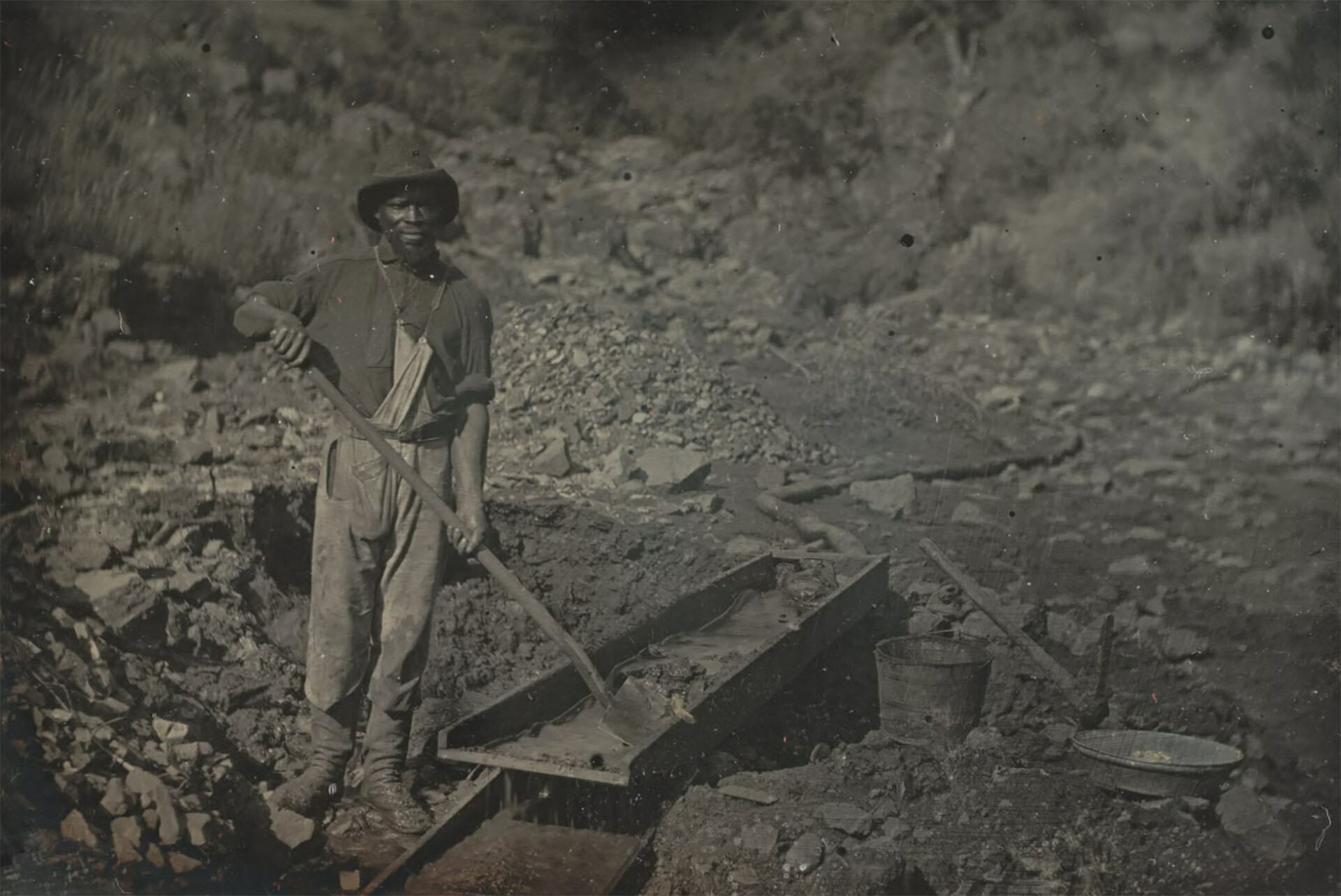
Persiguiendo rumores, los marineros abandonaron cientos de barcos en el puerto. Empresarios sagaces llevaron las embarcaciones a la costa y reclamaron aquellos restos ensamblados con clavos como terrenos comercializables. Seis veces en 18 meses, los incendios devastaron la ciudad; sin embargo, sus dirigentes hicieron poco para detenerlos, pues podían beneficiarse de la destrucción.
Philbrick recuerda que los estadounidenses del este no fueron los primeros en llegar a California en busca de oro: “The Rush” retrata los primeros días a través de los ojos de Vicente Rosales, un inquieto periodista chileno y contrabandista de caballos. Muchos de sus compatriotas de la costa se enteraron de la noticia del hallazgo antes que la mayor parte del mundo y se apresuraron a aprovecharla.
Cuando los estadounidenses blancos de Massachusetts y Nueva York finalmente llegaron —el viaje por mar de Boston a San Francisco tomaba unos seis meses—, estaban ansiosos por recurrir a la experiencia de los chilenos. Su gratitud duró poco. “Con un peculiar mal gusto y un sentimiento mezquino”, según lo expresó Rosales, esos “gringos envidiosos” organizaron partidas armadas para expulsar a sus benefactores.
La violencia racial también estalló contra las comunidades indígenas locales. En 1851, el primer gobernador de California anunció que el estado libraba una “guerra de exterminio” contra los pueblos nativos. Más tarde ese año, aunque el gobierno estatal ya se había apartado en gran medida de esa postura extrema, milicianos blancos invadieron lo que hoy se conoce como el valle de Yosemite para perseguir a sus habitantes. Algunos estaban tan entusiasmados con su misión que no repararon en el paisaje. “Si hubiera sabido que el valle iba a ser tan famoso”, dijo después uno de ellos, camino a expulsar a los ahwahnechee, “lo habría mirado”.
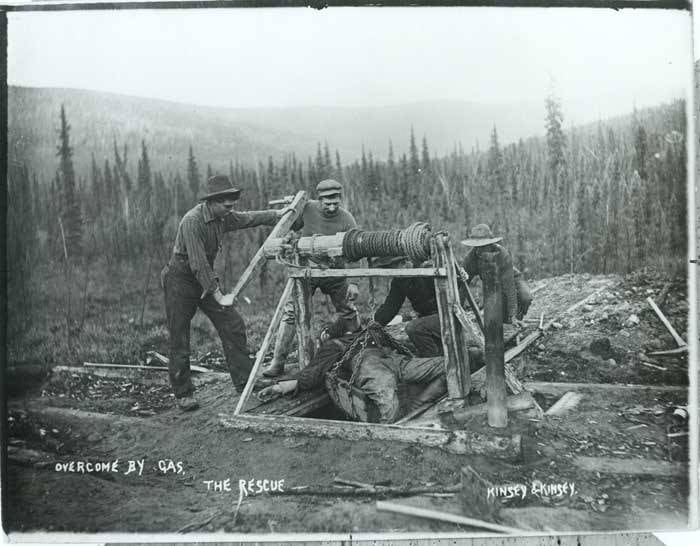
Philbrick, quien ha dedicado buena parte de las últimas dos décadas a escribir sobre George Washington y su época, se siente atraído por las historias de quienes fueron a California no en busca de oro, sino de poder. La mayoría de las disputas de poder en el futuro estado giraban en torno al porvenir de la esclavitud. El excongresista de Misisipi William Gwin dejó a sus 200 sirvientes esclavizados en casa cuando viajó al oeste en 1849. Lideró “la Caballería”, una maquinaria política favorable a la esclavitud que pretendía incorporar California a la órbita sureña, incluso si para ello debía dividirla en dos.
El rival de origen humilde de Gwin, David Broderick, lideraba “la Palería”, una facción de mineros y trabajadores en general favorable al Norte. La influencia en California pasaba a menudo por el Congreso federal, y Broderick dijo una vez que aceptaría “ser asado a fuego lento” por el privilegio de ocupar un escaño en el Senado durante un día. Cumplió su sueño durante dos años y medio antes de morir asesinado en un duelo en 1859.
Al describir estas batallas y otras similares, Philbrick da vida a los dramas políticos ásperos de la época con detalles convincentes y una confianza admirable en la disposición de sus lectores para seguir las cambiantes facciones y alianzas. Sin embargo, en comparación con sus libros más concentrados sobre el Mayflower y la historia real detrás de “Moby-Dick”, “The Rush” parece algo disperso y sin un centro claro.
No siempre queda claro por qué conocemos unas historias y no otras. Philbrick define el libro como “íntimo y panorámico a la vez”, y lo es, pero también se parece más a un compendio de relatos entrelazados, ensamblados unos con otros, que a una narración coherente. Un epílogo sigue las vidas y desventuras posteriores a la fiebre del oro de nada menos que 34 personas.
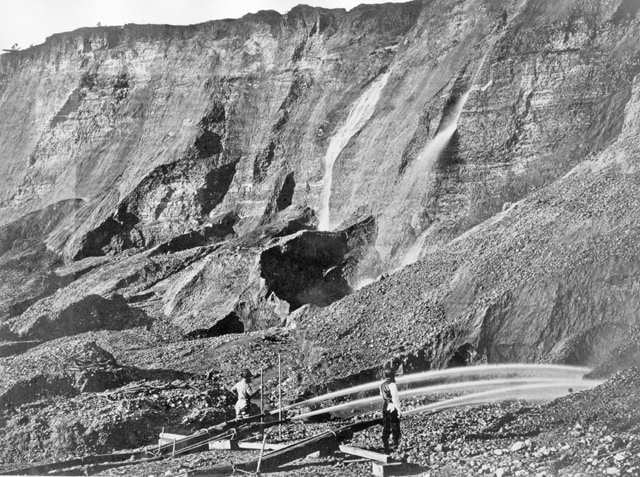
No obstante, el libro funciona porque Philbrick es un narrador de gran talento y maestro de la viñeta cinematográfica. Conocemos a personas tan extrañas y vívidas que amenazan con robarse el protagonismo, como Mary Ellen Pleasant, una empresaria antes esclavizada, conductora del Ferrocarril Subterráneo y supuesta hechicera vudú que tomó su fortuna de California y llenó las arcas del abolicionista John Brown para financiar su incursión de 1859 en Harpers Ferry.
Historias como la suya constituyen los elementos de una afirmación más amplia. En algún momento alrededor de 1849, sugiere Philbrick, el carácter estadounidense cambió. Ese es el significado final de la fiebre: una transición acelerada de la realidad física y material hacia algo más fluido y abstracto, del mundo del metal duro a un “ámbito etéreo” en el que todavía vivimos.
Philbrick traza un hilo algo sinuoso desde el oro de las estribaciones hasta Leland Stanford, el magnate ferroviario y gobernador de California cuya finca de Palo Alto se convirtió en la Universidad Stanford y en el lugar de nacimiento de Silicon Valley. Su financiamiento de los primeros experimentos con imágenes en movimiento en la década de 1870 representa, según Philbrick, el momento en que la modernidad se afianzó. Después de la fiebre del oro, escribe, “el fracaso era el costo de la innovación. Uno se movía rápido. Rompía cosas. Lo intentaba otra vez. Y, cuando funcionaba, los resultados eran transformadores”.
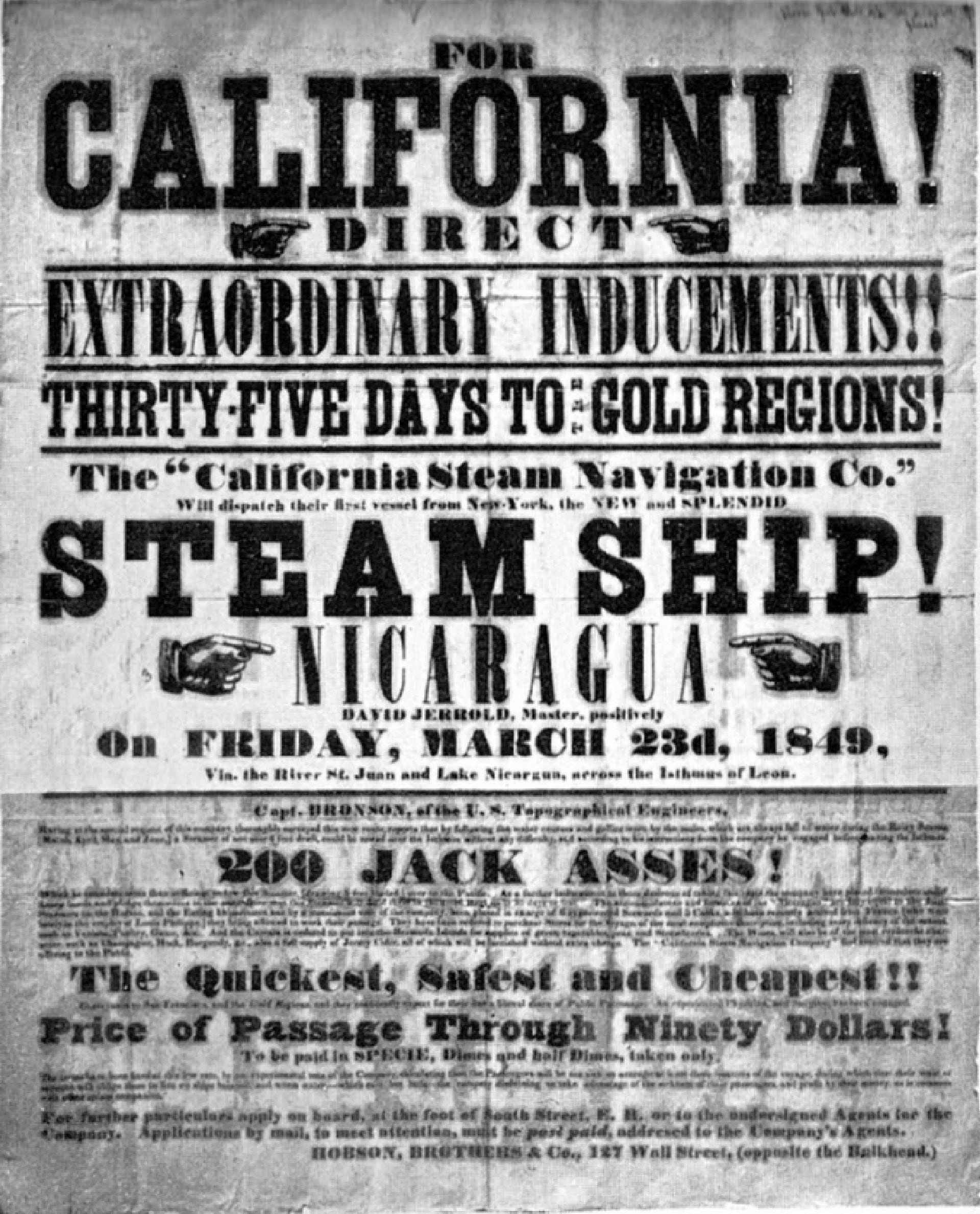
El planteamiento resulta intrigante más que plenamente convincente y habría podido fortalecerse con más análisis y argumentos de los que suele permitir la ligera intervención autoral de Philbrick. Al ceñirse al enfoque de una cosa tras otra, el autor corre el riesgo de repetir el mismo truco que Stanford y sus colegas magnates intentaron ejecutar: blanquear todo el fraude, la violencia y el saqueo de la fiebre del oro hasta convertirlos en algo más reluciente y fácil de vender como mitología nacional.
Después de cada incendio de finales de las décadas de 1840 y 1850, escribe Philbrick, los habitantes de San Francisco apenas se detenían antes de reconstruir sobre “los restos todavía humeantes de su antigua ciudad, demasiado obsesionados con perseguir ganancias como para tomar las precauciones que podrían impedir otro desastre”. Al llevar la historia hasta el presente, Philbrick advierte la persistente capacidad de los californianos, y de todos los estadounidenses, para concebir nuevas ilusiones mientras viven al borde de la destrucción.
Sin embargo, algunas de sus fuentes eran un poco menos optimistas. “A menudo me pregunto si este gran pueblo volverá por completo a la barbarie”, reflexionó hacia 1851 un buscador de fortuna nacido en el extranjero. “Toda la ciudad apesta a degradación”.
Fuente: The New York Times
California,fiebre del oro,Joseph B. Starkweather,minero











INTERNACIONAL
Entre el silencio de Milei y la presión de Trump, Flávio Bolsonaro quedó sin poder y aislado en Miami
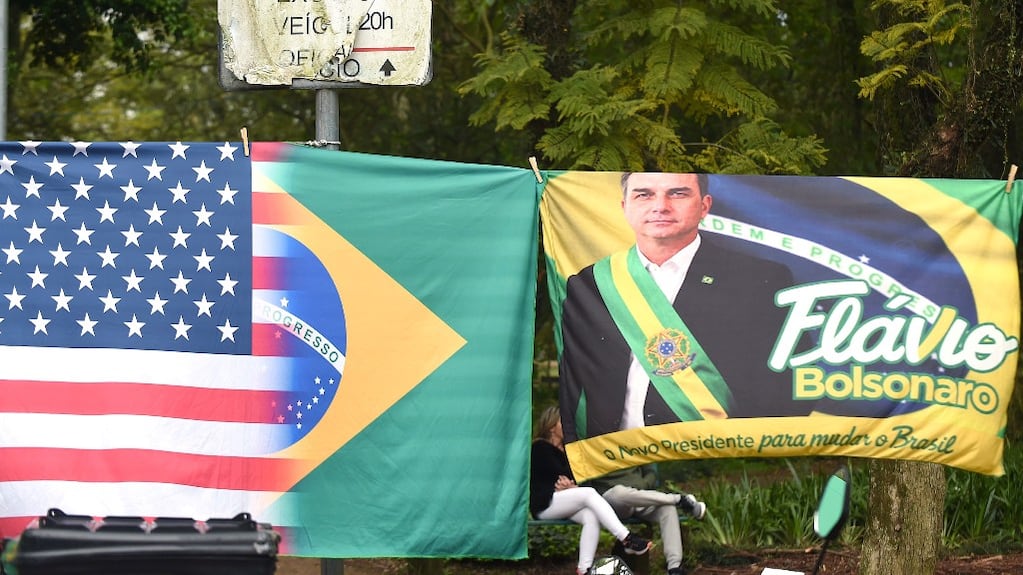
Tildado de “golpista” por sus enemigos, abandonado por su propio Partido Liberal e ignorado por la centroderecha brasileña, Flávio Bolsonaro quedó más aislado que nunca. Solo le queda el silencio de Javier Milei frente a la sospecha de ayuda oficial a su plan de fuga y un refugio dorado en Miami sin ningún poder de fuego.
En su autoexilio de la Florida, donde está acompañado por su familia y su hermano Eduardo, condenado a cuatro años de cárcel por coacción a la justicia, el derrotado candidato presidencial movió las piezas equivocadas en el tablero político brasileño y recibió hasta la reprimenda de su anfitrión, el presidente estadounidense, Donald Trump.
En menos de media hora, el primogénito de Jair Bolsonaro pasó de autodefinirse como el “verdadero presidente electo” a “líder” de su país. En el medio, Trump aclaró públicamente que no tomaría partido en ese tema. La rectificación fue inmediata.
El rápido cambio en el comunicado que divulgó en su primer día en la Florida fue el mayor papelón de su carrera política. La nota incluyó hasta un viejo escudo brasileño con la antigua denominación del país -Estados Unidos del Brasil- y que también debió apresurarse a correguir.
Washington no quiere más problemas con Lula y menos a pocos días de las elecciones de medio término del martes próximo. A Trump ya no le sirve acorralar al presidente reelecto. Brasil no será conservador, al menos por los próximos cuatro años. Eso sí, fiel a su estilo explosivo, dijo sin pruebas que las elecciones fueron “muy corruptas”, pero adelantó que igualmente hablará con el mandatario de izquierda.
“Flávio salió de las urnas con 60 millones de votos y abandonó el país justo cuando tenía la oportunidad de consolidarse como el principal líder de la oposición. Cambió el protagonismo político por el aislamiento”, resumió a TN el analista brasileño Murilo Medeiros, de la Universidad de Brasília (UnB).
Flávio Bolsonaro ya no tiene quién le escriba
La salida del país de Flávio Bolsonaro dejó un vacío en el liderazgo opositor y en la disputa por el legado electoral del líder del clan, Jair Bolsonaro, en prisión domiciliaria por una condena a 27 años de prisión por golpismo.
“Su ausencia acelera la emancipación política dentro del campo bolsonarista, con nuevas figuras -especialmente el reelecto gobernador de San Pablo, Tarcísio de Freitas– buscando ocupar ese espacio”, dijo Medeiros.
Para el analista, “el bolsonarismo sigue conservando una fuerza electoral considerable”, pero “la familia Bolsonaro corre el riesgo de perder el monopolio de su representación política”.
En ese escenario, irrumpe en escena la figura de la ex primera dama, Michelle Bolsonaro, electa senadora en las últimas elecciones y con un fuerte peso electoral entre los evangélicos. Pero no es suficiente.
“Están surgiendo movimientos que buscan nuevos caminos y liderazgos más allá del núcleo familiar”, alertó Medeiros.
Toda la derecha le dio la espalda a Flávio Bolsonaro, incluso su Partido Federal, que reconoció el resultado de las elecciones y se despegó de sus denuncias de fraude. El resto de los partidos de la centroderecha brasileña, que respaldaron su candidatura en el balotaje, también dio vuelta la página y se apresta a organizar la oposición en el Congreso.
Denilde Holzhacker, directora del área de Investigaciones en la Escuela Superior de Publicidad y Marketing de San Pablo, dijo a TN que el hijo mayor de Jair Bolsonaro “perdió la oportunidad de ser el líder de la oposición, incluso porque la distancia hará que otros surjan y ganen más fuerza” en el territorio.
“Flávio cálculó que tendría más apoyo tanto del gobierno estadounidense, con un pedido de asilo que reafirmaría el concepto de la persecución política, como también de sus seguidores en Brasil. Entonces, en ese momento está, de hecho, más aislado”, indicó.
Silva

Expert details how far-left groups are funding chaotic France protests
Asra Nomani discusses how far-left networks are funding chaotic France protests. The senior investigations editor breaks down a Fox News Digital investigation exposing how radical adult groups, pro-communist outlets, and far-left organizations are bankrolling the ongoing unrest, revealing that fewer than one-third of the fifty active organizations are actually student or youth groups.
NEWYou can now listen to Fox News articles!
Communist revolutionaries, socialist activists and pro-Palestinian agitators from a network of 106 organizations are preparing to stage a carefully choreographed spectacle of global unrest Friday at ports from Oakland, Calif., to Mumbai, India, as they protest Israel and «capitalist barbarism.»
A Fox News Digital investigation reveals that, far from a spontaneous eruption of outrage, the worldwide mobilization has been meticulously organized, with groups in the so-called «red-green» alliance of communist, socialist and pro-Palestinian movements spending the past week coordinating strikes, demonstrations and publicity around a common international playbook.
Organizers are targeting 113 ports across 22 countries and regions on five continents, seeking to transform the world’s commercial shipping hubs into stages for a synchronized show of opposition to Israel, NATO, Western military policies and the global capitalist system.
CHAOS INC.: WHO’S WHO IN THE RED-GREEN ALLIANCE, INCLUDING NEW OCT. 30 PORT ACTION
A fire burns as people gather to support the Global Sumud Flotilla at the Port of Genoa on Oct. 3, 2025, in anti-Israel protests in Genoa, Italy. (Emanuela Zampa/Getty Images)
The planned mobilizations – framed as «No Harbour for Genocide» with a sophisticated online tracker – stretches from Genoa and Livorno, Italy, to Piraeus, Greece, near Athens; Hamburg, Germany; Tangier, Morocco; Veracruz, Mexico; and Oakland and Marseille.
The geographic sweep is part of the strategy, synchronizing actions across continents, giving them a common message and turning scattered demonstrations into the appearance of a worldwide uprising.
In the «red-green» alliance, red symbolizes the far-left and green captures the color of Islam. The same network is set to bring a new round of protests, called «Acte III,» to the streets of France on Saturday.
In the U.S., the international mobilization will spill into the San Francisco Bay Area, where ILWU Local 10 is activating its members to join the protest. An anonymous purchaser registered NoHarbourForGenocide.com in March 2025, according to online records.
The campaign’s online infrastructure offers another window into the advance planning behind the protests, providing a common platform for actions that organizers intend to unfold simultaneously around the world.
Globally, the same network of communists and pro-Palestinian groups is fueling protests in India, Germany, Spain, Albania, the U.S., Australia and elsewhere, framing a more sanitized narrative of the protests as «youth» and «student» actions even though a Fox News Digital investigation has established that only about one in three groups in hotspots like France are youth-led.
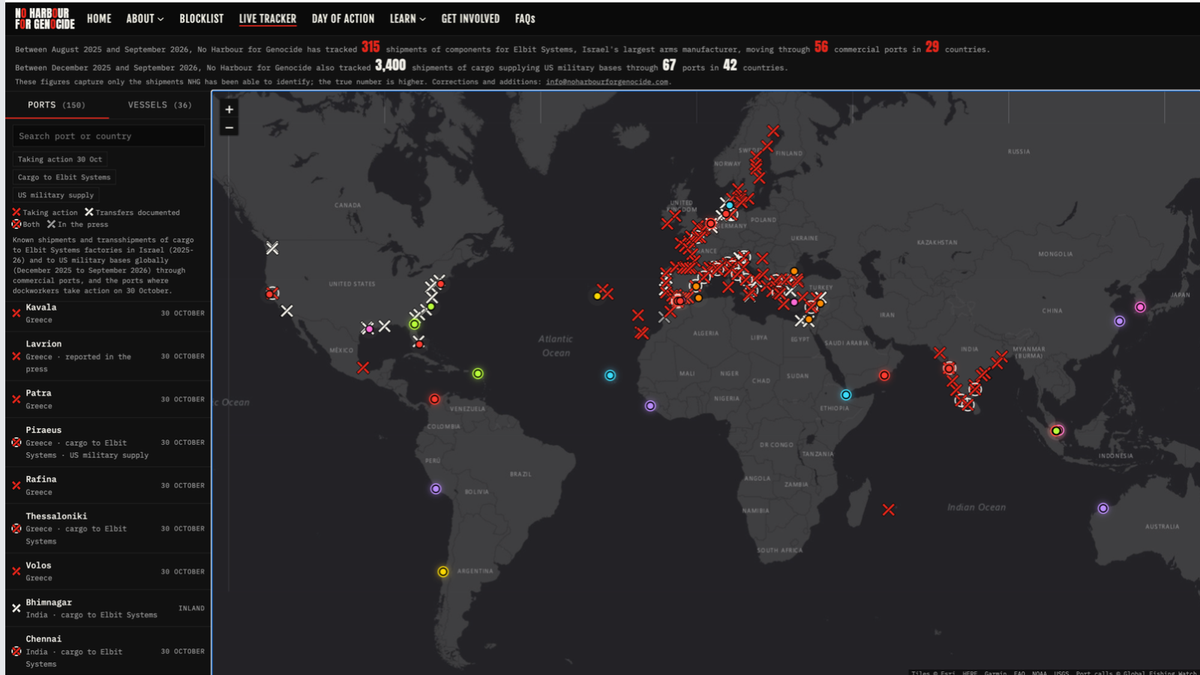
Map of Oct. 30, 2026, mobilization at ports. (No Harbour for Genocide)
The port mobilization represents the next stage of that international protest strategy, moving beyond city streets and campuses to the commercial infrastructure that connects the global economy.
In this case, communist and far-left dockworker unions and groups are joining forces with anti-Israel groups that have been using ports to literally set sail on campaigns like the «Global Sumud Flotilla,» which sends ships to Israel in a show of protest theater. The so-called flotillas usually end with the Israel military boarding the boats and detaining protesters, which have included environmental activist Greta Thunberg. Typically, the detainees splash selfie photos and videos across social media from the sea and on land as a show of force.
The maritime confrontations have provided a visual and tactical precedent for international actions, combining disruptions at sea with demonstrations on land and publicity campaigns online.

People take part in a protest against the arrival of the Crown Iris cruise ship carrying Israeli tourists, in the port of Piraeus, near Athens, Greece, on June 3, 2026. (Costas Baltas/Anadolu via Getty Images)
GRETA THUNBERG JOINS PARIS PROTESTS, UNDERSCORING RADICAL THREE-WAY ALLIANCE
The planned protests reveal how agitators globally use every transportation corridor to disrupt civil societies, moving protests from streets, bridges and tunnels to ports, docks and waterways. This past week, activists associated with the Global Sumud Flotilla used three sailboats to confront the Sunaid X, a vessel that local unions identified as supplying the American military installation at Sigonella, Sicily. The report described the action as an attempted maritime blockade. Italian authorities seized the sailboats, and the activists were reported to prosecutors for allegedly disrupting a public service.
As the dockworkers prepare for Friday’s actions, another part of the operation is unfolding far from the waterfront with an international publicity campaign that connects the demonstrations to a broader ideological struggle of communism and socialism against Western governments and capitalism.
In the march to the actions on Friday, pro-communist nonprofits in the U.S. funded by American-born Marxist tech tycoon Neville Roy Singham are amplifying the international campaign as communist and pro-Palestinian groups and labor unions create a cacophony of noise.
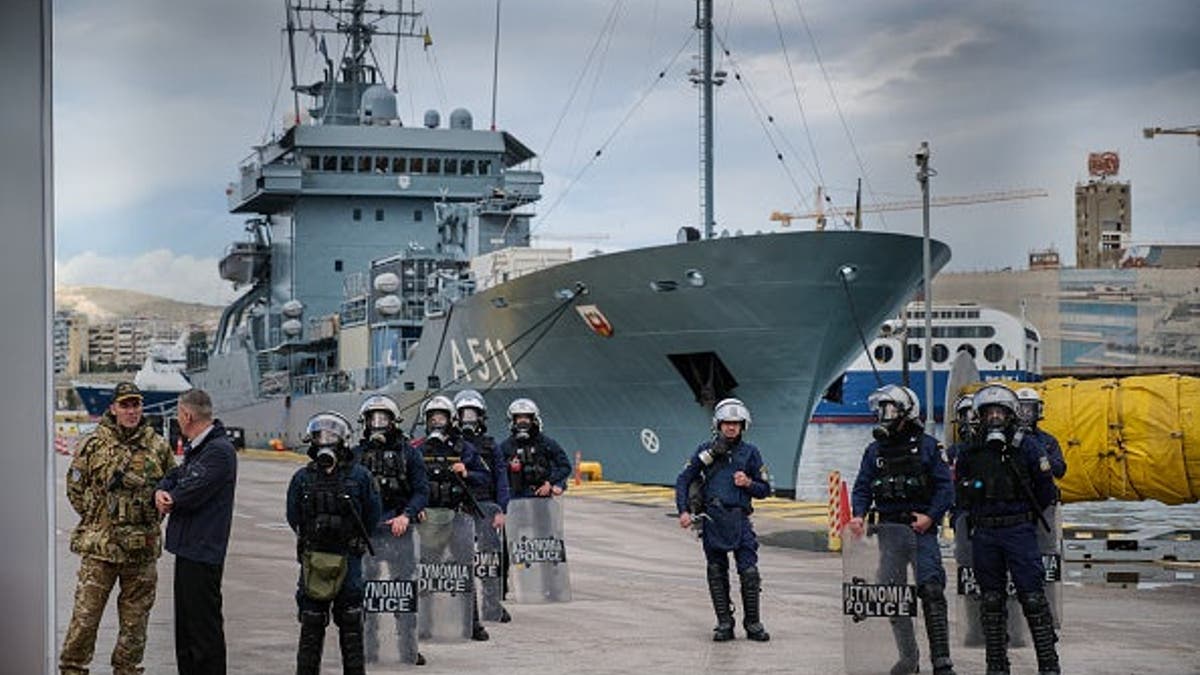
Greek riot police officers stand in front of an entrance at COSCO shipping port during a demonstration as part of a port workers strike called by the Greek labor union in Piraeus, near Athens on Feb. 6, 2026. (Aggelos Nakkas/AFP via Getty Images)
Last week, BreakThrough News, a pro-communist media platform funded by Singham, reported on the international dockworkers’ strike, saying Italian port workers are «set to play a notable role.» It placed the waterfront action within a larger narrative about student activism, «austerity,» government policies and political unrest.
The publicity campaign also extends into a wider international ecosystem of pro-communist organizations, including one that has moved beyond publishing articles to raising financial support for the strikers.
Meanwhile, Progressive International, a pro-communist group that works closely with Singham-funded organizations, for example, supporting the Communist Party of Cuba, has published a series of reports and declarations promoting awareness of the dockworkers’ mobilization. It published a trade union statement, called the «Istanbul Declaration,» under the headline «Dockworkers will not become a link in the chain of their wars.»
The Istanbul Declaration, issued earlier this year, proclaimed: «We do not load death.»
Progressive International announced it has launched a strike fund to support dockworkers participating in the Oct. 30 action to «stop the imperialist war machine.» It connected the port campaign to political causes beyond Gaza, including opposition to American and European policies involving Iran, Yemen, Cuba, Venezuela and «imperialism’s entire coercive apparatus.»
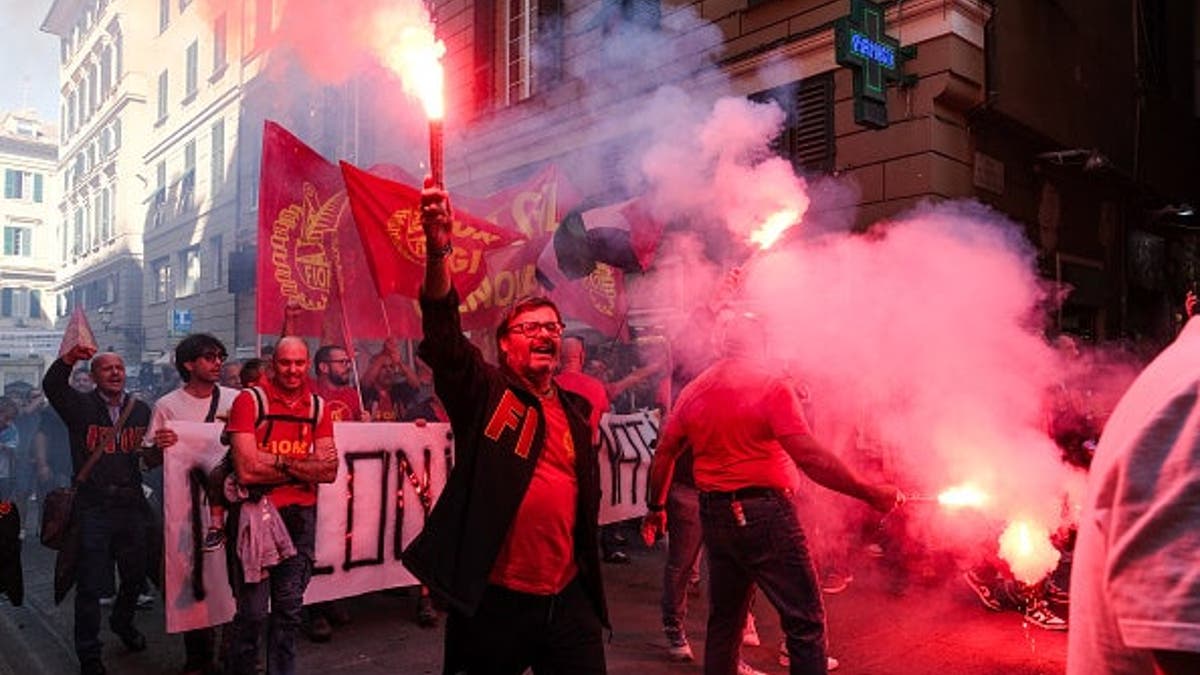
A rally reaches the city center in Genoa, Italy, with tens of thousands of protesters on Oct. 3, 2025. Dockworkers, students and others gathered at the Port of Genoa for an anti-Israel demonstration with the Global Sumud Flotilla. (Emanuela Zampa/Getty Images)
The international messaging has been reinforced by communist organizations that make no secret of their revolutionary objectives, using the dockworkers’ campaign to advance a broader political struggle against capitalism.
On Monday, Italy’s Rete dei Comunisti, or Network of Communists, issued another declaration tagged «COMMUNIST NETWORK,» backing the strike and identifying the «task of communists» as fighting «barbarie capitalista,» or «capitalist barbarism.»
That day, Progressive International published an account of Italian dockworkers learning how to «jam the war marchine» in Livorno.
On Wednesday, 13 communist youth organizations from 12 European countries issued a joint statement explicitly supporting the international strike, saying, «We strengthen our struggle throughout Europe against our common enemy, capitalism,» and calling for a «socialist-communist society.»
Together, the statements show how communist organizations are connecting Friday’s labor action to the wave of student protests already unfolding across Europe, giving the separate demonstrations a common ideological message.
On the eve of the protests, pro-communist, anti-Israel groups are drumming up international publicity for the waterfront campaign.
Thursday, the Communist Party of Greece, known as KKE, said it’s dispatching its members to ports on Friday, declaring: «The communists support the strike.» Its mission states that its objective is the «overthrow of capitalism and the construction of socialism-communism.»
FIFTY ANTIFA GROUPS IN FRANCE JOIN VAST NETWORK TO ENSURE CHAOS IN WEEKEND PROTESTS

A procession of Italian dockworkers, workers and students forced their way through the Varco Valessini gate and entered the port of Livorno during a protest for Gaza, on Sept. 22, 2025, in Italy. (Laura Lezza/Getty Images)
The Greek communists shared a statement from European Communist Action, in which the coalition of communist groups in Europe and the European Union linked the dockworkers’ action to student protests in France, Spain, Italy, Belgium, Greece and Albania, connecting the pro-communist movements that have unfolded across the world in recent weeks.
Progressive International published a report Thursday on dockworkers in the Italian city of Gioia Tauro joining tomorrow’s protests after weeks of collaborating with anti-Israel activists on actions that have been «stopping war cargo.»
The campaign’s international publicity also extends to Jacobin, a socialist publication that carried an article by a far-left historian, Peter Cole, headlined «Dockworkers Worldwide Are About to Strike for Palestine.»
Singham, the Shanghai-based tech entrepreneuer, has been the subject of scrutiny over financial relationships involving nonprofit organizations and left-wing media operations that have coordinated and amplified anti-West protests in the U.S. and abroad over the past decade. In 2017, Singham sold a company that he founded, Thoughtworks, for an estimated $785 million and, according to a Fox News Digital investigation, pumped $285 million into a global network of pro-China, pro–communist organizations that have been key players in the past decade’s anti-West protests.
The network associated with him includes BreakThrough News, the People’s Forum and Tricontinental: Institute for Social Research. His wife, Jodie Evans, is a co-founder of CodePink.

Dockworkers of the port of Livorno block a ship during a rally of pro-Palestinian protesters on Sept. 5, 2025, in Italy. (Laura Lezza/Getty Images)
DOJ LAUNCHES GRAND JURY PROBE INTO MARXIST MOGUL NEVILLE ROY SINGHAM’S FUNDING OF LEFTIST GROUPS
The Palestinian labor movement has provided the «green» in the international organizing network. This week, 17 Palestinian labor and professional organizations in the Boycott, Divest and Sanctions movement against Israel endorsed Friday’s mobilization, urging dockworkers and transportation workers to join actions opposing military shipments to Israel.
The signatories include the Palestinian General Federation of Trade Unions, Palestinian Federation of Trade Unions, General Union of Palestinian Workers, General Union of Palestinian Women and Palestinian teachers’ and postal workers’ organizations.
Soon after, communist groups around the world shared the endorsement by the Palestinian groups, bringing the red-green alliance full circle.
INTERNACIONAL
Dem probes could ‘torture’ young Trump officials with crushing legal bills, subpoenaed conservative warns
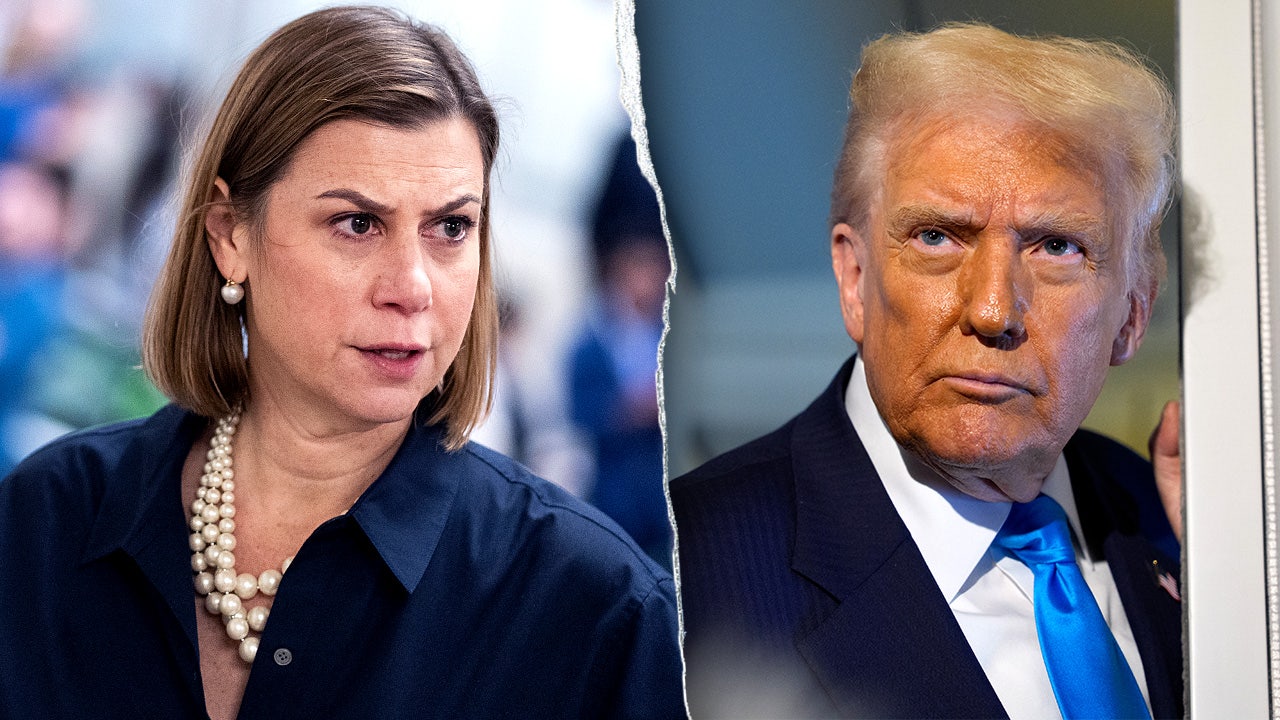
Repeated calls by Democratic lawmakers to investigate President Donald Trump and his allies are raising concerns from a conservative organization previously subpoenaed during former Biden-appointed special counsel Jack Smith’s 2020 election investigation.
And one of its leaders is warning that young professionals could face reputational damage and steep legal bills.
Rachel Bovard, vice president of programs at the Conservative Partnership Institute (CPI), said Smith’s investigation left her organization on the hook for millions of dollars in fees to ensure compliance with the subpoenas.
HOUSE DEMS PLOT TRUMP INVESTIGATION BLITZ IF THEY SEIZE MAJORITY
«Jack Smith was a test run in how to do this,» Bovard told Digital. «Jack Smith basically went in crazy, subpoenaed a host of information across the right. His goal was to map the right, and he did it. And all of that information is still on file at the FBI and the Justice Department. It doesn’t go away, so it’s sitting there waiting for the next Dem administration to pick it up, and we expect that’s what they’ll do with it.»
Though CPI was targeted by the Biden Justice Department and not Congress, Bovard said she fears Democrats will follow what she described as Smith’s playbook if they win control of Congress in the midterm elections.
The concerns come after Sen. Elissa Slotkin, D-Mich., stated during an event earlier this month at the University of Chicago’s Institute of Politics that she wants Democrats to send a «deterrence message» to any young person considering working in the Trump administration. Slotkin said she wants to «not just focus on the president, but on the people who enabled him.»
«They literally just want to use the government as a political weapon, which is exactly what Jack Smith also did to a bunch of people, including my organization,» Bovard told Digital. «We were never credibly accused of any crime, but we had to spend millions of dollars to comply with subpoenas.»
Bovard said Smith’s subpoenas allowed the Justice Department to obtain detailed information such as CPI’s health coverage and benefits, which she said had no relevance to Smith’s investigation.
Digital reached out to Slotkin’s office for comment but did not receive a response before publication.
Abhishek Kambli, a former federal prosecutor and a partner at Holtzman Vogel, told Digital that Congress’ ability to issue subpoenas and conduct investigations must be related to legislative duties and that Congress can’t issue subpoenas for law enforcement purposes. Kambli said remarks by Slotkin and other members of Congress could be used as evidence by anyone seeking to challenge a subpoena.
«You had multiple members of the House and the Senate that talk about the accountability agenda and holding the Trump administration accountable for wrongdoing,» Kambli told Digital.
«And if they just throw in boilerplate language that this is for legislative purpose, anyone challenging those subpoenas will have that entire record to demonstrate that it’s anything but that.»
While Michael Morley, a law professor at Florida State University College of Law, agreed that Slotkin’s remarks are bad optics, he said Congress’ authority to conduct investigations is still broad, pointing out that Congress can investigate the agencies it has created.
«I don’t think that is consistent with our norms, and I certainly don’t think it’s something that we’d like to see become a routine part of our discourse,» Morley said of Slotkin’s remarks. «But I don’t think that necessarily means it rises to the level of a constitutional issue.»
ELISSA SLOTKIN CALLS BACKLASH TO THREAT OF PROSECUTION COMMENTS ‘MANUFACTURED OUTRAGE’
Hans von Spakovsky, a senior legal fellow at Advancing American Freedom, said that while Congress may be able to hold someone in criminal contempt for not complying with a subpoena, it’s up to the Justice Department to prosecute, which it could decline to do.
Spakovsky said that precedent was established during the Obama administration, when the Justice Department declined to prosecute then-Attorney General Eric Holder after the House held him in contempt for refusing to comply with a subpoena related to the Fast and Furious investigation.
But Kambli said that doesn’t erase the risks potential Trump administration officials could face, arguing that the investigative process itself can be the punishment.
«There is no doubt that some members of Congress intend to use that process to bankrupt people who cannot afford legal representation,» Kambli told Digital. «That is a real threat, regardless of whether anyone is ultimately prosecuted.»
SLOTKIN’S VIRAL ‘THREAT’ TO CONSERVATIVES TAKES NEW TWIST AS STUDENT MOVES TO HOLD HER ACCOUNTABLE: ‘SHOCKING’
Bovard said when she first saw Slotkin’s remarks about seeking a «deterrence message» she interpreted them as a call to use the investigative process to «torture» young professionals.
«I don’t know that these Democrats think they can actually put people in jail. I think that’s almost beside the point for them,» Bovard told Digital.
Kambli said concerns remain that if a Democrat returns to the White House, former Trump administration officials could be subjected to Justice Department investigations.
«Where the real exposure lies is in the scenario where a Democrat wins the presidency in 2028, and they maintain both houses of Congress,» Kambli told Digital.
Just weeks before Slotkin’s remarks, Trump said during an interview with Time magazine that he would issue preemptive pardons to members of his administration before leaving the White House, pointing out that President Joe Biden issued a pardon for Dr. Anthony Fauci.
Bovard said it was unfortunate that political affairs had reached a point where mass pardons were even under consideration, but she argued they made sense given the rise in lawfare.
SIGN UP TO GET THE POLITICS NEWSLETTER
«This is how we’re going to have to live: mass pardons of your political parties on either side, and that’s obviously a terrible outcome. But if, you know, the Slotkin theory is put to the test. I don’t think Trump’s going to have a choice. I think he’s going to have to do that,» Bovard told Digital.
justice department, fbi, eric holder, congress, white house, politics

Café en el ACA, chapa diplomática y un McDonald’s: las misteriosas horas de Santiago Caputo en Misiones durante el operativo Bolsonaro

Jornada financiera: subieron los bonos argentinos y cayó el riesgo país, pero las acciones cedieron por cuarto día seguido

Entre el silencio de Milei y la presión de Trump, Flávio Bolsonaro quedó sin poder y aislado en Miami

La Corte se declaró competente para analizar la demanda bonaerense por subsidios al transporte

La ayuda a Lucas Trejo que Leo Messi y Antonella Roccuzo no habían contado

Hicieron una estafa virtual en un municipio de La Pampa y no se pudieron pagar los sueldos

Medios brasileños afirman que Flávio Bolsonaro escapó del país y está en vuelo a Estados Unidos

CFK, Axel Kicillof, Sergio Massa y otros referentes del PJ celebraron el triunfo electoral de Lula da Silva

El acusado de amenazar a Waldo Wolff reconoció el delito, pidió disculpas en un video y visitará dos museos

Jugó un Mundial con la Selección, el Dibu le regaló sus guantes y apunta a enfrentar a Messi

 INTERNACIONAL2 días ago
Medios brasileños afirman que Flávio Bolsonaro escapó del país y está en vuelo a Estados Unidos
- POLITICA3 días ago
De Bullrich a Lula da Silva: a Milei se le abrieron dos frentes de conflicto con resolución incierta
- DEPORTE3 días ago
Facundo Bagnis vuelve al tenis tras un año de suspensión por doping: “Dejó una cicatriz enorme en mí”