INTERNACIONAL
Who is Turkey’s Erdoğan? How NATO’s most unpredictable leader keeps reinventing himself

NEWYou can now listen to Fox News articles!
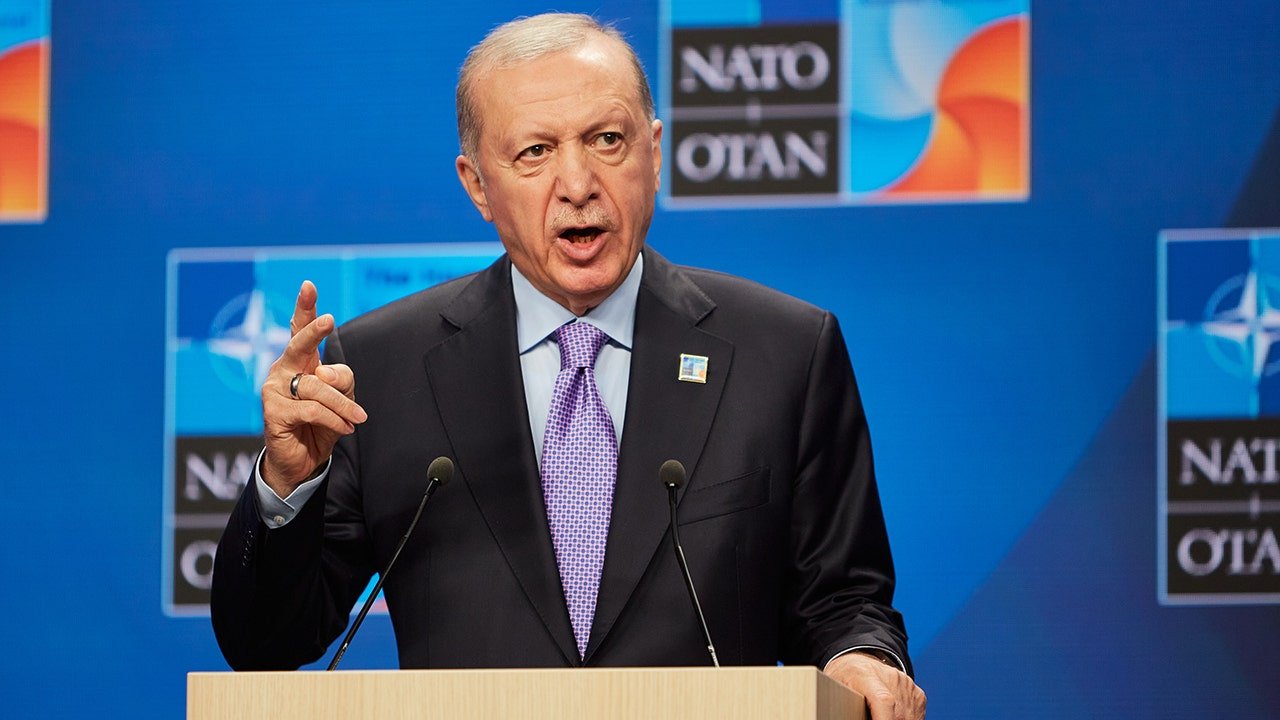
As President Donald Trump heads to Ankara, Turkey, for the upcoming NATO summit, Turkish President Recep Tayyip Erdoğan is again at the center of alliance politics.
Trump has praised Erdoğan as «a friend» and «a respected leader,» underscoring a relationship that could shape defense talks between Washington and Turkey, including Turkey’s long-running effort to restore deeper military cooperation.
The moment highlights the remarkable position Erdoğan occupies today: Once regarded as one of NATO’s most troublesome allies after taking delivery of the Russian S-400 missile defense system in 2019, Turkey has become increasingly difficult for the alliance to sideline as the war in Ukraine drags on, instability grips the Middle East and the Black Sea grows more strategic.
For many, however, Erdoğan remains an enigma. Rather than being driven by a fixed worldview, experts argue, Erdoğan repeatedly has reinvented himself politically, adopting whichever ideology best serves his overriding objective: remaining in power.
TURKEY DETAINS OVER 200 SUSPECTS, INCLUDING ALLEGED ISIS MILITANTS, IN SWEEPING RAID AHEAD OF NATO SUMMIT
As President Donald Trump heads to Ankara, Turkey, for the upcoming NATO summit, Turkish President Recep Tayyip Erdoğan is again at the center of alliance politics. (Pierre Crom/Getty Images)
Erdoğan has ruled Turkey for more than two decades, evolving from an Istanbul mayor with Islamist roots into a pro-European reformer, then a nationalist strongman, and now a pivotal NATO power broker courted by Trump.
To supporters, he restored Turkey’s global stature. To critics, he hollowed out its democracy while jailing rivals, journalists and activists. But Erdoğan’s most defining trait, experts say, may be less ideology than survival.
Is he an Islamist? A nationalist? A Western ally? A Russian partner? An authoritarian?
Perhaps the most important thing to understand about Erdoğan is that he has been all of those things — at different moments, according to Gönül Tol, founding director of the Middle East Institute’s Turkey Program and author of «Erdoğan’s War: A Strongman’s Struggle at Home and in Syria.»
«He’s not an ideological man,» Tol told Fox News Digital. «He’s very pragmatic, first and foremost a populist.»
SIX KURDISH FIGHTERS KILLED IN IRGC AMBUSH AS CLASHES SPREAD ACROSS WESTERN IRAN
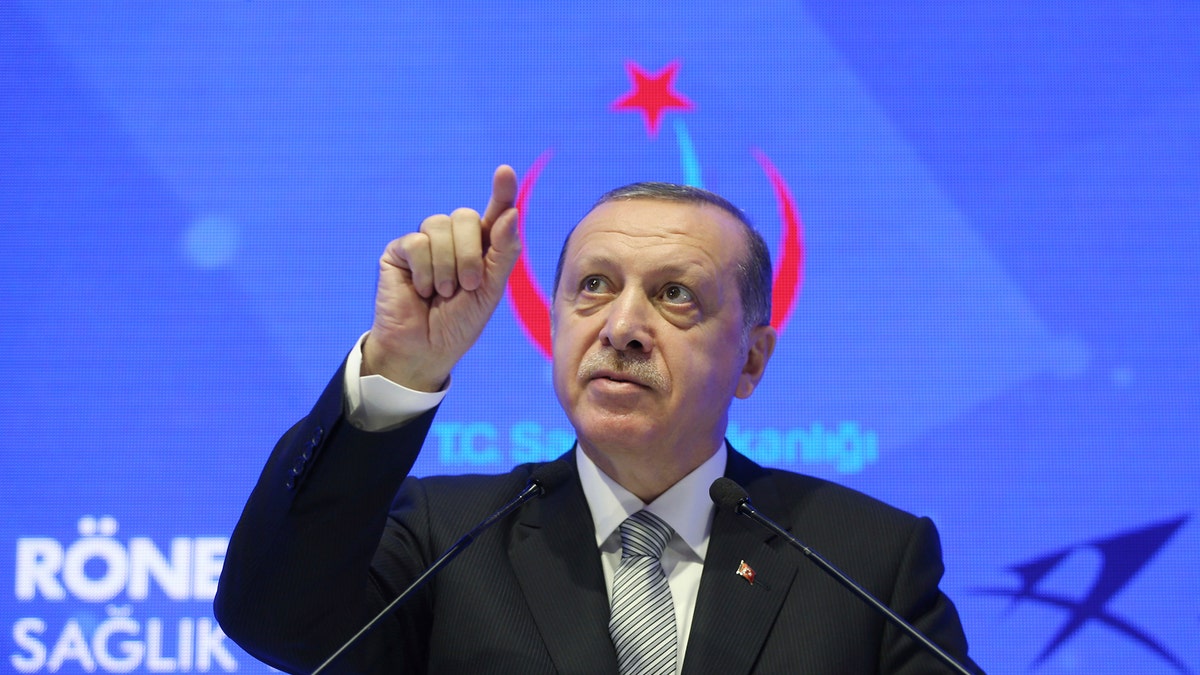
Turkish President Recep Tayyip Erdoğan remains an enigma for many. (AP)
The Conservative Democrat
Erdoğan’s roots lie in Turkey’s Islamist political movement. Educated at an Imam Hatip religious school, he entered politics through National Outlook, a right-wing Islamist movement founded by Necmettin Erbakan, and eventually became mayor of Istanbul as a member of Erbakan’s Welfare Party.
But after founding the AKP, or Justice and Development Party, in 2001, Erdoğan abandoned the Islamist label, presenting himself instead as a «conservative democrat» committed to economic reform and closer ties with Europe — a shift that experts say marked the first of several political reinventions.
When Erdoğan and his Justice and Development Party first swept to power in 2002, Turkey was seeking membership in the European Union, military influence over politics was shrinking, and Erdoğan promised democratic reforms, economic modernization and closer ties with the West.
Many liberals and centrists initially supported him.
«He often said, ‘I’m not an Islamist anymore. I’m a conservative democrat,’» Tol said. «And that brand really served him well.»
Those early years transformed both Turkey’s economy and Erdoğan’s popularity.
TRUMP BETS ON FORMER NATO TROUBLEMAKER AS TURKEY’S STRATEGIC VALUE SURGES
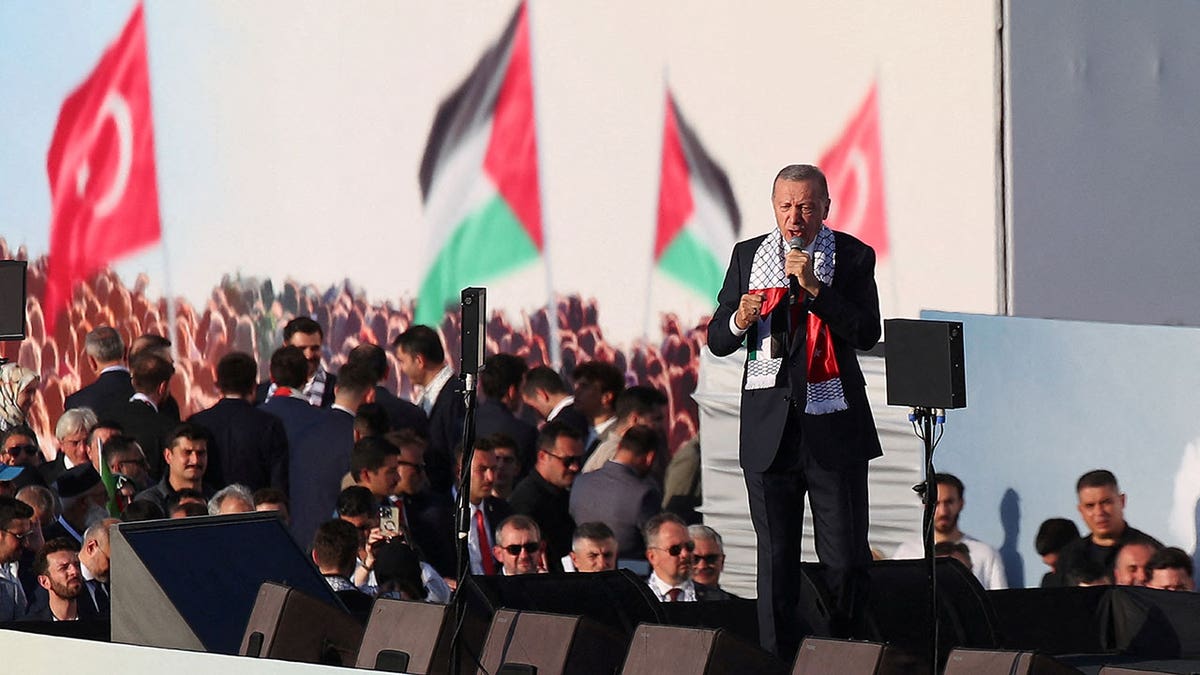
Many liberals and centrists initially supported Turkish President Tayyip Erdoğan. (Dilara Senkaya/Reuters)
The Islamist
After consolidating power, Erdoğan began another political transformation.
Following the Arab Spring in 2011, he increasingly portrayed himself as a champion of political Islam, backing Islamist movements across the Middle East while presenting himself domestically as the defender of Turkey’s conservative religious majority.
«He wanted to inject more Islam into public life, into education,» Tol said. «He was using this more Islamist narrative… the goal was always to acquire more power.»
That anti-Western turn went beyond rhetoric.
In 2016, Erdoğan accused the U.S.-led coalition of supporting terrorist groups in Syria, including ISIS and Kurdish militias that Turkey considers terrorist organizations— an allegation the State Department dismissed as «ludicrous,» according to Reuters.
His increasingly vocal support for Hamas and sharp criticism of Israel became defining features of his foreign policy.
«The perpetrators of the massacre and the destruction taking place in Gaza are those providing unlimited support for Israel,» Erdoğan said in 2023, adding that Israel’s attacks and those backing them amounted to «murder and mental illness,» according to Reuters.
Tol cautions against viewing those positions alone as evidence that Erdoğan remains primarily motivated by Islamism.
«Anti-Israel sentiment cuts across ideological lines in Turkey,» she said, arguing that Erdoğan’s foreign policy has consistently reflected political calculation more than religious doctrine.
TRUMP’S TURKEY ARMS SALE PROPOSAL SPARKS CONGRESSIONAL QUESTIONS BEFORE NATO SUMMIT
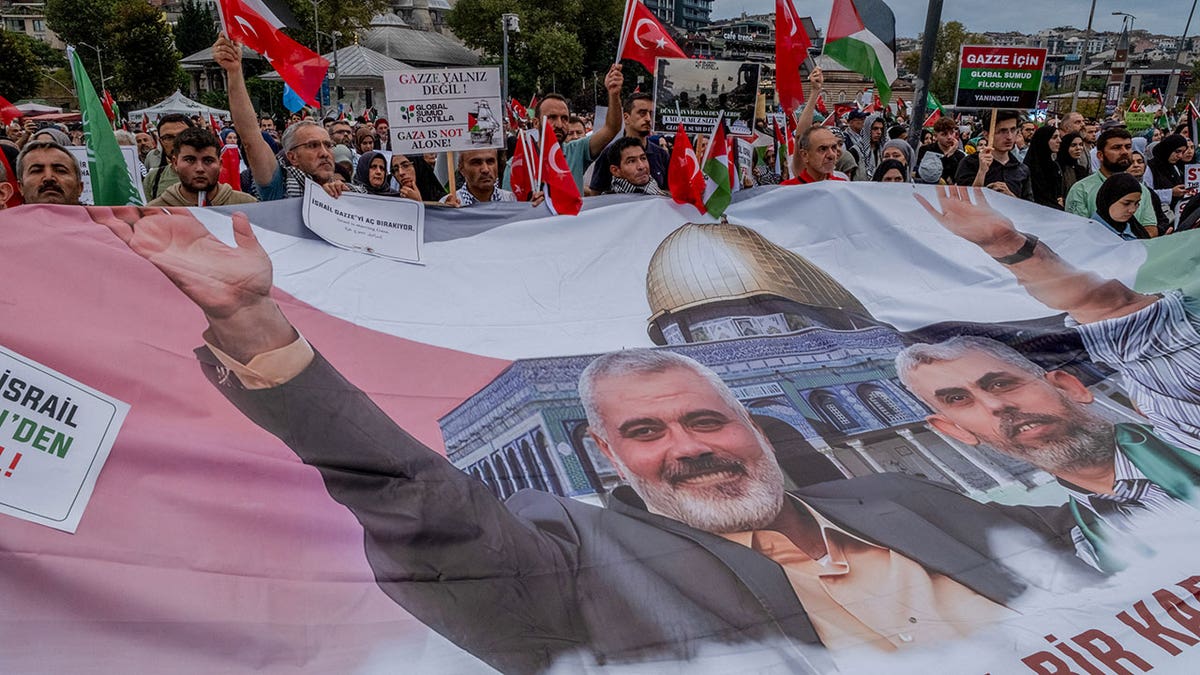
Protesters carry a banner with pictures of the slain Hamas leaders Ismail Haniyeh and Yahya Sinwar. (Murat Kocabas/SOPA Images/LightRocket via Getty Images)
The nationalist strongman
As Turkey’s economy slowed and regional ambitions faltered, Erdoğan pivoted once again.
He embraced Turkish nationalism, built alliances with hardline nationalist parties and cultivated the image of an indispensable strongman capable of restoring Turkey’s historical influence.
Supporters credit him with transforming Turkey into a regional power.
«He does have genuine support,» Tol said, estimating his support at roughly 35%.
Some supporters depend on government assistance and patronage networks built under his rule. Others believe Erdoğan restored dignity to conservative religious Turks who long felt marginalized by the country’s secular establishment.
Still others view his increasingly assertive foreign policy as proof Turkey has reclaimed its place on the world stage.
«They think, ‘We have become a world-class nation,’» Tol said. «‘Everyone is praising our president. Turkey is a big player.’»
While Erdoğan continues to command a loyal political base, critics say the price has been Turkey’s democratic institutions.
Authorities increasingly have used courts and criminal investigations to sideline political opponents, including Istanbul Mayor Ekrem İmamoğlu, whose arrest earlier in 2026 triggered nationwide demonstrations, according to Human Rights Watch.
The organization says the government has intensified efforts to weaken Turkey’s main opposition party despite its strong performance in the 2024 municipal elections.
TRUMP’S PERSONAL FEUDS WITH ALLIES FROM ITALY TO ISRAEL REVEAL HOW PERSONALITY DRIVES HIS FOREIGN POLICY
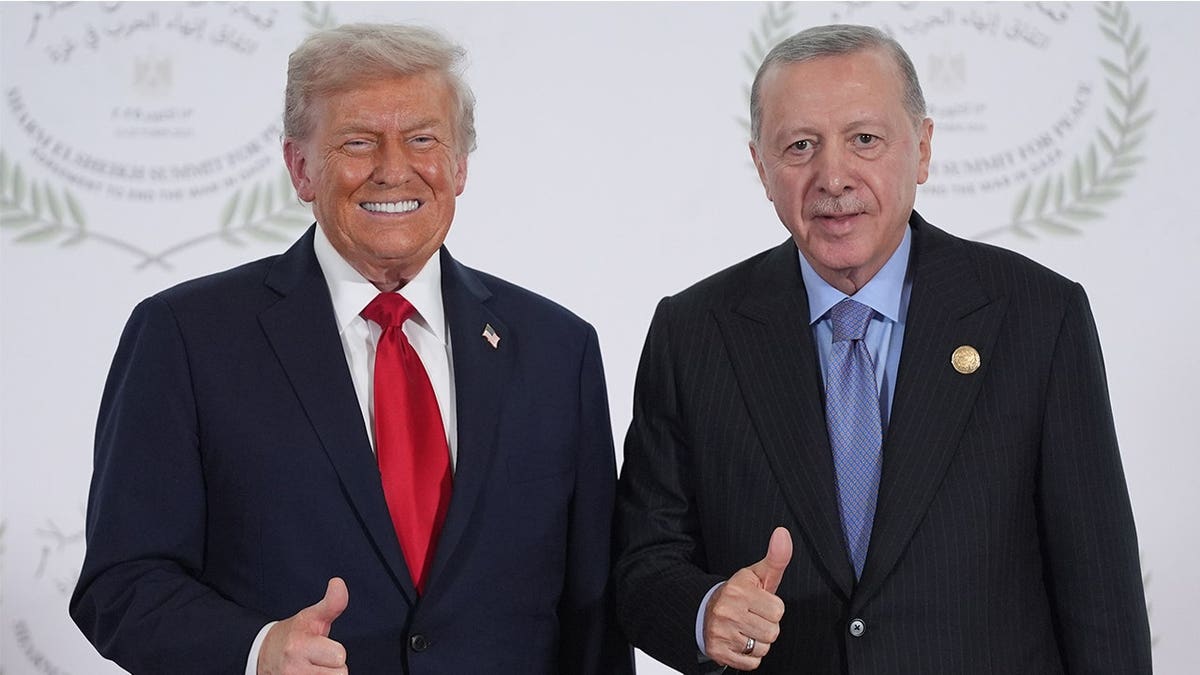
President Donald Trump greets Turkey’s President Recep Tayyip Erdogan during a summit to support ending the war in Gaza, Oct. 13, 2025, in Sharm El Sheikh, Egypt. (Evan Vucci AP Photo/ Pool)
The NATO dealmaker
Today, Erdoğan finds himself in another political transformation.
After years of anti-Western rhetoric and disputes with Washington, Turkey has worked to repair relations with the United States and Europe.
That rhetoric was once central to Erdoğan’s posture.
He accused the U.S.-led coalition in Syria of supporting terrorist groups, blasted Washington’s sanctions over Turkey’s purchase of the Russian S-400 missile defense system, calling them a «hostile attack» on Turkey’s sovereign rights and defense industry, and repeatedly accused Western governments of enabling Israel’s war in Gaza.
The shift comes as Turkey’s strategic importance has grown dramatically.
The S-400 purchase remains at the center of one of the biggest unresolved disputes between Washington and Ankara. After Turkey took delivery of the Russian system in 2019, the U.S. expelled Turkey from the F-35 fighter jet program and later imposed sanctions on Turkey’s defense procurement agency.
Former U.S. Ambassador to Turkey James Jeffrey recently told Fox News Digital that restoring Turkey to the F-35 program remains far more complicated than other defense deals because operating the Russian-made S-400 alongside America’s most advanced stealth fighter could expose sensitive U.S. technology.
«The F-35 is a different issue,» Jeffrey said, arguing that the problem is technical, not merely political.
Turkey controls the Bosporus and Dardanelles, fields NATO’s second-largest military and plays a critical role in the Black Sea following Russia’s invasion of Ukraine.
Jeffrey said that Turkey has been «essential to Ukraine staying in the fight,» pointing to Turkey’s enforcement of the Montreux Convention, a 1936 treaty that gives Turkey control over naval passage through the Bosporus and Dardanelles straits, its early delivery of Bayraktar drones to Ukraine, and its role as a mediator between Kyiv and Moscow.
«You can’t contain Russia in the Black Sea without Turkey,» Jeffrey said.
For Tol, however, Erdoğan’s latest embrace of NATO is simply another example of his political flexibility.
«There was a time when he was very anti-Western, very critical of NATO, very critical of the United States,» she said.
«And now look at him.»
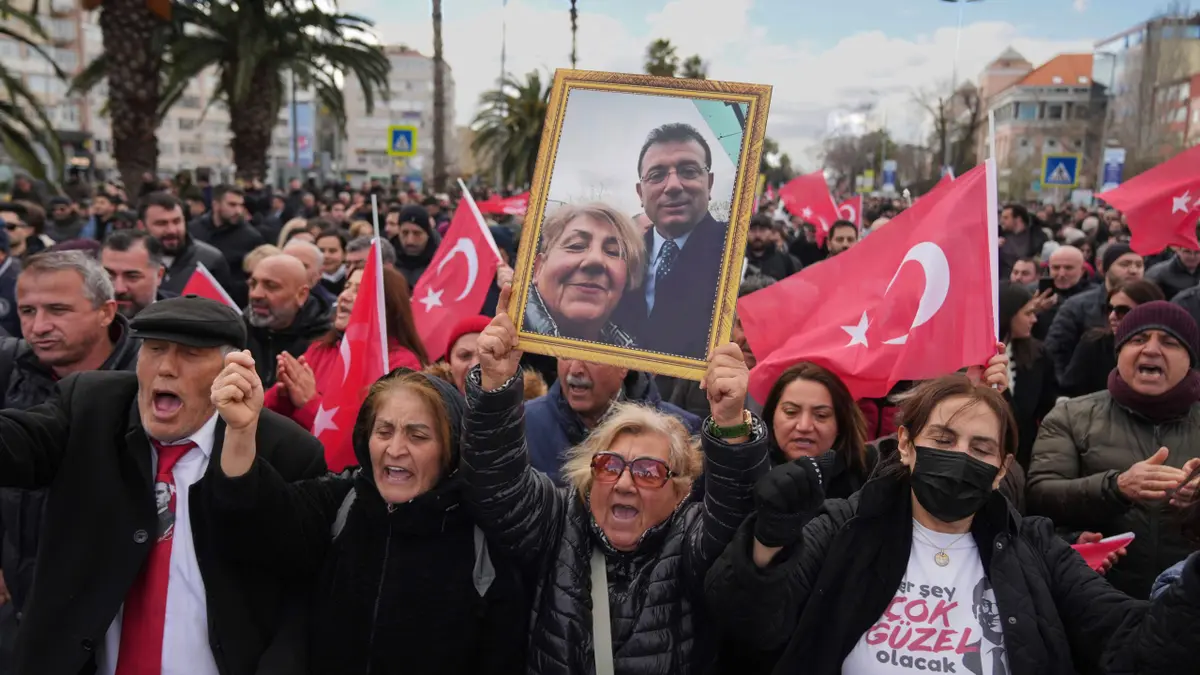
People chant slogans as they protest the arrest of Mayor Ekrem Imamoglu in Istanbul, Turkey, March 19, 2025. (Francisco Seco/The Associated Press )
Growing criticism
Human Rights Watch argues Erdoğan has used Turkey’s growing importance to NATO as political cover while expanding pressure on journalists, activists and opposition figures.
Freedom House says Erdoğan has become «increasingly authoritarian» over the past decade, consolidating power through constitutional changes and the imprisonment of political opponents, independent journalists and civil society figures.
Turkey’s prisons held more than 420,000 inmates — far exceeding their official capacity of roughly 304,000, according to a June 2026 report citing Turkish Justice Ministry figures.
NATO allies have grown quieter on Turkey’s rights record as Ankara’s strategic value has risen, Reuters reported ahead of the summit, with former U.S. Ambassador David Satterfield saying it remains important for the West to speak publicly about the «degradation of democratic institutions in Turkey.»
Tol believes Erdoğan’s domestic agenda can be understood through a single principle.
CLICK HERE TO DOWNLOAD THE FOX NEWS APP
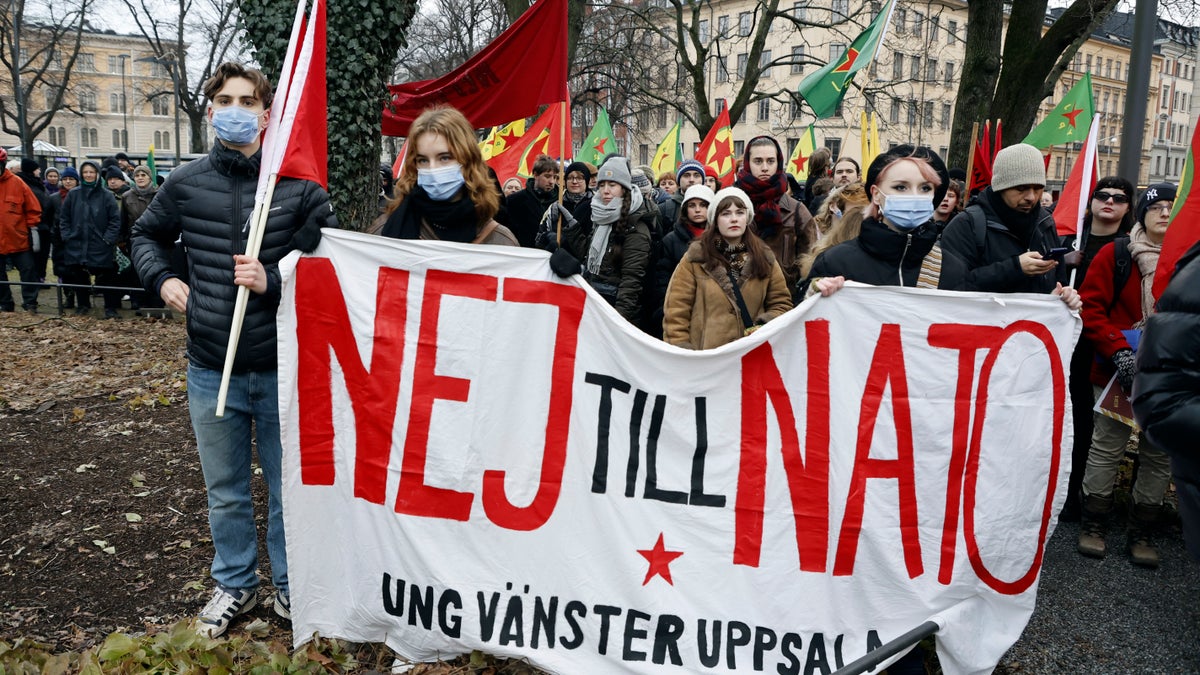
People take part in a demonstration against Turkish President Recep Tayyip Erdogan and Sweden’s NATO bid arranged by The Kurdish Democratic Society Center in Sweden, in Stockholm, Jan. 21. 2023. (Christine Olsson/TT via AP)
«Everything is designed to keep him in power,» she said. «Beyond that, I don’t see a binding ideology that brings together all his policies.»
As Trump heads to Turkey, that may be the key to understanding one of NATO’s most consequential — and unpredictable — leaders.
Fox News Digital reached out to the Turkish government for comment.
Fox News Digital’s Morgan Phillips and Reuters contributed to this report.
turkey, nato, donald trump









INTERNACIONAL
NVIDIA advierte que la mayoría de los agentes de inteligencia artificial fracasa al pasar de la prueba a la producción
REUTERS/Dado Ruvic/Ilustración/Foto de archivo
El problema central de los agentes de inteligencia artificial dejó de ser su creación y pasó a ser su sostenimiento en el tiempo, afirmó Marcio Aguiar, director de la división Enterprise de NVIDIA para América Latina, en un comunicado difundido por la compañía. Según el ejecutivo, construir un agente capaz de ejecutar tareas específicas se volvió relativamente sencillo, pero mantenerlo funcionando todos los días, dentro de un presupuesto sostenible y con reglas claras sobre lo que puede o no hacer, es el verdadero obstáculo que enfrentan las empresas.
Los agentes de inteligencia artificial son sistemas que, a diferencia de los modelos que solo responden preguntas o generan texto e imágenes, ejecutan tareas de forma autónoma, acceden a documentos y toman decisiones limitadas dentro de reglas y permisos definidos. Su desarrollo atrajo fuertes inversiones durante el último año y multiplicó los anuncios corporativos, pero la brecha entre lo que las empresas muestran en sus demostraciones y lo que logran sostener en funcionamiento real se convirtió en uno de los debates centrales del sector tecnológico.
“Lo que vemos hoy es que muchas empresas ya han pasado de la fase de experimentación a la implementación de la inteligencia artificial, pero convertir esos proyectos en operaciones consistentes sigue siendo un reto”, sostuvo Aguiar en el comunicado. El directivo describió una distancia concreta entre el momento de la presentación de un proyecto y su funcionamiento sostenido: “Una demostración convence a la junta directiva en veinte minutos, pero lo que realmente define el éxito del proyecto es lo que ocurre en los seis meses siguientes, cuando el agente debe funcionar todos los días, dentro de un costo que la empresa pueda sostener y con reglas claras sobre lo que puede o no puede hacer”.

REUTERS/Ricardo Moraes
El diagnóstico de NVIDIA identifica tres errores recurrentes en las empresas que intentan escalar sus proyectos de agentes autónomos. El primero es subestimar el consumo de recursos computacionales que exigen estos sistemas una vez que pasan de un entorno de prueba a un uso masivo. El segundo es tratar la seguridad y la gobernanza como una etapa posterior al lanzamiento, en lugar de incorporarlas desde el diseño inicial. El tercero es escalar los proyectos sin tener claro el retorno de inversión esperado. La combinación de estos factores deriva, según el ejecutivo, en presupuestos excedidos, agentes desactivados tras incidentes de seguridad y proyectos piloto que permanecen indefinidamente en fase de experimentación sin llegar a producción.
Detrás de este diagnóstico hay un cambio en la naturaleza técnica de los propios agentes. La mayoría de los sistemas que operan hoy se activan mediante un comando puntual, ejecutan una tarea específica y terminan su actividad. Los llamados agentes autónomos de larga duración, en cambio, funcionan de manera continua en segundo plano: revisan a intervalos regulares sus listas de tareas, identifican cuáles requieren acción, ejecutan lo que está dentro de sus permisos y remiten a personas únicamente los casos que exigen una decisión humana. Este modo de funcionamiento implica un acceso más amplio y constante a datos internos, lo que eleva las exigencias de seguridad respecto de los agentes que se activan de forma puntual.
Aguiar situó esta discusión en el centro de la conversación que, según anticipa, dominará al sector en los próximos meses. “La pregunta que se hará el mercado de ahora en adelante no es quién tiene un agente, sino quién logra mantenerlo operando de manera segura y generando resultados”, planteó el ejecutivo, para quien las compañías que traten la infraestructura de soporte como un componente estratégico, y no como una capa técnica secundaria, estarán mejor posicionadas para escalar sus proyectos de inteligencia artificial.
Aguiar concluyó que la diferencia entre las empresas en los próximos dos años no estará determinada por el acceso a los modelos de inteligencia artificial, cada vez más equiparado entre competidores, sino por la capacidad de convertirlos en operaciones confiables bajo las reglas específicas de cada negocio. Esa capacidad de sostener en el tiempo lo que hoy funciona en una demostración será, según el planteo de NVIDIA, el factor que determine qué empresas logren capturar el valor prometido por la inteligencia artificial agéntica y cuáles queden atrapadas en una fase de experimentación permanente.
Europe
INTERNACIONAL
Dems reject Trump’s top spy pick after demanding replacement, leaving counter-terror tool in air
Jay Clayton set for DNI confirmation hearing
Fox News chief congressional correspondent Chad Pergram reports on Jay Clayton’s Senate confirmation hearing as he looks to become the next director of national intelligence. Pergram also reports House Republicans are linking the SAVE America Act to a State Department funding bill following the expiration of the FISA program.
NEWYou can now listen to Fox News articles!
Senate Democrats demanded a new, experienced person to lead the nation’s spy agencies, but when given the chance, they rejected President Donald Trump’s latest pick.
Still, their resistance was not enough to stop Republicans from confirming Jay Clayton to be the next Director of National Intelligence (DNI) to replace former DNI Tulsi Gabbard. Clayton, who was tapped to be the top prosecutor in Manhattan last year, was confirmed on a party line vote Tuesday.
He will replace acting DNI and Federal Housing Finance Agency director Bill Pulte, whose interim appointment prompted Senate Democrats to demand an immediate, permanent replacement over fears that Pulte would weaponize the nation’s 18 intelligence agencies or try to dismantle them.
SENATE CLEARS WAY FOR TRUMP’S TOP SPY AS KEY ANTI-TERROR PROGRAM REMAINS IN LIMBO
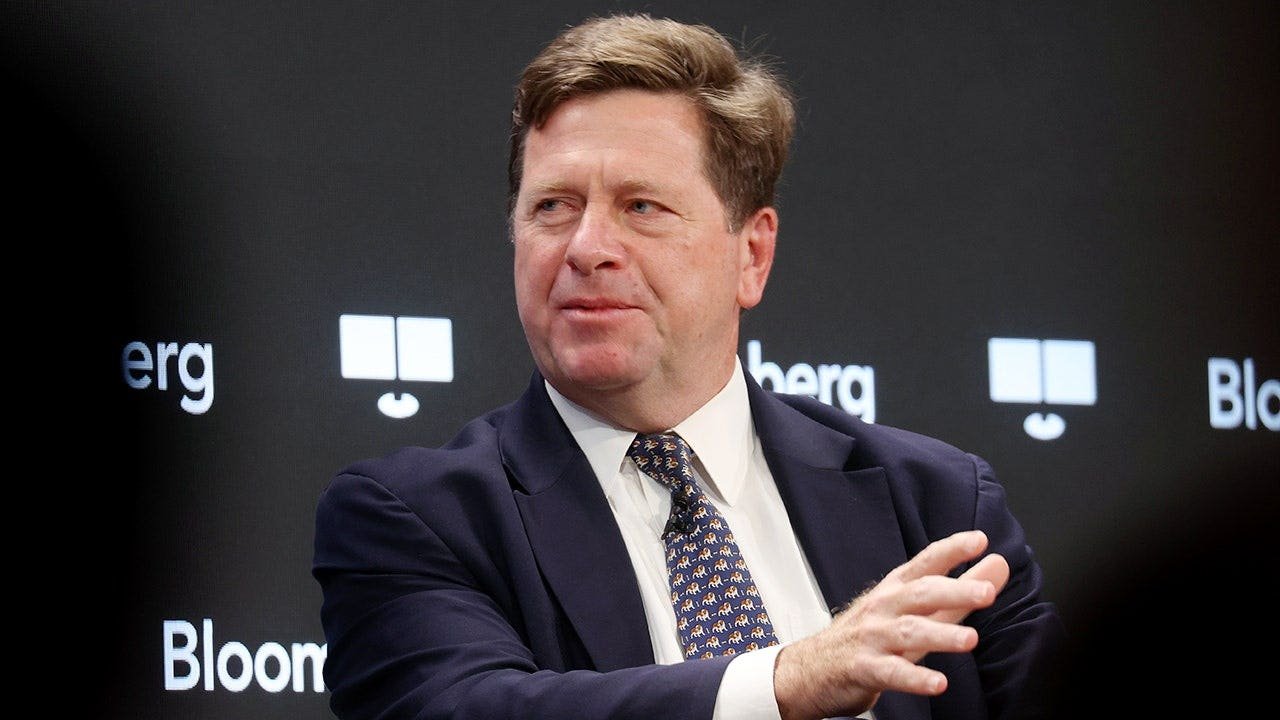
Jay Clayton, U.S. attorney for the Southern District of New York (SDNY), during the Bloomberg Global Credit Forum in New York, US, on Wednesday, June 3, 2026. (Michael Nagle/Bloomberg via Getty Images)
Clayton’s confirmation was thought to be a means to an end for the ongoing standoff over Section 702 of the Foreign Intelligence Surveillance Act (FISA), a tool that has been used to thwart several terror plots, including a planned mass-casualty event at a Taylor Swift concert in Vienna, Austria.
However, they changed their tune when it came time to vote, and after a contentious confirmation hearing where only Republicans voted to send him to the Senate floor.
«As Senate Republicans move to once again confirm an inexperienced and unqualified nominee to a position of massive national security consequence for years to come, one thing remains clear — this type of politicized leadership will only make Americans less safe,» Sen. Adam Schiff, D-Calif., said in a statement.
Boiled down, the Section 702 program allows the U.S. government to collect intelligence on foreigners abroad who are using U.S. communication systems, and it serves as a major part of Trump’s daily intelligence briefing.
LAWMAKERS SCRAMBLE AFTER TRUMP DERAILS BID TO REVIVE KEY COUNTERTERRORISM TOOL DAYS AFTER FBI THWARTS UFC PLOT
But it also sweeps up communications from Americans who are talking to foreign suspects — a key issue that threatened reauthorization among privacy hawks in both parties well before Pulte’s appointment and Clayton’s subsequent nomination.
The program expired, however, last month in response to Pulte’s appointment, despite warnings from Republicans that allowing Section 702 to go dark could have dire national security consequences.
And Clayton’s confirmation, for now, does not appear to be breaking through the partisan logjam. Sen. Mark Warner, D-Va., and the top Democrat on the Senate Intelligence Committee, told Fox News Digital that the pressure wasn’t on to reauthorize FISA.
«Democrats have refused to pass a bipartisan FISA bill until a new DNI is confirmed,» a spokesperson for Senate Intelligence Committee Chair Tom Cotton, R-Ark., told Fox News Digital. «Now that Jay Clayton is confirmed, it’s time for them to stop playing politics with national security and put up the votes to give our intelligence community the tools it needs to keep this country safe.»
TRUMP’S DNI PICK CLEARS KEY HURDLE, REVIVING PATH FOR NATION’S TOP ANTI-TERROR SURVEILLANCE PROGRAM
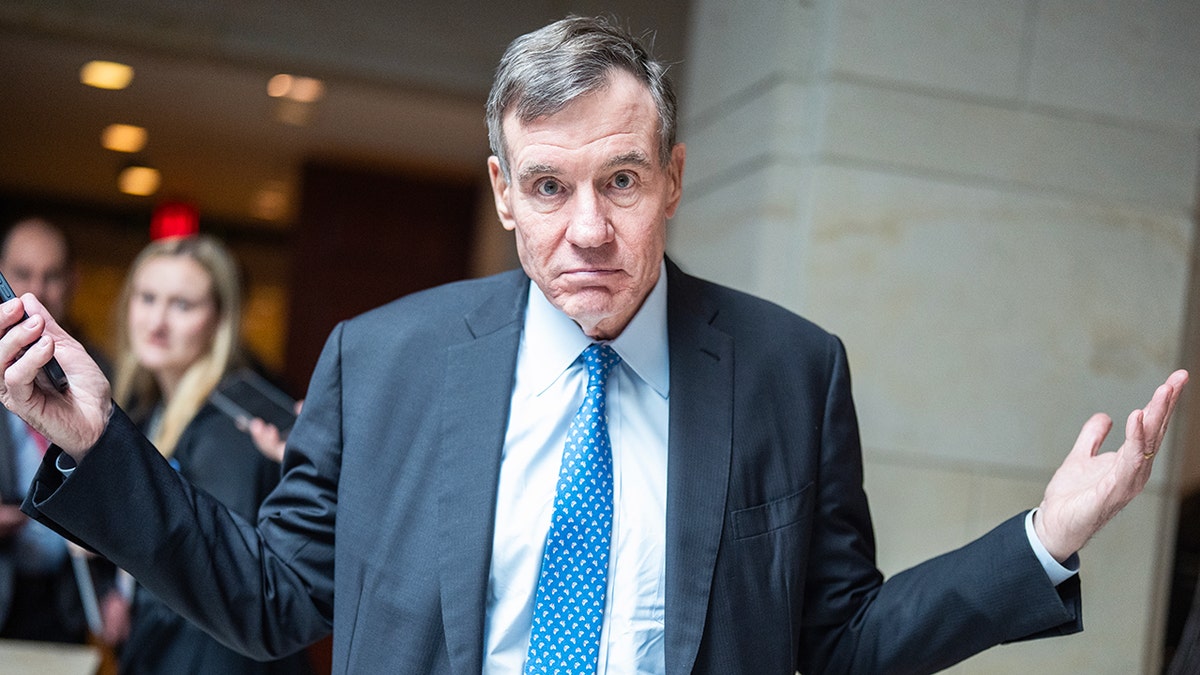
Sen. Mark Warner, D-Va., arrives to the Capitol Visitor Center for a briefing about Iran on Tuesday, February 24, 2026. (Tom Williams/CQ-Roll Call, Inc via Getty Images)
«You know … we don’t have the immediate time pressure because the communication providers are still cooperating,» Warner said.
Before the deadline to reauthorize, lawmakers had differing trains of thought on what would exactly happen should it go completely dark. Some argued that it would slowly draw down, given that FISA courts had already authorized continued intelligence gathering until 2027.
Others worried that telecommunications giants, like Google, would ignore agreements without explicit authorization from Congress.
CLICK HERE TO DOWNLOAD THE FOX NEWS APP
But, as Warner noted, the latter isn’t happening.
Still, it leaves Clayton and the intelligence community on a murky path forward in the months ahead. And there’s not much time left on the Senate’s calendar to tackle the issue. The upper chamber is slated to leave Washington after the first week of August, and won’t return until early September. From there, keeping the government open will be a top priority for Senate Majority Leader John Thune, R-S.D.
politics, senate elections, national security, tulsi gabbard, donald trump
INTERNACIONAL
Los supermercados municipales de Zohran Mamdani con 30% de descuento están destinados al fracaso: la lección de MERCAL en Venezuela, los fantasmas de Detroit y la Nueva York de 1975

El presupuesto de los $125.800 millones de dólares: parches, recortes y la «herencia pesada»

El espejo de MERCAL y la anatomía del colapso venezolano


¿Por qué Nueva York no es Venezuela? Diferencias y la visión de la diáspora venezolana


Los antecedentes urbanos: la «Vía Detroit» y la crisis de Nueva York de 1975


De México a la India: el fracaso de los subsidios al abasto en modelos internacionales


Las señales de alerta financiera en el mercado de 2026 para Nueva York


Un gigante mundial del entretenimiento se asocia con Fénix para competir por Tecnópolis

Aparecieron las hijas de Mauro Icardi: las fotos que mostró Wanda Nara tras sufrir un robo y quedar traumadas

Dubois habló sobre la caída de la confianza en el Gobierno: “Una medición aislada no marca una tendencia”

San Lorenzo le ganó 1-0 a Gimnasia de Mendoza y logró el primer triunfo en el ciclo de Néstor Gorosito como entrenador

Un presidente con el método del escrache

NVIDIA advierte que la mayoría de los agentes de inteligencia artificial fracasa al pasar de la prueba a la producción

Crisis entre Milei y Lula: la trama política, personal y geopolítica detrás del mayor choque diplomático entre Argentina y Brasil

Cuentapropismo emocional en lo profundo del conurbano

San Isidro: la ballena que quedó varada en un banco de arena murió pese al operativo de rescate

Joaquín Furriel contó cómo fue ver la final del Mundial con su novia española: “Una situación incómoda”

 POLITICA2 días ago
Crisis entre Milei y Lula: la trama política, personal y geopolítica detrás del mayor choque diplomático entre Argentina y Brasil
- POLITICA3 días ago
Cuentapropismo emocional en lo profundo del conurbano
- SOCIEDAD2 días ago
San Isidro: la ballena que quedó varada en un banco de arena murió pese al operativo de rescate