INTERNACIONAL
Yemeni military official brands Iran Houthis’ ‘godfather,’ says Tehran is directing war

NEWYou can now listen to Fox News articles!
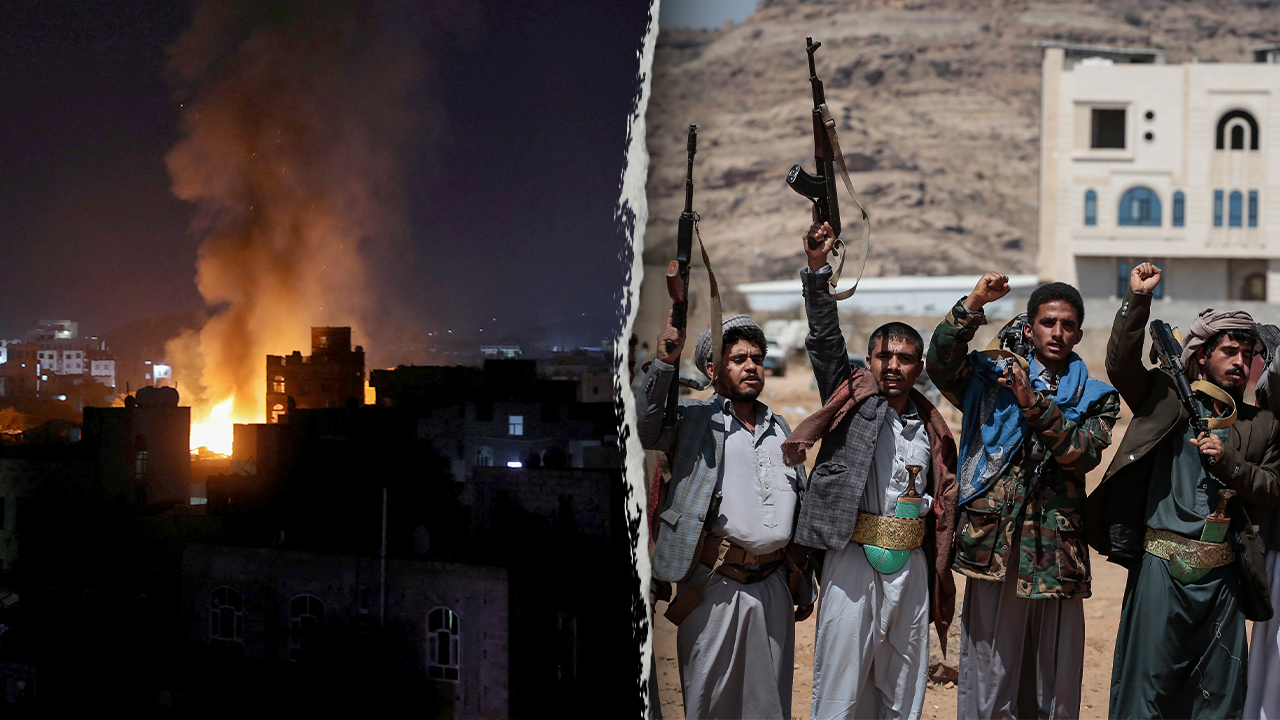
Yemen’s military is vowing to defeat the Iran-backed Houthis and retake one of the world’s most strategic maritime choke points, warning that Tehran is directly involved in the planning and execution of a war with implications far beyond Yemen’s borders.
In an on-the-record briefing Tuesday attended by Fox News Digital, Col. Majed Abdullah Al-Nuzaily, the official spokesperson for the Yemeni Armed Forces, acknowledged recent military setbacks but insisted that government forces were prepared to counter the Houthi offensive.
«This is not a conventional battle against an isolated local armed group,» Al-Nuzaily said. «What we have seen on the battlefield proves that we are not facing the Houthis alone. This is an Iranian battle: Iranian in its weapons, in its planning and command, and in its direction and timing.»
RUBIO ACCUSES IRAN OF FLYING IRGC PERSONNEL INTO YEMEN AS HOUTHI THREAT ESCALATES
Members of the Saudi-backed Yemeni government forces react during what they say to be clashes with Yemen’s Iran-aligned Houthis in a location given as near as Al-Hazm, Yemen, in this screen grab obtained from a handout video released September 9, 2026. (Media Centre Of The Yemeni Armed Forces/Handout via Reuters)
The colonel said external supply networks had provided the Houthis with ballistic and cruise missiles, sophisticated drones and advanced electronic warfare capabilities, enabling the group to threaten neighboring countries and international shipping. «Iran is the Houthis’ patron, their godfather,» he said.
Al-Nuzaily said Yemen’s Interior Ministry had identified 21 foreign experts working with the Houthis, including 14 from Iran’s Islamic Revolutionary Guard Corps (IRGC) and seven from Hezbollah, allegedly assisting with missile and drone operations, naval attacks and the selection of commercial ships to target. «And we have the evidence to prove it,» he said.
The briefing comes as Yemeni government forces face mounting pressure from the Houthis, who, according to Al-Nuzaily, now control the coastline along the Bab el-Mandeb Strait and Mayyun Island, which sits in the middle of the strategic waterway connecting the Red Sea to the Gulf of Aden.
HOUTHIS ENTER US ‘KILL BOX’ AFTER SEIZING RED SEA ‘CORK,’ FORMER PENTAGON OFFICIAL WARNS

Satellite imagery shows Bab el-Mandeb Strait, a key shipping waterway and the gateway to the Red Sea, as Iran threatens using Yemen’s Houthi allies to shut the Bab el-Mandeb gateway to the Red Sea, in this handout picture dated July 12, 2026. (NASA Worldview/Handout via Reuters)
«Bab el-Mandeb remains a priority. We retook it once in a matter of days. We will retake it again, and next time we will hold the mountains as well as the shore,» he said.
Al-Nuzaily warned that Tehran views the waterway as a source of leverage against Washington.
«Control of Bab el-Mandeb is at the heart of Iran’s strategy. Together with the Strait of Hormuz, it gives Tehran another card to play in its confrontation with the United States, and a way to improve its terms at the negotiating table.»
But Yemeni officials warned that the Houthis are increasingly developing their own transnational terrorist network, including cooperation with Somalia-based al-Shabab, meaning a potential agreement between Washington and Tehran would not necessarily eliminate the threat.
NEW RISK FOR US CONSUMERS AS IRAN-BACKED ATTACKS THREATEN A SECOND MAJOR OIL CHOKEPOINT
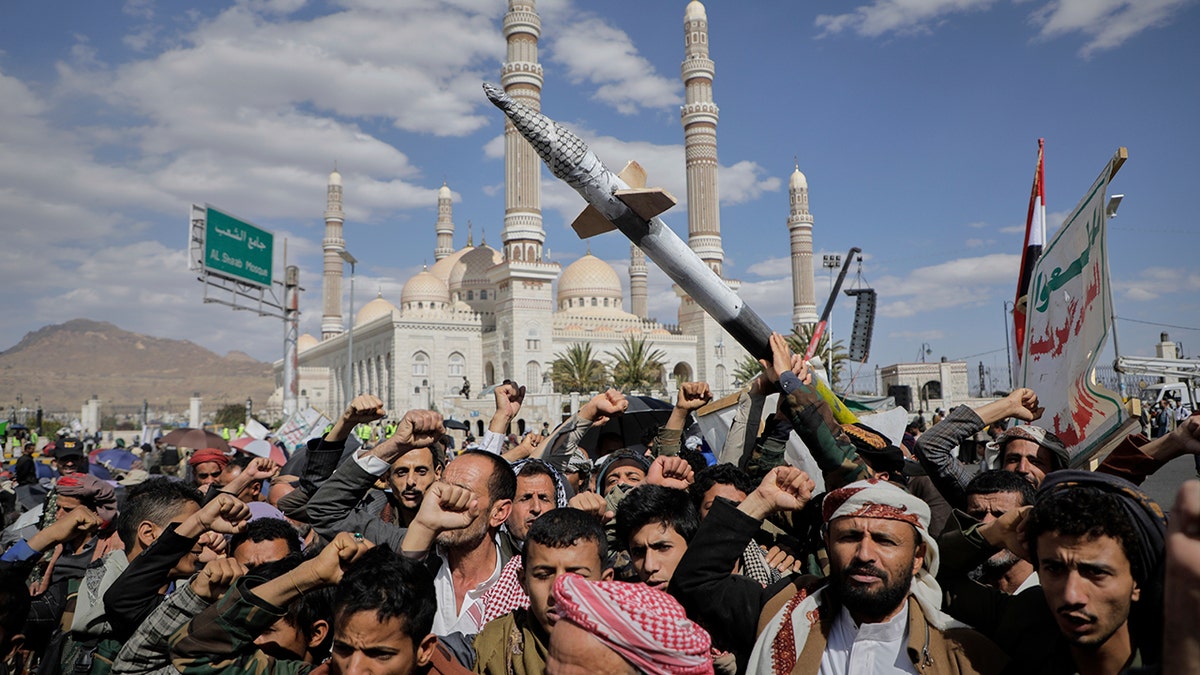
Houthi supporters chant slogans during an anti-U.S. and anti-Israel rally in Sanaa, Yemen, Monday, March 17, 2025. (AP Photo/Osamah Abdulrahman)
«When ISIS paraded a single missile, the world trembled – and took action. Today, the Houthis have thousands of ballistic and cruise missiles,» Al-Nuzaily said.
Ambassador Marwan Ali Al Noman, political adviser to Yemen’s minister of foreign affairs, expressed gratitude for the Trump administration’s support and the U.S. designation of the Houthis as a terrorist organization, while calling for greater international assistance.
«We are not asking anyone to fight this war for us,» Al Noman said. «We are asking for partners.»
SAUDI ARABIA TELLS TRUMP NOW IS THE TIME FOR MILITARY ACTION AS IRAN-BACKED HOUTHIS ADVANCE

Houthi supporters demonstrate in solidarity with Iran, amid a two-week ceasefire between the U.S. and Iran, in Sanaa, Yemen, April 10, 2026. (Khaled Abdullah/Reuters)
He said Yemen was seeking military equipment, training, coast guard assistance and expanded sanctions against networks supplying the Houthis with weapons and financing.
Yemen launched Operation Dawn of Yemen on Oct. 4 with the stated objectives of restoring state institutions, retaking the capital, Sanaa, and ending Houthi rule.
Government forces have since faced setbacks, including a withdrawal from the Bab el-Mandeb earlier this month. Al-Nuzaily acknowledged that Houthi forces were approximately 37 miles from Aden, the seat of Yemen’s government, but insisted the city was secure and that military forces now operate under a unified command.
«Some say this war cannot be won,» Al-Nuzaily said. «I say to them: you do not know the Yemeni people.»
«For 12 years, they have been told to accept the Houthis. For 12 years, they have refused. They have buried their sons and kept fighting. They have lost their homes and kept fighting. They will not kneel to men who rule by fear, who send children to die and who answer to Tehran rather than to Yemen.»
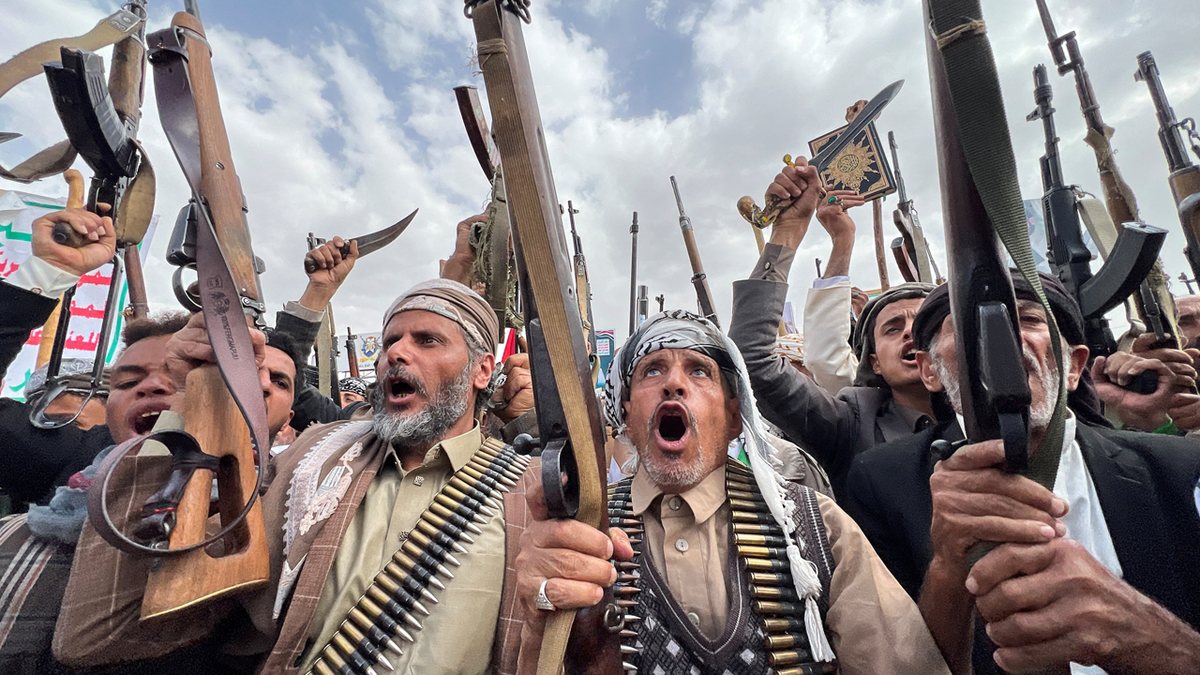
Protesters hold weapons during a demonstration of predominantly Houthi supporters to show solidarity with Palestinians in the Gaza Strip and to condemn U.S. strikes in Yemen, in Sanaa, Yemen, May 30, 2025. (REUTERS/Adel Al Khader)
«Dawn has come to Yemen. It will not be turned back.»
war with iran, middle east, terrorism, wars, national security











Congress is nearing the deadline to avert a government shutdown, and Senate Republicans are taking a leap of faith as the clock ticks: trusting Senate Democrats to dodge a holiday disaster.
When the upper chamber returns on Nov. 30, there will be just shy of two weeks for both sides to reach an agreement to thwart another partisan closure. At the center of the issue is the Iran war: Democrats intend to use the government’s purse strings to bring the eight-month conflict to an end.
Republicans, meanwhile, want to put together an emergency supplemental funding package with hundreds of billions of dollars dedicated to the military, munitions and war effort. They have, for now, pressed pause on ramming those tax dollars through the party-line budget reconciliation process, and instead are opening the door to work with Democrats.
DEMOCRATS COULD ENTER CONGRESSIONAL MAJORITY IN A GOVERNMENT SHUTDOWN
There’s history here: Senate Democrats have twice now ushered in a government shutdown. And though Republicans agreed behind closed doors to move forward with their counterparts, they know it’s a leap in the dark.
«Each side is a gamble,» Sen. Tim Sheehy, R-Mont., told Digital.
«I mean, obviously, if it’s party-line, when you look at the House side, you know, we got members not showing up,» he continued. «So, either way, it’s a gamble. It’s a toss-up whether we try to do [appropriations] or reconciliation.»
There is a middle ground beginning to form, however.
Senate Democrats are aligning behind a plan that would fund several of the GOP’s and administration’s defense priorities, particularly refilling dwindling munitions stocks that have taken a hit from the war.
Sen. Tim Kaine, D-Va., who has been working with a small group of Senate Democrats to produce a plan, said that while they want funding prohibitions for the war, there are some exceptions, like «defense of U.S. troops if the president seeks an authorization, evacuation of U.S. personnel.»
SENATE REPUBLICANS PLAN 54-DAY BLITZ TO PUSH TRUMP’S AGENDA BEFORE DEMOCRATS SEIZE POWER
Those exceptions would likely ride on a short-term continuing resolution (CR) that would keep the government open into early next year.
He acknowledged that it was a give-and-take with Republicans, given that they do want up to $350 billion in emergency supplemental funding for the war and Pentagon, and that some limited agreements on guardrails for Iran war funding could be used as a bargaining chip for broader funding through the emergency package.
«I think there’s a pretty wide recognition on both sides of the aisle that some of the munitions replacement money is needed pretty soon,» Kaine said. «It’s not like it produces weaponry soon, but you kind of have to start it soon.»
MORE THAN HALF OF SOME US WEAPONS STOCKPILES USED IN IRAN WAR, RAISING CONCERNS ABOUT CHINA THREAT
Others in the caucus, like Sen. Bernie Sanders, I-Vt., are firm in their position that the war must end.
«This is an illegal, unconstitutional and horrific war,» Sanders told Digital. «I want that — the American people want to see it ended as soon as possible.»
And Republicans are all too familiar with the recent history of record-shattering shutdown after record-shattering shutdown.
Sen. Jim Banks, R-Ind., told Digital that, boiled down, the issue was about «supporting our troops and investing in our military.»
«I would think the Democrats would want to support that,» Banks said. «I find it baffling that they’re not willing to. So I hope they’ll come to the table in the interest of keeping America safe and supporting our military.»
Turning to the normal government funding process, or at least using a CR, instead of reconciliation could pay off for Republicans down the line, too, when Democrats take control of the Senate next year.
Sen. Thom Tillis, R-N.C., balked at Democrats’ recent history of shutdowns and told Digital that «if you always assume the worst-case scenario, the worst-case scenario is always gonna happen.»
He argued that Senate Appropriations Committee Chair Susan Collins, R-Maine, and appropriators should be given a chance «to say, look, we know we have areas of controversy, but some of this … spending is very, very important.»
«At least try that, because then you’re laying the groundwork for maybe some bipartisan regular order appropriations next year if you go down this path,» Tillis said.
Senate Majority Leader John Thune, R-S.D., has been keyed into the ongoing negotiations, and said that there was «some interest, as you know, probably on our side» in striking a deal with the Democrats.
When asked if it was a proposal President Donald Trump could support, Thune said, «I hope so.»
politics, government shutdown, spending, senate, democrats senate
INTERNACIONAL
Menos hijos en Occidente, más jóvenes en África: cómo gobernar el desequilibrio demográfico
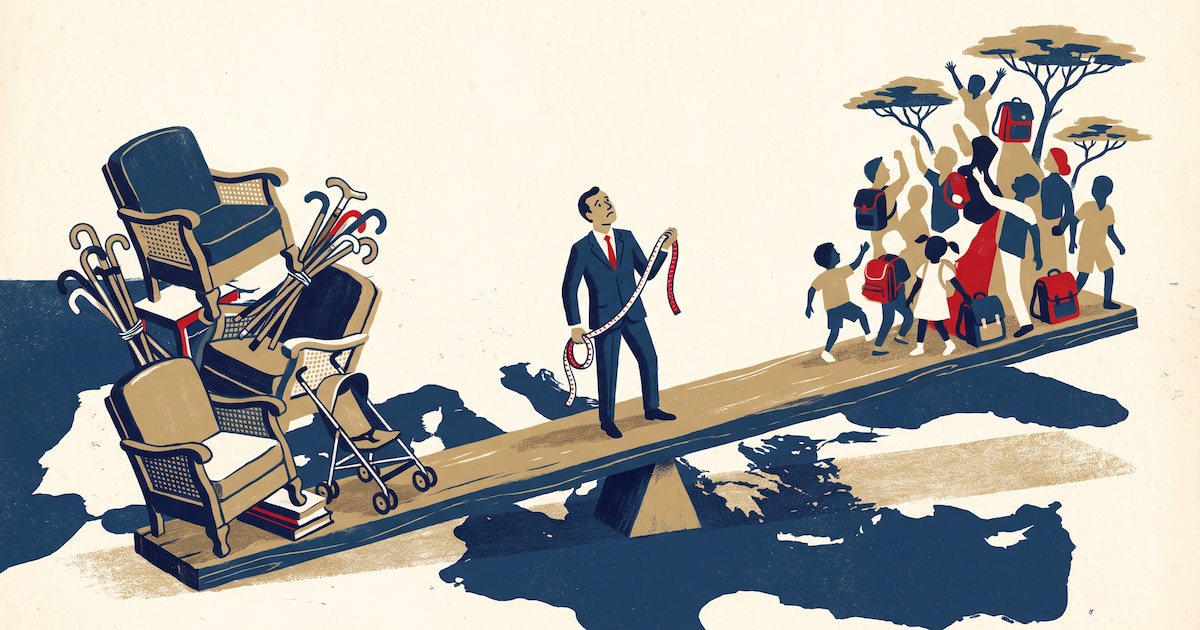
Una veterinaria nos contó que había querido estudiar pediatría, pero, ante la perspectiva de una sociedad con menos niños, terminó eligiendo el cuidado de animales. Creía que encontraría mejores oportunidades atendiendo mascotas que asistiendo a las nuevas generaciones. Había tomado una decisión profesional a partir del futuro que imaginaba para nuestra sociedad.
Las estadísticas ayudan a entenderla. En 2024 se registraron en la Argentina 413.135 nacimientos, frente a los 770.040 de 2015. Una caída del 46% en nueve años. Durante ese período, la tasa de natalidad descendió de 17,9 a 8,9 nacimientos por cada mil habitantes. Una transformación de esa velocidad debería obligarnos a discutir cómo sostendremos nuestras escuelas, nuestro sistema previsional y la ocupación de un territorio tan extenso.
Una caída que se repite de Europa a China
El fenómeno atraviesa buena parte del mundo. En 2024, la fecundidad alcanzó los 1,34 hijos por mujer en la Unión Europea y aproximadamente 1,60 en Estados Unidos, por debajo de los 2,1 que suelen tomarse como referencia para el reemplazo generacional. Más de la mitad de los países y territorios ya se encuentran por debajo de ese umbral. China registró en 2025 unos 7,92 millones de nacimientos y 11,31 millones de muertes. Incluso una potencia con semejante capacidad de planificación encuentra hoy dificultades para modificar decisiones familiares atravesadas por condiciones materiales y expectativas de futuro.
África, por el contrario, presenta otro panorama. Según la serie del Banco Mundial para 2024, la República Centroafricana superaba los 46 nacimientos por cada mil habitantes y Níger los 41, frente a los 4,7 de Corea del Sur o los 6,5 de España. Estas tasas también reflejan estructuras de edades distintas, con poblaciones africanas mucho más jóvenes. La ONU proyecta que países como Angola, Níger y la República Democrática del Congo podrían, al menos, duplicar sus poblaciones entre 2024 y 2054.
Ese crecimiento puede ampliar los mercados y la capacidad productiva africana si viene acompañado de educación, infraestructura y empleo. Cuando esos recursos faltan, cada generación encuentra mayores dificultades para desarrollar su proyecto de vida. La caída de la mortalidad infantil, la educación de las mujeres y el acceso voluntario a la planificación forman parte de la transición hacia familias más pequeñas. También allí la cuestión demográfica depende de oportunidades concretas.
Entre una Europa que envejece y una África cuya población aumenta se configura una relación de largo plazo. La proximidad geográfica, las diferencias de ingresos, los conflictos y la demanda de trabajadores hacen previsible que continúen las migraciones. Su magnitud dependerá de las condiciones económicas y políticas a ambos lados del Mediterráneo. El crecimiento africano, por sí solo, resulta insuficiente para calcular cuántas personas emigrarán y hacia dónde.
En Europa, la inmigración ya participa de la continuidad demográfica. Eurostat señala que desde 2012 el saldo migratorio positivo ha compensado el exceso de muertes sobre nacimientos en el conjunto de la Unión. A comienzos de 2025, el 10,4% de sus habitantes había nacido fuera de la UE. Ese porcentaje reúne procedencias muy diversas y comprende tanto a personas naturalizadas como a extranjeros.
Migración e identidad cultural: qué dicen los datos
¿Podría este proceso modificar profundamente la composición de las sociedades occidentales y sus referencias culturales? Una inmigración sostenida, combinada con generaciones locales más pequeñas, puede aumentar considerablemente el peso de las poblaciones de origen migrante. Esa transformación merece ser estudiada y debatida. Afirmar que desembocará en una sustitución general de la población europea exige, sin embargo, proyecciones que contemplen entradas, salidas, edades, descendencia y uniones entre personas de distintos orígenes. Las tasas actuales de natalidad ofrecen apenas una parte de esa información.
Además, los comportamientos reproductivos cambian después de migrar. La OCDE encontró que, en dos tercios de los países analizados, la fecundidad de las inmigrantes también estaba por debajo del reemplazo. Los estudios sobre sus descendientes muestran una aproximación frecuente, aunque desigual, a los patrones del país donde viven. Prolongar indefinidamente las diferencias de fecundidad entre África y Europa produciría una imagen engañosa del futuro.
La transformación cultural, entretanto, puede ser importante mucho antes de que un grupo alcance una mayoría estadística. Importan la concentración territorial, la escuela, el empleo, los vínculos cotidianos y la capacidad de las instituciones para construir pertenencia. Una ciudad puede cambiar profundamente mientras el promedio nacional apenas se mueve.
Aquí aparece la pregunta sobre qué espera transmitir Occidente a quienes nacen y a quienes llegan. La libertad de conciencia, la igualdad entre mujeres y varones, el pluralismo y la primacía de la ley requieren enseñanza, práctica y convicción pública. Una sociedad que relativiza sus propios principios tendrá dificultades para convocar a otros a compartirlos.
La experiencia argentina aporta una perspectiva particular. Nuestra identidad se formó mediante migraciones de enorme magnitud, a través de generaciones que construyeron una pertenencia común. La escuela pública, el idioma, el trabajo y la ciudadanía contribuyeron a ese proceso, atravesado también por conflictos y exclusiones. Hoy corresponde preguntarnos qué instituciones están cumpliendo esa función.
Qué hacer: migración, cooperación y apoyo a las familias
Por eso, una política migratoria necesita vincular los ingresos con la capacidad efectiva de ofrecer vivienda, educación y trabajo formal. También requiere procedimientos de asilo ágiles, vías legales de migración laboral, reconocimiento de títulos y aprendizaje del idioma. La igualdad ante la ley debe alcanzar a todos, junto con una defensa efectiva frente a la discriminación. La integración exige derechos, responsabilidades y recursos públicos.
Por eso, la cooperación europea con África debería orientarse a inversiones productivas, formación y empleo, mediante acuerdos que permitan desarrollar capacidades en los países de origen. Las necesidades laborales de la Unión tampoco justifican desatender el efecto de captar médicos, enfermeros o docentes que esos países necesitan para su propio desarrollo.
En paralelo, Occidente debe revisar las condiciones que ofrece a quienes desean tener hijos. La evidencia de la OCDE vincula la baja fecundidad con los costos de vivienda, la inestabilidad laboral y las dificultades para conciliar trabajo y crianza. Las respuestas requieren continuidad, porque una familia organiza su vida con horizontes mucho más largos que una ayuda transitoria.
En la Argentina, preservar la reducción de los embarazos no intencionales entre adolescentes es compatible con facilitar la maternidad y la paternidad deseadas. Vivienda accesible, cuidados infantiles, licencias compartidas y condiciones laborales compatibles con la crianza deberían integrar una política estable. Las familias asumen esfuerzos cuyos beneficios recibe toda la sociedad, y esa responsabilidad colectiva merece una expresión presupuestaria.
Habrá que actuar, además, sobre el presente. Una recuperación de los nacimientos tardaría cerca de dos décadas en ampliar la población trabajadora. La formación, la movilidad laboral regional y el reconocimiento de aportes previsionales pueden contribuir mientras tanto. La inteligencia artificial y la automatización ayudarán a sostener la productividad, aunque su desarrollo seguirá exigiendo personas capaces de educar, cuidar y gobernar.
La historia ofrece dos advertencias. Roma recuerda que una civilización puede legar instituciones y conocimientos mientras cambia profundamente su identidad. El fascismo italiano, con su utilización política de la natalidad, muestra los riesgos de subordinar la vida familiar a los objetivos del Estado. Una democracia debe proteger la libertad de tener hijos y crear condiciones para que esa libertad pueda ejercerse.
La continuidad de Occidente dependerá de su capacidad para formar nuevas generaciones e integrar a quienes elijan vivir en sus sociedades. Ambas tareas requieren confianza, instituciones y una idea compartida de futuro. Resulta difícil exigir a los inmigrantes que hagan propios nuestros valores cuando nosotros vacilamos al transmitirlos, del mismo modo que resulta difícil pedir a los jóvenes que formen una familia mientras la organización económica penaliza la crianza.
Aquella veterinaria había adaptado su proyecto al futuro que consideraba probable. Los Estados todavía pueden influir sobre ese futuro. Para hacerlo, tendrán que asumir que la natalidad, las migraciones y la integración cultural forman parte de una misma responsabilidad política, y decidir qué sociedad quieren dejar a quienes habrán de continuarla.
Patricio Degiorgis es Director Instituto de Integración Regional y Gobernanza Global – UCES
demografía,Europa,África,mar Mediterráneo,envejecimiento poblacional
INTERNACIONAL
Christian filmmaker’s discovery of Jewish roots sparks mission to uncover centuries-old secret
NEWYou can now listen to Fox News articles!
A leading evangelical Christian leader has embarked on a journey to trace the descendants of Jews forcibly converted to Catholicism in Spain and Portugal during the Inquisition around 500 years ago, hoping to help those of Hispanic and Latino descent, known as Anussim or crypto-Jews, rediscover their Jewish roots.
Through her film, «The Lost Jews of the Inquisition,» Laurie Cardoza-Moore told Fox News Digital that she hopes to help people like herself uncover a history they may not even know their families carry.
She says the Israeli government believes there could be millions of «Anussim,» or hidden Jews. «Some know their family history, while others don’t,» she said.
CHRISTIAN LEADERS HOLD EMERGENCY SUMMIT IN JERUSALEM TO CONFRONT GLOBAL RISE IN ANTISEMITISM
Orthodox Jews pray on Mount Gerizim overlooking Joseph’s Tomb, one of their holiest sites, in the West Bank city of Nablus on May 28, 2009. (Menahem Kahana/AFP via Getty Images)
Emmy Award-winning documentary filmmaker and host of the television show «Focus on Israel,» Cardoza-Moore also serves as president of Proclaiming Justice to the Nations (PJTN). She previously served on the Tennessee Textbook and Instructional Materials Quality Commission.
For Cardoza-Moore, the journey began in 2002, in the aftermath of 9/11, when she decided to introduce a resolution in the Tennessee state legislature expressing support for Israel in its war on terror.
The following year, she was invited by the Jewish Federation of Nashville on a mission to Israel. During a visit to the Diaspora Museum at Tel Aviv University, now known as the ANU Museum of the Jewish People, Cardoza-Moore discovered that the surnames on both her mother’s and father’s sides of the family were of Jewish origin.
One Sabbath, the group was hosted by a family from Nashville that had immigrated to Israel. As the family recited the blessing over the challah, in keeping with Jewish tradition, Cardoza-Moore recalled her grandfather making the same bread. She remembered eating it on Friday nights as a child, when she called it «sweet bread.»
Cardoza-Moore said memories suddenly began flooding back, including a conversation she had with her grandmother when she was four or five years old. She recalled admiring an anniversary ring her grandfather had bought her grandmother.
EVANGELICAL LEADER SLAMS PALESTINIAN OFFICIAL’S BIBLE CLAIMS AS ‘CONTEMPTIBLE’

Large groups of Jews were led to and from an Auto-da-fe during the Spanish Inquisition. Convicted Jews are burned at the stake, far right. (ullstein bild/ullstein bild via Getty Images)
«I remember saying, ‘Nana, that ring looks fit for a princess,’ and she said, ‘Well, you know we have a Jewish princess in our family,’» she told Fox News Digital.
After gathering evidence during the 2003 trip, Cardoza-Moore asked her father to contact her great-aunt to confirm the family’s Jewish roots. She learned that her ancestors were Portuguese Jews who had been forced to convert to Christianity hundreds of years earlier.
«It was a tradition to conceal the identity of our family’s ancestors, and it was the responsibility of the patriarch or matriarch, whichever lived the longest, to reveal it to the next generation on their deathbed,» she told Fox News Digital.
«As a student of the Bible, I knew that one day Israel would be restored, that Hashem would bring all 12 tribes back to the land to inhabit the land of their forefathers. I knew this prophetic history would unfold, but discovering that my family was part of this group of people transformed my life,» she said.
Through her documentary, Cardoza-Moore said she hopes to spread this message beyond Spain and Portugal to the farthest reaches of the world where the Anussim fled, including Brazil, Argentina and Mexico.
She continues to travel across Southern Europe and South America to film interviews for the documentary, which is scheduled to premiere in Israel by fall 2027.
Cardoza-Moore said the return of the Anussim is particularly significant amid a sharp rise in antisemitism. Yet, 500 years after the Inquisition, some still fear revealing their Jewish ancestry, she said.

Children stand near the «El Transito» synagogue and Sephardic Museum in Toledo on Feb. 27, 2014. Founded in 1357 by Samuel Halevi Abulafia, advisor and treasurer to King Pedro of Castile (also known as Pedro the Cruel), the synagogue was converted into a church following the expulsion of the Jews from Spain in 1492. (Gerard Julien/AFP via Getty Images)
«This is a disturbing trend. There are groups within Israel working to bridge the gap and help the Anussim return to the land of Israel. That is the purpose of this documentary: to reach those who don’t know their ancestry, as well as those who know but keep it hidden, and help them understand that it is safe to come back and that Israel is waiting for them,» she said.
Cardoza-Moore recalled speaking at a convention with a woman who approached her with her family and young children. After introducing herself and learning the woman’s last name, Cardoza-Moore asked if she was Jewish.
SIGN UP FOR ANTISEMITISM EXPOSED NEWSLETTER
«She said they were Catholic, and I told her that her last name was Sephardic. Her face lit up. She was excited by the possibility that she might be descended from the Anussim and said she planned to look into her family history,» Cardoza-Moore said.
Cardoza-Moore said certain surnames, including Nunez and Lopez, can offer clues to Sephardic Jewish ancestry. She explained that in Spain, the «Z» in some surnames was originally an «S,» but that Jews who fled to Portugal changed it to a «Z» as a sign of their Zionist identity, allowing them to recognize one another.
«There are so many Hispanic and Latino surnames. In fact, one of the people I’m investigating is a country’s leader. I believe he may also be a descendant of the Anussim,» she said.
«This is a very exciting journey, one that I get to share with others as they begin to realize that this is their family’s story, too. They start recalling things like, ‘I remember when family members would die, we would cover mirrors during the mourning period,’» she said.
Another reason Cardoza-Moore decided to produce the documentary was to educate Christians about the Inquisition and the Catholic Church’s treatment of Jews during that period.
DOMINICAN REPUBLIC JOINS GLOBAL FIGHT AGAINST ANTISEMITISM WITH LANDMARK MOVE

Laurie Cardoza Moore interviews Oded Revivi, CEO of the ANU – Museum of the Jewish People in Tel Aviv, Nov. 16, 2026. (PJTN)
«There are many Christians, particularly evangelical Christians, who would be equally appalled by what was done to the Jewish people in the name of their God. As they learn what was done to the Jews in the name of Jesus, they will wake up and realize that this is unacceptable,» she said.
Cardoza-Moore said she sees a growing movement among Christians turning away from Israel and the Jewish people, which she attributes to a lack of biblical education.
«We at PJTN have to change that. That is why we use the Bible and the Scriptures and refer to the prophets to remind Christians of their teachings, because Christians believe the prophets spoke the truth,» she said.
As an evangelical leader, Cardoza-Moore said she had considered keeping her Jewish roots private but ultimately decided that fulfilling her calling was more important.
«If my ancestors were persecuted and forced into silence because of who they were, that is unacceptable. I will go to my grave fighting insidious hatred and holding the church and Christians accountable, because we are seeing antisemitism rise again and hearing the same blood libels from Christians that were spread in the past,» she told Fox News Digital.
«We can’t be silent. We have to speak up and alert the church, because judgment will come. Genesis 12:3 says, ‘I will bless those who bless you, and whoever curses you, I will curse; and all peoples on earth will be blessed through you,’» she added.
anti semitism, judaism, faith, persecutions, religion

Ágata Lescano habló por primera vez de su relación con Marcelo Tinelli y resolvió el misterio del hilo rojo

Yemeni military official brands Iran Houthis’ ‘godfather,’ says Tehran is directing war

Bullrich, sobre la posible reelección de Milei: “No creo que baste con decir que todo mejorará en 2028″

Senate GOP takes risky bet on Dems as holiday shutdown deadline looms: ‘It’s a gamble’

El pronóstico anticipa temperaturas superiores a los 33 grados este fin de semana en el AMBA

Caputo da por perdido el partido del riesgo país y concentra todas sus fuerzas en el dólar

Financial Times duda de la economía argentina: riesgo país, financiamiento e imagen Milei

El economista Luis Secco cuestionó el programa económico de Milei: “Estamos estancados desde fines del primer trimestre de 2025″

Agustín “Rada” Aristarán se despide de Chanta: “Con esta obra dejé de ser un impostor”

NYC college put on notice after Jewish campus group shunned by student government: ‘rude awakening’

 ECONOMIA3 días ago
Financial Times duda de la economía argentina: riesgo país, financiamiento e imagen Milei
- ECONOMIA16 horas ago
El economista Luis Secco cuestionó el programa económico de Milei: “Estamos estancados desde fines del primer trimestre de 2025″
- DEPORTE3 días ago
“Tenemos una buena relación, pero me pongo nervioso antes de encontrarme con él”: Jayson Tatum habló sobre su vínculo con Michael Jordan