INTERNACIONAL
La BBC anunció un plan de hasta 2.000 despidos para recortar su presupuesto

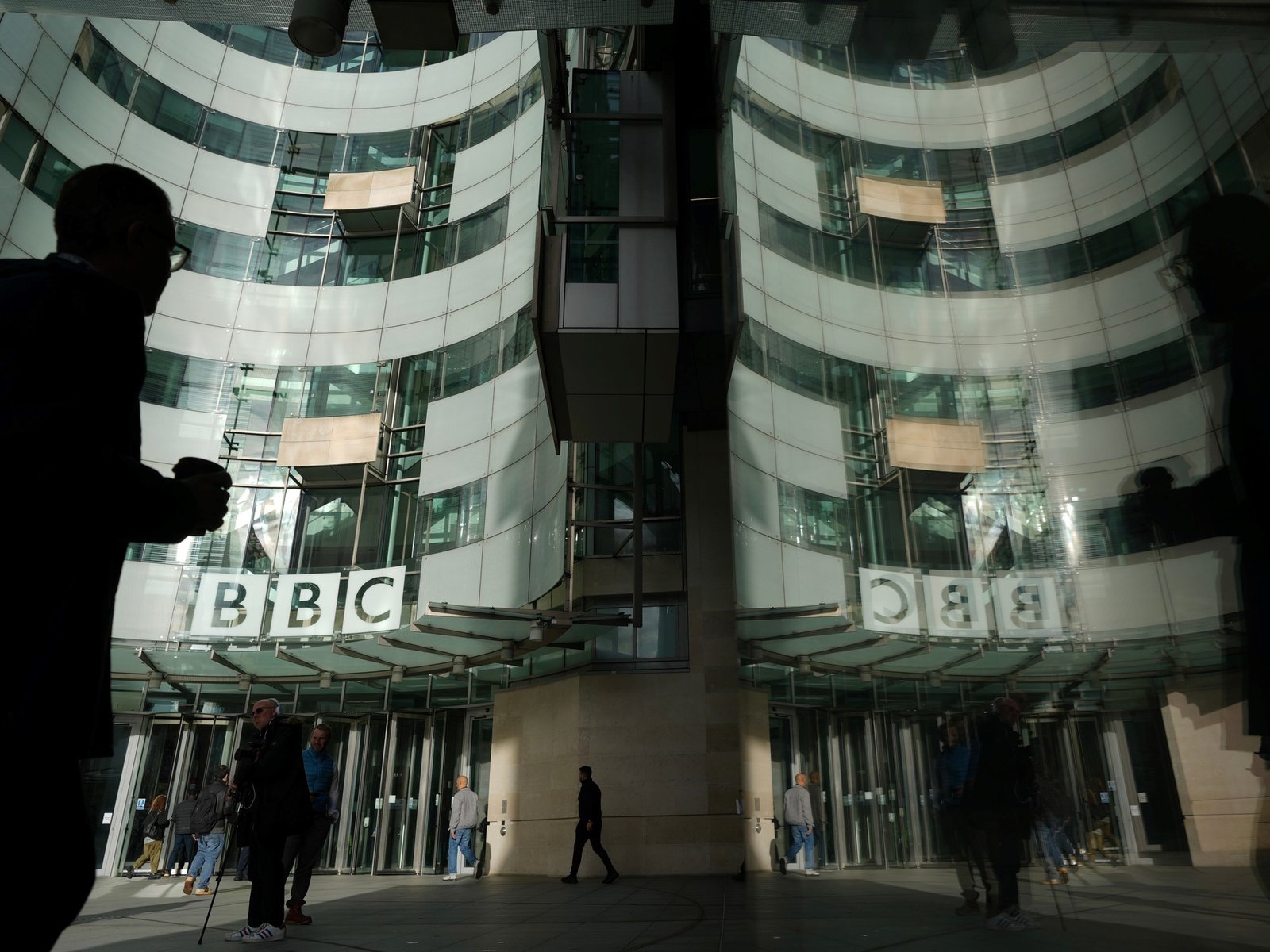
La BBC anunció este miércoles un ajuste en su presupuesto anual, con la previsión de hasta 2 mil despidos. El plan se ejecutará durante los próximos dos años, indicó la emisora pública del Reino Unido.
Los despidos, anunciados durante una llamada con el personal, son los mayores en más de una década en la BBC. Tienen como objetivo recortar en un 10% el presupuesto anual, que asciende a 677 millones de dólares (500 millones de libras).
Davies explicó que las reducciones obedecen a la inflación, a las presiones sobre el canon de licencia y los ingresos comerciales, y a una turbulenta economía global.
La BBC indicó a principios de este año que enfrentaba “presiones financieras sustanciales” y que quería recortar cerca de una décima parte de su presupuesto para 2029. La mayor parte de los recortes se realizará en el próximo año fiscal, que comienza el 1 de abril de 2027.
“Sé que esto genera una incertidumbre real, pero queríamos ser transparentes sobre el desafío”, dijo el director general interino, Rhodri Talfan Davies, en un correo electrónico enviado al personal.
En su página web, la BBC estimó que los despidos serán «entre 1.800 y 2.000 -o al menos uno cada diez puestos de trabajo-«. Calculan que el plantel a tiempo completo asciende en al actualidad a 21.500 empleados.
«Para el público, la tarea que tenemos por delante durante los próximos tres o cuatro meses es encontrar la manera de realizar esos cambios sin perjudicar los servicios que sabemos que son fundamentales para la BBC en radio, televisión e internet», dijo Davies en una entrevista con BBC Radio 4.
Philippa Childs, presidenta del sindicato de radiodifusión, calificó los recortes como «devastadores para la plantilla y para la BBC en su conjunto». Aseguró que los empleados están bajo «una presión considerable» por anteriores olas de despidos y pidió un cambio en los métodos de financiamiento para que la cadena no enfrente «una agonía gradual».
Por su parte, la secretaria de Cultura, Medios y Deporte del Reino Unido, Lisa Nandy, sostuvo: «La BBC, como toda institución, toda parte del gobierno, está teniendo que tomar decisiones difíciles. Eso es algo que la dirección de la BBC toma muy en serio, incluyendo explorar opciones comerciales más otras formas de aumentar ingresos».
Un escándalo por Trump, un ex Google y una tradición de décadas, el trasfondo de los recortes en la BBC
Los recortes se anunciaron mientras se prevé la llegada del exejecutivo de Google, Matt Brittin, como director general el próximo mes.
Brittin ocupará la vacante que quedó después de que Tim Davie y la jefa de noticias, Deborah Turness, renunciaran por una edición engañosa de un documental sobre el discurso del presidente de Estados Unidos, Donald Trump, el 6 de enero de 2021, antes de que sus seguidores tomaran por asalto el Capitolio en Washington.
Trump demandó a la BBC por 10.000 millones de dólares por difamación.
La BBC es una institución cultural muy querida y a menudo criticada, financiada por un canon anual de licencia, que recientemente subió a 180 libras (244 dólares), pagado por todos los hogares del Reino Unido que ven televisión en directo o cualquier contenido de la BBC.
Los opositores al canon, incluidos radiodifusores comerciales rivales, se hicieron oír con más fuerza en una era de transmisión digital en streaming, cuando muchas personas ya no tienen televisores o no siguen los horarios tradicionales de la televisión.
El gobierno laborista de centroizquierda se comprometió a garantizar que la BBC tenga una financiación “sostenible y justa”, pero no descartó reemplazar el canon de licencia por otro modelo de financiación.
La BBC fue fundada en 1922 como un servicio de radio para “informar, educar y entretener”. Actualmente opera 15 canales de televisión nacionales y regionales en Reino Unido, varios canales internacionales, 10 emisoras de radio nacionales, decenas de emisoras de radio locales, el servicio de radio World Service con alcance global y una amplia producción digital, incluido el servicio de streaming iPlayer.


El director de la organización, Wilmer Vásquez, advirtió que este fenómeno continúa siendo una de las principales expresiones de la crisis social que enfrenta Honduras, debido a la persistente falta de oportunidades, la desigualdad estructural y la vulneración de derechos fundamentales que afectan a la niñez y adolescencia en distintas regiones del territorio nacional.
Coiproden señaló que, pese al endurecimiento de las políticas migratorias en Estados Unidos y al incremento de controles fronterizos en los últimos años, el flujo migratorio de familias hondureñas no ha disminuido de forma significativa.
De acuerdo con la organización, muchas familias continúan tomando la decisión de migrar debido a condiciones económicas adversas, la falta de empleo digno y la limitada cobertura de servicios básicos en comunidades rurales y urbanas del país.
En este contexto, la niñez se ha convertido en uno de los grupos más vulnerables dentro de los flujos migratorios, ya sea viajando sola o acompañada de sus familiares en busca de mejores condiciones de vida fuera de Honduras.
El representante de Coiproden calificó como alarmantes las cifras acumuladas desde 2014, al señalar que el impacto de la migración infantil no solo se mide en los menores deportados, sino también en aquellos que logran salir del país o que permanecen en tránsito migratorio.

Según explicó, si estos datos se registraran en países con mayores niveles de desarrollo institucional, serían considerados una emergencia nacional debido a las implicaciones sociales, económicas y humanitarias que representan.
“Si vemos estas estadísticas en un país desarrollado, estaríamos en una completa emergencia nacional”, expresó Wilmer Vásquez, al referirse a la magnitud del fenómeno migratorio infantil en Honduras.
Coiproden subrayó que la migración de niñas, niños y adolescentes no es un hecho aislado, sino el resultado de múltiples factores estructurales que afectan a la sociedad hondureña.
Entre ellos destacan la pobreza, la desigualdad social, la falta de acceso a oportunidades educativas y la ausencia de empleos dignos para los adultos responsables de los hogares, lo que obliga a muchas familias a buscar alternativas fuera del país.
La organización insistió en que estos factores se han mantenido a lo largo de los años, sin una respuesta integral suficientemente efectiva por parte del Estado para revertir la tendencia migratoria.
Vásquez reiteró la necesidad de fortalecer el sistema de protección de la niñez mediante una mayor asignación de recursos públicos y el desarrollo de políticas sociales más robustas y sostenidas en el tiempo.

En ese sentido, Coiproden planteó la importancia de reforzar programas de prevención, atención y acompañamiento a las familias en situación de vulnerabilidad, con el fin de reducir los factores que impulsan la migración irregular.
Asimismo, la organización enfatizó que es fundamental garantizar acceso a educación, salud y condiciones de vida dignas en las comunidades, para evitar que la migración sea vista como la única alternativa de desarrollo.
El director de Coiproden afirmó que la solución a esta problemática requiere una estrategia integral que involucre al Estado, la sociedad civil y la cooperación internacional, enfocada en mejorar las condiciones de vida de la población.
Advirtió que mientras persistan la pobreza, la desigualdad y la falta de oportunidades laborales, las niñas, niños y adolescentes continuarán siendo parte de los flujos migratorios que buscan llegar a otros países en busca de un futuro mejor.
Finalmente, la organización reiteró su llamado a priorizar la inversión social y a fortalecer las instituciones encargadas de la protección de la niñez, como una medida urgente para enfrentar una problemática que, según sus datos, se ha mantenido durante más de una década en Honduras.
2020,caravana de migrantes hondureños a estados unidos,crisis migratoria,deportaciones,deportados,exterior,mujer,niño
NEWYou can now listen to Fox News articles!
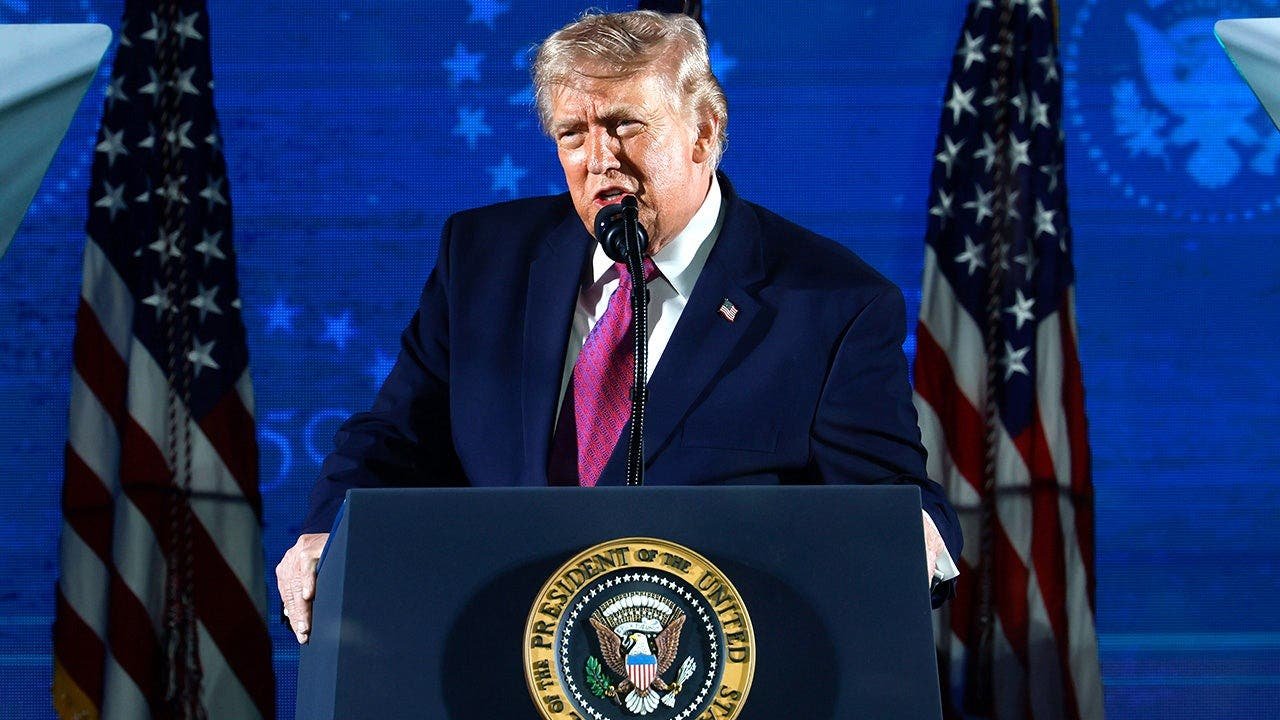
President Donald Trump delivered a 37-minute speech for America’s 250th birthday after a weather delay in the dark of night that was lit up by a Guinness world-record-setting fireworks display stretching from July 4 into July 5 at Washington, D.C.’s National Mall.
While thousands outlasted the rain and dodged nature’s thunderstorm light show, many Americans might have missed the president’s historic remarks.
Here is a recap of some of the highlights.
AMERICA’S NEXT 250 YEARS DEPEND ON PASSING FAITH AND FREEDOM TO OUR CHILDREN
President Donald Trump estimated in his speech that a crowd of 350,000 was cut to 150,000 on the Washington, D.C., National Mall for the record-setting fireworks display over the Washington Monument as part of the Salute to America 250 celebration. (Tom Williams/CQ-Roll Call, Inc)
‘No dream in history is bigger’ than the American experiment
«In this country, we could achieve the wildest and most impossible dreams, and no dream in history is bigger or more incredible than the one that started on July 4th, 1776,» Trump said. «The war for independence was launched by minutemen, farmers, blacksmiths, tradesmen who took up their muskets against the mightiest army on earth, the most powerful army and unbeatable army – until they met us.»
«No one made them do it. They fought because they knew that a free people must have a free country. Over 250 years, the world has seen the great empires, vast kingdoms, mighty nations and terrible tyrants: They came and they went, but after 2 1/2 centuries, this American republic still stands tall and strong,» the president added.
TRUMP HAILS AMERICA AS ‘MOST EXCEPTIONAL NATION EVER TO EXIST’ IN MOUNT RUSHMORE SPEECH
‘America is a nation of winners’
«Americans won the West and built the modern world, because America is a nation of winners, and today our country is winning again, and we’re winning like never before,» Trump said just before the midway point of the speech. «America is back and we want to keep America great.»
«Together, we are also reasserting the truth that American strength and power is not something to be ashamed of. It is something that we are very, very proud of,» Trump continued. «This country has been the greatest force for peace and justice on earth in the last century. We defeated tyrants, demolished evil, and saved freedom again and again and again.»
‘Nothing Americans cannot do’
«There is no challenge Americans can not overcome,» Trump said before his concluding remarks. «There is no place we cannot go. There is no goal we cannot reach. And there is nothing that Americans cannot do.»

The crowd got 37 minutes of President Donald Trump’s historic America 250 speech and 38 minutes of the largest fireworks display in world history, breaking a Guinness Book of World Records mark as planned by Trump. (Pete Kiehart/Bloomberg)
Thanking those staying into the late hours
«If you think that was easy, it wasn’t,» Trump began in an unscripted salute to the patient and devoted crowd. «And I want to thank everybody because they did the right thing. They saw lightning. And I said, ‘there’s no way; if we have to speak in front of one person at 4 in the morning, I’m going to be here.’
«There’s no way we can be deterred. And they estimated they had 375,000 people before everybody had to leave, and they now have 150,000 people. It’s the craziest thing anyone’s ever seen.
«And I want to just thank you. And I feel so badly about some people. They left it; they couldn’t get back. But, you’re very special people, and we have a very special country. Thank you very much.»
’56 patriots put everything at risk’ for ‘victory for the ages’
«They declare that all men are created equal; that they are endowed with sacred unalienable rights by the hand of our creator, and that among these are life, Liberty, and the pursuit of happiness,» Trump said, «and signing their names to the roster of freedom.»
«Those 56 patriots put everything at risk. Stepped onto the stage of destiny and seized a victory for the ages. And that’s what it was,» he said. «And this is an evening for the ages. I believe this is something very special. This is bigger than if we didn’t have the lightning blaring. We had lightning blaring. But this is bigger, little more inconvenient, but it’s bigger, I think, in its own way it’s more beautiful. From the beginning, we were a nation that live by the motto victory or death and live free or die.»
‘We will always be the best’
«God bless the immortal patriots of 1776, and long live the cause of independence,» Trump said. «May it reign forever and ever and ever. We will always be on top. We will never let our country fall. We will always be the best.»
«Our founders not only won our liberty, they secured it with the most righteous political document ever conceived: It’s called the Constitution of the United States,» Trump said. «Very special, and it’s because of their genius that we remain the finest people on the planet.»
Honoring 11 Gold Star families
«We are honored to be joined by 11 Gold Star family members,» Trump said. «The Gold Star family – that is one of the great tributes. It’s one of the great honors, a tough honor. There’s nothing tougher than that. But these are amazing people.»
Next stop, the moon, then a mission to Mars
«We’re going to be going to Mars very soon, and I think that’s something that we do have in my mind,» Trump said, hearkening to the historic John F. Kennedy going to the moon speech excerpt.
«And we’re going to do the moon and we’re going to go from there. We’re going to go to Mars, and we’re going to continue to be way ahead.»
Defeating communism: We ‘cast the hammer and sickle into oblivion’
«All these talks from the communists, they haven’t got a chance – not even a chance,» Trump said; a theme he reiterated multiple times in the speech. «We don’t want communists in our country. Never worked and it never will work.»
Communism will always be «a loser,» Trump added later.
«Our warriors did not fight communism on battlefields across the world only to have that menace rears its ugly head right back here in America. We’re not going to let it happen. We like to stop a threat like that immediately and before it begins,» Trump said. «It’s like a cancer. You got to cut it out. You got to cut it out fast.»
Trump added a warning to potential future communist opposition around the globe.
«The Stars and Stripes cast the hammer and sickle into oblivion before,» Trump said, «and we will do it again if necessary.»
«I don’t think it’s going to be necessary. I think people have learned. They’ve learned what to do and how to handle it, and we’ll get a handle it very well.»
‘Our destiny is written by God’
«We have thrived and flourished because our founders were great, our cause was just, our people are brave, our culture is exceptional, and our destiny is written by God,» Trump said near the end of the speech he apparently cut short after vowing earlier this week to deliver an hours-long address to the world.
«And as we can see here tonight, after 250 years, the spirit of 1776 still lives within us all. It still roars in the hearts of our nation’s capital. It still burns in the heart of every patriot, thunders through every city and town, and is still lights the entire world with the glow of American liberty. And there is nothing like that.»
250 and ‘just getting started’: ‘Best is yet to come’; ‘dawn of the golden age’

Fireworks over the National Mall during the ‘Freedom 250: Salute to America’ Independence Day celebration in Washington, D.C., might have extended to July 5, 2026, but President Donald Trump still made sure they went off for the thousands that waited out the thunderstorm with him Saturday night. (Mehmet Eser/Anadolu)
«At 250 years old, we may be the oldest constitutional republic on earth, but our country is just getting started because the best is yet to come: This is only the dawn of the golden age of America,» Trump said in his conclusion, leading directly into the National Mall fireworks display.
«And on this 250th 4th of July, we declare, just as they did two and a half centuries ago, that for our country and for our children and for the cause of liberty, we are going to take our country to new levels, to levels not reached,» Trump continued. «We’re going to make it bigger, better, stronger, and we’re going to love it even more.»
CLICK HERE TO DOWNLOAD THE FOX NEWS APP
«And I just want to thank you,» he added, finishing with words off the script. «The inconvenience of lightning can do that, but lightning will never stop you. And I want to thank everybody and we love you all. And it’s an honor to be your president. Thank you. God bless you all.»
america 250, donald trump, washington dc, white house, history
INTERNACIONAL
La otra cara de la tragedia en Venezuela: «los cobreros» revuelven los escombros en busca de algo de valor



Entre el cansancio y la felicidad, las primeras horas de Juli Puente con Serena al llegar a su hogar: “No me preparé”

Jurgen Klopp sería el nuevo entrenador de Alemania luego del fracaso en el Mundial 2026

La ruta del petróleo en medio de boom de Vaca Muerta: cómo se calculan las regalías y cuánto cobran las provincias

Más de 129 mil menores han sido deportados a Honduras desde 2014

Cuántos proyectos de ley presentaron los senadores en el primer semestre del año

El Rennes quiere repetir con Eliezer Mayenda la fórmula que lanzó a Dembélé

En medio de su separación, Magui Bravi contó por primera vez su traumático embarazo: «El parto fue de emergencia y…»

¿Se recupera el mercado de los autos?: qué muestran los números de las cinco marcas que más 0 km venden en el país

Construir los cimientos de la Inteligencia Artificial: los desafíos de la infraestructura del futuro

Zelensky repudió el ataque ruso contra Kiev e insistió en que reforzar la defensa aérea es una prioridad absoluta para Ucrania

 ECONOMIA3 días ago
Uno por uno, los gremios que cobrarán aumento de sueldo en julio 2026
- ECONOMIA3 días ago
Plazo fijo: cuánto pagan los principales bancos por depositar $1 millón a 30 días
- INTERNACIONAL3 días ago
Crean la célula sintética más completa de la historia: 5 claves para entender qué implica