
INTERNACIONAL
Habla un capitán iraquí que surca la ruta del Golfo de Omán al estrecho de Ormuz en plena guerra: «Navegamos sobre una bola de fuego”

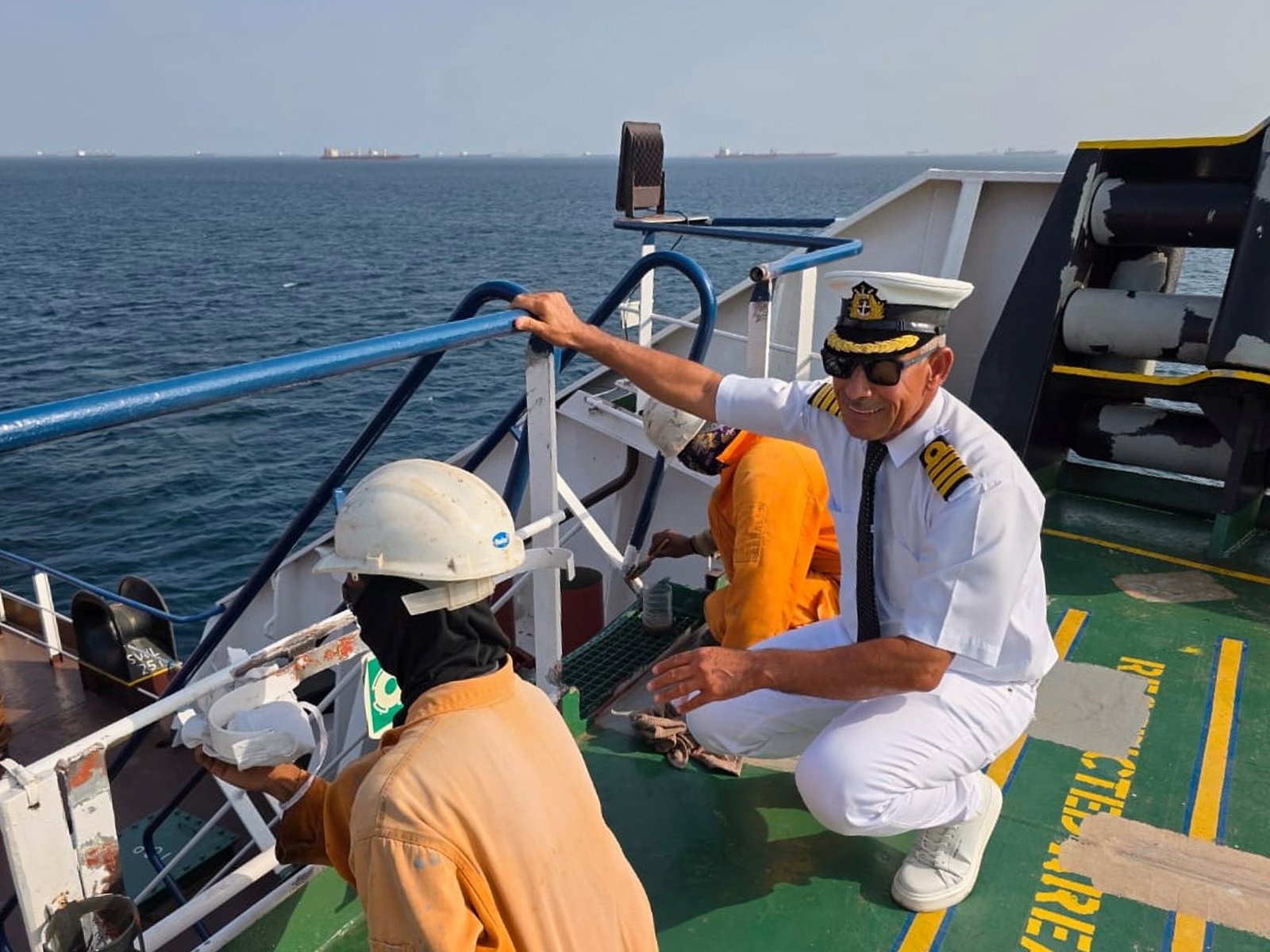
El capitán iraquí Rahman Al-Jubouri está a cargo de un buque petrolero que navega cerca del estrecho de Ormuz. Asegura que ya no surca aguas, sino que viaja «sobre una bola de fuego». Durante una entrevista dio detalles sobre cómo es la situación hoy en esa región del mundo en tiempos de guerra.
A bordo de un petrolero que surca las tensas aguas entre el golfo de Omán y el estrecho de Ormuz, Al-Jubouri continúa trabajando en uno de los corredores marítimos más volátiles del mundo, donde la guerra de Estados Unidos e Israel con Irán ha alterado el comercio mundial y ha dejado a algunas tripulaciones varadas y expuestas a ataques.
Las hostilidades no son nuevas para Al-Jubouri, un veterano que trabaja en el mar desde 1984 y ha vivido décadas de convulsiones, como la guerra entre Irán e Irak y la Guerra del Golfo de 1991.
Una vez más, se encuentra operando en aguas de alto riesgo, mientras ataques militares esporádicos amenazan a las embarcaciones que buscan navegar por cuellos de botella como Bab el-Mandeb y el golfo Pérsico.
“El trabajo se ha convertido en un riesgo real; no sabemos cuándo podrían bombardearnos. Estamos navegando sobre una bola de fuego”, dijo en diálogo con la agencia AP.
Al-Jubouri lleva cuatro meses a bordo de su petrolero, el Sea Moon, con bandera de Palaos. En estos momentos, él y su tripulación navegan desde el golfo de Adén hacia el golfo de Omán para descargar petróleo en el puerto de Ras Isa, en Yemen.
Aunque su ruta no pasa por el estrecho de Ormuz en sí mismo, sigue considerándose de alto riesgo porque está cerca de la entrada al estrecho. El viaje ha sufrido demoras debido a consideraciones de seguridad y a interrupciones logísticas en medio de la guerra regional desatada por los ataques de Estados Unidos e Israel contra Irán.
La guerra ha colocado a los buques comerciales en medio del fuego cruzado del conflicto regional, en el contexto del prolongado pulso entre Washington y Teherán por el estrecho de Ormuz. Varios petroleros han sido blanco de ataques perpetrados por fuerzas iraníes y grupos aliados. Las interrupciones intermitentes y las amenazas de cerrar el estrecho de Ormuz, un punto de estrangulamiento crucial para los flujos mundiales de petróleo, también han dejado embarcaciones demoradas, desviadas o varadas en el golfo.
Las fuerzas militares estadounidenses se apoderaron por la fuerza el domingo de un buque de carga con bandera iraní que intentó eludir un bloqueo naval cerca del estrecho, la primera interceptación de este tipo desde que comenzó la semana pasada el bloqueo de los puertos iraníes.
Los peligros de su trabajo implican que su tripulación realice simulacros de seguridad con regularidad para prepararse ante posibles ataques. “Los hemos entrenado sobre cómo responder si el barco recibe fuego, Dios no lo quiera”, dijo .
El año pasado, cuando estaba atracado en un puerto yemení, su embarcación se vio en un bombardeo. “Corté de inmediato las amarras, preparé los motores y salí del puerto por mi cuenta y riesgo para proteger a la tripulación y al barco”, dijo.
La metralla alcanzó el petrolero cuando se alejaba, causando daños menores, pero la tripulación salió ilesa. Pese a la amenaza persistente, la embarcación regresó después para las operaciones portuarias y retomó su ruta prevista.
Sin embargo, no toda la tripulación de Al-Jubouri puede soportar los peligros del trabajo. Su equipo se ha reducido de 27 marineros a 17, indicó. El miedo los hizo marcharse.
El desgaste psicológico se agrava por los largos periodos en el mar. En cuatro meses, Al-Jubouri no ha visto a su familia. Como muchos marineros, lucha contra la nostalgia.
“Sufrimos por estar lejos de nuestras familias y de nuestras patrias”, comentó. Aunque el acceso a internet a bordo permite que los tripulantes se mantengan en contacto, la distancia se siente especialmente marcada en medio de la tensión de una guerra en curso.
Al menos los suministros básicos se mantienen estables. Los alimentos y el agua embotellada se reponen con regularidad en el puerto, sin que se hayan reportado grandes escaseces.
Al-Jubouri afirmó que sus cuatro décadas en el mar le permiten adaptarse en situaciones de presión.

INTERNACIONAL
El-Sayed pals around with far-left streamer Hasan Piker the day before crucial Michigan Senate election
NEWYou can now listen to Fox News articles!
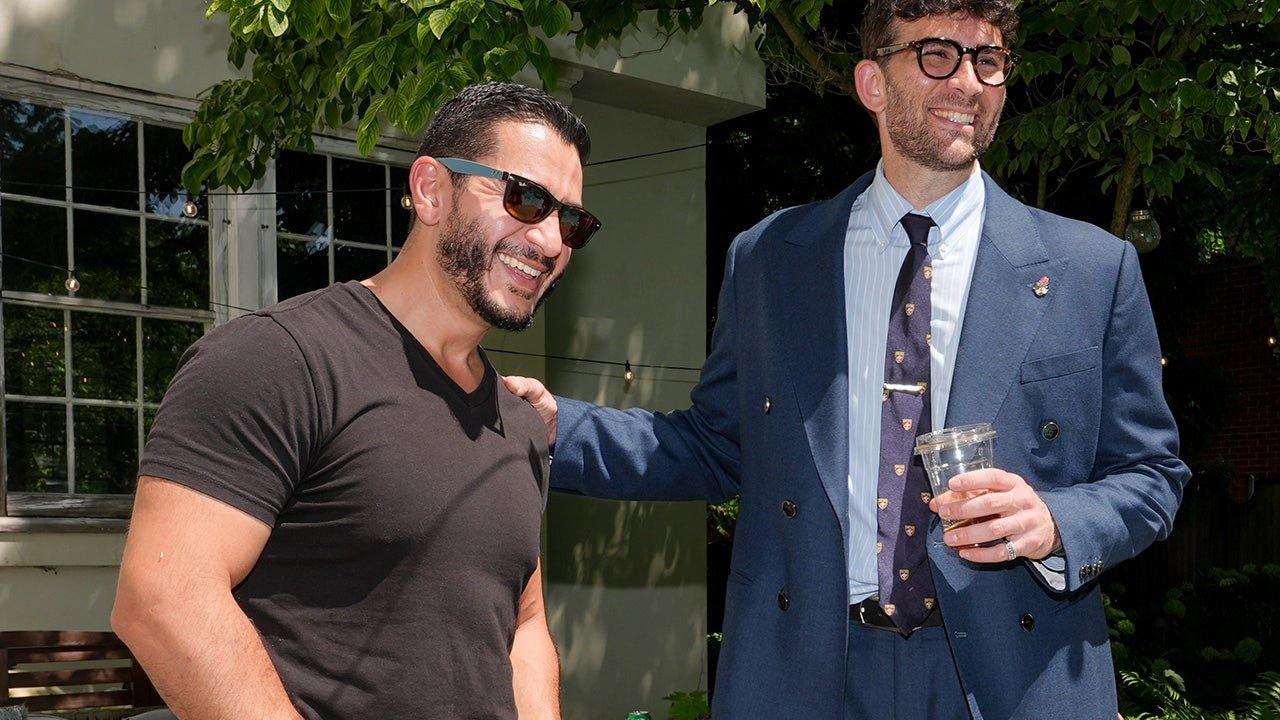
Michigan Democratic Senate candidate Abdul El-Sayed spent the night before Election Day at a pool party with far-left streamer Hasan Piker, sparking pushback both from his primary opponent and his Republican opposition.
The event was hosted by a content creator in Detroit, Michigan, and also attended by progressive House candidates Melat Kiros and Chris Rabb, both members of the Democratic Socialists of America (DSA), The Associated Press reported.
Michigan Democratic state Rep. Donavan McKinney was also reportedly in attendance.
Piker, who has roughly 10 million followers across multiple social media platforms, has made multiple appearances on the campaign trail with El-Sayed, raising questions about the ideological similarities between the two. Last month, Piker drew backlash after addressing a group of college students while wearing an outfit resembling that of former communist dictator Mao Zedong.
HASAN PIKER’S DEFENSE OF HAMAS HAVING ‘RIGHT TO RESIST MILITARILY’ DRAWS CONDEMNATION FROM HUMAN RIGHTS GROUPS
Abdul El-Sayed, a progressive candidate in the Democratic primary for U.S. Senate in Michigan, talks poolside with streamer Hasan Piker at a party for content creators supporting his campaign, Monday, Aug. 3, 2026, in Detroit. (AP Photo/Julia Demaree Nikhinson)
«I never would and never will criticize Mao Zedong,» Piker said earlier this year in a clip that recently resurfaced on social media. «One of the great leaders of this world.»
Piker has also said in the past that «America deserved 9/11» and has made controversial comments about Hamas and the killing of UnitedHealthcare CEO Brian Thompson.
While El-Sayed has said he doesn’t agree with all of Piker’s positions, he has faced criticism for not distancing himself from the controversial streamer.

Abdul El-Sayed, a progressive candidate in the Democratic primary for U.S. Senate in Michigan, films a social media video at a pool party for content creators supporting his campaign, Monday, Aug. 3, 2026, in Detroit. (AP Photo/Julia Demaree Nikhinson)
Democratic Rep. Haley Stevens (D-MI), running against El-Sayed in Tuesday night’s Senate primary, was asked about the relationship between El-Sayed and Piker in a press gaggle hours before polls closed.
«I don’t believe Mr. Piker lives here in our state. I do think his rhetoric should be denounced. I do think that my opponent should distance himself from him. I don’t know what they were doing last night at this pool party that was going on, but I was with Congresswoman Hillary Scholten and Debbie Stabenow,» Stevens told Fox News.

Abdul El-Sayed, a progressive candidate in the Democratic primary for U.S. Senate in Michigan, center left, talks poolside with streamer Hasan Piker, center right, at a party for content creators supporting his campaign, Monday, Aug. 3, 2026, in Detroit. (AP Photo/Julia Demaree Nikhinson)
Referring to Piker, Stevens said «some of this stuff makes people uncomfortable. Frankly, it makes me uncomfortable. You know, we don’t need these demagogues or people citing allegiance to Mao coming into Michigan.»
And pointing to El-Sayed, Stevens added, «Maybe instead of being with Mr. Piker, you know, if he ends up winning the nomination, maybe he’ll come with me and hear from some of the small businesses who don’t want this extreme politics coming into our state.»
ABDUL EL-SAYED SAYS RALLYING WITH HASAN PIKER DOESN’T MEAN HE ENDORSES ‘AMERICA DESERVED 9/11’ REMARK

Abdul El-Sayed, a progressive candidate in the Democratic primary for U.S. Senate in Michigan, talks poolside with streamer Hasan Piker at a party for content creators supporting his campaign, Monday, Aug. 3, 2026, in Detroit. (AP Photo/Julia Demaree Nikhinson)
«Instead of spending his final hours campaigning with Michiganders, Abdul El-Sayed spent it poolside with an antisemite and terrorist sympathizer who believes America deserved 9/11,» NRSC Regional Press Secretary Samantha Cantrell told Fox News Digital in a statement on Tuesday.
The campaign of presumptive GOP nominee Mike Rogers also weighed in as voters headed to the polls on Tuesday.

Abdul El-Sayed, a progressive candidate in the Democratic primary for U.S. Senate in Michigan, talks poolside with streamer Hasan Piker at a party for content creators supporting his campaign, Monday, Aug. 3, 2026, in Detroit. (AP Photo/Julia Demaree Nikhinson)
«We’re getting ready to prosecute the case against Abdul, but it looks he’s already giving us a head start,» Alyssa Brouillet, Rogers’ campaign communications director, said in a statement to Fox News Digital. «This is giving fraud, not serious. And Michiganders are battling serious issues they need a senator to deal with—not someone who dances around with LA and NYC influencers who think ‘America deserved 9/11.’»
Hours before the pool party, Piker was at a campaign event with El-Sayed where a reporter asked him if he plans to campaign with the progressive Senate candidate after Tuesday night’s primary.
JAMES CARVILLE VOWS TO ABANDON DEMOCRATIC PARTY IF FAR-LEFT HASAN PIKER BECOMES LEADING VOICE

Streamer Hasan Piker attends a pool party for content creators supporting Abdul El-Sayed, a progressive candidate in the Democratic primary for U.S. Senate in Michigan, Monday, Aug. 3, 2026, in Detroit. (AP Photo/Julia Demaree Nikhinson)
«Are you crazy?» Piker responded. «Of course.»
Fox News Digital reached out to the El-Sayed campaign and Piker’s team for comment.
El-Sayed is set to square off against Stevens in the Michigan Democratic Senate primary Tuesday night, where polls close at 8 p.m. local time. El-Sayed, according to recent polling, is expected to advance to the general election in November to face Rogers in a race that could determine the balance of power in the U.S. Senate.
The El-Sayed campaign did not respond to Fox News Digital’s request for comment by the time of publication.
politics, hasan piker, michigan, senate
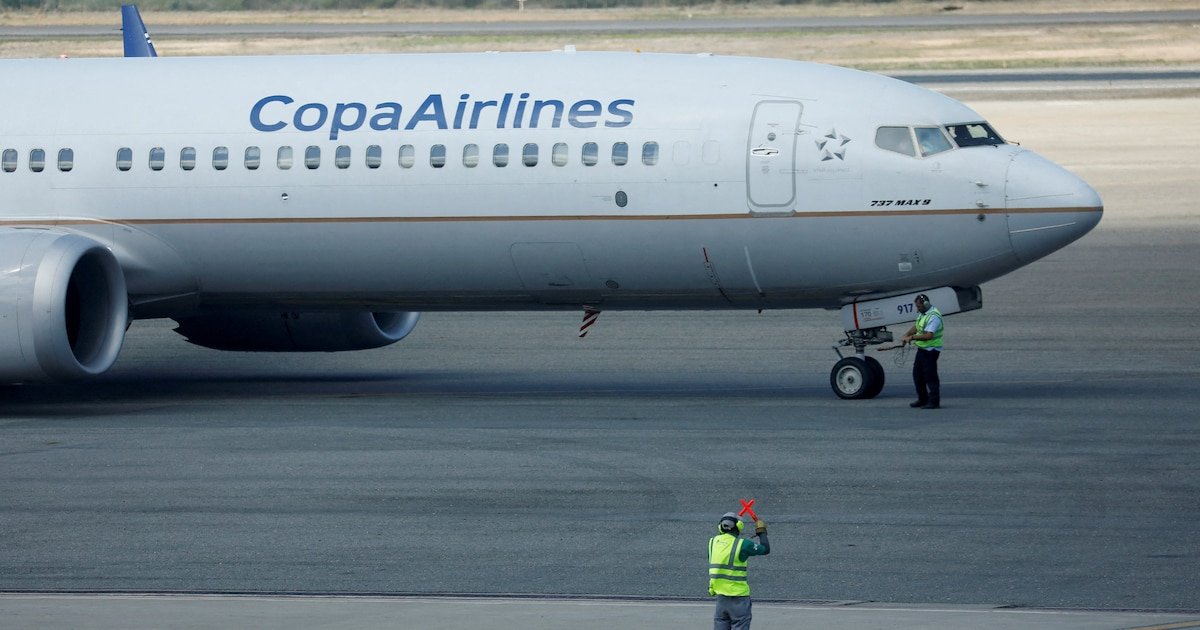
Copa Airlines continúa expandiendo su red de destinos en América Latina con la incorporación de Porlamar, en la Isla de Margarita, Venezuela, y una reorganización de las operaciones de su Hub de las Américas, en el Aeropuerto Internacional de Tocumen, que permitirá ofrecer más opciones de conexión a partir de 2027.
La nueva ruta entre Ciudad de Panamá y Porlamar comenzará a operar el 26 de noviembre de 2026 con tres frecuencias semanales, los martes, jueves y domingos.
El vuelo CM651 despegará desde el Aeropuerto Internacional de Tocumen a las 9:50 a.m. y aterrizará en el Aeropuerto Internacional General en Jefe Santiago Mariño a la 1:36 p.m. El servicio de regreso, identificado como CM652, partirá de Porlamar a las 2:46 p.m. y llegará a Panamá a las 4:30 p.m., según informó la compañía.
La incorporación de Porlamar permitirá a los viajeros conectar con Isla de Margarita, ubicada en el estado venezolano de Nueva Esparta, una región con cerca de 500,000 habitantes cuya economía depende en gran medida del turismo y el comercio.

La isla es conocida por destinos como Playa El Agua, Playa Parguito, Playa El Yaque, además del Castillo de San Carlos de Borromeo y la Basílica de Nuestra Señora del Valle.
Desde ese punto también es posible acceder a las islas de Coche y Cubagua, donde se encuentran las ruinas de Nueva Cádiz, considerado uno de los primeros asentamientos españoles establecidos en Sudamérica.
La expansión no se limita a la incorporación de nuevos destinos. De acuerdo con información publicada por el portal especializado Informe Aéreo, Copa Airlines reorganizará a partir de marzo de 2027 la operación de su Hub de las Américas, ampliando de seis a ocho las franjas horarias de conexión en Tocumen.
El objetivo es distribuir de forma más eficiente los vuelos durante la jornada, incrementar las posibilidades de conexión y ofrecer una mayor variedad de itinerarios para los pasajeros que utilizan a Panamá como punto de enlace entre Norteamérica, Centroamérica, Sudamérica y el Caribe.
La reorganización permitirá conexiones más competitivas hacia ciudades como Buenos Aires, Mendoza, Córdoba, Salta, Rosario y Tucumán, además de mejorar las alternativas de viaje entre México, Estados Unidos, Canadá y el sur del continente.

Voceros de la empresa indicaron que la redistribución de los horarios busca ofrecer una experiencia de viaje más flexible y adaptarse al crecimiento sostenido de la demanda en la región. La compañía también prevé ampliar la disponibilidad de su Dreams Business Class en más rutas.
El crecimiento de la red también comienza a reflejarse en mercados específicos. El Gobierno de Mendoza, a través del Ente Mendoza Turismo (Emetur), informó que Copa Airlines incrementará desde octubre de 2026 sus operaciones entre esa provincia argentina y Ciudad de Panamá, pasando de siete a nueve vuelos semanales, un aumento del 28 % en la capacidad.
Las autoridades locales consideran que la medida facilitará la llegada de visitantes desde más de 80 destinos del continente y fortalecerá tanto la actividad turística como los viajes de negocios y la realización de congresos y eventos internacionales.
La presidenta del Emetur, Gabriela Testa, sostuvo que cada nueva frecuencia internacional representa una oportunidad para atraer más visitantes y mejorar la competitividad del destino, mientras que Lorena Gasser, gerente de Ventas Interior de Argentina de Copa Airlines, señaló que Mendoza es una plaza estratégica dentro de la red de la compañía y que el aumento de frecuencias responde tanto al desempeño del mercado como al interés de seguir impulsando el turismo y el comercio en esa región.

Estas decisiones coinciden con el proceso de expansión que atraviesa la aerolínea panameña. Actualmente Copa Airlines opera 113 aeronaves y prevé cerrar 2026 con una flota de 121 aviones. Además, recientemente anunció una inversión superior a los 10 mil millones de dólares para adquirir 60 Boeing 737 MAX adicionales.
Sumadas a las 40 aeronaves previamente encargadas, la empresa proyecta incorporar más de 100 aviones durante los próximos ocho años y superar las 200 aeronaves en servicio para 2034, una capacidad con la que busca sostener el crecimiento de su red y fortalecer el papel de Panamá como uno de los principales centros de conexiones aéreas del continente.
Business,International Relations,Tourism,Travel,Corporate Events,Diplomacy / Foreign Policy,South America / Central America,Tourism / Travel
NEWYou can now listen to Fox News articles!
Iran’s rival political factions are increasingly invoking the authority of Supreme Leader Mojtaba Khamenei to attack their opponents and protect their own positions, even as questions persist over whether he is actively governing the country, according to an Iran expert.
The internal struggle surfaced in two reports published by Iran International concerning Iranian President Masoud Pezeshkian’s relationship with the new supreme leader.
In the first report, senior cleric Mohammad-Bagher Kharrazi, a relative of the Khamenei family by marriage, claimed Pezeshkian had repeatedly threatened to resign and was warned that his next resignation would be accepted.
IRAN EXPERT BRANDS ISLAMIC CENTER OF ENGLAND IRAN’S ‘UK OFFICE,’ URGES IMMEDIATE CLOSURE
Iranian President Masoud Pezeshkian speaks with Fox News Channel’s Martha MacCallum during an interview on Sept. 25, 2025, in New York City. (John Lamparski/Getty Images)
«If he resigns one more time, I will approve it,» Kharrazi quoted Khamenei as saying.
Pezeshkian’s office strongly denied the account. Mehdi Tabatabaei, the president’s deputy for communications and information, called the allegation «baseless and an outright lie,» while another presidential advisor said Kharrazi had no contact with the supreme leader and was known for telling «strange stories.»
Hours later, Iran International published a second report alleging Pezeshkian had met Mojtaba Khamenei only once, inside a vehicle with tinted windows at an undisclosed location in Tehran.
According to the outlet’s unnamed sources, the encounter lasted several minutes, the two men could not see each other and Pezeshkian was not permitted to shake Khamenei’s hand. The report alleged that the president later questioned whether the voice he heard had actually belonged to the supreme leader.
IRAN’S GOOD COP, BAD COP GAME IMPLODES AS EXPERTS WARN REGIME VIEWS US AS ‘EVIL’
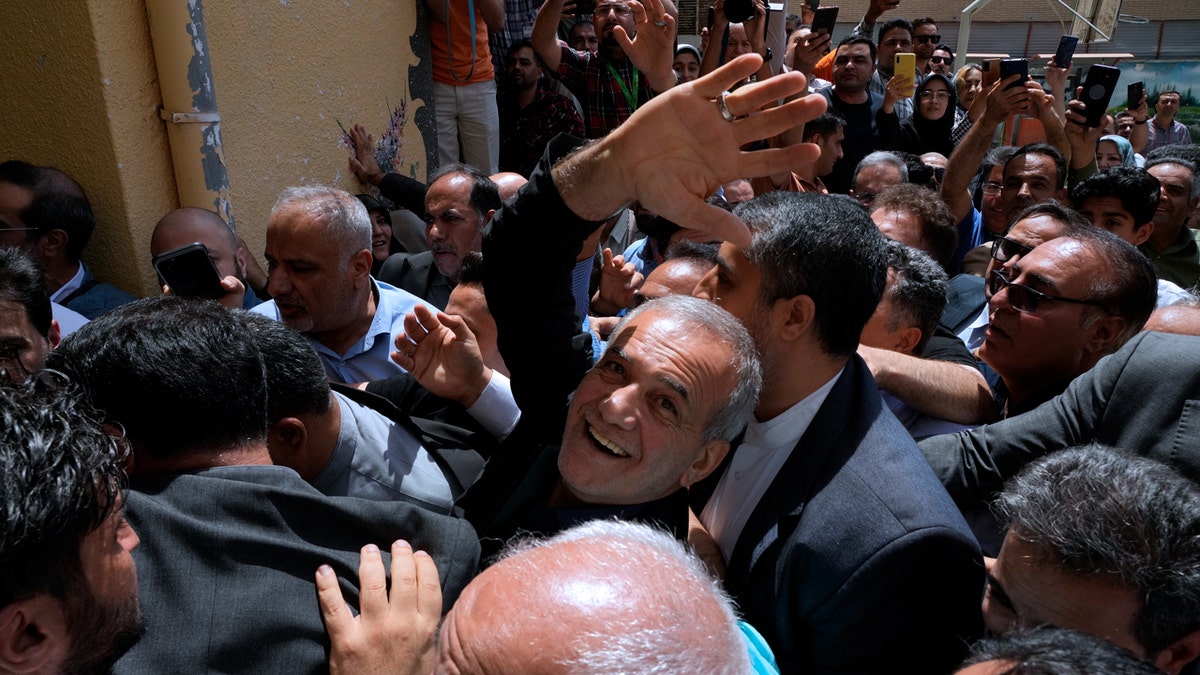
Masoud Pezeshkian, then a presidential candidate, waves as he arrives to vote at a polling station in Shahr-e-Qods near Tehran, Iran, on July 5, 2024. (AP Photo/Vahid Salemi)
The claims have not been independently verified. Pezeshkian previously described a substantially different encounter, saying publicly that he had spent approximately two and a half hours with Khamenei in a cordial atmosphere.
Kasra Aarabi, director of IRGC research at United Against Nuclear Iran, said the competing claims surrounding Pezeshkian and Mojtaba Khamenei reflected a deeper struggle inside what he described as an «Islamist oligarchic mafia system.»
Under Ali Khamenei, Aarabi said, the supreme leader functioned as the system’s «godfather,» arbitrating among rival Islamist factions and guaranteeing their access to power and money. His removal created a vacuum that Mojtaba Khamenei’s appointment was intended to fill, but the new supreme leader’s prolonged public absence has left rival factions uncertain about who is actually in charge.
«The very essence of this mafia system is built on a godfather,» Aarabi said. «If the godfather is absent, whether because he is severely incapacitated or nonexistent, that vacuum… re-emerges between the various Islamist oligarchic clans.»
Aarabi said those factions are not primarily divided by ideology.
«They’re not competing over ideology,» he said. «They’re competing over raw power and economic interests.»
In that environment, Aarabi said, Mojtaba Khamenei’s name has become a political instrument that competing factions can invoke to legitimize themselves, constrain their rivals or justify decisions whose true source remains unclear.
WHO IS AHMAD VAHIDI? IRAN’S NEW IRGC CHIEF TIED TO GLOBAL ATTACKS AND ‘DEATH TO AMERICA’ IDEOLOGY
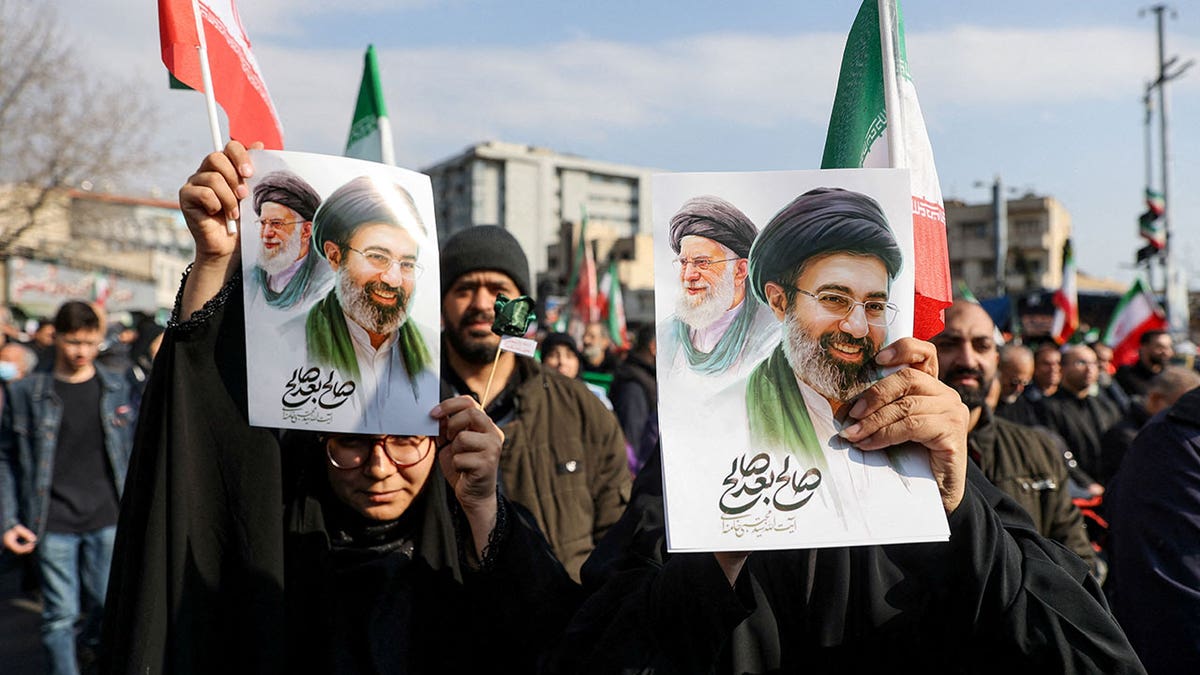
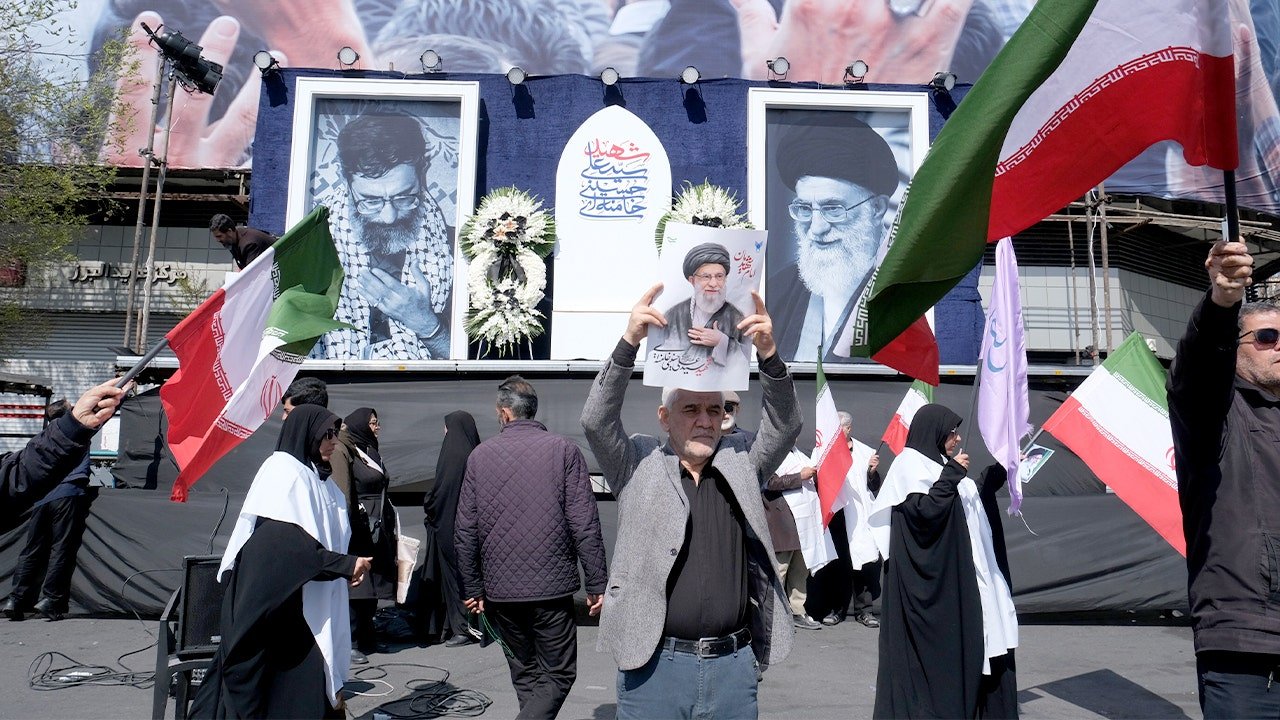
People hold placards with an image of Iran’s new supreme leader, Mojtaba Khamenei, and the late Ayatollah Ali Khamenei, during a rally in Tehran, Iran, March 9, 2026. (Majid Asgaripour/WANA (West Asia News Agency) Via Reuters)
«Mojtaba’s name is the glue that’s holding the system together right now,» Aarabi said. «Each of these clans invokes his name to justify its existence, legitimize its position, and consolidate its place within this fragile system.»
Exiled Iranian journalist Mehdi Ghadimi described the resignation claims as part of a recurring political strategy used by reformist administrations.
«This is a familiar cycle,» Ghadimi said. «Whenever they feel that their usefulness to the supreme leader has come to an end, they start circulating these resignation rumors in an effort to build public sympathy and improve their image before being pushed aside.»
Ghadimi said similar rumors surrounded former presidents Mohammad Khatami and Hassan Rouhani during the final years of their administrations. He argued that reformist-aligned media channels often continue circulating resignation claims even after a president’s office formally denies them, allowing officials later to portray themselves as having challenged the supreme leader.
On Mojtaba Khamenei’s status, Ghadimi went further than Aarabi, saying he did not believe there was «a functioning person by that name who is capable of thinking, making decisions or speaking.»
«Either he is dead, or he is being kept alive in an extremely unstable and severely deteriorated condition,» Ghadimi said.
Aarabi said the two reports illustrate that dynamic. A cleric opposed to or unaligned with Pezeshkian invoked Mojtaba Khamenei’s authority to weaken the president by claiming his next resignation would be accepted, while figures around Pezeshkian pushed back with an account portraying the president as having met directly with the supreme leader.
Mojtaba Khamenei has not appeared in any publicly released video or audio recording since succeeding his father, according to Iran International. Iranian officials have offered conflicting accounts about how often senior government figures have met him.
Aarabi cautioned that using Khamenei’s name as a source of authority will become increasingly difficult if his public absence continues.
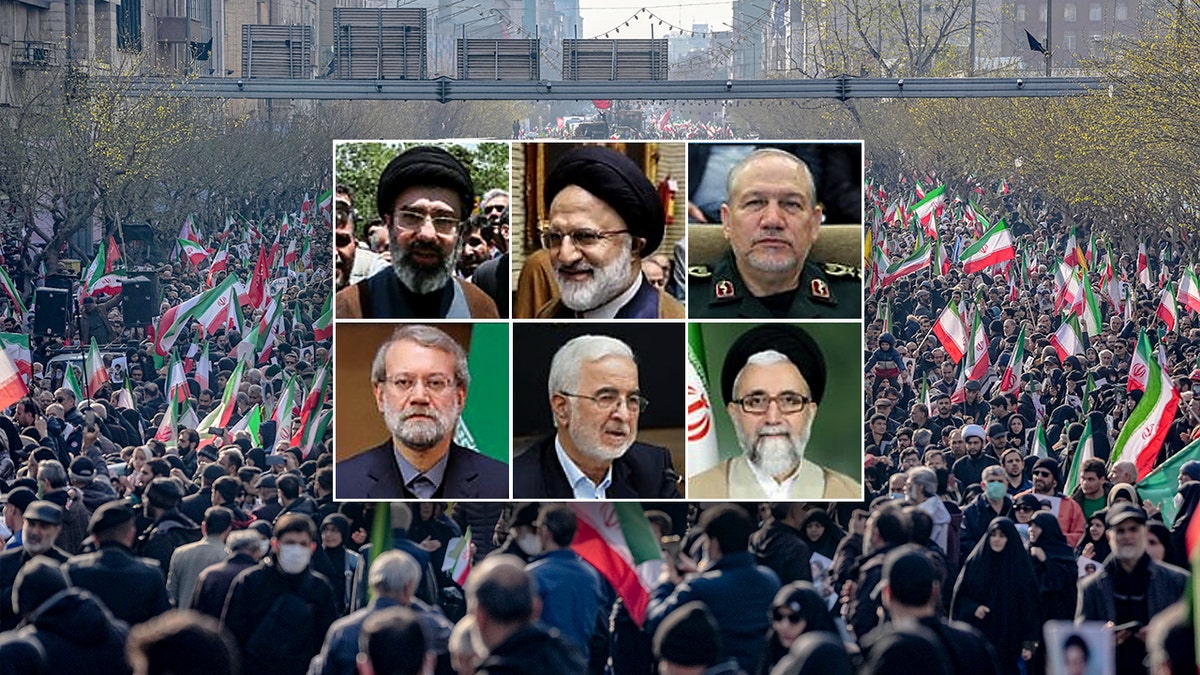
A composite image shows several Iranian leaders named in the State Department’s Rewards for Justice program offering up to $10 million for information on key figures tied to Iran’s Islamic Revolutionary Guard Corps (IRGC), including Mojtaba Khamenei, top left. (State Department/Rewards for Justice; Khoshiran/Middle East Images/AFP via Getty Images)
«There’s only so many times you can use someone’s name without any proof of life that they actually exist,» Aarabi said. «The longer Mojtaba is absent, the more questions develop over whether he is alive or able. And as soon as that doubt increases, you will see this infighting increase.»
war with iran, iran, mojtaba khamenei, ali khamenei, world

Quién es quién en el clan Moyano, la familia sindical más poderosa de la Argentina

Tensión diplomática con Brasil: Milei volvió a cargar contra Lula y a expresar su apoyo a Flavio Bolsonaro

Jornada financiera: los activos argentinos no se contagiaron de la euforia de Wall Street y el riesgo país volvió a subir

El-Sayed pals around with far-left streamer Hasan Piker the day before crucial Michigan Senate election

El Gobierno aceptó limitar la compra de tierras por extranjeros y se espera una definición voto a voto en el Senado

Primavera Sound Buenos Aires confirmó su sede para la edición 2026 con Gorillaz y The Strokes como headliners

“Vamos a acelerar con todo”: el objetivo del Gobierno por las reformas y la agenda electoral de cara al 2027

Reelecciones indefinidas: el oficialismo bonaerense niega que busque ampliar la Legislatura como parte de una reforma política para beneficiar a los intendentes

Javier Milei cruzó a Victoria Villarruel y elevó la tensión: “Es una opositora, replica los argumentos kirchneristas”

¡Chau Luck Ra! La salida de soltera de La Joaqui, muy bien acompañada, a días de su separación
-
 POLITICA2 días ago
“Vamos a acelerar con todo”: el objetivo del Gobierno por las reformas y la agenda electoral de cara al 2027
-
 POLITICA2 días ago
Reelecciones indefinidas: el oficialismo bonaerense niega que busque ampliar la Legislatura como parte de una reforma política para beneficiar a los intendentes
-
 POLITICA24 horas ago
Javier Milei cruzó a Victoria Villarruel y elevó la tensión: “Es una opositora, replica los argumentos kirchneristas”