INTERNACIONAL
Jazz, pop, hip hop y música clásica: el inesperado acercamiento entre géneros que muestra la ciencia


Las melodías que identifican a cada época parecen acercarse unas a otras. La música occidental, rica en formas y estructuras durante siglos, mostró una tendencia reciente hacia la uniformidad y una mayor sencillez.
Un estudio publicado en la revista Scientific Reports detectó que la música clásica y el jazz, reconocidos por su riqueza y diversidad, se acercaron a las estructuras de los géneros populares actuales.
El interrogante central para los investigadores Niccolò Di Marco, Edoardo Loru, Alessandro Galeazzi, Matteo Cinelli y Walter Quattrociocchi -de las Universidades de Tuscia, Sapienza de Roma y Padua– fue si la música perdió complejidad por el avance de la tecnología y la influencia de las plataformas digitales.
El equipo buscó rastrear si los algoritmos y el consumo inmediato de contenido musical modificaron la diversidad original.

Las plataformas digitales transformaron la producción y escucha de música. Se despertaron dudas sobre una posible pérdida de riqueza musical.
El estudio abordó además si, en la era del streaming, se produjo una simplificación de la estructura melódica y armónica.
Otros trabajos ya habían reportado una tendencia a la simplificación en letras de canciones y en la comunicación digital. Faltaba una evaluación cuantitativa y profunda de la estructura musical occidental a lo largo del tiempo.

El objetivo concreto fue “ofrecer una perspectiva cuantitativa sobre la evolución de la complejidad melódica y armónica en la música occidental” y verificar si la simplificación alcanzó la esencia de la música.
El equipo utilizó el MetaMIDI Dataset, una base pública con más de 400.000 archivos MIDI, y seleccionó cerca de 20.000 piezas con datos de título, artista y género. Los archivos contienen información precisa sobre notas, duraciones y tempo, como si fueran un mapa digital de cada composición.
Cada pieza se representó como una red de nodos (notas) y enlaces (transiciones entre notas), lo que facilitó el análisis matemático de la estructura musical. Este método permitió medir la complejidad de cada obra mediante indicadores como densidad, reciprocidad y entropía.

La muestra incluyó seis géneros principales: clásica, jazz, rock, pop, electrónica y hip hop. El estudio observó que la música clásica y el jazz, aunque partían de una mayor complejidad, redujeron su diversidad estructural en las últimas décadas.
“La música clásica exhibe una tendencia descendente, mientras que el jazz muestra un aumento inicial de complejidad, seguido de una caída y estabilización”, señaló el equipo.
Identificaron que las diferencias entre géneros persisten, pero en los últimos años los valores de complejidad se acercaron, y la música clásica y el jazz se alinearon con los géneros populares.

Para asegurar la validez de los resultados, los investigadores emplearon modelos nulos y técnicas de inteligencia artificial para estimar fechas de composición.
El estudio también analizó los intervalos musicales característicos de cada género y aplicó UMAP, una técnica de visualización de datos, para observar la evolución de la diversidad musical a lo largo de las décadas.
La comparación de obras previas a 1950 con creaciones recientes mostró una complejidad mayor en el pasado y un proceso de simplificación y convergencia en la actualidad.
El equipo sugirió sumar análisis de audio, texto y aspectos interpretativos a los datos de notas, para capturar dimensiones musicales que los archivos MIDI no contienen.
Entre las limitaciones, los investigadores señalaron que el análisis de notas excluye variables como el timbre, la producción y el contexto cultural, y que la inteligencia artificial aplicada a la datación puede tener márgenes de error.

La conclusión fue contundente: la música occidental reciente perdió complejidad estructural, aunque esa riqueza podría haberse desplazado a otras dimensiones aún no exploradas.
“Nuestros hallazgos abren vías para la investigación interdisciplinaria, uniendo musicología, ciencia de datos y sociología para indagar cómo los entornos digitales moldean la creatividad y el consumo”, concluyeron los investigadores.

INTERNACIONAL
Iran expert brands Islamic Center of England Iran’s ‘UK office,’ urges immediate closure
NEWYou can now listen to Fox News articles!
A leading Iran expert has called on the British government to shut down an Islamic center that he claimed has been functioning as an office of the regime’s supreme leader amid a shocking report that Iran’s regime smuggled operatives into the United Kingdom.
The Islamic Center of England recently came into the spotlight following revelations that the U.K. government has allegedly allowed the center to sponsor visas for imams. The report comes at a time when Iran has said Britain is a legitimate target if it allows the U.S. to use its bases to fly missions against Tehran.
The reported green light to imams to secure visas as «skilled workers» for the Islamic Center raises profound questions about dangerous gaps in Britain’s national security and immigration policies, according to lawmakers and Mideast experts.
UK PINS STRING OF ANTISEMITIC ATTACKS ON IRAN-LINKED GROUP, BANS IRGC
A Google maps photo showing the Islamic Center of England in London. (Google Maps)
Kasra Aarabi, director of IRGC [Islamic Revolutionary Guard Corps] Research at United Against Nuclear Iran told Fox News Digital, «In light of the IRGC’s threat to attack Britain and reports that it has been exploiting the illegal migrant crisis to send ‘Islamic revolutionary agents’ to the country, the U.K. government simply must not tolerate the existence of this Islamist extremist infrastructure on British soil.»
Aarabi added, «The Islamic Centre of England — a U.K.-registered charity and mosque — has long been operating as the office of the Iranian regime’s supreme leader in the U.K. Its Imam is the personally appointed U.K. representative of the regime’s supreme leader. The very fact that the supreme leader of the Iranian regime, who is ordering terror plots on British soil, has an office and appointed representative in the U.K. is completely unacceptable. In light of the IRGC’s latest threats against Britain, the center should be immediately shut down and all of its non-British staff deported.»
The revelation about the Islamic Center of England comes amid a report in the U.K.’s Daily Telegraph that Tehran officials claimed the IRGC controls some illegal human trafficking routes between the Middle East and the English Channel.

Firefighters are seen tackling a blaze at Highfield Road in the Golders Green neighborhood of London, following an arson attack on four charity ambulances belonging to the Jewish Community volunteer Ambulance Service. (PA/PA Images via Getty Images)
An Iranian official told The Telegraph, «Of course, don’t forget that our armed forces have influence and run the [smuggling] routes in some cases if they want.» The official warned, «At the moment we have people right there in London, revolutionary people who care about the world and the lives of children – they wait for us to tell them what to do. We have not done that yet, but we can easily make London unsafe for you if we want to.»
The official added, «These smuggling routes are more important and useful than the missiles for us – we do not need a missile to target London, it’s easier than that.»
WHO IS AHMAD VAHIDI? IRAN’S NEW IRGC CHIEF TIED TO GLOBAL ATTACKS AND ‘DEATH TO AMERICA’ IDEOLOGY
Fox News Digital previously reported in February that the Islamic Center of England was accused of selling merchandise supporting the U.S.-designated terrorist movement, Hezbollah and the IRGC — also a U.S.-classified terrorist entity.
The Islamic Center allegedly had stickers of late Islamic Revolutionary Guard Corps global terrorist Qassem Soleimani, who was responsible for the murders of over 600 U.S. military personnel, according to the Trump administration. President Donald Trump ordered a drone strike in January 2020 that killed Soleimani in Iraq.
A spokesperson for the United Kingdom’s Home Office — a mix of the Department of Homeland Security and DOJ — told Fox News Digital, «The Islamic Center of England has not sponsored any workers since 2022 under the previous government, and the Charity Commission is currently investigating this organization.»
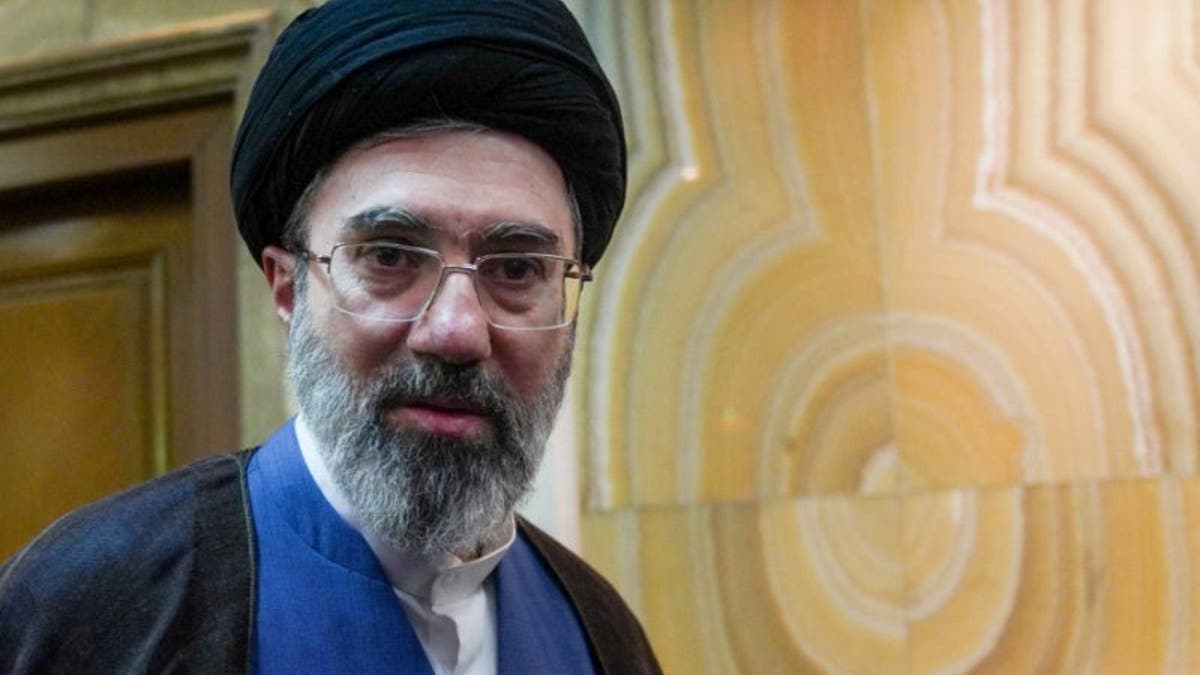
Mojtaba Khamenei, the new supreme leader of Iran and second son of the late Ayatollah Ali Khamenei, attends a meeting in Tehran on Oct. 13, 2024. (Hamed Jafarnejad/ISNA/WANA/Reuters)
The Home Office spokesperson continued, «We treat the threat posed by the Iranian regime and those who do its bidding with the utmost seriousness. That’s why we have fast-tracked a change in the law to outlaw support for the IRGC, equipping the police and intelligence service with more powers to disrupt those working on their behalf, and making it easier to prosecute them. If wrongdoing is uncovered, those responsible will face the full force of the law, with the possibility of lengthy prison sentences, loss of licenses, and further civil action.»
Iran and its chief strategic ally, Hezbollah, have been blamed for bombing the U.S. Embassy in Beirut in 1983 in which 63 people, including 17 Americans, were murdered, and dual suicide truck bombers blew up the barracks of American and French members of a multinational force in Lebanon in 1983, in which 220 U.S. Marines, 18 U.S. Navy sailors and 3 U.S. Army soldiers lost their lives. Fifty-eight French troops were also murdered in the terrorist attack.
Critics have long urged the British government to pull the plug on the Islamic Center’s operation as pressure mounts on the new prime minister, Andy Burnham, to act against Iranian regime apparatus in the country.
Aarabi said, «Burnham’s government should use all available tools — including the new designation of the IRGC under the National Security (State Threats) Act — to dismantle this Islamist extremist apparatus across Britain that is linked to the IRGC. To put it more clearly: all the charities, mosques and centers that have carried out IRGC-linked activity should be dismantled, and their non-British staff deported immediately. No ifs or buts.»
He added «The Imam of the center, who is the representative of the ayatollah in the U.K., has continuously expressed extremist views that are sympathetic to the IRGC. In spite of this, not only does he continue to reside in the U.K. but he is listed as the trustee of several charities in Britain. This individual does not hold a diplomatic passport, meaning his visa could be immediately revoked.»

Naval units from Iran and Russia simulate the rescue of a hijacked vessel during joint drills at the Port of Bandar Abbas in Hormozgan, Iran, on Feb. 19, 2026. (Iranian Army/Handout/Anadolu via Getty Images)
US-SANCTIONED MOJTABA KHAMENEI NAMED IRAN’S NEXT SUPREME LEADER AFTER FATHER’S DEATH: REPORTS
Aarabi argued that the «IRGC has built an entire ‘soft power’ infrastructure across Britain under the guise of charities, mosques and colleges. The IRGC’s goal has been to use this infrastructure to nurture home-grown Islamist radicalization, terrorism and acts of violence. In doing so, it has successfully cultivated, within segments of the British Muslim community, what can only be described as an Islamist constituency that is loyal to it and its violent extremist ideology. These tactics mimic ISIS and al Qaeda — yet there has been no attempt to counter it by the British government.»
Iranian agents have attacked Iranian dissidents over the years in Britain. Two Romanian nationals, who prosecutors said had been acting for Iran, were jailed this month for stabbing a journalist working for an independent Iranian news outlet, Iran International, in London.
Tehran has always denied involvement in such attacks, calling allegations to the contrary unfounded and politically motivated.
«If the IRGC seeks to attack Britain, it could activate this radicalized Islamist constituency for acts of home-grown violence and terror. This form of kind-actor terror, where a radicalized extremist carries out an attack because they’re ideologically inspired rather than paid or directed by Tehran, also provides the IRGC with sufficient plausible deniability to complicate attribution and reduce the likelihood of British retaliation,» said Aarabi.
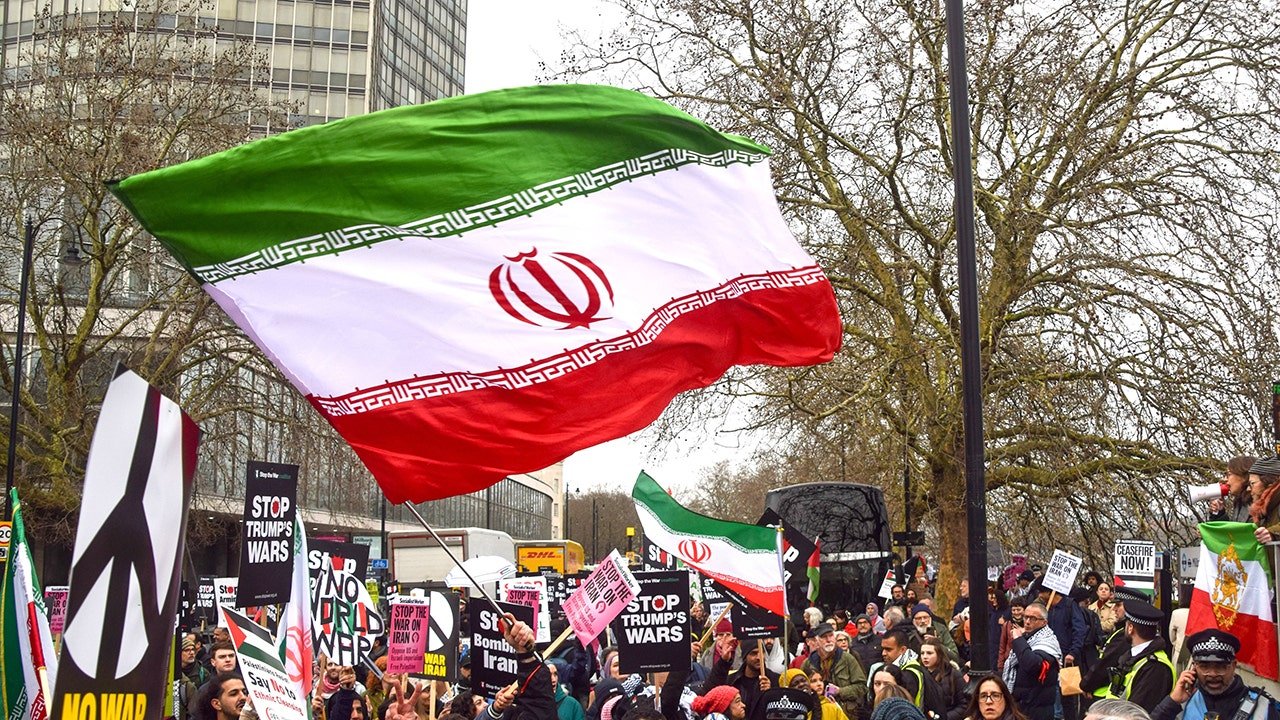
A protester waves a flag of Iran during the demonstration in Millbank. Thousands of people marched to the U.S. Embassy in protest the war against Iran. (Vuk Valcic/SOPA Images/LightRocket via Getty Images)
A spokesperson for the Islamic Center of England told Fox News Digital, «The Islamic Center of England is an independent registered charity, established and operating under the laws of England and Wales. It is governed by English charity law and regulated by the Charity Commission. It is not an official office or representative of any government, political entity, or individual.»
The spokesperson for the center added, «Like many charities, faith organizations and other eligible institutions in the U.K., the Center holds a Home Office sponsor license, which allows it to sponsor skilled workers where it meets the requirements of the U.K.’s immigration system.»
The spokesperson concluded, «Sponsor licenses are granted and overseen by the Home Office, and all licensed sponsors are required to comply with the same legal and regulatory obligations. The Center has consistently maintained that it is an independent U.K. charity and carries out its activities in accordance with U.K. law and its charitable objectives.»
CLICK HERE TO DOWNLOAD THE FOX NEWS APP
The British prime minister’s press office referred Fox News Digital to the Home Office for comments.
Reuters contributed to this report.
war with iran, united kingdom, terrorism, iran

NEWYou can now listen to Fox News articles!
Marcye Scott, the daughter of late Rep. David Scott, D-Ga., and former Gwinnett County school board chair Everton Blair advanced Tuesday to an Aug. 25 runoff in the special election to serve the remainder of the late Congressman Scott’s term before the winner of November’s regular election takes office for a full-term beginning in January.
Neither candidate captured the 50% majority needed to win the seat outright, according to the Associated Press, which called the race around a quarter to 9 o’clock East Coast time. Scott had received 47.5% of the vote and Blair had received 36.1% when the race was called around 8:45 p.m. eastern, with 85% of the expected vote counted. Republican Caesar Gonzales was far behind in third with just 8.5%.
The runoff will determine who serves the final weeks of the late-Congressman’s term in the heavily Democratic metro Atlanta 13th Congressional District following his death in April at age 80. It will not determine who represents the district for the next full two-year term beginning in January; voters held a separate primary for that term in May, with the general election set for Nov. 3.
SUCCESSION: WHY CONGRESS HAS NO CLEAR PLAN WHEN LAWMAKERS CAN’T SERVE
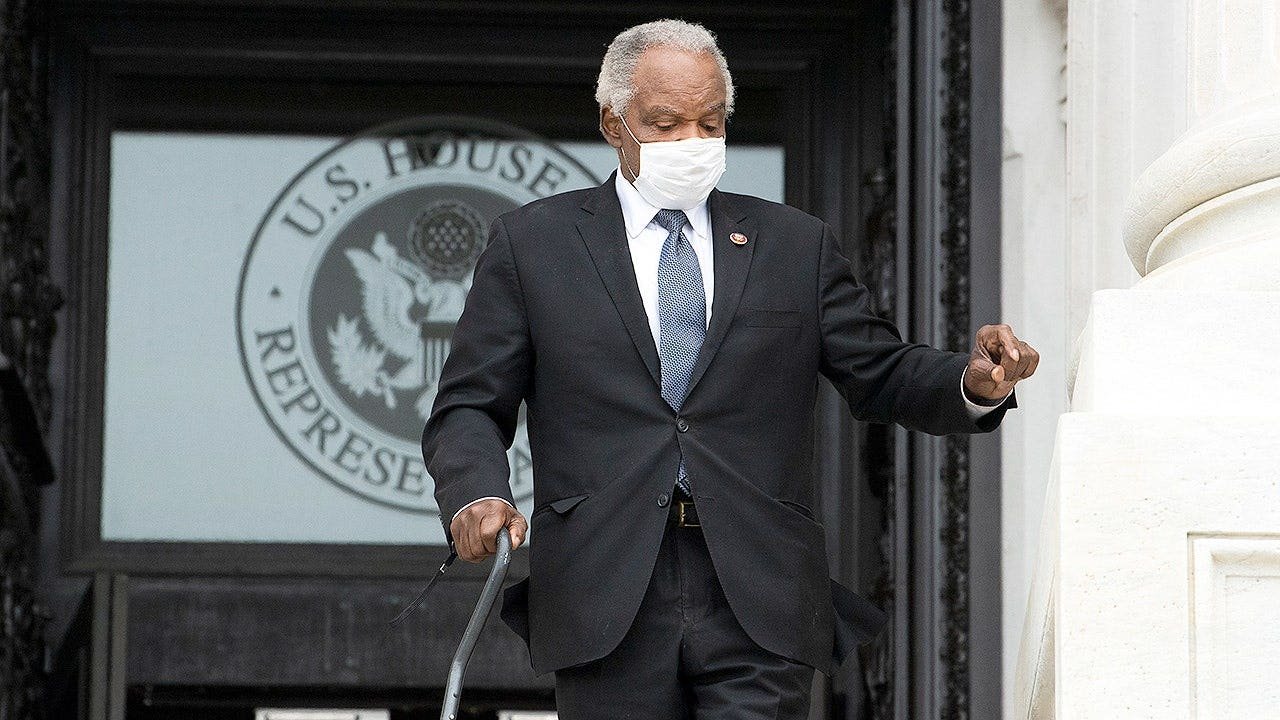
Rep. David Scott, D-Ga., incoming chairman of the House Agriculture Committee, is seen on the House steps of the Capitol on Friday, December 4, 2020. Scott was outside for group photo with congressional members of of the Alpha Phi Alpha Fraternity. (Tom Williams/CQ-Roll Call, Inc via Getty Images)
Democratic state Rep. Jasmine Clark won the regularly scheduled May primary for the full term with roughly 56% of the vote and will face Republican Jonathan Chavez in November. Blair, the only special-election candidate who also competed in that regular May primary, finished third with approximately 12%.
Regardless of party affiliation, all candidates appeared together on one special-election ballot Tuesday. Georgia law allows a candidate who receives more than 50% to win outright, but sends the two leading candidates to a runoff when no one reaches that mark. Six names appeared on the ballot, although Democrat Tony Brown was disqualified after the check he submitted for the $5,220 qualifying fee bounced, according to the Georgia Secretary of State’s Office, which indicated votes cast for Brown would not count.
The remaining field included Scott, Blair Gonzales, Attorney Carlos Moore and Republican candidate Fayth Park.
Scott announced during her father’s early-May funeral in Atlanta that she planned to run in the special election to complete his term. Scott has cast herself as the candidate best positioned to complete her father’s unfinished work, particularly his outstanding federal funding requests, with her campaign noting how she worked alongside her father for more than two decades, playing an active role in his campaign operations, fundraising, constituent outreach and community engagement.
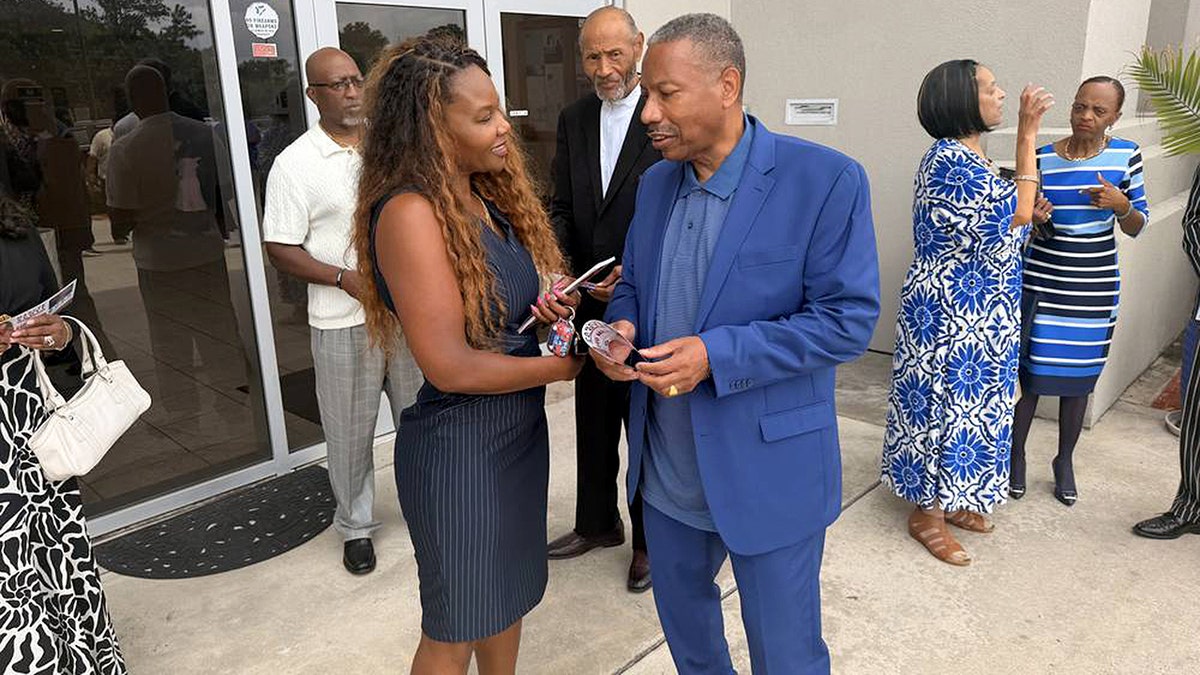
Marcye Scott, daughter of the late-Rep. David Scott, campaigns with voters amid her bid to replace her father. (Marcye Scott for Congress)
100 DAY SPRINT TO THE MIDTERMS KICKS OFF AS REPUBLICANS AND DEMOCRATS CLASH FOR CONTROL ACROSS THE COUNTRY
«Right after my dad passed, a lot of the City Council or the commissioners and chair people, they wanted to know what was going to happen with these projects,» Scott said following her father’s death, according the Atlanta-Journal Constitution. «And that’s really why I’m running: to complete that.»
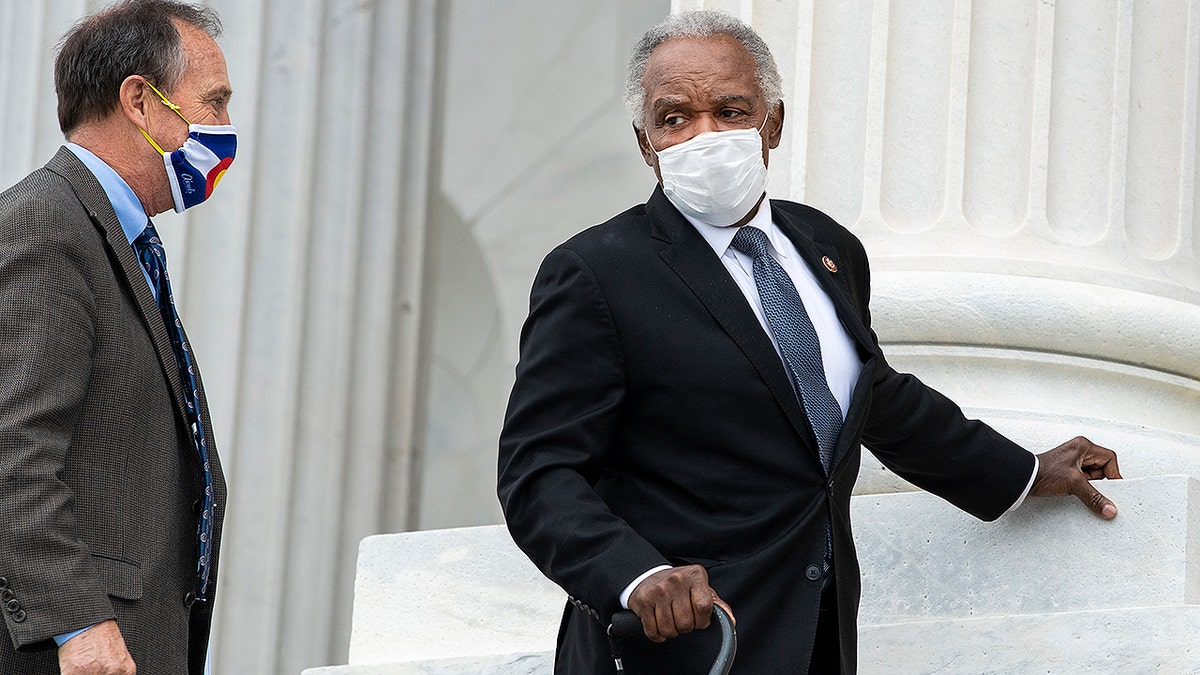
The late-Rep. David Scott, D-Ga., seen using a cane on the steps of the U.S. Capitol building in Washington, D.C. in 2020. (Tom Williams/CQ-Roll Call, Inc via Getty Images)
Her runoff opponent, Blair, was elected to the Gwinnett County Board of Education in 2018 and was elected board chairman a few years later in 2021.
According to Blair’s campaign website, the former high school math teacher earned a bachelor’s degree in applied mathematics and a doctorate in education leadership from Harvard University, as well as a master’s degree in policy, organization and leadership from Stanford University. Blair’s campaign has highlighted that education-policy background and his prior elected service on the Gwinnett County school board.

Everton Blair, candidate for Congress in Georgia’s 13th Congressional District, is seen in a photo from his campaign website talking to voters on the campaign trail. (Everton Blair for Congress)
CLICK HERE TO DOWNLOAD THE FOX NEWS APP
The winner of the August runoff will add another Democratic vote to a narrowly divided House. Republicans officially hold 218 seats, compared with 212 Democrats and four vacancies, while independent Rep. Kevin Kiley of California continues to caucus with Republicans despite defecting from the GOP earlier this year. Once the Georgia winner is sworn in, Democrats would hold 213 seats, compared with a 219-member Republican-aligned bloc.
The 13th District includes portions of Clayton, DeKalb, Gwinnett, Henry and Newton counties, along with all of Rockdale County. David Scott carried the district with approximately 72% of the vote in 2024. In the presidential race that same year, then-Vice President Kamala Harris received roughly 71% of the district’s vote, compared with about 28% for President Donald Trump.
georgia, elections, voting, elections state and local, politics

Iran expert brands Islamic Center of England Iran’s ‘UK office,’ urges immediate closure

Licitación clave: Caputo sale a buscar más de USD 1.300 millones y prueba un nuevo instrumento para seducir al mercado

Con los apoyos en duda y la letra chica en discusión, el Gobierno evalúa mandar en partes la reforma del BCRA

Esta saga RPG con más de 20 años de historia ha decidido probar suerte con la acción, y tropieza en lo más básico

Ancelotti sigue en Brasil pese al golpe en el Mundial y va por la revolución rumbo al título del 2030

El ataque de Ucrania contra un barco iraní podría acercar dos guerras

Crisis entre Milei y Lula: la trama política, personal y geopolítica detrás del mayor choque diplomático entre Argentina y Brasil

Cuentapropismo emocional en lo profundo del conurbano

San Isidro: la ballena que quedó varada en un banco de arena murió pese al operativo de rescate

Joaquín Furriel contó cómo fue ver la final del Mundial con su novia española: “Una situación incómoda”

 POLITICA2 días ago
Crisis entre Milei y Lula: la trama política, personal y geopolítica detrás del mayor choque diplomático entre Argentina y Brasil
- SOCIEDAD2 días ago
San Isidro: la ballena que quedó varada en un banco de arena murió pese al operativo de rescate
- POLITICA2 días ago
Milei cruzó al aire a De Mendiguren, exministro de Duhalde: “Vos, sí, ladrón”