INTERNACIONAL
Congress extends controversial spy law for 45 days after Senate rejects House bill

Congress passes short-term FISA 702 extension
Fox News chief congressional correspondent Chad Pergram reports on the 13-day FISA extension. Rep. Ben Cline, R-Va., discusses the measure and Virginia’s controversial redistricting vote on ‘Fox Report.’
NEWYou can now listen to Fox News articles!
Congress punted a long-term fix for a controversial spy law for the second time in a month as lawmakers raced to avoid a lapse in the government’s warrantless surveillance powers set to expire Friday at midnight.
Both chambers approved a 45-day extension of Section 702 of the Foreign Intelligence Surveillance Act (FISA) before leaving Washington on Thursday, allowing lawmakers more time to negotiate reforms to the hotly contested program.
President Donald Trump, who wants a clean extension of the surveillance program, is expected to sign the measure into law.
The Senate first agreed to extend the law to mid-June by voice vote, which was quickly followed by the House of Representatives clearing the extension measure in a bipartisan manner.
HOUSE PASSES FISA RENEWAL IN BIPARTISAN VOTE, PUTTING PRESSURE ON SENATE BEFORE LOOMING DEADLINE
Speaker of the House Mike Johnson, R-La., pauses for questions from reporters as he arrives for an early closed-door Republican Conference meeting at the Capitol in Washington, Tuesday, Feb. 3, 2026. (J. Scott Applewhite/AP Photo)
House Speaker Mike Johnson, R-La., and the majority of GOP lawmakers argued the spy authority was too critical to lapse.
«If we go to bed tonight and we don’t have that program in place, I fear there will be blood on our hands,» Rep. Mike Flood, R-Neb., said earlier on Thursday.
«We can’t have FISA go dark,» House Majority Leader Steve Scalise, R-La., told reporters prior to the vote.
The bicameral agreement for a short-term fix came after the Senate swiftly rejected a House bill extending the Section 702 program for three years. The lower chamber’s measure included modest reforms to the program and a permanent ban on central bank digital currencies (CBDC) — a priority of conservatives associated with the House Freedom Caucus.
But the inclusion of that provision was a nonstarter in the Senate, given that it was unrelated to the underlying bill and was already baked into a housing affordability package passed by the Senate in March that the House has yet to move on.
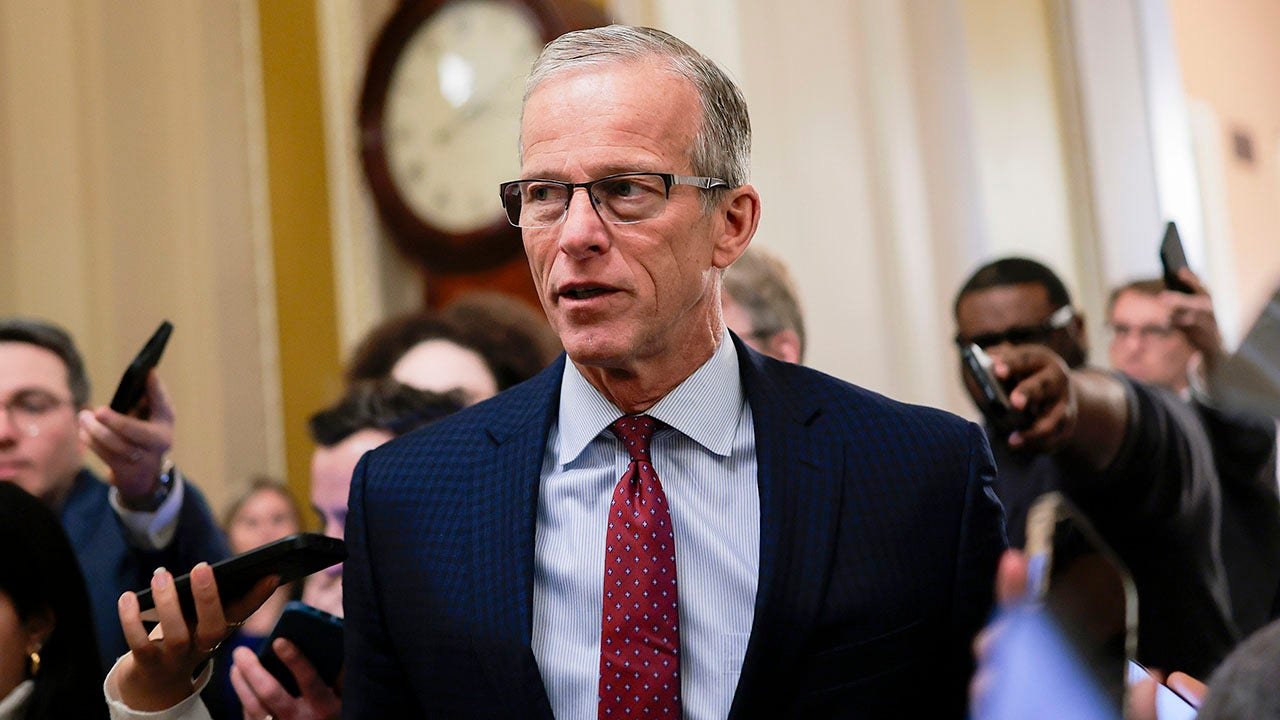
«We’ll kick it over there and process it quickly, and we’ll kick the can down the road again,» Senate Majority Leader John Thune, R-S.D., told Fox News Digital.
More than two dozen GOP privacy hawks voted against the Senate-passed measure. The group sharply criticized the Senate for quashing the House proposal and argued the upper chamber was trying to jam them with a clean extension including none of their reforms.
«The House needs to stand strong and send it back and say we won’t accept that,» Rep. Keith Self, R-Texas, a GOP privacy hawk, told Fox News. «You need to have a warrant or CBDC on it.»
«Everything that we did yesterday, the Senate has said we won’t take,» the Texas Republican added. «That’s what the Senate thinks of the House.»
House Democrats were split over the 45-day extension with 94 lawmakers voting in the affirmative and 85 opposing the measure.
The process in the upper chamber was nearly derailed when Sen. Ron Wyden, D-Ore., announced that he planned to block the Senate’s alternative plan in favor of a shorter, three-week extension.
HOUSE PUNTS TRUMP SPY POWERS EXTENSION AFTER CONSERVATIVES BLOCK DEAL, FORCING END-OF-MONTH SHOWDOWN

Senate Majority Leader John Thune, R-S.D., talks to reporters before entering the Senate chamber in Washington, D.C., on Jan. 5, 2026. (Heather Diehl/Getty Images)
The spy law fight is one of the few horseshoe issues in Congress that blends Democrats and conservatives in a push for stronger privacy protections. That’s because of the Section 702 spying powers, which allow the government to spy on foreign nationals abroad.
However, nothing in the law prevents it from collecting data on Americans if they happen to be involved in those communications. To stop that, Wyden and others are demanding warrant requirements to add a layer of protection for Americans’ whose conversations are ensnared under Section 702.
The House’s version lacked that reform, but Wyden agreed to an extension after working with Sens. Tom Cotton, R-Ark., and Mark Warner, D-Va., the top lawmakers on the Senate Intelligence panel, to send a letter to Director of National Intelligence Tulsi Gabbard and the acting Attorney General to declassify a FISA court ruling to show how the program is being used against Americans.
Meanwhile, conversations on reforms are still ongoing.
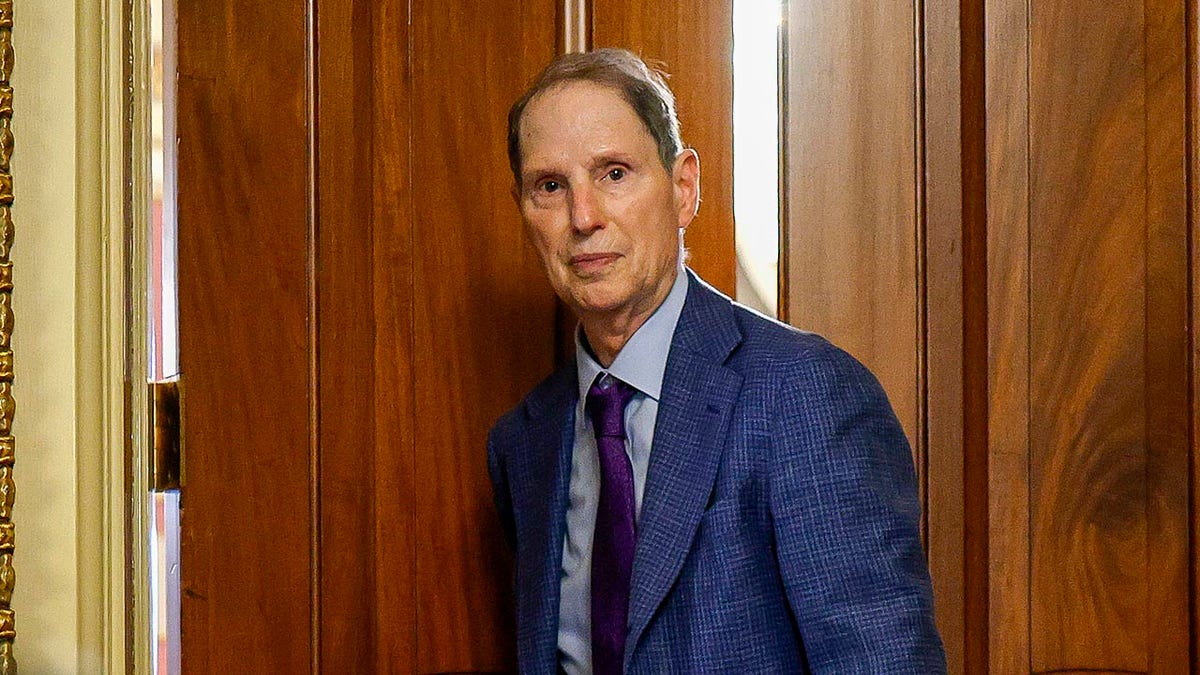
Sen. Ron Wyden, D-Ore., leaves a Senate Democratic meeting at the U.S. Capitol Building on Oct. 3, 2025, in Washington, D.C. (Kevin Dietsch/Getty Images)
CLICK HERE TO DOWNLOAD THE FOX NEWS APP
Thune said that there was «already a pretty substantial dialogue» between Cotton, Warner, their House counterparts and the White House to address reforms while ensuring that the «program works.»
«So we’re entertaining those ideas at the moment, and we’ll see where that conversation goes,» Thune said. «We got 45 days. I don’t like kicking the can down the road, not my jam.»
The Trump administration has lobbied Congress for weeks to pass a long-term FISA renewal bill with little to no modifications, but has repeatedly failed to make headway.
«This department strongly supports the reauthorization of FISA 702,» Department of War Secretary Pete Hegseth told lawmakers Wednesday. «It is not hyperbole to say many of the most important missions we have executed could not have happened without the intelligence gathered through FISA 702.»
senate elections, legislation, congress, john thune, bills










INTERNACIONAL
Investigan a siete funcionarios penitenciarios tras intentar ingresar dispositivos electrónicos a la cárcel en Costa Rica
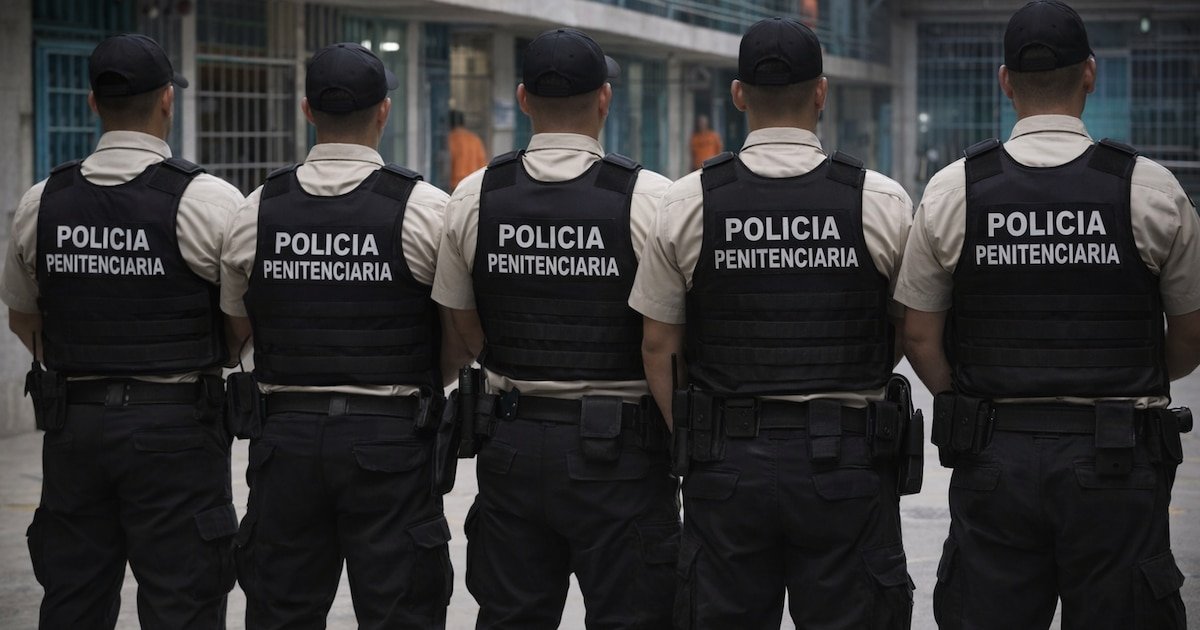
Siete funcionarios del Ministerio de Justicia y Paz fueron remitidos a la Fiscalía de Flagrancia del Primer Circuito Judicial de San José como sospechosos de intentar introducir dispositivos electrónicos prohibidos al Centro de Atención Institucional (CAI) San José, conocido como la cárcel de San Sebastián.
El caso fue detectado durante un operativo de control interno realizado por la Policía Penitenciaria en los accesos del centro penal, como parte de las inspecciones de rutina que se aplican al personal antes de iniciar su jornada laboral.
Según informó el Ministerio de Justicia, durante las revisiones los oficiales localizaron cuatro chips para teléfono celular, una llave maya, una tarjeta de memoria y un cable USB, artículos cuyo ingreso está prohibido debido al riesgo que representan para la seguridad dentro de los centros penitenciarios.
Entre las personas remitidas a las autoridades judiciales figuran cinco oficiales de la Policía Penitenciaria y dos funcionarios administrativos, quienes quedaron a disposición de la Fiscalía de Flagrancia para que se determine su situación jurídica mientras avanzan las investigaciones.
Hasta el momento, las autoridades no han revelado si los dispositivos estaban destinados a algún privado de libertad en particular ni si existe alguna organización criminal detrás del aparente intento de introducir estos artículos al centro penitenciario.

El hallazgo se produjo como resultado de los controles internos implementados por la propia Policía Penitenciaria, una estrategia que el Ministerio de Justicia ha reforzado en los últimos meses con el objetivo de combatir posibles actos de corrupción dentro del sistema carcelario.
El director de la Policía Penitenciaria, Pablo Bertozzi, afirmó que la institución mantendrá una política de absoluta firmeza frente a cualquier conducta que comprometa la seguridad de los centros penales.
“El orden y la disciplina también empiezan por casa. La Policía Penitenciaria seguirá fortaleciendo sus controles internos y actuará con absoluta firmeza frente a cualquier conducta que comprometa la seguridad de los centros penales. La corrupción no tiene cabida en esta institución”, manifestó el comisario.
El jerarca añadió que la institución continuará intensificando las revisiones tanto a visitantes como al personal penitenciario, con el propósito de evitar el ingreso de objetos que puedan facilitar actividades ilícitas dentro de las cárceles.
Por su parte, el Ministerio de Justicia respaldó la actuación de la Policía Penitenciaria y reiteró que la administración mantiene una política de “cero tolerancia con la corrupción”.
En un mensaje divulgado tras el operativo, la institución aseguró que continuará fortaleciendo los mecanismos de control interno para detectar y sancionar cualquier irregularidad cometida por funcionarios del sistema penitenciario.
“La Dirección de la Policía Penitenciaria pone orden y envía a la Fiscalía de Flagrancia a siete funcionarios del CAI San José por intentar meter artículos ilegales. Cero tolerancia con la corrupción. Vamos a limpiar la casa”, señaló el Ministerio de Justicia.
Los dispositivos electrónicos, especialmente los chips para teléfonos celulares y las memorias de almacenamiento, son considerados artículos de alto riesgo dentro de los centros penitenciarios, ya que pueden facilitar comunicaciones no autorizadas entre personas privadas de libertad y organizaciones criminales que operan fuera de las cárceles.

Por esa razón, el ingreso de este tipo de objetos está estrictamente prohibido y constituye una de las principales amenazas para el control y la seguridad penitenciaria.
El caso ahora permanecerá bajo investigación de la Fiscalía de Flagrancia, que determinará si existen elementos suficientes para presentar cargos contra los siete funcionarios involucrados.
Mientras tanto, el Ministerio de Justicia aseguró que continuará colaborando con las autoridades judiciales y reiteró que cualquier funcionario que incurra en actos que comprometan la seguridad del sistema penitenciario enfrentará las consecuencias administrativas y penales correspondientes.
La investigación representa uno de los casos más recientes en los que los propios mecanismos de control interno del sistema penitenciario permiten detectar presuntas irregularidades cometidas por funcionarios públicos, en momentos en que el Gobierno ha insistido en reforzar las medidas para combatir la corrupción y fortalecer la seguridad en los centros penales del país.
policía penitenciaria,Costa Rica,cárcel,seguridad,prisión,uniforme
INTERNACIONAL
Internal emails expose how July 4th bash is being derailed by Dem-run county: ‘Offensive’
NEWYou can now listen to Fox News articles!
San Diego County’s officials and its Democratic-led Board of Supervisors are facing backlash after an America 250 Fourth of July celebration originally pitched as a tribute to the Declaration of Independence was reshaped with DEI-focused sponsorship rules.
The celebration’s main programming is expected to feature a tribal blessing, a land acknowledgment, and nearly two-hours of community-story segments centered on «historically underserved populations.»
Bill Wells, the mayor of San Diego County’s City of El Cajon, and other critics pointed out that America’s founding appeared to be sidelined in tentative plans for the upcoming countywide Fourth of July event held along a San Diego-area waterfront. The event, which is lacking funds needed for a full setup, saw at least one sponsor drop after it was mandated they attest to a series of DEI principles as a condition of participating, according to county board materials and internal county emails obtained by Fox News Digital.
«I have an alternative plan: 1. Acknowledge America and its greatness. 2. Celebrate with fireworks and the American National Anthem,» Wells posted on X, alongside a copy of the 4th of July celebration’s planned schedule, which matches an internal county «run of show» obtained by Fox News Digital.
CALIFORNIA DEMS ACCUSED OF PUTTING SANCTUARY LAW OVER MIGRANT CHILD WELFARE CHECKS: ‘REAL CHILDREN’
A flyer posted online by San Diego County for its 2026 Fourth of July celebration at Waterfront Park, commemorating America’s 250th anniversary. (County of San Diego)
The rundown obtained by Fox News Digital lists a «Tribal Intimate blessing welcoming to land» shortly after guest arrival and sound check, followed by a «Welcoming and Land Acknowledgment» led by the emcee, then a «Tribal Invocation,» the Black national anthem and regular national anthem, and then nearly two hours of community-story segments focused on local tribal, Latino, Asian American, Native Hawaiian and Pacific Islander, LGBT, and Black and African communities.
The event, which will also feature music, food trucks, booths and other «cultural presentations,» then concludes with closing remarks, fireworks and clean-up.
«The official government July 4th itinerary of San Diego reads like the opening ceremony of the Democratic Socialists of America convention,» quipped David McIntosh, President of the conservative political advocacy giant Club for Growth.
DEMS PUT ON BLAST OVER POLL THAT SHOWS RECORD-LOW PATRIOTISM IN US: ‘TEAR OUR SOCIETY APART’
Back in February, Jim Desmond, a Republican San Diego County Supervisor, introduced an agenda item to bring forward a Fourth of July event «commemorating the 250th anniversary of the Declaration of Independence,» citing the area’s «deep-rooted relationship to the nation’s defense and civic institutions.»
Subsequently, the board, which is controlled by a 3-2 Democratic majority, introduced and passed a motion to amend weeks later, which directed the county’s chief administrative officer to coordinate with the Office of Equity and Racial Justice and the county’s Tribal Liaison to incorporate community engagement focused on tribal nations, immigrant communities, LGBT communities and other «historically underserved groups.»

People celebrate the 4th of July along the La Jolla coast on a hot summer day on July 4, 2023 in San Diego, California. San Diego is a top destination for summer travel. (Kevin Carter/Getty Images)
«Supervisors Desmond and Anderson brought forward a 250th celebration for the whole region. The three Democrats rewrote it, tied it to the county’s ‘equity, inclusion, and racial justice goals,’ and handed planning to the Office of Equity and Racial Justice,» Wells explained on X, posting images of the meeting minutes that showed the Democrats’ amendments.
«Independence Day, especially this one, is about celebrating and honoring America,» the mayor added in comments to Fox News Digital. «What the county of San Diego has created ignores this in favor of grievance and a sense that our country is not great or worthy of pride. That’s just offensive, especially in light of the fact that they’re using taxpayer money to do so.»
‘JESSE WATTERS PRIMETIME’ QUIZZES BEACHGOERS ON AMERICAN HISTORY FOR JULY 4TH
Among the changes was a requirement for event donors and sponsors to commit themselves to supporting the county’s woke DEI principles, which led at least one to drop out, according to internal county emails obtained and reviewed by Fox News Digital.
The sponsor’s pending $2,500 donation did not move forward after the donor declined to complete a required form mandating they show alignment with the county’s values on DEI and support for immigrant communities, the county staff emails indicated. Meanwhile, staff separately said in the emails that the event was short thousands of dollars needed for a full stage, lighting and sound setup.

Hundreds protest outside a rally held by President Donald Trump at Macomb County Community College in Warren, MI, on April 29, 2025. (Getty Images/Dominic Gwinn)
«Democrats are essentially excluding White community members from the Fourth of July» anti-DEI activist Robby Starbuck contended in response to the event’s planned schedule and «equity» focus on «underserved populations,» describing it as «vile.»
CLICK HERE TO DOWNLOAD THE FOX NEWS APP
Fox News Digital reached out to San Diego County, as well as its Department of Parks and Recreation, for comment on the criticism, but did not hear back.
america 250, dei, california, controversies state and local, state and local, celebrations, holiday occasions lifestyle
INTERNACIONAL
La guerra con Ucrania: la escasez de naftas pone a Vladimir Putin ante una inédita crisis interna
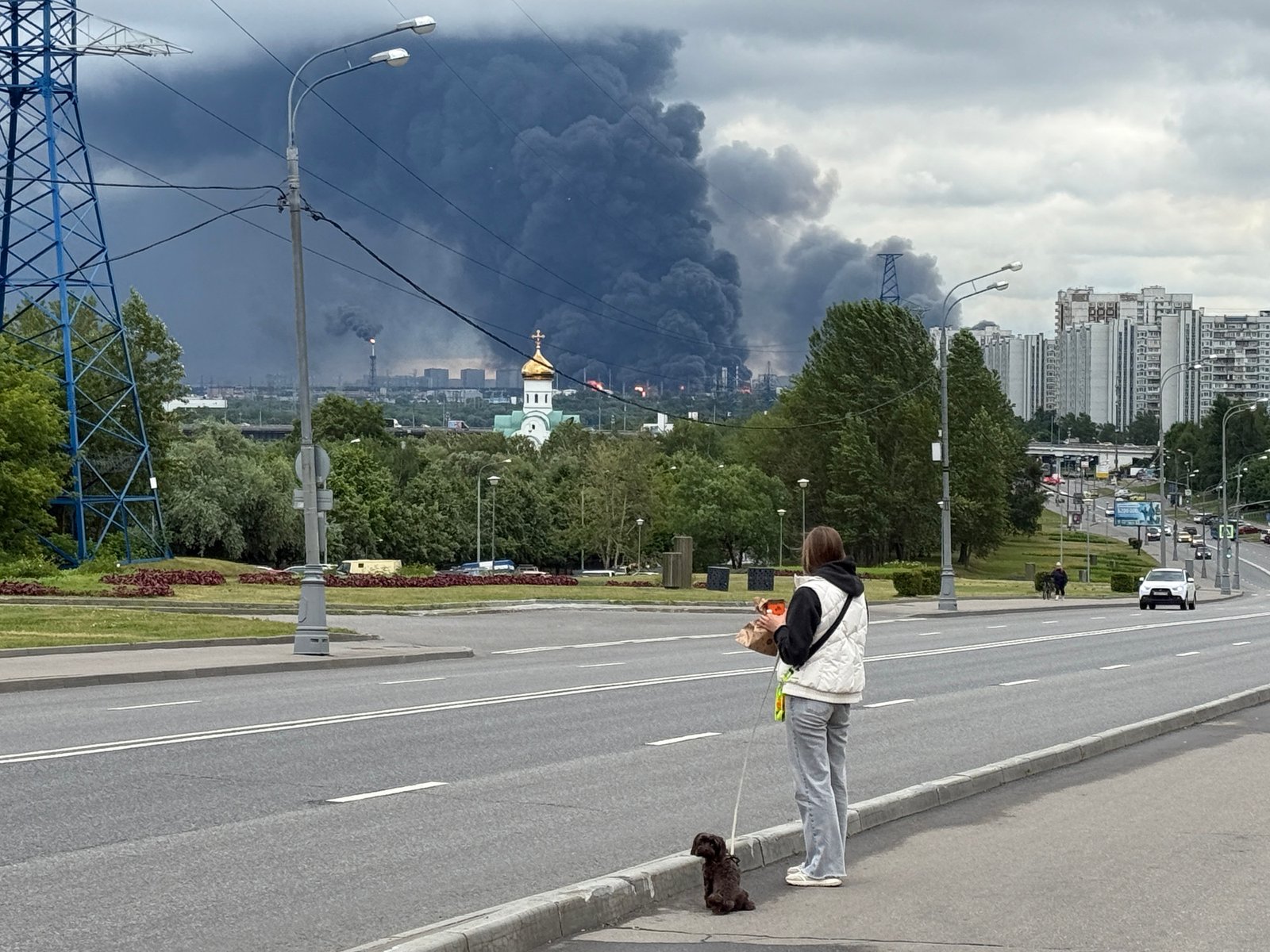
La escasez de combustible es un nuevo desafío político para el presidente Vladimir Putin ya que la implacable campaña de drones ucranianos contra las refinerías de petróleo de Rusia ha hecho que la guerra se convierta en un asunto de interés para la mayoría de los rusos de a pie.
Las colas en las estaciones de servicio son cada vez más largas, al igual que la frustración y la incertidumbre, ya que varios meses de ataques ucranianos han incendiado refinerías de petróleo y han interrumpido el suministro para los automovilistas en todo el vasto país.
Kiev ha logrado golpear e incendiar refinerías en lugares tan lejanos como Tiumén, a 1930 kilómetros de distancia en Siberia, y en la región de Moscú destruyó la principal planta, el punto de inflexión de la crisis actual. Según The Wall Street Journal, Sergey Vakulenko, exjefe de estrategia de Gazprom Neft, estima que el 28% de la capacidad de refinación de Rusia estaba inactiva.
Algo similar dijo a la agencia Associated Press Chris Wwafer, director ejecutivo de la consultora Macro-Advisory Ltd. “Un tercio de la capacidad de refinación de petróleo de Rusia está fuera de servicio”, aclarando que las refinerías no confirman públicamente el alcance de los daños.
Pero, pese a ese silencio, lo cierto es que, por primera vez en décadas, Rusia planea comenzar a importar gas, declaró el martes el portavoz del Kremlin, Dmitry Peskov. El domingo pasado, Putin admitió que estaba considerando prohibir también la exportación de diésel.
En muchas regiones se ha implementado el racionamiento de combustible, con largas filas de autos que se extienden durante horas a lo largo de las carreteras. Videos en redes sociales muestran a conductores atónitos ante las largas filas o maldiciendo por los surtidores vacíos y el aumento de los precios. El alcalde de la ciudad siberiana de Irkutsk incluso ordenó la instalación de baños portátiles para quienes esperaban en la fila.
La crisis del combustible, sin precedentes para una nación que es uno de los mayores productores de energía del mundo, ha hecho que la invasión a gran escala de Ucrania por parte de Moscú sea más palpable para los ciudadanos rusos de a pie que pocos otros acontecimientos en la guerra, que ya lleva cinco años de duración.
Esto provocó una inusual admisión por parte de Putin , quien reconoció que “persisten los problemas tanto para los automovilistas como para las empresas” y que “todavía hay colas en las gasolineras y no siempre es fácil encontrar el tipo de gasolina adecuado”. Insistió en que la escasez “no es crítica” y es “temporal”. Pero esas palabras no parecen tranquilizar a los automovilistas que hacen colas, según se aprecia en videos difundidos fuera de los canales estatales de difusión. “En la televisión dicen una cosa, y en la realidad es otra. … Hay colas por todas partes”, comentó un conductor, negándose a revelar su nombre completo por motivos de seguridad.
El presidente ucraniano, Volodimir Zelenski se hizo eco el lunes de ese sentimiento, escribiendo en Telegram que “Putin puede seguir afirmando en TV que supuestamente tiene todo bajo control”.
Pero los rusos pueden ver que la guerra “ha llegado al punto en que incluso un estado petrolero, una gasolinera, como se solía llamar a Rusia, ahora se enfrenta a la escasez de gas”, dijo el líder de Kiev.
Según un recuento de AP, Ucrania ha denunciado más de 50 ataques contra refinerías de petróleo, depósitos, terminales y otras infraestructuras energéticas en Rusia y la península de Crimea, anexionada ilegalmente, desde marzo. La cantidad de petróleo crudo que Rusia procesó para convertirlo en combustible en junio disminuyó un 25% con respecto al año anterior, hasta los 3,95 millones de barriles diarios, el nivel más bajo en más de dos décadas, según Gary Peach, analista de mercados petroleros de Energy Intelligence.
“Los cortes son extraordinarios”, comentó el experto.
Kiev describe los ataques como una campaña para presionar a Moscú a fin de que ponga fin a la guerra, socavando la logística militar y las líneas de suministro, al tiempo que lleva la guerra ante los ojos de la población rusa. Ucrania intenta además aislar Crimea, anexionada a Ucrania ilegalmente en 2014, con varios bombardeos que la han dejado sin naftas.

La mala noticia que recibió Alpine y Franco Colapinto en la Fórmula 1: el dato reglamentario que lo afecta para el resto del año

El riesgo país tocó mínimos en ocho años: ¿pueden seguir subiendo los bonos argentinos en dólares?

Senado: primer acercamiento entre Santilli y aliados para destrabar la agenda y avanzar con leyes demoradas

Investigan a siete funcionarios penitenciarios tras intentar ingresar dispositivos electrónicos a la cárcel en Costa Rica

España vs Austria: formaciones, hora y dónde ver por tv

El reclamo de Paula Chaves a Pergolini, a 23 años de Súper M, y la reacción de Mario: “Vamos a juicio que te lo gano”

Exigen que Adorni renuncie a su cargo en el directorio de YPF

Tras haber dejado su cargo de jefe de Gabinete, Manuel Adorni también renunciará como director de YPF

Procesaron y embargaron a Juan Grabois por la toma del Instituto Perón

Trump’s endorsement power faces new test in Louisiana Republican Senate showdown

 POLITICA19 horas ago
Con la incorporación de Santilli al Gabinete, el Gobierno relanza su estrategia para las elecciones 2027
- ECONOMIA3 días ago
Inflación: continuó la desaceleración en la cuarta semana y ahora marcan 1,8% para junio
- INTERNACIONAL3 días ago
Irán dilata nuevas reuniones con Estados Unidos e insiste en arancelar el paso por estrecho de Ormuz: se reunió con Omán