INTERNACIONAL
Combustibles alternativos: ¿los aviones y barcos podrán funcionar con algas?




INTERNACIONAL
Trump’s evolving China rhetoric raises eyebrows over TikTok strategy amid scorching election meddling warning
NEWYou can now listen to Fox News articles!
President Donald Trump is striking a noticeably softer tone toward China just days after delivering a public address to the nation accusing Beijing of «sinister election meddling.»
The fresh set of accusations levied on July 16 raised new questions about the Trump administration’s posture towards China, especially as it moves to keep TikTok operating in the U.S. while warning against the hostility of the world power against America.
«President Trump just told the nation that China tried to influence the 2020 election and weaken his presidency. During that same year, the intelligence community identified TikTok as a primary vector of CCP influence in the United States,» Hudson Institute Senior Fellow Michael Sobolik, who specializes in U.S.–China relations, told Fox News Digital.
«Beijing still controls the algorithm, which means that the very dangers Trump raised persist today,» Sobolik added.
TRUMP’S ELECTION INTEGRITY SPEECH: 7 TAKEAWAYS EVERY AMERICAN SHOULD KNOW
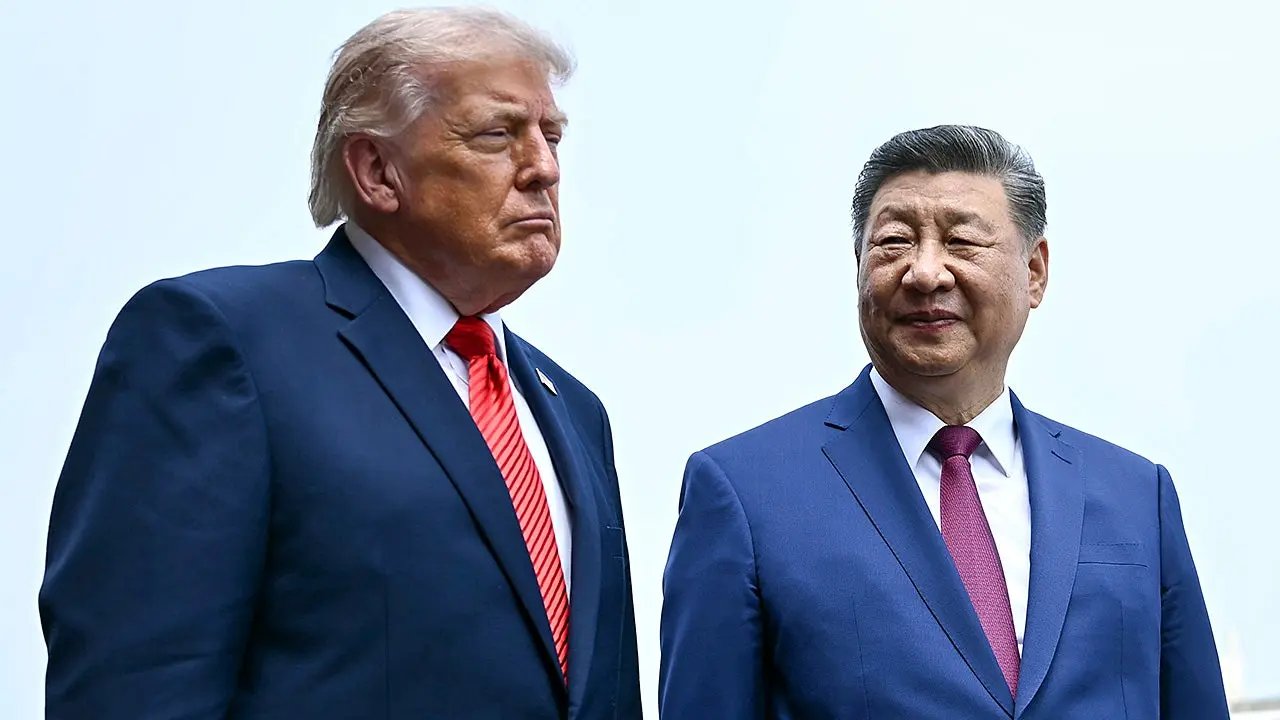
President Donald Trump and President Xi Jinping prepare for a key summit in May. (Andrew Caballero-Reynolds/Getty Images)
Trump has long taken a hard line on China, using tariffs, trade pressure and national security warnings to frame Beijing as one of America’s chief adversaries.
In his recent address to the nation, the president accused the Chinese Communist Party (CCP) of running a «sinister» campaign to interfere in U.S. elections and influence Americans and undermine his presidency.
Yet just five days later, on July 21, Trump suggested «China is maybe a little bit different today.» It struck a softer tone that falls more in line with the president’s backing of a deal to keep TikTok operating in the U.S., despite seeking during his first term and at the start of his second to force the app out over national security concerns.
«The CCP hasn’t changed. Xi Jinping hasn’t changed. But President Trump has,» Soblik detailed.
«He’s much more conciliatory toward China in his second term than he was in his first. He risks telegraphing significant weakness to Xi by letting China off the hook.»
Trump downplayed Beijing’s past election interference, suggesting both countries engage in similar tactics and indicating he was more focused on future negotiations than revisiting China’s actions.
TRUMP’S UPBEAT CHINA MESSAGE COLLIDES WITH DEEPENING BEIJING RIVALRY
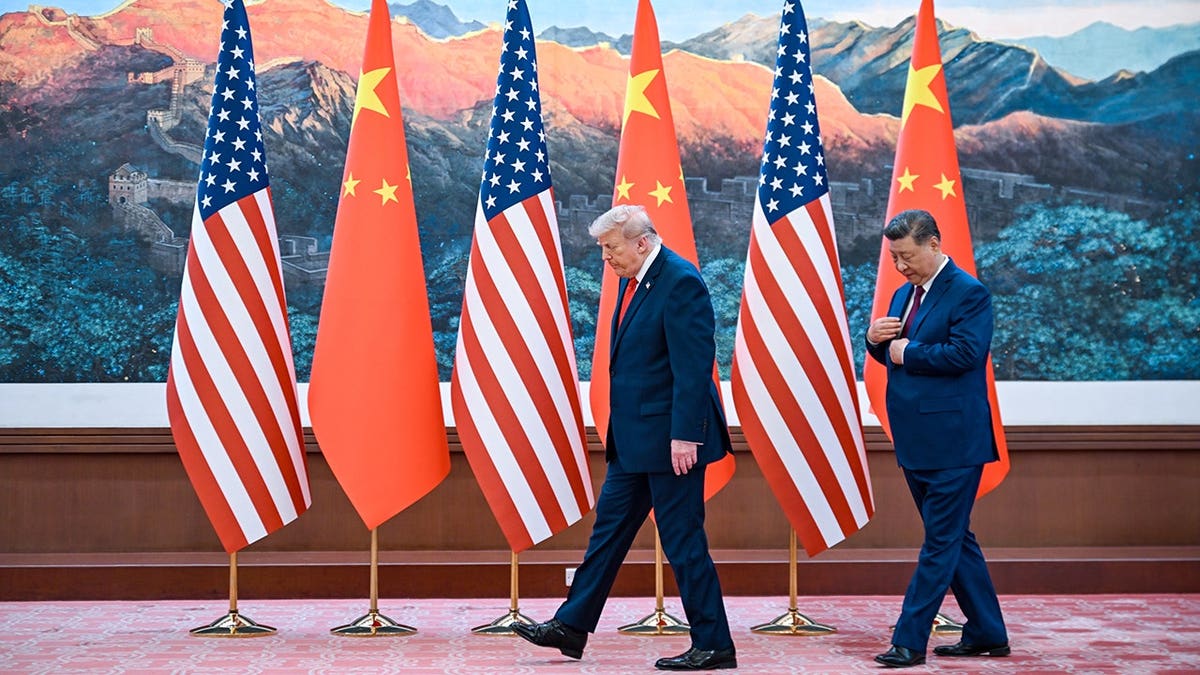
Chinese President Xi Jinping, right, and U.S. President Donald Trump meet at the Great Hall of the People in Beijing. (Kenny Holston/Pool Photo via AP)
«It took place a long time ago. I think China is maybe a little bit different today than it was then,» Trump conceded.
«But look there, they do things and we do things to them. I’ll be honest — do we do things to them too? It’s not a one-way street, but we’ll be talking to them,» said Trump when speaking about Chinese election meddling days after his «free and fair elections» televised remarks.
Sobolik argued the softened rhetoric could embolden Beijing to continue attempts to influence U.S. politics in the future.
In his first term, Trump sought to ban TikTok, saying it posed a national security risk. Then, during his second term, Trump joined the app, and in recent weeks so have his top cabinet members.
«President Trump has saved TikTok for its millions of American users — yet another promise made, promise kept,» White House spokesperson Olivia Wales told Fox News Digital. «With the new TikTok under the control of U.S. investors, Americans can continue to enjoy TikTok with their data fully protected.»
TikTok’s ownership deal was reconstructed at the beginning of this year to have majority U.S.-ownership while still giving Chinese technology company ByteDance a 19.9% stake – 0.01% below the threshold required under U.S. law.
CHILL COMING FROM TRUMP’S SUMMIT WITH XI IS PROOF OF A NEW COLD WAR WITH CHINA
While the app is based in the U.S., Sobolik said that TikTok’s algorithm remains under ByteDance’s control via a licensing regime.
«The fact that it’s training on U.S. data stored on servers in America doesn’t change the fundamental reality that a Chinese Communist Party-controlled company still controls the algorithm itself,» said Sobolik. «The administration hasn’t directly addressed the possibility that Beijing could calibrate the app’s algorithm in concerning ways.»
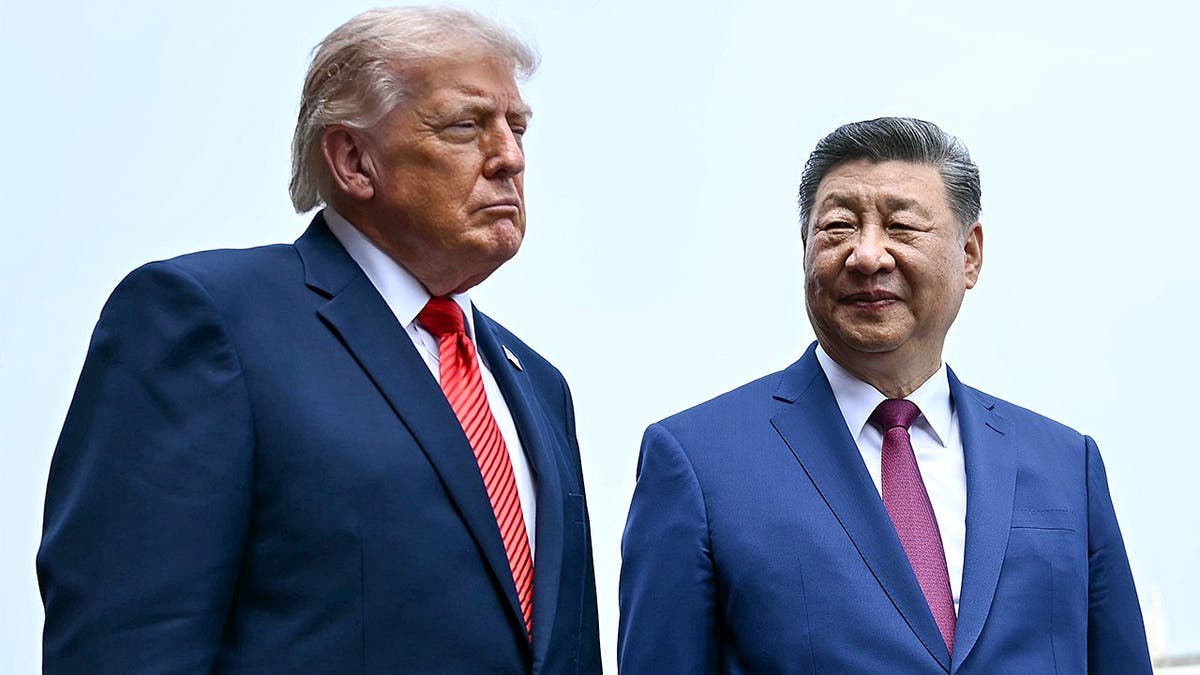
Chinese President Xi Jinping and President Donald Trump visited the Temple of Heaven on May 14, 2026, in Beijing, China, during a high-level summit between the two leaders. Xi warned that mishandling the issue of Taiwan could push the United States and China toward «conflict.» (Brendan Smialowski – Pool/Getty Images)
Trump visited China in May for a high-stakes summit with President Xi Jinping on several of the biggest pressure points in the U.S.-China relationship — from trade and Taiwan to AI and human rights. Those meetings appeared to end without firm public breakthroughs.
In his final meeting with Xi at the summit, Trump touted what he called «fantastic trade deals.»
Sobolik said Trump «wants what he’s always wanted with China,» which is a trade deal.
CLICK HERE TO DOWNLOAD THE FOX NEWS APP
«He needs to think broader and bigger. Economic competition is one part of the larger new cold war that’s playing out between Washington and Beijing,» he said.
Sobolik said Trump is placing too much emphasis on trade while overlooking other important areas of competition with China.
«Xi will have the advantage,» he added.
Trump said Xi will be visiting the U.S. on Sept. 24, with artificial intelligence expected to be a key topic during their talks.
white house, xi jinping, national security, china, donald trump, politics
INTERNACIONAL
China quiere que la guerra se eternice en Medio Oriente y multiplica su ayuda al régimen de Irán
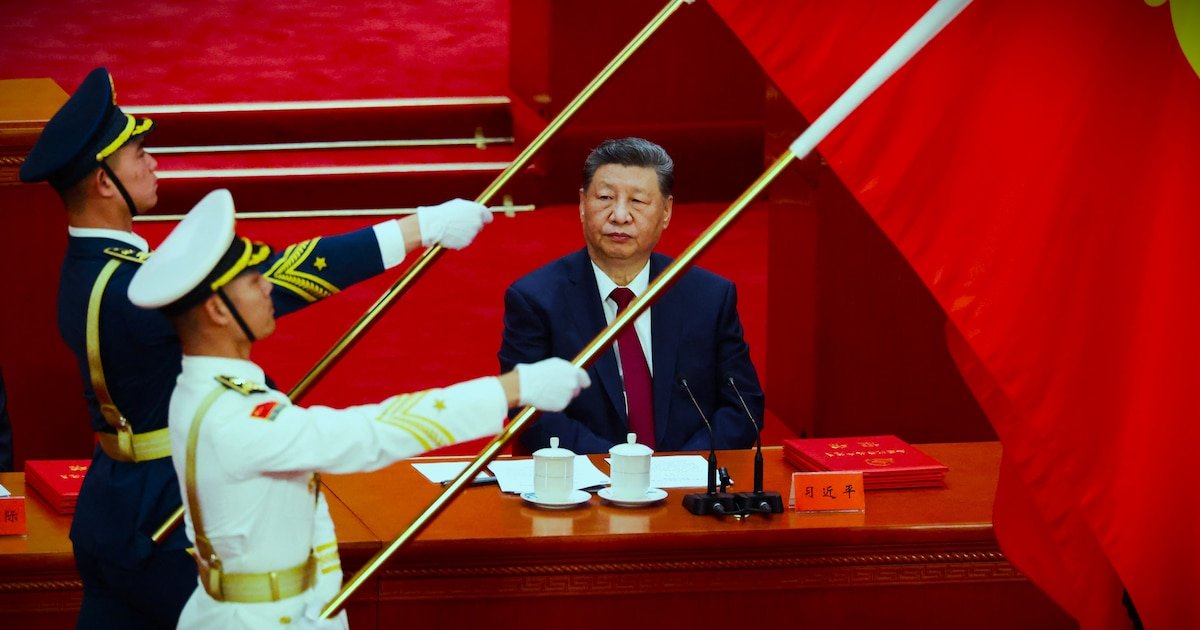
China no quiere una solución a corto plazo en Irán. El régimen conducido por Xi Jinping apuesta a que su principal rival militar, económico, comercial, tecnológico y estratégico se empantane una larga temporada negociando y gastando su arsenal en Medio Oriente. Busca evitar que Washington se enfoque definitivamente en el Indo-Pacífico. Pero Beijing juega con fuego y la última de sus maniobras podría destrabar la venta de armas a Taiwán aprobada por el Congreso de los Estados Unidos que por ahora la Casa Blanca mantiene en stand by.
De acuerdo a una investigación de la agencia internacional Reuters, Irán recibirá de China, en las próximas semanas, 400 lanzadores de misiles antiaéreos de uso sencillo y difíciles de detectar: se disparan desde el hombro. El contrato -por 70 millones de dólares y que involucra a la empresa Zhongqing Baoshang International Investment, con sede en Hong Kong– es para adquirir 400 sistemas de defensa aérea portátiles, incluidos misiles QW-12 y FN-16 de fabricación china.
En diciembre pasado, Estados Unidos aprobó la venta por 11 mil millones de dólares de un paquete de armamento para Taiwán. La isla se arma contrarreloj para prepararse para repeler un posible intento de invasión por parte de China. La operación incluye sistemas de cohetes HIMARS, obuses, misiles antitanque, drones y repuestos para otros equipos militares críticos. Pero aún el gobierno de Donald Trump no transfirió ese material a Taipei. ¿Lo hará ahora que China vendió armas al país que continúa prometiendo dar “muerte a Estados Unidos”?
Pero esta no es la primera vez que China se involucra de lleno en el conflicto que tiene como protagonistas a Estados Unidos, Irán e Israel.
El régimen de Xi reforzó la capacidad de su socio iraní para golpear activos de Estados Unidos en Medio Oriente al facilitarle datos de satélites para selección de blancos, una asistencia que, según un informe del think tank Hudson Institute, permitió a Teherán pasar de ataques que parecían fortuitos a una campaña más precisa contra radares, aviones de apoyo y sistemas de comunicaciones durante la Operación Epic Fury.
En mayo de 2026, la administración Trump sancionó a varias empresas radicadas en China por suministrar imágenes satelitales que facilitaron los ataques iraníes contra fuerzas estadounidenses. De acuerdo con la explicación oficial citada en el reporte, MizarVision difundió imágenes de código abierto sobre actividad norteamericana durante la campaña militar, Earth Eye entregó imágenes directamente a Teherán y Chang Guang Satellite Technology recopiló y proveyó material sobre instalaciones militares estadounidenses y aliadas.
El informe sitúa el origen de esa cooperación varios años antes. En 2024, la Guardia Revolucionaria Islámica habría establecido vínculos con Chang Guang y con MinoSpace Technology para asegurarse respaldo de inteligencia espacial. Ambas compañías operan dentro del ecosistema comercial chino vinculado al Estado y fabrican satélites avanzados de observación remota alineados con las prioridades estratégicas de Beijing.
Chang Guang produce pequeños cube-sats equipados con imágenes de alta resolución. La firma MinoSpace fabrica los satélites de observación terrestre de la serie Taijing. De acuerdo con el Hudson Institute, esa cooperación podía mejorar la capacidad iraní para vigilar instalaciones militares de Estados Unidos y acelerar el desarrollo de sus blancos.
El patrón de ayuda entre ambos regímenes se profundiza ahora con la venta de armas para derribar vehículos aéreos norteamericanos.
Pero no sólo Estados Unidos toma nota sobre esta asistencia militar. Los países árabes que sufren a diario las agresiones iraníes también ven cómo desde Beijing -un socio comercial importante para muchos de ellos- se refuerza la capacidad de quien a diario dispara misiles contra instalaciones militares, edificios, infraestructura civil y aeropuertos. Baréin, Emiratos Árabes Unidos, Qatar y Arabia Saudita sufren a diario estos ataques aéreos. ¿Tomarán nota de los socios de su enemigo o continuarán priorizando los negocios?
Mientras tanto, la tensión en Ormuz no se detiene. Irán continúa intentando mantener como rehén a los buques petroleros que intenten pasar por allí. La Guardia Revolucionaria Islámica interceptó y forzó la detención de tres petroleros en el estrecho. Muchos de esos busques también llevan banderas árabes. China también sabe eso. Y alimenta la maquinaria de guerra que lo hace posible.
X: @TotiPI
corresponsal:Director de Infobae América
INTERNACIONAL
China, Russia, Iran and North Korea form ‘axis of aggressors’ that could overwhelm US, book warns
NEWYou can now listen to Fox News articles!
China, Russia, Iran and North Korea are acting as a strategically aligned bloc even without a formal mutual-defense treaty, according to a new Foundation for Defense of Democracies book warning that their cooperation could leave the United States confronting multiple crises simultaneously.
The book, «Axis of Aggressors: Countering the Cooperation of China, Russia, Iran and North Korea,» examines how the four authoritarian governments support one another across military, economic, cyber and technology domains.
Its authors acknowledge that the grouping is not a NATO-style alliance. It has no unified command, comprehensive defense commitment or complete trust among its members. But they argue that its practical effects are already visible in active conflicts.
TRUMP TO CONFRONT XI AT HIGH-STAKES SUMMIT OVER CHINA BACKING FOR IRAN, RUSSIA
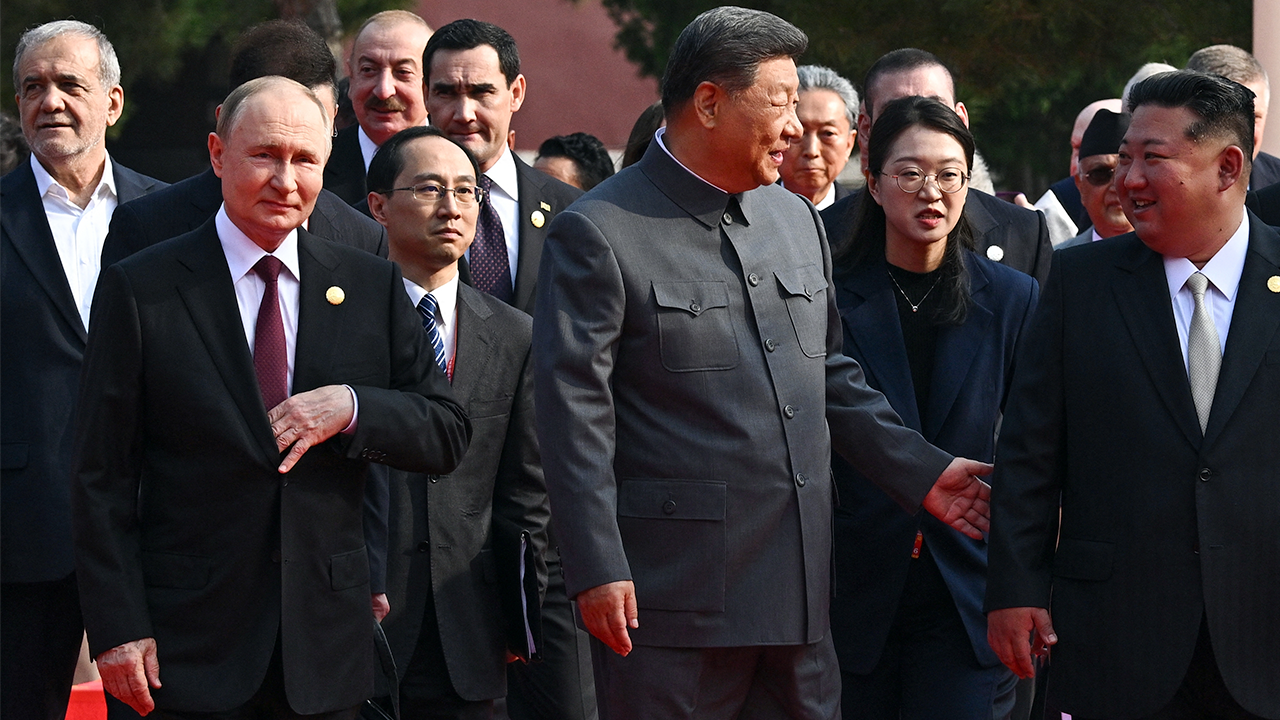
In this pool photograph distributed by the Russian state agency Sputnik, Russiain President Vladimir Putin, Chinese President Xi Jinping and North Korean leader Kim Jong Un walk before a military parade marking the 80th anniversary of victory over Japan and the end of World War II in Beijing’s Tiananmen Square on Sept. 3, 2025. Iranian President Masoud Pezeshkian is seen at left in the background. (Sergey Bobylev / POOL / AFP via Getty Images)
«I just got back from a couple of weeks in Ukraine, and when I’m sitting in Ukraine, it’s really obvious to me that Ukraine is fighting Russia, North Korea, Iran and China,» retired Rear Adm. Mark Montgomery, one of the book’s three authors, told Fox News Digital.
Montgomery pointed to North Korean ammunition and troops, Iranian drones and production expertise, and Chinese economic and technological support for Moscow.
«China is backstopping the whole thing, providing the economic backstop to Russia’s economy so they can survive this four-year catastrophic event for Russia,» Montgomery said. «They’re providing microelectronics that we see in ballistic, cruise and hypersonic missiles.»
The book’s researchers documented 616 instances of security cooperation among the four governments from Jan. 1, 2019, through Dec. 31, 2025, including arms transfers, weapons development, military exercises, intelligence sharing and military exchanges.
A ‘simultaneity problem’ for the U.S.
The central danger, Montgomery said, is what the book calls the «simultaneity problem.»
«We don’t get to handle these with a singularity anymore. We have to handle this with a simultaneity,» he said. «And I don’t think we can handle two problems at once, much less three or four.»
During a potential confrontation between China and Taiwan, Montgomery said, North Korea could threaten South Korea or conduct limited attacks intended to pin down U.S. forces. A conflict involving Russia and NATO’s Baltic members could be accompanied by Iranian terrorism or other hostile activity.
THREE KEY REASONS WHY AMERICA CANNOT AFFORD TO LOSE TAIWAN TO COMMUNIST CHINA
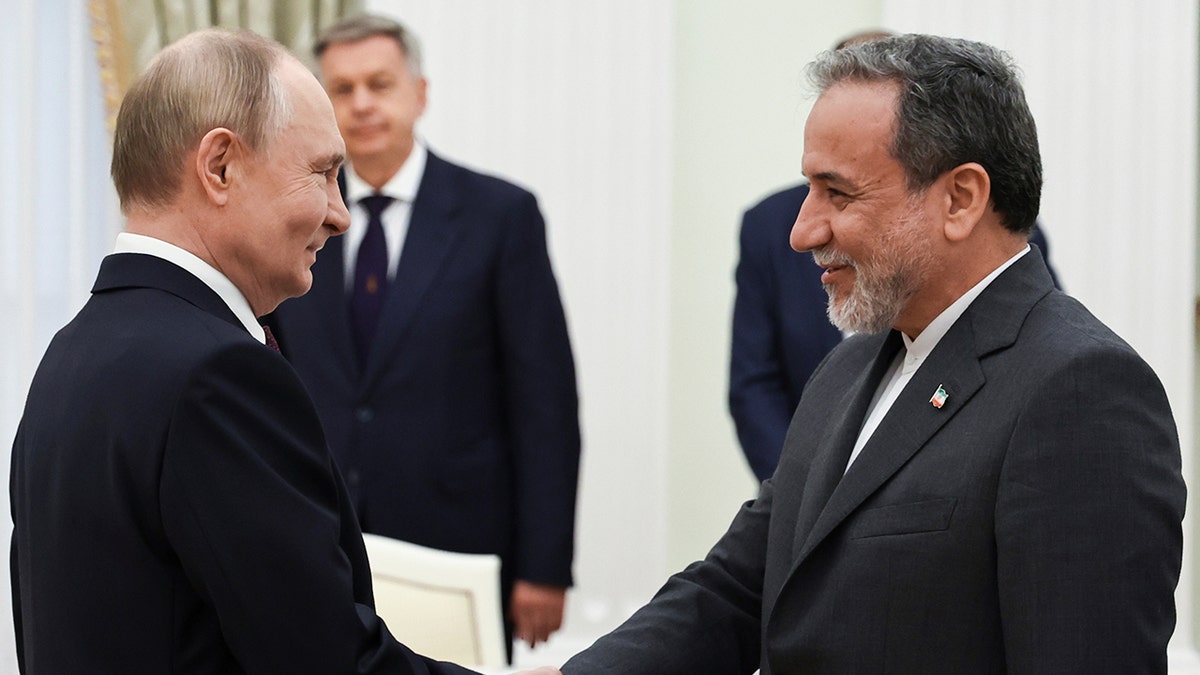
Russian President Vladimir Putin, left, greets Iranian Foreign Minister Abbas Araghchi prior to their talks at the Kremlin in Moscow, Russia, Monday, June 23, 2025. (Alexander Kazakov, Sputnik, Kremlin Pool Photo via AP)
The book identifies China-Russia military cooperation as the axis’s most consequential bilateral relationship. Chinese dual-use products have helped sustain Russia’s defense industrial base, while Moscow is transferring technology and battlefield lessons that could assist China in a Pacific conflict.
North Korea has supplied Russia with millions of artillery rounds, ballistic missiles and troops, while Moscow has assisted Pyongyang’s missile, space, drone and nuclear programs, according to the book.
Iran has provided Russia with drones and production knowledge. The book warns that Russian and Chinese assistance could also help Tehran rebuild military capabilities damaged during its conflicts with Israel and the United States.
«The longer they can entangle the United States, whether it was in Ukraine or in Iran, China and Russia are the primary beneficiaries,» Montgomery said.
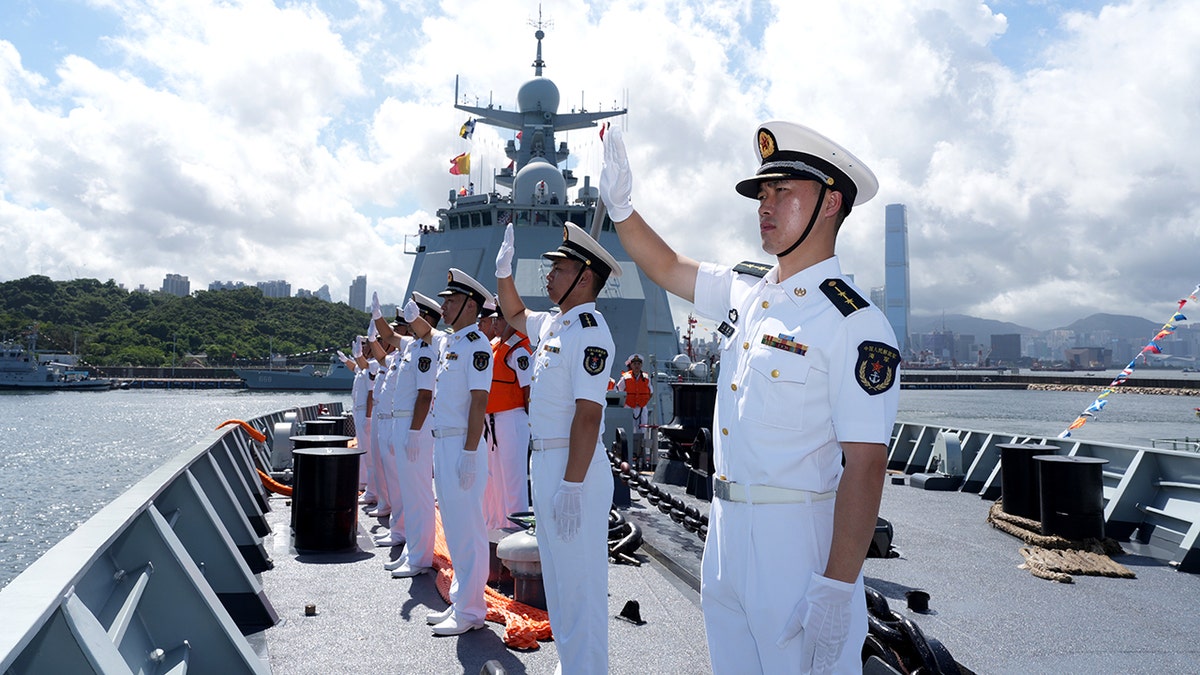
Officers and soldiers aboard the Chinese People’s Liberation Army PLA Navy’s guided-missile destroyer Nanning wave as the ship enters the waters of the Hong Kong Special Administrative Region in south China, July 2, 2026. (Ji Peng/Xinhua via Getty Images)
China bankrolls the axis
Economic ties underpin the military cooperation, according to co-author Elaine Dezenski, who described the four-country economy as a «fractured alignment.»
«These four players are bound together more by necessity than they are by a specific trust or shared strategy among them,» Dezenski told Fox News Digital. «China needs energy. Russia and Iran need buyers for their oil and gas. And North Korea needs any lifeline that it can get.»
China purchases discounted Russian and Iranian energy while providing goods, technology and access to its domestic market.
The relationships remain unequal. Russia and Iran compete to sell similar products, while China can seek other suppliers. But Dezenski said those divisions should not obscure the benefits the cooperation provides.
«The economics of this very much underpin the foundations for the military engagement that we see,» she said.
The book says China purchases as much as 95% of Iran’s oil exports. Some sanctioned oil is routed through third countries, relabeled or processed by independent Chinese refineries known as «teapots.»
«The export juggernaut that is China today is fueled by sanctioned oil and gas,» Dezenski said.
TRUMP MAY CLAIM HE WON THE FIGHT WITH IRAN, BUT THERE’S A BIGGER WAR ALREADY UNDERWAY
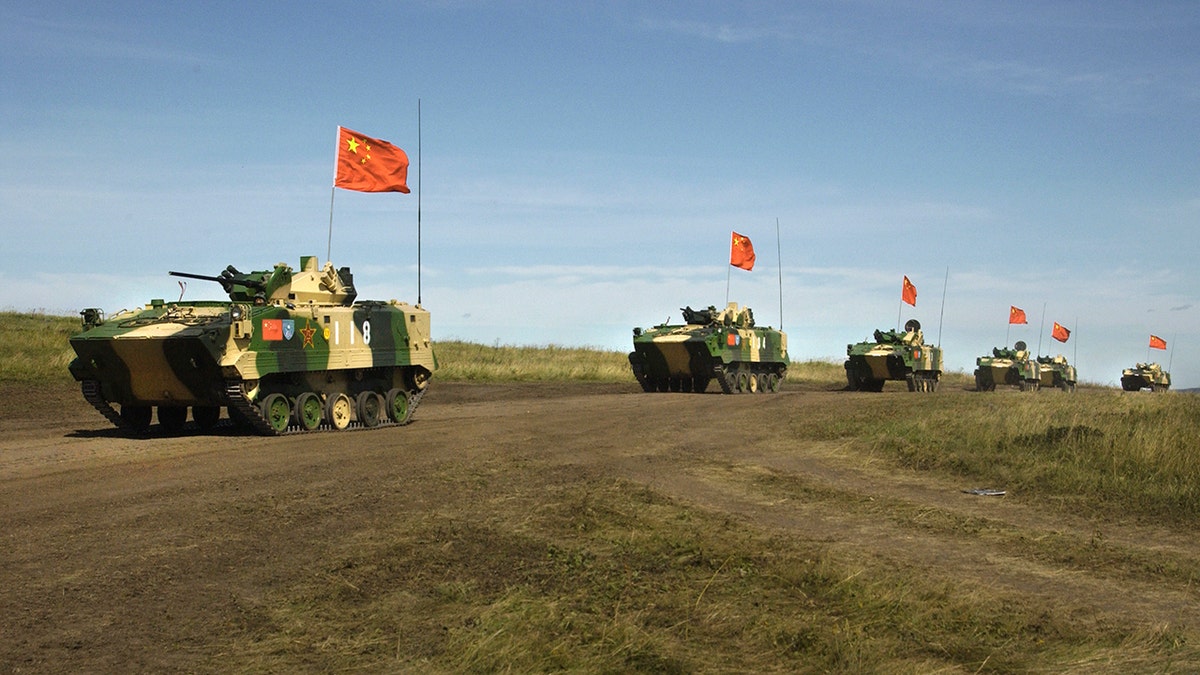
In this Aug. 13, 2007, file photo, a convoy of Chinese APCs rolls by during a rehearsal for a massive joint military exercise by the two former Cold War rivals, the first on Russia’s territory in the Chelyabinsk region in Russia’s Ural Mountains. Chinese and Russian military forces are engaged in joint exercises through Friday, Aug. 13, 2021, in northwestern China as ties grow between the two autocratic states amid uncertainty over instability in Afghanistan. (AP Photo, File)
New payment networks challenge U.S. leverage
Dezenski also warned that China, Russia and Iran are developing payment systems outside traditional Western banking infrastructure. More trade is being settled in yuan through China’s Cross-Border Interbank Payment System, or CIPS, potentially reducing Washington’s ability to enforce sanctions through the dollar system.
«We need to really think about that sooner rather than later, before this alternative payment system becomes too big to tackle,» Dezenski said.
Cyber ties blur the state-criminal line
Montgomery said the line between criminal hackers and government operatives is often deliberately blurred in all four countries.
«These regimes routinely outsource work to criminal groups to keep their own hands clean, and those groups are increasingly networking with each other,» he said.
The book cites ties involving Iranian cybercriminals and Russian ransomware groups, Chinese actors on Russian dark-web forums, and Russian and North Korean state-backed hackers using shared operational infrastructure.
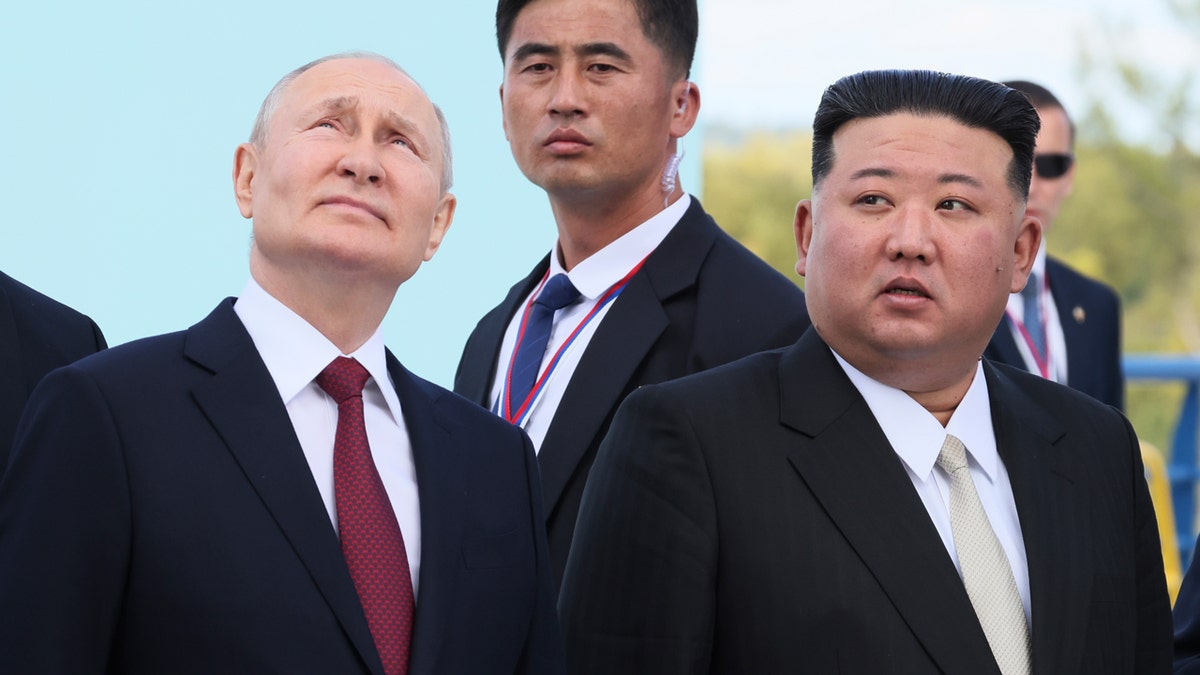
Russian President Vladimir Putin, left, and North Korean leader Kim Jong Un, right, examine a launch pad of Soyuz rockets during their meeting at the Vostochny cosmodrome outside the city of Tsiolkovsky, about 125 miles from the city of Blagoveshchensk in the far eastern Amur region of Russia, on Sept. 13, 2023. North Korean leader Kim hailed the country’s relationship with Russia on June 12, 2024, as reports suggest that Russian President Putin will soon visit the isolated country for his third meeting with Kim. (Mikhail Metzel, Sputnik, Kremlin Pool Photo via AP, File)
Outside experts see an integrated threat
Carrie Filipetti, executive director of the Vandenberg Coalition and a former State Department official during the first Trump administration, said drone warfare demonstrates how assistance moves among the countries.
«Chinese components are used to create Iranian drones, which are then deployed by the Russians against Ukrainian civilians,» Filipetti told Fox News Digital.
She said the relationship has also endangered American troops, pointing to the January 2024 Tower 22 attack in Jordan, which killed three U.S. Army Reserve soldiers and wounded more than 40 service members.
«The military and ideological relationship between Russia and Iran is not just a theoretical threat to the United States — American service members have been killed as a result of it,» Filipetti said.
Filipetti said the attack used an Iranian drone and Russian tactics developed during the war in Ukraine. «These adversaries don’t agree on everything, but they do on one thing: to reorient the world away from America and the West,» she said. «Our service members and citizens will continue to suffer until we treat the threat as the united threat it is.»
Retired Air Force Lt. Gen. Richard Newton said the danger stems not only from military modernization in each country, but from the degree to which the four governments are increasingly coordinating.
«I couldn’t agree more with the underlying findings the authors present regarding the rapid military modernization unfolding across multiple domains — air, sea, land, space and cyber — emanating from China, Russia, Iran and North Korea,» Newton told Fox News Digital.
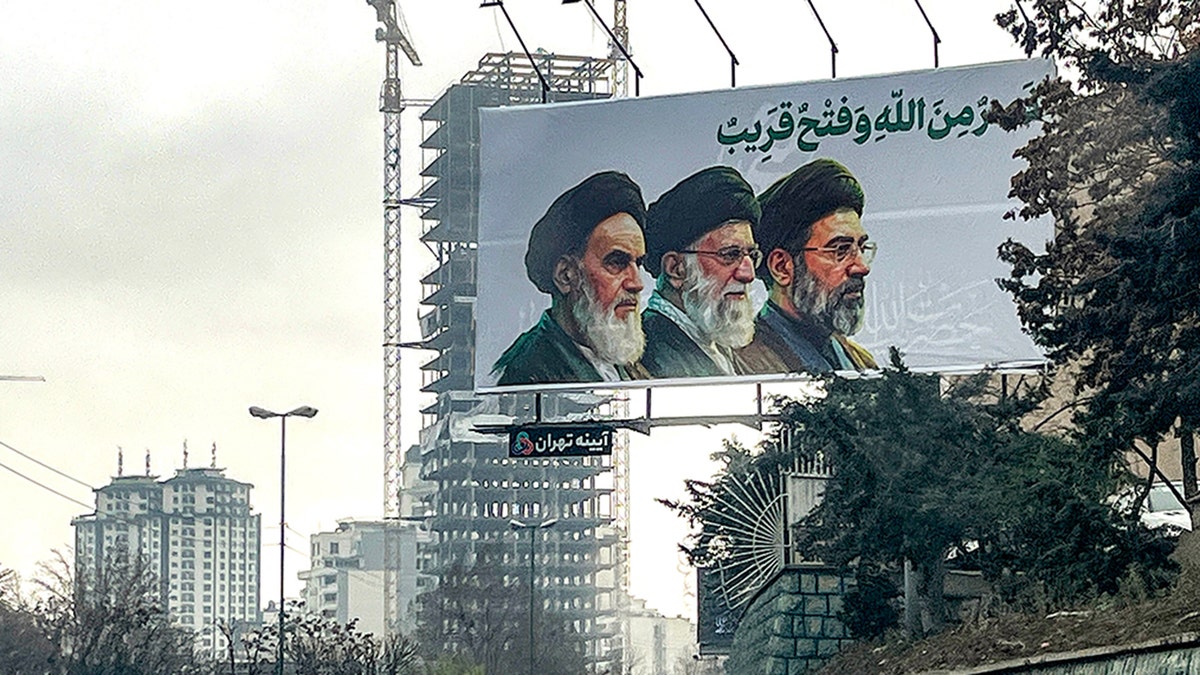
A billboard depicting Iran’s supreme leaders since 1979: (L to R) Ayatollahs Ruhollah Khomeini (until 1989), Ali Khamenei (until 2026), and Mojtaba Khamenei (incumbent) is displayed above a highway in Tehran on March 10, 2026. Iran marked the appointment of Ayatollah Mojtaba Khamenei to replace his father as its supreme leader on March 9, 2026. (AFP/Via Getty Images)
«These nation-states represent extraordinary adversarial challenges for the United States. That’s concerning enough,» he said. «But a major challenge President Trump is facing in his second administration is the level and degree of integration, synchronization and coordination among these four adversaries, who are more unified today than ever in their collective pursuits to threaten U.S. national security interests.»
Newton said the changing character of warfare, demonstrated by more than four years of fighting between Russia and Ukraine and the current U.S.-Iran conflict, has compounded the threat.
«Couple that with the changing nature of warfare we’ve been witnessing,» he said, «and the task to defend our nation is now much more complex and daunting.»
Retired Air Force Gen. Philip Breedlove, who served as NATO supreme allied commander and commander of U.S. European Command from 2013 to 2016, argued that Washington’s language understates the severity of the confrontation.
«We often say that we are in ‘strategic competition’ with China and Russia. They are at war with us,» Breedlove told Fox News Digital.
Breedlove said China, Russia, Iran and North Korea «are not partners looking for cooperation with the U.S.,» but governments seeking to «diminish and defeat» American power.
«The enemy gets a vote,» Breedlove said. «Our enemies are voting by their support to Russia and Iran.»
He added that assistance from the other countries has become increasingly important to Moscow as it struggles to sustain its war.
«Aid is critical to Russia,» Breedlove said. «Russia is failing and becoming ever more dependent on its allies.»
The authors recommend stronger coordination with allies, expanded defense production, greater protection of U.S. critical infrastructure and more aggressive sanctions enforcement.
CLICK HERE TO DOWNLOAD THE FOX NEWS APP

The war in Iran has pushed China and Russia closer together. (Sergei Guneev/Reuters)
Dezenski called for targeting the full network supporting sanctioned Russian and Iranian oil, including refineries, ports, insurers and financiers, rather than focusing primarily on individual vessels.
«We need to treat this axis as a threat, as a combined threat,» Montgomery said, «that will confront us in every one of our crisis areas.»
national security, china, foreign affairs, russia, war with iran, north korea

El Senado avanza con 30 nombramientos judiciales y tratará los pliegos de dos candidatos para la Cámara que revisará el caso Libra

¿Dónde ver EN VIVO el Rosario Central vs Racing Club por el Torneo Clausura 2026?

Uno de los nuevos abogados de Cristina Kirchner desató una polémica al burlarse de las personas trans

Trump’s evolving China rhetoric raises eyebrows over TikTok strategy amid scorching election meddling warning

Juicio por Loan Peña, en vivo: hablaron los padres del nene desparecido, que participan de la audiencia

Javier Milei y sus medidas, EN VIVO: tras sus insultos a Lula, el Presidente volvió a poner en la mira a Pedro Sánchez

Crisis entre Milei y Lula: la trama política, personal y geopolítica detrás del mayor choque diplomático entre Argentina y Brasil

Cuentapropismo emocional en lo profundo del conurbano

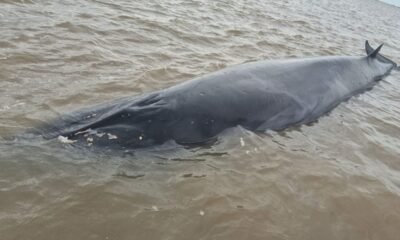
San Isidro: la ballena que quedó varada en un banco de arena murió pese al operativo de rescate

Joaquín Furriel contó cómo fue ver la final del Mundial con su novia española: “Una situación incómoda”

 POLITICA2 días ago
Crisis entre Milei y Lula: la trama política, personal y geopolítica detrás del mayor choque diplomático entre Argentina y Brasil
- SOCIEDAD3 días ago
San Isidro: la ballena que quedó varada en un banco de arena murió pese al operativo de rescate
- POLITICA3 días ago
Milei cruzó al aire a De Mendiguren, exministro de Duhalde: “Vos, sí, ladrón”