INTERNACIONAL
It never ends: GOP moves to fund border, Democrats blast Trump spending


NEWYou can now listen to Fox News articles!
This story never ends.
The government is still not fully funded for the rest of the fiscal year – meaning September 30.
Yes. The House and Senate approved a bipartisan bill funding most of the Department of Homeland Security in late April. It’s similar to what the Senate approved unilaterally in late March. But the House never took it up until just before a recent Congressional recess.
Now the GOP is trying to go around Democrats and pass a three-year bill to fund ICE and the Border Patrol. Democrats never secured reforms at ICE. So they aren’t willing to help out. That’s why Republicans are using a special process called budget reconciliation to bypass Democrats.
President Trump holds a design of a proposed presidential ballroom at the White House. (Aaron Schwartz/CNP/Bloomberg)
The only hitch is that it takes a while. The goal is to pass this bill by June 1.
House GOP pushes back on Senate’s ‘skinny’ plan to end record-breaking DHS shutdown
Republican Congressional leaders initially wanted to make this bill rather spare, just funding ICE and Border Patrol. But they expanded that measure to include $1 billion for President Trump’s ballroom security after the recent assassination attempt at the White House Correspondents’ Dinner.
So Democrats are launching a blitz about the ballroom.
RELATED: REPUBLICANS QUESTION TRUMP BALLROOM FUNDING IN DHS BILL
«Republicans say let them eat cake and demand American taxpayers build Trump a palace while they’re at it,» said Senate Minority Leader Chuck Schumer (D-N.Y.) «These ‘ballroom Republicans’ have a constituency of one: Donald Trump’s ego.»
«The president just plowed down the East Wing of the White House. And it sits there as a gaping hole waiting to be filled. It was going to be his billionaire buddies filling it. Now it’s the American taxpayers,» complained Senate Minority Whip Dick Durbin (D-Ill.)
Senate Republican leaders initially insisted that the latest funding bill only stick to funding Border Patrol and ICE.
«While my personal preference is to put as much as you possibly can in this reconciliation vehicle, there may only be an appetite for Border Patrol or ICE,» said Rep. Russell Fry (R-S.C.)
But the decision by GOP leaders to shove $1 billion into the bill opens the floor for other Republicans to stuff additional priorities into this budget reconciliation measure.
«I’d love to see the SAVE Act in some form or fashion,» said Rep. Pat Fallon (R-Texas) on Fox, referring to the bill which requires proof of citizenship to vote.
«There are a lot of good conservative wins that we can put forth for the American people,» said Rep. Greg Murphy (R-N.C.) on Fox Business.
Some pro-life Republicans are pushing an extension of a ban on money for Planned Parenthood. The prohibition expires later this year.
«It’s been a very thorny issue. It’s all under negotiation right now,» said President Trump.
Meantime, Republicans accuse Democrats of returning to their mantra to defund the police as they fight Border Patrol and ICE funding. Democrats remain opposed because they never secured the safeguards they wanted for ICE after what happened this winter in Minnesota.
«My Democrat colleagues refused to provide a single dollar for the men and women who protect our borders,» said Senate Majority Leader John Thune (R-SD).

Senate Minority Leader Chuck Schumer (D-NY) as Democrats criticize a DHS funding proposal. (Mariam Zuhaib/AP Photo)
Efforts to fully fund the Department of Homeland Security emerged as a flashpoint in recent years. There are too many controversial policy areas fused together under one federal roof. That’s why there’s now a bipartisan plan to permanently split up DHS.
«It’s just become too big. It’s become too bureaucratic,» said Rep. Jared Moskowitz (D-Fla.), one of the chief sponsors of the bill.
The legislation would make the Federal Emergency Management Agency (FEMA) its own cabinet-level department. The Secret Service would report directly to the President. And the Transportation Security Agency (TSA) would head to the Department of Transportation.
Consider the consternation by travelers with the government not paying TSA during the 43-day comprehensive government shutdown. The same thing happened over the winter and into the spring as DHS remained unfunded.
Moskowitz believes his legislation would curb some government shutdowns. And, it would shield tourists from fiscal fallout.
«The American people’s travel cannot be held up in the political dysfunction of Washington,» said Moskowitz.
But that debate is for another day. The immediate question is if the Republican-led House and Senate can advance the package to finish off funding for ICE and CBP.
Secret Service Director Sean Curran met with Senate Republicans over lunch Tuesday to defend the $1 billion request.
Sen. Lisa Murkowski (R-Alaska) was skeptical after she emerged from the meeting, noting that the Administration needed to provide «justifications» and «details,» not «just toplines.»
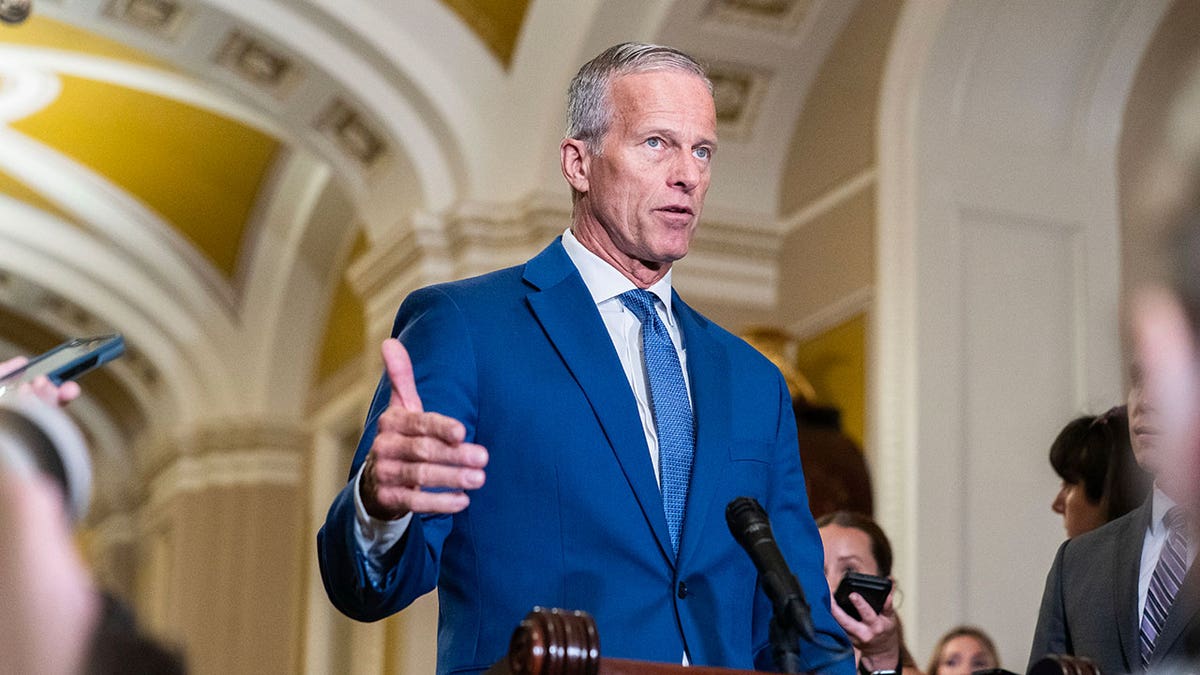
Senate Majority Leader John Thune (R-SD) as he defends a DHS funding proposal on Capitol Hill. (Maxine Wallace/The Washington Post via Getty Images)
Senate Majority Leader John Thune (R-S.D.) defended the spending request.
«You’ve got a President with three assassination attempts just in the last two years. And obviously the money that’s in there is about securing the building. And the Secret Service has a job to protect the president. We need to make sure they have the tools to do it,» said Thune.
After the meeting, Thune said Curran «did a very good job of laying it out and developing the case for why these resources need to be used.»
Other lawmakers need to hear more.
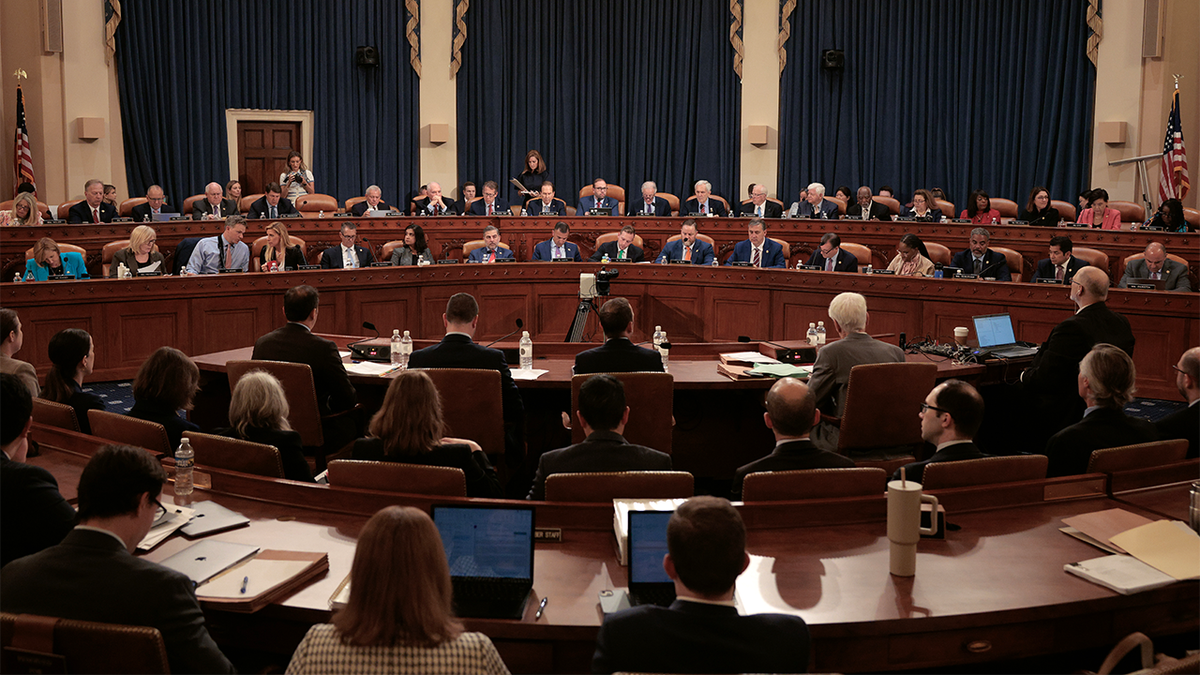
House lawmakers sit in the chamber on Capitol Hill. (Chip Somodevilla/Getty Images)
«I don’t know if they’re talking about infrastructure dollars or other kind of technology,» said Rep. Dave Taylor (R-Ohio). «I need to see the details before I pass judgment on whether or not the request is reasonable.»
Remember that Republicans want to support the President. But they also don’t want anything attached which will hold up ICE and Border Patrol funding. Especially this late in the game.
«Members are diving in a little bit. They want to understand how much of this is really related to security,» said Rep. Dusty Johnson (R-S.D.) «Obviously, we have to keep the President and his guests safe. But when you’re talking about $1 billion, members are going to ask a lot of questions. They’re digging into details. I don’t think we know exactly how this shakes out yet.»
CLICK HERE TO DOWNLOAD THE FOX NEWS APP
Here’s what we do know: The Senate Budget Committee won’t meet until late next week to prep its version of the bill – regardless of what’s in or out of it.
The Senate must then conduct a «vote-a-rama» which goes around the clock to adopt the measure. Then whatever the Senate adopts goes to the House.
This won’t play out until the final days of next week, just before the Memorial Day recess. President Trump established June 1 as a deadline for finishing this bill.
The House just adjusted its schedule for next week. The House won’t meet for votes until next Wednesday, May 20. That means there’s a chance the House may need to hang around Washington for part of Memorial Day weekend to pass the bill. The House and Senate are both scheduled to be out of session for Memorial Day week itself.
If lawmakers pass this bill, the fight over all government funding for Fiscal Year 2026 will finally conclude. That’s sixteen months after House and Senate committees were hearing testimony from cabinet departments and agencies about what they needed for last fall.
RELATED: SENATE TAKES MAJOR FIRST STEP TO PREVENT FUTURE SHUTDOWNS WITH PAINFUL ACCOUNTABILITY PLAY
And yet this story continues.
Even if they pass this final tranche of funding for DHS, lawmakers have to start again on the spending hamster wheel for this fall. Otherwise, there’s another government shutdown on October 1.
congress, budget house of representatives politics, government shutdown, donald trump, homeland security













INTERNACIONAL
Tim Walz offers strange defense for pardoning convicted child rapist Trump administration deported

NEWYou can now listen to Fox News articles!
Minnesota Gov. Tim Walz publicly defended his vote to pardon a Laotian national who had been under a final removal order after losing legal status following a child sex crime conviction of first-degree criminal sexual conduct involving a 10-year-old girl after the Trump administration deported him to Laos last week.
Tou Lue Vang, 42, received a pardon from Minnesota’s Board of Pardons on June 10. On Friday, the Trump administration announced Vang’s legal status had been revoked and that he had been deported to his home country of Laos.
Asked about the deportation, Walz questioned what the move accomplished.
EXPOSED DOCS REVEAL WHY TIM WALZ BOARD AWARDED REPEAT CHILD RAPIST PARDON: ‘NO FUTURE’
Minnesota Democratic Gov. Tim Walz (left) and the state Board of Pardons awarded a pardon to Laotian national Tou Lue Vang (right), who was convicted of repeatedly sexually assaulting an underage girl. (Salih Okuroglo/Anadolu via Getty Images; Department of Homeland Security)
«Did that make us any safer?» Walz said Tuesday, according to KTTC. «Did that make the children that are left behind any more stable?
«Did it improve the idea that we can’t all be judged by our worst day?»
«And I want to be very clear,» Walz continued. «These are horrific crimes. They often are.»
ALLEGED CUBAN INFLUENCE OPERATIVE, FAMILY IN FEDERAL CUSTODY AFTER RUBIO REVOKES LEGAL STATUS

Minnesota Gov. Tim Walz speaks during a debate at the CBS Broadcast Center Oct. 1, 2024, in New York City. (Chip Somodevilla/Getty Images)
Walz also said Vang’s pardon was not about immigration policy, noting that the Board of Pardons had denied clemency to other applicants facing immigration-related consequences.
Secretary of State Marco Rubio announced Vang’s deportation Friday, telling Fox News Digital, «Americans should never have to live in fear that foreign sex predators — shielded from deportation by their own elected officials — could endanger them or their children.
«That’s why I terminated his legal status in the United States,» Rubio continued. «Vang has now been removed from our country and will never pose a threat to any American ever again.»
ILLEGAL IMMIGRANT SOCCER COACH WHO USED ALCOHOL AND DRUGS TO SEXUALLY ABUSE KIDS LEARNS FATE
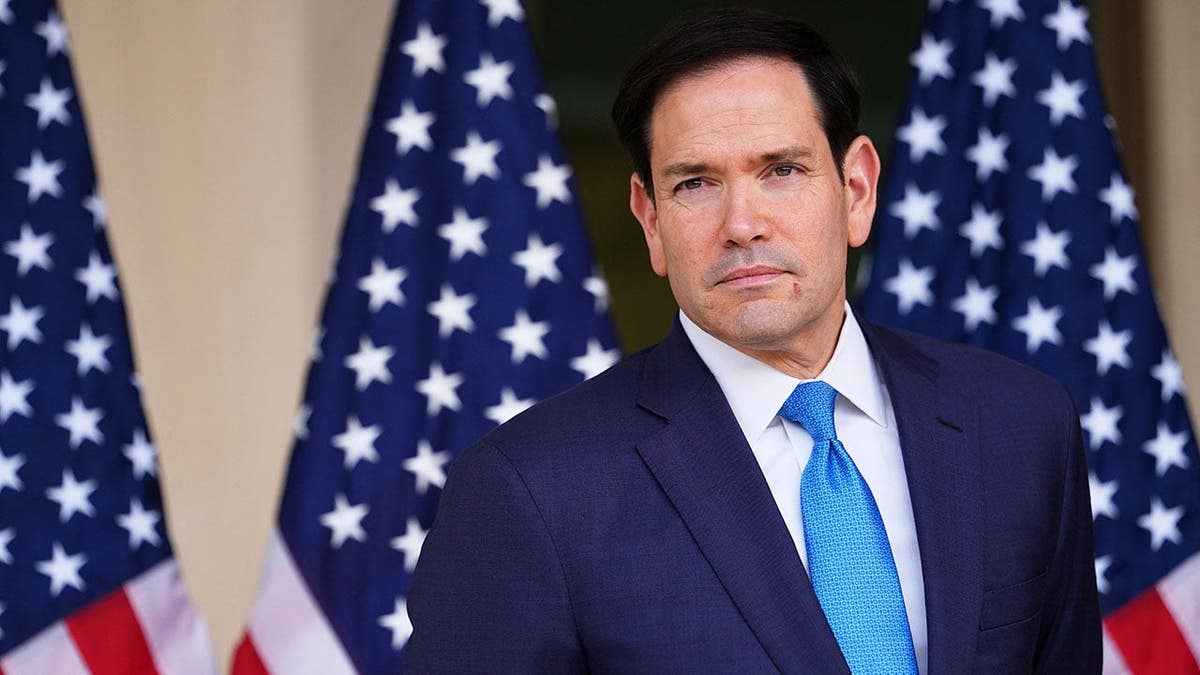
Secretary of State Marco Rubio during a dedication ceremony for an annex building at the U.S. embassy in New Delhi on May 23, 2026. (Julia Demaree Nikhinson/AFP)
Fox News Digital previously reported that Vang admitted to repeatedly sexually assaulting a girl over a period of several years beginning when she was 10 years old.
Vang entered the United States through California in 1994 and was granted legal status during the Clinton administration. Between 2002 and 2004, he repeatedly sexually assaulted the victim in St. Paul, Minnesota. The first assault occurred when she was in the fourth grade. After his conviction, federal officials said Vang lost legal status and was placed under a final removal order.
The Minnesota Clemency Review Commission recommended a pardon for Vang. The Board of Pardons, made up of Walz, Attorney General Keith Ellison and Minnesota Supreme Court Chief Justice Natalie Hudson, later granted the pardon.
The pardon drew criticism from federal immigration officials and Republican lawmakers. Walz defended the decision by citing the victim’s support for Vang’s pardon, among other factors, according to KSTP. A spokesperson for Minnesota Attorney General Keith Ellison’s office told MPR News that the pardon did not protect Vang from deportation.
At the time, Homeland Security acting Assistant Secretary Lauren Bis criticized the decision.
«Governor Tim Walz’s decision to pardon an illegal alien convicted child rapist so he can remain in our country is disgusting,» Bis said.
«These are the criminal illegal aliens he and his Minnesota sanctuary politicians are protecting.»
CLICK HERE TO DOWNLOAD THE FOX NEWS APP
Fox News Digital has reached out to Walz’s office for additional comment.
Fox News Digital’s Peter Pinedo contributed to this report.
migrant crime, tim walz, minnesota, deportation
INTERNACIONAL
Margaret Press se jubiló como programadora informática y lo que hizo después cambió la forma de resolver crímenes

Margaret Press imaginaba que su jubilación estaría dedicada a una vida tranquila. Después de pasar gran parte de su carrera como programadora informática, pensaba disfrutar de la lectura y profundizar una de sus grandes pasiones: reconstruir árboles genealógicos.
Sin embargo, una idea inesperada cambió por completo su rumbo y la convirtió en una de las figuras más reconocidas de la genealogía genética forense, una disciplina que combina análisis de ADN e investigación familiar para identificar personas y aportar pruebas en causas criminales.
Gracias a esa combinación de tecnología, bases de datos genéticas y una enorme capacidad para rastrear vínculos familiares a lo largo de generaciones, Press comenzó a colaborar en la resolución de casos que durante años habían permanecido sin respuestas.
De programadora informática a referente de la genealogía genética
Margaret Press creció en Los Ángeles, California, y comenzó a interesarse por la genealogía a los 15 años gracias a su abuela. Más adelante estudió lingüística y desarrolló una extensa carrera en el mundo de la informática como programadora de software.
Además de trabajar en tecnología, también escribió novelas policiales y relatos de misterio, una experiencia que terminaría siendo muy útil para su futura labor como investigadora.
Tras jubilarse, se instaló en el norte de California para estar cerca de su familia y planeaba dedicar su tiempo libre a la lectura y a investigar árboles genealógicos. Pero una novela despertó una pregunta que cambiaría su vida: ¿era posible utilizar las herramientas de genealogía genética para identificar personas fallecidas cuya identidad se desconocía? Margaret Press, la mujer que cambió la forma de resolver crímenes. (Foto: BBC)
Hasta ese momento, las pruebas de ADN con fines genealógicos se utilizaban principalmente para conocer el origen familiar o encontrar parientes biológicos. Press comprendió que esa misma información podía tener un enorme valor en investigaciones judiciales.
En 2017, junto con la genealogista forense Colleen Fitzpatrick, fundó el DNA Doe Project, una organización sin fines de lucro dedicada a identificar restos humanos desconocidos mediante genealogía genética.
Qué es la genealogía genética y cómo ayuda a resolver crímenes
La genealogía genética combina el análisis de ADN con la investigación tradicional de árboles familiares.
El proceso comienza con una muestra genética obtenida de una víctima sin identificar, una persona desaparecida o, en algunos casos, de un sospechoso. Ese perfil se compara con bases de datos de personas que compartieron voluntariamente su ADN para investigaciones genealógicas.

Resolvieron uno de los asesinatos más antiguos de Estados Unidos utilizando genealogía genética (Foto: Archivo).
Cuando aparecen coincidencias con familiares, los especialistas reconstruyen árboles genealógicos mediante registros civiles, censos, certificados de nacimiento, matrimonios y otros documentos históricos hasta reducir las posibilidades e identificar a una persona.
Finalmente, esa hipótesis se confirma mediante métodos tradicionales, como nuevas pruebas de ADN, registros oficiales o entrevistas con familiares.
Esta metodología permitió avanzar en investigaciones que permanecían estancadas desde hacía décadas y abrió una nueva etapa en la ciencia forense.
Leé también: ¿Moda o productividad? La razón por la que los programadores caminan con sus notebooks abiertas
Los casos que parecían imposibles y que Margaret Press ayudó a resolver
Uno de los trabajos más conocidos del DNA Doe Project fue la identificación de “Buckskin Girl”, una joven asesinada en Ohio en 1981 cuya identidad permaneció desconocida durante 37 años.
En 2018, gracias al análisis de ADN y a la reconstrucción de su árbol familiar, los investigadores lograron determinar que se trataba de Marcia King.

El estudio de Press permitió identificar a Marcia L. King, de 21 años, asesinada en Ohio en 1981. (Foto; BBC)
Otro caso que marcó a Press fue el de Lompoc Jane Doe, una mujer encontrada sin vida en California en 1969. Ese misterio fue uno de los que despertó su interés por aplicar la genealogía genética a investigaciones forenses y terminó impulsando la creación del DNA Doe Project.
También colaboró en el avance del caso Bear Brook, uno de los expedientes criminales más complejos de Estados Unidos, en el que esta técnica permitió identificar víctimas y aportar información clave para la investigación.
Cómo una programadora terminó revolucionando las investigaciones forenses
El trabajo de Margaret Press va mucho más allá del análisis de ADN. Su tarea consiste, sobre todo, en reconstruir historias familiares, conectar generaciones y encontrar relaciones que permitan descubrir la identidad de personas desconocidas.
Su experiencia en informática resultó fundamental. La capacidad para organizar grandes volúmenes de información, detectar patrones y analizar datos complejos terminó convirtiéndose en una herramienta decisiva para sus investigaciones.
Con el tiempo, ese conocimiento adquirido durante décadas frente a una computadora terminó ayudando a resolver algunos de los casos más difíciles de la ciencia forense moderna. Como resumió la propia Press en una entrevista con la BBC, “fue una manera de cerrar el círculo”.
árbol genealógico, adn, crimenes, Los Ángeles
INTERNACIONAL
Lindsey Graham’s final act reverberates in Senate as sister is urged to “keep pedaling»

NEWYou can now listen to Fox News articles!
It was 2:35 am et Sunday.
The phone rang, yanking me out of deep slumber.
Calls like these are never good.
In the split second before I answered the phone, my mind traveled to the obvious place for any journalist who covers Capitol Hill and gets a call at that hour.
LINDSEY GRAHAM, SOUTH CAROLINA SENATOR WHO ROSE FROM SMALL-TOWN ROOTS TO GOP POWER BROKER, DIES AT 71
Former U.S. Sen. Lindsey Graham hugs his sister Darline Graham Nordone on June 1, 2015, in South Carolina. (Jessica McGowan/Getty Images)
Surely it was about former Senate Majority Leader Mitch McConnell (R-KY).
McConnell has been out of service and nowhere to be found for weeks — after being hospitalized with an unspecified illness. The internet was rife with conspiracy theories and conjecture. And, considering the dearth of information, I suspected the worst.
My longtime colleague Jodie Curtis was on the line when I picked up. Jodie is a senior figure at Fox, forced into weekend overnight assignment editor duty because of an illness. Jodie calling to tell me that Sen. Lindsey Graham (R-SC) was dead.
«Graham?» I asked incredulously. «Not McConnell?»
Emerging from my stupor, I instinctively presumed this might be about the infirm, Kentucky Republican. You’d have better odds presuming that overnight call was about McConnell than hitting an exacta wheel at Churchill Downs.
My instincts immediately kicked in.
What if this was psy-ops by the Russians, Chinese or Iranians. A rouse. A hoax. A hack.
I told my colleague to just wait a moment while we confirmed. It would be easy to get this wrong.
Back in the 1990s, lawmakers «killed» comedian Bob Hope on the House floor, prematurely announcing his death during special orders speeches. Yours truly – and everyone else in Washington – prematurely reported the death of the late Rep. Stephanie Tubbs-Jones (D-OH). She suffered from a catastrophic brain aneurism. Yet after they removed the Congresswoman from life support, she continued to live for a few hours before dying.
However, it became clear that Lindsey Graham was indeed dead. I was quickly on the air. When asked about the shock of Graham passing, I invoked a Native American adage: Death comes. And it’s always out of season.
Lindsey Graham was gone. But who would succeed him on Capitol Hill?
Think all in the family. At least for now.
Sens. Katie Britt (R-AL) and Tim Scott (R-SC) both implored the late senator’s kid sister Darline Graham to follow her brother. President Trump believed it would be a fitting tribute to the senator. So did South Carolina Gov. Henry McMaster (R) – who was in charge the appointment.
«It’s my honor to ask his sister to finish his work now,» said McMaster.
Darline Graham is a political neophyte. Lindsey Graham adopted his sister after their parents died – and Darline was a teenager.
«Lindsey has always been there for me. And now I will be there for him,» said now Sen. Darline Graham (R-SC).
Lindsey Graham was his sister’s caretaker. Now she’s the caretaker of his Senate seat until January.
But who’s next?
South Carolina has a small Congressional delegation. Rep. Joe Wilson (R-SC) quickly excluded himself from the immediate running, noting the importance of remaining in the House. Plucking one of South Carolina’s House GOP members and appointing them to the Senate is a problem for the narrow Republican majority. The Constitution bars appointments to the House. So McMaster would have diminished the GOP’s slim majority had he picked a House member to fill in for Lindsey Graham. It would take months to conduct a special election to fill the vacant House seat.
Appointing Darline Graham solves that problem.
Reps. Russell Fry (R-SC), Nancy Mace (R-SC) and Ralph Norman (R-SC) are all interested in running for the full term. South Carolina will hold a snap primary in mid August. The winner will face Democrat Annie Andrews in November. Lindsey Graham had just secured the Republican nomination for a fifth term last month.
President Trump’s influence will play an outsized role in who gets the nod. He’s already singled out Fry.
But the election will look a little different this fall. November will mark the first time since the mid-1950s that either Lindsey Graham or late, legendary Sen. Strom Thurmond (R-SC) isn’t on the ballot in the Palmetto State.
The Senate met for the first time Monday afternoon since Graham’s passing.
«Lord, we remember with gratitude his commitment to the responsibilities entrusted to him and the many ways he sought to serve the people of this country. Give comfort, strength and peace to his family, friends, colleagues and all who mourn his passing,» prayed Senate Chaplain Barry Black.
The Senate shrouded Graham’s desk with a black cloak. A bouquet of white roses rested on the desk, signifying a new beginning without a Senate titan.
«The halls of the Senate already feel empty without him,» said Senate Majority Leader John Thune (R-SD).
‘THIS IS NOT NORMAL’: AOC UNLOADS ON MCCONNELL’S PROLONGED ABSENCE
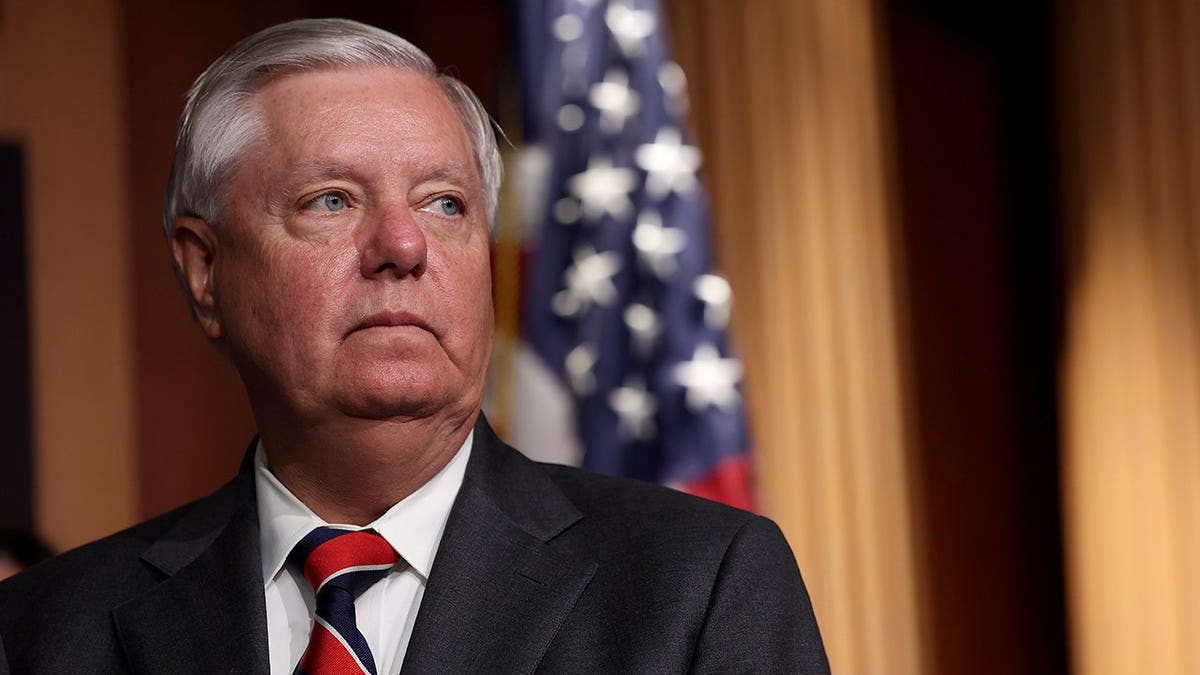
Former Sen. Lindsey Graham attends a press conference on border security at the U.S. Capitol in Washington, D.C. on December 7, 2023. (Kevin Dietsch/Getty Images)
Well wishers left notecards and flowers outside Graham’s office in the Russell Senate Office Building.
Senators praised Graham’s tenacity.
«He didn’t want to just argue about things. He wanted to actually solve things,» said Sen. James Lankford (R-OK) on Fox.
Even until the end.
Over the weekend, Graham appeared to forge a deal on a Russia sanctions measure.
«This could be well, this could well be the end of the war in Ukraine. It could put all the pressure on Russia to finally end their illegal war of aggression,» predicted Sen. Angus King (I-ME).
Lindsey Graham first won a seat in Congress in 1994 as part of the «Republican Revolution.» That’s the historic class which flipped control of the House for the first time in 40 years. Graham and Senate Armed Services Committee Chairman Roger Wicker (R-MS) are the only members from that 1994 class still serving in Congress.
Graham earned a national profile barely four years after arriving in Washington. House GOP leaders tapped Graham to serve as one of the House «managers,» prosecuting articles of impeachment for President Clinton in the Senate.
«Impeachment is not about punishment,» argued Graham before the Senate in January, 1999. «Impeachment is about cleansing the office.»
Three years after that, Graham left the House. He became one of 100 in the Senate. But his colleagues conceded that the institution felt hollow at just 99.
«I am comforted by the knowledge that in the end, he has just changed his address. And that one day, Mr. President….» said Thune on the floor, pausing for ten seconds. «We will laugh together again.»
The Leader’s voice then cracked as he fought back tears.
«Mr. President, I yield the floor,» Thune whispered.
By Tuesday afternoon, Darline Graham became the 2,022nd senator in American history. But the first to immediately succeed her brother.
«He always said that his greatest accomplishment was the way that Darline turned out,» said Britt.
«I’m glad that there will be another Sen. Graham and that Darline will serve with us,» said
Sen. Chris Coons (D-DE). «That’ll allow for some continuity.»
Graham’s passing leaves a Congressional chasm.
«It will be difficult to pass anything without Sen. Graham because he’s been such a significant voice in the Senate,» said Sen. Cynthia Lummis (R-WY).
It’s unclear if any of that will fall to the Senate’s newest member.
LINDSEY GRAHAM’S SISTER CARRIES ON LATE SENATOR’S WORK, BECOMING SOUTH CAROLINA’S FIRST FEMALE SENATOR

Darline Graham Nordone speaks during a press conference outside the governor’s South Carolina State House office in Columbia. (Grant Baldwin/Getty Images)
CLICK HERE TO DOWNLOAD THE FOX NEWS APP
Darline Graham joined her brother’s side when he briefly ran for President in 2015. She says Lindsey taught her how to ride a bike while growing up.
«He would hold on to the bicycle as I pedaled. And he’d run along beside of me. Give me a big push and shout ‘Keep pedaling! Keep pedaling!’ said the new senator. » And then he was the one who comforted me when I stopped pedaling and fell off the bicycle.»
Today, Darline Graham is again hopping onto that bicycle to finish Lindsey Graham’s term.
You can almost hear the late senator, in his «upstate» twang shouting to his sister «Keep pedaling! Keep pedaling!»
lindsey graham, mitch mcconnell, senate elections, politics, south carolina

En medio del derrumbe de las ventas y a pesar de la baja de la inflación de los últimos meses, cuánto aumentaron los autos 0 km

Martín Bossi en “Lo de Pampita”: “No me gusta hacer contenido con mi vida amorosa”

El machete del arquero inglés en una botella que sorprendió a Messi tras el triunfo: el dardo de un ayudante de Scaloni a Inglaterra

Dave Gallacher, desarrollador de Helldivers 2: "es inexplicable que los jefes de Ubisoft y Embracer no estén en prisión"

Tim Walz offers strange defense for pardoning convicted child rapist Trump administration deported

Javier Milei y sus medidas, en vivo: sesión en el Senado y tensiones en el interior del Gobierno

El álbum de las vacaciones soñadas de Darío Barassi con su familia: “Ibiza, nos vas enamorando”

El petróleo sube más de 3% tras la reanudación de los ataques de EEUU contra Irán y la amenaza de cierre del estrecho de Ormuz

Cámara de Comercio panameña cierra filas y llama a fortalecer la Zona Libre de Colón

Operativo Reelección 2027: Los 8 Cambios Urgentes que Javier Milei Debe Implementar para Asegurar su Continuidad

 POLITICA3 días ago
Operativo Reelección 2027: Los 8 Cambios Urgentes que Javier Milei Debe Implementar para Asegurar su Continuidad
- ECONOMIA3 días ago
Quiénes se quedan con las esquinas más cotizadas de la Ciudad tras el cierre de sucursales bancarias
- ECONOMIA2 días ago
Aumentó 900% la cantidad de repartidores de plataforma en los últimos 6 años