INTERNACIONAL
Trump scores major Republican primary victory as Cassidy ousted in Louisiana


NEWYou can now listen to Fox News articles!
Five and a half years ago after he voted to convict President Donald Trump in his impeachment trial, GOP Sen. Bill Cassidy of Louisiana was sent packing by Republican voters as he ran for re-election.
Trump-backed Rep. Julia Letlow and Louisiana Treasurer John Fleming topped Cassidy in Saturday’s GOP primary, according to The Associated Press.
With most results tabulated late in the evening, Letlow stood at 45% of the vote, Fleming at roughly 28% and Cassidy at just under 25%, Since no candidate cracked 50% of the vote, Letlow and Fleming will advance to next month’s runoff for the Republican nomination. And Cassidy becomes the first elected Republican senator to lose renomination since Sen. Richard Lugar of Indiana in 2012
While he wasn’t on the ballot, Trump is a winner, as the primary in the solidly red state was the latest test of his endorsements in GOP nomination races and of the president’s immense grip over the Republican Party.
DEMOCRACY ’26: STAY UP TO DATE WITH THE FOX NEWS ELECTION HUB
Sen. Bill Cassidy of Louisiana fist bumps a supporter during a campaign stop at a gun retailer and firing range in Baton Rouge on May 15, 2026, the eve of the state’s Senate primary. (Paul Steinhauser/Fox News)
Trump on Saturday morning took aim at Cassidy, arguing the senator is «a disloyal disaster» and «a sleazebag, a terrible guy, who is BAD FOR LOUISIANA.»
And after Cassidy was defeated, Trump returned to social media to revel in the senator’s ouster, saying «it’s nice to see that his political career is OVER!»
Cassidy, in a speech to supporters after conceding, said «when you participate in democracy, sometimes it doesn’t turn out the way you want it to.»
«But you don’t pout, you don’t whine. You don’t claim the election was stolen… You don’t manufacture some excuse,» Cassidy said in an apparent jab at Trump. «You thank the voters for the privilege of representing the state or the country for as long as you’ve had that privilege. And that’s what I’m doing right now.»
The Louisiana primary was held a week and a half after Indiana’s primary, where Trump-backed challengers ousted five sitting Republican state senators who last December teamed up with Democrats to defeat the president’s push for congressional redistricting in the GOP-dominated Midwestern state.
Letlow, speaking to supporters at her primary night celebration, thanked Trump for his endorsement.

U.S. Senate candidate Rep. Julia Letlow, R-La., speaks to supporters during an election night watch party Saturday, May 16, 2026, in Baton Rouge, Louisiana. (Matthew Hinton/AP Photo)
«Louisiana made it clear tonight: we are ready for strong conservative leadership that will stand with President Trump and never waver,» she added in a post on X.
Letlow was backed by Trump even before she entered the race in January.
«Not only did he encourage me to get into this race, but also to have his complete and total endorsement has been, wow, the honor of a lifetime,» Letlow told Fox News Digital on the eve of the primary.
Trump’s endorsement in the nomination race weighed heavily in a state he carried by 22 points in his 2024 election victory.
«It’s the most powerful endorsement in the world,» Letlow said, adding that Louisiana Republicans «are huge fans of the president.»
Letlow was also backed by Republican Gov. Jeff Landry of Louisiana, a top Trump ally.
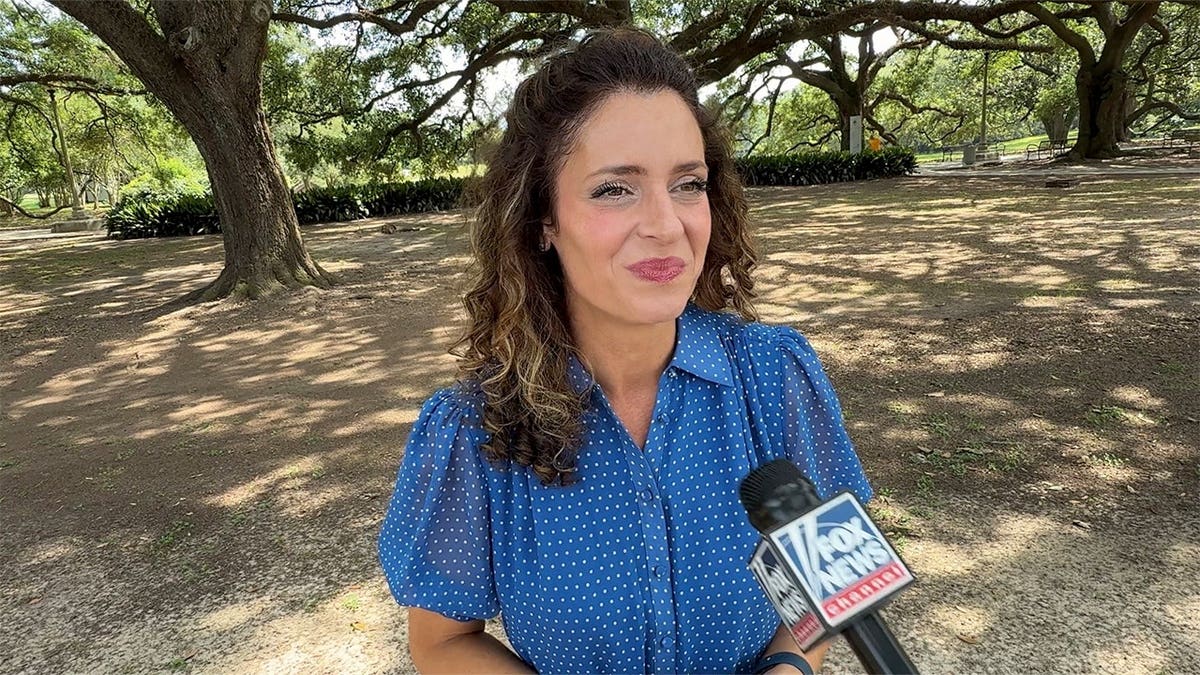
Republican Rep. Julia Letlow of Louisiana, a Republican Senate candidate, speaks with Fox News Digital on the eve of the state’s primary, in Baton Rouge, Louisiana on May 15, 2026. (Paul Steinhauser/Fox News)
After cruising to re-election six years ago, Cassidy was one of only seven Senate Republicans who voted in early 2021 to convict Trump after he was impeached by the House for his role in the violent Jan. 6 attack on the U.S. Capitol by supporters who aimed to upend congressional certification of former President Joe Biden’s 2020 election victory. Trump was acquitted by the Senate.
But since the start of Trump’s second term, Cassidy has been supportive of the president’s agenda and his nominees, including voting to approve Health Secretary Robert F. Kennedy Jr.
But Kennedy and his Make America Healthy Again movement were out for revenge.
That’s because Cassidy, a doctor, has been a skeptic of Kennedy’s push to reform the nation’s health policies, including Kennedy’s efforts to cut back on vaccine recommendations.
And Kennedy allies blamed Cassidy, chair of the Senate Health, Education, Labor, and Pensions Committee, for helping sink the surgeon general nomination of Casey Means, a close Kennedy ally and top MAHA advocate, after Cassidy did not bring it to a committee vote.
Meanwhile, Trump blasted the senator as a «very disloyal person» and on the eve of the primary, the president took to social media to praise Letlow as a «Highly Respected America First Congresswoman.»
Cassidy highlighted his record over two terms in the Senate in delivering for Louisiana, which is one of the nation’s poorest states. And he’s showcased his support for Louisiana’s large oil and gas industry, which accounts for roughly 15% of the state’s workforce.
«When people ask things such as, can you work with President Trump, I point out that he has signed into law four bills that I wrote or negotiated,» the senator said in a Fox News Digital interview on Friday. «We continue to work together, by the way.»
And Cassidy touted that he’s «a conservative senator who delivers.»
Cassidy and an allied super PAC dished out more than $20 million on ads, according to AdImpact, a national ad tracking firm. That total was more than Letlow and Fleming, combined, spent.
Some of those ads knocked Letlow over her past support for diversity, equity and inclusion (DEI) programs during her tenure at the University of Louisiana at Monroe.
Cassidy argued that Republican voters are «concerned about her shifting position on DEI. She was all in for DEI.»
Defending her record, Letlow told Fox News Digital that «back in 2020 whenever DEI was introduced to us, we had no idea what it was back then, and I quickly witnessed it. I was in higher education at the time. I quickly witnessed the left completely hijack it, turn it into this Marxist leftist indoctrination of our children. And so, when I got to Congress for the last five years, I’ve been fighting against it.
Letlow also faced scrutiny from her rivals over her failure to disclose over 200 personal stock and bond trades within the mandated 45-day reporting deadline for members of Congress.
She said it «was a reporting error on my financial advisor’s part. And once I realized that that had happened, I quickly remedied it. It has never happened since.»
And Letlow charged that the criticism of her from Cassidy and Fleming over DEI and stock trading was «all baseless attacks, desperate attacks.»
Letlow won her congressional seat in 2021, after her husband, Luke Letlow, died six days after being sworn into the U.S. House after his 2020 election victory for the seat she now holds.
Fleming, who served as a White House deputy chief of staff during Trump’s first term, argued that he was the most conservative candidate in the GOP Senate primary.
‘They see me clearly MAGA,» Fleming told Fox News Digital, as he referred to Louisiana Republicans. «I served in his entire first administration at various capacities. I was one of the first congressmen that endorsed him in 2016.»
CLICK HERE TO DOWNLOAD THE FOX NEWS APP
Meanwhile, Fleming claimed that Letlow was «not the prototype for a Trump endorsement. She’s much more like a Democrat.»
The winner of the Republican runoff will be considered the clear favorite in the general election to keep the Senate seat in Republican hands.
Fox News’ Luke Trevisan contributed to this story
republicans, donald trump, senate elections, louisiana, midterm elections, elections













INTERNACIONAL
Asian nation with 1,500-year-old imperial line insists only men can become emperor in policy revision

NEWYou can now listen to Fox News articles!
Japan’s Parliament voted Friday to enshrine male-only succession for the imperial throne, part of a monarchy that traces its origins back roughly 1,500 years.
Lawmakers did so by revising an Imperial House Law dating back to the 1800s, despite warnings from experts that limiting succession to men in the paternal line will hasten the decline of Japan’s shrinking and aging imperial family, according to the Associated Press.
To address the dwindling number of eligible heirs, the revisions allow distant male relatives to be adopted into the imperial family to father future successors. However, strict rules remain in place limiting the throne to men with royal blood. The changes also allow princesses to retain their royal status after marrying commoners.
The new rules passed by Parliament come as many Japanese had been calling for Princess Aiko, Emperor Naruhito’s 24-year-old daughter, to be allowed to succeed him — now an impossibility.
Japan’s Princess Aiko, left, the daughter of Emperor Naruhito and Empress Masako, arrives to mark the 110th anniversary of the death of the wife of former emperor Meiji at Meiji Shrine in Tokyo, on April 10, 2024. (Kazuhiro Nogi/Pool Photo via AP)
IN ATTEMPT TO CONNECT WITH YOUNG PEOPLE, JAPAN’S ROYAL FAMILY DEBUTS ON INSTAGRAM
«The emperor is a symbolic figure, and I don’t see why women cannot serve in the role,» Junichiro Tsujimaru, a 78-year-old sushi chain founder, told the AP.
Under current law, the 66-year-old emperor’s younger brother is next in line. After that, his 19-year-old nephew, Prince Hisahito, will inherit the throne, and then the emperor’s 90-year-old uncle.
Hisahito is the only boy to be born in four decades, and only five of the 16 adults in the imperial family are men.
Prime Minister Sanae Takaichi and other conservatives say the male bloodline is the source of the emperor’s authority and legitimacy.

Japan’s Prime Minister Sanae Takaichi speaks during a news conference at the prime minister’s office in Tokyo, Oct. 21, 2025. (Eugene Hoshiko)
SHINZO ABE POSTHUMOUSLY GIFTED HONORS, NOBILITY BY IMPERIAL FAMILY HE DEVOUTLY SUPPORTED
«It’s a declaration to prevent female monarchs … and to defend the male-lineage at all costs,» Hideya Kawanishi, a Nagoya University expert on monarchy, told the AP. «They cannot say it’s male chauvinism, so they call it tradition.»
Chizuko Ueno, a prominent feminist and sociologist, recently suggested it was ironic that Japan’s first female prime minister was the one to ensure male-only succession.
Ueno said the new rules «treat male royals as stallions and put female royals under pressure as ‘childbearing machines’ to produce male offspring.»
Japan has had eight empresses descended from the male line in its centuries-long history as a hereditary monarchy. The last woman to reign was Empress Go-Sakuramachi, who sat on the throne from 1762 until 1771, when she abdicated in favor of her nephew.

Japan’s Prince Hisahito, right, attends his coming-of-age rituals on his 19th birthday at the Imperial Palace in Tokyo, on Sept. 6, 2025. (Japan Pool/Kyodo News via AP)
CLICK HERE TO DOWNLOAD THE FOX NEWS APP
Female eligibility for the throne was first eliminated in 1890 under the original Imperial House Law.
That change was carried over into the modern Imperial House Law, enacted in 1947, the same year Japan’s new constitution stripped the emperor of governing authority after the country’s defeat in World War II.
Like Britain’s royal family, Japan’s imperial family remains an important national symbol.
The Associated Press contributed to this report.
japan, world, politics, british royals
INTERNACIONAL
Búsqueda de vida más allá de la Tierra: astrónomos descubren un planeta con atmósfera a 49 años luz

La exploración de exoplanetas acaba de alcanzar un hito que transforma la búsqueda de vida más allá del sistema solar.
Un grupo internacional de científicos confirmó la existencia de una atmósfera alrededor de un planeta rocoso, LHS 1140b, que se encuentra en la zona habitable de su estrella y a solo 49 años luz de la Tierra.
Este resultado representa la primera vez que se detecta de manera inequívoca una atmósfera en un planeta de características similares a la Tierra y ubicado en una región donde podría existir agua líquida, la condición indispensable para la vida tal como la conocemos.
El descubrimiento, publicado en la revista Science y liderado por el doctor en astronomía Collin Cherubim, quien hasta hace poco trabajaba en la Universidad de Harvard, fue recibido con entusiasmo por la comunidad científica.

El equipo estudió a LHS 1140b, un planeta rocoso cuya masa es 5,6 veces mayor que la de la Tierra y cuyo radio supera en un 70 % al terrestre. El planeta orbita a una estrella enana roja en la constelación de Cetus, completando una vuelta en solo 24,7 días. Aunque la estrella es más pequeña y menos luminosa que el Sol, emite una fracción importante de su energía en forma de radiación ionizante.
La importancia del hallazgo radica en que, hasta este momento, solo se habían confirmado atmósferas en exoplanetas gigantes gaseosos o en subneptunos. Había existido evidencia indirecta de atmósferas en planetas rocosos, pero siempre fuera de la zona habitable o sin certeza suficiente.
“Esta es la primera atmósfera confirmada mediante observaciones en un planeta rocoso en la zona habitable fuera de nuestro sistema solar”, afirmó Cherubim. La novedad reside también en que “estos hallazgos representan la primera identificación directa de una especie atmosférica en un exoplaneta rocoso, ya sea que se encuentre en una zona habitable o no”.

La detección de la atmósfera de LHS 1140b fue posible gracias al uso de espectroscopía infrarroja, que permitió observar el planeta mientras transitaba frente a su estrella. El equipo utilizó el espectrógrafo instalado en el telescopio Magellan Clay del Observatorio Las Campanas en Chile para analizar la luz que atravesaba la atmósfera del planeta.
El análisis de los datos de 2024 reveló la presencia de helio escapando hacia el espacio, una señal que los científicos interpretaron como evidencia de una atmósfera superior dominada por helio y pobre en hidrógeno.
“Las observaciones de exoplanetas gigantes gaseosos altamente irradiados han mostrado la fuga de helio de sus atmósferas. Existe evidencia limitada de atmósferas en exoplanetas rocosos, quizás porque ya han escapado”, explicaron los investigadores.
En el caso de LHS 1140b, “presentamos observaciones espectroscópicas en el infrarrojo cercano de LHS 1140b, un exoplaneta rocoso que orbita en la zona habitable de una estrella cercana de baja masa. Los espectros de tránsito muestran absorción por helio que escapa de la atmósfera del planeta. Se detecta absorción de helio en 2024, pero no en 2025, lo que indica una fuga atmosférica variable en el tiempo”, detallaron.

Cherubim subrayó la trascendencia del resultado: “Este es un descubrimiento realmente emocionante porque creo que sitúa a LHS 1140b a la vanguardia como el mejor, más prometedor y fascinante laboratorio para estudiar la astrobiología y la habitabilidad fuera de nuestro sistema solar”.
El planeta, descubierto en 2017, reúne condiciones que lo convierten en un candidato privilegiado: su composición es mayormente rocosa, la temperatura superficial permite la presencia de agua líquida y la atmósfera detectada podría impedir que el agua se evapore, al tiempo que protege la superficie de la radiación estelar dañina. “Así que es un lugar realmente emocionante para seguir buscando, especialmente para buscar señales de vida”, sostuvo Cherubim.
Las observaciones de 2025 no mostraron helio en la atmósfera, lo que llevó al equipo a revisar los datos y descartar posibles errores de interpretación. “Hemos descartado con total seguridad todos los falsos positivos que pudimos haber imaginado”, afirmó Cherubim. Los científicos interpretan esta variabilidad como indicio de una atmósfera con capas diferenciadas: una superior, rica en helio y empobrecida en hidrógeno, y capas inferiores donde quedarían atrapadas otras especies químicas, incluida el agua.

(Imagen Ilustrativa Infobae)
El método empleado para la detección, la espectroscopía de tránsito, aprovecha la interacción de la luz de la estrella con la atmósfera planetaria. Así, cuando el planeta cruza por delante de su estrella, parte de la luz estelar atraviesa su atmósfera y permite identificar los elementos presentes a través de las huellas que dejan en el espectro.
“El helio fue una prueba clara de la existencia de una atmósfera en un exoplaneta situado en la zona habitable. Fue absolutamente emocionante ver los espectros de tránsito y darme cuenta poco a poco de las implicaciones de lo que estábamos observando», relató Shreyas Vissapragada, del Observatorio Carnegie en California.
La confirmación de una atmósfera en LHS 1140b marca un punto de inflexión en la astrobiología. El planeta se encuentra en una órbita que le permite recibir el 42 % de la radiación estelar que llega a la Tierra, lo que mantiene su temperatura en el rango adecuado para la existencia de agua líquida. A pesar de que todavía no se sabe si posee una superficie sólida semejante a la terrestre, los modelos sugieren que podría ser un mundo intermedio entre un planeta oceánico, con enormes masas de agua, y un gigante helado similar a Urano o Neptuno.
El hecho de que el planeta conserve una atmósfera, pese a la radiación constante de su estrella, sorprendió a los expertos. Jayne Birkby, profesora de astrofísica en la Universidad de Oxford, remarcó la importancia del hallazgo: “Eso convierte el descubrimiento de una atmósfera alrededor de LHS 1140b en un paso crucial para comprender cómo es vivir con una enana roja”.

– NASA, ESA, CSA, Ralf Crawford
Las enanas rojas suelen ser muy activas y su radiación tiende a eliminar las atmósferas de los planetas cercanos, por lo que encontrar una atmósfera estable en LHS 1140b desafía las expectativas previas y amplía la lista de posibles planetas habitables.
“Es fascinante que la señal también varíe; esto muestra cómo reacciona la atmósfera del exoplaneta a la alta radiación ultravioleta extrema de su estrella anfitriona, e incluso podría revelarnos cómo esto modifica las condiciones de la superficie del planeta”, añadió Birkby. «Naturalmente, esto nos lleva a preguntarnos si la vida podría prosperar aquí y, de ser así, qué tipo de mecanismos de protección habría tenido que desarrollar».
La doctora Yamila Miguel, del Observatorio de Leiden, destacó que la detección del helio corresponde a la atmósfera superior, no a la región más cercana a la superficie, donde potencialmente podría evolucionar la vida. “Lo que hace que este planeta sea tan interesante es que está perdiendo suficiente atmósfera como para que podamos detectarla desde aquí, lo cual no es fácil para un planeta pequeño y rocoso”, explicó. “Por lo tanto, no creo que estos resultados tengan implicaciones directas para la detección de vida en otros planetas”, opinó.
La comparación con otros planetas del mismo sistema refuerza la singularidad de LHS 1140b. Otro exoplaneta, LHS 1140c, más pequeño y sometido a mayor irradiación, no muestra rastros de atmósfera detectable, lo que sugiere que solo aquellos mundos que conservan ciertos equilibrios pueden mantener las envolturas protectoras necesarias para la habitabilidad.

(Crédito: ESO/S. Brunie)
El astrobiólogo José Antonio Caballero, del Centro de Astrobiología español, celebró el avance: “¡Por fin! Ya era hora de detectar señales de atmósfera en un planeta parecido a la Tierra. La verdad es que LHS 1140 b tenía todas las papeletas para ser el primero, pero los astrónomos lo habían intentado antes muchas veces, aunque sin éxito”. Caballero comparó la hazaña con una histórica remontada deportiva: “Como en el famoso partido España-Malta de 1983, tardamos 15 minutos en marcar el primer gol, pero luego vinieron 11 goles más. Con LHS 1140 b ocurrirá parecido: esta es la primera detección, pero luego vendrán muchas más”.
La interpretación de los datos sugiere que LHS 1140b podría estar a medio camino entre un mundo completamente cubierto de agua y un gigante helado, con una atmósfera multicapas que mantiene atrapadas moléculas volátiles en las capas bajas, cerca de la superficie. La variabilidad observada en la presencia de helio también plantea interrogantes sobre la evolución de las atmósferas en estos planetas y su capacidad para retener los elementos necesarios para la vida.
Con la confirmación de una atmósfera en un planeta rocoso dentro de la zona habitable, los astrónomos cuentan ahora con un laboratorio único para investigar la historia evolutiva de los exoplanetas similares a la Tierra y sus posibilidades de albergar vida. Los próximos estudios buscarán identificar otros componentes atmosféricos, como vapor de agua o moléculas orgánicas, y profundizar en la comprensión de los mecanismos que permiten la conservación de atmósferas bajo condiciones extremas.
El hallazgo de LHS 1140b no solo abre una nueva era en la astrobiología, sino que también invita a replantear las estrategias de búsqueda de vida fuera del sistema solar. Por primera vez, la humanidad observa cómo un planeta rocoso, parecido a la Tierra y situado en la zona habitable de su estrella, mantiene una atmósfera capaz de protegerlo y de permitir las condiciones necesarias para la vida.
El universo amplía sus fronteras y, con ellas, la expectativa de encontrar otros mundos donde la vida sea posible.
LHS 1140b,atmósfera,zona habitable,planeta rocoso,astrobiología,espectroscopía
INTERNACIONAL
Controversial ICE tactic actually reduces unintended ‘collateral’ arrests: federal agent

NEWYou can now listen to Fox News articles!
Following a week of U.S. Immigration and Customs Enforcement (ICE) vehicle stops making national headlines, a federal special agent working in deportations revealed why vehicle stops are a «very important» part of the agency’s operations.
After the second ICE officer-involved shooting in a week took place in Maine on Monday, agents nationwide were given guidance to pause vehicle stops until further notice. That guidance, however, was overruled by President Donald Trump on Wednesday, who called vehicle stops «one of ICE’s most important and effective Crime Fighting tools.»
Though controversial, the agent, who spoke on the condition of anonymity, said vehicle stops are actually the preferred tactic for many officers, because they are safer for both law enforcement and the subject than home apprehensions, and they allow more time to identify the target than street apprehensions.
Perhaps most notably, while vehicle stops have been widely criticized, the agent explained that they decrease «collateral» arrests, which they said are the apprehension of illegal immigrants who were not the target of the operation but were «at the wrong place at the right time.»
«[Vehicle stops] lead to a higher success rate in apprehending the target that they [ICE officers] are looking for and not getting the collateral. The collateral is the person that we’re not looking for, but we encounter, and they deem them as having no legal presence and/or illegal; therefore, they are going to have an admin arrest done on them.»
ICE RESUMES NATIONWIDE TRAFFIC STOPS UNDER NEW POLICY REQUIRING BODY CAMERAS
ICE agents stand guard in front of protesters outside the federal immigration center at Delaney Hall, where ICE is housing detained immigrants on May 26, 2026, in Newark, New Jersey. (Spencer Platt/Getty Images)
The agent said vehicle stops are a «daily» part of ICE’s operations. They described the stops as a critical «tool in the toolbox» for federal officers working on deportation operations.
Simon Hankinson, a senior research fellow on border security and immigration at the Heritage Foundation, explained that vehicle stops have become increasingly «crucial» due to growing operational risks.
«When you have to go to someone’s house, we’ve seen how difficult that can be if they don’t want you in. You need warrants, and if you’re breaking down doors, chances of somebody getting hurt are significantly higher,» he said.
«What they’re trying to do is find people and take them into custody in the calmest, quietest, safest manner possible,» Hankinson continued. «So, ideal is when local law enforcement and police presence will honor ICE detainers, and they’ll hand them over at prisons when they’re finished their sentence or their hearing or whatever it is. But when they release particularly violent criminals into the city, they will go to ground, they’ll hide, they’ll hide in places where they’re hard to find. And so, it is easier to stop them in their vehicle when they are going from A to B than it is to try to pick them up in a building with doors that are locked.»
At the same time, Hankinson called out groups using the possibility of danger in these operations to push for an end to all enforcement operations.
DOJ ACCUSES MARYLAND OF ‘ACTIVE AND DELIBERATE EFFORT’ TO PREVENT DEPORTATIONS OF ILLEGAL IMMIGRANTS: LAWSUIT

The victim of a fatal shooting that involved U.S. Immigration and Customs Enforcement agents is visible at the scene near the car he was driving when agents shot through the windshield, in Biddeford, Maine, July 13, 2026. (Gregory Rec/Portland Press Herald via Getty Images)
«They will pretend that what they really want is safety and that they just don’t want anybody getting hurt. But if you scratch the surface, you realize that’s not actually their goal. If we were able to carry out deportations in 100% perfect safety and security, they would still oppose it.»
In a social media post this week, Trump wrote, «We CANNOT give up one of ICE’s most important and effective Crime fighting tools, THE TRAFFIC STOP!»
The president reasoned that the announced DHS policy shift would be «playing right into the criminal’s [sic] hands.»
Addressing federal agents directly, he then said, «ICE, be judicious, fair and smart, and go back and do your very important job.»
The agent said that Trump’s reversal was a «huge» boost for ICE officers. The agent also noted that despite the reversal, new training on vehicle stops and how to respond to dangerous situations is already being administered to many officers operating in the field. They said that, especially given the increase in often adversarial public attention, they would «welcome» even more training for officers on vehicle stops.
«Any time you take a tool out of the toolbox, it is going to create challenges for [agents] to do their job in a more efficient way,» the agent said.
HARRIS CALLS FOR ICE PROBE AFTER MAINE SHOOTING AMID RENEWED ‘BORDER CZAR’ CRITICISM

The day after the Department of Homeland Security announced a pause on ICE vehicle stops, President Donald Trump has instructed the Department of Homeland Security to reverse course. (Adam Gray/Getty Images; Andrew Harnik/Getty Images)
CLICK HERE TO DOWNLOAD THE FOX NEWS APP
«In other words, if I’m encountering them on a sidewalk, and they see me, and they can get in the car and leave, that’s what they’re going to do. And I don’t have any recourse, or our team will not have a recourse to go after him and stop him,» the agent said. «We’d have to hope he stops or, God forbid, he crashes into something and causes property and/or bodily harm to someone else, a third party.»
«I don’t want to hurt anyone; I really don’t,» they said. «I think any sane person would be in agreement with me to say, ‘Hey, let’s look at how we can do this safer for everybody.’»
deportation, illegal immigrants, police and law enforcement, enforcement, homeland security

Ronaldo le marcó la cancha a Cristiano: «En Arabia quizás todavía tenga nivel»

Asian nation with 1,500-year-old imperial line insists only men can become emperor in policy revision

Ángel Di María fue a ver Rocky y se emocionó junto a Nico Vázquez: “Nunca hay que bajar los brazos”

Aerolíneas Argentinas hará descuentos a empresas que viajen al exterior para promover exportaciones

A 32 años del atentado, el presidente de AMIA apuntó contra la Justicia y pidió reforzar la seguridad en la Triple Frontera ante la amenaza iraní

Búsqueda de vida más allá de la Tierra: astrónomos descubren un planeta con atmósfera a 49 años luz

Operativo Reelección 2027: Los 8 Cambios Urgentes que Javier Milei Debe Implementar para Asegurar su Continuidad

El machete del arquero inglés en una botella que sorprendió a Messi tras el triunfo: el dardo de un ayudante de Scaloni a Inglaterra

Aumentó 900% la cantidad de repartidores de plataforma en los últimos 6 años

UK pins string of antisemitic attacks on Iran-linked group, bans IRGC

 DEPORTE1 día ago
El machete del arquero inglés en una botella que sorprendió a Messi tras el triunfo: el dardo de un ayudante de Scaloni a Inglaterra
- POLITICA14 horas ago
El fuerte cruce público entre Victoria Villarruel y Patricia Bullrich tras los chats filtrados antes de la sesión del Senado
- ECONOMIA3 días ago
Vaca Muerta promete renta anual del 15% y desata una fiebre inmobiliaria sin precedentes